Thursday, August 24, 2023

REACTIONARY REVANCHIST RED NECK
The Right Has Already Turned on Their Appalachian Folk Hero

Kady Ruth Ashcraft
JEZEBEL
Wed, August 23, 2023 

Photo: Billboard / Contributor (Getty Images)


On August 8th, the unmistakably unknown singer Oliver Anthony uploaded his original song “Rich Men North of Richmond” to YouTube, and as of Tuesday, the song sits atop the Billboard Hot 100 chart. The stripped-down Appalachian folk tune lamenting the plight of the working man, along with conflicting jabs at who’s responsible for said plight, was immediately extolled by rightwing figureheads like Matt Walsh, Jack Posobiec, Ian Miles Cheong, Kari Lake, and Joe Rogan—a real who’s who of people I’ve muted on Twitter and would certainly never pass the aux chord to.

“I wish politicians would look out for miners / And not just minors on an island somewhere / Lord, we got folks in the street, ain’t got nothin’ to eat/ And the obese milkin’ welfare,” Anthony sings. He manages to scorn the government for not supporting society’s vulnerable, while also scorning society’s vulnerable for not properly allocating government support, all within a verse about harboring Jeffrey Epstein conspiracy theories. Walsh praised the song for being “raw and authentic,” while Posobiec wondered when “the last time a new song hit me like this.” It’s a populist (ish) fever dream of a tune, despite Anthony describing his political standing as “dead center.” But now that the man who the Right crowned their ideological troubadour isn’t upholding the full weight of their contradictory credo, some fast fans are souring on him.

“We’ve gotta go back to the roots of what made this country great in the first place, which is our sense of community. I mean, we are the melting pot of the world and that’s what makes us strong, is our diversity, and we need to learn to harness that and appreciate it, and not use it as a political tool to keep everyone separate from each other you know?”

As quickly as conservatives and right-wing nutsos glommed onto the bearded singer with a high, lonesome, “authentic” warble, they freaked out over his embrace of diversity. Diversity is, of course, the first symptom of the incurable “wokeness” disease. “Promoted algorithm boosted ‘based’ red beard hillbilly song guy was faking his accent and says diversity is our strength,” one user tweeted, receiving over 8,500 likes. Another user wrote, “Did he sell out already to the rich men north of Richmond?”

Of course, Anthony’s wistfulness for a time long ago when kind neighborly kindness prevailed in *checks notes* Richmond, Virginia, aka the capital of the Confederacy, is laughably ahistorical. And his disdain for women on welfare, whether originating from personal biases or as a result of parroting racist conservative talking points, remains off-putting and vile. But there is a smidgen of schadenfreude to be had in seeing right-wing reactionaries devolve into a hissy fit when their adopted Appalachian folk hero doesn’t perfectly uphold their illogical ideologies.

In fact, it’s almost as if the “authentic” working-class American man whom Anthony purports to represent, and whom conservatives have their panties in a twist trying to win over, is actually complex and contradictory, and not just in a top-down political strategy sort of way. The incoherence that right-wingers have built their empire upon—a hatred for “the man” orchestrated by who else but “the man”—has come back to bite them.

Jezebel


Oliver Anthony’s ‘Rich Men North of Richmond’ Is the Number One Song in the Country

Ethan Millman
ROLLING STONE
Mon, August 21, 2023 

oliver-anthony-number-1 - Credit: Youtube


In what can only be described as one of the most unexpected shakeups in recent chart history, Oliver Anthony’s “Rich Men North of Richmond” has beaten out superstars including Taylor Swift, Morgan Wallen, Luke Combs, Olivia Rodrigo, and Gunna for the top spot on Billboard’s Hot 100 songs chart. The achievement also earns Anthony the distinction of being the only artist to ever make their first entry in the Hot 100 at Number One, the publication announced on Monday.

But nothing about his ascent to the top of the charts is conventional. Anthony was unknown before the song took off, and “Rich Men North of Richmond” blew up practically overnight after several prominent conservative influencers started sharing the song online just over a week ago. While streaming is the most common method of listening to music as traditional sales and digital downloads continue to wane, Anthony’s success can most directly be traced to the more than 147,000 units sold through digital purchases according to data provider Luminate. The song has stuck firmly atop the iTunes chart since last Friday.

More from Rolling Stone

Still, while the populist anthem got a major boost from its particularly high sales, “Rich Men” is a streaming success too. Per Luminate, the song saw 17.4 million streams last week (nearly equal to Swift’s “Cruel Summer” and Rodrigo’s “Bad Idea Right?”), and it took the top spot on Apple Music and Spotify’s U.S. charts multiple times last week as well.

Coming in at two this week was “Fast Car” by Combs, while Wallen’s “Last Night” took three, Swift’s “Cruel Summer” came in at four, and “Calm Down” by Rema and Selena Gomez rounded out the top five.

Anthony’s sudden surge coupled with the political backing caused a stir online as skeptics questioned if its success was organic or the result of “astroturfing.” Anthony addressed his newfound audience at length last week on Facebook, confirming that his real name is Christopher Anthony Lunsford, and that Oliver Anthony was his grandfather’s name. He wrote that he’s turned down $8 million offers on his music and that he lives out of a $750 camper he bought on Craigslist, parked on a plot of land he bought in 2019 for which he still owes $60,000.

“I wrote the music I wrote because I was suffering with mental health and depression,” Anthony wrote. “These songs have connected with millions of people on such a deep level because they’re being sung by someone feeling the words in the very moment they were being sung. No editing, no agent, no bullshit. Just some idiot and his guitar. The style of music that we should have never gotten away from in the first place.”

Anthony, who performed a concert this weekend on a golf course in North Carolina, joins Jason Aldean in topping the charts after gaining support from American conservatives for their music. In Aldean’s case, sales on “Try That in a Small Town” skyrocketed last month after CMT pulled the song’s music video, which depicted protests as violent and lawless and was filmed at a courthouse in Tennessee where a 1927 lynching occurred.

The track marks yet another chart victory for country music, which is enjoying a booming year thanks mostly to a surge in streaming popularity. Aside from “Small Town” and “Rich Men,” whose political connections and sales helped drive them to the top of the charts, Wallen’s “Last Night” has spent 16 non-consecutive weeks atop the Hot 100 because of major streaming numbers. Combs’ cover of Tracy Chapman’s “Fast Car” has spent much of the summer fighting for a Number One spot, amassing more than 340 million streams to date.

Wallen is looking to break the record for most weeks atop the Hot 100, a distinction that currently belongs to Lil Nas X’s 2019 smash “Old Town Road.”

“Rich Men North of Richmond” joins “Try That in a Small Town” and Jung Kook and Latto’s “Seven” in topping the charts from strong digital sales. While pushing traditional sales help move songs up the charts if the goal is a Number One distinction, it doesn’t always lead to sustained periods in the top slot. Both “Small Town” and “Seven” dropped out of the Top Five by the next week. (“Seven” dropped to nine the week after its Number One peak, while “Small Town” plummeted to 21).

In what now becomes one of the biggest questions for the upcoming songs charts, will Anthony see a similar dip — or could he ride the hot streak in the weeks ahead?

Florida's Broward County says losses mount for tourism as more conventions stay away, citing fear for safety of diverse groups

Lisa J. Huriash, South Florida Sun Sentinel
Tue, August 22, 2023 

FORT LAUDERDALE, Fla. — Broward County tourism officials say that financial losses are continuing to mount as conventions once scheduled for Fort Lauderdale have opted to go someplace else.

The tally now stands at 14, with four of those conventions backing out in August alone, according to Visit Lauderdale, the agency formerly known as the Greater Fort Lauderdale Convention & Visitors Bureau.

They cite Florida’s culture wars on issues that critics say attack Blacks, gays, and transgender youth, as well as policies targeting state universities as well as migrants.

Broward’s tourism arm said the lost conventions could have brought hotel stays to Fort Lauderdale and its surrounding cities, which also meant money spent on restaurants and attractions.

On the updated list now includes the National Sales Network Conference, whose founder and CEO emailed the county Monday: “Moving forward, we will not consider conducting any future conferences in the state of Florida given the Governor’s statement that slavery was good for Black people.”

And the Association for Research in Vision and Ophthalmology wasn’t planning its annual convention until 2028, but backed out last week, citing in an email: “At the moment, we aren’t able to consider any Florida cities because of the political issues around women’s health and the added challenges with higher education there.”

It adds to the laundry list of groups including the Chicago-based American Specialty Toy Retailing Association, which had planned a 3,000-person conference in Fort Lauderdale in 2026, and cited the “unfriendly political environment in Florida.” The Washington, D.C.-based Association of Farmworker Opportunity Programs, which was scheduled to come to Fort Lauderdale in January, diverted to New Orleans instead because of what’s perceived as anti-migrant policies. And the Atlanta-based aParent Miracles Foundation for this November is headed to Texas instead after the NAACP issued a travel advisory for Florida “in direct response to Governor Ron DeSantis’ attempts to erase Black history, and to restrict diversity, equity, and inclusion programs in Florida schools,” the organizer wrote the county’s tourism office.

Last month, the Tom Joyner Foundation, and the 1,700 hotel rooms it wanted, disappeared, too. “If this were about economics, that would be one thing, but what is at the core of the issue from the above, is fear for the safety of African-American, LGBTQ+ and a smaller portion of even Latino students and others traveling to Florida to participate in what is a national event,” an organizer wrote the tourism office. The agency also cited the state’s new permitless gun carry laws, which allow people to carry concealed weapons without training or a permit, as another reason to skip the Sunshine State. That legislation was hailed by the NRA.

The emails were obtained by the South Florida Sun Sentinel in a public records request.

Stacy Ritter, president and CEO of Visit Lauderdale, Broward County’s tourism promotion arm, said Tuesday she was “keeping a careful eye on the trend, which isn’t great.”

“It’s most troubling because of the economic impact which translates into Broward County residents’ jobs,” saying an estimated 10% of Broward’s jobs were directly or indirectly tied to tourism.

Ritter’s agency is trying to offset the damage with advertising efforts to show Florida, at least the southern end, is welcoming. On Tuesday, they successfully appealed to the Broward County commission to spend nearly $800,000 — money raised from a tourism hotel tax — to participate in the January 2024 Rose Parade in Pasadena, Calif.

Chief among the float participants considered to perform: Drag queens.

There’s something about Mary: how a little girl from Notts became England’s most beloved keeper

Maddy Mussen
Wed, 23 August 2023 

England goalkeeper Mary Earps collects her Golden Glove award (Zac Goodwin/PA) (PA Wire)

“I’m very ambitious about wanting to push myself to reach my absolute maximum potential and change the landscape of female goalkeeping. You know, just small goals,” Mary Earps joked in an interview with GQ last month, ahead of England’s appearance at the Women’s World Cup 2023.

It’s a quote that sums up Earps — or Mearps, as her teammates and TikTok followers know her — wholly. A force to be reckoned with, packing in more determination than is often found in entire football teams, but almost always taking the p**s, just a bit.

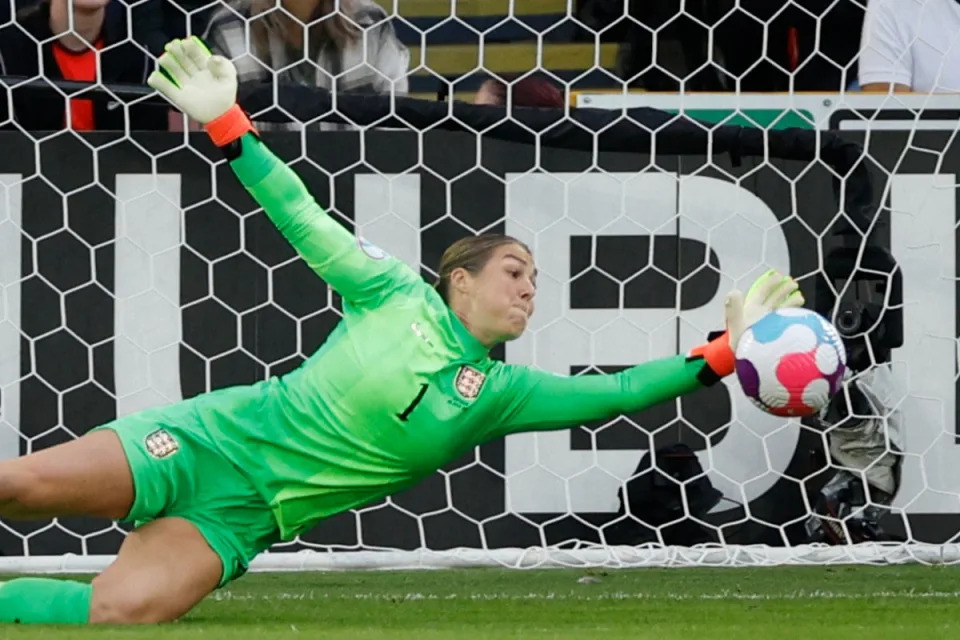
Earps is nothing if not self-effacing. Of this same GQ photoshoot, she told the BBC: “You get a little bit like, ‘Why do they want to talk to me?’ Probably [because] no one else was available, that’s probably why.” But she does, underneath it all, know her worth. You could feel it yesterday when the 30-year-old England keeper saved a penalty from Spain Women’s all-time top goal scorer, Jennifer Hermoso, and screamed “F*** off!” at the top of her lungs, to no one and everyone. You can take the girl out of England...

Over the last year, in Earps’ own words, “doors have opened that used to be padlocked shut”. Back in 2019, Earps was dropped from the England squad entirely. Then, in 2021, she was offered a pay package from Manchester United that wasn’t enough for her to live on. She considered packing in her football career entirely.

Now, she has indeed changed the landscape of female goalkeeping, not just for herself, but for women and girls everywhere who will follow in her footsteps.

It all sounds momentous, but Earps never takes herself too seriously. In reality, she wakes up, listens to the Mamma Mia soundtrack, eats her scrambled eggs or blackcurrant jam on toast and drinks her tea — Yorkshire, the only brand she approves of — like the rest of us. Hailed as both the “TikTok queen” of the England squad and “Mary, Queen of Stops”, here’s what the reigning football royal is actually like.

A football-loving family


Mary Earps with her brother Joel in 2017 (Mary Earps via Instagram)

Growing up in West Bridgford, a town in Nottingham, Earps was a stone’s throw from The City Ground, home to the largest local football team, Nottingham Forest FC. But Earps became the goalkeeper she is today as a result of a much smaller pitch: her back garden.

Joining her dad and brother for a kickabout at the age of eight, Earps realised she loved the game as much as the men in her family (her brother, Joel, is a semi-professional footballer who was most recently signed with Ramsbottom United) and so she sought out bigger pitches.

When a local dad set up West Bridgford Colts FC, she was straight in there. “I think everyone loves their first team,” Earps told the FA blog of West Bridgford Colts. “I’ve always played in goal and this was the first time I was part of a proper team. And I loved my jersey because it was shiny. All the girls in the team were friends, the parents were friends and we’d go round to each others’ houses.”


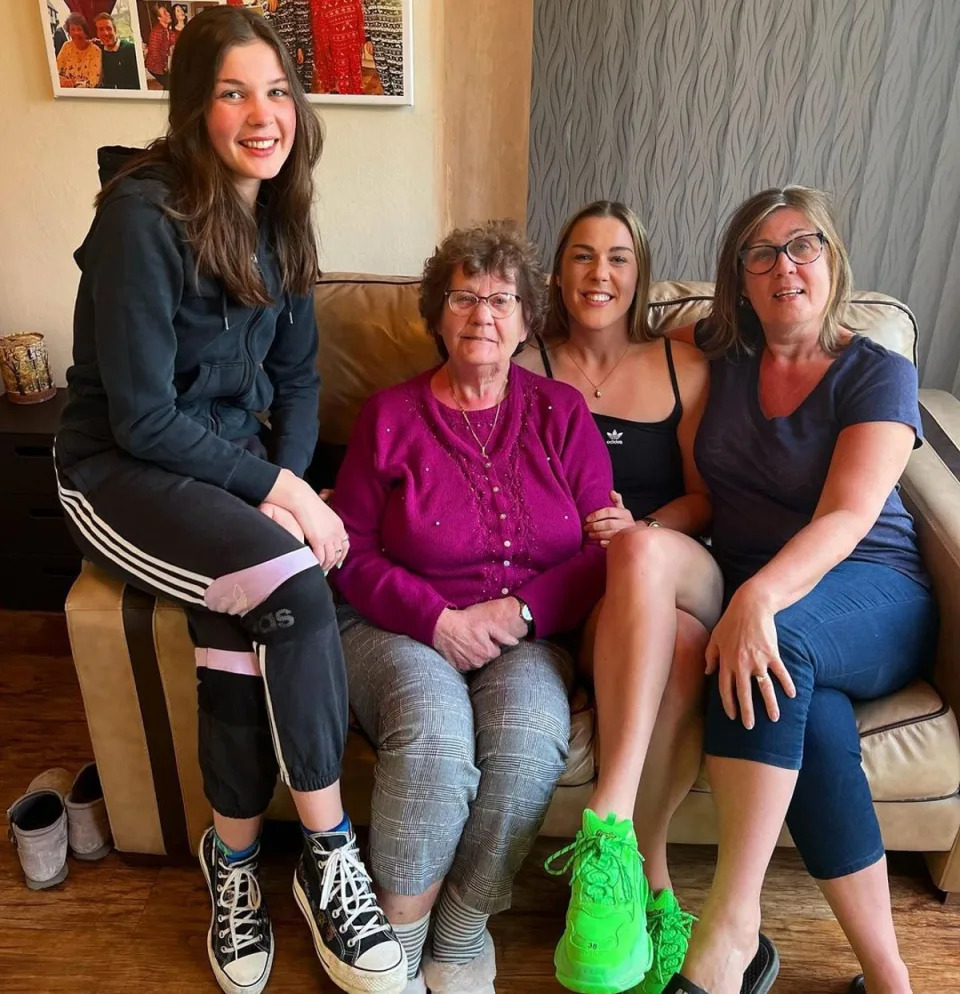
Mary Earps with her younger sister, grandmother and mother (Mary Earps via Instagram)

She continued: “Football really helped me at school. It helped me communicate with people better and gave me the confidence to disagree with people if we were having a debate in class.

“Sport is great like that. It gives you drive and ambition. The way I am is shaped by my sporting background. It helps you make friends, it teaches you lessons and how to interact with people. You get to meet people from all kinds of backgrounds, too, which is brilliant."

As well as her father and brother, Earps is especially close with her mum, Julie. Turning up at her GQ shoot, where the BBC was also present, Earps and her mum joked about, saying they just “fake it for the cameras” in a classic show of multi-generational Earps mockery.

“We’ve always been proud of her,” Julie told the BBC in a separate, more serious interview, “[I’ve] always thought, ‘Well I must have done something right, [to turn] out this incredible girl.”

“She’s enthusiastic about everything,” her mum continued. “She did have a period where she wasn’t enjoying life and her football was a bit precarious but that’s all turned around [in the] last year.”

The whole family bond around football — including Earps’ Gran, who the goalkeeper has filmed watching footie matches before, making well placed comments on male footballers “rolling around on the floor [...] holding his bloody knee and nobody touched him.”

Majoring in football with a side of Information Management

After nestling into West Bridgford Colts with a natural knack for goalkeeping, Earps moved to Leicester City aged 14 and was trained at their centre of excellence. It was then that football became a serious pursuit for Earps, who proceeded to play for nearby teams Nottingham Forest and Doncaster Belles.

However, being a women’s footballer also means being pragmatic, as most women’s football pursuits aren’t enough to pay the bills on their own. For context, a footballer in the Women’s Super League (the highest women’s football league in England, making it the closest equivalent to the Premier League) earns an average salary of £47,000 a year, whereas male players in the Premier League make more than that, on average, per week.


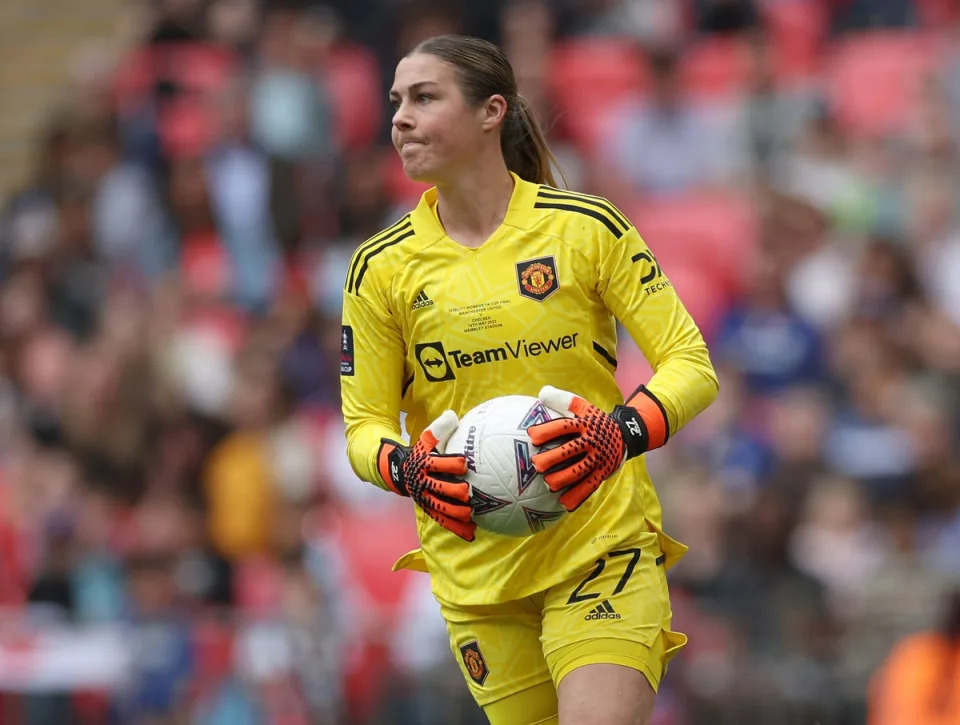
Earps in her Manchester United kit (The FA via Getty Images)

So, knowing that she may realistically need another job at some point, Earps applied to the same university as her brother — Loughborough — and signed up for a degree in Information Management and Business Studies, from which she graduated in 2016.

Luckily, the football world quickly swept in to remind Earps of her first dream, and she joined England’s senior squad as the fourth keeper in 2017, just a year after graduating. Next came Bundesliga, then Manchester United, and she has stayed at the latter club ever since she joined in 2019.

Getting dropped from England and struggling to make ends meet

In 2019, then-England manager Phil Neville crushed Earps’ dreams when he unexpectedly dropped her from the national team. “I was very much of the thinking that: ‘Yeah, this is probably the end of the international road,’” Earps told The Guardian of this time period. “I never expected anything more. I didn’t feel entitled to anything.

“I never thought I’d be in a squad for a major tournament again, let alone start a final. I can remember the days of feeling really low. I got to a point where I felt I’d reached my limit. I’d given football a good go but I wasn’t quite good enough.”


Mary Earps at the Women’s 2022 Euros (REUTERS)

Matters were made worse when her WSL club, Manchester United, presented her with a contract offer which was too low for her to actually live on. “I was down and out,” she told GQ. “There was no way my career was going to be resurrected. It was dead and gone. Run over 3,000 times and trampled by a million elephants.” Luckily, a slightly higher offer came through from United in the 90th minute, and Mearps was able to cling to her football dream by her fingertips for just a minute longer.

Then came Sarina Wiegman, who was hired in 2021 to replace Neville, and recognised Earps’ potential immediately. “I felt she really understood me,” Earps told The Guardian, “believed in me and had real empathy for me as a human being. That’s not something I’d experienced a lot in football.”

Back in the game


Mary Earps is awarded the FIFA Golden Glove Award following the FIFA Women's World Cup 2023 final (Getty Images)


Just a year after Sarina Wiegman stuck her neck out for Earps, the Nottingham-born goalkeeper helped lead the England team to victory at the Women’s Euros, securing England’s first major trophy in over 60 years. Earps conceded only twice in the whole tournament, and Wiegman’s decision to put her back on the team was undeniably consolidated. Earps and her teammates became national heroes, and her life turned upside down.

“What I’ve enjoyed in the last four years is that it [sometimes] feels like it can take an eternity for things to change, and then it just changes very quickly,” Earps told GQ of her experience since the Euros. “I’m conscious of trying to be as present as possible, knowing that my time could be up at any point.”

In February, Earps thanked her family for “picking her up off the kitchen floor” after she was named FIFA Women’s Goalkeeper of the Year at the 2022 Fifa Best Awards in Paris (which were postponed until 2023 due to Covid). “This is for anyone who has been in a dark place,” she said while clutching her award on stage. “There is light at the end of the tunnel.”

And while England may not have brought home a trophy at this year’s Women’s World Cup, Earps’ profile has only risen thanks to her killer save in the second half, as well as her online presence throughout the tournament. Nicknamed the “TikTok queen” of the Lionesses, Earps has documented her and her teammates’ Australian antics with a sense of joy so abundant you wouldn’t know they were in the midst of a major tournament.


Whether it be surprising her teammates with “jumpscares,” whale watching on the coast, showing off their dancing skills or printing her teammates’ faces onto her coffee, Earps’ TikTok is the tonic to any post-World Cup sadness.

We just hope there are many more silly clips and killer saves left to come.
UK
Warning over major disruption to NHS services as consultants prepare to walkout in latest strike


Daniel Keane
Wed, 23 August 2023 

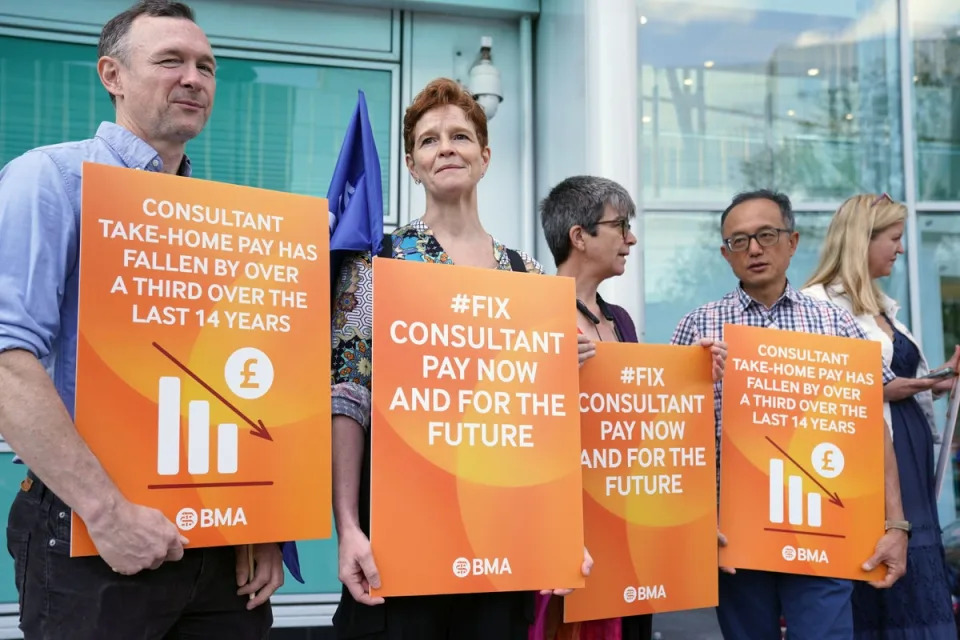
Consultant members of the British Medical Association stand on the picket line outside University College London hospital (PA Wire)

NHS leaders have warned of “major disruption” to services in London ahead of a two-day strike by consultants.

Dr Chris Streather, medical director for the NHS in the capital, said Londoners would feel the impact of the walkout “significantly” as thousands of senior doctors in the British Medical Association (BMA) prepared to strike for the second time over pay.

The strike will begin at 7am on Thursday and last until 7am on Saturday. Consultants will still provide “Christmas Day cover”, which means emergency care will be provided.

However, NHS trusts expect to cancel tens of thousands of operations as consultants are the most senior staff working in the NHS - meaning no other clinicians can cover for them. The action comes just nine days after a five-day walkout by junior doctor members of the BMA, with an average of 2,842 staff off in London each day.

The BMA is seeking a pay rise to correct a real terms fall in income since 2008, but the union has not demanded a specific figure.

Dr Vishal Sharma, the BMA consultants committee chairman, said last month that a 12.4 per cent pay increase accepted by junior doctors in Scotland would be enough to call off strikes by consultants in England.

But Prime Minister Rishi Sunak has insisted that the 6 per cent pay rise offered to NHS doctors is “final” and negotiations will not be reopened.

Speaking ahead of the strike, Dr Streather said: “This planned industrial action comes only ten days after the strike by junior doctors and Londoners will feel its impact significantly.

“The summer is also a period where staff often take annual leave and this, combined with the fact that consultants will stop seeing patients and will also not be able to supervise other medics means major disruption is anticipated. Doctors will only be able to attend to emergency patients.

“Those with life-threatening conditions should always call 999 but we ask Londoners to contact NHS 111 and use their pharmacy and GP practice as a first point of call for non-urgent care.

“If you haven’t been contacted or informed that your planned appointment has been postponed, please attend as normal.”

NHS trusts have raised concerns over the timing of the strike - just before the bank holiday weekend - which could put many services out of action for five days.

Dr Richard Jennings, Chief Medical Officer for St George’s, Epsom and St Helier University Hospitals and Health Group, said: “Summer is traditionally less busy for the NHS, but that certainly hasn’t been the case this year. Industrial action and periods of increased demand – including our busiest day ever in our emergency departments – have meant we’ve faced significant pressures.

“That looks set to continue this week and into the weekend, so once again we’re asking for your support. If you need medical help, please consider whether our emergency departments are the best place for you to be, or if it’s more appropriate for you to seek treatment elsewhere.”

More than 839,000 appointments and procedures have been cancelled since industrial action began in the NHS last December.

If the community and mental health figures are included, the total rises to nearly 900,000 - though this will not reflect the overall number of actual cancellations, due to some duplication of data.

A record 7.6 million Britons are currently on a waiting list for NHS treatment, a figure that ministers have admitted could surpass 8 million next year.

Consultants on a 2003 contract earn a starting salary of £88,364 in basic pay, rising to £119,133 after around 19 years, according to the BMA.

The Department of Health and Social Care said that on average, consultants have additional earnings worth around 31 per cent of basic pay, covering “additional programmed activities”, clinical excellence awards and on-call payments, which take total average NHS earnings for 2022/23 to around £127,000.


Civil Aviation Authority workers vote in favour of industrial action

Alan Jones, PA Industrial Correspondent
Wed, 23 August 2023 

Workers at the Civil Aviation Authority (CAA) have voted overwhelmingly in favour of industrial action in a dispute over pay.

Members of the Prospect union backed strikes by 2-1 and by almost 9-1 for other forms of industrial action.

The union said the CAA had refused to provide a “fair” pay rise for this year.

Prospect added that an internal survey of CAA workers found that two in five are considering leaving the organisation because of poor pay and excessive workload.

It was the first time a ballot on industrial action has taken place at the CAA, said Prospect.

Turnout was 65%, well over the required legal threshold.

The timing and nature of industrial action will be decided in due course.

Mike Clancy, general secretary of Prospect, said: “More than a decade of real terms pay cuts have left our members at the CAA with no choice but to take industrial action.

“During the initial stages of the pandemic they did their part by taking a pay cut to enable their employer to continue to function.

“This show of goodwill has not been returned and inadequate pay levels are having a serious impact on recruitment and retention at the CAA.

“The employer can still avert this industrial action by coming back to the table with a meaningful offer that addresses the ongoing cost-of-living crisis.

“If they do not do so, then the CAA’s status as a world-class aviation regulator is at risk.”


Rob Bishton, interim chief executive at the Civil Aviation Authority, said: “It is disappointing that some members of the Prospect Union have voted in favour of industrial action.

“We recognise the cost-of-living challenges that colleagues face, which is why we’ve already implemented a 5% pay rise, along with a further pay increase for many staff in October. This increase also takes account of the interests of those who pay our charges and public sector pay policy.

“With a modest proportion of the Civil Aviation Authority’s workforce who are members of Prospect, should there be any action by our colleagues, we do not anticipate any disruption to the aviation sector. We continue to engage constructively with Prospect.”

The CAA said around 240 employees were members of Prospect – 16% of a total workforce of around 1,500.

Antiquities dealer who uncovered British Museum theft was treated like ‘village idiot’


Gordon Rayner
THE TELEGRAPH
Wed, 23 August 2023 

Ittai Gradel discovered stolen items being sold on eBay
 - Matthew James Harrison

The man who uncovered the biggest ever theft from the British Museum says that he has been treated like a “village idiot” by its two most senior executives, and said they must be sacked to prevent further damage to the world-renowned institution.

Ittai Gradel, a Danish antiquities dealer, said the “slow torture” of disclosures about the scandal will only be halted by the departure of the museum’s director Hartwig Fischer and his deputy Jonathan Williams.

Speaking exclusively to the Telegraph, Dr Gradel explained how he uncovered the theft of the decade with years of detective work and said that he had “suffered horribly” as the British Museum “refused to listen” to his warnings for two years.

Had it not been for Dr Gradel’s refusal to take no for an answer, resulting in him directly contacting George Osborne, the museum’s chairman, after being “fobbed off” by its managers, the theft of more than 1,500 objects might still have remained unknown.

But rather than thanking him for discovering the thefts, Dr Fischer has gone on the attack, effectively blaming Dr Gradel for the two-year delay in confirming the treasures were missing.

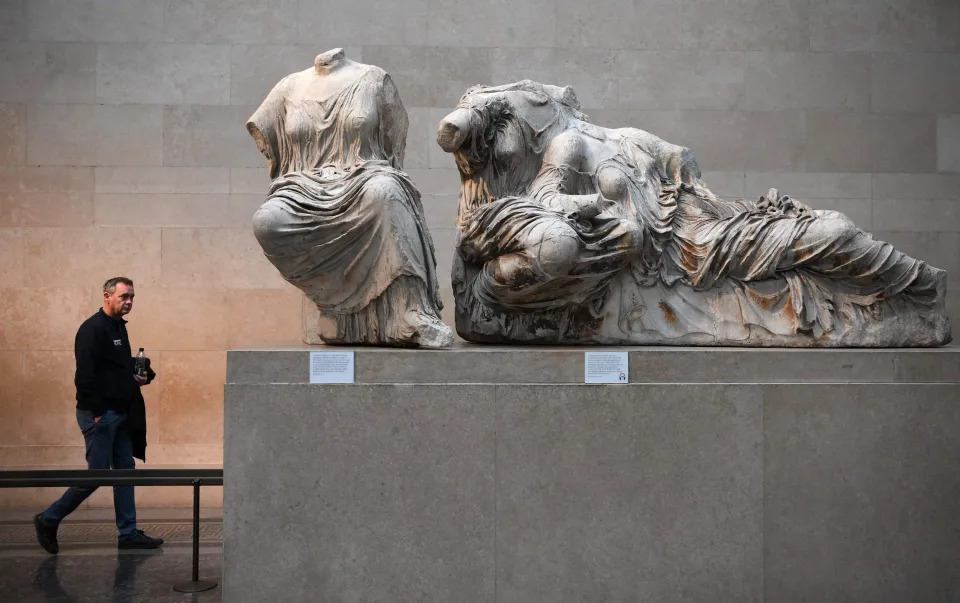
The whole episode has turned into an unedifying row being played out to the entire antiquities world, which has been seized upon by those who have long demanded the return of “stolen” artefacts including the Elgin Marbles and the Benin Bronzes.

Dr Gradel, 58, has maintained his silence since the museum first went public with news of the theft last week but said he could no longer stand by while the museum went through a “nuclear meltdown” under the management of men he accuses of “incompetence”.

“The management has lost control of events,” he said. “Hartwig Fischer is a setting sun who has already said he is leaving next year. It is pointless and absurd that he insists on clinging on.

“As for his deputy Dr Williams, I simply cannot find an explanation. Why did he not follow the trail back when I sent him the evidence?

“The museum deserves so much better. It is one of the glories of human civilisation but it is being ridiculed all over the world.”


Former curator Peter Higgs has been dismissed by the British Museum - UNPIXS

Dr Gradel’s repeated warnings finally culminated in the announcement last week that jewels dating as far back as 1500 BC were “missing, stolen or damaged” and that a member of staff – now known to be former curator Peter Higgs – had been dismissed. Mr Higgs denies any wrongdoing.

Dr Gradel first alerted the museum to his suspicions of the thefts via a middleman in 2020, then in February 2021 contacted Dr Williams directly, with a dossier of evidence showing that items were being sold on eBay from a seller with a bank account in the name of Peter Higgs.

But he explained it was back in 2016 that his suspicions were first aroused.

“I saw a cameo fragment for sale on eBay, which was taken down from the site after a few hours, but I had taken a screenshot of it because I recognised it,” said Dr Gradel, who spent hours in the British Museum as a student and then a university don in England when he was younger. “It looked like a line drawing that had been published in the British Museum catalogue of 1926.”

Dr Gradel had bought items from the same seller starting in 2014, and when he asked the seller – whose eBay name was sultan1966 – where they had come from, he was told the seller’s grandfather had owned a junk shop in York between the wars.

Dr Gradel still suspected the item was stolen but thought it must have been taken from the museum decades ago because there was no recent inventory of it, “so there was no urgency”, he said.

“I didn’t want to alert the seller so I kept mum and kept following him to see if anything else came up.”


The row has been seized upon by those who have long demanded the return of 'stolen' artefacts, including the Elgin Marbles - Daniel Leal/AFP

It took another four years – until 2020 – for his breakthrough. A fragment of a Roman cameo was put on eBay and this time there was a colour photograph of it on the British Museum website. “I saw immediately that this was a very recent photo,” he said. “So I knew this whole provenance story about the junk shop was a lie.”

He began checking back through his own records, the British Museum’s records and other publicly available sources to see if other stolen items might have been on the market, and came to the uncomfortable conclusion that he had been inadvertently handling stolen goods if all of the items he had bought from sultan1966 were from the museum.

Because there is no complete record of all eight million items in the museum’s collection, it was impossible to verify whether most of them had been stolen from there, but he had bought about 70 items from sultan1966, ranging from £15 for a Medusa cameo to a few hundred pounds.

They included a ring he bought for £150 on the assumption that it was a copy of an Egyptian artefact, but when it arrived “it was the real thing – it dated from the Ptolemaic kingdom” which ended in the reign of Cleopatra.

Dr Gradel said: “I contacted the seller and told him it was genuine, so I offered to send it back or send him another £500. He took the £500.”

In 2020 he asked an art dealer friend to alert the museum to the apparent thefts in 2020 while he continued his investigations.

A fragment of a plasma gem, bought by another dealer for £69 in 2015, matched a picture in the museum’s inventory, making three items that he was sure were stolen. He was convinced that someone with access to the museum’s collection had been stealing uncatalogued items to avoid detection, but got “sloppy” and sold some items that were traceable.

“It only made sense if the items that could be traced back to the museum were the tip of a much larger iceberg,” said Dr Gradel. He suspected another 150 items he had bought from a third party had also originated from the museum.


It was discovered that the eBay seller was linked to a bank account in the name of Peter Higgs

He contacted a retired keeper from the museum who told him that there were “large piles” of unregistered gems and that when one collection of 942 uncatalogued items was checked, only seven were found to be remaining.

The sultan1966 eBay account stopped selling antiquities around 2020, said Dr Gradel, and after that it started selling old Abba LPs and used kitchen utensils for as little as 50p.

When he checked his records he could see that sultan1966’s PayPal account was linked to a bank account in the name of Peter Higgs.

He sent his dossier of evidence to Dr Williams in February 2021, by which time Mr Higgs had been promoted from curator of Greek collections, Greek sculpture and the Hellenistic period to keeper of Greek collections, meaning he was in charge of the Elgin Marbles, among other items.

Emails seen by the Telegraph show that Dr Williams took until July 2021 to respond, when he said the objects were “all accounted for” and the allegations were “wholly unfounded”. Dr Williams offered to send Dr Gradel contact numbers for the police.

The following year Dr Gradel contacted museum trustee Sir Paul Ruddock to air his concerns.

Internal emails show that in October 2022 Dr Fischer said the case had been “thoroughly investigated” and there was “no evidence to substantiate the allegations”.

“They treated me like some village idiot,” said Dr Gradel. “I suppose they feared the scandal.”

He later contacted Dr Fischer directly with his evidence, to no avail, and it was only when he directly contacted George Osborne, who became the museum’s chairman in October 2021, that a proper audit was done and discovered close to 2,000 missing items.

Dr Gradel said: “Clearly the director and deputy director thought I would just go away. Maybe they had a siege mentality because they were consistently subject to these attacks from people calling the museum a repository of stolen objects.

“I have suffered horribly over this, first finding out I had handled stolen goods and then the fact that the museum refused to listen.

“It didn’t dawn on them at all that I was also a victim in all this. But if I hadn’t pursued it to the end I would have been complicit in a crime, if not in the legal sense then certainly in a moral sense, and I just couldn’t live with that.”

Dr Gradel, who lives two hours west of Copenhagen, has received a letter of thanks from Sir Nigel Boardman, the former trustee who is in charge of an internal inquiry into the thefts, and has been told he will be formally thanked by Mr Osborne.

He has never been thanked by Dr Fischer or Dr Williams, and Dr Fischer has now tried to suggest that Dr Gradel did not give the museum as much information as he could have done.


Peter Higgs was formerly keeper of Greek collections at the museum, putting him in charge of the Elgin Marbles


Dr Fischer said: “When allegations were brought to us in 2021 we took them incredibly seriously, and immediately set up an investigation.

“Concerns were only raised about a small number of items, and our investigation concluded that those items were all accounted for.

“We now have reason to believe that the individual who raised concerns had many more items in his possession, and it’s frustrating that that was not revealed to us as it would have aided our investigations.”

In response, Dr Gradel said: “They never even contacted me. I was waiting the whole time for them to ask me to give testimony. Why can’t they just own up to their responsibility?”

The thefts are currently the subject of a police investigation, but for Dr Gradel it is the future of his beloved British Museum that is paramount.

“The directorate needs to go,” he said. “It is slow torture the longer they stay. To see it in the hands of such incompetent people is painful – it needs a fresh start.”
UK
Poll: Labour Now On 50% With 25-Point Lead Over The Conservatives


Ned Simons
HUFFPOST UK
Wed, 23 August 2023


Labour now has the support of 50% of voters and has surged to a 25-point lead over the Conservatives, according to a new poll.

It will be a blow to Rishi Sunak and a boost to Keir Starmer after a difficult August for the prime minister.

The Deltapoll survey put Labor on 50%, the Tories on 25%, the Lib Dems on 9% and other parties on 17%.

Sunak has to call a general election by January 2025 at the latest, but it is widely assumed he will go to the country next year.


The poll was conducted between August 17 and 21 and showed Labour jumping 4-points and the Conservatives dropping 4-points since the previous survey, which was run from August 9 until 11.

According to the pollster, it means Labour has widened its lead over the Tories by 8-points.

The government had hoped to use the second week of August to take the fight to Labour on migration and the NHS.


But “small boats week” backfired when asylum seekers being housed on the Bibby Stockholm barge were removed after the Legionella bacteria was discovered on-board.

Sunak has also admitted he may not meet his pledge to “stop the boats” by the next election.

And “health week” - which followed - was consumed by a row over waiting times for cancer patients.

There was better news for the prime minister last week however, when the latest figures showed inflation dropped to to 6.8% in the year to July from 7.9% in June.

The PM has promised to half inflation from its peak of 10.7% at the start of the year.

Officials statistics also showed UK wages had grown at a record rate in the three months to June.
UK
Eleven people listed on first Rwanda flight staged hunger strike

Diane Taylor
Wed, 23 August 2023 

Photograph: Anadolu Agency/Getty Images

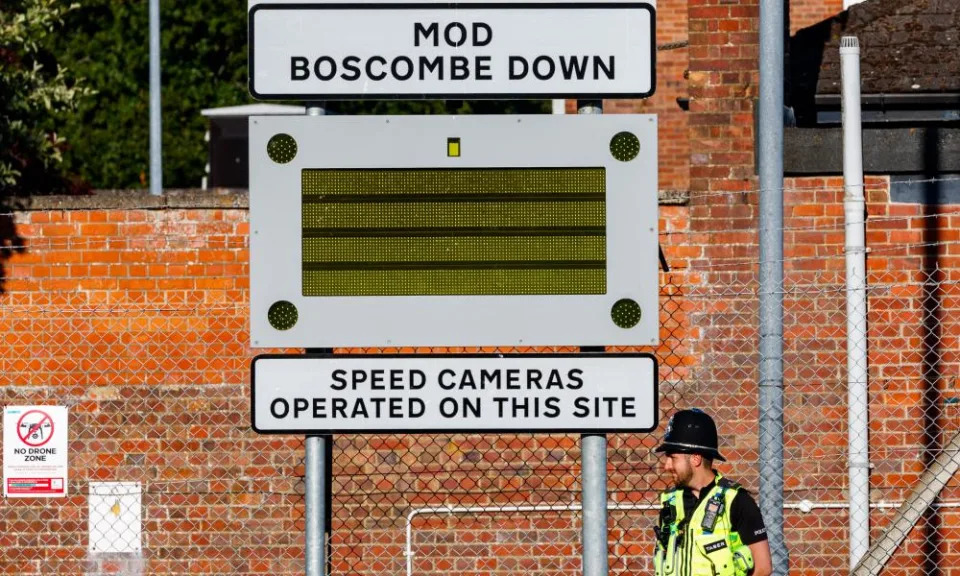
Eleven people earmarked for the first deportation flight to Rwanda staged a hunger strike to protest about their forced removal, according to a report from an independent watchdog. The annual report from the Independent Monitoring Board for Gatwick Immigration Removal Centre highlights grave concerns about how the Home Office managed the process of attempting to remove people to Rwanda, a controversial policy which the government says will deter small boat arrivals.

That first flight was cancelled shortly before it was due to take off from Boscombe Down Ministry of Defence site in Wiltshire after a last-minute intervention by the European court in June. The Court of Appeal found the Rwanda policy to be unlawful but government is due to appeal against that ruling in the supreme court in October. The report issues a series of warnings for government about its Rwanda policy.

“The board remains concerned that if this policy is fully implemented and men are detained prior to removal there is a high likelihood of real harm,” it states, adding that the process of removing people to Rwanda was “inadequate, resulting in unacceptable compromises to the men’s safety”.

One hundred people who were held in the Gatwick detention centre received notices of intent letters from the Home Office that there were plans to forcibly remove them to Rwanda.

It has been reported that 128 people received notices for the inaugural flight – 28 at Heathrow immigration removal centre and the rest at Gatwick. Just one person from the Gatwick centre was taken to the airport in preparation for removal. The report found that he suffered a severe panic attack.

A total of seven asylum seekers were taken to Boscombe Down for the aborted flight, six of whom were staying at the Heathrow immigration removal centre.

The report also raises concerns about the time removal directions were issued to those the Home Office hoped to remove to Rwanda. These removal directions were issued on 30 May, the queen’s jubilee weekend, when it was harder for people to access lawyers.

An earlier report from the IMB’s charter flight monitoring team published in June 2023 found that two of the seven people the Home Office tried to put on the flight to Rwanda were on constant observation due to their risk of suicide, with one put into a waist restraint belt.

Three of the seven were subjected to use of force. One person was not offered access to paramedics when he needed it. One man started praying on the airfield believing the plane would take off imminently while the report stated “two started to scream out their fear and distress, each trying to hurl his torso and head backwards and forwards”. Both were put into waist restraint belts.

A Home Office spokesperson said: “We take the wellbeing and safety of those in our care incredibly seriously and have dedicated welfare teams across all sites who can escalate any instances of mental health or illness.

“There are also robust safeguarding measures in place to ensure everyone within our care, including vulnerable people, is treated with dignity and has access to the support they need including legal advice while in detention.”


Bibby Stockholm asylum barge faces fresh legal challenge

Sky News
Updated Wed, 23 August 2023 


The Home Office is facing a legal challenge from a local mayor over whether it has the right planning permission to accommodate asylum seekers on the Bibby Stockholm barge.

The controversial vessel - docked in Portland, Dorset - saw its first residents board earlier this month. But within days, the men were moved off after a Legionella outbreak was detected in the water supply.

It is not yet clear when asylum seekers will return to the barge, with Rishi Sunak's official spokesperson refusing to put a timetable on it.

But the government's plan is now facing a new challenge with a battle in the courts.

Mayor of Portland and local councillor Carralyn Parkes "put the government on notice" that she intended to launch a legal challenge against Home Secretary Suella Braverman on 7 August - though she said she was acting in a "personal capacity as a private individual and local resident" rather than as a politician.

Writing on her crowdfunding website for the action, Ms Parkes said: "If you or I want to put up a porch at our home, we need to apply for planning permission. It's wrong that the Home Office does what it likes without complying with the same rules.

"If they'd applied for planning permission, they would have had to consult with local people - but we never got the right to have our say. I also believe that planning permission would have been refused."

Read more:
Man who lived on vessel calls it 'cramped' and 'claustrophobic'
Sunak still has 'confidence' in home secretary despite Legionella discovery
Asylum seekers should be moved back despite Legionella row, says health secretary

Ms Parkes lawyers, Deighton Pierce Glynn Solicitors, also claimed the Home Office had not got a marine licence for the vessel needed for some coastal developments, demanding the Marine Management Organisation (MMO) issued an enforcement notice against the barge until such a licence had been obtained.

And they attacked Dorset Council for "continuing to maintain that it has no power to enforce planning rules over the barge".

Ms Braverman's response to the legal action had been due on Monday, but the department told them it would now not arrive until late next week.

A statement from Ms Parkes lawyers said: "We urge the Home Office and Dorset Council to respond to our client's letters and confirm their position and reasoning for their decision-making.

"Transparency is a key tenet of good governance. Those affected by authorities' decision-making are entitled to know what decisions are being made and why."

A Home Office spokesperson said: "It would be inappropriate to comment on ongoing legal proceedings."


Opinion

This horror story visited on South Wales by Suella Braverman could be coming to a street near you


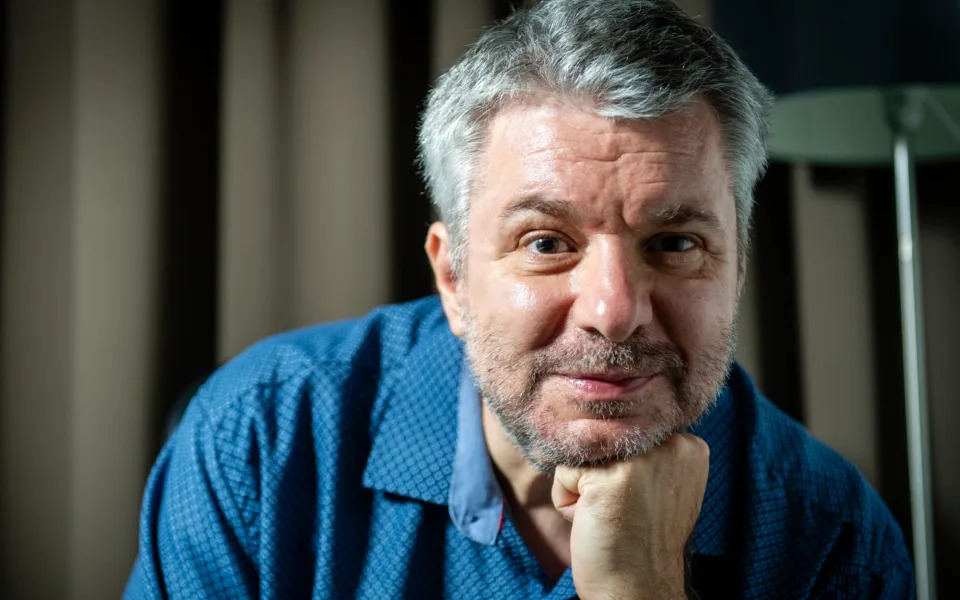
Aditya Chakrabortty
Wed, 23 August 2023 


Take what follows as a little local horror story, if that makes you feel better. But I see it as a parable, a lesson in how toxic things can get when some of the basest ingredients in politics are blended just so and left to fester. Our setting today is a town a few miles outside Swansea, yet with only a few changes it could come to the end of your road.

“I was always proud to say I was from Llanelli. Now? It’s worse than embarrassed. I’m ashamed.” That’s not a disgruntled neighbour speaking, but the leader of Llanelli’s council. And what’s upsetting David Darkin isn’t some new eyesore, but the forces gathering on his streets. In the privacy of his office, he likens what’s outside to the 20th century’s darkest decade.

Just a few months ago, no one here would summon up the ghost of 1930s fascism. But that was before this spring, when the town’s top hotel was taken over by the Home Office to house about 250 asylum seekers – and all hell broke loose.

The Stradey Park Hotel is described by local people as “the jewel in Llanelli’s crown”, the place where everyone wanted to hold their weddings. Even today, as workmen pull out the building’s innards in preparation for its new role, it leaves a splendid shell: a cream-coloured Edwardian mansion tucked into a hillside, with views over the Gower coastline.

Now it is in the hands of Suella Braverman. However hard the home secretary huffs and puffs about cutting hotel bills for asylum seekers, she is now one of the biggest hoteliers in Britain. To house a huge backlog manufactured by the Tories, Braverman has just shy of 400 hotels, creating a chain more than twice the size of the Hilton group in the UK.

What costs taxpayers billions is making some people extremely rich. Stradey Park was sold in 2020 to Sterling Woodrow, an investment firm based about 250 miles away in Billericay, Essex, which also trades in hotels for refugees, first in Cumbria and now here. It struck a deal with Clearsprings Ready Homes, one of just three firms that handles all the Home Office’s asylum seeker accommodation. The founder of Clearsprings is Graham King. In 2022, the company reported profits of £28m, six times more than the year before.

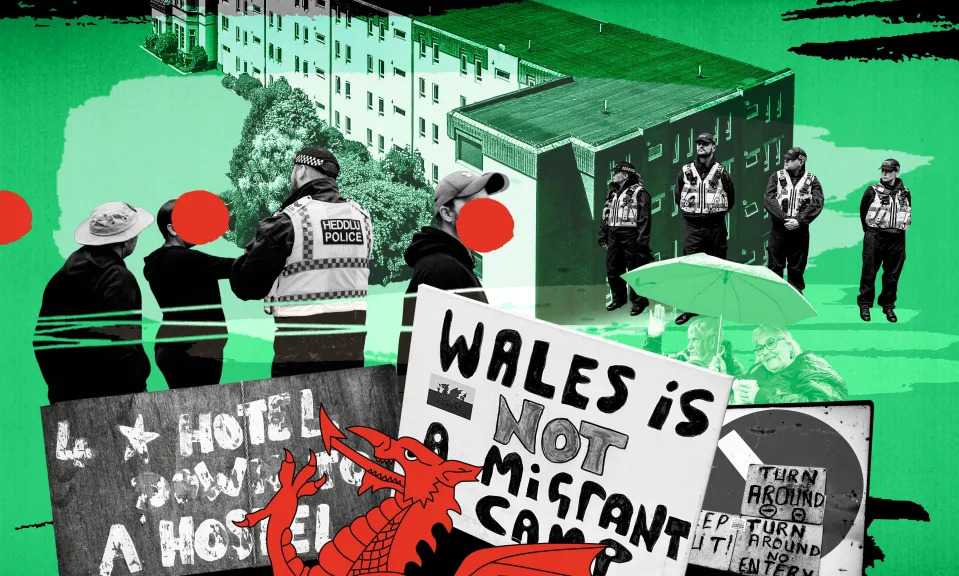
Stradey Park should have received its new residents at the start of July, but local resistance put a stop to that. The opposition began with court cases and letters to Whitehall from the town’s great and good, but over the past 12 weeks it has metastasised. A permanent protest camp has sprung up right at the hotel gates, and what it has become leaves the town’s elected representatives baffled and fearful.

What began as complaints about the loss of a four-star hotel and 100 jobs is now a swamp of conspiracies about invaders and foreign rapists. A leaflet recently given out around the town asks: “Is it racist to protect your home from unknown unvetted illegals?” Last week, some of the people at the camp stormed the hotel. One leader of the original protest, Robert Lloyd, is now hounded outside his home for not being hardline enough. He says that friends whose weddings he attended now threaten him, and the night before we met last week, the police were doing hourly patrols outside his house.

Every jobbing demagogue is now making a beeline for south Wales. Katy Hopkins and Richard Tice have done selfie stops, while GB News and TalkTV have piled in. And this weekend, sad-sack fascist Anne Marie Waters addressed a capacity crowd, following on from the fascist organisation Patriotic Alternative, which has papered the town with its hate literature. At Hope Not Hate, Rosie Carter has spent years monitoring extremist organisations, but what she sees in Llanelli troubles her: “It’s far-right radicalisation in real time.”

A couple of hundred miles away in Westminster, “culture wars” is just another electoral sport, to be indulged for a couple of points in the polls or a mention in the papers. But in south Wales or Dunstable or Knowsley, you see what’s really at stake, where the mainstream and extremist right effectively collaborate in poisoning the very soil of a place so that supposedly subterranean prejudice voiced after last orders has become chest-out, finger-jabbing racism.

The Labour party in Llanelli, as elsewhere, has not reacted honourably. The most outspoken opponent of this bigotry has been the local Senedd Cymru member, Lee Waters. Among the abuse he has received as a result are direct threats to him and his family. Despite that, one county councillor turned up at the camp, posing in a camouflage jacket alongside a placard reading Welsh Lives Matter. No action has yet been taken against him, for all Labour’s protests of being an anti-racist party. Other Labour party representatives have been rather circumspect, perhaps out of a sense that their electoral base mustn’t have any prejudices challenged. By their silence, they are effectively allowing some of the basest rhetoric to be normalised.

One local antiracist activist, Steve Kelshaw, says: “Churches won’t say anything; the Labour party won’t say anything. All our usual sources of moral authority have gone.” That authority rested on an economic order, which has also dissolved. Llanelli steel production was once called a Klondike, so well did it pay, while down the road is what remains of Port Talbot, once called Treasure Island because no one could believe how good the wages were. All of that has gone now, with a town centre that in places is more boards than shops.

Almost everyone in Llanelli told me the camp was a no-go area, that a visit would mean intimidation or worse. But I didn’t think that would be fair, either to those protesting or to anyone reading this. So I went.

The hotel and its opponent camp sit on a narrow road out of town. There are protesters everywhere in front, watched over by police officers. When the residents move in, some from war zones of their own, it will become a fortress on a hill. From a balcony hangs a banner reading: “No illegal immigrants.” Fluttering elsewhere is military regalia: an RAF flag, a banner with a poppy and the legend “Lest we forget”. This sight was honked by a passing car at least every minute. Men and women came out of the tent to stare at me.

In the spring of 2016, when I came to south Wales before the Brexit vote, plenty of people told me how migrants were taking houses, hospital appointments, benefits. Mingled in with all that this time was something else: conspiracies. A man pulled out his phone and showed me a video of a white boy on his knees crying and kissing the feet of what he claimed were “Afghanistanis”. Where was this video from and when? He didn’t know. When white boys did the bullying wasn’t that also wrong? He didn’t appear to care.

In another conversation, a man fretted about not enough Welsh children being born. It was an echo of the chant from the far right in Charlottesville, Virginia, about white people being replaced. Out of the corner of my eye, a placard read: “We were never asked”. You might think it meant the conversion of the hotel, but the same phrase is plastered across the publications of the far right, to warn that immigration will dilute whiteness.

This back-and-forth went on for what felt like an hour, in the pouring rain of a Welsh summer. People would voice grievances, like housing and jobs, that could surely be solved with politics and money. And then they would lurch off into wild talk about how Albanians and Somalis have a propensity to gang-rape. It was a mix of the prosaic and the conspiratorial, as if your neighbour stopped talking about their lawn to whisper that lizards were moving in next door.

So much has been taken from this region over the decades – the anthracite coal, the tin and steel – but at least then local people got paid something for their troubles. This time, too, everyone wants to get their cut from Llanelli: the hotel owners, the outsourcing firm, the Home Office. Then there are the touring nationalists, popping over the border to pretend they care about Wales, while in Silicon Valley the social media firms whip up any tensions with their algorithims.

Back in Westminster, Braverman ponders how all this will play for her next leadership bid. Some day soon, all these people will move on to their next fairground. And the poor sods in this sometimes-beautiful town will have to decontaminate their very soil.

Aditya Chakrabortty is a Guardian columnist


UK's first-ever womb transplant hailed by doctors as 'dawn of new era' in fertility treatment

Sky News
Tue, 22 August 2023 


The first-ever womb transplant in the UK has been hailed as the "dawn of a new era" in fertility treatment.

A 40-year-old woman, who already had two children, decided to help her 34-year-old sister, who had been born without a uterus.

Now, six months on, the recipient is having periods and is preparing to eventually have her own embryos implanted, already created via IVF with her own eggs.


Professor Richard Smith, one of two lead surgeons during the operations, said it had been a "massive success", describing the joy he shared with the sisters during a clinic one month on.

"We were all in tears - it was a very, very emotional," he said.

"I think it was probably the most stressful week of our surgical careers, but also unbelievably positive.

"The donor and recipient are just over the moon."

The recipient lives in England, and she and her sister do not wish to be named.

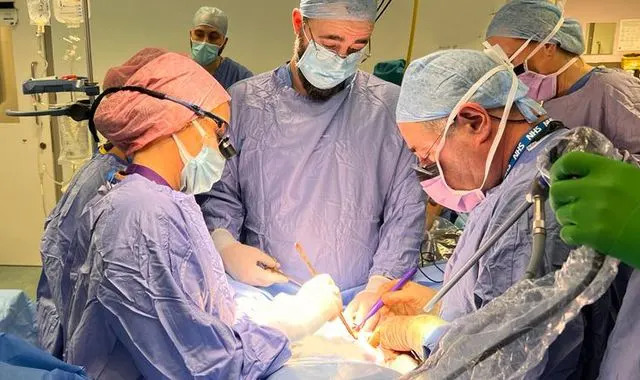
The surgery was carried out one Sunday in early February at Oxford's Churchill Hospital by a team of more than 30 staff.

The operation to remove the donor's womb lasted more than eight hours.

Before the uterus was taken out, surgeons had already begun operating on her younger sister and after a further nine hours and 20 minutes, the transplant was complete.

The surgery was funded by Womb Transplant UK at a cost of £25,000, which included paying the NHS for theatre time and the patients' hospital stay.

Surgeons and medical staff were not paid for their time.

"I'm just really happy that we've got a donor, who is completely back to normal after her big op, and the recipient is… doing really well on her immunosuppressive therapy and looking forward to hopefully having a baby," said Prof Smith, who is the charity's clinical lead.

The transplant is expected to last for a maximum of five years before the womb will be removed.

'Remarkable achievement'

The chair of the British Fertility Society, Dr Raj Mathur, described it as "a remarkable achievement".

"I think it's the dawn of a new age, a new era in treating these patients," said the consultant gynaecologist.

"You have got to remember some of these patients are the most difficult fertility situations that you can imagine - they are either born without a uterus or they have lost the uterus for reasons of cancer or other problems, for instance in labour.

"Up until now we have really not had any way of helping them other than surrogacy."

Pollution 'can damage babies in womb'

Isabel Quiroga, consultant surgeon at the Oxford Transplant Centre, and fellow lead during the operations, said they had been ready to attempt the first transplant before the pandemic.

"We are just delighted that this day has come," she said.

"The whole team worked extremely well - it was an incredibly proud moment."

For now, the plan is to focus on living donations from a relative with up to 30 transplants a year, but many women have come forward to offer their wombs.

"We have women contacting the charity… such as young women who say: 'I don't want to have children, but I would love to help others have a child' or 'I've already had my children I would love other women to have that experience'," said Miss Quiroga.

Other countries, including Sweden and US, have already carried out womb transplants, ultimately resulting in successful births.

A second UK womb transplant on another woman is scheduled to take place this autumn, with more patients in the preparation stages.
CRYPTOZOOLOGY
The people who 'know' there are big cats in Britain

Jack Rear
Wed, 23 August 2023


Rick Minter at Thistledown with one of his props – a sandy brown resin puma - Sam Pelly

“Big cat ate my dog!”, “Black PANTHER on loose in Brit county – people urged ‘STAY AWAY’”, “Big cats terrorising Britain for 20 years!” Whether you choose to believe these headlines – all recorded in the past five years – or not, Britain loves its beast sightings. It’s no wonder that the “best photo ever” of a black panther in the British countryside caused a stir.

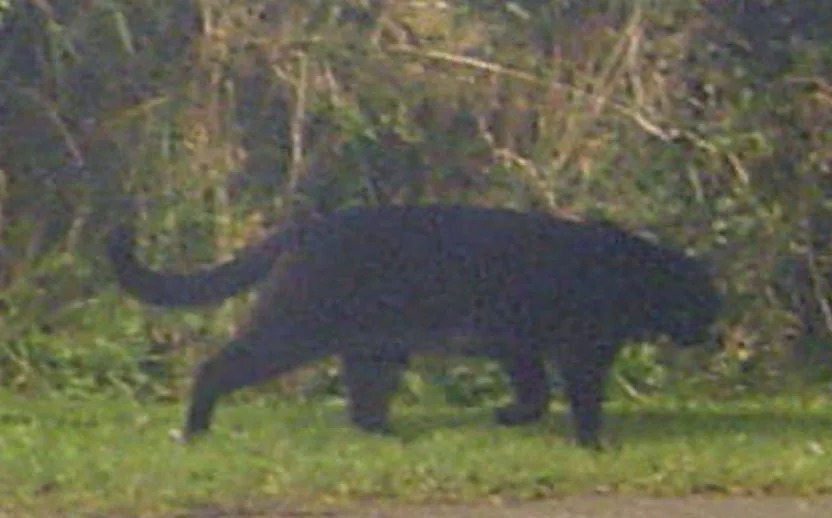
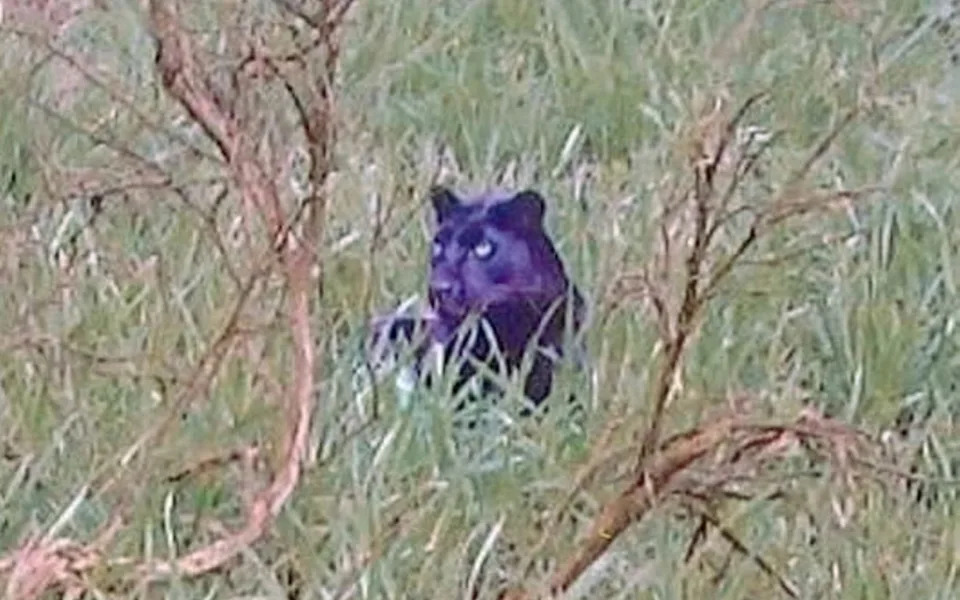
The image, which features in a new Amazon Prime documentary, Panthera Britannia Declassified, was found in the archives of a centre for zoology, along with a handwritten note saying it was taken near Ford Green Nature Reserve in Staffordshire. Its discoverer, Carl Marshall, describes it as unambiguously “a large cat of the Panthera genus”, adding: “If it’s genuine, then it’s probably the best photo of a British big cat that exists.”

It was in 1978 when the “Beast of Bodmin” hit the headlines, sparking a wave of similar sightings of big cats around Britain. The fascination has only grown. As recently as January 2023, a black panther was allegedly spotted in Wendover Woods, Buckinghamshire. Last autumn, a video purported to show a large black cat devouring a sheep in a Derbyshire field, shortly after a camper said he recorded a leopard outside his tent in the Peak District. Even the BBC presenter Clare Balding once claimed to have seen an “enormous” predator while recording her BBC Radio 4 programme Ramblings near Ross-on-Wye, Herefordshire.


The ‘Beast of Bodmin’, pictured in 2008 in Cornwall - Shutterstock

Almost every culture around the globe has its own “beast” narrative, and, in the modern world, where all answers are just a few keystrokes away, it’s charming to think there might be some mystery left out there.

“There’s a fascination with monsters,” says tracker and naturalist Rhoda Watkins, another of the documentary’s contributors. “We evolved in response to having large predators and in places where that threat isn’t so real, I think we need to feed that gap.

“But while I do think we’re primed to be fascinated by monsters, having spent time tracking and having spoken to credible witnesses, I have no doubts that there are big cats in Britain.”

The British Big Cats Society receives reports of between 300 and 500 sightings per year. “About 75 per cent of big cat sightings are of melanistic leopards [black panthers], 20 per cent are of pumas and probably five per cent are of lynx,” says environmental consultant Rick Minter.

A self-described “knower, not a believer”, Minter is the authority on British big cats; author of Big Cats: Facing Britain’s Wild Predators, and host of the Big Cat Conversations podcast.


The photo of what looks like a black panther, said to be the best photo of a British big cat that exists - Dragonfly Films/SWNS

Minter hadn’t given the idea any thought until, gazing out of the window at a Cumbrian hotel 20 years ago, he saw a black creature walk across the field, around 100 metres away. “I assumed it was a dog, then I realised its elongated body and long tail were cat-like. I found myself rapidly thinking of alternatives to it being a black panther, but drew a blank.”

Though his family offered “heartfelt” resistance and advised him to stick with an “orthodox” professional life in countryside management policy, Minter dived into the rabbit hole.

To Minter, the evidence is compelling. “It’s not just people seeing things; it’s people hearing things, it’s experiential things,” he explains. “Around 20 per cent of the reports I record involve usually a dog or a horse which reacts to something before the witness sees it.”

Reports from people who aren’t in any way animal experts, says Minter, are “remarkably consistent” with big cat behaviour – the way the animals move, zig-zagging down hills, warming themselves in the sun. “At one property I visited, they had sightings and then a deer carcass turned up,” he says. “The groundskeeper witnessed the animal rolling on the compost heap where he rakes all the deer droppings. The cat was masking itself in the scent of the prey, which is something they do in their native countries.”

There is stigma around the subject. Minter pre-emptively apologises for being “defensive”; he has been branded a conspiracy theorist in the past. “You can be a bore if you’re not careful,” he worries. “If you’re shrill about it, you can’t be influential.”

And many sightings are wildly hopeful – such as the recent, hysterical reports of a lioness in Berlin that turned out to be a common wild pig. “I’d say 95 per cent of the reports, tracks and sightings I get sent are clearly not big cats,” says Watkins. “In 20 years, I can count on one hand the evidence that I can unequivocally say, with scientific analysis, is a big cat.”

The experts are familiar with all the sceptical questions that surround their research. Foremost is where these animals come from. Black panthers are native to Africa, parts of the Middle East and Asia. Mountain lions or pumas are from Central and South America. Lynx have long since been hunted to extinction in Britain but now range from France to Siberia. How could any of them be roaming Britain?

“People forget that until the Dangerous Wild Animals Act came into force in 1976, these cats were popular pets,” says Watkins. “You could buy lion cubs from Harrods. We know from archive footage that when you started needing a permit, people released them.”


There have been other such “release events”. When Britain was at war and meat was scarce, zoo and circus keepers would have struggled to feed cats, while The Zoos Act in 1981 clamped down on poorly kept wildlife parks and zoos. These may have meant pumas and leopards were released into the wild.

Big cats have a lifespan of 10-15 years, so both Watkins and Minter are confident that Britain hosts breeding populations. “The numbers you’d need to sustain a genetically viable population would be about 300,” says Minter. Watkins says “hundreds” would be at the upper end of her estimations.

But if big cats are wandering around Britain, why haven’t we seen them? Why is so much British big-cat footage still grainy photos or shaky videos? “There are an estimated 3,000 pumas in Colorado but most people never see one,” Minter replies. “These are elusive animals. It’s very rare to get clear footage. The stuff on David Attenborough documentaries takes dedicated teams years to shoot. Also, these animals are most active at dawn and dusk when the lighting isn’t great for recording.


“A lot of people are too busy working out what they’re seeing to get their camera out. By the time they understand the significance, it’s gone. I’ve had people explain they were too scared to reach for their phone if they were up close, so the best footage comes from a distance for that reason. As cameras improve and more people use things like dashcams regularly, I think we’ll see more.”

Watkins compares the situation to that of British otters, of which there are thought to be around 11,000 in Britain. “We know they’re out there, but most of us have never seen one.”

Minter also claims there is “more footage out there than people realise”. Much of it, he says, doesn’t make the press because landowners don’t want the public roaming their land, looking for big cats. “Others become protective of them,” he says. “They swear me to secrecy before they show me footage because they worry that someone will threaten ‘their’ panther.”

The story of the Berlin lioness frustrated big-cat enthusiasts because shaky evidence was treated as incontrovertible and brought the subject in for ridicule.

But if all this is real, surely at some point there will be too much evidence to deny their existence? Then, finally, Britain’s black panthers will have to step out of the shadows.