Tuesday, October 03, 2023


Pope Francis has appointed 21 new cardinals – an expert on medieval Christianity explains what it means for the future of the Catholic Church

Joanne M. Pierce, Professor Emerita of Religious Studies, 
College of the Holy Cross
Mon, October 2, 2023 


New cardinals at St. Peter's Square at the Vatican on Sept. 30, 2023.
AP Photo/Riccardo De LucaMore


On Sept. 30, 2023, Pope Francis swore in 21 clergymen as new members of the College of Cardinals. The College is an important part of the church’s governance structure – each new member takes a formal oath during a ritual ceremony in the presence of present members of the College.

This assembly of cardinals, known as a consistory, is the ninth that Francis has held to create new cardinals since 2013, when he succeeded the retiring Pope Benedict XVI.

The new appointments will take the membership of the College from 221 to 242, including retirees. Francis has ensured that the College includes clergy from around the world and is representative of the diversity within Catholicism.

As a specialist in medieval Christianity, I have studied the complex history of the College of Cardinals. Shaped by past challenges, it is a crucial institution – for its members will elect the next pope and help develop the policies the Catholic Church will follow in the future.

Early church leadership


During the Roman Empire, when Christianity was illegal, Christians would meet secretly. These meetings were often held in private homes called house churches – domestic buildings that were later adapted solely for worship by members of the local Christian community.

It was during this time that leadership of these communities developed into three main orders of ordained clergy: Overseers became bishop, elders became priests, and ministers became deacons.

After the legalization of Christianity in the early fourth century, Christians were free to build large, more elaborate public buildings for worship, which often expanded some of these original house churches. New churches were also built in various sections of Rome, as well as in seven areas surrounding the city — like suburbs – called the suburbicarian churches.

By the sixth century, key members of the clergy staffing many of these Roman and Italian churches, especially the older ones, were referred to as cardinals, from the Latin word referring to a hinge, or a central joint. Leading deacons, senior priests and prominent bishops serving these parishes were all called cardinals.

Papacy as a political prize

Over these later centuries, Christianity also spread more widely north of the Alps, and the numbers of Christian churches and clergy expanded. However, because of ongoing warfare, conquest and political turmoil, Christianity in western Europe entered a more turbulent period. Popes came to exert political as well as spiritual power, leaving the office of the papacy vulnerable to the influence of competing secular powers, as well as powerful local Roman families and foreign rulers.

This became such a problem that in 769, under Pope Stephen III, a council held at one of the central churches in Rome – St. John Lateran – ruled that no layperson could be elected pope or influence the election of anyone to the papacy; only candidates holding the title of cardinal could be elected pope.

This requirement improved the situation for a time, but also contributed to the increasing political power of cardinals, traditionally the popes’ closest advisers.

In the later ninth and 10th centuries, however, the papacy again became a political prize for prominent Roman families and Italian nobility. This period, called the “nadir of the papacy,” produced a series of unworthy popes, including Pope Stephen VI, who put the corpse of his predecessor on trial; and Pope John XII, at 17 the youngest pope ever elected, who spent his papacy in the mid-10th century in drinking, gambling and debauchery.

However, many changes took place during the next two centuries, supported by reform-minded clergy and rulers in what is now France.

Several popes, notably Popes Leo IX and Gregory VII, brought organizational improvements to the bureaucratic structure of the Catholic Church in the 11th and early 12th centuries; many individual cardinals came to direct administrative departments.

In 1059, Pope Nicholas II declared that a pope could only be elected by members of the College of Cardinals, and a special election consistory was mandated in 1179.
Vatican II and other developments

In the following centuries, cardinals in the Catholic Church continued to assume important roles in Rome as curial officers, diplomats – called papal legates – and experts in the Catholic legal system, the canon law. Others served as advisers to rulers in Catholic countries or directed groups of bishops in their local pastoral ministry.


Pope Benedict XV, cardinals and others pray for peace in Europe at St Peter’s (San Pietro) on Feb. 7, 1915, at the Vatican. 
DeAgostini/Getty Images

Several popes made more substantial changes in the number and selection of cardinals in the 20th and 21st centuries. The requirements for a cardinal candidate were narrowed. In 1917, Pope Benedict XV promulgated a universal Code of Canon Law. In it, the office of cardinal was restricted to priests and bishops, and deacons were excluded.

Later, on the eve of the Second Vatican Council, held from from 1962 to 1965, Pope John XXIII declared that all cardinals must be ordained bishops. Subsequently, John Paul II – pope from 1978 until his death in 2005 – dispensed certain exceptional priests, often elderly theologians, from this requirement. The first so honored in 1983 was the French theologian Rev. Henri de Lubac, and the first American, named in 2001, was Rev. Avery Dulles, S. J..

In addition, popes at this time, stressing the universality of the church, added several new cardinals from countries around the world.

A larger College of Cardinals

Partly because of this stress on diversity, the size of the College of Cardinals increased dramatically. During the later medieval period, popes and councils set the maximum number of cardinals who could serve at one time, varying from 20 in the 14th century to 70 in the 16th century. That limit remained in effect until the 20th century, when John XXIII expanded the College to 88 cardinals, which his successor, Pope Paul VI, expanded to 134 – less than half the size of the College today.

The duties expected of individual cardinals have also changed. During his papacy, Paul VI set out rules for the retirement of all bishops and priests, as well as cardinals: All were expected to submit a letter of intent to retire when they reached the age of 75.

He also set another age limit: After reaching the age of 80, cardinals would not be eligible to vote in a papal election, although they kept the title of cardinal for the remainder of their lives. Even before the September 2023 consistory, almost half of the total number of cardinals were over 80, and so were barred from voting in future papal elections.


The College of Cardinals at the Holy Mass, presided over by Pope Francis at the Vatican Basilica, on Aug. 30, 2022.

Cardinals and the future of the church

During his pontificate, Francis’ selections have continued to shape the composition of the College of Cardinals in several ways.

Many believe that with his appointments, Francis has tried to ensure that his vision of the church’s future will continue after his death; he is 86 years old and in failing health.

Given the fact that the vast majority of cardinals under 80 are Francis appointees, some commentators have noted that the pope has “stacked” the College with cardinals who are inclined to agree with his more liberal focus on inclusivity and social justice issues, rather than Benedict XVI’s stress on doctrinal orthodoxy and traditional values. Francis’ latest round of cardinal appointments have further underscored this tension.

Some more conservative Catholic bishops and cardinals have criticized the pope’s statements and actions as increasingly divergent from Catholic traditional teaching. The late Cardinal George Pell from Australia, who served over a year in prison until his conviction for child sex abuse was overturned in 2020, called Francis’ pontificate a “catastrophe” in an anonymous letter sent to other cardinals in 2022.

Other bishops and cardinals disagree. For example, Cardinal Blase Cupich, archbishop of Chicago, has publically approved of the pope’s determination to “situate the church for its future” by emphasizing a more collaborative approach, and praising Francis’ stress on inclusion rather than division.

Whatever the outcome of the next papal election, members of the College of Cardinals, as bishops in active ministry, diplomats, intellectuals and papal advisers, will have a profound role in shaping that future.

This article is republished from The Conversation, an independent nonprofit news site dedicated to sharing ideas from academic experts. 
Women's voices and votes loom large as pope is set to open a Vatican meeting on church's future

NICOLE WINFIELD and TRISHA THOMAS
Updated Mon, October 2, 2023 


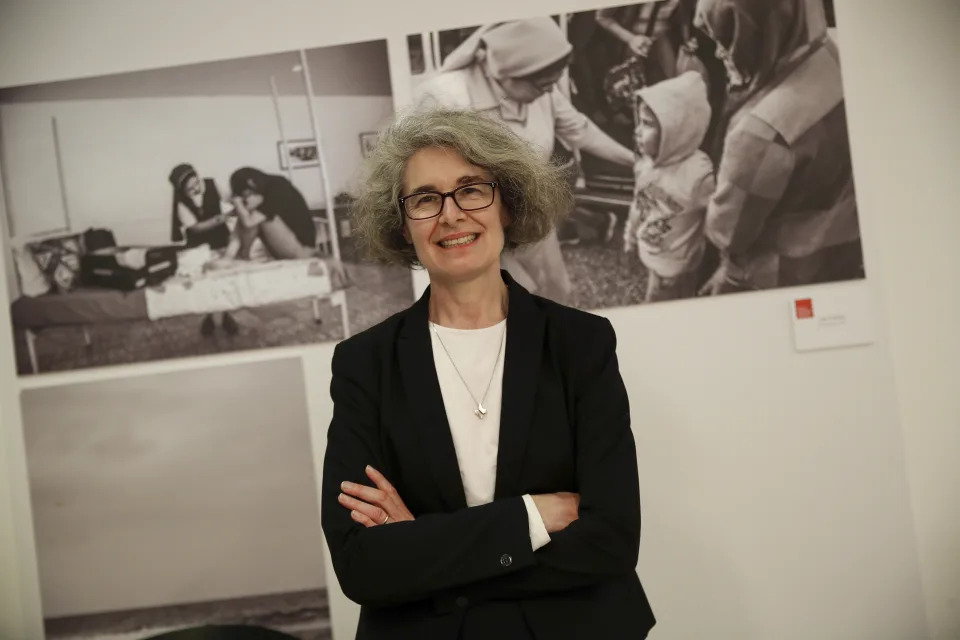
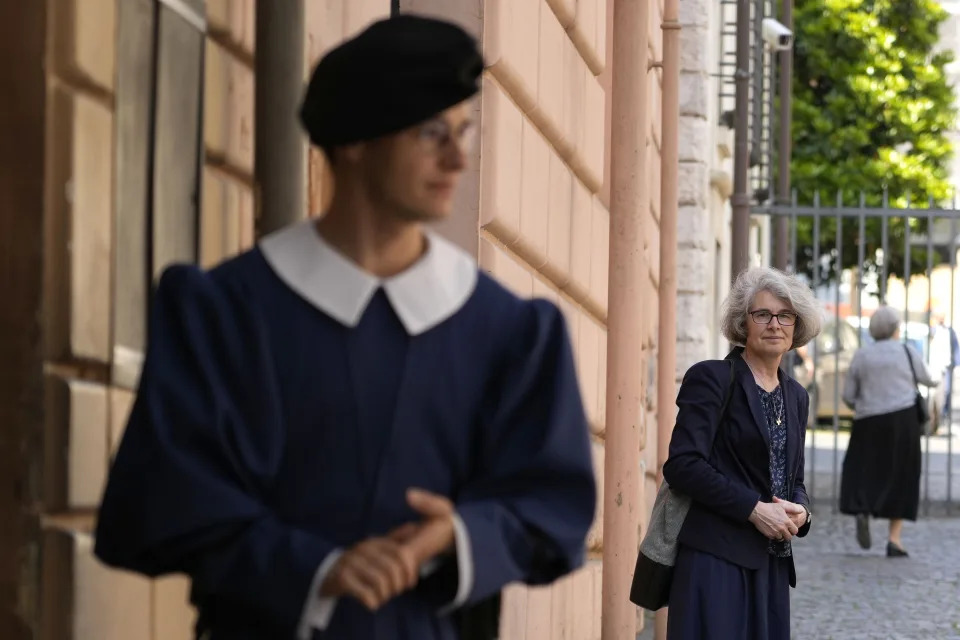
6- Sister Nathalie Becquart, right, poses for a photo as she enters Vatican City, Monday, May 29, 2023. In 2021 Pope Francis appointed Becquart as undersecretary of the Synod of bishops' Organizing Secretariat, a job which by its office entitled her to a vote but which had previously only been held by a man. At previous synods, women were only allowed more marginal roles of observers or experts, literally seated in the last row of the audience hall while the bishops and cardinals took the front rows and voted. In the upcoming synod starting Oct. 4, all participants will be seated together at hierarchically neutral round tables to facilitate discussion. 
(AP Photo/Alessandra Tarantino, File)


VATICAN CITY (AP) — A few years ago, Pope Francis told the head of the main Vatican-backed Catholic women's organization to be “brave” in pushing for change for women in the Catholic Church.

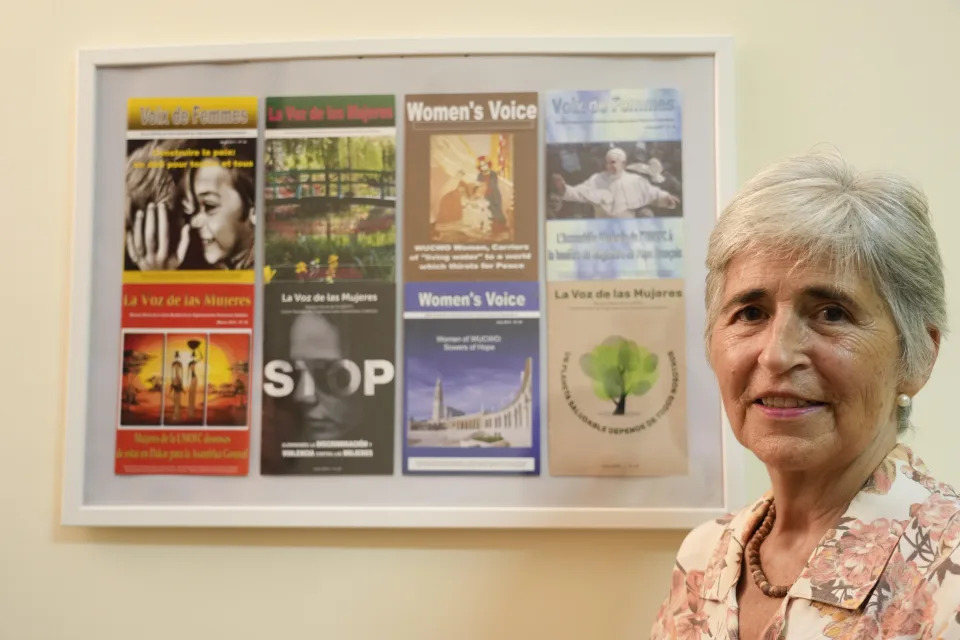
Maria Lia Zervino took his advice and in 2021 wrote Francis a letter, then made it public, saying flat out that the Catholic Church owed a big debt to half of humanity and that women deserved to be at the table where church decisions are made, not as mere “ornaments” but as protagonists.

Francis appears to have taken note, and this week opens a global gathering of Catholic bishops and laypeople discussing the future of the church, where women — their voices and their votes — are taking center stage for the first time.

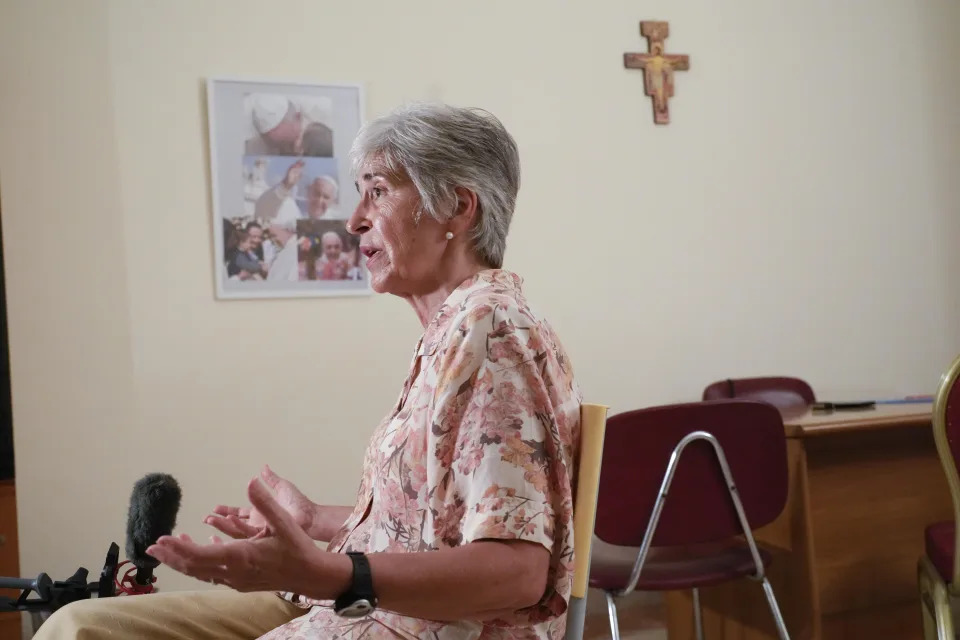
For Zervino, who worked alongside the former Cardinal Jorge Mario Bergoglio when both held positions in the Argentine bishops' conference, the gathering is a watershed moment for the church and quite possibly the most consequential thing Francis will have undertaken as pope.

“Not only because of these events in October in Rome, but because the church has found a different way of being church,” Zervino said in a recent interview in her Vatican offices. “And for women, this is an extraordinary step forward.”

Women have long complained they are treated as second-class citizens in the church, barred from the priesthood and highest ranks of power yet responsible for the lion’s share of church work — teaching in Catholic schools, running Catholic hospitals and passing the faith down to next generations.

They have long demanded a greater say in church governance, at the very least with voting rights at the periodic synods at the Vatican but also the right to preach at Mass and be ordained as priests. While they have secured some high-profile positions in the Vatican and local churches around the globe, the male hierarchy still runs the show.

This 3-week synod, which begins Wednesday, is putting them more or less on an equal playing field to debate agenda items, including such hot-button issues as women in governance, LGBTQ+ Catholics and priestly celibacy. It's the culmination of an unprecedented two-year canvasing of rank-and-file Catholics about their hopes for the future of the institution.

The potential that this synod, and a second session next year, could lead to real change on previously taboo topics has given hope to many women and progressive Catholics. At the same time, it has sparked alarm from conservatives, some of whom have warned that the process risks opening a “Pandora’s Box” that will split the church.

American Cardinal Raymond Burke, a frequent Francis critic, recently wrote that the synod and its new vision for the church “have become slogans behind which a revolution is at work to change radically the church's self-understanding in accord with a contemporary ideology which denies much of what the church has always taught and practiced.”

The Vatican has hosted synods for decades to discuss particular issues such as the church in Africa or the Amazon, with bishops voting on proposals at the end for the pope to consider in a future document.

This edition is historic because its theme is so broad — it’s essentially how to be a more inclusive and missionary church in the 21st century — and because Francis has allowed women and other laypeople to vote alongside bishops for the first time.

Of the 464 participants, 365 are voting members, and of them only 54 are women. While organizers insist the aim is to reach consensus, not tally votes like a parliament, the voting reform is nevertheless significant, tangible evidence of Francis’ vision of the Catholic Church as being more about its flock than its shepherds.

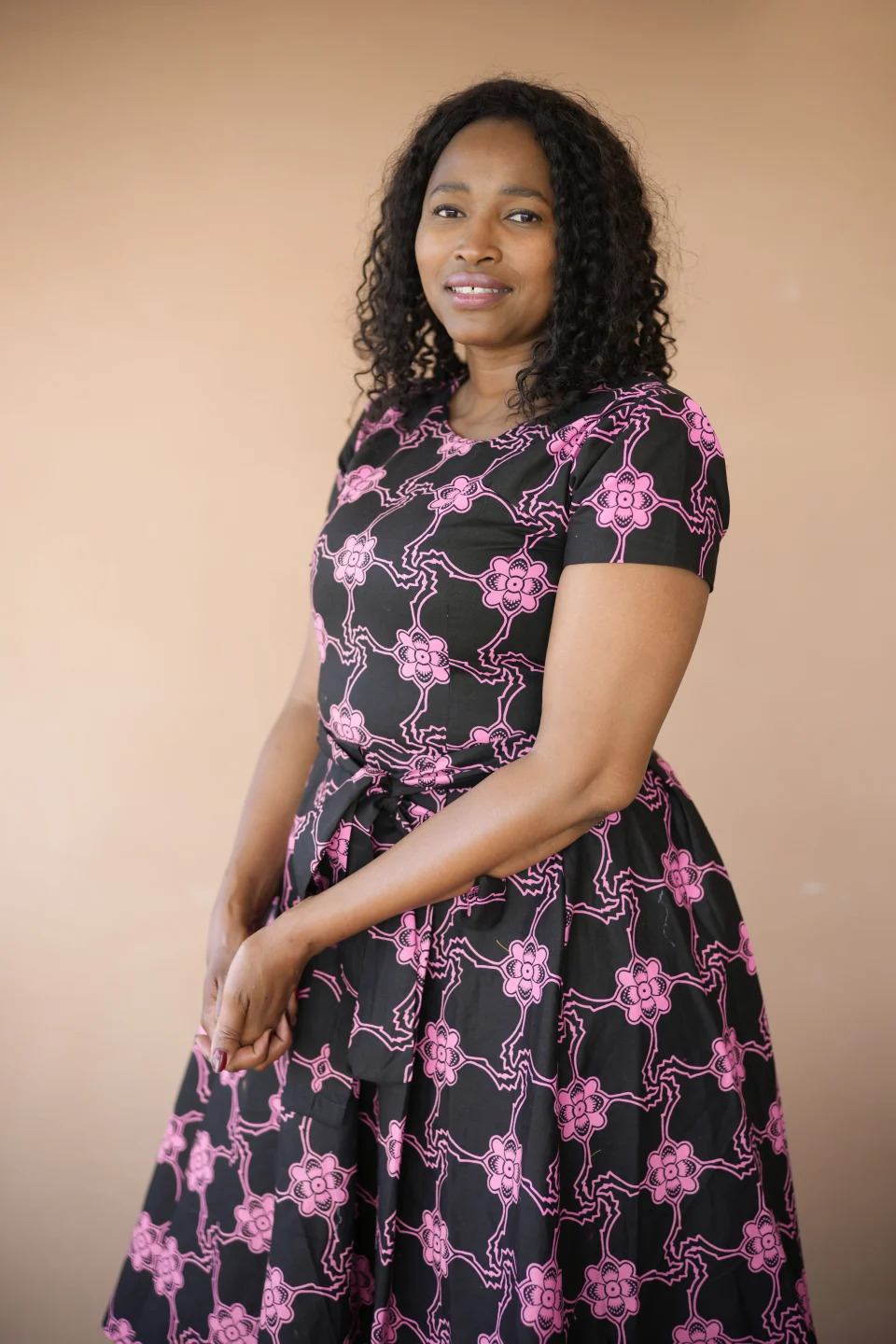
“I think the church has just come to a point of realization that the church belongs to all of us, to all the baptized,” said Sheila Pires, who works for the South African bishops' conference and is a member of the synod’s communications team.

Women, she said, are leading the charge calling for change.

“I don’t want to use the word revolution,” Pires said in an interview in Johannesburg. But women “want their voices to be heard, not just towards decision-making, but also during decision-making. Women want to be part of that.”

Francis took a first step in responding to those demands in 2021 when he appointed French Sister Nathalie Becquart as undersecretary of the synod’s organizing secretariat, a job which by its office entitled her to a vote but which had previously only been held by a man.

Becquart has in many ways become the face of the synod, traveling the globe during its preparatory phases to try to explain Francis’ idea of a church that welcomes everyone and accompanies them.

“It’s about how could we be men and women together in this society, in this church, with this vision of equality, of dignity, reciprocity, collaboration, partnership,” Becquart said in a June interview.

At previous synods, women were only allowed more marginal roles of observers or experts, literally seated in the last row of the audience hall while the bishops and cardinals took the front rows and voted. This time around, all participants will be seated together at hierarchically neutral round tables to facilitate discussion.

Outside the synod hall, groups advocating for even more women's representation in the church are hosting a series of events, prayer vigils and marches to have their voices heard.

Discerning Deacons, a group pressing for the pope to approve female deacons, as there were in the early church, sent a small delegation and the issue of female deacons is formally on the synod agenda. Other groups pressing for women's ordination to the priesthood are also in Rome, even though the pope has taken the subject of women priests off the table.

“I’m hopeful that there is room in that space for these bold conversations, courageous conversations, and particularly that the voices and experiences of women called to the priesthood are brought to the synod," said Kate McElwee, director of the Women's Ordination Conference.

Zervino’s group, the World Union of Catholic Women’s Organizations, a Vatican-based umbrella organization of 100 Catholic associations, conducted a survey earlier this year of Catholics who participated in the synod consultations. While a few women in North America and Europe called for female priests, there was a broader demand for female deacons and the call is featured in the synod's working document.

Francis listens to Zervino, an Argentine consecrated woman. He recently named her as one of three women to sit on the membership board of the Dicastery for Bishops, the first time in history that women have had a say in vetting the successors of Christ’s Apostles.

Zervino says such small steps like her nomination are crucial and offer the correct way of envisioning the changes that are under way for women in the church, especially given all the expectations that have been placed on the synod.

“For those who think that there's going to be a ‘before the synod and after,' I bet they'll be disillusioned," she says. “But if women are smart enough to realize that we're headed in the right direction, and that these steps are fundamental for the next ones, then I bet we won't be disillusioned.”

___

Associated Press writer Sebabatso Mosamo in Johannesburg contributed to this report.

Monday, October 02, 2023

Does outer space end – or go on forever?

Jack Singal, Associate Professor of Physics, University of Richmond
Sun, October 1, 2023 
THE CONVERSATION

It can stretch your mind to ponder what's really out there.

Curious Kids is a series for children of all ages. If you have a question you’d like an expert to answer, send it to curiouskidsus@theconversation.com.


What is beyond outer space? – Siah, age 11, Fremont, California


Right above you is the sky – or as scientists would call it, the atmosphere. It extends about 20 miles (32 kilometers) above the Earth. Floating around the atmosphere is a mixture of molecules – tiny bits of air so small you take in billions of them every time you breathe.

Above the atmosphere is space. It’s called that because it has far fewer molecules, with lots of empty space between them.

Have you ever wondered what it would be like to travel to outer space – and then keep going? What would you find? Scientists like me are able to explain a lot of what you’d see. But there are some things we don’t know yet, like whether space just goes on forever.

Planets, stars and galaxies

At the beginning of your trip through space, you might recognize some of the sights. The Earth is part of a group of planets that all orbit the Sun – with some orbiting asteroids and comets mixed in, too.


A familiar neighborhood. Mark Garlick/Science Photo Library via Getty Images

You might know that the Sun is actually just an average star, and looks bigger and brighter than the other stars only because it is closer. To get to the next nearest star, you would have to travel through trillions of miles of space. If you could ride on the fastest space probe NASA has ever made, it would still take you thousands of years to get there.

If stars are like houses, then galaxies are like cities full of houses. Scientists estimate there are 100 billion stars in Earth’s galaxy. If you could zoom out, way beyond Earth’s galaxy, those 100 billion stars would blend together – the way lights of city buildings do when viewed from an airplane.

Recently astronomers have learned that many or even most stars have their own orbiting planets. Some are even like Earth, so it’s possible they might be home to other beings also wondering what’s out there.


A galaxy among many other galaxies. Michael Miller/Stocktrek Images via Getty Images

You would have to travel through millions of trillions more miles of space just to reach another galaxy. Most of that space is almost completely empty, with only some stray molecules and tiny mysterious invisible particles scientists call “dark matter.”

Using big telescopes, astronomers see millions of galaxies out there – and they just keep going, in every direction.

If you could watch for long enough, over millions of years, it would look like new space is gradually being added between all the galaxies. You can visualize this by imagining tiny dots on a deflated balloon and then thinking about blowing it up. The dots would keep moving farther apart, just like the galaxies are.

Is there an end?

If you could keep going out, as far as you wanted, would you just keep passing by galaxies forever? Are there an infinite number of galaxies in every direction? Or does the whole thing eventually end? And if it does end, what does it end with?

These are questions scientists don’t have definite answers to yet. Many think it’s likely you would just keep passing galaxies in every direction, forever. In that case, the universe would be infinite, with no end.

Some scientists think it’s possible the universe might eventually wrap back around on itself – so if you could just keep going out, you would someday come back around to where you started, from the other direction.

One way to think about this is to picture a globe, and imagine that you are a creature that can move only on the surface. If you start walking any direction, east for example, and just keep going, eventually you would come back to where you began. If this were the case for the universe, it would mean it is not infinitely big – although it would still be bigger than you can imagine.

In either case, you could never get to the end of the universe or space. Scientists now consider it unlikely the universe has an end – a region where the galaxies stop or where there would be a barrier of some kind marking the end of space.

But nobody knows for sure. How to answer this question will need to be figured out by a future scientist.


Hello, curious kids! Do you have a question you’d like an expert to answer? Ask an adult to send your question to CuriousKidsUS@theconversation.com. Please tell us your name, age and the city where you live.

And since curiosity has no age limit – adults, let us know what you’re wondering, too. We won’t be able to answer every question, but we will do our best.


This article has been updated to correct the distances to the nearest star and galaxy.

This article is republished from The Conversation, a nonprofit news site dedicated to sharing ideas from academic experts. Like this article? Subscribe to our weekly newsletter.
It was written by: Jack SingalUniversity of Richmond.

Read more:

Jack Singal does not work for, consult, own shares in or receive funding from any company or organization that would benefit from this article, and has disclosed no relevant affiliations beyond their academic appointment.


4 myths about green energy being pushed by GOP candidates

Fact-checking some of what got said last week by Trump and other candidates


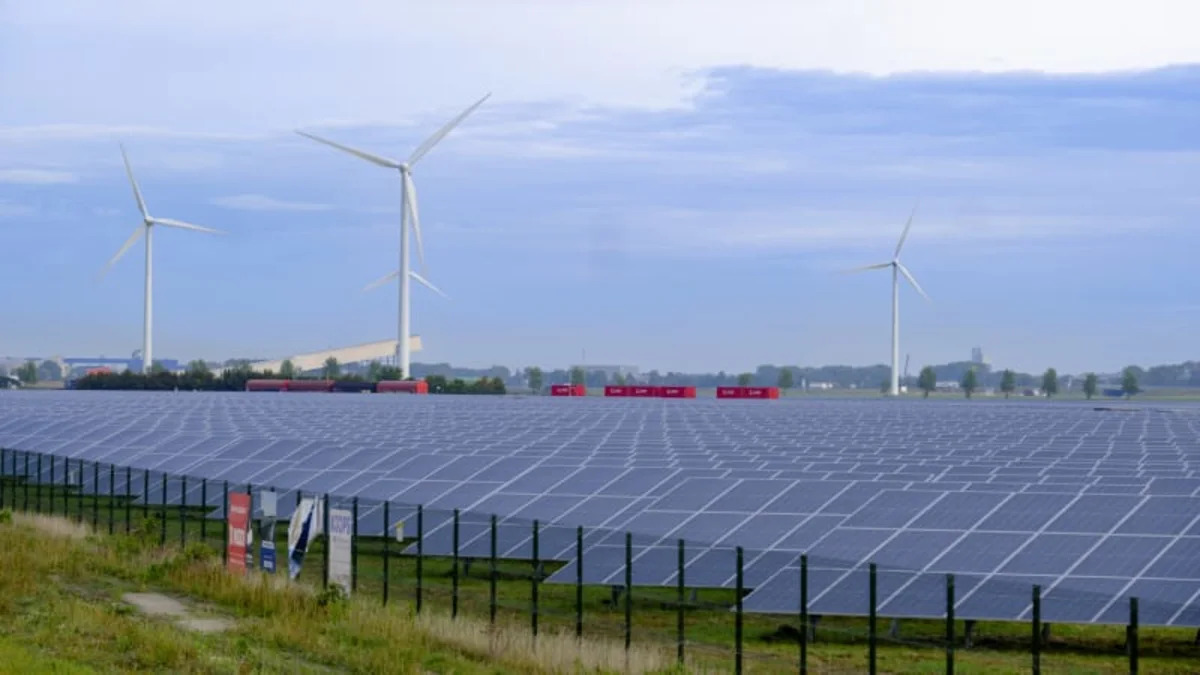
Wind generators and solar panels in Sluiskil, Netherlands. Green energy will be a multi-trillion-dollar industry in the coming years. First-movers will lock in vast amounts of wealth, innovation, employment, and other benefits, as they always do. (Getty Images)


Rick Newman / Yahoo Finance senior columnist

When Yahoo Finance interviewed former Vice President Mike Pence on Sept. 26, he referred to President Biden’s energy policies as the “Green New Deal.”

Biden actually opposed the Green New Deal (GND), which was a fanciful plan hatched by liberal Democrats in 2019 to overhaul the energy and transportation sectors and remake much of the US economy. There was never a chance it would become law, but progressives such as Sen. Bernie Sanders (I-Vt.) and Rep. Alexandria Ocasio-Cortez (D-NY) hoped the GND would serve as a vision document for future efforts to combat global warming.

Pence and other Republicans apply the label to Biden because they hope it will tar him with connotations of socialist extremism. Biden has, in fact, signed aggressive green-energy programs into law, but they largely rely on tax breaks meant to trigger private investment, not the mandates and government takeovers contained in the Green New Deal.

Republicans, nonetheless, seem to think Biden’s green-energy agenda is a juicy target as they look for ways to weaken his reelection campaign. Republican front-runner Donald Trump calls the move to green energy a “transition to hell,” while other Republicans blame Biden’s green-energy push for inflation, the autoworkers' strike and assorted other woes.

As ever, embellishments and lies mingle with reality. Here are four myths Republicans are spinning about green energy:

Myth 1: Biden’s policies will force consumers to go green

Trump, for instance, said in Michigan on Sept. 27, that Biden “wants electric vehicle mandates that will spell the death of the American auto industry.” But there are no Biden mandates requiring consumers to do anything. Biden does have a goal, which is to make EVs 50% of all new-car purchases by 2030. But he’s trying to accomplish that through incentives such as tax breaks that make EVs cheaper to buy and federal funding to help build a nationwide charging network. If the market doesn’t hit that 50% EV target by 2030, nothing will happen.

It's possible automakers will retire gas-powered models in favor of electrics and leave some buyers wanting a gas-powered car that no longer exists. But this can only happen if consumers embrace EVs enough to move the market fully away from gasoline. They may not, forcing automakers to keep a blend of EVs and gassers in their fleets. It’s also true that broad consumer trends often leave out buyers who prefer particular features no longer popular. Some drivers love manual transmissions, for instance, but automakers barely make them anymore because the take rate is so low.

[Drop Rick Newman a notefollow him on Twitter, or sign up for his newsletter.]

There are green-energy mandates in some states, where governments are forcing utilities to move away from fossil fuels toward renewables for electricity generation, which can lead to higher prices for retail consumers. Biden has proposed a rule requiring sharp cuts in carbon emissions at power plants nationwide by 2035. The Supreme Court struck down a similar rule the Obama administration tried to impose, and the Biden rule is sure to face litigation if or when a final version goes into effect. Energy consumers who want to stay brown will be able to do so for a long time.

Myth 2: The U.S. auto industry will be driven out of business

It’s not happening any time soon — especially if you include all the non-unionized workers at Tesla and the many foreign automakers that have factories in the United States. Trump told the workers in Michigan that “they want to go all electric and put you all out of business." He gave it two years. Yet U.S. auto-industry employment has been rising — even as virtually every carmaker has begun shifting to electrics. Since the post-COVID recovery began in mid 2020, the number of automotive jobs has risen to nearly 1.1 million, about 60,000 more than the peak under Trump.

The huge green-energy package Biden signed into law last year includes powerful incentives to build more factories in the United States, not fewer. And there is, in fact, an unprecedented boom in U.S. factory production, which will be followed by even more factory hiring as those plants come online. A new U.S. “battery belt” is forming as factories pop up to supply the new components EVs will need. There could even be new mining operations as companies tap needed minerals, such as lithium from a huge deposit in Nevada.

There’s no guarantee new green-energy jobs will be unionized, and that’s something the striking autoworkers hope to address with General MotorsFord and Stellantis. But the Biden green-energy laws also contain added incentives for domestic projects that pay union-level wages. Trump gave his Michigan speech at a non-union automotive plant, and Republicans in general don’t support unions. So if it sounds like they’re bashing green energy to show solidarity with the union cause, don’t buy it.

Myth 3: Biden’s policies benefit China

If Biden did require Americans to buy EVs and other types of green-energy products, with no incentives to boost domestic production, then it probably would benefit China, which has a more robust renewable energy supply chain and lower costs than the United States does. But re-shoring green-energy production is one of the main goals of the Biden policy, and the claim about China winning is only plausible if you accept the first two bogus arguments.

Myth 4: We can just go back to oil and gas

Most of the Republican presidential candidates say they’ll trash Biden’s green-energy agenda and reemphasize oil and gas development if they become president. That would be foolish for two reasons, even if you put aside the need to address global warming.

First, the whole developed world is moving away from carbon and developing new green-energy technologies. This is a multi-trillion-dollar opportunity and everybody is not going to participate equally. First-movers will lock in vast amounts of wealth, innovation, employment, and other benefits, as they always do. The race is still on. Biden’s green-energy plan is a counterbalance to government incentives in China, Europe, and elsewhere aimed at keeping the spoils there.

Second, private-sector firms are now investing hundreds of billions of dollars in green energy development in the United States, in part because of the lucrative incentives Biden has signed into law. Would a Republican president really cancel all those incentives and tell green-energy firms to fire their workers and mothball their plants because we’re going back to fossil fuels? That’s basically what Republicans are promising to do. We’ll have oil and gasoline for a long time, but that doesn’t mean we have to be the last ones clinging to it.

Rick Newman is a senior columnist for Yahoo Finance. Follow him on Twitter at @rickjnewman.

Click here for politics news related to business and money

Read the latest financial and business news from Yahoo Finance

How Family that Runs Azerbaijan 

Built an Empire of Hidden Wealth

Documents peel away three layers of secret ownership in a conglomerate and lead to gold mines and overseas real estate.

On October 31, 2003, Ilham Aliyev, the newly elected president of Azerbaijan, stood behind a podium and a profusion of white flowers to address presidents, prime ministers and 2,000 other guests assembled at the Respublika Palace. First touching the constitution and then the Koran, Aliyev swore to serve his people. That night, fireworks lit up the sky of the Azeri capital, Baku.

Aliyev’s election to lead this energy-rich former Soviet republic bordering both Russia and Iran had been all but guaranteed. His ailing father, Heydar, an ex-KGB officer, had served in the same role for the previous 10 years. Election monitors reported that police had beaten and detained political opponents, in line with the country’s reputation for repression.

Becoming president wasn’t Aliyev’s only ascension during 2003. Using a network of secretive companies in offshore tax havens, his family, advisers and allies set about acquiring expensive overseas homes and positions in the country’s valuable industries and natural resources, including the family’s majority control of a major gold mine that has been unknown until now.

The new details of the Aliyev offshore empire emerge from secret records obtained by the International Consortium of Investigative Journalists, the German newspaper Süddeutsche Zeitung and other media partners from Mossack Fonseca, a Panama- headquartered law firm that helps to set up hard-to-trace corporate structures for clients. The more than 11 million documents reviewed by ICIJ and its partners – emails, bank accounts and client records – represent the inner workings of Mossack Fonseca for nearly 40 years, from 1977 to December 2015.

Family alliances

The records show that, in mid-2003, months before the October presidential election, Fazil Mammadov, Azerbaijan’s tax minister, began to create AtaHolding, which has since become one of the country’s biggest conglomerates. Mammadov, influential in his own right, subsequently invited President Aliyev’s family to join him, cementing a potentially potent and advantageous business and political partnership.

AtaHolding is a corporation that has significant interests in Azerbaijan’s banking, telecommunications, construction, mining, oil and gas sectors. Its most recent corporate filing in 2014 shows it held over $490 million in assets.

The leaked files show that the tax minister created a company in Panama through Mossack Fonseca named FM Management Holding Group S.A. Stand-in directors — straw men supplied by Mossack Fonseca — concealed the fact that Mammadov was involved.

Mammadov then created a second offshore entity – this time a foundation – called UF Universe Foundation. Panama foundations are subject to strict confidentiality laws. Anyone who discloses information about them can be fined or imprisoned.

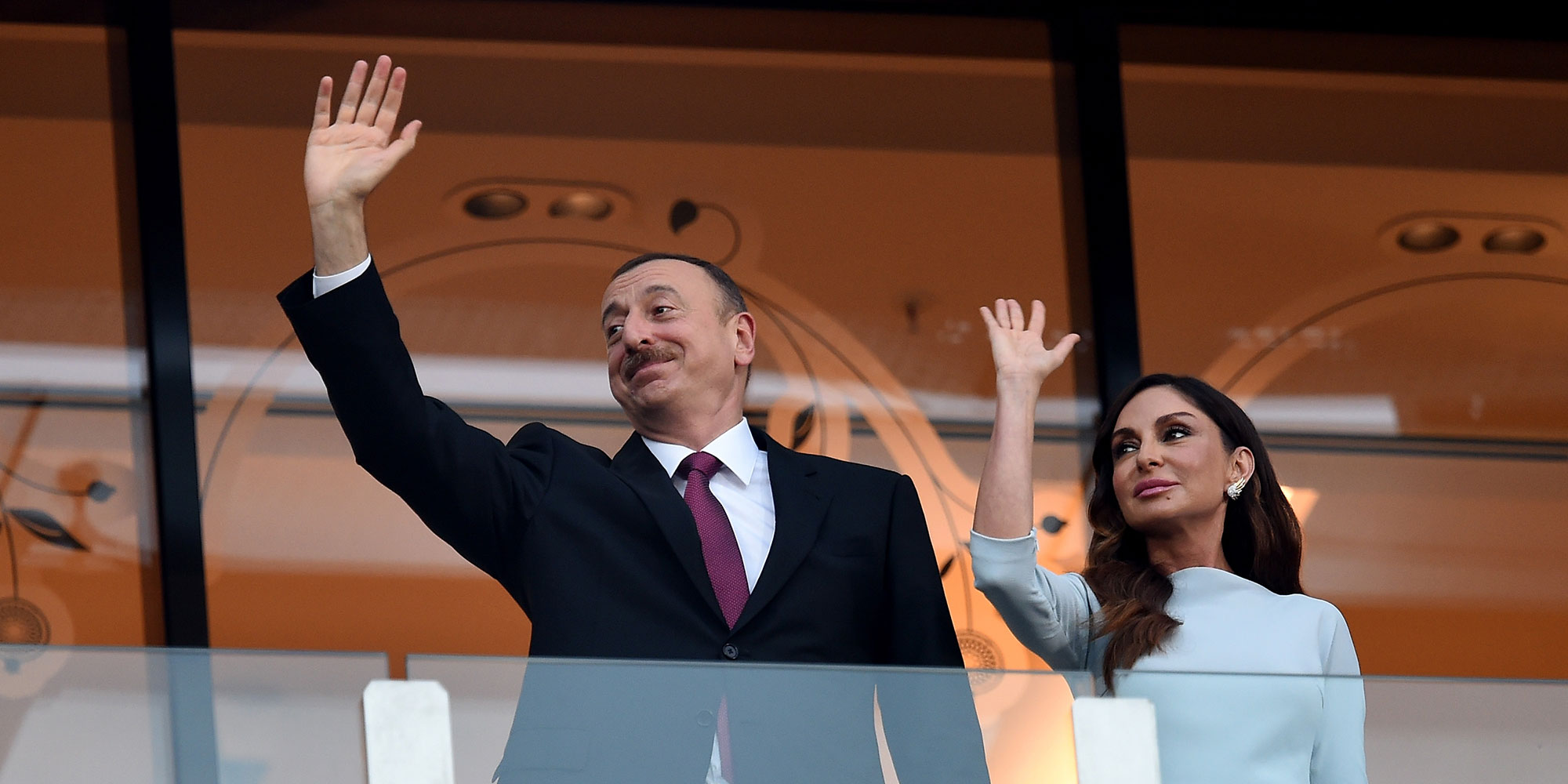
Mehriban Aliyeva, First Lady of Azerbaijan
Mehriban Aliyeva, First Lady of Azerbaijan Image: Photo\\: Vugaramrullayev (CC BY-SA 3.0)

The files show that two years later, in 2005, Aliyev’s wife, the fashion-conscious, collagen-infused first lady and member of Parliament, Mehriban Aliyeva, became one of two managers of the UF Universe Foundation, alongside the tax minister, Mammadov.

In attachments to a “High Importance” email sent to Mossack Fonseca in February 2005 by a lawyer representing the Azeris, documents proposed that then six-year-old Heydar Aliyev, the president’s son who is known in the files as “A1,” be made the beneficiary of 20 percent of the foundation’s proceeds. The plan also proposed that the president’s two daughters, Leyla, then 19 and Arzu, then 17, would hold 15 percent each. Mammadov’s son held 30 percent while Ashraf Kamilov, a former tax ministry official, and other former tax officials held smaller stakes. So, too, did AtaHolding’s chairman, Ahmet Erentok.

So the secrecy had three layers: 1) The UF Universe Foundation, which controlled 2) FM Management, the Panama company set up by Mammadov, which owned shares in 3) a United Kingdom-based company named Financial Management Holding Limited. According to a flowchart shared with Mossack Fonseca in 2005, the UK company held 51 percent of shares in AtaHolding Azerbaijan.

While there is no doubt that these secret companies existed and paid hundreds of dollars to Mossack Fonseca in administrative fees, it is unclear whether or not the proposed structure to benefit President Aliyev’s teenage daughters and six-year-old son and other prominent Azeris was ever adopted.

UF Universe Foundation was closed in January 2007. Then, in February 2014, months after President Aliyev was sworn in for his third term, a London-based lawyer sought to reactivate the Foundation and FM Management Holding Group. Mossack Fonseca was happy to oblige and issued a $9,000 invoice in exchange for reactivating the company.

Most recently, majority ownership — 51 percent — of AtaHoldings was held by Hughson Management Inc., according to AtaHolding’s online annual report. A 2010 letter signed by Mossack Fonseca listed Aliyev’s daughters, Arzu and Leyla, and Swiss lawyer Olivier Mestelan as directors.

ICIJ sought comments from all individuals named in this article and received no responses. In response to previous reports about the family’s holdings, the President’s spokesman said the daughters “are grown up and have the right to do business.”

Friendship with U.S.

Despite global criticism of Azerbaijan’s mounting authoritarianism, the Aliyev regime has been a friend of successive U.S. administrations. The United States has spent hundreds of millions of dollars on the Aliyevs’ Azerbaijan, including millions for military and security training. Azerbaijan’s government is one of the largest buyers of influence in Washington D.C. and, together with its lobbyists, spent at least $4 million in 2014 alone burnishing the country’s image. The country has taken members of Congress on all-expenses-paid visits to Azerbaijan, lavishing the lawmakers with silk scarves, crystal tea sets and rugs.

U
Image: S. President Barack Obama greets Azerbaijan President Ilham Aliyev during a bilateral meeting in 2010. Photo\\: AP Photo / Susan Walsh

Azerbaijan’s importance in energy, as a supply route to American troops in Afghanistan and its potential role in the fight against ISIS makes the United States a reluctant critic, said former U.S. ambassador to Azerbaijan Richard D. Kauzlarich, now an adjunct professor at George Mason University.

“Being where it is – bordered by Russia and Iran in a very unstable geopolitical environment – is a factor that makes it among the more unique countries in the region,” said Kauzlarich, who was U.S. ambassador to Azerbaijan from 1994-1997.

Its levels of corruption and elite control of the economy make it stand out in a part of the world where these things aren’t unusual, he added.

“The franchising out of economic activity to families and clans that are important for maintaining the current regime in power is not an unusual pattern,” said Kauzlarich. “However, it certainly has been perfected in Azerbaijan.”

Bigger offshore network revealed

The fact that Aliyev’s family can be linked to offshore companies is not new. A 2013 investigation by ICIJ showed that Aliyev, his wife and his daughters owned or were otherwise connected to offshore companies. Now Mossack Fonseca’s files greatly expand on what is known and disclose new companies belonging to the President’s two daughters, Leyla and Arzu.

The documents show Leyla and Arzu Aliyeva controlled two previously hidden British Virgin Islands-incorporated firms — Kingsview Developments Limited and Exaltation Limited. It is unclear from the files the purpose of the first company, but the second was incorporated in January 2015 to own a British property worth more than $1 million.

President Aliyev’s eldest sister, Sevil, is also shown in the files as the owner of another British Virgin Islands company, Setanon Properties Inc. Again, it is unclear from the files what the company was used for. In the Mossack Fonseca documents Sevil Aliyeva, a composer, listed her address in West London in a neighborhood where average home prices touch nearly $9 million.

Sitting on a gold mine

Mossack Fonseca’s records reveal that the first family secured secret control of a gold mine, dwarfing a smaller stake they’d been known to hold.

In 2006, Azerbaijan’s government granted mining leases in the country’s west to a consortium of companies that established the Azerbaijan International Mineral Resources Operating Company Ltd. Under the agreement, the consortium would keep 70 percent of the mine’s profit, and the Azeri government received the remaining 30 percent, according to a 30-year production agreement.

At the time, opposition politicians criticized the deal’s lack of transparency.

In 2012, Azeri journalists working with the Organized Crime and Corruption Reporting Project, a non-profit investigative journalism group focused on Eastern Europe and Central Asia, reported that one of the four consortium members, Globex International LLP, was owned, in turn, by three Panamanian companies controlled by President Aliyev’s daughters and Mestelan, a Swiss businessman and family friend.

Investigative reporter Khadija Ismayilova has been sentenced to seven and a half years in prison after being convicted in a politically motivated trial in Azerbaijan in September 2015
Investigative reporter Khadija Ismayilova has been sentenced to seven and a half years in prison after being convicted in a politically motivated trial in Azerbaijan in September 2015 Image: Photo\\: AP

One of the OCCRP reporters was Azeri investigative journalist Khadija Ismayilova, also a member of ICIJ. In 2015, Azeri authorities imprisoned Ismayilova in what is widely believed to have been retaliation for her exposé of government corruption. Authorities charged Ismayilova with counts of embezzlement, illegal business, tax evasion, and abuse of power and inciting a man to commit suicide. Her sentence: 7½ years.

“Sorting out AIMROC's structure is a daunting task,” Ismayilova wrote in 2012, connecting the consortium’s operating company with an opaque “Panamanian trail” that linked the Aliyev family with the mining consortium.

Mossack Fonseca’s files reveal the leading member of the consortium, Londex Resources S.A., which was incorporated in Panama in 2005 and held 45 percent of the consortium’s stake. The files show that, in April 2008, the same three Panamanian companies owned by President Aliyev’s daughters and Mestelan, who shared control of Globex International, became Londex’s shareholders. Globex International held 11 percent of the consortium’s share of the goldmine.

The trio’s control of Londex Resources meant that President Aliyev’s family and inner circle controlled a majority stake – 56 percent – in the consortium.

There are nearly 400 documents about Londex in the Mossack Fonseca files, including invoices, corporate registry records, instructions to open a bank account, and emails marked “URGENT REQUEST!!!” Londex was a valuable client for Mossack Fonseca. The law firm invoiced Londex for thousands of dollars between 2005 and 2014.

In January 2016, mine workers protested before Azerbaijan’s parliament, alleging that Londex had not paid wages since 2014, when the mine was abruptly closed.

One of the protestors, Cumshud Alasgerli, a 46-year-old married father of three who worked as a geologist on the mine, was interviewed by OCCRP.

“More than 200 workers can’t get their salary,” Alasgerli said. He said he hadn’t received wages owed to him for nearly two years. “And the government doesn’t do anything for us.”

Alasgerli said he has taken his employment case against Londex to court. But he is not optimistic. The company and the government alike have so far failed to help.

“They just don’t want to help us,” Alasgerli said. “They pretend like they don’t know anything.”