Wednesday, March 27, 2024

SWEAT SHOPPE FASHION

Gildan investor blasts board's sale process as 'unintelligent'

GILDAN ACTIVEWEAR INC (GIL:CT)

49.80 0.98 (1.93%)
As of: 03/27/24 5:43:55 am
REAL-TIME QUOTE. Prices update every five seconds for TSX-listed stocks
1. Jan29. Jan26. Feb25. Mar40455055
Chart Type - 3month
See Full Stock Page »

Some major shareholders of Gildan Activewear Inc. are criticizing the sale process the board is conducting, blasting the move as unwise and ill-timed amid a fight over control of the company.

The process — which the Canadian clothing manufacturer’s board announced last week after receiving interest from potential buyers — is “unintelligent and irresponsible,” Turtle Creek Asset Management said in a letter to the board Monday.

“Just because an offer has been received does not require the board to seriously entertain it, especially when the company is in the midst of a boardroom battle,” said the Toronto-based firm, which owns 2.6 per cent of Gildan’s shares, according to data compiled by Bloomberg.

Representatives of Montreal-based Gildan declined to comment.

Gildan, the owner of the American Apparel brand, has been in turmoil since the board fired longtime Chief Executive Officer Glenn Chamandy in December. A dissident group of investors that owns about one-third of Gildan’s shares has fought to reinstate Chamandy and has questioned the board’s actions.

“To even a casual market observer, it is so obviously a bad time to initiate a sale process that we have been left stunned in disbelief,” said Turtle Creek, which says Gildan is worth more than US$60 per share.

Gildan’s U.S. shares fell 0.1 per cent to $37.39 on Monday in New York.

Cardinal Capital Management Inc., which owns 1.7 per cent of Gildan, said the company should only consider bids starting at $50 per share and that an offer of $60 per share “would make sense.”

“Any decent company is always going to have expressions of interests floating around,” said Evan Mancer, the Winnipeg-based firm’s president and chief investment officer. “So it’s very easy to grab onto one of those and then say that you’ve been approached.”

New York-based private equity firm Sycamore Partners is among the potential buyers for Gildan, Bloomberg has reported. Browning West LP, an activist investor in Gildan, said in a news release last week that a “rumored $42 per share indication from a potential buyer” has been circulating, “which effectively represents no premium.” 

Los Angeles-based Browning West plans to propose a slate of candidates at the company’s annual meeting in May to replace most of the board.

Gildan’s largest shareholder, Jarislowsky Fraser Ltd., hinted last week that a takeover would require a high premium as “the current share price does not reflect the long-term prospects of the company.”

“We strongly believe that the board has initiated a sale process in a desperate attempt to avoid the profound professional embarrassment that will befall the directors once they are voted off the board by Gildan’s shareholders,” Turtle Creek said in its letter.

Cocoa breaks US$10,000 record, with pricier chocolate to follow

Megan Durisin and Áine Quinn, Bloomberg News

Cocoa futures surged above an unprecedented US$10,000 a ton, extending a historic rally that’s already seen prices double this year and which is raising the cost of chocolate.

The market is being rattled by poor crops in key West African growers that has put the world on course for a third straight annual supply deficit. The industry is grappling with the legacy of poor returns paid to cocoa farmers and fears are mounting about being able to source enough beans.

As well as concerns about scarce physical supplies, pressures are also building in the financial market, where some traders have sold futures to hedge against physical holdings. But as they wait for the contracts to mature they need cash to meet margin calls on losses on derivatives, and in a rising market can be forced to close out short positions, helping to fuel the rally.

Futures jumped as much as 4.5 per cent to $10,080 in New York on Tuesday — a level that seemed unthinkable only a few months ago. The rally has pushed a technical gauge of prices into overbought territory for much of the last couple of months, though cocoa has continued to soar.

“When we’re at this price, it’s hard to tell whether these prices are justified,” said Paul Joules, an analyst at Rabobank in London. “Whenever we have a dip in the market, it seems to shoot straight back up, which is more to do with the commercials, they’ve been net buyers.”

Cocoa’s advance is bad news for consumers if chocolatiers keep passing on costs or sell bars that are smaller or have less chocolate in them. The looming Easter holiday is a peak period for chocolate consumption, and the lag between commodity and retail markets mean the brunt of the impact for shoppers still lies ahead.

There’s a risk the supply situation may worsen. Incoming European Union rules — aimed at stopping products that destroy forests from being sold in shops — may make it even harder for the bloc’s chocolate makers to secure supplies.

New harvest

Focus is now turning to West Africa’s upcoming mid-crop, the smaller of two annual harvests. Top grower Ivory Coast’s regulator expects that to shrink this season, Bloomberg has reported.

“The West African supply situation remains extremely tight going into the start of the mid-crop harvest next week, and that continues to underpin cocoa prices,” The Hightower Report said in a note.

Other growers, like Brazil and Ecuador, are seeking to ramp up production, but it takes a few years before newly-planted cocoa trees bear beans — delaying the relief to strained global supplies. A ratio of stockpiles-to-grindings will fall to the lowest in more than four decades this season, the International Cocoa Organization has forecast, reflecting the market’s precarious position.

Cocoa was up 3.5 per cent at $9,991 in New York on Tuesday. In other softs markets, raw sugar rose one per cent and arabica coffee edged higher.

In London, most-active cocoa futures have also more than doubled this year.


Higher chocolate prices part of wider trend as climate, other factors disrupt supply


Higher chocolate prices this Easter after bad crops on the other side of the world are just the latest example of disruptions in the food supply chain, a trend experts say consumers are noticing in growing numbers. 

“I think people are becoming more interested in where their food comes from,” said Sophia Carodenuto, a professor of geography at the University of Victoria whose research specializes in global food systems. 

The past few years have seen a number of high-profile disruptions including a spike in lettuce prices due to flooding in California, rising orange juice prices because of bad crops and higher wheat prices linked to the Russia-Ukraine war.

These kinds of disruptive events feel like they’re becoming more common, said Graeme Crosbie, senior economist at agriculture lending firm Farm Credit Canada.

Cocoa futures have “gone vertical” this year, especially in the last four or so months, said Crosbie.

Futures are a way of measuring commodity prices based on contracts for future delivery, a common way to track prices for commodities like wheat, gold and oil. 

A February report by agriculture-focused co-operative bank CoBank said cocoa prices were nearly 65 per cent higher than a year ago, and New York futures prices were at a 46-year high. 

Bad weather and disease in West Africa have damaged crop yields, said Crosbie, hurting supply for the product that goes into Halloween, Valentine’s Day and Easter candy. 

“The confection business is going to bear the brunt of the margin impact due to cocoa,” Hershey chief financial officer Steven Voskuil told analysts on a conference call in February. 

Most cocoa, especially the cocoa found in many popular chocolate products, comes from West Africa, Carodenuto said. Côte D’Ivoire, which she said produces about 40 per cent of the world’s cocoa, saw a 30 per cent decline in production over the past year due to climate change and disease, she said.

“That’s one of the main drivers of ... this huge rise in prices on the commodity markets,” she said. 

“I think we're seeing this all over the world, that the rainy season and the dry season are no longer predictable the way that they had been.”

Unlike some crops, cocoa production is highly concentrated, meaning huge portions of the world’s supply are grown in a handful of areas, said Crosbie. This makes the crop and its supply chain more vulnerable to disruptions. 

Cocoa prices don’t directly translate to retail prices, since there are many things other than cocoa that make up a chocolate bar, Crosbie said. But they do have an effect, and he expects retail prices to increase. 

According to Statistics Canada inflation data, the price of confectionary items rose more than nine per cent between January 2023 and 2024, compared with overall inflation for food purchased from stores of 3.4 per cent. 

Michael Medline, the chief executive of Sobeys parent company Empire Co. Ltd., told investors earlier in March the grocer is seeing “sizable” price increases from some of its suppliers that will “inevitably affect the customer.” 

“This is largely driven by some commodities like sugar and cocoa continuing to be very volatile due to ongoing climate and geopolitical factors impacting global supply,” he said.

Higher cocoa prices are an obstacle for manufacturers who have already been struggling with higher sugar prices over the past three years, said senior food and beverage economist Billy Roberts in the CoBank press release. 

“That could lead to a further erosion of chocolate volume sales and begin to impact dollar sales as well,” he said. 

Consumers are becoming more aware of these kinds of disruptions as food prices have risen across the board, Crosbie said.

“I think people are certainly paying more attention to the prices themselves, and even how their food is produced.”

In a 2021 survey by Deloitte, almost three-quarters of respondents said it’s important for them to understand where their food comes from. 

And cocoa is one of many food products that consumers are eyeing more critically. 

Cocoa is indigenous to Central America, said Carodenuto, and naturally grows under a canopy of rainforest trees in a diverse ecosystem. But large swaths of rainforest in West Africa have actually been wiped out to make room for cocoa farming, meaning less ecological diversity and more vulnerable crops. 

Higher commodity futures also don’t necessarily dictate the prices farmers are being paid in real time, noted Carodenuto. 

In Ghana and Côte D’Ivoire, the largest-producing countries for cocoa, the government creates a minimum price for farmers for the season, she said. But the large multinational companies buying and trading cocoa enter into forward contracts, meaning prices are agreed upon in advance.

It takes a lot of manual labour and investment to build a cocoa farm, so farmers need support, especially financially, Carodenuto said.

There’s hope that the higher futures prices will lead to more income next year, but it’s not a guarantee, she added — cocoa prices are cyclical, meaning there will likely be a price crash at some point.

Consumers looking to make ethical spending decisions face a difficult choice, said Carodenuto, especially given the price gap between premium and ethically sourced chocolate and popular, mass-market confections. 

Carodenuto said shoppers don’t need to stop buying chocolate, but they should educate themselves and seek supply chain transparency by looking for the origin of the cocoa in a product.  

Shoppers who can afford to spend more can also seek out businesses that specialize in sourcing ethical cocoa products, she said. 

In the long term, there is lots of potential for cocoa to be grown in a more sustainable manner, she said, but it could mean lower production in the short term. 

“It's just that, who's going to pay for that? ... It shouldn't be the most marginalized actor in the system. It shouldn't be the smallholder farmer who has to pay for that.” 

This report by The Canadian Press was first published March 25, 2024.

With files from The Associated Press


Parkland puts 157 convenience store and fuel station locations up for sale

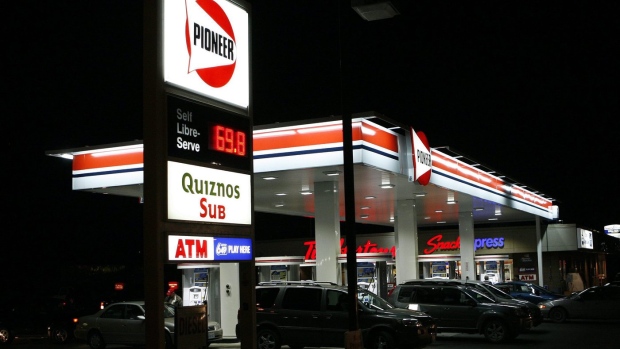
Pioneer gas station

Fuel retailer Parkland Corp. has engaged two real estate firms to help it sell 157 of its gas and convenience store locations across six provinces.

The Calgary-based company said Tuesday it is partnering with NRC Realty & Capital Advisors LLC and Colliers Canada to find buyers for the locations, which include ones operated under the Chevron, Ultramar, Pioneer and FasGas brands as well as the On the Run convenience store banner.

The bulk of the stations are in Quebec and Ontario, with the balance in Alberta, British Columbia, Manitoba and Saskatchewan. 

In an emailed statement, Francis Lapointe, Parkland's vice-president of Canadian retail operations, said the decision to sell the stations is part of the company's ongoing network planning and optimization process.

"As we continue to grow, we have identified sites that no longer fit our long-term strategic objectives in their current format," Lapointe said.

"While high-quality, these locations would be better suited under someone else's ownership."

Parkland said the retail and fuel locations will be packaged with long-term Parkland fuel supply agreements, which should make them attractive to "experienced, entrepreneurial operators."

Parkland has 4,000 retail and fuel locations in Canada, the U.S. and the Caribbean. 

The company also owns and operates the Burnaby, B.C. refinery, which provides about a quarter of the gasoline and diesel used in the western province.

The gas and convenience store sale process comes as Parkland faces calls from New York-based activist investor Engine Capital LP for a complete board overhaul at the company.

In addition, Parkland saw the resignation of two board members who represented its largest shareholder, Simpson Oil at the end of last year.  

Simpson has said it will evaluate its options to protect its shareholder rights once restrictions under an agreement that limits its ability to nominate and vote for board members at Parkland expire on March 31.

Parkland's annual general meeting is set to take place in Calgary on Thursday. 

This report by The Canadian Press was first published March 26, 2024.


DavidsTea signs deal to bring products to 1,500 Circle K, Couche-Tard stores

DavidsTea Inc. says it has signed a deal to sell its beverages in 1,500 Circle K and Couche-Tard stores.

The Montreal-based tea purveyor says the deal with convenience store owner Alimentation Couche-Tard is structured as an exclusive supplier agreement.

Circle K and Couche-Tard stores covered by the agreement will sell tea sachets in eight DavidsTea flavours, including Cream of Earl Grey, Silk Dragon, Jasmine, David's Breakfast Blend and Cold 911.

Seven locations will also be outfitted with full tea bars that will offer a wider variety of hot and iced teas.

The bulk of the Circle K and Couche-Tard locations involved in the deal began offering DavidsTea products today, but those in Ontario won't see the partnership hit their stores until mid-April.

The partnership comes as Alimentation Couche-Tard is focusing more heavily on beverages. Fast-food franchisor Second Cup announced on LinkedIn last month that it was piloting its first Second Cup in a Couche-Tard location in Laval, Que. 

This report by The Canadian Press was first published March 25, 2024.