Wednesday, September 25, 2024

RED TORY

Starmer signals budget welfare squeeze to tackle ‘worklessness’

Measures will include proposals to recover money lost to people falsely claiming benefits

Published: September 25, 2024 
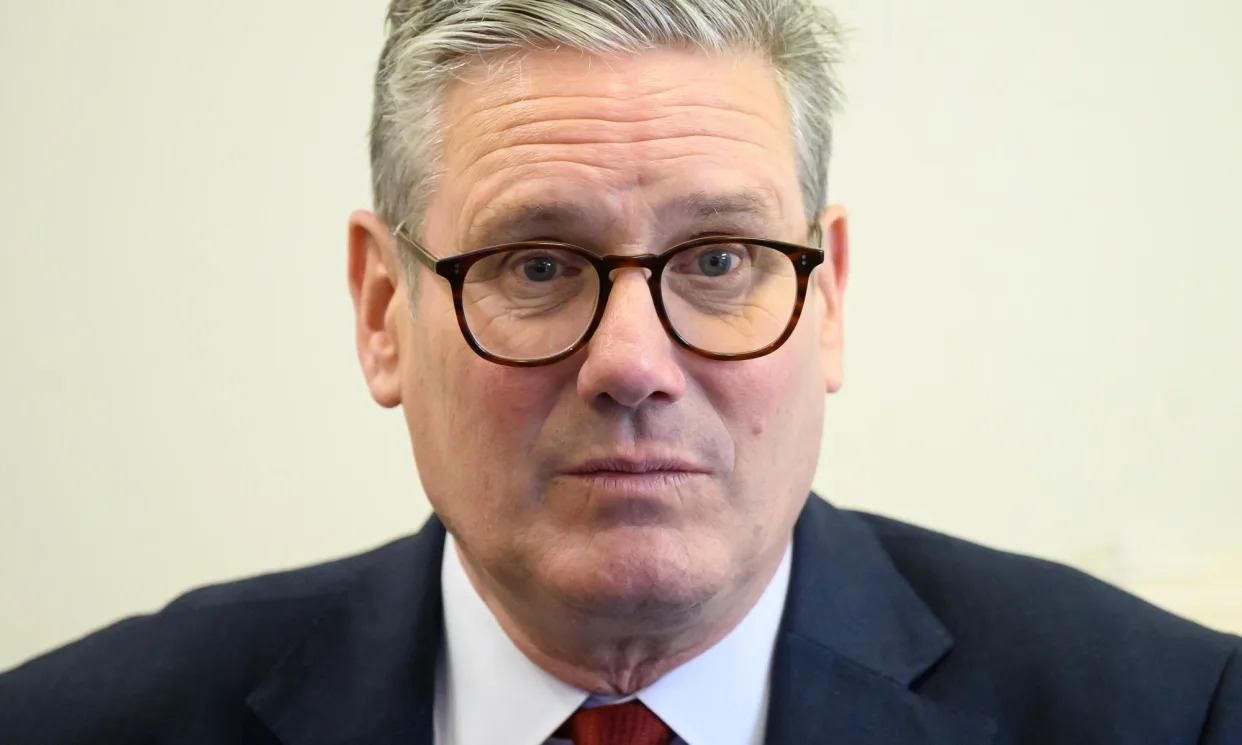
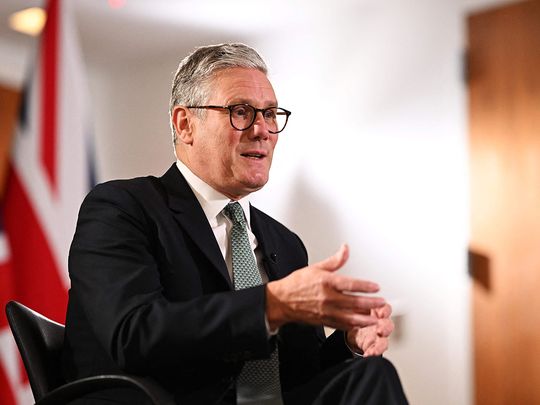
Britain's Prime Minister Keir Starmer speaks during a media interview while attending the 79th United Nations General Assembly at United Nations on September 25, 2024, in New York.Image Credit: AFP

Keir Starmer indicated there would be measures aimed at pushing Britain’s long-term sick back into work at the coming budget, raising the prospect of a tighter welfare regime combined with increased support from business and the National Health Service to support people back into jobs.

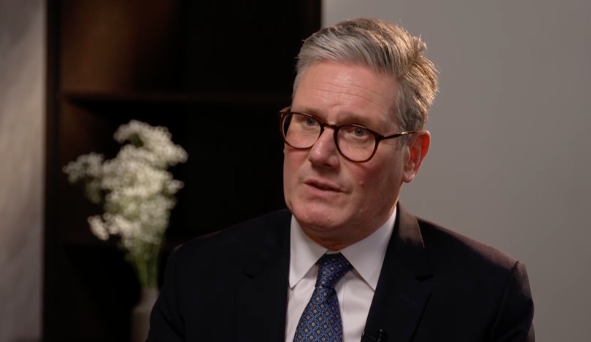
“The basic proposition that you should look for work is right. People need to look for work, but they also need support,” the British prime minister said in an interview with the BBC after his speech at the Labour Party’s annual conference in Liverpool, which the broadcaster aired early Wednesday.

Tackling “worklessness” to boost productivity would be a priority for his administration, he said, confirming he was looking at measures “where businesses are supporting people back into work from long-term sickness.”

Those measures will include a crackdown on welfare fraud, including new proposals for the department for work and pensions to recover money lost to people falsely claiming benefits, the Labour Party said. Bloomberg previously reported that Labour lawmakers expect welfare cuts in the budget to be delivered by Chancellor of the Exchequer Rachel Reeves on Oct. 30.

Some 2.8 million people are out of work because of sickness, around half a million more than in 2019, according to the Office for Budget Responsibility. Reducing those numbers is necessary if the government wants to prevent a soaring benefits bill. The OBR says sickness and disability payments will rise by 30 billion pounds in the next five years on current forecasts.

In a speech at the party convention on Wednesday, Health Secretary Wes Streeting will announce how the NHS will be part of the government’s mission on boosting economic growth. Special healthcare teams will be sent into areas with the highest levels of economic inactivity, to introduce ways of treating people who are out of work due to ill health much faster.

“We will take the best of the NHS to the rest of the NHS, get sick Brits back to health and back to work,” Streeting will say, according to a statement released by his office. “Our reforms are focused not only on delivering our health mission but also moving the dial on our growth mission.”

Keir Starmer: Those on long-term sickness benefit 'need to be back in the workplace'

Ross Hunter
Wed 25 September 2024

Keir Starmer has said his government will act to get more people on long-term sickness benefit back to work (Image: Stefan Rousseau)


PEOPLE who claim long-term sickness benefits should be made to look for work, Keir Starmer has said.

Speaking to BBC Radio 4’s Today programme, the Prime Minister said: “I think the basic proposition that you should look for work is right.

“Obviously there will be hard cases, but the way I would do it is to say yes, that’s the basic proposition, but we also want to support that so that more people can get into work.”


He had earlier said: “I’ve gone out and looked at schemes where businesses are supporting people back into work from long-term sickness.

READ MORE: Greens: Scotland and UK must work together to tax private jets

“Because quite often I think what lies behind this is a fear for someone who’s been on long-term sickness, that can they get back into the workplace? Are they going to be able to cope? Is it all going to go hopelessly wrong?

“Yes they need to be back in the workplace where they can, but I do think that if we can put the right support in place, which I’ve seen pilots of, they work pretty well, and we want to see more of those across the country.”

Some 2.8 million people are out of work due to ill-health, 500,000 more than in 2019, according to the Office for National Statistics.

A report by the BCG and NHS Confederation earlier this month found that 85% of those are long-term sick.

The Office for National Statistics say 2.8 million people are out of work due to ill-health (Image: Getty)

The Office for Budget Responsibility forecasts that the bill for sickness and disability benefits will soar by £30 billion in the next five years, on current trajectories.

His comments come before a speech by Health Secretary Wes Streeting to the Labour Party conference on Wednesday.

Streeting said that is was up to the government to get sick people back to health and back to work quickly.

Speaking to Sky News, Streeting said: “Where people are off ill and they are unable to work, the social security system is available, and it’s up to us to make sure that we get them back to health and back to work quickly.

“Where people are fraudulently claiming benefits, that’s a different kettle of fish, and people shouldn’t be doing that, and we’re not going to tolerate it, which is why, in her speech and through her work as the Work and Pensions Secretary, Liz Kendall will be clear, as has the Prime Minister, that we’ve got to reduce the benefits bill.

“Part of that is also about recognising that the failure of the previous government means that the NHS hasn’t always been there for people when they need it, we owe it to them to get them back to health and back to work, and that’s exactly what we’ll do.”

He added: “It’s good for the nation’s health, but also good for the nation’s economy as well, because a healthy nation is a healthy economy, and a healthy economy helps to drive a healthy nation.”

National disability charity Sense said the Prime Minister’s comments “ignore the enormous and deeply unfair barriers that far too many disabled people face when it comes to job hunting”.

Harriet Edwards, the organisation’s head of policy, said while many “desperately want to work”, the current system “blocks them from doing so”, citing the charity’s research that half of jobseekers with complex disabilities do not feel they have the support and equipment they need to look for a job.

Around 31% want assistive technology such as text-to-speech screen readers, dictation software and braille displays to help them communicate and find jobs, Sense said but added that its research suggested “zero job centres across the country have this available”.

Long-term sick need to get back to work where they can, says Starmer

Aletha Adu Political correspondent
THE GUARDIAN
Wed 25 September 2024 


Keir Starmer: ‘I think the basic proposition that you should look for work is right.’Photograph: Leon Neal/Getty Images


People who have been on long-term sickness leave and claiming benefits will need get back into the workplace “where they can”, Keir Starmer has said.

The prime minister said he wants more schemes across the country that support people back into work from long-term sickness because he believes in the “basic proposition that you should look for work”.

Starmer was speaking on the final day of Labour conference, after telling members there would be “light at the end of this tunnel” but adding they must first join a “shared struggle” through tough short-term pressures.

He also told Labour activists during his speech: “If we want to maintain support for the welfare state, then we will legislate to stop benefit fraud, do everything we can to tackle worklessness.”

Asked by the BBC’s Today programme if he agreed with the proposition that virtually no one should claim benefits without trying to get back to work, Starmer said: “I think the basic proposition that you should look for work is right.

“Obviously there will be hard cases, but the way I would do it is to say: yes, that’s the basic proposition, but we also want to support [people] that so that more people can get into work.”

He had earlier said: “I’ve gone out and looked at schemes where businesses are supporting people back into work from long-term sickness.

“Because quite often I think what lies behind this is a fear for someone who’s been on long-term sickness, that: can they get back into the workplace? Are they going to be able to cope? Is it all going to go hopelessly wrong?

“Yes they need to be back in the workplace where they can, but I do think that if we can put the right support in place, which I’ve seen pilots of, they work pretty well, and we want to see more of those across the country.”

About 3 million people in the UK are not working because of long-term sickness.

In the same interview, the prime minister suggested he had accepted he equivalent of £20,000 in donations for accommodation because his son needed somewhere to revise for his GCSEs while his family home was surrounded with journalists during the election campaign.

While Starmer said the transition to Downing Street had been “really difficult” for his two children, who had grown up in north London, he did however defend his decision to take gifts from Labour peer Lord Alli amid criticism of the arrangement.

The prime minister said he was “not going to apologise for not doing anything wrong” and the freebies did not “cost the taxpayer a penny”.

He told the BBC: “My boy, 16, was in the middle of his GCSEs. I made him a promise, a promise that he would be able to get to his school, do his exams, without being disturbed.

“We have lots of journalists outside our house where we live and I’m not complaining about that, that’s fine.

“But if you’re a 16-year-old trying to do your GCSEs and it’s your one chance in life – I promised him we would move somewhere, get out of the house and go somewhere where he could be peacefully studying.

“Somebody then offered me accommodation where we could do that. I took that up and it was the right thing to do.”

Asked whether he would like to apologise for the row, he told LBC: “I’m not going to apologise for not doing anything wrong.”

It comes after Starmer said ministers would no longer take donations for clothing now they were in government, but he left the door open to receiving more access to events, such as the £4,000 worth of tickets to a Taylor Swift concert he accepted from the Premier League.


Keir Starmer warns long-term benefit claimants they should have to look for work

Philip Toscano & Sion Morgan
Wed 25 September 2024 

-Credit: (Image: PA)

People who claim long-term sickness benefits should be made to look for work if they are able to, the Prime Minister has said.

Sir Keir Starmer said that support will be in place to help people get jobs, as the Government looks to reduce the number of claimants.

Speaking to BBC Radio 4's Today programme, the Prime Minister said: "I think the basic proposition that you should look for work is right."

"Obviously there will be hard cases, but the way I would do it is to say yes, that's the basic proposition, but we also want to support that so that more people can get into work."

He had earlier said: "I've gone out and looked at schemes where businesses are supporting people back into work from long-term sickness."

"Because quite often I think what lies behind this is a fear for someone who's been on long-term sickness, that can they get back into the workplace? Are they going to be able to cope? Is it all going to go hopelessly wrong?"

"Yes they need to be back in the workplace where they can, but I do think that if we can put the right support in place, which I've seen pilots of, they work pretty well, and we want to see more of those across the country."

Some 2.8 million people are out of work due to ill-health, 500,000 more than in 2019, according to the Office for National Statistics.

A report by the BCG and NHS Confederation earlier this month found that 85% of those are long-term sick.

The Office for Budget Responsibility forecasts that the bill for sickness and disability benefits will soar by £30 billion in the next five years, on current trajectories.

Mr Starmer's comments came before Health Secretary Wes Streeting's speech to the Labour Party conference.

Mr Streeting said "a crack team" of senior doctors will be brought in to implement reforms aimed at getting patients treated faster and help people get back to work to reduce waiting lists, unemployment and economic inactivity.

Mr Streeting told the conference in Liverpool: "We're sending crack teams of top clinicians to hospitals across the country to roll out reforms developed by surgeons to treat more patients and cut waiting lists."

"And I can announce today that the first 20 hospitals targeted by these teams will be in areas with the highest numbers of people off work sick."

"Because our reforms are focused not only on delivering our health mission but also moving the dial on our growth mission too."

"We will take the best of the NHS to the rest of the NHS, get sick Brits back to health and back to work."

He had earlier told Sky News: "Where people are off ill and they are unable to work, the social security system is available, and it's up to us to make sure that we get them back to health and back to work quickly."

"Where people are fraudulently claiming benefits, that's a different kettle of fish, and people shouldn't be doing that, and we're not going to tolerate it, which is why, in her speech and through her work as the Work and Pensions Secretary, Liz Kendall will be clear, as has the Prime Minister, that we've got to reduce the benefits bill."

"Part of that is also about recognising that the failure of the previous government means that the NHS hasn't always been there for people when they need it, we owe it to them to get them back to health and back to work, and that's exactly what we'll do."

He added: "It's good for the nation's health, but also good for the nation's economy as well, because a healthy nation is a healthy economy, and a healthy economy helps to drive a healthy nation."

The report earlier this month from the NHS Confederation and BCG showed two main age groups are driving the rise in long-term sickness coupled with economic inactivity.

These are 18 to 24-year-olds and 50 to 64-year-olds, with the older group accounting for 55% of all inactive long-term sick people.

In both groups, there has been a "rapid rise" in people reporting multiple health conditions, with over 40% of those aged 50 to 64 in this group saying they have five or more conditions, the study found.

Musculoskeletal (MSK) and mental health issues account for around 50% of all conditions reported by people who are long-term sick and economically inactive.

"Data shows that growth in mental health conditions in this population extends beyond the pandemic impact, steadily rising since 2017/18 and remaining the most reported condition among 16 to 24 and 25 to 49-year-olds," the report said.

"The previously steady downward trend in MSK conditions reversed to growth post-Covid 19, particularly driven by 50 to 64-year-olds."

The report called for a whole government approach to tackling the root causes of ill health, including poor living or working conditions.

It suggested that tackling NHS waiting lists was good but "when it comes to economic inactivity driven by long-term sickness, the issue goes wider than just immediate clinical care".

It said: "Our analysis has underlined the importance of wider social determinants of health, such as economic and working conditions and crime, on overall population health."

UK

How can they cut the winter fuel allowance for pensioners & leave the super-rich untouched? Sharon Graham

“We are the sixth richest economy in the world. We have the money. Britain needs investment, not austerity mark two.”

Unite general secretary Sharon Graham today moved the motion on winter fuel allowance at Labour party conference. The full text and video of the speech is below:

The nation wants food, work and homes… It wants a high and rising standard of living, security for all, against a rainy day

Friends, that’s a quote from the 1945 Labour Manifesto, written in the shadow of death, destruction and debt, caused by years of war.

A manifesto of hope – Written at a time when our debt to GDP was 270 per cent. Nearly three times higher than it is now. Yet, no mention of cuts, no mention of austerity and certainly no mention of making everyday people pay.

Labour then knew, that to make Britain more equal, they had to think and act differently. They knew to make it count. To make a real difference, Labour could not simply be better managers, they had to make lasting change.

They promised: jobs, homes and education. And built a national health service on the back of crisis.

Their story wasn’t one of tightening belts or making some of the poorest in our society pay.

Friends, people simply do not understand, I do not understand, how our new Labour government can cut the winter fuel allowance for pensioners and leave the super-rich untouched.

This is not what people voted for. It is the wrong decision and needs to be reversed.

Friends, we are the sixth richest economy in the world. We have the money. Britain needs investment, not austerity mark two. We won’t get any gold badge for shaving peanuts off our debt.

These fiscal rules are self-imposed and the decision to keep them is hanging like a noose around our necks.

Friends, our public services and British industry need investment now. It’s no good having sympathy for workers at Grangemouth losing their jobs. They don’t need pity. They need Labour to step up to the plate and not allow a billionaire, who buys a football club as a hobby, to throw these workers on the scrap heap.

We cannot leave Britain at the whim of footloose corporations – Hoping for them to invest is a prayer not a plan.

Yes, Britain is broken. Yes, the Tories have left a mess and yes, they are to blame. But Labour is now in Government, and we can’t keep making everyday people pay.

Friends, I keep hearing, ‘a wealth tax is too difficult, [it] would take too long’. I say absolute rubbish. We seem to be able to get workers paying their taxes in a matter of weeks!

The system is rigged and the country knows it.

Friends, let’s hold up our heads and be proud to be Labour. Let everyday people know – we are on their side. Let’s put our arms around the working class and make lasting change.

Solidarity, I move.”


Unions called on Labour to reverse its decision to cut the winter fuel payment at the party conference


SOCIALIST  WORKER Issue 2924

By Yuri Prasad

Unite general secretary Sharon Graham challenging the winter fuel cuts at Labour conference (Photo: twitter/ @OliJProbertHill)

Labour Party conference delegates dealt a blow to Keir Starmer on Wednesday by passing a motion that called on the government to reverse its cuts to the Winter Fuel Allowance.

Sharon Graham, leader of the Unite union, moved the motion which heavily criticised Labour’s economic policies.

To loud applause, she told the conference, “I do not understand how our new Labour government can cut the winter fuel allowance for pensioners and leave the super-rich untouched.”

“This is not what people voted for. It is the wrong decision and needs to be reversed.”

Graham demanded the government invest in industry, rather than implement “austerity mark 2”—and she insisted the rich be made to pay their share.

“It’s no good having sympathy for workers at Grangemouth losing their jobs. They don’t need pity,” she argued.

“They need Labour to step up to the plate and not allow a billionaire, who buys a football club as a hobby, to throw these workers on the scrap heap.”

That speech drew some of the most animated scenes of the whole conference. Anti-austerity delegates, some of whom wore special T-shirts, whooped and cheered Graham and Alan Tate from the CWU union as they spoke.

They were less thrilled, however, by delegates that spoke to defend the leadership.

Maggie Cosin, a delegate from Dover and Deal, told the conference that she couldn’t understand why Labour members were giving the Daily Telegraph newspaper a story to “bash” the government with.

She said pensioners such as her didn’t need the £200 a year payment anyway, and she gave hers away.

Ellie Emberson, a student delegate from Reading, said that she also opposed the motion because her Daily Mail newspaper-reading nan would agree with some of it.

When the conference chair called for a vote on the motion, the “for” delegates knew they had the wind in their sales. They cheered loudly as they raised their hands.

But the no voters were sour faced, barely looking beyond their ranks to see the contempt of other delegates.

The chair said there was no need for a card vote as the show of hands was clear enough.

In itself, conference passing the motion means little as the government is not bound by it. But it is a marker of just how unpopular Starmer and his gang are, just months after they were elected by a landslide.

After the motion passed, the FBU fire brigades’ union said, “We fought for a Labour government on the basis that it would end austerity after more than a decade of attacks on living standards—and Keir Starmer must not let voters down.

“Labour must tax the rich and wealthy instead.”

It is right, of course. But the unions must go far further. Most union leaders and officers have so far done all in their power to shield the government, telling members that they must give Labour time.

That period must end. And they should replace it with a new willingness to strike to win the changes that working people are demanding.

That is the only way to implement the kind of policies that Graham called for in her speech.

Embarrassing blow for Keir Starmer as Labour members vote for £300 winter fuel payment cut U-turn

By Alexander Brown
Westminster Correspondent
THE SCOTSMAN
Published 25th Sep 2024,

The result of the winter fuel payment vote is non-binding, but a blow for Prime Minister Sir Keir Starmer

Labour delegates have voted in favour of a motion calling for the winter fuel cut to be reversed in an embarrassing blow for Sir Keir Starmer and the party leadership.

The motion, named An Economy for the Future and tabled by Sharon Graham of the Unite union, was narrowly carried on Wednesday morning by a show of hands in a rowdy hall at the Labour Party annual conference in Liverpool.

Also backed by the Communication Workers Union, the result will frustrate Sir Keir, but is non-binding.

12,000 residents across Northamptonshire will still be entitled to winter fuel payments after means testing

Sharon Graham, the general secretary of Unite, told members: “I do not understand how our new Labour government can cut the winter fuel allowance for pensioners and leave the super-rich untouched. This is not what people voted for.

"It is the wrong decision and needs to be reversed."


Ms Graham then pointed out the UK is the sixth richest economy in the world. She said: "We have the money. Britain needs investment, not austerity mark two. We won't get any gold badge for shaving peanuts off our debt.


"These fiscal rules are self-imposed and the decision to keep them is hanging like a noose around our necks."


Defending the government, work and pensions secretary Liz Kendall insisted the party had “done more to help the poorest pensioners in the last two months than the Tories did in 14 years”.

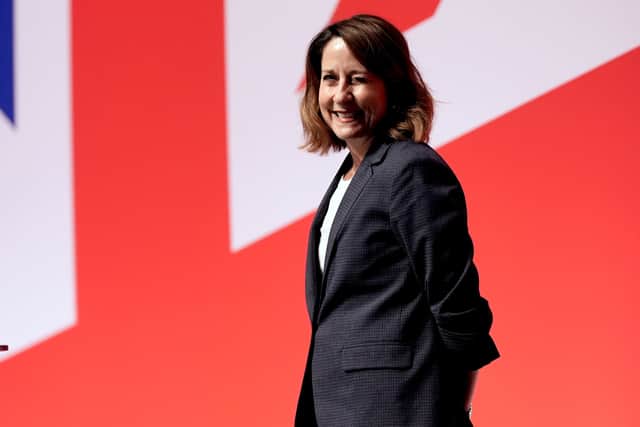
Stefan Rousseau/PA Wire


She told the Labour party conference: “Focusing winter fuel payments on the poorest pensioners wasn’t a decision we wanted or expected to make, but when we promised we could be trusted with taxpayers’ money – we meant it.

“And when we were faced with a £22 billion black hole, which the Tories left this year, we had to act, because we know what happened when Liz Truss played fast and loose with the public finances. It was working people and pensioners on fixed incomes who paid the highest price.

“We took what I know is a difficult decision, but let me tell you conference - this Labour government has done more to help the poorest pensioners in the last two months than the Tories did in 14 years.

“The biggest ever drive to get pensioners on pension credit, backed by our commitment to the pensions triple lock. This will increase the state pension by an estimated £1,700 this parliament, with an extra £6bn of funding forecast next year.”

There was also support for the government from members, with one, Maggie Cosin, telling conference she did not need the payment and the money should be used to help children and others in need.

She said: “Every single year, £200 comes into my bank account and every year I go and buy stuff for the food bank with it. I don’t need it, the children of this country need it.”

Ms Cosin said there was a need to “sort the economy”, adding: “It’s not a matter of taking it away from poor pensioners, it’s a matter of getting it to others.”

Earlier shouts of “save the winter fuel” could be heard in the conference hall, as activists protested at the Unite stand in the venue. Responding to the result, SNP Westminster leader Stephen Flynn called for the Prime Minister to listen to the membership.

He said: "Keir Starmer must finally listen to voters, admit he got it wrong and U-turn on the Labour government's damaging cuts to the winter fuel payment for millions of pensioners.

"The fact that the Prime Minister's own party members feel obliged to speak out, and demand he reverse these cuts, should tell him just how angry voters are at his cuts

"Voters are furious that while Keir Starmer and Labour government ministers have been lining their own pockets with more than £800,000 of designer clothes and freebies, they are imposing austerity cuts on the rest of us and robbing £500 from pensioners this winter."


Labour conference backs motion calling for reversal of Winter Fuel Allowance cuts

Unite proposed the motion calling for Labour to change course


Chris Jarvis 
Today
 Left Foot Forward

Delegates at this year’s Labour Party Conference have dealt a blow to the party leadership by backing a motion calling for the government to not go ahead with its planned cuts to the Winter Fuel Allowance. The non-binding resolution passed by the conference says that Labour should “reverse the introduction of means-testing for the Winter Fuel Allowance“.

Alongside this, the motion called for the introduction of a wealth tax on the top 1% of earners in the UK.

The motion was proposed by the Unite trade union and seconded by a delegate from the Communication Workers’ Union.

Speaking in support of the motion, Unite’s general secretary Sharon Graham said: “People simply do not understand, I do not understand, how our new Labour government can cut the winter fuel allowance for pensioners and leave the super-rich untouched.

“This is not what people voted for. It’s the wrong decision, and it needs to be reversed.

“Friends, we are the sixth richest economy in the world. We have the money. Britain needs investment, not austerity mark two.

“We won’t get any gold badges to shaving peanuts off our debt. These fiscal rules are self-imposed, and the decision to keep them is hanging like a noose around our necks.”

Labour’s conference passing the motion is highly embarrassing for the prime minister Keir Starmer and the chancellor Rachel Reeves, who have faced heavy pressure to not go ahead with the changes to the Winter Fuel Allowance. Earlier in the conference, Reeves said cutting the Winter Fuel Allowance was “the right decision in the circumstances that we inherited”.

Chris Jarvis is head of strategy and development at Left Foot Forward


Unions win vote to reverse winter fuel cut in blow for Keir Starmer


While motions at the party conference are non-binding, and the government is not required to respond to them, the vote highlights major division within the party over the controversial policy

Millie Cooke
Political correspondent
,Archie Mitchell
THE INDPENDENT

Delegates at the Labour Party Conference in Liverpool have voted to reverse the government’s controversial cut to winter fuel payments, in a blow to Sir Keir Starmer.

While motions at the party conference are non-binding, and the government is not required to respond to them, the vote highlights major division within the party over the controversial policy.

In July, Rachel Reeves announced that older people not in receipt of pension credits or other means-tested benefits will no longer receive winter fuel payments from this year onwards.

Treasury deputy: Labour didn't plan winter fuel allowance cuts before election

The decision came as part of a series of spending cuts to address a black hole in the public finances left by the previous Conservative government announced in July by the chancellor.

The winter fuel payment is a payment of either £200 or £300 to help pensioners with their heating bills.

Delegates at the Labour Party Conference in Liverpool have voted to reverse the government’s controversial cut to winter fuel payments, in a damaging blow to Sir Keir Starmer’s authority (BBC Today)

Around 10 million pensioners and seven million pensioner households are expected to be affected by the changes. Ms Reeves and Sir Keir have argued that increases in the state pension will outweigh the cut, leaving pensioners better off than they are currently even without winter fuel payments.


The motion, which was passed by a show of hands, said: “Britain cannot wait for growth, nor turn back to failed austerity.

“We need a vision where pensioners are not the first to face a new wave of cuts and those that profited from decades of deregulation finally help to rebuild Britain.”


It also calls for an end to the “fiscal rules which prevent borrowing to invest” brought in under the previous Tory government, as well as the introduction of wealth taxes to ensure there are “no further cuts to welfare provision for working people and pensioners”.

They propose taxing the top one per cent, equalising capital gains tax with income tax and imposing national insurance on investment income.

Unite general secretary Sharon Graham has described the policy as “cruel”, urging the prime minister to admit he made a “misstep”.

She said: “The first thing Labour does is to take away the winter fuel allowance from the poorest in our society while they leave the wealthiest people pretty much untouched.”

Speaking ahead of the vote on Wednesday morning, Ms Graham said: “I do not understand, how our new Labour government can cut the winter fuel allowance for pensioners and leave the super-rich untouched.

“This is not what people voted for. It is the wrong decision and needs to be reversed.

“Friends, we are the sixth richest economy in the world. We have the money. Britain needs investment, not austerity mark two. We won’t get any gold badge for shaving peanuts off our debt.”

Green Party co-leader Carla Denyer stuck the boot in over the row, saying there is a “goundswell of support” for changing course on the policy.

She added: “Targeting some of the most vulnerable to fix the supposed black hole in the public finances is cruel and unnecessary.

“There is another way. A fairer way. As the successful motion by Unite makes clear, taxing multi-millionaires and billionaires a little more would not only easily cover the cost of winter fuel payments for all pensioners but also generate additional funds for much needed investment in our health and social care services.”

Labour will not u-turn on the policy despite the rebellion. A spokesman said: “Labour was elected on our manifesto commitment to sound fiscal rules, economic growth is our primary mission and we will take the tough decisions now to rebuild Britain."


Keir Starmer suffers blow as Labour conference votes against winter fuel cut


Josh Self
Editor
Politics.co.uk
Wednesday, 25 Sep, 2024


Labour conference has voted to condemn the government’s decision to cut the winter fuel payment for more than 9 million pensioners.

The conference motion, calling for ministers to “reverse” the removal of the allowance from all but the poorest pensioners, was passed by on Wednesday morning.

The vote is non-binding, meaning the government is not obliged to change the policy.

Unite and the Communication Workers Union, which co-sponsored the motion, had hoped the vote would take place on Monday, the busiest day of the event in Liverpool. However, it was shifted to the final hour of the conference, following the final ministerial speeches and with many delegates already having departed.

The motion, now passed by Labour delegates, called for means testing of the winter fuel allowance to be reversed and for an end to fiscal rules which prevent borrowing to invest, as well as the introduction of a wealth tax.

It was passed by hand-vote in the conference hall, according to the rules of the party. There was initially some confusion over whether the motion had carried, as the vote appeared to be extremely close.

The chair of the conference arrangements committee (CAC), Lynne Morris, had faced boos and heckles from the conference floor after she announced the timing for the debate and vote on Monday.

Although the vote is non-binding, the Labour leadership’s defeat makes for a downbeat ending to the party’s first conference in government for 15 years.

Unite general secretary Sharon Graham has described the policy as “cruel” and has called on the prime minister to admit he made a “misstep”.

She has said: “The first thing Labour does is to take away the winter fuel allowance from the poorest in our society while they leave the wealthiest people pretty much untouched.”

CWU general secretary Dave Ward said his union will continue to campaign for the policy to change.

“We don’t accept it is good economics”, he said.

Josh Self is Editor of Politics.co.uk, follow him on X/Twitter here.

UK
The threat of further widespread train strikes has been lifted after union members voted overwhelmingly for a new pay deal with train companies and Network Rail.


It was confirmed that members of the Rail, Maritime and Transport union (RMT) had joined their driver colleagues within the ASLEF union in accepting new offers after more than two years of sporadic disruption to services.

The RMT said its membership backed a one-year rise of 4.5% at Network Rail and increases at train operators of 4.75% for the last year and 4.5% for 2024/25.

Almost 99% of train company members voted in favour while NR workers backed their pay rise by 88%.

It is the latest dispute to be resolved since Labour came to power in July, promising to end stalemates over pay deals that have led to industrial action across other key services including the NHS.

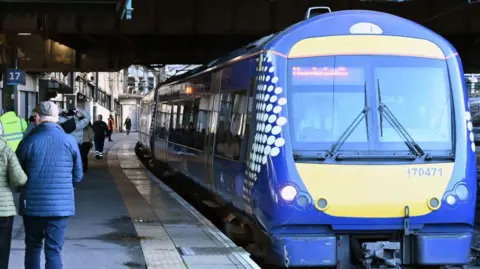
A separate announcement also confirmed train drivers had voted to accept the latest pay offer from ScotRail after weeks of reduced timetables amid driver shortages.


An RMT statement said of its ballot: "This outcome reflects the collective efforts of our membership in defending their jobs, working conditions, pay, and pensions from the attacks of the previous Tory government and their private contractors.

"We thank our members for their efforts during this long but successful campaign.

"Their resolve has been essential in navigating the challenges posed during negotiations and in particular the previous Tory government's refusal to negotiate in good faith, alongside relentless attacks by sections of the media and the employers.

"RMT remains focused and committed to supporting public ownership as a path to building a stronger future for the rail industry for both workers and passengers."

Transport Secretary Louise Haigh said of the vote: "This is a necessary step towards fixing our railways and getting the country moving.

"It will ensure a more reliable service by helping to protect passengers from national strikes, and crucially, it clears the way for vital reform and modernising working practices to ensure a better performing railway for everyone."
ScotRail drivers accept deal to end long-running pay dispute


The dispute has left ScotRail running a reduced timetable since July

A long-running dispute at ScotRail has come to an end after train drivers accepted a pay offer.

Drivers' union Aslef said 75% of members voted for the deal, which will provide staff with a 4.5% rise backdated to April.

ScotRail has been running a reduced timetable since July after many drivers made themselves unvailable for overtime or Sunday working.

The TSSA union, representing managerial and technical staff, also accepted the package but said a separate dispute over "on-call working" would continue.

Members of Unite and the RMT union previously voted to accept the pay offer.

Train services will not immediately return to previous levels, but ScotRail said it would update passengers "as soon as possible".

Aslef Scotland organiser Kevin Lindsay said it was a positive result that had been achieved through members' "resolute determination".

"I am pleased that ScotRail and the Scottish government have shown they understand the importance of our members to Scotland's rail service," he said.

"Appreciating the workforce in the railways is a fundamental prerequisite if Scotland is to deliver the world-class, affordable, attractive and accessible rail services the country needs."
PA Media
The deal comes days before the end of a scheme that scrapped peak-time fares


The TSSA union welcomed the deal, but said its dispute over on-call working for operations managers "remains live".

General secretary Maryam Eslamdoust said, “I urge ScotRail management to come back to the table and commit to meaningful negotiations with us so that we can find a solution that works for passengers, and our members, alike.”

ScotRail's Service Delivery Director Mark Ilderton said all parties had worked hard to agree a pay deal that "recognises the hard work of staff, as well as providing value for money for the public finances".

He added: “We will provide an update for customers on the timetable as soon as possible.”

The temporary timetable has seen1,660 services operating daily from Monday to Saturday, compared with the usual level of around 2,250 - a cut of 26%.

The pay agreement comes just two days before the end of a ScotRail pilot scheme that scrapped peak-time train fares.

Transport Scotland said the project, which saw ticket prices subsidised by the Scottish government and standardised across the day, “did not achieve its aims” of persuading more people to swap car journeys for rail travel.

Passengers will be wondering when ScotRail will return to its normal timetable. The company moved to an emergency timetable with fewer services than usual in July because of the pay row.

Many drivers were not making themselves available for overtime and rest day working. It was linked to the pay row but was not industrial action by a union – drivers are perfectly entitled to turn down overtime.

ScotRail will be watching the situation closely over the coming days to get a sense of how many drivers are available for overtime.

It will then decide whether it can return to a normal timetable.

But if a full timetable is not in operation again soon, the company will face tough questions over its continuing dependence on overtime by drivers.

Union says full ScotRail timetable should return 'as soon as possible'

Ross Hunter
Wed 25 September 2024 

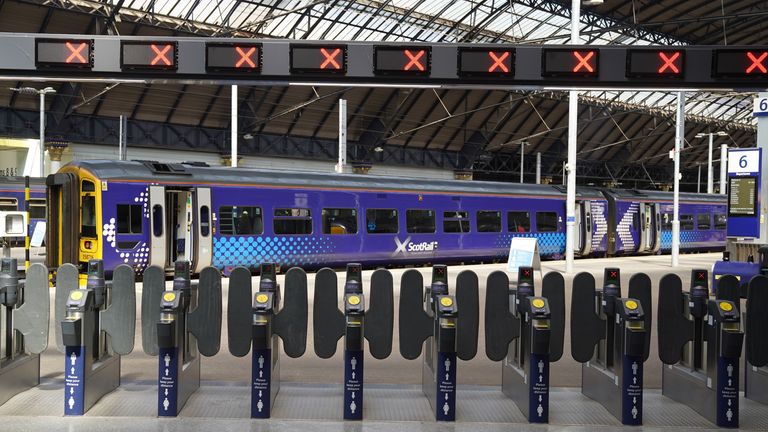
A trade union has said it wants to see a full ScotRail timetable return as soon as possible (Image: Jane Barlow/PA Wire)

A TRADE union representing train drivers in Scotland has said they want to see ScotRail return to a full timetable "as soon as possible".

On Wednesday, the Aslef union announced that 74.89% of its members had voted to accept a fresh pay offer from ScotRail.

Unite and RMT had already voted to accept the offer.

ScotRail has been running a temporary reduced timetable since July due to staff shortages caused by the pay dispute, with fewer drivers making themselves available for overtime or to work on their rest days.

READ MORE: Train drivers vote to accept pay offer from ScotRail

However, Aslef Scotland said that now the dispute has been settled they want to see ScotRail reintroduce a fulltime "asap".

In a statement on X/Twitter, they said: "Today our members employed by @ScotRail voted 3-1 in favour of accepting the pay offer.

"We now look forward to @ScotRail & @scotgov getting a full timetable back up and running asap."

ScotRail were contacted for comment.
Germany’s Green party leadership resigns after election wipe-outs

Ricarda Land and Omid Nouripour: the leadership of the German Greens have announced their resignations amid the party's freefall in popularity.


September 2024
BRUSSELS SIGNAL
Peter Caddle

Co-leaders Ricarda Lang and Omid Nouripour both released statements on September 25 declaring that the entirety of the party’s executive board would resign over the result of the Brandenburg elections on September 22, which saw the Greens fall to zero seats in the state.

Writing on X, Lang said the result was evidence that the Greens were now facing the “deepest crisis” it had had “in decades” and that the party must work to rescue itself in time for Germany’s national elections next year.


For that to happen, she added, a change in leadership had to occur.

“This means that now is not the time to sit tight, but to take responsibility by enabling a new start,” she wrote.

“This is why the federal executive board decided this morning that it is time to place the fortunes of this great party in new hands. We are resigning from our office with effect from the federal party conference in Wiesbaden. It has been an honour for us to serve this party.”

Nouripour said the executive had a “responsibility to act in the best interests of the party,” and that such an obligation now meant he and his colleagues must surrender their positions.

He added that a new executive board would be elected at a future federal party conference.

The resignations came amid a disastrous few months for the Greens, with the party suffering defeat after defeat in recent state-level elections.

In Saxony, the party saw its regional parliament seat share reduced by more than 40 per cent, while it lost every one of its local MPs in both Brandenburg and Thuringia.

By contrast, all three states saw the populist Alternative for Germany (AfD) party rise in popularity, with it becoming the single most popular faction in Thuringia. The populist-left Sahra Wagenknecht Alliance (BSW) also outperformed the Greens in all three of the state elections.

Things are also looking dire at the federal level. With the Greens having previously seen party popularity spike to highs of 23 per cent in 2022, recent polling indicated that it has now dropped below the 10 per cent mark for the first time since 2017.

Much of the party’s senior figures have become subjects of mockery over their political and personal eccentricities.

Some members have attempted to stifle jibes directed at them. Foreign minister Annalena Baerbock at one point ordered Elon Musk’s X to censor a parody account dedicated to mocking her questionable command of the English language, although that was refused by the platform.

Such battles sometimes end up in the German courts, with one high-profile case seeing prosecutors and defendants argue back and forth over whether a voter in the country had the right to portray Lang as being fat.

“Ricarda Lang is fat, you can’t just portray her as thin,” one defence attorney declared earlier this year while defending his client from accusations he criminally insulted several Greens politicians.

The court ended up finding in the defendant’s favour, dismissing an attempt to hand him a €6,000 fine by public prosecutors.


Jane Fonda Urges Young People to Vote in 2024 to Push Kamala Harris on Climate Change

Mark Hertsgaard
Tue, September 24, 2024 

ANGELA WEISS/Getty Images

This article is co-published with The Guardian.

Young people’s understandable unhappiness with the Biden administration’s record on oil and gas drilling and the war in Gaza should not deter them from voting to block Donald Trump from again becoming president of the United States, the Hollywood actor and activist Jane Fonda has warned.

“I understand why young people are really angry, and really hurting,” Fonda said. “What I want to say to them is: ‘Do not sit this election out, no matter how angry you are. Do not vote for a third party, no matter how angry you are. Because that will elect somebody who will deny you any voice in the future of the United States … If you really care about Gaza, vote to have a voice, so you can do something about it. And then, be ready to turn out into the streets, in the millions, and fight for it.’”

Fonda’s remarks came in a wide-ranging interview organized by the global media collaborative Covering Climate Now and conducted by the Guardian, CBS News and Rolling Stone magazine.

Making major social change requires massive, non-violent street protests as well as shrewd electoral organizing, Fonda argued. Drawing on more than 50 years of activism, from her anti-Vietnam war and anti-nuclear protests in the 1970s to later agitating for economic democracy, women’s rights and, today, for climate action, Fonda said that: “History shows us that … you need millions of people in the streets, but you [also] need people in the halls of power with ears and a heart to hear the protests, to hear the demands.”


Jane Fonda *21.12.1937- actress, USA with Angela Davis (left) during a demonstration against the war in Vietnam, Campus of the University of Los Angeles, California
Jane Fonda with Angela Davis (left) during a demonstration against the war in Vietnam, Campus of the University of Los Angeles, Californiaullstein bild/Getty ImagesMore

During the Great Depression, she said, President Franklin Delano Roosevelt agreed with helping the masses of unemployed. But FDR said the public had to “make him do it”, or he could not overcome resistance from the status quo. “There is a chance for us to make them do it if it’s Kamala Harris and Tim Walz [in the White House],” she said. “There is no chance if Trump and Vance win this election.”

Scientists have repeatedly warned that greenhouse gas emissions must be cut by half by the next decade, Fonda noted, so a President Harris would have to be pushed “to stop drilling, and fracking, and mining. No new development of fossil fuels.” Trump, on the other hand, has promised to “‘drill, baby, drill.’ For once, let’s believe him. The choice is very clear: do we vote for the future, or do we vote for burning up the planet?”

Fonda launched the Jane Fonda Climate political action committee three years ago to elect “climate champions” at all levels of government: national, state and local. “The Pac focuses down ballot – on mayors, state legislators, county councils,” she said. “It’s incredible how much effect people in these positions can have on climate issues.”

Forty-two of the 60 candidates the Pac endorsed in 2022 won their races. In 2024, the Pac is providing money, voter outreach and publicity to more than 100 candidates in key battleground states and in California, Fonda’s home state. California is “the fifth-biggest economy in the world, and an oil-producing state”, she explained, “so what happens here has an impact far broader than California”.

Fonda is also, for the first time in her life, “very involved” in this year’s presidential campaign, “because of the climate emergency”. She plans to visit each battleground state, she said: “And when I’m there, we give our schedule to the Harris campaign. Then they fold in Harris campaign [get-out-the-vote events], volunteer recruitment, things like that … and then I do them for our Pac candidates” as well.

Her Pac has a strict rule: it endorses only candidates who do not accept money from the fossil fuel industry. The industry’s “stranglehold over our government” explains a crucial disconnect, Fonda said: polls show that most Americans want climate action, yet their elected officials often don’t deliver it. In California, she said, “we’ve had so many moderate Democrats that blocked the climate solutions we need because they take money from the fossil fuel industry … It’s very hard to stand up to the people that are supporting your candidacy.”

Fonda also faulted the mainstream news media for not doing a better job of informing the public about the climate emergency and the abundance of solutions. Watching the Harris-Trump debate, she thought that “Kamala did very well”. But she “was very disturbed that the No 1 crisis facing humanity right now took an hour-and-a-half to come up and was not really addressed”, she added. “People don’t understand what we are facing! The news media has to be more vigilant about tying extreme weather events to climate change. It’s starting to happen, but not enough.”

Given her years of anti-nuclear activism – including producing and starring in a hit Hollywood movie, The China Syndrome, released days before the Three Mile Island reactor accident in 1979 – it’s perhaps no surprise that Fonda rejects the increasingly fashionable idea that nuclear power is a climate solution.

“Every time I speak [in public], someone asks me if these small modular reactors are a solution,” she said. “So I’ve spent time researching it, and there’s one unavoidable problem: no nuclear reactor of any kind – the traditional or the smaller or the modular, none of them – has been built in less than 10 to 20 years. We don’t have that kind of time. We have to deal with the climate crisis by the 2030s. So just on the timeline, nuclear is not a solution.” By contrast, she said: “Solar takes about four years to develop, and pretty soon it’s going to be 30% of the electricity in the world.”

The reason that solar – and wind and geothermal – energy are not prioritized over fossil fuels and nuclear, she argued, is that “big companies don’t make as much money on it”. Noting that air pollution from fossil fuels kills 9 million people a year globally, she added: “We’re being poisoned to death because of petrochemicals and the fossil fuel industry. And we [taxpayers] pay for it! We pay $20bn a year [in government subsidies] to the fossil fuel industry, and we’re dying … We need that industry out of our lives, off of our planet – but they run the world.”

The two-time Academy Award winner’s decades as one of the world’s biggest movie stars has given her an appreciation of the power of celebrity, and she applauds Taylor Swift for exercising that power with her endorsement of the Harris-Walz ticket.

“I think she’s awesome, amazing and very smart,” Fonda said of Swift. “I’m very grateful and excited that she did it, and … I think it’s going to have a big impact.”

“My metaphor for myself, and other celebrities, is a repeater,” Fonda added. “When you look at a big, tall mountain, and you see these antennas on the top, those are repeaters. They pick up the signals from the valley that are weak and distribute them so that they have a larger audience … When I’m doing the work I’m doing, I’m picking up the signals from the people who live in Wilmington and the Central valley and Kern county and are really suffering, and the animals that can’t speak, and trying to lift them up and send [their stories] out to a broader audience. We’re repeaters. It’s a very valid thing to do.”

Climate activism is also “so much fun”, she said, and it does wonders for her mental health.

“I don’t get depressed anymore,” she said. “You know, Greta Thunberg said something really great: ‘Everybody goes looking for hope. Hope is where there’s action, so look for action and hope will come.’” Hope, Fonda added, is “very different than optimism. Optimism is ‘everything’s gonna be fine’, but you don’t do anything to make sure that that’s true. Hope is: I’m hopeful, and I’m gonna work like hell to make it true.”


Jane Fonda on Kamala, Taylor, and Our Existential Climate Crisis

Charisma Madarang
Mon, September 23, 2024


The climate crisis has been keeping Jane Fonda up at night. “I was so angry, it was hard to go to sleep,” she says. “We are being killed with cancer, heart diseases, because of the burning of fossil fuel,” Fonda presses. “We have the solution to the climate crisis, why don’t we employ it, instead of allowing a bunch of rich people to destroy everything that’s been created by humankind? We’ve got to rise up.”

It’s early September and we’re sitting in a sunny Los Angeles living room. Outside, everything appears as if it’s business as usual: traffic humming, glossy palms swaying, and Hollywood Boulevard swelling with tourists. Speaking with Fonda just a day after the first debate between Vice President Kamala Harris and former President Donald Trump, however, it’s clearer than ever that the country is hurtling toward a seismic change.

Fonda, who has been an activist for over 50 years, beginning with her controversial opposition to the Vietnam War, has often called the 2024 election an “existential” one. It’s the first time she has actively endorsed a candidate, first with President Joe Biden. After he dropped out of the race, Fonda was one of the first leaders in Hollywood to support Harris.

She lays out the stakes in November with a candid urgency, drawing a clear distinction between Harris and Trump’s climate and energy policies. “Every candidate has issues. Nobody’s perfect, but the Harris-Walz ticket is the ticket that will allow us to fight, to get the solutions that climate scientists are saying we need,” she says. “They give us a chance, at least, to fight. They give us a platform on which we can try to pressure.”

The alternative, Fonda points out, is a man who “invited all the CEOs of the fossil fuel industry to Mar-a-Lago” and promised to “drill, baby, drill” and slash environmental regulations in exchange for raising $1 billion to help him win back the White House. “We don’t have four years to lose. We can’t afford to allow him to be elected.”

Herve Berville, secretary of state for the Sea of the Republic of France, Fonda, and Laura Meller of Greenpeace Nordic (from left) at a press briefing at United Nations HQ

When discussing young voters disillusioned with Biden’s and Harris’ handling of U.S. policy amid the Israel-Hamas war in Gaza, Fonda says, “I understand why young people are so upset, but to sit this out or to vote for a third party candidate, is to allow fascism.”

“That will elect somebody who will deny you any voice in the future of the United States,” she continues. “Vote for a voice if you really care about Gaza, vote to have a voice so that you can do something about it, and then be ready to turn out into the streets by the millions and fight for it… If the young people stay home, we’re going to lose. They have such power. So show us your power. Vote and then fight.”

With election month less than two months away, artists across the music and entertainment industries have used their voices in an effort to impact America’s future. Appearing on Jimmy Kimmel shortly after the debate and Taylor Swift’s endorsement of Harris, Fonda celebrated the news on television. “I think she’s awesome. She’s amazing and very smart, and I’m very grateful and excited that she did it,” says Fonda. “I think it’s going to have a big impact.”

When reflecting on her own choice to use her celebrity to garner attention to the climate fight, Fonda quips, “What other way would there be to spend it?”


Left: Fonda attends Fire Drill Friday on Feb. 7, 2020, in Los Angeles. Right: The activist is arrested during a protest on Capitol Hill on Oct. 18, 2019, in Washington, D.C.

Fonda has long emphasized the potency for civil disobedience to create systemic change. The two-time Academy award-winning actress co-founded Fire Drill Fridays in 2019, a recurring climate protest in Washington, D.C., during which she was arrested five times. She later founded the Jane Fonda Climate PAC in 2022 to financially back “climate champions” at the state and local level. “That’s where the really robust work is being done on climate right now — mayors, city council, state legislators, county executives,” Fonda points out. “It’s incredible how much effect people in these positions can have on climate. We have well over 100 candidates all over the country.”

“This is a collective crisis, and it requires a collective solution,” says Fonda. “[Trump] wants to do away with all regulations and open up the floodgates for the fossil fuel industry and the nuclear industry. So the choice is very clear, do we vote for the future, or do we vote for burning up the planet?”

While Fonda has called her activism in the climate fight all-consuming, she underlines that the work is to ensure a healthier planet for future generations. “When you’re on your deathbed, you want to feel that it’s been worthwhile,” she says. “You want people who love you around you, which means you have to deserve their love. And you want to feel that you’ve had meaning in your life. And for the first time, I felt my life has value.”

Fonda’s remarks came in a wide-ranging interview organized by the global media collaborative Covering Climate Now and conducted by the Guardian, CBS News, and Rolling Stone magazine.
Hope Slough spill kills thousands of salmon near Chilliwack, B.C.

CBC
Tue, September 24, 2024 

Justin Munroe holds a dead juvenile fish in his hands near the site of a spill on the Hope Slough near Chilliwack, B.C., on Tuesday. (Camille Vernet/Radio-Canada - image credit)


First Nations in B.C.'s Fraser Valley say a large spill in the historic Hope Slough waterway on Monday has led to the death of thousands of salmon and other fish.

The Cheam First Nation said in a Tuesday statement that the spill was discovered on Monday when community members went out to the waterway to check on years-long restoration efforts led by the Cheam and Sqwá First Nations.

The nations say thousands of fish — including juvenile coho salmon, trout and the endangered Salish sucker — were killed.

The nations say the exact source of the spill has not yet been determined. The spill could mean that spawning coho stocks could be wiped out for a year, they say.

Eddie (T’ít’elem Spath) Gardner is a Sqwá First Nation councillor who is responsible for the lands and resources portfolio. He mourned the loss of the juvenile coho salmon in the Hope Slough stream.

Eddie (T’ít’elem Spath) Gardner is a Sqwá First Nation councillor who is responsible for the lands and resources portfolio. He mourned the loss of the juvenile coho salmon in the Hope Slough stream. (Camille Vernet/Radio-Canada)

"I almost broke out in tears because I could see dead coho ... the little ones that were all lined up along the bank here," said Eddie Gardner, a Sqwá First Nation councillor who was one of the first to discover the spill.

"It's very sad for us because we consider ourselves as salmon people. We consider them as our relatives.

"To see a coho kill, you know, in the stream where we've been making every effort to make this a good and healthy place for the salmon ... is very, very disturbing."


Dead juvenile fish were visible on the grass surrounding the Hope Slough after the spill, whose cause has yet to be determined.

Dead juvenile fish were visible on the grass surrounding the Hope Slough after the spill, whose cause has yet to be determined. (Camille Vernet/Radio-Canada)

The Hope Slough, which has been given the traditional name of Sqwa:la by local First Nations, flows into the Fraser River.

Gardner says the First Nations have been trying for many years to restore salmon stocks and clean the waterway as they have been part of the nations' cultures for centuries.

"We need to pull out all the stops, you know, to make sure that our salmon relatives don't go ... the way of the buffalo, so they don't go extinct," he said of restoration efforts.

'Heartbreaking'

Roxanna Kooistra, who works for Cheam First Nation as an environmental stewardship manager, thinks the spill resulted from some kind of organic matter that flowed from upstream.

In its statement, the Cheam First Nation says the spill may be related to agriculture and farming activities upstream, with Kooistra saying the nation had deployed drones and people on foot to locate the source of the spill.

Roxanna Kooistra, who works for Cheam First Nation as an environmental stewardship manager, says she was in tears when she discovered the spill on Monday.

Roxanna Kooistra, who works for Cheam First Nation as an environmental stewardship manager, says she was in tears when she discovered the spill on Monday. (Camille Vernet/Radio-Canada)

"We've tested approximately 10 kilometres down the slough, and as far as we know all salmonids are dead as far as 10 kilometres downstream," she told CBC News.

"There's people fishing, there's likely children playing in the area, and this water is now toxic for them," she added. "We need to get the word out as soon as possible."


An oil sheen was visible on the Hope Slough on Tuesday. The waterway feeds into the Fraser River.

An oil sheen was visible on the Hope Slough on Tuesday. The waterway feeds into the Fraser River. (Camille Vernet/Radio-Canada)

Kooistra said the nations have been working to educate the community that the Hope Slough is a salmon-bearing waterway, and it has been difficult to break through people's preconceived notions that it is not an active stream.

"To come here and know that potentially tens of thousands of litres of toxins were released just because someone didn't feel like paying to dispose it, it's heartbreaking, it's crushing, it's disheartening for the community," she said.

A spokesperson for the province's Ministry of Environment said ministry staff were on site Tuesday monitoring the oil spill.

"An Environmental Response Contractor has been retained to begin mitigation and cleanup actions," they wrote in a statement.

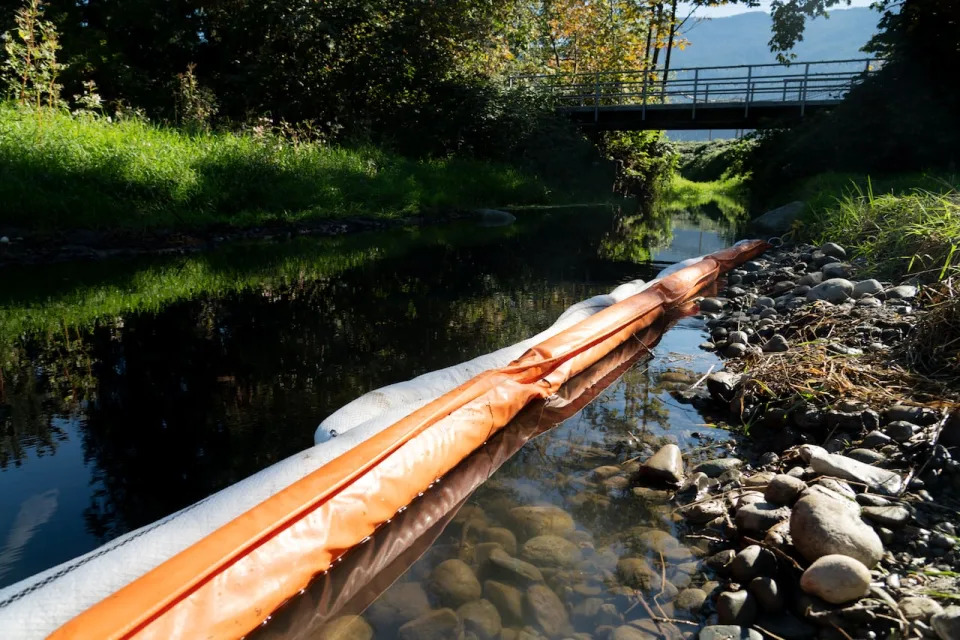
A boom was in place to contain the spill on the Hope Slough near Chilliwack, B.C., on Tuesday.

A boom was in place to contain the spill on the Hope Slough near Chilliwack, B.C., on Tuesday. (Camille Vernet/Radio-Canada)