Monday, November 25, 2024

CRT YOU NEED

How the first Pilgrims and Puritans differed in their views on religion and respect for Native Americans


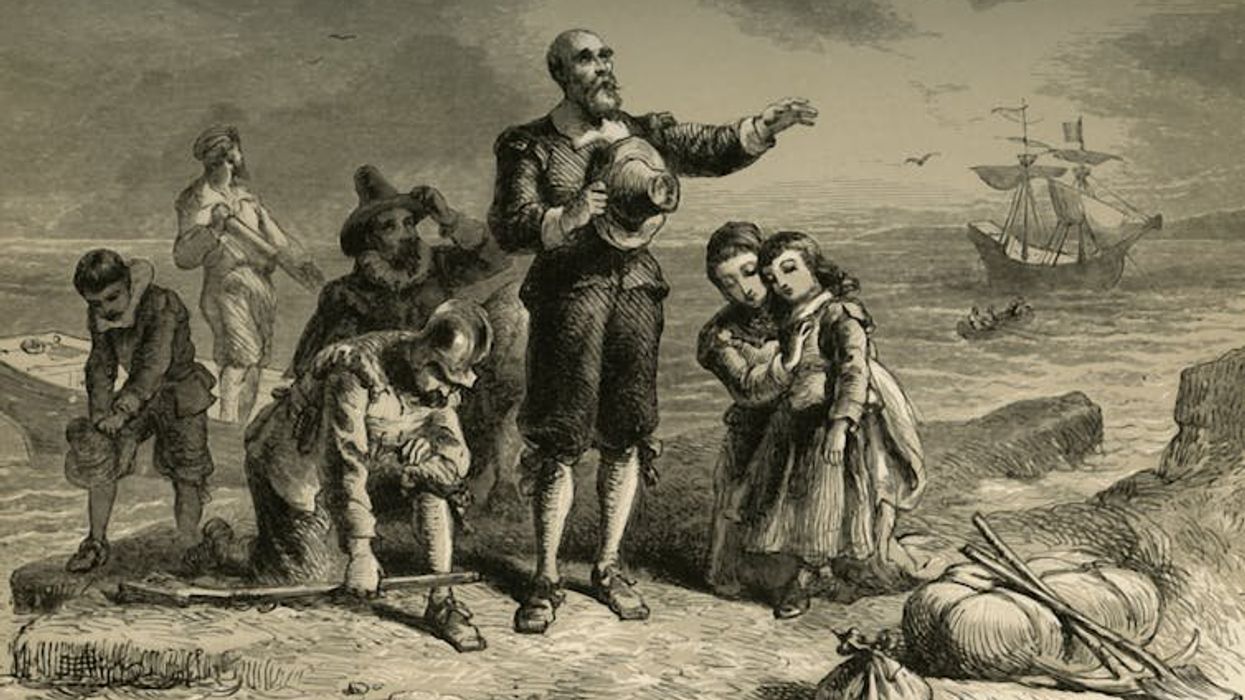
A sketch from 1877 illustrating the landing of the Pilgrims, by artist Albert Bobbett. 

November 25, 2024


Every November, numerous articles recount the arrival of 17th-century English Pilgrims and Puritans and their quest for religious freedom. Stories are told about the founding of Massachusetts Bay Colony and the celebration of the first Thanksgiving feast.


In the popular mind, the two groups are synonymous. In the story of the quintessential American holiday, they have become inseparable protagonists in the story of the origins.

But as a scholar of both English and American history, I know there are significant differences between the two groups. Nowhere is this more telling than in their respective religious beliefs and treatment of Native Americans.


Where did the Pilgrims come from?

Pilgrims arose from the English Puritan movement that originated in the 1570s. Puritans wanted the English Protestant Reformation to go further. They wished to rid the Church of England of “popish” – that is, Catholic – elements like bishops and kneeling at services.

Each Puritan congregation made its own covenant with God and answered only to the Almighty. Puritans looked for evidence of a “godly life,” meaning evidence of their own prosperous and virtuous lives that would assure them of eternal salvation. They saw worldly success as a sign, though not necessarily a guarantee, of eventual entrance into heaven.

After 1605, some Puritans became what scholar Nathaniel Philbrick calls “Puritans with a vengeance.” They embraced “extreme separatism,” removing themselves from England and its corrupt church.

These Puritans would soon become “Pilgrims” – literally meaning that they would be prepared to travel to distant lands to worship as they pleased.

In 1608, a group of 100 Pilgrims sailed to Leiden, Holland and became a separate church living and worshipping by themselves.

They were not satisfied in Leiden. Believing Holland also to be sinful and ungodly, they decided in 1620 to venture to the New World in a leaky vessel called the Mayflower. Fewer than 40 Pilgrims joined 65 nonbelievers, whom the Pilgrims dubbed “strangers,” in making the arduous journey to what would be called Plymouth Colony.
Hardship, survival and Thanksgiving in America

Most Americans know that more than half of the Mayflower’s passengers died the first harsh winter of 1620-21. The fragile colony survived only with the assistance of Native Americans – most famously Squanto. To commemorate, not celebrate, their survival, Pilgrims joined Native Americans in a grand meal during the autumn of 1621.

But for the Pilgrims, what we today know as Thanksgiving was not a feast; rather, it was a spiritual devotion. Thanksgiving was a solemn and not a celebratory occasion. It was not a holiday.

Still, Plymouth was dominated by the 65 strangers, who were largely disinterested in what Pilgrims saw as urgent questions of their own eternal salvation.

There were few Protestant clerics among the Pilgrims, and in few short years, they found themselves to be what historian Mark Peterson calls “spiritual orphans.” Lay Pilgrims like William Brewster conducted services, but they were unable to administer Puritan sacraments.


Pilgrims and Native Americans in the 1620s

At the same time, Pilgrims did not actively seek the conversion of Native Americans. According to scholars like Philbrick, English author Rebecca Fraser and Peterson, the Pilgrims appreciated and respected the intellect and common humanity of Native Americans.

An early example of Pilgrim respect for the humanity of Native Americans came from the pen of Edward Winslow. Winslow was one of the chief Pilgrim founders of Plymouth. In 1622, just two years after the Pilgrims’ arrival, he published in the mother country the first book about life in New England, “Mourt’s Relation.”

While opining that Native Americans “are a people without any religion or knowledge of God,” he nevertheless praised them for being “very trusty, quick of apprehension, ripe witted, just.”

Winslow added that “we have found the Indians very faithful in their covenant of peace with us; very loving. … we often go to them, and they come to us; some of us have been fifty miles by land in the country with them.”

In Winslow’s second published book, “Good Newes from New England (1624),” he recounted at length nursing the Wampanoag leader Massasoit as he lay dying, even to the point of spoon-feeding him chicken broth.Fraser calls this episode “very tender.”
The Puritan exodus from England

 
Puritans barricading their house against Indians. Artist Albert Bobbett.
The Print Collector/ Hudson Archives via Getty Images

The thousands of non-Pilgrim Puritans who remained behind and struggled in England would not share Winslow’s views. They were more concerned with what they saw as their own divine mission in America.

After 1628, dominant Puritan ministers clashed openly with the English Church and, more ominously, with King Charles I and Bishop of London – later Archbishop of Canterbury – William Laud.

So, hundreds and then thousands of Puritans made the momentous decision to leave England behind and follow the tiny band of Pilgrims to America. These Puritans never considered themselves separatists, though. Following what they were confident would be the ultimate triumph of the Puritans who remained in the mother country, they would return to help govern England.

The American Puritans of the 1630s and beyond were more ardent, and nervous about salvation, than the Pilgrims of the 1620s. Puritans tightly regulated both church and society and demanded proof of godly status, meaning evidence of a prosperous and virtuous life leading to eternal salvation. They were also acutely aware of that divine-sent mission to the New World.

Puritans believed they must seek out and convert Native Americans so as to “raise them to godliness.” Tens of thousands of Puritans therefore poured into Massachusetts Bay Colony in what became known as the “Great Migration.” By 1645, they already surrounded and would in time absorb the remnants of Plymouth Colony.

Puritans and Native Americans in the 1630s and beyond

Dominated by hundreds of Puritan clergy, Massachusetts Bay Colony was all about emigration, expansion and evangelization during this period.

As early as 1651, Puritan evangelists like Thomas Mayhew had converted 199 Native Americans labeled by the Puritans as “praying Indians.”

For those Native Americans who converted to Christianity and prayed with the Puritans, there existed an uneasy harmony with Europeans. For those who resisted what the Puritans saw as “God’s mission,” there was harsh treatment – and often death.

But even for those who succumbed to the Puritans’ evangelization, their culture and destiny changed dramatically and unalterably.


War with Native Americans

A devastating outcome of Puritan cultural dominance and prejudice was King Philip’s War in 1675-76. Massachusetts Bay Colony feared that Wampanoag chief Metacom – labeled by Puritans “King Philip” – planned to attack English settlements throughout New England in retaliation for the murder of “praying Indian” John Sassamon.

That suspicion mushroomed into a 14-month, all-out war between colonists and Native Americans over land, religion and control of the region’s economy. The conflict would prove to be one of the bloodiest per capita in all of American history.

By September 1676, thousands of Native Americans had been killed, with hundreds of others sold into servitude and slavery. King Philip’s War set an ominous precedent for Anglo-Native American relations throughout most of North America for centuries to come.


The Pilgrims’ true legacy

So, Puritans and Pilgrims came out of the same religious culture of 1570s England. They diverged in the early 1600s, but wound up 70 years later being one and the same in the New World.

In between, Pilgrim separatists sailed to Plymouth, survived a terrible first winter and convened a robust harvest-time meal with Native Americans. Traditionally, the Thanksgiving holiday calls to mind those first settlers’ courage and tenacity.

However, the humanity that Pilgrims like Edward Winslow showed toward the Native Americans they encountered was lamentably and tragically not shared by the Puritan colonists who followed them. Therefore, the ultimate legacy of Thanksgiving is and will remain mixed.

Michael Carrafiello, Professor of History, Miami University

This article is republished from The Conversation under a Creative Commons license. Read the original article.


Unthanksgiving Day: A annual celebration of Indigenous resistance to colonialism at Alcatraz
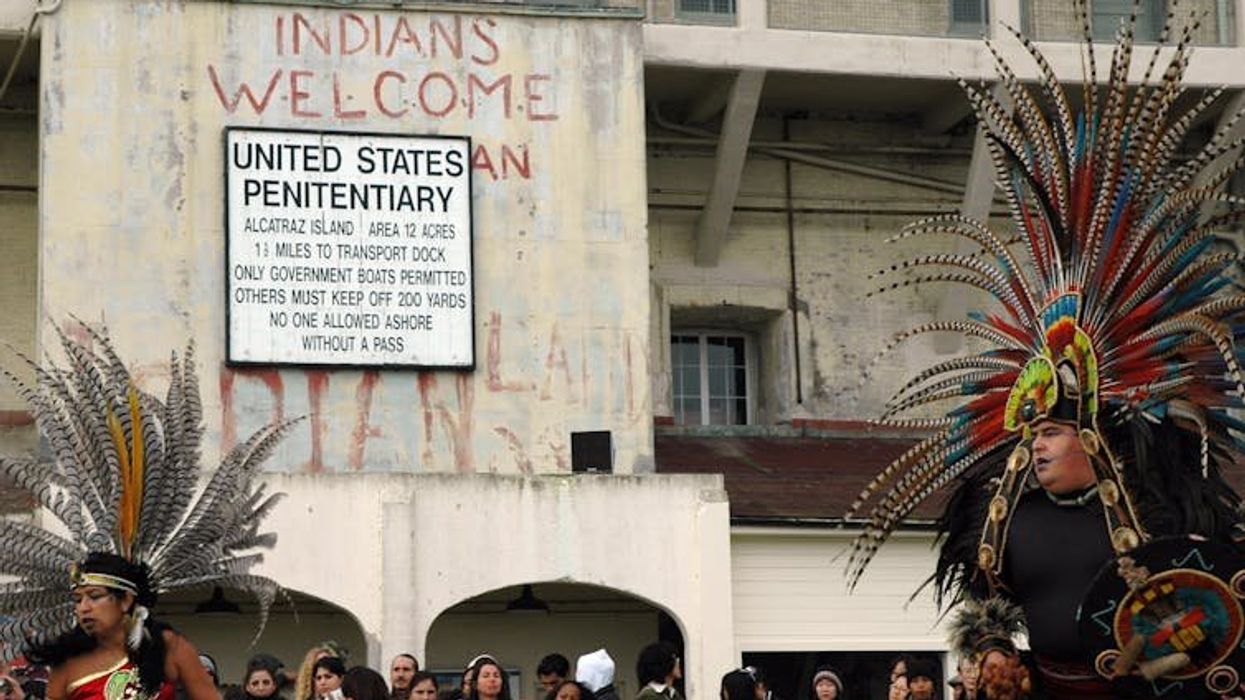
The Teo Kali, an Aztec cultural group, participates in a sunrise “Unthanksgiving Day” ceremony with Native Americans on Nov. 24, 2005, on Alcatraz Island. Kara Andrade/AFP via Getty Images

The Conversation
November 24, 2024

Each year on the fourth Thursday of November, when many people start to take stock of the marathon day of cooking ahead, Indigenous people from diverse tribes and nations gather at sunrise in San Francisco Bay.


Their gathering is meant to mark a different occasion – the Indigenous People’s Thanksgiving Sunrise Ceremony, an annual celebration that spotlights 500 years of Native resistance to colonialism in what was dubbed the “New World.” Held on the traditional lands of the Ohlone people, the gathering is a call for remembrance and for future action for Indigenous people and their allies.

As a scholar of Indigenous literary and cultural studies, I introduce my students to the long and enduring history of Indigenous peoples’ pushback against settler violence. The origins of this sunrise event are a particularly compelling example that stem from a pivotal moment of Indigenous activism: the Native American occupation of Alcatraz Island, a 19-month-long takeover that began in 1969.


Reclaiming of Alcatraz Island

On Nov. 20, 1969, led by Indigenous organizers Richard Oakes (Mohawk) and LaNada War Jack (Shoshone Bannock), roughly 100 activists who called themselves “Indians of All Tribes,” or IAT, traveled by charter boat across San Francisco Bay to reclaim the island for Native peoples. Multiple groups had done smaller demonstrations on Alcatraz in previous years, but this group planned to stay, and it maintained its presence there until June 1971.

Before this occupation, Alcatraz Island had served as a military prison and then a federal penitentiary. U.S. Prison Alcatraz was decommissioned in 1963 because of the high cost of its upkeep, and it was essentially left abandoned. In November 1969, after a fire destroyed the American Indian Center in San Francisco, local Indigenous activists were looking for a new place where urban Natives could gather and access resources, such as legal assistance and educational opportunities, and Alcatraz Island fit the bill.

Citing a federal law that stated that “unused or retired federal lands will be returned to Native American tribes,” Oakes’ group settled in to live on “The Rock.” They elected a council and established a school, a medical center and other necessary infrastructure. They even had a pirate radio show called “Radio Free Alcatraz,” hosted by Santee Dakota poet John Trudell.

The IAT did offer – albeit satirically – to purchase the island back, proposing in the 1969 proclamation “twenty-four dollars (US$24) in glass beads and red cloth, a precedent set by the white man’s purchase of a similar island about 300 years ago,” referring to the purchase of Manhattan Island by the Dutch in 1626.

On behalf of IAT, Oakes sent the following message to the regional office San Francisco office of the Department of the Interior shortly after they arrived:
“The choice now lies with the leaders of the American government – to use violence upon us as before to remove us from our Great Spirit’s land, or to institute a real change in its dealing with the American Indian … We and all other oppressed peoples would welcome spectacle of proof before the world of your title by genocide. Nevertheless, we seek peace.”


After 19 months, the occupation ultimately succumbed to internal and external pressures. Oakes left the island after a family tragedy, and many members of the original group returned to school, leaving a gap in leadership. Moreover, the government cut off water and electricity to the island, and a mysterious fire destroyed several buildings, with the Indigenous occupiers and government officials pointing the blame at one another.

By June 1971, President Richard Nixon was ready to intervene and ordered federal agents to remove the few remaining occupiers. The occupation was over, but it helped spark an Indigenous political revitalization that continues today. It also pushed Nixon to put an official end to the “termination era,” a legislative effort geared toward ending the federal government’s responsibility to Native nations, as articulated in treaties and formal agreements.


Solidarity at sunrise


In 1975, “Unthanksgiving Day” was established to both mark the occupation and advocate for Indigenous self-determination. For many participants, Unthanksgiving Day was also a reiteration of the original declaration released by IAT, which called on the U.S. to acknowledge the impacts of 500 years of genocide against Indigenous people.

These days, the event is conducted by the International Indian Treaty Council and is largely referred to as the Indigenous Peoples Thanksgiving Sunrise Gathering. Sunrise ceremony on Alcatraz celebrating Indigenous Peoples Day.


Participants meet on Pier 33 in San Francisco before dawn and board boats to Alcatraz Island, bringing Native peoples and allies together in the place that symbolizes a key moment in the long history of Indigenous resistance.

At dawn, in the courtyard of what was once a federal penitentiary, sunrise ceremonies are conducted to “give thanks for our lives, for the beatings of our heart,” said Andrea Carmen, a member of Yaqui Nation and executive director of the International Indian Treaty Council, at the 2018 gathering.

Songs and dances from various tribal nations are performed in prayer and as acts of collective solidarity. At the same gathering, Lakota Harden, who is a Minnecoujou/ Yankton Lakota and HoChunk community leader and organizer, emphasized that “those voices and the medicine in those songs are centuries old and our ancestors come and they appreciate being acknowledged when the sun comes up.” Through the sharing of song and dance, they enact culturally resonant resistance against the erasure of Native peoples from these lands.

The Indigenous Peoples Thanksgiving Sunrise Gathering also gives people the chance to bring greater community awareness to current struggles facing Indigenous people across the globe. These include the intensifying impacts of climate change, the widespread violence against Native women, children and two-spirit individuals, and ongoing threats to the integrity of their ancestral homelands.
Resistance beyond The Rock

Indigenous Peoples Thanksgiving Sunrise Gathering lands near the end of Native American Heritage Month, which is dedicated to celebrating the vast and diverse Indigenous nations and tribes that exist in the United States. Professor Jamie Folsom, who is Choctaw, describes this month as a chance to “present who we are today … (and) to present our issues in our own voices and to tell our own stories.”

The people who will meet on Pier 33 on the fourth Thursday of November continue this story of Indigenous political action on the Rock and, by extension, in North America. The more than 50-year history of this gathering is a testament to the endurance of the original message from Oakes and Indians of All Tribes. It is also part of a larger network of resistance movements being led by Native peoples, particularly young people.

As Harden says, the next generation is asking for change. “They’re standing up and saying we’ve had enough. And our future generations will make sure that things change.”

Shannon Toll, Associate Professor of Indigenous Literatures, University of Dayton

This article is republished from The Conversation under a Creative Commons license. Read the original article.
Third woman dies under Texas’ abortion ban as doctors use riskier miscarriage treatments

ProPublica
November 25, 2024

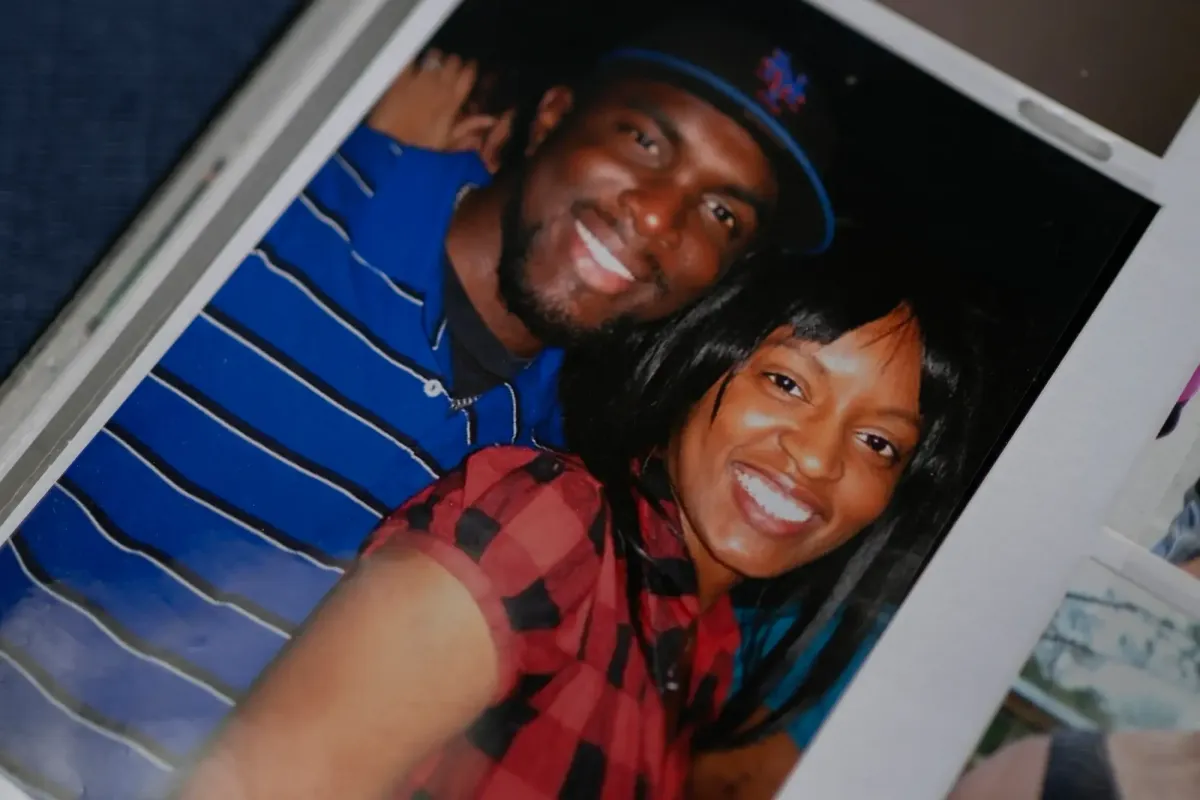
Hope and Porsha Ngumezi pose together in a family photo. Credit:Danielle Villasana for ProPublica

Wrapping his wife in a blanket as she mourned the loss of her pregnancy at 11 weeks, Hope Ngumezi wondered why no obstetrician was coming to see her.

Over the course of six hours on June 11, 2023, Porsha Ngumezi had bled so much in the emergency department at Houston Methodist Sugar Land that she’d needed two transfusions. She was anxious to get home to her young sons, but, according to a nurse’s notes, she was still “passing large clots the size of grapefruit.”

Hope dialed his mother, a former physician, who was unequivocal. “You need a D&C,” she told them, referring to dilation and curettage, a common procedure for first-trimester miscarriages and abortions. If a doctor could remove the remaining tissue from her uterus, the bleeding would end.

But when Dr. Andrew Ryan Davis, the obstetrician on duty, finally arrived, he said it was the hospital’s “routine” to give a drug called misoprostol to help the body pass the tissue, Hope recalled. Hope trusted the doctor. Porsha took the pills, according to records, and the bleeding continued.

Three hours later, her heart stopped.

The 35-year-old’s death was preventable, according to more than a dozen doctors who reviewed a detailed summary of her case for ProPublica. Some said it raises serious questions about how abortion bans are pressuring doctors to diverge from the standard of care and reach for less-effective options that could expose their patients to more risks. Doctors and patients described similar decisions they’ve witnessed across the state.


It was clear Porsha needed an emergency D&C, the medical experts said. She was hemorrhaging and the doctors knew she had a blood-clotting disorder, which put her at greater danger of excessive and prolonged bleeding. “Misoprostol at 11 weeks is not going to work fast enough,” said Dr. Amber Truehart, an OB-GYN at the University of New Mexico Center for Reproductive Health. “The patient will continue to bleed and have a higher risk of going into hemorrhagic shock.” The medical examiner found the cause of death to be hemorrhage.

D&Cs — a staple of maternal health care — can be lifesaving. Doctors insert a straw-like tube into the uterus and gently suction out any remaining pregnancy tissue. Once the uterus is emptied, it can close, usually stopping the bleeding.

But because D&Cs are also used to end pregnancies, the procedure has become tangled up in state legislation that restricts abortions. In Texas, any doctor who violates the strict law risks up to 99 years in prison. Porsha’s is the fifth case ProPublica has reported in which women died after they did not receive a D&C or its second-trimester equivalent, a dilation and evacuation; three of those deaths were in Texas.


Texas doctors told ProPublica the law has changed the way their colleagues see the procedure; some no longer consider it a first-line treatment, fearing legal repercussions or dissuaded by the extra legwork required to document the miscarriage and get hospital approval to carry out a D&C. This has occurred, ProPublica found, even in cases like Porsha’s where there isn’t a fetal heartbeat or the circumstances should fall under an exception in the law. Some doctors are transferring those patients to other hospitals, which delays their care, or they’re defaulting to treatments that aren’t the medical standard.

Misoprostol, the medicine given to Porsha, is an effective method to complete low-risk miscarriages but is not recommended when a patient is unstable. The drug is also part of a two-pill regimen for abortions, yet administering it may draw less scrutiny than a D&C because it requires a smaller medical team and because the drug is commonly used to induce labor and treat postpartum hemorrhage. Since 2022, some Texas women who were bleeding heavily while miscarrying have gone public about only receiving medication when they asked for D&Cs. One later passed out in a pool of her own blood.

“Stigma and fear are there for D&Cs in a way that they are not for misoprostol,” said Dr. Alison Goulding, an OB-GYN in Houston. “Doctors assume that a D&C is not standard in Texas anymore, even in cases where it should be recommended. People are afraid: They see D&C as abortion and abortion as illegal.”


Doctors and nurses involved in Porsha’s care did not respond to multiple requests for comment.

Several physicians who reviewed the summary of her case pointed out that Davis’ post-mortem notes did not reflect nurses’ documented concerns about Porsha’s “heavy bleeding.” After Porsha died, Davis wrote instead that the nurses and other providers described the bleeding as “minimal,” though no nurses wrote this in the records. ProPublica tried to ask Davis about this discrepancy. He did not respond to emails, texts or calls.

Houston Methodist officials declined to answer a detailed list of questions about Porsha’s treatment. They did not comment when asked whether Davis’ approach was the hospital’s “routine.” A spokesperson said that “each patient’s care is unique to that individual.”


“All Houston Methodist hospitals follow all state laws,” the spokesperson added, “including the abortion law in place in Texas.”
“We Need to See the Doctor”

Hope marveled at the energy Porsha had for their two sons, ages 5 and 3. Whenever she wasn’t working, she was chasing them through the house or dancing with them in the living room. As a finance manager at a charter school system, she was in charge of the household budget. As an engineer for an airline, Hope took them on flights around the world — to Chile, Bali, Guam, Singapore, Argentina.


The two had met at Lamar University in Beaumont, Texas. “When Porsha and I began dating,” Hope said, “I already knew I was going to love her.” She was magnetic and driven, going on to earn an MBA, but she was also gentle with him, always protecting his feelings. Both were raised in big families and they wanted to build one of their own.

When he learned Porsha was pregnant again in the spring of 2023, Hope wished for a girl. Porsha found a new OB-GYN who said she could see her after 11 weeks. Ten weeks in, though, Porsha noticed she was spotting. Over the phone, the obstetrician told her to go to the emergency room if it got worse.

To celebrate the end of the school year, Porsha and Hope took their boys to a water park in Austin, and as they headed back, on June 11, Porsha told Hope that the bleeding was heavier. They decided Hope would stay with the boys at home until a relative could take over; Porsha would drive to the emergency room at Houston Methodist Sugar Land, one of seven community hospitals that are part of the Houston Methodist system.


At 6:30 p.m, three hours after Porsha arrived at the hospital, she saw huge clots in the toilet. “Significant bleeding,” the emergency physician wrote. “I’m starting to feel a lot of pain,” Porsha texted Hope. Around 7:30 p.m., she wrote: “She said I might need surgery if I don’t stop bleeding,” referring to the nurse. At 7:50 p.m., after a nurse changed her second diaper in an hour: “Come now.”

Still, the doctor didn’t mention a D&C at this point, records show. Medical experts told ProPublica that this wait-and-see approach has become more common under abortion bans. Unless there is “overt information indicating that the patient is at significant risk,” hospital administrators have told physicians to simply monitor them, said Dr. Robert Carpenter, a maternal-fetal medicine specialist who works in several hospital systems in Houston. Methodist declined to share its miscarriage protocols with ProPublica or explain how it is guiding doctors under the abortion ban.

As Porsha waited for Hope, a radiologist completed an ultrasound and noted that she had “a pregnancy of unknown location.” The scan detected a “sac-like structure” but no fetus or cardiac activity. This report, combined with her symptoms, indicated she was miscarrying.

But the ultrasound record alone was less definitive from a legal perspective, several doctors explained to ProPublica. Since Porsha had not had a prenatal visit, there was no documentation to prove she was 11 weeks along. On paper, this “pregnancy of unknown location” diagnosis could also suggest that she was only a few weeks into a normally developing pregnancy, when cardiac activity wouldn’t be detected. Texas outlaws abortion from the moment of fertilization; a record showing there is no cardiac activity isn’t enough to give physicians cover to intervene, experts said.


Dr. Gabrielle Taper, who recently worked as an OB-GYN resident in Austin, said that she regularly witnessed delays after ultrasound reports like these. “If it’s a pregnancy of unknown location, if we do something to manage it, is that considered an abortion or not?” she said, adding that this was one of the key problems she encountered. After the abortion ban went into effect, she said, “there was much more hesitation about: When can we intervene, do we have enough evidence to say this is a miscarriage, how long are we going to wait, what will we use to feel definitive?”

At Methodist, the emergency room doctor reached Davis, the on-call OB-GYN, to discuss the ultrasound, according to records. They agreed on a plan of “observation in the hospital to monitor bleeding.”

Around 8:30 p.m., just after Hope arrived, Porsha passed out. Terrified, he took her head in his hands and tried to bring her back to consciousness. “Babe, look at me,” he told her. “Focus.” Her blood pressure was dipping dangerously low. She had held off on accepting a blood transfusion until he got there. Now, as she came to, she agreed to receive one and then another.


By this point, it was clear that she needed a D&C, more than a dozen OB-GYNs who reviewed her case told ProPublica. She was hemorrhaging, and the standard of care is to vacuum out the residual tissue so the uterus can clamp down, physicians told ProPublica.

“Complete the miscarriage and the bleeding will stop,” said Dr. Lauren Thaxton, an OB-GYN who recently left Texas.

“At every point, it’s kind of shocking,” said Dr. Daniel Grossman, a professor of obstetrics and gynecology at the University of California, San Francisco who reviewed Porsha’s case. “She is having significant blood loss and the physician didn’t move toward aspiration.”


All Porsha talked about was her devastation of losing the pregnancy. She was cold, crying and in extreme pain. She wanted to be at home with her boys. Unsure what to say, Hope leaned his chest over the cot, passing his body heat to her.

At 9:45 p.m., Esmeralda Acosta, a nurse, wrote that Porsha was “continuing to pass large clots the size of grapefruit.” Fifteen minutes later, when the nurse learned Davis planned to send Porsha to a floor with fewer nurses, she “voiced concern” that he wanted to take her out of the emergency room, given her condition, according to medical records.

At 10:20 p.m., seven hours after Porsha arrived, Davis came to see her. Hope remembered what his mother had told him on the phone earlier that night: “She needs a D&C.” The doctor seemed confident about a different approach: misoprostol. If that didn’t work, Hope remembers him saying, they would move on to the procedure.

A pill sounded good to Porsha because the idea of surgery scared her. Davis did not explain that a D&C involved no incisions, just suction, according to Hope, or tell them that it would stop the bleeding faster. The Ngumezis followed his recommendation without question. “I’m thinking, ‘He’s the OB, he’s probably seen this a thousand times, he probably knows what’s right,’” Hope said.

But more than a dozen doctors who reviewed Porsha’s case were concerned by this recommendation. Many said it was dangerous to give misoprostol to a woman who’s bleeding heavily, especially one with a blood clotting disorder. “That’s not what you do,” said Dr. Elliott Main, the former medical director for the California Maternal Quality Care Collaborative and an expert in hemorrhage, after reviewing the case. “She needed to go to the operating room.” Main and others said doctors are obliged to counsel patients on the risks and benefits of all their options, including a D&C.

Performing a D&C, though, attracts more attention from colleagues, creating a higher barrier in a state where abortion is illegal, explained Goulding, the OB-GYN in Houston. Staff are familiar with misoprostol because it’s used for labor, and it only requires a doctor and a nurse to administer it. To do a procedure, on the other hand, a doctor would need to find an operating room, an anesthesiologist and a nursing team. “You have to convince everyone that it is legal and won’t put them at risk,” said Goulding. “Many people may be afraid and misinformed and refuse to participate — even if it’s for a miscarriage.”

Davis moved Porsha to a less-intensive unit, according to records. Hope wondered why they were leaving the emergency room if the nurse seemed so worried. But instead of pushing back, he rubbed Porsha’s arms, trying to comfort her. The hospital was reputable. “Since we were at Methodist, I felt I could trust the doctors.”

On their way to the other ward, Porsha complained of chest pain. She kept remarking on it when they got to the new room. From this point forward, there are no nurse’s notes recording how much she continued to bleed. “My wife says she doesn’t feel right, and last time she said that, she passed out,” Hope told a nurse. Furious, he tried to hold it together so as not to alarm Porsha. “We need to see the doctor,” he insisted.

Her vital signs looked fine. But many physicians told ProPublica that when healthy pregnant patients are hemorrhaging, their bodies can compensate for a long time, until they crash. Any sign of distress, such as chest pain, could be a red flag; the symptom warranted investigation with tests, like an electrocardiogram or X-ray, experts said. To them, Porsha’s case underscored how important it is that doctors be able to intervene before there are signs of a life-threatening emergency.

But Davis didn’t order any tests, according to records.

Around 1:30 a.m., Hope was sitting by Porsha’s bed, his hands on her chest, telling her, “We are going to figure this out.” They were talking about what she might like for breakfast when she began gasping for air.

“Help, I need help!” he shouted to the nurses through the intercom. “She can’t breathe.”
“All She Needed”

Hours later, Hope returned home in a daze. “Is mommy still at the hospital?” one of his sons asked. Hope nodded; he couldn’t find the words to tell the boys they’d lost their mother. He dressed them and drove them to school, like the previous day had been a bad dream. He reached for his phone to call Porsha, as he did every morning that he dropped the kids off. But then he remembered that he couldn’t.

Friends kept reaching out. Most of his family’s network worked in medicine, and after they said how sorry they were, one after another repeated the same message. All she needed was a D&C, said one. They shouldn’t have given her that medication, said another. It’s a simple procedure, the callers continued. We do this all the time in Nigeria.

Since Porsha died, several families in Texas have spoken publicly about similar circumstances. This May, when Ryan Hamilton’s wife was bleeding while miscarrying at 13 weeks, the first doctor they saw at Surepoint Emergency Center Stephenville noted no fetal cardiac activity and ordered misoprostol, according to medical records. When they returned because the bleeding got worse, an emergency doctor on call, Kyle Demler, said he couldn’t do anything considering “the current stance” in Texas, according to Hamilton, who recorded his recollection of the conversation shortly after speaking with Demler. (Neither Surepoint Emergency Center Stephenville nor Demler responded to several requests for comment.)

They drove an hour to another hospital asking for a D&C to stop the bleeding, but there, too, the physician would only prescribe misoprostol, medical records indicate. Back home, Hamilton’s wife continued bleeding until he found her passed out on the bathroom floor. “You don’t think it can really happen like that,” said Hamilton. “It feels like you’re living in some sort of movie, it’s so unbelievable.”

Across Texas, physicians say they blame the law for interfering with medical care. After ProPublica reported last month on two women who diedafter delays in miscarriage care, 111 OB-GYNs sent a letter to Texas policymakers, saying that “the law does not allow Texas women to get the lifesaving care they need.”

Dr. Austin Dennard, an OB-GYN in Dallas, told ProPublica that if one person on a medical team doubts the doctor’s choice to proceed with a D&C, the physician might back down. “You constantly feel like you have someone looking over your shoulder in a punitive, vigilante type of way.”

The criminal penalties are so chilling that even women with diagnoses included in the law’s exceptions are facing delays and denials. Last year, for example, legislators added an update to the ban for patients diagnosed with previable premature rupture of membranes, in which a patient’s water breaks before a fetus can survive. Doctors can still face prosecution for providing abortions in those cases, but they are offered the chance to justify themselves with what’s called an “affirmative defense,” not unlike a murder suspect arguing self defense. This modest change has not stopped some doctors from transferring those patients instead of treating them; Dr. Allison Gilbert, an OB-GYN in Dallas, said doctors send them to her from other hospitals. “They didn’t feel like other staff members would be comfortable proceeding with the abortion,” she said. “It’s frustrating that places still feel like they can’t act on some of these cases that are clearly emergencies.” Women denied treatment for ectopic pregnancies, another exception in the law, have filed federal complaints.

In response to ProPublica’s questions about Houston Methodist’s guidance on miscarriage management, a spokesperson, Gale Smith, said that the hospital has an ethics committee, which can usually respond within hours to help physicians and patients make “appropriate decisions” in compliance with state laws.

After Porsha died, Davis described in the medical record a patient who looked stable: He was tracking her vital signs, her bleeding was “mild” and she was “said not to be in distress.” He ordered bloodwork “to ensure patient wasn’t having concerning bleeding.” Medical experts who reviewed Porsha’s case couldn’t understand why Davis noted that a nurse and other providers reported “decreasing bleeding” in the emergency department when the record indicated otherwise. “He doesn’t document the heavy bleeding that the nurse clearly documented, including the significant bleeding that prompted the blood transfusion, which is surprising,” Grossman, the UCSF professor, said.

Patients who are miscarrying still don’t know what to expect from Houston Methodist.

This past May, Marlena Stell, a patient with symptoms nearly identical to Porsha’s, arrived at another hospital in the system, Houston Methodist The Woodlands. According to medical records, she, too, was 11 weeks along and bleeding heavily. An ultrasound confirmed there was no fetal heartbeat and indicated the miscarriage wasn’t complete. “I assumed they would do whatever to get the bleeding to stop,” Stell said.

Instead, she bled for hours at the hospital. She wanted a D&C to clear out the rest of the tissue, but the doctor gave her methergine, a medication that’s typically used after childbirth to stop bleeding but that isn’t standard care in the middle of a miscarriage, doctors told ProPublica. "She had heavy bleeding, and she had an ultrasound that's consistent with retained products of conception." said Dr. Jodi Abbott, an associate professor of obstetrics and gynecology at Boston University School of Medicine, who reviewed the records. "The standard of care would be a D&C."

Stell says that instead, she was sent home and told to “let the miscarriage take its course.” She completed her miscarriage later that night, but doctors who reviewed her case, so similar to Porsha’s, said it showed how much of a gamble physicians take when they don’t follow the standard of care. “She got lucky — she could have died,” Abbott said. (Houston Methodist did not respond to a request for comment on Stell’s care.)

It hadn’t occurred to Hope that the laws governing abortion could have any effect on his wife’s miscarriage. Now it’s the only explanation that makes sense to him. “We all know pregnancies can come out beautifully or horribly,” Hope told ProPublica. “Instead of putting laws in place to make pregnancies safer, we created laws that put them back in danger.”

For months, Hope’s youngest son didn’t understand that his mom was gone. Porsha’s long hair had been braided, and anytime the toddler saw a woman with braids from afar, he would take off after her, shouting, “That’s mommy!”

A couple weeks ago, Hope flew to Amsterdam to quiet his mind. It was his first trip without Porsha, but as he walked the city, he didn’t know how to experience it without her. He kept thinking about how she would love the Christmas lights and want to try all the pastries. How she would have teased him when he fell asleep on a boat tour of the canals. “I thought getting away would help,” he wrote in his journal. “But all I’ve done is imagine her beside me.”


Mariam Elba and Lexi Churchill contributed research.
Dr. Oz has investments worth millions in industry he'll soon regulate: report
 Alternet
November 25, 2024 

Republican candidate for the U.S. Senate in Pennsylvania Mehmet Oz attends evening services at Kingdom Empowerment International Ministries on Oct. 2, 2022. - Tom Gralish/The Philadelphia Inquirer/TNS

Dr. Mehmet Oz — who Donald Trump nominated last week to lead the Centers for Medicare and Medicaid Services — holds a "stake in UnitedHealth Group worth as much as $600,000, as well as shares of pharmaceutical firms and tech companies with business in the healthcare sector, such as Amazon," according to the Los Angeles Times.

Per the report, the investments — which are regulated by CMS — could be worth "millions of dollars."

The Times also noted that when Dr. Oz was asked whether "he would divest his shares or otherwise seek to mitigate conflicts of interest should he be confirmed by the Senate," the Trump nominee refused to comment.

"That’s a problem because if Oz is confirmed and he still holds the investments," the Daily Beast reported, "it won’t be clear if he’s making decisions based on what’s best for Medicare and Medicaid patients, or on what’s best for his stock portfolio, critics told the Times."

The Los Angeles Times' full report is available here


The Daily Beast's report is here.


As Trump plans for immigrant roundup, militias are standing by

The Conversation
November 25, 2024 

"Donald Trump" is written on top of the wall at the border between the United States and Mexico, in Ciudad Juarez, Mexico November 6, 2024. REUTERS/Jose Luis Gonzalez

Written by Amy Cooter, Director of Research, Academic Development, and Innovation at the Center on Terrorism, Extremism, and Counterterrorism


President-elect Donald Trump has reaffirmed that once he takes office he plans to declare a national emergency and use the military on American streets to accomplish his promises to round up and deport millions of undocumented migrants.

Many experts’ concerns about this program have included the facts that immigrants contribute enormous value to the U.S. economy and mass deportation would hurt food production, housing construction and other crucial industries. Other scholars have analyzed how deportation traumatizes families.

I have an additional concern about a renewed focus on deportation as someone who has studied U.S. domestic militias for more than 15 years: Some militia units may see it as their duty to assist with such efforts. In fact, local police may even deputize certain militias to help them deport immigrants.
Anti-government, but supporting national defense

Militias are generally wary of the government. They’ve even been known to use violence against politicians and other government representatives, including police. I have found in my research that the militias’ disdain for the federal government is especially strong because they believe it is too big and corrupt and takes too much of their income through taxation.

But militia members’ negative beliefs about immigration and self-declared mission to protect the country could lead them to join a national mass-deportation effort.

My research finds that militia members generally believe the falsehoods that undocumented migrants are a threat to public safety.

For some, my research finds, this perception is rooted in xenophobia and racism. Other militia members misunderstand what is required to obtain U.S. citizenship: They believe that anyone who enters the country illegally is, by definition, a criminal and has therefore already proven their intention to not follow the laws and generally be a good American. This is not true, because migrants may seek asylum regardless of their immigration status for up to a year after entering the country.

Members with both sets of motives believe that undocumented migrants are taking jobs away from more deserving citizens and are generally receiving unearned benefits from being in the country. Trump’s promises to crack down on immigration appeal to militia members of both types.


Militias, like these people training in Georgia in 2017, often want to be prepared to help defend the nation.
AP Photo/Lisa Marie Pane

Militia members also believe that one of the few legitimate functions of the federal government as outlined by the Constitution is national defense. In that sense, those who believe migrants are an urgent threat could see the military’s involvement in a mass-deportation operation as consistent with a duty to defend the nation.

Most scholars agree that even if it were technically legal, domestic deployment of the military would be an alarming threat to democracy.

Active participation

Some militia units in border states have been engaged in deportation efforts for a long time. They typically patrol the border, sometimes detain migrants and regularly call the U.S. Border Patrol to report their findings.

Border Patrol agents have historically expressed skepticism and concerns about militia involvement with border monitoring due to the unverifiable skills and motives of civilian support.


Some state, county and local police also do immigration enforcement, and in recent years they have seemed to become more open to civilian assistance.

Some local police agencies, particularly sheriffs, are already asking for civilian assistance managing perceived problems with migrants. Others have hosted anti-immigration events with militias who patrol the border under an effective, if not formal, deputization of their actions.


A member of a militia group searches the U.S.-Mexico border for people seeking to cross in 2019.
Paul Ratje/AFP via Getty Images

Militias may also be called on directly. In the past, Trump has directly addressed militias. The most cited example is his instruction in a Sept. 29, 2020, presidential debate, directing the Proud Boys to “stand back and stand by.” People had similar interpretations of his comments in advance of the Jan. 6, 2021, insurrection.

But I have long believed these appeals started much earlier. In 2018 Trump pardoned the men who inspired the Bundy family occupation and standoff at the Malheur National Wildlife Refuge in Oregon. I believe that was an early attempt to garner support from people in militia circles.

In a 2020 presidential debate, Donald Trump tells militias to ‘stand back and stand by.’
A volatile combination

The military has already been getting involved in immigration enforcement in unprecedented ways. In early 2024, Texas Gov. Greg Abbott claimed the U.S. Border Patrol was not protecting his state from an “invasion” from would-be immigrants. He deployed his state’s National Guard to an area of the border, blocking the Border Patrol from working in that section. That blockade continues.

In a second term, Trump has little incentive to restrain his rhetoric or his actions. The Supreme Court has ruled that presidents have broad immunity from criminal prosecution for actions taken while in office. Even if he does not directly appeal to private citizens to control the border or detain people whom they believe to be undocumented migrants, his official presence and hard-line stance on immigration may be enough to provide legitimacy to vigilante action.


Then-candidate Donald Trump meets with Texas state officials, including Gov. Greg Abbott, on Feb. 29, 2024, at a location on the U.S.-Mexico border seized by the state National Guard.
AP Photo/Eric Gay

In November 2024, two militia members were convicted of a variety of federal offenses, including conspiracy to murder federal agents, for a plot to kill Border Patrol agents whom the men believed were failing to adequately protect the border from crossing migrants.

Not all militia members support mass deportation, especially if it involves unconstitutionally deploying military forces on U.S. soil. That’s clear from my research.

“The military is the military, and law enforcement is law enforcement,” one militia member replied when I asked some of my long-term contacts for their perspectives on Trump’s declaration to use the military. “They are separate for a reason.”

This man believes undocumented migrants pose dangers – but thinks shifting the military’s role would be even more harmful. Not all militia members are so circumspect.

Amy Cooter, Director of Research, Academic Development, and Innovation at the Center on Terrorism, Extremism, and Counterterrorism, Middlebury

This article is republished from The Conversation under a Creative Commons license. Read the original article.
Philippine VP Duterte ‘mastermind’ of assassination plot: justice department


By  AFP
November 25, 2024

Vice President Sara Duterte is being asked to explain herself after she said she had instructed that President Ferdinand Marcos be killed should an alleged plot to kill her succeed -
Copyright AFP JAM STA ROSA

The Philippines justice department on Monday labelled Vice President Sara Duterte the “mastermind” of a plot to assassinate the country’s president, giving her five days to respond to a subpoena.

Duterte is being asked to explain herself in the wake of a blistering weekend press conference where she said she had instructed that President Ferdinand Marcos be killed should an alleged plot to kill her succeed.

“The government is taking action to protect our duly elected president,” Justice Undersecretary Jesse Andres told reporters Monday.

“The premeditated plot to assassinate the president as declared by the self-confessed mastermind will now face legal consequences.”

Hours earlier, in his first public comments on the matter, Marcos vowed to “fight back” in the face of a threat he labelled “disturbing”.

The Marcos-Duterte alliance that swept to power in 2022 has collapsed spectacularly in the lead-up to next year’s mid-term elections, with both sides trading allegations of drug addiction.

Duterte, who is facing potential impeachment hearings, told reporters early Saturday that she herself was the subject of an assassination plot and had instructed that Marcos be killed should it succeed.

In the expletive-laced press conference, Duterte also singled out first lady Liza Araneta-Marcos and presidential cousin Martin Romualdez as potential targets.

“I said, if I die, don’t stop until you have killed them,” she claimed to have told a security team member in regard to the trio.

Hours later, the presidential palace said it was treating the comments as an “active threat”.

“That sort of criminal attempt must not go unchallenged,” Marcos said Monday. “As a democratic country, we need to uphold the law.”

“The vice president is not immune from suit. She can be the subject of any criminal or administrative case,” Andres told reporters, adding the subpoena was in the process of being served.

He added that a manhunt was underway for the “assassin” allegedly engaged by Duterte.

– Marcos-Duterte rift –

Duterte, daughter of former president Rodrigo Duterte, was Marcos’ running mate in the 2022 presidential election that saw their ticket win in a landslide.

She remains his constitutional successor should he be unable to finish his six-year term.

But she is currently facing an investigation in the House of Representatives, led by Romualdez.

Both Romualdez and Duterte are widely expected to run for president in 2028.

Duterte stepped down from her cabinet post of education secretary in June as relations between the two families reached breaking point.

Months earlier, her father had accused Marcos of being a “drug addict”, with the president the next day claiming his predecessor’s health was failing due to long-term use of the powerful opioid fentanyl.

Neither have provided any evidence for their allegations.

In October, Duterte said she felt “used” after teaming with Marcos for the 2022 poll.

REST IN POWER

Breyten Breytenbach, writer who challenged apartheid, dies at 85


By AFP
November 24, 2024

Breyten Breytenback became one of the most influential voices against South Africa's legalised system of racial segregation - Copyright AFP/File Pedro PARDO

South African writer and anti-apartheid activist Breyten Breytenbach died on Sunday in Paris at the age of 85, his daughter told AFP.

A poet, author and painter, Breytenbach left his native country in the early 1960s to settle in Paris, where he became one of the most influential voices against South Africa’s legalised system of racial segregation.

“My father, the South African painter and poet Breyten Breytenbach, died peacefully on Sunday, November 24, in Paris, at the age of 85,” Daphnee Breytenbach said.

Breytenbach published around 50 books during his lifetime, including “The True Confession of an Albino Terrorist” and numerous volumes of poetry, written mainly in his native Afrikaans.

“Immense artist, militant against apartheid, he fought for a better world until the end,” his daughter said.

The writer spent seven years in jail in South Africa including two in solitary confinement.

French president Francois Mitterrand helped secure his release in 1982 and he returned to France, where he became a citizen.

He was later named Chevalier de la Legion d’Honneur et Commandeur des Arts et Lettres, France’s top cultural award.

Breytenbach was born in the small Western Cape town of Bonnievale in 1939.

Though he eventually settled in France with his wife, Yolande Ngo Thi Hoang Lien, he travelled back to South Africa regularly.

“His words, his paintings, his imagination, his resilience will continue to guide us,” his daughter said.

LEFT WING SWING

Uruguay’s Orsi: from the classroom to the presidency


By AFP
November 25, 2024

Uruguay's President-elect, Yamandu Orsi, of the Frente Amplio coalition, delivers his victory speech after the presidential runoff election in Montevideo on November 24, 2024 - Copyright AFP Santiago Mazzarovich

Uruguay’s next president is a former history teacher who swapped the classroom for local government — and will now lead the nation of 3.4 million following his Sunday win at the polls.

President-elect Yamandu Orsi, of the Frente Amplio (Broad Front) alliance, defeated Alvaro Delgado of the center-right National Party in the second round of voting, returning the country to left-wing rule.

Orsi won 1,196,798 votes compared to Delgado’s 1,101,296, the country’s Electoral Court said — 49.8 percent to 45.9 percent.


– Pepe’s heir apparent –


Orsi, 57, garnered nearly 44 percent of ballots cast in the first election round on October 27 and held a small lead in opinion polls ahead of Sunday’s tight vote.

He is seen as the understudy of highly popular ex-president Jose “Pepe” Mujica, known as “the world’s poorest president” during his 2010-2015 rule because of his modest lifestyle.

Orsi was born in a house in the countryside with no electricity.

He grew up in the town of Canelones, of which he later became mayor.

As a child, he helped out in his parents’ grocery store and was a folk dancer and a Catholic altar boy.

In 1989, he joined the Movement of Popular Participation, founded by Mujica, which later became part of the Frente Amplio coalition.

Orsi taught history in high school until 2005, when he entered local government.

He handily won the Frente Amplio primary in June, defeating former Montevideo mayor Carolina Cosse, whom he then chose as his running mate.

The twice-married educator and father of twins campaigned as a moderate with a down-to-earth approach.

But his failure to set out a clear plan for government drew criticism. He also declined to take part in debates and gave few media interviews.

Though the election will shift the balance of power in Uruguay, analysts did not foresee a massive change in the country’s economic direction, with Orsi having previously promised “change that will not be radical.”

Both candidates pledged to fight crime linked to drug trafficking and to boost economic growth, which is recovering from the slowdown brought by the Covid-19 pandemic and a historic drought.

Following October legislative elections, Orsi will govern with a majority in the Senate, though the Frente Amplio is in the minority in the Chamber of Representatives.

– President’s right-hand man –

He defeated Delgado, who was just days into his new job as secretary of the presidency under longtime friend, Luis Lacalle Pou, when the Covid-19 pandemic hit Uruguay in 2020.

Being government spokesman during the crisis allowed him to build his public profile.

Born in Montevideo, Delgado was educated in Catholic schools before getting a veterinary degree.

He entered politics after having run an agricultural business and working as a veterinary advisor.

Prior to serving in the Lacalle Pou administration, he also worked as a labor inspector, a member of parliament representing Montevideo, and a senator.

Climate finance’s ‘new era’ shows new political realities


By AFP
November 24, 2024

People look at the flooding of the Choluteca river in Tegucigalpa, Honduras, on November 17, 2024 - Copyright AFP/File Orlando SIERRA

Shaun TANDON

Rich countries’ promise of $300 billion a year in climate finance brought fury at talks in Baku from poor nations that found it too paltry, but it also shows a shift in global political realities.

The two-week marathon COP29 climate conference opened days after the decisive victory in the US presidential election of Donald Trump, a sceptic both of climate change and foreign aid.

In the new year, Germany, Canada and Australia all hold elections in which conservatives less supportive of green policies stand chances of victory.

Britain is an exception, with the new Labour government putting climate high back on the agenda, but in much of the West, concerns about inflation and budgetary shocks from Russia’s invasion of Ukraine have dented enthusiasm for aggressive climate measures.

At COP29, Germany and the European Union maintained their roles championing climate but also advocated a noticeably practical approach on how much money historical polluters should give poorer countries.

“We live in a time of truly challenging geopolitics, and we should simply not have the illusion” otherwise, European climate commissioner Wopke Hoekstra told bleary-eyed delegates at COP29’s pre-dawn closing session Sunday, as activists in the back loudly coughed to drown him out.

But he vowed leadership by Europe, hailing COP29 as “the start of a new era for climate finance”.

German Foreign Minister Annalena Baerbock, a Green party member and longtime climate advocate, called for flexibility on ways to provide funding.

Europe should “live up to its responsibilities, but in a way that it doesn’t make promises it can’t keep”, she said.

Avinash Persaud, special advisor on climate change to the president of the Inter-American Development Bank, called the final deal “the boundary between what is politically achievable today in developed countries and what would make a difference in developing countries”.

Activists say that climate funding is a duty, not choice, for wealthy nations whose decades of greenhouse gas emissions most contributed to the crisis that most hits the poorest.

This year is again set to be the hottest on record on the planet. Just since COP29, deadly storms have battered the Philippines and Honduras, and Ecuador declared a national emergency due to drought and forest fires.


– ‘Creative accounting’? –


Wealthy historic emitters’ promise of $300 billion a year by 2035 is a step up from an expiring commitment of $100 billion annually, but all sides acknowledge it is not enough.

The COP29 agreement cites the need for $1.3 trillion per year, meaning a whopping $1 trillion a year needs to come from elsewhere.

Even within the $300 billion commitment, some activists see too much wiggle room.

“It is, to some extent, almost an empty promise,” said Mariana Paoli, the global advocacy lead at London-based development group Christian Aid.

She described the target as “creative accounting”, saying there was not enough clarity on how much money would come from public funds and in grants rather than loans.

She acknowledged the politics of the moment but said that wealthy nations had options such as taxation on fossil fuel companies.

“There is a backlash because there is no political will,” she said.


– Role for multinational banks –


In one closely scrutinised part of the Baku deal, countries will be able to count climate finance through international financial institutions toward the $300 billion goal.

The text states that it is “voluntary” — potentially opening the way to include China, which is the world’s largest emitter but refuses to have requirements like long-developed countries.

In a joint statement at COP29, multilateral development banks led by the Washington-based World Bank Group but also including the Beijing-based Asian Infrastructure Investment Bank — which has long faced US criticism — expected that they together can provide $120 billion annually in climate financing and mobilise another $65 billion from the private sector by 2030.

Melanie Robinson, director of the global climate program at the World Resources Institute, said there were good reasons to rely on multinational development banks, including how much capital they can leverage and their tools to advance green policies.

“They are the most effective way to turn each dollar of finance into impact on the ground,” she said.

She agreed that the $300 billion was insufficient but added, “It’s a down payment on what we need.”

Beyond the debate on dollar figures, she pointed to an initiative within the G20 by Brazil, which holds COP30 next year, to reform financial institutions so as to incorporate debtor nations as well as climate concerns.

“There is really a much bigger opportunity for us — which is shifting the whole financial system,” she said.


Concern as climate talks stalls on fossil fuels pledge


By AFP
November 24, 2024

Observers said COP29 in Baku made virtually no progress on tackling the source of global warming - Copyright AFP/File Pedro PARDO


Delphine PAYSANT, Kelly MACNAMARA

The failure of UN climate negotiations to double down on a global pledge to move away from planet-heating fossil fuels on Sunday was decried by experts as a “worrying” setback to global progress on curbing warming.

Nearly 200 nations spent much of COP29 in Azerbaijan locking horns over a tough-fought finance pact that was finally approved in the early hours of Sunday.

But countries also clashed bitterly over how to build on a landmark pledge at last year’s climate talks to “transition away” from fossil fuels.

A text that was supposed to push for ways to put that promise into practice was ultimately not adopted at the close of COP29, with countries lamenting that it had been emptied of substance.

Observers said this meant the meeting in Baku, held in what is expected to be the world’s hottest year on record, made virtually no progress on tackling the source of global warming.

Laurence Tubiana, the architect of the landmark 2015 Paris climate accord said the Baku deal was “not as ambitious as the moment demands”.

“The impacts of the climate crisis are becoming ever more visible, ever more devastating in both human and economic terms, all over the world, with no region spared,” she told AFP.

“The culprits are well known, yet once again fossil fuels have been defended by an ill-prepared COP presidency.”

Azerbaijan, an authoritarian state that relies on oil and gas exports, has been accused of lacking the experience and bandwidth to steer such complex negotiations.

Its leader Ilham Aliyev opened the conference by hailing fossil fuels as a “gift of God”.

– Fossil fight –

The European Union and other countries tussled with Saudi Arabia over including strong language on the energy transition during the UN talks.

Countries had also discussed ways to measure action, such as tracking progress on the move away from oil, gas and coal.

But a Saudi official told delegates on Thursday that the 22-nation Arab Group would reject any UN climate deal that targeted fossil fuels.

As negotiations wrapped up in the early hours of Sunday, countries and negotiating blocs including vulnerable small island states and Latin American and Caribbean nations said the text had been watered down so much that they could not support it.

“We made historic commitments a year ago, including to transition away from fossil fuels. We came here to translate that commitment into meaningful action and quite simply, we have fallen short,” said the delegate from Canada.

The Fiji representative said a failure to agree a strong outcome was “an affront to this process”.

Given the objections, the Azerbaijan presidency decided not to adopt the text, which will now be discussed again when negotiators meet next year in June.

Francois Gemenne, a specialist in environmental geopolitics, said the lack of follow up to the fossil fuel pledge was “very worrying” and showed the impact that producers and industry lobbyists can have on climate negotiations.

“We could have expected at least a return to the terms of COP28, but we didn’t even get that,” he said.

– ‘Backward step’ –

The international community has agreed that the world should aim to limit global warming to 1.5 degrees Celsius above preindustrial times.

Scientists say carbon dioxide pollution needs to be slashed this decade.

But preliminary research by scientists at the the Global Carbon Project, released during the COP29, found that fossil fuel CO2 emissions continued to rise this year to a new record high.

The failure to progress on emissions at the Baku meeting meant that the 1.5C limit is “very much on life support”, said Natalie Jones, a policy advisor at the International Institute for Sustainable Development, a think tank.

“I think it’s a backward step,” she told AFP, citing concerns that a year of potential progress will be lost and that next year will see “less ambitious leadership” on climate.

Donald Trump, a sceptic of both climate change and foreign assistance, was elected just days before COP29 began and will take office early next year.

With talks mired in acrimony over funding from richer countries, observers said it was difficult for nations to push for more ambition on emissions.

Ultimately, a $300 billion a year pledge from wealthy historic polluters was approved, even as poorer vulnerable countries slammed it as insultingly low.

“The result of this COP is that we haven’t really made any new progress on reducing greenhouse gases, but we have saved the process of the Paris Agreement, and we can still hope for better results next year,” a European negotiator told AFP.

 ‘Crucial week’: make-or-break plastic pollution treaty talks begin


By AFP
November 24, 2024

Plastic pollution litters our seas, our air and even our bodies, but negotiators face an uphill battle next week to agree on the world's first treaty aimed at ending the problem - Copyright AFP/File Martin BERNETTI


Sara HUSSEIN

A final round of talks on a treaty to end plastic pollution opens on Monday, with the diplomat chairing the difficult negotiations warning nations not to miss a “once-in-a-generation opportunity”.

Plastic pollution is so ubiquitous that it has been found in clouds, the deepest ocean trenches and even in human breastmilk.

And while almost everyone agrees it is a problem, there is less consensus on how to solve it.

Nations have just a week in South Korea’s Busan to solve thorny issues including whether to cap plastic production, a possible ban on chemicals feared toxic to human health, and how to pay for the treaty.

“There are some real differences on some key elements,” UN Environment Programme chief Inger Andersen acknowledged Sunday in a meeting with observers at the talks.

“I believe that we absolutely can land this, but that it will take everybody shuffling a little bit into the bus,” she said.

In 2019, the world produced around 460 million tonnes of plastic, a figure that has doubled since 2000, according to the Organisation for Economic Co-operation and Development.

Plastic production is expected to triple by 2060.

More than 90 percent of plastic is not recycled, with over 20 million tonnes leaking into the environment, often after just a few minutes of use.

Plastic also accounts for around three percent of global emissions, mostly linked to its production from fossil fuels.

– ‘Once-in-a-generation’ –

Some countries, including the so-called High Ambition Coalition (HAC) that groups many African, Asian and European nations, want to discuss the entire “lifecycle” of plastics.

That means limiting production, redesigning products for reuse and recycling, and addressing waste.

On the other side are countries, largely oil producers like Saudi Arabia and Russia, who want a downstream focus on waste alone.

The HAC wants binding global targets on reducing production and warned ahead of the Busan talks that “vested interests” should not be allowed to hamper a deal.

The divisions have stymied four previous rounds of talks, producing an unwieldy document of over 70 pages.

Luis Vayas Valdivieso, the diplomat chairing the talks, has produced an alternative document intended to synthesise the views of delegations and move negotiations forward.

It is a more manageable 17 pages, and highlights areas of agreement, including the need to promote reusability.

However, it leaves the thorniest issues largely unaddressed, angering some more ambitious nations and environmental groups.

Valdivieso nonetheless insisted on Sunday that “a shared understanding has been emerging,” while reminding nations they have just 63 working hours in a “crucial week” to land a deal.

“This treaty is a once-in-a-generation opportunity,” he said.

– ‘Treaty people are demanding’ –

Some observers believe the talks are likely to falter and be extended — especially after the difficult negotiations at UN climate and biodiversity conferences in recent weeks.

But both Andersen and Valdivieso insist a deal must be reached in Busan. That has some environmental groups worried that an agreement will be watered down to ensure something is signed.

Key to any accord will be the United States and China, neither of which have openly sided with either bloc.

Earlier this year, Washington raised hopes among environmentalists by signalling support for some limits on production, a position that is reportedly now being rowed back.

The election of Donald Trump has also raised questions about how ambitious the US delegation will be, and whether negotiators should even bother seeking their support if a treaty is unlikely to be ratified by Washington.

Some plastic producers are pushing governments to focus on waste management and reusability, warning production caps would cause “unintended consequences”.

But others back a deal with global standards, including on “sustainable” production levels.

Hours before the talks opened, environmental groups presented officials with a petition signed by nearly three million people urging a legally binding treaty.

“Governments can and must create the treaty people are demanding,” said Eirik Lindebjerg, WWF global plastics policy lead.

“One which decisively and definitely protects people and nature now and for generations to come.”


Plastic pollution talks must not fail: UN environment chief


By AFP
November 25, 2024

UN Environment Programme chief Inger Andersen said the world is facing a 'massive plastic crisis' - Copyright AFP ANTHONY WALLACE
Sara HUSSEIN

Talks to agree the world’s first treaty to curb plastic pollution cannot fail and must tackle both production and consumption, the UN’s environment chief told AFP on Monday.

Negotiators are deeply divided on issues including whether to limit new plastic manufacturing and phase out some chemicals, raising concerns that the talks could fail.

“I can’t entertain that it fails,” said Inger Andersen, evoking the “massive plastic crisis”.

“No one wants to find plastic in the placenta or in the blood of the unborn baby.”

The negotiations opened hours after COP29 climate talks in Baku that went into overtime and ended in a deal roundly condemned by many developing countries.

Battle lines were quickly drawn in Busan, with several countries initially objecting to a document intended to streamline negotiations.

Andersen said the tussling at COP29 and biodiversity talks before it this year would not “set a negative precedence in any way, shape or form.”

“Was it frustrating during some part of the day… of course,” she acknowledged.

But, “we are only in day one.”

“I’m not going to give up and say that the whole thing is the lost today, on the contrary.”


– ‘The stakes are high’ –


While the debate over procedure was resolved by late Monday, negotiators now move the real substance of their disagreements: whether to reduce plastic production, limit chemicals known or believed to be harmful, and how to finance implementation of the agreement.

Some countries — including Saudi Arabia and Russia — have been keen to limit the treaty’s focus to improved waste management, arguing that is the main cause of the plastic pollution that litters land, seas and skies.

Without addressing any one country, Andersen said the UN resolution establishing the talks was quite clear and delegates must “address sustainable production and consumption”.

“This is not a waste management treaty. This is not a treaty where we just do the downstream,” she said.

“These are the instructions to negotiators. It’s not like there’s wiggle room here.”

The depth of disagreement, as well as the time pressure, has raised concerns among some environmental groups that delegates could settle for a weaker treaty to win agreement.

Andersen said she was convinced that countries were committed to a strong deal.

“The stakes are high, but the commitment that we have in that hall in there is also high,” she said.

“Nobody wants a bad deal.”

Negotiators have until December 1 to agree a text, but the overrun at COP29 and biodiversity talks before it have left many sceptical the talks can wrap up on time.

“The truth is that, there are only so many hours in the day for these negotiators, and they work day and night,” Andersen said.

“We hope we won’t have to ask them to do that here, too. But it may happen.”


Petrol industry embraces plastics while navigating energy shift


By AFP
November 24, 2024

It is not clear if plastics can provide a sufficient lifeline for the petroleum industry - Copyright AFP/File Nhac NGUYEN

Julie CHABANAS

Amid the inexorable shift toward more electric vehicles, oil and gas producers are looking increasingly to plastics to help keep them afloat, even if that sector faces challenges of its own.

Plastics and chemical products now account for 15 percent of world demand for the refined petroleum products used to make them.

But as “robust growth” continues, that should rise to 25 percent by 2050, Guy Bailey, head of oils and chemicals markets for research firm Wood Mackenzie, told AFP.

This “reflects both the importance of plastics — which are integral to every facet of modern life and the delivery of the energy transition –- and the longer-term decline in the demand for fuels as the transport sector electrifies.”

Bailey added: “The petrochemicals sector plays an important role in the downstream sector.”

– Risky transition –

Whether plastics can provide a sufficient lifeline for the petroleum industry is less clear.

“If you take a barrel of oil, most of what that barrel of oil is used for is transportation fuels, gasoline, diesel, aviation fuel. Only a small share of that is used for plastics,” said Martha Moore, chief economist for the American Chemistry Council (ACC), an industry trade association.

But “that should change as electric vehicles become more affordable,” said Steven Fries of the Peterson Institute for International Economics (PIIE) and a member of Britain’s Climate Change Committee.

“Given that plastics make up only a modest fraction of a refined barrel of oil, they are unlikely to be the long-run solution for the industry,” said Fries, who is also with the Institute for New Economic Thinking.

Adding to the challenge, said Bailey of Wood Mackenzie, is that amid the global energy transition, the plastics industry itself faces risks both in “the need to lower its carbon footprint and address the challenge of plastic waste.”

Tom Sanzillo, a financial analyst with the Institute for Energy Economics and Financial Analysis (IEEFA), offered a similar caution, drawing a parallel between the petrochemical industry’s current situation and the decline of coal mining.

“They think that their new market is in petrochemicals, but even there the demand will not be as great as they think,” he told AFP.


– Recycling –

Whether plastics manufacturers buy needed raw materials or extract them themselves, they are turning increasingly to recycling to diversify their activity, analysts said.

Manufacturers hope a treaty on plastics being negotiated this week in Busan, South Korea, will chart a clear path for the future.

“Over time, our goal is to eliminate the need for new oil and gas into plastics,” said Ross Eisenberg, head of the ACC’s plastics-manufacturers division, who will be in Busan.

More and more manufacturers, he said, “are investing in recycling and are becoming recyclers themselves.”

“They realize that they can actually use the product as the feedstock and not have to pull new resources out of the ground.”

But that requires extensive infrastructure investments, Eisenberg said. “That’s what this global agreement can really help us do.”

Products will increasingly need to be designed with recycling in mind, the analysts said.

“More demand for plastics will be met through recycled and reused materials,” said Fries of PIIE, adding that “the changes confronting the industry are set to progressively ratchet up.”

For him, “There’s no easy solution for the oil and gas industry. They’ll have to change.”


Using sunlight to recycle black plastics


American Chemical Society
Using sunlight to recycle black plastics 

image: 

Inside this reaction vial, spotlit by concentrated sunlight, a piece of black polystyrene from a foam tray breaks down into a recyclable material.

view more 

Credit: Hanning Jiang


Not all plastics are equal — some types and colors are easier to recycle than others. For instance, black foam and black coffee lids, which are often made of polystyrene, usually end up in landfills because color additives lead to ineffective sorting. Now, researchers report in ACS Central Science the ability to leverage one additive in black plastics, with the help of sunlight or white LEDs, to convert black and colored polystyrene waste into reusable starting materials.

“Simple, visible light irradiation holds the potential to transform the chemical recycling of plastics, using the additives already found in many commercial products,” say the paper’s authors, Sewon Oh, Hanning Jiang and Erin Stache.

An emerging strategy for plastic recycling involves using light to help break down plastic into chemically useful materials that can be recycled into new products. This process requires a helper compound to convert light into the heat needed to break apart polymer bonds. However, finding the right helper that won’t create more waste and is easily incorporated into recycled materials remains a challenge for researchers. Seeking to create a circular economy for plastic recycling, Stache and a team of researchers took advantage of something already found in black polystyrene waste — an additive known as carbon black.

The researchers tested a method to recycle lab-made black polystyrene: They ground a mixture of polystyrene and carbon black to a fine powder, placed the powder in a sealed glass vial and then set the vial under high-intensity white LEDs for 30 minutes. The carbon black converted the LED light into heat. The heat then broke apart the polystyrene’s molecular structure, creating a mixture of shorter one-, two- and three-styrene units. And these three components cleanly separated within the reaction apparatus. In experiments, the team recycled the leftover carbon black and styrene monomer into polystyrene, demonstrating the circularity of the new method.

Applying the technique to post-consumer black plastic from food containers and coffee cup lids, the researchers cut the waste into small pieces and found that up to 53% of the polystyrene converted to styrene monomer. Waste samples contaminated with canola oil, soy sauce and orange juice broke down slightly less efficiently. When the researchers switched the light source from LEDs to focused sunlight outdoors, they observed a higher reaction efficiency (80%). Additionally, a multicolored mixture of black, yellow, red and colorless polystyrene waste converted to styrene in sunlit conditions at a higher rate (67%) compared to white LEDs (45%). The researchers attribute the higher efficiencies to the greater light intensity achieved by focused sunlight. By demonstrating sunlight’s ability to break down colored polystyrene waste, the researchers say that their method could create a closed-loop recycling process for this type of plastic.

The authors acknowledge funding from Cornell University and Princeton University as well as a Catalysis Science Early Career award from the U.S. Department of Energy.

###

The American Chemical Society (ACS) is a nonprofit organization chartered by the U.S. Congress. ACS’ mission is to advance the broader chemistry enterprise and its practitioners for the benefit of Earth and all its people. The Society is a global leader in promoting excellence in science education and providing access to chemistry-related information and research through its multiple research solutions, peer-reviewed journals, scientific conferences, e-books and weekly news periodical Chemical & Engineering News. ACS journals are among the most cited, most trusted and most read within the scientific literature; however, ACS itself does not conduct chemical research. As a leader in scientific information solutions, its CAS division partners with global innovators to accelerate breakthroughs by curating, connecting and analyzing the world’s scientific knowledge. ACS’ main offices are in Washington, D.C., and Columbus, Ohio.

Registered journalists can subscribe to the ACS journalist news portal on EurekAlert! to access embargoed and public science press releases. For media inquiries, contact newsroom@acs.org.

Note: ACS does not conduct research but publishes and publicizes peer-reviewed scientific studies.

Follow us: X, formerly Twitter | Facebook | LinkedIn | Instagram