Wednesday, December 25, 2024

CRIMINAL CAPITALI$M

Ousted Bangladesh PM Sheikh Hasina son denies graft in $12.65 billion nuclear deal

Bangladesh's Anti Corruption Commission said it had launched an enquiry into allegations of corruption, embezzlement and money laundering in the Rooppur Nuclear Power Plant project, backed by Russia's state-owned Rosatom


Reuters New Delhi Published 25.12.24


Sheikh Hasina and Sajeeb Wazed
TTO graphics

Ousted Bangladesh Prime Minister Sheikh Hasina's son and adviser on Tuesday described allegations of corruption involving the family in the 2015 awarding of a $12.65 billion nuclear power contract as "completely bogus" and a "smear campaign".

Bangladesh's Anti Corruption Commission said on Monday it had launched an enquiry into allegations of corruption, embezzlement and money laundering in the Rooppur Nuclear Power Plant project, backed by Russia's state-owned Rosatom.

A deal for two power plants, each with a capacity of 1,200 megawatts, was signed in 2015.
The commission has alleged that there were financial irregularities worth about $5 billion involving Hasina, her son Sajeeb Wazed and her niece and British treasury minister Tulip Siddiq, through offshore accounts.

Rosatom, the world's largest supplier of enriched uranium, refuted the allegations, adding that it was committed to combat corruption in all its projects and that it maintains a transparent procurement system.

"Rosatom State Corporation is ready to defend its interests and reputation in court," it said in an emailed statement to Reuters.

"We consider false statements in the media as an attempt to discredit the Rooppur NPP project, which is being implemented to solve the country's energy supply problems and is aimed at improving the well-being of the people of Bangladesh."

Siddiq did not respond to a request for comment.

A spokesperson for British Prime Minister Keir Starmer said Siddiq had denied any involvement in the claims and that he had confidence in her. Siddiq would continue in her role, the spokesperson added.

Wazed, speaking on behalf of the family, said they were the targets of a political witch hunt in Bangladesh.

"These are completely bogus allegations and a smear campaign. My family nor I have ever been involved or taken any money from any government projects," he told Reuters from Washington, where he lives.

"It is not possible to siphon off billions from a $10 billion project. We also don't have any offshore accounts. I have been living in the U.S. for 30 years, my aunt and cousins in the UK for a similar amount of time. We obviously have accounts here, but none of us have ever seen that kind of money."

Reuters could not contact Hasina, who has not been seen in public since fleeing to New Delhi in early August following a deadly uprising against her in Bangladesh. Since then, an interim government has been running the country.

The government in Dhaka said on Monday it had asked India to send Hasina back. New Delhi has confirmed the request but declined further comment.

Wazeb said the family had not made a decision on Hasina's return to Bangladesh and that New Delhi had not asked her to seek asylum elsewhere.

Three reported UFO sightings across greater Belfast in 2024


There were three official reports of UFO sightings in Northern Ireland in 2024. 
Credit: Liam McBurney/PA

By Rebecca Black, PA
Today

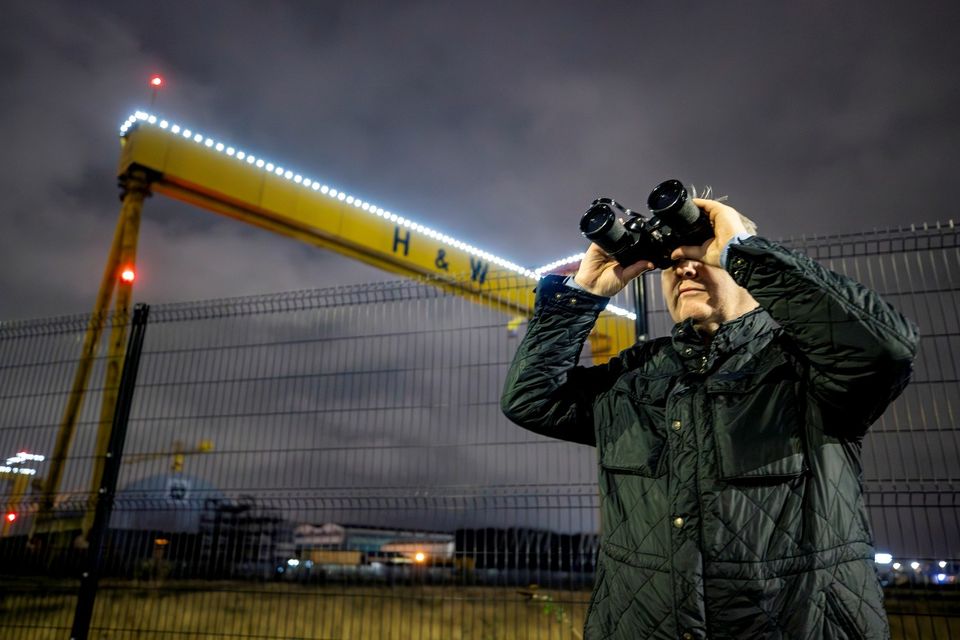
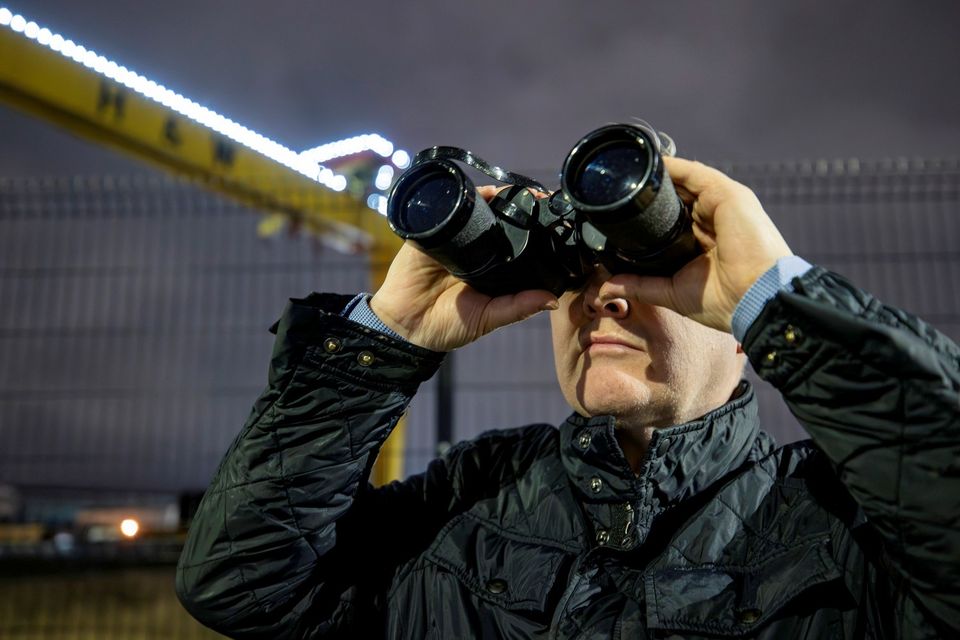
From a silent flying object making its way towards the Belfast docks to suspicious sightings across the outskirts of the capital, there were three official reports of UFO sightings in Northern Ireland in 2024.

While media in the US focused on reports of puzzling unidentified aircraft in New Jersey, it appears some believe we may have our own mysterious visitors.

Responding to an Freedom of Information request by the PA news agency, the Police Service of Northern Ireland (PSNI) said they had received three reports concerning UFOs across 2024.

The first of the year came in early February with a caller in Crumlin telling the PSNI that on January 29 they had seen an object with eight to 10 lights along its perimeter.

The next two came in the autumn, again both from the greater Belfast area.

On October 18, a caller from the capital told the PSNI that around 11pm on the previous night, they had noted a flying object rising into the sky from the direction behind their house.

They described: “It has a vapour trail but made no sound at all. It had green and red flashing lights”, and said it went over their house and out towards the dock area.


There were a number of UFO sightings (Peter Byrne/PA)

The final report of the year came on October 27 from a caller in the Newtownabbey area.

They told police that their wife observed a UFO through their camera in May, and said it has visited them every night since. They described it as a “bright light with holes in the bottom”.

The PSNI said of each of the three reports from the year that they were “noted for information by police”, not indicating that any investigation had been carried out into any of the reported sightings.

The number of UFO sightings has varied over the last five years, going from four in 2019, to six in 2020, eight in 2021, one in 2022 and no reported UFO sightings from January 1 to November 1 2023.

However in 2023, there were two reported sightings of aliens and one reported sighting of “strange lights”.

The Ministry of Defence previously recorded UFO sightings, but closed its UFO desk in 2009 after concluding that in more than 50 years, no received report had ever disclosed any evidence of a potential threat.

Nick Pope, who previously investigated UFO reports for the MoD, said the figures sound “staggeringly low”, and said the MoD used to receive “several hundred sightings each year” before 2009.


There were three official reports of UFO sightings in Northern Ireland in 2024. Credit: Liam McBurney/PA

He said he believes many won’t come forward with sightings because they fear they will not be believed.

“None of the sightings sound particularly spectacular, and the one mentioning red and green flashing lights and a vapour trail is clearly an aircraft,” he said.


“The annotation on the FOI response stating ‘noted for information by police’ is a polite way of saying the cops didn’t take any further action, and that’s quite understandable, because it really isn’t their job.

“That doubtless explains the low numbers, because anyone seeing a UFO will realize this isn’t really a matter for the police.

“Despite the MoD having axed their UFO project, many witnesses will think of UFOs as a defence and national security issue, and may still report sightings to the MoD.

“Alternatively, as there’s a perception that the authorities are covering up the truth about UFOs, many witnesses may not bother to report what they see at all.

“Finally, the fear of not being believed or of being ridiculed may be another factor that explains the low figures.


“For all these reasons the number of actual sightings is doubtless much higher than the number of reported sightings.

“The recent drone incursions in the UK and the US have brought the issue of unexplained objects in the sky into fresh focus, so it will be interesting to see if this leads to an upsurge in reports.”
Frustration, fascination with drone sightings continue to grow


Jeff Arnold
Mon, December 23, 2024 


(NewsNation) — Americans’ fascination and frustration levels with mysterious drone sightings continue to grow although the number of reports involving unidentified objects has dipped in the past few days.

Federal agencies like the FBI have not provided definitive answers about where the drones are coming from. The agencies continue to maintain that the drones are not the property of the U.S. military and that there is no reason for concern about the objects being operated by foreign governments.

Last week, the Federal Aviation Administration temporarily banned drones in certain parts of New York and New Jersey, where Democratic Gov. Phil Murphy maintains that anti-drone technology that was sent to the state isn’t working.

Government handling of drones a ‘catastrophe’: Elizondo

“I think momentum and frustration is growing on this issue,” Brad Crispin, the co-founder of Americans for Safe Aerospace, told NewsNation.

Crispin said out of the thousands of reported drone sightings, some have been misidentified. But he said that the main story surrounding the issue is the vulnerabilities that now exist in American airspace and the nation’s critical infrastructure.

He said that a percentage of what people are seeing in the sky is “truly concerning.”

Crispin said that sightings at Picatinny Arsenal and Trump National Golf Course in New Jersey likely sparked the national fascination with drones. But the sightings are instead a “years-running pattern” with mysterious overflights in sensitive areas by unidentified objects.

“Pilots are concerned, members of the Senate Intelligence and Armed Services Committee are concerned, and they’ve been raising the warning for years,” Crispin said.

Crispin said the biggest concern is that federal agencies don’t know where the drones are coming from. Given the temporary bans in two states that will last until mid-January and anxiety over the misidentification of drones, Crispin said it has become evident that federal officials don’t have the drone issue under control.

“I think only a fraction of these (sightings) are concerning,” Crispin told NewsNation. “But people want answers. Let’s identify what’s in our skies, There shouldn’t be unknown objects operating over military bases, operating over critical infrastructure. There’s no reason for it.”

Copyright 2024 Nexstar Media, Inc. 


Debunking false claims about US drone sightings | Fact check roundup

Andre Byik, USA TODAY
Mon, December 23, 2024 


The surge of drone sightings in New Jersey and across the U.S. has prompted an array of conspiracy theories and false claims online.A joint statement on Dec. 17 from the FBI, Department of Homeland Security, Federal Aviation Administration and Department of Defense said the sightings include legal commercial, hobbyist and law enforcement drones, as well as manned planes and helicopters. Two days later, New York Gov. Kathy Hochul said drones would be banned over certain "critical infrastructure" in the state. The FAA announced similar restrictions in New Jersey.While President Joe Biden said there doesn't appear to be anything "nefarious" about the sightings, social media users have continued to spread misinformation about the aircraft's origin and mission.

Here's a roundup of checks about drone sightings from the USA TODAY Fact Check Team:
Claim: Video shows drone crash in New Jersey

Our rating: False

The video does not show a drone crash. The footage is from a Dec. 12 plane crash near the border of New York and Connecticut, according to media reports.

Full fact check: Video shows plane wreck near Connecticut, not New Jersey drone crash
Claim: Drones deployed in New Jersey to search for missing radioactive material

Our rating: False

No drones were used in the search for the substance, according to a spokesperson for the New Jersey agency in charge of overseeing its recovery. The first drone sightings predate the misplacement of the substance by two weeks.

Full fact check: Drones were not used to find radioactive material lost in New Jersey
Claim: Pentagon ‘confirmed’ drones spotted in US skies are ‘not of earthly origin’

Our rating: False

The Pentagon said nothing of the sort. While a spokesperson ruled out a foreign “adversary" or the U.S. military as operators of the crafts, she suggested other possible explanations for the sightings in the same news conference.

Full fact check: Pentagon spokesperson did not 'confirm' drones were from space
Claim: Image shows drone that crashed in Alabama in December 2024

Our rating: False

The image has circulated online since at least February 2023 and shows a replica spacecraft from the "Star Wars" movies.

Full fact check: No, that's not a crashed drone. It's a TIE fighter replica

Thank you for supporting our journalism. You can subscribe to our print edition, ad-free app or e-newspaper here.

USA TODAY is a verified signatory of the International Fact-Checking Network, which requires a demonstrated commitment to nonpartisanship, fairness and transparency. Our fact-check work is supported in part by a grant from Meta.

This article originally appeared on USA TODAY: Northeast drone sighting claims debunked | Fact check roundup


Drone sightings have Fayetteville store owner worried about negative impact

Kylie Neel
Mon, December 23, 2024 

Drone sightings have Fayetteville store owner worried about negative impact

FAYETTEVILLE, Ark. (KNWA/KFTA) — Mysterious drone sightings around the nation are impacting drone store owners around Northwest Arkansas and the River Valley.

Chris Fink, CEO of Unmanned Vehicle Technologies in Fayetteville, is angry that the drone sightings have had a significant impact on drones as a whole. This is mainly because it could affect how people view drones in the future.

He thinks there are several reasons why people could see drones at night, and not all of them are scary. “The longer this goes on without answers, I think the worse it’s going to get for whoever’s behind it,” said Fink.

Fink says that drones are used for everyday jobs, so it’s not all scary. “You can measure elevation, you can measure surface level changes, you can measure volume, metrics of stockpiles, things like that. So I would say that all it takes is one large entity, whether it’s government or private. It’s important to put out a contact and say, ‘Hey we own all this infrastructure. We need x,y,z,'” said Fink.

What we know about drones over New Jersey, other parts of the US

These drones light up the night sky and you might be worried, but you don’t need to be. “If they were truly doing something nefarious, they’re pretty dumb to keep all those lights on and make it obvious,” said Fink.

Around 10 years ago Fink thought people only associated the word “drone” with military deployments and spying. But now, drones are used in everyday life for a variety of tasks. “We as an industry worked and have worked a long time to get the ‘drone’ word softened a little bit and to say, ‘No, drones aren’t bad.’ They’re likely not used to spy on you they’re being used to do all the work that people are doing already from helicopters, planes or cranes, but they’re doing it a lot more cheaply, safely, and effectively,” said Fink.

So, when Fink sees the negativity surrounding these mysterious drones and the fear they are causing, it upsets him. “On that side of it. I’m angry that somebody hasn’t come out to kind of just calm things down because at a certain point that’s going to turn negative,” said Fink. “Now, every time they see one of our guys out with a drone doing a demo for a department or they see a law enforcement agency using a drone for life-saving activities, that’s going to kind of come with a negative connotation. And, that’s going to sort of undo a little bit of what we’ve done to kind of soften that word,” said Fink.

So as time passes and you continue to see drone sightings in your social media feeds, Fink only asks one thing. “I think everybody needs to just take a cool, calm collected approach and truly, if they see something that they feel is dangerous, report it,” said Fink.

“They can call their local service field offices, the FCO, or the FAA and report it. But I think somebody needs to come out and confirm what’s going on and say ‘Hey, look. It’s just us. We can’t talk about it. We’re sorry. There’s no threat. Everything’s good,” said Fink.

Copyright 2024 Nexstar Media, Inc. All rights reserved. 


New Jersey drone sightings; Authorities still on lookout for flying invasion

Kathleen Hopkins and Lisa Robyn Kruse, Asbury Park Press
Tue, December 24, 2024


Reports of drone sightings in the local skies have decreased dramatically since their peak a few weeks ago, Ocean County Sheriff Michael G. Mastronardy said Monday.

Reports of the sightings of the unmanned aircraft peaked on the weekend of Dec. 8 and 9, the sheriff said.

“Since last week, our numbers decreased considerably," Mastronardy said.

“We’re not getting the calls that we were getting before – very few," he said, adding that he doesn’t have any exact numbers. "We’re just waiting for our federal partners to let us know what’s going on."

The reduction in drone sightings would appear to mimic what happened last December at Langley Air Force Base in Virginia. Over a 17-day span last year, U.S. military personnel reported a fleet of unknown unmanned aircraft were flying over restricted air space at Langley, the Wall Street Journal reported. The incursions then stopped as suddenly as they began.

While the bulk of some 5,000 tips have been dismissed as mistaken sightings of planes, commercial and hobbyist drones, as well as stars, there have been some 100 sightings that the FBI said warrant further attention. Investigators have been unable to locate the drone operators, or where they are launching from or landing. Authorities have also been unable to electronically detect some of the drones, which only fly at night, from dusk to 11 p.m., and often in swarms, authorities have reported.

Unlike hobbyist drones, which measure 12 to 18 inches, these are larger drones. The New Jersey State Police have reported seeing drones that are 6 feet in diameter. Others have described seeing drones as large as a car or small SUV. One Long Branch woman reported seeing a car-sized drone hovering about 50 feet above the tree line on Wyckoff Road near the county reclamation center.

Drone detection unit still active

Mastronardy has assembled a drone unit to track unidentified drones that have crossed the Jersey Shore, checking the craft against flight radar to rule out plane or jet sightings. Drones first began swarming the skies in North Jersey on Nov. 18, and then spread south. One Island Beach State Park police officer reported seeing a swarm of 50 drones come ashore from the ocean.

Mastronardy has said the drone unit has detected drones that are three to four feet long, twice the size of those in his department's unit. State Police have reported that one of their helicopters flew over a six-foot diameter drone, which immediately turned its lights off when the helicopter was overhead. Another law enforcement agency reported spotting a drone as large as eight feet long, Mastronardy said.

Officials have said the FBI launched its investigation into the mystery drones after a sighting by New Jersey State Police. Defense Department representatives now say there were confirmed drone sightings by military personnel at Picatinny Arsenal in Morris County and Naval Weapons Station Earle in Colts Neck.

Asked if his mobile command center is still operating, the sheriff said, “We still have certain things in play. We’re still available. If we get a call, we will go out and assist the local police department and investigate, and try to document . That’s our goal."

When asked if he and his staff at a mobile drone command center in Seaside Heights are still seeing the drones that were inundating the area earlier this month, Mastronardy said, “No," and added that flights on their way to New York are unchanged.

A spokeswoman for Monmouth County Sheriff Shaun Golden did not respond to an inquiry about whether reported drone sightings have decreased in that county.
Drones spotted over military bases

In addition to incursions at Langley, Picatinny Arsenal and Naval Weapons Station Earle, drones shut down flights at Wright-Patterson Air Force Base in Ohio for a few hours last weekend, and on Sunday at Marine Corps Air Station at Iwakuni, Japan, south of Hiroshima, Stars and Stripes reported.

Meanwhile, Rep. Chris Smith, R-NJ, introduced legislation in Congress that would allow highly trained state law enforcement officers to detect and stop any drones involved in unlawful activities.

Smith’s bill, which he dubbed the Law Against Nefarious Drones, Enforcement, Deconfliction (LANDED) Act, was in response to a request from Golden and Mastronardy for additional authority to respond to potential threats from drones, he said.

“We need to ensure that law enforcement has the authorities, training, and capabilities to take quick action if needed to keep local residents safe, especially as drones continue to advance technologically and have the potential to be increasingly lethal,” Smith said.


Will ‘mystery drones’ impact Santa's global journey? US tracker answers

AFP |
Dec 25, 2024 

Santa's journey this year comes after weeks of mysterious sightings of alleged drones in the US state of New Jersey.

Santa Claus has no need to worry about recent mystery drone sightings over New Jersey, a US Air Force general said Tuesday, as an annual tradition of "tracking" Saint Nick swung into action.

Air Force Col. Amy Glisson and other volunteers answer phone calls from around the world Tuesday, Dec. 24, 2024, at the NORAD Tracks Santa center at Peterson Space Force Base in Colorado Springs, Colo. (AP)

General Gregory Guillot's reassurances came as the joint US-Canadian North American Aerospace Defense Command (NORAD) reported that Santa and his reindeer were making stops in Russia and Iran after visiting countries further east including Japan, North Korea and Indonesia.

As of 0100 GMT on Christmas Day, Santa was making his way north across Brazil, headed towards Guyana, according to the tracker.

Santa's journey this year comes after weeks of mysterious sightings of alleged drones in the US state of New Jersey, sparking worldwide curiosity even as many of the reported incidents were debunked.

"Of course we are concerned about drones and anything else in the air," NORAD commander Guillot told Fox News. "But I don't foresee any difficulty at all with drones for Santa this year."

NORAD's Santa tracker dates to 1955, when a Colorado newspaper advertisement printed a phone number to connect children with Santa -- but mistakenly directed them to the hotline for the joint military nerve center.

The director of operations at the time, Colonel Harry Shoup, answered the phone and quickly realized the child calling had the wrong number.

"But (he) didn't want to upset him. So he started talking to the young child and passed along information" on Santa's location, Canadian Air Force Major-General William Radiff, NORAD's current director of operations, told AFP on Tuesday.

"And then afterwards, he talked to the rest of the staff there and said, 'please, we're going to get phone calls today... Let's start doing this.'"

Around the world

The interest has gone global. Last year NORAD's modernized Santa tracker website noradsanta.org -- which includes a 3D map displaying Santa's movements in real time and a ticker showing how many presents have been delivered -- had 20.6 million visits, and more than 400,000 calls were made to the toll-free number, according to Radiff.

"We get calls from all across the world and they really want to know where Santa is," he said.

When not spreading holiday cheer, NORAD conducts aerospace and maritime control and warning operations -- including monitoring for missile launches from North Korea, something perhaps on Santa's mind as he guided his reindeer-hauled sleigh over Pyongyang.

Radiff, embracing the Christmas spirit, said NORAD's infrared-capable satellites could monitor Santa's progress in part because "Rudolph's nose gives off the same signature, so we use that to track him around the world."

NORAD "always does a fantastic job helping us keep tabs on Santa's navigational heading and bearing in the skies above," astronaut Buzz Aldrin, the second person to ever walk on the Moon, said on social media.

This year, as he did last Christmas, US President Joe Biden joined in the fun at NORAD, taking calls from children.

bur/md


The Erosion of Global Nuclear Order


The mounting tensions between Russia and Ukraine, coupled with the escalating conflict in the Middle East, have brought the world perilously close to contemplating the use of nuclear weapons.


BySyed Raza Abbas
December 25, 2024
MODERN DIPLOMACY


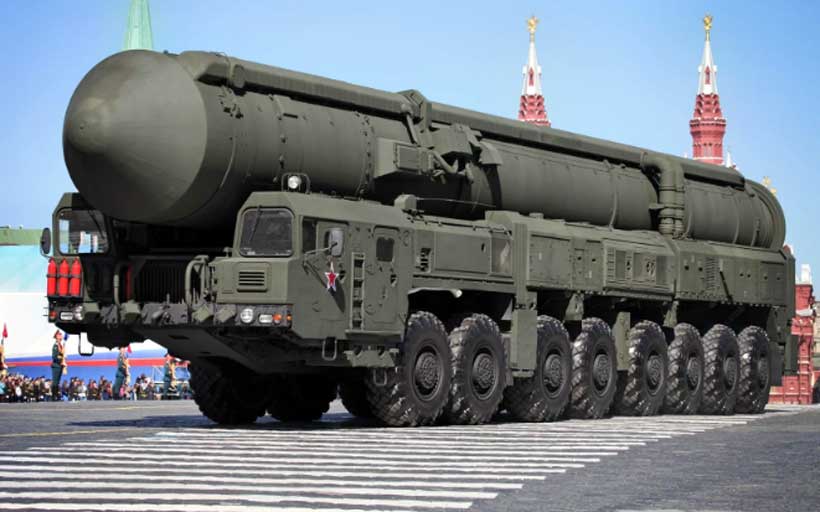
The mounting tensions between Russia and Ukraine, coupled with the escalating conflict in the Middle East sparked by the October 7 Hamas attack, have brought the world perilously close to contemplating the use of nuclear weapons. Russian President Vladimir Putin has repeatedly warned the West against intervening in the Russo-Ukrainian war, hinting at nuclear retaliation if pushed to the brink. Meanwhile, in the Middle East, the specter of nuclear escalation looms ominously. Israeli cabinet minister Amichai Eliyahu has floated the grim possibility of deploying nuclear weapons against Hamas militants entrenched in the Gaza Strip. Simultaneously, the fragile state of Iran-Israel relations, exacerbated by the missile exchanges and the unraveling of the Iranian nuclear deal, threatens to ignite overt nuclearization in the region. Saudi Crown Prince Mohammed bin Salman’s candid assertion that the Kingdom would pursue nuclear weapons if Iran becomes a nuclear power further underscores the perilous trajectory of an emerging arms race. This relentless push toward nuclear proliferation risks unraveling the global nuclear order, possibly marking its terminal decline.

The global nuclear order, crafted by the victors of the Second World War and spearheaded by the United States and its Western allies, has long stood as a tenuous bulwark against the unrestrained spread of nuclear weapons. The global nuclear order is founded on four interrelated pillars: nuclear deterrence, arms control, non-proliferation, and disarmament. Nuclear deterrence seeks to prevent the use of nuclear weapons by maintaining their strategic value as tools for political and security purposes, based on the premise that the threat of retaliation discourages aggression. Arms control focuses on regulating the development, stockpiling, and deployment of specific weapons and technologies, aiming to limit their use and reduce the risks associated with their proliferation. Non-proliferation endeavors to curb the spread of nuclear weapons and related technologies, promoting international stability by preventing the emergence of new nuclear-armed states. Finally, disarmament advocates for the complete elimination of nuclear weapons and their associated technologies, aspiring toward a world free from the existential threats posed by these weapons. Together, these elements shape the framework for managing nuclear risks and pursuing global security.

Anchored by the landmark Non-Proliferation Treaty (NPT), signed in 1967 and ratified in 1970, this order delineated the world into nuclear “haves” and “have-nots.” The treaty formally recognized the United States, the United Kingdom, France, China, and Russia as the only legitimate nuclear powers—de jure nuclear states—while other nations with nuclear capabilities, such as India, Pakistan, Israel, and North Korea, assumed the status of de facto nuclear powers. The cornerstone objectives of the NPT were threefold: to curb the horizontal proliferation of nuclear weapons, to promote peaceful applications of nuclear technology, and to advance the ultimate goal of complete disarmament. Article VI of the treaty suggests all signatories pursue good-faith negotiations aimed at halting the nuclear arms race, achieving nuclear disarmament, and forging a comprehensive disarmament treaty under stringent international oversight.

The optimism that accompanied the NPT’s inception gave rise to a series of significant arms control and disarmament agreements, particularly during the 1969-1979 period, often described as the golden age of arms control. This era of détente between the United States and the Soviet Union saw a thawing of Cold War hostilities and an unprecedented commitment to curbing the nuclear threat. Key treaties from this period include the Outer Space Treaty (1967), which barred the placement of nuclear weapons in space; the Latin American Nuclear Weapon Free Zone Treaty (1967), establishing the world’s first nuclear-weapon-free zone; the Seabed Treaty (1971), prohibiting nuclear weapons on the ocean floor; and the landmark Biological Weapons Convention (1972). These were complemented by later agreements, such as the Chemical Weapons Convention (1993) and the Comprehensive Test Ban Treaty (1996), as well as bilateral accords like the Strategic Arms Limitation Talks (SALT) and the Strategic Arms Reduction Treaty (START) between the U.S. and the Soviet Union.

Despite these strides, the global arms control architecture now lies in disarray. The proliferation of nuclear weapons continues unabated, with increasing stockpiles of operational warheads signaling a chilling reversal of past disarmament gains. The Stockholm International Peace Research Institute (SIPRI) estimates the global inventory of nuclear warheads at 12,121, of which 9,585 are in military stockpiles ready for deployment. Alarmingly, Russia and the United States alone account for approximately 90% of the world’s nuclear arsenal. According to SIPRI Director Dan Smith, “While the global total of nuclear warheads continues to fall as Cold War-era weapons are gradually dismantled, regrettably, we continue to see year-on-year increases in the number of operational nuclear warheads. This trend seems likely to continue and probably accelerate in the coming years, and it is extremely concerning.”

The confluence of geopolitical rivalries and eroding arms control agreements has created a precarious global landscape. In the Middle East, Iran’s nuclear ambitions and Israel’s vehement opposition, coupled with Saudi Arabia’s declared intent to pursue its own deterrent, hint at a region on the cusp of a nuclear arms race. Meanwhile, the stagnation of disarmament efforts—marked by the U.S.’s withdrawal from the Intermediate-Range Nuclear Forces (INF) Treaty and the lack of progress in extending New START—further underscores the fragility of the global nuclear order.

The stakes have never been higher. A renewed commitment to arms control and disarmament is urgently needed to avert a catastrophic descent into widespread nuclear proliferation. Diplomatic engagement, confidence-building measures, and robust international oversight are essential to reinvigorate the faltering global nuclear framework. Failure to act decisively could spell the irreversible unraveling of decades of progress, ushering in an era defined by the specter of nuclear confrontation.


Syed Raza Abbas
Syed Raza Abbas
I am Syed Raza Abbas, a research assistant at Strategic Vision Institute, Islamabad. I completed my bachelor's in Strategic Studies, and my research focuses on the Middle East, especially its security issues, strategic stability, and nuclear non-proliferation. I regularly contribute articles to various online publishers. I tweet @abbasseeker
UN
Making the digital and physical world safer: Why the Convention against Cybercrime matters

24 December 2024

Billions of people worldwide are set to benefit from enhanced safety online and in the physical world following the adoption of a legally binding treaty on cybercrime by the UN General Assembly.

The 193 UN Member States adopted, by consensus, the historic Convention against CybercrimeOpens in new window – the first of its kind following five years of negotiations.

Here are five key reasons why this landmark agreement matters for people everywhere:

A critical tool for a growing threat

In 2023, 67.4 per cent of the world’s population accessed the Internet, according to the World Bank. People rely on connectivity for tasks ranging from communication and shopping to advanced research and innovation.

However, this connectivity also exposes more than two-thirds of the global population to the dangers of cybercrime. For those on the wrong side of the digital divide, the lack of resilience further increases vulnerability once they get online.

Cybercriminals exploit digital systems using malware, ransomware, and hacking to steal money, data, and other valuable information. Information and communications technology (ICT) are also used to facilitate crimes such as drug trafficking, arms smuggling, human trafficking, money laundering and fraud.

Regions like Southeast Asia have been described as “ground zero” for organized cybercrime operations, which are often highly sophisticated and coordinated. The threat is escalating, undermining economies, disrupting critical infrastructure, and eroding trust in digital systems.

Until now, there has been no globally negotiated convention on cybercrime. The new Convention against Cybercrime will enable faster, better-coordinated, and more effective responses, making both digital and physical worlds safer.


Unsplash/Jefferson Santos
Cybercrime poses a growing threat to global security, targeting individuals, businesses, and governments alike.

Around-the-clock cooperation


Investigating transnational crimes, whether online or offline, depends heavily on electronic evidence, which poses unique challenges for law enforcement.

One major challenge is the decentralized nature of data, networks, and service providers, with potential evidence often scattered across multiple jurisdictions. Additionally, electronic evidence must frequently be accessed quickly to prevent tampering or deletion through normal processes.

The Convention focuses on frameworks for accessing and exchanging electronic evidence, facilitating investigations and prosecutions.

States Parties will also benefit from a 24/7 network to boost international cooperation, enabling assistance with investigations, prosecutions, crime proceeds recovery, mutual legal assistance, and extradition.

Protecting children


Online platforms such as social media, chat apps and games offer anonymity that predators can exploit to groom, manipulate, or harm children.

The Convention is the first global treaty to specifically address sexual violence against children committed with information and communication technologies (ICT).

By criminalising these offenses, the Convention equips governments with stronger tools to protect children and bring perpetrators to justice.

© UNICEF/Pablo Schverdfinger
Children are especially vulnerable to online exploitation, making it crucial to protect them in the digital world.

Responding to victims’ needs


Cybercrime affects people everywhere, and every victim deserves adequate support.

The Convention encourages States to provide victims with access to recovery services, compensation, restitution, and the removal of illicit content.

This support will be delivered according to each country’s domestic laws.
Improved prevention

Responding to cybercrime after it occurs is not enough. Preventing cybercrime requires robust investments in proactive measures, which the Convention against Cybercrime strongly emphasizes.

It urges States to develop comprehensive prevention strategies, including training for public and private sectors, offender rehabilitation and reintegration programmes, and support for victims.

With these measures, the Convention aims to reduce risks and manage threats effectively, fostering a safer digital environment for all.
PATRIARCHY IS FEMICIDE

‘Broken’: Domestic violence impacts women, children in Gaza


As Israel continues its relentless bombardment of Gaza, cases of domestic violence have rocketed. Experts fear women and children will never recover.

Palestinian women comfort each other at a funeral for adults and children killed in the Israeli bombardment of the Gaza Strip, in Deir el-Balah, May 31, 2024 [Abdel Kareem Hana/AP]
On 25 Dec 2024
AL JAZEERA


Khan Younis, Gaza – The face of Samar Ahmed, 37, shows clear signs of exhaustion.

It is not just because she has five children, nor that they have been displaced several times since the start of Israel’s brutal war on Gaza 14 months ago and are now living in cramped, cold conditions in a makeshift tent in the al-Mawasi area of Khan Younis. Samar is also a victim of domestic violence and has no way to escape her abuser in the cramped conditions of this camp.

Two days ago, her husband beat her around the face leaving her with a swollen cheek and a blood spot in her eye. Her eldest daughter clung to her all night following that attack, which happened in front of the children.

Samar does not want to break up her family – they have already been forced to move from Gaza City, to the Shati camp in Rafah and now to Khan Younis – and the children are young. Her eldest, Laila, is just 15. She also has 12-year-old Zain, 10-year-old Dana, Lana, seven, and Adi, five, to think about.

On the day that Al Jazeera visits her, she is trying to keep her two younger girls occupied with schoolwork. Sitting together in the small tent, which is made from rags, the three have spread out some notebooks around them. Little Dana is huddled up close to her mother, seemingly wanting to give her support. Her younger sister is crying from hunger and Samar seems at a loss as to how to help them both.

As a displaced family, the loss of privacy has added a whole new layer of pressure.


“I lost my privacy as a woman and a wife in this place. I don’t want to say that my life was perfect before the war, but I was able to express what was inside me in conversation with my husband. I could scream without anyone hearing me,” Samar says. “I could control my children more in my home. Here, I live in the street and the cover of concealment has been removed from my life.”

Palestinian women and children sit in a makeshift tent next to the rubble of a house in Khan Younis, southern Gaza Strip, on October 7, 2024 [Mohammed Salem/Reuters]

A loud argument between a husband and wife drifts through from the tent next door. Samar’s face turns red with embarrassment and sadness as bad language fills the air. She does not want her children to hear this.

Her instinct is to tell the children to go out and play, but Laila is washing dishes in a small bowl of water and the argument next door brings her own problems back into sharp focus.

“Every day, I suffer from anxiety because of the disagreements with my husband. Two days ago, it was a great shock for me that he hit me in this way in front of my children. All our neighbours heard my screams and crying and came to calm the situation between us.

“I felt broken,” Samar says, worried the neighbours will think she is to blame – that her husband shouts so much because she is a bad wife.

“Sometimes, when he screams and curses, I stay quiet so that those around us think he’s screaming at someone else. I try to preserve my dignity a little,” she says.

Samar tries to preempt her husband’s anger by attempting to solve the problems facing the family herself. She visits the aid workers every day to ask for food. She believes it is the pressures of the war that have made her husband this way.

Before the war, he worked in a small carpentry shop with a friend and this kept him busy.

 There were fewer arguments.

Now, she says: “Because of the severity of the disagreements between me and my husband, I wanted a divorce. But I hesitated for the sake of my children.”

Samar goes to psychological support sessions with other women, to try to release some of the negative energy and anxiety building inside her. It helps her to hear that she is not alone. “I hear the stories of many women and I try to console myself with what I am going through, through their experiences.”

As she talks, Samar gets up to start preparing food. She is fretting about when her husband will return and whether there will be enough to eat. A plate of beans with cold bread is all she can rustle up right now. She cannot light the fire because there is no gas.

Suddenly, Samar goes silent, fearful that a voice outside belongs to her husband. It does not.

She asks her daughters to sit down and look at their maths problems. She whispers: “He went out shouting at Adi. I hope he is in a good mood.”
Women who have been displaced multiple times are living under intense pressure in extremely difficult circumstances [File: Enas Rami/AP]


‘The war did this to us’

Later on, Samar’s husband, Karim Badwan, 42, sits beside his daughters, crammed inside the small tent they are living in.

He is despairing. “This is not a life. I can’t comprehend what I’m living. I’m trying to adapt to these difficult circumstances, but I cannot. I’ve turned from a practical and professional man into a man who gets so angry all the time.”

Karim says he is deeply ashamed that he has hit his wife on several occasions since the war began.

“I hope the war ends before my wife’s energy runs out and she leaves me,” he says. “My wife is a good woman, so she tolerates what I say.”

A tear rolls down Samar’s bruised face as she listens.

Karim says he knows what he is doing is wrong. Before the war, he never dreamed he would be capable of harming her.

“I had friends who used to beat their wives. I used to say: ‘How does he sleep at night?’ Unfortunately, now I do it.

“I did it more than once, but the hardest time was when I left a mark on her face and eye. I admit that this is a huge failure in terms of self-control,” Karim says, his voice trembling.

“The pressures of war are great. I left my home, my work and my future and I am sitting here in a tent, helpless in front of my children. I can’t find a job and when I leave the tent, I feel that if I talk to anyone I will lose my temper.”

Karim knows his wife and children have endured a great deal. “I apologise to them for my behaviour, but I keep doing it. Maybe I need medication, but my wife does not deserve all this from me. I am trying to stop so that she doesn’t have to leave me.”

Palestinian women and children who fled their homes due to Israeli attacks, shelter in a tent camp in Rafah in the southern Gaza Strip, on December 24, 2023 [Ibraheem Abu Mustafa/Reuters]

Samar’s despair is compounded by the loss of her own family who she left in the north to flee the bombing there with her husband and his family. Now, she is desperately lonely.

Her greatest fear is that she will completely burn out and become unable to care for her family, as she worries her husband already has.

The responsibility for finding water and food, caring for the children, and thinking about their future, has all taken its toll and she lives in a constant state of fear.

‘Trying to be strong for my mother’


As the eldest child, Laila is developing severe anxiety from the fighting between her father and mother and she fears for her mother.

She says: “My father and mother quarrel every day. My mother suffers from a strange nervous state. Sometimes she shouts at me for no reason. I try to bear it and understand her condition so that I don’t lose her. I do not like seeing her in this state, but the war did all of this to us.”

Laila still sees Karim as a good father and blames the world for allowing this brutal war to go on for so long. “My father shouts at me a lot. Sometimes he hits my sisters. My mother cries all night and wakes up with swollen eyes from sadness over what we are living.”

She sits in her bed for long hours thinking about their lives before the war and her plans to study English.

“I try to be strong for my mother.

Palestinian women and children queue for bread in Deir el-Balah, Gaza Strip, November 28, 2024 [Abdel Kareem Hana/AP]


‘Unimaginable conditions’


The family is not alone. In Gaza, there has been a marked rise in domestic violence with many women attending psychological support sessions offered by aid workers in clinics.

Kholoud Abu Hajir, a psychologist, has met many victims since the start of the war at clinics in the displacement camps. However, she fears there are far more who are too ashamed to talk about it.

“There is a great secrecy and fear among the women about talking about it,” she says. “I have received many cases of violence away from group sessions – women who want to talk about what they are suffering and ask for help.”

Living in a constant state of instability and insecurity, enduring repeated displacement and being forced to live in tents crowded very closely together have deprived women of privacy, leaving them with nowhere to turn.

“There is no comprehensive psychological treatment system,” Abu Hajir tells Al Jazeera. “We only work in emergency situations. The cases we deal with really require multiple sessions, and some of them are difficult cases where women need protection.

“There are very severe cases of violence that have reached sexual assault, and this is a dangerous thing.”

Women and children stand nearby while people bury the bodies of Palestinians killed in Israeli attacks at a mass grave in Rafah, in the southern Gaza Strip, on March 7, 2024 [Mohammed Salem/Reuters]

The number of divorces has risen – many between spouses who have been separated by the Israeli armed corridor between the north and the south.

The war has taken a terrible toll on women and children, particularly, Abu Hajir says.

Nevin al-Barbari, 35, a psychologist, says it is impossible to give children in Gaza the support they need in these conditions.

“Unfortunately, what children are experiencing during the war cannot be described. They need very long psychological support sessions. Hundreds of thousands of children have lost their homes, lost a family member, and many of them have lost their entire family.”

Being forced to live in difficult – and sometimes violent – family circumstances has made life immeasurably worse for many.

“There is very clear and widespread family violence among the displaced in particular … Children’s psychological and behavioural states have been affected very negatively. Some children have become very violent and hit other children violently.”

Recently, al-Barbari came across the case of a 10-year-old child who had hit another with a stick, causing severe injury and bleeding.

“When I met this child, he kept crying,” she says. “He thought that I would punish him. When I asked him about his family, he told me that his mother and father have a big fight every day and his mother goes to her family’s tent for days.

“He said he missed his home, his room and the way his family used to be. This child is a very common example of thousands of children.”

It will be a long road to recovery for these children, al-Barbari says. “There are no schools to occupy them. Children are forced to bear great responsibilities, filling water and waiting in long lines for food aid. There are no recreational areas for them.

“There are so many stories that we do not know about, that these children are living every day.”


Source: Al Jazeera

Hundreds protest for Christians’ rights in Syrian capital after Christmas tree burned

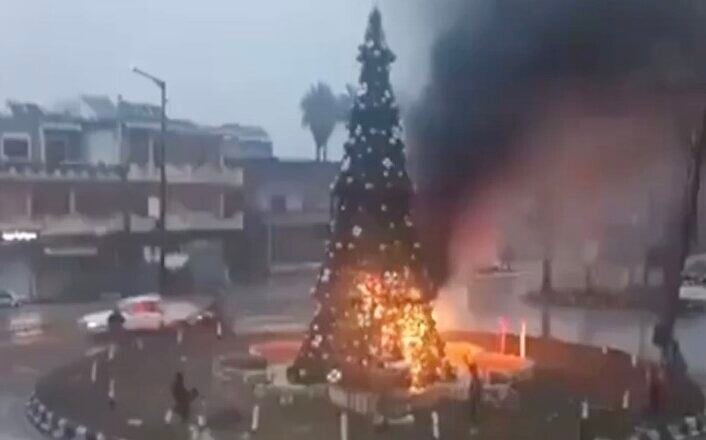
Hooded fighters seen in video setting fire to installation in Christian-majority town of Suqaylabiyah, near Hama; interim government representative condemns action; tree repaired
Today,

Screen capture from video of a Christmas tree that was set alight in the Christian-majority town of Suqaylabiyah, near Hama, Syria, December 24, 2024. 
(X. Used in accordance with Clause 27a of the Copyright Law)


DAMASCUS, Syria — Hundreds of demonstrators took to the streets in Christian areas of Damascus early Tuesday to protest the burning of a Christmas tree near Hama in central Syria.

“We demand the rights of Christians,” protesters chanted as they marched through the Syrian capital towards the headquarters of the Orthodox Patriarchate in the Bab Sharqi neighborhood.

The protests come a little more than two weeks after an armed coalition led by Islamists toppled the government of Bashar al-Assad, who had cast himself as a protector of minorities in the Sunni-majority country, but whose regime was accused of brutally targeting and killing masses in the country’s civil war.


00:10


06:33


“We demand that Syria be for all Syrians. We want a voice in the future of our country,” said Patriarch Ignatius Aphrem II of the Syriac Orthodox Church as he addressed the crowd in a church courtyard, assuring them of Christians’ rights in Syria.

A demonstrator who gave his name as Georges told AFP he was protesting “injustice against Christians.”
Get The Times of Israel's Daily Editionby email and never miss our top stories
Newsletter email addressGet it
By signing up, you agree to the terms

“If we’re not allowed to live our Christian faith in our country, as we used to, then we don’t belong here anymore,” he said.

Earlier today, armed extremists set fire to a Christmas tree in Suqaylabiyah in Hama, Syria. Local channels say they were Uzbek militants.

HTS apologized for the incident and promised to deal with any future threats, but many Christians do not believe this will happen. pic.twitter.com/1Op98CUmTB
Advertisement

— The Cradle (@TheCradleMedia) December 23, 2024

“We are here to demand a democratic and free government for one people and one nation,” another protester said. “We stand united — Muslims and Christians. No to sectarianism.”

The protests erupted after a video spread on social media showing hooded fighters setting fire to a Christmas tree in the Christian-majority town of Suqaylabiyah, near Hama.


Solidarity with our Christian brothers and sisters in Syria

Christians in Syria protesting against burning of a Christmas tree in Damascus

Video: Roya News English pic.twitter.com/yAYJurosD0

— Sachin Jose (@Sachinettiyil) December 24, 2024

According to the Syrian Observatory for Human Rights, the fighters were foreigners from the Islamist group Ansar al-Tawhid. However, the London-based SOHR, run by a single person, has regularly been accused by Syrian war analysts of false reporting.

In another video posted to social media, a religious leader from Syria’s victorious Islamist group Hayat Tahrir al-Sham (HTS) addressed residents, claiming those who torched the tree were “not Syrian” and promising they would be punished.

“The tree will be restored and lit up by tomorrow morning,” he said.

#Syria’s new interim government officials confirmed that those who burned the #Christmas tree in #Suqaylibiya #Hama are foreign individuals and promises to punish them. The authorities promised to replace the tree and light it up. pic.twitter.com/ZA83lln5hH

— Faris Zwirahn فارس زويران (@FarisZwirahn) December 24, 2024

The tree was reportedly later repaired and its lights turned on again.

The Christmas tree has been restored to its place, and the perpetrators have been held accountable.


Syria for all ???? pic.twitter.com/nxmxzlxPtW

— Nedal Al-Amari (@nedalalamari) December 23, 2024

The Islamist HTS movement, rooted in al-Qaeda and supported by Turkey, has promised to protect minorities since its lightning offensive toppled Assad this month following years of stalemate.


Serbian students gather in Belgrade in another protest over deadly train station awning collapse

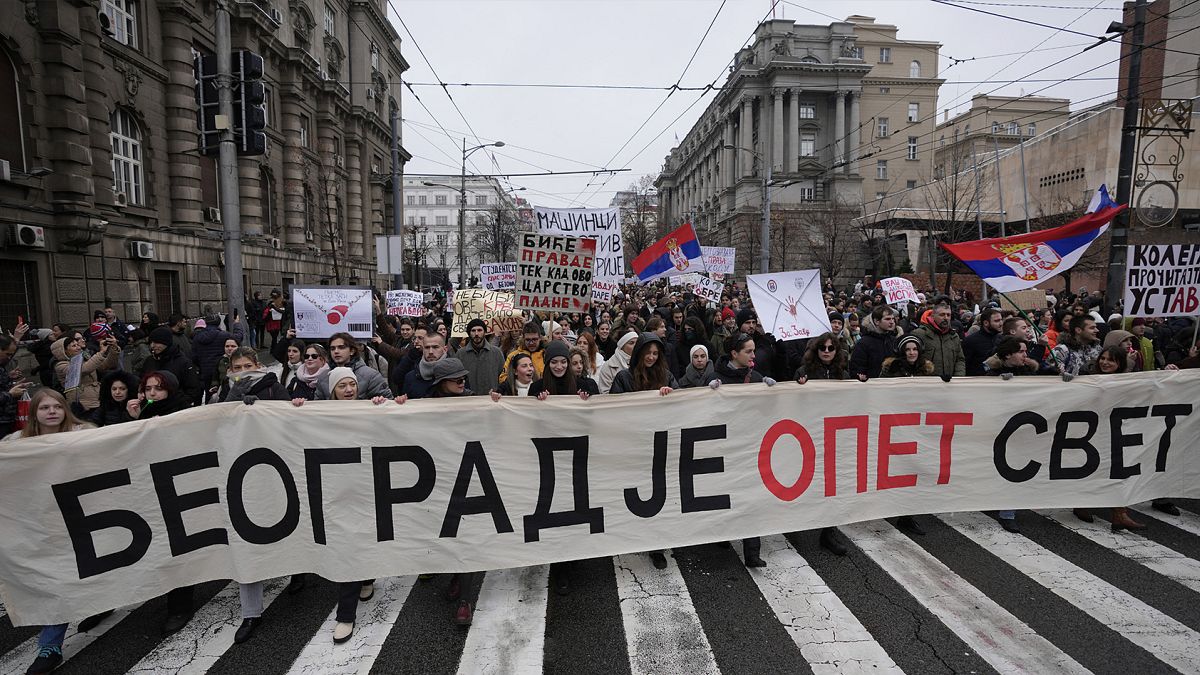
Students in Belgrade carry banner reading: "Belgrade is the world again" during a protest after a concrete awning fell and killed 15 people in Novi Sad, 25 December 2024
Copyright AP Photo/Darko Vojinovic
By Euronews
Published on 

Serbian students protested outside the prosecutor's office in Belgrade, demanding justice for a train station awning collapse in Novi Sad that killed 15, blaming corruption and sloppy work.

Serbia's striking university students on Wednesday rallied outside the chief prosecutor's office to demand justice over a train station awning collapse that killed 15 people last month in the country's northern province.

More than 1,000 students symbolically left letters on the doorstep of the public prosecutor's office, telling chief prosecutor Zagorka Dolovac that "students expect you to fight for law and justice, without political abuse or corruption."

Dolovac's office later responded with a statement inviting a student delegation to a meeting.

Serbia's universities have been blockaded for weeks as part of a broader movement demanding accountability over the 1 November tragedy in the region of Vojvodina's capital of Novi Sad when a massive concrete awning at the railway station crashed onto the people below.

Many in Serbia blame the collapse on widespread corruption and sloppy work on the building renovation, one of several infrastructure megaprojects involving Chinese state companies that are now under question.

Prosecutors have arrested 13 people over the Novi Sad tragedy, including a government minister whose release later fueled public scepticism about the sincerity of the investigation.

Striking students in Serbia have received wide support from their professors, farmers, actors, and others. Tens of thousands joined a student-led protest in Belgrade on Sunday, which also reflected wider discontent with populist President Aleksandar Vučić's rule.

Protesting students on Wednesday carried banners featuring red handprints — a protest symbol telling the authorities they have "blood on their hands".

In an apparent attempt to defuse the student strikes, Vučić has been advertising what he describes as "favourable" loans for young people to purchase apartments.

The Serbian leader has faced accusations of curbing democratic freedoms despite formally pursuing European Union membership for the Western Balkan nation, while maintaining close ties to Russia and China.