February 26, 2025
It’s possible that I shall make an ass of myself. But in that case one can always get out of it with a little dialectic. I have, of course, so worded my proposition as to be right either way (K.Marx, Letter to F.Engels on the Indian Mutiny)
Wednesday, February 26, 2025
February 26, 2025
At least 800 Israeli military checkpoints, barriers and gates causing unprecedented movement restrictions
Nada AlTaher
February 26, 2025
Live updates: Follow the latest on Israel-Gaza
The intensifying Israeli military operations in the occupied West Bank are causing the largest forced displacement of Palestinians in the territory since the occupation began, charity Oxfam International warned on Wednesday.
More than 40,000 people have been forcibly displaced from the West Bank since the Gaza ceasefire came into force on 19 January amid what the charity described as a “dramatic rise” in Israeli military violence.
Oxfam said this is “the highest number since Israel occupied the West Bank in 1967".
On Monday, Israel sent tanks into the West Bank for the first time since the second Intifada 20 years ago, and Defence Minister Israel Katz said he had instructed the military to prevent people from returning to their homes, in direct breach of international humanitarian law. The move to occupy Jenin, Tulkarm and Nur Shams – three of the world's oldest refugee camps – further squeezes Palestinians from an ever-shrinking strip of land
Israeli Prime Minister Benjamin Netanyahu ordered the army to step up its operations during a rare visit to troops in the territory that drew Palestinian condemnation. His visit to Tulkarm refugee camp in the north came after Israeli officials blamed the bombing of several buses in central Israel last week on fighters from the West Bank.
“As the ‘Gazafication’ of the West Bank unfolds, vital humanitarian work and projects are being delayed or destroyed,” Oxfam said.
It added that Palestinian communities across the West Bank are experiencing “multiple traumas, including deaths and arbitrary detention, heavily restricted movement and access to jobs and education, and mass demolitions of homes and infrastructure”.
At least 800 Israeli military checkpoints, barriers and gates causing unprecedented movement restrictions; two-hour journeys now take twelve, hampering humanitarian response, warned the charity.

Oxfam’s Mustafa Tamaizeh described what's happening as “a calculated annexation strategy. Overnight, movement between cities has been paralysed, piling economic and social pressure on already struggling communities”.
Several Israeli ministers previously said that they had ordered preparations for the annexation of the West Bank in the hope that the US administration would recognise Israel’s “sovereignty” over the occupied territory. Israel's annexation policies include the expansion of settlements, land confiscation, demolition of Palestinian homes, and forcible “transfer” of Palestinian civilians.
For Palestinian student Saleh Abu Zaid, “Israel's mask has finally fallen off”'.
His journey – marked by imprisonment, disrupted education, and a lack of future prospects – reflects the hardships the West Bank has endured under occupation for decades.
He was a law student at Birzeit University in Ramallah, when he was arrested by Israeli security troops in 2020 and accused of firing at a military outpost, a charge he denies. “I spent 85 days in interrogation by the Israeli Shabak [security services] at the Ashqelon prison, then was transferred from one cell to another,” he told The National.
Mr Abu Zaid says that although there was no evidence to support the charge, he was held for three years before being released and then arrested again for six months.

Such incidents have become commonplace in the West Bank after the Gaza war began in October 2023, with at least 14,500 people arrested since then in Israeli raids targeting “terrorists”, but are rarer in Ramallah.
“In fact, armed groups are only really rampant in refugee camps – and with Ramallah being the metropolitan home of the Palestinian Authority, with heavy security presence, militant activity cannot thrive,” Palestinian political analyst Khalil Sayegh said.
Since the ceasefire in Gaza on January 19, 2025, it has been extremely difficult for Oxfam and its partners to carry out humanitarian activities in the West Bank, the charity said in its report.
“Movement restrictions have resulted in increased operational costs, delays in aid delivery, loss of perishable supplies, and increased security risks for our staff.”
Updated: February 26, 2025, 4:08 AM
The US president shared an AI-generated video on his Truth Social account which shows Gaza filled with beaches, luxury yachts and Dubai-style skyscrapers

Alexa Phillips
Donald Trump has shared a vision for his takeover of Gaza, complete with golden statues of himself and a tower bearing his name.
The US president posted an AI-generated video on his Truth Social account which depicts Gaza filled with beaches, luxury yachts and Dubai-style skyscrapers.
The footage begins with footage of the war-torn territory overlaid with the question: “Gaza 2025… What’s Next?”
The area, apparently renamed “Trump Gaza”, is then shown transformed into a beach resort with children and adults running and playing down the coastline and ritzy hotels.
Trump is depicted dancing in a nightclub with a woman wearing a dress that exposes her buttocks, and sunbathing with Israeli Prime Minister Benjamin Netanyahu as they sip cocktails.Trump’s name and likeness feature heavily in the AI-generated video (Photo: @realDonaldTrump/Truth Social)

A giant golden statue of the US President can be seen on the street, with miniature golden statues of him for sale in a souvenir shop.
A child walks down the street holding a golden balloon in the shape of Trump’s head, and a large “Trump Gaza” tower is depicted.
Billionaire Elon Musk, who leads the US Department of Government Efficiency, is shown throwing dollar bills in the air as smiling children try to catch them.
Elsewhere, the Tesla chief executive eats hummus and flatbreads as bearded belly dancers perform on the beach.

It is unknown who created the video. Sky News reported that it had previously been shared by accounts unrelated to Trump.
A song plays in the background, with the lyrics: “Donald’s coming to set you free, bringing the light for all to see, no more tunnels, no more fear: Trump Gaza is finally here.
“Trump Gaza’s shining bright, golden future, a brand new life.
“Feast and dance the deal is done, Trump Gaza number one.”

Trump announced his plan to develop the territory into the “Riviera of the Middle East” earlier this year.
He said he wanted to relocated two million Gazans to neighbouring Arab countries, stating: “The US will take over the Gaza Strip, and we will do a job with it too.”
READ NEXT
He said America would be “responsible for dismantling all of the dangerous unexploded bombs and other weapons on the site”, before it would “get rid of the destroyed buildings” and “level it out”.
“Everybody I’ve spoken to loves the idea of the United States owning that piece of land, developing and creating thousands of jobs,” he added.
The White House described the proposal as “out-of-the-box” and “visionary” – but it was criticised as the effective “ethnic cleansing” of Palestinians from Gaza.

Copyright Kin Cheung /Kin Cheung
By Hamish MacDonald
Published on 26/02/2025
The energy giant's announcement of the tie-up comes as it finalises plans to ditch renewables targets set under previous CEO.
The agreement between BP and Iraq's government will focus on the redevelopment of four large oil and gasfields in Kirkuk in the north of the country.
The agreement follows a memorandum of understanding between BP and Iraq signed in July 2024 – of which technical terms were agreed in December and the majority of commercial terms agreed in January – together with previous work that BP has done on the fields in Kirkuk from 2013 to 2019.
The deal, which could be worth $25 billion(€23.8bn) over the lifetime of the project, comes as BP is set to row back on previous targets to cut oil and gas production by 2030.
It's also a major achievement of Iraq where output has been constrained by years of war, sectarian tensions and corruption.
In a statement BP said that the agreement was for an initial phase that would include oil and gas production of more than three billion barrels of oil equivalent.
It includes the Baba and Avanah domes of the Kirkuk oil field and three adjacent fields: Bai Hassan, Jambur and Khabbaz.
Untapped potential for 20 billion barrels of oil
BP added that the wider resource opportunity across the contract and surrounding area is believed to include up to 20 billion barrels of oil equivalent.
BP executive vice president William Lin said: "This agreement builds on our longstanding and strategic relationship with the Government of Iraq and delivers access to a material new resource opportunity, within one of the world's most prolific hydrocarbon provinces.
"It will enable us to bring our experience of managing giant fields to realise the potential of this important asset for Iraq."
He added: "This opportunity is fully in line with our priority of pursuing new growth opportunities for bp as we strengthen and high-grade our portfolio across the world."
Major shift in BP strategic aims
The British multinational is currently undergoing a reset of a green strategy set under its previous CEO Bernard Looney which aimed at focusing the company more on renewable energy.
At an event in London this morning, Looney's successor, Murray Auchincloss, announced a major pivot away from green targets.
He said: "Today we have fundamentally reset BP's strategy. We are reducing and reallocating capital expenditure to our highest-returning businesses to drive growth, and relentlessly pursuing performance improvements and cost efficiency. This is all in service of sustainably growing cash flow and returns."
Petronas’ first LNG cargo from the massive LNG Canada project is now expected to sail in July 2025, missing its initial end-2024 target, the company said on Tuesday. The delay is due to extreme winter conditions in British Columbia, which slowed insulation work at the Kitimat facility, as well as earlier labor shortages, according to Petronas EVP Datuk Adif Zulkifli.
LNG Canada, a joint venture between Shell (40%), Petronas (25%), Mitsubishi Corp. (15%), Korea Gas Corp. (5%), and PetroChina (15%), will process 1.9 billion cubic feet of natural gas per day—a significant chunk of Canada’s output. Once operational, the project is expected to boost Canadian natural gas prices, as supply that previously flowed south to the U.S. gets redirected to Asian markets.
Michael Rose, CEO of Tourmaline Energy, Canada’s top natural gas producer, has warned that LNG Canada's start-up will erase the longstanding discount on Alberta’s AECO gas prices. With natural gas currently trading at $4.14/MMBtu (+3.63%), the industry expects further upside as demand from LNG exports kicks in.
Despite Petronas' project setback, the bigger picture remains bullish for Canadian LNG. The U.S. is doubling its LNG capacity, and Canada is projected to export 36.2 million tons of LNG per year by 2040, according to Wood Mackenzie. However, Canada’s federal government has remained lukewarm on LNG, recently shutting down hopes of a German supply deal.
Meanwhile, Petronas President & Group CEO Tan Sri Tengku Muhammad Taufik emphasized that the company will navigate any geopolitical headwinds, including potential U.S. trade policy shifts, by sticking to established pricing mechanisms and fair trade practices.
While LNG Canada’s debut has been pushed back, once it launches, it will reshape North America’s gas flows—and investors are taking note.
By Julianne Geiger for Oilprice.com
Canada already is America’s 51st state
And that is thanks to a political elite that did not heed prescient warnings.
Andrew Mitrovica
Al Jazeera columnist
Published On 26 Feb 202526 Feb 2025

For many Canadians, a thrilling ice hockey game turned out to be an exhilarating antidote to an unforgiving winter.
More than that – as a subdued Canadian coach Jon Cooper told reporters after Canada’s best hockey players beat America’s best hockey players in overtime last week – the beleaguered country “needed a win”.
Cooper wasn’t asked nor did he elaborate on why Canada had to prevail.
He didn’t have to.
The reasons were plain to the millions of Canadians who leapt, I reckon, with a mixture of joy and relief when the world’s most gifted hockey player, Connor McDavid, potted the goal that sent his team and a grateful nation into a happy frenzy.
For weeks, a blustering US President Donald Trump has taunted Canada and its prime minister. He has referred to a proud people and land as America’s would-be 51st state and Justin Trudeau as its “governor”.
Trump’s antics and threats have triggered a surge of pride among usually reserved Canadians about their beloved home and worry for its uncertain future.
Advertisement
And the trash-talking leader of Canada’s “dearest” and “closest” ally has proven that most politicians and corporate-hugging columnists have the foresight of Mr Magoo.
Like the doddering, shortsighted, cartoon character, a host of free-trade-adoring politicos and polemicists refused to see or heed the warnings sounded in the 20th century about the existential risks of tying Canada more tightly into the dominant US economy in the 21st century.
It is a remarkable sight to watch, hear, and read Canada’s myopic “intelligentsia” drape themselves in the Maple Leaf while urging the country to “buy Canadian” and fashion other systemic and structural ways to try, belatedly, to curb its dependency on the United States to stave off becoming – officially – America’s 51st state.
It is a remarkable sight because, since the early 1980s, the reactionary elites have devoted – without hesitation or regret – their considerable powers and influence to backing every calculated step towards Canada morphing, in effect, into America’s 51st state – economically, culturally, militarily, and diplomatically.
The beaming poster boy for this blatant hypocrisy is Ontario’s premier, Doug Ford, who, by conviction and temperament, was all for Donald Trump before he was against him.
In a rare moment of sincerity, Ford – the pretend “populist” anointed “Captain Canada” by a gullible and easily impressed establishment press – admitted that he had wanted the havoc-wreaking Trump to return to the White House.
A crystal ball wasn’t necessary to picture that, given the right conditions, a resource-hungry commander-in-chief with hegemonic aspirations would eventually occupy the Oval Office and attract like-minded acolytes in Canada.
In the early 1980s, I was a lowly undergraduate political science student, studying at the University of Toronto.
One of my professors was the late and renowned Canadian political economist, Stephen Clarkson.
Professor Clarkson was a brilliant teacher and thinker who thought and wrote a lot about Canada’s past, present, and the turbulent waters the country was heading into at that pivotal time.
I was among the lucky stable of Clarkson’s research assistants when he embarked on writing a book about the perils that the brewing prospects of a free trade deal between Ottawa and Washington – championed by US President Ronald Reagan – posed to Canada’s sovereignty.
The book published in 1982 and titled, Canada and the Reagan Challenge, was, at once, a sober rebuttal to the legion of giddy continentalists who were convinced that Canada should deepen its already inexorable links to the United States, as well as a flare that raised the alarm about the country’s fast waning ability to exert any tangible measure of independence at home and abroad.
While Clarkson was a nationalist, he was also a realist. He knew that, by virtue of geography and history, Canada and America were bound to one another.
Still, he understood the urgent imperative for Canada to look beyond the immediate horizon to broaden trade in existing and emerging markets outside the United States as a means to diversify its export and import policies and, as a result, reduce America’s gravitational pull.
Clarkson’s prescient cautions were dismissed by a smug gallery of “free-trade” apostles as the anachronistic, anti-American “spleen bursts” of an academically trained ostrich opposed to prosperity.
So, when Prime Minister Brian Mulroney negotiated a comprehensive free-trade deal with Reagan in 1988 – much of Parliament and the press trumpeted the agreement as a victory of commerce over silly, outdated notions of Canadian autonomy.
The 1988 federal election was fought over the potential consequences for Canada of the Mulroney-Reagan pact.
In a televised debate, then Liberal leader, John Turner, famously challenged Mulroney – who claimed, absurdly, that the deal could be “cancelled” at any time.
“With one signature of a pen,” Turner thundered, “you’ve … thrown us into the north-south influence of the United States and will reduce us, I am sure, to a colony of the United States because political independence is sure to follow.”
Turner’s chest-thumping performance was just that – a performance. The Liberal Party’s opposition to the Mulroney-brokered free-trade accord was a rhetorical pantomime.
Soon enough, Liberal prime ministers were singing their own fulsome praises of the deal and inviting Mexico to join the continent-wide arrangement consecrated by the smiling, hand-holding “Three Amigos”.
Fast forward to February 2025 and Professor Clarkson’s admonitions and reservations from more than four decades ago have come to fruition.
An emboldened US president appears intent on annexing Canada by economic coercion and, given the policy of almost unfettered integration pursued by a succession of Liberal and Conservative governments – and endorsed by starry-eyed editorial writers – Trump has the levers and leverage to do it.
Suddenly, Clarkson’s critics – inside and outside amnesiac newsrooms and capital cities – are rushing to adopt his “silly, outdated” prescriptions to preserve the nation’s phantom sovereignty and outdo one another as standing on guard for thee – Canada, that is.
Their epiphanies are 40 years too late.
Canada has, by their deliberate design, long been America’s eager, “open for business” vassal.
The views expressed in this article are the author’s own and do not necessarily reflect Al Jazeera’s editorial stance

Andrew Mitrovica
Al Jazeera columnist
Andrew Mitrovica is an Al Jazeera columnist based in Toronto.
Rosneft overtakes ExxonMobil to take fourth slot in global energy ranking
HOW ARE THOSE SANCTIONS DOING?!
Russia’s biggest state-owned oil major Rosneft has overtaken ExxonMobil to take the fourth slot in the Energy Intelligence Top 100: Global NOC and IOC Rankings, TASS reported on February 25.
Saudi Aramco, the national oil company of the the Kingdom of Saudi Arabia (KSA), retained its position at the top of the ranking, followed by the National Iranian Oil Company (NIOC) in second and the China National Petroleum Corporation (CNPC) in third. ExxonMobil has now dropped to fifth place.
“Rosneft’s advance to No. 4 is due in part to growing gas output, along with lower Exxon results,” said Alex Schindelar, President of Energy Intelligence, as cited by TASS.
Rosneft’s growth comes after the outgoing Biden administration imposed the “harshest ever oil sanctions” on Russia in December, which caused logistic disruptions in Asia amongst Russia’s biggest customers.
The EU has also just imposed a sixteenth sanctions package, which included new measures against Russia’s so-called shadow fleet. However, as reported by bne IntelliNews, the oil sanctions have largely become a spent cannon and had little effect on Russian oil exports. The headline oil price cap sanctions have been widely ignored and not on barrel of Russian oil has been sold for less than the $60 cap.
Other companies in the top ten include Chevron, Gazprom and PDVSA, which are tied for position, as well as Shell and Abu Dhabi National Oil Company (ADNOC).
Several other Russian firms featured in the ranking, with Lukoil placed 13th, Surgutneftegaz 30th, Novatek 32nd, Tatneft 52nd, and Russneft 85th.
The Energy Intelligence Top 100: Global NOC and IOC Rankings is the only system that evaluates both National Oil Companies (NOCs) and International Oil Companies (IOCs) using a standardised methodology. The ranking is based on six key parameters: oil reserves, natural gas reserves, oil production, natural gas production, refining capacity, and petroleum product sales.
Romanian opposition demands probe into Russia-linked contractor for Nato base
Romanian opposition party Union Save Romania (USR) has called on Defence Minister Angel Tilvar to clarify how a company with alleged ties to Russian oligarch Oleg Deripaska was awarded a contract for the construction of Nato’s largest military base in Europe at Mihail Kogalniceanu.
The party has raised concerns over national security and called for an immediate parliamentary inquiry into the matter, G4Media reported.
A press investigation revealed that one of the companies involved in the Nato base project has links to Deripaska, a close associate of Russian President Vladimir Putin who is under international sanctions. According to USR, Romania’s Nato allies have repeatedly warned the government about this potential security risk, and Prime Minister Marcel Ciolacu was reportedly informed during his visit to the United States in 2024.
USR has formally requested explanations from Tilvar, demanding answers on who approved the contract, why immediate measures were not taken when warnings were issued, and why the government failed to inform the public about the situation. The issue will also be raised during a parliamentary session.
"Romania is on the verge of war, and we are building a Nato base with a company linked to the Putin regime. This is an outrageous situation that raises serious concerns. We demand immediate answers from the Minister of Defence on who authorised this contract and what steps the government is taking to safeguard national security and that of our Nato allies," said Ionuț Moșteanu, leader of the USR deputies.
Romania initiated a €2.5bn project to expand the base back in 2019, with the aim of consolidating Nato's Eastern Flank. The project is expected to take 20 years to complete.
In addition to the Nato base controversy, USR is also pressing for answers on allegations of corruption within the Romanian military, citing the case of three-star General Cătălin Zisu, who was reportedly found in possession of 2,000 paintings and luxury watches.
The party also questioned why Romania appears diplomatically sidelined compared to Poland, arguing that Tilvar’s recent meeting with his Luxembourg counterpart at the Munich Security Conference underscores the country’s diminished role in strategic discussions.
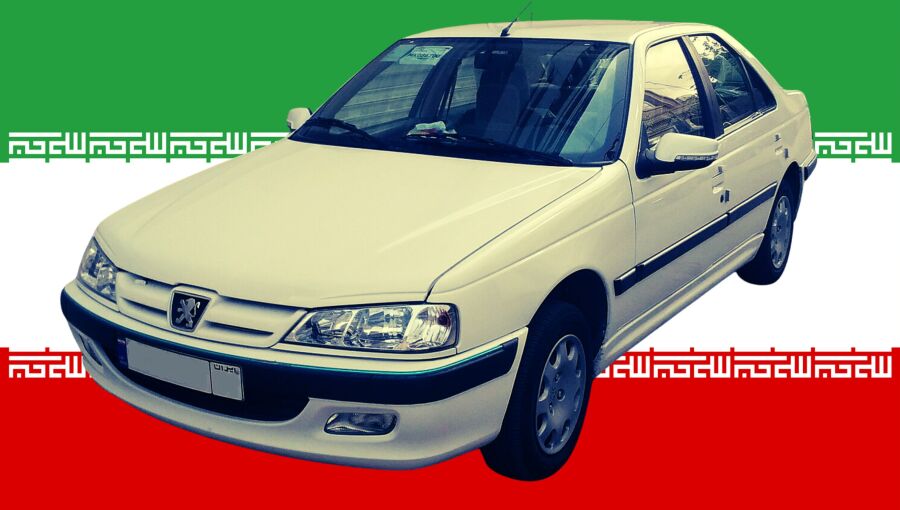
Iran kills Peugeot model after 25 years production

Iranian automaker Iran Khodro Co (IKCO) reduced losses in its Peugeot vehicle division to IRR14.4 trillion ($15.5mn) in the nine months to December 2024, down from IRR110.14 trillion ($118.4mn) in the same period last year, killing off major models as part of its new private owner’s redevelopment plan, Eghtesad News reported on February 24.
The recently privatised manufacturer, which has haemorrhaged money for decades, discontinued its Peugeot 405/Pars model line in spring 2024, following extensive internal deliberations following privatisation. The 40-year-old model, despite still being produced, had lost buyers due to the influx of Chinese players into the local market offering electric and hybrid vehicles. Initially created as a joint venture with PSA Groupe, since merging into Stellantis, the French firm dropped any rights to the production of the model in the Islamic Republic.
The dropping of the Pars lineup resulted in a 42% reduction in overall Peugeot production to 122,750 units, compared with 213,550 units in the previous period, according to consolidated financial statements filed with the Tehran Stock Exchange (TSE).
Despite lower production volumes, the company increased average selling prices to IRR3.95bn ($4,247) per vehicle, up from IRR2.6bn ($2,796). Total revenue from Peugeot sales reached IRR484.2tn ($520.6mn) against production costs of IRR498.5 trillion ($536mn) on the back of an agreed price increase due to the weakening rial.
The Peugeot Pars emerged as IKCO’s main model, which is used by the government, diplomats, and families alike. Originally designed as a facelift of the Peugeot 405, the vehicle incorporated design elements from the Peugeot 605 and 406 models. Iran Khodro introduced it following a decade of local Peugeot 405 production.
Since its privatisation, IKCO has redirected its manufacturing focus towards higher-margin vehicles, particularly the 15-year-old Peugeot 207 series, after removing the entire Pars family from production.
Iranian regulators approved a 30% price increase across the company's product range in November 2024, marking its first price adjustment in 18 months.
The regulatory approval followed extended negotiations with automotive sector policymakers. The restructuring initiative has significantly altered the company's product mix, with average unit prices rising 52% compared to the previous period.
"The removal of Peugeot Pars from our production line and realignment towards other models has shown clear results in our financial performance," the company spokesperson said to local media.
As part of the privatisation, the new board composition includes Ganjineh Iranian Investments, Behineh Sazan Bahman Company, Etebar Afarin Company – all considered allies of Crouse – as well as the National Investment Management of Iran and Saba Energy, bnm IntelliNews earlier revealed.
Crouse, the largest auto part manufacturer in the country, started buying shares of major automakers via its affiliated companies in recent months. The move has been criticised by many observers, as automakers have repeatedly blamed part makers for the low quality of their products.
IKCO expanded its regional reach in recent years with joint venture deals with companies in countries including Iraq and Azerbaijan. The company also used to produce vehicles in Syria under Bashar al-Assad’s regime but has since discontinued operations in that market.
The shift to private sector management through Crouse Group has generally received positive reactions in the press. The move represents a significant change for Iran's largest automaker, which has struggled with losses, though its future performance under private management remains to be seen.
Cars produced by IKCO’s joint venture with Azerbaijan’s AzerMash – under the Khazar brand – are to be sold in Russia if all goes to plan. Khazar’s plant is in the Naftchala department of Azerbaijan, 168 kilometres south of Baku. In Azerbaijan, in the basic configuration, a Dena sedan costs AZN16,000 ($9,411).
Iran is turning to solar energy to address its worsening electricity shortages.
High domestic energy consumption, gas wastage, and U.S.-led sanctions have exacerbated Iran’s energy crisis.
A lack of energy diversity and aging infrastructure have left Iran vulnerable to energy shortfalls.
Iran isn’t the first nation that springs to mind when it comes to solar power.
The Middle Eastern country is one of the richest in energy resources, holding the second-largest natural gas reserves behind Russia, at 17 percent, and 9.4 percent of global oil reserves. It is a founding member of OPEC and the Gas Exporting Countries Forum (GECF).
But over the past few years, Iran has faced an energy imbalance in its gas and electricity sectors, necessitating gas imports from Turkmenistan and recently Russia, states Manara Magazine.
This has led to Iran announcing earlier this month an agreement with private investors to develop solar plants by this summer.
“Our priority is to entrust existing infrastructure to the private sector before the government intervenes,” said Mohsen Tarztalab, deputy energy minister and head of the Renewable Energy and Energy Efficiency Organization (SATBA), during the signing ceremony.
According to the head of Tehran Regional Electricity Company, a 3-megawatt solar power plant worth approximately 900 billion rials (USD$1.8 million) will be constructed in the Iranian capital.
Once operational it will be connected to the national power grid.
Farhad Shabihi also launched the construction of 120 megawatts of renewable power plants, each with a capacity of 3 megawatts or less, in Tehran Province.
There are several reasons why Iran needs solar power and to import natural gas to address its energy imbalance.
First is abnormally high energy consumption. Iran produces about 260 billion cubic meters of gas a year, with only 18 billion allocated for export and the remainder consumed internally. Iran’s annual natural gas demand has risen 7 percent a year over the past decade, with the residential sector and power plants driving most of the growth.
According to Manara, Iran is the world’s fourth-largest gas consumer behind the United States, Russia and China, and consumes 10 billion cubic meters more gas than over 30 European countries combined.
Besides being a glutton for natural gas, Iran also wastes a lot of it. According to the World Bank and the International Energy Agency, the country flares 18 billion cubic meters annually due to the lack of gas collection equipment at oil fields. An additional 7 billion cubic meters is leaked from the transmission and distribution network each year.
US-led sanctions have also played a role in preventing foreign investment, and in developing gas production capacity and power plants.
In December 2022, Manara reported that Iran’s then-oil minister, Javad Owji, warned that Iran would become a net energy importer if it failed to attract $240 billion in investment to its oil and gas sector.
The final factor contributing to Iran’s gas imbalance is its lack of energy diversity. Just over two-thirds (68 percent) of Iran’s energy consumption relies on gas, compared to 26 percent for Turkey and 31 percent for Canada. These two countries also generate a respective 35 times and 30 times more solar and wind energy than Iran, and nine times and 53 times more electricity from hydroelectric power.
Iran’s gas imbalance has resulted in gas shortages and power outages.
During winter the country experiences a daily shortfall of at least 260 million cubic meters of gas, straining the electricity supply. Iran’s power industry is warning of a 30 percent energy deficit by this summer. According to Manara, the widespread and recurring problem of power outages in summer is forcing many industrial facilities, including gas power plants, to switch to mazut, a heavy oil that is highly polluting.
Iran International reported at year-end 2024 that 50 percent of Iran’s industrial parks ceased operations due to power outages. Aging infrastructure, international sanctions, and poor management have compounded the problem, leading to the shutdown of approximately 80 power plants, the publication stated, adding that in industrial regions, power cuts have resulted in damages amounting to hundreds of billions of rials.
Iran’s electricity shortage was estimated at 14,000 megawatts last summer. Heavy state subsidies have encouraged inefficient energy consumption, while geopolitical tensions and sanctions have hindered infrastructure investments, Iran International stated.
By Andrew Topf for Oilprice.com