Sunday, March 09, 2025


How much do women earn compared to men across Europe?

File photo - office worker
Copyright AP Photo
By Servet Yanatma

Despite progress, women in the EU still earn 12% less than men. Euronews Business analyses the gender pay gap across Europe to mark International Women’s Day.

Multiple indicators highlight persistent economic disparities between women and men, with the data making these inequalities undeniably clear. Despite having the highest gender parity among all regions in the World Economic Forum’s Global Gender Gap Report 2023, Europe is no exception to these challenges.

In 2023, women in the EU earned 12% less than men according to Eurostat. This means women made only €88 for every €100 earned by men. 

The gender pay gap in the EU was 16% in 2013, four percentage points higher than in 2023.

The unadjusted gender pay gap is a useful indicator. It is “the difference between the average gross hourly earnings of men and women expressed as a percentage of the average gross hourly earnings of men”. This calculation includes enterprises with 10 or more employees.

In 2023, the unadjusted gender pay gap ranged from -0.7% in Luxembourg to 19% in Latvia. 

A negative rate indicates that women, on average, earned more than men.

Displaying amounts instead of percentages might make it easier to understand how much women earn for every €100 men make. 

In 2023, women in Latvia earned just €81 for every €100 earned by men, followed by Austria (€82) and Czechia (€82). 

These disparities become even more significant when viewed in terms of monthly salaries. For example, if we assume an average salary of €2,000 in Austria, women would earn €360 less than men each month.

Luxembourg was the only country where women (€101) earned more than men (€100).

The pay gap was also less than €5 in Belgium, Italy, and Romania, making them the best countries for women after Luxembourg. 

Among Europe’s top five economies, the gender pay gap remains significant, except in Italy. Germany ranked fifth among 31 countries, with women earning just €82 for every €100 earned by men. In the UK, this figure was €86, while in France, it was €88.

Spain was only slightly below the EU average at €91, while Italy had the third smallest gap, with women earning €98 for every €100 earned by men.

Examining key trends, Eastern and Central European countries exhibit larger unadjusted gender pay gaps. In contrast, Southern European countries like Italy, Spain, and Portugal recorded some of the lowest disparities.

Nordic countries also continue to show significant gender pay gaps, with Finland, Denmark, and Norway all exceeding the EU average. This may come as a surprise, given their strong reputation for gender equality.

Why do women earn less than men?

The European Commission provides four main reasons for the gender pay gap.

1. Overrepresentation of women in lower-paying sectors: The Commission emphasises that approximately 24% of the gender pay gap is linked to sectoral segregation, meaning women are more likely to work in lower-paid industries such as care, health, and education. Jobs dominated by women are often systematically undervalued.

2. Unequal distribution of paid and unpaid: Women tend to work more hours per week than men. However, women spend more hours on unpaid work such as caregiving and household responsibilities.

“[In the EU], women would need to work 1.5 extra months to make up the difference”
 European Commission 

3. The glass ceiling: Position in the hierarchy significantly impacts earnings, with women vastly underrepresented in top leadership roles. For instance, fewer than one in ten CEOs of major companies are women. 

Another example comes from the media sector. A study by the Reuters Institute at the University of Oxford found that only 27% of the 171 top editors across 240 media brands are women in 2025. This is despite women making up an average of 40% of journalists in the 12 markets analyzed.

4. Pay discrimination: In some cases, women still earn less than men for performing the same work or work of equal value.

The Commission also found that the majority of the gender pay gap in the EU remains unexplained. It cannot be attributed to factors such as education, occupation, working hours, or the economic sector in which a person is employed.

“More transparency in pay would help uncover unjustified gender-based pay differences for equal work”, the Commission urged.

The EU's Pay Transparency Directive aims to tackle these issues comprehensively. 

Employment rate is also a key indicator of gender equality. Huge disparities still exist, too.

The employment rate is higher for men in all 32 countries

Among 32 European countries (EU, EFTA, and EU candidate countries), men had a higher employment rate than women in the third quarter of 2024. 

The EU average stood at 80.9% for men and 70.9% for women, reflecting a 10 percentage point (pp) gap. 

Turkey stands out as an outlier with a 38 pp employment gap disadvantaging women. 

Similarly, the gap exceeded 18 percentage points in Italy, Greece, and Romania.


World 'more gender equal than ever', but progress is reversible, warns UN Women regional chief

By Paula Soler & video by Aïda Sánchez Alonso
Published on 

Despite progress for women's and girls' rights around the world, these gains are fragile. In 2024, one in four countries in the world reported a setback in women's rights, according to a new report by UN Women.

The world is more gender-equal today than at any point in history, but progress is not guaranteed and could even be reversed without sustained action, Belén Sanz, regional director of UN Women Europe and Central Asia, told Euronews in an interview. 

“Women have made a real shift in the world, but we are seeing that there is an alarming rollback, that discrimination is deepening, that legal protections are weakening, and that the funding and financing for gender equality is also shrinking,” Sanz said. 

According to a new UN Women reportWomen's Rights in Review: 30 Years After Beijing, parity has been achieved in girls' education, maternal mortality has dropped by a third, and women's representation in parliaments has more than doubled in the past three decades. 

However, Sanz warned that today’s hard-won progress “can be shifted in a moment,” emphasizing the need for the European Union to remain “extremely vigilant” against potential setbacks, as Europe is not immune to the global backlash against gender equality. 

The report highlights that in 2024, one in four countries in the world reported a backlash on women's rights. For instance, Georgia abolished its gender quota for women in parliament, raising concerns about regression, Sanz noted. 

“We must anchor the policies the European Union has implemented and ensure strong monitoring and adequate resources, because without them, there is always a risk of rollback,” she added. 

At the EU level, around 50 million women still experience high levels of sexual and physical violence at home, at work, and in public. Between 2014 and 2024, the percentage of women aged 18-74 who have faced gender-based violence has barely changed (31.4% vs. 30.7%). 

Women across the EU also continue to face a stark gap in labour market participation, with only 44% of women employed compared to 69% of men. 

“The gender gap in employment remains a major issue in the region, along with the fact that care responsibilities and unpaid work still fall disproportionately on women,” Sanz said. 

Globally, women are occupied 2.5 times more on unpaid care work than men. In Europe and Central Asia, that gap is even wider, with women occupied 3.4 times more on unpaid care and domestic work than men. 

“Progress is possible, but it has been too slow, too uneven, and too fragile. The hard truth is that the world is failing women and girls,” Sanz argued. 

According to UN Women estimates, a girl born today would have to wait until age 40 to see women hold as many seats in parliament as men globally, 68 years for child marriage to be eradicated, and 137 years for extreme poverty to be eliminated. 

Recent global crises—including Covid-19, the climate emergency, and soaring food and fuel prices—have only intensified the urgency to act, Sanz warned, adding that 2025 will be “a turning point” for women’s rights. 

“We are also seeing that certain narratives misrepresenting gender equality are directly targeting the progress we have made,” Sanz said when asked about the impact of the rise of the far-right and anti-feminist movements on gender equality in public and political discourse. 

“We cannot afford another setback. Women and girls cannot wait—we must find a solution together,” she concluded. 

Investing in gender equality will have ‘high returns’

The recent suspension of US funding and foreign aid is affecting the work of the United Nations and UN Women, said its regional director for Europe and Central Asia.  

UN Women has been supported by US foreign assistance in Ukraine, Serbia, Tajikistan and Georgia, among others.  

"In Ukraine, for example, the suspension will reduce resources for women's peacebuilding efforts and safer spaces for survivors of war and violence," Sanz pointed out.  

In figures, the US aid cut will affect at least 4,500 women from Ukraine and will indirectly affect nearly 12,000 individuals across the country, led by Volodymyr Zelenskyy, according to UN Women.  

Over the past two or three years, more than half of UN Women's top 20 donors have shifted their development policies, weakening financial support for the UN agency. 

"Investing in initiatives that enable women and girls to grow, to develop in their communities and in their societies is a very good investment. It's not an expense, it's an investment with high returns for them and for their societies," Sanz said, calling on member states to continue to support the agency's work. 


From ‘the cat lady of Gaza’ to West Bank vets: What frontline animal aid looks like in Palestine

Animal Heroes is launching a new emergency clinic for stray animals in the West Bank.
Copyright Animal Heroes
By Lottie Limb
Published on 

A Dutch charity faces huge challenges in the occupied territories, as it fundraises to care for dogs, cats and donkeys.

The first emergency clinic for injured animals is due to open in the Palestinian city of Jenin later this month. 

Israeli attacks on the occupied West Bank city have left hundreds of homes destroyed, leaving countless animals without food, shelter or medical care. 

Netherlands-based charity Animal Heroes is facing many literal roadblocks and obstructions to launching a clinic in the conflict zone. But since 7 October 2023, the small team has proven its determination to alleviate animal suffering in Gaza and the West Bank, and support local people looking after animals.

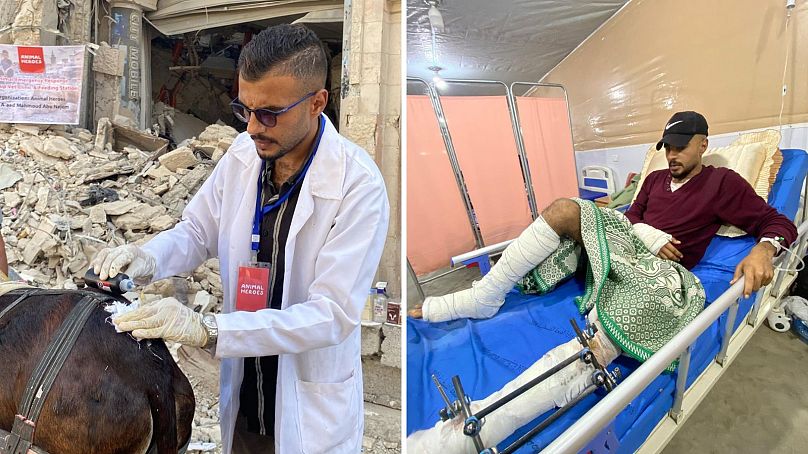
These ‘heroes’ include 36-year-old Maryam Hassan Barq, nicknamed “the cat lady of Gaza” for her steadfast support of 65 cats. And 25-year-old A’aed Mahmoud Abu Nejem, a veterinary doctor running the charity’s pop-up clinic in Gaza, who was injured in an airstrike hours before the ceasefire took effect 19 January. Despite his injuries, he resumed his work last week.

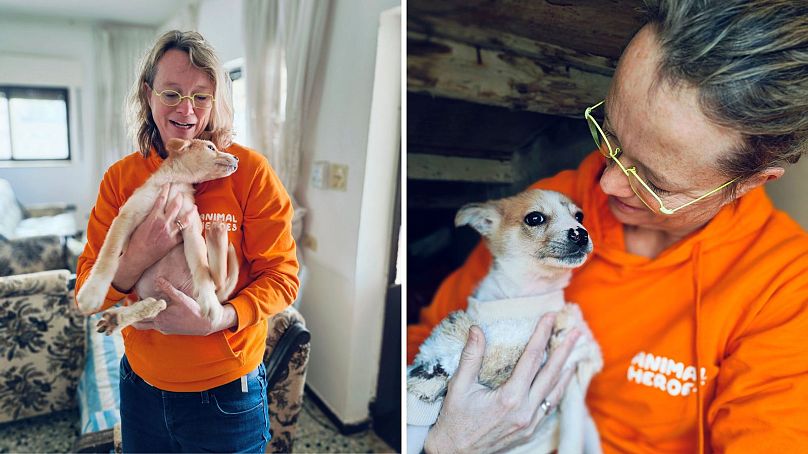
We spoke to Animal Heroes founder Esther Kef, who returned from a visit to the West Bank in February, to hear about the challenges of providing animal aid in the Palestinian territories.

Violence against animals is increasing in the West Bank

The fate of people and animals in the West Bank is inextricably linked. 

“The situation for animals is horrible because since 7 October, many people are without jobs because they live off tourism and construction,” explains Kef.

Financial desperation is stoking tension in communities, she says, which triggers increased violence against animals. “What we're seeing is like 10, 20 animals being completely kicked into pieces by people just for no reason, just to express violence,” she says.

Animal Heroes supports Bethlehem Shelter, the only registered animal charity in the West Bank, founded by another passionate animal lover, Diana Babish. But over the course of three visits since November 2023, Kef has seen conditions deteriorate.


Esther Kef, founder of Animal Heroes, says thousands of animals are in a dire situation in the West Bank.Animal Heroes

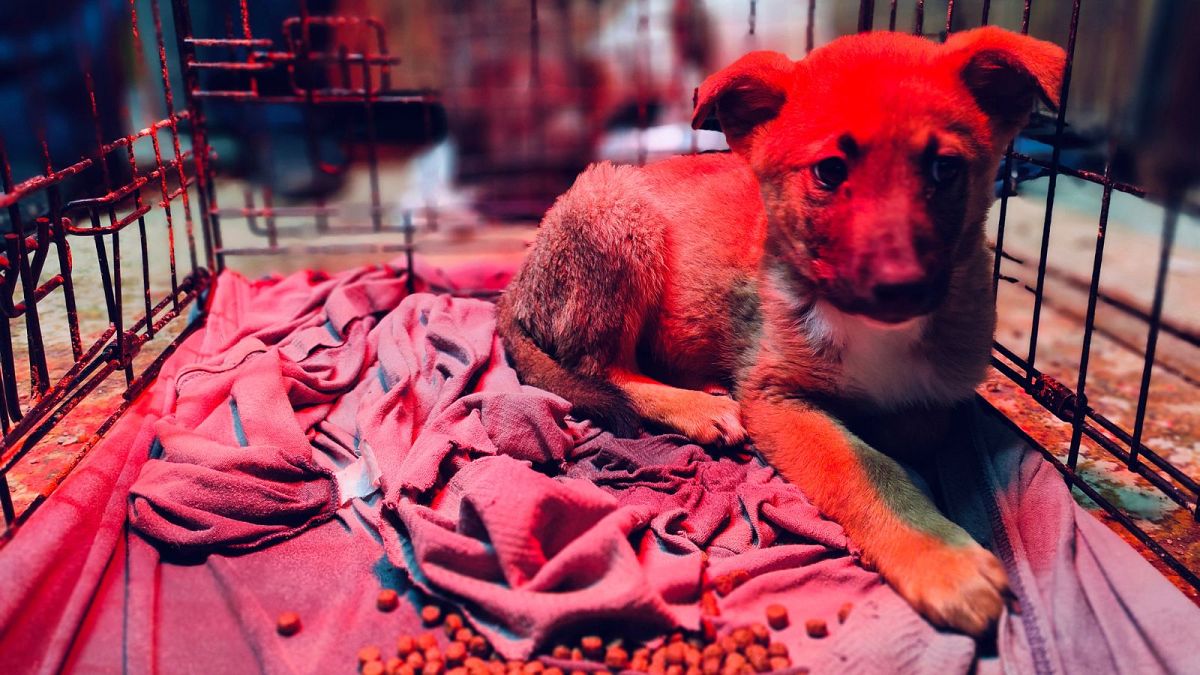
Designed for 100 animals, the basic shelter is now holding around 200 dogs. Outdoor fences had to be shut after Babish realised that people were coming at night to hurt and poison them. 

“People know only violence,” Kef speculates. “And when the tension increases, if violence is all you know, it's not too hard to think that then also the violence increases.”

The number of animals being hit on roads has also tripled, according to vets funded by Animal Heroes. 

“On a positive note, [the vet] says that for the first time [...] younger people now are starting to bring in the animals left on the street that have been hit,” Kef says.

Her charity has also partnered with Bethlehem University and the Ministry of Education to start an awareness programme for children to teach them about animal welfare. They spoke at two schools during their recent visit, working up from the importance of bees to the mistreatment of dogs.

How will the emergency clinic in Jenin help animals?

There are an estimated 2,000 stray dogs in Jenin, but no single organisation dedicated to their care.

A revered animal protector in the community, Babish gets calls every day from people in Jenin saying they have found an injured cat or dog. She tends to send a taxi to take the animal to a facility in Nablus, typically an hour’s drive away.

But with increased roadblocks in the West Bank due to Israel’s so-called military expansion, the journey can now take half a day. 

To save more lives where they are being jeopardised, the animal protectors have acquired - for free - space in an old house four kilometres from the centre of Jenin. Two young vets have volunteered to run the clinic, under the supervision of acclaimed British vet Jenny McKay. 

It cost €5,000 for the equipment to set up the practice. With their ambitions to treat around 150 animals a month from across the West Bank, medical care is expected to add €3,500 a month to the charity’s bills.

Animal Heroes is appealing for donations to help cover the supply of antibiotics and other first aid, and secure more advanced equipment including an X-ray machine.

What happens once the animals have been treated? It’s a troubling question in a conflict zone. 

Previously, Babish was skilled at sending her dogs across the world, says Kef. “Diana is the type of person you don't say no to.” But with fewer and costlier flights from Tel Aviv, and no flight volunteers to accompany the animals out, adoptions ground to a halt. 

The Bethlehem Shelter is prioritising puppies and vulnerable dogs that need to recover after treatments. Babish continues to use her network to get animals fostered in Israel, via Israeli animal aid organisations. 

“The problem is,” Kef adds, “what happens if the IDF turns Jenin into a second Gaza, where no one goes in and nobody gets to go out? If that's the case, then obviously the roads are completely blocked, and the animals will need to be just left freely back on the street again.”

Animal Heroes is looking into renting a shelter, in preparation for this worst case scenario.

Animal heroes in Gaza continue life-saving work

A’aed, Animal Heroes’ lead vet in Gaza, was hit by an airstrike in a crowded
marketplace hours before the ceasefire, suffering injuries to both legs, 
his eye and his hand.   Animal Heroes

When we speak on 28 February, Kef is eagerly anticipating the arrival of a truckload of aid into Gaza, as part of the Animals in Gaza Alliance with the UK’s Safe Haven for Donkeys and Finland’s Animal Aid without Borders.

But on 2 March, Israel again blocked the entry of all humanitarian aid into the heavily-bombed territory, meaning that trucks containing medicine and food are still stuck at the Egyptian border.

“The impact is profound, because there is hardly any medicine in Gaza for animals, and yet so many animals are in desperate need of them,” Kef writes. “Every day this shipment is delayed, the suffering of donkeys and horses is prolonged.”

As well as operating a pop-up clinic, Animal Heroes funds people taking care of animals. Among the most remarkable of these is Maryam Hassan Barq, who refused to abandon 65 rescue cats when the IDF order came to evacuate her home in northern Gaza. 

“I consider them like my children,” Maryam said during an interview with Animal Heroes in November, at a time when she was suffering from starvation and dehydration. “I am fully aware that I might die at any moment for staying in the north, but from the beginning of the war, I took the decision that we either live together or we die together.”

“There is no other place for them and I cannot transfer them anywhere else in these dangerous conditions due to their number, and there's no safe place to go to anyway,” she explained. “Our life feels like a nightmare, to say the least, but we live on. I know it sounds crazy.”

A dozen cats died before the ceasefire emerged in January. Afterwards, Maryam was able to buy vegetables for herself for the first time in months, and chicken for the cats - which need protein. With the crossing closed again, she is again concerned for their lives.

How can you support Animal Heroes?

“People like Diana, like Maryam, they're very humble people,” says Kef. “They just care about helping animals and they even risk their own lives to do so. So that's what inspires me to do this every day.”

Esther was inspired to found Animal Heroes in 2023 after meeting similarly dedicated people in need of animal aid assistance in Ukraine. The lean organisation has since grown from three to 25 volunteers.

Animal Heroes is fundraising to support its medical response team in Gaza here. Its new fundraiser, to help injured animals in the West Bank - including through the new emergency clinic - has recently launched here.

Turkey to fully enforce stray dog cull law, interior minister says

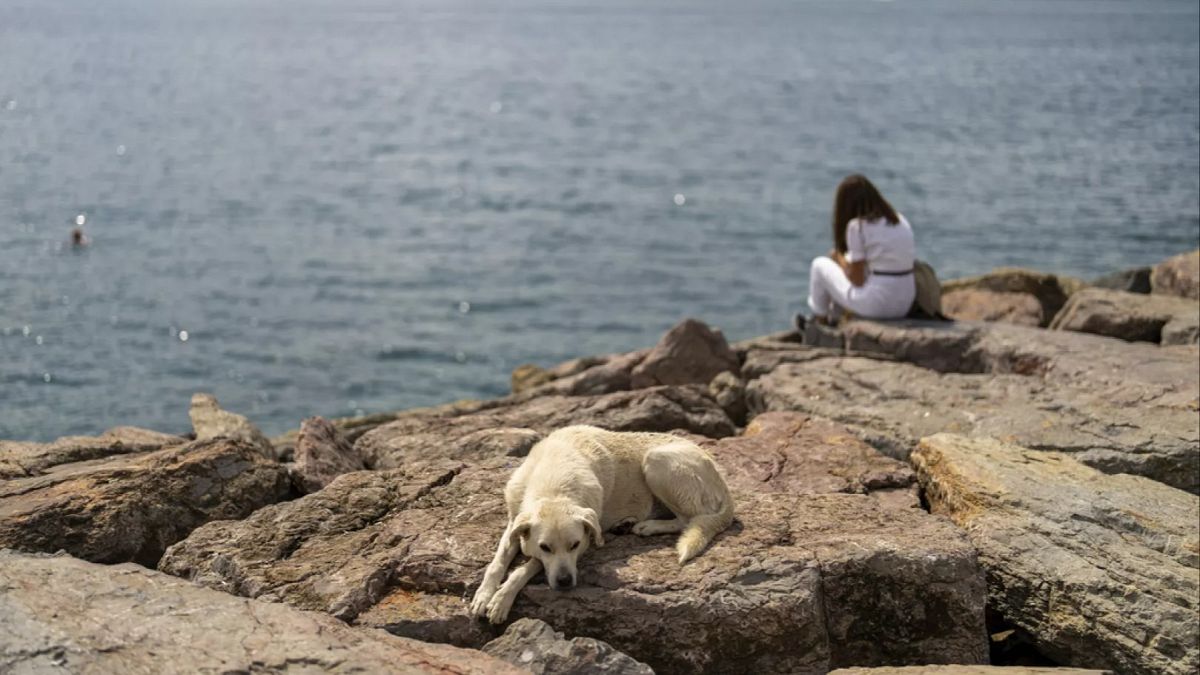
FILE - A stray dog rests at Kadikoy sea promenade in Istanbul, Turkey, Saturday, July 6, 2024.
Copyright Francisco Seco/Copyright 2024 The AP. All rights reserved
By Daniel Bellamy with AP
Published on 

Ankara has pledged to fully apply a law to remove millions of stray dogs from the streets after the death of a toddler. However, opponents believe this could lead to further widespread neglect of pets.

Turkey’s interior minister has pledged to fully apply a law to remove millions of stray dogs from the streets in the wake of the death of a toddler earlier this week.

“Either they will do this job or I will use whatever authority the law gives me to the fullest,” Interior Minister Ali Yerlikaya said in a video message posted on social media.

The two-year-old Rana El Selci died after being attacked by a pack of stray dogs in the central Turkish city of Konya on Friday, sparking fresh outcry about the 4 million stray dogs that the government estimates roam Turkey’s streets and rural areas.

A criminal investigation was launched following her death as municipal workers began rounding up dogs in the city. On Saturday, President Recep Tayyip Erdogan said that the government was “taking determined steps to ensure the implementation of the law.”

The legislation – labelled the “massacre law” by animal welfare groups – was passed by parliament last summer but has been only partially implemented by municipal authorities.

It requires municipalities to collect stray dogs and house them in shelters to be vaccinated, neutered or spayed before making them available for adoption. Dogs that are in pain, terminally ill, or pose a health risk to humans will be euthanised.

A report released by the Safe Streets and Defence of the Right to Life Association, an organisation campaigning for the removal of all stray dogs from the streets, says that 65 people have died in street dog attacks since 2022, not including Rana El Selci.

Animal lovers fear the legislation will lead to dogs being killed or ending up in neglected, overcrowded shelters. When the law was passed, the main opposition party pledged that its municipalities would not implement the round-up of strays.

Admiration for 'man's best friend'

The issue has proven to be divisive in Turkish society, with at least one former government minister having professed his admiration for "man's best friend".

During the COVID-19 pandemic five years ago, the former Minister of Justice Adbulhamit Gul posted a photo of himself on X petting a dog, saying: ''We should not abandon our animal friends during these tough days.''

The post came as the government was publicly promoting feeding stray animals whilst COVID-19 restrictions were in force.

Meanwhile, demonstrations in cities across Turkey have seen thousands call for the law to be scrapped. There have also been protests across Europe, as people warned the legislation could dissuade tourists from visiting Turkey.

Some critics have blamed the growth in the stray canine population on the failure to implement previous regulations, which required stray dogs to be caught, neutered, or spayed and returned to their original location.

Turkey’s Animal Rights Federation, HAYTAP, posted a video on X showing stray dogs and cats peacefully coexisting with people in the street, in shops, and even on the metro network.

The organisation recalled a previous attempt to get rid of stray dogs in 1910 in a statement on its website: "In an effort to 'Westernise' Istanbul just before the fall of the Ottoman Empire, the Sultan ordered tens of thousands stray dogs from Istanbul to be sent to a nearby island."

"The island did not have food or water for the dogs, so this ended horribly with cannibalisation, starvation, and many dogs drowning trying to swim back.  Records show reports of people on the mainland being haunted by hearing the howls of the starving dogs on the island," HAYTAP said.

Animal rights activists are concerned that some municipalities might kill dogs on the pretext that they are ill rather than allocate resources to shelter them.

Videos showing dead cats and dogs buried in ditches have been circulating on social media. Animal rights activists say the animals were indiscriminately killed after the passage of the law.


LA REVUE GAUCHE - Left Comment: Search results for STRAY


How a Peruvian farmer’s lawsuit is challenging global energy giants over climate damage

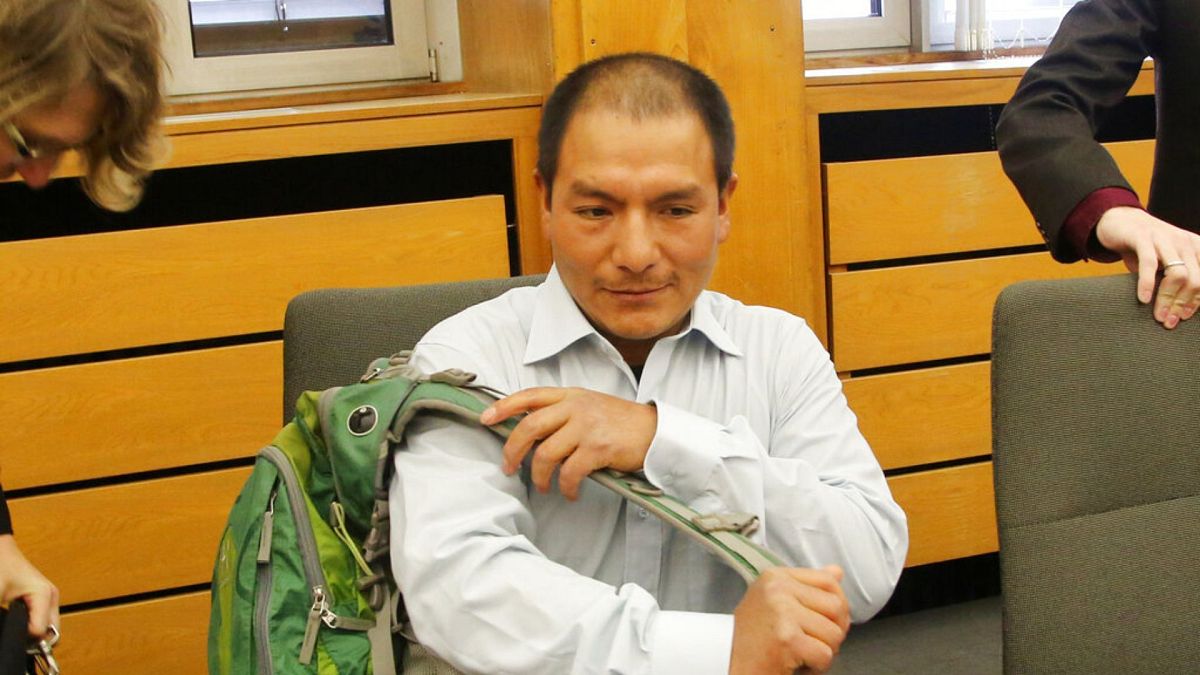
Saul Luciano Lliuya, pictured in Essen in 2015, could reframe the fight for climate justice
Copyright AP Photo
By Craig Saueurs
Published on 

The case has taken nearly 10 years to be heard with judges visiting Peru to view the village firsthand.

Can an energy company be held responsible for glacial melting half a world away? One Peruvian farmer believes the answer should be yes.

Saul Luciano Lliuya, a Quechua-speaking farmer and mountain guide from Peru’s Ancash region, is set to appear in court this week as his nearly decade-long legal battle against German energy giant RWE reaches a climax.

The 44-year-old contends that RWE, as one of the world’s top emitters of climate-altering emissions, should share in the cost of protecting his hometown, Huaraz, from a swollen glacial lake at risk of overflowing due to melting snow and ice.

The hearings, scheduled for 17 and 19 March at the Higher Regional Court in Hamm, Germany, will determine what evidence will be permissible in the final trial, which will rule on whether RWE – which has never operated in Peru – can be held liable for damages.

What is the case about?

Lliuya first challenged RWE after a 2013 Carbon Majors Study found the company responsible for 0.5 per cent of climate change since industrialisation began in the 1850s.

He is asking for the company to pay for about 0.5 per cent of the cost of protecting Huaraz from the imminent risk of flooding and overflow from Lake Palcacocha. That amount has been tallied at about €17,000.

“What I am asking is for the company to take responsibility for part of the construction costs, such as a dike in this case,” he told reporters in Lima on Wednesday before departing for Germany.

In 2015, Lliuya filed a suit against the company that was later dismissed by a court in Essen. In 2017, a higher court in Hamm admitted an appeal.

Following pandemic-induced delays, the initial hearings are now taking place. 

What does it mean for global corporations?

The case is ground-breaking in every way.

RWE insists it has always complied with government guidelines on greenhouse gas emissions and aims to be carbon-neutral by 2040. Yet its historical contribution to a warming planet has put it in the crosshairs, raising questions about corporate accountability for climate change and cross-border legal responsibilities.

“Never before has a case of climate justice reached an evidentiary stage,” Andrea Tang, a lawyer for Germanwatch, the environmental NGO supporting Lliuya, said in Lima.

She added that the case “would set a huge precedent for the future of climate justice.”

How a Peruvian farmer captured global headlines

Before the case even reached this stage, it had already commanded global attention. 

For one, Lliuya had never left Peru before he decided to take RWE to court. His efforts also brought European experts to Peru.

Following diplomatic talks, judges from Germany visited Huaraz and Lake Palcacocha – about 4,500 metres above sea level in the Andes - in 2022. Surrounded by dozens of journalists and documentary film teams, they assessed the potential risk to the village.

While Lliuya has won the legal battle to have his case tried, it is yet to be seen if that visit also won the judges over to his side of the scientific argument.