Sunday, March 23, 2025

Texas poised to make measles a nationwide epidemic: public health experts


Photo by Vitolda Klein on Unsplash
March 21, 2025

With its measles outbreak spreading to two additional states, Texas is on track to becoming the cause of a national epidemic if it doesn’t start vaccinating more people, according to public health experts.

Measles, a highly contagious disease that was declared eliminated from the U.S. in 2000, has made a resurgence in West Texas communities, jumping hundreds of miles to the northern border of the Panhandle and East Texas, and invading bordering states of New Mexico and Oklahoma.

Based on the rapid spread of cases statewide — more than 200 over 50 days — public health officials predict that it could take Texas a year to contain the spread. With cases continuously rising and the rest of the country’s unvaccinated population at the outbreak’s mercy, Texas must create stricter quarantine requirements, increase the vaccine rate, and improve contact tracing to address this measles epidemic before it becomes a nationwide problem, warn infectious disease experts and officials in other states.

“This demonstrates that this (vaccine exemption) policy puts the community, the county, and surrounding states at risk because of how contagious this disease is,” said Glenn Fennelly, a specialist in pediatric infectious diseases and chair of the Department of Pediatrics at Texas Tech University. “We are running the risk of threatening global stability.”

[After COVID, Texas is less prepared for the next pandemic]


The measles outbreak — the largest in the state in 30 years — has spread from two cases in late January to more than 270 cases and now includes 11 counties, most of them in the rural South Plains region.

So far this year, there have been more than 300 cases of measles confirmed across 15 states, as of March 13. The Texas outbreak, which makes up the bulk of those cases, is only linked to cases in New Mexico and Oklahoma, where state officials said this month that someone associated with the Texas outbreak was exposed.

Last month, Texas officials reported that an unvaccinated, otherwise healthy school-aged child died from measles, the first death from the virus in a decade.

This month, New Mexico officials said an unvaccinated adult in Lea County, about 50 miles away from the outbreak’s epicenter of Gaines County, who died had tested positive for measles. Officials are still confirming whether the cause of death was measles, according to the New Mexico Department of Health.

“This is a very multi-jurisdictional outbreak with three states involved and about seven or eight different local health departments, in addition to some areas where the state serves as the local health department. There are a lot of moving parts,” said Katherine Wells, director of public health for the City of Lubbock, during a Tuesday meeting of the Big Cities Health Coalition, a national organization for large metropolitan health departments.

Most of Texas’ measles cases are in unvaccinated school-aged children and are concentrated in the Mennonite community in Gaines County, which traditionally has low vaccination rates.


Wells said efforts to increase the vaccination rates in Gaines County, which is about 70 miles from Lubbock, and the surrounding region have been slow as trust in the government has seemingly reached an all-time low.

“We are seeing, just like the rest of Americans, this community has seen a lot of stories about vaccines causing autism, and that is leading to a lot of this vaccine hesitancy, not religion,” she said.

The COVID-19 pandemic led to the politicization of vaccines and overall weariness to health mandates like quarantines and masks. Public health officials are now battling misinformation and public resistance to measles.

Wells said because the state can’t stop people from traveling, she fully expects this outbreak to last a year, and the surrounding states and the nation should prepare themselves for a potential spread.


“Measles is going to find those pockets of unvaccinated individuals, and with the number of cases and ability for people to travel, there is that risk of it entering other unvaccinated pockets anywhere in the United States right now,” Wells said.
Vaccine hesitancy

Fennelly was living in New York in the 1990s when pamphlets started getting passed around the Hebrew community warning against the unfound dangers of the measles vaccine. Soon, the vaccine refusal rate began to climb, and an outbreak started filling hospitals with sick infants.

Now, decades later, Fennelly is watching the same series of events play out in Texas.


“This could have been predicted. There have been steady rates of increased personal belief exemptions over the last several years leading to pockets of under-vaccination across the state,” he said.

In the West Texas region, misinformation about vaccines, distrust of local public health officials, and fear of government authority overruling family autonomy have reigned supreme, creating the pockets that measles infiltrated this year.

However, this is not just a South Plains problem but a statewide issue as vaccine exemptions continue to grow.

“We have several pockets of population that have high unvaccinated groups. We sent out a letter to public and private school districts with low vaccination rates explaining the situation and asking them to update their children’s shots,” said Phil Huang, director and health authority for Dallas County Health and Human Services, during the Big Cities Health Coalition meeting.


Texas requires children and students to obtain vaccines to attend schools, child care centers, and college. However, individuals can claim they are exempt if they are in the military, have a religious or personal belief that goes against getting immunized, or if a health provider determines it is not safe to do so.

Since 2018, the number of requests to the Texas Department of State Health Services for an exemption form has doubled from 45,900 to more than 93,000 in 2024.

Data suggests that vaccine exemptions and those living in areas with higher vaccine exemption rates for measles and pertussis are at increased risk of contracting these diseases. The authors of this data collection concluded that “geographic pockets of vaccine exemptions pose a risk to the whole community.”

Fennelly said the hurdles to obtaining exemptions are easy to clear, leading to an increasing number of people refusing the vaccine.

State lawmakers this session have filed more than a dozen bills that would strengthen or expand vaccine exemptions.

“We don’t have the capacity in Texas to deal with so many sick children if this continues to spread. We are already at our limit with seasonal influenza and respiratory syncytial virus. Our doctors are at their limit,” Fennelly said.

Simbo Ige, commissioner of the Chicago Department of Public Health, had to deal with a measles outbreak in her city a year ago, with 64 individuals testing positive, 57 of whom were associated with a shelter. She said the quickest way they controlled the outbreak was quickly administering more than 30,000 doses of the measles-mumps-rubella vaccine.

A Chicago Department of Health report projected a high probability of an outbreak of more than 100 cases without the city’s rapid intervention.

“It required a lot of education and messaging because people wanted the answer to why I need to get vaccinated. We started listing out the reasons — parents won’t be able to go to work, kids can’t go to school, and even worse, kids can get sick and die,” Ige said. “It’s 2025. We shouldn’t be having children dying from measles in this day and age. We have the tools. We just have to amplify the message.”

New Mexico’s public health officials started spreading awareness of vaccinations immediately after they learned Texas had its first measles case and before New Mexico got its first case.

“We started setting up clinics and getting the ball rolling,” Jimmy Masters, the southeast region director for the New Mexico Department of Health, said. “Let's see what we can do to get people in the doors and vaccinated beforehand.”

Nearly 9,000 New Mexicans have received measles, mumps, and rubella vaccine shots between Feb. 1 and March 10. During that same time period last year, officials vaccinated 5,342 people.

Texas has held multiple vaccination clinics in the outbreak area, but according to the Texas Department of State Health Services, only 350 doses have been administered.

New Mexico has also emphasized its Vaxview website that keeps track of residents' immunizations, allowing concerned people to check within seconds if they need a shot. Texas has a vaccine tracking program known as ImmTrac2, but it’s an opt-in program that doesn’t have most adult records. If someone doesn’t opt in by age 26, their records will not be retained.

“We told people to contact us to ensure their vaccine status is up to date,” Masters said. “If they aren’t sure, just call the health office so we can find out for them. And if they don’t have their records updated for the vaccine, then we can ask them to come in and take advantage of the clinics or come in as walk-ins.”

Because of this, most of Lea County is considered immunized, Masters said, so public health officials in New Mexico don’t view the outbreak as rapidly evolving.

Back in Texas, the opposite is playing out. Advice from public health officials is seemingly ignored, and vaccine efforts are struggling.

“We need to have a consistent message from all levels. We need to reinforce the message that vaccines are safe and vaccines are how you prevent this, and we have concerns when other messages dilute this message,” Huang said.

Texas Department of State Health Services officials are also encouraging people to vaccinate, but whether people will listen is out of the agency’s control.

“The only way to stop the virus from spreading is to get more people immunized. We are …providing education about the severe complications associated with measles infection, and directing them to locations where they can get vaccinated,” said Lara Anton, spokesperson for the state health agency.

Fennelly said the main difference between Lea County and Gaines County is the public acceptance of the vaccine and public health in general. He said if Texas wants to improve, there should be studies on why people are so hesitant to accept vaccines.

“We need to be asking why Gaines County? What are the concerns, and how do we, the health profession and public health officials, most effectively confront and allay those fears,” he said. “People shouldn’t be more afraid of the vaccine than the disease.”
Obstacles to quarantining and contact tracing

A person with measles visits a friend, another visits kids at a college, and the other has friends over. Public health departments in West Texas are trying to trace the spread of measles, since other than strongly suggesting people quarantine, there’s nothing more local officials can do to prevent infected individuals from traveling.

“We shouldn’t be surprised in this kind of environment that we will have more cases,” said David Lakey, the vice chancellor for health affairs and the chief medical officer at the University of Texas System. “I think we need to work with individuals to ensure they stay home during an event like this.”

State lawmakers have stripped control from cities and counties from implementing mandates, such as closing businesses and schools. While some of these laws apply only to COVID-19, public health experts say it has created an environment where state health officials can only offer suggestions to Texans with little enforcement, allowing measles to continue to spread.

“The state of Texas is taking it seriously and trying to balance how they approach this while respecting the laws of the state and also people’s freedoms,” Lakey said. “They are doing it while also making sure that we are doing everything it can to identify people, provide vaccines, isolate individuals, and take all the other steps to address an event like this.”

With young children particularly vulnerable to the disease, Lakey said hospitals must screen people entering hospitals.

Wells said there have been a couple of women who gave birth at a Lubbock hospital who were infected with measles or were recently exposed to it, and babies six months old or younger have needed treatment with immunoglobulin because of exposure.

“That’s really why measles is so scary. It’s so communicable, and it’s so easy to enter some of the very vulnerable areas where babies don’t have those vaccinations yet,” she said. “That’s going to be day cares, schools, hospitals, pediatricians offices, and we’re seeing those cases more and more as this outbreak continues.”

This potential spread makes contact tracing necessary, but Wells said it is one of their region's most significant challenges besides testing. While a laboratory set up in Lubbock has cut down wait times for tests results from 72 hours to one day, Wells said rural Texas doesn’t have the staff to track the travel of more than 270 people.

“This is going to be a large outbreak, and we are still on the side where we are increasing the number of cases, both because we’re still seeing spread and also because we have increased testing capacity, so more people are getting tested,” she said.

New Mexico has a lead investigator for contact tracing who interviews the patients, gathers medical records, establishes a point of contact, and organizes vaccinations for those who were potentially exposed to prevent spread.

While West Texas officials try to follow the same policies, the health care system is decentralized, meaning the contact tracing is done by the local health authority first, and then, if necessary, the state gets involved and possibly, assistance from the CDC.

Chris Van Deusen, spokesperson for the Texas Department of State Health Services, said while the state is not necessarily struggling to contact trace, he acknowledges the extra manpower it requires.

“That also depends on the individuals talking with us and sharing that information. So that can be difficult, particularly when dealing with a more insular community. It can be difficult to make inroads, and that is why the local process is important,” Van Deusen said.

Experts say that as travel season ramps up and if Texas can’t seem to stop the spread, states nationwide should prepare themselves for what may come.

“The message to health departments is be ready, and schools need to think about this and government officials because this really does have the potential to grow beyond these three states,” Wells said.


Disclosure: Texas Tech University and University of Texas System have been financial supporters of The Texas Tribune, a nonprofit, nonpartisan news organization that is funded in part by donations from members, foundations and corporate sponsors. Financial supporters play no role in the Tribune's journalism. Find a complete list of them here.

This article originally appeared in The Texas Tribune at https://www.texastribune.org/2025/03/21/texas-measles-vaccine-new-mexico-oklahoma-us/.

The Texas Tribune is a member-supported, nonpartisan newsroom informing and engaging Texans on state politics and policy. Learn more at texastribune.org


Farmers panic as Trump threatens $1 billion in grants — that they've already spent


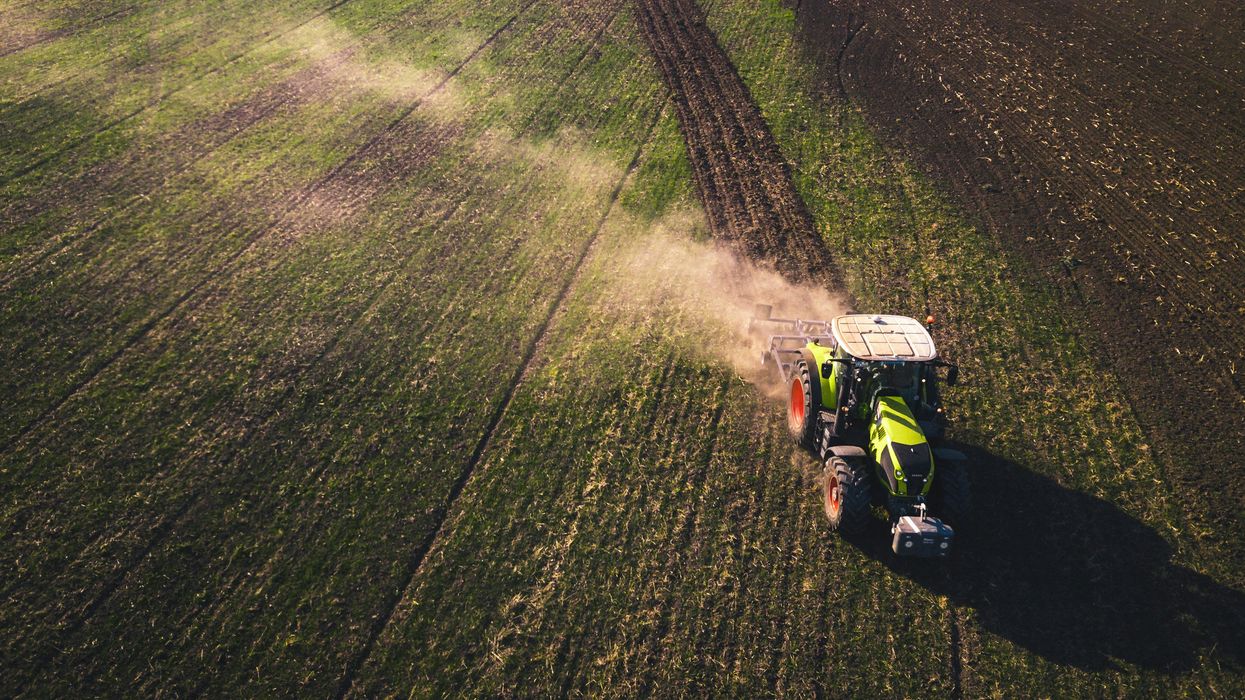
Photo by Chris Ensminger on Unsplash

March 22, 2025

The Trump administration’s freeze on funding from the Inflation Reduction Act, the landmark climate law from the Biden era, has left farmers and rural businesses across the country on the hook for costly energy efficiency upgrades and renewable energy installations.

The grants are part of the Rural Energy for America Program, or REAP, originally created in the 2008 farm bill and supercharged by funding from the IRA. It provides farmers and other businesses in rural areas with relatively small grants and loans to help lower their energy bills by investing, say, in more energy-efficient farming equipment or installing small solar arrays.

By November 2024, the IRA had awarded more than $1 billion for nearly 7,000 REAP projects, which help rural businesses in low-income communities reduce the up-front costs of clean energy and save thousands on utility costs each year.

But now, that funding is in limbo. Under the current freeze, some farmers have already spent tens of thousands of dollars on projects and are waiting for the promised reimbursement. Others have had to delay work they were counting on to support their businesses, unsure when their funding will come through — or if it will.

REAP is administered by the U.S. Department of Agriculture. Secretary Brooke Rollins said the agency is “coming to the tail end of the review process” of evaluating grants awarded under the Biden administration.

“If our farmers and ranchers especially have already spent money under a commitment that was made, the goal is to make sure they are made whole,” Rollins told reporters in Atlanta last week.

But it’s not clear when the funds might be released, or whether all the farmers and business owners awaiting their money will receive it.

For Joshua Snedden, a REAP grant was the key to making his 10-acre farm in Monee, Illinois, more affordable and environmentally sustainable. But months after installing a pricey solar array, he’s still waiting on a reimbursement from the federal government — and the delay is threatening his bottom line.

“I’m holding out hope,” said Snedden, a first-generation farmer in northeast Illinois. “I’m trying to do everything within my power to make sure the funding is released.”

In December, his five-year old operation, Fox at the Fork, began sourcing its power from a new 18.48 kilowatt solar array which cost Snedden $86,364. The system currently offsets all the farm’s electricity use and then some.

REAP offers grants for up to half of a project like this, and loan guarantees for up to 75 percent of the cost. For Snedden, a $19,784 REAP reimbursement grant made this solar array possible. But the reimbursement, critical to Snedden’s cash flow, was frozen by Trump as part of a broader review of the USDA’s Biden-era commitments.

Snedden grows the produce he takes to market — everything from tomatoes to garlic to potatoes — on about an acre of his farm. He also plans to transform the rest of his land into a perennial crop system, which would include fruit trees like pears, plums, and apples planted alongside native flowers and grasses to support wildlife.

A solar array was always part of his plans, “but seemed like a pie in the sky” kind of project, he said, adding he thought it might take him a decade to afford such an investment.

The REAP program has been a lifeline for Illinois communities struggling with aging infrastructure and growing energy costs, according to Amanda Pankau with the Prairie Rivers Network, an organization advocating for environmental protection and climate change mitigation across Illinois.

“By lowering their electricity costs, rural small businesses and agricultural producers can put that money back into their business,” said Pankau.

That’s exactly what Snedden envisioned from his investment in the solar power system. The new solar array wouldn’t just make his farm more resilient to climate change, but also more financially viable, “because we could shift expenses from paying for energy to paying for more impactful inputs for the farm,” he said.

He anticipates that by switching to solar, Fox at the Fork will save close to $3,200 dollars a year on electric bills.

Now, Snedden is waiting for the USDA to hold up their end of the deal.

“The financial strain hurts,” said Snedden. “But I’m still planning to move forward growing crops and fighting for these funds.”

At the start of the year, Jon and Brittany Klimstra were nearly ready to install a solar array on their Polk County, North Carolina farm after being awarded a REAP grant in 2024.

As two former scientists who had moved back to western North Carolina 10 years ago to grow apples and be close to their families, it felt like a chance to both save money and live their values.

“We’ve certainly been interested in wanting to do something like this, whether it be for our personal home or for our farm buildings for a while,” said Jon. “It just was cost prohibitive up to this point without some type of funding.”

That funding came when they were awarded $12,590 from REAP for the installation. But, after the Trump administration’s funding freeze, the money never came.


“We were several site visits in, several engineering conversations. We’ve had electricians, the solar company,” said Brittany . “It’s been a very involved process.”

Since the grant is reimbursement-based, the Klimstras have already paid out-of-pocket for some costs related to the project. Plus, the farm had been banking on saving $1,300 in utilities expenses per year. In a given month, their electricity bill is $300-$400.

Across Appalachia, historically high energy costs have made the difference between survival and failure for many local businesses, said Heather Ransom, who works with Solar Holler, a solar company that serves parts of Virginia, West Virginia, Kentucky, and Ohio.

“We have seen incredible rate increases across the region in electricity over the past 10, even 20 years,” she said.

Through Solar Holler, REAP grants also passed into the hands of rural library systems and schools; the company installed 10,000 solar panels throughout the Wayne County, West Virginia school system. About $6 million worth of projects supported by Solar Holler are currently on hold.

In other parts of the region, community development financial institutions like the Mountain Association in eastern Kentucky combatted food deserts through helping local grocery stores apply for REAP.

Solar Holler also works in coal-producing parts of the region, where climate change discussions have been fraught with the realities of declining jobs and revenue from the coal industry. The program helped make the case for communities to veer away from coal and gas-fired energy.

“What REAP has helped us do is show people that it’s not just a decision that’s driven by environmental motives or whatever, it actually makes good business sense to go solar,” Ransom said. In her experience, saving money appeals to people of all political persuasions. “At the end of the day, we’ve installed just as much solar on red roofs as we do blue roofs, as we do rainbow roofs or whatever.”

The Sleeping Bear Dunes National Lakeshore in northern Michigan draws over 1.5 million visitors every year. Jim Lively hopes some of those people will camp RVs at a nearby site he’s planning to open next to his family’s local food market. He wants to use solar panels to help power the campsite and offset electric bills for the market, where local farmers bring produce directly to the store.

Lively helped promote REAP during his time at an environmental nonprofit, where he’d worked for over two decades. So the program was on his mind when it came time to replace the market’s big, south-facing roof.

“We put on a metal roof, and worked with a contractor who was also familiar with the REAP program, and we said, ‘Let’s make sure we’re setting this up for solar,’” he said. “So it was kind of a no-brainer for us.”

They were told they had been approved for a REAP grant of $39,696 last summer — half of the project’s total cost — but didn’t feel the need to rush the solar installation. Then, at the end of January, Lively was notified that the funding had been paused.

The property runs on electricity, rather than natural gas, and Lively wants to keep it that way. But those electric bills have been expensive — about $2,000 a month last summer, he said. When they get the RV site up and running, he expects those bills to approach $3,000.

Selling local food means operating within tight margins. Lively said saving on energy would help, but they won’t be able to move ahead with the rooftop solar unless the REAP funding is guaranteed.

Continuing to power the property with electricity rather than fossil fuels is a kind of personal commitment for Lively. “Boy, solar is also the right thing to do,” he said. “And it’s going to be difficult to do that without that funding.”

The grants aren’t only for solar arrays and other renewable energy systems. Many are for energy efficiency improvements to help farmers save on utility bills, and in some cases cut emissions. In Georgia, for instance, one farm was awarded just under $233,000 for a more efficient grain dryer, an upgrade projected to save the farm more than $16,000 per year. Several farms were awarded funding to convert diesel-powered irrigation pumps to electric.

The USDA did not directly answer Grist’s emailed questions about the specific timeline for REAP funds, the amount of money under review, or the future of the program. Instead, an emailed statement criticized the Biden administration’s “misuse of hundreds of billions” of IRA and bipartisan infrastructure law (BIL) funds “all at the expense of the American taxpayer.”

“USDA has a solemn responsibility to be good stewards of the American people’s hard-earned taxpayer dollars and to ensure that every dollar spent goes to serve the people, not the bureaucracy. As part of this effort, Secretary Rollins is carefully reviewing this funding and will provide updates as soon as they are made available,” the email said.

Two federal judges have already ordered the Trump administration to release the impounded IRA and BIL funds. Earthjustice, a national environmental law organization, filed a lawsuit last week challenging the freeze of USDA funds on behalf of farmers and nonprofits.

“The administration is causing harm that can’t be fixed, and fairness requires that the funds continue to flow,” said Jill Tauber, vice president of litigation for climate and energy at Earthjustice.

Rollins released the first tranche of funding February 20 and announced the release of additional program funds earlier this month. That did not include the REAP funding.

The USDA announced Wednesday it would expedite funding for farmers under a different program in honor of National Agriculture Day, but as of March 20 had not made an announcement about REAP.

Rahul Bali of WABE contributed reporting to this story.
I don't 'feel safe': How Trump is hurting tourism in America


Photo by Daniel Abadia on Unsplash
March 22, 2025
ALTERNET

Since Donald Trump's return to the White House, reports of tourists and visitors from Canada, Europe and other parts of the world being detained by U.S. Immigration and Customs Enforcement (ICE) agents are growing.

Canadian actress Jasmine Mooney says she was held for 12 days in an ICE facility. Jessica Brösche, a German tattoo artist detained at the U.S./Mexico border, was held for over six weeks.

Rebecca Burke, a Welsh comic artist, was detained in an ICE facility in Washington State for 19days.


According to Salon's Tatyana Tandanpolie, some travel agents in Canada are now encouraging tourists not to visit the United States because of civil liberties concerns.

In an article published on March 22, Tandanpolie reports, "Since Trump took office in January, U.S. Immigration and Customs Enforcement has detained at least four tourists: three from Europe and one from Canada, each for upwards of 10 days after they attempted to enter the country. U.S. Customs and Border Protection has also been denying entry to foreign nationals — in one French scientist's case, doing so over text messages criticizing President Donald Trump. The combination has made potential visitors scared to travel to the U.S. out of fear they, too, will be detained, turned away or targeted."

Tandanpolie adds that some travel agents are now "loathe to encourage U.S.-bound trips altogether," including Ontario, Canada-based Micheline Dion.

Dion told Salon, "No one wants to enter a possible volatile situation and even worse be denied entry…. As long as there is no stability in the U.S., we will not feel safe or confident to go back…. If…. I'm not going to travel for my own safety, I'm going to educate other Canadians to do the same because the last thing you want is another something coming up saying, 'Oh, we're having trouble coming back home. They won't let us go. They've arrested us. They put us in a detention place.'"

Karen Wiese, another Ontario-based travel agent, is also advising against travel to the U.S.

Wiese told Salon, "I support a lot of different racialized and LGBTQ+ clients who are just very nervous about being attacked and going anywhere in the United States."


Facing detention in the U.S. "is terrifying for anybody who wants to be able to travel to a destination," Wiese noted, adding, "I'm all for my clients going to a different destination to just avoid anything like that that may happen…. It's been constant, people saying, 'We don't want to do this. What else can we do?' It's just a pivot moment where we look for something else. Mexico might be an easier place for them to visit."

Tatyana Tandanpolie's full article for Salon is available at this link.


Trump Cabinet official doubts seniors would be upset over missed Social Security payments
March 21, 2025
ALTERNET

One of President Donald Trump's closest advisors is now suggesting that most of the tens of millions of Americans who rely on Social Security wouldn't be concerned if they didn't receive their benefits.

During a recent appearance on the All-In Podcast with Chamath Palihapitiya and David Friedberg, Commerce Secretary Howard Lutnick vociferously defended the Trump administration's mass firings and budget cuts to multiple federal agencies. He also heaped praise on South African centibillionaire Elon Musk's Department of Government Efficiency (DOGE) — particularly his controversial goal of cutting Social Security.

In one exchange, Lutnick — who has a net worth of approximately $2 billion according to Investopedia — suggested that the best approach to root out fraud within the Social Security Administration (SSA) was to "stop payments and listen." He also argued that only a "fraudster" would call the SSA if they missed their monthly Social Security payment.

"I describe it to people this way: Let's say Social Security didn't send out their checks this month. My mother-in-law, who is 94, she wouldn't call and complain. She just wouldn't. She'd think something got messed up, and she'll get it next month," said Lutnick, who paid for his 16,250 square-foot mansion with $25 million in cash. "A fraudster always makes the loudest noise, screaming, yelling and complaining."

"Elon [Musk] knows this by heart," he continued. "Anyone who's been in the payment system and the process system knows the easiest way to find a fraudster is to stop payments and listen. Because whoever screams is the one stealing!"

Lutnick's assertion that Social Security beneficiaries would be unbothered by a missed payment ignores the fact that for millions of recipients, those monthly benefits are critical. According to the Center on Budget and Policy Priorities, nearly four in 10 American adults aged 65 and up would have incomes below the official poverty line without Social Security. Alex Lawson, who is executive director of the advocacy group Social Security Works, told AlterNet that Lutnick's remarks reveal "the problem with government by the billionaires for the billionaires."

"They have no idea what life is like for ordinary Americans. Living in lazy luxury means Lutnick cannot understand that for millions of Americans, missing a single Social Security check means they can’t eat, they can’t pay their rent, they can’t live," Lawson said. "I cannot imagine a more offensive and out of touch comment, it would be funny if it weren’t actually terrifying.”

Watch the video of Lutnick's comments below, or by clicking this link.


Trump's Billionaire Commerce Secretary: Only 'Fraudsters' Will Complain If Social Security Checks Don't Arrive


One group noted who would actually complain: "Someone who depends on Social Security to buy groceries. Someone who depends on Social Security to pay rent. Someone who depends on Social Security to survive."


U.S. Commerce Secretary Howard Lutnick speaks to an aide on the North Lawn of the White House on March 14, 2025 in Washington, D.C
(Photo: Andrew Harnik/Getty Images)


Jessica Corbett
Mar 21, 2025
COMMON DREAMS

As U.S. President Donald Trump's temporary leader of the Social Security Administration threatened to shut down the agency over an unfavorable court ruling on Friday, the billionaire commerce secretary came under fire for suggesting that only "fraudsters" will complain if they don't get their earned benefits.

U.S. Commerce Secretary Howard Lutnick appeared on All-In—a podcast hosted by "four billionaire besties"—on Thursday. A brief clip of his interview, which lasted an hour and 45 minutes, made the rounds on social media Friday.

Lutnick told two of the hosts that if the SSA didn't send out checks this month, his 94-year-old mother-in-law "wouldn't call and complain," but "a fraudster always makes the loudest noise, screaming, yelling, and complaining."


Critics were quick to point out Lutnick's wealth. As More Perfect Unionposted, "His net worth is estimated at $2 billion."

Richard Phillips, pensions and tax policy director for U.S. Senate Committee on Health, Education, Labor, and Pensions Ranking Member Bernie Sanders (I-Vt.), called the commerce secretary's comments "shameful."


"Nearly 40% of seniors rely on Social Security for a majority of their income and nearly 1 in 7 rely on it for more than 90% of their income," according to Phillips. "These people would call due to missing checks because their very survival depends on it."


The watchdog group Public Citizen similarly pushed back on social media, saying: "You know who actually makes the loudest noise? Someone who depends on Social Security to buy groceries. Someone who depends on Social Security to pay rent. Someone who depends on Social Security to survive. But billionaires like Howard Lutnick don't care about those people."

Groundwork Collaborative chief of policy and advocacy Alex Jacquez said in a statement that "the Trump administration just told seniors that they should shut up and sit down if they don't receive their Social Security checks on time. The real 'fraudsters' are Trump's out-of-touch billionaire donors and advisers denying seniors their hard-earned benefits to pay for their next tax giveaway."

Everett Kelley, president of the American Federation of Government Employees, a union for federal workers, also tied Lutnick's remarks to Republican tax ambitions—as well as a broader attack on the federal bureaucracy by Trump and the de facto leader of his Department of Government EfficiencyDOGE), billionaire Elon Musk.

"First, Elon called Social Security a 'Ponzi scheme' and said we need to eliminate it," Kelley said. "Then DOGE started trying to cut SSA staff. Now Lutnick says 'don't complain' when the payments stop. They are taking money from working-class people in order to give it to their rich friends."

As Common Dreamsreported earlier Friday, acting Social Security Administration Commissioner Leland Dudek is threatening to shut down the agency in response to a federal judge's Thursday order blocking DOGE's SSA "data grab." The Washington Post later revealed that the official "is consulting with agency lawyers and the Justice Department" about the possible shutdown.


Some political observers see the Republican administration's attacks on the SSA—and the rest of the federal government—as a major opportunity for the Democratic Party, which has minorities in both chambers of Congress.

"If Dems have any strategic mojo left, they will clip this and play it on a nonstop television ad loop in the two Florida districts holding special congressional elections," Helaine Olen of the American Economic Liberties Project said about the Lutnick interview. "Seniors will rightly whine when their checks don't show up."

Already, some seniors have publicly shared stories of benefits incorrectly shut off since Trump took office, and some congressional Democrats are taking aim at his administration. Rep. John Larson (D-Conn.), a longtime SSA defender who has framed the DOGE assault as a push toward privatizationposted the commerce secretary's video on social media.

"Trump and Musk's cuts to the Social Security Administration could lead to the delay, denial, and disruption of your EARNED BENEFITS," Larson said Friday. "For 40% of our seniors, Social Security is the only income they have. They can't just wait for their next check."

Also responding to the clip, Sen. Chris Murphy (D-Conn.) said, "They are getting ready to destroy Social Security. Because the billionaires don't need it. Prepping the ground here by shaming people who dare complain if their Social Security check disappears."

The Social Security comments aren't the only reason the commerce secretary is facing intense criticism this week. On Wednesday, he told viewers of Fox News' "Jesse Watters Primetime" to buy stock in Musk's electric vehicle maker, Tesla. One watchdog leader noted that Lutnick "conveniently forgot to mention his family business empire holds nearly $840 million in the company."

The nonpartisan Campaign Legal Center on Friday filed a complaint with the Office of Government Ethics and an ethics official at the U.S. Department of Commerce, urging them to investigate Lutnick's comments about Tesla stock—which has been crashing due to protests of the company resulting from Musk's work for the Trump administration.

'Despicable': Trump Official Threatens Total Social Security Shutdown Over DOGE Ruling

"Rather than comply with a lawful court order, he wants to see millions of families, retirees, and disabled individuals go hungry, suffer, and potentially lose their homes all to curry favor with anti-worker billionaires."


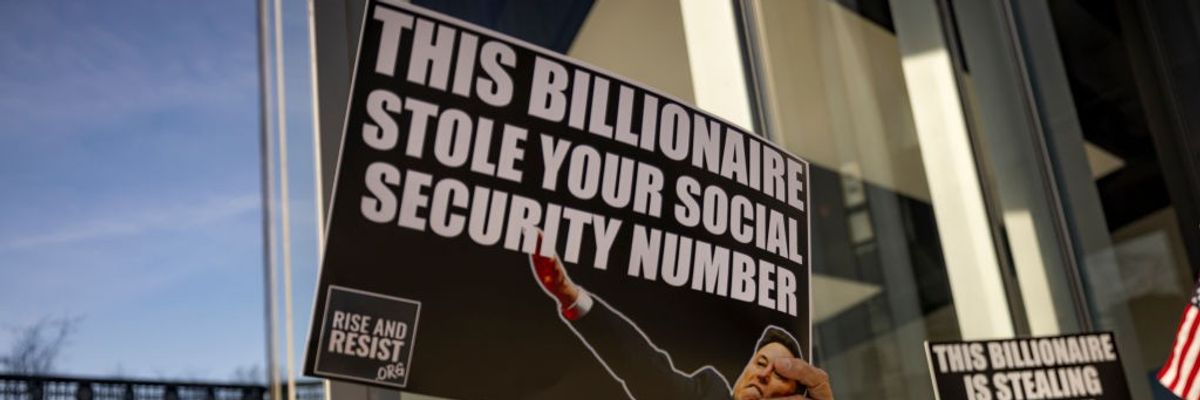
Protesters hold signs targeting billionaire Elon Musk at a Tesla dealership in New York City on March 13, 2025.
(Photo: Michael Nigro/Pacific Press/LightRocket via Getty Images)


Jessica Corbett
Mar 21, 2025
CONNON DREAMS

Defenders of the Social Security Administration on Friday blasted acting Commissioner Leland Dudek's threat to shut down the agency in response to a federal judge cutting off the Department of Government Efficiency's access to SSA data.

U.S. District Judge Ellen Hollander wrote Thursday that "the DOGE team is essentially engaged in a fishing expedition at SSA." She issued a temporary restraining order targeting affiliates of the government-gutting entity created by Republican President Donald Trump and led by Big Tech CEO Elon Musk, the richest person on the planet.

While the advocacy and labor groups behind the lawsuit celebrated the order from Hollander—who was appointed to the District of Maryland by former President Barack Obama—Dudek responded to the ruling with a threat to shut down the agency entirely.

"My anti-fraud team would be DOGE affiliates. My IT staff would be DOGE affiliates," Dudek told Bloomberg. "As it stands, I will follow it exactly and terminate access by all SSA employees to our IT systems."

"Now, like a child who didn't get his way, he is threatening to shut down Social Security."

Dudek—who is leading the SSA until the U.S. Senate decides whether to confirm Trump's nominee, former Fiserv CEO Frank Bisignano—said he would ask the judge to immediately clarify her order, adding: "Really, I want to turn it off and let the courts figure out how they want to run a federal agency."

Lee Saunders, president of the American Federation of State, County, and Municipal Employees (AFSCME)—which filed the suit with the Alliance for Retired Americans and the American Federation of Teachers—said in a Friday statement that "for almost 90 years, Social Security has never missed a paycheck—but 60 days into this administration, Social Security is now on the brink."

"Acting Commissioner Leland Dudek has proven again that he is in way over his head, compromising the privacy of millions of Americans, shutting down services that senior citizens rely on, and planning debilitating layoffs, all in service to Elon Musk's lies," he continued. "Now, like a child who didn't get his way, he is threatening to shut down Social Security. Rather than comply with a lawful court order, he wants to see millions of families, retirees, and disabled individuals go hungry, suffer, and potentially lose their homes all to curry favor with anti-worker billionaires. It's despicable."

"Even for this administration, this is a new low. Project 2025 didn't dare mention Social Security, but we always knew they would put it on the table," he added, citing a Heritage Foundation-led blueprint for remaking the government. "We've fought back efforts by anti-union extremists and billionaires to privatize and gut Social Security before, and we'll do it again. Workers paid into this program; it belongs to us."


Groups that are not part of the case also took aim at Dudek on Friday. Max Richtman, president and CEO of the National Committee to Preserve Social Security and Medicare, called the threat "to hold hostage" the earned benefits of over 70 million people "inexcusable" and "yet another example of the Trump administration's hostility to American seniors."

"Dudek is throwing a temper tantrum—claiming that if DOGE can't access American's data, neither can anyone else," he said. "No one in the federal government has the breadth of access to data that Elon Musk has demanded. Social Security employees' access is compartmentalized and only made available on a 'need-to-know' basis, and those with access to the data go through rigorous screening, training, and are subject to fines and/or jail time for violating this policy."

Richtman asserted that "Musk's continued effort to justify his actions by doubling down on thoroughly debunked claims of 'massive fraud' at SSA are being laid bare as a mere pretext for acquiring every American's personal information—which could then be used as weapons against anyone who disagrees with the Trump administration's actions."


Nancy Altman, president of Social Security Works, declared that "Dudek's leadership has been the darkest in Social Security's nearly 90-year history. He has sown chaos and destruction... His highest loyalty is to Elon Musk and Donald Trump, not to the beneficiaries that the agency is meant to serve. Singlehandedly, he has taken the security out of Social Security."

"Members of Congress who remain silent are complicit. The Trump-nominated commissioner, who will have his confirmation hearing next week, is no better. In fact, he proudly calls himself 'a DOGE person,'" she warned of Bisignano.

"Every member of Congress, Republicans and Democrats alike, must condemn the destruction of our Social Security system and demand that the Trump administration follow Judge Hollander's order," Altman added. "They must make it clear that no president—even one who thinks he is a king—can shut down our Social Security system."


'This is not right!' Elderly woman explodes at GOP senator over Social Security cuts


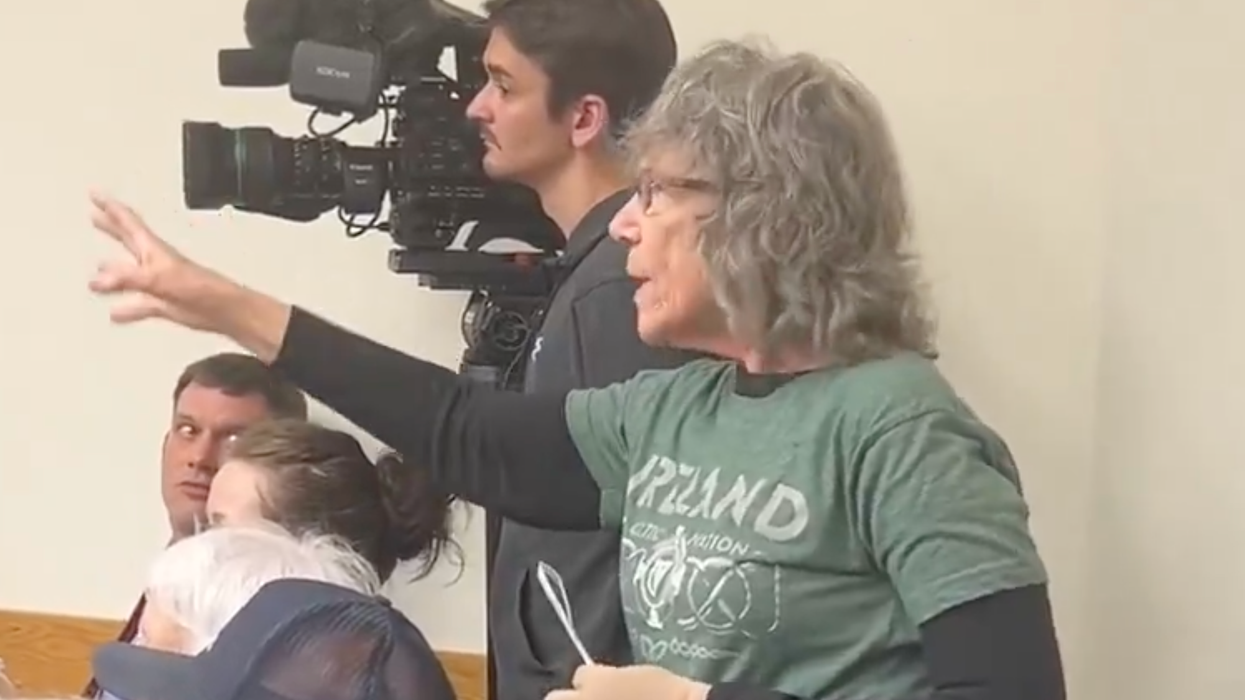
A woman asks a question to Sen. Chuck Grassley (R-Iowa) during a town hall on March 21, 2025 (Image: Screengrab via @IAStartingLine / X)

Carl Gibson
March 21, 2025
ALTERNET

The most tenured Senate Republican recently held a town hall in his solidly red state, and was confronted by angry constituents upset with his support of President Donald Trump's most controversial actions.

Iowa Starting Line reported that Sen. Chuck Grassley (R-Iowa) faced a combative crowd in Hampton, Iowa on Friday. The outlet posted videos of attendees grilling the Hawkeye State's senior U.S. senator over various topics, though many were primarily concerned about Tesla and SpaceX CEO Elon Musk's Department of Government Efficiency (DOGE) and its steep cuts to multiple federal agencies.

In one exchange, an elderly woman questioned Grassley about his support of DOGE's cuts to Social Security offices and staff. According to DOGE's "wall of receipts," leases on nearly two dozen Social Security offices across the country are not being renewed. Iowa Starting Line posted the video of the woman's question, in which she explained her concern over the mass firings within the Social Security Administration (SSA).

"That is not right!" The woman told Grassley. "We don't want people to call on the phone to change their direct deposit. Go to a local office. Try to get an appointment at a local office! Right now you're waiting a month. And were going to cut more staff? This is not right, and we do not want to see Social Security privatized."

Grassley pushed back on constituents' arguments that DOGE is violating the law, and said that Musk's effort is similar to what he had seen under two Democratic presidents during his time in the U.S. Senate. He noted that former President Bill Clinton once gave a speech in which he said: "The era of big government is over." Grassley also quoted former President Barack Obama, who had pledged in 2011 to root out "waste, fraud and abuse" in federal agencies. However, the crowd audibly disagreed.

"You don't find [waste, fraud and abuse] by just saying, 'OK, I'm gonna cut off your funding.' That's no way of finding fraud," one constituent said, to loud applause.

The Hampton town hall was the latest of Grassley's stops across Iowa in a tour of all 99 counties. Earlier this week, local ABC affiliate KCRG reported that a town hall in Dysart was also packed full of angry constituents who voiced concerns about the Trump administration and DOGE. Grassley acknowledged at the end of the town hall that "there were a lot of tough questions" and that "a lot of people are mad about what's going on in the Trump administration."

Watch the video below, or by clicking this link.


Amazon Rebuked for 'Reckless' Lawsuit Against US Product Safety Agency

"Amazon wants to eliminate the Consumer Product Safety Commission so it can sell dangerous, poisonous, and defective crap with no consequences," said one critic.


This photo shows Amazon's logo on the tech giant's Sunnyvale, California office.
(Photo: Smith Collection/Gado/Getty Images)

Brett Wilkins
Mar 21, 2025
COMMON DREAMS

Consumer advocates this week denounced a lawsuit filed by e-commerce giant Amazon against the federal agency tasked with promoting product safety and alerting the public to risks, a move that comes amid the Trump administration's war on government regulators.

Amazon's lawsuit, filed earlier this month in a Maryland federal court, claims that the U.S. Consumer Product Safety Commission (CPSC) is unconstitutional. The Seattle-based company—which raked in $638 billion in 2024 revenue—says it should not be held legally responsible for products sold on its site by third-party vendors.

"Amazon is suffering, and will continue to suffer, irreparable harm from being subjected to an order issued by an unconstitutionally structured agency," the company's complaint states.

"Let's be real: Amazon would gleefully sell products that could kill your kids for a 5-cent profit."

Last July, the five CPSC commissioners unanimously determined that Amazon is "a 'distributor' of products that are defective or fail to meet federal consumer product safety standards, and therefore bears legal responsibility for their recall" under the Consumer Product Safety Act (CPSA). More than 400,000 products were subject to the CPSC order, including "faulty carbon monoxide detectors, hairdryers without electrocution protection, and children's sleepwear that violated federal flammability standards."

In January, the CPSC issued a decision and order outlining steps Amazon must take "to notify purchasers and the public about hazardous products for which the commission determined Amazon was a distributor under the CPSA."

Critics allege that by suing the CPSC, Amazon is attempting to avoid responsibility for shipping dangerous products to its hundreds of millions of customers.

"Instead of demonstrating its commitment to consumer safety, Amazon has fought the CPSC every step of the way for more than three years, and now it's going to court," Consumer Reports director of safety advocacy William Wallace said this week. "The law is clear that Amazon is a 'distributor' in this case and must carry out a recall."


Wallace continued:
Amazon wants to be held blameless for the safety of products sold by third parties on its platform, which is bad enough—but what's even worse is that the company is attacking the legal foundation on which the CPSC rests. Amazon's suit suggests the company thinks the people of the United States would be better off without an independent, bipartisan safety agency to enforce our laws and protect consumers from dangerous products. We strongly disagree and condemn Amazon's reckless constitutional claims.

"It's absurd to suggest that because a company hosts a marketplace online it should be exempt from sensible requirements that help get hazardous products out of people's homes and prevent them from being sold," Wallace added. "The court should reject Amazon's arguments. Taking Amazon at its word would mean hazardous products slipping through the cracks, even when they are capable of injuring or killing people."

Wallace's remarks came a day after the CPSC issued warnings for products including a toddler playset due to what the agency says is a risk of serious injury or suffocation death, a mattress posing a fire risk, and a brand of liquid Benadryl whose packaging is not child-resistant.

Amazon and SpaceX—owned by Elon Musk, the de facto head of the Trump administration's Department of Government Efficiency—have also spearheaded lawsuits claiming the National Labor Relations Board, the federal agency tasked with protecting workers' rights, is unconstitutional.

The companies and their billionaire leaders have found an ally in U.S. President Donald Trump, whose administration has signaled that it will not defend the precedent set by Humphrey's Executor v. United States, a 1935 Supreme Court ruling protecting commissioners at independent federal agencies from being fired by the president at will, if it is challenged in court.


Georgetown University Law Center professor Victoria Nourse toldThe Washington Post this week that right-wing lawyers are emboldened by the administration's stance, describing lawsuits like those filed by Amazon and SpaceX as "little fires being lit all over Washington."

"What Trump wants and what the companies want is to get rid of all this regulation, period," Nourse added.
As Economic Indicators Point to Recession, Trump Moves to Hide Key Data From Public

"Unfortunately tossing a scarf over the GDP numbers doesn't change the fact that their policies have us careening toward a downturn."


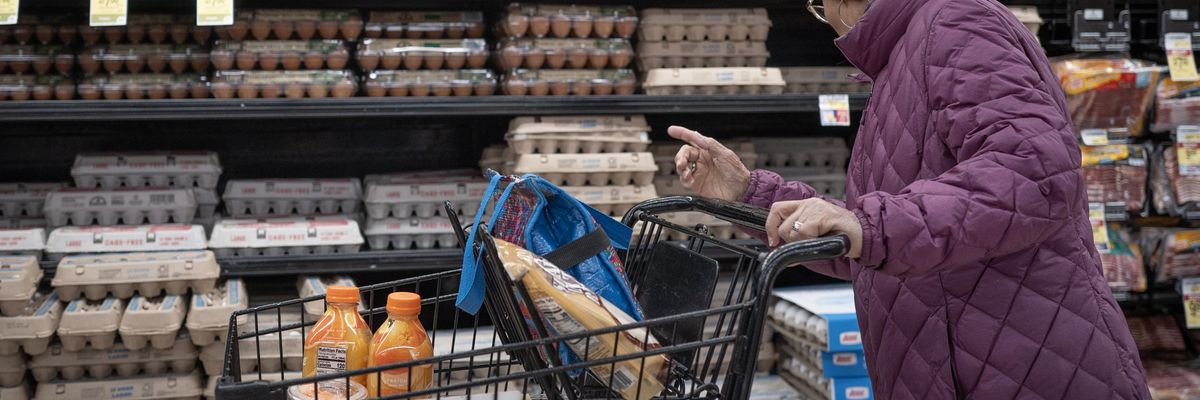
A customer shops for eggs at a grocery store on March 12, 2025 in Chicago, Illinois.
(Photo: Scott Olson/Getty Images)

Julia Conley
Mar 21, 2025
COMMON DREAMS

All signs are pointing to a coming recession as U.S. President Donald Trump imposes tariffs on close trading partners, oversees mass firings of civil servants, and pushes for cuts to public services—but by firing economists, advisers, and other experts tasked with advising federal agencies on economic shifts, the administration is working to ensure that the government and the public can't read those signs.

As Politicoreported Friday, experts serving on the Bureau of Labor Statistics' (BLS) Technical Advisory Committee were informed this week that they were no longer needed, leaving the BLS without a panel that has long advised the Labor Department on how economic changes can impact data collection.

A page for the committee was removed from the Labor Department's website, along with one that had information about the Data Users Advisory Committee, which has advised on how businesses and policymakers can use the agency's economic reports.

"It would be a bad sign for a software company to cancel all beta testing if you expect to keep making better software," Michael Madowitz, an economist at the Roosevelt Institute who served on the data users committee, told Politico. "This feels like the same sort of thing."

The dismissal of the advisers follows the disbanding by Commerce Secretary Howard Lutnick of another advisory board that has worked for years to ensure the government produces accurate data on economic indicators—the Federal Economic Statistics Advisory Committee (FESAC), which worked under the Commerce Department's Bureau of Economic Analysis.

"If laying off tens or hundreds of thousands of federal workers is going to drag down macroeconomic indicators in ways that are unhelpful to them, they're apparently quite willing to just rewrite definitions so they can insulate themselves to the extent possible from the fallout."

"Reduced transparency in official statistics is perhaps the most troubling aspect of disbanding FESAC," wrote Claudia Sahm, a former Federal Reserve economist, at Bloomberg on March 11. "Cutting off agency staff from external advisers creates an environment where political interference could occur much more easily—and go undetected. With political officials such as Lutnick arguing publicly that GDP should exclude government spending, it is especially important to have external, independent experts."

On Wednesday, the Federal Housing Finance Authority also placed workers who helped compile its home price index on administrative leave.

The dismantling of much of the federal government's data analysis apparatus comes amid the illegal firing of the two Democratic members of the Federal Trade Commission just after one called on FTC Chair Andrew Ferguson to take 10 steps to lower prices for U.S. consumers.

"This administration wants to write its own narrative," Stephanie Kelton, a professor of economics and public policy at Stony Brook University, toldThe Nation after the disbanding of FESAC. "If laying off tens or hundreds of thousands of federal workers is going to drag down macroeconomic indicators in ways that are unhelpful to them, they're apparently quite willing to just rewrite definitions so they can insulate themselves to the extent possible from the fallout."

The latest advisory committee firings this week came as the Federal Reserve projected higher unemployment, faster inflation, and slower growth—or "stagflation." Economic growth this year was projected to be 2.1% in the last weeks of former President Joe Biden's administration; the Fed now expects 1.7% growth, as well as the unemployment rate rising to 4.4%.

Other negative economic indicators include the largest manufacturing decline in nearly two years, according to the New York Federal Reserve's Manufacturing Index, and declining consumer confidence, with bars and restaurants reporting their largest sales decline last month since February 2023.

Members of Trump's own administration are increasingly admitting that a recession could be in the near future, but as Lindsay Owens, executive director of progressive think tank Groundwork Collaborative, said Friday, "the Trump administration is testing whether you can prevent a recession with a disappearing act."

"Unfortunately tossing a scarf over the GDP numbers doesn't change the fact that their policies have us careening toward a downturn," said Owens. "The fact that they are ramping up their obfuscation tactics confirms it."
Today's Social Media Are No Longer Safe for Journalism

This existential moment calls for a global social media platform for independent news media.


A serious issue for independent media that must be faced, writes Martin, "is that most social media platforms are increasingly antithetical to freedom of the press."
(Photo by Anna Barclay/Getty Images)


Christopher R. Martin
Mar 21, 2025
Common Dreams


Hannah Arendt, the German-American political theorist who studied totalitarian regimes, noted in 1974 that “The moment we no longer have a free press, anything can happen. What makes it possible for a totalitarian or any other dictatorship to rule is that people are not informed; how can you have an opinion if you are not informed?”

Fifty years later, we have nearly reached that moment. This is existential for all independent (i.e., not allied with a political party or authoritarian regime) news organizations and their ability to reach audiences in the social media space.

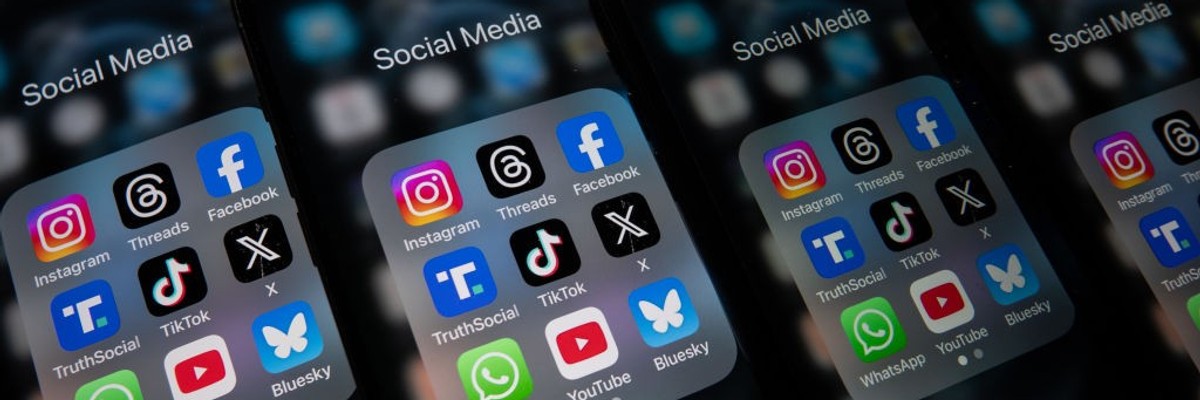
Social media like Twitter (now X) and Facebook became important environments for the news media to enter two decades ago because they are where millions of people congregate online. For journalism organizations, the goal has been to post interesting stories and get referrals—those users who click through to the news site and boost web page views.

Yet, that relationship has fallen apart. Ultimately, tech companies are not interested in helping journalism or aiding civil discourse. The annual Reuters Institute for the Study of Journalism digital news report for 2025 notes “big falls in referral traffic to news sites from Facebook (67%) and Twitter (50%) over the last two years.”

The even bigger problem for independent news media is that most social media platforms are increasingly antithetical to freedom of the press.

There are millions of people in the social media space, and journalism shouldn’t leave them behind.

Since Elon Musk bought Twitter for $44 billion in 2022 and turned it into X, it’s become the disinformation-drenched social platform of the Donald Trump administration. This year, genuflecting to Trump, Meta (corporate parent of Facebook, Instagram, Threads, and WhatsApp) announced it would drop its independent fact-checking program in the U.S. in favor of an anemic, crowd-sourced “community notes” system, which has already been a failure at X. Another popular news platform, TikTok, has serious disinformation problems, security liabilities and an uncertain future.

Several news organizations around the globe decided they won’t take it anymore. NPR stopped posting on X in 2023, after the platform insisted on designating it as “U.S. state-affiliated media.” More recently, The Guardian announced it would stop posting on X, concluding it is “a toxic media platform.” Dagens Nyheter, the Swedish newspaper of record, Le Monde, the French newspaper of record, and La Vanguardia, the leading newspaper in Barcelona, quit X, too. The European Federation of Journalists, representing about 320,000 journalists, did the same. “We cannot continue to participate in feeding the social network of a man who proclaims the death of the media and therefore of journalists,” EFJ president Maja Sever wrote.

But, simply quitting X only eliminates the worst option and settles for the slightly less bad options that remain.

It doesn’t have to be this way.

There are millions of people in the social media space, and journalism shouldn’t leave them behind. For example, 54% of Americans get their news often or sometimes from social media. Adults 18-29 are the heaviest users of social media platforms. They deserve a social media platform that respects and informs them.

That’s why legitimate news media should band together and regain the autonomy they ceded to third-party social media. Independent news organizations–large and small–should cooperatively create and control their own social media platform that amplifies news and public information, encourages links to member news organizations, and excludes misinformation and disinformation.

Journalism has been so beaten down by big tech that it’s hard to imagine a different way of doing things.

The model for this is something almost as old as modern journalism, too: The Associated Press, an international cooperative nonprofit news agency. As the AP tells its founding story, “In 1846, five New York City newspapers funded a pony express route through Alabama to bring news of the Mexican War north faster than the U.S. Post Office could deliver it.” The problem with social media is similar–if it’s not working, work collectively to build another way. And, like the AP, it could be a global cooperative.

Journalism has been so beaten down by big tech that it’s hard to imagine a different way of doing things. But, a news-controlled social media platform could develop features that would demonstrate the multimedia ability of news organizations and enable the audience to create social connections in new and entertaining ways. Users could adjust their feeds to focus on local, regional, national, or international news, or whatever mix and topics makes sense to them, so all legitimate news organizations of any size get to be part of the platform.
Which news organizations and journalists could be part of such a social media cooperative?

Reporters Without Borders, the international journalism nonprofit, already has a powerful statement for fostering global information spaces for the common good, where “information can only be regarded as reliable when freely gathered, processed and disseminated according to the principles of commitment to truth, plurality of viewpoints and rational methods of establishment and verification of facts.” This would enable a broad range of journalism organizations to participate, and draw a bright line to exclude media propagating disinformation.

The challenge of creating a social media space for journalism is bigger than any single news organization can handle.

From a business perspective, journalism organizations, not third-party social media, would retain analytic data and any advertising revenue. The social media app could be free for any person with a subscription to any member news organization (e.g., a local newspaper, a national magazine of opinion, or digital news site), or with a nominal subscription fee, to provide built-in authentication and help prevent bot accounts. There are also strong global standards for content moderation through the International Fact-Checking Network, which was formed in 2015 and has a nonpartisan code of principles and more than 170 fact-checking groups around the world.
What would such a social media platform cost to create?

Clearly, $44 billion is too much. Bluesky, which has gained favor as an X alternative in recent months, offers a case for comparison. It started internally with just a handful of workers at then-Twitter in 2019. In the past two years, it’s received $23 million in seed funding to get it where it is today.

Bluesky may be the current favorite of many journalists, and has many advantages over other social media platforms, but its worthy purpose to encourage a less toxic space for public conversation does not primarily serve the goals of globally disseminating independent journalism.

Collectively building a nonprofit, cooperative global news-based social media platform would put verified news back in the center of public discourse.

The challenge of creating a social media space for journalism is bigger than any single news organization can handle. There has been talk for several years about Europe having its own social media platform to highlight democracy, diversity, solidarity, and privacy, and to avoid “foreign information manipulations and interference” from platforms based in the U.S. that have fallen into Trump’s power orbit and China-based platforms as well.

But, a nongovernmental platform, with a consortium of democracy-minded news organizations, may be most resistant to nationalisms and authoritarianism. The project could be built on an open-source structure like ActivityPub (the infrastructure behind Mastodon) or the AT Protocol (behind Bluesky), which would give more power to users.Collectively building a nonprofit, cooperative global news-based social media platform would put verified news back in the center of public discourse. The alternative is the independent press’s passive acceptance of whatever social media ecosystems Silicon Valley plutocrats or authoritarian governments decide to make, which is bad news for a free press.

Our work is licensed under Creative Commons (CC BY-NC-ND 3.0). Feel free to republish and share widely.


Christopher R. Martin is a professor of digital journalism at the University of Northern Iowa and author of No Longer Newsworthy: How the Mainstream Media Abandoned the Working Class, winner of the C.L.R. James Award.
Full Bio >
Neither Snow, Nor Rain, Nor Sleet, Nor DOGE


Help family farmers and other rural folks defend a strong public U.S. Postal Service from the Trump administration’s attacks.


Three United States Postal Service (USPS) mail trucks are parked in front of the post office in Danville, Pennsylvania.
(Photo: Paul Weaver/SOPA Images/LightRocket via Getty Images)

John Peck
Mar 22, 2025
Common Dreams

Since 1775 when Benjamin Franklin became the very first postmaster general, the United States Postal Service has faithfully fulfilled the many lofty goals that are now inscribed outside the entrance of the U.S. Postal Museum in Washington D.C.: “Bond of the Scattered Family; Enlarger of the Common Life; Carrier of News and Knowledge; Instrument of Trade and Commerce.”

Affordable universal reliable communication is not something many people can take for granted. In fact, the USPS was such a great American idea (like our national park system) that it has since been replicated across the globe. Under the pretense that the USPS is “bankrupt,” though, President Donald Trump and other neoliberal free marketeers are hellbent on imposing an austerity program and ultimately privatizing this vital public service.

During Trump’s last stint in the White House, USPS was forced to shutter half of its mail processing centers, leading to longer delivery times, and 10% of the nation’s post offices, mostly in rural towns, were put on the auction block. Despite such, the USPS continues to have some of the highest public approval ratings of any federal government agency. After all, who else can you trust to make sure you get your seed orders or drug prescriptions in a timely fashion?

Now is the time to speak up and insure the proud iconic eagle of the USPS is not replaced by some anemic vulture version.

How did this quite preventable (and orchestrated) mugging of the USPS come about? Well, one needs to go back a few decades when the government first opened the door for corporate competitors to undermine the viability of the USPS. At just 73 cents to deliver a first class letter, USPS rates remain among the lowest in the industrialized world. Given the surge in packages, accelerated by the pandemic, private outfits like Fedex and Amazon are now allowed to mooch off the USPS’ amazing efficiency to help deliver their own packages (saving themselves up to 75%). Contrary to some naysayers, the USPS does not get a dime from U.S. taxpayers—it provides a valuable public service at cost to consumers. So attacks on the USPS claiming it is “horribly wasteful” are just flat out wrong.

The USPS is also hamstrung from taking advantage of other ways to expand its services that many people, especially rural folks, desperately need. For example, the USPS still offers money orders, but many other countries’ postal systems offer a much wider range of popular financial services such as checking and savings accounts, even low-interest loans. One recent study found that the USPS could earn an extra $8-9 billion per year just by providing basic banking options to the millions of Americans who now subsist on the fringes of the financial system. It is no surprise that Wells Fargo is drooling over the possible demise of USPS (as revealed in a recently leaked internal memo), since they hardly want any other option for those now subject to their predatory lending practices.

Now is the time to speak up and insure the proud iconic eagle of the USPS is not replaced by some anemic vulture version. Family Farm Defenders is among dozens of organizations that have joined the Grand Alliance to Save Our Public Postal Service. And just like many family farmers rely upon cooperatives for their collective bargaining against agribusiness, postal workers also deserve to have their labor rights respected as fully unionized federal employees. Please contact your elected officials to insure the future of USPS as a vital public good, and next time you are at the post office thank the workers for their essential service! As the unofficial motto of the USPS goes: “Neither snow, nor rain, nor heat, nor gloom of night stays these couriers from the swift completion of their appointed rounds.” Neither should DOGE!


Our work is licensed under Creative Commons (CC BY-NC-ND 3.0). Feel free to republish and share widely.


John Peck is the executive director of Family Farm Defenders.
Full Bio >