Sunday, March 23, 2025

Op-Ed: 
The F35 kill switch idea did more damage than a real kill switch. Then they made it worse


By Paul Wallis
DIGITAL JOURNAL
March 22, 2025


F-35: U.S. Air Force photo by Airman 1st Class Zachary Foster — CC0 1.0

The F35 kill switch was something nobody wanted to think about. According to the Pentagon, it doesn’t exist. Nor should it.

But imagine being stupid enough to create the idea at all.

A real distrust of American weapon systems could kill the entire sector. Back this up with a very sincere distrust of American politics and “personalities” and you’re losing your market entirely.

Particularly now, when America is barely on speaking terms with the rest of the world.

The world is that round thing with all those other people in it, for those suffering from American geography.

Just so you know.

During the Cold War, America made much of “Ivan the Terrible Salesman” and Russia’s ham-fisted arms business blunders.

Now they’re doing the same thing themselves with hopelessly inept diplomacy and a truly grotesque series of statements about annexing Canada, buying Greenland, invading Panama, etc, etc.

Then there’s the fun bit about ultra-annoying your allies systematically from day one. That’s working well.

It’s a bad case of American exceptionalism gone hyper-gaga. The world has taken serious exception.

The F35 kill switch idea is a case in point.

What if you did have a kill switch?

What if your ever-increasing supply of enemies went looking for one?

What if they couldn’t find one, and decided to invent one?

Could you be any stupider?

That’s why the idea is dangerous. There are any number of ways of putting a plane out of action, but an entire class of fighters, and remotely? It’s theoretically doable, although it’d be quite a feat of engineering.

It’s also a very big ticket big money item in the US defense sector, put at risk by three words.

Any other outbreaks of genius? Or do we have to wait to see how the wannabe roulette wheel of US defense policies pans out?

Why did the F35 kill switch have any credibility at all? The main reason is extreme distrust of American politics. Canada backed out of its F35 purchases for that reason. It’s hard to believe a clumsier or stupider approach to a longtime close ally.

The F35 is in service with multiple air forces. These very high-maintenance aircraft need enough pampering without bonus tantrums or any other issues. They’re expensive. Before they went into service, I was calling them a “flying credit card”. They’re still expensive,

Now just suppose someone other than the Lone Musketeer aka “All for One, None for All” went on a cost-cutting rampage. How about all those expensive American weapons? Look good on a budget as “savings”? What a coincidence.

Suppose competitors who design their aircraft like multiple countries in Europe and Japan did a few quick sums about producing their aircraft? See any bottom line issues for the American military-industrial complex?

This verbose, thoughtless idiocy is actually capable of undercutting the American monopoly on high-end military tech even if it takes a while. What if they very unsurprisingly put export tariffs on critical materials? Or simply refuse to export? Any thoughts, geniuses?

It took three words to put the whole US aerospace sector in serious question. Have you ever considered shutting up?

________________________________________________

Disclaimer
The opinions expressed in this Op-Ed are those of the author. They do not purport to reflect the opinions or views of the Digital Journal or its members.


Last of six foreign hikers missing in Philippines rescued

By AFP
March 22, 2025


Philippine Army personnel found the hikers in a mountainous area thick with vegetation - Copyright VALENCIA POLICE STATION/AFP Handout

Four foreign hikers who had been missing for days in a mountainous area of the central Philippines were rescued Saturday, local authorities said, a day after their two companions were found safe.

The six-man group, which included German, British, Russian and Canadian nationals, had set out on Wednesday for what was to be a four-hour excursion in an area of Negros Oriental province officials said was hit by a downpour.

“The army rescuers found them in the vicinity of the Silab hydropower plant,” said Jose Lawrence Silorio, a rescue official in the municipality of Amlan, near the province’s Balinsasayao Twin Lakes Natural Park.

Police identified the men as Germans Aldwin Fink, 60, and Wolfgang Schlenker, 67; Russian Anton Chernov, 38; and 50-year-old Canadian Terry De Gunten.

Philippine Army personnel found the hikers in a mountainous area thick with vegetation, said investigator Leo Gil Villafranca.

“They told the army they got lost due to the fog,” he said, adding all the hikers were residents of the province.

The four were discovered at 9:44 am (0144 GMT), according to local authorities.

“Overall, they are OK, but they had minor abrasions. We wrapped one of them in a blanket because he was feeling cold. But he was eventually able to stand up on his own,” Silorio said.

“They told us they survived by eating edible plants in the forest,” he added.

Silorio said the group was found about 10 kilometres (6.2 miles) from where fellow hikers Torsten Martin Groschupp, 58, and Alexander Radvanyi, 63, were discovered Friday morning.

An image posted to a police Facebook page showed De Gunten, his legs bloodied, talking to rescuers inside an ambulance while Chernov lay on a stretcher wrapped in a blanket.

Police said Friday that the weather had likely played a role in the group’s becoming lost on what they said was a “difficult” trail in a mountainous area the men were tackling without a guide.

“It was rainy at the time and that led to zero visibility,” said Valencia police officer Henry Japay, adding there was no cell phone reception in the area.

“There’s a big possibility that they stopped and took shelter when it started raining.”
Pakistan detains leading Baloch rights activist: police

BALOCHISTAN IS A COUNTRY


By AFP
March 22, 2025


Pakistan's ethnic minority activist Mahrang Baloch has long campaigned for the Baloch ethnic group - Copyright AFP -

Pakistan detained a leading female Baloch rights activist on Saturday for holding a sit-in in southwestern Balochistan at which three protesters were also killed, police said.

Mahrang Baloch, one of Pakistan’s most prominent human rights advocates, has long campaigned for the Baloch ethnic group from the southwestern province of Balochistan, which alleges being subjected to extrajudicial harassment, arrests and killings by Islamabad.

The Pakistan government says its forces are fighting separatist militants who target state forces and foreign nationals in the mineral-rich province that borders Afghanistan and Iran.

“She, along with 17 other protesters, including 10 men and seven women, has been arrested,” a senior police official told AFP on condition of anonymity, as he was not authorised to speak to the media.

“It is currently being assessed what charges should be filed against them,” he added.

The protesters had been holding a sit-in on Friday outside the University of Balochistan, demanding the release of members of their support group, whom they allege had been detained by security agencies.

The Baloch Yakjehti Committee, a support group led by Baloch, said she was arrested along with other protesters in a “brutal pre-dawn crackdown by state security forces”.

The confrontation left at least three protestors dead a provincial government spokesman said, with both sides blaming each other.

– ‘Cease to use force’ –

It comes after the province saw a dramatic train siege this month that officials said resulted in around 60 deaths, half of whom were separatists behind the assault.

The assault was claimed by the Baloch Liberation Army (BLA), one of several separatist groups that accuse outsiders of plundering the province’s natural resources.

“The authorities must immediately cease to use force against peaceful protestors and release those arbitrarily detained,” demanded the independent Human Rights Commission of Pakistan (HRCP) in a statement.

“The use of disproportionate and unlawful kinetic means by the state must cease immediately to pave the way for a purposeful political solution,” it added.

Baloch was barred from traveling to the United States last year to attend a TIME magazine awards gala after being named on the 2024 TIME100 Next list of “rising leaders”.

She began her activist career at the age of 16 in 2009 when her father went missing in an alleged “enforced disappearance”. His body was found two years later.

Protests and advocacy among the Baloch are generally led by women, who say their male counterparts have suffered the worst in a decades-long state crackdown.


More than 340 held after mass protests in Turkey

By AFP
March 22, 2025

The demonstrations have turned into Turkey's biggest street protests in more than a decade - Copyright POOL/AFP Ng Han Guan

More than 340 people were arrested following Turkey’s biggest street protests in over a decade sparked by the detention of Istanbul’s powerful opposition mayor, a minister said Saturday.

Hundreds of thousands of people hit the streets across the country late Friday, sparking clashes with riot police in Turkey’s three largest cities: Istanbul, the capital Ankara and the western coastal city of Izmir.

Interior Minister Ali Yerlikaya said “343 suspects were caught in the protests that took place in Istanbul, Ankara, Izmir, Adana, Antalya, Canakkale, Eskisehir, Konya and Edirne,” warning that those who sought to sow “chaos and provocation.. will definitely not be tolerated!”

It was the third straight night that protesters rallied in support of Imamoglu — President Recep Tayyip Erdogan’s biggest political rival, whose arrest Wednesday triggered a massive show of defiance that spread from Istanbul to more than 50 of Turkey’s 81 provinces.

During the evening, fierce clashes broke out between protesters and riot police, who fired tear gas, rubber bullets and water cannon to disperse them in Istanbul, Ankara and Izmir.

After spending his third night in custody, Imamoglu — who was arrested just days before the CHP was to name him their candidate for the 2028 presidential race — began speaking to police on Saturday morning in connection with the “terror” probe, party sources told AFP.

He was then expected to appear before prosecutors at Caglayan courthouse at 1800 GMT to be questioned in both the graft and the terror probes, they said.

Already named in a growing list of legal probes, Imamoglu — who was resoundingly re-elected last year — has been accused alongside six others of “aiding and abetting a terrorist organisation” — namely the banned Kurdish militant group PKK.

He is also under investigation for “bribery, extortion, corruption, aggravated fraud, and illegally obtaining personal data for profit as part of a criminal organisation” along with 99 other suspects.

– Quizzed for six hours –

He was questioned by police for six hours Friday about the graft allegations, the party said.

“Mr Imamoglu denies all the charges against him,” one of his lawyers, Mehmet Pehlivan said.

“The detention was aimed at undermining Mr Imamoglu’s reputation in the eyes of society,” he wrote on X early on Saturday, saying both probes were “based on untrue allegations” and “a violation of the right to a fair trial”.

Demonstrators across the country were due to rally again on Saturday night.

In a message on X sent via his lawyers, Imamoglu said he was “honoured and proud” of the demonstrators who hit the streets in more than 50 of Turkey’s 81 provinces, saying they were “protecting our republic, our democracy, the future of a just Turkey, and the will of our nation”.

Addressing the crowds outside City Hall in Istanbul on Friday night, Ozgur Ozel, who heads the main opposition CHP, said 300,000 people had joined the demonstration in defiance of a protest ban and a sharp warning from Erdogan that Turkey would not tolerate “street terror”.

Speaking Friday, Erdogan had fired a warning shot across Ozel’s bows, accusing him of “grave irresponsibility” in remarks echoed by ministers and other officials, raising the prospect that Ozel too could face legal sanction.

“Those who provoke our citizens and cause them to clash with our security forces are committing a clear crime.. There is no way this dirty scheme can be allowed!” wrote Istanbul governor Davut Gul on X on Saturday, warning those responsible would be tried in court.

The move against Imamoglu has hurt the Turkish lira and financial markets, with the stock exchange’s BIST 100 index closing down nearly eight percent on Friday.
Turkey won’t surrender to ‘street terror’, Erdogan warns protesters


By A FP
March 21, 2025


Protests over the Istanbul mayor's arrest have spread to Ankara and other provinces - Copyright AFP Roslan RAHMAN

Hazel WARD

President Recep Tayyip Erdogan said Friday the Turkish authorities would not be cowed by “street terror” after days of unrest over the arrest of Istanbul’s powerful opposition mayor, Ekrem Imamoglu.

“Turkey will not surrender to street terror,” Erdogan said as the leader of the main opposition CHP called for nationwide protests later on Friday over a move it has denounced as a “coup”.

“Let me say it loud and clear: the street protests that the CHP leader has called for are a dead end,” Erdogan warned.

The 53-year-old mayor — Erdogan’s main political rival — was arrested on Wednesday, just days before he was to be named the CHP’s candidate for the 2028 presidential race.

The move sparked two days of protests that began in Istanbul and quickly spread to at least 32 of Turkey’s 81 provinces, according to an AFP count.

CHP leader Ozgur Ozel has called a third nightly protest outside Istanbul City Hall at 1730 GMT, urging demonstrators to hit the streets across Turkey at the same time, despite the justice minister warning such calls were “unlawful and unacceptable”.

On Friday, Istanbul’s governor closed off Galata Bridge and Ataturk Bridge, which cross the Golden Horn estuary and are the main access routes to the historic peninsula where City Hall is located.

Thousands have defied a protest ban in Istanbul, gathering nightly outside City Hall. On Friday, the authorities extended the ban to the capital Ankara and the western coastal city of Izmir.

Police initially showed restraint but on Thursday fired rubber bullets and teargas as they scuffled with students in Istanbul and Ankara, AFP correspondents said.

So far, at least 88 protesters have been arrested, Turkish media said, with Interior Minister Ali Yerlikaya saying 16 police officers had been hurt.

Police had also detained another 54 people for online posts deemed as “incitement to hatred”, he said.


– ‘Opposition drama’ –


Late Thursday, Erdogan shrugged off the unrest — Turkey’s worst street protests in years — as little more than “the opposition’s dramas”.

But he upped the ante with his speech on Friday, accusing the opposition leader of “grave irresponsibility”.

Ozel had on Thursday vowed that the protests would continue.

“From now on, no one should expect CHP to do politics in halls or buildings, we’ll be on the streets and in the squares,” he told the crowd at City Hall.

The pro-Kurdish opposition DEM party also said it would join Friday’s Istanbul rally.

Officials said Imamoglu and six others were under investigation for “aiding a terrorist organisation” — namely the banned Kurdish PKK militant group. He is also under scrutiny in a graft probe involving about 100 other suspects.

Investigators reportedly began questioning Imamoglu on Friday afternoon, local media reported, saying all of the suspects were due in court on Sunday morning.

– Primary –

Despite Imamoglu’s detention, the CHP vowed it would press ahead with its primary on Sunday at which it would formally nominate him as its candidate for the 2028 race.

The party said it would open the process to anyone who wanted to vote, not just party members, saying: “Come to the ballot box and say ‘no’ to the coup attempt!”

Observers said the government could seek to block the primary to prevent a further show of support for Imamgolu.

“If a large number of people show up and vote for Imamoglu, it will further legitimise him domestically,” Gonul Tol, head of the Turkish studies programme at the Washington-based Middle East Institute, told AFP.

“It could really move things in a direction that Erdogan doesn’t want.”

Restrictions on social media and internet access that had been in place since Imamoglu’s arrest were lifted by Friday morning, said internet access monitor EngelliWeb.

The move against Imamoglu has dealt a heavy blow to the Turkish lira, and on Friday the BIST 100 stock exchange was trading lower, shedding 6.63 percent shortly after 1200 GMT.

In Turkey, a judge orders the incarceration of the opposition mayor of Istanbul

A judge on Sunday ordered the incarceration for "corruption" of Istanbul opposition mayor Ekrem Imamoglu, whose arrest on Wednesday sparked a wave of protests in Turkey, one of his lawyers told AFP. Other co-defendants of the mayor, including one of his close advisers, have also been imprisoned, according to Turkish media.


Published : 23/03/2025
By: FRANCE 24    

Istanbul Mayor Ekrem Imamoglu addresses supporters outside the Istanbul Courthouse, January 31, 2025. © Emrah Gurel, AP archives

Four days after his arrest, which sparked a wave of protests in Turkey, a judge on Sunday (March 23rd) ordered the imprisonment of Istanbul's opposition mayor Ekrem Imamoglu for "corruption", one of his lawyers told AFP.

Also prosecuted for "terrorism", Ekrem Imamoglu, President Recep Tayyip Erdogan's main rival, was brought on Saturday evening with 90 of his co-defendants to the Istanbul court of Caglayan, protected by a very large police force, before being heard twice during the night.

The Republican People's Party (CHP, social democratic), the main opposition force to which the mayor of Istanbul belongs, denounced "a political coup d'état".

The court ordered on Sunday morning the incarceration of other co-defendants of the mayor, including one of his close advisers, according to Turkish media.

Tens of thousands of people gathered in front of Istanbul City Hall for the fourth consecutive evening in response to the opposition's call to support Ekrem Imamoglu, who denounced "immoral and baseless" accusations against him.

À lire aussiArrestation d'Ekrem Imamoglu : "Erdogan ne veut plus voir le moindre opposant politique"
Vague de protestation d'une ampleur inédite

Des manifestants ont passé la nuit à l'intérieur de la mairie, certains tentant de trouver le sommeil sur des chaises disposées dans le hall du vaste bâtiment en attendant d'être fixés sur le sort du maire, a constaté un photographe de l'AFP.

Pour tenter de prévenir des troubles, le gouvernorat d'Istanbul a prolongé l'interdiction de rassemblements jusqu'à mercredi soir et annoncé des restrictions d'entrée dans la ville aux personnes susceptibles de participer à des rassemblements, sans préciser comment il les mettrait en œuvre.

L'accusation de "soutien à une organisation terroriste" contre Ekrem Imamoglu, figure du CHP, fait redouter à ses soutiens son remplacement par un administrateur nommé par l'État à la tête de la plus grande ville du pays.

Depuis mercredi, la vague de protestation déclenchée par son arrestation s'est répandue à travers la Turquie, atteignant une ampleur inédite depuis le grand mouvement de contestation de Gezi parti de la place Taksim d'Istanbul, en 2013.

Rallies took place in at least 55 of Turkey's 81 provinces, more than two-thirds of the country, according to a count by AFP on Saturday. The protests have led to hundreds of arrests in at least nine cities across the country, according to authorities.

To be readEkrem Imamoglu, mayor of Istanbul and champion of the opposition to President Erdogan
Erdogan vows not to give in to 'street terror'

"Just as people took to the streets to support Erdogan during the July 15 (2016) coup, we are in the streets to support Imamoglu," Aykut Cenk, 30, told AFP on Saturday night. "We are not the enemies of the state but what is happening is illegal," he added, waving a Turkish flag in front of the Istanbul court in Caglayan where the mayor was being heard.

Paris and Berlin as well as the mayors of several major European cities had also condemned the arrest of Ekrem Imamoglu on Wednesday.

In response to the protests, President Erdogan, who himself was mayor of Istanbul in the 1990s, vowed not to give in to the "terror of the street".

Ekrem Imamoglu, 53, became Erdogan's bête noire by taking the country's economic capital from the head of state's Justice and Development Party (AKP, Islamo-conservative) in 2019, which had kept control of Istanbul with his camp for twenty-five years.

The opposition mayor, triumphantly re-elected in 2024, was initially scheduled to attend his inauguration on Sunday as his party's candidate for the next presidential election, scheduled for 2028.

The CHP decided to maintain the organisation of the primary, which started at 8 a.m. local time (5 a.m. GMT), and called on all Turks, even those who are not registered with the party, to take part.

With AFP


Climate priority 2025: Focal points for the remaining year ahead


By Dr. Tim Sandle
March 21, 2025
DIGITAL J0URNAL


A floating solar energy farm on the Cottbuser Ostsee lake in eastern Germany -- the EU hopes to strengthen supply lines for green technologies, like solar and wind power, chips and pharmaceutical ingredients - Copyright AFP/File Ian Maule

Following the election of Donald Trump, climate change remains a pressing issue. Last year was the hottest on record – for the first time global temperatures exceeded 1.5 degrees Celsius (2.7 degrees Fahrenheit) above pre-industrial levels.

With the pace of climate change accelerating, several critical trends are set to shape the global agenda in the year ahead.

Digital Journal has heard from Michael Jarvis, Executive Director of the Trust, Accountability, and Inclusion Initiative, to look at the important developments ahead in relation to the global climate and where political action is necessary.

Critical Minerals

Transitioning from fossil fuels to clean energy requires a significant increase in critical minerals, which are essential for technologies like wind turbines, solar panels, and electric vehicles. Many of these resources are found on indigenous lands and in developing countries, raising important questions about equity and sustainability.

Jarvis explains how countries like Indonesia are prioritizing critical minerals production and processing and pushing for a greater share of revenues. He emphasizes the importance of ensuring that in 2025, resource-rich countries and local communities benefit equitably from mineral extraction, turning these resources into engines for inclusive growth and sustainable development.

Accountability Gaps in Climate Finance

At last year’s UN climate talks in Baku, wealthy nations pledged $300 billion annually to combat climate change—a figure that falls significantly short of the over $1 trillion requested by developing nations.

Jarvis sheds light on the systemic challenges that hinder the fulfilment of these financial commitments and highlight the urgent need for transparent, inclusive and accountable ways to deliver and spend climate finance.

Impact of a Trump Presidency on the International Climate Agenda and COP30

With Donald Trump’s “America First” policies poised to shift incentives at home, but also undermine UN-backed initiatives on climate change and development, Jarvis considers the implications for multilaterals and negative impact upon Global South countries.

The signs for the agreements around COP30 look bleak.

COP30: The “Indigenous Peoples” COP in Brazil

COP30, hosted in Brazil towards the end of 2025, is set to spotligh indigenous leadership and activism, with a strong focus on protecting the Amazon—a region vital to global climate health. The main environmental concerns include climate change, nuclear energy and sustainability.

Jarvis says this landmark conference underscored the critical role of civil society in driving systemic change and ensuring inclusive solutions to the global climate crisis.

Financing for Development (FfD4) and Climate Action

The Fourth International Conference on Financing for Development (FfD4) takes place in Juhe 2025 and it presents a pivotal opportunity for world leaders to address the $4.2 trillion financing gap needed to achieve the Sustainable Development Goals (SDGs).

The conference concerns the ongoing process to align financing flows and policies with economic, social, and environmental priorities.
Freight’s carbon problem: U.S. set for huge rise in emissions in 2025


By Dr. Tim Sandle
DIGITAL JOURNAL
March 22, 2025


Trucks queue in Tijuana near the Mexico-US border - Copyright AFP Guillermo Arias

U.S. truck freight emissions are projected to rise by 28 million metric tons in 2025. In total, 392 million metric tons of carbon dioxide was emitted in total by U.S. truck freight in 2023, which is predicted to increase by 7 percent in 2025 to 420 million metric tons.

Freight is a major contributor to emissions, and trucks are the fastest-growing source, significantly contributing to air pollution and emission intensity which is exacerbated by traffic congestion and idle vehicles.

To derive at these figures, InTek Logistics analysed Federal Highway Administration’s data to identify the most delayed freight corridors and highest-emission truck routes to calculate the highest-emission state-to-state truck freight routes per year.

The predicted rise in US emissions is concerning, as 28 million metric tons is equivalent to:

• Adding over 6 million cars to the road.
• 370,667 tanker trucks worth of gasoline.
• 5,835,079 homes’ electricity for one year.

According to U.S. government data, transportation accounts for the largest portion (28 percent) of total U.S. greenhouse gas emissions, 80 percent of which is generated by both light and medium-heavy duty vehicles. As a result of this, shippers are under increasing pressure to reduce their environmental impact.Trucks being loaded with coal in Lianyungang, in eastern China’s Jiangsu province – Copyright AFP/File STR

It is an additional concern that all states in the ‘top ten most emission intensive list’ from 2023 are set to increase their carbon dioxide output in 2025 by up to 13 percent.

The U.S. states with the highest truck freight emissions for 2025 are:

• Texas – 57 MMT (12% increase)
• California – 38 MMT (13% increase)
• Illinois – 19 MMT (3% increase)
• Florida – 18 MMT (1% increase)
• Ohio – 16 MMT (8% increase)
• Georgia – 14 MMT (6% increase)
• Michigan – 14 MMT (9% increase)
• Pennsylvania – 14 MMT (10% increase)
• New York – 13 MMT (3% increase)
• Minnesota –12 MMT (2% increase)

Note: MMT represents ‘million metric tons’.

Texas is set to remain the most emission intensive freight destination with its current footprint of 51 million metric tons set to increase by 12 percent to 57 million metric tons in 2025. California comes in second place with a road freight footprint of 34 million metric tons in 2023, forecast to increase by 13 percent to 38 million metric tons in 2025.

Rick LaGore, co-founder and CEO at InTek Logistics tells Digital Journal: “The predicted increase in carbon emissions in Texas and across the rest of the US is alarming. Sustainability credentials are increasingly becoming an expectation rather than a nice to have, as regulations change, and consumer and stakeholder expectations evolve. It is therefore vital that shippers try to mitigate their impact on the environment.”

He adds: “Using intermodal transportation is a simple way to improve sustainability as it reduces the number of trucks on the road and offers far more fuel efficiency than trucking. Just one intermodal train can carry the equivalent of 280 trucks. This makes intermodal a powerhouse in reducing carbon footprints by 60 percent as compared to trucking.”
Former EPA Employees Warn of Polluted Skies Ahead Under Trump

The vast majority of voters want a strong EPA, but Trump is laying the agency to waste.

March 21, 2025


CAPITALI$M IS UNSUSTAINABLE
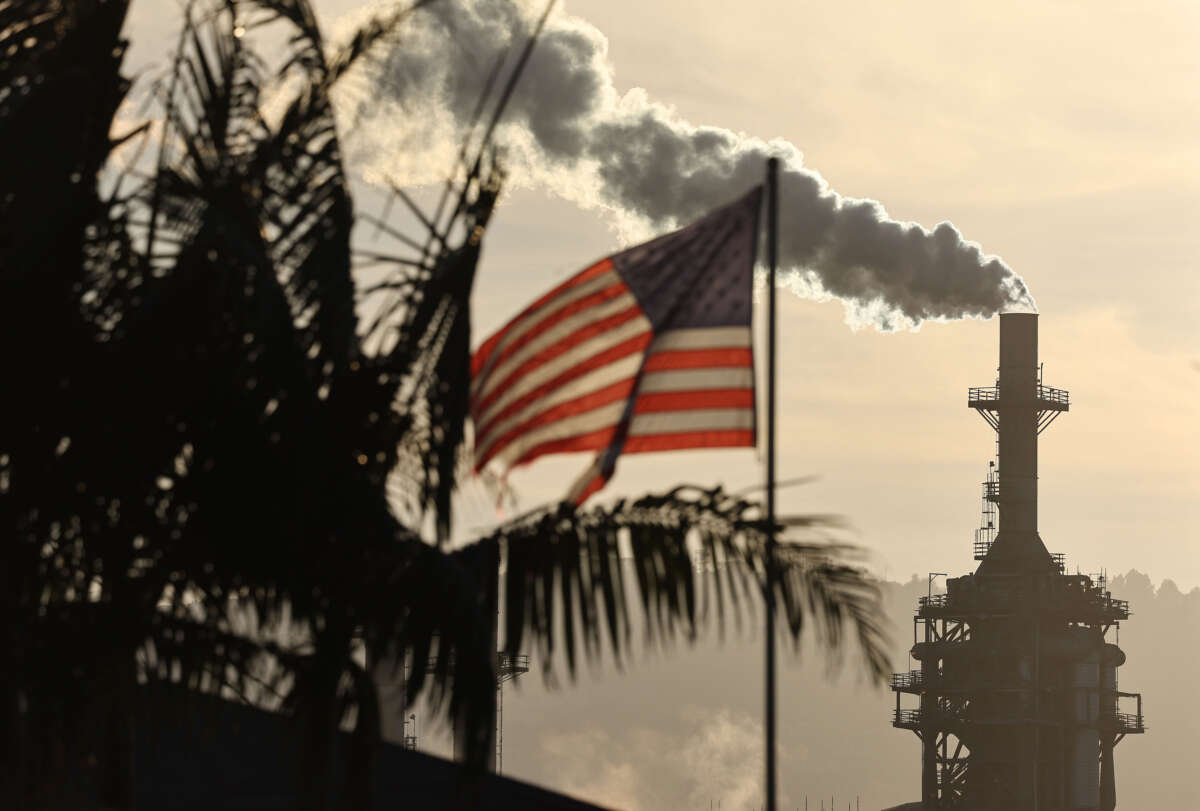
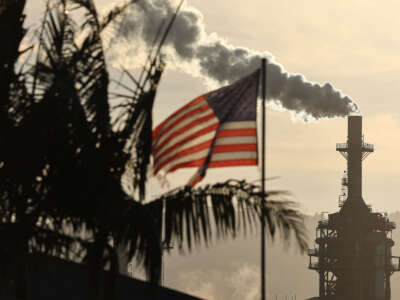
An American flag flies near the Phillips 66 Los Angeles Refinery Wilmington Plant on November 19, 2024, in Wilmington, California.Mario Tama / Getty Images


An American flag flies near the Phillips 66 Los Angeles Refinery Wilmington Plant on November 19, 2024, in Wilmington, California.Mario Tama / Getty Images

Experts and former employees say the Trump administration’s moves to fire key scientists at the Environmental Protection Agency (EPA) and dismantle clean air and water protections will make the United States a “sicker and poorer” place to live while demoralizing the next generation of environmental investigators and public health researchers.

The rollbacks could lead to a significant increase in hospitalizations and premature deaths from illnesses linked to air and water pollution, public health experts warn. For example, new analysis by former agency researchers at the nonprofit Environmental Protection Network (EPN) estimates that 16 major air pollution rules updated by the Biden administration between 2021 and 2024 would save at least 200,000 lives by 2050.

Air pollution rules also reduce the pollution driving climate change, which is now widely recognized as a major public health threat.

However, last week EPA Administrator Lee Zeldin announced that the clean air rules are among 31 environmental protections that will be weakened or eliminated by the Trump administration. According to documents reviewed by House Democrats and reported on by the New York Times, Zeldin also plans to eliminate the EPA’s scientific research office, “firing as many as 1,155 chemists, biologists, toxicologists and other scientists” who investigate environmental health threats at federal labs across multiple states.

“This is a disaster for everyone that relies on EPA for clean drinking water, and for everyone that breathes,” Jeremy Symons, a former EPA air office employee and coauthor of the EPN report, told Truthout. “We are all going to be left wondering what toxic chemicals are in our drinking water, and what harmful air pollution we are breathing, if these regulations are rolled back.”

Related Story

Trump’s EPA Is Botching Removal of Toxic Waste From the Los Angeles Fires
The federal government is prioritizing speed over public health, refusing to test ash from LA for toxicity. By Schuyler Mitchell , Truthout March 5, 2025

Symons pointed to a nationwide poll of 1,000 voters taken by EPN shortly after the November elections that found the vast majority of voters — including 76 percent of Trump voters — want the EPA to be strengthened or remain the same. Only 14 percent of all voters agreed the EPA should be weakened. However, environmental groups say Trump’s rollback of EPA regulations alone threatens to reverse more than a decade of progress toward reducing highly toxic pollutants.

“There is no mandate for what we are seeing, so why are we seeing it?” Symons asked. “It is becoming very clear that Lee Zeldin is working with Elon Musk to follow a radical and extremist agenda put forward by Project 2025, and that puts the interests of corporate polluters above public health.”

President Donald Trump does not appear to be concerned about the consequences of unleashing toxic pollution, including political blowback — or even willing to acknowledge the reality of the environmental issues the EPA is tasked with handling.

On his Truth Social platform earlier this week, Trump claimed he is opening “hundreds” of power plants that will produce energy by burning “BEAUTIFUL, CLEAN COAL” (emphasis is Trump’s). However, Trump does not own any power plants or have the authority to compel companies to burn coal. The term “clean coal” is an oxymoron pulled from a defunct greenwashing campaign largely abandoned by the industry years ago.

Perhaps the president was feeling nostalgic for his first term, when he declared an end to the so-called “war on coal” and rolled back the Obama administration’s signature carbon regulations for new coal-burning power plants meant to thwart the climate crisis. Patrick Drupp, the director of climate policy and advocacy at the Sierra Club, a group that has pushed for years to retire the dirtiest coal plants, said Trump’s statement is “completely delusional” in 2024.

“There is no such thing as clean coal,” Drupp said in a statement. “There is only coal that pollutes our air and water so severely that nearly half a million Americans have died prematurely from coal in the last two decades.”

Scientists know that coal pollution is linked to asthma and respiratory illnesses, heart attacks, cancer and premature death, but the Trump EPA is still poised to roll back regulations known as the Mercury and Air Toxics Standards that require power plants to limit dangerous air pollution for burning coal.

Thanks to these rules, mercury emissions from power plants dropped by more than 81 percent from 2011 through 2017, according to analysis by the Center for American Progress. The EPA estimates the regulations prevent up to 11,000 premature deaths, 4,700 heart attacks and 130,000 asthma attacks each year.

Technology for removing from smokestacks the mercury and particulate matter that lodges in human lungs and leads to asthma and premature death has existed for years, but some utilities complain that installing and operating these “scrubbers” is too expensive. Last year, 23 GOP-led states sued the EPA over the Biden administration’s air standards, and last week Zeldin announced the EPA would consider granting power plants a two-year exemption while the agency reconsiders the rules, which could lead to an immediate increase in toxic air pollution.

The Mercury and Air Toxics Standards are just one of several air pollution regulations Zelding is preparing to roll back, including rules meant to limit climate-warming methane and carbon pollution produced by the fossil fuel industry. The EPA is also reconsidering limits on hazardous air pollutants produced by the manufacturing sector, including synthetic chemical makers that have come under fire for polluting communities.

“EPA needs to pursue commonsense regulation to Power the Great American Comeback, not continue down the last administration’s path of destruction and destitution,” Zeldin said in a statement.

Cheap gas from the fracking boom has drastically reduced demand for coal, and renewable energy is quickly becoming more affordable and reliable, which explains why utility companies are retiring coal plants instead of building new ones. In fact, the U.S. is producing more oil and gas than any other nation in the world, a reality that undercuts Trump and Zeldin’s claims about the need for deregulation to spur cheap energy production.

Drupp said Trump’s “clean coal” comments are baseless but reveal that he does not care about the “health or economic well-being” of his constituents. While Trump and Zeldin claim onerous regulations are holding the U.S. back economically, EPN estimates that EPA’s air pollution regulations deliver over $250 billion in net benefits to the public annually, with savings on health care and climate spending exceeding regulatory costs by a six to one ratio.

“He is only concerned with helping out his billionaire buddies in the fossil fuel industry,” Drupp said. “In exchange for their loyalty and political dollars, he will lie to the American people and sacrifice their lives.”

Jennifer Orme-Zavaleta worked at the EPA for 40 years and recently retired from running the agency’s Office of Research and Development, the scientific arm that is reportedly losing 75 percent of its staff under Trump, Elon Musk and Zeldin. Orme-Zavaleta said she served under both Democratic and Republican presidents, and like all federal agency employees, EPA scientists are civil servants who expect shifts in policies when a new administration takes over.

“They say EPA is a job killer that strains the economy, but nothing could be furthest from the truth,” Orme-Zavaleta said in an interview. “If anything, EPA has brought innovations to industry and developed a lot of jobs in sectors such as air treatment and water treatment and waste management.”

Republicans have a long record of attempting to downsize the EPA and shift its priorities toward cleaning up after polluters rather than enforcing the law against them. In a recent op-ed, Zeldin wrote vaguely about “collaboration” with polluting industries rather than “regulation” for safeguarding human health and the environment.

But Jennifer Orme-Zavaleta said the second Trump administration’s gutting of the EPA is extreme, unprecedented and posed to cause long-term damage to an agency that has made the U.S. a visibly cleaner, healthier place to live since its creation in the 1970s. The difference between Trump 1.0 and Trump 2.0 at the EPA is the “attacks on its people,” Orme-Zavaleta said.

“Russell Vought really called out the goal of terrorizing EPA employees in particular, and making life so miserable for them they wouldn’t like to get up and go to work in the morning, and they are really playing out that card,” Orme-Zavaleta said, referring to a now-infamous comment in which Trump’s staffing director said he wanted career workers to be “traumatized.” “It’s really hard to understand why, because these are the people who make the EPA work, any government agency work.”

Despair and dysfunction are the point, Orme-Zavaleta said, and it’s the wrong message to send to students studying to be the next generation of environmental scientists. By canceling the EPA’s ability to conduct its own science to inform regulations, Zeldin is making more room for the claims made by polluting industries during the rule-making process.

Completed in 2023, the EPA’s landmark Social Cost of Greenhouse Gases study is a prime example. Working with the National Academy of Sciences, EPA researchers produced a comprehensive cost-benefit analysis of burning fossil fuels that produce climate-warming pollution. The study examines energy spending alongside the realities of a warming planet, including increased spending on health care and recovery from extreme storms and floods. The Interstate Natural Gas Association of America applauded when Zeldin announced the study was among the policies and documents to be revised or revoked.

“By limiting the science that can be considered by the agency — especially science the agency can generate to directly to inform a regulation — and focusing on that limited subset of science, there is a potential for increasing people’s risk of exposure to pollutants and rolling back the decades of worth of progress we have made in cleaning up our environment,” Orme-Zavaleta said.
US revokes legal status for 500,000 immigrants


By AFP
March 22, 2025


President Joe Biden had touted the protected status scheme as a way to ease pressure on the US-Mexico border - Copyright POOL/AFP Ng Han Guan

The United States said Friday it was terminating the legal status of hundreds of thousands of immigrants, giving them weeks to leave the country.

President Donald Trump has pledged to carry out the largest deportation campaign in US history and curb immigration, mainly from Latin American nations.

The order affects around 532,000 Cubans, Haitians, Nicaraguans and Venezuelans who came to the United States under a scheme launched in October 2022 by Trump’s predecessor Joe Biden and expanded in January the following year.

They will lose their legal protection 30 days after the Department of Homeland Security’s order is published in the Federal Register, which is scheduled Tuesday.

That means immigrants sponsored by the program “must depart the United States” by April 24 unless they have secured another immigration status allowing them to remain in the country, the order says.

Welcome.US, which supports people seeking refuge in the United States, urged those affected by the move to “immediately” seek advice from an immigration lawyer.

The Processes for Cubans, Haitians, Nicaraguans, and Venezuelans (CHNV) program, announced in January 2023, allowed entry to the United States for two years for up to 30,000 migrants per month from the four countries, which have grim human rights records.

Biden touted the plan as a “safe and humane” way to ease pressure on the crowded US-Mexico border.

But the Department of Homeland Security stressed Friday that the scheme was “temporary.”

“Parole is inherently temporary, and parole alone is not an underlying basis for obtaining any immigration status, nor does it constitute an admission to the United States,” it said in the order.

– ‘Chaos’ –

Nicolette Glazer, an immigration lawyer in California, said the order would affect the “vast majority” of the half a million immigrants who entered the United States under the CHNV scheme.

“Only 75,000 affirmative asylum applications were filed, so the vast majority of the CHNV parolees will find themselves without status, work permits, and subject to removal,” she posted on X.

“The chaos will be unreal”.

Karen Tumlin, director of immigrant rights group Justice Action Center, said the Trump administration was “breaking a commitment the federal government made to the hundreds of thousands” of immigrants and their sponsors in the United States.

“Suddenly revoking the lawful status of hundreds of thousands of CHNV humanitarian parole recipients is going to cause needless chaos and heartbreak for families and communities across the country,” she said in a statement.

Trump last weekend invoked rare wartime legislation to fly more than 200 alleged members of a Venezuelan gang to El Salvador, which has offered to imprison migrants and even US citizens at a discount.

More than seven million Venezuelans have fled their country over the last decade as the oil-rich country’s economy implodes under leftist leader Nicolas Maduro, a bugbear of Washington who has faced major sanctions.


Op-Ed |

We Need a New Wave of Airport Protests to Reject Trump’s Deportation Agenda

Airport protests stymied the 2017 Muslim ban. As Trump’s administration targets even more people, we need a repeat.
TruthoutPublished
March 21, 2025
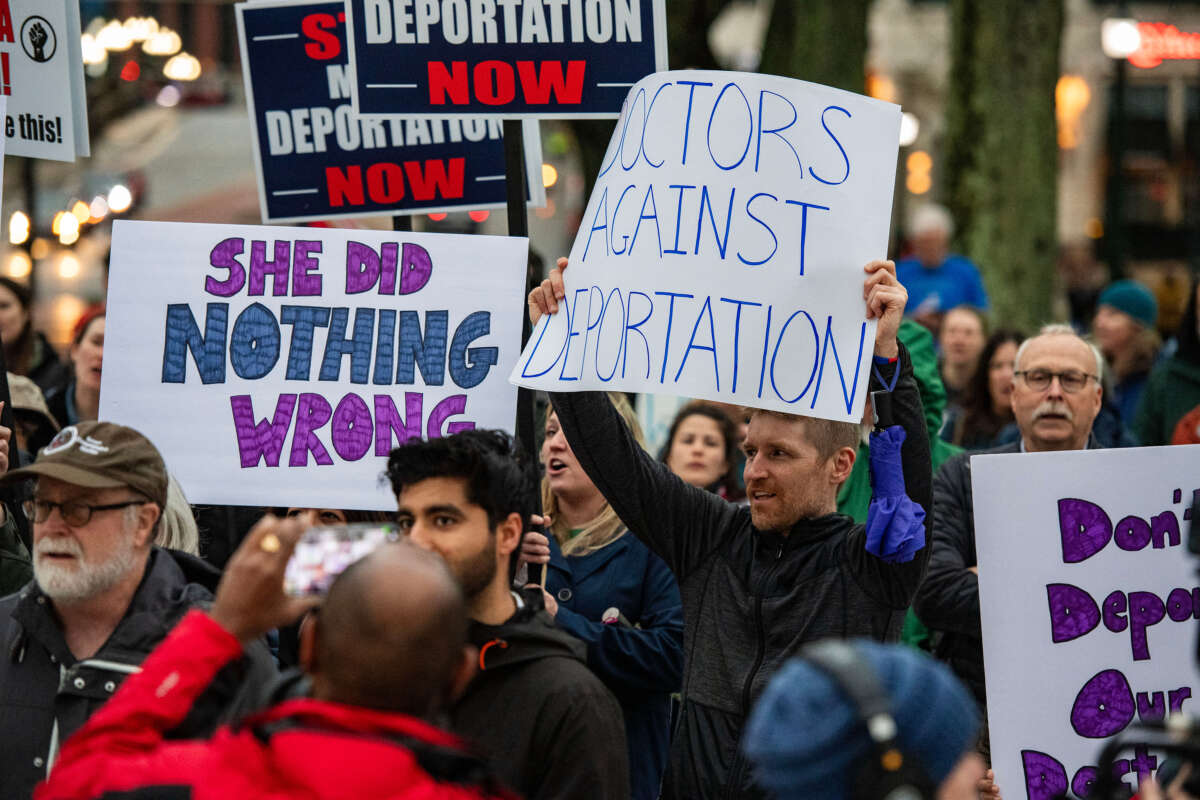
Demonstrators hold signs as they protest the deportation of Assistant Professor of Medicine Dr. Rasha Alawieh of Brown University at the State House in Providence, Rhode Island, on March 17, 2025.Joseph Prezioso / AFP via Getty Images

Over the past two weeks, the Trump administration’s detention, interrogation and deportation machine has shown a new level of cruelty. The detention and deportation of visa holders, followed by over 200 Venezuelan nationals without due process, has caused judicial controversy and a struggle in the courts. But activists and progressives cannot simply rely on the court system to rein in Donald Trump. Popular pressure is needed to push back on the impunity of the Trump administration and the cruelty of border control agents, especially in the face of a likely new Muslim ban. In 2017, a wave of mass protest at airports stood up against Trump’s first attempt at the racist ban. They offer a model for the kind of protest needed now to stop brutal detentions and deportations.

Border agents emboldened by Trump have shown particular cruelty at Boston Logan International Airport over the past few weeks. On March 13, Customs and Border Protection (CBP) stopped Rasha Alawieh, a kidney transplant specialist and professor at Brown University’s medical school with a valid H-1B visa, who was returning to the U.S. from a visit to Lebanon. Possibly targeting her for being from South Lebanon — which has been under Israeli bombardment and incursion since October 2023, and is often labeled a “Hezbollah stronghold” given its Shia majority population — border officials detained Alawieh for 36 hours and interrogated her before deporting her. This was despite a judge’s injunction to halt her deportation and Alawieh’s lawyers demanding that the plane not take off. Her lawyers have accused CBP agents of willfully disobeying the court order by sending her back to Lebanon.

Alawieh had been studying and working in the U.S. for the last six years, completing programs at Ohio State University, the University of Washington and Yale’s Internal Medicine program before working and teaching at Brown. After deporting her, the Department of Homeland Security claimed that the deportation was justified, alleging that, under interrogation, she admitted sympathy for Hezbollah’s former leader Hassan Nasrallah, and that she had attended his funeral — which was attended by an estimated 700,000 to 900,000 Lebanese people, over 10 percent of Lebanon’s population.

The week prior, on March 7, CBP officials at Logan airport detained German national and green card holder Fabian Schmidt and interrogated him until he collapsed. Schmidt told his family that he was violently interrogated, stripped naked and put in a cold shower. CBP claimed that he had “drug-related charges” — including a charge of possessing marijuana in 2015 that had later been dismissed. Over two weeks later, Schmidt is still in Immigration and Customs Enforcement (ICE) detention in Central Falls, Rhode Island. Additional cases of individuals detained, interrogated and deported upon arriving to the U.S. continue to come to light — including those denied entry for having criticized Trump’s policies.

On March 15, two days after Alawieh’s detention at Boston Logan, Trump forced through the deportation of over 200 Venezuelans to El Salvador, claiming — without providing evidence — that they were members of a Venezuelan gang. Despite the efforts of the ACLU and other legal advocacy groups, their insistence that several Venezuelans slated to be deported were falsely accused of gang membership, and a temporary order from D.C. District Court Judge James Boasberg, the Trump administration pushed through with their deportation, invoking the Alien Enemies Act to override their due process.

Related Story
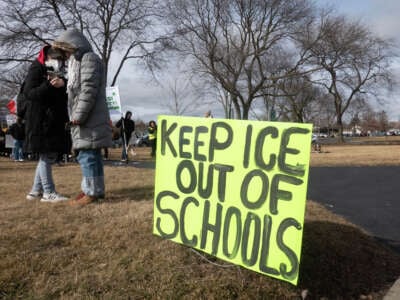
DHS Abducts Georgetown Postdoctoral Researcher Over Pro-Palestine Views
Human rights advocates say the researcher, Badar Khan Suri, is being punished for criticizing US foreign policy. By Chris Walker , Truthout March 20, 2025


In defiance of the court order, two planes failed to turn around after having departed from Texas carrying the deportees to a mega-prison in El Salvador that has been called a “Guantánamo on steroids” for its horrific conditions, lack of legal recourse for detainees and the likelihood that detainees will “never be allowed out.” And a third deportation flight is believed to have departed Texas after the restraining order was issued.

These examples are only a few of the many unjust detentions and attempted deportations overseen by the Trump administration in recent weeks, and the attacks are likely to continue to mount. The case of Mahmoud Khalil, a Columbia graduate and leader of Columbia’s encampment movement detained by ICE, exemplifies the Trump administration’s punitive attempts to target and deport Palestine solidarity activists in particular. Khalil, a Palestinian refugee from Syria, is one of many green card holders associated with the Palestine solidarity movement that the Trump regime is attempting to deport. But the attacks and deportations are likely to become even broader still. The New York Times has reported that Trump aims to put in place an expanded Muslim ban, with as many as 43 countries reportedly under consideration for full or partial travel bans. This is likely to be implemented in the coming weeks if not days.

Following the deportation of Venezuelan migrants to El Salvador, and the back-and-forth race against Judge Boasberg’s restraining orders against the deportations, Trump attacked Boasberg and called for his impeachment. Chief Justice John Roberts issued a statement against the impeachment of judges for their disagreements.

In spite of the efforts of judges like Boasberg and Roberts, numerous right-wing judges fill our U.S. courtrooms, including in the Supreme Court, which upheld Trump’s Muslim ban in 2018. And even when lawyers and judges push back on harmful policies, it is most often due to the efforts of large-scale movement organizing. The airport protests of 2017 were one such case, providing the pressure that brought about a stay of airport detentions.


Activists and progressives cannot simply rely on the court system to rein in Donald Trump.

The day after Trump announced the first iteration of his Muslim ban on January 27, 2017 — banning travel from seven Muslim-majority countries and leaving at least 100 people in limbo or in detention at U.S. airports, including permanent residents and green card holders — thousands of protesters mobilized to airports across the U.S. Thousands amassed at New York City’s JFK airport and at Chicago’s O’Hare airport, over a thousand at San Francisco International Airport, around 1,000 at Boston’s Logan airport, and hundreds at other airports around the country to demand the entry of stranded and detained individuals, to insist that they be welcomed rather than turned away and to reject Trump’s racist policy. In San Francisco, protesters occupied the airport for over 36 hours and shut down the international terminal, disrupting business as usual, preventing any flights from departing the international gates, and ensuring that flights that arrived saw individuals released and connected with their families rather than detained. Airports became a front line against Trump’s travel ban.

The protests brought together longtime organizers with newly politicized and agitated individuals moved to act against the Islamophobic policy. Many protesters had ties to the seven countries included in Trump’s initial Muslim ban.

The airport protests also inspired other protest and strike activity: In New York City, the Taxi Workers Alliance, a 19,000-member union made up of largely Muslim taxi drivers, called an hour-long boycott of JFK airport pickups that day, and Yemeni-owned bodegas across the city’s five boroughs struck the next week. Also in the days that followed, over 3,000 tech workers — Comcast and Google employees — walked off the job in protest of the ban in several cities across the U.S.

Late that same night on January 28, a federal judge granted a stay on deportations for visa holders who had been detained upon entry, effectively freeing those who had been detained at airports. The protests had secured their first victory against the Muslim ban within hours and shattered the façade of the Trump administration’s invincibility.

While there have been thousands of protests since Trump took office in January, including powerful protests like the hundreds of Jewish activists who protested the detention of Mahmoud Khalil in a demonstration at Trump Tower, our movement must consider specific sites to protest the coming deportations, in particular airports and workplace strikes.

The detentions and deportations of Alawieh and Schmidt, and the likelihood of another iteration of the Muslim ban, demands a call for activists to organize at the airports once again. The airport protests offer tangible solidarity to those in detention, and push back against the impunity of both the Trump administration and CBP officials, like those detaining and torturing travelers coming through Boston. Airport protests can shut down terminals and prevent planes from departing — as done in San Francisco International Airport in 2017 — whether simply to disrupt business as usual and demand policy change, or to prevent the deportation of individuals set to be deported. And coupled with labor strikes — like a strike of Columbia University staff to demand Khalil’s return, or a strike of airport workers as Sara Nelson has previously threatened, with successful results after a mere threat — can apply the economic pressure and disruption needed to force a change in Trump’s draconian policies.

We’re not backing down in the face of Trump’s threats.

As Donald Trump is inaugurated a second time, independent media organizations are faced with urgent mandates: Tell the truth more loudly than ever before. Do that work even as our standard modes of distribution (such as social media platforms) are being manipulated and curtailed by forces of fascist repression and ruthless capitalism. Do that work even as journalism and journalists face targeted attacks, including from the government itself. And do that work in community, never forgetting that we’re not shouting into a faceless void – we’re reaching out to real people amid a life-threatening political climate.

Our task is formidable, and it requires us to ground ourselves in our principles, remind ourselves of our utility, dig in and commit.

As a dizzying number of corporate news organizations – either through need or greed – rush to implement new ways to further monetize their content, and others acquiesce to Trump’s wishes, now is a time for movement media-makers to double down on community-first models.

At Truthout, we are reaffirming our commitments on this front: We won’t run ads or have a paywall because we believe that everyone should have access to information, and that access should exist without barriers and free of distractions from craven corporate interests. We recognize the implications for democracy when information-seekers click a link only to find the article trapped behind a paywall or buried on a page with dozens of invasive ads. The laws of capitalism dictate an unending increase in monetization, and much of the media simply follows those laws. Truthout and many of our peers are dedicating ourselves to following other paths – a commitment which feels vital in a moment when corporations are evermore overtly embedded in government.

Over 80 percent of Truthout‘s funding comes from small individual donations from our community of readers, and the remaining 20 percent comes from a handful of social justice-oriented foundations. Over a third of our total budget is supported by recurring monthly donors, many of whom give because they want to help us keep Truthout barrier-free for everyone.

You can help by giving today during our fundraiser. We have 5 days to add 340 new monthly donors. Whether you can make a small monthly donation or a larger gift, Truthout only works with your support.

This article is licensed under Creative Commons (CC BY-NC-ND 4.0), and you are free to share and republish under the terms of the license.



Shireen Akram-Boshar
Shireen Akram-Boshar is a socialist writer, editor and Middle East/North Africa solidarity activist.


Here’s How the Right Is Packaging Its Conspiracies in Environmentalism


When public health problems aren’t met with structural solutions, conspiracies cloaked in green rhetoric can flourish.
March 22, 2025
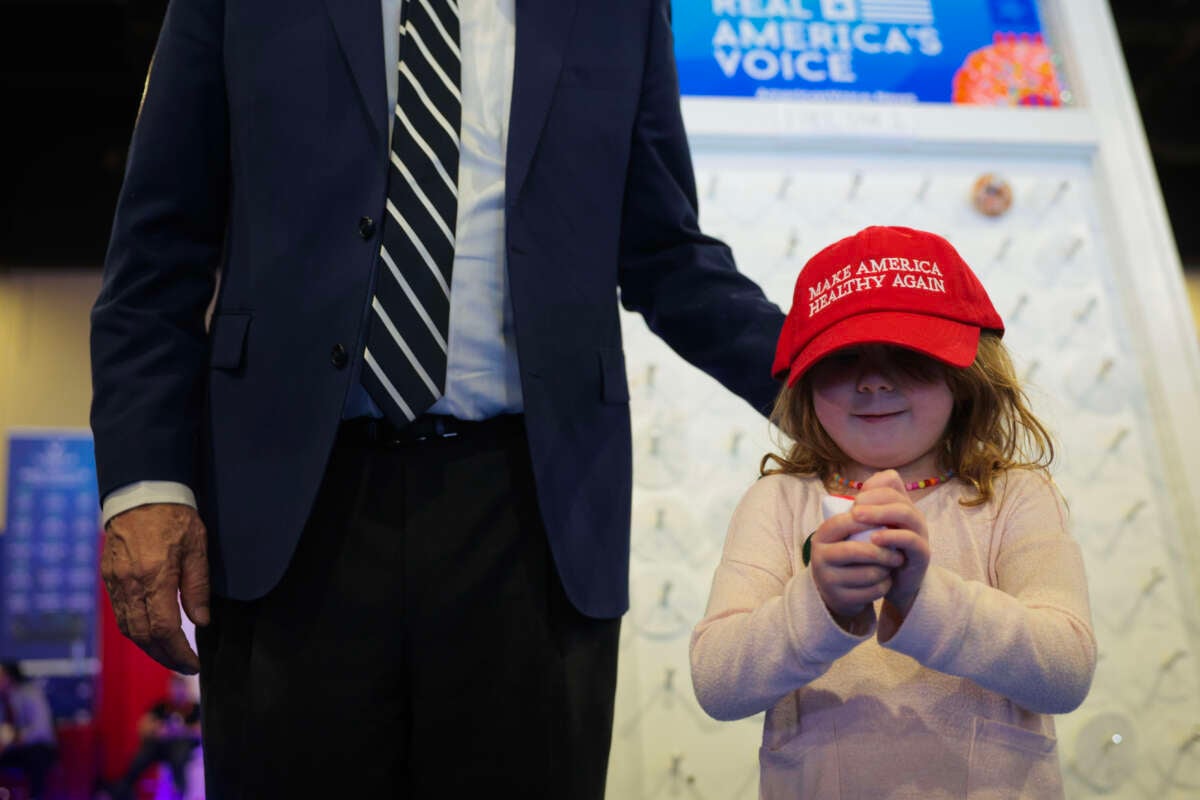
A child wears a "Make America Healthy Again" hat during the Conservative Political Action Conference (CPAC) at the Gaylord National Resort & Convention Center on February 21, 2025, in Oxon Hill, Maryland.Kayla Bartkowski / Getty Images

Growing up in the early 2000s, my mother instilled within me certain precepts: eat your vegetables, avoid processed foods, recycle. Buying organic was preferable, but often cost-prohibitive. Ideally, you’d want to be able to pronounce the words on a label. Red dye 40 and sugary breakfast cereals were no-nos — though sometimes she could be convinced otherwise.

All of these principles, she said, she’d picked up from her time living in California, where environmentalism and health consciousness were interwoven with the fabric of daily life. This, perhaps, reveals more about her particular social stratum than any overarching truth about Californians, but it’s true that my mom’s “crunchy” inclinations were an outlier in the southern city where we lived. To my friends’ parents, they were cultural markers of a type of West Coast liberalism, regardless of her actual political views.

In fact, none of these habits were inherently partisan; a certain strain of environmentalism has always permeated the political divide. After all, think of the few things that everyone wants: to breathe clean air, to drink clean water, to live a healthy life. But these desires too often translate into movements with solipsistic demands. At the local level, for instance, some Democrats and Republicans will unite to keep polluting industries out of their own neighborhoods, while readily offloading the burden to communities that lack resources to fight back. This NIMBY — “not in my backyard” — mindset fails to grasp how our collective futures are intertwined.

While eating organic may have once been loosely associated with the left, in recent years, we’ve seen a growing embrace of what I think is also a sort of NIMBYism — let’s call it the “not in my body” movement. Critical of pesticides and preservatives, these NIMBYs are focused on modifying their own consumption habits, usually at a higher price tag. Stoked by social media’s hyper-individualism, this line of thought is primarily concerned with health at the personal level: the fiction that one might buy their way into a longer life. And online, seeds of truth — i.e., that among rich countries, the U.S. spends the most on health care while maintaining some of the worst health outcomes — can quickly blossom into pernicious conspiracies. People who start off rightfully concerned about, say, lead in their tap water or microplastics in their brain tissue, might find themselves algorithmically led to influencers hawking raw milk while proclaiming the dangers of vaccines and seed oils.

These online communities really began taking off during the COVID-19 pandemic, when social isolation and flawed government messaging helped inspire a new wave of vaccine denialism and conspiratorial thought. Over the past five years, the gulf between reality and paranoia has seemingly widened, as Americans grow evermore mistrustful of institutions and profit-driven algorithms reward reactionary content. Perhaps it’s no surprise that the fringe has now bled so far into the mainstream it’s been awarded an institutional figurehead: Donald Trump’s pick for Secretary of Health and Human Services, Robert F. Kennedy Jr.


To some commentators, RFK Jr.’s Trump-endorsed “Make America Healthy Again” (MAHA) campaign marks a “weird political realignment.” One Vox headline from February bewilderedly asks, “The far right is going … green?” In a November 2024 Compact magazine article titled “The Rise of Green MAGA,” Holly Jean Buck writes, “Kennedy’s rightward trajectory and new position within the MAGA movement are the latest indication that ideas that were once a core part of environmentalism are veering in a strange direction.”

It’s true that that the pair is, at its face, incongruous: RFK Jr. spent years as an attorney for the Natural Resources Defense Council (NRDC), a leading nonprofit environmental advocacy organization, while Trump is openly hostile to climate science. Money from the fossil fuel industry, the primary instigator of climate change, overwhelmingly flows into Republican lawmakers’ coffers. Trump’s first administration rolled back more than 100 environmental regulations, and in his second, the president has tapped chemical industry lobbyists for senior Environmental Protection Agency positions — all while signing an executive order to “assess the threat” of certain chemicals and food additives and “Make America Healthy Again” by “eliminating undue industry influence.”

Of course, RFK Jr.’s beliefs are not just your run-of-the-mill environmentalism. His own former colleagues have disavowed him; one NRDC press statement called him a “one-man misinformation superspreader.” RFK Jr. has spent years promoting baseless conspiracy theories and opposing life-saving vaccines; that opposition helped fuel a measles outbreak in Samoa, where vaccine rates dropped after he visited. More than 80 people, mostly children, died in the outbreak. Now, as cases of measles surge in the U.S., he is falsely insinuating that contracting the disease is better than getting vaccinated and peddling misinformation about treatment. His newfound influence over U.S. public health is cause for serious alarm.

But it’s misguided to frame the far right as going in a green new direction. For one, it’s hardly new. As historian Kathleen Belew wrote in a 2022 piece for The Atlantic on the “crunchy to alt-right pipeline,” the white power movement has long used hippie-ish issues like organic farming or a macrobiotic diet “as part of a wider articulation of cultural identity,” focused on purity and back-to-the-land survivalism. “The idea that natural purity translates into racial or national purity — that was one that was very central to the Nazis’ environmental discourse of blood and soil,” Blair Taylor, a researcher at the Institute for Social Ecology, told NPR in 2022. (I can’t be the only one who remembers learning as a child that Adolf Hitler was a vegetarian.)

One of the clearest contemporary articulations of this mindset can be found in “tradwife” influencers, short for “traditional wife,” who promote the importance of rigid gender roles alongside manicured photos of their backyard chickens and grass-fed organic beef diets. Many of these women claim that their lifestyle connects them to their “ancestral roots,” a white power dog whistle that plays out in the tradwives’ odd embrace of both organic and extremely red meat-heavy diets. Just as New Age hippies preached spiritual and physical detoxification, the ideal tradwife “not only takes care of the children but protects them from anything that could corrupt their bodies, minds, and souls,” as Gaby del Valle wrote in The Baffler in 2023.

The overarching idea from these accounts is that we’re being poisoned — by Big Pharma, Big Food, Big Government — and we must take individual action to make ourselves healthy and happy again. This is also the logic of the anti-fluoridation movement, one of RFK Jr.’s cause célèbres that also has roots in both the far right and environmentalist communities. In the 1960s, a group of wealthy businessmen called the John Birch Society vehemently opposed the government’s addition of fluoride to drinking water, claiming that, rather than a public health intervention to prevent tooth decay, fluoridation was actually part of a communist plot to take over the country. In the latter part of the 20th century, Belew writes, “White-power activists worried that fluoride would make people docile, such that revolution against the state and race war would be harder to accomplish.” Meanwhile, some environmentalists, including the former executive director of the Sierra Club, argued that fluoride was a risk to ecosystems. But while anti-fluoridation conspiracies existed only on the fringes for decades — research, after all, has shown that water fluoridation is safe and effective for promoting dental health — these, too, have now gone mainstream. This month, Utah’s governor announced the state would become the first to ban fluoride in drinking water.

RFK Jr. and his acolytes are dangerous. It is abhorrent, for instance, that the growing anti-vax movement has led us to a moment where, in 2025, we are grappling with what should have been an easily preventable measles outbreak among schoolchildren in Texas. What’s especially pernicious about the MAHA movement is the kernels of truth it contains: Industry interests do have concerning influence over U.S. agricultural policy and chemical regulation. Growing research shows that PFAS, the industrial “forever chemicals” linked to a host of deleterious health impacts, are virtually everywhere. When Trump claimed in his MAHA executive order, that “6 in 10 Americans have at least one chronic disease,” he wasn’t lying.

In trying to establish themselves as the party of science, the Democrats have also unintentionally fueled anti-science conspiracies. If “science is real,” as the Democrats’ adage goes, and science overwhelmingly points to the urgency of more drastic measures to combat climate change — why haven’t they taken them? If “science is real,” and science points to a chemical’s carcinogenic potential — why wouldn’t it be banned? If “science is real,” but scientists helped fuel racist 20th-century eugenics programs — and faced little to no accountability for it — why would marginalized groups, harmed by that legacy, readily agree to “believe science,” no questions asked?

To be clear, science is real, and MAHA is not the answer. But ideological inconsistencies, and gaps between rhetoric and action, leave spaces that conspiracy theorists are all too happy to fill.

“If you’re the average American,” P.E. Moskowitz recently wrote in their newsletter Mental Hellth, “then you’ve been presented with two options: support the team who acknowledges how unhealthy we’ve all become […] or support the side that pretends these problems simply do not exist.”

As STAT News noted, if government mistrust was the starting point, the pandemic was the tipping point. It is both true that COVID-19 vaccines are safe, urgent and necessary for safeguarding public health, and that Pfizer received windfall profits from said vaccine. Acknowledging this is uncomfortable; pretending it’s not true is worse.

In the absence of systemic solutions like universal health care, it makes sense that people are seeking out their own flawed treatments on the internet. And when they do go looking, they’ll inevitably encounter snake oil salesmen and right-wing grifters, the false promise of self-improvement through consumption. The only way for the left to counter the swindle is by highlighting systemic faults and widely publicizing the alternatives — taking corporations to task, dismantling for-profit health care, subsidizing access to nutritious foods and shutting down repeat polluters, to start. Although some segments of the left have adopted these rallying cries, the Democratic establishment has largely tried to counter RFK-style misinformation with a piecemeal approach that fails to address root concerns.

It’s also important to recognize that the right-wing has succeeded in borrowing green-ish rhetoric because of the failures of NIMBY — body and backyard — environmentalism. New Age hippies were never particularly known for their racial diversity; the high cost of organics and “clean” products has long meant that access to a nontoxic lifestyle is circumscribed by class lines. Everyone deserves healthy food, unpolluted air, clean water. A “health for me but not for thee” approach just isn’t going to work.