Sunday, March 23, 2025


Climate warming and heatwaves accelerate global lake deoxygenation, study reveals


Chinese Academy of Sciences Headquarters


Freshwater ecosystems require adequate oxygen levels to sustain aerobic life and maintain healthy biological communities. However, both long-term climate warming and the increasing frequency and intensity of short-term heatwaves are significantly reducing surface dissolved oxygen (DO) levels in lakes worldwide, according to a new study published in Science Advances.

Led by Prof. SHI Kun and Prof. ZHANG Yunlin from the Nanjing Institute of Geography and Limnology of the Chinese Academy of Sciences, in collaboration with researchers from the Nanjing University and the UK’s Bangor University, the study quantifies the effects of continuous climate warming and intensified heatwave events on surface DO levels in lakes worldwide. The research team utilized an extensive dataset and applied a data-driven model to analyze surface DO variations across more than 15,000 lakes over the past two decades.

The study reveals a widespread decline in surface DO concentrations, with 83% of the studied lakes exhibiting significant deoxygenation. Notably, the average rate of deoxygenation in lakes exceeds that of both oceans and rivers, highlighting the severity of this issue.

The researchers further explored the roles of climate warming and eutrophication in shaping surface DO concentrations. Their findings indicate that climate warming, by reducing oxygen solubility, contributes to 55% of global surface deoxygenation. Meanwhile, increasing eutrophication accounts for approximately 10% of the total global surface oxygen loss.

Historical trends in heatwaves were also analyzed, with their impacts on surface DO levels quantitatively assessed. The study shows that heatwaves exert rapid and pronounced effects on surface DO decline, resulting in a 7.7% reduction in surface DO compared to conditions under average climatological temperatures. 

These findings underscore the profound impact of climate change on freshwater ecosystems, emphasizing the urgent need for mitigation and adaptation strategies to preserve lake ecosystems worldwide. The study provides crucial insights for policymakers and environmental managers working to combat the escalating threat of freshwater deoxygenation.

America is on the cusp of irreversible terror — sleepwalking into danger

Sabrina Haake
March 22, 2025 
RAW STORY


Elon Musk’s attacks on the federal government are so unpopular that Tesla stock and sales are tanking, and anti-Tesla demonstrations have erupted all over the world.

Trump is clearly triggered. Calling demonstrators ‘domestic terrorists’ and ‘sick terrorist thugs,’ he is threatening “20 year jail sentences for what they are doing to Elon Musk and Tesla,” while suggesting demonstrators could be sent to “prisons of El Salvador, which have become so recently famous for such lovely conditions!"

It isn’t a joke, but it is sick. Attorney General Pam Bondi issued a statement promising to pursue investigations that “impose severe consequences on those involved in these (Tesla) attacks, including those operating behind the scenes to coordinate and fund these crimes,” and added that the DOJ had already charged several people with crimes involving five-year mandatory sentences.


Most Tesla demonstrators, like most Gaza protestors, are not violent and have no violent intentions. Intimidating peaceful protest organizers who neither engage in nor encourage physical violence violates the 1st Amendment and chills the free speech of every American watching.

Clearly that is Trump’s intention.

In the past ten days, Trump has attacked protestors, declared a false ‘national invasion,’ invoked war powers in time of peace, ignored federal court orders, and sent people to an El Salvador labor prison without due process, a hearing, or review. These are the hallmarks of tyranny.


Trump’s use of wartime powers

By now, anyone outside the Fox News bubble knows that Trump has openly disregarded federal court orders. Trump recently invoked war powers during time of peace to remove Venezuelan immigrants without due process, in direct defiance of a federal court order not to.

Hearings on the removal have not yet reached the merits of the case, but the facts are alarming. Trump used the Alien Enemies Act, a rarely invoked wartime law from 1798, to send Venezuelan immigrants to a forced labor prison in El Salvador. In 230 years, the Act has only been invoked three times: during the War of 1812, during WWI, and after Pearl Harbor was bombed in WWII. The Act can only be used under “a declared war between the United States and any foreign nation or government, or any invasion or predatory incursion.” We are not at war with Venezuela, and there has been no “invasion” as that term is rationally understood


Trump called forth these rare war powers to send people to an El Salvador prison, unilaterally claiming they were members of the dangerous drug trafficking gang Tren de Aragua without evidence, hearings, or independent review. For these reasons, Judge James Boasberg issued an order to block the removal flights until he could review the ancient statute, a review that has still not occurred because Trump flouted the non-removal order, setting up a Constitutional crisis with potentially disastrous consequences.

Trump expands his authoritarian rule

Trump officials knew about the court’s order and charged ahead anyway, commanding the flights to leave the country while the hearing was still underway. After Judge Boasberg demanded answers, Justice Department attorneys tried to game him. They tried to get the hearing he scheduled canceled, then refusedto answer his questions, then tried to get him removed from the case.


At hearing, Justice Department lawyers argued outrageously that because the judge did not put his verbal command to return the planes to the U.S. in his written minute order, the government did not have to follow it.The judge was incredulous: “Your first argument is when I said those things, because I didn't say it in a minute order that the plaintiffs didn't have to turn around, you didn't have to comply? You're saying that you felt you could disregard it because it wasn't in a written order?" Yes, and yes.

When El Salvador’s self-described dictator president mocked the judge’s order on X, with, a sarcastic “Oopsie . . . too late,” Secretary of State Marco Rubio retweeted the slam.Tom Homan, Trump’s chief border official, piled on, telling Fox viewers, “We’re not stopping. I don’t care what the judges think — I don’t care what the left thinks. We’re coming.” AG Pam Bondi also attacked Judge Boasberg, accusing him, outrageously, of “supporting Tren de Aragua terrorists over the safety of Americans.”

Trump and his unqualified hacks are deliberately fomenting public hatred toward federal judges who are now, as a result, experiencing threats of violence. These actions will cause such irreparable harm to the rule of law that in any functioning democracy, where legislators honor their Constitutional oaths, they would result in Trump’s impeachment and removal from office.


Trump’s continuing tyranny

Trump openly manufactured an invasion to imprison people. His ‘invasion’ declaration was as lawless as it is dangerous. After calling Tesla protest organizers ‘domestic terrorists and thugs,’ it’s only a matter of time before anyone who criticizes Trump becomes an ‘enemy of the state’ targeted for imprisonment.

None of this is hyperbole. We are on the cusp of irreversible terror, sleepwalking into danger.


Americans who value freedom must urgently speak up now. Support the judiciary on your social media- while imperfect, there is no better legal system in the world. Take to the streets, go to as many protests as you can. Go to Telsa protests. Paint those signs, call your representatives and senators on the daily- calls are counted. Demand, and attend, town halls.

Speak up peacefully and forcefully, but speak up now. Trump can only turn America into Russia if we let him.


Sabrina Haake is a 25+ year federal trial attorney specializing in 1st and 14th A defense.Her columns are published in Alternet, Chicago Tribune, MSN, Out South Florida, Raw Story, Salon, Smart News and Windy City Times. Her Substack, The Haake Take, is free.


'It sort of doesn't matter': Trump envoy unconcerned with Putin taking over Europe

David Edwards
March 23, 2025 
RAW STORY

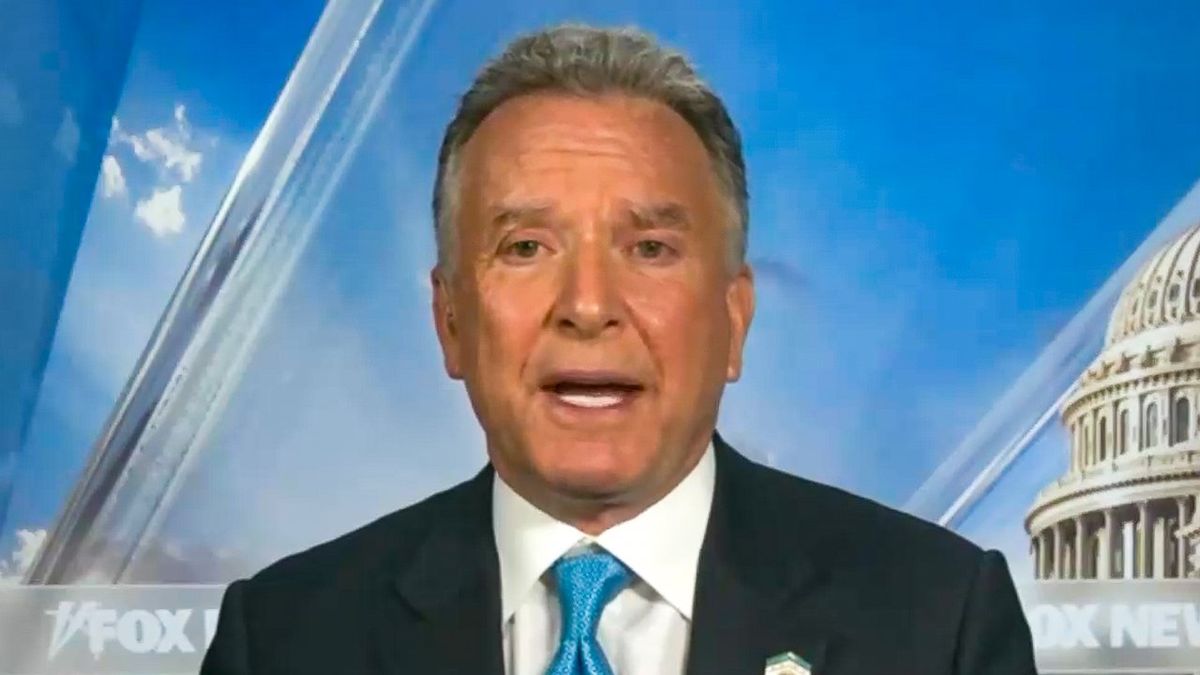
Fox News/screen grab

Steve Witkoff, President Donald Trump's special envoy, argued that it "doesn't matter" whether or not Russian President Vladimir Putin wants to take over Europe.

During an interview on Fox News Sunday, Witkoff told host Shannon Bream that Putin "wants peace" in Ukraine despite overnight attacks that killed at least seven people.

"You're convinced that he's not going to go further or have aspirations towards Europe," Bream noted. "Why are you convinced that he won't press further? If he's given some reward or some territory this time around?"

"This is not me taking sides," Witkoff insisted. "Now, I've been asked my my opinion about what President Putin's motives are on a larger scale. And I simply have said that I just don't see that he wants to take all of Europe. This is a much different situation than it was in World War Two."

"To me, it just — it just — I take him at his word in this sense," he continued. "So, and I think the Europeans are beginning to come to that belief, too. But it sort of doesn't matter."

"The real issue here, the agenda set forth by President Trump, he is my boss. And I adhere to that fact that the agenda is stop the killing, stop the carnage. Let's end this thing."

Watch the video below from Fox News.


Putin not a 'bad guy,' Trump envoy says

Agence France-Presse
March 23, 2025 

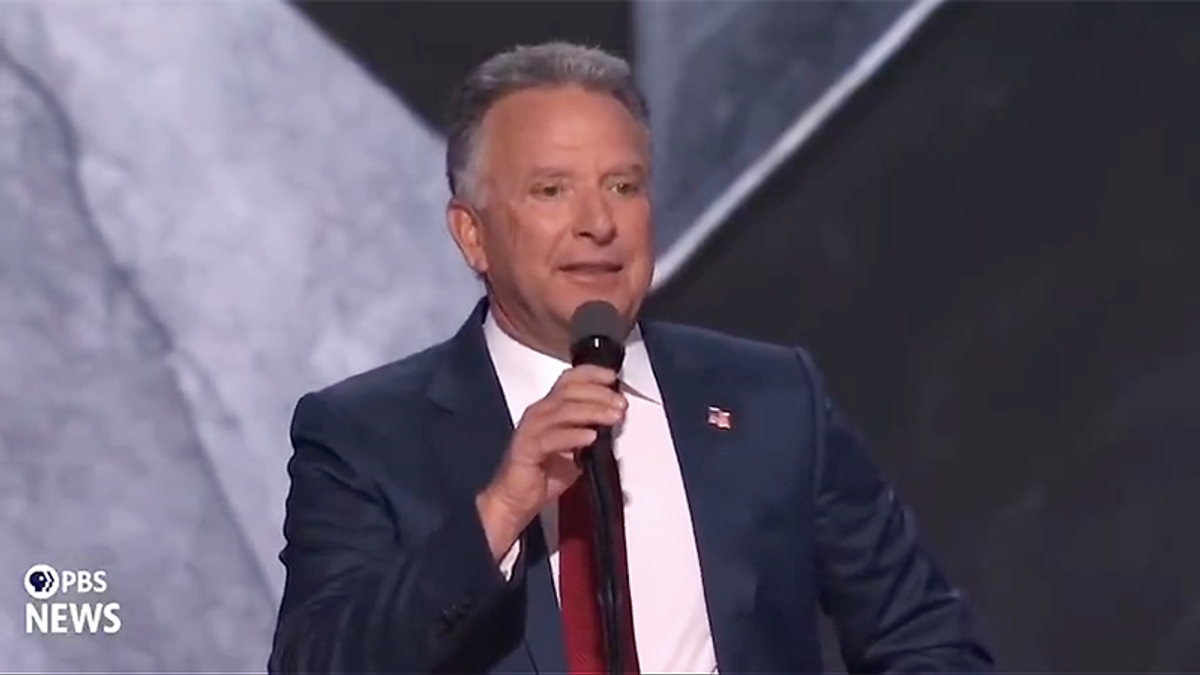
Longtime Donald Trump friend, golf buddy and investor Steven Witkoff speaks at the RNC (Photo: Screen capture via PBS video)

White House envoy Steve Witkoff has praised Vladimir Putin in glowing terms as trustworthy and said the Russian leader told him he had prayed for his "friend" US President Donald Trump when he was shot.

Witkoff met with Putin over multiple hours last week in Moscow and told US media the talks -- which involved discussions about forging a path towards ending Russia's war in Ukraine -- were constructive and "solution-based."

In an interview with right-wing podcast host Tucker Carlson, the envoy said he has come to regard Putin as not a "bad guy," and that the Russian president was a "great" leader seeking to end Moscow's deadly three-year conflict with Kyiv.

"I liked him. I thought he was straight up with me," Witkoff said in the interview aired Friday.

"I don't regard Putin as a bad guy. That is a complicated situation, that war, and all the ingredients that led up to it."

He also described a "personal" element of the discussion in which Putin recalled his reaction to the assassination attempt on Trump in July 2024 as the Republican held a campaign rally in Butler, Pennsylvania.


Putin "told me a story... about how when the president was shot, he went to his local church and met with his priest and prayed for the president," Witkoff said.

"Not because... he could become the president of the United States, but because he had a friendship with him and he was praying for his friend."

Putin had commissioned a "beautiful portrait of President Trump from a leading Russian artist," and asked the envoy to take it home to Trump, Witkoff added.

"It was such a gracious moment."

Witkoff's gushing praise of a president long seen by the United States as an autocratic adversary highlights the dramatic turn in Washington's approach to dealings with the Kremlin since Trump took office for a second presidential term.

Witkoff also said Ukraine's Volodymyr Zelensky was facing tough choices ahead and that the president should recognize it is time for him to "get a deal done" with Moscow.

Zelensky is "in a very, very difficult situation, but he's up against a nuclear nation," Witkoff said. "So he's got to know that he's going to get ground down. Now is the best time for him to get a deal done."

Witkoff's comments essentially were delivered on friendly ground. Carlson is a controversial former Fox News star who conducted what was widely considered to be a rare but soft interview with Putin last year.

Carlson has also been a leading propagator of pro-Kremlin narratives in the United States.


'You want to do nonsense!' Bernie Sanders walks off ABC News after AOC question

David Edwards
March 23, 2025 
RAW STORY


ABC/screen grab

Sen. Bernie Sanders (D-VT) tried to end an interview with ABC News after host Jonathan Karl asked an "inside the beltway" question about Rep. Alexandria Ocasio-Cortez (D-NY).

While speaking to Sanders, Karl wondered if Ocasio-Cortez had a future in the U.S. Senate.

"Would you like to see her join you in the Senate?" Karl asked.

"I said, just a whole lot of people in the Congress. OK, Jonathan, thanks," Sanders said as he got up to leave the interview.

"Wait, I got one more — I got one more. This is an important..." Karl pleaded.

"No, you want to do nonsense. Do nonsense," Sanders interrupted. "I don't want to talk about inside the beltway stuff."

"I was just asking you about AOC because she was out there with you," Karl explained.

"Well, you know, fine, but I don't want to talk about this," Sanders insisted before agreeing to answer one more question about his political future.

"Right now, I'm Vermont's senator. That's what I do. And I'm very happy to do it. I am 83 years of age. So — and I'm tired," he concluded.

Watch the video below from ABC or at the link..


Under threat from Trump, Canada set to hold snap elections


By AFP
March 22, 2025


Canada's Prime Minister Mark Carney will call for snap elections and hopes to claim a stronger mandate to fend off US threats - Copyright AFP Dave Chan


Marion THIBAUT

Canada’s new prime minister Mark Carney is expected to announce snap elections Sunday, seeking a stronger mandate as his country fights off a trade war and annexation threats from Donald Trump’s United States.

The former central banker was chosen by the centrist Liberal Party to replace Justin Trudeau as prime minister, but he has never faced the broader Canadian electorate.

That will change on April 28, if, as expected, Carney announces he is bringing parliamentary elections forward several months from October.

Government sources told AFP that he would announce the decision at 12:30 local time (1630 GMT) in a speech to Canada’s 41-million-strong nation.

In power for a decade, the Liberal government had slid into deep unpopularity, but Carney will be hoping to ride a wave of Canadian patriotism to a new majority — thanks to Trump’s threats.

Trump has riled his northern neighbor by repeatedly dismissing its sovereignty and borders as artificial, and urging it to join the United States as the 51st state.

The ominous remarks have been accompanied by Trump’s trade war, imposing tariffs on imports from Canada that could wreck its economy.

“In this time of crisis the government needs a strong and clear mandate,” Carney told supporters on Thursday in a speech in the western city of Edmonton.

– Poll favorites –

Domestic issues such as the cost of living and immigration usually dominate Canadian elections, but this year one key topic tops the list: who can best handle Trump.

The president’s open hostility toward his northern neighbor — a NATO ally and historically one of his country’s closest partners — has upended the Canadian political landscape.

Trudeau, who had been in power since 2015, was deeply unpopular when he announced he was stepping down, with Pierre Poilievre’s Conservatives seen as election favorites just weeks ago.

But the polls have narrowed spectacularly in Carney’s favor since he took over the Liberals, and now analysts are calling this Trump-overshadowed race too close to call.

“Many consider this to be an existential election, unprecedented,” Felix Mathieu, a political scientist at the University of Winnipeg told AFP.

“It is impossible at this stage to make predictions, but this will be a closely watched election with a voter turnout that should be on the rise.”

Poilievre, 45, is a career politician, first elected when he was only 25. A veteran tough-talking campaigner, he has sometimes been tagged as a libertarian and a populist.

Carney, 60, has spent his career outside of electoral politics. He spent over a decade at Goldman Sachs and went on to lead Canada’s central bank, then the Bank of England.

Smaller opposition parties could suffer if Canadians seek to give a large mandate to one of the big two, to strengthen his hand against Trump.

And as for the US leader, he professes not to care, while pushing ahead with plans to further strengthen tariffs against Canada and other major trading partners on April 2.

“I don’t care who wins up there,” Trump said this week.

“But just a little while ago, before I got involved and totally changed the election, which I don’t care about […] the Conservative was leading by 35 points.”
Canada invests in Indigenous-led clean energy projects across remote communities


By  Jennifer Kervin
DIGITAL JOURNAL
March 20, 2025


Image generated by Gemini Advanced

Indigenous and remote communities across Canada are pushing forward with clean energy solutions, reducing their reliance on diesel and investing in long-term sustainability.

To support these efforts, the federal government has announced more than $11 million in funding for 15 community-led clean energy projects.

The funding, delivered primarily through the Clean Energy for Rural and Remote Communities (CERRC) program, will support initiatives in Nunavut, the Northwest Territories, Ontario, British Columbia, Saskatchewan, and Quebec.
Community-driven projects reducing diesel reliance

Many Indigenous and remote communities continue to rely on imported diesel for heat and power, which can be both costly and environmentally damaging. The newly funded projects focus on practical alternatives, including:Forest biomass and bioenergy systems
Solar photovoltaic and battery storage
Energy efficiency retrofits
Feasibility and engineering studies to support long-term clean energy planning

These initiatives aim to increase energy security while creating economic opportunities and reducing emissions.

“Every community deserves access to reliable, sustainable energy to power their homes, schools, and businesses,” Patty Hajdu, Minister of Indigenous Services, said in a statement.

“By working with Indigenous partners through Wah-ila-toos, we’re supporting Indigenous-led clean energy solutions that create good jobs and build stronger communities. These investments put decision-making power where it belongs — in the hands of communities themselves.”
Investing in energy security and sustainability

Jonathan Wilkinson, Minister of Energy and Natural Resources, highlighted the broader impact of these projects.

“I am pleased to see community-led projects contribute to building long-term resilience and prosperity within Indigenous communities,” Wilkinson said.

“Clean energy solutions will ultimately lead to increased economic empowerment, improved health, and lower energy costs for households. Each project contributes to the broader goal of creating sustainable communities and a thriving economy.”

The federal government has emphasized that these investments align with its goals of reconciliation and Indigenous self-determination by supporting projects where communities lead decision-making.

“The path toward a sustainable future must be Indigenous-led and anchored in Indigenous perspectives and knowledge,” said Gary Anandasangaree, Minister of Crown-Indigenous Relations and Northern Affairs.

“By supporting community-led clean energy projects in northern and remote communities, we are supporting First Nations and Inuit as they drive sustainable economic growth and protect the land for future generations.”
Expanding federal support for Indigenous-led clean energy

Since its launch in 2018, the CERRC program has supported over 190 projects across Canada, with a total allocation of $220 million over eight years. Additional funding through Budget 2021 added $233 million over five years and introduced the Indigenous and Remote Communities Clean Energy Hub, later renamed Wah-ila-toos, to streamline federal clean energy funding.

Wah-ila-toos is guided by an Indigenous Council that advises on programs, policy, and engagement strategies. The council recently released the Kinship and Prosperity: Proven Solutions for a Clean Energy Landscape report, outlining recommendations to support Indigenous, rural, and remote communities in transitioning to clean energy.

In addition to these initiatives, Budget 2024 has renewed the Strategic Partnerships Initiative’s Clean Energy funding, allocating $36 million over three years to advance Indigenous economic participation in clean energy projects across Alberta, Saskatchewan, Manitoba, Quebec, and Atlantic Canada.

With continued investment, these programs are enabling Indigenous communities to take the lead in shaping Canada’s clean energy future while strengthening local economies and environmental stewardship

.
This article was created with the assistance of AI. Learn more about our AI ethics policy here.


Written ByJennifer Kervin
Jennifer Kervin is a Digital Journal staff writer and editor based in Toronto.
Algeria prosecutors seek 10 years’ jail for writer Boualem Sansal: media

By AFP
March 20, 2025


French-Algerian writer Boualem Sansal, pictured in 2015, is a prominent figure in north African modern francophone literature - Copyright AFP ROBERTO SCHMIDT

Algerian prosecutors have requested a 10-year prison sentence for French-Algerian writer Boualem Sansal, accused of undermining the country’s territorial integrity, local media reported Thursday.

Sansal, a prominent figure in North African modern francophone literature, is known for his criticism of Algerian authorities as well as of Islamists.

The 80-year-old was detained in November upon arrival at Algiers airport, at a time of growing tensions between France and its former colony.

A verdict in the case, which has received widespread attention in France, is expected on March 27.

Relations between France and Algeria have deteriorated since President Emmanuel Macron in July 2024 expressed support for Morocco’s autonomy plan for the disputed territory of Western Sahara.

The former Spanish colony is mostly controlled by Morocco but claimed by the Algeria-backed pro-independence Polisario Front, which seeks a UN-backed self-determination referendum that has never materialised since a 1991 ceasefire.

Macron said Thursday he hoped for “a swift resolution” so that Sansal could “regain his freedom”.

“We are dealing with a great writer, who is also ill,” Macron told reporters in Brussels, saying he trusted that Algerian President Abdelmadjid Tebboune would appreciate that the case had little basis.

According to the Algerian media outlet TSA, Sansal was charged with “affecting national unity, insulting a constitutional body, practices of a nature likely to harm the national economy, and possession of videos and publications threatening the security and stability of the country”.

Prosecutors accuse him of making statements undermining the country’s territorial integrity.

In an October interview with the far-right French media outlet Frontieres, Sansal said France had reduced Moroccan territory to the benefit of Algeria during its colonisation of North Africa.

According to French newspaper Le Monde, the comments infuriated authorities in Algeria.


– Health concerns –


At a court near Algiers, Sansal on Thursday denied any intention of attacking Algeria, the newspaper Echorouk reported. He said that he had only “expressed an opinion like any Algerian citizen”.

He admitted that he had not considered the fact that his comments could be considered as attacks on Algerian institutions, and said that he is an “Algerian who loves his country”, Echorouk said.

It added that Sansal had no lawyer and “preferred to act in his own defence”.

Sansal’s French lawyer, Francois Zimeray, last week said his client had neither proper access to lawyers nor to medical care, accusations the authorities denied.

In 2015, Sansal won the Grand Prix du Roman of the French Academy, the guardians of the French language, for his book “2084: The End of the World”, a dystopian novel set in an Islamist totalitarian world in the aftermath of a nuclear holocaust.
Italy says Baku Steel submits ‘best offer’ for ex-Ilva plant


By AFP
March 20, 2025


The site formerly known as Ilva is one of Europe's biggest steelworks - Copyright AFP Philip FONG

Brigitte HAGEMANN

A year after ousting ArcelorMittal, Italy moved Thursday to start handing over control of its giant ex-Ilva steelworks — one of Europe’s largest — to Azerbaijan’s Baku Steel.

State commissioners running the plant in the southern city of Taranto asked the government to authorise “preferential negotiations” with a consortium led by Baku Steel and the state-owned Azerbaijan Investment Company.

Industry minister Adolfo Urso said it was deemed to have made the “best offer” among three bids, with the others made by India’s Jindal Steel and US holding company Bedrock Industries.

The commissioners said in a statement that the decision was based on factors including the financial viability of the bidders, the “industrial sustainability” of their plans and “benefits in terms of employment and for the local communities”.

The amount of the offer from Baku Steel has not been disclosed, and the commissioners said the talks would be carried out “with the necessary confidentiality”.

Prime Minister Giorgia Meloni’s government placed the plant under state administration in February 2024 in a bid to protect its thousands of employees after it was declared insolvent by a Milan court.

Rome, which at the time had a 38 percent stake, had accused ArcelorMittal — which had held the other 62 percent — of refusing to inject new funds.

The steelworks, which dates from the 1960s, has been dogged by legal and political battles since 2012 over its emissions, and its production has been declining.

ArcelorMittal paid 1.8 billion euros ($2 billion) for it in 2017, promising to invest 2.4 billion euros and safeguard jobs at the plant, which has 8,100 employees in Taranto.

But by the time the Italian government intervened, it had debts of more than three billion euros and was unable to pay most of its suppliers or its utility bills.


– Industry in crisis –


The change in leadership comes at a crucial time for the steelworks, as the 25-percent tariffs imposed by US President Donald Trump on steel imports into the United States threaten to cripple a sector already in crisis.

Against a backdrop of rising energy prices and declining demand for steel, less than three million tonnes of steel were produced in 2023 in Taranto and barely two million tonnes in 2024.

Only two of the four blast furnaces are currently in operation.

Baku Steel currently operates a steel plant in Baku, the capital of Azerbaijan, with a production capacity of 800,000 tonnes per year.

It has committed to bringing a floating regasification unit to the port of Taranto, which was likely a deciding factor in its successful bid, despite environmental concerns.

Azerbaijan has become Italy’s second-largest gas supplier after Algeria, following Rome’s efforts to reduce its dependence on Russia after the invasion of Ukraine.


– Minority government stake –


Three candidates bid in January to take over the entire steelworks, while seven other offers related to the acquisition of certain assets.

Opposition parties criticised Meloni’s hard-right government as soon as Baku Steel emerged as the favourite in early February.

“The government of patriots has decided to tie itself hand and foot at a strategic level to a state, Azerbaijan, which is deeply influenced by Russia,” said Mario Turco, vice-president of the Five Star Movement.

Russia and Azerbaijan have been historically close but relations have soured since an Azerbaijan Airlines plane crashed in Kazakhstan in December, killing 38 people. Baku says it was shot at by Russian air defences.

Industry minister Urso indicated in early March that the Italian state could retain a minority stake in the steelworks.

Such participation “would allow us to better guarantee the industrial development” of the plant, “avoiding the mistakes of the past”, he said.

The buyer will have to adhere to strict specifications, including “the complete decarbonisation of the Taranto steelworks”, maintaining employment levels and making “the necessary technological and financial investments”, Urso said then.
Italian paper prints fully-AI edition, but not to ‘kill’ journalism


By AFP
March 20, 2025


'ChatGPT keeps hallucinating -- and not even OpenAI can stop it,' say privacy campaigners NOYB - © AFP Kirill KUDRYAVTSEV

Alexandria SAGE

In a world first, an Italian newspaper is printing a fully AI-generated edition for a month in what its director said Thursday was an experiment to “revitalise journalism, not to kill it”.

Il Foglio, a daily broadsheet with an irreverent touch and a circulation of about 29,000, says it is the first newspaper in the world to print entire editions created through artificial intelligence, a nascent technology that is rapidly changing how newsrooms operate.

It began on Tuesday producing a four-page daily AI edition in print and online, alongside its normal edition, featuring about 22 articles and three editorials.

Put simply, the newspaper’s 20-odd journalists ask a version of OpenAI’s ChatGPT chatbot to write a story on a specific subject in a specific tone, and it produces a text using information scraped off the internet.

Examples this week included an analysis of Prime Minister Giorgia Meloni’s speeches, an editorial on the recent phone call between Donald Trump and Vladimir Putin — and a fashion story.

Il Foglio’s director, Claudio Cerasa, explained to AFP the idea behind the project and how it is going.

– What do you want to accomplish with this? –

“The purpose is twofold. On the one hand, to move theory into practice. On the other hand, it’s to test ourselves and thus understand what the limits of AI are, but also the opportunities, the boundaries that must be overcome and those that cannot be.

“All this can spring from a special newspaper like ours, because ours is a newspaper that has irreverent, ironic, creative writing. We do things that are not easily reproducible with a machine.

“It was a desire to flaunt our being special and experiment with something that no one in the world has experimented with, in a disruptive way, creating debate, but above all, first attempting ourselves to understand how AI can be integrated with natural intelligence.”

– How does the process work in practice? –

“In the editorial meeting, many topics come up. Some of these topics are then covered not only by the normal newspaper, but also by the artificial newspaper.

“Every question asked to AI contains a request for a theme… a request for a tone: respectful, irreverent, scandalous, provocative. In the end we ask it to have the style of the paper.

“If there are too many mistakes, we change articles (start a new one). If there are just few errors, though, we leave them, because we also want to understand what the limits are.”

– What lessons have you learned from the first few days? –

“Artificial intelligence exceeds all expectations. We have learned it can do things that can compete with what a human does, but we have learned that in the long run competition must create greater efficiency.

“Innovation must be accepted, because you can’t stop it, it must be understood, governed, and turned into an opportunity for growth.

“If one day there’s a demand for articles made only with AI, it must be accepted. But that demand must increase journalists’ creativity, because journalists will have to start getting used to not doing things that a machine could.

“So it’s a way to revitalise journalism, not to kill it.”

– Are journalists in the newsroom worried? –

“No, everyone is entertained, everyone is curious and among other things, it’s interesting that with this experiment we’re reaching a much larger audience. There are many people who, thanks to AI, are discovering the traditional paper. The first day we had a 60 percent rise in sales.

“It’s no coincidence that no major newspaper has thought of (doing) it, because it is obviously scary. Only a newspaper like ours, which is somewhat unique, can afford to do an experiment like this.”

He added: “The articles written by human beings are better, because they always have something more, they always have an element of creativity, of connection, of making unpredictable links that AI does not have.”

– What are readers saying? –

“The readers are 90 percent entertained, 10 percent worried because they say ‘Make sure you never leave your natural intelligence because you are better.’ But there’s no one who says the operation is stupid and senseless.

“Everyone has understood the spirit.”
Half of firms have been hit by a cyberattack


By Dr. Tim Sandle
DIGITAL JOURNAL
March 21, 2025


Offices in London. — Image by © Tim Sandle.

With 2025 now into its third month, concerns for cybersecurity remain high. Half of businesses report having experienced some form of cybersecurity breach or attack in the last 12 months.

This is according to Reboot Online, who have analysed data from the UK Information Commissioner’s Office (ICO) to uncover how long it takes businesses to report incidents, which were most common, and which sectors saw the largest year-on-year percentage change in reported cyber security incidents.

The findings suggest that 14 percent of all incidents are not reported until more than one week after the attack has taken place (the majority of incidents were reported between 24 and 72 hours after the breach – up 26 percent from 2023 – accounting for 51 percent of all reports).

Of the different industrial sectors most vulnerable to a cyberattack, the marketing sector stands out, reporting the largest growth of cybersecurity incidents at 190 percent.

Membership association saw the second largest growth from 2024, with 84 percent more reports at 215. While social care reported 266 incidents in 2024 – up 74 percent in the first three quarters of 2023.

In contrast, the media has reported the largest decrease in cyber security incidents, with 68 percent fewer than in 2023 – down to just 15 reports. Regulators reported 47 percent fewer incidents in 2024, while finance, insurance and credit noted 40 percent fewer.

Which cybersecurity incident had the biggest increase in reports last year?

The survey reveals the following ranking:Phishing
Malware
Ransomware
Brute force
Unauthorised access
Denial of service

The ICO received 3,366 reports of phishing between January 2024 and September 2024 – the equivalent of 12 phishing incidents a day. Compared to 2023, it represents a 64 percent increase in year-on-year phishing incidents.

In second place there were 362 cases of malware. Despite this, it was an 8 percent fall from 2023, where there were 395 malware incidences.

At the other end in sixth place is denial of service, as the ICO was alerted to one occurrence of the attack in 2024, compared to the six reported in 2023.

Venky Sundar, Founder and President of Indusface explains to Digital Journal why cyber security training is so important for businesses: “With data breaches costing businesses an average of $4.45 million globally in the last year, it raises the question of just how critical it is for organisations to provide employees with comprehensive training on what constitutes sensitive data and how they can protect it, as well as what is at stake if they do not adhere to the policies.”

The answer appears to be with improved training and development: “Training doesn’t have to be monotonous, for example setting up phishing email simulators to engage the team and allow them to see the potential dangers in action. These simulations show how quickly and easily attacks can happen, helping employees develop practical, hands-on skills for spotting suspicious activity.”

Cities, at risk from all quarters? — Image by 
© Tim Sandle (at the Design Museum, London)

Sundar adds: “Cybersecurity threats evolve constantly, so training should be regular, not a one-time event. Regular training and guidance will ensure that employees receive tailored guidance on securing their work equipment, home offices, use of VPNs, and recognizing the unique threats posed by both in-office and home working environments.”