China and Russia Expand Cooperation on Antarctic Drilling
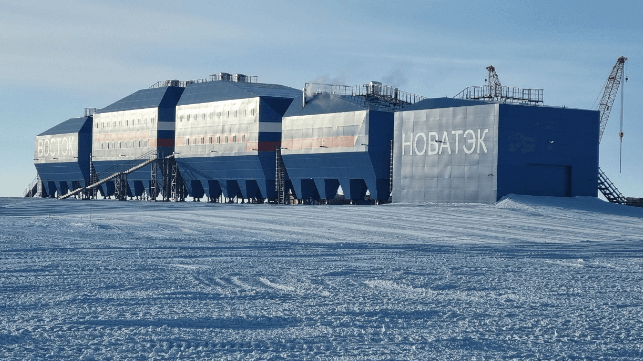
As international interest in the Polar regions mount, China and Russian cooperation in the Antarctica has achieved a new milestone. The two countries have begun joint Antarctic drilling, crucial in collecting data to understand the changing Earth’s climate system. This week, a Sino-Russian scientific team carried out a successful geophysical survey on an existing borehole in the Larsemann Hills region of East Antarctica. The well had been drilled into a 545-meter thick glacier during the Chinese 40th Antarctic expedition, from November 2023 to April 2024.
In this 41st expedition, involving some Russian scientists, the study involved measuring key parameters of the well. These include the borehole temperature, inclination and changes in borehole diameter. The researchers also collected ice core and bedrock samples. The current expedition begun in last November and ends in May.
Since last year, China and Russia have held talks over joint drilling in Antarctica. In September, Beijing and Changchun city hosted international conferences on Antarctic exploration, which were attended by Russian specialists from the Federal Agency for Mineral Resources (Rosnedra). With the successful geophysical survey this year, the cooperation is likely to extend to other sites in East Antarctica.
During the conferences, a proposal was made for a Russian-Chinese project to drill the Gamburtsev subglacial mountains in East Antarctica. The scientific results to be obtained from the drilling could be one of the most advanced of our time, said Rosnedra. Through its Kunlun station, China has been carrying out studies near Gamburtsev. The mountain range occurs beneath Dome A, the highest plateau in Antarctica, with an elevation of 4100 meters. In 2012, China drilled the first pilot well in this region. However, further work is needed to get to the bedrock of the Gamburtsev subglacial mountains.
Deep ice-core drilling in the Gamburtsev region remains one of the primary goals of modern polar research. Ice-core studies provide an excellent method for investigating past variations of global climate and forecasting the future.
Chinese and Russian cooperation in the Antarctic has taken various dimensions, with Antarctic drilling now presenting another important avenue. However, the two countries are seen as disruptors to the existing Antarctic governance system. Both seek to impose new views on resource exploitation in Antarctica. China and Russia have consistently opposed plans to expand marine protected areas (MPAs) in the Southern Ocean, which would mean reduced areas available for krill fishing.
Military Sealift Command is Wrapping Up 2025 Supply Mission to Antarctica
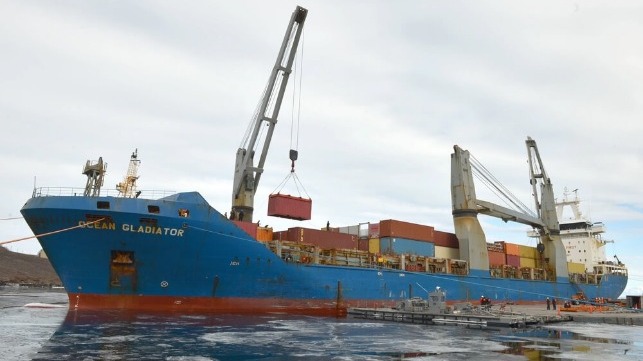 Ocean Gladiator in Antarctica during here 2023 mission (Navy Expeditionary Logistics Support Group photo)
Published Feb 28, 2025 6:04 PM by The Maritime Executive
The chartered general cargo ship Ocean Gladiator (17,700 dwt) arrived last week at the U.S.’s McMurdo Station, Antarctica in support of the annual resupply mission Operation Deep Freeze (ODF) 2025. The Military Sealift Command highlights the critical nature of the mission which has been conducted annually for the past 70 years since 1955 when the resupply mission was established.
The cargo ship which was built in 2010 and currently operates as part of Seabulk and its new joint venture with Crowley known as Fairwater is completing its portion of the annual effort. The ship is delivering 321 pieces of cargo, consisting of containers filled with mechanical parts, vehicles, construction materials including cement pilings for a pier project, food, electronics equipment, and comfort items; supplies needed to sustain the next year of operations at McMurdo Station, Antarctica.
She followed her running mate Ocean Giant which conducted the first portion of the mission. Only one of the ships at a time can be at the station. Ocean Giant arrived at the base on January 26 and completed her portion of the mission on February 11. She made a stop at Lyttelton, New Zealand, and is currently on her return trip to Hueneme, California where she is due in mid-March.
Following the offload, Ocean Gladiator will be loaded with 149 containers of retrograde cargo for transportation off the continent. This includes trash and recyclable materials for disposal and equipment no longer required on the station, as well as the 65-ton floating Modular Causeway System, which was used this year in place of the ice-pier for cargo operations.
Before departing McMurdo station, Ocean Gladiator will also be loaded with ice core samples that will be stored on the ship in a sub-zero freezer. The ice core samples will be delivered to the United States for scientific study.
While she was at the base, members of Navy Cargo Handling Battalion ONE were assisting with the offload. The teams live in barracks at McMurdo Station, or on the ships for the duration of the mission.
February is summer in the Southern Hemisphere, but weather is a constant factor in Antarctica. The continent is known for its extreme environment, particularly subzero temperatures and high winds. The MSC team headed by Marie Morriw, ship liaison to the Joint Support Forces Antarctica highlights there is a small window of just a few weeks for ODF to take place. Temperatures on the ice they report hover around freezing during the day and below zero at night. Cargo operations can move forward, despite the temperatures, but high winds can put a pause on work for hours, with the ships’ cranes unable to move cargo in winds over 25 knots.
Following operations in Antarctica, Ocean Gladiator will travel to Japan to deliver the floating modular causeway, before sailing for Port Hueneme, California, where they will offload cargo, completing their mission.

No comments:
Post a Comment