Friday, July 24, 2026


Most mines face water risk: ICMM


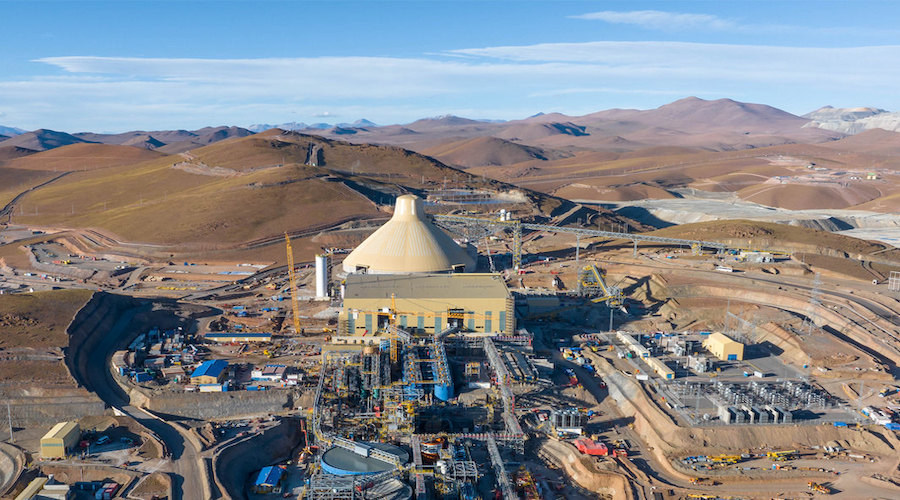
Water scarcity could constrain mineral supply for the energy transition. Credit: ICMM

The International Council on Mining and Metals (ICMM) has released a new report showing 65.7% of mining and metals facilities worldwide are located in areas facing significant physical water risk.

The report and dataset, available on ICMM’s website, gathered data from 12,000 facilities across 148 countries. Other key findings include 38.2% of facilities in catchments with high baseline water stress, 27%  exposed to high drought risk and 14% operating in high flood risk areas.

The dataset also showed that water risk exposure is not evenly distributed. In Chile, for example, 85.8% of facilities face high baseline water stress — more than double the global average. Data from Africa and the Middle East showed similar results.

Water scarcity can slow mineral processing because many extraction steps such as crushing, flotation, leaching and tailings management rely on steady water supplies.

In the report, ICMM says as demand for minerals and metals grows to support energy transition, understanding water risk is a necessity. 

“If water risk exposure is not better understood and managed across the wider economy, we risk sleepwalking into a major constraint on the energy transition,” said Emma Gagen, ICMM’s director of data and research.

She added the mining industry needs to adopt better stewardship principles. “This dataset is a starting point for others to explore, use and collaborate with us to continue improving the collective picture of water risk across the industry.”

Crystal Davis, the global director for food, land and water programs and the World Resources Institute, said, “Responsible mining starts with shared access to credible, publicly available data on where water risks are greatest.”


Guinea first-half bauxite exports hit record high on Chinese demand


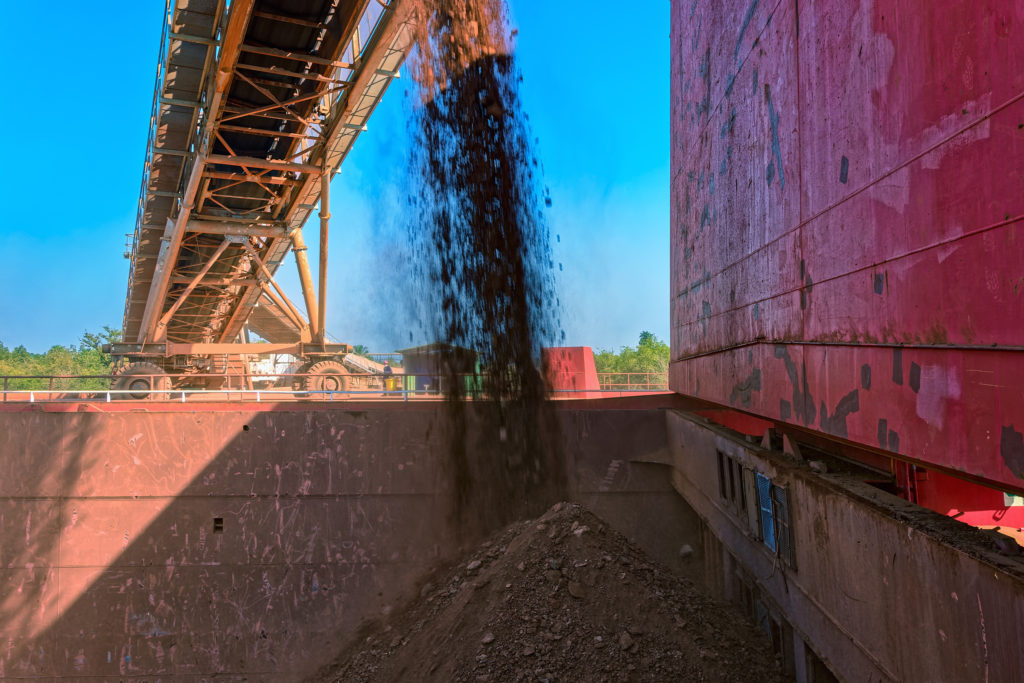
Stock image.

Guinea’s bauxite exports jumped 15% to a record high in the first half of 2026, official data showed, driven by robust Chinese demand despite mounting pressure on smaller producers from rising fuel and freight costs.

Bauxite is a feedstock for alumina, a key ingredient in aluminum widely used in the transport, construction and packaging industries.

Guinea, the world’s largest bauxite exporter, shipped 114.8 million metric tons of the material between January and June, up from 99.8 million tons a year earlier, according to mines ministry data seen on Tuesday by Reuters.

Second-quarter exports rose 5.3% year-on-year to 53.9 million tons from 51.2 million tons in the same period of 2025.

Industry leader Societe Miniere de Boke (SMB) shipped 16.95 million tons during the quarter, followed by China’s Chalco with 7.73 million tons and Compagnie des Bauxites de Guinee (CBG) with 4.13 million tons. Guinea also shipped 238,563 tons of alumina within the period, the data showed.

Chinese companies dominate Guinea’s bauxite sector, which sends about 70% of its exports to China, and control over 60% of Simandou, the world’s largest untapped iron ore deposit.

Proposed curbs to output

Guinea has considered imposing curbs on bauxite exports to support smaller miners and lift prices, but has yet to implement them.

Global bauxite prices have weakened in 2026 due to oversupply after last year’s rally, with Guinea Free On Board prices holding around $38-$39 per dry ton, according to commodity price tracking firm Procurement Resource.

Guinea’s strong export performance comes despite mounting operational challenges during its rainy season and a sharp rise in logistic costs linked to the Middle East crisis.

“It is becoming very expensive to mine and ship bauxite,” said sector analyst Mehdi Chehab, adding that fuel prices have risen by more than 80% while rough seas have increased voyage times and freight costs.

A second analyst said smaller miners producing lower-grade ore have been hit hardest.

One of them, Dynamic Mining, has halted operations while three other firms have suspended or reduced activities, the analyst said, speaking on condition of anonymity to discuss sensitive issues. Dynamic Mining did not immediately respond to a request for comment.

The disruptions are unlikely to significantly affect Guinea’s overall 2026 output because major exporters continue to expand production and new operators are entering the market, said the second analyst and a mining executive who also spoke on condition of anonymity.

(By Maxwell Akalaare Adombila; Editing by Pratima Desai and Emelia Sithole-Matarise)


Brazil to provide $3.7 billion in credit for firms hit by US tariffs

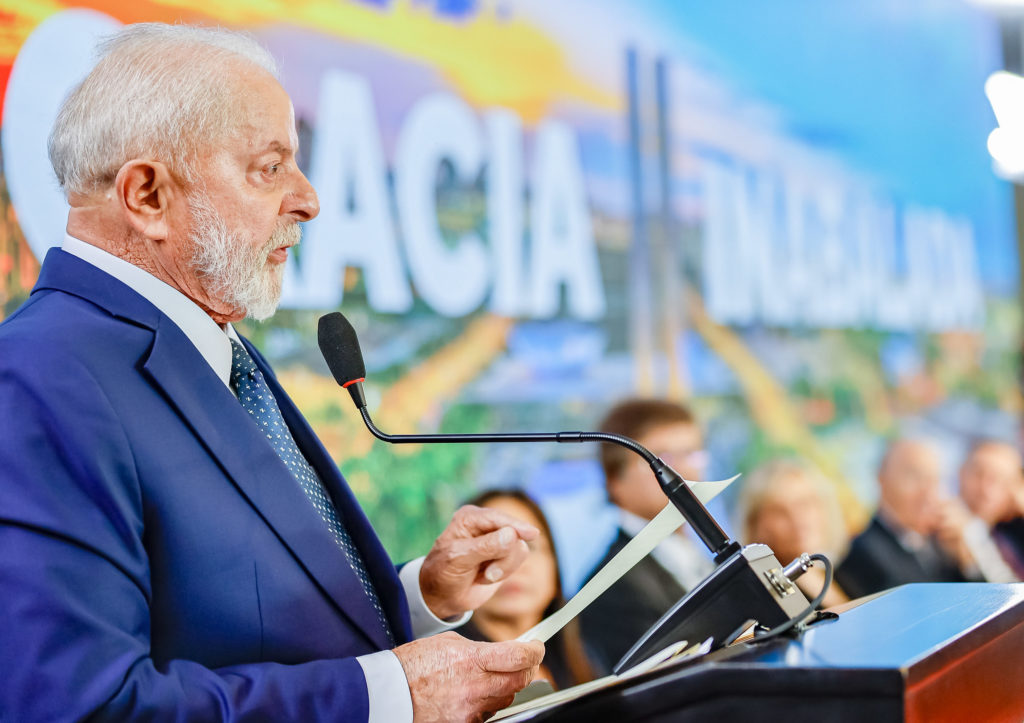
Brazil President Luiz Inacio Lula da Silva. Image: Palácio do Planalto | Flickr

The Brazilian government announced 18.5 billion reais ($3.66 billion) in financing for companies hit by the new U.S. tariffs valid as of Wednesday, adding the resources will also target firms hurt by international conflicts.

In a statement, the administration of President Luiz Inacio Lula da Silva said 13.5 billion reais in credit will come from the Treasury, while state-run development bank BNDES will provide the remaining 5 billion reais.

Industries affected by the 25% U.S. tariffs will be the main beneficiaries of the credit lines, the government said, citing sectors such as steel, aluminum and footwear.

The financing, pending congressional approval, will help firms seeking things such as working capital, machinery and equipment, investments or new markets, according to the statement.

The move will be the third phase of a program the Brazilian government created last year in response to an initial round of U.S. tariffs. The program provides subsidized credit lines and encourages affected industries to seek new markets.

The U.S. imposed a 25% tariff on its imports of a range of Brazilian products, effective Wednesday, citing what it sees as Brazil’s unfair trade practices, from electronic payment services to ethanol market access and illegal deforestation.

The Brazilian government has criticized the tariffs, levied by President Donald Trump under the Trade Act of 1974. Brazil has said the U.S. decision is unjustified since Brazil has a trade deficit with the U.S., and uses false allegations.

Brazil is also part of a separate U.S. investigation into forced labor allegations that ends on July 24. This could add another 12.5% tariff that would push total duties on some goods to 37.5%.

“Regarding the forced labor-related Section 301 investigation, we contend that it should not be cumulative with the Section 301 action from last week,” Brazilian Trade Minister Marcio Elias Rosa said.

Rosa said his latest meeting with U.S. Trade Representative Jamieson Greer ended with both sides signaling their intention to continue negotiations. No date has been scheduled for the next round of talks.

($1 = 5.0563 reais)

(Reporting by Lisandra Paraguassu in Brasilia; Writing by Andre Romani; Editing by David Gregorio)


Anglo flags first-half loss at diamonds, coal units; cuts copper cost outlook


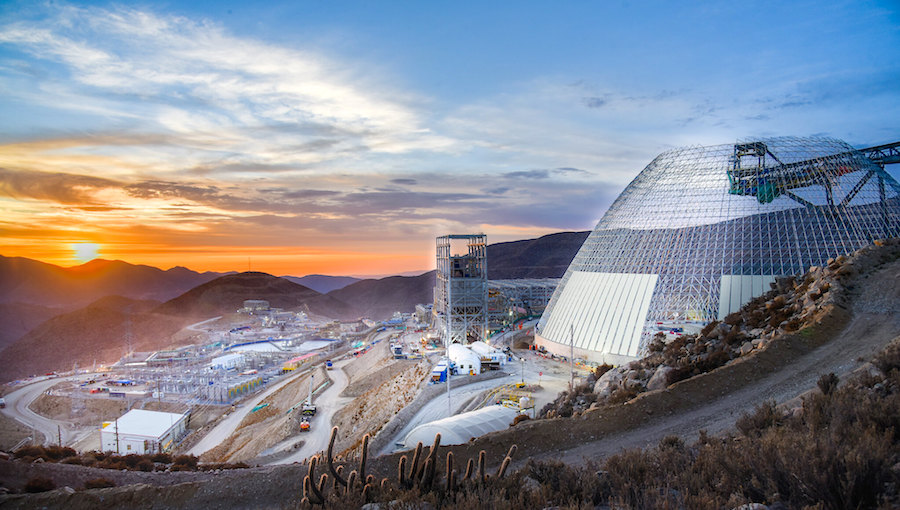
Quellaveco copper mine in Peru. (Image courtesy of Anglo American | Flickr.)

Anglo American (LON: AAL) reported broadly flat first-half copper production on Thursday and lowered its 2026 copper cost guidance, but said its diamonds and steelmaking coal businesses are expected to post negative underlying earnings in the first half.

The London-listed miner maintained its full-year copper production guidance of 700,000 to 760,000 metric tons. It produced 343,600 tons of copper in the first half, up from 342,200 tons a year earlier.

Anglo said its proposed merger with Teck Resources remains on track, with Chinese approval the final regulatory hurdle.


The deal would create the world’s fifth-largest copper producer as the miner reshapes its portfolio through the sale of its steelmaking coal and nickel businesses and the separation of diamond unit De Beers.

As part of that process, Anglo has selected a preferred consortium led by former De Beers Chief Executive Gareth Penny to acquire De Beers.

Botswana, which owns 15% of the business, is considering whether to exercise its right of first refusal and buy the stake itself or through a third party, a government official said.

Despite an 88% rise in diamond output in the second quarter, Anglo said weak demand and lower prices continued to weigh on the market.

(Reporting by Clara Denina, Editing by Louise Heavens)

CU

Panama weighs creation of state-owned miner to pave way for Cobre Panama re-opening

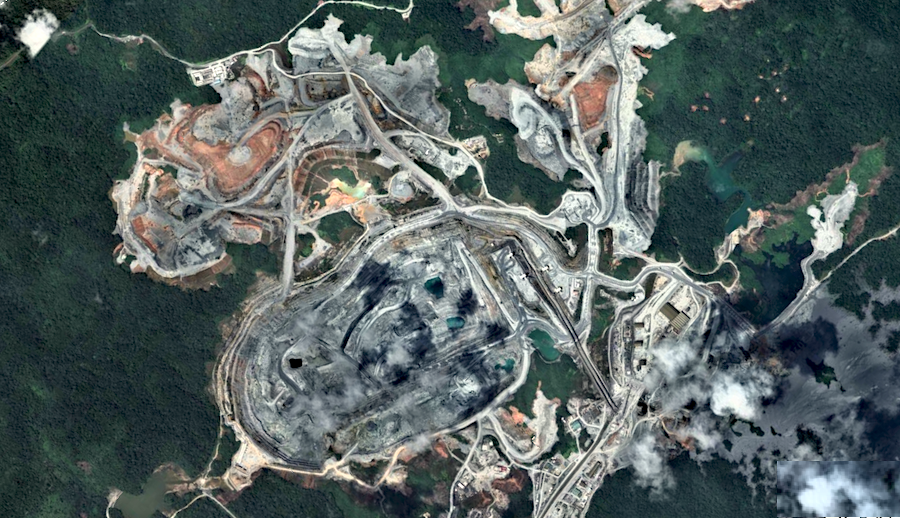
Bird’s-eye view of Cobre Panama mine. (Image: Google Earth.)

Panama is considering creating a state-owned mining firm to partner ‌with Canada’s First Quantum on the re-opening of the shuttered flagship Cobre Panama copper mine, two people familiar with the development told Reuters.

The mine, one of the world’s largest, was shut down in 2023 after Panama’s Supreme Court ruled First Quantum’s 20-year-old mining contract was unconstitutional, amid widespread opposition on environmental and governance grounds.

That wiped out 4.5% of Panama’s GDP, IMF data showed, as well as more than 1% ​of global copper production and 40% of First Quantum’s revenues. Shares of First Quantum were down 1.6% on the Toronto Stock Exchange.

Panama’s President Jose Mulino was elected in 2024 ​after intense public unrest over the mine. During his inaugural speech after being elected, Mulino pledged to finalize the mine shutdown after an ⁠environmental audit. “We must respect the laws, the Supreme Court ruling, and the demands of our people…” Mulino said in July 2024. Adding that the plan to open “in order to ​close definitively, safely and positively for our country will depend on the result of that environmental study.”

Two years later, facing unemployment around 10% and with copper prices near record levels, ​reopening may look more attractive.

The government has allowed the company to sell the last copper concentrate mined before the closure, restart its power plant inside the mine, and conclude an environmental audit that gave the mine a compliance score of 88%.

“It is clear that the government wants to open the mine with First Quantum,” said a person who had advised the government about the mine in the past. “But it still ​fears social unrest.”


First Quantum declined to comment. Panama’s Commerce Minister’s office did not respond to email and phone queries by Reuters.

Analysts at Royal Bank of Canada in a research ​note on Wednesday said regaining operational control of the Cobre Panama mine, which was once the biggest mine for First Quantum, would be transformational for the company.

Different proposals under consideration

The possibility of a ‌public-private partnership between ⁠a Panama-owned entity and First Quantum, giving the miner operational control of the facility, is one of a few proposals under consideration, the sources said.

Under a partnership scenario, First Quantum would have a 60% to 65% stake in the mine, with 35% to 40% owned by Panama, one of the sources said, who did not wish to be quoted as they are not authorized to speak to the media.

First Quantum would receive a higher share because of investments the company made in the mine, one of the sources said.

A revival of ​the mine would help First Quantum get ​on the road to debt recovery, as ⁠well as bringing in new sources of copper to the market that is fundamentally in short supply.

A state-owned entity could be a workaround for a Panamanian law passed in 2023 that bans new mining concessions.

The law is ambiguous regarding concessions granted to a state-owned ​entity, said one person familiar with Panama’s legal framework, adding that there is an option under Panamanian law for a state entity ​to be created for ⁠public-private partnerships.

The underlying mining concession would be owned by Panama.

Leasing option on the table

Public-private ventures are becoming a common practice in resource-rich countries that want higher control over the resources and also get social license for mining projects, with Chile and Zambia, among others, adopting such models.

A further option being weighed is leasing the mine to First Quantum, with the government receiving ⁠a royalty payment ​and collecting tax from revenue earned. It is not clear which of the options the government might choose.

In ​July, Panama’s Commerce and Industry Minister Julio Molto said the government would take its decision by the end of this year, and that Panama will have “complete sovereignty” over the mine issue.

Meanwhile First Quantum has suspended an arbitration that ​it had launched against Panama over the mine, where it was seeking compensation worth $20 billion from the country.

(By Divya Rajagopal; Editing by Veronica Brown, Jan Harvey and Nick Zieminski)
CU

Teck Resources tops profit estimates on stronger copper production and prices

QB is Teck’s flagship copper mine in Chile. (Image courtesy of Teck.)

Teck Resources beat Wall Street estimates for second-quarter profit on Thursday, helped by higher copper prices and increased production.

Shares of the company rose 4% in afternoon trading.

Benchmark three-month copper prices climbed 41.5% in the quarter from a year earlier, powered by concerns over tight supplies and strong demand in China.

Global copper demand is expected to jump 50% by 2040 as utilities rush to build facilities to cater to surging power consumption by data centers, the energy transition and higher defense spending.

Teck Resources, which is in the process of merging with Anglo American in a $53 billion deal, said realized copper prices averaged $6.05 per pound in the second quarter, up from $4.32 per pound a year earlier. Production rose nearly 24.6% to 135,900 tons.

On a post-earnings call, Teck Resources said the company’s merger approval process with Chinese regulators was progressing normally and that it had not received any requests for remedies from authorities in China.

Separately, Teck said it was continuing to evaluate a broad range of potential feedstock sources for germanium processing as the miner works to expand its capabilities in the critical mineral.

Teck, North America’s largest germanium producer, said last year it was considering options to increase production of the metal and was in discussions with the Canadian and US governments regarding potential funding support.

Germanium is a strategic mineral used in semiconductor manufacturing, infrared technologies, fiber-optic cables and solar cells.

Production at the Quebrada Blanca mine in Chile increased to 55,800 tons, from 52,700 tons a year earlier.

The miner reported adjusted earnings of C$1.93 per share for the quarter ended June 30, above analysts’ average estimate of C$1.25, according to data compiled by LSEG.

Separately, the Canadian government this month announced a potential equity investment of up to C$400 million ($285 million) to support an expansion of Teck’s Trail Operations facility in British Columbia.

($1 = 1.4058 Canadian dollars)

(By Katha Kalia; Editing by Sriraj Kalluvila and Devika Syamnath)


Grupo Mexico expects mild copper shortfall this year on strong US economy, AI

Image: Grupo Mexico

Grupo Mexico expects a slight copper market deficit in 2026 due to a strong US economy and demand from green energy and artificial intelligence applications, the head of its mining unit said on Wednesday.

“Based on current supply and demand dynamics, we think there will probably be a slight copper market deficit for 2026 on the back of a resilient US economy and higher demand driven by decarbonization technologies, artificial intelligence and electric vehicles,” Leonardo Contreras told a call with analysts.

The outlook follows the conglomerate’s Tuesday report of a 79% jump in second-quarter net profit, fueled by higher copper prices.

(By Natalia Siniawski; Editing by Daina Beth Solomon)

CU

Chile investigates Antofagasta’s Los Pelambres mine after water discharge from rains


Los Pelambres. (Image courtesy of Antofagasta plc.)

Chile’s Antofagasta Minerals said on Thursday its flagship Los Pelambres copper mine remains safe after Chile’s environmental regulator opened an investigation into a water discharge incident triggered by severe weather.

The regulator on Wednesday said Antofagasta had released water from a drainage pond into the Pupio waterway after heavy rains caused a landslide near the site.

Antofagasta said the controlled release of water from two pools downstream of the tailings dam wall is part of the mine’s water management system.


Some of the water was channeled into the Pupio stream, whose flow had already risen significantly due to rainfall.

Inspections of the tailings dam showed it “is stable and in line with its design and safety parameters, with no risks to people or the surrounding environment,” the company said.

The regulator said it would continue evaluating whether further action is needed.

Heavy rains have hit Chile from the north-central zone to the south, causing floods, road closures and damage to homes.

Copper mines in the area typically operate under winter contingency plans, but the storm’s intensity has forced some to scale back activities even further.

Los Pelambres, in Chile’s north-central Coquimbo region, is Antofagasta’s largest copper mine.

(By Fabian Cambero; Editing by Daina Beth Solomon)

LI

Zimbabwe taps Chinese firms for $300 million lithium project

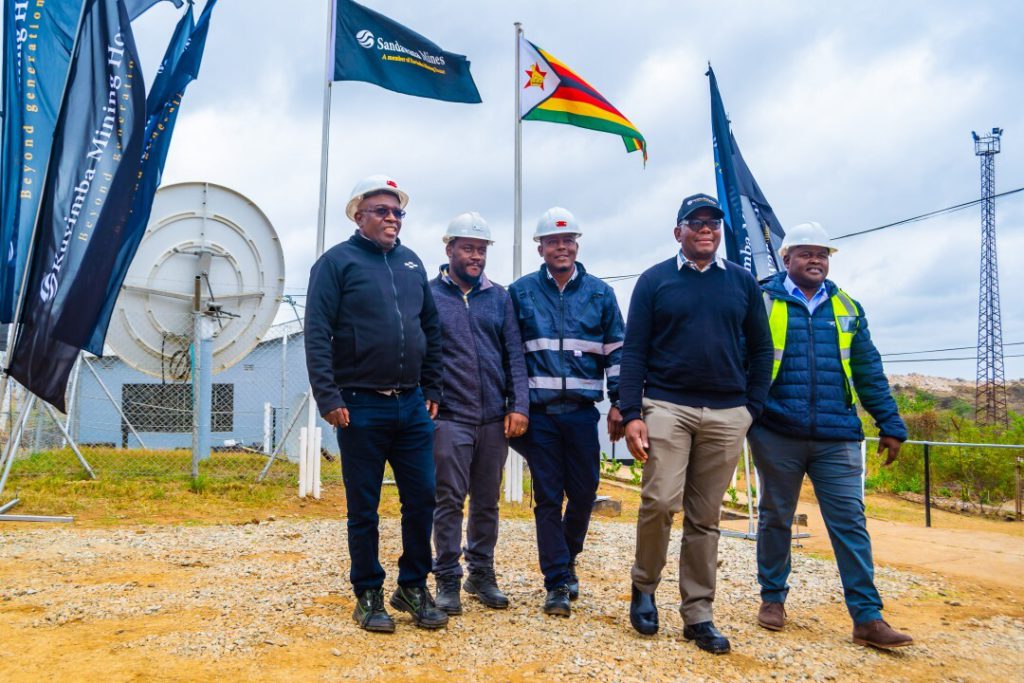
Credit: Sandawana Mines via LinkedIn

Mutapa Energy Resources, Zimbabwe’s state-owned lithium miner, has secured $300 million from a group of companies, which includes Chinese entities, to develop its assets in the southern African nation.

“It’s a done deal,” Innocent Rukweza, chief executive officer of Mutapa Energy, said in an interview. He declined to identify the investors because one firm is listed and needs to make a regulatory disclosure first.

Zimbabwe has become a major supplier of lithium feedstock to Beijing’s dominant battery industry following a surge of investment by Chinese companies. The country accounted for about 10% of global mined production last year, according to the US Geological Survey.

Bloomberg News has previously reported that Zhejiang Huayou Cobalt Co. and Tshingshan Holding Group Co. were negotiating a $250 million to $300 million partnership with Rukweza’s company which would see the firms build a mine and processing facilities at Mutapa’s Sandawana lithium deposit. Both Chinese firms already own lithium projects in Zimbabwe.

Chinese investors in Zimbabwe’s lithium sector also include local units of Sinomine Resource Group Co., Chengxin Lithium Group Co. and Sichuan Yahua Industrial Group Co. The government intends to halt shipments of lithium concentrate from the beginning of 2027 to promote domestic processing of higher value products and curb illegal shipments of the metal.

Like other African nations including Guinea, Ghana and the Democratic Republic of Congo, Zimbabwe is seeking to derive more value from its natural resources. Sinomine and Yahua are building facilities capable of making lithium sulfate, an intermediate material used to make battery-grade chemicals, while Huayou has already commissioned its own plant.

Mutapa has mined 2 million tons of ore from its reserves at Sandawana and is setting up a plant to treat 3 million tons of ore a year, Rukweza said.

(By Godfrey Marawanyika and William Clowes)


USA Rare Earth seals deal to buy stake in French processor Carester


USA Rare Earth’s magnet manufacturing facility in Stillwater, Oklahoma. (Credit: USA Rare Earth)

USA Rare Earth finalized a deal on Thursday to buy a minority stake in France’s Carester that will provide funds for expansion of a processing plant due to open later this year.

The move is part of a scramble by the US and Europe to build their own rare earths and magnet output to cut dependence on China, which controls about 90% of global processed output of the minerals vital for the energy transition, electronics and defence.

“Integrating Carester’s capabilities into our global platform brings additional advanced processing optionality into our integrated value chain,” USA Rare Earth’s CEO Barbara Humpton said.

USA Rare Earth said it and French private equity fund InfraVia signed definitive agreements to each buy 13.6% stakes in privately-held Carester, without saying how much they were paying.

In April, the company said it had agreed to pay €40 million ($45.57 million) for a stake in Carester and in June said it would make additional investments in France that could exceed €175 million.

Carester is building a magnet recycling and heavy rare earth separation facility in Lacq, France, scheduled for commissioning in late 2026.

Heavy rare earths are necessary for magnets but may be difficult to source amid expected shortages, according to analysts.

The Carester deal will allow USA Rare Earth to buy oxide output from the French plant, while Carester will get access to material from the Serra Verde mine in Brazil, which the US company agreed to buy for $2.8 billion in April.

USA Rare Earth, which agreed to a $1.6 billion debt-and-equity funding package with the US government in January, has a magnet manufacturing plant in Stillwater, Oklahoma, which is expected to launch later this year.

($1 = 0.8777 euros)

(By Eric Onstad; Editing by Susan Fenton)


Sweden declares mining national security interest to counter dependence on China


Parliament house (Riksdag) building in Stockholm, Sweden. Stock image.

Sweden’s government declared mining of critical metals and rare earth minerals a national security interest on Thursday, saying a new mining strategy was needed to counter the dependence on China.

China dominates both mining and refining of rare earth minerals essential for clean energy generation, defence and electric vehicle production, and export controls have served Beijing as a powerful lever in its trade war with Washington and other disputes.

Sweden also has large mineral resources and the Per Geijer find, located near LKAB’s existing Kiruna mine, is one of the European Union’s flagship projects in its efforts to reduce reliance on China. With 1.2 billion tons of total mineral resources, of which 2.2 million tons are rare earth oxides, Per Geijer is critical to Europe’s interests.

Ebba Busch, Enterprise Minister and Deputy Prime Minister, said making mining a national security interest would speed up planning and permissions, helping attract investment.

“We believe that this can contribute significantly to both Sweden’s, EU’s and NATO’s defence capabilities,” she told a news conference, calling European industry’s dependence on China a “systemic risk.”

Busch said the new strategy would make it easier for the state to assign land to mining projects, an area of tension with the Sami reindeer-herding indigenous people, who say expansion of mining would spell the end of their traditional way of life.

The government was looking at the possibility of creating a state-owned investment company for the Swedish mining sector, she said.

“Today, to put it plainly, the government lacks concrete tools to wisely contribute to accelerating and attracting investments in key projects in crucial strategic projects,” she said.

(By Johan Ahlander; Editing by Tomasz Janowski)

ROGUE NATIONS

India and Myanmar signal closer rare earth mining ties


Myanmar. Stock Image

India and Myanmar are working to deepen cooperation in the rare earths sector after visits to the southeast Asian country by Indian teams, with New Delhi seeking alternative supplies of a strategic resource tightly controlled by China.

In a speech on Wednesday at the opening of a mining forum in Mandalay, India’s Ambassador to Myanmar Abhay Thakur outlined the growing bilateral collaboration between the two countries on rare earths.

Cooperation in the mining sector has gained significant momentum over the last two years, Thakur said.

This includes two Indian delegations on rare earths and critical minerals that have visited Myanmar in December 2024 and February 2026, he said.

The matter has also received high-level attention during a official visit by junta chief turned president Min Aung Hlaing to India in May-June, according to Thakur.

Thakur said, “India’s need for harnessing critical minerals, coupled with the benefits to Myanmar from sustainable mining, presents solid, win-win, short and long-term opportunities.”

Nearly half the world’s supply of heavy rare earths is extracted from mines in Myanmar’s Kachin state, which are then shipped to China for processing into magnets that power electronic vehicles and wind turbines, Reuters has reported.

Reuters previously also reported that India has sought rare earth samples via the rebel Kachin Independence Army (KIA), which controls Myanmar’s main mining hubs, near the Chinese border.

At the Mandalay mining forum, Thakur said the Indian firms in attendance include IREL, NTPC Mining, Himadri Specialty, Oceanic Sands, PrNd Metal & Magnets, and Jai Puri Holdings.

Thakur also said that “Midwest from India” has also closely engaged with Myanmar in recent months and years, without specifying the nature of the involvement.

Reuters has previously reported that the state-owned miner IREL and private firm Midwest Advanced Materials were among those involved in discussions to explore the collection and transportation of samples from mines under KIA control.

(Editing by David Stanway)


US estimates federal coal could power nation for 600 years


Stock image: by Parilov.

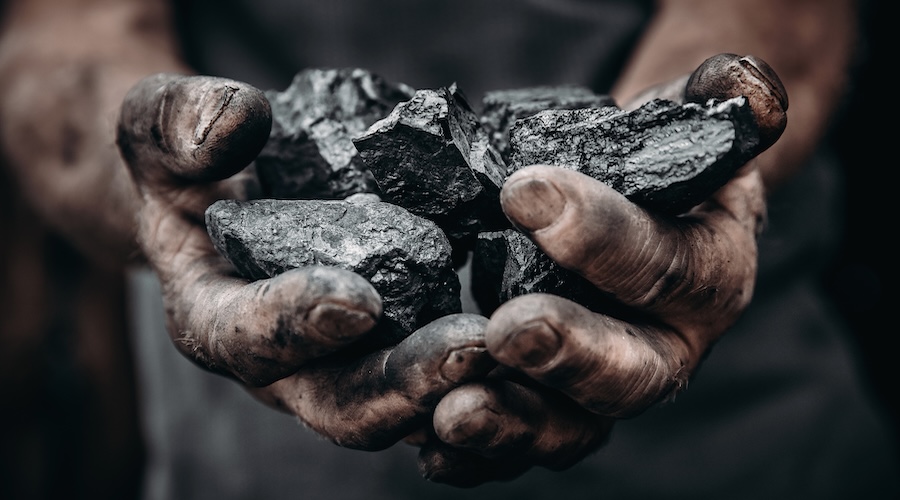
Coal beneath federally managed public lands could supply the United States for at least 600 years at current consumption rates, according to a new assessment, reinforcing the Trump administration’s efforts to revive the industry.

The report released by the US Geological Survey (USGS)  estimates there are 4.2 billion short tons of reported coal reserves associated with active mines and another 356 billion short tons of available coal resources on federally managed lands.

In 2024, 34 coal mines on federal lands produced more than 261 million short tons, according to the USGS. Wyoming accounts for 14 of those mines and holds 87% of reported reserves associated with active federal mines, with the North Antelope Rochelle mine in the Powder River Basin identified as the world’s largest coal mine by reported reserves.

“American Energy Dominance is more important than ever, and so is beautiful clean coal’s role in the production of electricity needed to fuel our future prosperity,” Interior Secretary Doug Burgum said in a statement.

“Thanks to the USGS’s rigorous and independent assessment, we’re better equipped to manage America’s vast public lands responsibly while supporting energy security and economic opportunity.”

The assessment supports President Donald Trump’s efforts to revive the coal sector. Trump signed Executive Order 14261 directing the review of coal resources beneath federal lands, while Burgum added metallurgical coal to the 2025 List of Critical Minerals. The report also calls for additional geological mapping in Alaska, where the USGS estimates at least 140 billion short tons of coal resources, but says the state could contain as much as 5.5 trillion short tons.

Policy divide

Twenty-nine of the active federal mines produce thermal coal for electricity generation, three Alabama operations produce metallurgical coal for steelmaking, one Colorado mine supplies the cement industry and one Utah mine remains idled. Federal lands covered by the study are administered by the Departments of Agriculture, Defense, Energy and Interior, along with the Tennessee Valley Authority.

The report arrives as the Trump administration has committed more than $1 billion to bolster the US coal industry, including funding to extend the operating lives of coal-fired power plants and expand coal production capacity.

The policy marks a sharp departure from climate scientists, who continue to argue that reducing coal, oil and gas consumption is essential to limiting global warming and avoiding more severe climate impacts.


US Department of Energy commits $65.5M to boost domestic oil and gas production  


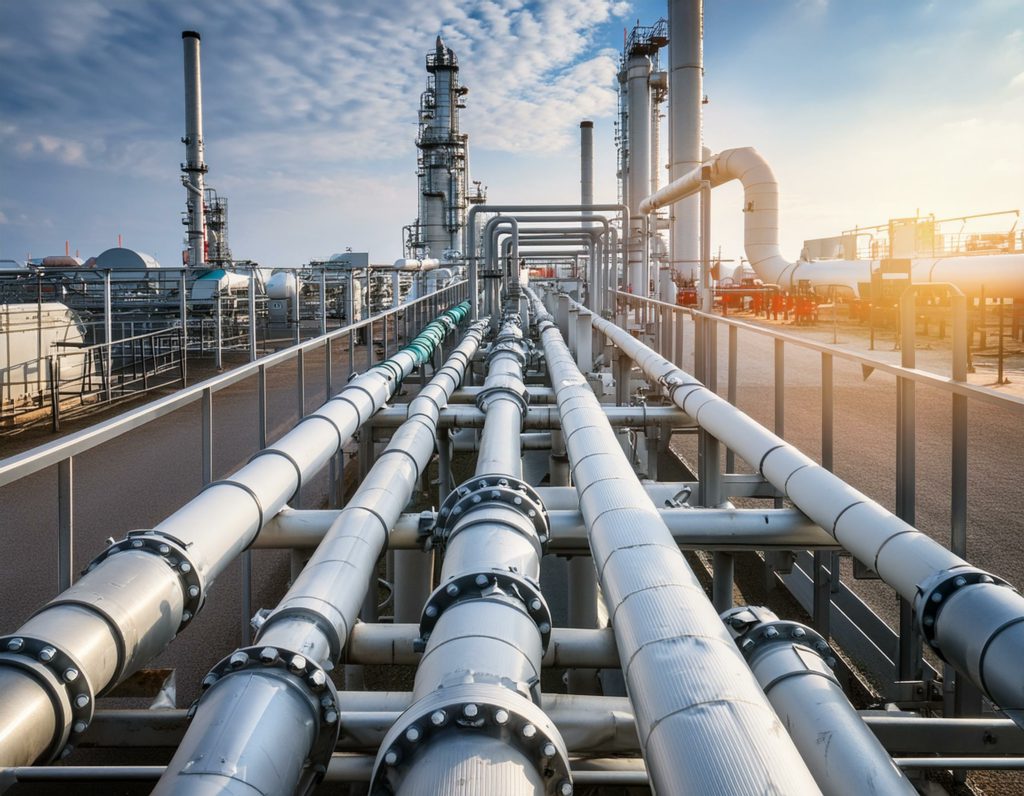
Oil & gas pipelines. AI-generated stock image.

The U.S. Department of Energy (DOE) has announced up to $65.5 million in federal funding for cost-shared research, development, and deployment projects to strengthen domestic oil and natural gas production.  

The funding will be used to improve the efficiency and reliability of critical energy infrastructure and convert underutilized resources.  

It will also support technologies that maximize the productivity of existing infrastructure, expand the capacity and performance of energy delivery systems, and strengthen the resilience of America’s oil and natural gas supply chain.  

The funding opportunity supports President Trump’s Executive Order, “Unleashing American Energy,” aimed to ensuring Americans have access to affordable, reliable, and secure energy through the responsible development of the nation’s abundant oil and natural gas supplies, the DOE said.  

“The Energy Department is making strategic investments to strengthen America’s oil and natural gas industry and reinforce the critical infrastructure that powers our economy,” DOE Under Secretary of Energy Kyle Haustveit said in a news release

 “This funding opportunity will help American producers eliminate waste, improve efficiency, and deliver the affordable, reliable, and secure energy that powers our economy and strengthens our national security.” 

The DOE has released a Notice of Funding Opportunity (NOFO) seeking innovative proposals that address: 

Stranded and underutilized resources 

Develop and validate technologies to transform oil, natural gas, and associated product streams—including those that would otherwise be stranded, flared, or limited by contaminants—into high-value, readily transportable products. Funded projects will progress from laboratory-scale validation of new catalysts, reactor systems, and separation processes to field-testing modular, decentralized gas conversion systems and sour gas processing facilities in active production basins. 

Enhance supply chain durability and infrastructure reliability 

 Develop, validate, and field-test advanced materials, innovative equipment, and novel infrastructure components to prevent product losses and bolster domestic chemical supply chains. This includes improving facility-level equipment and transport infrastructure—such as compressors, valves, piping, storage tanks, coatings, and alloys—to maximize safe and efficient energy delivery. 

Optimize operations through digitalization and smart test sites 

 Accelerate the adoption of digital technologies, smart facility concepts, and advanced analytics to improve operational efficiency, safety, and reliability within the upstream and midstream oil and natural gas sector. Projects will utilize full-scale, field-based validation platforms and test sites to deploy continuous monitoring systems, artificial intelligence-supported digital twins, and infrastructure optimization systems that increase saleable hydrocarbons, reduce operating costs, and track the technical maturity of emerging technologies. 

The announcement builds on DOE’s recent $150 million funding opportunity, which focuses on enhancing recovery efficiency from unconventional oil and gas reservoirs, advancing hydraulic fracture characterization technologies, and developing innovative approaches for produced water management.