Monday, February 17, 2020

Joseph Shabalala, who created the world-famous South African choral group Ladysmith Black Mambazo, has died.

South Africa: President Declares Special Official Funeral for Mr Joseph Shabalala 

Photo: GovernmentZA/Flickr

16 FEBRUARY 2020
The Presidency of the Republic of South Africa (Pretoria)

PRESS RELEASE

President Cyril Ramaphosa has declared a Special Official Funeral Category 2 in honour of Mr Joseph Shabalala, the late founder of choral group Ladysmith Black Mambazo.

Mr Shabalala, aged 78, passed away on 11 February 2020 following extended illness.

The Special Official Funeral Category 2 entails ceremonial elements provided by the South African Police Service. The funeral will take place on Saturday, 22 February 2020.

President Ramaphosa has ordered that the National Flag be flown at half-mast at every flag station in the country until the evening of 22 February 2020. Regulations require that no other flags should be displayed when the National Flag is flown at half-mast.

President Ramaphosa has reiterated his sincerest condolences to the Shabalala family, members of Ladysmith Black Mambazo and members of the arts and culture fraternities in South Africa and globally with whom Ladysmith Black Mambazo has collaborated for the better part of six decades.

In 2008, this world-renowned and widely awarded choral group received the National Order of Ikhamanga for putting South African cultural life on the world map through contributing to the field of South African indigenous music.


Zimbabwe: Army Generals Running Mining, Fuel Cartels - Report


plus ça change, plus c'est la même chose


17 FEBRUARY 2020
New Zimbabwe (London)

By Lawrence Paganga

The influence of the military in Zimbabwean politics is reported to be on the ascendancy in politics, economy and government while the army generals have also been reported to be heavily involved in mining and fuel sectors as they increase their control under President Emmerson Mnangagwa's rule.

This is an assessment contained in a study titled: "Assessing Continuity and Change After Mugabe", authored by Alexander H. Noyes and released this month by the US-based Rand Corporation.

Former strongman President Robert Mugabe died last September, a year after he had been toppled from power by deputy, Mnangagwa in a coup backed by the military in November 2017 after 37 years in power.


In the study, Noyes looks into Mnangagwa's two year rule and according to the author, the military's influence in politics, economy and government was on the increase under the rule of Mnangagwa.

"Although the military has always played a prominent role in Zimbabwe's political economy, its influence has increased under Mnangagwa. The military remains heavily involved in the economy, particularly in the mining and fuel sectors," said Noyes.

"Two of the main figures behind the 2017 coup, former generals Constantino Chiwenga and Sibusiso Moyo, are vice president and foreign minister, respectively, and remain powerful players representing military interests in Zimbabwe's cabinet.

"With the old guard and the military still firmly in power, both benefiting from their perches atop the highly cartelised and patronage-based economy--genuine reform is unlikely in the next one to three years in the lead-up to national elections in 2023. Zimbabwe is likely to continue down a path of political polarisation, protests, political violence at the hands of the State, and economic deterioration."

Noyes said although, Mnangagwa had repeatedly deployed flowery rhetoric, his administration's piecemeal actions belie any movement toward genuine political or economic reforms.

Repression has increased and the economy continues to sink while Mnangagwa is protecting his and close allies' political and economic interests.

He noted that politics and economics were inseparable in Zimbabwe, and the country would be unable to recover unless the two sectors are addressed in tandem.

"To help the country repair from years of mismanagement, corruption, and State violence, international actors - including the United States - would be wise to push the government in a coordinated fashion to implement genuine political, economic, and security," he wrote.

Noyes said Mnangagwa had taken some modest steps that could be seen as an indication of progress, particularly on the economic front.

But there was a wide gap between government's reform rhetoric and the reality on the ground.

"There is a wide gap between the government's reform rhetoric and the reality on the ground. The government's well-rehearsed slogans appear to be largely political theatre targeted at the international diplomatic community and potential investors.

"Even where limited progress has been made, such steps appear to be largely cosmetic, a mere box-ticking exercise. In other words, Mnangagwa is attempting to have his cake and eat it too, paying lip service to reforms in the hope of securing international support but staunchly refusing to implement any measures that might harm his and his closest supporters' political and economic interests," said Noyes.

He said Mnangagwa's pledges have fallen short, as genuine reform had been sluggish and repression had increased under his rule.

"A serving Member of Parliament characterised Mnangagwa's reform efforts as putting 'mascara on a frog'. On the political front, reform promises are severely lagging, with very few tangible steps toward reconfiguring Zimbabwe's autocratic system.

"A senior diplomat said that none of the ten major legislative reforms that the government had promised had been fully implemented. The government has taken steps to repeal and replace two repressive pieces of legislation, the Public Order and Security Act and the Access to Information and Protection of Privacy Act.

"However, the Mnangagwa government continues to prevent and violently suppress political protests and the media remain heavily biased in favour of the ruling party, as do the justice and electoral system," said Noyes.

He said on the economic front, Mnangagwa's administration had taken steps toward a few piecemeal reforms in several areas, but progress had lagged in others.

"The fundamentals of the economy remain poor and the results of these patchwork reforms have not been promising thus far. Despite a brief government surplus and the introduction of a new currency aimed at curbing inflation, the economy is again close to collapse, with fuel, food, and electricity shortages reminiscent of Zimbabwe's political and economic crisis in the mid- to late 2000s."

Many interviewees in the study, emphasised their distrust of the government, particularly in regard to the management of the economy.

"After decades of monetary and fiscal mismanagement, record levels of inflation, rampant corruption, and slashed savings accounts, Zimbabweans have approached the recent switch back to a national currency with extreme trepidation. Wildly fluctuating exchange rates and a robust parallel market have also led to widespread currency arbitrage, with those who have access to foreign exchange--often government officials--reaping large profits," Noyes said.

Fossil Automakers Abandon US Monthly Sales Reporting


I’ve been creating monthly auto sales reports for a long time. Last year, I faced a bit of a conundrum. All US automakers (Ford, GM, and Fiat Chrysler Automobiles) decided they didn’t want to report monthly sales any longer and were going to switch to quarterly sales reports only. Fine. Okay. That sucked, but I worked around it. Now, 2020 has rolled around and a bunch more automakers have decided to ditch monthly sales reporting. Nissan (& Infiniti)Jaguar Land Rover, and Volkswagen (including Audi and Porsche) announced the change with press releases. Others didn’t seem to announce it but just stopped publishing the monthly numbers (MercedesBMW, and Toyota).
Perhaps they got tired of sites like CleanTechnica reporting the numbers and showing millions of people (on CleanTechnica alone) that their sales were not looking hot. (See: “Non-Tesla US Auto Sales Down 177,839 In 2019.”) Perhaps they’re concerned about what’s to come. Perhaps they just saw the US automakers do this and thought they’d like to follow suit to avoid month-to-month noise in favor of more relevant quarterly numbers and discussions.

No matter the reason, my monthly sales spreadsheets are now barren and sad. I’ve got numbers from Honda (including Acura), Hyundai (including Genesis), Kia, Subaru, and Volvo — mostly companies that have been doing better than their competitors. Coincidence? I doubt it. Useful? Not so much.
Clearly, I’ll have to switch to quarterly auto sales reports now. Since we’re here, though, here are some top-line January 2020 vs. January 2019 stats takeaways from those 7 auto brands still sharing monthly data:
  • Acura: Down by more than 500, or 5%.
  • Genesis: Up by a couple hundred, or 14%.
  • Honda: Down by nearly 4,000, or 4%.
  • Hyundai: Up by 2,000, or 5%.
  • Kia: Up nearly 3,000, or 8%.
  • Subaru: Up by a couple hundred, or 0.5%.
  • Volvo: Up by a few hundred, or 5%.
Here’s how the US auto industry was standing —
brand by brand — at the end of 2019 compared to 2018:

Yellow cells indicate the brand’s December sales were estimates
based on official quarterly sales.

Follow CleanTechnica on Google News.

Australian Research Council Members Condemn Lack Of Climate Action

January 30th, 2020 by 

CLEANTECHNICA.COM

The mission of the Australian Research Council is “To grow knowledge and innovation for the benefit of the Australian community through funding the highest quality research, assessing the quality, engagement and impact of research and providing advice on research matters.”
In the wake of Australia’s disastrous bushfire epidemic, which is still going on, 80 of the ARC’s most prominent members have penned an open letter urging the Morrison government to take reasonable and realistic action to lower the country’s carbon dioxide emissions. The ARC laureate fellows are a small group of researchers selected by the ARC as the top researchers across all fields in Australia, according to The Guardian.
The government of prime minister Scott Morrison is having none of it, however. According to a report by Reuters, Morrison and his emissions reduction minister, Angus Taylor, maintain that Australia is already doing all that it should or can do and that limiting emissions further will damage the country’s economy, which is heavily invested in exporting fossil fuels. Last year, Australia became the largest supplier of liquefied natural gas, surpassing Qatar for the first time.
“In most countries it isn’t ­acceptable to pursue emission ­reduction policies that add substantially to the cost of living, ­destroy jobs, reduce incomes and impede growth,” Taylor wrote in The Australian, a Rupert Murdoch-owned newspaper, on December 31. “That’s why we won’t adopt Labor’s uncosted, reckless, economy destroying targets that will always result in a tax on ­energy, whether it is called that or not.” Any resemblance to similar language emanating from the US government, which preaches that becoming the largest fossil fuel exporter in the world is a matter of national security, is not accidental.
The ARC laureates see things differently. “The scale and ferocity of the recent fires are unprecedented since European settlement of this country. They arrived at the end of a year with the lowest average rainfall and the highest average temperatures ever recorded across Australia. Climate change has arrived, and without significant action greater impacts on Australia are inevitable…..While much remains to be learned about the impacts of climate change, more than enough studies have been conducted to tell us we have a serious problem that requires urgent changes to be made.”
The open letter continues with these strong words.
The current impacts are happening with just 1 Celsius of global temperature increase, but we are set for the best part of another degree even if very strong international action is taken to reduce emissions. This means further increases in extreme fire risk, heat waves and flooding rains; ecosystems degraded and wild species forced to migrate or vanish; agricultural activities moved or abandoned, challenging our food security; and so on. If strong action is not taken, environmental degradation and social disruption will be much greater and in many cases adaptation will no longer be achievable. It would be naive to assume that such a world will still support human societies in their current form and maintain human well-being.
This dire outlook demands stronger mitigation of carbon emissions. Many argue that actions to achieve this would be economically destructive. This claim has no basis, nor is it consistent with Australia’s traditional optimism and ingenuity, nor with historical experience. Similar objections were raised in the past against government policies to limit air pollution, environmental toxins and ozone-destroying chemicals, but we collectively found ways to achieve mitigation at manageable cost, and with net benefits to society that are clear in hindsight.
A transition to lower, and eventually net zero emissions, is a huge task but is achievable and far less risky and irresponsible than allowing unmitigated warming. This transition requires determination on the part of leaders, as well as empathy, aid and forward planning for communities disadvantaged by the transition. Large transformations in the face of comparable challenges have been successfully achieved in the past, such as the development of road and mass transportation systems, waste-water and sewage handling to minimise diseases, and many others. These transformations created new jobs and whole industries, and will do so again.
The laureates’ letter concludes, “Much research has already been done to identify the policies and technologies that can move us to where we need to go. What is lacking is the courage to implement them on the required scale. (Emphasis added) We call on all governments to acknowledge the gravity of the threat posed by climate change driven by human activities, and to support and implement evidence-based policy responses to reduce greenhouse gas emissions in time to safeguard against catastrophe. We owe this to younger generations and those who come after them, who will bear the brunt of our decisions.”
The claim by the Australian government that the country has already reduced its carbon emissions below the level required by the Paris climate accords is a lie. It is based on credits attributable to the Kyoto climate agreement that predated the Paris accords. In other words, the Morrison government is cooking the books to avoid its legal obligations to its citizens and the people of the world. Such a government deserves only one thing — to be voted out of office and as quickly as possible. 

Sunday, February 16, 2020

BP LOONEY TUNES BEYOND PETROLEUM

Did BP really just pledge to become a net-zero company? It’s complicated.

By Emily Pontecorvo on Feb 13, 2020

Net-zero promises from companies and governments are popping up as often as new Netflix shows, and just like those algorithmically driven hours of entertainment, not all clean energy commitments are created equal. The language used to describe these targets has become as meaningless as the “natural” label on your package of Perdue chicken: “Clean energy” and “net zero” can signify any number of things, and even “renewable” changes depending on who you ask.

The point is, when a fossil fuel major like BP announces its ambition to become a net-zero company by 2050, as it did on Wednesday, it’s important to read the fine print.

To start, “net-zero emissions” is different from plain old “zero emissions” in that it allows for things like carbon offsets, carbon capture technology, and natural solutions like tree-planting to make up for continued emissions. In this case, BP’s net-zero target does not mean it will stop exploring new reserves, extracting oil and gas, or selling it at the pump. Confusingly, it doesn’t even mean the emissions from all the oil and gas products BP sells will be net-zero in 2050.

But all of that aside, the company’s plan does contain significantly more aggressive goals than its peers.

“Depending on the details, it has the potential to be the most comprehensive climate strategy of any of the major oil companies,” said Andrew Logan, senior director of oil and gas at Ceres, a sustainable business nonprofit. But like Logan said, it depends on the details, because while BP’s dreams are big, the company has disclosed few details on how it will achieve them.

BP


One of BP’s targets is to reduce emissions from all of its company operations, which it says is about 55 million tons of CO2 equivalent, to net zero. That includes emissions from things like gas flaring at the wellhead, company cars, and the electricity it buys to keep the lights on. BP’s goal here is somewhat par for the course these days — most of the major oil and gas companies have some kind of emissions reduction target for their operations (though not all of them are net zero).

What’s noteworthy, said Kathy Mulvey, the fossil fuel accountability campaign director at the Union of Concerned Scientists, is that BP says it will measure and reduce its methane footprint at all of its oil and gas sites. “That points to the reality that BP doesn’t actually know exactly how much methane its operations are emitting,” she said.

Critics of these plans say that operational emissions are small potatoes, and that fossil fuel companies should be responsible for the emissions from the oil and gas products they produce and sell to customers, known as scope 3 emissions. This is where BP’s plan really stands out. The company aspires to zero-out the carbon emissions from the eventual combustion of all of the oil and gas it pulls out of the ground by 2050. Right now that amounts to about 360 million tons of CO2 equivalent per year.

BP

In a speech about the plan on Wednesday, new CEO Bernard Looney tried to anticipate questions about this. He said that yes, this does mean BP’s oil and gas production will probably decline over time. “Does that mean we’ll be producing and refining hydrocarbons” — that’s fossil fuel industry–speak for fossil fuels — “in 2050? Yes, very likely,” he said. “Does that mean we’ll be producing and refining less of them in 2050? Yes, almost certainly. And our aim is that any residual hydrocarbons will be decarbonized.”

To date, only one other fossil fuel company has made this kind of commitment, the small Spanish company Repsol. But unlike Repsol, which has set near-term goals to gradually reduce emissions over time, and hinted at some of the strategies it will use to get there, BP offered no benchmarks or blueprints. Looney said the company would share more information on the “how” of its transition in September.


But there’s one key caveat to BP’s scope 3 target. The oil and gas that the company extracts is only a portion of its business. During a Q&A session after his speech, Looney broke down how they are thinking about scope 3 on a whiteboard.

Final picture. Shows 360 million tons in second bar, which is the added emissions from BP oil and gas. That is what BP is committed to reducing, in absolute terms. pic.twitter.com/zq3Ejxk3fX

— Ben Storrow (@bstorrow) February 12, 2020

BP sells a lot more oil and gas than it digs out of the ground, he said, because it also buys these products from other companies. So while it plans to zero-out emissions from the products BP itself extracts, it’s aiming for a 50 percent reduction in carbon intensity from all the products it sells, including those it’s just a middleman for.

That leaves open the possibility for the total emissions from BP’s sold products to continue to rise, as long as the amount emitted per unit of energy decreases. In his speech, Looney estimated that right now, total emissions from all the products it sells are about 1 gigaton per year.

Ultimately, with a goal of reducing its footprint by 415 million tons of CO2 equivalent by 2050, BP’s new plan is worlds away from companies like Exxon and Chevron, which still claim they are not responsible for the emissions from customers using their products.

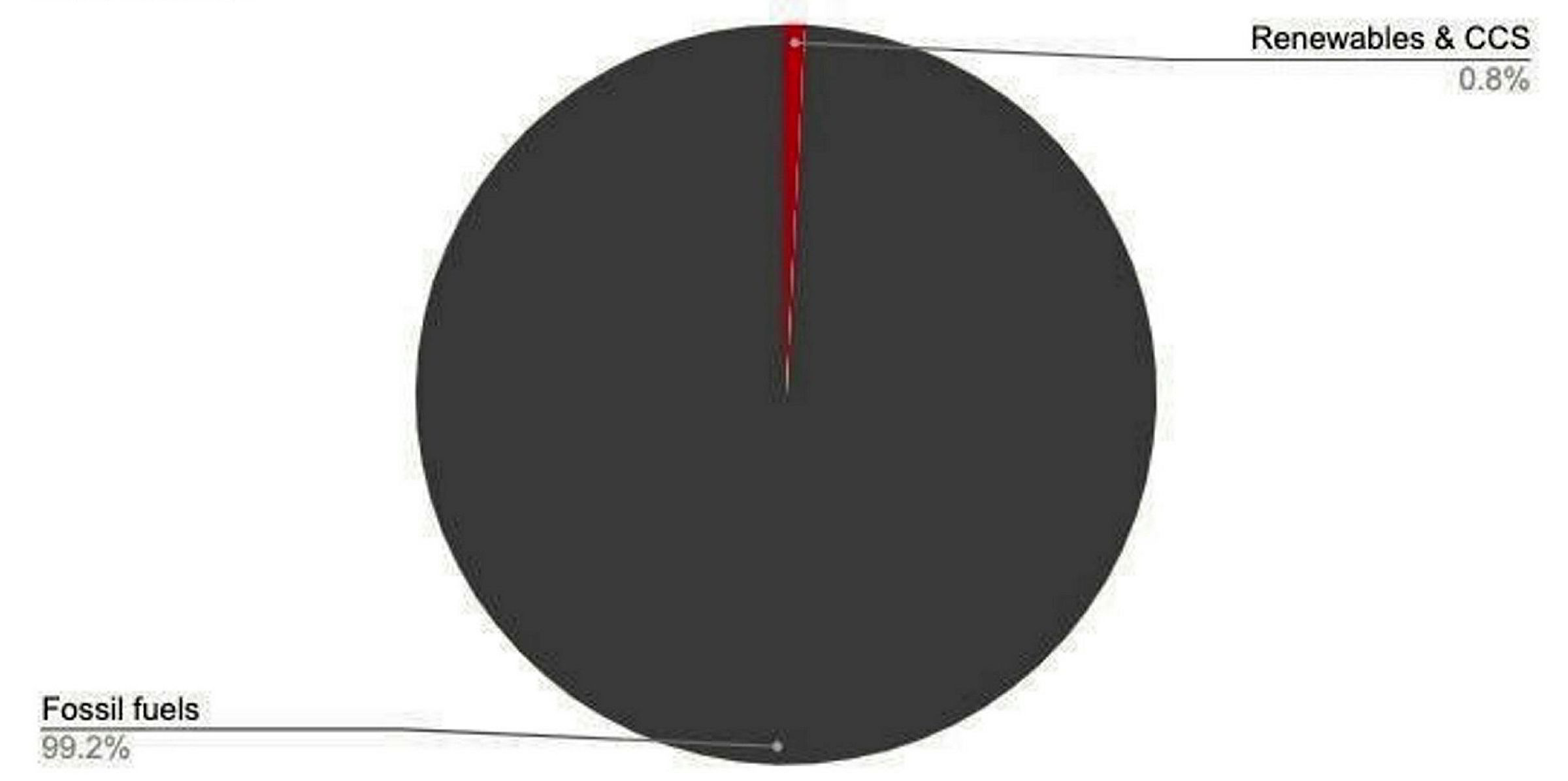
BP’s vision also includes a goal to increase the proportion of money it invests into non-oil and gas energy sources, like solar and wind, over time. Right now, that’s only about 3 percent of BP’s investments. But Looney declined to quantify the company’s target in this arena. “We don’t plan to commit to an arbitrary or preset number,” he said.

While critics have already leapt on the vagueness of the plan, Ed Clowes, a business journalist for the Telegraph, described BP’s dilemma aptly on Twitter. On the one hand, BP could stop selling oil and gas and self-destruct. But if it did, another company would step in to fill the gap, because right now, the world still (mostly) runs on oil. “BP has to be in the game to change it,” Clowes wrote.


Burning issue: consumers need to make their money work for the environment ( ANSA/AP )

Last week was a big one for planet Earth, at least if you believe the corporate hype.

BP said it planned to become a net zero carbon company by 2050 and then up popped AXA Investment Managers with its stewardship report, and the suggestion that it would hold the feet of companies in which it invests to the fire. Sort of.

“The next decade will be defined by our ability as an investment and corporate community to turn thoughts, ambitions and desires into tangible action to solve global issues,” was what Matt Christensen, global head of impact strategy and responsible investment (now there’s a title), actually said.


BP Wants To Slash Carbon Emissions, But Has No Plan For Doing That

There is an old expression that says, “If you fail to plan, you have a plan to fail.” It’s good to have goals, but plans are what make achieving those goals possible. This week in London, Bernard Looney, the new CEO of BP, announced that his company intends to eliminate or offset 100% of its carbon emissions by 2050. “We are aiming to earn back the trust of society, Looney said according to a report by The New York Times. “We have got to change, and change profoundly. Trillions of dollars will need to be invested in replumbing and rewiring the world’s energy system. It will require nothing short of reimagining energy as we know it,” Looney said in a company statement.
No one can argue with that. BP has been one of the largest polluters of the planet for the past 50 years or more and is singlehandedly responsible for screwing  up the Gulf of Mexico with the disastrous Deep Water Horizon fiasco that was far larger than anyone knew at the time. This is a company that spent $13 million lobbying against a ballot initiative that would have imposed a modest tax on carbon emissions in the state of Washington a few years ago, but now says it supports stricter climate laws that include putting a price on carbon emissions. It’s little wonder people have trouble trusting the company.
There is one fairly bold component of Looney’s Reimagining Energy announcement that deserves attention, however. He says not only does the company intend to slash carbon emissions from its operations, it also intends to significantly reduce the emissions created by burning the oil and gas it produces, which are so-called Scope 3 emissions. Unfortunately, Looney offered no details about how that’s going to happen, promising a full report on the details by next September.
At the present time, BP emits about 55 million tons of greenhouse gases each year directly from its extraction operations and refineries, The New York Times reports. But when its products are used, they generate another 360 million tons of carbon dioxide. And that doesn’t include the damage done by methane emissions from its drilling and pumping operations. Looney also conveniently omits the 77 million tons of emissions attributable to the oil and gas it purchases from other suppliers.
Despite all the happy talk, don’t get the idea that BP is going to stop its fossil fuel extraction operations any time soon. During the question and answer session after Looney’s announcement, he said the company would “very likely” still be producing and refining hydrocarbons by 2050, but that it planned to invest “less and less in oil and gas” over time, according to The Verge.  The New York Times may have some insight into that conundrum. It speculates that BP may be planning on making money from capturing and sequestering carbon from the atmosphere — the real world equivalent to a septic system pumping company emptying the contents of its trucks on your property and then charging you to clean up its mess.

Environmental Groups Respond

The idea of cutting emissions from burning fossil fuels is pretty bold stuff for an oil company, so environmental groups have given the company some tepid praise for timidly going where no fossil fuel company has gone before. “Looney deserves support and credit for starting BP on the journey towards carbon neutrality and policy leadership. The direction is good, and we look forward to hearing more about the specifics. Time will tell if he gets BP where it needs to go. Its real actions and verifiable emissions reductions that will be the measure of success,” said Environmental Defense Fund president Fred Krupp after the announcement. But Ellen Gibson of 350.0rg Britain tells The New York Times, “Unless BP commits clearly to stop searching for more oil and gas, and to keep their existing reserves in the ground, we shouldn’t take a word of their P.R. spin seriously.”

Goals are like lighthouses. They give us something to aim for. A sailboat crossing the ocean is off course 99% of the time but because it has a goal — the white cliffs of Dover, perhaps — it can correct its path regularly and arrive safely at its destination. A plan is what makes all those mid-course corrections possible. We will have to wait until September when BP reveals its plan before we can judge whether it is sound, but until then, the company has established a clear goal and for that it should be congratulated
BEYOND PETROLEUM
BP announces 'ambition' to become a net-zero-emissions company by 2050

New CEO Bernard Looney says the group will invest more in low-carbon businesses and less in oil & gas 'over time'


BP chief executive Bernard Looney.Photo: BP

Oil giant BP has announced an “ambition” to become a net-zero emissions company by 2050 or sooner, the first of the majors to make such a pledge.

Unlike other oil & gas companies that have made commitments to become greener, BP says its target will include emissions from its oil & gas products.


Oil supermajor BP backs offshore wind for lift-off
Read more


Time for Big Oil to put its money where its mouth is over energy transition
Read more


How BP plans to achieve its aim is not yet clear, although a statement revealed that a new Gas & Low Carbon Energy business unit will "pursue opportunities in decarbonisation and new value chains such as hydrogen and CCUS [carbon capture, utilisation and storage]".

Another clue is that last month the company named offshore wind at the top of a list of key technologies ready for commercial lift-off, alongside green hydrogen, solar and electric mobility. Its renewable energy strategy has so far mainly focused on its BP Lightsource PV development joint venture, although it does have a portfolio of US wind farms that add up to more than 1GW.

New chief executive Bernard Looney, who took on the role last week, stated: “We expect to invest more in low carbon businesses — and less in oil and gas — over time. The goal is to invest wisely, into businesses where we can add value, develop at scale, and deliver competitive returns.”

The statement makes it clear that BP intends to continue delivering strong returns to investors while making its energy transition.

Looney explained: “The world’s carbon budget is finite and running out fast; we need a rapid transition to net zero.

“We all want energy that is reliable and affordable, but that is no longer enough. It must also be cleaner. To deliver that, trillions of dollars will need to be invested in replumbing and rewiring the world’s energy system. It will require nothing short of reimagining energy as we know it.

“This will certainly be a challenge, but also a tremendous opportunity. It is clear to me, and to our stakeholders, that for BP to play our part and serve our purpose, we have to change. And we want to change — this is the right thing for the world and for BP.”

Chairman Helge Lund added: “As we embark on this ambitious agenda, we will maintain a strong focus on safe, reliable and efficient operations and on delivering the promises we have made to our investors.”

The pledge has already been met with skepticism by climate groups, who point out that BP plans to increase its production of oil & gas by about a fifth between 2018 and 2030, even though such a move would increase the chances of runaway global heating.


Big Oil must pump up clean energy spend to slow climate crisis: IEA
Read more


Offshore oil industry 'social licence to operate under threat' in UK
Read more


Ellen Gibson, a campaigner for climate group 350.org, said: “It is not possible to keep to a 2°C warming limit — let alone 1.5°C — while continuing to dig up and burn fossil fuels. Unless BP commits clearly to stop searching for more oil and gas, and to keep their existing reserves in the ground, we shouldn’t take a word of their PR spin seriously.”

Greenpeace oil advisor Charlie Kronick added: “BP’s ‘ambitions’ and ‘aims’ all seem to apply to Looney’s successors, and leave the urgent questions unanswered. How will they reach net zero? Will it be through offsetting? When will they stop wasting billions on drilling for new oil and gas we can’t burn? What is the scale and schedule for the renewables investment they barely mention? And what are they going to do this decade, when the battle to protect our climate will be won or lost?”

BP says it will "set out more information" on its strategy and short-term plans at a capital markets day in September.(Copyright)


Tesla Semis Are Cheaper Than Rail Enough Of The Time To Reshape Ground Freight

February 16th, 2020 by Michael Barnard cleantechnica.com 


Ground freight choices will shift with the Tesla Semi, and rail will be one of the losers

Later this year, the first Tesla Semis will be rolling out of a gigafactory. As with many of Musk’s plans, schedule is the least firm thing about them, as the trucks were originally going to be rolling in 2019. But the question that this article deals with is: “What dynamics will shift in the rail vs. road shipping equation?”


Elon Musk unveiling Tesla Semi

To be clear, the Tesla Semi isn’t a “rail killer.” That would be silly. But it will shift the distribution of what mode of transportation gets chosen enough to make a dent. And it’s not alone. Electric freight trucks from other vendors will be coming to Interstates and the Autobahn in the coming years as well, and with many of the same attributes.

Some bona fides: In addition to regularly publishing assessments of the transformation of transportation, including Tesla’s key role, on CleanTechnica and other sites, I did a two-day freight rail operations course for vendors to Canadian National Railway a few years ago, have clambered over a diesel electric freight engine, and have shaken hands with conductors and engineers. I helped build a North American asset mapping and KPI tracking system for them. I even published an article on innovation in freight rail in an industry-oriented publication a few years ago: “Working on the railroad — Inside Logistics.”

For every logistical assessment of shipping, the questions arise: Which is cheaper? Which is faster? Which is more certain to hit delivery dates? The combination means that Tesla Semis will be favored over rail immediately upon availability in many circumstances, and more so in coming years with obvious and known autonomous capabilities.

With modern transshipment of containers, the fewer touch points at transshipment terminals, the lower the cost. It’s about $100 per lift of a container, so if it gets lifted off four fewer times because there’s no train in the middle, then you can save $400 bucks per container delivery. Putting a container on a truck at a port and having that delivered directly to a client saves some money that way, but right now the miles per ton delivered is higher per truck with diesel tractors, so it gets done a bit less often than it will when economics change.

The lower operating costs of Tesla Semis due to less maintenance, the much harder to break glass and the lower cost of fuel means that the marginal costs of operation are lower than for diesels. That means that they will break even more often in the truck vs rail question, which means more loads on roads. Most of those were covered in Musks’ presentation, but now that we’re closer to actual delivery, it’s worth looking at more aspects.

The lower breakage of glass is important, too. In at least North America (I haven’t looked at European or Asian regulations on this), a cracked windscreen means that the truck is on the side of the road and not operating until a replacement windscreen is in place. That can put a big dent in a delivery schedule, something less important with a single container than a fleet of containers moving, but it increases the certainty of delivering on time, which has an economic value.

But that’s just out-of-the-box savings, which will shift the distribution to favor trucks a bit more often. Up to mile-long (1.6 km) trains have only two staff members on board, a conductor and an engineer. That’s a key point, and it’s where autonomous driving and trucks will be making more points in favor of Tesla Semis over freight rail more of the time.

Tesla, along with Daimler and others, have already demonstrated on-road autonomous convoying of freight trucks. Multiple trucks act as a single truck, communicating with each other not with brake lights but via internet-enabled messaging. The same autonomous features that work so well in Tesla’s cars work just as well in Tesla Semis, but with the added capability of convoy mode.

Why is this important? Two ways. You can start to see that with the mesh of roads being much broader than the mesh of rails and with no physical connection between trucks, they can self-assemble into convoys for subsets of the journeys, especially for longer hauls where rail has advantages today. This isn’t dissimilar to patterns of two to five 18-wheelers on highways running grill to bumper today, and convoying creates a couple of cost savings.

The first is just physics. Drafting saves gas, having the first truck in the convoy push the air out of the way and having the rest in its slipstream saving money on fuel for all of them. Autonomous vehicles will do it better and be able to achieve better savings than human drivers can. With the ability to have individual “cars” in the train pull out of the train and deliver off of an offramp along the way, you get some of the cost savings of freight rail without the rails, which are expensive. This has been projected for years, but at least one major vendor has backed away from it. Daimler has said that its pilots haven’t shown significant enough savings to make it worthwhile. If physics were the only advantage, then this wouldn’t be a strong enough statement, but it’s on top of the out-of-the-box value proposition of electric semi tractors and is followed by other advantages.

And the next advantage is crew costs. Right now trucks all require drivers, and drivers have limits on how many hours that they can drive in a day and week.

“You may be expected to work up to 70 hours over an eight-day period. After you’ve worked for 70 hours, you cannot drive again until you take a full 34 hours off duty. The 70-hour limit could be reached by working 14-hour days, but you cannot drive for more than 11 hours in a day.”

What does this mean in the context of autonomous convoys in short and interim durations? In the short term, not much. Initially, drivers will just be better rested, which in addition to autonomous features will lead to fewer collisions per million miles. But you can see regulations shifting to allow convoys where drivers can book off and get a couple of hours of sleep if they are third in a row of five trucks fairly quickly.

In the medium term, you can see drivers delivering trucks to a point where they can pick up with a convoy, a big parking lot not a freight rail transshipment point, and then head home while the truck convoy drives a thousand kilometers to another big parking lot with additional local drivers.

And when fully autonomous trucks are allowed on the road, you can see individual trucks peeling off of convoys without any drivers, while the convoy might have a conductor and an engineer.

The next point is an interesting one. I couldn’t persuade Canadian National Railway to be interested in an approach to putting air carbon capture on its freight trains using Global Thermostat’s technology. It would have been cheap air carbon capture because it was just adding a car to an existing train, using the movement of the train to funnel air into the sorbents, using waste heat from dynamic braking to power the process of removing the CO2 from the sorbents, then having the captured CO2 being on a low-carbon distribution network right off the bat. Why wasn’t Canadian National Railway interested? Various reasons, but one was that it was already the lowest-CO2-emissions form of land transportation available except for pipelines. But with convoys of Tesla Semis running on renewable electricity and the increasing likelihood of carbon pricing on diesel, the rail majors will have to adapt to being behind freight trucking in that measure, and having additional costs related to their diesel emissions.

The last point is a conceptual one that I use as part of a framework to assess what technologies are likely to win in the long term. The concept I use is loose coupling, something from software systems architecture. Tightly coupled solutions, like wine bottles with corks and corkscrews, or freight rail trains and rail tracks, are less flexible, requiring both components to be in good shape, available, and working well in order to deliver the value. More loosely coupled systems, like wine bottles with screw tops or trucks running on a broad network of big and small roads, have advantages. Tightly coupled solutions have inherent limitations that inhibit their competitiveness in some ways while enhancing it in others, but innovation in loosely coupled systems tends to win in the long run. That’s why the lack of physical connections between conveying trucks over a network of roads, with self-assembling road trains, is such a powerful innovative and competitive force. It plays directly into that premise.

And that loose coupling is inherent to the fundamental innovation of transshipment containers in any event. Standardized containers that can be stacked on ships, trains, or trucks have transformed transportation already.

Imagine a road train of ten independent trucks with only two people on board, no emissions, low maintenance, and low fuel costs. That’s the future of road freight. That’s balanced by still having more staff than trains and limits on load weights, but the distribution will have changed substantially.

In the future, a lot more freight tonnage will end up on roads in Tesla Semis and similar vehicles from Daimler and other vendors. It’s the nature of the beast.

Freight rail has to innovate more to deal with this competitive threat. In Europe, they have already shifted powering freight trains to external power lines, running the electric traction engines not off of electricity from the diesel generators but from remote wind and solar farms. That’s increasingly going to be done in the rest of the world. In China, high-speed rail is all electric with externally supplied electricity. This isn’t hard, it’s just not the freight rail standard yet. The engines are all diesel electric hybrids as it is, so displacing the diesel part is relatively straightforward. And freight rail companies are experimenting with adding batteries as well, not only charging them at terminals to supplement diesel, but also filling them en route with dynamic braking being turned into regenerative braking and with externally supplied electricity when available.

All transportation is electrifying. All transportation is moving to lower labor costs. All transportation is becoming more loosely coupled. All transportation is moving to lower carbon models. But the Tesla Semi is going to have a substantial advantage once it’s on the roads, and for a decade after that. No other manufacturer has anywhere near the experience with electrification, en route provision of high-speed charging and autonomy.


Tesla’s Semi will be very profitable for Tesla. And for the people who buy the electric, high-tech semi trucks. 

Rain may soon be an effective source of renewable energy

A generator can briefly light up 100 LED bulbs with a single drop.


Jon Fingas, @jonfingas
02.09.20
Cesare Fel / EyeEm via Getty Images

There have been numerous attempt to generate electricity using rain, but this may be one of the more effective solutions yet. Researchers have developed a generator that uses a field-effect transistor-style structure to instantly produce a surprisingly high voltage from water drops -- a single drop can muster 140V, or enough power to briefly light up 100 small LED bulbs. Earlier generators without the structure produced "thousands" of times less instant power density, the scientists said.

The new design mates an aluminum electrode with an indium tin oxide electrode layered with PTFE, a material with a "quasi-permanent" electric charge. When a drop hits the PTFE/tin surface, it bridges the two electrodes and creates a closed-loop circuit. That helps fully release any stored charges. The technology could handle sustained rainfall, too. If there are continuous drops, the charge accumulates and eventually hits a saturation point.

There's still work to be done to translate this to a practical product. A brief burst of energy is easy -- accumulating enough of it for continuous power is another matter. Still, the potential uses are easy to see You could apply generators like this to the surface of anything where rain (or other water splashes) is likely to strike. Building rooftops could offset at least some of the electricity use from the people below, while electric boats could extend their range. It could even be used to power connected devices that regularly get wet, like umbrellas and water bottles.

Via: ScienceDaily Source: City University of Hong Kong, Nature


The Next Renewable Energy Source Could Be Rain


By Irina Slav - Feb 16, 2020

The quest for the next source of renewable energy is well under way, with no natural phenomenon overlooked. We have already harnessed the power of flowing water, wind, and sunlight, and the search for the next clean source of energy is far from over.


The latest potential breakthrough in renewable energy comes in the form of rain.

Rain has not been getting a lot of attention in renewable energy circles perhaps because it would be challenging to harness its electricity-producing potential. Yet attempts are being made, and in the latest breakthrough, U.S. and Hong Kong researchers have managed to produce 140 volts of power from one single raindrop. That’s enough to light 100 LED lights for a short while.

The idea itself is not new. Previous attempts to generate electricity from rain drops have been made and they have all utilized the triboelectric effect: this is when certain materials acquire an electric charge after they come in contact with another material and then get separated. Think of it as a type of static, low-charge electricity. Yet all of the previous attempts have suffered the limitations of technology.

The team behind the new raindrop power generator has pushed these limits further. The researchers, from City University in Hong Kong and the University of Nebraska-Lincoln, spent two years working on the energy density of what they have called a droplet electricity generator, or DEG.

What they did was use the design of field-effect transistors – three-terminal devices that use an electric field to control the flow of electric current through them. Thanks to this design, the energy density of the DEG shot up to over 50 Watts per square meter, which is thousands of times more than the energy density of comparable devices.


But that wasn’t all. In their quest for a way to harness the power of rain drops, the scientists also used a special material to coat the generator. Called tetrafluoroethylene, or PTFE for short, this is a hydrophobic polymer that doesn’t get wet and can withstand high temperatures. It also has what the scientists call a quasi-permanent electric charge. When a ran drop hits the PTFE surface of the generator, it bridges the two electrodes creating a closed-loop circuit that releases any stored energy charges in the surface material, Engadget explains.


It’s still a long way to go before we all start using PTFE-coated umbrellas with electrodes underneath. But in the future, we may live in buildings with rooftops that double as power generators using the kinetic energy of the water clouds’ release.

Other attempts to use the power of raindrops involve kinetic energy, or the energy of the drops falling from the sky. These attempts have utilized the piezoelectric effect. When an object falls on another object, it applies pressure on it. This pressure, very basically, creates an electric current if the second object is made from a piezoelectric material. So, raindrops falling on a piezoelectric material surface will generate electricity. Unfortunately, what is in science called a conversion rate or conversion efficiency, is extremely low in these designs and, bluntly put, not really worth the effort.

But how about turbines driven by collected raindrops using the same principle as hydropower plants? This is another viable way of utilizing rain. All it takes is building a large reservoir to collect the rainwater above the ground and then use the water to power a turbine. This method could be particularly suited for parts of the world with a monsoon, which would generate ample supplies of rainwater for this alternative hydropower system.

And then there is the microturbine developed by students from the Technological University of Mexico, that uses rainwater to generate electricity. The principle is the same as any that is used in a hydropower plant—the difference being this electricity compensates for power used to purify rainwater. It is a two-in-one solution aimed at providing clean drinking water to poor parts of Mexico City and recovering some of the electricity used in the process by generating it with the remaining unpurified rainwater.

There is even a solar cell that can harness the kinetic energy of rain, which makes for a nice solution of the problem that rain causes for solar panels: they can’t generate electricity in overcast conditions. Yet if you cover the panel with a layer of grapheme, the miracle material turns into a capacitor, and the difference between its electrons and the ions of the raindrops generates electricity on contact.

The world of renewable energy is becoming increasingly fascinating. Everything is fair game in the search for the next infinite, emission-free source of electric energy. With rain, the basic technology is already there. Now, the challenge seems to be to boost the conversion efficiency of this technology to make rainwater a viable alternative to emission-producing power generation systems.

by Irina Slav for Oilprice.com


Creating Electricity From Rain To Light 100 LED Lights


Photo by Aleksandar Pasaric from Pexels
Researchers from City University of Hong Kong (CityU) have created a new type of generator that uses rain to create electricity, and it works.
The generator produces a high voltage from a single drop of rain: more than 140 volts even when falling from 15 cm or higher. This is what it takes to light up 100 small LED bulbs. The generator uses a field-effect transistor (FET) type of structure that enables high energy conversion efficiency. In comparison with its counterparts that do not have FET-like structures, “its instantaneous power density is increased by thousands of times,” according to the university press release.
Three professors led the research team: Professor Wang Zuankai (Department of Mechanical Engineering, CityU), Professor Zeng Xiaocheng (University of Nebraska-Lincoln), and Professor Wang Zhonglin (Founding Director and Chief Scientist at the Beijing Institute of Nanoenergy and Nanosystems of Chinese Academy of Sciences).
Professor Wang mentioned that he hoped harvesting energy from water could help to provide more renewable energy around the world for those in need.

“He believed that in the long run, the new design could be applied and installed on different surfaces, where liquid is in contact with a solid, to fully utilise the low-frequency kinetic energy in water. This can range from the hull surface of a ferry to the surface of umbrellas or even inside water bottles.” Imagine charging your phone while walking in the rain — from the rain itself. Imagine plugging your phone into your water bottle.