France has launched a new “strong marine protection zones” label across 63 sites in its waters – taking a concrete step towards a pledge made in June at the UN Ocean Summit in Nice.
Issued on: 19/12/2025 - RFI
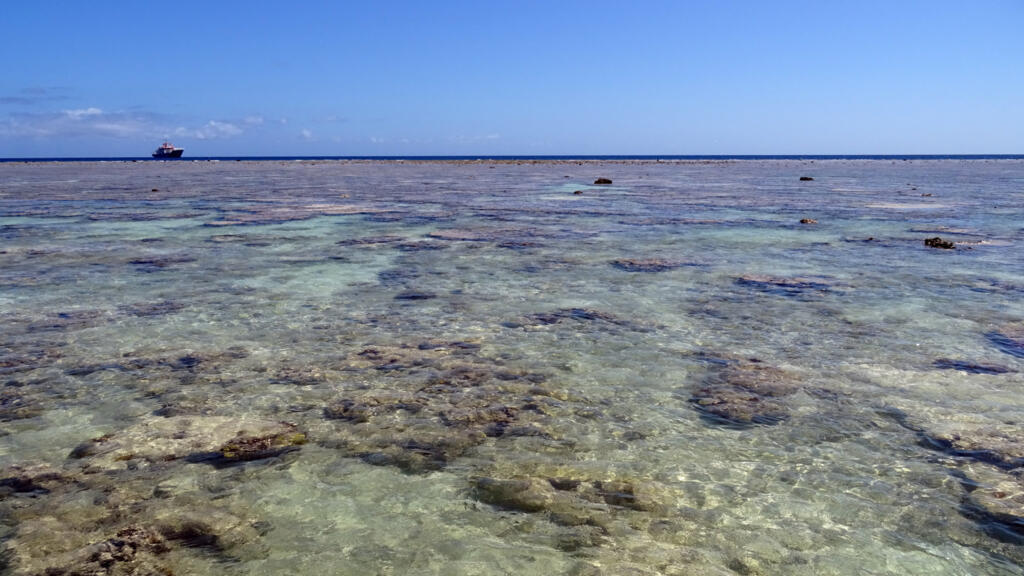
Europa Island, one of France’s Scattered Islands in the Indian Ocean, lies within waters now covered by the country’s “strong protection” marine label. AFP - SOPHIE LAUTIER
The French government says the label is meant to ensure strict protection in parts of the ocean where human activity is limited or banned. Its stated goal is to place 14.8 percent of French maritime waters under strong protection by 2026.
The zones cover areas where activities such as fishing, tourism or hydrocarbon extraction are either prohibited or tightly regulated. The government says the aim is to conserve the most remarkable marine ecosystems and species.
The 63 newly labelled sites include the Cordelière Bank in the Scattered Islands in the Mozambique Channel, the marine core of Port-Cros National Park in the Mediterranean and a reserve off the Île de Ré on the Atlantic coast.
Together, these areas form the first group of sites officially recognised under the new protection label.
The French government says the label is meant to ensure strict protection in parts of the ocean where human activity is limited or banned. Its stated goal is to place 14.8 percent of French maritime waters under strong protection by 2026.
The zones cover areas where activities such as fishing, tourism or hydrocarbon extraction are either prohibited or tightly regulated. The government says the aim is to conserve the most remarkable marine ecosystems and species.
The 63 newly labelled sites include the Cordelière Bank in the Scattered Islands in the Mozambique Channel, the marine core of Port-Cros National Park in the Mediterranean and a reserve off the Île de Ré on the Atlantic coast.
Together, these areas form the first group of sites officially recognised under the new protection label.
Vast maritime space
"Strong protection" is a French government label designating marine areas with strict limits on human activity. But critics say it does not meet international standards for fully protected marine areas, which typically prohibit all extractive and damaging activities.
France now says more than 450,000 square kilometres of its maritime waters fall under strong protection. The country describes itself as having the world’s second-largest maritime domain.
Despite that figure, the government acknowledges the scale of the challenge ahead. Strong protection zones currently account for less than 5 percent of French maritime waters.
That remains far short of the 14.8 percent target set for the end of 2026.
When the commitment was announced in June, the environmental NGO Bloom said it did not represent a real step forward.
Bloom, which campaigns for ocean protection, argued that along the Atlantic coast and in the Mediterranean, many of the areas receiving the new label were zones where bottom trawling was already banned.
This meant the measure largely formalised existing restrictions rather than extending protection in practice, Bloom said.

No comments:
Post a Comment