Monday, February 17, 2020

Jaguar duo snag anaconda


(Image credit: Michel Zoghzoghi)

Lebanon-based photographer Michel Zoghzoghi was filming jaguars in Brazil when he saw an unexpected case of cross-species coordination. Two jaguars — a mother and her baby — stepped out of a nearby river carrying a large, spotted anaconda between their teeth. Because the snake's pattern closely matched the jaguars', Zoghzoghi titled this photo "Matching outfits." The photo was selected as a runner-up in the people's choice award category of the London Natural History Museum's Wildlife Photographer of the Year contest.
LUCID DREAMING

Can you 'turn off' a nightmare?

Nightmares are the worst.
(Image: © Shutterstock)
The sheets are damp with sweat. You're cold, but your heart is racing as if an assailant just chased you down a dark street. It was just a nightmare, you tell yourself; there's nothing to be afraid of. But you're still filled with dread.
Given how unsettling and haunting nightmares can be, is there a way for dreamers to avoid, or even turn off, these bad dreams as they happen?
Research is limited, but some studies suggest that people who can master lucid dreaming — that is, the ability to be aware that a nightmare is happening and possibly even control it without waking up — may hold the answer.
Nightmares are part of the human experience, especially for kids. Doctors typically don't consider occasional nightmares a problem, but there are options for people whose nightmares occur frequently and negatively affect their lives during the day. These can be symptoms of nightmare disorder, a sleep disorder that can stem from trauma, stress and certain drugs. 
To treat nightmare disorder, there are a number of medications and therapies that are backed by rigorous research, according to the American Academy of Sleep Medicine, which analyzed the available research on the treatment of nightmare disorder in a 2010 review published in the Journal of Clinical Sleep Medicine
However, nightmares are complicated, and researchers are still struggling to understand them, said Dr. Rachel Salas, an expert on sleep disorders and an associate professor of neurology at Johns Hopkins Medicine in Baltimore. What we do know is that people tend to have different kinds of nightmares at different points during the sleep cycle.
Many dreams happen in the sleep phase called rapid eye movement (REM) sleep. This phase is the most likely to produce dreams in which we do things "we don't normally do," like flying, Salas told Live Science. Scans show that the brains of people in REM sleep look similar to the brains of people who are awake.
People typically start REM sleep about 90 minutes after falling asleep, and in some ways, a body entering REM sleep appears to be waking up; you start breathing faster and more irregularly, your heart rate increases and your blood pressure rises. It might sound like the body is getting ready to move, but humans have evolved a clever mechanism to protect dreamers from themselves.
"When we go into REM sleep, our muscle activity decreases," Salas said. "Otherwise, we'd act out our dreams." 

Switching off nightmares

It's possible to achieve lucid dreaming, but there haven't been enough trials to establish lucid dreaming therapy as an accepted medical practice. That said, research published in the past decade has kept alive the possibility that such therapy might help people who suffer from persistent nightmares, according to a 2019 review published in the journal Frontiers in Psychology
If you're interested in trying lucid dreaming, you can try the following strategy, known as "wake back to bed," according to Dr. Sérgio Arthuro Mota-Rolim, a postdoctoral researcher at Federal University of Rio Grande do Norte in Natal, Brazil.
First, set an alarm 30 minutes before the time you normally wake up. But when the alarm goes off, don't get up. Instead, think about having a lucid dream as you fall back to sleep. 
It's no guarantee, but doing this raises the odds that you'll have a lucid dream, Arthuro said. It's also a good idea to think or talk about it the day before, as dreams are very suggestible, he said. 
If you can realize you're in a nightmare, the simplest way to stop it is to make yourself wake up, Arthuro said. But some evidence suggests that it's possible to stay in the nightmare but eliminate your fear by knowing you aren't in physical danger, according to Arthuro. Some study participants have even reported turning a nightmare into a more pleasant dream.
An obvious barrier to lucid dreaming is that lucid dreams aren't common. While most people have had a lucid dream at some point, the average person will have fewer than 10 in their lifetime, Arthuro said. One of the reasons so little research has been done on lucid dream therapy is that researchers are still exploring the most effective ways to induce lucid dreams. For instance, researchers reported in 2014 that  using certain frequencies of electrical stimulation can increase the likelihood of a dreamer becoming aware that they're dreaming.
And although lucid dreaming is one way to address nightmares, there are other options. 
If nightmares are "disrupting your sleep or if you've injured yourself [during a nightmare], you should seek medical help," Salas said. Your primary care physician is likely to refer you to a sleep specialist for further evaluation. 

The Metal Trump Wants More Than Gold
Oilprice.com | February 14, 2020 |

“In a world where the Trump Administration is leading a return to economic and resource nationalism, it’s hard to see how global metals can break free of global politics” (Image Evan El-Amin | Shutterstock. )

China has a monopoly on one of the most strategic metals on the planet, and Washington is anxious to change that.

Global dominance at this point in the game means control of the rare earths elements that form the backbone of existing technology and the future of technology, and while everyone is busy playing at war with oil and gas, Beijing is busy sitting on a monopoly of our most precious strategic metals.

There are 16 metals in total that form the world’s strategically critical rare-earth elements – and China controls the supply of every single one because it controls 96% of production.

One of these crucial metals is Cesium.


CESIUM WORTH UP TO TWICE THE PRICE OF GOLD, OUNCE FOR OUNCE, THERE ARE ONLY THREE PRODUCING MINES IN THE WORLD, AND ALL OF THEM ARE CONTROLLED BY CHINA
It’s worth up to twice the price of gold, ounce for ounce, there are only three producing mines in the world, and all of them are controlled by China.

The only question in this game now is whether there is any chance for North America to get its hands-on new cesium of its own to get out from under a Chinese monopoly.

But while there are only three cesium mines in the world, the potential is in new supply. Of five cesium occurrences in Canada’s Ontario province, a small-cap Canadian explorer called Power Metals owns 100% of three of them (West Joe, Tot Lake and Marko).

The company discovered the pegmatites at West Joe Dyke in August 2018, intersecting high-grade cesium mineralization in six drill holes when it was targeting lithium instead.

So, the focus now is not on what has been lost to China, but the promise of new North American critical cesium.

Exactly How Strategic Is Cesium?

Cesium is extremely rare globally. In May 2018, the United States Department of the Interior included lithium, cesium and tantalum on its list of Critical Minerals.

The supreme technological war of global dominance can’t be won without these metals, so whoever controls them has the upper hand.

Cesium is described by the German Institute for Strategic Metals (ISE) as “the most electropositive of all stable elements in the periodic table”, and the heaviest of the stable metals. Cesium is “extremely pyrophoric, ignites spontaneously when in contact with air, and explodes violently in water or ice at any temperature above -116 ° C”.


LABORATORIES USE CESIUM COMPOUNDS FOR STRATEGIC ORGANIC CHEMISTRY, INCLUDING IN X-RAY RADIATION FOR CANCER TREATMENTS.


Laboratories use cesium compounds for strategic organic chemistry, including in x-ray radiation for cancer treatments.

The list of commercial and industrial applications is long and varied, from catalyst promoters, glass amplifiers and photoelectric cell components, to crystals in scintillation counters, and getters in vacuum tubes.

Much cesium demand also comes from the oil and gas industry, which uses cesium formate brines in drilling fluids to prevent blow-outs in high-temperature, over-pressurized wells.

In terms of world dominance, the “cesium standard” is the key. This is the standard by which the accurate commercially available atomic clocks measure time, and it’s vital for the data transmission infrastructure of mobile networks, GPS and the internet.

That means it has serious defense applications as well, including in infrared detectors, optics, night vision goggles and much, much more.

At high purity levels, using the 2018 price for 99.98% pure cesium metal, it’s worth about $79 per gram – twice the price of a gram of gold, according to renowned geologist Mickey Fulp. Most uses required 98% pure cesium, which was set at about $39 for 25 grams in 2018. Otherwise, it’s hard to get a world market price on cesium because there is no trading of this strategic metal.

But imagine China being able to starve manufacturers of something like cesium, which would seriously disrupt U.S. industry and hinder the development of critical military equipment. That’s exactly why this rare metal was left off Washington’s tariff lists in the trade war back-and-forth.

But Dr. Julie Selway, a key geologist for the Ontario Geological Survey during the tantalum boom of the early 2000s, and now VP of exploration for Power Metals, says the three properties the company is drilling are hoped to have similar finds as the strategically important Sinclair mine in Australia.

“They are shipping their resource, which they say is higher than 10% cesium-oxide, and ours have some that are between 12% and 14% of cesium-oxide,” Selway – one of the world’s most renowned experts on pegmatites–told Oilprice.com.

Power Metals has intersected cesium (Cs) mineralization in 6 drill holes on West Joe Dyke, with “exceptionally high-grade” Li and Ta intervals. They also found Cs mineralization in drill core in the first new dyke below Main Dyke, as well as in the drill core in Northeast Dyke.

China has dominated rare-earths since the 1990s with power in this sector that rivals OPEC for oil – even if it doesn’t make the headlines like oil and gas does.

In 2010, China cut back on exports, triggering major price spikes all over the world because of the critical nature of these metals to the tech industry.

That woke Washington from its slumber, but only slightly.

Beijing’s next move, according to the Wall Street Journal, was to manipulate the market so that rare earth elements (RREs) were cheaper in China than outside the country. What this did was prompt some major manufacturers and tech industries to set up shop in China, where they could get supplies at a lower cost.

In the entire world, there are only three pegmatite mines that can produce cesium: one is the Tanco mine in Manitoba, the second is the Bitika mine in Zimbabwe, and the third is the Sinclair mine in Australia.

Where does China fit into this picture? It controls them all, beyond its own borders, with few players like Power Metals and its three-play Cesium venue which could challenge that total control.

Washington’s emergence from its cesium slumber, however, was short-lived.

According to Fulp, speaking to Kitco, a United States company essentially sold off its control of cesium to Sinomine Resources of China last summer–even after the U.S. placing the metal on the critical list. Prior to this June 2019 deal, cesium production was largely controlled by Boston-based Cabot Corporation, which owned the Tanco mine in Manitoba, but which also has operations in China. This mine was shut down in 2015, with demand met from stockpiles.

Now, Tanco and Bitiki are no longer producing, but Sinomine Resources Group holds all the cesium ore stockpiles.

What that means is that this playing field isn’t just of strategic proportions–but it’s locked up.

The only company in the cesium supply chain right now is Chinese, and one of the only companies on the radar for potential commercial cesium supplies in North America is Canadian junior Power Metals, which is hoping to prove that it’s sitting on the world’s fourth minable deposit of the critical metal.

That’s why, finally, in December 2019, the United States and Canada agreed on a strategy to reduce the need for rare-earth metals mined or controlled by China.
Other companies shaking up China’s rare-earth dominance:

Teck Resources (NYSE:TECK, TSX:TECK)

Teck could be one of the best-diversified miners out there, with a broad portfolio of Copper, Zinc, Energy, Gold, Silver and Molybdenum assets. Its free cash flow and a lower volatility outlook for base metals in combination with a potential trade war breakthrough could send the stock higher in H2 of this year.

Teck’s share price stabilized last year and many investment banks now see the stock as undervalued. Low prices for Canadian crude and disappointing base metals prices weighed on Q4 earnings.

Despite its struggles, however, Teck Resources recently received a favorable investment rating from Fitch and Moody’s, and will likely benefit from its upgraded score. “Having investment grade ratings is very important to us and confirms the strong financial position of the company,” said Don Lindsay, President and CEO. “We are very pleased to receive this second credit rating upgrade.”
Turquoise Hill Resources (NYSE:TRQ ,TSX:TRQ)

Turquoise is a mid-cap Canadian mineral exploration and development company headquartered in Vancouver, British Columbia. Its focus is on the Pacific Rim where it is in the process of developing several large mines.

The company mines a diversified set of metals/minerals including Coal, Gold, Copper, Molybdenum, Silver, Rhenium, Uranium, Lead and Zinc. One of the fortes of Turquoise hill is its good relationship with mining giant Rio Tinto.

Turquoise has seen its share price languish last year, and the successful development of its world-class Oyu Tolgoi project in Mongolia is of utmost important to the future of this miner.
Pretium Resources (NYSE:PVG, TSX:PVG)

This impressive Canadian company is engaged in the acquisition, exploration and development of precious metal resource properties in the Americas. Pretium has an impressive portfolio and if you can catch the stock while the price is right, there could be huge opportunity for upside. Additionally, construction and engineering activities at its top location continue to advance, and commercial production is targeted for this year.

With Pretium’s variety of assets, this mining giant is a key figure in Canada’s resource realm. Investors know a good thing when they see it, and have definitely taken note of this company’s ambitious and forward-looking drive.
Magna International (NYSE:MGA, TSX:MG)

Based in Aurora, Ontario, Magna is a global automotive supplier is gutsy and innovative–and definitely tuned to the obvious future–clean transportation. A great catalyst is its development of a combo electric/hydrogen vehicle–a fuel cell range-extended EV (FCREEV). It’s not going to produce them (for now, at least) but plans to use the model to show off its engineering and design prowess and produce elements of the electric drivetrain and contract manufacturing. It’s insightful, forward-thinking and smart value/low cost for shareholders.
Agnico Eagle Mines Ltd (NYSE:AEM, TSX:AEM)

Canadian based gold producer, Agnico Eagle Mines is an especially noteworthy company for investors. Why? Between 1991-2010, the company paid out dividends every year. With operations in Quebec, Mexico, and Finland, the company also is taking place in exploration activities in Europe, Latin America, and the United States.

While Agnico primarily focuses on gold, it made this list because it’s a prime example of sustainability and environmental consciousness, and that means everything in a world rapidly shifting away from traditional mining.

(By Charles Kennedy)
Brazil state judge accepts charges against Vale ex-CEO, others over dam burst
Reuters | February 14, 2020 | 

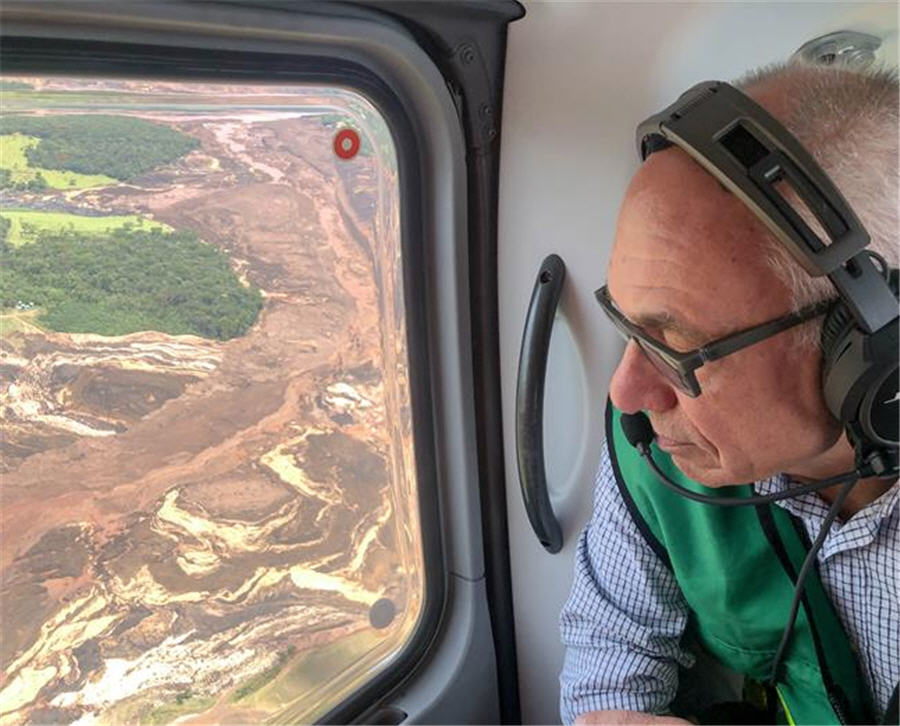
Former Vale CEO Fabio Schvartsman flies over Brumadinho 
after dam breach. (Image courtesy of Vale SA)

A Brazilian state judge has accepted charges against Vale SA former Chief Executive Fabio Schvartsman and 15 others related to a fatal disaster at the iron ore miner’s Brumadinho tailings dam a year ago, according to a statement on Friday.

The move by a judge in Brazil’s mining heartland of Minas Gerais, follows charges filed by state prosecutors on January 21 accusing the former CEO and other 15 people of homicide.

The Brumadinho dam burst in January 2019 unleashed an avalanche of muddy mining waste which killed an estimated 270 people, burying many of them alive.

The prosecutors allege Vale, Brazil’s largest mining company, and German inspection firm TÜV SÜD systematically and intentionally hid information about safety issues at its tailings dams for years.
How to effectively address illegal gold mining – study
Valentina Ruiz Leotaud | February 16, 2020 

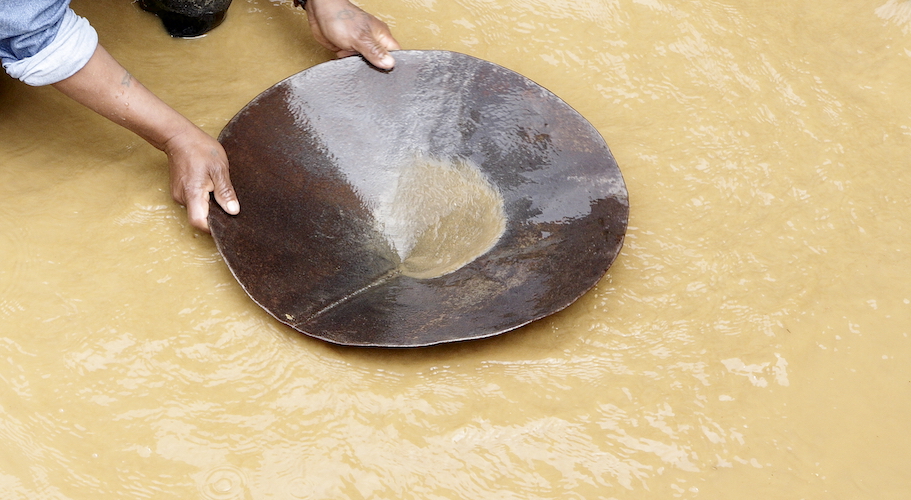
Gold panning. (Reference image by Jean-François Gornet, Wikimedia Commons).

A study by researchers at the National University of Singapore found that increased enforcement and the offer of an alternative agriculture-based livelihood are unlikely to deter illegal gold miners in Myanmar.

“It is simply too profitable,” they wrote in a paper published in the journal Conservation Science and Practice.

Even though Myanmar is known as the world’s largest producer of jade, gold mining -and illegal gold mining in particular- has been growing in recent years. This situation has pushed the government to launch a series of initiatives to drive people away from unregulated operations.

THE IMPORTANCE OF MINING TO MYANMAR’S ECONOMY IS EXPECTED TO INCREASE FOLLOWING THE OPENING OF THE COUNTRY TO GLOBAL INVESTMENT AFTER POLITICAL REFORMS WERE LAUNCHED IN 2011

But NUS scientists were curious about the costs imposed by enforcement, the level of enforcement required to make informal gold mining unprofitable, and the potential benefits associated with alternative agriculture-based livelihoods. Thus, they interviewed 226 people involved in the gold mining industry in the Homalin township in northern Myanmar. These miners operate along the Chindwin River and the Uru River basins, many on sites abandoned by the formal sector.

The idea behind the survey was to understand their motivation to participate in mining, assess the profitability of informal mining, and estimate losses associated with law enforcement. Participants included mine owners and workers in both the formal and informal sectors and local farmers.

The researchers found that while police inspections impose costs associated with wasted time and loss of equipment, informal gold mining is so profitable that miners can rapidly recoup these costs. So much so that there is even room for them to pay fees and taxes to local authorities and communities instead of formally to the government.

They also found that many of the miners already balance mining with agriculture, so government plans to provide agricultural land are unlikely to deter them.

Furthermore, as many of the miners were internal migrants and willing to migrate again for economic opportunities, policies to replace informal mining might simply shift it to new regions within Myanmar.
 
Illegal gold mining site in Myanmar. (Image by Graham Prescott, courtesy of the National University of Singapore).

However, according to the researchers, some solutions can be implemented. “Given that most informal miners operate on mine sites abandoned by the formal sector, one approach could be to allow informal mining on these sites and focus instead on preventing the expansion of informal mining to forests and wetlands,” Graham Prescott, the lead author of the paper, said in a media statement. “Technologies that eliminate mercury emissions, such as the use of mining retorts could also be introduced to the informal mining communities.”

In the experts’ view, such an approach represents a win-win situation because informal gold miners would benefit from the legitimization of their livelihood, protection against eviction and better health and safety practices, while society could benefit from the compliance with environmental regulation to prevent the expansion of mining in environmentally sensitive areas and reduced mercury emissions

MINING.COM

Is This The Tipping Point For Coal Production?


After a Jekyll and Hyde year in 2019, and a decade characterised by China’s disruption of the met coal trade, participants can be forgiven for being sick of change. But research firm Wood Mackenzie believes a shift toward consistency and stability is probably too much to ask for in 2020 as China continues to play powerbroker over the seaborne market and spot pricing.

Woodmac says 2020 is likely to be a pivotal year for those miners who struggled through the second half of 2019.

Under the global microscope, coal suppliers looking to grow will continue to face creeping resistance, grappling with an unfriendly permitting environment, and a climate-induced shift in capital. The pressure has even forced some miners to turn their back on coal. But opportunities for growth will still exist this year, and we expect the emergence of some potentially game-changing technological developments to keep the market particularly interesting.

China crude steel production, hot metal, coke and coking coal demand

If 2019 taught us anything about the inner workings of Chinese markets and policy, it is that controlling imports to a finite number is almost impossible. The 2019 import quota policy failed to suppress trade volumes. Coal imports breached 2018 levels by 11% as demand, lower prices, and trader risk appetite pushed imports higher, says the firm.

For 2020, Woodmac assumes a repeat from 2019 with soft targets being just that – targets. With record steel production and peak hot metal demand forecast in 2020, Chinese coal imports will reach similar levels as 2019 – pushing coal up against any import restrictions.

Imported coals from Australia, unofficially, faced increased customs scrutiny with clearances regularly pushing over 40 days. Woodmac anticipates the same treatment in 2020. The expectation is Chinese officials will continue this practice in an effort to balance domestic and import supply over the year. Despite these efforts, the large Chinese coastal mills require access to premium Australian HCC and will continue to trade heavily in 2020. Seaborne metallurgical coal traders can’t discount that China will remain a major source of coal price volatility with the various market instruments at its disposal.

As the year progresses and quotas shrink, be on the lookout for ports actively beginning to restrict imports. Woodmac says the last quarter should see China tightening imports despite record steel production, but impromptu limits will probably occur throughout the year. The demand will be there although nothing spooks coal traders more than not being able to complete a transaction in a timely fashion.

The situation in Q4 2020 will likely repeat 2019 as buyers will drive pricing necessary to incentivise trades on potentially riskier transactions. Expect import restrictions to suppress international spot pricing especially as the year comes to an end.

Supply growth to become more challenging

Like all miners, metallurgical coal producers face mounting pressure as the global lens continues to focus sharper on the industry. The spectre of new external threats highlighted by recent Australian bushfires, and growing water stress, will add to the challenges for those trying to bring new supply to market, Woodmac asserts. The risk of direct impacts from drought and fire on operating mines has also increased, although we expect mitigation measures to successfully minimize potential disruption. Water levels in southern Bowen basin dams are an area to watch, starting the year at very low levels, and placing greater pressure on groundwater sources.

Vale hit the pause button at its Moatize HCC mine operations in late 2019, and they face a tough decision at an important operation. The company will use the first two quarters of 2020 to revamp the mine and coal processing circuit in a bid to increase flailing production and diminished coal quality. Pay attention to Vale as they look to bring the mine fully back on-line in the second half of 2020. The loss of Moatize tonnes will have considerable consequences for the premium hard coking coal market.

Australian mine safety will be in the spotlight in 2020 as 2019 saw a rash of mine fatalities rock the industry – nine workers across the mining industry with five related to coal mines. Not even a month into the new year, a Queensland miner lost his life at the Curragh coal mine. Calls for increased regulations have not gone unheard. The Queensland government is set to introduce legislation in 2020 to make mining industrial manslaughter an offence. The government is near passing legislation to establish an independent resources health and safety authority.

Projects face heightened environmental, social and governance (ESG) expectations from all facets of society including investors. Environmental review delays are the new norm for mine applications as regulators ratchet up their scrutiny. Don’t be surprised if some large projects don’t meet their preferred milestones this year.

And expect approval conditions to continue to tighten, as we saw last year in Australia, where development consent was given for the United Wambo mine on the condition that coal was sold only to countries that were signatories to the Paris climate agreement. Metallurgical coal projects looking for major approvals this year include Riversdale Resources’ Grassy Mountain, Olive Downs and Futura’s Wilton and Fairhill.

World’s first widescale autonomous haulage fleet

In a first for the coal industry and a sign of the future, BHP Mitsubishi Alliance (BMA) will introduce an autonomous haulage fleet at its Goonyella Riverside operation. The Queensland operation will see a total of 86 trucks commissioned over the next two years with the first set due in the first half of 2020. According to BMA, beyond safety, the autonomous fleet is expected to deliver more consistent cycle times while increasing haulage hours.

All eyes in the mining world will be on the operation to leverage learnings and improvements as other companies consider the leap into the driver-less world. Woodmac expects the new fleet could offer up to 15-20% haulage savings over a traditional haulage fleet.

While new to coal, Komatsu has close to 150 trucks operating autonomously in 9 mine sites. Woodmac expects that Komatsu has “skin in the game” and will be keen to see their product succeed at BMA’s operation with the goal for future installs. Stay tuned to BMA as they roll out their new driver-less fleet in 2020.

By Mining.com

Nigeria: Chimamanda Adichie Named 'Woman of the Decade'


Photo: Malaria Summit London
Chimamanda Ngozi Adichie sharing a personal malaria story at Global Malaria Summit, London.

4 FEBRUARY 2020 Vanguard (Lagos) By Nwafor View

For Chimamanda Ngozi Adichie, another decade of breaking records and shaping global conversations is just beginning. With her numerous awards, honours and arguably the most influential Nigerian celebrity of the past decade, Adichie continues to conquer even as the new decade unfolds.

The groundbreaking writer was named “Woman of the Decade” Editor’s Choice by ThisDay Newspapers in celebration of their Silver Jubilee Anniversary. The award ceremony held on the 20th of January at the Eko Hotels Convention Centre, VI, Lagos and Adichie who could not make it for the event, was recently presented her award at a reception held in her honor at the ARISE office.

The “Woman of the Decade” Award was presented to Adichie by veteran poet and playwright, Prof John Pepper Clark-Bekederemo (J.P Clark). Adichie took to her Instagram page to share her thoughts saying “JP Clark’s poetry means a lot to me – and to my character Obinze in AMERICANAH! Thank you to Thisday Newspapers for naming me ‘woman of the decade’. I was delighted to have the award presented by JP Clark” she wrote.

A total of 24 winners were selected with 2 persons honoured with an award in the People’s Choice and Editor’s Choice in each category. “Winners of the awards were picked both by the public and ThisDay editors from a pool of personalities and corporate organisations in a voting process that lasted one week,” ThisDay revealed of the selection process. “The board noted that whereas the editor’s choices were based on the strength of industry knowledge and professional advice, the readers’ votes were mostly based on their perception”

Alongside Adichie, Deputy Secretary General of the United Nations; Ms. Amina J. Mohammed was also named “Woman of the Decade” based on the people’s choice. Other recipients of the ThisDay Newspapers’ awards for the decade include President Muhammadu Buhari (People’s Choice) and his predecessor; Dr Goodluck Ebele Jonathan; Aliko Dangote, Segun Agbaje, Ngozi Okonjo Iweala, Herbert Wigwe, amongst others.

Prior to this award, Adichie became the first recipient of the Belle van Zuylen Ring for “her contribution to humanity through her literary works and her public engagements” on the 11th of January by the International Literature Festival Utrecht (ILFU), Netherlands.

Earlier in January, Chimamanda Adichie was also named one of the 20 women who will shape the year 2020 by ThisDay Newspapers, with the title ‘More Honours Trail Her’. The paper made mention that, “In the last few weeks of 2019, Chimamanda was accorded more honours, echoes of which will reverberate through 2020”.

Vanguard


Read the original article on Vanguard.
Nigeria: Rights Group Calls for War Crimes Probe Against Nigeria's Military

Photo: VOA News
Nigerian soldiers

14 FEBRUARY 2020
Voice of America (Washington, DC)


A prominent human rights watchdog has called for an investigation into possible war crimes against Nigeria's military in its fight against jihadists, which has resulted in the burning of entire villages and the displacement of residents.

Osai Ojigho, director of Amnesty International Nigeria, has called for the probe.

"These brazen acts of razing entire villages, deliberately destroying civilian homes and forcibly displacing their inhabitants with no imperative military grounds, should be investigated as possible war crimes," Ojigho said. "They represent a longstanding pattern of the Nigerian military's brutal tactics against the civilian population. Forces allegedly responsible for such violations must be suspended immediately and brought to justice."

The rights groups said it interviewed a dozen women and men who were forced from their homes in the restive northeast early last month. Their accounts were backed up by data from remote satellite sensing, Amnesty said, which indicated that the villages of Bukarti, Ngariri, and Matiri were burned and razed. The investigation also revealed burning in nearby communities, according to the rights group.

The Nigerian military has repeatedly denied similar allegations of possible war crimes.
Nigeria: 2020 Could Be Shell's Year of Reckoning - Amnesty International

Photo: Amnesty International
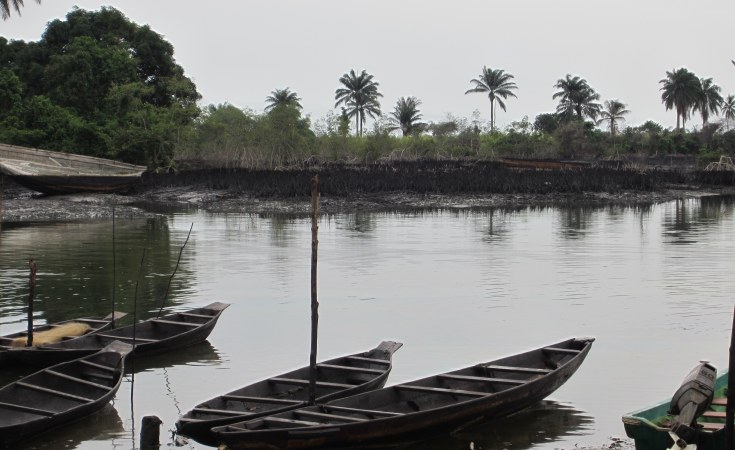
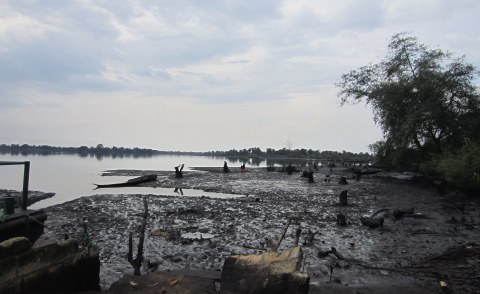
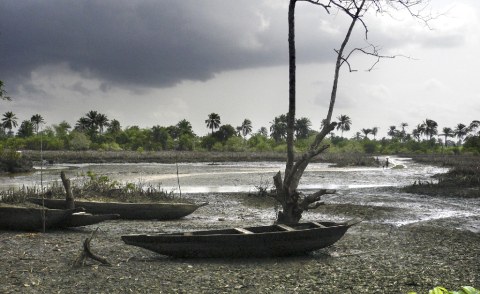
Boats in Bodo Creek in 2011. Amnesty says that Nigerian regulations lay down that a clean-up should start within 24 hours of an oil spill, but that three years on, the people of Bodo are still waiting.

11 FEBRUARY 2020
Amnesty International (London)

In 2020 Shell will face unprecedented legal scrutiny over decades of human rights abuses in Nigeria, Amnesty International said on Monday, as the oil giant braces itself for conclusions in a string of European court battles.

Allegations range from complicity in unlawful executions to systemic pollution and environmental damage in the Niger Delta.

Amnesty International, in a press statement issued on Monday, said it has been researching Shell's activities in the Niger Delta for more than 20 years, compiling compelling evidence of the company's role in human rights abuses. In a report released today, the organisation highlights the various cases that are finally putting Shell's harmful operations in Nigeria on trial.

"Shell began the year with another attempt to greenwash its role in the climate crisis, trying to present itself as the future of energy even as the planet burns. This expensive PR effort must not divert attention from the fact that Shell is facing a year of unprecedented legal scrutiny over its business in Nigeria," said Mark Dummett, Amnesty International's Head of Business, Security and Human Rights.


"Shell's business model has allowed it to benefit from weaknesses in Nigeria's justice and regulatory systems, wreaking havoc on Nigerian lives and livelihoods while profits continue to flow to its European headquarters. A just transition to clean energy also means holding polluters to account for the harm they have caused in the past."

For the new report, Amnesty researchers interviewed people from several Niger Delta communities about the ongoing impact of pollution and oil spills.

Shell denies all claims.

Read the full statement below.

Nigeria: 2020 could be Shell's year of reckoning

In 2020 Shell will face unprecedented legal scrutiny over decades of human rights abuses in Nigeria, Amnesty International said today, as the oil giant braces itself for conclusions in a string of European court battles. Allegations range from complicity in unlawful executions to systemic pollution and environmental damage in the Niger Delta.

Amnesty International has been researching Shell's activities in the Niger Delta for more than 20 years, compiling compelling evidence of the company's role in human rights abuses. In a report released today, the organization highlights the various cases that are finally putting Shell's harmful operations in Nigeria on trial.

"Shell began the year with another attempt to greenwash its role in the climate crisis, trying to present itself as the future of energy even as the planet burns. This expensive PR effort must not divert attention from the fact that Shell is facing a year of unprecedented legal scrutiny over its business in Nigeria," said Mark Dummett, Amnesty International's Head of Business, Security and Human Rights.

"Shell's business model has allowed it to benefit from weaknesses in Nigeria's justice and regulatory systems, wreaking havoc on Nigerian lives and livelihoods while profits continue to flow to its European headquarters. A just transition to clean energy also means holding polluters to account for the harm they have caused in the past."

For the new report, Amnesty researchers interviewed people from several Niger Delta communities about the ongoing impact of pollution and oil spills.

King Okpabi, customary ruler of the Ogale community, expressed a widely-held frustration at Shell's failure to take responsibility for its actions:

"Shell spoiled our water and destroyed our livelihoods. It is now spending millions to protect itself and tell the world that it has no responsibilities towards the people of Ogale, rather than addressing the wrong it did to us."

The claims against Shell

Due to the difficulties of bringing legal claims in Nigeria, individuals and communities affected by Shell's operations in Nigeria are bringing cases in the Netherlands and the UK where Shell is headquartered. These could set important precedents for holding polluting multinationals to account in future.

Kiobel v Shell: In the first of this year's legal milestones, in March a court in The Hague will hear witness statements from four women who accuse Shell of complicity in the unlawful arrest, detention and execution of their husbands by the Nigerian military in 1995. The women are claiming compensation and a public apology from Shell. The executions were the culmination of a brutal campaign by Nigeria's military to silence protests against Shell's pollution.

Four Farmers Cases: In May 2020, a final hearing is expected in a case brought against Shell by four Nigerian farmers and Friends of the Earth in 2008. They are seeking compensation from both Netherlands and UK-based Royal Dutch Shell (RDS) and its Nigerian subsidiary Shell Petroleum Development Company (SPDC), for alleged damage to fish ponds and land caused by oil spills.

This case is the first time that any Dutch company had been sued in a Dutch court for the operations of its subsidiaries overseas.

Okpabi and Others: In June 2020, the UK's Supreme Court will hear an appeal brought against RDS and SPDC by two Niger Delta communities, Ogale and Bille. They claim that over several years they have suffered systematic and ongoing oil pollution because of Shell's operations. The court will decide whether it can proceed on the critical issue of whether RDS is liable for the actions of SPDC.

This case is illustrative of the way that Shell's corporate structure has shielded it from scrutiny and justice.

"Shell's activities in Ogale have poisoned water and brought farming to a halt, but jurisdictional wrangling over whether RDS or SPDC is responsible for this damage means that Shell has never had to answer for this in a UK or Dutch court," said Mark Dummett.

"Shell claims that RDS is not responsible for the actions of its subsidiary even though it owns 100 percent of SPDC and receives the profits that it makes.

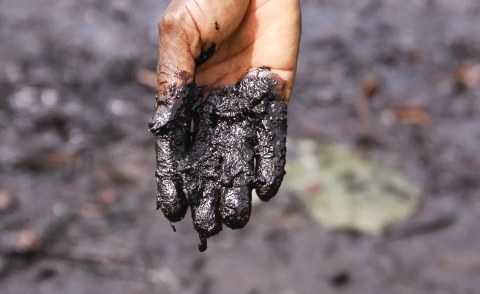
Bodo: In 2008 there were two massive oil spills, caused by poorly maintained Shell pipelines, in a creek close to the Bodo community. Crude oil continuously leaked into the water for five weeks on each occasion. Shell settled with the community in 2014 but has yet to clean up Bodo's devastated waterways. If the pollution is not cleared by mid-2020, the case will be referred back to the UK High Court.

Pastor Christian Kpandei, one of the community's most vocal activists, says he lost everything when the oil spills killed the fish in his ponds. He told Amnesty: "The lack of clean-up has deeply affected us. The soil, the water and the air are all still contaminated."

States are also scrutinising Shell's operations.

The "OPL 245" bribery case: Prosecutors in Italy are bringing a criminal case over the alleged involvement of Shell, and the Italian oil multinational Eni, in a 1.3 billion US dollar bribery scheme connected to the transfer of a Nigerian oil licence. If found guilty, the individual defendants could go to jail.

"It shouldn't require legal action to get Shell to fulfil its human rights responsibilities. Shell has an obligation to respect the human rights of people in the Niger Delta, including by taking all reasonable steps to prevent spills and then remediate contaminated land and water," said Mark Dummett.

"It has consistently, over many decades and in some truly horrifying ways, failed to do this."

Amnesty is calling on Shell to improve its operational practices in the Niger Delta, at a time when the role of Shell and other fossil fuel companies in the climate crisis is coming under increasing scrutiny.

Data from Shell's own spill incident reports reveal that from 2011-18 the company reported 1,010 spills along the network of pipelines and wells that it operates in Nigeria. Spills have a variety of causes - from third-party tampering, to operational faults and corrosion of aged facilities. Shell blames most spills on theft and pipeline sabotage. But research by Amnesty and its partner organization the Centre for the Environment Human Rights and Development shows that the company's facts and figures emerge from a flawed process for identifying the volume, cause and impact of oil spills. The research also shows that this process often lacks both independence and oversight, partly because the government regulators are so weak. As a result, Shell's findings cannot be trusted.


Read the original article on AI London.


Previous Story
Next StoryIs Bodo Oil Spill Triggering Epic Number of Funerals?


Is Bodo Oil Spill Triggering Epic Number of Funerals?
Next Story

MORE ON THIS

Nigerian Community's Oil Spill Battle Not Over Yet
UK Court Halts Shell's Bid to Stop Bodo Community's Suit Over Cleanup
Bodo Community Claims Win Over Shell After UK Court Ruling

Oil Spill Dispute With Nigerian Villagers Back in UK Court
Shell Oil Vs Nigeria's Bodo Community - UK Court to Deliver Judgment Friday
Shell's Oil Spill Dispute With Villagers Back in UK Court
Shell Clears Air On Bodo Oil Spill Pollution Clean-Up
Crude Oil Spillage Wrecks Havoc in Odimodi Community
Shell Arrests Judgment in N122bn Debt Suit

Is Bodo Oil Spill Triggering Epic Number of Funerals?
Contaminated Lands, Water - New Major Inquiry Into Oil Spills in Niger Delta

Africa: Female Genital Mutilation - Not Just an Emotional and Health Impact On Women but a $1.4 Billion Dollar Cost to CommunitiesShare

13 FEBRUARY 2020

United Nations — When society doesn't act to prevent Female Genital Mutilation (FGM) it has a massive economic cost -- over $1 billion -- on communities globally. And while the practice is starting to become less common over time, experts say a large number of women and girls still remain affected.
"By calculating the costs of FGM to women and society, this study shows that inaction has an economic cost and that investment in prevention will reduce costs in the long-term," Elizabeth Noble, Information Officer of Sexual and Reproductive Health and Rights Unit of the World Health Organisation (WHO), told IPS.
She was referring to last week's release of FGM "Cost Calculator" by the WHO, that highlights the massive economic costs societies have to go through as a result of the practice that's considered a human rights violation by advocates.
The interactive tool, available here, was launched on Feb. 6 to mark the International Day of Zero Tolerance for Female Genital Mutilation.
Currently, the economic burden of treating health complications arising out of FGM practices across 27 countries included in WHO's dataset, stands at a staggering $1.4 billion annually.
Taking into account population growth, the amount can increase by 50 percent in the next 30 years, given that the prevalence of FGM remains as it stands today, explained Noble.
However, abandoning the practice would lead to a projected decrease in 60 percent of that cost, she told IPS.
The calculator, she says, "allows the user to visualise the costs of treating the health complications of FGM, by country, over a 30 year period, while also showing the costs averted by preventing FGM".
An official from Plan International told IPS that there are currently 200 million girls and women alive today who have been affected by FGM.
"It is believed that by mutilating the girl's genital organs, her sexuality will be controlled and her virginity before marriage will be guaranteed. This has severe consequence for girls' sexual and reproductive health and rights," Alex Munive, Head of Gender and Inclusion of the Girls 2030 Programmes at Plan International Global Hub, told IPS.
He also detailed the long-term and short-term effects of the practice: infection, haemorrhage, psychological trauma and even death as seen in the immediate aftermath of the practice, and chronic pain, chronic urinary problems, obstetric complications including fistula and sexual problems seen in the long-run
Munive says the practice, while becoming less common overtime, still has a large number of girls and women affected when taking into account population growth.
Beyond health, it also affects girls in their education.
"FGM is seen as initiation rite preparing girls for marriage," Munive told IPS. "Once a girl is cut, they are married off quickly and are taken out of school. They are treated like adult women and lose all their child rights."
Education itself can be means to address the concerns, he says.
"We recognise that education is a powerful tool for preventing FGM," he said. "Girls who benefit from a quality education are less likely to marry while they are still children."
It's also pertinent to take into account that FGM is often done as part of cultural practices, which means advocates have to tread softly when approaching communities to address this issue.
To this, Noble of WHO said "strategies towards abandonment must take into consideration the underlying social and cultural beliefs about the practice."
"It is therefore important to engage with opinion leaders in practicing communities," she told IPS. "WHO is also working with nurses and midwives and other health care providers to strengthen their role as opinion leaders in abandonment of the practice."