Monday, February 17, 2020

German court halts site preparation for Tesla factor
 
In this Feb. 2, 2020 file photograph, the company logo sits on an unsold 2020 Model X at a Tesla dealership in Littleton, Colo. Shares of Tesla Inc. fell 4% in early trading Thursday, Feb. 13, after the electric vehicle and solar panel maker said it would sell more than $2 billion worth of additional shares. The move comes just two weeks after CEO Elon Musk said the company had enough cash to fund its capital programs and it didn't need to raise any more money. (AP Photo/David Zalubowski, File)

A German court has temporarily halted the site preparation for Tesla Inc.'s first electric car factory in Europe.

The Higher Administrative Court for Berlin-Brandenburg ordered Tesla to stop clearing trees on the wooded site near Berlin until it considers an environmental group's appeal. In a statement Sunday, the court said it had to issue the injunction because otherwise Tesla might have completed the work over the next three days.

A lower court in Germany ruled last week that Tesla could clear the trees for its factory. But the environmental group Green League Brandenburg appealed, citing the potential for the factory to pollute the area's drinking water and other issues. In its statement, the higher court said there is no reason to assume that the Green League's appeal won't succeed.

German officials celebrated in November when Palo Alto, California-based Tesla decided to build its first European factory in the country. Tesla said the new plant will build batteries and vehicles, starting with the upcoming Model Y SUV. The company had hoped to complete the factory in the middle of next year.

Last month, German officials said 187 pounds of World War II ammunition had been found at the site as Tesla began clearing it.

Tesla has two other vehicle factories in the U.S. and China.

Explore further Way clear for Tesla to buy Berlin factory site

© 2020 The Associated Press. All rights reserved.

Flight of fancy? Aviation industry tries to go green


The Singapore Airshow was powered by solar panels
From an emissions-reducing model jet that looks like something from a sci-fi movie to electric aircraft and sustainable fuel, the aviation industry is ramping up efforts to go green as consumer pressure grows.
In an era when teen climate activist Greta Thunberg opts to travel on an eco-friendly boat and "flight-shaming" is all the rage in her native Sweden, air travel's reputation has never looked as dire.
Aviation accounts for three percent of climate-damaging carbon emissions globally, according to the European Environment Agency, and the world is experiencing record heatwaves, wildfires and storm surges made worse by rising seas.
"Sustainability" was the buzzword last week in Singapore at Asia's biggest air show—which was powered by solar panels—with manufacturers and airlines trying to outdo one another on vows to become more sustainable.
Some environmentalists however have criticised such pledges as "greenwash", PR stunts that will do little to mitigate the damage caused by the vast quantities of jet  burnt every year.
"Aviation is under significant pressure to improve its sustainability image," Paul Stein, chief technology officer for engine maker Rolls-Royce, told AFP.
Airlines are "working with us to find pathways to increase the availability of sustainable fuels, look at how electrification can impact them... and also looking to more and more efficient engines and airframes".

The aviation industry has been under pressure to do more on sustainability
Cutting emissions
The  has pledged to reduce its net carbon emissions by 50 percent by 2050 compared with 2005 levels, and the British sector went further this month with a vow to achieve net zero emissions by the same date.
At the Singapore Airshow, European plane maker Airbus unveiled a model of a futuristic new jet that blends wings with body and has two rear-mounted engines.
The demonstrator model's sleek design is meant to reduce aerodynamic drag, and the manufacturer says it has the potential to cut fuel consumption by up to 20 percent compared to current single-aisle aircraft.
Dubbed Maveric, the 2.2-metre-long (7.2-foot) model had its first test flight in June last year.
Franco-Italian manufacturer ATR was meanwhile keen to highlight that its turboprop aircraft—popular for short hops, particularly in parts of Asia with poor infrastructure—burns 40 percent less fuel compared with a jet of the same size.
European plane maker Airbus has unveiled a model of a futuristic jet dubbed Maveric (right) which it says has the potential to cut fuel consumption by up to 20 percent compared to current single-aisle aircraft
"It is a trade-off between  and speed," ATR chief executive Stefano Bortoli told AFP.
"You can gain five, 10 minutes with a faster jet but in terms of pollution, it is more damaging."
Slow-moving solutions
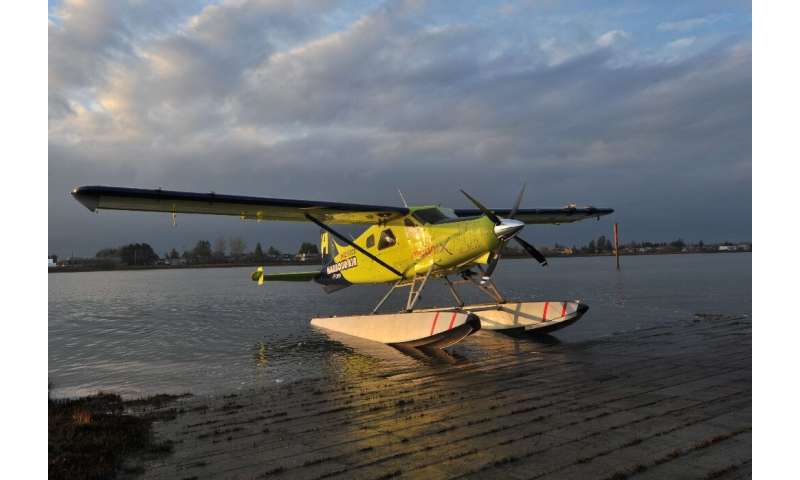
There have also been steps towards producing electric planes. The world's first fully —designed by engineering firm magniX—made its inaugural test flight in December in Canada.
Swiss company Smartflyer is developing a hybrid-electric aircraft for four people and is aiming for a maiden flight in 2022. As well as reducing emissions, the aircraft is less noisy and cheaper to operate due in part to lower .
But Aldo Montanari, the company's head of avionics and user interface, cautioned such projects would not be quick.
"The pressure is quite big... and I think the industry has understood but they need time to react, they cannot do it in one year," he said. "It has to be safe."
The world's first fully electric aircraft—designed by engineering firm magniX—made its inaugural test flight in December in Cana
The world's first fully electric aircraft—designed by engineering firm magniX—made its inaugural test flight in Canada
Biofuels are touted as a major route for the aviation industry to cut carbon emissions, and several airlines have in recent years operated commercial flights using them.
But prices remain higher than regular fuel, and they represent just a tiny proportion of jet fuel used globally.
Despite the efforts, environmentalists accuse the aviation industry of moving too slowly as more evidence emerges of the devastating impacts of climate change.
"It will take a long time for airlines to become sustainable," Dewi Zloch, climate and energy campaigner with Greenpeace, told AFP.
"Technological solutions will take decades.
We need a smarter solution: Shaming people for flying won't cut airline emissions

© 2020 AFP

MARX


Extreme weather could bring next recession

extreme weather
Credit: CC0 Public Domain
Physical climate risk from extreme weather events remains unaccounted for in financial markets. Without better knowledge of the risk, the average energy investor can only hope that the next extreme event won't trigger a sudden correction, according to new research from University of California, Davis.
The paper, "Energy Finance Must Account for Extreme Weather Risk," was published Feb. 17 in the journal Nature Energy.
"If the market doesn't do a better job of accounting for climate, we could have a recession—the likes of which we've never seen before," said the article's author, Paul Griffin, an accounting professor at the UC Davis Graduate School of Management.
The central message in his latest research is that there is too much "unpriced risk" in the energy market. "Unpriced risk was the main cause of the Great Recession in 2007-2008," Griffin said. "Right now,  shoulder much of that risk. The market needs to better assess risk, and factor a risk of extreme weather into securities prices," he said.
For example, excessive high temperatures, like those experienced in the United States and Europe last summer, can be deadly. Not only do they disrupt agriculture, harm  and stunt , they also can overwhelm and shut down vast parts of energy delivery, as they did in Northern California when PG&E shut down delivery during fires and weather that could trigger fire. Extreme weather can also threaten other services such as water delivery and transportation, which in turn affects businesses, families and entire cities and regions, sometimes permanently. All of this strains local and broader economies.
"Despite these obvious risks, investors and asset managers have been conspicuously slow to connect physical climate risk to company market valuations," Griffin said in his article.
"Loss of property is what grabs all the headlines, but how are businesses coping? Threats to businesses could disrupt the entire economic system."
Climate-vulnerable locations also factor into risk for energy markets. In the United States, U.S. oil refining is located on the Gulf Coast, an area exposed to sea-level rise and intense storms. Oil refining in Benicia and Richmond, in Northern California, can be exposed to coastal flooding. Energy companies' transmission infrastructure is located in arid areas, increasing risk of damage, such as the destruction from recent wildfires in California. In addition, it is not clear insurance will be available to cover such risks. Add to those risks, Griffin said, "litigation, sanctions and even loss of business from the property destroyed.
"The climate litigation risk already priced into  stocks (after, for example, a protracted ExxonMobil court case in the 1990s) would prove insufficient."
Extreme weather climate risk, in summary, is hard to predict.
"While proprietary climate risk models my help some firms and organizations better understand future conditions attributable to , extreme weather risk is still highly problematic from a risk estimation standpoint," he concluded in the article.
"This is because with climate change, the patterns of the past are no guide to the future, whether it be one year, five years or 20 years out. Investors may also normalize  impacts over time, discounting their future importance."
Extreme heat impacts firms' stock value, study finds

More information: Energy Finance Must Account for Extreme Weather Risk, Nature Energy (2020). DOI: 10.1038/s41560-020-0548-2

The lost continent of Zealandia hides clues to the Ring of Fire's birth

A topographic map of Zealandia, a sunken continent that includes New Zealand.
(Image: © NOAA)
The hidden undersea continent of Zealandia underwent an upheaval at the time of the birth of the Pacific Ring of Fire.
Zealandia is a chunk of continental crust next door to Australia. It's almost entirely beneath the ocean, with the exception of a few protrusions, like New Zealand and New Caledonia. But despite its undersea status, Zealandia is not made of magnesium- and iron-rich oceanic crust. Instead, it is composed of less-dense continental crust. The existence of this odd geology has been known since the 1970s, but only more recently has Zealandia been more closely explored. In 2017, geoscientists reported in the journal GSA Today that Zealandia qualifies as a continent in its own right, thanks to its structure and its clear separation from the Australian continent.


Now, a new analysis of chunks of Zealandia drilled from beneath the ocean floor in 2017 reveals that this continent underwent a paroxysm of change between 35 million and 50 million years ago. As the continental collision process known as subduction started in the western Pacific, parts of northern Zealandia rose by as much as 1.8 miles (3 kilometers), and other sections dropped in elevation by a similar amount. (Subduction occurs when one tectonic plate collides with another and sinks underneath it.)

"These dramatic changes in northern Zealandia, an area about the size of India, coincided with buckling of rock layers (known as strata) and the formation of underwater volcanoes throughout the western Pacific," study co-authors Rupert Sutherland, a geophysicist at Te Herenga Waka-Victoria University of Wellington, and Gerald Dickens of Rice University in Texas, wrote in The Conversation.
It was, in a nutshell, the birth of the Ring of Fire, the arc of subduction zones that circles the Pacific. The Ring of Fire's tectonic activity is accompanied by relatively frequent earthquakes and regions of volcanic activity.
"One of the amazing things about our observations is that they reveal the early signs of the Ring of Fire were almost simultaneous throughout the western Pacific," Sutherland said in a statement.
Zealandia separated from the supercontinent Gondwana around 85 million years ago. Not much was known about its dynamics since then, so in 2017, the International Ocean Discovery Program Expedition 371 sent research vessels to drill into the ocean floor below the Tasman Sea, beneath the sedimentary mud of recent millennia and into the rocks laid down as long ago as the Late Cretaceous (100.5 to 66 million years ago).
Using tiny fossils found in the sediments, the researchers were able to determine the elevation of the sediments at the time they were laid down. They found that at three sites in northern Zealandia, the sediments from between 35 million and 50 million years ago contained fossils that indicated shallow reef ecosystems. These sites today sit in the middle of the Tasman Sea near an area called Lord Howe Rise. Closer to Vanuatu in what is today the New Caledonia Trough, the researchers found single-celled plankton species that live in deeper waters, indicating that the elevation of Zealandia had dropped in the same 35- to 50-million-year time frame.
After the rise of northern Zealandia and the subsidence of the New Caledonia Trough region, the entire continent sunk another 0.6 miles (1 km) under the sea.
Sutherland and his colleagues now suspect that the changes in Zealandia at this time were part of a larger disturbance that quickly led to the formation of Ring of Fire subduction zones around the western Pacific.
"We don't know where or why," Sutherland said in the statement, "but something happened that locally induced movement, and when the fault started to slip, like in an earthquake, the motion rapidly spread sideways onto adjacent parts of the fault system and then around the western Pacific." 
This process would have taken over a million years, but would have represented a dramatic rearrangement of the geology of the western Pacific.
"What were the consequences of these geographic changes for plants, animals and regional climate? Can we make a computer model of the geological processes that happened at depth? We are still figuring some of this out, but we do know the event changed the direction and speed of movement of most tectonic plates on Earth," Sutherland and Dickens wrote in The Conversation. "It was an event of truly global significance — and we now have really good observations and ideas to help us get to the bottom of what happened and why." 
Read an excerpt from 'The Falcon Thief'

The fierce beauty of falcons makes them highly prized by collectors — and wildlife smugglers. 


By Mindy Weisberger - Senior Writer 6 days ago

(Image: © Courtesy of Simon & Schuster)

Below is an excerpt of "The Falcon Thief: A True Tale of Adventure, Treachery and the Hunt for the Perfect Bird" by Joshua Hammer, published by Simon & Schuster on Feb. 11, 2020.

Read more about the amazing true story of the man who spent decades smuggling and selling wild falcons, some of which commanded prices in the tens and thousands of dollars.

The man had been in there far too long, John Struczynski thought. Twenty minutes had elapsed since he had entered the shower facility in the Emirates Lounge for business and first-class passengers at Birmingham International Airport, in the West Midlands region of England, 113 miles north of London. Now Struczynski stood in the corridor outside the shower room, a stack of fresh towels in the cart beside him, a mop, a pail, and a pair of caution wet floor signs at his feet. The janitor was impatient to clean the place.

The man and a female companion had been the first ones that day to enter the lounge, a warmly decorated room with butterscotch armchairs, a powder-blue carpet, dark wood columns, glass coffee tables, and black-shaded Chinese porcelain lamps. It was Monday, May 3, 2010—a bank holiday in the United Kingdom—and the lounge had opened at noon to accommodate passengers booked on the 2:40 p.m. Emirates direct flight to Dubai. The couple had settled into an alcove with a television near the reception desk. Minutes later the man had stood up and headed for the shower, carrying a shoulder bag and two small suitcases. That had struck Struczynski as strange. Who brings all of his luggage into the business-and-first-class shower room? And now he had been in there two or three times longer than any normal passenger.

A tall, lean man in his forties with short-cropped graying hair and a brush mustache, Struczynski had spent a decade monitoring 130 closed-circuit television cameras on the night shift at a Birmingham shopping mall, a job that “gave me a background in watching people,” he would later say. That February, after the security firm laid him off, a management company had hired him to clean the Emirates Lounge. The first week he was there, the contractor enrolled him in an on-site training course to identify potential terrorist threats. The course, he would later say, heightened his normal state of suspicion.

As Struczynski puttered around the hallway, the shower room door opened, and the passenger—a balding, slender, middle-aged white man of average height—stepped out. He slipped past Struczynski without looking at him.

The cleaner opened the shower facility door and looked around the room.

My goodness, he thought. What do we have here?

"The Falcon Thief," by Joshua Hammer"Joshua Hammer has that rare eye for a thrilling story, and with The Falcon Thief he has found the perfect one— a tale brimming with eccentric characters, obsession, deception, and beauty. It has the grip of a novel, with the benefit of being all true." — David Grann, NY Times bestselling author VIEW DEAL
The shower floor and glass partition surrounding it were both bone-dry. All the towels remained stacked and neatly folded. The toilet for the disabled hadn’t been used. The washbasin didn’t have a drop of water in it. Though the man had been inside the room for twenty minutes, he didn’t appear to have touched anything.

Struczynski recalled the terrorism workshop that he had taken three months earlier, the exhortations from the instructor to watch out for odd looks and unusual behavior. This passenger was up to something. He knew it. Not sure what he was looking for, he rifled through the towels and facecloths, rummaged beneath the complimentary toothpaste tubes and other toiletries, checked the rubbish bin. He mounted a footstool and dislodged two ceiling tiles, wedging his hand into the hollow space just above them. Nothing.

He shifted his attention to the baby-changing area. In the corner of the alcove stood a plastic waist-high diaper bin with a round flip lid. Struczynski removed the top and looked inside. He noticed something sitting on the bottom: a green cardboard egg carton.

In one of the middle slots sat a single egg, dyed blood-red.

He stared at it, touched it gently. What could it mean?

He recalled the recent arrest at Heathrow Airport outside London of a man trying to smuggle rare Indian box turtles in egg cartons. But that seemed so odd. More likely this passenger was moving narcotics—like the gangsters in Liverpool who wedged packets of heroin and cocaine inside plastic Kinder Egg containers. That’s it, he thought. It must have something to do with drugs.

Struczynski approached the reception area, a few steps from where the man and his traveling companion were sitting, and spoke softly to the two women working at the front desk. We may have a problem, he murmured, describing what he had just observed. He suggested that they call airport security, then returned to the shower and locked the door so that no one could disturb the evidence. Soon two uniformed security men entered the lounge, interviewed Struczynski, and examined the shower. The facility couldn’t be seen from the alcove in which the passengers were sitting, and so, absorbed in conversation, the couple failed to notice the sudden activity.

The security guards summoned a pair of airport-based plainclothes officers from the West Midlands Counter Terrorism Unit. Formed in 2007 in the wake of the London bus-and-underground bombings, the unit had grown from seventy to nearly five hundred officers, and was chiefly concerned with combating Islamist extremism. Counterterrorism forces had recently arrested a gang that had conspired to kidnap and behead a British officer and post the footage online, and had helped foil a plot by a Birmingham-born terrorist to blow up transatlantic airliners using liquid explosives. These men, too, questioned Struczynski, examined the egg box in the diaper bin, and asked the janitor to point out the passenger. They flashed the badges attached to lanyards around their necks, and chatted with him and his companion politely. Struczynski watched discreetly as the pair stood up and, flanked by the police, exited the lounge.

Excerpt from THE FALCON THIEF by Joshua Hammer
Copyright © 2020 by Joshua Hammer. Reprinted by permission of Simon & Schuster, Inc, NY.

The Falcon Thief' exposes the high-flying life of a notorious rare-bird smuggler

An international wildlife criminal made a fortune stealing and selling rare birds and their eggs.

By Mindy Weisberger - Senior Writer 

When Lendrum was apprehended in June 2018, he was carrying rare falcon eggs strapped to his body in a custom sling. (Image: © Crown Prosecution Services)

Two grinning men pose for a video camera in front of a helicopter: "We're going on a tour," one of them says and laughs. But what they were about to do was no joyride; it was both dangerous and illegal. They were attempting to steal the eggs of rare falcons from the birds' nests, on a perilously steep cliff in Nunavik territory in northern Quebec.

Another clip shows one of the men, Jeffrey Lendrum, dangling from a harness, a pouch at the ready for holding stolen eggs. Recorded in 2000, the footage was found in Lendrum's luggage when he was arrested in May 2010 in the United Kingdom on suspicion of smuggling 14 peregrine falcon eggs out of the country, the BBC reported that year.

Lendrum pled guilty to that crime in August 2010, but the conviction wasn't his first — nor would it be his last. Over four decades, Lendrum steadily built a reputation as a master smuggler of endangered falcon eggs, stealing them from locations around the world and selling them to private collectors for tens of thousands of dollars apiece. His remarkable tale comes together piece by astonishing piece in the book "The Falcon Thief: A True Tale of Adventure, Treachery and the Hunt for the Perfect Bird" (Simon & Schuster) by Joshua Hammer, published today (Feb. 11).

Related: See gorgeous photos of birds of prey

Falcons are swift and graceful birds of prey, and people have trained and bred these raptors as hunters for thousands of years across the Middle East, where falcons are still highly valued, Hammer told Live Science.

Breeding captive falcons for collectors is a tightly regulated and extremely profitable business. Healthy adult peregrines (Falco peregrinus) may fetch as much as $25,000 from eager collectors in Qatar, while the Arctic gyrfalcon (Falco rusticolus), the largest of all falcons, can command a price of up to $250,000, Forbes reported in 2015.

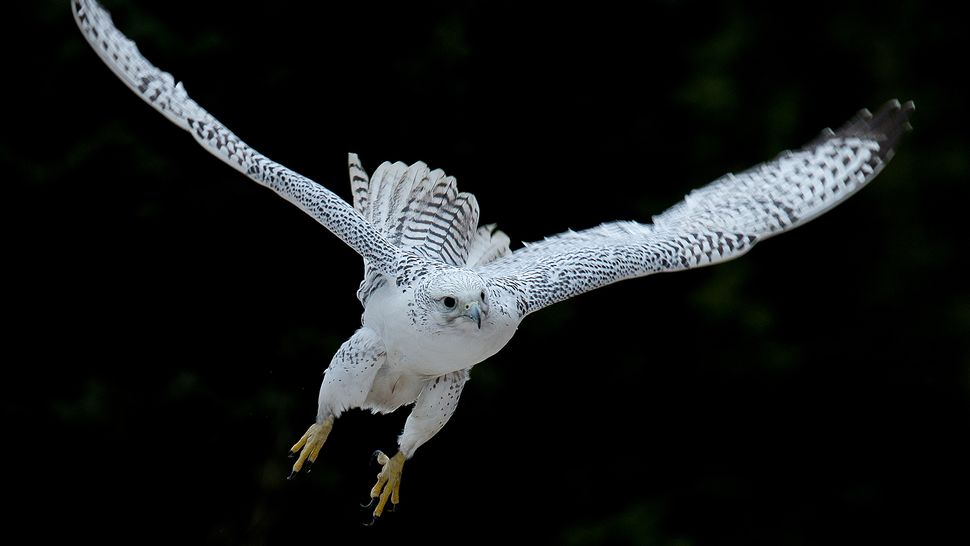
"Some Arab sheiks are willing to pay $400,000 for a single white gyrfalcon, which is considered the most beautiful and rarest of birds," Hammer said.


White gyrfalcons (Falco rusticolus), the biggest of all falcon species, are highly prized by illegal collectors. (Image credit: Shutterstock)

In fact, demand across the Persian Gulf for wild falcons is so high that opportunities abound for people like Lendrum, who steal and sell the protected birds and their eggs. Research into Lendrum's underworld network revealed just a glimpse of an extensive black market for illegal falcons, Hammer added.

"Lendrum's not the only one who would go off to remote corners of Russia or Pakistan or any place you find wild raptors, and catch these birds and then smuggle them," he said.

When writing "The Falcon Thief," Hammer tracked down the camera operator who shot the Quebec helicopter footage, an associate of Lendrum's named Paul Mullin. That story became one of the centerpieces of Hammer's book, and the "outlandish, expensive operation, apparently financed by the sheiks," marked the pinnacle of Lendrum's criminal career, according to Hammer.
"It was kind of all downhill from there," he said.

Multiple arrests

Though Lendrum is but a single player in the illegal falcon trade, he's arguably the best-known of these egg thieves, due to the spectacle of his airport arrests over the past 10 years. His capture in May 2010 at Birmingham Airport airport in the U.K. made headlines, and was accompanied by a photo of Lendrum wearing 14 swaddled peregrine eggs taped to his body in a custom sling to keep them warm, according to the Royal Society for the Protection of Birds (RSPB).

But Lendrum insisted that they were duck eggs, and that he was wearing them on his doctor's recommendation to help with back pain, Hammer wrote in the book. That excuse didn't fly with the judge, who sentenced Lendrum to 30 months in jail, the RSPB reported.

Related: World's fastest animals: The peregrine falcon and other speedsters

Lendrum was arrested again in October 2015 at Sao Paulo International Airport in Brazil, as he was trying to board a plane with an incubator holding four eggs he had stolen in Chile; those eggs were thought to belong to the rare peregrine subspecies Falco peregrinus cassini, or Cassini falcon, the UK National Wildlife Crime Unit (NWCU) reported. Chicks from these eggs would have commanded up to $80,000 each on the black market, accrding to the NWCU.

In January 2016, a Brazilian judge sentenced Lendrum to 4.5 years in jail, but Lendrum had already skipped bail and left the country (he is currently facing extradition to Brazil, The Guardian reported).

However, Brazilian officials will have to wait for Lendrum to first finish serving yet another sentence in the U.K. He was arrested in June 2018 arriving at Heathrow Airport from Johannesburg, South Africa, and he was carrying a substantial payload of purloined avian wildlife, a U.K. Border Control representative said in a statement.

"During a full search, he was found to be wearing a body belt concealing 19 bird eggs as well as 2 newly-hatched chicks," according to the statement.

At the trial, Lendrum told the court that "his intention was to rescue the eggs after he encountered some men chopping down trees containing their nests." But wildlife experts overturned his story when they identified the eggs as originating from nests on cliffs, and on Jan. 10, Lendrum was sentenced to 3 years and 1 month in prison. 

"He can't stop lying"

For some people, serving a string of jail terms in multiple countries might be a deterrent to future crimes, perhaps encouraging them to rethink their thieving ways. However, that was clearly not the case with Lendrum, who to this day downplays the seriousness of his acts and continues to spin fabulous fabrications about his intentions for the eggs that he has stolen, Hammer said.

"He can't stop lying," Hammer said. "I saw the interrogation tapes when he was on trial in Brazil; he'll tell these incredibly outlandish lies one after another, which the judge basically laughed at before sentencing him to five years in prison."

Lendrum's convoluted and fantastic explanations for his so-called conservation activities, along with his utter lack of remorse, likely also contributed to the length of his latest prison sentence in the U.K., Hammer added.

"He was very opaque — sort of a self-deluding liar — and he remained in total denial about everything that he had done, even though the evidence was just so overwhelming," Hammer said.

As Lendrum himself said in an interview with Hammer: "I honestly didn't think that there would be a problem if I were caught."

800-year-old spiral rock carvings marked the solstices for Native Americans
By Tom Metcalfe - Live Science Contributor 12/02/2020

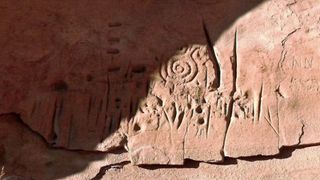
The spiral patterns that appear prominently in the rock carvings are thought to be a symbol among ancestral Pueblo peoples for the sky or the sun.
(Image: © Jagiellonian University)

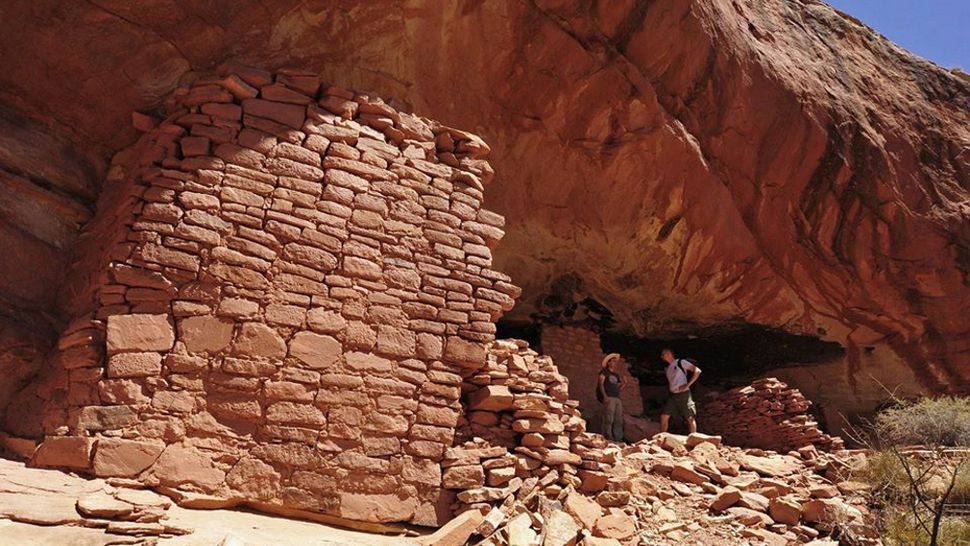
The Pueblo people created rock carvings in the Mesa Verde region of the Southwest United States about 800 years ago to mark the position of the sun on the longest and shortest days of the year, archaeologists now say.

Panels of ancient rock art, called petroglyphs, on canyon walls in the region show complex interactions of sunlight and shadows.These interactions can be seen in the days around the winter and summer solstices, when the sun reaches its southernmost and northernmost points, respectively, and, to a lesser extent, around the equinoxes — the "equal nights"— in spring and fall, the researchers said.

The carvings show scenes depicting the traditions of contemporary Hopi people — descendants of the ancestral Puebloans who lived in parts of the Southwest until the 13th century. The traditions describe important rituals at seasonal points in the yearly solar calendar tied to farming activities, such as planting and harvesting.

Related: Chaco Canyon Photos: The Center of an Ancient World

The rock carvings "probably marked the specific seasons," archaeologist Radek Palonkaof Jagiellonian University in Kraków, Poland, told Live Science. "It was not only to observe the phenomena."

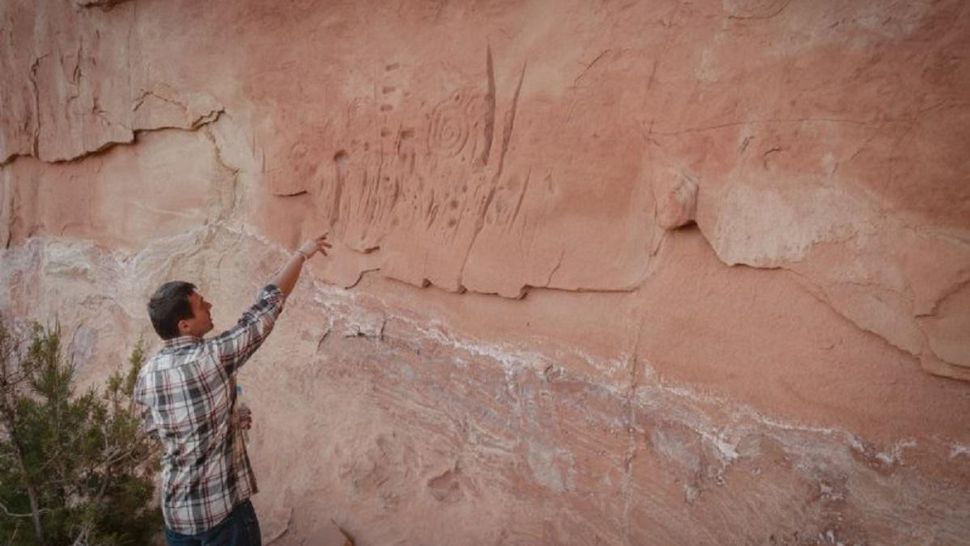
Archaeologist Radek Palonka with some of the 800 year-old rock carvings that are illuminated by patterns of sunlight and shadow at the time of the winter solstice. (Image credit: Jagiellonian University)

Since 2011, Palonka has led researchers from his university in investigations of ancient sites around Castle Rock Pueblo that date from the early 13th century. Their research is one of only a few European archaeological projects in the region.

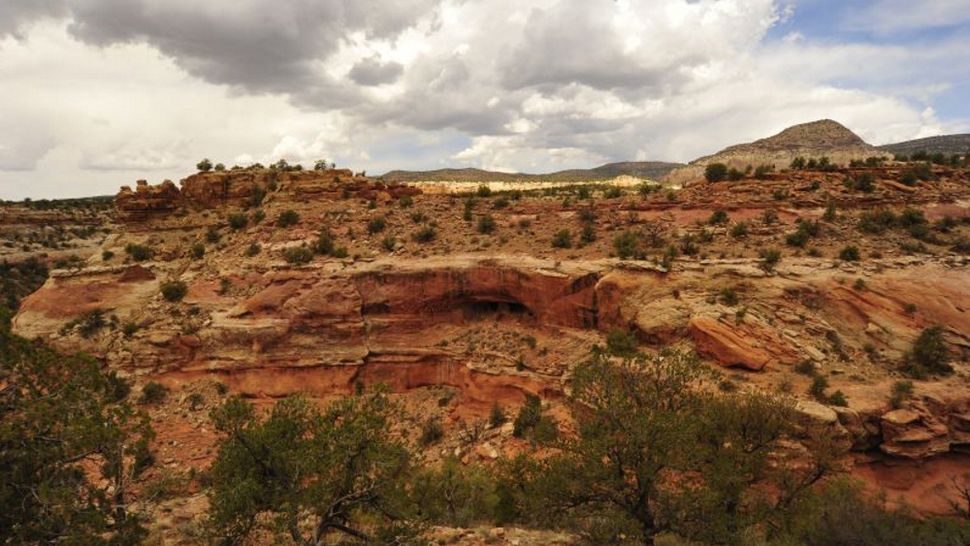
Castle Rock Pueblo is now part of the Canyons of the Ancients National Monument, near Colorado's border with Utah and about 20 miles (32 kilometers) west of Mesa Verde National Park.

Archaeological investigations

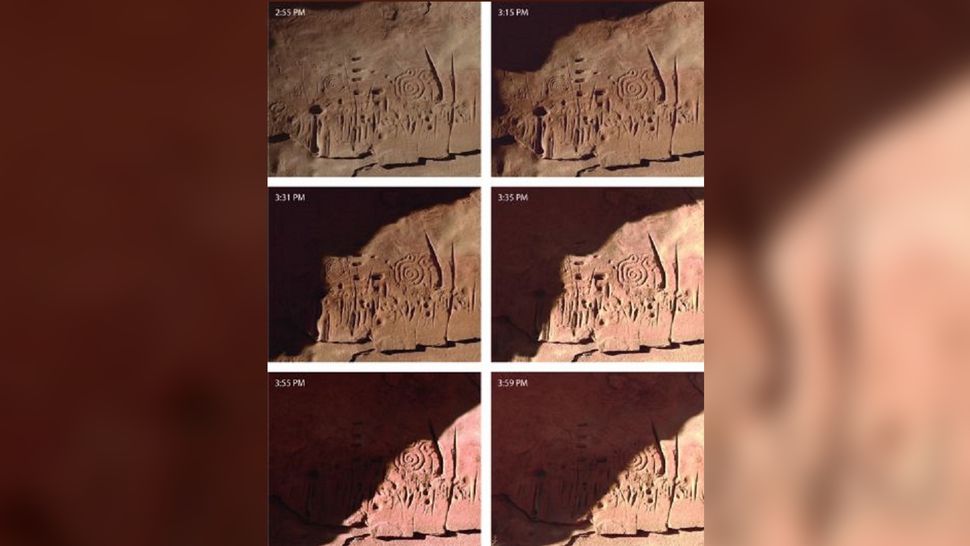
Patterns of sunlight and shadow move across the rock carvings only at certain times of the day, and only for a few days around the solstices and equinoxes. (Image credit: Jagiellonian University)

Ethnographic studies in the 19th century suggested that rock carvings in the area may have been used as solar calendars, but Palonka's team is the first to verify and document the phenomena.

"We used a lot of new technologies, like laser scanning and photogrammetry," a method that uses detailed photographs to create a map or 3D model of a place or object, he said. "So we were able to see more stuff on the rocks than it is possible to see only with the naked eye."

At one of the sites studied so far, the petroglyphs are carved on a flat, south-racing rock wall that's shaded by an overhanging rock. They consist of three carved spirals and smaller elements, including rectangles, grooves and hollows.

At the time of sunset on days near the midwinter solstice, which happens around Dec. 22 each year, patterns of sunlight and shadow can be seen to move through the spirals, grooves and other parts of the petroglyphs, Palonka said.

Related: In Photos: The World's Oldest Cave Art

The phenomenon is also visible around the spring and fall equinoxes, around March 20 and Sept. 22 each year, but it does not occur at other times of the year.

Similar petroglyphs at another ancestral Puebloan site, at nearby Sand Canyon, are lit by sunlight only in the late mornings and early afternoons around the summer solstice, he said.

The observations were made by archaeologists and students from Poland, mostly during the warmer months, and throughout the year by volunteers for the administration of the Canyons of the Ancients National Monument. The team has also discovered several panels of Pueblo rock art previously unknown to scientists, Palonka said.

Castle Rock Pueblo in the Canyons of the Ancients National Monument include several cliff dwellings and rock carvings made about 800 years ago. (Image credit: Jagiellonian University)

Pueblo peoples

The name Pueblo — which means "village" in Spanish — was given by Spanish colonists to several Native American peoples who lived in the American Southwest.

Unlike many nomadic Native Americans, the Pueblo peoples lived in large complexes of buildings they constructed from adobe and stone.

In the Mesa Verde region and elsewhere, the ancient villages of ancestral Puebloans are represented by sophisticated "cliff dwellings" in the sides of canyons and under rock overhangs. But the buildings are also found on valley floors, such as at Chaco Canyon in New Mexico.

Archaeologists and students from Poland's Jagiellonian University and local volunteers have studied the cliff dwellings and rock art at Castle Rock Pueblo since 2011. (Image credit: Jagiellonian University)


Many ancient monuments throughout the world show signs of having been used, at least in part, to mark annual events of the solar calendar, such as the midwinter and midsummer solstices.


The importance of solar solstices is also found in several Native American traditions. "This collaboration with native people, in this case Hopi people from Arizona, is really important." Palonka said.


Among other details, Palonka has learned that the spiral symbol, seen in many of the rock carvings related to the solstices and equinoxes, was often an emblem of the sun or sky — but not always.

The symbol can also have other meanings — including water, physical migration or spiritual migration — such as moving between the physical world and a mythical or spiritual world, he said.

Ancient 'outlaw temple' discovered in Israel


By Laura Geggel - Associate Editor Feb 11, 2020

The famous First Temple was not alone.

A bird's-eye view of the temple, taken at the end of the 2013 excavation season.
(Image: © P. Partouche/SkyView)

The discovery of an Iron Age temple near Jerusalem has upended the idea that the ancient Kingdom of Judah, located in what is now southern Israel, had just one temple: the First Temple, also known as Solomon's Temple, a holy place of worship in Jerusalem that stood from the 10th century B.C. until its destruction, in 586 B.C.

The newfound temple — whose roughly 150 congregants worshiped Yahweh but also used idols to communicate with the divine — was in use during the same period as the First Temple. Its discovery shows that, despite what the Jewish Bible says, there were other contemporary temples besides the First Temple in the kingdom.


"If a group of people living so close to Jerusalem had their own temple, maybe the rule of the Jerusalem elite was not so strong and the kingdom was not so well established as described in the Bible?" study co-researcher Shua Kisilevitz, a doctoral student of archaeology at Tel Aviv University in Israel and an archaeologist with the Israel Antiquities Authority, told Live Science.

Related: Photos: Israel's largest Neolithic excavation

Archaeologists have known about the Iron Age site at Tel Motza, located less than 4 miles (6.4 kilometers) outside Jerusalem, since the early 1990s. However, it wasn't until 2012 that researchers discovered the remains of a temple there, and it wasn't until just last year that they excavated it further, ahead of a highway project.

This temple was likely built around 900 B.C. and operated for a few hundred years, until its demise in the early sixth century B.C., according to Kisilevitz and her co-researcher, who wrote about it in the January/February issue of the Biblical Archaeology Review magazine.
This timing of the temple's existence dumbfounded archaeologists. "The Bible details the religious reforms of King Hezekiah and King Josiah, who assertedly consolidated worship practices to Solomon's Temple in Jerusalem and eliminated all cultic activity beyond its boundaries," Kisilevitz and review co-author Oded Lipschits, the director of the Sonia and Marco Nadler Institute of Archaeology at Tel Aviv University, wrote in the magazine.

These reforms likely happened between the late eighth and the late seventh centuries B.C. In other words, they occurred at the same time that the Tel Motza temple was operating, the researchers said.

Was it daring for such a temple to seemingly defy the kings' orders and operate so close to Jerusalem? The only other known temple from this time period in the kingdom, besides the First Temple, "is a small temple in the southern border fort of Arad, which served the local garrison," Kisilevitz said.
However, it appears that there were sanctioned temples in the kingdom whose continued existence was permitted, despite Hezekiah's and Josiah's reforms, Kisilevitz and Lipschits said. Here's how that may have happened.


Image 1 of 6


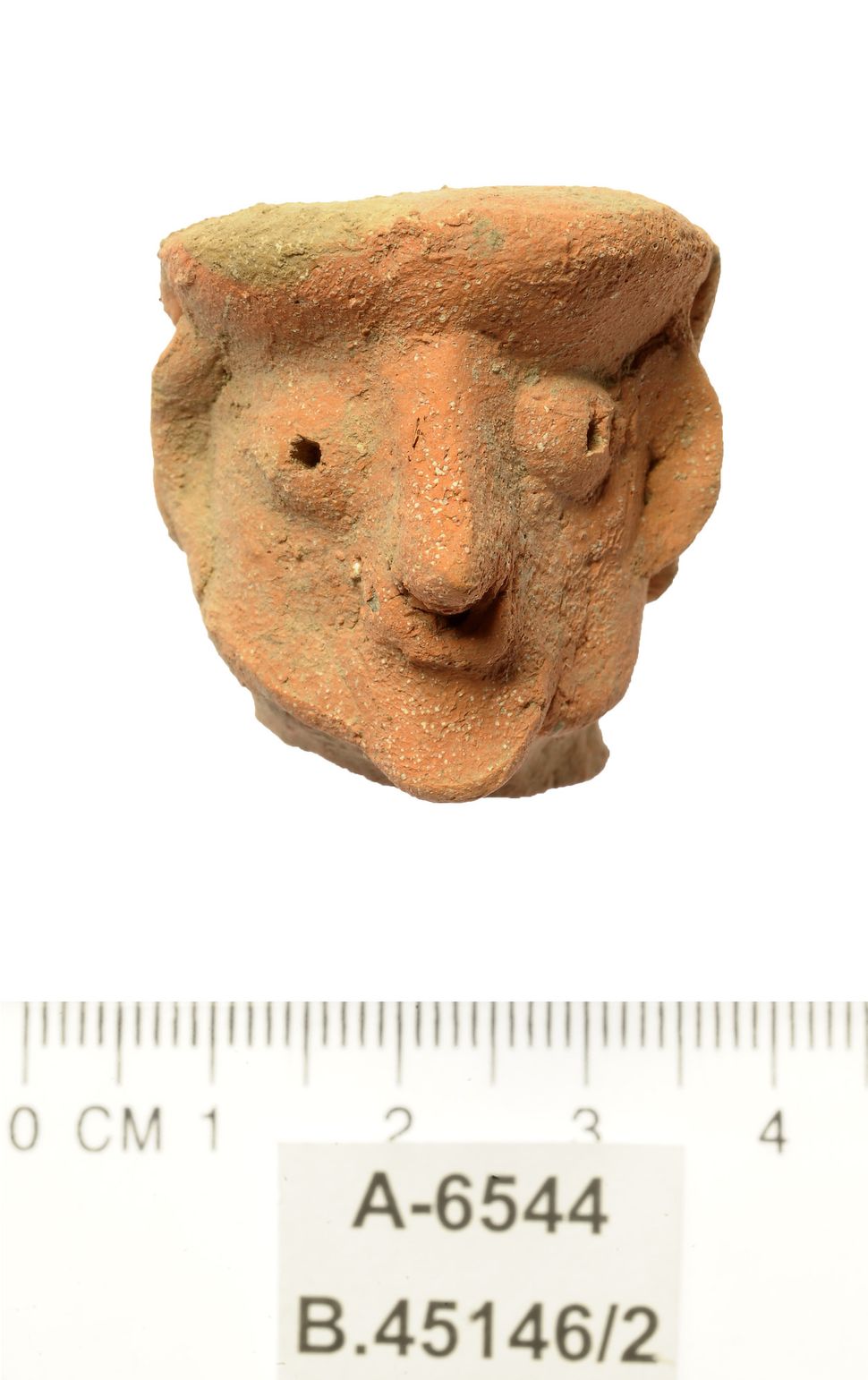
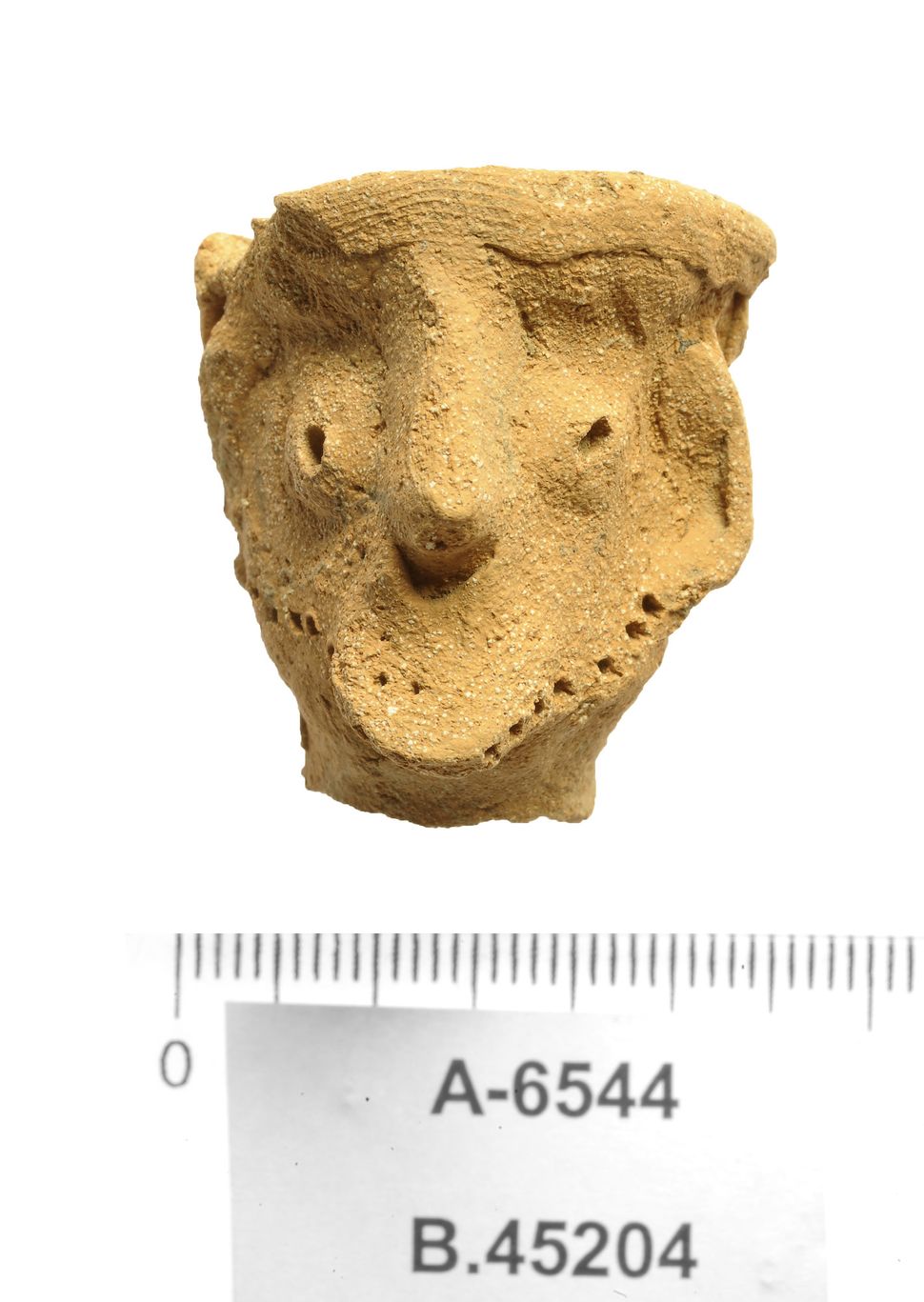
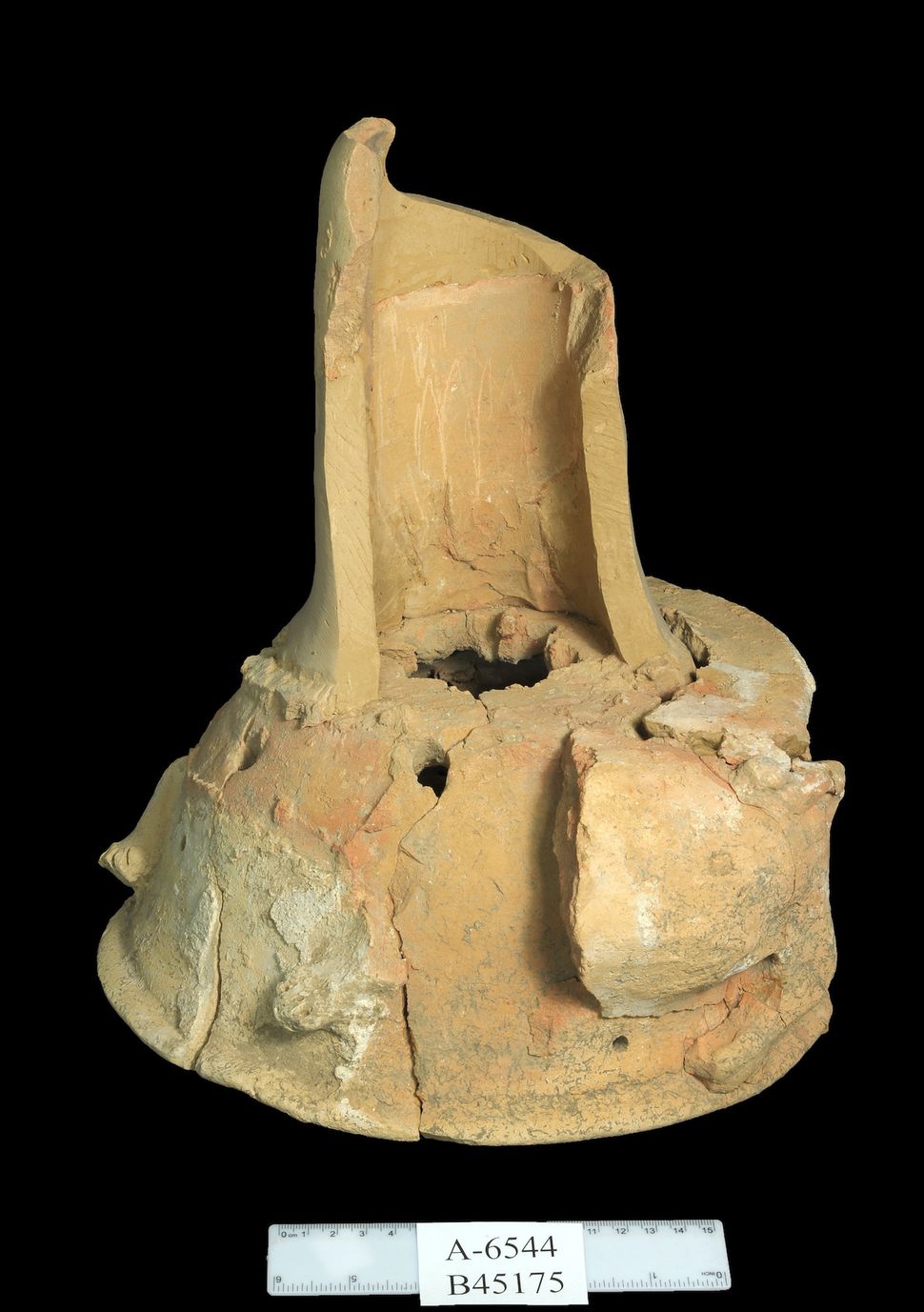
 One of the two human-shaped figurines. (Image credit: C. Amit)


 These idols were likely used to communicate with the devine. (Image credit: C. Amit)


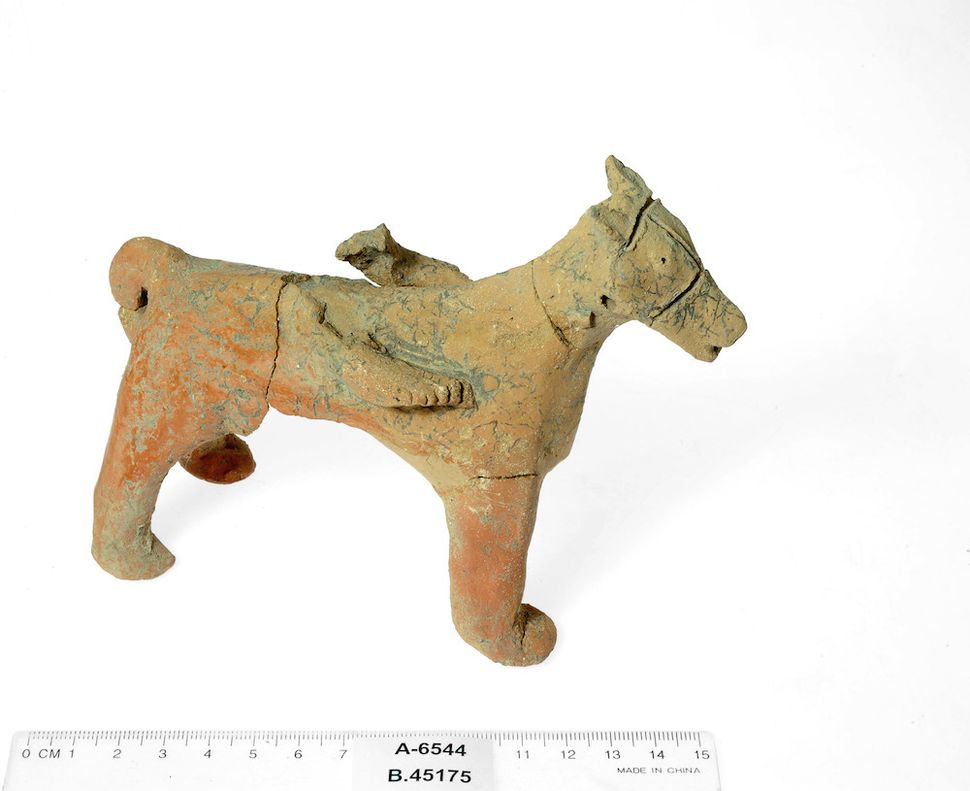
A horse figurine unearthed at the site. (Image credit: C. Amit)


 The two horse figurines are the oldest known depictions of horses from the Iron Age in the Kingdom of Judah. (Image credit: C. Amit)


 One of the two human-shaped figurines. (Image credit: C. Amit)

 (Image credit: S. Kisilevitz)

Ancient granary

The site was home not just to the temple, but also to dozens of silos for grain storage and redistribution. In fact, the granary appears to have thrived as time went on, and it even had buildings that likely served administrative and religious purposes.

It appears that Tel Motza became such a successful granary that it catered to Jerusalem and became an economic powerhouse. "It seems that the construction of the temple — and the worship conducted in it — were related to [the granary's] economic significance," the researchers wrote in the magazine piece.

So, perhaps the temple was allowed to exist because it was tied to the granary and didn't seem to threaten the kingdom in any way, the researchers said.

Broken idols

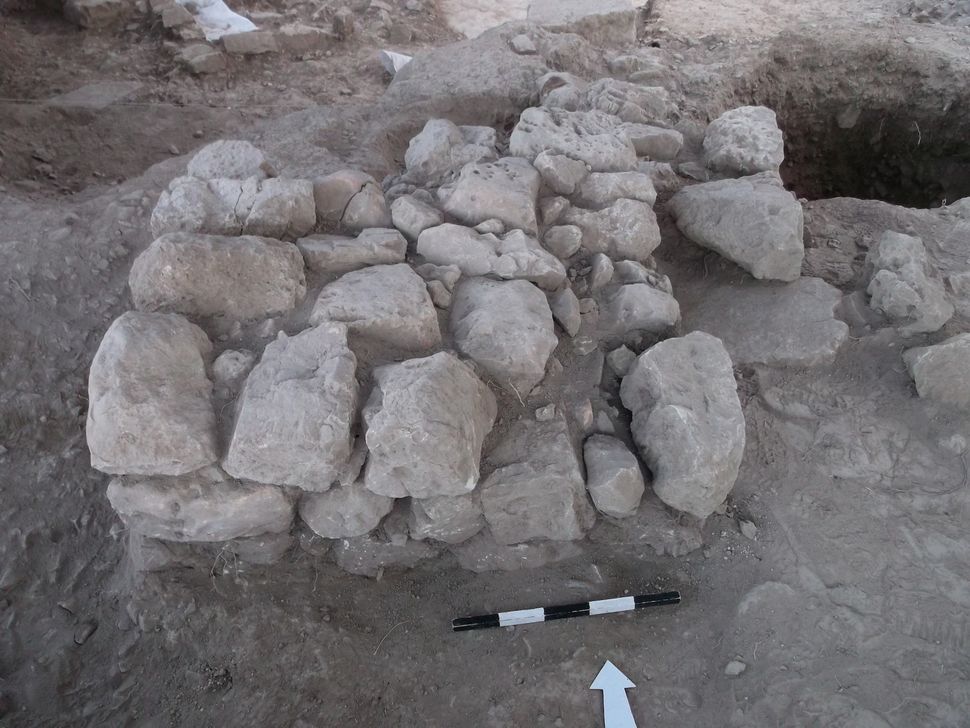
The temple itself was a rectangular building with an open courtyard in front. This courtyard "served as a focal point for the cultic activity, as the general population was not allowed into the temple itself," Kisilevitz told Live Science.

"Cultic finds in the courtyard include a stone-built altar on which animals were sacrificed and their remains discarded into a pit dug nearby," Kisilevitz said. In addition, four clay figurines — two human-like and two horse-like — had been broken and buried in the courtyard, likely as part of a cultic ritual.

The horse-like figurines may be the oldest known depictions of horses from the Iron Age of Judah, the researchers added.

Related: Photos: The ancient ruins of Shivta in southern Israel

But the ancient people probably weren't worshipping the clay idols, Kisilevitz noted. Rather, these idols were "a medium through which the people could communicate with the god [or gods]," likely to ask for good rainfall, fertility and harvest, Kisilevitz told Live Science.
It's not surprising that people in the ancient Kingdom of Judah used idols, the archaeologists noted.

"Evidence of cultic activity throughout the Kingdom of Judah exists both in the biblical texts (depicted as royally sanctioned, with the notable exception of Hezekiah and Josiah who conducted cultic reform) and in the archaeological finds," Kisilevitz told Live Science.

Moreover, during this time, new political groups were emerging in the Levant, the region that includes Israel and its neighboring countries today. Given these tumultuous changes, people tended to stick with their old religious practices, the researchers said. Even the Tel Motza temple's architecture and its artifacts were reminiscent of religious traditions from the ancient Near East that had been practiced since the third millennium B.C., the researchers said.

In all, the discovery of this temple sheds light on state formation during this period, the researchers said. When the Kingdom of Judah first emerged, it wasn't as strong and centralized as it was later on, but it built relationships with local nearby rulers, including one at Tel Motza, the researchers said.


Scientists just watched a newfound asteroid zoom by Earth. Then they saw its moon.


By Meghan Bartels - Space.com Senior Writer 4 days ago

One of Earth's premier instruments for studying nearby asteroids is back to work after being rattled by earthquakes, and its first new observations show that a newly discovered space rock is actually two separate asteroids.

The instrument is the planetary radar system at the Arecibo Observatory in Puerto Rico. The observatory was closed for most of January, after a series of earthquakes hit the island beginning on Dec. 28, 2019. The observatory reopened on Jan. 29. Meanwhile, on Jan. 27, scientists using a telescope on Mauna Loa in Hawaii spotted an asteroid that astronomers hadn't seen before. The team dubbed the newfound space rock 2020 BX12 based on a formula recognizing its discovery date.

Because of the size of 2020 BX12 and the way its orbit approaches that of Earth, it is designated a potentially hazardous asteroid. However, the space rock has already come as close to Earth as it will during this pass (2.7 million miles or 4.3 million kilometers); astronomers have calculated the asteroid's close approaches with Earth for the next century, and all will be at a greater distance than this one was.

Related: Photos: asteroids in deep space


Radar images show the binary asteroid 2020 BX12, which scientists discovered this year. (Image credit: Arecibo Observatory/NASA/NSF)


The asteroid's flyby wasn't a threat to life on Earth, but it was an opportunity for scientists who were hoping to learn more about space rocks. On Feb. 4 and 5, the radar station at Arecibo set its sights on 2020 BX12. Based on the observations, the scientists discovered that 2020 BX12 is a binary asteroid, with a smaller rock orbiting the larger rock. About 15% of larger asteroids turn out, on closer inspection, to be binary, according to NASA.

The larger rock is likely at least 540 feet (165 meters) across, and the smaller one is about 230 feet (70 m) wide, according to the observations gathered by Arecibo. When the instrument observed the two space rocks on Feb. 5, they appeared to be separated by about 1,200 feet (360 m).

Scientists couldn't gather enough data to be sure, but they suspect that the two rocks might complete an orbit of each other in 45 to 50 hours and that the smaller rock may be brighter than, and tidally locked with, its companion, meaning the same side always faces the larger object.

Existential dread is a key motivator for asteroid discoveries, and planetary defense experts hope that, by surveying nearby space rocks, they will identify a threat with enough time for us to protect ourselves. But asteroids are also scientifically interesting, since they represent rubble from the formation of the solar system.
Bermuda Triangle theory busted: 1925 ship Cotopaxi found near Florida


By Laura Geggel - Associate Editor 3 days ago

The SS Cotopaxi went missing in 1925, while traveling from Charleston, South Carolina, to Havana.


The myth that things go missing in the Bermuda Triangle is just that, a myth.
(Image: © James Gass/EyeEm via Getty Images)


The identification of a nearly 100-year-old shipwreck has debunked a popular conspiracy theory: that the Bermuda Triangle was somehow involved with the 1925 disappearance of the SS Cotopaxi. The steam powered bulk carrier never made it to its destination in Havana.

The real cherry on top of the discovery, however, is that the SS Cotopaxi shipwreck isn't even in the Bermuda Triangle, which stretches from Bermuda to Florida to Puerto Rico.

"That's the thing about this Bermuda Triangle — if you actually look at it on a map, most of the stories associated with it aren't even in the boundaries," Michael Barnette, a marine biologist and diver who identified the wreck, told Live Science. "It's total rubbish."

Related: Gallery: Lost in the Bermuda Triangle

The Bermuda Triangle myth didn't even exist when the Cotopaxi went missing. Not until the 1960s was the term coined, in a magazine article, and in 1974, the bestselling book "The Bermuda Triangle" (Doubleday) came out, proposing, among other things, that the triangle was created when the "lost" city of Atlantis was destroyed. 

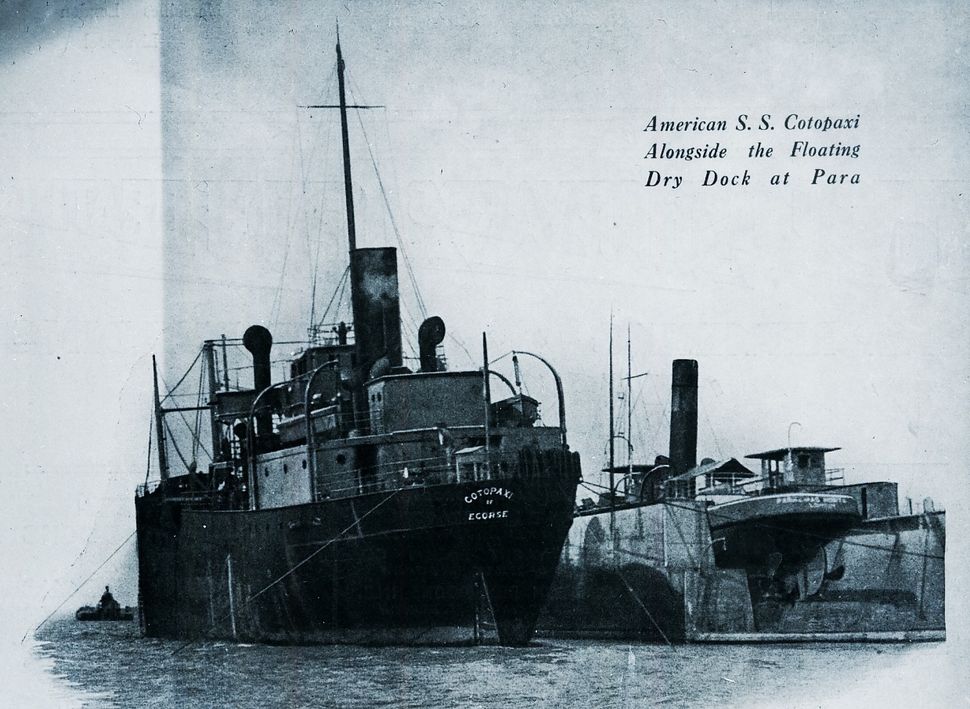
The SS Cotopaxi, before its disappearance. (Image credit: Digital image from the Fr. Edward J. Dowling, S.J. Marine Historical Collection, University of Detroit Mercy)

Since then, the Bermuda Triangle has become common lore, just like Bigfoot and the Loch Ness monster. In 1977, director Steven Spielberg's movie "Close Encounters of a Third Kind'' tied the disappearance of the SS Cotopaxi to the Bermuda Triangle and extraterrestrial activity.

Barnette's detective work has put the kibosh on that idea. When Barnette moved to Florida from the mid-Atlantic almost 20 years ago, he sought out shipwrecks he could explore while diving. One wreck in particular, known to locals as "the Bear Wreck" and located about 35 nautical miles (65 kilometers) off the eastern coast of St. Augustine, in northern Florida, caught his attention.

Unlike most shipwrecks in that area, the Bear Wreck was large. Intrigued, Barnette did some research; he took measurements of the shipwreck, looked at historical newspaper articles and insurance records, and examined artifacts found at the wreck.

His investigation showed that "the Cotopaxi was really the only option," Barnette said. "It's the one that just kind of screamed out."

In 2015, a rumor began circulating that a ghost ship found by the Cuban coast guard was actually the SS Cotopaxi. Barnette decided to set the record straight, so he posted a video online saying that the real Cotopaxi was at the bottom of the Atlantic. Soon after he posted that, Science Channel contacted him, and the two worked together to make a show about his find.

That show, the first in a series called "Shipwreck Secrets," aired Feb. 9. You can see it here.


Divers have known about the so-called "Bear" shipwreck for years, but it was Michael Barnette who started doing the research that determined that the remains came from the SS Cotopaxi, a vessel associated with the mystery of the Bermuda Triangle. (Image credit: Science Channel)

Distress calls

The SS Cotopaxi left Charleston, South Carolina, on Nov. 29, 1925, with a cargo of coal, but the vessel didn't make it far. A storm wiped out the ship, and none of the 32 people onboard were ever seen or heard from again.

Related: Mayday! 17 mysterious shipwrecks you can see on Google Earth

Research done by Barnette and British historian Guy Walters shows why. After the Cotopaxi went missing, the crewmembers' families sued the company that owned the ship. The families had found the ship's carpenter, who testified that the ship had broken hatch covers, which were used to cover the coal. If water sloshed aboard the ship and ran down to the cargo hold, the broken covers meant that the ship could flood and sink.

"We know from testimony that the hatch covers were in a very sad state of repair," Barnette said. "They were in the process of repairing all of these cargo hold covers, yet they were told to sail to Cuba before they completed all of that."

The research also revealed that the Cotopaxi had sent wireless distress signals on Dec. 1, 1925. These were picked up in Jacksonville, Florida, which isn't too far from where the wreck is today, according to a statement issued by Science Channel.

Moreover, another diver had discovered brass valves from the wreck with the letters SV on them. Barnette concluded that this probably stood for Scott Valve Manufacturing Co., whose Michigan headquarters are not too far from where the Cotopaxi was built.

"It made sense that a local shipbuilder is going to use local suppliers of hardware and things of that nature," Barnette said. "That's more supporting evidence that the Cotopaxi is the Bear Wreck."