Sunday, September 06, 2020

UPDATED
UK charges 26 over printing works climate protest

Issued on: 06/09/2020 -

The protests were part of 10 days of action by the group Extinction Rebellion and caused delays to deliveries of newspapers including The Times and its tabloid stablemate The Sun Tom OLDHAM Extinction Rebellion/AFP

London (AFP)

Twenty-six people have been charged with aggravated trespass after a climate protest at a printing works in northwest England disrupted the delivery of several newspapers, police said on Sunday.

Merseyside Police said the men and women, aged between 19 and 60, were released on bail and ordered to appear in court in Liverpool and St Helens between January 8 and 13 next year.

Fifty other people were in custody after a similar protest at another print site at Waltham Cross, north of London, Hertfordshire Police said.


The protests were part of 10 days of action by the group Extinction Rebellion and caused delays to deliveries of newspapers including The Times and its tabloid stablemate The Sun.

Activists blocked roads outside the sites using vehicles and attached themselves to obstacles to expose what they said was the "failure of these corporations to accurately report on the climate and ecological emergency".

The Times and The Sun are owned by News Corp, which is controlled by media magnate Rupert Murdoch, who has been accused of denying climate change.

Extinction Rebellion accused News Corp and right-wing publications such as the Daily Mail and the London Evening Standard of pushing "personal and political agendas".

Prime Minister Boris Johnson, who is a former newspaper reporter and columnist, led condemnation of the action, calling it an attempt to stifle freedom of speech.

"A free press is vital in holding the government and other powerful institutions to account on issues critical for the future of our country, including the fight against climate change," he said.

Britain's domestic Press Association news agency quoted unnamed government sources as saying interior minister Priti Patel wanted to review how Extinction Rebellion was classified.

The review could see it treated as an organised crime group given the disruption caused by its activities.

© 2020 AFP

Extinction Rebellion climate protesters arrested after blocking printing of Murdoch-owned British newspapers

A FREE PRESS BELONGS TO THOSE THAT OWN ONE
A J LIEBLING

By Mia Alberti, CNN Business

Updated 1556 GMT (2356 HKT) September 5, 2020
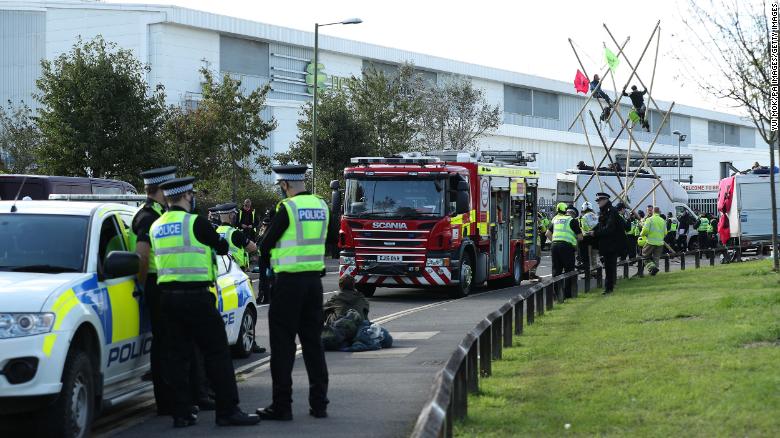

Members of Extinction Rebellion blocked printworks responsible for printing papers such as The Sun, The Times and The Daily Mail.

London (CNN)UK police have arrested 13 members of the Extinction Rebellion group after climate change protesters blocked the printing presses of several Rupert Murdoch-owned News Corp newspapers on Friday and Saturday, disrupting their distribution.
"The protest is causing major disruption to local businesses. At this time, 13 people have been arrested in connection with the incident, and we anticipate more arrests will be made," Hertfordshire police said in a statement.
Member of Extinction Rebellion, also known as XR, blocked printworks responsible for printing papers such as News Corp's The Sun and The Times, along with The Daily Mail, published by Associated Newspapers in Broxbourne, greater London and in Liverpool.
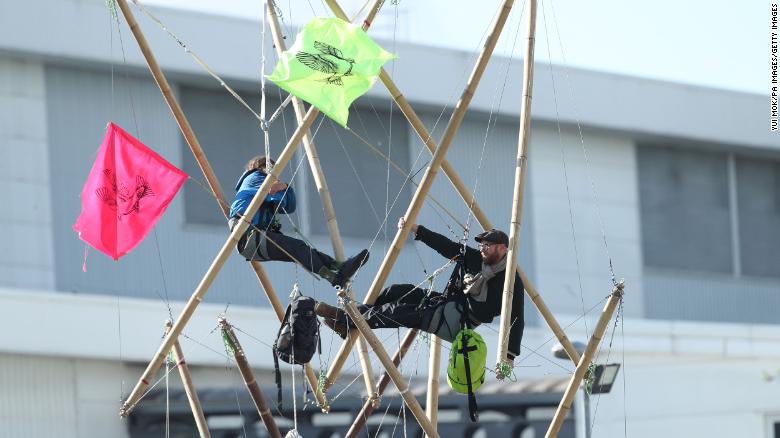

Protesters used bamboo lock-ons to block the road outside printing works at Broxbourne, Hertfordshire.

"The groups are using disruption to expose the failure of these corporations to accurately report on the climate and ecological emergency, and their consistent manipulation of the truth to suit their own personal and political agendas," XR said in a statement.
XR said its activists targeted the newspapers owned by media mogul Rupert Murdoch because "the right-wing media is a barrier to the truth, failing to reflect the scale and urgency" of the climate crisis.

James Murdoch resigns from News Corp, citing 'disagreements over certain editorial content'

"They distract us with hate and maintain their own power and wealth, profiting from our division. We can't move forward until this barrier falls," the group added.
The Times newspapers said on Twitter: "We apologize to readers who may be unable to buy their usual newspaper this morning. Overnight printing of The Times was disrupted by Extinction Rebellion alongside other newspapers. We are working to get newspapers delivered to retailers as soon as possible."
Prime Minister Boris Johnson also criticized the protests, writing on Twitter: "A free press is vital in holding the government and other powerful institutions to account on issues critical for the future of our country, including the fight against climate change.
"It is completely unacceptable to seek to limit the public's access to news in this way," he said.
Murdoch's son, James, this year lashed out against his father's sprawling media empire for how it covers the climate crisis. In comments made to The Daily Beast, a spokesperson for James Murdoch and his wife spoke of the couple's "frustration" with News Corp coverage of climate.
James Murdoch later broke from the family business in July and said he was exiting the company over "disagreements over certain editorial content published" by its news outlets and "certain other strategic decisions."
Murdoch's News Corp owns a large chunk of Australia's media and has been criticized for coverage that suggested recent wildfires were no worse than they'd been in the past or that they are caused by arsonists, not climate change.
The News Corp umbrella includes papers such as The Wall Street Journal and New York Post, a raft of newspapers in the United Kingdom and Australia, and the book publisher HarperCollins
Extinction Rebellion protests at printing presses stop millions of newspapers being delivered

Demonstrators blocked access to two print works in Hertfordshire and Merseyside, causing delays to newspaper deliveries.


Saturday 5 September 2020 


Extinction Rebellion protests outside news printers

More than 70 people have been arrested following protests by climate activists from Extinction Rebellion (XR) outside two printing presses - which prevented the distribution of millions of national newspapers.

Demonstrators blocked access to two print works at Broxbourne, Hertfordshire, and Knowsley, near Liverpool, using vehicles and bamboo structures overnight into Saturday morning.


Seventy-two people were arrested across the two locations, police said, and delivery lorries were delayed from leaving.
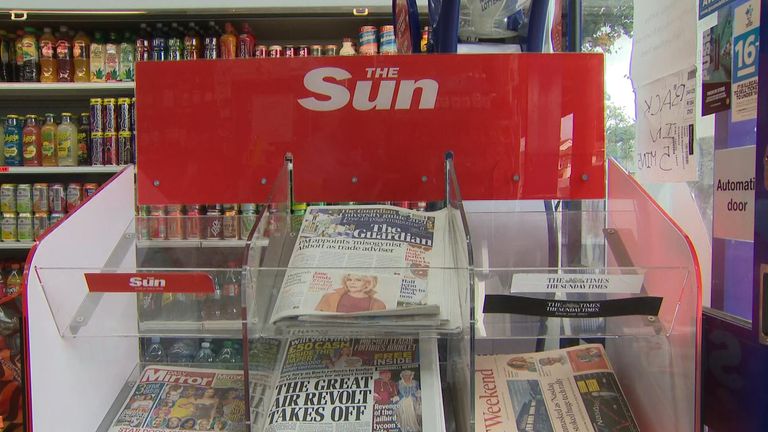
Image:The move left newspaper stands devoid of some papers on Saturday morning
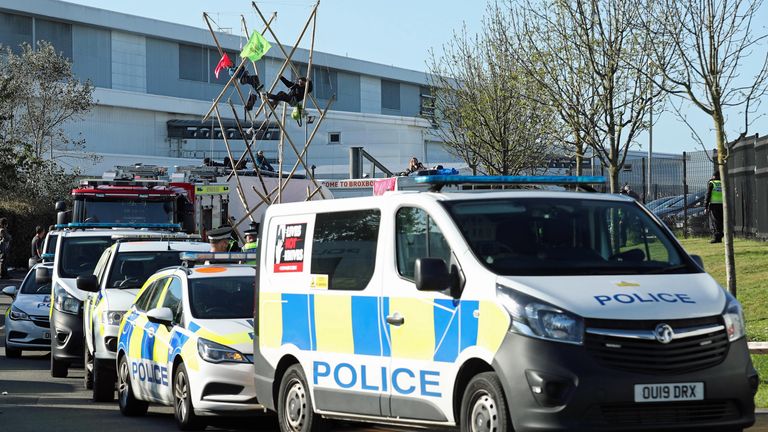
Image:Police and firefighters dealt with the protest outside the Newsprinters works in Hertfordshire

The Newsprinters presses targeted print the Rupert Murdoch-owned News Corp's titles including The Sun, The Times, The Sun On Sunday and The Sunday Times.

The Daily Telegraph, Sunday Telegraph, Daily Mail, Mail On Sunday, London Evening Standard and some Guardian supplements are also printed or processed at the sites. Both demonstrations ended around 11am.


The protests were condemned by the prime minister as "completely unacceptable".


Boris Johnson tweeted: "A free press is vital in holding the government and other powerful institutions to account on issues critical for the future of our country, including the fight against climate change.

"It is completely unacceptable to seek to limit the public's access to news in this way."

A statement from News UK, which publishes the Murdoch titles, said: "Total print run last night for the impacted print plants was due to be just under three million.

"No newspapers left those sites and other printers around the country printed and distributed as much as they could take. This happened late, hence the late deliveries to retailers."

XR claim the "mainstream media" is controlled by a small number of people, and that news corporations are guilty of "consistent manipulation of the truth to suit their own personal and political agendas".
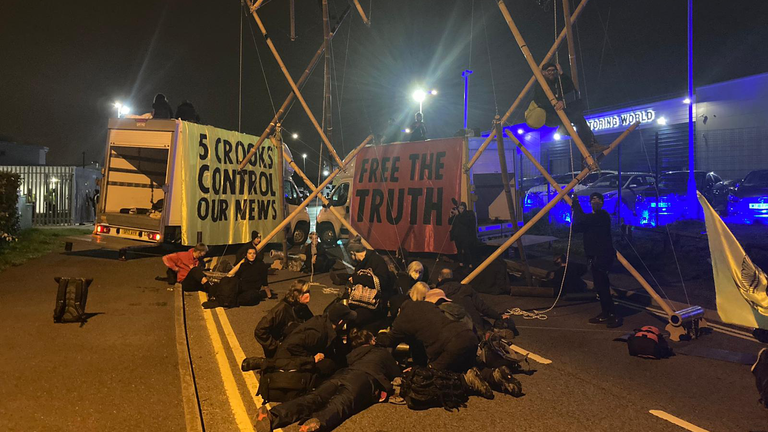
  
Image:The Newsprinters presses print titles including The Sun, The Times, The Sun On Sunday and The Sunday Times. Pic: Extinction Rebellion
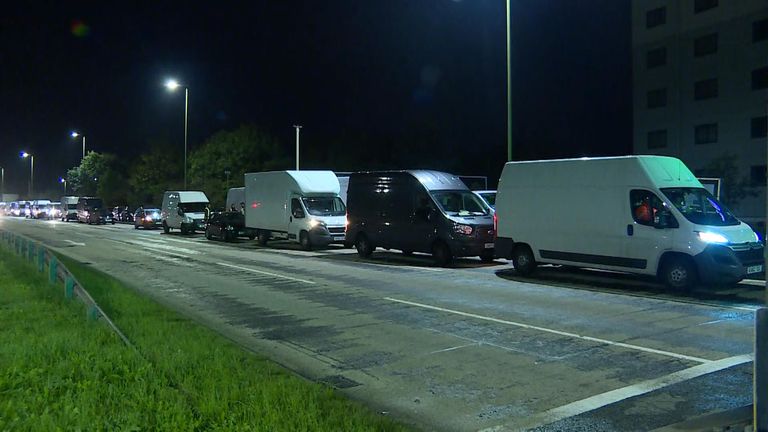
Image:Vans were blocked from accessing the site

In central London, other members of the group completed a protest walk from Brighton to the capital with their boat "Lightship Greta", named after teenage climate change activist Greta Thunberg.

After days of demonstrations to highlight global warming, the Metropolitan Police seized the boat in Kennington, south London, and said they had arrested "more than 600 people" in connection with the protests.


Greta being dismantled😶, we are still just north of Kennington Park.#extinctionrebellion #wewanttolive #LightshipGreta pic.twitter.com/FKxZhtQKhh— Lightship Greta (@LightshipGreta) September 5, 2020

Twenty people have also been reported for breaking coronavirus regulations, which now incurs a fine of £10,000, a force spokesman said.

The protests targeting the printing presses meant thousands of people who would normally get The Sun were unable to read an interview with Sir David Attenborough in which he explains why he supports Extinction Rebellion and what Sun readers can do to help reduce climate change.

The Telegraph says it has made its website free this weekend after the protests.

A statement said: "Production of The Telegraph titles was severely affected.

"Following the assault on the free press, we have made the decision that all the Telegraph journalism published this weekend is now free to read on our website until Monday morning and removed the paywall until then."

XR protester defends blocking print sites

The Times apologised to readers in a tweet, saying this morning that it was "working to get newspapers delivered to retailers as soon as possible".

Newsprinters said it moved the work elsewhere but apologised to newspaper readers affected by the delay.

A spokesperson said: "Overnight printing at two Newsprinters plants was disrupted by activity by Extinction Rebellion. Thanks to other industry partners, printing was transferred to other sites.

"This attack on all of the free press impacted many workers going about their jobs. Overnight print workers, delivery drivers, wholesale workers and retail newsagents have faced delays and financial penalty."

Meanwhile, Labour MP and former shadow cabinet member Dawn Butler initially tweeted in support of the protesters, but later deleted the post.

Her comment - "Bravo #Extinction Rebellion. Excellent work" - was criticised by other Twitter users, with Labour ex-cabinet minister Andrew Adonis saying: "I utterly disagree with this."

The group in Hertfordshire put up bamboo structures around the entrance, preventing access to the printing site.

I utterly disagree with this pic.twitter.com/GUdFDNlOmm— Andrew Adonis (@Andrew_Adonis) September 5, 2020

A Sky News producer at the scene said there were lines of vans queued up along the road to the site, waiting to collect newspapers.

Hertfordshire Police said: "Our officers are engaging with the group, which consists of around 100 people, and we are working to facilitate the rights of both the protesters and those affected by their presence."

In a tweet, the force said it had made 42 arrests.

Merseyside Police said 30 arrests had been made there. "Two vans and a boat used to cause obstruction" were removed, a spokesman added.


Extinction Rebellion activist Gully Bujak, 27, said: "You cannot have a functioning democracy with a mainstream media that is ruled by a small, unrepresentative sect of society, who are in bed with politicians and the fossil fuel industry.

"The climate emergency is an existential threat to humanity. Instead of publishing this on the front page every day as it deserves, much of our media ignores the issue and some actively sow seeds of climate denial.

"They thrive off of polarisation and division. They sow hatred in order to distract us, actively profiting from this division.

"To these papers we say this: you will not come between us anymore. For a night we're going to filter out the lies and take the power back. For a night we're going to show the world that you are vulnerable, just like us."

VIDEOS


Trump, Who Definitely Called John McCain A Loser, Is Denying Calling John McCain A Loser

The president is lashing out at reports he called US soldiers who died in war "suckers" and that he didn't want to visit their graves because rain would mess up his hair.

Last updated on September 4, 2020, at 4:21 p.m. ET

Posted on September 4, 2020, 

Mandel Ngan / Getty Images

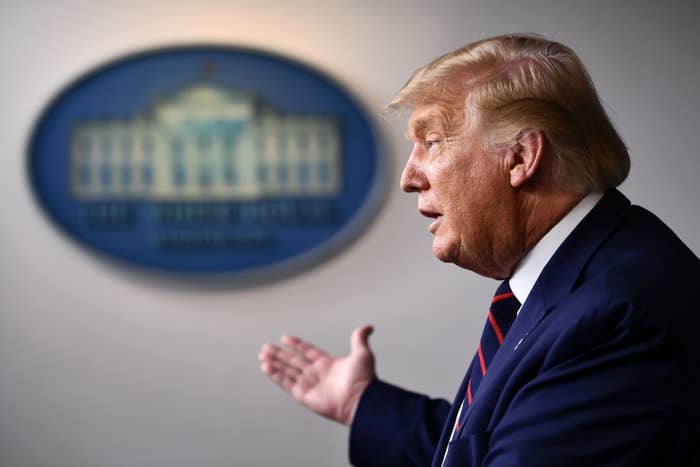
President Donald Trump is lashing out at a report he disparaged US soldiers who died in wars, suggested wounded veterans not participate in military parades because of their amputations, and angrily resented that flags were lowered to half-staff after the death of Sen. John McCain.

The claims were made in a bombshell report in the Atlantic by editor-in-chief Jeffrey Goldberg on Thursday, citing multiple unnamed sources described as being firsthand witnesses to Trump's comments. Two military sources later confirmed some of the president's comments to the Associated Press. On Friday afternoon, a Fox News reporter also confirmed much of the reporting, citing two former senior Trump officials.

According to the Atlantic, Trump declined to visit the Aisne-Marne American Cemetery in 2018 to mark the centenary of the end of World War I because he didn't want to get his hair wet in the rain and because the graves were full of "losers" who had been "suckers" for getting killed in battle.

At the time, and again on Thursday night after the story was published, Trump said poor weather prevented him from flying via helicopter and that Secret Service officials were not prepared to drive him there. (Both the leaders of France and Germany did attend the event, as did then–White House chief of staff John Kelly.)

"Now all of a sudden somebody makes up this horrible story that I didn't want to go, and then they make up an even worse story, an even worse story, calling certain names to our fallen heroes," he told reporters on Air Force One on Thursday, as he traveled back from a Pennsylvania rally. "It's a disgrace that a magazine is able to write it."

"I would be willing to swear on anything that I never said that about our fallen heroes," he insisted.

Other Trump White House staffers also denied hearing the president make any such comments.

But at least part of the president's denials about the Atlantic story was a lie.

In a Twitter thread late Thursday night, he denied that he had ever called McCain a loser, despite the Atlantic reporting he did not want to support the Arizona senator's funeral when he died in 2018. "What the fuck are we doing that for?" the Atlantic quoted him as telling senior staff, citing three sources. "Guy was a fucking loser."

"I never called John a loser," Trump wrote on Twitter, saying he had approved of the state funeral arrangements despite not being "a big fan" of McCain.

But Trump, of course, famously did call McCain a loser.

"He lost [the 2008 election], so I never liked him as much after that because I don't like losers," Trump said in 2015 as he ran for president in Iowa. "He's not a war hero. He's a war hero because he was captured. I like people that weren't captured."

At the time, Trump even reshared his comments on Twitter.

Via @fitsnews: “Donald Trump: John McCain Is ‘A Loser’” http://t.co/sgiETvdUqi

Miles Taylor — the former chief of staff at the Department of Homeland Security under the Trump administration, who has since been speaking out against the president, describing him as "dangerous" — also hit back publicly against Trump's denials about McCain.

"Mr. President, this is not true," Taylor, who helped sell Trump's family separations policy at the border, tweeted on Friday morning. "You were angry that DHS notified federal buildings to lower the flags for Sen. McCain. I would know because your staff called and told me."

  • Picture of David Mack

    David Mack is a deputy director of breaking news for BuzzFeed News and is based in New York


Mississippi judge dismisses charges against man tried 6 times for slayings

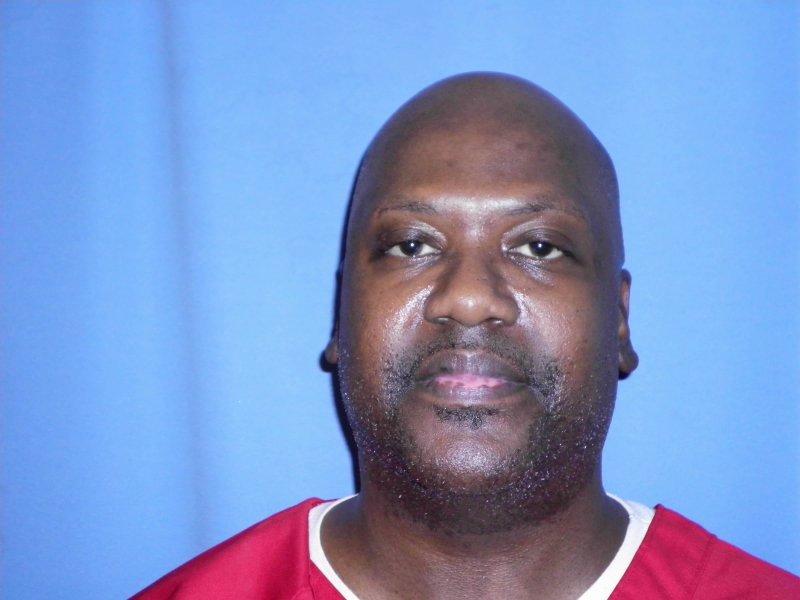
Curtis Flowers spend 23 years in prison for the slayings of four people, charges for which have been dropped. File Photo courtesy Mississippi Department of Corrections

Sept. 4 (UPI) -- A Mississippi judge on Friday dropped charges against a man tried six times for the deaths of four people nearly a quarter century ago.

Curtis Flowers, 50, spent nearly 23 years in prison for the slayings at a furniture store in Winona, Miss. He was released on bail in December ahead of what was expected to be his seventh trial.

"Today, I am finally free from the injustice that left me locked in a box for nearly 23 years," Flowers said in a statement. "I've been asked if I ever thought this day would come. I have been blessed with a family that never gave up on me and with them by my side, I knew it would."

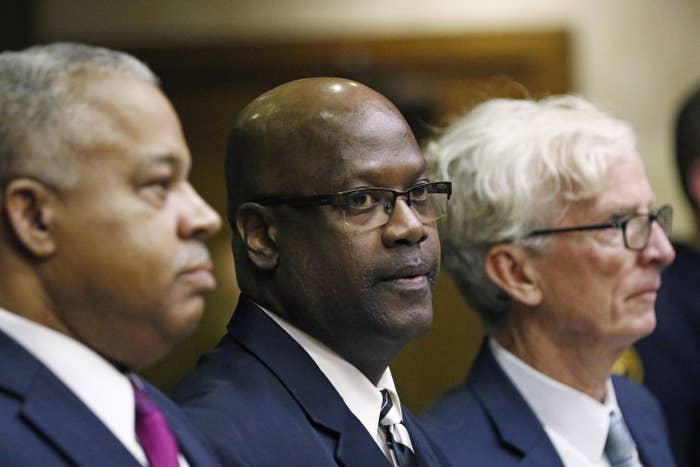
District Attorney Doug Evans, lead prosecutor in his first six cases -- two of which resulted in hung juries and the rest overturned due to prosecutorial misconduct -- recused himself from the case in January. The case was transferred to the Mississippi attorney general's office
.


Attorney General Lynn Fitch filed a motion to dismiss the charges after reviewing the case, saying there was no one alive who could testify today without previous conflicting statements on the record.

"As the court noted at the bail review hearing, the only witness who offered direct evidence of guilt recanted his prior testimony, admitting that he was lying when he said Mr. Flowers made a jailhouse confession to the murders," the motion read.

She said there were also multiple alternative suspects who had violent criminal histories as well as other evidence not considered.

"The case against Curtis Flowers never made sense," said Flowers' attorney, Rob McDuff of the Mississippi Center for Justice. "He was 26 years old with no criminal record and nothing in his history to suggest he would commit a crime like this.

"As time went by, even more evidence emerged to corroborate his innocence. This prosecution was flawed from the beginning and was tainted throughout by racial discrimination. It should never have occurred and lasted far too long, but we are glad it is finally over."

Bertha Tardy, the owner of Tardy Furniture, and three employees, Robert Golden, Carmen Rigby and Derrick "Bobo" Stewart, were found dead at the store July 16, 1996. Flowers became a suspect after police learned he had been fired from the store two weeks earlier


The Case Against Curtis Flowers, Who Spent 23 Years In Prison For Murder And Had 4 Convictions Overturned, Has Been Dropped

"I've been asked if I ever thought this day would come," Flowers said in a statement. "I have been blessed with a family that never gave up on me and with them by my side, I knew it would."

Salvador HernandezBuzzFeed News Reporter
Posted on September 4, 2020

Rogelio V. Solis / AP

Prosecutors have dropped their case against Curtis Flowers, a Black man who has been tried six times for the shooting and killing of four people in a furniture store in 1996 and spent 23 years in prison — most of it on death row — for the crime.

Flowers was released from prison on bail last year after the US Supreme Court reversed his latest conviction. His case drew media attention after the popular podcast In the Dark featured Flowers' case and his six trials for the same crime.


"This is a monumental victory," Vangela M. Wade, president of the Mississippi Center for Justice, said in a statement. The center helped litigate Flowers' case, free him on bail, and dismiss the charges. "Today the burden of further injustice has been lifted from Mr. Flowers, but fair treatment in our criminal justice system should never require extraordinary resources behind this long-delayed outcome."

Flowers maintained he was innocent during six trials, which included four convictions that were overturned because of prosecutorial misconduct. The two other cases resulted in hung juries.

The Clarion Ledger reported his most recent conviction in 2010 was overturned in June 2019 after a court found that District Attorney Doug Evans had deliberately worked to keep Black jurors from serving on the jury.


In the Dark@InTheDarkAPM

Curtis Flowers was allowed to remove his ankle monitor Friday afternoon after the Mississippi Attorney General’s Office dropped all charges against him. Read the story: https://t.co/qAMqu5ER3a11:10 PM - 04 Sep 2020
Reply Retweet Favorite


Flowers was freed from prison in December after his attorneys filed a motion for bail and asked for his charges to be dismissed and the prosecutor to recuse himself from the case.

The judge at the time of the bail hearing noted reporting that was featured in the podcast In the Dark, including two state witnesses who said they lied during the Flowers' trial. The judge also noted the possibility of evidence that pointed to another possible suspect in the killings.

Evans withdrew in January from the case and the Mississippi Attorney General's office was appointed to prosecute the case instead.

The Mississippi Center of Justice said in a statement that the Attorney General's office conducted a monthslong review of the case, then filed a motion to dismiss the charges against Flowers.

"Today I am finally free from the injustice that left me locked in a box for nearly 23 years," Flowers told the Clarion-Ledger in a statement. "I've been asked if I ever thought this day would come. I have been blessed with a family that never gave up on me and with them by my side, I knew it would."


Salvador Hernandez is a reporter for BuzzFeed News and is based in Los Angeles.


Trump Is Now Trying To Cancel Racial Sensitivity Trainings For Federal Agencies, Calling Them "A Sickness"

The White House memo targeting these trainings comes after weeks of pro-Trump pundits attacking critical race theory.

Posted on September 5, 2020, 

Brendan Smialowski / Getty Images

In a memorandum issued by the White House Friday, the Budget office said it’s planning to withdraw funding from racial sensitivity trainings for federal agencies, calling them “un-American” and “divisive," as thousands continue to protest police brutality and systemic racism across the country.

These trainings “run counter to the fundamental beliefs for which our Nation has stood since its inception,” the Sept. 4 White House memo said, and they “undercut our core values as Americans.”

The memo specifically targets the terms “critical race theory” and “white privilege,” telling all agencies to review contracts containing those terms and “identify all available avenues within the law” to cancel them.

Russell Vought, the director of the Office of Management and Budget (OMB), said on Twitter that racial sensitivity trainings are “taxpayer funded indoctrination” that "sow division and racism."

“The President has directed me to ensure that Federal agencies cease and desist from using taxpayer dollars to fund these divisive, un-American propaganda training sessions,” Vought wrote in the memo.

The White House directive comes after weeks of pro-Trump pundits attacking critical race theory. On Tuesday, Fox News host Tucker Carlson dedicated a segment to the idea, painting it as an extreme ideology rather than a social science theory that attempts to explain and contextualize the impact of racism on institutions.

Carlson’s guest, Christopher Rufo, called on Trump directly to abolish “critical race theory trainings from the White House.”

Fox News guest calls critical race theory and intersectionality "an existential threat to the United States"

Trump repeatedly tweeted in support of the memo on Saturday morning.

“Please report any sightings so we can quickly extinguish!” he said in one tweet, calling critical race theory a "sickness that cannot be allowed to continue."

The memo caps a week of controversial budget announcements. Earlier on Friday, the Pentagon said it would cut the budget for military newspaper Stars and Stripes but reversed the decision after widespread outcry.

The White House also issued another memo on Wednesday that said it would be reviewing federal and state funding to cities “that are permitting anarchy, violence, and destruction.”

It’s not clear what cancellation of race sensitivity trainings will look like in practice. Besides directing federal agencies to review the contracts, Vought said the OMB “will shortly issue more detailed guidance on implementing the President's directive.”


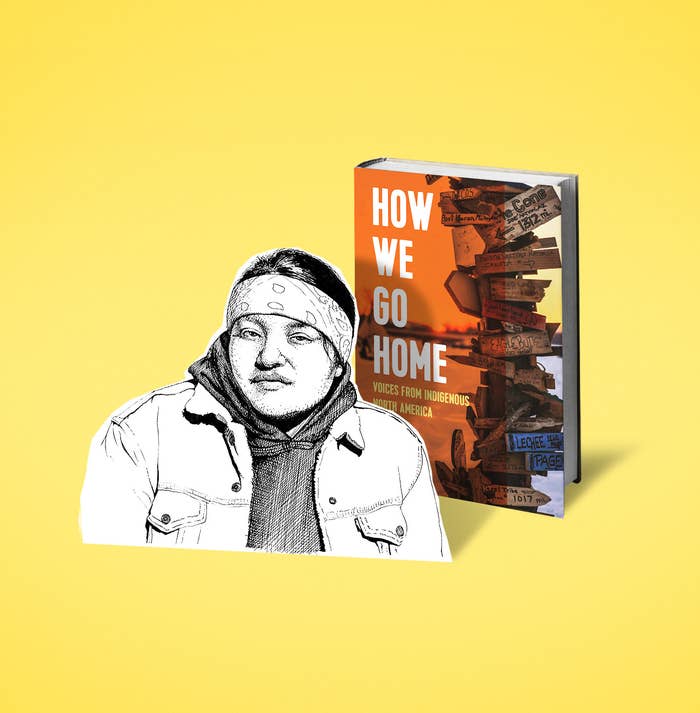
A 24-Year-Old Activist Talks About Being At Standing Rock

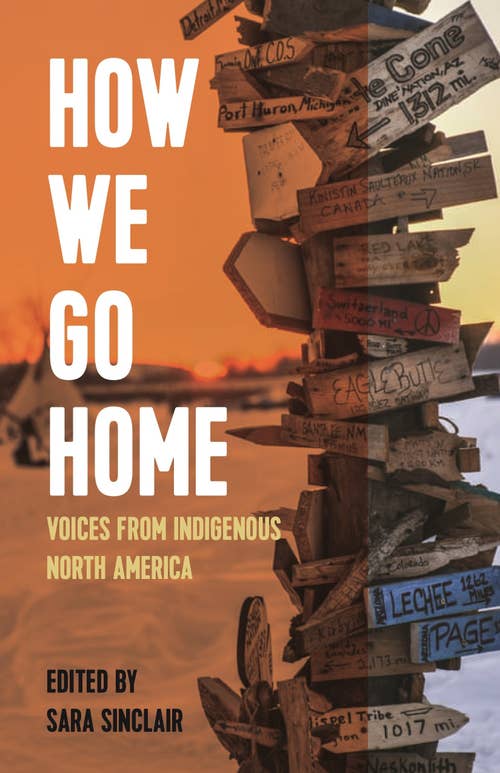
An excerpt from How We Go Home: Voices from Indigenous North America.
Jasilyn ChargerBuzzFeed Contributor


Posted on September 6, 2020


BuzzFeed News; Getty Images; Courtesy Fernwood Publishing


My very first memory is of being really tiny and dancing the Rabbit Dance, named for what the dance was inspired by—the movements resemble those of rabbits. I’d always dance it with my twin sister. Mama always told me to listen to the beat, move my feet with the beat. And then, my older brother would join us, and he’d hold both of our hands and dance with us. It was probably the last time all of my siblings, my mother’s children, were together, when we were all dancing.

When I think about that, it makes me happy because we did it as a family. It gave us all joy, and it still does for me now. Sixty years ago, we would never have been able to dance. Now we have that right, that freedom, to experience something that our elders would’ve been beaten for.


I’m from Cheyenne River Indian Reservation. My grandfather, Harry Charger, was chief of the Itazipco band. When he was younger, he was a pipe maker. He learned it from his grandfather at a very young age. And he couldn’t tell anybody about it, he couldn’t tell his friends or his family members. He had to keep it secret. He always told me he felt like he had to hide who he was. He told me to go to powwows, go to Sun Dance, take advantage of those opportunities because there are so many who never got the chance to go. He told me, “You’re never too young to learn, never too young to understand what your people have been through.”

A lot of adults think that young people don’t understand or don’t listen. And we may not understand in that moment, but as we grow up, we carry that knowledge with us, and we begin to understand. And we won’t have to go on living in ignorance. I think that’s what I was spared. My grandfather talked to me like I was an adult, like I was old enough to hear these things.

On my mother’s side, I have five siblings, and on my father’s, I have ten siblings, but I only have one full sister, and she is my twin, Jasilea. The siblings I have from my father, I’ve only met one. My mother’s kids were split up among family members because my mother couldn’t take care of us all.

We got to play with each other, but we rotated through family members and foster homes until I was thirteen. I’m practically related to this whole reservation, so it’s like everybody’s my cousin. The community helped a lot. People would come by and say to my mom, “Hey, you need someone to watch your twins?” Or, “Do you want me to take them to the park?”


The foster homes were located on my reservation because the tribal court is really strict with trying to keep tribal members, children, on the reservation with Native American families, close to their parents. So I was placed in some rural communities, all within a sixty-five-mile radius of here. Some of them were my father’s family. They’d tell me stories about my father, what he used to do when he was my age. And they’d have old pictures. Or some of his friends would come over and babysit us. They’d talk about our dad. We didn’t get to know him because he died two months before we were born.

Oh, my mother! She’s a very strong, independent, stubborn woman. She’s like a bear. She takes care of her children with the sheer force of will, and she lays down the law. She and I didn’t really see eye to eye as I was growing up, but as a young adult now, I try to be around her as much as I can, because I want to have her strength. No matter what happened to her, she kept going, raising five kids.

Their fathers weren’t around to help, and she still did it. We could’ve gone to the adoption agency, or she could’ve aborted us, but she chose to keep us, and she toughed it out, and she raised us the best that she could. Someday I want to be half the woman that she is.

When I was thirteen, my aunt died of diabetes in her sleep. And one of our traditions is bloodletting for healing. We cut ourselves and we let the blood return to the earth. It’s a way for us to get all of our bad emotions, all of our bad thoughts, out. Staff at school saw my cuts.


But they didn’t understand them. They thought I was trying to kill myself. And so they called the Department of Social Services and got me taken away. Instead of trying to understand my tradition, they instantly thought there was something wrong with me. They said I was a danger to myself and other people.

They called the Department of Social Services and got me taken away. Instead of trying to understand my tradition, they instantly thought there was something wrong with me.


Social Services took me to Regional Health Behavioral Health Center, the highest-security facility that you can go to that isn’t correctional, and I was there for two weeks. At Regional Health you don’t get to have your shoes, no personal clothing, and you don’t get to talk to people or go outside. There are no windows. Everything was controlled.

From there, I got sent off to Canyon Hills, a mental health facility for kids in Spearfish, and I didn’t see my family again until I turned eighteen. We went to school, ate, and slept in the same building. It was a Christian facility, so they took us to church every Sunday. But I appreciated that there was also a cultural adviser for Native American kids, and there was a sweat lodge nearby. So I still got to be connected with that.

I thought they were going to take just me away. But they took my sister too. Separated at thirteen. That was our first time being away from each other. In our culture, you’re not supposed to separate twins because they have a bond, a connection, and when they took us away from each other, we both got sick. She got walking pneumonia, and I was just really, really depressed. Like, it detached something. I felt a part of me was getting torn away. It physically hurt me. Because I’d always had her there; I’d always had someone to talk to. And that traumatized me.

Low-income Native Americans receive the majority of their behavioral health care through the Indian Health Service, tribally operated programs, and off-reservation facilities, financed by a combination of local, federal, and tribal funds. In treating a “special minority population,” these off-reservation institutions receive more federal funding to treat Native patients than they do for non-Native residents.

The facility wanted Native Americans to be admitted, to make money for the facility. That’s what I felt I was to them: just more funding. They didn’t care about my physical or spiritual needs. They didn’t prepare me to be successful out of the facility. They don’t prepare you for life; they can’t teach you anything about life in there.

But when you turn eighteen, the system just kind of loops you out. My family didn’t really know me. They knew me when I was a child, but they didn’t know me as a young adult, and so they had a hard time trusting me or welcoming me back into their homes.

When I came back, for example, I knew nothing about sex. There were sex-ed classes, but they didn’t prepare you for what actually happens. I was trusting. I came back like, Oh, I’m with my people. People who actually care about me. People just like me. I was completely wrong. I trusted some people who I knew when I was younger, and they got me drunk, and I ended up getting raped. It was on my eighteenth birthday. And that was my first harsh experience—that’s what life really is. It’s not what they teach you in sex-ed classes. It’s not what they teach you in a textbook. I felt like I was robbed, that the system let me down.


“I KNOW WHO YOU ARE”

I wandered around the community for a while, homeless, couch-hopping with some friends. And then one day, my friend Kalen’s cousin, Wotila Bald Eagle—we knew each other a little bit—he asked, “Do you have a place to stay tonight?” and I was like, “No, I don’t.” And he said, “Well, you can come home with me.” It was kind of sketchy. I thought he lived in town, but he lived on the west end, which is sixty-five miles west of here. He was driving me out, and I was just thinking, Oh my God. It freaked me out. Where is he taking me? What’s gonna happen to me? And then I fell asleep. I woke up, and we’re at his grandfather Dave Bald Eagle’s ranch house. It was raining when we arrived, and Wotila brought me to his grandfather and he let me introduce myself, saying, “She needs a place to stay tonight.” And without even really asking where I’d come from or what my situation was, his grandfather Dave said, “There’s a room right there, there’s clean towels for you to shower, there’s food in the fridge. You can go take a rest.” And that really caught me off guard, like, Whoa, he wants to help me.

I was only supposed to stay there for the night, but Dave was like, “You can stay ’til the end of the week.” And I ended up staying there for four months. He didn’t ask, “Where’d you come from? Where are your parents? How come they aren’t helping you?” He let me tell him when I was ready. And he was really open.

He said, “You could live here if you want to, my house is open to you.”The west and east ends each have two chiefs, and Dave was one of them. My grandfather was one of them. Dave told me once he’d heard my name, he knew he had to help me. He was like, “I know who you are, I know your family.”

He always sat at the end of the dining room table. He just sat there and had his coffee. One day, I grabbed a cup of coffee too, and I sat right next to him. We were both just sitting there with our cups of coffee for the longest moment. I just started talking, and he didn’t say anything, he just glanced up at me. And when he looked at me, I felt calm. I didn’t feel so nervous.


When I got to the points where I thought I’d cry, he’d just look at me, and I’d get my composure, and I would keep telling him who I am, where I came from, what I experienced. And he didn’t judge.

The facility wanted Native Americans to be admitted, to make money for the facility. That’s what I felt I was to them: just more funding.


I told him I came from a psychiatric facility. He didn’t think I was crazy; he didn’t mistrust me; he didn’t think I was going to steal anything. He just felt compassion for me. And that was the greatest feeling, not being judged. Dave knew a lot of people who went through the boarding schools, a lot of people who went into insane asylums because they were spiritual people.

Colonialists felt that people who “had medicine” were crazy, and they locked them up. And he was telling me stories about some of his friends who went through that. He was like, “You’re not crazy, they’re just trying to silence you, doing the exact same thing to you that they did back then. Kill the Indian, save the man. But you survived.

And you found your way to me, and I was meant to help you.” And when he told me that, it made a lot of sense to me.

Growing up, I felt like there was something wrong with me. The staff at the institution always told me, “If you were okay, you wouldn’t need to be in here. If you were normal, you wouldn’t be here, people wouldn’t have sent you here.”

And hearing that from age thirteen to eighteen, all those adolescent years—they drilled it into my head that I have to take substances in order to be okay. For a long time, I felt that—I’m a danger. I needed alcohol, different kinds of pills for what they diagnosed me with. They brainwashed me to think, I’ve got to take this, I’ve got to not be me. And Dave told me, “You don’t have to take those anymore. If you don’t want to, I’m not going to make you.” I threw them all away, and he helped me! He was just like, “Go outside.” I finally had somebody in my life again to really support me, who had my back.


I HAD TO STAND UP FOR MYSELF

In the summer of 2015, when I was nineteen, one of my best friends killed herself. Her name was Candi. She was three years younger than me and really outgoing, spontaneous, always ready to have fun, laughing.

I came back for her funeral and then a couple days later there was another funeral. We had a suicide epidemic here, and we had a couple murders, and it took a lot of my friends. A couple of our women went missing. We were losing our youth at a very alarming rate. I was worried about how many of us would be left and what would happen to the ones that were left bearing the tragedy of their classmates or their relatives not being here. It was heartbreaking, and it was suffocating.

We felt like we were drowning in drug addiction, violence, murder. No one was listening to us, no one was teaching us. We didn’t have a voice, so some of us decided to silence ourselves. And I got the feeling that I had to stand up for myself. A couple of my friends started One Mind Youth Movement. It started out with a couple kids meeting every Wednesday, talking about what happened that week.

Our reservation looks at drug addicts as the enemy. If you get caught, it’s like, “We don’t want you here no more.” We were like, “It’s not their fault. They’re sick, they need help.” And we were devising ways to support them. If we can’t make them stop, how can we support them so they don’t endanger themselves, or overdose, or pass out somewhere, or get raped? We were trying to find the best ways to look out for one another. And we made an agreement that if we see a kid drunk or a little girl walking with five dudes, we would do something. We had each other’s phone numbers; we knew where each other lived.

And we had mentors who were willing to support us, open up their homes, who’d even come to pick us up at two o’clock in the morning. I was always worried about my friends because they’d get drunk and beat each other up. Or they wouldn’t have anything to eat. Or their parents would kick them out. I always told them, “Hey, if you ever need a place to stay, or if you’re in jail, or if there’s something going on, call me. I’ll help you.”


WE JUST HELD THAT SPACE

That summer, I started seeing a lot of things in my community through a different lens. It was eye-opening to see what we were going through. And that’s when the KXL protests started happening.

In July 2008, TransCanada Corp and ConocoPhillips, co-owners of the Keystone Pipeline (which runs through North Dakota, South Dakota, Nebraska, Kansas, Oklahoma, and Texas) proposed a major extension to the network. Dubbed “Keystone XL,” the addition was designed to help the pipeline move hundreds of thousands of barrels of crude oil from Alberta to Texas. Because Keystone XL would cross the US border, the State Department was tasked with determining whether the development was in the country’s best interest.

While TransCanada claimed that the Keystone XL pipeline wouldn’t cross any reservation or tribal trust lands, the pipeline’s proposed route did intersect original Lakota reservation territory established by the 1868 Treaty of Fort Laramie. Cheyenne River Indian Reservation is just downstream from where the Keystone XL pipeline was set to cross the Cheyenne River, and the tribe feared that a spill could contaminate its waters.

My cousin, Joseph White Eyes, was at the Keystone XL pipeline camp in Rosebud. Joseph always asked me to come, though I was still in that “I don’t listen to nobody” phase. But I started getting more involved. He wanted to teach us community organizing.


We did an Indigenous Rising march from this area. The march was about uplifting the youth and giving them power to voice what they had to say about KXL. We made banners, we got our own permits, we organized with each other.

We videotaped and documented the whole thing. We held this on Highway 212. For about two hours, we were singing songs, doing rain dances. And we just held that space. No one bothered us or told us to move. They just waited, took a different route. Some of them started walking with us. Even the homeless people stood with us. That was our first taste that we can do things, that people will listen to us if we organize and communicate and work together.

And it taught us unity, that if we put aside our differences, we can come together for a common goal. It was a small thing, but we got it done, and that really kicked us off.

And we celebrated when the KXL pipeline was denied.

Just a month after Obama rejected Keystone XL, the US Army Corps of Engineers for the Omaha District published a draft of its plan to approve the Dakota Access Pipeline (DAPL) route under the Missouri River, which would travel nearly 1,200 miles from North Dakota’s Bakken oil fields through South Dakota and Iowa to reach a terminal in Illinois. One section of the pipeline, set to cross the river just north of the Standing Rock Sioux Reservation, became the center of a fight over how the pipeline’s route was evaluated and approved by the federal government.

For about two hours, we were singing songs, doing rain dances. And we just held that space. No one bothered us or told us to move. They just waited, took a different route.


Members of the Standing Rock Sioux said that they were not adequately consulted about the route and argued that the pipeline’s proposed path, under a river reservoir called Lake Oahe, would jeopardize their primary water source and compromise tribal fishing and hunting rights. In addition, the tribe argued that the pipeline construction would extend damage to their sacred sites near the lake, further violating their tribal treaty rights.

Just a few weeks after that march, there was a broadcast on multiple radio stations here from Standing Rock.

It was like, “Hey, there’s a call out.” The people at Standing Rock want people that fought KXL to come and share their experiences. We were like, “Alright!” We brought our youth movement. And, surprisingly, we were the only ones there—the people who organized the call and a bunch of kids from Cheyenne River Reservation. We sat there, and we waited for a whole hour. Nobody else came. Not our chairmen, not akichitas, who are the men we send to defend us, not medicine men, just us.

The organizers didn’t take us seriously and said, “You’re just kids.” But we showed them how to target youth to be more active, because there’s a lot more of them, they’re more agile, they can do a lot, they can get things done fast. They’ve got a fresh outlook on things, are more creative, intuitive. We tried to tell them, “You need to get the youth here.” And they’re looking around, “Well, where are our youth? They didn’t come to the meeting.” Chase Iron Eyes was there.

At the end of the meeting, Ladonna Brave-Bull Allard stood up and told her story. Her son was buried on her land. A lot of her medicine was on her land. She just started crying and said, “I need help. My land is right next to the river, and my son is buried there. My land is open to you; you can come camp.” So we helped them create a plan.

We shared how to better communicate with their youth. You know, not just to say, “You have to be here,” but, “Can you help out? If you’re an artist, can you make our banner? If you’re a cook, can you do bake sales?” Older people, it’s hard for them to really connect and talk with the younger generation. Because we’re so tech savvy, we want to make memes, do Snapchat. Social media is one of the tools that we told them is most useful. We helped with different programs, different apps that work well for making posters, or doing podcasts, videos. Those are the things that we shared.

The very first camp was called Sacred Stone Camp. All the chiefs, all the men, pipe-carriers, they came out and set up like twenty teepees. But nobody stayed. The only person who was up there camping was our mentor, Joye Braun. She has a lot of medical problems; she can hardly walk. And we were like, “She’s up there by herself? What the hell?!” So we asked our chairman for some money for gas and food. We bought some cold cut meats, some sandwiches, chips, some Gatorade.

Our plan was just to stay up there for a couple days. But once we saw Joye up there alone, we ended up staying for a whole week. Nobody really believed in us. They were like, “The pipeline’s still gonna go through, what are you five people gonna do? You can’t stop it.” But there were people who supported us. They’d bring us food, water. A couple of men broke apart their old corral and gave it to us for firewood.

We didn’t have a GoFundMe, we didn’t have anything like that. The people who supported us, who came out to check on us—to make sure we had blankets, that we were okay, that we had water— were the people of Standing Rock. And I think that’s really what motivated me to keep camping there. It was a calling. I thought, No one else is going to do it, so we’ve got to.

It was mentally challenging. We had no cell phone service, no TV, no YouTube, no nothing. We didn’t know anybody there. We didn’t know the community. But then we turned a spiritual corner.

We thought, We’re here, this is like a prayer. And it kind of reconnected all of us to our heritage because that’s how we used to live.

We were nomadic. We went without a lot of things—salt and sugar, Kool-Aid, pop. It taught us self-discipline, a lot of patience. We started gradually gaining people. Four months into it, we had twenty people living with us. And all from different places. But we had to learn how to work together, how to live with each other, how to listen to each other. Kalen, Joseph, and I, every night, we’d come together after a meal and discuss what happened that day. We would just be doing our chores—hauling wood, going to get groceries, helping trap fish, going swimming, taking care of the little babies—doing what the old people couldn’t.

Eventually, we had a lot of non–Native American visitors. Some of the traditional camp leaders didn’t want white people around at all. But we told them, “We need our non-Native allies.” Because we can’t just shut off the whole world. We need to show them that this affects all of us. We’re here for the water. We’re here to stop this pipeline. It always came back to that.

We also ran up against questions like, How should the camp be run? What are the protocols? During ceremonies, the traditionalists would try to say women should always wear dresses in the camp and shouldn’t talk to any of the men. Joseph and I were like, “So that means I can’t talk to you. That’s a barrier for communication.”

A lot of my friends, they put themselves on the front line and got arrested.

There’s proof in our culture, pictures, stories about two-spirit women doing things that men did. Going to war and taking their place. Today our culture is very masculine. We have a lot of male leaders. And I really wanted to encourage the younger women. You don’t gotta sit in silence. You don’t gotta hush when a man tells you to hush. You’re an individual. And you can live your own life, because we have that freedom now. A lot of women fought for that freedom. And I wanted to honor that. Kalen had my back, Joseph had my back. They all supported me. We were like, “We’re the young generation. We’re going to lead ourselves.” And we held fast to the Seventh Generation Prophecy that we are going to be our own leaders.

That we’re going to break the chains of oppression, of racism, of the colonialism that have chained us to this reservation, and break the feeling we can’t do anything, and we don’t matter, and that no one’s going to listen to us. I wanted to show the youth that they have a voice. Use that voice, because you have a lot of power. I tried to show them that by doing it myself.

I never got arrested up there because people saw me as a spokesperson, someone to tell their stories. A lot of my friends, they put themselves on the front line and got arrested. And they told me, “No one’s going to tell our story if we’re all arrested. Get out there; get invited to marches, protests in Washington, DC, New York.” Tell people what we do and what we did—that was my role. It was hard to watch my friends go through that much suffering.

One of my friends, Trenton—he was like a brother to me, we started on this road of protesting together. I watched him get dragged out of Inipi, a sweat lodge, a sacred ceremony for us. Women go in with a shirt and skirt, men just in trunks. And he didn’t have trunks, so he went in with just his boxers. The Morton County police and a private security company called TigerSwan tore down the whole sweat lodge and dragged him out, and they had him sit on the side of the road wearing nothing but his boxers. And it was freezing cold that day. They said that we were trespassing on government property. We told them, “Just let us finish our ceremony, and we’ll leave peacefully.” But they didn’t wait for us to clear out. They just attacked and surrounded the whole camp.

The people who were on the outside made sure the women and children got out safely. And I watched them get taken down. It was horrible. My sister-friend Malia—she’s Hawaiian, a protector of Molokai—Lauren, who’s Jicarilla Apache, a protector of Bears Ears and their sacred mountains, Tashina, three other women, and I were standing in front of the agitators who were throwing rocks at the police.

We were worried people around them might get hurt, so we took it upon ourselves to make a barrier between the cops and the agitators and everybody else. We mentally prepared ourselves. They’re gonna throw racial slurs. They’re gonna beat us. They’re gonna yell.

They’re gonna mace us. We chose to put women on the front line, saying, “Are you going to beat women? I’m probably the same age as your daughter. Would you do this to your daughter? Would you let somebody do this to your daughter?” We’d shout at them, “You’re supposed to protect us, you’re the police! Why are you doing this?”

And a lot of them would stop; a lot of them would have to switch out with other cops. They couldn’t do it. But there were those who had no remorse. They would shoot rubber bullets at us. One woman, three down from me, got shot in the face with a rubber bullet. We were all women, mothers, daughters.

Seeing all that happen and seeing men doing it to us? It was hard to put myself in that position of abuse and take it with no retaliation. It was very degrading. I always tell younger women, “Never let a man lay hands on you.” But we were there in prayer and we just took the hits, we took the beatings, we took the mace. We held together. I got maced like five times. My face was burning. And later that day all that mace ate at my skin and there were just big old red rashes all over my face. Kalen got shot with rubber bullets twice in the back. We had no weapons.

On the last day of the camp, Kalen, I, and another one of our friends stayed—we wanted to get arrested. But our friend’s mom and some of the elders we hung out with were like, “No. If you want to stay, just witness what’s happening to people. Videotape it. Remember it. And go home and tell people what happened.” I was like, “I don’t want to do that, I want to go with you guys. Let’s go down with it.”

But they said, “No, no, no. We’re old. This is our moment. We’ll go down for you, but you need to go home and tell them what happened here.”

We saw the last fire keepers get arrested. And our friend’s mom got arrested. None of us had weapons. But Morton County and other county police, border patrol were there too, and they were coming up on us like we were armed. They came up with full body armor, with SWAT gear and a bunch of guns. I felt like they were going to literally kill us all. They had helicopters with the guns on the side. We were like, “Why do you need those?” I was really scared, thinking,

What are they going to do to us?

A lot of people were trying to get their stuff and go. And we tried to help as many as we could and observe as much as we could. Then, the police finally pushed us all to the river. We were all on the frozen river—it was basically a peninsula off the Missouri River that ran next to the camp. We had this rope stretched across it for people to hold onto in case the ice broke. And the police were cutting that rope. It was heartbreaking, that moment of getting pushed away from our home, where we’d lived for almost a year.

We worked hard to make it a home. We gave up everything to be there. And then we got pushed out. It felt like I was being robbed.

The night before, a lot of people burned their camps because they would rather have it burned than taken by the ranchers. When the police cleared everybody out, they let all the ranchers come in and take whatever they wanted. We had sheep and pigs there; they just took them. We were like, “We worked hard for this. We aren’t gonna let anybody just take it.” So a lot of people just burned their camps, burned the kitchens. Everything was on fire and the snow was coming down. Some of the snow was actually ash. It was like Armageddon, like the world had ended, and everything was in chaos.

Today, when I hear airplanes, I get flashbacks. Or when I hear shouting or police sirens—I know I’m not doing anything wrong, but I still get scared. Like someone’s going to shoot me or something. It’s hard to trust these people with badges. You come home, and you see the police. And it’s just like, How I can trust them to protect me? I can’t say I’ve come out of it perfect, but I have come out of it stronger. What worse will I go through?

We spent so much time birthing the movement, seeing it grow into something that impacted millions of people, that echoed across the world.

How could they do that to us? After camp at Standing Rock, we came back here, to Cheyenne River. I found out I was two months pregnant. I was just . . . mind blown. And I didn’t have that much support. The baby’s dad left me for some other woman. And he didn’t want anything to do with me.

And dealing with the fact that we lost the camp was heartbreaking for me. It was a lot to deal with. I fell into a depression. I didn’t want to go anywhere. I just stayed in my room for like two months. I wasn’t happy—at all.

Today, when I hear airplanes, I get flashbacks. Or when I hear shouting or police sirens—I know I’m not doing anything wrong, but I still get scared.


I didn’t really know much about being pregnant then. I didn’t know that your emotions affect your child, and I ended up losing my son. The miscarriage was probably worse than getting maced, the pain that I went through. It was really hard. I buried him at his dad’s grandfather’s place out in the west end, right next to the creek. When I lost him, it kind of snapped me out of my depression. He became my motivation. I have something to protect. Now my son’s buried by the river. Now it’s my turn to fight for him. I attended ceremonies and I laid him to rest. I vowed to him that he’s going to be safe, that no oil was going to touch him. He’s in the ground now, so it’s my duty to protect the earth.

I know I’ll see him again. When I went to ceremony, he said he’ll come back to me when I’m ready and when it’s safe for him, when his future is secure. I don’t want to have a kid knowing I can’t give him fresh water. I want to make sure that my children have a good future.

And when they do get here, I want to be able to tell them, “I fought hard for you. I fought for your water. I fought to make sure you have a good life.” I want them to be proud of their mom. So that’s something that really got me out of blaming myself for the miscarriage. I didn’t get over it. But the pain I still feel from it fuels my passion to keep going. He has become my inspiration.

Sometimes I wonder what life would be like if he was still here. He would’ve been one year old. It’s still hard for me to adjust. I never asked to be a leader, or to be a mentor.

But I’ve come to understand that even if I don’t want it, I can’t walk away from it. While I was going into a depression when I came back from Standing Rock, Joye Brown sat me down. She was like, “A lot of young women, a lot of young men saw you speak. What would they do if they’d got inspired by you and then one day looked on Facebook, or on the news, and they see that you’re gone, that you killed yourself?

You’re just giving that choice more power, telling them that suicide is okay. That person who did that amazing thing gave up, so I can give up.” She said it would plant a seed of hopelessness inside of them. I heard that, and I was like, Dang. That’s kind of right. When you’re in grief, you don’t think about who it’s going to affect. But it has a domino effect. Your grief doesn’t go away when you die.

It just transfers into someone else, someone else carries it. I didn’t want to do that. So I started trying to help my friends with suicide prevention. I’d say, “Whenever you feel sad, come talk to me. Talk to someone. Go for a walk. Ask me to go for a walk. I’ll listen to you.”

We met a lot of people at Standing Rock who became family. And when we call upon them, they’re going to come. They’re just waiting. I hope it doesn’t come to that.

South Dakota doesn’t want what happened at Standing Rock to happen here. KXL keeps sending letters to our tribal chairman, Harold Frazier, like, “What can we do to make sure that this doesn’t turn hostile?” I loved what our tribal chairman said: “Just don’t build it. ●


Haymarket Books

Excerpted from How We Go Home: Voices from Indigenous North America, eds. Sara Sinclair (Haymarket Books, 2020).