Morning Joe goes scorched earth on 'ridiculous' Bari Weiss after viewing spiked CBS story
Tom Boggioni
December 23, 2025
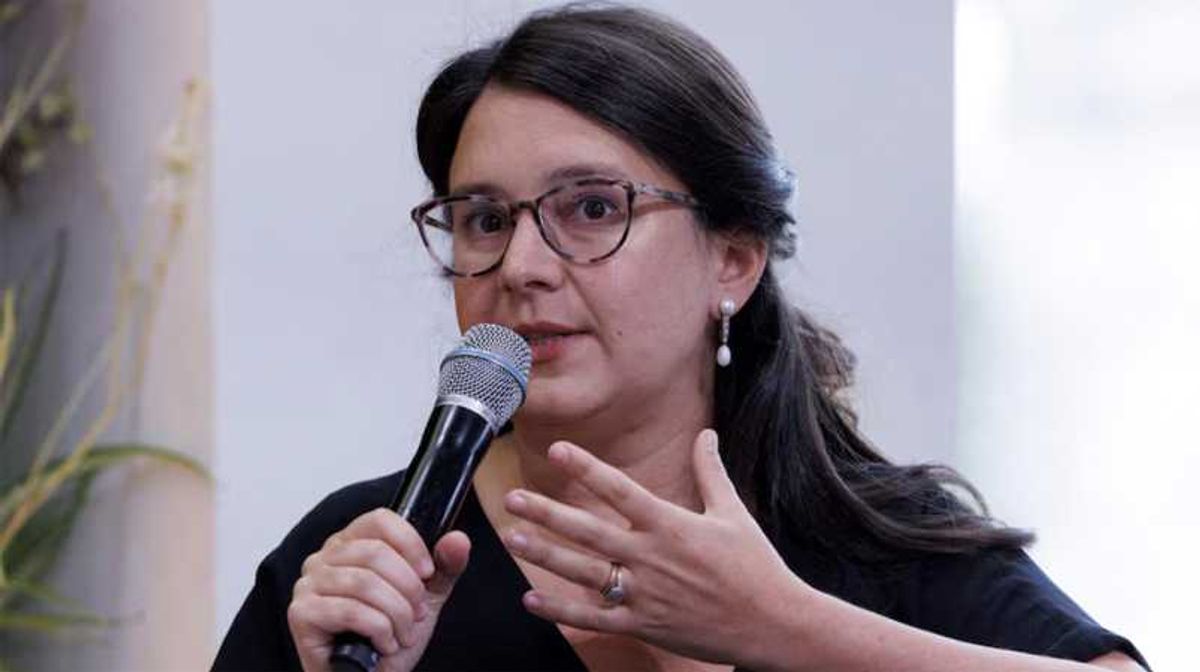
Bari Weiss (Photo via Michael Blake for Reuters)
CBS News head Bari Weiss’s decision to “spike” a “60 Minutes’ segment detailing the horrific treatment of migrants sent by President Donald Trump’s administration to a brutal maximum security prison in El Salvador looks even worse now that the video clip was leaked online.
On Tuesday morning, the hosts of “Morning Joe” revealed that they had watched it and were incredulous that it was considered incomplete and needing more work, as Weiss later complained in a memo to CBS staffers.
Co-host Joe Scarborough took the lead in raking Weiss over the coals, telling his colleagues, “Oh, come on! This is the most ridiculous thing.”
Pointing to Weiss’s highly-publicized departure from the New York Times, he added, “And I think a certain person that used to write at the New York Times complained that whenever liberal editors wanted to scrap a conservative op-ed, they would scrub every single line. And that's exactly what happened here. Except now, of course, the shoe, once again, is on the other foot.”
Co-host Willie Geist chimed in, “And of course, '60 Minutes' again and again and again approached this administration for comment. They would have loved to have all these people sit in the chair, be on camera and answer these questions. But as they say in the report, the administration declined.”
“I know you guys talked about this yesterday, but it can't be said enough that particularly '60 Minutes', but all news organizations running a piece like this, whether it's television or print, they're not ‘Whoops!’ he added. “It's just a gauntlet of weeks of lawyers and standards and reporters and editors and producers and then the executives.”
“And also the idea that part of Bari Weiss’s explanation was, ‘Well, people know about this. We need to advance the story,’ Now, first of all, journalistically that's somewhat true,” co-host Jonathan Lemire remarked. “But at the same time, these are very different audiences. Like there's a '60 Minutes' audience which is different than the New York Times audience.”
Tom Boggioni
December 23, 2025
RAW STORY
Bari Weiss (Photo via Michael Blake for Reuters)
CBS News head Bari Weiss’s decision to “spike” a “60 Minutes’ segment detailing the horrific treatment of migrants sent by President Donald Trump’s administration to a brutal maximum security prison in El Salvador looks even worse now that the video clip was leaked online.
On Tuesday morning, the hosts of “Morning Joe” revealed that they had watched it and were incredulous that it was considered incomplete and needing more work, as Weiss later complained in a memo to CBS staffers.
Co-host Joe Scarborough took the lead in raking Weiss over the coals, telling his colleagues, “Oh, come on! This is the most ridiculous thing.”
Pointing to Weiss’s highly-publicized departure from the New York Times, he added, “And I think a certain person that used to write at the New York Times complained that whenever liberal editors wanted to scrap a conservative op-ed, they would scrub every single line. And that's exactly what happened here. Except now, of course, the shoe, once again, is on the other foot.”
Co-host Willie Geist chimed in, “And of course, '60 Minutes' again and again and again approached this administration for comment. They would have loved to have all these people sit in the chair, be on camera and answer these questions. But as they say in the report, the administration declined.”
“I know you guys talked about this yesterday, but it can't be said enough that particularly '60 Minutes', but all news organizations running a piece like this, whether it's television or print, they're not ‘Whoops!’ he added. “It's just a gauntlet of weeks of lawyers and standards and reporters and editors and producers and then the executives.”
“And also the idea that part of Bari Weiss’s explanation was, ‘Well, people know about this. We need to advance the story,’ Now, first of all, journalistically that's somewhat true,” co-host Jonathan Lemire remarked. “But at the same time, these are very different audiences. Like there's a '60 Minutes' audience which is different than the New York Times audience.”
We Can Survive Without ‘60 Minutes,’ But Democracy Won’t Survive Without Independent Media We Can Trust
At some point, as Trump continues to repress criticism of him and his regime, American democracy will be compromised beyond repair.
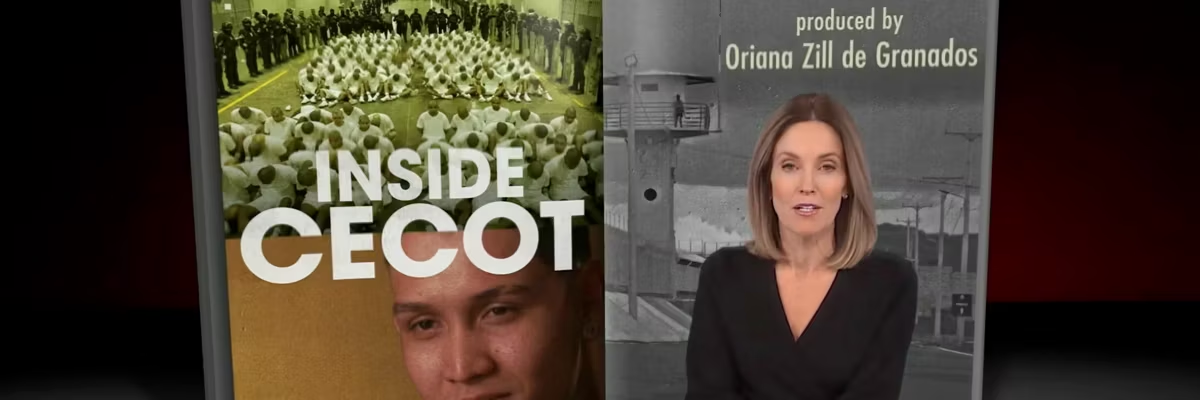
Screenshot of an unauthorized “60 Minutes” segment about a prison in El Salvador where the Trump administration sent hundreds of migrants. The piece was blocked from airing by CBS News’ editor-in-chief Bari Weiss over objections of the reporters who put the story together.
(Image: Screengrab/60 Minutes/CBS News)
News Team,
Thank you for the notes and texts. I apologize for not reaching out earlier.
I learned on Saturday that Bari Weiss spiked our story, INSIDE CECOT, which was supposed to air tonight. We (Ori and I) asked for a call to discuss her decision. She did not afford us that courtesy/opportunity.
Our story was screened five times and cleared by both CBS attorneys and Standards and Practices. It is factually correct. In my view, pulling it now-after every rigorous internal check has been met is not an editorial decision, it is a political one.
We requested responses to questions and/or interviews with DHS, the White House, and the State Department. Government silence is a statement, not a VETO. Their refusal to be interviewed is a tactical maneuver designed to kill the story.
If the administration’s refusal to participate becomes a valid reason to spike a story, we have effectively handed them a “kill switch” for any reporting they find inconvenient.
If the standard for airing a story becomes “the government must agree to be interviewed,” then the government effectively gains control over the 60 Minutes broadcast. We go from an investigative powerhouse to a stenographer for the state.
These men risked their lives to speak with us. We have a moral and professional obligation to the sources who entrusted us with their stories. Abandoning them now is a betrayal of the most basic tenet of journalism: giving voice to the voiceless.
CBS spiked the Jeffrey Wigand interview due to legal concerns, nearly destroying the credibility of this broadcast. It took years to recover from that “low point.” By pulling this story to shield an administration, we are repeating that history, but for political optics rather than legal ones.
We have been promoting this story on social media for days. Our viewers are expecting it. When it fails to air without a credible explanation, the public will correctly identify this as corporate censorship. We are trading 50 years of “Gold Standard” reputation for a single week of political quiet.
I care too much about this broadcast to watch it be dismantled without a fight.
Sharyn
Sharyn Alfonsi wins this week’s Joseph N. Welch Award for courage in the face of tyranny (named for the chief counsel for the U.S. Army who confronted Senator Joe McCarthy with the iconic question, “Have you no sense of decency, sir, at long last?” which led to McCarthy’s demise).
I’m old enough to remember when CBS News would never have surrendered to a demagogic president. But that was when CBS News — the home of Edward R. Murrow (who also revealed to America the danger of Joe McCarthy) and Walter Cronkite — was independent of the rest of CBS. And when the top management of CBS felt they had independent responsibilities to the American public.
America can survive without a “60 Minutes” it can trust, just as we can survive without trustworthy editorial pages of the Washington Post. But at some point, as Trump continues to repress criticism of him and his regime, American democracy is compromised beyond repair.
We are coming to the end of only the first year of Trump II. He and the lapdogs and sycophants around him have done more damage to this nation in less than a year than I thought possible.
They have not been them alone in their destruction. They’ve had enablers in the form of billionaires such as Larry and David Ellison, along with quisling managers such as Bari Weiss, who confuse having money and power with possessing integrity and fostering the common good.
© 2025 Robert Reich
Robert Reich
Robert Reich is professor emeritus of public policy at Berkeley and former US secretary of labor. His latest book is the No. 1 New York Times best-seller, "Coming Up Short."
Full Bio >
At some point, as Trump continues to repress criticism of him and his regime, American democracy will be compromised beyond repair.
Screenshot of an unauthorized “60 Minutes” segment about a prison in El Salvador where the Trump administration sent hundreds of migrants. The piece was blocked from airing by CBS News’ editor-in-chief Bari Weiss over objections of the reporters who put the story together.
(Image: Screengrab/60 Minutes/CBS News)
Robert Reich
Dec 23, 2025
Dec 23, 2025
Inequality Media
Once you begin surrendering to Trump, he always wants more. You can’t appease a tyrant.
David Ellison’s CBS — after gutting DEI policies there, appointing right-wing hack Kenneth R. Weinstein to a new “ombudsman” role, and making anti-“woke” opinion journalist Bari Weiss editor-in-chief of CBS News (despite her lack of experience in either broadcasting or newsrooms) — yesterday removed a segment from “60 Minutes” featuring stories of Venezuelan men deported by the Trump administration to what the program called a “brutal” prison in El Salvador. Bari Weiss had demanded changes to the segment.
The Ellisons — fils et père — have been seeking Trump’s support for their hostile bid to acquire Warner Bros Discovery, but Trump has been unhappy with recent episodes of “60 Minutes,” even under its new management. Hence, the segment’s removal.
Sharyn Alfonsi, a long-standing “60 Minutes” correspondent who reported the segment that was removed, accused CBS News of pulling it for “political” reasons. “Our story was screened five times and cleared by both CBS attorneys and Standards and Practices,” she wrote in a note to the CBS News Team. “It is factually correct. In my view, pulling it now, after every rigorous internal check has been met, is not an editorial decision, it is a political one.”
Here’s Alfonsi’s note in full:
Once you begin surrendering to Trump, he always wants more. You can’t appease a tyrant.
David Ellison’s CBS — after gutting DEI policies there, appointing right-wing hack Kenneth R. Weinstein to a new “ombudsman” role, and making anti-“woke” opinion journalist Bari Weiss editor-in-chief of CBS News (despite her lack of experience in either broadcasting or newsrooms) — yesterday removed a segment from “60 Minutes” featuring stories of Venezuelan men deported by the Trump administration to what the program called a “brutal” prison in El Salvador. Bari Weiss had demanded changes to the segment.
The Ellisons — fils et père — have been seeking Trump’s support for their hostile bid to acquire Warner Bros Discovery, but Trump has been unhappy with recent episodes of “60 Minutes,” even under its new management. Hence, the segment’s removal.
Sharyn Alfonsi, a long-standing “60 Minutes” correspondent who reported the segment that was removed, accused CBS News of pulling it for “political” reasons. “Our story was screened five times and cleared by both CBS attorneys and Standards and Practices,” she wrote in a note to the CBS News Team. “It is factually correct. In my view, pulling it now, after every rigorous internal check has been met, is not an editorial decision, it is a political one.”
Here’s Alfonsi’s note in full:
News Team,
Thank you for the notes and texts. I apologize for not reaching out earlier.
I learned on Saturday that Bari Weiss spiked our story, INSIDE CECOT, which was supposed to air tonight. We (Ori and I) asked for a call to discuss her decision. She did not afford us that courtesy/opportunity.
Our story was screened five times and cleared by both CBS attorneys and Standards and Practices. It is factually correct. In my view, pulling it now-after every rigorous internal check has been met is not an editorial decision, it is a political one.
We requested responses to questions and/or interviews with DHS, the White House, and the State Department. Government silence is a statement, not a VETO. Their refusal to be interviewed is a tactical maneuver designed to kill the story.
If the administration’s refusal to participate becomes a valid reason to spike a story, we have effectively handed them a “kill switch” for any reporting they find inconvenient.
If the standard for airing a story becomes “the government must agree to be interviewed,” then the government effectively gains control over the 60 Minutes broadcast. We go from an investigative powerhouse to a stenographer for the state.
These men risked their lives to speak with us. We have a moral and professional obligation to the sources who entrusted us with their stories. Abandoning them now is a betrayal of the most basic tenet of journalism: giving voice to the voiceless.
CBS spiked the Jeffrey Wigand interview due to legal concerns, nearly destroying the credibility of this broadcast. It took years to recover from that “low point.” By pulling this story to shield an administration, we are repeating that history, but for political optics rather than legal ones.
We have been promoting this story on social media for days. Our viewers are expecting it. When it fails to air without a credible explanation, the public will correctly identify this as corporate censorship. We are trading 50 years of “Gold Standard” reputation for a single week of political quiet.
I care too much about this broadcast to watch it be dismantled without a fight.
Sharyn
Sharyn Alfonsi wins this week’s Joseph N. Welch Award for courage in the face of tyranny (named for the chief counsel for the U.S. Army who confronted Senator Joe McCarthy with the iconic question, “Have you no sense of decency, sir, at long last?” which led to McCarthy’s demise).
I’m old enough to remember when CBS News would never have surrendered to a demagogic president. But that was when CBS News — the home of Edward R. Murrow (who also revealed to America the danger of Joe McCarthy) and Walter Cronkite — was independent of the rest of CBS. And when the top management of CBS felt they had independent responsibilities to the American public.
America can survive without a “60 Minutes” it can trust, just as we can survive without trustworthy editorial pages of the Washington Post. But at some point, as Trump continues to repress criticism of him and his regime, American democracy is compromised beyond repair.
We are coming to the end of only the first year of Trump II. He and the lapdogs and sycophants around him have done more damage to this nation in less than a year than I thought possible.
They have not been them alone in their destruction. They’ve had enablers in the form of billionaires such as Larry and David Ellison, along with quisling managers such as Bari Weiss, who confuse having money and power with possessing integrity and fostering the common good.
© 2025 Robert Reich
Robert Reich
Robert Reich is professor emeritus of public policy at Berkeley and former US secretary of labor. His latest book is the No. 1 New York Times best-seller, "Coming Up Short."
Full Bio >
CBS Killing a ‘60 Minutes’ CECOT Segment Shows Why We Must Back Independent Media
If we want to get responsible media that does its job in reporting on the deeds and misdeeds of the rich and powerful, we need to look to fundamentally restructure the media
If we want to get responsible media that does its job in reporting on the deeds and misdeeds of the rich and powerful, we need to look to fundamentally restructure the media
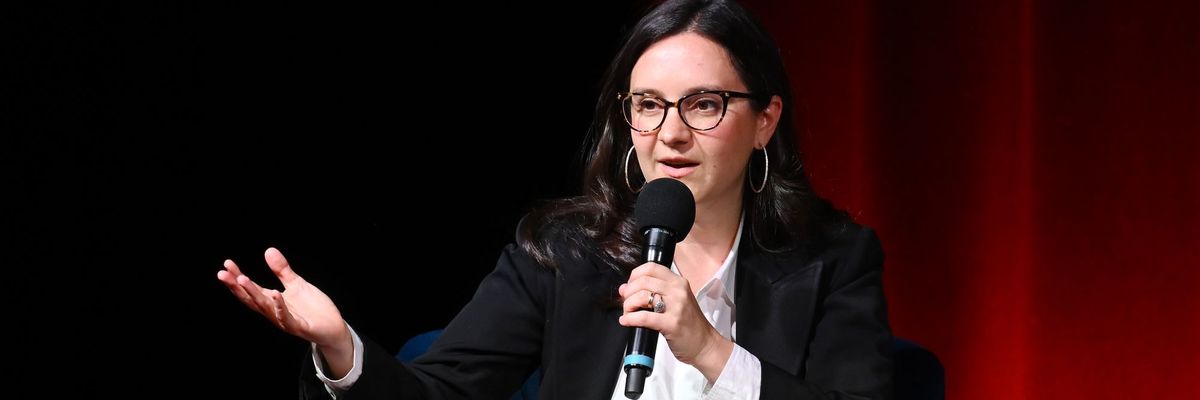
Bari Weiss speaks onstage during Book Club Event With Peggy Noonan on November 19, 2024 in New York City.
(Photo by Noam Galai/Getty Images for The Free Press)
Dean Baker
Dec 23, 2025
Beat the Press
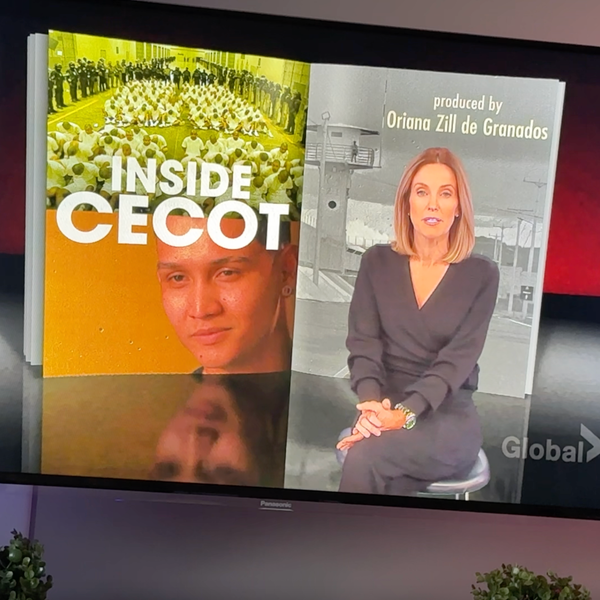
If anyone doubted that the rich would use their control of the media to push their agenda and silence dissent, CBS removed it with its decision to censor the scheduled “60 Minutes” broadcast on CECOT prison. CECOT is the notorious maximum-security prison in El Salvador where President Donald Trump has sent a number of the people that he has deported. There have been numerous accounts of torture and abusive treatment in the prison, which presumably would have been highlighted in the segment.
CBS, under its new ownership, decided that we shouldn’t see the “60 Minutes” segment, or at least not the one its team had prepared for broadcast last night. Apparently, they were worried it would offend the Trump administration.
According to a leaked account, Bari Weiss, the right-wing zealot that the new ownership put in charge of CBS News, decided that the program could not air without an interview with Stephan Miller, Trump’s deporter-in-chief. The producers of the show had apparently already reached out to the White House, as is their standard practice, but they refused to comment, presumably choosing to instead attack the broadcast as unfair and unbalanced after it ran.
Weiss is insisting that the program include an interview with Miller, giving him an effective veto over when and if the program airs. If we ever do see the segment, it will likely include other edits to make it more Trump friendly.
We do need to come up with ways to support independent media and not just complain about right-wing Trump sycophants taking over the media we have.
There can be a tendency to exaggerate the courage and independence of the pre-Trump media, but news shows like “60 Minutes” have done much great reporting over the years, breaking stories that the rich and powerful would prefer to see buried. This will no longer be the case.
If anyone doubted that the rich would use their control of the media to push their agenda and silence dissent, CBS removed it with its decision to censor the scheduled “60 Minutes” broadcast on CECOT prison. CECOT is the notorious maximum-security prison in El Salvador where President Donald Trump has sent a number of the people that he has deported. There have been numerous accounts of torture and abusive treatment in the prison, which presumably would have been highlighted in the segment.
CBS, under its new ownership, decided that we shouldn’t see the “60 Minutes” segment, or at least not the one its team had prepared for broadcast last night. Apparently, they were worried it would offend the Trump administration.
According to a leaked account, Bari Weiss, the right-wing zealot that the new ownership put in charge of CBS News, decided that the program could not air without an interview with Stephan Miller, Trump’s deporter-in-chief. The producers of the show had apparently already reached out to the White House, as is their standard practice, but they refused to comment, presumably choosing to instead attack the broadcast as unfair and unbalanced after it ran.
Weiss is insisting that the program include an interview with Miller, giving him an effective veto over when and if the program airs. If we ever do see the segment, it will likely include other edits to make it more Trump friendly.
We do need to come up with ways to support independent media and not just complain about right-wing Trump sycophants taking over the media we have.
There can be a tendency to exaggerate the courage and independence of the pre-Trump media, but news shows like “60 Minutes” have done much great reporting over the years, breaking stories that the rich and powerful would prefer to see buried. This will no longer be the case.
Whining Is not an Effective Media Strategy, Nor Is Taxing the Rich
I have been getting regular fundraising notices from Robert Reich, whom I greatly respect, complaining about the takeover of the media by rich Trumpers. Reich is right, but the moral of his story is that we have to increase taxes on the rich.
While taxing the rich more is something we should do, along with taking away the patent and copyright monopolies that make many of them rich, and corrupt bankruptcy laws that give us private equity billionaires, along with a few other changes, we have to go much further to get back impartial media.
The huge gaps in wealth and income create an enormous power imbalance, and plausible changes in tax policy will do little to rectify the situation. If Elon Musk’s fortune was cut in half to $200 billion, he would still have a ridiculous amount of political power. The same applies to the rest of the crew of billionaires.
If we want to get responsible media that does its job in reporting on the deeds and misdeeds of the rich and powerful, plausible reductions in inequality (and how do we get those?) will not be sufficient. We need to look to fundamentally restructure the media.
When the right owns all the major news outlets and social media platforms, the idea that the truth will magically overcome their lies is not the sort of argument that can be taken seriously.
This is not as far-fetched a goal as it may sound. We will not get the current Congress, or even one with a Democratic majority in 2026, to take the lead in pushing for responsible media. But we can have initiatives at the state and local level to build up independent media that is not owned and controlled by the rich and very rich.
My preferred route is a system of individual tax credits, say $100 per person, to support the person’s favorite news outlet(s). This would be a credit, not a deduction, and fully refundable, so even the poorest person gets the same amount as Elon Musk. There could be different conditions attached to receiving the credit. In my view, the material supported should be freely available outside a paywall; but that’s something that could be decided by the state or local governments implementing the system.
The best model for those envisioning this system would be the charitable contribution tax deduction. The difference is that this would be a credit, with every person getting the same amount regardless of how much their income is.
We may already have a foot in the door on this. Katie Wilson, the newly elected progressive mayor of Seattle, is a big supporter of this system. She will have a full agenda as mayor, and faces a budget shortfall, but if stars align right, perhaps this system will be put in place.
Other states, like California and New York, have sought to support local media with a tax on Google and Meta, which have gobbled up much of the advertising revenue that had formerly supported news outlets. This money would then be used to subsidize subscriptions, an inferior approach in my view, but still a way to support independent media.
This system of individual tax credits may seem far away from the hundreds of millions or billions of dollars that support major news outlets like CBS or CNN. While it may be difficult to pay the multimillion-dollar salaries that top news anchors get through this system, it could support a huge amount of important journalism.
Many people will choose not to use their credits or use them to support slop or perhaps more right-wing MAGA screeds. But suppose 10% of the population, 25 million people, used their credits to support serious investigative reporting like what is done by outlets like ProPublica, the American Prospect, the New Republic, and on good days the New York Times.
That would provide $2.5 billion a year in revenue, roughly 100 times the budget of ProPublica. It could help to support hundreds of smaller outlets.
And even if most of this money goes to support local news outlets, they can band together to support national and international reporting. This has been the story of the Associated Press for 180 years.
The idea that a progressive stronghold, like Seattle, may adopt a modest proposal to support local news, may seem like chump change in a world where the mega rich tech oligarchs are throwing around billions to buy news outlets like cheap candy, but it is a hell of a lot more promising than whining. And it is not the only thing we can and should do to counter the corruption of the media by the Trump brigade.
It would be great to reform Section 230 so we don’t give Elon Musk and Mark Zuckerberg special protections that news and print outlets don’t enjoy. Obviously, this will not happen with a Republican Congress and Donald Trump in the White House, but we should at least highlight this utterly absurd subsidy that we give to these right-wing mega billionaires.
It would also be good if progressives stopped viewing it as gauche to file defamation lawsuits. That doesn’t mean absurd multibillion Trumpian lawsuits directed against every news outlet that criticizes someone, but it does mean suing to counter the damage of outright lies, such as the ones now being promoted against Minnesota Gov. Tim Walz.
I know the standard line is that we counter lies with more speech; but save that for the kindergarten class. When the right owns all the major news outlets and social media platforms, the idea that the truth will magically overcome their lies is not the sort of argument that can be taken seriously.
Anyhow, that is a longer story. But we do need to come up with ways to support independent media and not just complain about right-wing Trump sycophants taking over the media we have. My scheme is on the table. Let’s hear others.
This work is licensed under a Creative Commons Attribution 4.0 International License
Dean Baker
Dean Baker is the co-founder and the senior economist of the Center for Economic and Policy Research (CEPR). He is the author of several books, including "Getting Back to Full Employment: A Better bargain for Working People," "The End of Loser Liberalism: Making Markets Progressive," "The United States Since 1980," "Social Security: The Phony Crisis" (with Mark Weisbrot), and "The Conservative Nanny State: How the Wealthy Use the Government to Stay Rich and Get Richer." He also has a blog, "Beat the Press," where he discusses the media's coverage of economic issues.
Full Bio >

No comments:
Post a Comment