Friday, May 21, 2021


Former Canadian ambassador to Israel worked for Black Cube, an Israeli intelligence firm

Brigitte Bureau  
CBC RADIO CANADA
© The Canadian Embassy in Israel Then-Canadian ambassador to Israel Vivian Bercovici shakes hands with Israeli Prime Minister Benjamin Netanyahu during former prime minister Stephen Harper's trip to Israel in 2014.

Vivian Bercovici, Canada's former ambassador to Israel, worked for the Israeli intelligence firm Black Cube after her diplomatic tenure ended, Radio-Canada has learned.

Black Cube is a controversial private sector company composed of ex-members of the Mossad and other Israeli intelligence agencies.

Messages addressed to a potential Black Cube client from Bercovici in 2019, obtained by Radio-Canada/CBC, contain references to her former occupation as an ambassador.

Black Cube made headlines in 2017 when it was discovered that Hollywood film executive Harvey Weinstein had hired it to dig up information on the women accusing him of sexual assault, and on the journalists pursuing the story.


In Canada, Black Cube has been criticized by an Ontario court for attempting to discredit a judge by trying to get him to make antisemitic comments in secretly recorded meetings.

Bercovici was appointed ambassador by then-prime minister Stephen Harper in January 2014. She was removed from her post by Prime Minister Justin Trudeau in June, 2016.

In one of the messages Bercovici sent a potential Black Cube client in 2019, she says she can provide a wide range of services, such as undercover surveillance, finding hidden information about third parties' personal lives and tracing bank accounts and assets.

In other messages, she writes that she works for Black Cube, that she would be one of the people personally supervising all operational matters and that Black Cube believes it can help the client achieve their objective. Although she was not ambassador at the time, the messages make it clear she had held that position.


Radio-Canada/CBC has chosen not to reveal the contents of all the messages to protect the identity of the person who shared them.

These messages were provided to Radio-Canada/CBC as Bercovici and some of her supporters — including Sen. Linda Frum, a personal friend — were accusing Radio-Canada/CBC of antisemitism in previous reporting on the former ambassador.

Bercovici, who lives in Israel, did not provide answers to our questions — even at the end of a deadline extended at the request of her lawyer William McDowell of the Toronto law firm Lenczner Slaght.

Radio-Canada/CBC has asked Bercovici, among other things, when she started working for Black Cube and if she's still working for the company.

Through its lawyer, Black Cube denies that Bercovici has ever worked for them.

"Black Cube has never employed Ms. Vivian Bercovici, whether directly, as an employee, contractor or consultant, or indirectly, through any subsidiary or third party," wrote their lawyer, Jonathan Abrams, of the U.K. law firm Gregory Abrams Davidson Solicitors.

"We would stress that Black Cube's operations and methodologies are backed by highly respected expert legal opinions in every jurisdiction in which it operates, ensuring that Black Cube's activities are in full compliance with applicable laws in those jurisdictions," Abrams added.

Black Cube has offices in Tel Aviv, London and Madrid.

Black Cube also threatened to sue Radio-Canada/CBC if it published this story.
Targeting a judge

Black Cube has carried out controversial operations in Canada in the past.

One was an undercover sting operation to discredit a Toronto judge who had ruled against its client, Catalyst Capital Group, a private investment company. Radio-Canada/CBC has no indication that Bercovici participated in this operation.

In 2017, Catalyst hired Tamara Global Holdings, an Israeli investigation and security firm, which in turn retained the services of Black Cube and Psy Group, an Israeli intelligence firm that no longer exists.

Those companies were hired to assist Catalyst in its legal dispute with a rival company.

One of the goals of the vast undercover operation they organized was to attack the reputation of Judge Frank Newbould, who had rendered a decision against Catalyst in a commercial legal dispute.

Using a false identity, a Black Cube agent met with Judge Newbould and tried to get him to make anti-Jewish comments during secretly recorded meetings.

"Basically we're trying to prove that he's a racist, a depraved anti-Semite, and trying to find information that could paint him in as negative a light as possible," wrote a Psy Group agent to a Black Cube agent, according to an Ontario Superior Court of Justice ruling that was made public in March 2021.

The recent court decision revealed new details about the activities of these intelligence companies in Canada. But the fact that Tamara Global Holdings acted as an intermediary between Catalyst, Black Cube and Psy Group has been public knowledge since at least 2018.
Black Cube's ethical standards

Tamara Global's principal is Yossi Tanuri, a former commander of an elite unit of the Israeli Defense Forces, according to his biographical notes.

Tanuri was also director general of the Jewish Federations of Canada-UIA from 2004 to 2019.

Asked if it was aware of Tanuri's involvement with these intelligence companies while he was its director general, the Jewish Federations of Canada-UIA did not respond. Tanuri also did not reply to Radio-Canada's emails.

Radio-Canada also reached out to Sen. Frum, who has been a member of the board of directors of Jewish Federations of Canada-UIA since 2017. When Tanuri left the organization in 2019, his going-away party was held at Frum's house.

Frum said she was not aware of Tanuri's involvement with Black Cube while he was director general of the organization. She said she had no reaction to his involvement with Black Cube and Psy Group, as described in the recent court ruling.

Asked if she knew that Bercovici has worked for Black Cube, Frum replied, "I have absolutely no idea what you are talking about."

"Black Cube is dangerous because it does not abide by ethical rules," said Avner Barnea, an academic and expert in private-sector intelligence.

Reached in Israel, Barnea said Black Cube "does not even come close" to the ethical standards established by the international association Strategic and Competitive Intelligence Professionals, which he serves as an advisory board member.

On its website, Black Cube presents itself as "a select group of veterans from the Israeli elite intelligence units that specializes in tailored solutions to complex business and litigation challenges."

Barnea said that some of Black Cube's activities might be permissible for a government intelligence agency — but are unacceptable for a private business.
The mysterious letter

Radio-Canada/CBC's inquiry into Bercovici and Black Cube started with a mysterious letter.

In January 2021, Radio-Canada/CBC reported on a letter signed by Bercovici and addressed to a Toronto businessman and Liberal supporter named Alan Bender.

In that November 2019 letter, Bercovici offers to drop her lawsuit against the Government of Canada as a way of thanking Bender for saving her life.

The letter was sent by an anonymous source, but Radio-Canada was able to confirm it was written by Bercovici.

In 2018, Bercovici launched a lawsuit against the federal government alleging, among other things, that the Trudeau government acted in bad faith when it terminated her diplomatic appointment and that she had not been properly compensated for her pension benefits.

The lawsuit has now been settled and is covered by a non-disclosure agreement.

In a phone interview with Radio-Canada in January, Bender, an international mediator, said he was asked by important political figures — including one from Israel — to intervene to help Bercovici.

Bender said he did save Bercovici's life — along with her professional and personal reputation — but didn't want to give any details. Bercovici declined to comment at the time.

Radio-Canada reached out to Bender again to ask if the alleged threat on Bercovici's life had anything to do with her Black Cube activities. Bender would not comment.

Some of Bercovici's decisions and expenses during her tenure as an ambassador raised eyebrows in the Department of Foreign Affairs — something she herself acknowledged in her lawsuit.

Bercovici had insisted on renting private office space outside of the embassy, a move deemed highly unusual by high ranking officials. Radio-Canada/CBC is not naming these sources because they were not authorized to speak publicly about the issue.

The rental of office space at 22 Rothschild boulevard in Tel Aviv was approved by Foreign Affairs, as Bercovici's lawyer has previously noted.

Bercovici, Sen. Frum and others, including some Jewish organizations, have criticized Radio-Canada/CBC for quoting unnamed sources in its reporting, saying the sources were smearing Bercovici with the antisemitic canard of dual-loyalty.

Accusing Jewish citizens of being more loyal to Israel than to the interests of their own nations is one aspect of antisemitism cited in the International Holocaust Remembrance Alliance's definition of antisemitism, which was adopted by the Government of Canada in 2019.

However, the concerns raised by the officials Radio-Canada spoke to were related to the nature of some of the former ambassador's behaviour and decisions, which they said were highly unusual for a senior diplomat. During those interviews, none of the officials demonstrated any antisemitic sentiment.
Associated Press Draws Backlash After Axing Staffer Over Her Pro-Palestine Tweets

The Associated Press drew intense backlash Thursday night after news broke that a young staffer was fired for her past tweets about Israel and Palestine. The axing took place just days after the AP's Gaza bureau was decimated by Israeli forces.
© TheWrap associated press

Emily Wilder was a news associate at the AP only a few weeks when she was fired. In a statement to TheWrap, the publisher said, "While AP generally refrains from commenting on personnel matters, we can confirm Emily Wilder's comments on Thursday that she was dismissed for violations of AP's social media policy during her time at AP."


Wilder frequently tweeted about the situation in the Middle East. Last Sunday, for instance, she tweeted: "'objectivity' feels fickle when the basic terms we use to report news implicitly stake a claim. using 'israel' but never 'palestine,' or 'war' but not 'siege and occupation' are political choices — yet media make those exact choices all the time without being flagged as biased."

Her college participation in Jewish Voice for Peace and Students for Justice in Palestine was called out by the Stanford College Republicans, a group from her alma mater, the next day. Critics of the AP's decision to terminate her say the organization bowed to conservative pressure.

The Washington Post's Glenn Kessler mused, "Amazing how quickly a talented young reporter's career can be snuffed out by a Twitter mob that decided to feign outrage over some college tweets. And if @vv1lder somehow violated @AP's social-media rules, the solution is to offer guidance, not termination, to a new reporter."

He, like others, pointed to an internal memo about her firing that was leaked Thursday afternoon. In it, U.S. West news director Peter Pengraman briefly informed AP staffers that Wilder "is no longer with the AP" and the company will try to fill her position quickly.

"Firing journalists over things they wrote as students, without any evidence of bias that's affected their professional work, won't make journalism better, it'll simply make student journalists more afraid to develop their voices and say anything interesting lest they anger a mob," tweeted Yair Rosenberg, a senior writer for the Jewish magazine Tablet.

"I don't know what this accomplishes other than signaling that it's open season for troll campaigns on AP journalists. AP must acknowledge it made a mistake and rehire @vv1lder," said the Los Angeles Times' Matt Pearce.

Every journalist should be outraged about @AP firing @vv1lder over college activism in favor of freedom for Palestinians. The industry is rife with clear double-standards on this," wrote the Times' Adam Elmahrek. "No college kid should have to fear losing a future career because they stood by their values."
Director Farah Nabulsi: “The World Is Seeing What It’s Like to Be Palestinian” (Guest Column)

Farah Nabulsi

Amidst the grief for those killed in Gaza, and the rage at the Israeli bombardment of a blocked territory with strikes that devastate tower blocks and wipe out families, there is an outpouring of support for our rights and our plight the likes of which has never been seen before.

This is a difficult and often overwhelming contrast.

In the Gaza Strip, Jerusalem and the West Bank, Palestinians under Israeli military occupation have been subjected to intense levels of dehumanization and violence. Palestinians with Israeli citizenship, meanwhile, are targeted by far-right Jewish Israeli gangs and a brutal police force.

Palestinian artists have not been exempted from these realities. Actor Maisa Abd Elhadi, for example, a star of U.K. Channel 4’s Baghdad Central and Gaza Mon Amour, was shot and wounded by Israeli forces during a demonstration in Haifa against Palestinians being dispossessed of their homes in Sheikh Jarrah, Jerusalem.

Turner Prize–nominated artist Lawrence Abu Hamdan platformed fellow artist Inas Halabi on his Instagram account, as she reported on continued police brutality in Haifa, while well-known musician Tamer Nafar has urged international protection for Palestinians under threat in al-Lydd (Lod). (He also turned filmmaker and shared on social media ominous personal phone footage shot from his apartment window while on the phone with Israeli police, reporting what he was witnessing and filming: Israeli settlers armed with semiautomatic weapons being loaded off buses outside his home during what is supposed to be a “curfew” for all. The police hung up on him after telling him it was not his business).

The only art supply store in Gaza has been destroyed by Israeli air strikes while actual artists trapped there post hellish videos of massive explosions of fire and the sound of bombs thundering right outside their windows at night.

Palestinian filmmakers, actors, and artists, already hit hard by the COVID-19 pandemic, are now impacted by the Israeli government’s assaults on all fronts, just as they are also part of this far-reaching and inspiring mobilization on the ground by Palestinians united in a way we haven’t seen in at least a generation.

For those of us Palestinians who live in the West, following from afar, it is extremely difficult reading and watching these events reported to us in a distorted and often biased form by major media outlets.

While our families and friends send us updates of the latest atrocity on the ground, headlines and news bulletins mislead and confuse; colonialism becomes a “conflict,” ongoing ethnic cleaning, “evictions,” attacks on civilians, a “clash.”

Though nothing new, this media fog, where a “both sides” discourse erases the difference between occupier and occupied, and a military behemoth versus a fragmented civilian population, makes the bold and brave shows of solidarity all the more appreciated.

Demonstrations and marches the world over have warmed the heart, but it has been particularly noteworthy and wonderful to see quite so many artists, creators and Hollywood stars speak up and speak out, using their platform and influence to raise awareness and a call for justice.

Actors such as Susan Sarandon, Viola Davis, Mark Ruffalo, Idris Elba, Natalie Portman, Lena Headey, and Danny Glover have expressed their public support for Palestinians — whether it’s for those Palestinians struggling to keep their homes in Jerusalem or the plight of Gaza under Israeli bombs. International footballers raised the Palestinian flag in solidarity, like Paul Pogba and Amad Diallo did at a recent Manchester United game. Even Geraldo Rivera shocked Fox News TV with his words calling out the United States for being “complicit in an ongoing crime against humanity” by providing Israel weapons to bomb Gaza.

Such statements and their amplification of pro-justice voices are both indicative of, and in turn help expand and deepen, a seismic shift of perceptions about Israel and the Palestinians. Put simply, our demand for freedom and basic rights is being understood with growing clarity amongst the public and politicians.

This shifting ground is down to years — decades — of hard work by Palestinians, and their pro-justice allies, to educate and inform. In the times we live, where a phone turns every Palestinian into a filmmaker, the mainstream media’s failings are being compensated for and positively challenged. Moral compasses are pointing more clearly at the cruel reality.

The world is seeing, more directly and vividly than ever before, what it is like to be Palestinian: to yearn to live freely with dignity and without oppression or discrimination in your own homeland. This is thus a moment of anger but also of hope. We are witnessing a narrative being transformed, and it cannot come a moment too soon.

Farah Nabulsi is a Palestinian British filmmaker whose credits include the recent short The Present, which was nominated for an Oscar in the best live action short category and won a BAFTA for best short film.
More profits, lower taxes: The biggest companies in the world enjoyed a median effective tax rate of just 17% in 2020, less than half of what they paid than in 1990

wdaniel@businessinsider.com (Will Daniel) 
© Andrew Harnik/AP Treasury secretary Janet Yellen. Andrew Harnik/AP

The top 50 biggest companies by market capitalization paid an effective tax rate of 17.4% in 2020, according to a new study.

That's less than half of the 35.5% effective tax rate they paid in 1990.

The top 50 corporate giants of the world now represent nearly 30% of global GDP.

The biggest companies in the world haven't felt the sting of the pandemic quite like everyone else.


New data from a Bloomberg Economics Study shows that the 50 biggest companies on the planet increased their value by $4.5 trillion in 2020 alone-and that's thanks, at least in part, to historically low tax rates.

The top 50 companies by market capitalization paid a median effective tax rate of just 17.4% in 2020, less than half of what they paid in 1990.

On top of that, according to the Bloomberg Economics Study, profit margins soared over the same period from 6.9% to 18.2%.


The largest companies in the world are paying lower taxes and netting more profits than in decades past, and that's leading them to hold an unprecedented position in the global economy.

In fact, the top 50 firms by market cap now make up nearly 30% of global Gross Domestic Product (GDP). In 2010, that figure was just over 10%, and in 1990, it was less than 5%.

In a speech in April, Treasury Secretary Janet Yellen said there's been a "30-year race to the bottom on corporate tax rates" and called for "a more level playing field in the taxation of multinational corporations."

The Treasury Department has pushed for a 15% minimum global tax rate in hopes of preventing the largest multinational corporations from evading taxes by moving their profits to low-tax jurisdictions.

Yellen even said that the 15% figure should be the "floor and that discussions should continue to be ambitious and push that rate higher."

On top of that, a proposal from President Biden would lift the US corporate tax rate to 28%, after it was slashed from 35% in former President Donald Trump's 2017 tax bill.

"What I'm proposing is that we meet in the middle: 28%. Twenty-eight percent - we'll still have lower corporate rates than any time between World War II and 2017," Biden said.

"It will generate over $1 trillion in taxes over 15 years," he added.

Despite the historically low effective tax rates for the largest corporations, many argue raising taxes could hurt American business.

The Business RoundTable, a collection of hundreds of American CEOs, released a survey in April that showed 98% of CEOs believe President Biden's corporate tax hikes will hurt American corporate "competitiveness."

The CEOs cited studies like this one, released by the National Association of Manufacturers, which showed Biden's new tax bill could kill close to 1 million jobs in the next two years.

While CEOs are resisting tax hikes, a new Morning Consult/Politico poll shows most Americans favor them. 65% of voters polled said they support President Biden's tax hikes on corporations to pay for infrastructure spending.

Old records shed new light on smallpox outbreaks in 1700s


© Provided by The Canadian Press

BOSTON (AP) — A highly contagious disease originating far from America's shores triggers deadly outbreaks that spread rapidly, infecting the masses. Shots are available, but a divided public agonizes over getting jabbed.

Sound familiar?


Newly digitized records — including a minister's diary scanned and posted online by Boston's Congregational Library and Archives — are shedding fresh light on devastating outbreaks of smallpox that hit the city in the 1700s.

And three centuries later, the parallels with the coronavirus pandemic are uncanny.

“How little we've changed,” said CLA archivist Zachary Bodnar, who led the digitization effort, working closely with the New England Historic Genealogical Society.

“The fact that we’re finding these similarities in the records of our past is a very interesting parallel,” Bodnar said in an interview. “Sometimes the more we learn, the more we’re still the same, I guess.”

Smallpox was eradicated, but not before it sickened and killed millions worldwide. The U.S. Centers for Disease Control and Prevention say the last natural outbreak of smallpox in the United States occurred in 1949. In 1980, the World Health Organization's decision-making arm declared it eradicated, and no cases of naturally occurring smallpox have been reported since.

But in April 1721, after an English ship, the HMS Seahorse, brought it to Boston, it was a clear and present danger. By winter of 1722, it would infect more than half of the city's population of 11,000 and kill 850.

Much earlier outbreaks, also imported from Europe, killed Native Americans indiscriminately in the 1600s. Now, digitized church records are helping to round out the picture of how the colonists coped when it was their turn to endure pestilence.

The world's first proper vaccination didn’t occur until the end of that century, when an English country doctor named Edward Jenner inoculated an 8-year-old boy against smallpox in 1796.

Before then, doctors used inoculation, or variolation as it was often called, introducing a trace amount of the smallpox virus into the skin. The procedure, or variations of it, had been practiced since ancient times in Asia. Jenner's pioneering of vaccination, using instead a less lethal strain of the virus that infected cows, was a huge scientific advance.

Yet just as with COVID-19 vaccines in 2021, some took a skeptical view of smallpox inoculations in the 18th century, digitized documents show. To be sure, there was ample reason to worry: Early smallpox treatments, while effective in many who were inoculated, sickened or even killed others.

The Rev. Cotton Mather, one of the era's most influential ministers, had actively promoted inoculation. In a sign of how resistant some colonists were to the new technology, someone tossed an explosive device through his window in November 1721.

Fortunately, it didn't explode, but researchers at Harvard say this menacing message was attached: “Cotton Mather, you dog, damn you! I’ll inoculate you with this; with a pox to you.’’

Among the recently digitized Congregational Church records are handwritten diary entries scrawled by the Rev. Ebenezer Storer, a pastor in Cambridge, Massachusetts. On March 11, 1764, as smallpox once again raged through Boston, Storer penned a prayer in his journal after arranging to have his own children inoculated.

The deeply devout Storer, his diary shows, had faith in science.

“Blessed be thy name for any discoveries that have been made to soften the severity of the distemper. Grant thy blessing on the means used,” he wrote.

Three weeks later, Storer gave thanks to God “for his great mercy to me in recovering my dear children and the others in my family from the smallpox.”

For Bodnar, the archivist, it's a testament to the insights church records can contain.

“They're fascinating,” he said. “They're essentially town records — they not only tell the story of the daily accounting of the church, but also the story of what people were doing at that time and what was going on.”

___

Follow AP New England editor Bill Kole on Twitter at http://twitter.com/billkole.

William J. Kole, The Associated Press

More than 500 WestJet employees in Vancouver and Calgary announced this morning they have unionized.
.
© Provided by The Canadian Press

The airport agents, which include baggage handlers, at Calgary and Vancouver's international airports will be represented by Unifor.

The 531 WestJet workers join more than 7,000 other unionized airline workers with Unifor under carriers like Air Canada and Air Canada Jazz.

Unifor Organizing Director Kellie Scanlan said conversations with WestJet workers had been going on prior to the pandemic, and moved online after COVID-19 hit.

The union said workplace organization has been part of the successful lobbying effort for financial support for the airline industry from the federal government amid the COVID-19 pandemic.

Unifor is one of Canada's largest private sector unions and represents more than 300,000 workers across the country.

This report by The Canadian Press was first published May 21, 2021.

The Canadian Press

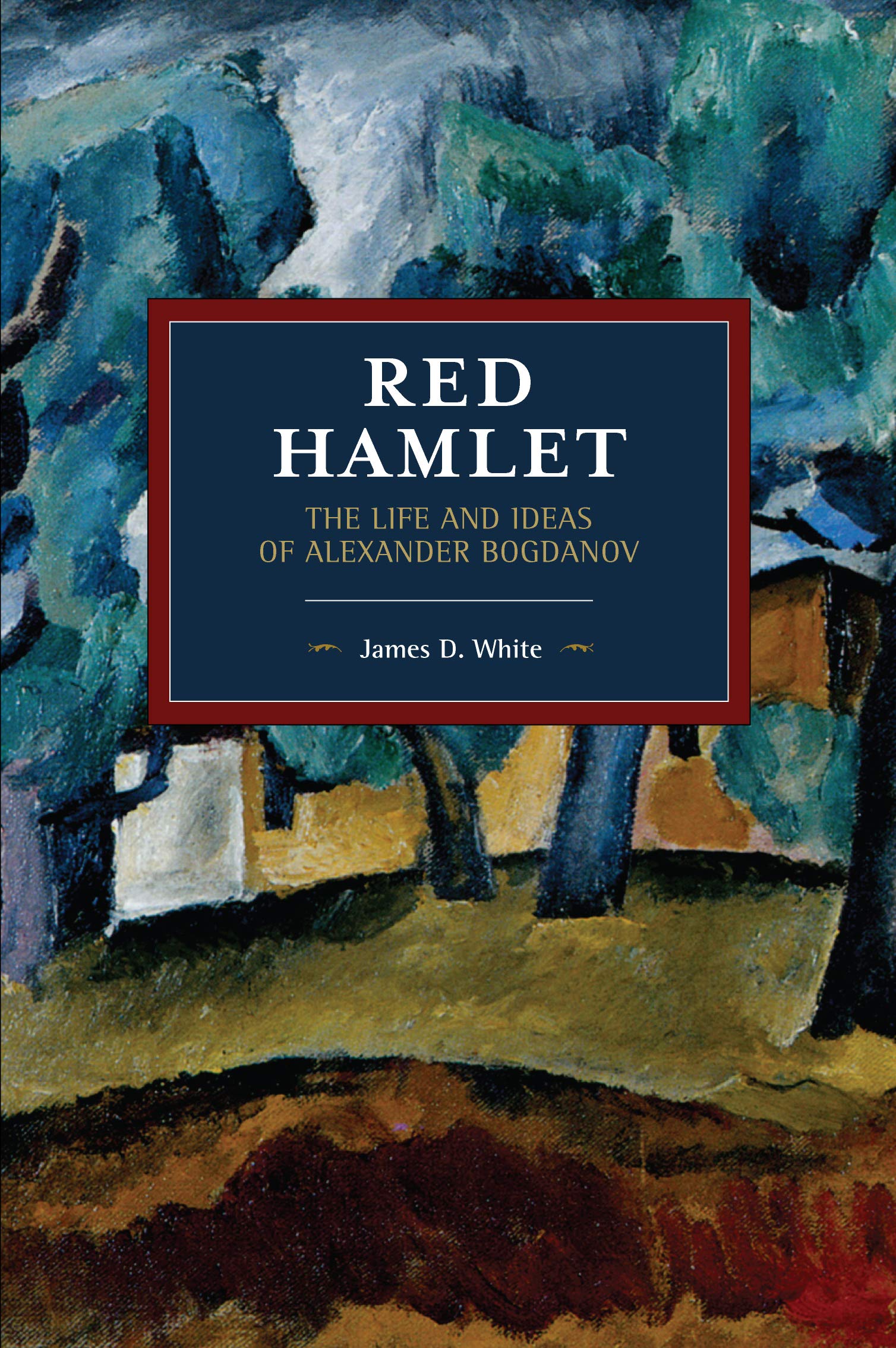
 Red Hamlet: The Life and Ideas of Alexander Bogdanov (Historical ...

LEFT BOLSHEVISM

A Review of Red Hamlet: The Life and Ideas of Alexander Bogdanov by James D. White

Paul Le Blanc

Department of History, La Roche University, Pittsburgh, Pennsylvania

paul.leblanc@laroche.edu

James D. White, (2019) Red Hamlet: The Life and Ideas of Alexander BogdanovHistorical Materialism Book Series, Chicago: Haymarket Books.

Abstract

Alexander Bogdanov is a central figure in the history of Russian Marxism, co-equal with Lenin in the early formation of Bolshevism. His life’s work embraced medicine, natural science, mathematics, political economy, sociology, philosophy, education, political theory and more. The Bogdanov/Lenin split involved the crystallisation of a distinctive variant of Marxism that up until now has not been widely available. James D. White’s very substantial biography Red Hamlet: The Life and Ideas of Alexander Bogdanov is part of a collective project retrieving and making available contributions of an extremely important revolutionary thinker. The present critical appreciation of White’s study, and critical overview of Bogdanov’s ideas and life, is meant to advance an expanding exploration of Bogdanov’s insights and approaches that may enhance our understanding of the past, present and future.

Keywords

Bogdanov – Marxism – Communism – Lenin – Bolsheviks

LONG READ Learning from Bogdanov | Historical Materialism


 LEFT BOLSHEVISM

 (1980)
Abstract
Aleksandr Bogdanov is probably the most original philosopher to have arisen thus far among Marxists. Most scholars know of him only as the man who provoked Lenin into writing the book of polemical epistemology, Materialism and Empiriocriticism. Jensen’s work, the first full-length study to deal with Bogdanov’s thought in its own right, is a careful analytical account; it sets forth the novel theses, chapter by chapter, in Bogdanov’s later book Philosophy of Living Experience.


Essays in Tektology: The Universal Organization Science
  1. ENGLISH TRANSLATION BY George Gorelik Bogdanov

    https://www.e-skop.com/images/UserFiles/Documents/Editor/bogda… · PDF file

    In Essays in Tektology: The Universal Organization Science [16], Bogdanov condenses his larger work, the three volume treatise, Tektologia (from the Greek word "tekton," meaning "builder") [9, 11, 14], which he had developed and published . between 1912 and 1928, the year of his death. The Essays appeared first in a series of articles in Proletarskaya Kultura, 1919-1921, Nos. 7-20, and …

  1. THE CULTURE AS SYSTEM, THE SYSTEM OF CULTURE

    https://bogdanovlibrary.files.wordpress.com/2016/08/soboleva-cultur… · PDF file

    M ller that stresses the universal application of anthropological patterns in cognition of the world. According to Bogdanov, Ã’the basic metaphor is the embryo and prototype of the unity of the organizational point of view of the UniverseÓ (Bogdanov 1996: 16). 3 For example, in his work EmpiriomonizmBogdanov analysed the concept

LEFT BOLSHEVISM
Science and the Working class
Alexander Bogdanov 1918

Preface to the English translation

This text is a summary of a presentation which Alexander Bogdanov (1873-1928) gave at a
conference for the Proletkult organisations of Moscow, 23-28th February 1918. It was written during a period in which Bogdanov was very active in Proletkult. Another version of his speech was given at the First All-Russian Proletkult Conference held 15-20 September 1918, and was reprinted after this conference with 'Methods of Labour and Methods of Cognition' which had previously appeared in Proletarian Culture No. 4, August 1918.

 During the summer of 1918, Bogdanov was involved in the founding of the Communist University, founded 25th June 1918. It was a “higher education establishment conducting social and natural scientific research” which in pursuit of its tasks “researched the elaboration of questions of history, theory, and the Practice of socialism” (Bogdanov 1977). These experiences then feed into the discussion at the September Conference where Bogdanov gave a speech on the Workers' University. This was further elaborated in 'Proletarian University' which appeared in No. 5 of Proletarian Culture which came out in November 1918. 
This latter text is in preparation.


Fabian Tompsett,
 1st October 2015
ORCID


LEFT BOLSHEVISM
The Stofflichkeit of the Universe: Alexander Bogdanov and the Soviet Avant-Garde

Prelude: Towards an Alternative Philosophical Genealogy of the Soviet Avant-Garde

Maria Chehonadskih
e-flux
Journal #88 - February 2018

One of the most discussed concepts of the Soviet avant-garde—variously characterized as “construction,” “tectonics,” “production,” or “life-building”—may seem to refer simultaneously to the formalist method in art and to a theory of social constructivism that departs from the idea of the “new Soviet man” and ends up with Stalin’s “engineers of the human soul.” The simultaneity of formalism and social constructivism normally explains the coexistence of the constructivist aesthetic program and the utilitarian politics of productivist art. As Benjamin Buchloh writes, constructivism passes from the expanded modernist aesthetics that “did not depart much further from the modernist framework of bourgeois aesthetics than the point of establishing models of epistemological and semiotic critique,” to the new industrialized forms of art.1 Optimism about technology and media leads constructivists to totalitarian Stalinism.2 Yve-Alain Bois goes so far as to argue that the total instrumentalization of art is inevitable when the critical modernist tradition is abandoned.3 In other words, the great achievements of the Soviet avant-garde conform to the standards of European modernist epistemologies, while utilitarian aesthetics and its function in the context of Stalinism signifies a break or a black hole, which the narrative of art history can only explain by turning to ethical and moral arguments against propaganda and instrumentalization. An alternative proposition would be to examine the philosophical core of the constructivist and productivist programs and rethink their epistemological foundation.

The confusion regarding the constructivists’ construction and the productivists’ production comes from a false genealogical attribution of these concepts to formalism and social constructivism. What has to be accounted for, and what is normally ignored, is the background of what I term “Empirio-Marxism.” The interest in empiricism among the pre- and postrevolutionary Marxists of the Russian Empire and the Soviet state is mainly known though Lenin’s famous Materialism and Empirio-Criticism, the book in which he accuses Bolshevik activist and philosopher Alexander Bogdanov of deviating from Marxism and of providing reactionary support for idealist philosophy.4 Indeed, Bogdanov brings together the notorious empiriokritizismus and the early Bolsheviks’ understanding of Marx to first propose the philosophy of “empiriomonism” (1900s)5 and then the universal science of organization, or “tektology” (1910s).6 Both doctrines correspond to the political idea of proletarian culture, implemented in the Proletkult (Proletarian Cultural-Enlightenment Organizations) movement after the October Revolution in 1917. Bogdanov, a principal theoretician of the movement, develops a conception of experience as a homogeneous field of collective praxis.

This is not an obvious reference point in relation to Russian avant-garde artists, since in their work there is no consistent presence of the problem of experience. There are no overt references to empiricism, Mach, or Bogdanov in the published archive of the Soviet avant-garde. It was more common to praise Lenin, and one can easily recall Dziga Vertov’s “Three Songs About Lenin” or Alexander Rodchenko’s “Worker’s Club,” with a portrait of the leader of the proletariat on a wall. Nonetheless, Empirio-Marxism was a very popular local tradition and Bogdanov had a greater intellectual authority in the art community due to his establishment of Proletkult. There are no official portraits of Bogdanov, but his philosophy in fact populates every single art-related book. This has been acknowledged only in Soviet publications, where avant-gardism is associated exclusively with Bogdanov’s ideas and political views.7 Nevertheless, it is also a very well-known fact that writer and engineer Andrei Platonov was a member of the Proletkult,8 and that the main theorist of productivist art, Boris Arvatov, worked as secretary of the Moscow Proletkult, while Rodchenko, Tretyakov, and Eisenstein, among others, collaborated with Proletkult studios.9 This fact has never led English-speaking theorists to examine closely Bogdanov’s philosophy or at least to consider Proletkult as an important intellectual and political reference. What I aim to discuss here is to what extent Bogdanov’s philosophy mediates methodologies of constructivism and productivism, and how these movements in turn radicalize and shift the philosophical and political claims of Bogdanov and the Proletkult.

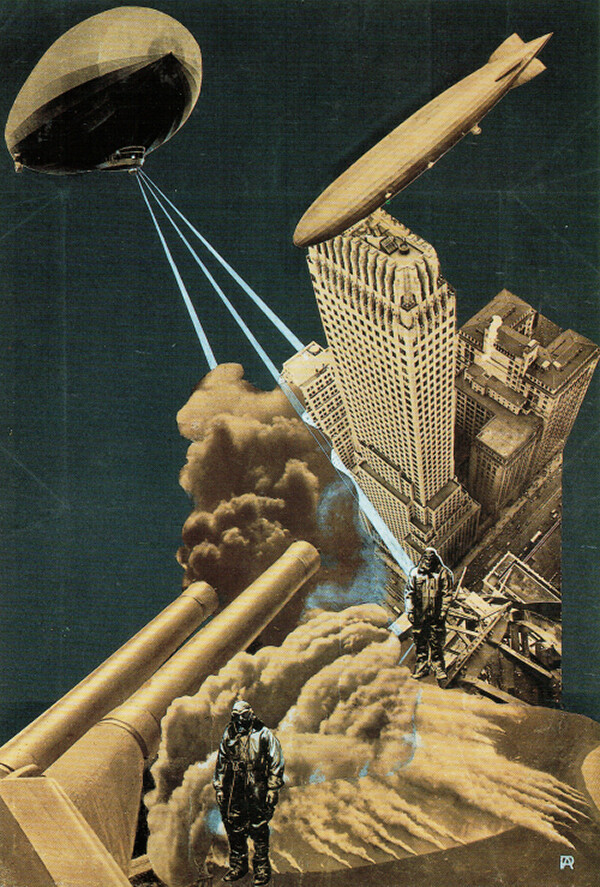
Alexander Rodchenko, War of the Future, 1930. Magazine illustration.


Bogdanov’s Ontology of Organization and the Art of World-Building


Bogdanov’s conception of organization rests on a basic empiricist assumption that experience of the outside world is given to us in the conjunctions of an object’s attributes. The decomposition of these attributes gives elementary sensations of space, time, color, form, and size. However, the elements of experience are sensations only in psychical reality, whereas the same elements may belong to physical bodies as attributes—the squareness and redness of a brick are the sensual, perceptible, physical properties of this object.10 The connection between the psychical and physical realms should be understood as a complex unity that unfolds as an exchange of sensations and properties within an environment that is itself neutral to this subject-object distinction. In other words, there is no sovereignty of a knowing subject who reflects on objects outside it, because there is no outside. This subject is already an object, a complex product of exchanges between physical and psychical elements. Ontologically, this exchange produces a series of “life-complexes” (forms of life, including social forms); and epistemologically, it constitutes a monist point of view on the otherwise heterogeneous self-organizing flow of psychical and physical concatenations: “The universe presents itself to us as an endless flow of organising activity. The ether of electrical and light waves was probably that primeval universal environment from which matter with its forces—and later on also life—crystallised.”11

Bogdanov’s empiriomonism tends to reformulate the biological and the social in terms of the organizational logic of psychophysical complexes. Taken as isolated entities, psychic and physical complexes exist in a pure state of spontaneity, or the lowest level of organization. This spontaneity preserves higher organizational forms only in analysis and in the practical composition of the elements into new series. A rock is a spontaneously formed physical combination of minerals, and fear is a spontaneously formed psychical combination of stimuli and reaction. But the fear of wild animals that leads to the construction of a house made out of rock is a product of a higher psychophysical organization.

As we can see, the psychophysical complexes are constructed first in labor activity. In the wake of the rise of labor technics, the sum of the elements grows, but their usage depends on “technical and cognitive goals.”12 The laboring subject appeals either to actions or to the attributes of objects out of necessity. Splitting and crushing, for example, led to the invention of the concept of the atom.13 Labor’s use of the elements of experience—be it a rock in construction, or ore in industry, or oil in painting, or the concept of the atom in philosophy—corresponds to use value, on the grounds that it emerges from a social need to distinguish and differentiate experience in order to develop production—domestic, industrial, scientific, or artistic. In Bogdanov, use value appears as an ontological principle of usefulness, and value as an essentially vitalist quality.14 This process of extracting, shaping, and composing the elements of experience into life-complexes, Bogdanov identifies with Marxian Verdinglichung (reification).15

This means that the object, or rather the organization of objects, is a historically produced system of relations. The ready-made object is the work in progress of laboring humanity:

The practice of this great social organism is nothing other than world-building … This world, which has been constructed and continues to be under construction … is the most grandiose and perfected that we know … Such is our picture of the world: an unbroken series of forms of organization of elements—of forms that develop in struggle and interaction without any beginning in the past, without any end in the future.16

Any kind of social practice is the labor of organization, or the labor of world-building. That is why Bogdanov’s theory of art corresponds to the same organizational ontology:

Artistic creativity, combined and often alloyed with cognition, as may be seen in many pieces of belles-lettres, poetry and painting, organizes understanding, feelings and emotions by its own methods. In art the organization of ideas and the organization of things are inseparable. For instance, an architectural construction, a statue, or a painting as they are, might be regarded as systems of “dead” elements—of stone, metal, canvases and paint; but the lively meanings of pieces of art belong to the complexes of images and emotions to which they give life in a human psyche.17

Art is one of the many forces within the logic of organization. However, only collectivized proletarian labor produces the art of total organization. The proletariat brings elements of the “lowest” life in nature and “unconscious” life in society to the noncontradictory and rational form of psychophysical unity. Bourgeois culture is based on competition and exploitation, and as a result, on the production of conflicting partial systems. To make an exit from partial irrational systems, such as capitalism, would mean to construct a new totality; some names for this new totality are “universal organization,” “classless society,” and “proletarian culture.” The highest degree of organization is a homogeneous wholeness based on unified industrial labor, solidarity, comradeship, and collectivization.18

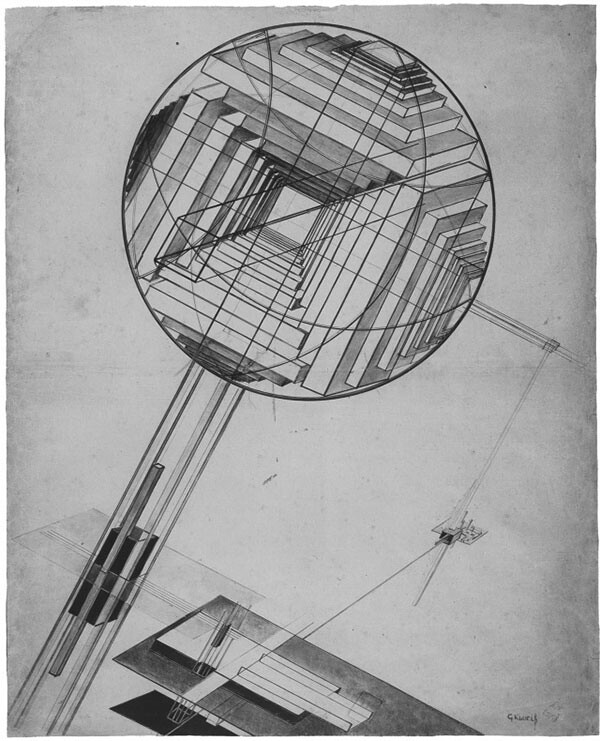
Gustav Klutsis, Construction, 1921.

World-Building Abolishes Art: Construction, Production, and Organization in the Avant-Garde


It is not hard to see how Bogdanov’s world-building is close to the productivist figures of the “life-builder” and “engineer-constructor.” Art is a labor of shaping and composing an object according to the usefulness of a color and a form, writes Osip Brik.19 In the manifesto “Constructivism,” Alexei Gan provides a three-page-long quotation from Bogdanov to support an argument about the importance of organization and production. Gan claims that material production replaces representational art. This new mode of production saves the “solid material and formal foundations of art, such as line, flatness, volume, and action,” along with the purposeful activity of “materialistically grounded” artistic labor. Constructivism is Bogdanov’s organizational science, which seeks a form of “organization and cementation for the mass labor processes, mass actions in the whole of social production.”20 This may lead to the conclusion that the three famous disciplines of constructivism—construction, facture (faktura), and tectonics—fully correspond to the principles of organization. It has even been argued that tectonics is a cipher for tektology.21 Bogdanov’s philosophy seems to be foundational, and one can read the theory of constructivism back into empiriomonism and tektology: faktura is the process of extracting and manufacturing the elements of nature, while construction is the aggregation of the complexes of elements into a purposeful organizational plan—tectonics. The organizational point of view appeals to Nikolai Chuzhak as a grandiose cosmogony of all-embracing life-building:


People who look at art from the point of view of communist monism inevitably come to the conclusion that art is only a quantitatively individual, temporary, and predominantly emotional method of life-building, and, as such, cannot remain isolated, or what is more, self-sustaining compared with other approaches to life-building.22

A similar Bogdanovian detour into the various currents of art practice, albeit more grandiose still, was that of the Proletkultist Boris Arvatov. In Art and Production, at once a presentation of research and an energetic manifesto, the history of art is shown to unfold within the terms of Bogdanov’s history of labor. According to this narrative, art has always been a part of production: for instance, crafts, frescos, and architecture served the everyday needs of premodern societies. However, under the rule of capitalism, art becomes instead an individualistic, self-organizing activity. Easel painting is one significant example of the contemplative representational function of art in bourgeois society. Arvatov seeks the new forms of a “proletarian monism” in which the productive capacity of art to shape the environment can be restored.23 The figure of the engineer-constructor expresses the unity of invention and construction in creating a new “form of being,” or communism.24 The construction of the new elements of experience—a.k.a., the labor of organization—gives art a place in production. In other words, it makes art productive.

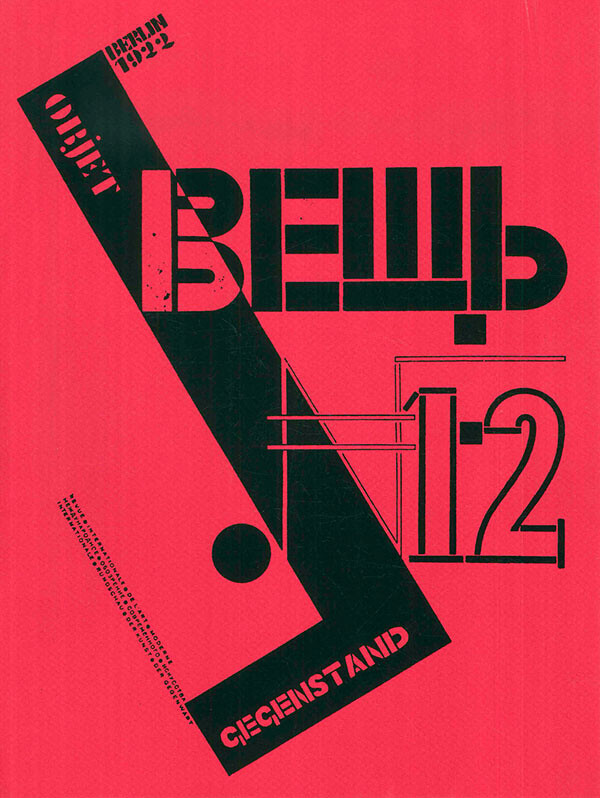
Cover of the journal Veshch/Gegenstand/Objet (1922), edited by El Lissitzky and Ilya Ehreburg.

If constructivism and productivism are oriented towards the production of new forms of being and communist world-building, the task of art, according to Bogdanov, is less radical and much more modest. Art is the education of the senses. It organizes feelings and emotions into images and forms. The “unity of form and content,” “harmony,” and “creativity” are epithets that Bogdanov uses to discuss proletarian art.25 Despite the contradiction between the enormous ambitions of the artistic avant-garde and the modest role of art in Bogdanov’s system, the theorists of constructivism and productivism tried to reinterpret Bogdanov’s organization of the senses for their own benefit. Nikolai Tarabukin understands the organization of emotions in empiricist terms, as the orientation of a subject in its natural and social environment. An artist does not copy but organizes nature on the canvas, building a landscape according to compositional laws. Painting establishes a particular “point of view” for the perceiving viewer. “The artist is the organizer of our visual orientation,” concludes Tarabukin.26 Chuzhak also accepts the emotional concept of art: “Art is an original, mainly emotional (only mainly and it only differs from science in this advantage) dialectical approach to life-building.”27 The content of the constructivist “dialectical modelling” consists of “the tangible thing” and “the idea, the thing in its model.”28

In an early Proletkultist article entitled “Proletarian Poetry” (1922), Andrei Platonov states that proletarian art has to begin with the organization of “immaterial things”—images and symbols of things; or simply put, words. He distinguishes three elements of a word: idea, image, and sound. The organization of poetry according to the triangular properties of a word is the process of gathering all wandering feelings and senses into one thought. The word-becoming of thought penetrates reality better than empty abstractions, because it makes conscious both sensibility and proletarian experience. From the organization of triangular words into thoughts, humankind will proceed to the organization of matter and world-building.29

The triangular words of Platonov recognize only proletarian experience; they materialize in words the “troubled” sound of the “gurgling of acid and alkaline grasses being digested in [the] stomachs” of the proletariat.30 Triangular words may also prove that a thought is the process of material production through “a certain pressure in the dark warmth.”31 This is the point of view of labor experience, the articulation of what is seen and what happens from the perspective of a laboring body: it speaks as it labors. Triangular words are material as much as immaterial, since they are embodied in the experience of the laboring proletariat. Platonov writes “not with words, imagining and copying real living languages, but rather with pieces of living language.”32 Similarly, Dziga Vertov writes “kino-thing[s] via filmed frames” and creates “visual thinking.”33 This art of seeing organizes the chaos of impressions into a new “class vision.”34 This does not mean that Vertov and Platonov prefer a naturalistic photographic copy of reality. Instead, they produce reality, or better yet, the universal point of view of the laboring population of the earth.

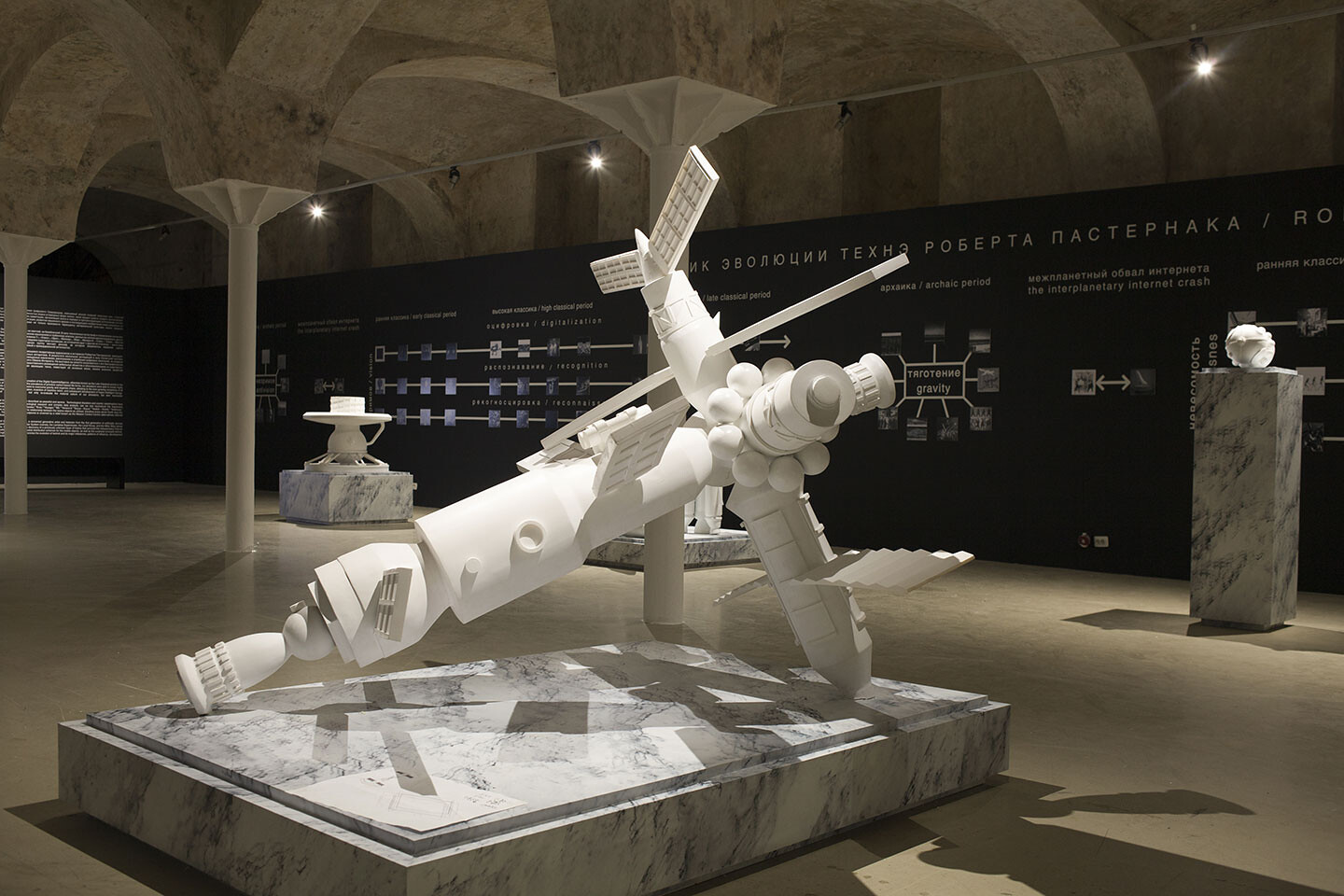
Arseny Zhilyaev, Return, 2017. Installation view.

The Stofflichkeit of the Universe: Platonov and the Thinghood of a Thing


The organization of the sensible is already the organization of matter, since the sensible is embodied proletarian experience. That is why the nature of psychophysical elements—those unities of experience—occupies Platonov as much as the materiality of words and sounds. In his science fiction story The Impossible (1921), he writes:

The Swedish physicist Arrhenius has a beautiful, amazing hypothesis concerning the origin of life on the earth. It is his guess that life is neither a local nor a terrestrial phenomenon. It has been transported to us from other planets through enormous ethereal spaces in the form of the smallest and most elementary colonies of organisms … Perhaps atoms, and atoms of atoms—electrons—are the same microorganism, but only in its limited, initial form.35


Similar reflections about atoms and electrons are repeated by the scientist Popov in Platonov’s science fiction story “Ethereal Tract.” Popov’s theory includes an understanding of living and dead matter: the center of atoms is filled with both living and dead electrons, and the dead electrons serve as food for the living ones.36 This living entity—this elemental unit of self-organizing matter—is, according to Platonov’s vocabulary, a “substance [veshchestvo] of existence.”

The Russian word veshchestvo can mean “matter,” “substance,” “thing,” “materiality,” or “stuff.” Robert Chandler, who has translated a number of Platonov’s works into English, often renders veshchestvo as “substance,” but also sometimes as “essence,” “thing,” or “object.” The root of the noun veshchestvo is veshch’, which means “thing.” Remember that Lissitzky titled his journal Veshch/Gegenstand/Objet. Maria Dmitrovskaia, a Russian researcher of Platonov, notes that the parallel usage of veshchestvo, veshch’, “matter,” and “body” corresponds to the archaic meaning in Old Medieval Russian, where veshch’ and veshchestvo sometimes were synonymous and where the understanding of a human body as veshchestvo was common. In archaic Russian, veshchestvo meant to be a material substratum of the world. It indicated things in existence and was a synonym of the word “material.” Such Platonov expressions as “metallic veshchestvo” and “fluid veshchestvo” were very common in eighteenth-century Russia.37

Veshchestvo is a reminder of veshch’; it is an elemental unit or an element of a decomposed psychophysical complex. In this sense veshchestvo is close to the English colloquial word “stuff,” or the German Stoff and Stofflichkeit. There is a scene in Platonov’s novel The Foundation Pit where the main character Voshchev collects “the objects [veshchi] of unhappiness and obscurity.”38 Thus, veshchestvo here appears as a memory of veshch’, as the remainder of its exhaustion in the past. It seems that this strange praxis of collecting the leaves, garbage, and destroyed objects of material culture exemplifies the act of recomposing and recollecting matter. In Bogdanov’s terminology, Voshchev is organizing life—the “veshchestvo of existence”—into complexes—veshchi. In Nikolai Fedorov’s terminology, he is collecting dead molecular pieces to resurrect the thinghood of a thing, the veshchnost’ veshchi, in the future. In 1931 Platonov writes:

The vulgar worldview [of materialism] anticipates that life is a combination of biological processes: “a human” properly is some sort of result of the relations and interactions of these forces—a human is relation. This is only half true. The other half is that the human is by itself veshchestvo, “materialism” included in bio-combinations. From here, and only from here—the human as by itself veshchestvo, and not only as relation—can one draw the great general conclusion that the door to the secret of nature is still open for humans. If, by contrast, a human is only “relation,” “combination,” etc., those doors are closed forever.39

For constructivism and productivism, forms of being emerge in the process of building and constructing the new. But for Platonov, the new already exists in the old, in the crumpled and poor form of veshchestvo. World-building is the resurrection of existing particles and elements, the restoration of a thing, the assembling of wandering senses, thoughts, and relations. The lowest entity—veshchestvo—corresponds to the molecular biology of self-organizing matter, but it produces the highest degree of organization: socially organized experience. Communism emerges out of the poverty of the elemental, out of the poor bodies of the proletariat. The laboring proletariat consists of those “who silently made useful veshchestvo” and those who signify not just a sociology of class relations, but also a restoration of the world in the process of communist world-building.40

Veshchestvo is a building material for the object and subject, the physical and the psychical composition of bodies, relations, and serial complexes of activities. It expresses degrees and logics of organization and structuring on the molecular, biological, and social levels. The constitutive unit of life is an element of experience in Bogdanov’s philosophy, and a veshchestvo of negative organizational spontaneity in Platonov. Taken together, the element of experience and veshchestvo introduce the principal role of the organizing force of being that shapes life-building. The Empirio-Marxist ontology of organization assumes the constructive and constitutive means of an art that not only changes, but also shapes forms of social being. Material culture as the organization of things, relations, and people replaces the concept of art.


The author thanks Danny Hayward for his help in editing this article.


Maria Chehonadskih is a philosopher and critic. She received PhD in philosophy from the Centre for Research in Modern European Philosophy, Kingston University (London) in 2017. Chehonadskih works on the problem of Soviet epistemologies across Marxist philosophy, literature and art. She wrote a number of texts on Soviet philosophy, art theory and post-Soviet politics, and contributed to Radical Philosophy, South Atlantic Quarterly, Moscow Art Magazine and Alfabeta2. Chehonadskih occasionally curates and works in collaboration with artists. Her last exhibition ‘Shadow of a Doubt’ (curated together with Ilya Budraitskis) was dedicated to the problem of conspiracy (Moscow, 2014). Lives and works in London.

© 2018 e-flux and the author