Thursday, May 27, 2021

TORY WAR CRIMES

REVEALED: UK military hardware used in Israel airstrikes on Gaza

A jet manufacturer said dozens of key components have “the fingerprints of British ingenuity”.
LONDON ECONOMIC EYE
May 23, 2021
in News
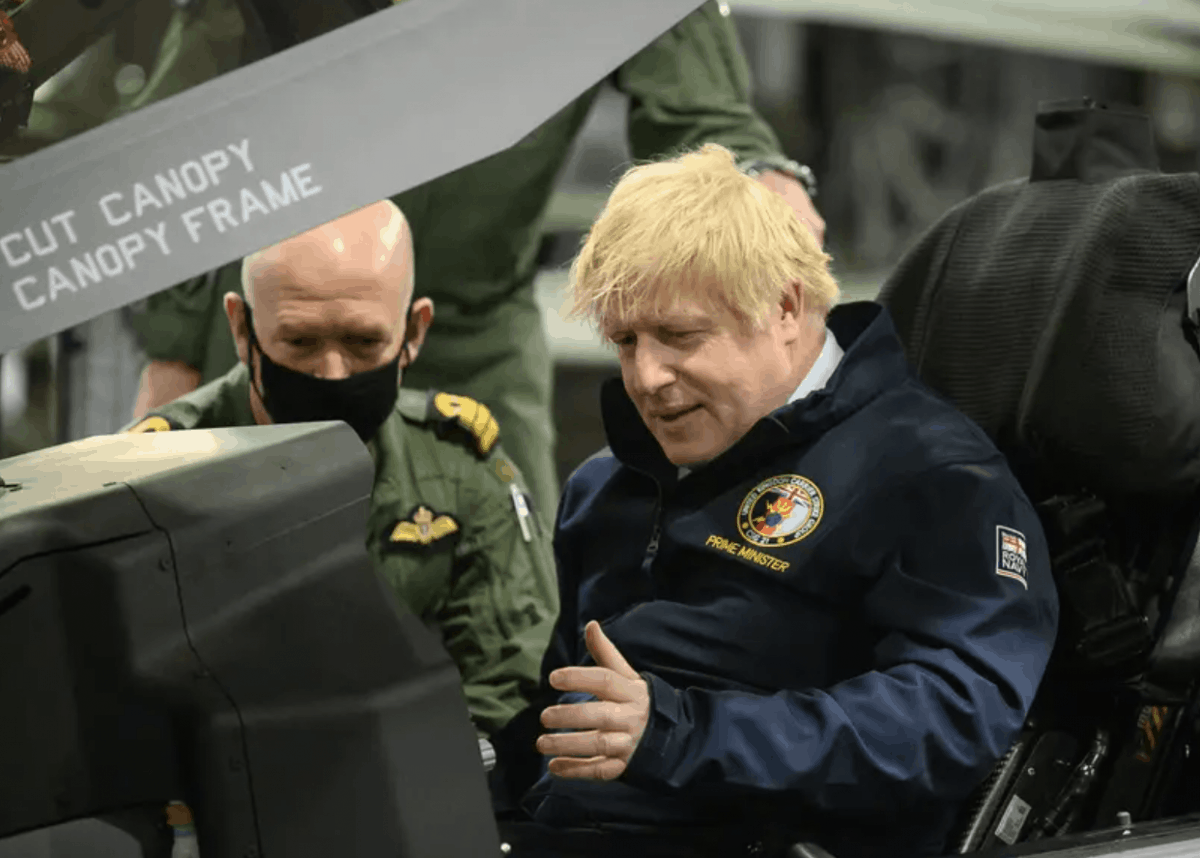
Photo: PA


UK military components and hardware have been used by Israel during its Gaza bombardment, The Independent has reported.

The attacks started on 10 May and killed 232 people, included 65 children, before stopping on Friday.

An Israeli military spokesperson confirmed last week that F-35 warplanes are among military aircraft being used in the bombardment.


The jet’s manufacturer Lockheed Martin says that “the fingerprints of British ingenuity can be found on dozens of the aircraft’s key components”. The UK Defence Journal estimates them to be 15 per cent British-made.

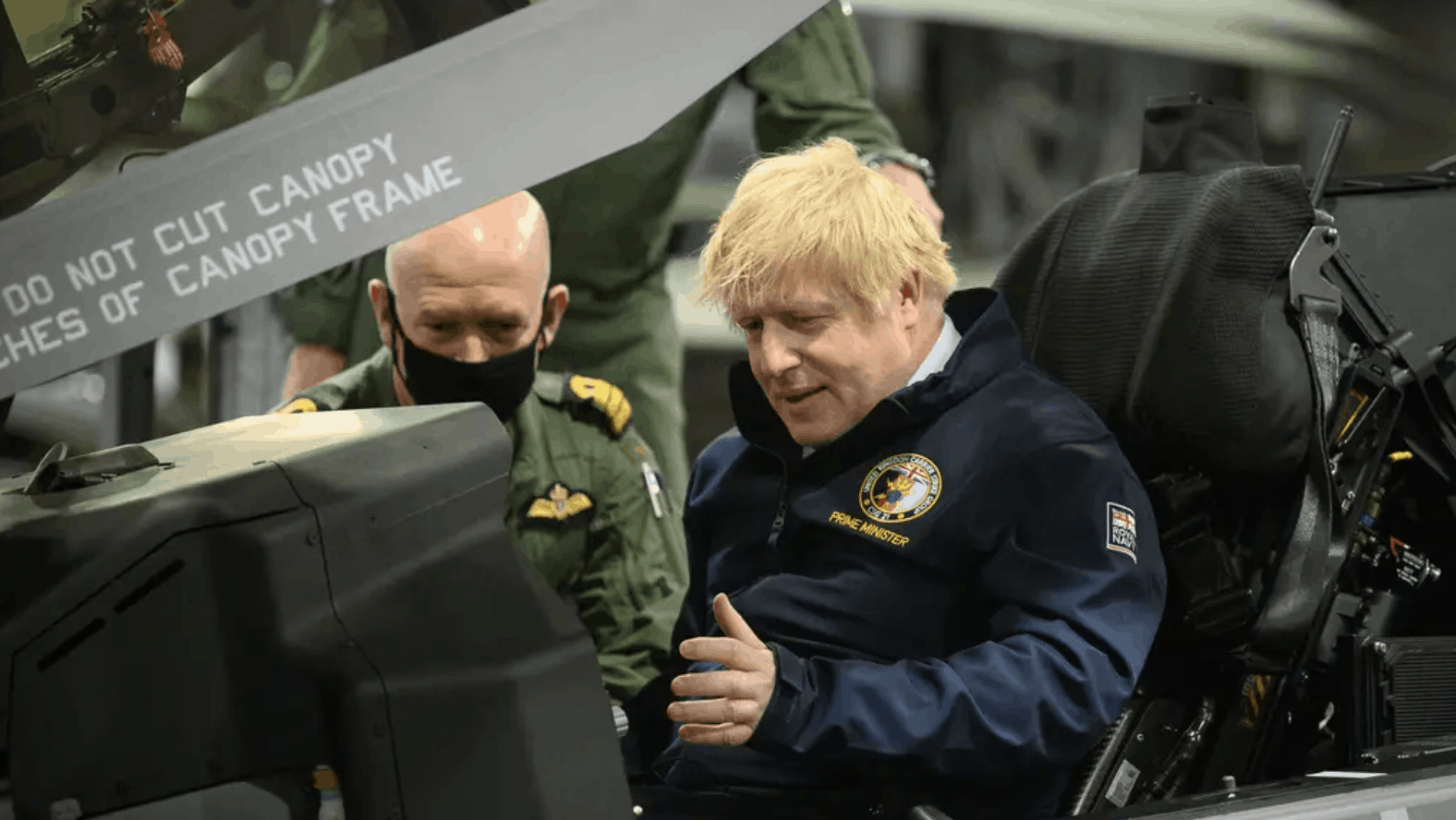
Boris Johnson, visited a new British aircraft carrier on Friday and boasted that the warplane “shows how we’re driving investment right across the UK, levelling up the country with new technology and new skilled jobs”.

Israeli forces are also known to be using F-16 fighter jets and Apache helicopters, which the UK government has previously admitted “almost certainly” contain British-supplied components.


Human rights groups have asked for all military exports to Israel and Palestinian militants to be stopped, as part of a full review into UK arms sales to the conflict-hit region.
Humanitarian crisis

Andrew Smith of Campaign Against Arms Trade said: “The last two weeks of bombardment have killed hundreds of people and exacerbated the humanitarian crisis in Gaza.


“The government tells us that it’s concerned, but it has failed to do the bare minimum, and has consistently refused to provide clear answers to very basic questions about whether UK-made arms that it sold are being used or not.

“It wouldn’t be the first time. Time and again UK-made weapons and components have been used against Palestinians, and it looks like that is what has happened again.”

He added: “We are always told how robust arms export controls supposedly are, but nothing could be further from the truth. How many more abuses and atrocities will it take for Boris Johnson and his colleagues to finally change their policy and stop exporting violence and repression around the world?”

Official figures show that since the Conservative government was elected in May 2015, the UK has licensed over £400m worth of arms to Israeli forces, including aircraft, bombs, armoured vehicles, and ammunition.

Asked about the use of British-made components and arms in the conflict, a UK government spokesperson said: “The violence across Israel and the Occupied Palestinian Territories has been deeply concerning. The foreign secretary repeatedly called for de-escalation and welcomed the announcement last night of a ceasefire.

“The UK takes its arms export responsibilities very seriously and operates one of the most robust arms export control regimes in the world. We consider all our export applications thoroughly against a strict risk assessment framework and keep all licences under careful review as standard.

“We will not grant an export licence if to do so would be inconsistent with the Consolidated EU and National Arms Export Licensing Criteria.
Israel suspected of war crimes in Gaza, UN says

“Air strikes in such densely populated areas resulted in a high level of civilian fatalities and injuries, and the widespread destruction of civilian infrastructure."


LONDON ECONOMIC EYE
in News, Politics


Photo: PA


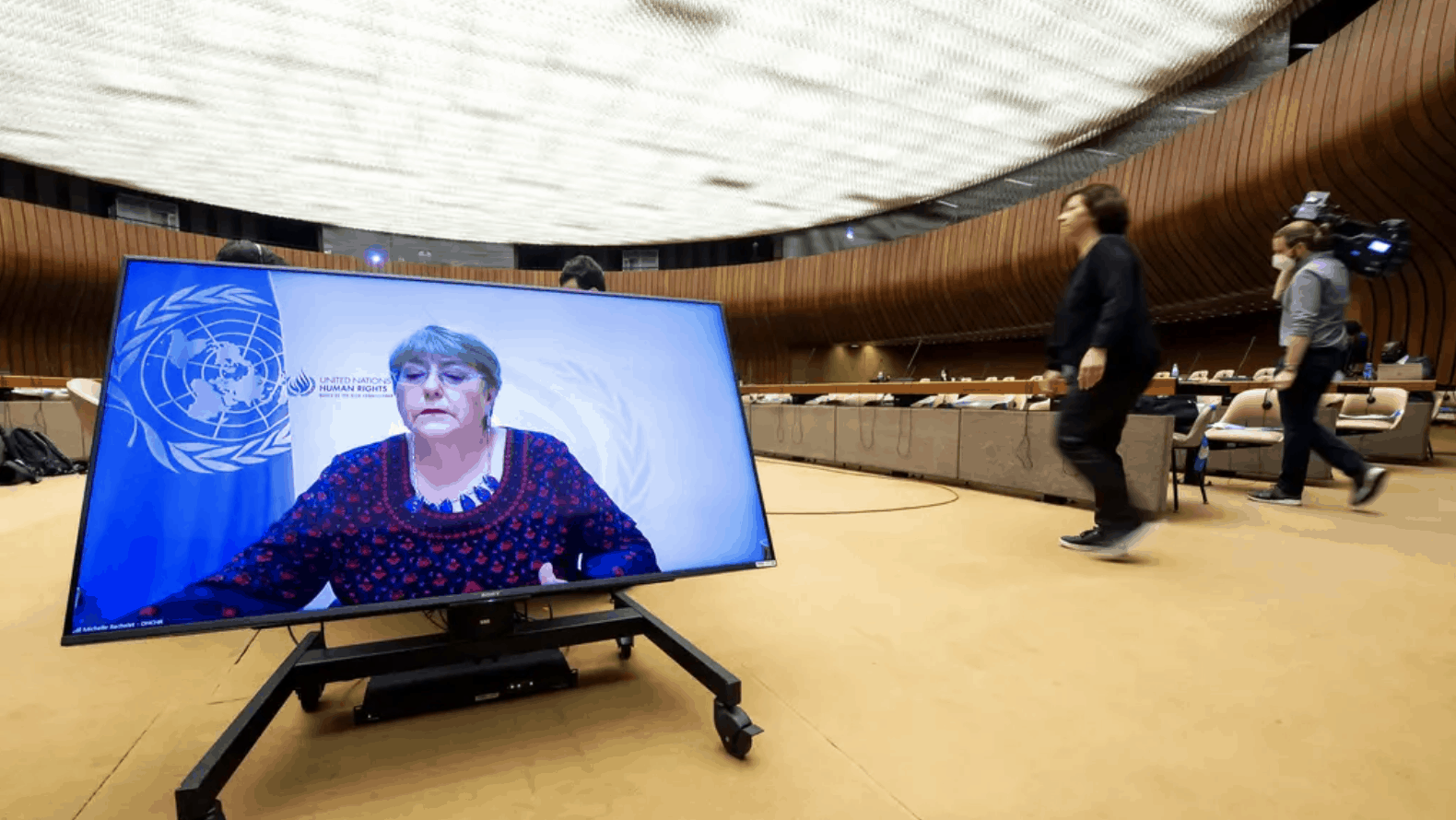
Israeli forces may have committed war crimes in the 11-day war with the militant group Hamas that rules the Gaza Strip, the UN human rights chief has said.

Michelle Bachelet also called on Israel to allow an independent investigation of military action in the latest deadly events, as required under international law.


The remarks were made as part of a one-day UN discussion of the “the grave human rights situation” in Gaza, the West Bank and east Jerusalem.


Bachelet said Hamas’ indiscriminate rocket fire during the recent conflict was also a clear violation of war rules.


The UN high commissioner for human rights spoke to the Human Rights Council about the “most significant escalation of hostilities since 2014” before the cease-fire last week.

FALSE EQUIVALENCY

The war killed at least 248 in Gaza, including 66 children and 39 women.
 In Israel, 12 people died, including two children.


Civilian fatalities and destruction

“Air strikes in such densely populated areas resulted in a high level of civilian fatalities and injuries, and the widespread destruction of civilian infrastructure,” Bachelet said.

“Such attacks may constitute war crimes,” she added, if deemed to be indiscriminate and disproportionate in their impact on civilians.


Bachelet also criticised the tactics of Hamas that included locating military assets in densely populated civilian areas, and firing rockets from them.

She warned that unless the “root causes” of the violence are addressed, “it will certainly be a matter of time until the next round of violence commences with further pain and suffering for civilians on all sides.”

What Israel and Palestine say


The Organisation of Islamic Cooperation has presented a resolution that, if passed by the United Nations Human Rights Council, would mark an unprecedented level of scrutiny authorised by the council. It would set up a permanent commission to report on human rights violations in Israel, Gaza and the West Bank.

Israel accuses the council of anti-Israel bias and has generally refused to cooperate with its investigators.

Israeli ambassador Meirav Eilon Shahar said Hamas — designated a terrorist organisation by the US and its allies — had fired 4,400 rockets at Israeli civilians from “from Palestinian homes, hospitals, and schools. Each one of these rockets constitutes a war crime”.

“What would you do if rockets were fired at Dublin, Paris, or Madrid?” she said.

Riad al-Maliki, the Palestinian foreign minister, sought to highlight years of suffering by Palestinians in the lands controlled or occupied by Israel.

“The Israeli war machinery and terrorism of its settlers continue to target our children who face murder, arrest and displacement, deprived of a future in which they can live in peace and security,” he said.
Explosive weapons in conflict mostly harm civilians, study shows

MAY 25, 2021 


Palestinians inspect their destroyed homes following the cease-fire between Gaza and Israel in Beit Hanun in the northern Gaza Strip on Sunday. Photo by Ismael Mohamad/UPI | License Photo

May 25 (UPI) -- Explosive weapons in populated areas have killed and injured civilians more than 90% of the time over the past 10 years, according to a study released Tuesday by a London-based organization calling for an end to their use.

The group Action on Armed Violence said in its Explosive Violence Monitoring Project that almost 240,000 civilians were killed or injured by such weapons between 2011 and 2020.

"When explosive weapons were used in populated areas, 91% of those killed and injured were civilians. This compares to 25% in other areas," the group said.

The group defines explosive weapons as including a variety of munitions, such as air-dropped bombs, mortars, improvised explosive devices and artillery shells.

RELATED Voices: Gaza's enhanced rocket technology challenges Israel's defenses

AOAV Executive Director Iain Overton pointed to the ongoing conflict in Israel, for example, where many Palestinians have been killed and injured in populated locations, like buildings and settlements.

The group also noted the conflict in Gaza, which has been under a cease-fire for less than a week after 11 days of Israeli bombardment.

"When explosive weapons are used in towns and cities, civilians will be harmed," Overton told The Guardian. "[It is] as true as it is today in Gaza as it was a decade ago in Iraq and beyond."

The group said it's documented close to 360,000 deaths and injuries overall by explosive weapons in 30,000 incidents in the past decade. It said civilians made up 73% of those deaths, or about 262,000.

"Since the monitor began, AOAV has recorded the appalling suffering caused across the globe by both manufactured and improvised weapons," the 55-page report states.

"We call on states and other users to commit politically to stop using explosive weapons with wide-area effects in populated areas."
DEMOCRACY NOW!
#NOTOKYOOLYMPICS
No Tokyo Olympics: As COVID Spikes in Japan, Calls Grow to Cancel Games. IOC Refuses. Who Profits?

STORY MAY 27, 2021
Watch Full Show
This is viewer supported news. Please do your part today. DONATE

TOPICS
Olympics
Coronavirus
Japan

GUESTS
Jules Boykoff
author and former Olympic athlete who played for the U.S. Olympic soccer team.
Satoko Itani
professor of sport, gender and sexuality studies at Kansai University.

LINKS
"Tokyo is learning that the only force stronger than a pandemic is the Olympics"

Image Credit: Viola Kam/SOPA Images/Sipa USA via Reuters

Pressure is growing on organizers to cancel the Tokyo Olympics as Japan struggles to contain a fourth wave of COVID-19 cases. The games, which were delayed by a year due to the pandemic, are scheduled to begin July 23 even though less than 3% of the Japanese population has been fully vaccinated against COVID-19, one of the lowest rates in the developed world. Jules Boykoff, author and former Olympic athlete who played for the U.S. Olympic soccer team, says the “extremely lopsided” contracts the International Olympic Committee signs with host countries give the body ultimate authority over whether or not to cancel the event. “More than 80% of the people in Japan oppose hosting the Olympics this summer, and yet the IOC insists on pressing ahead,” says Boykoff. We also speak with Satoko Itani, professor of sport, gender and sexuality studies at Kansai University, who says there is growing public anger at the government and a “sense of unfairness” that the games are going ahead during a pandemic. “They feel that the people are not protected,” they say.

Transcript
This is a rush transcript. Copy may not be in its final form.


AMY GOODMAN: We begin today’s show in Japan, where COVID-19 is spiking amidst mounting opposition to the Tokyo Olympic Games, which were delayed by a year because of the pandemic and are scheduled to open July 23rd. This week, Japanese leaders extended a state of emergency in Tokyo and other major cities for several weeks into June because of the pandemic. On Tuesday, leading newspaper Asahi Shimbun, one of the Olympic sponsors, called for cancellation of the games in an explosive editorial, writing they’re, quote, “simply beyond reason to hold the Tokyo Olympics and Paralympics this summer.” Meanwhile, the head of a Japanese doctors’ union warned against bringing tens of thousands of people from more than 200 countries and territories to Japan, where less than 3% of the population is fully vaccinated.


NAOTO UEYAMA: [translated] In order to win the battle against the coronavirus, we need to stop preparing for the games. And that is why we are calling for the Tokyo Games to be canceled. … There is a possibility that the South African and the Indian variants could spread around the world through the Olympics. And we also cannot deny the possibility of a new variant being generated after the games. … If that were to happen, it would be called the Tokyo Olympics variant, and holding the games will be condemned in the next hundred years as a foolish act of mankind.

AMY GOODMAN: An open letter of over 6,000 doctors also called for the cancellation of the Olympics. Despite these concerns and ongoing protests, Japanese officials, Olympics organizers and the International Olympic Committee have all vowed the games will go ahead as a televised event with no foreign spectators. The IOC depends on selling broadcast rights for 75% of its income.

Meanwhile, an online petition with more than 350,000 signatures calling for the Tokyo Games to be canceled has been submitted to the International Olympic Committee and others. This is Misako Ichimura, a homeless activist and artist, who’s one of the founding members of the anti-Olympics group Hangorin No Kai in Tokyo.


MISAKO ICHIMURA: [translated] Amidst a spike in COVID-19 infections and an increasingly critical situation for people, the Olympic organizers have resumed preparation for the Olympic Games after a temporary pause. In the vicinity of the stadiums, they have begun setting up an exclusive zone, pushing out the houseless people who have been living there. Construction for the venues has contributed to serious deforestation of the local park. It is also pushing the users of the park into a small area, making it difficult for people to keep social distance. On the road where many ambulances are driving tirelessly, brand-new exclusive lanes for the Olympics are being built.


With 80% of the Japanese public reported to be opposed to the games, and the growing rallying cry to cancel the Olympics, the torch relay has faced protesters everywhere in Japan. It is not welcomed at all. In an attempt to silence the calls for cancellation, the organizers repeat the slogan “safe and secure,” but they have no grounds for it. They prioritize the people who are related to the Olympics. The fact that our lives and health are being taken lightly further angers people.

AMY GOODMAN: That’s Misako Ichimura with the Tokyo anti-Olympics group.

For more, we’re joined by two guests. In Nishinomiya, Japan, Satoko Itani is with us, an associate professor of sports, gender and sexuality at Kansai University and a leading Japanese critic of the games. Also with us, from Portland, Oregon, is Jules Boykoff, scholar and former Olympic athlete who played for the U.S. Olympic soccer team from 1989 to 1991. He has published several pieces, his latest this morning in The Washington Post, “Tokyo is learning that the only force stronger than a pandemic is the Olympics.” His guest essay in The New York Times is headlined “A Sports Event Shouldn’t Be a Superspreader. Cancel the Olympics.” He’s written four books about the Olympics, his latest headlined NOlympians: Inside the Fight Against Capitalist Mega-Sports in Los Angeles, Tokyo and Beyond.

We welcome you both to Democracy Now! Jules, I want to begin with you. For people to understand, who decides if the Olympics in Japan are canceled? This may shock people. I mean, wouldn’t the country decide, the country of Japan? Talk about the power of the International Olympic Committee.

JULES BOYKOFF: Each time an Olympic host city gets ready to start the games, they need to sign a host city contract with the International Olympic Committee. Those contracts are extremely lopsided in favor of the International Olympic Committee, and it gives them — and only them — the power to cancel the Olympics in a case like this. So, when the prime minister of Japan states in public, under pressure from people in Japan and around the world to cancel the Olympics — when the prime minister states in public that he actually doesn’t have the power to cancel the Olympics, he’s absolutely correct.

And that’s part of a larger state of exception that comes into the Olympic city when the Olympics arrive on your doorstep. There are all sorts of special laws that are put into place, all sorts of special rules that are put into place. New technologies are secured for the Olympics. So, for example, in Tokyo, you see facial recognition systems being put in place at all Olympic venues, even though they’re known for having a racial bias. Security forces use the Olympics to get all the special weapons and funding they’d normally never be able to get during normal political times.

And so, that’s exactly what we’re seeing transpire here. The all-powerful IOC, that is really a privileged sliver of the global 1%, is exerting itself and forcing the games ahead against the will of the population. More than 80% of the people in Japan oppose hosting the Olympics this summer, and yet the IOC insists on pressing ahead.

NERMEEN SHAIKH: Satoko Itani, if you could explain what the significance is of one of the key sponsors of the Olympics and a major newspaper, Asahi Shimbun, coming out against, saying that the Olympics should not be held? Was that a surprise in Japan? And are you expecting other sponsors to also come out in opposition?

SATOKO ITANI: Hi, Nermeen. And hi, Amy. First of all, thank you so much for having me today on your show.

In terms of the significance of The Asahi Shimbun speaking against the Olympics is that, well, I have to say first, it came too late. To me, now they are taking the side against the Olympics, because it is becoming very clear the public will not support this Olympics, and they will face — continue to face the harsh criticism after the Olympics are over.

NERMEEN SHAIKH: And what about the fact that there’s such widespread opposition? As Jules just mentioned, over 80% of the public in Japan are opposed to the Olympics taking place. How are they expressing their opposition? And what kind of response has the government in Japan given to the opposition?

SATOKO ITANI: Well, yes, so, there have been many protests, from many years ago. Ever since the beginning — ever since the game was awarded to Tokyo, which was 2013, there are small groups of anti-Olympic activists have been speaking tirelessly against the Olympics and pointing out many issues, way before the pandemic hit Japan. And after the torch relay began, not just these main groups that have been working for years, there are smaller groups of people popping out in many parts of the Japan against the torch relay and the Olympics itself.

AMY GOODMAN: Satoko Itani, can you talk about the level of protest? I mean, you have 6,000 doctors calling for the cancellation. You have the torch group, the ones that are running to ultimately light the torch in Tokyo; a number of them are now COVID-positive. You have thousands of athletes coming from around the world, many from countries that have not gotten vaccines — the countries themselves, let alone the athletes. And vaccines are not being required at the Olympics.

SATOKO ITANI: So, obviously, there is a great health risk, public health risks, not just to Japan, but around the world. And again, as you pointed out, Amy, there are less than 3% of the population in Japan currently has been vaccinated.

And going back to your earlier question, the government of Japan have only repeated that their decision — they don’t have a power to decide; the IOC has. And the only response the IOC has had to the people’s opposition or the people’s protests are that, no matter what, even if the Japan or the host city is under the state of emergency, the game will go on. And Dick Pound recently said that the Olympics will succeed and will be held, unless there is an unprecedented armageddon. And this is the voices that we’ve been hearing.

So, reasonably, people in Japan are increasingly angry and feeling the great sense of unfairness and the wrong priorities on the part of the IOC organizing committee and the Japanese government. They feel that the people are not protected.

But I have to emphasize, Amy, this did not just start after the beginning of the pandemic. When the game was awarded in 2013, it was only two years after the Japan experienced this triple disaster of a massive earthquake, tsunami and nuclear meltdown. And we knew, the public knew, it was going to require a huge amount of money and resources to recover from that. But all these moneys and resources have been put towards the Olympics, and the recovery itself has been delayed.

NERMEEN SHAIKH: Jules Boykoff, could you respond to the fact — I mean, a number of people have, of course, expressed dissatisfaction with the measures that the Olympic organizers in Tokyo have put in place. What are some of those measures? I mean, The New England Journal of Medicine came out saying that those measures are insufficient, but the article’s lead author suggested that appropriate and safe measures could be put in place and the games could go ahead. She did not say that it was necessary to cancel the Olympics.

JULES BOYKOFF: So, the International Olympic Committee, in conjunction with Tokyo organizers, have issued what they call playbooks for different groups of people that will be attending the Olympics, whether they’re athletes, whether they’re journalists, whether they’re volunteers. And these playbooks lay out in clear terms what is going to be in place in terms of these measures. And that New England Journal of Medicine article that you mentioned basically pointed out that a lot of what are in these playbooks is essentially hygiene theater, talking about cleaning off surfaces and things that everybody knows at this point, like wearing a mask and social distancing and so on.

The fact of the matter is, it’s incredibly difficult to pull that off with such a huge mega-event like the Olympics. We’re talking about 11,000 athletes for the Olympics. Eighty thousand people or so will be coming into the country from all around the world, as you mentioned, none of whom will be required to be vaccinated, none of whom will be quarantined, and many of whom can’t actually get a vaccination because they’re too young. Many Olympic sports have people in them who are not 15 years old. It depends on the sport, and they determine the age. So, there’s all sorts of complicating factors. And that’s not even to bring in the Paralympics, where you have many athletes who will be especially susceptible to coronavirus and all its variants. And so, the International Olympic Committee has come under all sorts of pressure about these playbooks.

One other thing about them, though, an athlete who is Tokyo-bound, who I’ve been in communication with, recently shared with me a waiver, basically, that they are being asked to sign in order to participate in the Olympics. And when I read this waiver, I found it brazen. It said explicitly in the waiver that if this individual were to contract coronavirus and, in fact, die, they would not hold liable the responsible parties for the Olympics. And this is something the individual is being asked to sign just to participate in the Olympics. Now, as an athlete, I’ve signed plenty of waivers in my life, but seeing just it spelled out in such terms, I found quite ghastly. And that’s what we’re really looking at here. We’re looking at the International Olympic Committee that seems to be perfectly willing to have people in Tokyo and Japan dying so that they can make a killing.

AMY GOODMAN: I wanted to go to the IOC, to play a clip of the IOC officials who held a news conference in Tokyo talking about — well, President Seiko Hashimoto tried to reassure reporters about the effectiveness of the organization’s protocols.


SEIKO HASHIMOTO: [translated] From February to mid-May, about a thousand people had been given a special grant to enter Japan, where Tokyo 2020 took the responsibility for their entry. There was one person that tested positive at the airport, but zero cases during the 14-day period where activities were restricted. This proved the coronavirus measures from the second version of the playbook actually worked.

AMY GOODMAN: So, Jules Boykoff, if you can talk about this remarkable situation where you have a country that’s spiking with COVID and you have this enormous pressure of the IOC? It could be that country IOCs will go bankrupt if, again, the Olympics aren’t held? If you can talk more about the big business of the IOC and also about the athletes? What happens to athletes who have been preparing for these years?

JULES BOYKOFF: Yeah, well, listening to the officials in Tokyo, as well as the International Olympic Committee, sounds a bit like a parrot enrolled in a repetition contest on Groundhog’s Day. They say the same thing over and over and over again about how we’re going to have a safe Olympics.

But you’re right: Money machinations are definitely happening behind the scenes, and that really animates why we’re seeing the Olympics press ahead under pandemic conditions. As you mentioned in the lead-in, the International Olympic Committee gets around 75% of its revenues from broadcasters in the United States, like NBC — almost 75%. Add to that another 18% from corporate sponsors, like Coca-Cola, Alibaba, etc., and you’re looking at more than $9 out of every $10 that lands in the International Olympic Committee’s coffers coming from those two sources. So, with that in mind, it makes a lot of sense that the International Olympic Committee would be willing to hold a made-for-TV event, with no people in the stands, if necessary, because if you can put the event on television, then you can have that money flowing into your coffers.

They make the argument that they spread the money out to the world. And that is true, to a certain degree. They do share quite a bit of the revenues to sporting groups, national Olympic committees around the world and international federations of sport. But whether that really means that we should go ahead with an Olympics under pandemic conditions is another matter. I guess I am just a little bit more willing to listen to the medical experts than I am to people who have a vested economic interest in pulling off these Olympics.

NERMEEN SHAIKH: Satoko Itani, very quickly, before we conclude, could you explain what you think some of the reasons are that Japan has such a low rate of vaccination — in fact, the lowest of all OECD countries?

SATOKO ITANI: Well, I think the first is a failure of the diplomacy. During 2020, many countries made efforts to acquire the vaccine. Because Japan doesn’t make its own vaccination, it was essential, but the government failed to acquire them. And now the number seems to be available, but the distribution has been very poor. So, because of the poor distribution plan, the cities around the country are scrambling to figure out where to vaccinate, in what order, and how to transport. So, the government has majorly failed to create this distribution plan. And this is partly because of their failure to predict this pandemic. The China or the Korea have the experience of previous SARS epidemic, and they have set up, and they have prepared, since then, to respond to this situation. But the Japanese government haven’t. What they have done instead was reducing the number of hospital beds, reducing the number of funding for the public hospitals.

AMY GOODMAN: And also, if you could address this issue of the International Olympic Committee once again talking about politics and banning expression of politics, the Olympics banning Black Lives Matter apparel, and the recent vote to uphold a rule that prohibits any kind of demonstration or political, religious or racial propaganda? Today, in our headlines, we just reported on the death of Lee Evans, who, a few days after the world-renowned protest in the Mexico City Olympics of Tommie Smith and John Carlos, when they put up their hand in the Black Power salute, he did that very thing as the U.S. national anthem played, protesting for Black power in the United States, against poverty and for human rights. Can you talk about that power of the IOC to say no to those kinds of expressions, and what that means for Japan?

SATOKO ITANI: Well, the IOC has used this policy to really suppress and silence the opposing voices. And this is going to be a major issue in Japan, because if you look at — what the pandemic has shown is that this is a very political event. The decisions to protect the people in Japan have been even compromised because the IOC has such huge power and money interest. And yet to say that the people in Japan and the athletes cannot voice is only protect the IOC, and it shows that they do not care what happens to the people in the hosting countries and to the athletes.

AMY GOODMAN: Well —

SATOKO ITANI: So, this really speaks to the fallacy of the Olympic brand and Olympism.

AMY GOODMAN: I want to thank you so much for being with us. Just a comment, though this is not the Olympics: At the last U.S. Open, during the tournament, Naomi Osaka, who has a Japanese mother and a Haitian American father, donned seven masks, each bearing the name of a Black person who was killed by police: Breonna Tylor, Elijah McClain, Ahmaud Arbery, Trayvon Martin, George Floyd, Philando Castile and Tamir Rice.

Satoko Itani, I want to thank you for being with us, associate professor of sports, gender and sexuality at Kansai University, and also Jules Boykoff, former Olympic athlete, author of four books on the Olympics. We’ll link to your two pieces in The Washington Post and The New York Times, as you speak to us from Portland, Oregon.

Next up, President Biden has ordered U.S. intelligence agencies to investigate the origins of the COVID-19 pandemic to determine if the virus was accidentally leaked from a Chinese lab. We’ll look at this and other COVID issues with Dr. Monica Gandhi. Stay with us.
The original content of this program is licensed under a Creative Commons Attribution-Noncommercial-No Derivative Works 3.0 United States License. Please attribute legal copies of this work to democracynow.org. Some of the work(s) that this program incorporates, however, may be separately licensed. For further information or additional permissions, contact us.

‘War’ footing needed to correct economists’ miscalculations on climate change, says professor

UPDATED TUE, MAY 25 2021
Karen Gilchrist
CNBC

KEY POINTS

Economic forecasts predicting the potential impact of climate change grossly underestimate the reality and have delayed global recovery efforts by decades, a leading professor has said.

Mainstream economists “deliberately and completely” ignored scientific data and instead “made up their own numbers,” Steve Keen, a fellow at UCL, told CNBC.

Now, a “war-level footing” is required to have any hope of repairing the damage, he said.


WATCH NOW
VIDEO0 3:18


Economic forecasts predicting the potential impact of climate change have grossly underestimated the reality and delayed global recovery efforts by decades, according to a leading professor.

Mainstream economists “deliberately and completely” ignored scientific data and instead “made up their own numbers” to suit their market models, Steve Keen, a fellow at University College London’s Institute for Strategy, Resilience and Security, told CNBC on Friday.

Now, a “war-level footing” is required to have any hope of repairing the damage, he said.

“Fundamentally, the economists have totally misrepresented the science and ignored it where it contradicts their bias that climate change is not a big deal because, in their opinion, capitalism can handle anything,” Keen told “Street Signs Asia.”

We are toying with forces far in excess of ones we can actually address.
Steve Keen
FELLOW, UNIVERSITY COLLEGE LONDON

Keen said the repercussions of climate change were foretold in the 1972 publication “The Limits to Growth” — a divisive report on the destructive consequences of global expansion — but economists then and since failed to heed its warnings, preferring instead to rely on market mechanisms.

“If their warnings had been taken seriously and we’d done as they’d suggested, changing our trajectory from 1975 on, we could have done it gradually using things like carbon tax and so on,” he said. “Because economists have delayed it by another half century, we are, as a species, putting three to four times the pressure on the biosphere.”

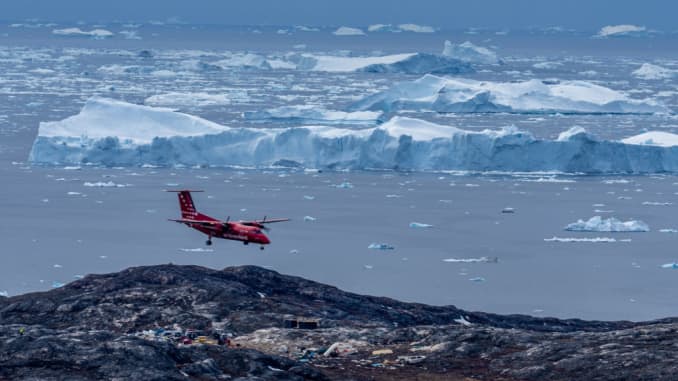
Icebergs near Ilulissat, Greenland. Climate change is having a profound effect in Greenland with glaciers and the Greenland ice cap retreating.
NurPhoto | Getty Images


As a result, he said, “the only way we can (reverse) this is effectively a war level footing of motive mobilisation to reverse the amount of carbon we’ve put into the atmosphere to drastically reduce our consumption.”

Referring specifically to a report produced by economists at the Intergovernmental Panel on Climate Change (IPCC), which was instrumental in outlining global climate targets including those presented at the Paris Agreement COP21, Keen said even their most severe estimates were a “trivial underestimate of the damage we expect.”

That is because they “completely and deliberately ignore the possibility of tipping points,” a point at which climate change can cause irreversible shifts in the environment.

“I think we should throw the economists completely out of this discussion and sit the politicians down with the scientists and say these are the potential outcomes of that much of a change to the biosphere; we are toying with forces far in excess of ones we can actually address,” he said.

Keen’s comments come as world leaders wrapped up their final day of meetings at the Arctic Council — an intergovernmental forum covering wide-ranging geopolitical issues from climate to trade.

UK
TORY CRIME AGAINST HUMANITY

Covid: ‘Between 20,000 and 30,000 lives could have been saved with earlier lockdown’

There are examples of when “the science didn’t suit” the Government’s aims, it would be “side-stepped”.
THE LONDON EYE
May 27, 2021
in News


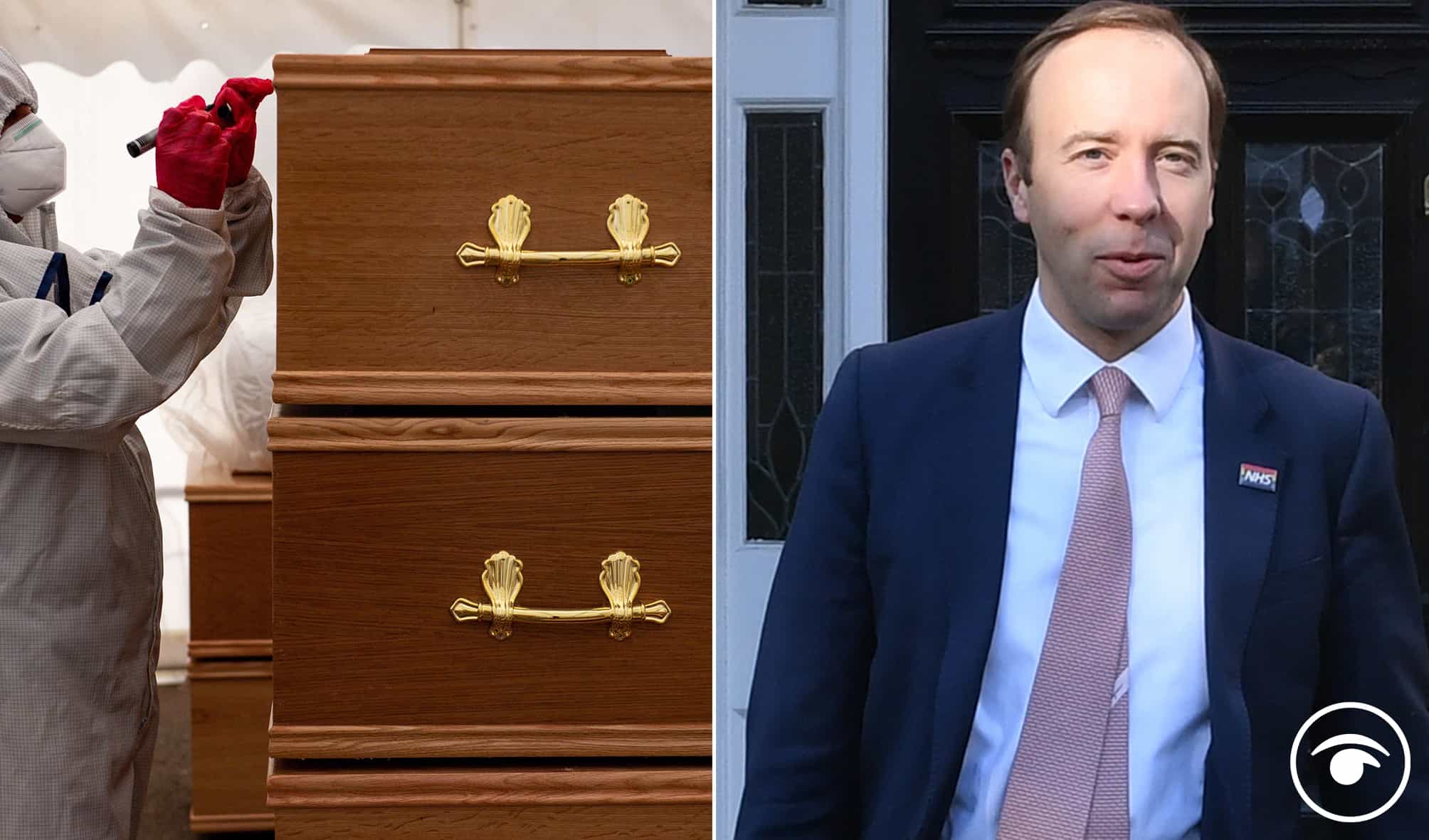
Between 20,000 and 30,000 lives could have been saved if the UK had locked down a week earlier, a leading adviser said, as he told how scientists grew increasingly concerned about the lack of a clear plan.

Professor Neil Ferguson, from Imperial College London, whose modelling was instrumental in persuading the Government to bring in the first lockdown, suggested there was a growing realisation in early March 2020 that the country was heading for a large number of deaths.

It came after Prime Minister Boris Johnson’s former top aide, Dominic Cummings, told MPs that mistakes meant “tens of thousands of people died, who didn’t need to die”.

Asked on BBC Radio 4’s Today programme at what point the Scientific Advisory Group for Emergencies (Sage), of which he was part, determined that a policy of pursuing herd immunity would lead to a vast number of deaths, Prof Ferguson said a key meeting was held at Imperial with the NHS and the London School of Hygiene and Tropical Medicine on March 1 “which finalised estimates around health impacts, so the week after that really”.

Related Posts

Watch – ‘When will PM & others be investigated by police for alleged corporate manslaughter?’

Concern

He said he “wasn’t privy to what officials were thinking within Government”, but added: “I would say from the scientific side there was increasing concern in the week leading up to the 13th of March about the lack of clear, let’s say, (a) resolved plan of what would happen in the next few days in terms of implementing social distancing.”

Prof Ferguson was also asked how influential Sage was in changing the policy from one of herd immunity to one of lockdown.

He said: “I think the key issue… it’s multiple factors, partly the modelling, which had been around for a couple of weeks but became firmer, particularly as we saw data coming in from the UK, and, unfortunately, I think one of the biggest lessons to learn in such circumstances is we really need good surveillance within the country at a much earlier point than we actually had it back in March last year.

“As we saw the data build up, and it was matching the modelling, even worse than the modelling, let’s say it focused minds within the Government.”

He said locking down a week earlier would have saved “20,000 to 30,000 lives” adding: “I think that’s unarguable.”

He said: “I mean the epidemic was doubling every three to four days in weeks 13th to 23rd of March, and so, had we moved the interventions back a week, we would have curtailed that and saved many lives.”

On the forthcoming June 21 road map date for England to lift all legal limits on social contact, Prof Ferguson said it hangs in the balance.

He said experts are still concerned about issues such as the transmissibility of the Indian variant, and “Step 4 (of the road map) is rather in the balance, the data collected in the next two to three weeks will be critical”.

He added: “The key issue as to whether we can go forward is will the surge caused by the Indian variant – and we do think there will be a surge – be more than has been already planned in to the relaxation measures?

“So it was always expected that relaxation would lead to a surge in infections and to some extent a small third wave of transmission – that’s inevitable if you allow contact rates in population to go up, even despite immunity – (but) we can’t cope with that being too large.

“In the next two or three weeks we will be able to come to a firm assessment of whether it’s possible to go forward.”

Elsewhere, Susan Michie, professor of health psychology at University College London and a member of Sage, said there are examples of when “the science didn’t suit” the Government’s aims, it would be “side-stepped”.

She told Sky News: “There are several examples of where the scientific advice wasn’t followed, and I’ve worked with policymakers and government for decades and I would never expect policymakers to follow the science.
Scientific advice

“The hope is they will be informed by the science.

An example, I think, where the advice was side-stepped was the moving from a two-metre rule to a one metre-plus rule, and Sage didn’t waver from its advice that two metres was significantly safer, but, in that instance, instead of saying ‘Well, actually, we’re not going to follow that advice for these reasons’ – be transparent about the process – instead the Prime Minister said he set up a Downing Street review of some scientists and economists and then, on the basis of that, they changed to one metre-plus.

“But we were never told who were the people on that review. What evidence did they look at? How did they come to their conclusions? And so that’s an example where, when the science didn’t suit, the Government side-stepped it without any transparency, and I think that’s unfortunate.”

Earlier, Prof Michie said “one of the frustrations about having given scientific advice over this last year” is that there is no feedback from Government on why it gets rejected.

“So, one never really knows what the explanation is when the advice we give isn’t being implemented, and I think that’s a shame because I think it’s quite demoralising for scientists, but also I think it’s important for the public to know how taxpayers’ money is being spent, because obviously there’s a substantial expense to serving a big scientific infrastructure.”

Cummings


Prof Michie said she backs calls for an immediate public inquiry, and this was echoed by Professor Stephen Reicher, a member of the Sage sub-committee advising on behavioural science.

He told BBC Breakfast: “Yesterday should have been a public inquiry, it shouldn’t have been Dominic Cummings giving his side of the story, and, had it been a public inquiry, we might be saving lives for the future.

“We can’t, tragically, do anything about those who are lost, but perhaps it will give meaning to what happens if their experience teaches us lessons so that we learn for the future.”

Prof Reicher said Mr Cummings was “wrong” to suggest that scientists said people would not be able to cope with lockdown.

He said: “What Dominic Cummings suggested was that the behavioural scientists were saying that people just wouldn’t wear the restrictions, and that either they shouldn’t be imposed at all, or else that they should be delayed. Now that’s simply untrue.”


 role in 1994 Rwandan genocide

In a key speech on his visit to Rwanda, the French president, Emmanuel Macron, said he recognises that France bears a heavy responsibility for the 1994 genocide in the central African country.

Macron solemnly detailed how France had failed the 800,000 victims of the genocide but he stopped short of an apology.

France “was not an accomplice” in the genocide but ended up siding with Rwanda’s “genocidal regime” and bore an “overwhelming responsibility” in the slide toward the massacres, the French leader said, speaking on Thursday at the genocide memorial in the capital, Kigali.

“France has a role, a history and a political responsibility in Rwanda. It has a duty: That of looking history in the face and recognising the suffering that it inflicted on the Rwandan people by favouring silence over the examination of truth for too long,” Macron said.

When the genocide started, “the international community took close to three months, three interminable months, before reacting and we, all of us, abandoned hundreds of thousands of victims”.

France’s failures contributed to “27 years of bitter distance” between the two countries, he said.

“I have to come to recognise our responsibilities,” Macron said.

His words were something more valuable than an apology, they were the truth

Paul Kagame, president of Rwanda

Although Macron did not apologise, he won praise from Rwandan President Paul Kagame for his “powerful speech”.

“His words were something more valuable than an apology, they were the truth,” Kagame said. “This was an act of tremendous courage.”

Kagame and Macron both signalled that a page had been turned in France-Rwanda ties.

“This visit is about the future, not the past,” Kagame said, adding that he and Macron discussed a range of issues, including investment and support for businesses.

Macron said they were opening “a new page”.

Appearing to explain his lack of apology, Macron said: “A genocide cannot be excused, one lives with it.”

Macron said that he had come with 100,000 coronavirus vaccines for Rwanda.

Rwandans who had hoped for an apology said they were disappointed by Macron’s speech.

“We don’t want to hear him talk about responsibility, about France’s role in the genocide,” genocide survivor Dan Karenzi told the Associated Press.

“We, the survivors, wanted to hear Macron apologizing to us officially. I am really disappointed.”

The opposition Rwandese Platform for Democracy party tweeted ahead of Macron’s speech that it hoped he would “apologise honestly” and “promise to pay reparations” to genocide victims.

Macron arrived in Kigali early on Thursday and met Kagame at the presidential residence.

Macron then toured the memorial to the frenzied 1994 slaughter in which Hutu extremists killed mainly minority Tutsis and moderate Hutus who tried to protect them.

Macron’s trip builds on a series of French efforts since his election in 2017 to repair ties between the two countries.

Two reports completed in March and in April that examined France’s role in the genocide helped clear a path for Macron’s visit, the first by a French president in 11 years.

The previous visit, by Nicolas Sarkozy in 2010, was the first by a French leader after the 1994 massacre sent relations into a tailspin.

Rwanda’s government and genocide survivor organisations often accused France of training and arming the militias and former government troops who led the genocide.

Kagame, who has been Rwanda’s de facto leader since 1994 and its president since 2000, has won praise abroad for restoring order and making advances in economic development and health care. But rights watchdogs, dissidents, and others accuse Kagame of harsh rule.


Why a ‘crushing’ day for Big Oil represents a watershed moment in the climate battle


Why a ‘crushing’ day for Big Oil represents a watershed moment in the climate battle

PUBLISHED THU, MAY 27 2021
Sam Meredith@SMEREDITH19

KEY POINTS

A series of landmark boardroom and courtroom defeats shows the growing pressure on international oil and gas companies to set short-, medium- and long-term targets that are consistent with the Paris Agreement.

“It is not often that three of the supermajors are prominently in the headlines within a 24-hour period, but that was certainly the case yesterday,” analysts at Raymond James said in a research note.

“And all three of the headlines — pertaining to Exxon, Chevron, and Shell — shared a common theme: climate risk.”


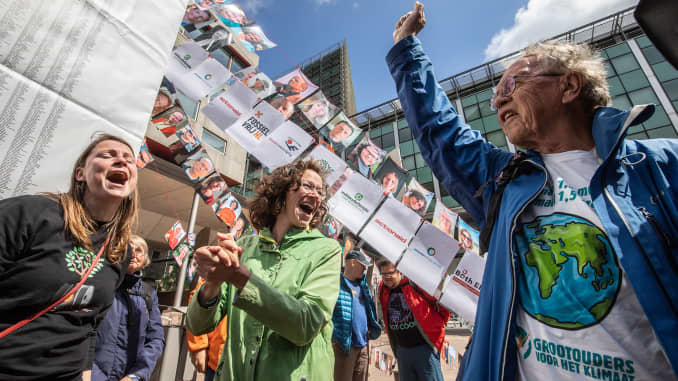
Members of the environmental group MilieuDefensie celebrate the verdict of the Dutch environmental organisation’s case against Royal Dutch Shell Plc, outside the Palace of Justice courthouse in The Hague, Netherlands, on Wednesday, May 26, 2021.
Peter Boer | Bloomberg | Getty Images

LONDON — Some of the world’s largest corporate emitters have suffered a series of landmark boardroom and courtroom defeats, reflecting the waning patience of investors pushing for much faster action to tackle the climate emergency.

In just a few hours on Wednesday, shareholders at U.S. oil giant ExxonMobil supported a tiny activist hedge fund in overhauling the company’s board, investors in U.S. energy firm Chevron defied management on a pivotal climate vote and a Dutch court ordered Royal Dutch Shell to take much more aggressive action to drive down its carbon emissions.

The confluence of events shows the growing pressure on international oil and gas companies to set short-, medium- and long-term targets that are consistent with the Paris Agreement — the climate accord widely recognized as critically important to avoid an irreversible climate crisis.

At present, none of the world’s largest oil and gas companies has disclosed how they will achieve the target of becoming a net-zero enterprise by 2050, more than five years after the Paris Agreement was ratified by nearly 200 countries.

“An utterly crushing day for Big Oil,” Bill McKibben, author and founder of the grassroots climate campaign 350.org, said Wednesday via Twitter. “Thanks to all who fight — you push long enough and dominoes tumble.”
What happened on Wednesday?

“It is not often that three of the supermajors are prominently in the headlines within a 24-hour period, but that was certainly the case yesterday,” analysts at Raymond James said in a research note.

“And all three of the headlines — pertaining to Exxon, Chevron, and Shell — shared a common theme: climate risk.”

Engine No.1, which has a 0.02% stake in Exxon, unseated at least two board members at the oil giant’s annual general meeting on Wednesday. The vote came as the activist firm sought to force the company to speed up plans to pivot away from fossil fuels.

Exxon CEO Darren Woods said Wednesday on CNBC’s “Closing Bell” that he welcomed the new directors and that he was looking forward “to helping them understand our plans and then hear their insights and perspectives.”

Exxon’s management has sought to emphasize the steps it is taking in solidifying its role in a lower carbon future, including funding for research around carbon capture and other emissions-cutting technologies.

Shareholders of Chevron, Exxon’s closest rival, voted in favor of a proposal put forward by Dutch group Follow This to encourage the oil company to reduce its emissions. The move underscored an activist-led investor push to reduce the firm’s carbon footprint.

“Big Oil can make or break the Paris Accord. Investors in oil companies are saying now: we want you to act by decreasing emissions now, not in the distant future,” Mark van Baal, founder of Follow This, said in a statement shortly after the majority vote.

Chevron has pledged to reduce carbon emissions that contribute to the climate crisis, but it has not yet laid out a path to net-zero emissions by 2050.

In Europe, a Dutch court ruled that Shell must reduce its carbon emissions by 45% by 2030 from 2019 levels. That’s a much higher reduction than the company’s current aim of lowering its emissions by 20% by 2030.

The court ruling also said Shell is responsible for its own carbon emissions and those of its suppliers, known as Scope 3 emissions. The court verdict is thought to be the first time in history a company has been legally obliged to align its policies with the Paris Agreement.

A spokesperson for Shell said the company expects to appeal what it described as a “disappointing” court decision.
What next?


Tom Cummins, dispute resolution partner at law firm Ashurst, told CNBC via email that the Dutch court ruling on Shell could have a broader impact on the oil and gas industry.

“This is arguably the most significant climate change related judgment yet, which emphasises that companies and not just governments may be the target of strategic litigation which seeks to drive changes in behaviour,” Cummins said.

“Oil and gas companies will be scrutinising the judgment, as will pressure groups and claimant lawyers to see whether there is scope for similar claims to be brought against other companies in other jurisdictions.”

A sign is posted in front of a Chevron gas station on July 31, 2020 in Novato, California.
Justin Sullivan | Getty Images


Not everyone agrees the court ruling is likely to result in greater pressure on the oil and gas industry, however. Per Magnus Nysveen, head of analysis at Oslo-based Rystad Energy, said it is “hard to imagine” a final court ruling would condemn oil companies for so-called end-use emissions.

“End user emissions should be more of a consumer’s responsibility. In my opinion this ruling has negligible chance to survive appeals,” Nysveen said.

“It is not surprising however that we see this low court ruling occur in (the) Netherlands, as the country’s public opinion is particularly sensitive to the climate impacts of the energy industry,” he added.

Regarding Exxon’s board change, Bank of America analyst Doug Leggate said the practical implications were “largely inconsequential” and “largely symbolic.”

“It has no impact on our view of XOM’s investment case, strategy or leadership team which we view as pragmatic advocates for responsible oil and gas investment,” Leggate said in a note.

Shocking video brings to life horrific working conditions of donkeys in rubbish dumps

In homemade harnesses, with ropes rubbing mercilessly against open wounds, the working animals spend their days pulling heavy rubbish carts up precipitous slopes.


 by Joe Mellor
April 30, 2021
in Heart Wrenching, Must Reads


Credit;SWNS


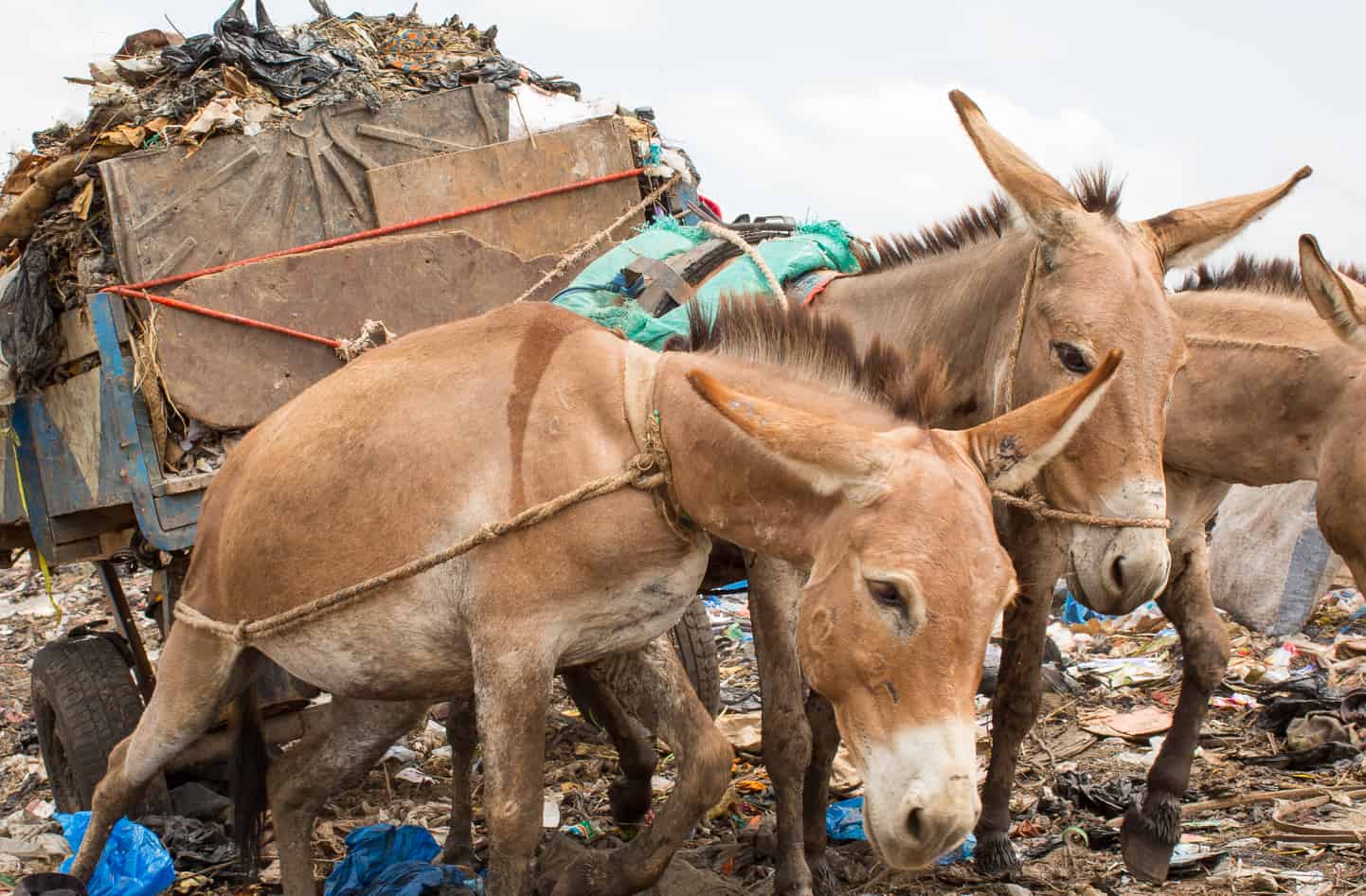
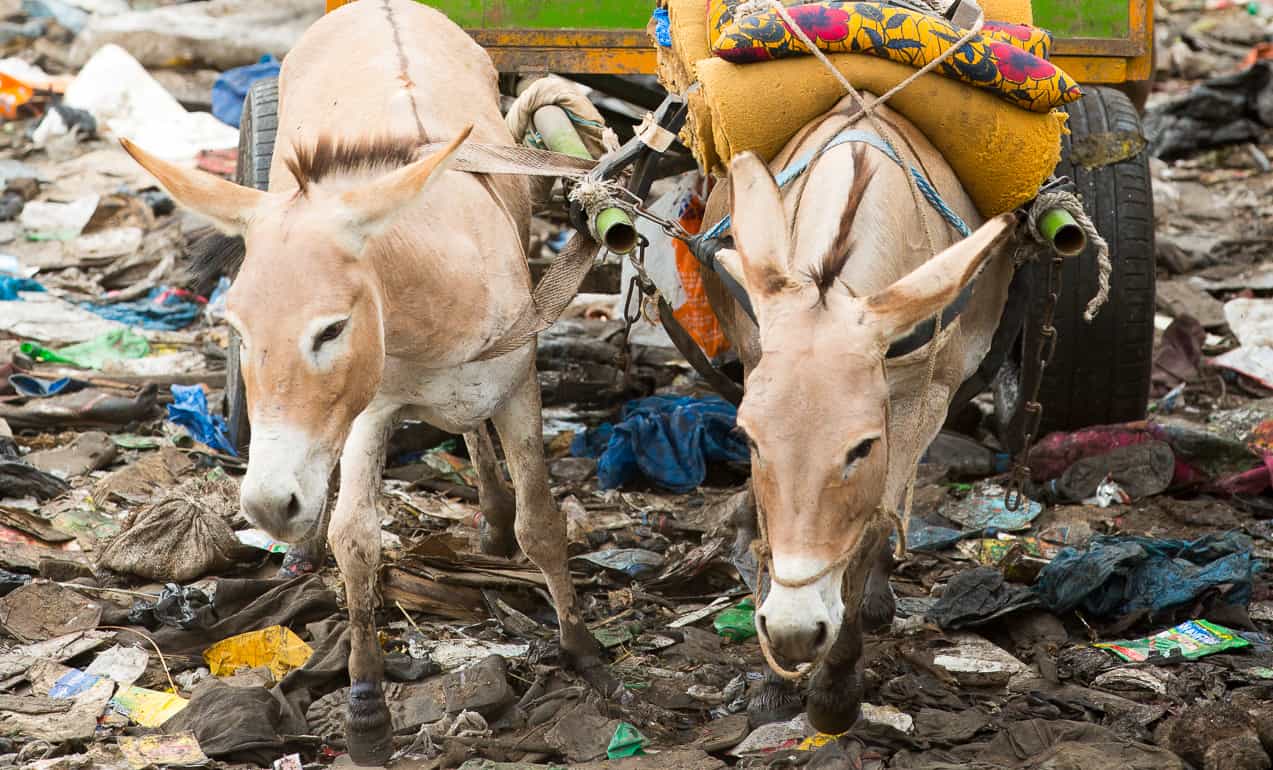
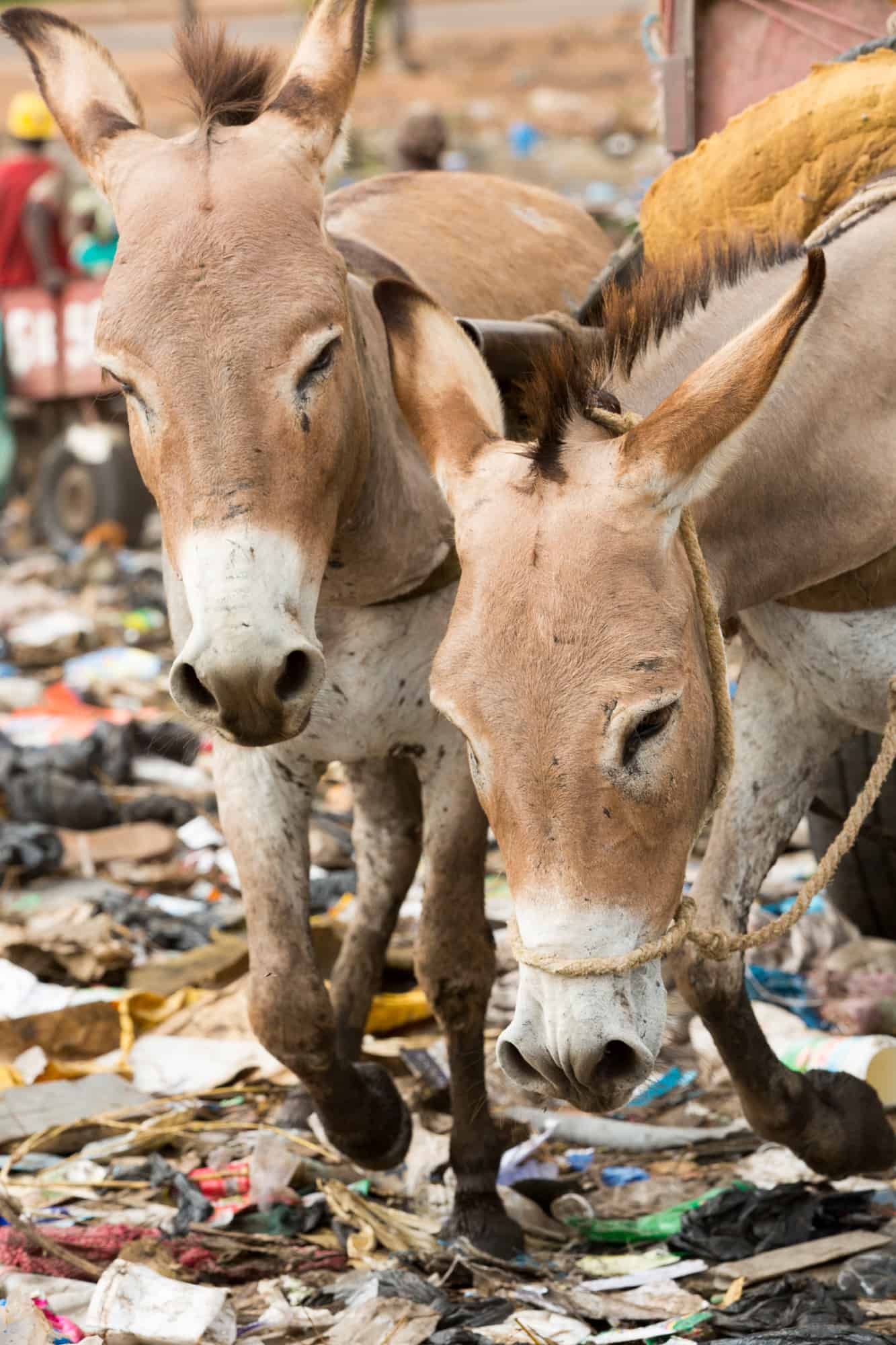
In the capital, Bamako,of Mali West Africa , donkeys toil in temperatures often higher than 40 degrees Celsius.

In homemade harnesses, with ropes rubbing mercilessly against open wounds, the working animals spend their days pulling heavy rubbish carts up precipitous slopes, with little rest.

And with sharp objects a constant threat underfoot, frequent cuts and infections from tetanus are agonising – and, if left untreated, often lethal.

UK based working animal charity SPANA (the Society for the Protection of Animals Abroad) has set up regular visits to help the animals, including providing treatment and vaccinations for tetanus and other deadly diseases.


And thanks to the free veterinary care they provide on the Mali rubbish dumps, the life expectancy of the donkeys has risen by several years, with improved welfare for the animals.

Dr Ben Sturgeon, director of veterinary services for SPANA said: “We often see animals working in terribly difficult and dangerous environments, but the conditions here in Mali are truly shocking.

“The donkeys and their poverty-stricken owners sadly face a never-ending cycle of work, hauling backbreaking loads of rubbish in extreme heat.

“But SPANA is making a lifesaving difference to the animals here. In 2020, we treated more than 21,000 animals across Mali, including at the rubbish dumps of Bamako.”


Now, thanks to SPANA’s intervention, donkeys at the Bamako dumps finish work in the early afternoon, retiring to a purpose-built shelter that keeps them out of the intense sun.

The shelters provide food and water, and SPANA vets are on hand to treat any injuries while vaccinating against tetanus and other deadly diseases.

Old, worn saddle pads can be exchanged, and owners receive training and advice on how to care for their animals more humanely.

Across the globe, last year SPANA treated 283,552 sick and injured animals and provided more than 350,000 veterinary treatments in total.

But the charity relies on the public to fund its vital work.

SPANA is currently raising funds to help pay for vaccinations to save the lives of working animals at serious risk from tetanus and other deadly diseases.

Regular donations can also contribute towards essential items such as bandages, medicines, antiseptics and anti-inflammatories, as well as food and bedding for animals.


Ben Sturgeon of SPANA added: “As everyone in the UK gets a jab, spare a thought for working animals overseas, whose lives can be saved by a simple vaccination.

“Vaccines and basic medicines can help prevent tetanus and other diseases from becoming a life-threatening consequence of even the smallest cuts and scratches.

“Prevention is far better than cure, so alongside our free vet care, another major focus of our work is education and training for owners to ensure they can look after their animals properly and treat them with respect and kindness.

“Our teams work tirelessly to improve the welfare of working animals around the world, but the need is enormous and we rely completely on the vital donations we receive from the public to continue our work and prevent animal suffering.”

For more information, and to support SPANA’s lifesaving work, visit www.spana.org/tetanus


Mar. 26, 2017 — Slaves were treated as animals, having to endure 'terrible conditions under transportation, the removal of children and the separation of families, ...
You've visited this page many times. Last visit: 26/02/21

Commercially viable electricity from nuclear fusion a step closer thanks to British breakthrough

Scientists appear to have solved the exhaust problem for compact fusion power plants, making them more economically-viable.


Wednesday 26 May 2021
Image:Computer simulation of plasma inside the MAST Upgrade experiment

The dream of pollution and radiation-free electricity derived from nuclear fusion could be a step closer to reality thanks to a breakthrough by British scientists.

They have developed an exhaust system that can deal with the immense temperatures created during the fusion process and which so far have limited the viability of commercial fusion power plants.

Initial results from the UK Atomic Energy Authority's MAST Upgrade experiment suggest that the world-first could mean developing fusion energy becomes easier.

Producing electricity using a fusion reactor is still in the experimental stage but experts have said fusion energy - based on the same principle by which stars create heat and light - could be a safe and sustainable part of our energy supply in the future.

A fusion power station uses a machine called a tokamak to enable hydrogen atoms to fuse together, releasing energy that can make electricity.

But fusion reactions can produce a lot of heat and, without an exhaust system to handle this, materials need to be replaced more often.

This limits the operating ability of the power plant and makes energy cost more.


A fusion power station uses a machine called a tokamak to enable hydrogen atoms to fuse together

The system used by the MAST Upgrade experiment - the Super-X divertor - helped tokamak parts to last longer, however.

Tests showed at least a 10-fold reduction in heat, a result that could make the power plants more economically viable to run, in turn reducing the cost of fusion electricity.

UKAEA's lead scientist at MAST Upgrade, Dr Andrew Kirk, said the results were "fantastic", adding: "They are the moment our team at UKAEA has been working towards for almost a decade.

"We built MAST Upgrade to solve the exhaust problem for compact fusion power plants, and the signs are that we've succeeded.

"Super-X reduces the heat on the exhaust system from a blowtorch level down to more like you'd find in a car engine.

"This could mean it would only have to be replaced once during the lifetime of a power plant.

"It's a pivotal development for the UK's plan to put a fusion power plant on the grid by the early 2040s - and for bringing low-carbon energy from fusion to the world."