It’s possible that I shall make an ass of myself. But in that case one can always get out of it with a little dialectic. I have, of course, so worded my proposition as to be right either way (K.Marx, Letter to F.Engels on the Indian Mutiny)
Wednesday, July 28, 2021
NOT JUST IN CHINA
Several dead in massive highway crash caused by Utah dust storm
Josh K. Elliott At least eight people were killed in a series of major crashes on Utah's Interstate 15 highway Sunday after high winds blanketed the road in sand and dust
The deadly collisions happened around 4:30 p.m. outside the community of Kanosh, according to a statement from Utah Highway Patrol. Police say strong winds obscured the road with blowing wind and dust at the time, which caused the crash.
Twenty-two vehicles were involved in the crash, including multiple tractor-trailers.
Several children were among the dead, Sgt. Cameron Rhoden told local broadcaster KUTV. Ten people were taken to hospital.
"We have vehicles all over," Rhoden said. "Several vehicles tried to swerve off the roadway. We have vehicles that are flipped up on their sides."
Photos show several shattered vehicles scattered around a line of 18-wheelers on the highway. One tractor-trailer appeared to have completely destroyed the back right section of a red sedan.
Rhoden added that one of the vehicles was pulling a trailer and that the trailer has been "pretty much completely destroyed."
Victims were taken to hospital by air and ground ambulances after the crash. Police have not identified any of the victims.
Police diverted traffic around the scene while they started their investigation, which is expected to take some time.
— with files from The Associated Press
At least two dead and dozens injured after an acetic acid leak at a facility near La Porte, Texas
At least two people were killed and dozens were injured after an acetic acid leak at the LyondellBasell facility near La Porte, Texas, officials said Tuesday.
"The leak has been isolated, and air monitoring at the facility perimeter indicates no offsite impact. There is no shelter in place or other protective actions being recommended at this time," the La Porte Office of Emergency Management said in a tweet.
"Right now we can confirm two fatalities," Harris County Fire Marshal's Office spokeswoman Rachel K. Neutzler told CNN. At least four people sustained burns, according to a statement from LyondellBasell.
In addition to the two fatalities at the scene, there were 35 people who suffered minor symptoms, five who were transported to the hospital with more serious symptoms and two people who were in critical condition, Neutzler told CNN.
The leak involved a chemical acid used in food grade vinegar, Harris County Fire Marshal Laurie Christensen said during a news conference.
Those exposed to the chemical can experience irritation and burns to the skin and difficulties breathing and swallowing, she said.
The investigation into what caused the leak is ongoing, but investigators have determined there was no explosion or fire at the facility, the fire marshal's office said in a tweet.
According to LyondellBasell, all personnel have been accounted for. LyondellBasell's earlier statement said there was "an acetic acid leak" at the facility.
The marshal's office said it turned the investigation over to the Harris County Precinct 8 Constable's Office, which will have jurisdiction.
The first report of a problem came in at around 7:30 p.m., La Porte's public information officer Lee Woodward told CNN.
"LyondellBasell La Porte requested support from La Porte EMS regarding a mass casualty incident at their facility," he said.
The area is in unincorporated Harris County, next to the city of La Porte, Woodward said.
LyondellBasell specializes in plastics, chemicals and refining.
1 person dead, 4 still missing in German chemical explosion
BERLIN (AP) — An explosion at an industrial park for chemical companies in Germany killed at least one person Tuesday, with 16 injured and four still missing. Fire officials who tested the air said there did not appear to be a danger to nearby residents after authorities initially urged people to shelter inside.
The explosion at the waste management facility of the Chempark site in the city of Leverkusen, near Cologne, sent a large black cloud into the air. It took firefighters almost four hours to extinguish the fire that took hold after the explosion.
Germany’s Federal Office for Civil Protection and Disaster Assistance initially classified the incident as “an extreme threat." Later on Tuesday, however, the Cologne fire department tweeted that measurements of the air's pollution “do not show any kind of abnormality.” They said the smoke had gone down but that they would continue to measure the air for toxins.
The city of Leverkusen said in a statement that the explosion occurred in storage tanks for solvents. It said four people were hospitalized with severe injuries.
“We are deeply concerned about this tragic accident and the death of our employee,” the head of Chempark, Lars Friedrich, said in a written statement.
Currenta, the company operating the chemical park, said the explosion happened at 9:40 a.m. and then developed into a fire.
“Sirens were operated to warn residents and warning alerts were sent,” Currenta said in the statement.
Police in nearby Cologne said a large number of officers, firefighters, helicopters and ambulances from across the region had been deployed to the scene. They asked all residents to stay inside and warned people from outside of Leverkusen to avoid the region.
They also shut down several nearby major highways.
Daily Koelner Stadt-Anzeiger reported that the smoke cloud was moving in a northwestern direction toward the towns of Burscheid and Leichlingen. Leverkusen is home to Bayer, one of Germany’s biggest chemical companies. It has about 163,000 residents and borders Cologne, which is Germany's fourth biggest city and has around 1 million inhabitants. Many residents work at Bayer, which is one of the biggest employers in the region.
The chemical park is located very close to the banks of the Rhine river.
Currenta has three facilities in the region. More than 70 different companies are based at the locations in Leverkusen, Dormagen and Krefeld-Uerdingen.
Kirsten Grieshaber, The Associated Press
HEY BIDEN; TAKE A HINT AP-NORC poll: Most unvaccinated Americans don't want shots
Among American adults who have not yet received a vaccine, 35% say they probably will not, and 45% say they definitely will not, according to a poll from The Associated Press-NORC Center for Public Affairs Research. Just 3% say they definitely will get the shots, though another 16% say they probably will.
What's more, 64% of unvaccinated Americans have little to no confidence the shots are effective against variants — including the delta variant that officials say is responsible for 83% of new cases in the U.S. — despite evidence that they offer strong protection. In contrast, 86% of those who have already been vaccinated have at least some confidence that the vaccines will work.
That means “that there will be more preventable cases, more preventable hospitalizations and more preventable deaths,” said Dr. Amesh Adalja, an infectious disease specialist at Johns Hopkins University.
“We always knew some proportion of the population would be difficult to persuade no matter what the data showed, (and) a lot of people are beyond persuasion,” Adalja said. He echoed Centers for Disease Control and Prevention Director Rochelle Walensky in calling the current surge “a pandemic of the unvaccinated” because nearly all hospital admissions and deaths have been among those who weren't immunized.
Nationally, 56.4% of all Americans, including children, have received at least one dose of the vaccine, according to the CDC. And White House officials said Thursday that vaccinations are beginning to increase in some states where rates are lagging behind and COVID-19 cases are rising, including in Arkansas, Florida, Louisiana, Missouri and Nevada.
Still, just over 40% of Louisiana’s population has received at least one dose, and the state reported 5,388 new COVID-19 cases Wednesday — the third-highest single-day figure since the pandemic began. Hospitalizations also rose steeply in the last month.
The AP-NORC survey found that the majority of Americans — 54% — are at least somewhat concerned that they or someone in their family will be infected, including 27% who are very concerned. That's up slightly from a month ago, but far below the beginning of the year, when about 7 in 10 Americans said they were at least somewhat concerned that they or someone they knew would be infected.
Democrats are far more likely than Republicans to say they’re at least somewhat concerned about someone close to them being infected, 70% to 38%.
And overall, Republicans are far more likely than Democrats to say they have not been vaccinated and definitely or probably won’t be, 43% to 10%. Views are also divided along age and education lines: Thirty-seven percent of those under age 45 say they haven’t and likely won’t get the shots, compared with just 16% of those older. And those without college degrees are more likely than those with them to say they aren’t and won’t be vaccinated, 30% to 18%.
Cody Johansen, who lives near Orlando, Florida, considers himself a conservative Republican, but said that had no bearing on his decision to skip vaccination.
“It hasn’t really been that dangerous to people in my demographic, and I have a good immune system,” said Johansen, a 26-year-old who installs audio-visual equipment at military bases. “Most of my friends got vaccinated, and they're a little mad at me for not getting it. There is peer pressure because they say it's a civic responsibility."
He said it's obvious the shots have been effective, though it bothers him a little that they have only emergency use authorization from the Food and Drug Administration.
Johansen said he approves of how President Joe Biden has handled the pandemic response, saying he has exhibited good leadership.
That reflects the poll's findings. A large majority of Americans, 66%, continue to approve of how Biden is handling the pandemic — higher than Biden’s overall approval rating of 59%.
The difference is fueled largely by Republicans, 32% of whom say they approve of Biden’s handling of COVID-19 compared with 15% who approve of him overall. About 9 in 10 Democrats approve of Biden overall and for his handling of the pandemic.
On Friday, White House press secretary Jen Psaki told reporters that the Biden administration has persuaded “a whole lot of people to change their minds and take action, get a shot, save their lives and the lives of people around them." She noted that more than 5.2 million have received shots in the past 10 days, and said officials would continue their outreach efforts.
Jessie McMasters, an aerospace engineer who lives near Rockford, Illinois, said she got her first shot when she was 37 weeks' pregnant after talking with her midwife and reading about how the Pfizer and Moderna vaccines were developed.
“That gave me high confidence that they worked,” McMasters said. Her parents both were infected but did not suffer serious illness, and both have since been vaccinated.
She said her friends and family are all over the place when it comes to their views on vaccination and other virus-prevention measures — often reflecting how such discussions have become partisan. Some who got it are “so far on one end that they may never give up masks because now it’s a personal statement,” said McMasters, who leans Democratic, just as others won’t get the shots because of their political beliefs or misinformation.
Dr. Howard Koh, a professor at the Harvard Chan School of Public Health, said vaccine hesitancy is not new, but the misinformation surrounding COVID-19 and the fast-spreading variant make it imperative to reach people one-on-one to understand their concerns and provide accurate information.
He called the new surge in infections and deaths “just heartbreaking.”
“What I learned from my patients is that when a loved one dies, that's a tragedy,” said Koh, who was a senior public health official in the Obama administration. "But when a loved one dies and you know it could have been prevented, that tragedy haunts you forever.”
___
Webber reported from Fenton, Michigan. Swanson reported from Washington. AP White House reporters Josh Boak and Aamer Madhani contributed to this story.
___
The AP-NORC poll of 1,308 adults was conducted July 15-19 using a sample drawn from NORC’s probability-based AmeriSpeak Panel, which is designed to be representative of the U.S. population. The margin of sampling error for all respondents is plus or minus 3.7 percentage points.
Tammy Webber And Emily Swanson, The Associated Press
Faced with wildfires 49% Canadians say urgent need to tackle climate change: poll
Faced with blazing wildfires on the heels of a record-breaking heat wave in the country, there is growing consensus among Canadians that climate change needs to be urgently addressed.
In a new poll Wednesday conducted exclusively by Ipsos for Global News, 49 per cent of people in Canada say that the recent extreme weather events this summer have made them feel more strongly about the urgency to fight climate change. But four in 10 said that their opinion had not changed. Read more: A look at Canada’s wildfires in numbers and graphics over the decades
The new polling done online between July 19-20, 2021, comes as hundreds of forest fires have ravaged homes and forced mass evacuations across the country.
The country is at national preparedness level 5, with British Columbia and Ontario requiring full commitment of resources, followed by Saskatchewan and Manitoba at level 4.
A total of 4,579 wildfires has been recorded so far — which is above the 10-year average, according to CIFFC data. The total area burned is 2.15 million hectares, which is also above the 10-year average.
"Concerns about the adverse affects of B.C. wildfire smoke pollution"
Most experts agree that climate change is a major contributing factor in this year’s unprecedented heat wave and intense wildfire season. And while the majority of the Canadians are concerned, they are less willing to do anything about it financially.
“People are very aware of climate change,” said Darrell Bricker, CEO of Global Public Affairs at Ipsos.
“They're very aware that human beings cause climate change, but where the controversy comes in is whether or not we need to do anything about it or how or what we should be doing about it.”
Younger Canadians and those with a university degree feel more strongly about the need to address climate change.
That’s a trend seen across the globe recently, with millions of school students skipping classes and marching in different countries to demand action from world leaders. That international movement has been inspired and spearheaded by Swedish climate activist Greta Thunberg.
“For younger people, climate change has become one of those existential issues of our age — and there's a unanimity among younger people as to the importance of the issue and the need to do something about it,” said Bricker.
Despite the recent bout of extreme weather events, more than half of Canadians are not keen on digging into their pockets to help with the climate change fight.
This is because people are uncertain about how their financial contributions would make a difference to climate change, said Bricker.
“The next challenge on the climate change issue will be moving from simple ways of raising awareness to actually showing people how they can make a difference,” he said.
According to the poll results, four in 10 say they would spend an extra $1 to $500 a year, with one in five willing to spend $1-$100 per year. Only 10 per cent were more generous, saying they would spend $500 or more a year.
Compared to men, women were less likely to contribute financially and pay extra each year to help tackle climate change.
The urgency to address the problem also varied across provinces, with a greater percentage of residents of Quebec and B.C. saying their opinion had changed in light of recent events.
Since April 1, crews have responded to 1,232 wildfires, which has led to 424,749 hectares of area burned across the province, according to the latest provincial data.
This year, the small village of Lytton in B.C. recorded the country’s highest ever temperature — a staggering 49.6 C. THEN IS BURNT TO THE GROUND
Exclusive Global News Ipsos polls are protected by copyright. The information and/or data may only be rebroadcast or republished with full and proper credit and attribution to “Global News Ipsos.” This poll was conducted between July 19 and 20, 2021, with a sample of 1,000 Canadians aged 18 and over . The precision of Ipsos online polls is measured using a credibility interval. This poll is accurate to within ± 3.5 percentage points, 19 times out of 20, had all Canadians aged 18+ been polled.
Italy: Lake Como towns hit by extreme weather
MILAN (AP) — Towns around Italy's Lake Como were hit by mudslides and floods on Tuesday in another example of extreme weather phenomena that an agricultural lobby said had intensified in recent years.
Italian firefighters carried out more than 60 rescues after storms wreaked havoc around the picturesque lake ringed by mountains in northern Italy. They included bringing to safety an elderly woman blocked in her home, as well as a person with a disability and a caregiver isolated by a landslide. No deaths or injuries were reported.
In Brienno, on the lake's western shore and the hardest hit town, 50 residents were blocked in their home when a landslide caused a gas leak. And further south in Cernobbio, firefighters evacuated a condominium threatened with flooding.
“We are facing in Italy the consequences of climate change, with a trend toward tropicalization and the multiplication of extreme events,’’ Coldiretti said, citing more frequent, sudden and violent storms, short and intense rainfalls and rapids changes from sunny skies to storms.
Coldiretti estimates 14 billion euros ($16.5 billion) of damage over the last decade to agriculture production, buildings and infrastructure because of climate change-provoked events like flooding and landslides.
The storms devastating Lake Como come a day after hailstones the size of tennis balls damaged nearly 100 cars and stalled traffic on a highway near Bologna, in northern Italy. Video showed cars with windshields shattered by the hailstones pulled over on the side of a highway as stunned drivers and passengers surveyed the damage.
While hailstorms are a common summer feature in Italy’s Po River Valley, meteorologist Luca Lombroso told the Bologna daily, il Resto di Carlino, that the strength and frequency of hailstorms this year has made the phenomenon “unusual.”
Coldiretti said its analysis shows that hailstorms are occurring at the rate of 11 a day this summer, with 386 recorded so far this year. That compares with a few dozen a year up to six years ago, a rate that grew to 92 in 2018 and 198 in 2019.
“The dimension of the hailstones also has changed, growing considerably in the last years with real ice blocks falling from the sky — even bigger than tennis balls,’’ Coldiretti said.
Hailstorms can wipe out entire fields or orchards of vegetable and fruit. Coldiretti attributes a 40% drop in peach and apricot harvests and a 50% drop in nectarines to “this crazy climate.”
When the catastrophe destroys houses, fields and factories, throwing the active population out of work, it undoubtedly destroys wealth. But this cannot be remedied by a transfusion of wealth from elsewhere, as with the miserable operation of rummaging around for old jumble, where the advertising, collection and transport cost far more than the value of the worn out clothes.
Footnotes
Undoubtedly, the size of the disaster along the Po has been massive,and the estimated cost of the damage is still rising. Let us admit thatthe cultivated area of Italy lost one hundred thousand hectares or onethousand square kilometres, about one three hundredth or three perthousand of the total. One hundred thousand inhabitants have had toleave the area, which is not the most densely settled in Italy, or, inround figures, one five hundredth or two per thousand. If the bourgeois economy were not mad, one c…
How political nostalgia predicts political outcomes
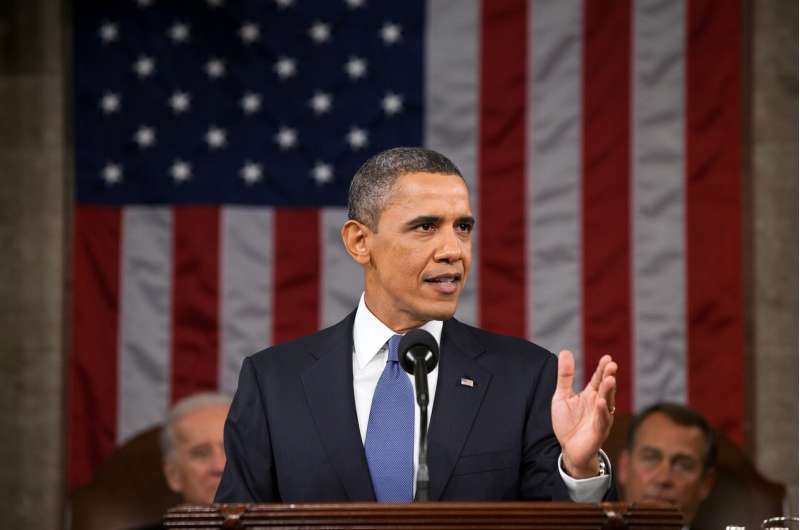
Nostalgia, defined as a sentimental longing or wistful affection for the past, has become a growing focus of research in personality and social psychology. Though it may seem counterintuitive, nostalgia has been proven to be a great motivator of future behavior. Take for example, fans of former President Barack Obama. When the 2016 election of President Donald Trump left over half of the United States' electorate reeling, it contributed to nostalgia for the days of President Obama (and his administration), even among some conservatives.
"Obama nostalgia emerged as an independent predictor of political attitudes, political engagement intentions, voting intentions, and political engagement," reports Adam Fetterman, assistant professor of psychology at the University of Houston. Fetterman conducted an aptly named set of studies: "Bring back my Barry to me: Nostalgia for Barack Obama and political outcomes," and is reporting his findings in the journal Personality and Individual Differences.
"Our findings extend the literature on individual differences in nostalgia proneness and reinforce the motivational potency of nostalgia in the political domain," said Fetterman.
To provide support for his hypothesis that individual differences in nostalgia for Barack Obama would predict outcomes in the political arena, Fetterman conducted studies among 904 undergrad students and U.S. adults, measuring their nostalgia for President Obama, attitudes toward the Trump presidency, political engagement intentions, political ideology and party identification.
"Obama nostalgia predicted negative attitudes toward the Trump presidency, stronger political engagement intentions and voting intentions, and actual political engagement, above and beyond competing predictors including political ideology, prior support for Donald Trump in the 2016 presidential election and voting behavior in 2016," reports Fetterman.
Nostalgia for a particular politician or administration may also play a key role in political campaigns. Fetterman's studies suggest that political ads or speeches that invoked Obama in a nostalgic manner may have been effective for swing voters in 2020.
"Undoubtedly, there are other predictors of political engagement but as hypothesized, Obama nostalgia predicted negative attitudes toward the Trump presidency, stronger political engagement intentions, and stronger voting intentions," said Fetterman.
Fetterman was joined in his research by Tim Wildschut and Constantine Sedikides, both from the University of Southampton, United Kingdom.
More information: Matthew Baldwin et al, Remembering the real me: Nostalgia offers a window to the intrinsic self., Journal of Personality and Social Psychology (2014). DOI: 10.1037/a0038033
A new study found more U.S. high school students felt respected in a political discussion designed as a deliberation—where the goal was to reach consensus—than in a group debate, and their views also moved closer toward agreement. Students engaged in group debate were generally more polarized after the activity.
Published in thePeabody Journal of Education, the study's findings could help teachers to structure political discussions in social studies classrooms, depending on the skills they want students to learn. In classrooms with high political diversity,deliberationcould help reduce division.
"In our highly polarized climate, do we want kids to become more entrenched in their views, or more open to learning about the issues?" said the study's first author Paula McAvoy, associate professor of teacher education at NC State. "The value of deliberation is it can promote an openness to changing your mind and being persuaded. The debate model promotes taking a position and fighting for it. These findings can help teachersdecide which skills they want students to learn, depending on how they structure classroom discussions."
In the study, researchers surveyed and observed 165 high school students who participated in political discussions in the fall of 2019 as part of the civic education program Close Up Washington. The program brings around 20,000 middle and high school students from public and private schools around the country to Washington D.C. for a week-long study of the federal government.
"This program offered us a chance to study a lab-like experience of high school students in political discussions," said study co-author Gregory McAvoy, professor of political science at UNC-Greensboro.
For political discussions held through the program, students were provided with background materials on issues and encouraged to discuss, with civility, issues including criminal justice reform, climate change, gun regulation, health care and immigration. In deliberations, students first read about different policy proposals. Then students discussed the proposals in small groups in order to try to come to consensus about a policy they all endorse, and presented their findings to the larger group. In debates, students formed two opposing teams, and then each student prepared persuasive arguments to try to win over a panel of their peers.
Ninety percent of participants they surveyed reported they felt respected in the deliberation that focused on consensus, and 91 percent reported they felt good about their comments. In comparison, 76 percent of students who engaged in debate felt respected during the activity, and 70 percent felt good about their comments.
"In terms of what made students feel more comfortable, we think the tone of the deliberation led more students to report feeling comfortable because it's collaborative, and not adversarial," Paula McAvoy said. "The debate was challenging because everyone had to stand up and make a 30-second comment to the group. A lot of students got nervous about that."
Young women were significantly more likely to report hearing something offensive during either type of discussion, to report they were more hesitant to speak, and were less likely to say they felt good about the comments they made. They did not find any statistically significant differences by race or ethnicity.
Students who responded to the survey were 79 percent white, 24 percent Latinx, 5 percent Black, and 2 percent Asian, with some students selecting more than one category. They were 54 percent female and 44 percent male. Two percent declined to answer. The sample was politically diverse, with an approximately even distribution of students identifying as conservative, liberal, moderate and unsure. However, the researchers said the respondents tended to more white, more conservative and wealthy compared to the demographics of Gen Z across the United States.
They plotted student's attitudes on specific issues before and after the deliberations and debates. For students who participated in consensus deliberations, they saw attitudes on the assigned issues start out dispersed—either with a wider distribution of views or two divided peaks. After the deliberation, researchers saw a trend across groups of views moving toward agreement. They saw more polarization—a move toward two opposing positions—after debates.
"In the debates, most of the talk that happens involves students talking to others who agree with them, and figuring out why the other team is wrong," Paula McAvoy said. "A lot of teachers use debate as a critical thinking activity, but you might actually be causing students to become more divided on issues."
The findings could help social studies teachers to structure discussions at a time when political culture is highly polarized. Previous studies have shown that students are increasingly arriving at schools with partisan animosity and anxiety related to politics, making teachers hesitant to bring politics into the classroom.
"What we're finding is that with appropriate structure and design, students are able to have student-centered, civil, informed discussions about highly controversial issues," Paula McAvoy said. "Even though there was a lot of political disagreement in the room, students were able to talk across their differences."
To see if their conclusions hold, researchers want to repeat the study with a larger sample size. They also want to find out if deliberation and debates look different with groups of different beliefs, ethnicities and other demographic factors.
The study, "Can Debate and Deliberation Reduce Partisan Divisions? Evidence from a Study of High School Students" was published online in the Peabody Journal of Education on July 14, 2021.
More information: Paula McAvoy et al, Can Debate and Deliberation Reduce Partisan Divisions? Evidence from a Study of High School Students, Peabody Journal of Education (2021). DOI: 10.1080/0161956X.2021.1942706
When it comes to avoiding reputational costs of economic policy controls, there is safety in numbers.
That's the finding of a recent study of capital controls, or government restrictions on the cross-border movement of money and capital. The researchers assert it's one of the most systematic studies yet of the reputational risks associated with capital controls among emerging markets.
"We know governments' capital account policies are not implemented independently," said Steven Liao, a UC Riverside political scientist and co-author of the study. "What was less clear is exactly how, why, and to what extent peers matter. Our study sheds light on these questions from a reputational perspective."
Capital flow volatility, or CFV, is when the movement of international investment into and out of an economy poses risks to a market's stability. When capital inflows accelerate, countries get worried about things like banking crises and inflation. In contrast, rapid capital outflows can lead to foreign exchange reserve depletion, currency crashes, asset price busts, etc.
One policy response to risks from CFV can be restricting investors ability to move money out of the economy in turbulent times—a tool referred to as "outflow controls." Governments can accomplish this by imposing quotas on how much money investors can take out of the economy, by imposing taxes on such transactions, or by imposing outright bans.
"There are some who believe that outflow controls can and should be used under certain circumstances and that they can have a stabilizing effect on an economy," said Daniel McDowell, Liao's co-author and an associate professor of political science at Syracuse University. "There are others, however, who believe that they tend to be ineffective and so they don't offer much in terms of added stability, but they may reduce investment in the future by turning off investors."
In any event, the authors say that outflow controls are an instrument policymakers want at their disposal when facing volatile capital flows. And it's a tool that emerging markets and developing countries would go to more often if they didn't fear long-term damage to their economy's investment reputation, the authors write.
Foreign investors balk at the notion of countries restricting their ability to repatriate capital or profits. Simply, investors want liberal policies so they can invest their capital as they wish. And they may consider such constraints "tantamount to default" as governments are seen as reneging on a commitment to financial openness, Liao and McDowell wrote in the recently published study.
And so governments fear such controls will spook long-term investment in their countries. These reputational fears can constrain policy choices.
The study authors argue governments have good reason to consider using outflow controls when facing highly volatile capital flows. But the authors theorized that governments may be afraid to use the policy tool for fear that it will harm their reputation among international investors. Liao and McDowell suggest that whether outflow controls will damage a country's reputation depends largely on what one's peer countries are doing.
If peer countries are not restricting capital outflows, it will hurt a country's reputation to employ outflow controls on its own. In this case, the government's policies will be viewed as extreme and out of step with its "liberal" peer economies. A tarnished reputation may reduce future inflows of foreign capital or even damage a country's bond rating. However, if peer markets are also restricting capital outflows, the authors say the reputational damage will be reduced because "everyone is already doing it"—and any reputational damage will be distributed across all countries in the peer group.
For the study, the authors looked at a myriad of factors involving 25 emerging markets and developing countries from 1995 to 2015. The countries ranged from Eastern European countries such as Russia, Poland, Ukraine, and Romania; South American countries such as Brazil, Peru, and Chile; China; Southeast Asian countries such as Indonesia and Thailand and South Asian countries such as India and Bangladesh.
Among the factors, they considered the countries' exposure to CFV; geography; bond ratings and partisanship (right, center, left). The study also looked at similarity among emerging economies using a Morgan Stanley Capital Management classification system that divides countries into three categories based on their performance in equity markets: developed markets, emerging markets, and frontier markets.
Additionally, the authors looked at the size of countries' economies, their level of economic development, interest rates, exchange rates, inflation, and openness to trade with other countries.
The study found that as CFV increases, emerging markets are more likely to employ capital outflow controls. However, additional analyses show that the relationship only holds when a country's peer markets are also using outflow controls. Countries facing CFV were about twice as likely to increase outflow restrictions when geographic peer countries had the same restrictions in place. They were also more likely to enact restrictions when equity or bond market peers had the same restrictions. Overall, a typical country's restrictions increase by around 13 to 23% when their country-peers in these categories had done the same thing.
But when a country's market peers were not restricting outflow controls, the authors find no evidence that CFV leads to outflow controls. In other words, when peers have "liberal" policies that are friendly to investors, governments appear reluctant to use outflow controls for fear that it will harm their reputation among investors.
"Together, these results support our expectation that as (volatility) increases, emerging market governments are more likely to tighten restrictions on capital outflows, but only when market peers have already employed (similar) measures," Liao wrote.
Conversely, countries are more likely to lay off restrictive policies when peer countries maintain liberal policies.
"Reputational considerations play a meaningful role in dictating whether emerging markets impose restrictions on capital outflows in response to destabilizing (volatility)," the authors continued.
The authors suggest fears of reputational damage are driving decisions across the board on whether to restrict control outflows. But the authors say countries are missing a key distinction when making these decisions: if peer countries are also controlling capital outflows, it does less damage to a reputation—significantly less.
Liao said the study instructs that analysts should not weigh policy choices in isolation: restricting capital outflow might cause minimal damage to your country's reputation if peer countries are doing the same thing.
"The intensity of reputational damage associated with the use of outflow controls should be conditional on the use of such controls in a country's market peers," Liao wrote. "When a country's market peers are using outflow controls, governments should anticipate that the reputational costs… decrease since the negative signal that outflow controls send to investors will be weakened."
Countries can draw from the study's lesson, Liao said, by understanding reputational consequences from capital controls aren't a constant.
"We hope the study can help emerging markets identify when outflow controls may be an economically or politically feasible policy option against capital volatility," he said.
More information: Steven Liao et al, Closing Time: Reputational Constraints on Capital Account Policy in Emerging Markets, Review of International Organizations (2021). DOI: 10.1007/s11558-021-09433-1
Keeping nonprofit chief executive officers out of meetings when members of their boards discuss or vote on compensation can lead to these CEOs making less money and working harder.
This is a key finding from astudy of nonprofit payI recently completedwith two fellow finance scholars,Benjamin BennettandRik Sen. We reached this conclusion after reviewing data for more than 14,700 nonprofits across the country from paperwork most nonprofits must file with the Internal Revenue Service every year, known asForm 990, and the associatedSchedule J, which includes compensation.
We zeroed in on 1,698 nonprofits located in New York to see if their CEO pay changed after new regulations took effect in 2013. Since then, New York has prohibited nonprofit officers from being present at meetings where their pay is being discussed.
We found that compensation was an average of 2%-3% lower than expected by comparing pay for nonprofit CEOs in New York with pay in other states. We also compared the change in CEO pay with compensation changes for other executives' pay at the same nonprofits—since they weren't affected by this legislation.
We also found that many nonprofits changed how they handled executive compensation. That is, they were more likely to set up compensation committees, perform an independent compensation review or adjust pay to be in line with similar organizations. Nonprofit CEO bonuses also became more correlated with the growth of an organization's budget—a strong indicator of overall performance.
And we found that, despite earning less than they might have expected, nonprofit CEOs spent about 2% more time working—without any additional turnover.
Interestingly, we also determined that by some measures, the nonprofits became better-run after the legislation took effect. For example, 2% more people chose to volunteer, and funding from donations and grants grew by 4%.
Nonprofit CEOs make considerably less money than corporate CEOs and have experienced a slower wage growth over the last decade. Based on our estimates, corporate executives saw their annual pay grow by 54% from 2009 to 2017 to an average value of US$3.2 million, while nonprofit executives experienced a 15% increase in pay, reaching an average value of $396,000 in 2017—the most recent year for which we obtained IRS data.
Nevertheless, because mosty nonprofits are exempt from income tax and many accept donations, it's only natural that the government and funders would not want to waste their money on excessive compensation. For example, food bank donors might prefer to see nonprofits spend more of their dollars on feeding the hungry as opposed to perks and big pay packages.
One possible reason why nonprofit CEO pay is growing much more slowly than for-profit CEO compensation is that nonprofit leaders are committed to specific causes and have more motives aside from money to excel at their work than their corporate counterparts. Other possibilities could be that nonprofits face pressure from donors to avoid high executive pay or that nonprofit CEOs have little leverage.
We hope that our future research will answer this question.


 © Provided by The Canadian Press