It’s possible that I shall make an ass of myself. But in that case one can always get out of it with a little dialectic. I have, of course, so worded my proposition as to be right either way (K.Marx, Letter to F.Engels on the Indian Mutiny)
Sunday, August 29, 2021

Autonomous train in Finland: the goal is to double railway transport
2 August 2021
PRESS RELEASE
(c) Proxion
A ground-breaking global autonomous train development project in Finland is moving on to its test phase. The aim of the initiative is to create completely new railway transportation services and to even double the amount of railway transport. The initiative, led by Finnish Proxion in conjunction with around 20 other tech organisations, innovates an agile, low-emission transportation concept for large industrial enterprises. In the future, aim is to also bring autonomous passenger traffic to the rails.
The autonomous train initiative is moving on towards the pilot phase where the software and equipment of the autonomous train will be tested, simulated and test-driven. The project is a significant leap towards the transportation of the future, and Proxion is leading the way in developing the usability and agility of all rail transport.
“The strict environmental targets set by the EU are in favour of developing the electric modes of transport, and railway transport is the most energy efficient way to transport goods by land. The innovative development of rail transport is therefore in key position, as the goals are to develop transportation that is lower in emissions and to achieve better rail utilization,” says Reijo Viinonen, the Project Manager of Proxion’s autonomous train initiative. The piloting of Proxion’s autonomous train will begin already later this year. The autonomous train is expected to be operational in 2023.
Rail safety
Autonomy in transportation is a global trend, and its execution is being innovated constantly. While the development is well under way on roads, in the air and in maritime transport, the progress on railways has been slower.
The autonomous train unit in development is intended to be a low-emission and more cost-effective solution for short-distance industrial transport that is currently handled mainly by road transport. An increasingly important feature of the train is safety. Technical Research Centre of Finland VTT, the innovation partner of the development project, is involved in enabling safe automation on the rails.
Problem of available drivers
“It is important to ensure that the autonomous train operates reliably in all conditions and on a wide range of track connections. It is a leap towards safer railway transport. For example, sensor interpretation technology for the train unit is being developed as is combining a thermal camera and radar observations in order to be able to react correctly and in time to any obstacles or situations ahead,” says Pertti Peussa, Principal Scientist at VTT.
The advantages of an autonomous train unit also include agility and the longevity of the invested infrastructure. In addition, it offers a solution to the problem of available drivers, because, as the name implies, an autonomous train runs independently without a driver.
Read also: Inland shipping of the future will soon have a helmsman ashore
Author of the article: Dave Waddell • Windsor Star
Publishing date:Aug 27, 2021 •

WHEATLEY – The gas that set off detectors in this Chatham-area town shortly before a massive explosion rocked its main street is familiar to most Canadians for its rotten-egg smell, associated with leaking natural gas.
Hydrogen sulfide is used by natural gas companies specifically for its noxious aroma as a safety measure, but is dangerous on its own for its flammable and explosive properties.
“It’s very nasty stuff,” Western University chemistry professor Jamie Noel said. “It’s pretty common, but for people it’s deadly. It only takes 1000 parts per million to kill you instantly.
“It’s also very combustible. It explodes at about 41/2 per cent per volume in air.”
Chatham-Kent officials confirmed gas detectors in the demolished buildings – put in place by government officials after two recent toxic-gas leaks – recorded the presence of hydrogen sulfide prior to the explosion.
“We’re talking the most probable cause is an abandoned (gas) well,” said Chatham-Kent’s top administrator, Don Shropshire. “This area has hundreds of abandoned wells from Niagara to Windsor.”
In Southwestern Ontario, hydrogen sulfide is commonly associated with such wells. Traces can also give well water that sulphur taste.
PHOTOS: A town and its residents reel after massive explosion
Hydrogen sulfide is soluble in water, most organic liquids and oil, but when agitated or in increasing temperatures solubility decreases and higher concentrations can build up.
Discovered by Swedish chemist Carl Wilhelm Scheele in 1771 and commonly nicknamed swamp gas, hydrogen sulfide forms as the result of the bacterial action of breaking down decaying materials. That process also gives the colourless gas its rotten egg smell.
“It takes less than one part per million to smell it,” said Noel. “That’s its warning system. The warning doesn’t last long because it eventually destroys your sense of smell.”
Its health impacts are many and range from eye irritation and respiratory issues in lower dosages to death from higher exposures. The gas is found in the oil and gas, manufacturing, pulp and paper, agriculture, food processing, mining and sewage treatment industries.
Hydrogen Sulfide will spontaneously ignite at 270 C (518 F).
In addition to gas wells, hydrogen sulfide occurs naturally in sewers, volcanoes, hot springs and manure pits.
It collects in low-lying areas because it’s heavier than air.
Noel said the gas is relatively stable, but it’s capable of moving through fissures and cracks in the ground.
“It’ll collect in pockets and, when enough pressure builds up, it’ll burp to the surface,” Noel said. “It’s dangerous when enough of it accumulates.
“The other concern about it is the gas is also corrosive to metal underground.”
Seven people were hospitalized after the explosion, though none of the injuries are life-threatening. The downtown gas detectors went off at about 4:30 p.m. and municipal officials and emergency crews starting clearing out residents – the explosion happened at about 6 p.m.
Officials have said that 90-minute warning almost certainly saved lives.
dwaddell@postmedia.com
VANCOUVER — Wildfires that race through communities, incinerating ingredients that make up modern-day life, can leave behind a trail of toxic metal, says an expert.
Michael Brauer, a professor at the University of British Columbia's school of public health, said some of the hazardous materials found in ash and soil after a wildfire include asbestos, arsenic, lead and mercury.
Most of the metals come from household items such as paint, treated wood, thermometers, cars and electronic goods.
"And it also depends on the age of the structures and the communities," Brauer said in an interview. "So, for example, lead is often found in pipes and paint in some older homes, and newer homes don't have that."
The fires that burn "very, very hot" are good because they break down most of the plastics and metals into relatively harmless compounds, he said.
Crews who mop up following a wildfire don't just clear away the ash and rubble, but typically will test the soil and water for toxic metals, he said.
A report on toxicity and pollutants found in ash and air samples after the fire that destroyed most of the village of Lytton is expected soon, said Pader Brach, Emergency Management BC's executive director of regional operations.
This will be the first time such a report will be written in B.C. following a wildfire.
The fire in Lytton began the afternoon of June 30. Brisk winds and tinder-dry conditions fuelled the flames and within hours much of the village was destroyed.
The Transportation Safety Board joined the RCMP and BC Wildfire Service in an investigation of the cause days after the fire, saying there was some indication a passing train may have sparked the blaze.
No cause has yet been determined.
About 90 per cent of the village was wiped out, including homes, businesses, the RCMP detachment, the ambulance station, the Lytton Hotel and the Chinese History Museum. A tour of the place showed rubble, twisted metal, skeletons of cars and charred remnants of life.
The Insurance Bureau of Canada reported the value of damage caused by the wildfire was an estimated $78 million for insured properties. It said in a statement earlier this month that about 300 claims had been made to that date.
Brach said the report will identify the pollutants of most concern.
"It's a long process to recover from a significant event like a wildfire that impacts the community," he said.
On May 3, 2016, the wildfire that spread through Fort McMurray, Alta., forced 90,000 people to escape and destroyed thousands of buildings.
Two years later, a study by Alberta Health found elevated concentrations of metals, including asbestos, mercury, arsenic, chromium, copper and zinc in ash samples. High amounts of hydrocarbons from burned plastic was also found. Most of the arsenic discovered came from treated woods, the report said.
"The combustion of urban structures and their contents led to the release of a diverse array of contaminants of potential concern associated with the ash and debris," it said.
Pollutants varied by location and residential density. Exposure to such leftover acidic ash and rubble caused skin irritation, burns and breathing problems, the study found.
Brauer noted that while every community would have different levels of metal concentrations in soils and air depending on the age and composition of structures, it is important to let crews finish thorough testing and cleanup of areas damaged by wildfires before moving back.
In some areas, he said a few centimetres of topsoil is removed before people can return because the metals make a permanent home in the dirt.
"You don't want children crawling around on soil with, you know, high levels of metals," he said.
"They may be crawling around on the dirt and put their hands in their mouth. Or, for example, if you're gardening, you don't want high levels of the metals in your garden."
This report by The Canadian Press was first published Aug. 28, 2021.
Hina Alam, The Canadian Press
by The Fish Site
27 August 2021,

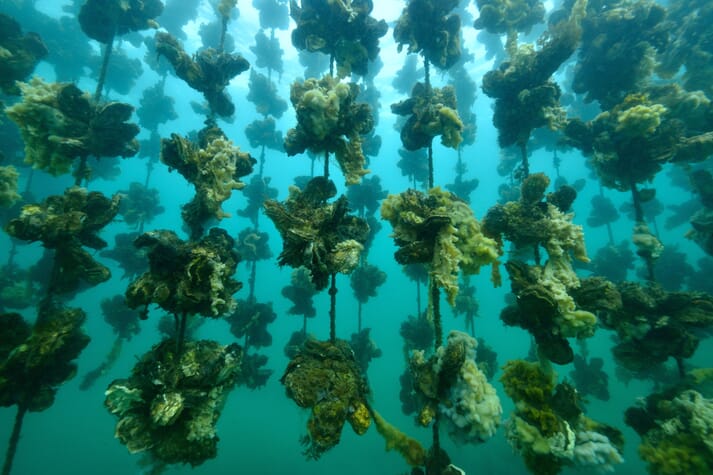
China’s coastal province of Zhejiang plans to open more shellfish and algae breeding facilities, taking advantage of the species’ ability to trap and store environmental carbon. The expansion of sustainable aquaculture activities is part of China’s ambition to increase its ocean “carbon sink” and improve its climate resilience.
Carbon sinks are natural or artificial reservoirs that can store carbon that has been removed from the atmosphere. Restoring forests and grasslands can extract atmospheric carbon, but marine ecosystems have “blue sink” potential as well.
China is planning to increase its forest sink capacity but is facing pressure from its urban expansion. As a result, the country is hoping to tap into its territorial waters to achieve its climate goals.
Maintaining ocean blue sink and steadily improving ocean carbon sink capacity are important tasks to facilitate our climate goals.
“Maintaining ocean blue sink and steadily improving ocean carbon sink capacity are important tasks to facilitate our climate goals,” said Zhang Zhifeng, vice director at the Department of Marine Ecology and Environment, a unit of the environment ministry, during a press conference on 26 August.
Zhang told journalists that the ministry is urging local governments to accelerate marine ecological restoration and implement carbon monitoring schemes. Improving coastal water quality by planting seagrass beds and restoring mangroves and coral reefs is being encouraged.
The initiatives form part of China’s 2021-2025 marine ecological environment protection plan, which is currently in its draft stage.
PAYWALL
Read more about this story in Reuters.
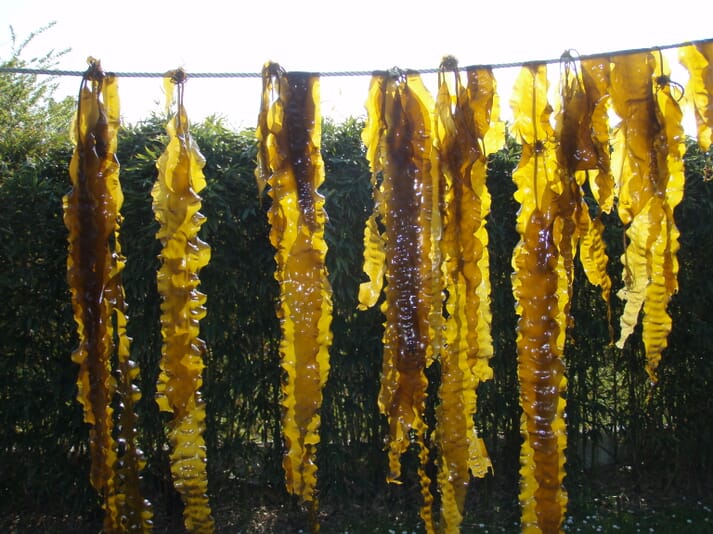
Results from an innovative European seaweed research project have laid the foundations to strengthen Europe's seaweed cultivation and biorefining industry.
by The Fish Site
24 August 2021
Funded by the EU Horizon 2020 program, GENIALG has developed innovative solutions to help production of seaweed biomass in Europe to become more economically and environmentally sustainable.
“GENIALG has approached all legal, financial, environmental, socio-economic and technical aspects to facilitate the development of the European seaweed sector, from seaweed farming to the production of molecules of interest to the seaweed industry. By combining a trans-sector partnership with an integrated and sustainable approach, GENIALG aimed to meet the market needs in the fields of health, nutrition, cosmetics and agriculture. New technologies, methods and tools (genomics and post-genomics) have been developed – eg for seeding, harvesting, rearing, cultivating and storing seaweed, as well as for pre-processing, fractionation, extraction and purification of the biomolecules within the seaweeds,” Philippe Potin, project coordinator, reflects.
GENIALG has tackled key challenges facing the industry, including how to reduce costs, scale-up production and improve the quality and refinement of seaweed biomass into multiple value-added products.
Since its initiation in 2017, GENIALG has made significant contributions to the European seaweed research and industry landscape. Key outputs include:
Applying the first genome-wide approaches and a customised phenotyping platform for seaweed strain selection and improvement to improve understanding of seaweed genetics and physiological traits.
Creating new approaches for valorising new and existing products from seaweed compounds that have pharmaceutical applications. These include fucoxanthin from Saccharina and various fractions from Ulva which are used in animal and plant care and, in the near future, expected to have applications in human healthcare.
Developing novel marine enzymes and enzyme cocktails for seaweed fractionation.
Another key element of the project has been to improve access to reliable information about seaweed farming best practices and the innovations of seaweed biorefinery. It has done this though the creation of:
The GENIALG E-Learning Course on sustainable seaweed farming practices, which is freely available to students, current practitioners within the seaweed industry or anyone interested in entering the seaweed industry.
The GENIALG Manual on Best Practices for Seaweed Farming, which contains information on biocontainment and management of pests and pathogens.
The GENIALG Biorefinery Manual, which explains the benefits and sustainability of seaweed biorefinery processes.
Circular & Restorative
Through innovation and sustainable sourcing we will collaborate with industry partners and redefine traditional aquaculture feed ingredients. By 2030 50% of our raw materials will be Circular & Restorative
Tasmania, Australia
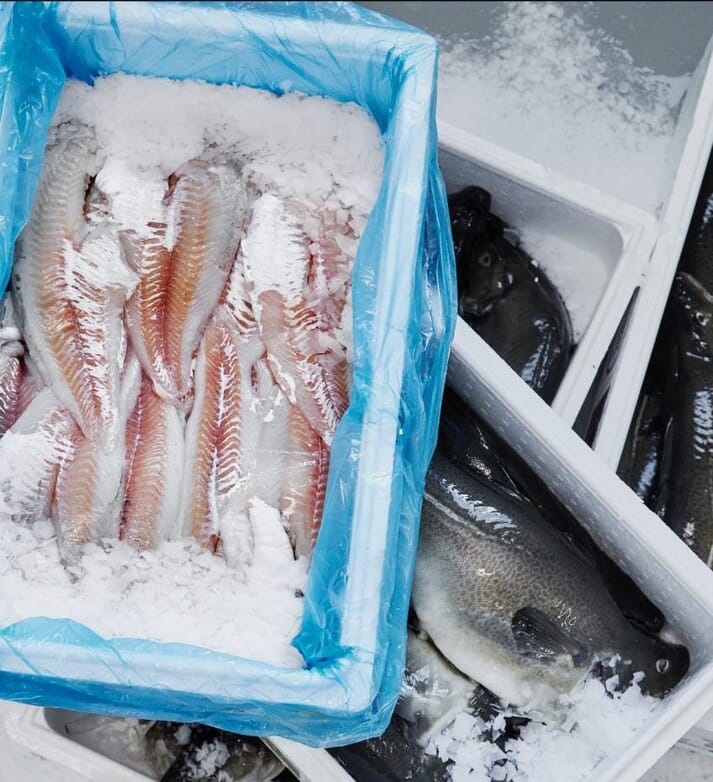
Norwegian cod farming startup Norcod has begun it first commercial harvest, generating its first sales revenue in the process.
by The Fish Site
27 August 2021,

© Norcod
Chief executive Christian Riber hailed the initial harvest as a “huge milestone” for the Trondheim-based company, following an intensive four-year effort to start production.
Norcod expects to produce more than 5,000 tonnes of cod by continuous harvesting between now and February, according to Riber.
“We have had to start harvesting the fish a bit earlier than planned due to great biological performance. The fish are in fantastic condition and initial deliveries earlier this month have yielded highly positive customer feedback,” he said.
“The majority of the harvest volumes have been sold well above budgeted levels. As customers come to further appreciate Norcod and its many advantages it is expected that this price will increase. The market is looking very promising for the coming months,” he added.
Norcod’s fish have an 8 percent higher yield than wild-caught cod and provide a thicker, meatier fillet
The initial harvest marks a significant leap towards Norcod’s ambition to become the world’s first producer of high-quality farmed cod on an industrial scale from its three farm sites in mid-Norway.
These fish were harvested from the first batch of juvenile cod that was transferred from growth tanks into the sea in January 2020.
Upscaling production
The next batch of 2.4 million fish was transferred to the sea earlier this summer and is set to be harvested in the third quarter of 2022, with the goal of increasing annual production to 9,000 tonnes in 2022 and 25,000 tonnes by 2025.
A further batch of juveniles is scheduled to go into the sea phase in spring 2022 after they start their growth phase in December this year.
“This schedule puts us on track to increase production significantly over the next few years. Both the high quality and volume of fish produced so far gives us confidence that we can exceed our sales ambition by meeting market demand,” Riber said.
Norcod has secured buyers in advance for the fish as part of its marketing strategy to provide customers with stable year-round deliveries, compared with seasonal wild cod, through its exclusive marketing company Sirena Group.
“It’s only the second time since I started working here that I experience a product where customers are calling back, giving praise and actually sign up on a waiting list for next delivery,” said Magnus Gehlin from Fisk Idag, a leading seafood distributor in Sweden.
Jesper Hansen from Danish seafood customer Fiskerikajen said: “We buy the vast majority of our cod from low-impact fisheries. In the summer, it is sometimes difficult to get enough cod from sustainable fisheries. Therefore, we are pleased that we can now launch Norcod and are really excited about the great quality of this fish.”
Norcod’s produced cod is differentiated in price as the fish have an 8 percent higher yield than wild-caught cod and provide a thicker, meatier fillet, according to Riber.
Whole fish are initially being marketed in Spain, Scandinavia and the UK, with value-added cod fillets destined for France, Germany and the US.
by Rob Fletcher
27 August 2021,

The company, which has secured permits to produce 90,000 tonnes of salmon from a recirculating aquaculture system (RAS) facility near Miami, reported the losses in its most recent financial statement, which covered the six months up to 30 June 2021.
The loss, which was deeper than the $33.8 million it lost in the same period the previous year, was in part due to an incident on 23 March, which resulted in the loss of approximately 500 tonnes of fish lost with an average weight of approximately 1kg, equivalent of around 5 percent of annualized USA Phase 1 harvest volumes and has now been attributed to an “identified design weakness from its RAS supplier”, which “resulted in elevated turbidity and possibly gasses that caused abnormal fish behavior”.
It did not, however, include the impact of an incident on 9 July in which approximately 400 tonnes of salmon were lost from its Danish RAS facility – the equivalent of around 17 percent of its annual harvest volume, which led to the loss of a further $3 million, after insurance proceeds. “The Group’s preliminary analysis, which remains subject to change, indicates that maintenance work performed in the filtration system caused water quality to quickly deteriorate, resulting in elevated mortality”.
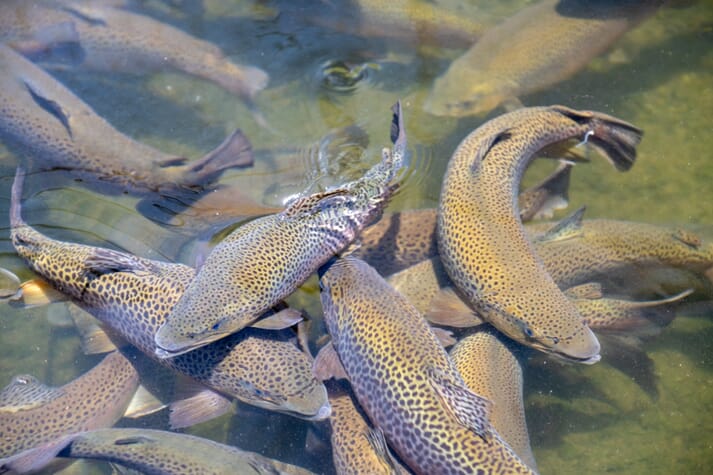
Intriguingly, Atlantic Sapphire is now looking towards the production of rainbow trout as well as Atlantic salmon and revealed that it has been trialling trout production at its "Bluehouse" RAS facility in Denmark. According to the presentation accompanying its H1 report, rainbow trout ova are now available from bio-secure, land-based sources and the species has strong potential to be produced in RAS due to their faster growth rates as well as their tolerance of higher temperatures and stocking densities compared to Atlantic salmon. These factors could shorten the production cycle, reduce risk and lower the cost per kilo.
“Trout may be an ideal species for Bluehouse farming in the future,” the company concludes.

An experimental nuclear fusion power plant features in today's Dezeen Weekly newsletter
The latest edition of our Dezeen Weekly newsletter features a prototype power plant designed by AL_A to test the viability of nuclear fusion technology as a carbon-free energy source.
Set to be built in the UK county of Oxfordshire and completed in 2025, the nuclear power plant will be the first of its kind according to A_LA.
Readers are sceptical of the science behind the technology, with one commenter stating: "Seems to be jumping the gun somewhat. The technology does not yet exist."
Most Germans reject nuclear power as sustainable investment target - survey
24 Aug 2021,
Edgar Meza
Clean Energy Wire / Reuters
An overwhelming majority of Germans see no place for nuclear power in sustainable investments, according to a survey conducted by research group Forsa on behalf of Berlin-based consumer protection organisation Finanzwende Recherche (Finance Transition Research). Sustainability standards that do not explicitly exclude nuclear power are not trusted in Germany, the organisation found. “The European Commission should take this knowledge into account when it presents details on the classification of sustainable investments in the autumn,” it states. The European Commission is currently working on a taxonomy, or classification system, for sustainable investments that specifies which economic activities can be considered sustainable and therefore also financed through “sustainable investments”. Conflicts between EU member states - France in particular advocates nuclear power – has kept the European Commission from making a decision on whether nuclear power should be defined as sustainable, Finanzwende Recherche points out.
The Commission last year began working to assess whether or not to include nuclear energy in the EU taxonomy of environmentally sustainable activities and is expected to present details of the classification system in autumn. Finanzwende Recherche has sought to determine whether a sustainability standard for financial products that includes nuclear power would be credible in Germany. A representative group of over 1,000 adults took part in the telephone survey. Among its findings: 82 percent of respondents would not describe an investment in which money was also invested in nuclear power as a “sustainable investment”, while only 15 percent would consider such an investment to be sustainable.
While the EU hopes to provide financial market guidelines needed to achieve the bloc's ambitious climate targets, observers have said its sustainable finance strategy represents a “missed opportunity” in resolving the nuclear question. Nuclear power will be phased out entirely in Germany at the end of next year. While industry representatives and also some environmental groups advocate to consider extending the technology's lifetime in Germany in order to facilitate the transition from fossil fuels, both the government and also nuclear power companies have firmly rejected a revival. Markus Krebber, head of nuclear plant operator RWE, reiterated only this week that "we are not available" for keeping the plants open longer, news agency Reuters reported. Krebber instead called on the next government to get a grip on sluggish renewables expansion.
Nuclear exit to bring Germany “enormous difficulties” by increasing fossil power use - EDF head
Die Welt
Germany's decision to phase out nuclear power means that it must replace the energy source with climate-harmful coal and gas, the executive director of state-owned French energy company EDF has said in an interview published in Die Welt. Germany's nuclear exit would be "the most drastic" example of government-driven anti-nuclear policies that will cause the country "enormous difficulties" by increasing the need for carbon-based coal and gas, Cedric Lewandowski said. EDF had to offer abundant know-how for establishing a functioning nuclear industry that reduces reliance on fossil fuels by subsituting them with uranium, the company's CEO said. Nuclear power's CO2 emissions were comparable to that of wind power, while it had an advantage over renewables regarding the need for other raw materials, such as aluminium, copper or rare earths, he said. Lewandowski said the two major nuclear incidents that have occurred so far, in Chernobyl in the Soviet Union 1986 and in Fukushima in Japan in 2011, had happened due to human error and a natural disaster, respectively, and that operators had learned from them. "Generally speaking, security is a priority and constantly monitored in nuclear power," he argued. Regarding the problem of nuclear waste, Lewandowski said the nuclear power industry was trying to keep them to a minimum, while a large part could be recycled. "Without nuclear power, the will be no victory in the fight against climate change. However, this would also be impossible without a significant growth of renewable power," he said.
The French government in 2019 decided to reduce the share of nuclear power in the country from then 70 to 50 percent in 2035. Nuclear power has been losing relevance across the EU in recent years and the plants still running often are more than 40 years old. Besides concerns about nuclear safety, the question of how nuclear waste can be stored for thousands of years at minimum risk has remained unresolved. Germany will decommission its last nuclear plant at the end of 2022 and its last coal plant no later than 2038. The country plans to substitute its nuclear energy capacity with renewables and to a smaller extent with new gas plants for longer stretches with little wind or sunshine, which can eventually be used to burn 'green hydrogen' produced with renewable power. Strategic differences between France and Germany regarding the role of nuclear power and gas in the EU's future energy mix have recently become evident in the bloc's bid to find new standards for a climate-friendly financial sector.
Respected German intellectual pleads for nuclear
In his column for Zeit online on 10 August, Theo Sommer, the respected editor-at-large at Die Zeit, said Germany still needs nuclear power. He asks: “Will the lights go out in Germany in 2023 because we are no longer producing enough electricity?” He says German electricity consumption is currently around 580TWh per year, while the Federal Economy Ministry estimates that demand will increase by 15% to 645 to 665TWh in 2030.
“This is at the lower end of the currently discussed needs estimates. But they all agree on one thing: the planned output will by no means be sufficient. The Federal Audit Office warns of a blackout in the course of the energy transition.” He points to the considerable gap between the target of 65% of our energy from renewables “and the percentage of electricity that appears to be actually achievable from renewable sources”.
He says there is a lack of replacement energy for two reasons:
the phase-out of nuclear energy and coal means secured power plant output is falling while the transition to electromobility, advancing digitalisation and the expansion of the hydrogen economy are increasing electricity consumption “to an extent that is still immeasurable today”.
In autumn 2010, the federal government extended the service life of Germany’s 17 operating nuclear power units but in the spring of 2011, Chancellor Angela Merkel – “a politician terrified by the Fukushima disaster” - pushed through the immediate shutdown of the seven oldest plants and the gradual shutdown of all others by 2023. When the six currently active plants - Brokdorf, Grohnde, Gundremmingen, Emsland, Neckarwestheim and Isar - go offline in 2022, German electricity generation will fall by around 12%.
He describes Germany’s move away from nuclear power as “totally repugnant”. He notes that the International Atomic Energy Agency (IAEA) reports 28 new states wanting to embark on nuclear power programmes while worldwide 400 nuclear plants are in operation in 33 countries, with new ones are being built in 13 countries, including the UK, Finland and Slovakia. At the same time, Rolls-Royce is developing small reactors as are Argentine, Russia and China while US President Biden is also having the technology researched.
Sommer says: “The German nuclear industry, once among the world's leaders, can only suck its thumb. It only takes part in the ITER project, the long-term goal of which is the fusion reactor, but which will hardly be operational before the end of our century. In the next year, the question that will certainly arise is whether we really want or can comply with the phase-out dates for the last nuclear power plants.”
The question is urgent, because Germany is also phasing out coal with last German hard coal mines shut down in 2018 and lignite-based power generation set to end by 2038. He asks where should the replacement energy come from, especially since the demand is increasing rapidly. He points to the increasing electromobility, which will increase the demand for electricity enormously. “In Germany today there are one million electrically powered vehicles, by 2030 - when all new cars and trucks are to run without petrol or diesel - there will probably be 4.3 million. Added to this is the power-guzzling expansion of digitization and the equally power-guzzling transition to the hydrogen economy.”
It is an illusion that green energy could replace the failure of coal power. “This would require 10,000 additional wind turbines and huge areas. But not only is there insufficient space for a full supply from renewable energy, we also have too few hours of sunshine and too many lulls in the wind. In addition, only a fifth of the routes from north to south that should be ready by the end of the nuclear phase-out are finished - and the Greens are lying to themselves and us if they consider the expansion of networks and routes to be the solution.”
He cites Christian Bruch from Siemens Energy, who says that phasing out nuclear and coal energy means losing 40% of Germany’s generation capacity. “That means: We need bridging technologies that lead us into a carbon-free future without economic and social disruptions. Such a bridging technology is the natural gas from the pipelines, through which hydrogen can one day also be transported - but also nuclear energy, whose main problem, the disposal of nuclear waste, may be more solvable in two or three decades than it is today.” He concludes: “Keeping the six nuclear power plants running for the time being would enable annual savings of 90 million tons of CO2 from 2023 onwards. That would be a concrete and immediately effective climate protection programme.”