Friday, October 08, 2021

Ivermectin: How false science created a Covid 'miracle' drug

By Rachel Schraer & Jack Goodman
BBC Reality Check

Related Topi
IMAGE SOURCE,

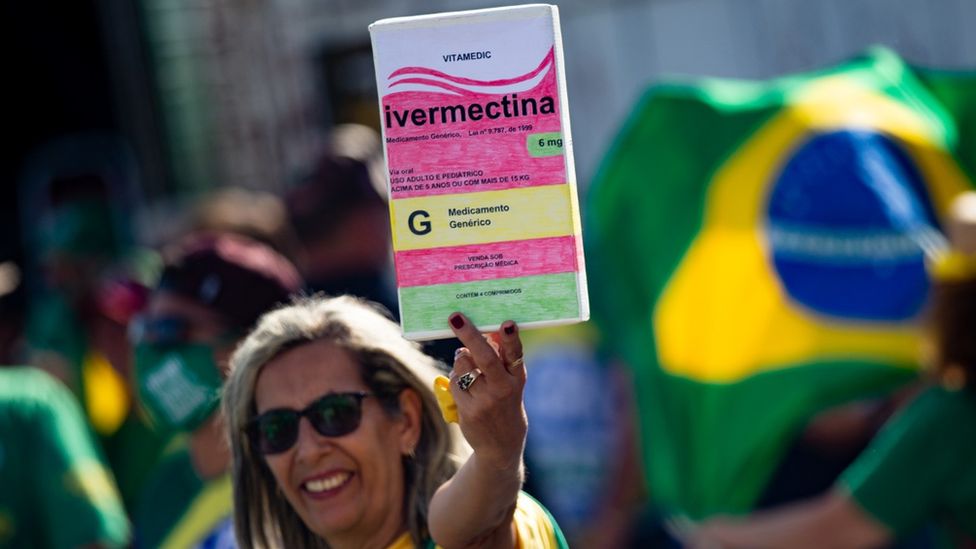
Ivermectin has been called a Covid "miracle" drug, championed by vaccine opponents, and recommended by health authorities in some countries. But the BBC can reveal there are serious errors in a number of key studies that the drug's promoters rely on.

For some years ivermectin has been a vital anti-parasitic medicine used to treat humans and animals.

But during the pandemic there has been a clamour from some proponents for using the drug for something else - to fight Covid and prevent deaths.

The health authorities in the US, UK and EU have found there is insufficient evidence for using the drug against Covid, but thousands of supporters, many of them anti-vaccine activists, have continued to vigorously campaign for its use.
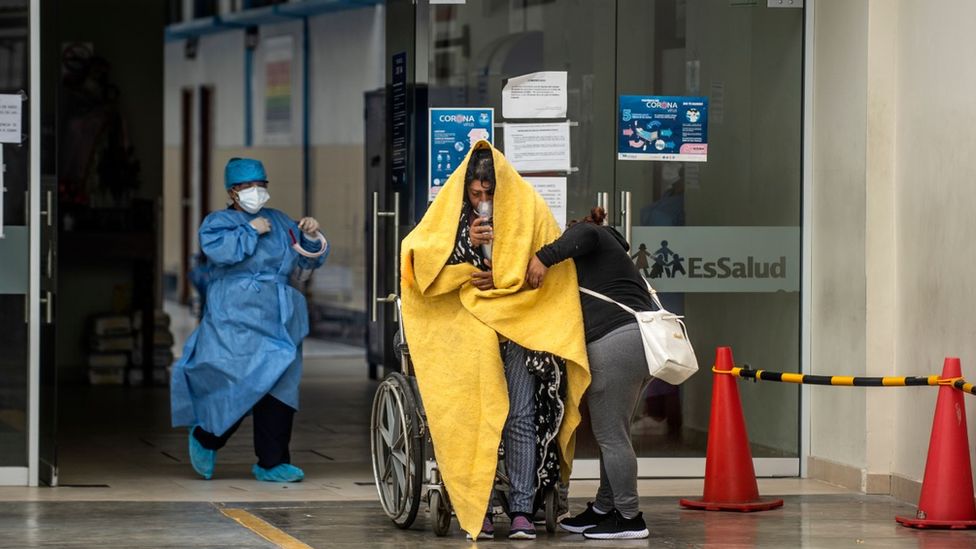
IMAGE SOURCE,
Image caption,Ivermectin was approved for Covid treatment in Peru in May 2020

Members of social media groups swap tips on getting hold of the drug, even advocating the versions used for animals.

The hype around ivermectin - based on the strength of belief in the research - has driven large numbers of people around the world to use it.

Campaigners for the drug point to a number of scientific studies and often claim this evidence is being ignored or covered up. But a review by a group of independent scientists has cast serious doubt on that body of research.

The BBC can reveal that more than a third of 26 major trials of the drug for use on Covid have serious errors or signs of potential fraud. None of the rest show convincing evidence of ivermectin's effectiveness.

Dr Kyle Sheldrick, one of the group investigating the studies, said they had not found "a single clinical trial" claiming to show that ivermectin prevented Covid deaths that did not contain "either obvious signs of fabrication or errors so critical they invalidate the study".

Major problems included:

  • The same patient data being used multiple times for supposedly different people
  • Evidence that selection of patients for test groups was not random
  • Numbers unlikely to occur naturally
  • Percentages calculated incorrectly
  • Local health bodies unaware of the studies

The scientists in the group - Dr Gideon Meyerowitz-Katz, Dr James Heathers, Dr Nick Brown and Dr Sheldrick - each have a track record of exposing dodgy science. They've been working together remotely on an informal and voluntary basis during the pandemic.

They formed a group looking deeper into ivermectin studies after biomedical student Jack Lawrence spotted problems with an influential study from Egypt. Among other issues, it contained patients who turned out to have died before the trial started. It has now been retracted by the journal that published it.

The group of independent scientists examined virtually every randomised controlled trial (RCT) on ivermectin and Covid - in theory the highest quality evidence - including all the key studies regularly cited by the drug's promoters.

RCTs involve people being randomly chosen to receive either the drug which is being tested or a placebo - a dummy drug with no active properties.
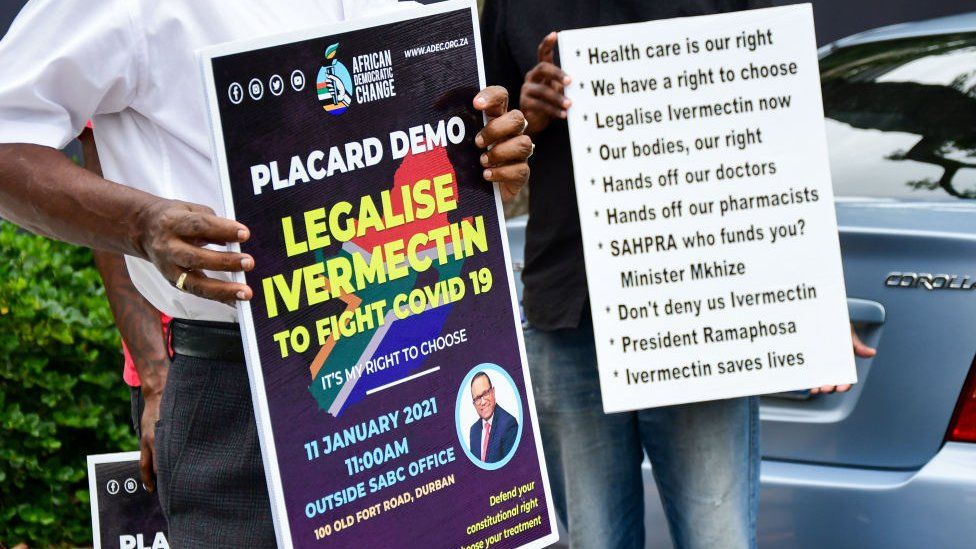
IMAGE SOURCE,
Image caption,Some South Africans took to the streets to demand that the authorities allow ivermectin to be used

The team also looked at six particularly influential observational trials. This type of trial looks at what happens to people who are taking the drug anyway, so can be biased by the types of people who choose to take the treatment.

Out of a total of 26 studies examined, there was evidence in five that the data may have been faked - for example they contained virtually impossible numbers or rows of identical patients copied and pasted.

In a further five there were major red flags - for example, numbers didn't add up, percentages were calculated incorrectly or local health bodies weren't aware they had taken place.

On top of these flawed trials, there were 14 authors of studies who failed to send data back. The independent scientists have flagged this as a possible indicator of fraud.

The sample of research papers examined by the independent group also contains some high-quality studies from around the world. But the major problems were all in the studies making big claims for ivermectin - in fact, the bigger the claim in terms of lives saved or infections prevented, the greater the concerns suggesting it might be faked or invalid, the researchers discovered.

While it's extremely difficult to rule out human error in these trials, Dr Sheldrick, a medical doctor and researcher at the University of New South Wales in Sydney, believes it is highly likely at least some of them may have been knowingly manipulated.

A recent study in Lebanon was found to have blocks of details of 11 patients that had been copied and pasted repeatedly - suggesting many of the trial's apparent patients didn't really exist.

The study's authors told the BBC that the "original set of data was rigged, sabotaged or mistakenly entered in the final file" and that they have submitted a retraction to the scientific journal which published it.
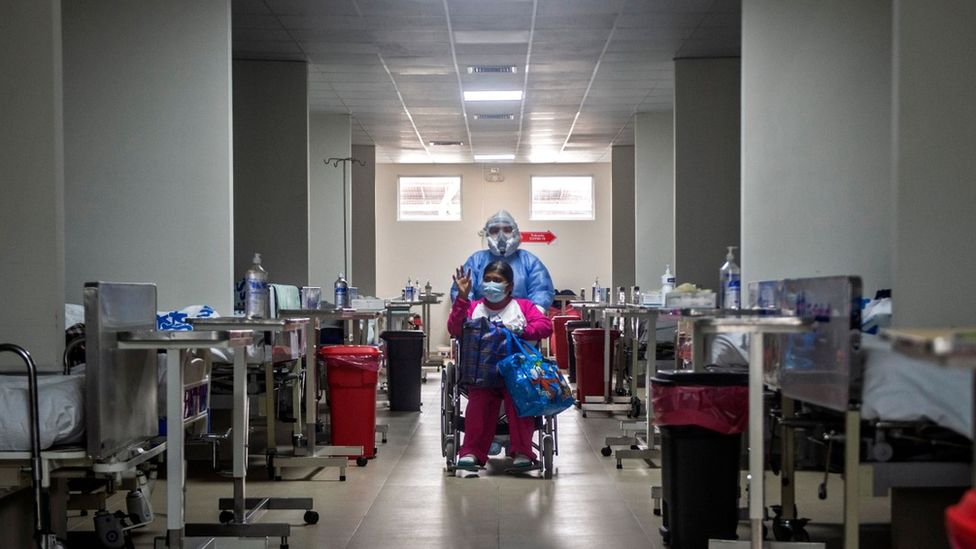
IMAGE SOURCE,

Another study from Iran seemed to show that ivermectin prevented people dying from Covid.

But the scientists who investigated it found issues. The records of how much iron was in patients' blood contained numbers in a sequence that was unlikely to come up naturally.

And the patients given the placebo turned out to have had much lower levels of oxygen in their blood before the trial started than those given ivermectin. So they were already sicker and statistically more likely to die.

But this pattern was repeated across a wide range of different measurements. The people with "bad" measurements ended up in the placebo group, the ones with "good" measurements in the ivermectin group.

The likelihood of this happening randomly across all these different measurements was vanishingly small, Dr Sheldrick said.

Dr Morteza Niaee, who led the Iran study, defended the results and the methodology and disagreed with problems pointed out to him, adding that it was "very normal to see such randomisation" when lots of different factors were considered and not all of them had any bearing on participants' Covid risk.

But the Lebanon and Iran trials were excluded from a paper for Cochrane - the international experts in reviewing scientific evidence - because they were "such poorly reported studies". The review concluded there was no evidence of benefit for ivermectin when it comes to Covid.

The largest and highest quality ivermectin study published so far is the Together trial at the McMaster University in Canada. It found no benefit for the drug when it comes to Covid.
Ivermectin is generally considered a safe drug, though there have been some reports of side effects.

Calls over suspected ivermectin poisonings in the US have increased a lot but from a very small base (435 to 1,143 this year) and most of these cases were not serious. Patients have had vomiting, diarrhoea, hallucinations, confusion, drowsiness and tremors.

But indirect harm can come from giving people a false sense of security, especially if they choose ivermectin instead of seeking hospital treatment for Covid, or getting vaccinated in the first place.

Dr Patricia Garcia, a public health expert in Peru, said at one stage she estimated that 14 out of every 15 patients she saw in hospital had been taking ivermectin and by the time they came in they were "really, really sick".

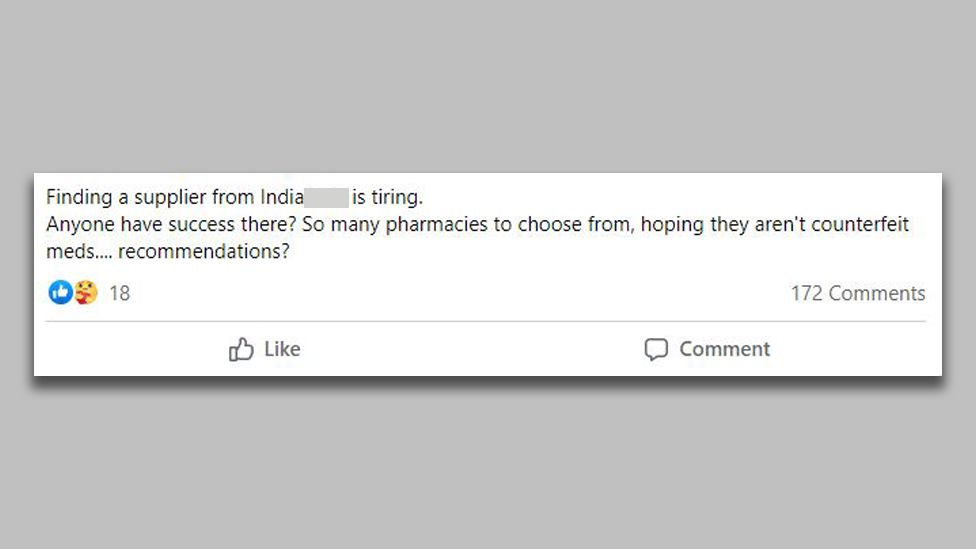
Large pro-ivermectin Facebook groups have turned into forums for people to find advice on where to buy it, including preparations meant for animals.

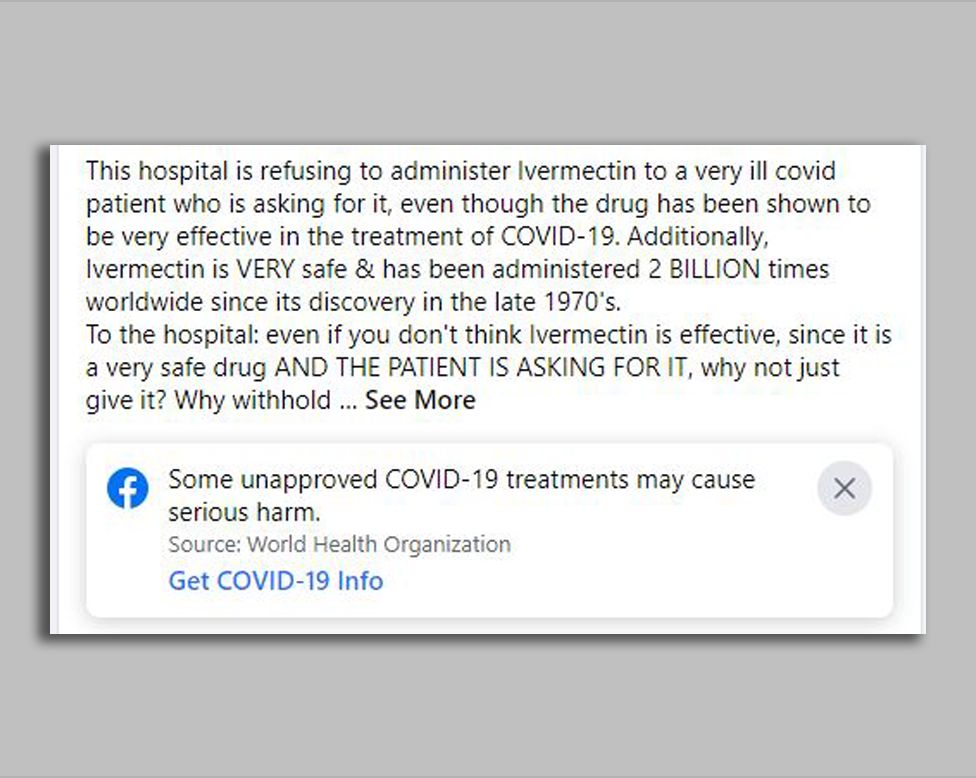
Some groups regularly contain posts about conspiracy theories of ivermectin cover-ups, as well as pushing anti-vaccine sentiment or encouraging patients to leave hospital if they aren't getting the drug.

The groups often provide a gateway to more fringe communities on the encrypted app Telegram.
These channels have co-ordinated harassment of doctors who fail to prescribe ivermectin and abuse has been aimed at scientists. Prof Andrew Hill, from the University of Liverpool, wrote an influential positive review of ivermectin, originally saying the world should "get prepared, get supplies, get ready to approve [the drug]".

Now he says the studies don't stand up to scrutiny - but after he changed his view, based on new evidence emerging, he received vicious abuse.

A small number of qualified doctors have had an exaggerated influence on the ivermectin debate. Noted proponent Dr Pierre Kory's views have not changed despite the major questions over the trials. He criticised "superficial interpretations of emerging trials data".

Dr Tess Lawrie - a medical doctor who specialises in pregnancy and childbirth - founded the British Ivermectin Recommendation Development (Bird) Group.

She has called for a pause to the Covid-19 vaccination programme and has made unsubstantiated claims implying the Covid vaccine had led to a large number of deaths based on a common misreading of safety data.
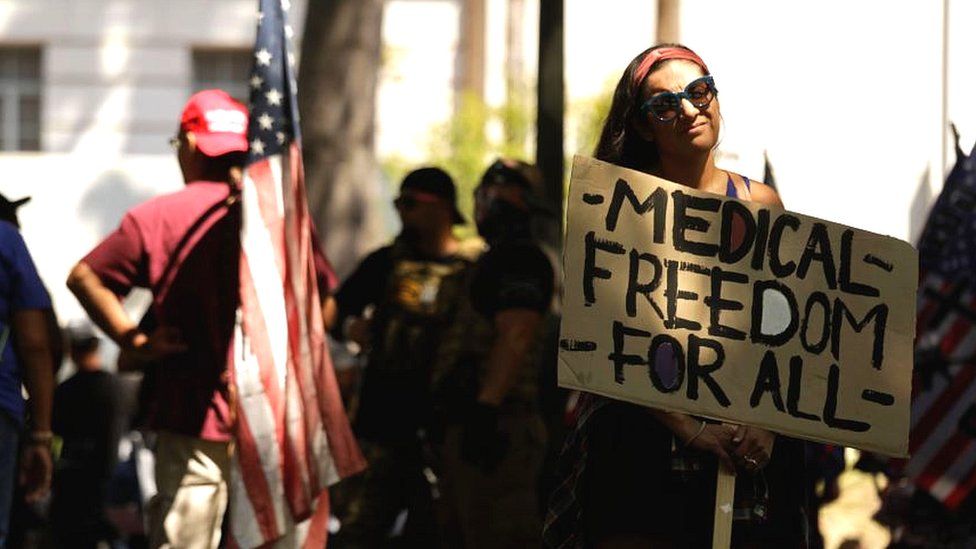
IMAGE SOURCE,

When asked during an online panel what evidence might persuade her ivermectin didn't work she replied: "Ivermectin works. There's nothing that will persuade me." She told the BBC: "The only issues with the evidence base are the relentless efforts to undermine it."

Around the world it was originally not opposition to vaccines but a lack of them that led people to ivermectin.

The drug has at various points been approved, recommended or prescribed for Covid in India, South Africa, Peru and much of the rest of Latin America, as well as in Slovakia.

Health authorities in Peru and India have stopped recommending ivermectin in treatment guidelines.

In February, Merck - one of the companies that makes the drug - said there was "no scientific basis for a potential therapeutic effect against Covid-19".

In South Africa, the drug has become a battleground - doctors point out the lack of evidence but many patients desperately want access as the vaccine rollout has been patchy and problematic. One GP in the country described a relative, a registered nurse, who didn't book a coronavirus vaccine she was eligible for and then caught the virus.

"When she started getting worse, instead of getting proper assessment and treatment, she treated herself with ivermectin," she said.

"Instead of consulting a doctor, she continued with the ivermectin and got home oxygen. By the time I heard how low her oxygen saturation levels were (66%), I begged her daughter to take her to casualty.

"At first they were reluctant, but I convinced them to go. She passed away a few hours later."

Additional reporting by Shruti Menon

Brace yourself — gas prices are hitting records as global energy crisis arrives in Canada

North America has so far been spared huge leaps in energy costs Asia and Europe are dealing with

Canadians are getting a taste of the higher energy prices that the rest of the world has been dealing with for months now. (Sergei Karpukhin/Reuters)

An acute energy crisis is making its presence felt in North America as consumers are finally starting to feel the pinch of much higher prices to fill up their cars and heat their homes.

The average retail price of gasoline in Canada hit $1.45 a litre on Wednesday, according to data compiled by retail analytics firm Kalibrate. 

That's a three-cent rise from Tuesday's level and enough to beat the previous record of 143.6 cents, set this August. Prior to that, you had to go back several years to see higher gas prices.

The average pump price topped $1.40 a litre for the first time in 2008 and then $1.41 in 2014, research analyst Suzanne Gray told CBC News in an emailed statement.

While there are many factors that determine the price of retail gasoline, the price of oil is the biggest one, and crude prices around the world have roared back in recent months as supply and demand is proving to be more volatile than usual while the global economy is trying to emerge from the depths of the pandemic.

WATCH | Here's why oil prices are spiking

Reduced supply driving increasing oil prices

2 days ago
2:00
As demand exceeds supply after months of lockdown, gas prices are rising in Canada. Other countries are also seeing higher prices for fuel, but are more concerned about overall availability. 2:00

Like just about everything else, oil prices took a swan dive in the early days of the pandemic, as travel slowed to a crawl, factories closed up shop and the world economy effectively went into hibernation.

This slowdown went as far as causing the oil price to dip below zero for the first time on record in April of 2020. Oil traders literally couldn't give away a barrel of oil for free and had to pay money to have people take it off their hands.

Oil rigs went into survival mode to make it through the pandemic. But as demand started to creep back, so, too, did prices. After dipping below zero barely a year ago, crude prices are now back to their highest level in seven years, and analysts say higher highs are coming.

"We're probably going to see prices continue to rise through the end of the year unless we see another kind of COVID acceleration," said Rory Johnston, founder of the Commodity Context newsletter and managing director at Toronto-based investment firm Price Street.

Normally, oil prices tend to ease off in the winter as demand for driving and flying in the northern hemisphere declines. But COVID has thrown the normal seasonal patterns completely out the window.

"Because of all of the pent up demand and these random reopening paths we're on globally, it's really hard to ... ascribe a very normal seasonal pattern," Johnston said. "I think it still is yet to be seen whether or not that happens."

Edward Moya, an analyst at foreign exchange firm Oanda, says crude prices could have a lot more room to run.

"The oil market is still heavily in deficit and that will likely be the story over the winter.  If the north has a cold winter, the prospects of $90 oil seem very likely." 

Global energy crisis

Higher pump prices are probably the most obvious example that consumers notice, but in reality, what Canadians pay at the gas station is only now catching up to what the rest of the world has been seeing in energy for a while now. Put simply, the price of everything is skyrocketing.

Natural gas prices are skyrocketing in Europe and Asia in recent months as demand has increased at a time when supplies have never been lower.

The fall has been colder than normal across much of Europe, causing Europeans to reach for the thermostat. But supplies are lower than usual because exports from major suppliers, such as Norway and Russia, are down.

According to data from Gas Infrastructure Europe, the association for gas companies on the continent, storage tanks are almost one quarter empty right now. Typically at this time of year, they would be full to the brim in advance of the cold months to come.

Natural gas prices have increased more than fivefold in recent months, and more hikes are expected.

Europeans aren't the only ones short on gas either; China finds itself with a voracious demand for energy, too, which is causing gas exporters to go to the highest bidder. Rolling blackouts and shuttered factories are the norm in China right now, as the world's most populous country is having trouble keeping the lights on as things reopen from COVID-19.

It's gotten so bad that it has declared a temporary truce in its ongoing trade war with Australia, because it is so desperate for coal

In Britain, gas stations are running out of fuel, with little relief in sight.

WATCH | Why the U.K. seems to be running out of gas

Severe gasoline shortage at pumps in the U.K.

11 days ago
1:36
Britain is trying to find 5,000 truck drivers to deliver gasoline to stations, even issuing temporary visas to Europeans to help ease supply chain problems. (Jon Super/The Associated Press) 1:36

Utility bills expected to rise in B.C., Ont.

While drama like that hasn't happened yet in North America, consumers should expect their bills to rise.

B.C.'s main gas distributor, FortisBC warned customers in September that the average bill is set to go up between nine and 12 per cent starting this month. And Ontario's biggest gas company, Enbridge, has applied with the province's regulator to increase what it charges consumers starting in January.

"As if we don't have enough sources of inflation pressures flaring," Bank of Montreal economist Doug Porter said in a note to clients on Thursday.

Soaring demand around the world "points to higher prices ahead for Canadians to heat their homes this winter," he said.

Kit Juckes, a strategist with French investment bank Société Générale, says energy prices are spiking so much that he expects governments around the world may eventually have to step in.

"How much governments will end up subsidising gas use will vary from place to place," he said in a note to clients on Wednesday.

"In the longer run, we don't think current prices are sustainable, but the short run will matter more in the weeks ahead."

LOBBYIST PAID BI-PARTISAN AGREEMENT 
Senators blast new US mining royalty plan as anti-green, pro-China 
MINING.com Editor | October 5, 2021 | 

US Congress. Credit: Wikimedia Commons

In Washinton on Tuesday, members of the Senate Committee on Energy and Natural Resources (ENR) came out in opposition of House Democrats’ attempt to change the mining law through a partisan budget process.


US mining companies have blasted proposals in Congress that would set royalties for copper, lithium and other minerals extracted from federal land, with executives saying the measures would hurt domestic production of the building blocks for solar panels, electric vehicles and other green technologies.

“The race for electric vehicles and electrification of the economy requires metals and mining, and that needs to be incentivized, not stalled,” Rich Nolan, head of the National Mining Association, told Reuters.

The House of Representatives Natural Resources Committee added language to the proposed $3.5 trillion reconciliation spending measure earlier this month that would set an 8% gross royalty on existing mines and 4% on new ones. There would also be a 7 cent fee for every tonne of rock moved.

That would mark one of the most-substantial changes to the law that has governed U.S. mining since 1872 and could raise about $2 billion over 10 years for federal coffers.
150 year-old mining law

The 1872 law did not set royalties in order to encourage development of more than 350 million acres in the western United States. Miners say it should remain as-is, or be tweaked only slightly. Environmentalists have long said the law should be updated to require the industry to pay to extract minerals on taxpayer-owned land.


“The Law of 1872 is egregious by modern standards,” said Autumn Hanna, vice president, Taxpayers for Common Sense. “No one sets a price for land and leaves it for 150 years.”


“The president and House Democrats want to make it more difficult to get to these minerals we need. And they seek to eliminate all mining on federal lands,” said Ranking Republican Member John Barrasso (Wyoming) in Tuesday’s hearing.

“Last month, House Democrats advanced partisan budget legislation – their reckless tax and spending spree – that would impose punishing royalties on existing and new mines on federal land. House Democrats also plan to raise fees and impose a tax on mining firms. The fees are based on the amount of dirt they moved. You can’t make this stuff up. House Democrats are planning to tax dirt,” Barrasso said.

The state of Nevada is home to the largest gold mining complex in the world, Nevada Gold Mines, a joint venture between the world’s top two gold miners —Newmont and Barrick.

“I oppose the reform proposal that was put forward in the House of Representatives because, one, the legislation would have an unfair, outsized impact on the state of Nevada, where most of the land is owned by the federal government and it imposes taxes on federal land. But more importantly, moving this type of reform through a short-term budget process would create uncertainty for the industry and uncertainty that supports thousands of jobs across the country,” said Democratic Senator Catherine Cortez Masto (Nevada).

The proposed new royalty rates would affect hard rock mining, but are part of a series of other proposed fee hikes on oil, coal and natural gas extraction.

The committee had also approved language that would block Rio Tinto from building its Resolution copper mine in Arizona. The world’s second-largest miner has spent more than $2 billion on the project in the past decade but has yet to produce any copper, the red metal used in electric vehicles and other electronics.


“This is clearly an example where the legislation will help China and hurt the United States and make us more dependent on China and potentially other adversaries for critical minerals that we need, including for our national defense,” said North Dakota Republican Senator John Hoeven.

(With files from Reuters)

 GREENWASHING 

US DOE funds hydrogen production from nuclear power

08 October 2021


A project to demonstrate the production of clean hydrogen energy from nuclear power at the Palo Verde nuclear power plant in Arizona is to receive USD20 million in federal funding as part of US Department of Energy (DOE) efforts to reduce the cost of clean hydrogen to USD1 per kilogram. The announcement comes as DOE marks Hydrogen and Fuel Cell Day.

(Image: DOE)

The Arizona project, which is led by PNW Hydrogen LLC, will progress DOE's H2@Scale multi-sector clean hydrogen initiative and help it to reach its Hydrogen Shot goal to reduce the cost of clean hydrogen by 80% to USD1 per kilogram within a decade, the department said yesterday. Hydrogen Shot is the first of the DOE's Energy Earthshots initiative, launched in June this year.

"Developing and deploying clean hydrogen can be a crucial part of the path to achieving a net-zero carbon future and combatting climate change," Deputy Secretary of Energy David Turk said. "Using nuclear power to create hydrogen energy is an illustration of DOE's commitment to funding a full range of innovative pathways to create affordable, clean hydrogen, to meet DOE's Hydrogen Shot goal, and to advance our transition to a carbon-free future."

PNW Hydrogen will be the primary recipient of the award, which is made up of USD12 million from the DOE Hydrogen and Fuel Cell Technologies Office (HFTO) and USD8 million from the Office of Nuclear Energy. The project will involve producing hydrogen at Palo Verde. Six tonnes of this will be stored and used to produce about 200 MWh of electricity during times of high demand, and may be also used to make chemicals and other fuels. This will provide insights into integrating nuclear energy with hydrogen production technologies and inform future clean hydrogen deployments at scale, DOE said.

PNW Hydrogen will collaborate with multiple stakeholders in research, academia, industry and state-level government including Idaho National Laboratory (INL), National Energy Technology Laboratory, National Renewable Energy Laboratory, OxEon, Electric Power Research Institute, Arizona State University, University of California Irvine, Siemens, Xcel Energy, Energy Harbor and the Los Angeles Department of Water and Power.

Palo Verde is a three-unit pressurised water reactor plant, operated by Arizona Public Service and located near Phoenix. The plant was selected in 2019 to partner with INL in a project to investigate the potential use of hydrogen generated in the nuclear plant as energy storage.

Hydrogen Day


According to the HFTO, Hydrogen and Fuel Cell Day - 8 October - "marks a symbolic opportunity every year to celebrate hydrogen and to talk about the role it can play as we transition to a cleaner and more equitable energy future."
 
The HFTO coordinates hydrogen activities across DOE including the Hydrogen Shot.

Researched and written by World Nuclear News