Friday, October 29, 2021

DC insider: Don’t believe corporate America’s 'labor shortage' BS

Robert Reich
October 29, 2021

Factory worker (Shutterstock)

For the first time in years, American workers have enough bargaining leverage to demand better working conditions and higher wages – and are refusing to work until they get them.

Here's where that leverage comes from. After a year and a half of the pandemic, consumers have pent-up demand for all sorts of goods and services. But employers are finding it hard to fill positions to meet that demand.

The most recent jobs report showed the number of job openings at a record high. The share of people working or looking for work has dropped to a near-record low 61.6 percent. In August, 4.3 million Americans quit their jobs, the highest quit rate since 2000.

Republicans have been claiming for months that people aren't getting back to work because of federal unemployment benefits.

America is on Strike | Robert Reichwww.youtube.com

The number of people working or looking for work dropped in September – after the extra benefits ran out on Labor Day.

The reluctance of people to work doesn't have anything to do with unemployment benefits. It has everything to do with workers being fed up.

Some have retired early. Others have found ways to make ends meet other than a job they hate. Many just don't want to return to backbreaking or mind-numbing low-wage jobs.

In the wake of so much hardship, illness and death, peoples' priorities have shifted.

The media and most economists measure the economy's success by the number of jobs it creates, while ignoring the quality of those jobs. Just look at the media coverage of the September jobs report: The New York Times emphasized "weak" job growth. For CNN, it was "another disappointment."

But when I was Secretary of Labor, I met with working people all over the country who complained that their jobs paid too little and had few benefits, or were unsafe, or required unwieldy hours. Many said their employers treated them badly.

With the pandemic, it's even worse. That's why, in addition to all the people who aren't returning to work, we're also seeing dozens of organized strikes around the country – 10,000 John Deere workers, 1,400 Kellogg workers, over 1,000 Alabama coal miners, and thousands of others.

Not to mention the unauthorized strikes and walkouts since the pandemic began, like the mostly Black sanitation workers in Pittsburgh or the Amazon warehouse workers in Staten Island.

In order to lure workers back, employers are now raising wages and offering other incentives. Average earnings rose 19 cents an hour in September and are up more than $1 an hour over the last year. But clearly, that's not enough to get workers back.

Corporate America is trying to frame this as a "labor shortage."

But what's really happening is more accurately described as a living-wage shortage, a hazard pay shortage, a childcare shortage, a paid sick leave shortage, and a health care shortage.
Unless these shortages are rectified, this unofficial general strike will continue.I say it's about time.
G20 urged to redistribute surplus Covid vaccines

Updated / Friday, 29 Oct 2021

US President Joe Biden and First Lady Jill Biden have arrived in Rome for the G20 summit

The leaders of the world's 20 biggest economies should use a meeting this weekend in Rome to agree how to transfer surplus Covid-19 vaccines to low-income countries, a group of former presidents and prime ministers has said.

In a letter to Italian Prime Minister Mario Draghi, 100 former leaders and government ministers from around the world urged him to use the G20 summit to address what they said was an unfair distribution of vaccines.

The group said the United States, European Union, Britain and Canada would be stockpiling 240 million unused vaccines by the end of the month, which these nations' military could immediately airlift to countries in greater need.

By the end of February a total of 1.1 billion surplus vaccines could be transferred, it said.

"It would be unethical for all these vaccines to be wasted when globally there are 10,000 deaths from Covid-19 every day, many of which could be averted," said the letter, whose signatories include former UN Secretary General Ban Ki-moon and former British prime minister Gordon Brown.

The group said the World Health Organization's aim for 40% of the world's population to be vaccinated by the end of the year could only be met if the G20 made a joint decision to order an emergency transfer of their excess vaccine supplies.

"Vaccine inequality also constitutes a threat to us all," it said.

"We are all not safe until everyone is safe. Without urgent and widespread vaccination, variants will continue to arise in unvaccinated regions, and may well spread from there to challenge the vaccine protection achieved hitherto in more vaccinated countries."

G20 host Italy had hoped the G20 summit would see all leaders meet face-to-face.

However, China's President Xi Jinping will participate via video link, while Russian President Vladimir Putin and Japanese Prime Minister Fumio Kishida will also not attend in person.

US President Joe Biden has arrived in Rome to attend.

The G20, whose countries account for 80% of global carbon emissions, is considered an important stepping stone before the United Nations COP26 climate summit in Scotland, which begins on Sunday.

Mr Xi is also not expected to attend COP26 in person, which could indicate that the world's biggest CO2 producer has already decided that it has no more concessions to offer at the UN COP26 climate summit after three major pledges since last year, climate watchers said.

The G20 also aims to underline that rich countries should stump up $100 billion per year to help poorer nations adapt to climate change.

This goal was supposed to be achieved by 2020, according to an agreement reached in 2009, but has not been met.

The head the Health Service Executive's Vaccine Programme has said that Ireland recently completed a delivery of 340,000 vaccines, which were at risk of expiring, to Uganda.

Speaking on RTÉ's Morning Ireland, Damien McCallion Ireland has sufficient vaccine stock to support its booster programme and has ceased delivery of all its vaccines.

He said Ireland has committed around 1 million vaccines under the international COVAX programme by year's end.

Where there are vaccines in danger of expiring, he said, bilateral agreements with other countries that need them will be undertaken.
UK

Patients and staff ‘paying a heavy price’ despite Government ‘lip service’, warn nurses

Official statistics show there are nearly 40,000 registered nursing vacancies across the NHS in England alone.

by Matt Bodell
28 October 2021

Shutterstock

Last month there were also over 2 million visits to A&E departments in England.

The Royal College of Nursing (RCN) has warned that patients and NHS staff are “paying a heavy price” despite ongoing “lip service” from the Government.

They have accused the Chancellor of ducking the opportunity to address health inequalities and chronic staffing shortages across the health service.

Official statistics show there are nearly 40,000 registered nursing vacancies across the NHS in England alone.

Last week Health Secretary Sajid Javid said he did not “believe the pressures on the NHS are unsustainable” despite NHS performance data showing a new record-high for the number of patients on waiting lists for treatment.

Last month, there were also over 2 million visits to A&E departments in England, the highest number in any September since current records began and over 100,000 patients waited over four hours for admission to a hospital bed.

The Chancellor did however pledge £5.9 billion for new equipment and promised to give NHS workers a pay rise “next year”.

Paying a heavy price.


Responding to the Budget statement from the Chancellor, RCN General Secretary & Chief Executive, Pat Cullen, said: “Despite lip service to levelling up, the Chancellor has ducked the opportunity to address health inequalities and invest in the country’s nursing staff as a means of investing in patient safety.

“The pay freeze hit nurses working in social care and the community – but whether in the NHS or not, nursing staff need a proper pay rise that finally recognises their skill and professionalism.

“He failed to address their pay and again kicked the can down the road by failing to give any commitment to a funded strategy for England to address the tens of thousands of vacant nurse jobs in health and care.

“The public’s greatest fear for health and care services is the current lack of staff. With salaries falling in real terms each year, too many more are considering their future.

“Patient care is paying a heavy price, as is our workforce. Any new centre or clinic requires skilled staff, as does the backlog of people needing care and support.

“Announcements on new hospitals and clinics raise patient expectations but without investment in the nursing workforce waiting lists will continue to grow.

“Patient safety should be the primary concern of every politician. Today’s statement sets the direction for the next few years but completely misses the chance to address years of absent workforce planning.”


Greensill scheme pushed by David Cameron provided ‘no benefits to NHS’, official probe finds

‘Promised savings vanishing into thin air,’ says public accounts committee chief

Adam Forrest


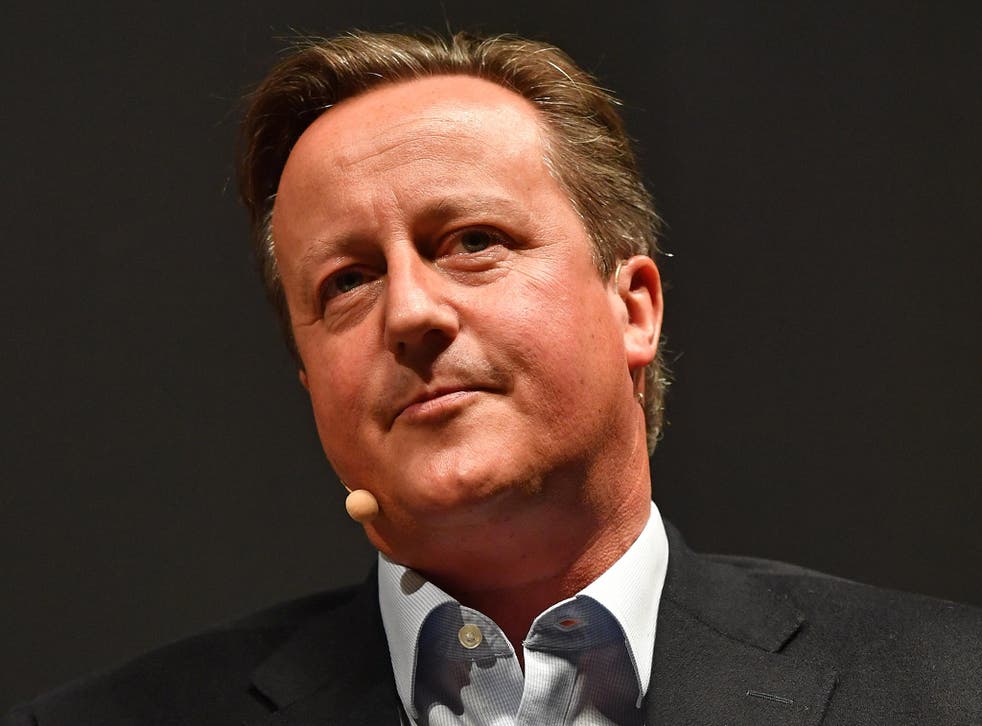
Former prime minister David Cameron has come under intense scrutiny over his lobbying efforts for Greensill Capital
(PA)

An NHS payment scheme pushed by David Cameron while he worked for Greensill Capital provided no “material benefits” to the health service, a government watchdog has found.

The former Conservative prime minister was at the centre of a scandal over his lobbying of Tory ministers on behalf of the finance firm which collapsed earlier this year.

In 2019 Mr Cameron lobbied then health secretary Matt Hancock about the benefits of payment scheme allowing NHS staff to get some of their earnings in advance, later rolled out to several trusts.

But an investigation National Audit Office (NAO) has found that the salary scheme – and a separate payment scheme for community pharmacies – did not receive the expected uptake and did nothing to help the NHS financially.

The Labour chair of the public accounts select committee said the failure of the schemes to deliver “promised savings” raised more questions about the government’s ability to “prevent conflicts of interest”.

The NAO investigation looked into the Pharmacy Earlier Payment Scheme brought in by the Department of Health and Social Care in 2013 following advice provided by Lex Greensill. His firm Greensill Capital later acted as the scheme’s financial guarantor.


The health department estimated that the scheme – aimed at getting banks to help reimburse pharmacists for prescriptions more swiftly – could save the NHS £100m. But investigators for the spending watchdog found “no evidence that these predicted savings were realised”.

The NAO also looked into a salary advance scheme called Earnd – pushed by Greensill Capital by 2019 and 2021 as a way of allowing employees of NHS trusts to receive a proportion of their earnings before payday.

The investigation found that seven NHS trusts adopted the scheme, but was not widely taken up and did not help the health service financially. The collapse of Greensill Capital in March 2021 forced some NHS trusts to switch to another advance scheme – incurring extra costs for doing so.

Earlier this year it emerged that Mr Cameron had organised a “private drink” with Mr Greensill and Mr Hancock in October 2019 to talk about the salary advance scheme.

The ex-health secretary later admitted his former Tory colleague had lobbied him, but details of the meeting were not published anywhere on records of official engagements.

Labour MP Meg Hillier, chair of the Committee of Public Accounts, said the NAO’s findings “raise yet more questions over the government’s ability to prevent conflicts of interest and the independence of advice it receives”.

The influential backbencher added: “The consequences once again fall squarely on the taxpayer – with increasing risks to value for money and promised savings vanishing into thin air.”

Mr Cameron came under intense scrutiny over his efforts to get Greensill Capital access to the government’s Covid support schemes in the early weeks of the pandemic as the firm faced insolvency.

Documents showed a barrage of messages sent by Mr Cameron to ministers, including chancellor Rishi Sunak, and officials at the Treasury and Bank of England in March and April of 2020 as he fought to get Greensill access to a loans scheme.

Mr Cameron later told MPs on the Treasury committee that he ought to have made formal approaches by letter – but insisted that his use of private phone numbers of former Tory colleagues was “acceptable”.
Vaccinated easily spread Delta in households - study

Updated / Friday, 29 Oct 2021 


The Delta coronavirus variant can transmit easily from vaccinated people to their household contacts, a British study found, although contacts were less likely to get infected if they were vaccinated themselves.

The Imperial College London study illustrates how the highly transmissible Delta variant can spread even in a vaccinated population.

The researchers underlined that did not weaken the argument for vaccination as the best way of reducing serious illness from Covid-19 and said booster shots were required.

They found infections in the vaccinated cleared more quickly, but the peak viral load remained similar to the unvaccinated.

"By carrying out repeated and frequent sampling from contacts of Covid-19 cases, we found that vaccinated people can contract and pass on infection within households, including to vaccinated household members," Dr Anika Singanayagam, co-lead author of the study, said.

"Our findings provide important insights into... why the Delta variant is continuing to cause high Covid-19 case numbers around the world, even in countries with high vaccination rates."

The study, which enrolled 621 participants, found that of 205 household contacts of people with Delta Covid-19 infection, 38% of household contacts who were unvaccinated went on to test positive, compared to 25% of vaccinated contacts.

Vaccinated contacts who tested positive for Covid-19 on average had received their shots longer ago than those who tested negative, which the authors said was evidence of waning immunity and supported the need for booster shots.

Imperial epidemiologist Neil Ferguson said that the transmissibility of Delta meant that it was unlikely Britain would reach "herd immunity" for long.

"That may happen in the next few weeks: if the epidemic's current transmission peaks and then starts declining, we have by definition in some sense reached herd immunity, but it is not going to be a permanent thing," he told reporters.

"Immunity wanes over time, it is imperfect, so you still get transmission happening, and that is why the booster programme is so important."


COVID-19 can be transmitted by fully vaccinated people at home: Lancet study

By: PTI |
October 29, 2021

The researchers noted that most COVID-19 transmission is known to occur in households yet there is limited data on the risk of transmission of the Delta variant from vaccinated people with asymptomatic or mild infections in the community.


The authors point to vaccine waning as important evidence for all eligible people to receive booster shots.

Fully vaccinated people can contract and pass on Delta variant of SARS-CoV-2, the virus that causes COVID-19, in household settings, but at lower rates than unvaccinated people, according to a study published in The Lancet Infectious Diseases journal.

Researchers led by Imperial College London, UK, found that vaccinated people clear the infection more quickly, but the peak viral load among them is similar to that seen in unvaccinated individuals, which may explain why they can still readily pass on the virus at home.

The researchers noted that most COVID-19 transmission is known to occur in households yet there is limited data on the risk of transmission of the Delta variant from vaccinated people with asymptomatic or mild infections in the community. “Vaccines are critical to controlling the pandemic, as we know they are very effective at preventing serious illness and death from COVID-19,” said Professor Ajit Lalvani of Imperial College London, who co-led the study.

“However, our findings show that vaccination alone is not enough to prevent people from being infected with the Delta variant and spreading it in household settings,” Lalvani added.

The researchers noted that the transmission between vaccinated people makes it essential for unvaccinated people to get immunised to protect themselves from acquiring infection and severe COVID-19, especially as more people will be spending time inside in close proximity during the winter months.

The study enrolled 621 participants, identified by the UK contact tracing system, between September 2020 and September 2021. All participants had mild COVID-19 illness or were asymptomatic. They had daily PCR tests to detect infection, regardless of whether or not they had symptoms.

The researchers performed PCR tests on swab samples provided daily by each participant for 14-20 days. Changes over time in viral load — the amount of virus in a person’s nose and throat — were estimated by modelling PCR data.

A total of 205 household contacts of Delta variant index cases were identified, of whom 53 tested positive for COVID-19.
Among vaccinated contacts infected with the Delta variant, the median length of time since vaccination was 101 days, compared with 64 days for uninfected contacts, the researchers said.

This suggests that the risk of infection increased within three months of receiving a second vaccine dose, likely due to waning protective immunity, they said. The authors point to vaccine waning as important evidence for all eligible people to receive booster shots.

A total of 133 participants had their daily viral load trajectories analysed, of whom 49 had pre-Alpha variant and were unvaccinated, 39 had Alpha and were unvaccinated, 29 had Delta and were fully vaccinated, and 16 had Delta and were unvaccinated.

The study found that the viral load declined more rapidly among vaccinated people infected with the Delta variant compared with unvaccinated people with Delta, Alpha, or pre-Alpha. However, the authors note that vaccinated people did not record a lower peak viral load than unvaccinated people, which may explain why the Delta variant can still spread despite vaccination as people are most infectious during the peak viral load phase.

“Understanding the extent to which vaccinated people can pass on the Delta variant to others is a public health priority,” said Anika Singanayagam, co-lead author of the study. “By carrying out repeated and frequent sampling from contacts of COVID-19 cases, we found that vaccinated people can contract and pass on infection within households, including to vaccinated household members,” Singanayagam said.

The findings suggest that continued public health and social measures to curb transmission such as mask wearing, social distancing, and testing remain important, even in vaccinated individuals. The authors acknowledge some limitations to their study. Due to the nature of UK symptoms-based community testing, only contacts of symptomatic index cases were recruited, the researchers said.

As the study was undertaken when infection was circulating widely, it cannot be excluded that another household member may already have been infected and transmitted COVID-19 to the index case, they added.

UK

Public supports nationalising ‘gig economy’ apps such as Deliveroo and Uber to improve working conditions

Oxford University study finds strong support for action on gig economy

Jon Stone
Policy Correspondent

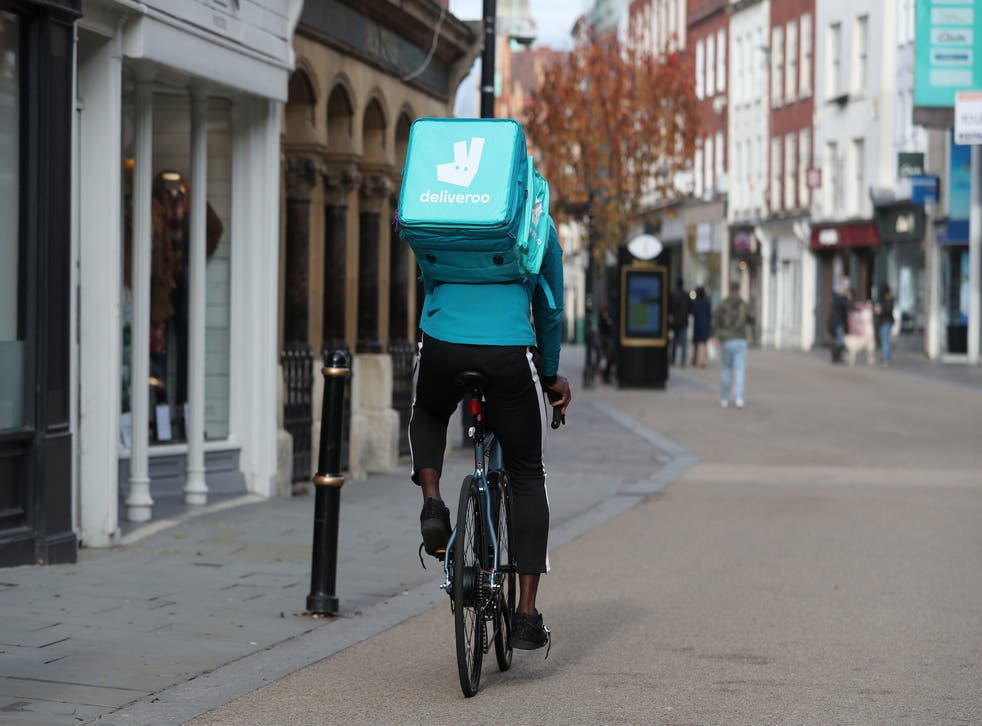
Deliveroo riders are classed as self-employed
(PA)

There is strong public support for taking “platform” apps such as Deliveroo and Uber into public ownership if they fail to improve pay and conditions for their workers, new polling has found.

A study of opinion commissioned by researchers at Oxford University found a ratio of nearly two-to-one (41 per cent to 22 per cent) believe so-called gig economy workers are not paid a fair wage.

The researchers from the university’s Fairwork project had pollsters ask voters about measures they would support to improve conditions in the sector.

They found nearly two-thirds of Britons (64 per cent) support changing employment law to stop platform employers from inaccurately describing workers as “self-employed” to get around requirements like holiday pay and sick leave.

And a significant majority (57 per cent) think the companies should be obliged to negotiate with trade unions – which very few of them currently recognise. Sixty per cent also say the companies should have to accept worker representatives sitting on their boards of directors.

But there was also strong support for going further: asked whether the companies behind the apps should be nationalised and taken into public ownership if they repeatedly failed to offer workers fair pay and conditions, 49 per cent agreed and 25 per cent disagreed.

A large majority of 60 per cent of Labour voters support the idea, but it is also popular among Conservative voters, who back it by 47 per cent in favour to 27 per cent opposed.

Apps such as Deliveroo, Uber and Amazon Flex pay workers per job completed rather than a set wage, and claim people who work for them are self-employed rather than employees.

As a result, workers can be paid below the minimum wage, especially during quiet periods, and do not get the same rights as other workers. Defenders of the approach say it offers more flexibility, but critics say it makes it hard for workers to rely on a regular income and makes their jobs extremely precarious.

Mark Graham, a professor the University of Oxford’s Internet Institute, and director of the Fairwork research project, said the polling results showed “an appetite for decisive action to improve fairness in the gig economy”.

“The development of technology has allowed for services like transport and delivery to be organised in new ways, but these developments risk being monopolised for the benefits of platforms and their investors, rather than being passed onto workers,” he said.

“Given the scale of the social challenges we face as we emerge from the pandemic, there is an urgent need for the platform economy to transition towards working for social benefit, not private profit.  

“Gig economy platforms need to start making serious improvements now if they want to keep their customers on side and prevent this demand for change from escalating further.” 

Labour has already pledged to change employment law to stop firms using bogus “self-employment” status to strip workers of the right to holiday and sick pay. The party also says it will bring in “fair pay agreements that would require certain sectors to negotiate with trade unions for minimum pay and conditions”.

Alex Marshall, president of the IWGB union, which organises workers on platform apps, said: "This report reiterates that the tide is turning in the gig economy. Not only are we seeing more and more exploitative employers lose in court and be ordered to give workers the rights they have been illegally denied, but now we are seeing public opinion hugely change too.

"These key workers have proved their value with the huge shift they put in to get us all through the pandemic and the public are getting behind them in demanding better treatment.

"A more ethical employment model would not only be beneficial for the workers, but would improve public perception and benefit the business too. Workers' voices are being heard and this comes as a result of unions like the IWGB getting organised, campaigning and winning in the gig economy and making sure that worker rights remain front and centre."

The polling in the study was conducted by Survation on 21 and 22 October 2021 from a representative sample of 2,020 adults aged 18 and over living in the UK.
UK
Liz Truss sets out plan to ban ‘abhorrent’ conversion therapy

Government wants to ban all ‘coercive’ practices – but experts have warned some victims can appear to have consented

Adam Forrest

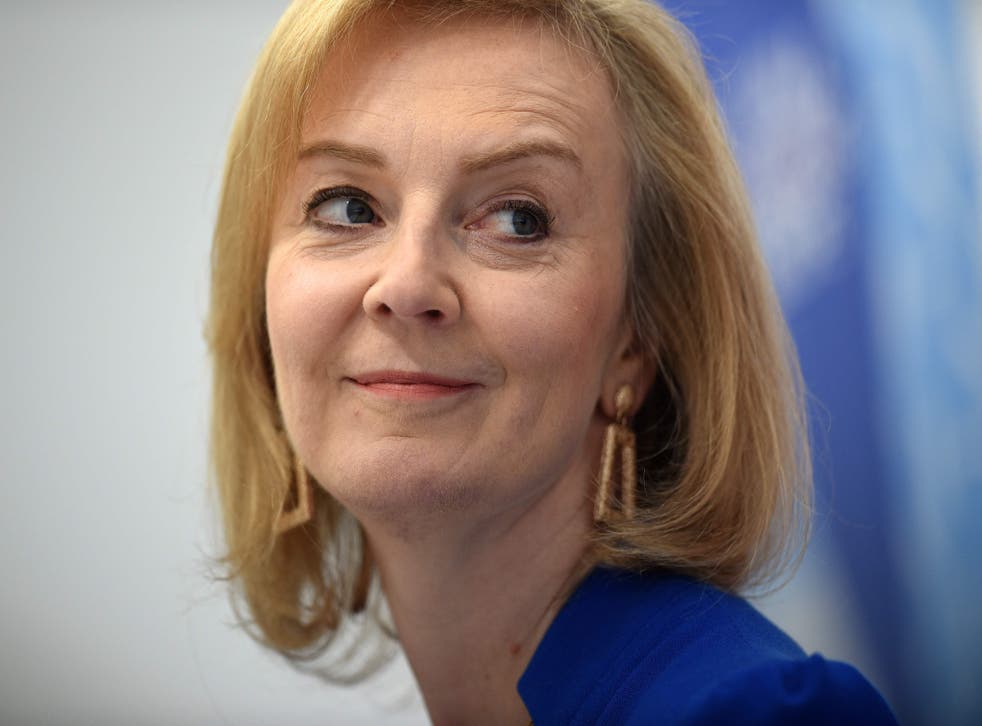
Minister for women and equalities minister
(AFP via Getty Images)

Cabinet minister Liz Truss has vowed to protect LGBT+ people from “abhorrent” conversion therapy, as the government finally sets out its long-awaited plan to ban the practice.

The Conservatives promised in 2018 to bring forward legislation to end conversion therapies which seek to change someone’s sexual orientation or gender identity.

In March, three of the government’s LGBT+ advisers quit their posts and issued damning criticism over the failure of Boris Johnson’s government to fulfil the long-standing pledge.

Ms Truss, the minister for women and equalities, is now launching a six-week consultation process on the legislative plan to make “coercive” conversion therapies illegal in England and Wales.

The government wants create a new offence for so-called talking conversion therapies, as well as making sure violent conversion therapy acts are sentenced appropriately under existing laws.

“There should be no place for the abhorrent practice of coercive conversion therapy in our society,” said Ms Truss as she launched the consultation.

“Today we are publishing detailed proposals that will stop appalling conversion therapies and make sure LGBT people can live their lives free from the threat of harm or abuse.”

The minister added: “I want everyone to be able to love who they want and be themselves. Today’s announcement sets out how we will ban an archaic practice that has no place in modern life.”

The government said individuals would remain “free to seek out professional help and guidance” – saying legislative efforts would be focused on practices which people have not willingly agreed to undertake.

But campaigners have warned that there should be no defence that a victim appears to have consented to conversion therapy if the government hopes to introduce a truly comprehensive ban.

A recent report by the Forum group of human rights lawyers and experts warned: “Individuals who seek out conversion practices in the hope of being ‘cured’ are not made aware of the severe psychological harm to which they are exposed, and so cannot give informed consent.”

Officials in Northern Ireland have already start preliminary work on drafting a bill after politicians at Stormont passed a motion calling for a ban on conversion therapy in April.

In Scotland, the SNP administration has vowed to end conversion therapy – but said it would wait to see if Mr Johnson’s government follows through on its pledge to “eradicate” the practice and how extensive any proposed ban might be.

The government has made clear its legislative plan is aimed at changing the law in only England and Wales.

The Government Equalities Office (GEO) also said ministers were particularly keen safeguard under 18s – saying legislation would place a strong emphasis on preventing children undergoing any conversion therapies.

Ministers are also preparing to bring in Conversion Therapy Protection Orders to protect potential victims from undergoing the practice. This could include removing passports of those at risk of being taken overseas for conversion therapy.

The government is launching its six-week consultation at 9am on Friday. The GEO is seeking input from charities, and is urging those with experience of conversion therapy to come forward to give their views.
Human species who lived 500,000 years ago named as Homo bodoensis

Species was direct ancestor of early humans in Africa and discovery has led to reassessment of epoch


Homo bodoensis lived in the same epoch as early humans and Neanderthals. Illustration: Ettore Mazza

Nadeem Badshah
Thu 28 Oct 2021 

Researchers have announced the naming of a newly discovered species of human ancestor, Homo bodoensis.

The species lived in Africa about 500,000 years ago, during the Middle Pleistocene age, and was the direct ancestor of modern humans, according to scientists. The name bodoensis derives from a skull found in Bodo D’ar in the Awash River valley of Ethiopia.

Scientists said that the epoch is significant because it was when anatomically contemporary humans, Homo sapiens, appeared in Africa and the Neanderthals, known as Homo neanderthalensis, in Europe.

However, some paleoanthropologists have described this period as “the muddle in the middle” because human evolution during this age is poorly understood.

Dr Mirjana Roksandic, of the University of Winnipeg in Canada and the study’s lead author, said: “Talking about human evolution during this time period became impossible due to the lack of proper terminology that acknowledges human geographic variation.”

Under the new classification, Homo bodoensis will describe the majority of Middle Pleistocene humans from Africa and some from south-east Europe, while many from the latter continent will be reclassified as Neanderthals.

Christopher Bae, from the department of anthropology at the University of Hawaii at Manoa and one of the co-authors of the study, said the introduction of Homo bodoensis is aimed at “cutting the Gordian knot and allowing us to communicate clearly about this important period in human evolution”.


Roksandic concluded: “Naming a new species is a big deal, as the International Commission on Zoological Nomenclature allows name changes only under very strictly defined rules.

“We are confident that this one will stick around for a long time, a new taxon name will live only if other researchers use it.”

The findings are published in Evolutionary Anthropology Issues News and Reviews.

In August, the Guardian reported that archaeologists unearthed ancient DNA in the remains of a woman who died 7,200 years ago in Indonesia, a discovery that challenged what was previously known about the migration of early humans.

The remains, belonging to a teenager nicknamed Bessé, were discovered in the Leang Panninge cave on the Indonesian island of Sulawesi. Initial excavations were undertaken in 2015.

The discovery, published in the journal Nature, is believed to be the first time ancient human DNA has been discovered in Wallacea, the vast chain of islands and atolls in the ocean between mainland Asia and Australia.

The DNA was extracted from the petrous part of Bessé’s temporal bone, which houses the inner ear. Researchers said the intact DNA was a rare find.

This article was amended on 29 October 2021 to replace the main illustration.


UN envoy suggests that US lift sanctions against Zimbabwe

Thu, October 28, 2021, 

HARARE, Zimbabwe (AP) — A United Nations special envoy on Thursday urged the United States to end sanctions that she says have worsened Zimbabwe’s humanitarian crisis, while urging dialogue to end the impasse between the two countries.

The U.N envoy on unilateral coercive measures, Alena Douhan, has been in Zimbabwe for nearly two weeks investigating the impact of sanctions on the southern African country.

The U.S imposed travel and financial sanctions on Zimbabwe’s political, military and economic elite as well as companies linked to the state about two decades ago. This followed violent mass seizures of white-owned land and alleged vote-rigging and human rights violations by the late authoritarian President Robert Mugabe.

In her preliminary findings, Douhan said the U.S should “cease the state of national emergency regarding Zimbabwe.” She said the sanctions have “exacerbated the pre-existing economic and humanitarian crisis, inhibiting the building of essential infrastructure and international and inter-institutional cooperation.”

The United States embassy this week said that Washington “can lift sanctions once it determines sanctioned individuals have stopped undermining democracy, violating human rights, or facilitating corruption.”

The U.N. envoy met President Emmerson Mnangagwa as well as representatives of non-governmental organizations and opposition parties during her visit.

Zimbabwe has slid from being one of Africa’s most promising economies at independence from white minority rule in 1980 to a situation where many of the country's 15 million people reliant on informal trade and food handouts from international donors.

The country's once-robust public health system has also deteriorated while water, transport and other public infrastructure are in shambles. Mnangagwa blames these bad services on sanctions.

The main opposition and the U.S say corruption and human rights abuses are at the root of Zimbabwe’s woes.

The sanctions “do not target the Zimbabwean people,” said State Department spokesman Ned Price earlier this month. “Zimbabwe’s economic ills, we know, are caused by leaders, those leaders abusing power, not U.S. sanctions. Our sanctions target only 83 individuals and 37 entities.”

The sanctions seem to have neither loosened the ruling ZANU-PF party’s grip on power nor improved the human rights situation, some analysts say.

Instead, they have had a “reverse effect” and “have come as manna” for the ruling party, which has used them as a scapegoat for the country’s economic decline and also to gain political mileage by labeling the opposition as lackeys of the U.S, said Harare-based economic commentator Alexander Rusero.

Mnangagwa promised reform after taking power from Mugabe in 2017 and urged Zimbabweans to “stop mourning” about sanctions. But with political pressure rising and resentment seemingly growing, he has returned to Mugabe’s anti-sanctions mantra.

Mnangagwa successfully lobbied the 15-nation regional bloc, the Southern African Development Community, to declare Oct.25 an annual anti-sanctions day. In Zimbabwe, the day was this year marked by pro-government marches, speeches and a televised anti-sanctions musical gala.
COP26: Pope calls for ‘radical’ climate response from world leaders ahead of Glasgow summit

Pope Francis called for “a renewed sense of shared responsibility for our world”, adding that current crises presented the opportunity to make “radical decisions”

P
ope Francis will meet with US President Joe Biden later today to discuss issues including climate change and abortion
 (Photo by Franco Origlia/Vatican Pool – Corbis/Getty Images)

By Poppy Wood
October 29, 2021 10:10 am(Updated 10:16 am)

The Pope has called on global leaders to urgently tackle the climate crisis to give “concrete hope to future generations”, as politicians from around the world head to the Cop26 climate summit in Glasgow this weekend.

Pope Francis called for “a renewed sense of shared responsibility for our world”, adding that “each of us — whoever and wherever we may be — can play our own part in changing our collective response to the unprecedented threat of climate change and the degradation of our common home”.

In a special Thought for the Day message for BBC Radio 4’s Today programme, the leader of the Catholic world warned against countries taking an isolationist approach in tackling a “succession of crises” in healthcare, the environment, food supplies and the economy.

“Climate change and the Covid-19 pandemic have exposed our deep vulnerability and raised numerous doubts and concerns about our economic systems and the way we organise our societies,” he said.

“We can confront these crises by retreating into isolationism, protectionism and exploitation,” the pontiff said, “or we can see in them a real chance for change.”

His comments come as world leaders prepare to head to Glasgow this weekend for the Cop26 climate summit, where countries are under pressure to tighten their commitments to reducing carbon emissions.

Action already pledged by nations to curb CO2 output over the next decade will fall short of plans to limit global warming to 1.5C above pre-industrial times, beyond which increasingly severe impacts will be felt.

The Pope told Today: “We have lost our sense of security and are experiencing a sense of powerlessness and loss of control over our lives.”

But in a tone of optimism, the Pontiff added that current crises presented unmissable opportunities to make “radical decisions”.

“The political decision makers who will meet at Cop26 in Glasgow are urgently summoned to provide effective responses to the present ecological crisis and in this way to offer concrete hope to future generations,” he said, in a recording from the Vatican spoken in Italian.

Earlier this month, the Pontiff gathered almost 40 faith leaders from across the world at the Vatican to sign a joint appeal calling on Cop26 to commit to pledges on global warming, carbon neutrality and support for poorer nations to transition to clean energy.

The two-week climate conference set to kick off in Glasgow this weekend will prove vital to deliver on the pledges laid out in the global Paris Agreement in 2015 to limit temperature rises to “well below” 2C — and to try for the safer goal of 1.5C.

Leaders of major economies will head to Scotland following a G20 meeting in Rome this week, where climate is set to dominate the agenda.

The Pope is due to meet US President Joe Biden at the Vatican later. Mr Biden’s domestic climate policies remain on hold after his party postponed a vote on his spending plans yesterday, though the President is expected to discuss the Covid pandemic, climate change, the global energy crisis and other major challenges with other world leaders in Italy.


Read More
What does COP26 stand for? Meaning of Glasgow climate change summit’s name explained and what to expect

Key heads of state including China’s Xi Jinping and Russia’s Vladimir Putin are set to miss both summits, with many warning that significant action on climate change will be limited in the absence of two of the world’s largest carbon-emitting countries.

A draft G20 communique revealed that leaders will pledge to take urgent steps to reach the goal of limiting global warming to 1.5C, following calls from UN chiefs, religious leaders and campaigners, to avoid catastrophic climate impacts.

Delegates will also face pressure to phase out coal power, boost electric vehicles and protect forests, while developed countries will be pushed to deliver finance for poorer nations to help transition to clean economies.
CCS IS GREENWASHING
Unlocking Canada's carbon capture potential

MONTREAL, Oct. 28, 2021 /CNW Telbec/ - With the 2021 United Nations Climate Change Conference (COP26) set to begin in a few short days, governments are expected to double down on GHG emission reduction targets. A recent MEI publication described how carbon capture, utilization, and storage (CCUS) technologies can allow governments to reach their targets without compromising our standard of living. A follow-up publication launched today by the MEI offers tangible solutions to encourage uptake of this new technology by entrepreneurs.

"CCUS technologies can trap carbon from GHG emissions at the source and prevent its release into the atmosphere, or capture carbon already emitted and reduce overall atmospheric accumulation. Overall, these technologies present a huge opportunity to reach the government's goal of net-zero by 2050," says Krystle Wittevrongel, co-author of the publication.

"The federal government has committed to introducing a tax credit next year for investments in CCUS technologies, although some aspects of the proposed measure need further consideration. For instance, the exclusion of enhanced oil recovery projects should be eliminated, as these projects not only sequester 90% to 95% of the carbon dioxide injected, they are revenue-generating and more likely to be deployed in the short term. In addition, the tax credit should be refundable, levelling the playing field and making it easier for smaller companies to enter the market," adds the Public Policy Analyst.

"Most importantly, the measure should decouple investment from performance. A performance-based tax credit, such as exists in the United States, would see eligible facilities and projects awarded a credit for each metric ton of carbon captured, which means the carbon tax would be levied on their net emissions. This would really push entrepreneurs to find new and more efficient ways to capture and store (or use) GHG emissions. It really is a win-win," says Miguel Ouellette, Director of Operations and Economist at the MEI.

"The intensity of Canada's GHG emissions has fallen substantially in recent years, and the further innovation of emerging CCUS technologies promises to help the government meet its environmental goals, while also favouring economic growth. We know that CCUS is a viable tool in Canada's climate strategy, so the federal government should ensure that the policies to encourage these technologies are carefully crafted to make them as efficient as possible," concludes Mr. Ouellette.

The publication entitled "Carbon Capture, Utilization, and Storage: Concrete Market-Based Recommendations to Reduce GHG Emissions" is available on our website.

FRASER INSTITUTE EAST

The Montreal Economic Institute is an independent public policy think tank. Through its publications, media appearances and advisory services to policy makers, MEI stimulates debate and public policy reform based on established principles of market economics and entrepreneurship.

SOURCE Montreal Economic Institute

View original content: http://www.newswire.ca/en/releases/archive/October2021/28/c2748.html