It’s possible that I shall make an ass of myself. But in that case one can always get out of it with a little dialectic. I have, of course, so worded my proposition as to be right either way (K.Marx, Letter to F.Engels on the Indian Mutiny)
Saturday, November 06, 2021
Deng Deng, the abandoned Shiba Inu, sells for $25k at auction in China
Fri, November 5, 2021
An abandoned dog who became an internet sensation in China has sold at auction for 160,000 yuan (£18,500; $25,000). The Shiba Inu called Deng Deng had been left at a pet training centre seven years ago and his owner never returned. A Beijing court ordered the eight-year-old dog be put up for auction after the owner could not be located. The online bidding generated enormous interest, with Deng Deng selling for 320 times the initial asking price of just $78.
The auction was supposed to last for 24 hours. But it had to be extended by a further five, after attracting 480 bidders and more than 166,000 views.
Driven by the rise of the cryptocurrency that shares its name, the market for Shiba Inus, a breed of Japanese hunting dogs, has exploded in recent months. Last month, billionaire Elon Musk shared a picture of his Shiba Inu puppy, Floki.
Deng Deng had been left at the centre and had been incurring unpaid fees.
The centre reportedly sued the owner and demanded he pay the money. But after the court failed to contact the owner, it advertised Deng Deng's auction online.
The advert, and an accompanying video, went viral on Chinese social networking site Weibo, where many users expressed sympathy for the dog's plight.
The Shiba Inu is an agile, small- to medium-sized hunting dog with short fur and a fox-like face.
The identity of the buyer has not been disclosed.
Livestreaming sales have boomed in China during the Covid pandemic as many people have been forced to stay at home under strict lockdown rules.
Last month, Li Jiaqi, a livestreaming star known as China's "lipstick king", sold about £1.2bn worth of goods in 12 hours on e-commerce giant Alibaba's Taobao platform.
Newsmax Takes White House Reporter Off Air After Her Tweet About 'Lucifer' Vaccine
Mary Papenfuss Thu, November 4, 2021, (Photo: David Wall via Getty Images)
Conservative news operation Newsmax has taken White House reporter Emerald Robinson off the air while it reviews her tweets claiming that COVID-19 vaccines give recipients some kind of devil’s mark.
“Dear Christians: the vaccines contain a bioluminescent marker called LUCIFERASE so that you can be tracked. Read the last book of the New Testament to see how this ends,” read one of Robinson’s now-deleted tweets.
Robinson was apparently referring to the Book of Revelation in the Bible, which says that those who carry the mark of the devil “shall be tormented with fire and brimstone.” Some social media users have linked “luciferase” enzymes to Lucifer, the devil in Christian theology.
COVID vaccines do not contain any kind of “bioluminescent marker,” they don’t make anyone glow, nor has anyone established a link between the enzymes that have been used in testing coronavirus vaccines and eternal damnation.
Twitter removed Robinson’s tweet as a violation of its safety rules and briefly banned her, Newsweek reported.
Newsmax said in a statement that it is reviewing Robinson’s posts and that “Ms. Robinson will not be on air but continue with duties for the network” during that time.
On Wednesday, Newsmax’s chief content officer, Elliot Jacobson, told Mediaite that the news operation is a “strong proponent that Covid-19 vaccines are overarchingly safe and effective, while at the same time raising concerns that mandates infringe on personal liberty and privacy.”
On Wednesday, Smartmatic voting systems filed a lawsuit against Newsmax and fellow fringe operation OANN, claiming that the networks “knowingly and deliberately disseminated a continuous stream of falsehoods” regarding the outcome of the 2020 election. Robinson is named in the suit against Newsmax.
Angel Heart | Best Scenes | Starring Mickey Rourke & Robert De Niro
Sep 15, 2021
Here are some of the best scenes from 1987 Thriller/mystery film, 'Angel Heart'. Starring Mickey Rourke and Robert De Niro.
'Angel Heart' tells the story of Harry Angel, who is a private detective contracted by Louis Cyphre to track down the iconic singer Johnny Favorite. However, everybody that Angel questions about Favorite seem to meet a tragic demise. Eventually, the trail leads Angel to New Orleans where he learns that Favorite had dabbled in the black arts. As Favorite's whereabouts and true identity become clear, Angel learns that being hired by Cyphre was not a random choice.
At Least 18 Billionaires Received Stimulus Checks Due to Tax Deductions, ProPublica Reports
Jason Duaine Hahn Fri, November 5, 2021 george soros
An investigation by ProPublica found that more than a dozen billionaires received federal stimulus checks that were meant to help struggling Americans during the COVID-19 pandemic.
One of the billionaires named by ProPublica is George Soros, a hedge fund tycoon and philanthropist with a Forbes-estimated net worth of $8.6 billion as of Friday. However, a representative for Soros — who did not immediately return PEOPLE's request for comment — told ProPublica, "George returned his stimulus check. He certainly didn't request one!" The outlet reported that a rep for his son Robert Soros indicated that he too returned his stimulus check.
A supporter of progressive politics, George has publicly pushed for higher taxes for the rich, as ProPublica pointed out. The outlet acknowledged that his Open Society Foundations have donated to ProPublica, which describes itself as "a nonprofit newsroom that investigates abuses of power."
Also listed are Ira Rennert, founder of the Renco Group, and Glen Taylor, a businessman who agreed to sell his ownership stake in the Minnesota Timberwolves and Lynx basketball teams to former baseball player Alex Rodriguez and tech entrepreneur Marc Lore for a reported $1.5 billion earlier this year.
According to Forbes, Rennert is worth $3.7 billion, while Taylor is worth $2.8 billion. Reps for Renner and Taylor did not immediately respond to ProPublica's requests for comment, and PEOPLE's attempts to reach them for comment were unsuccessful.
ProPublica reported that the billionaires who received the checks were able to qualify because they fell under the annual income threshold due to business write-offs and deductions.
stimulus check
"The wealthy taxpayers who received the stimulus checks got them because they came in under the government's income threshold. In fact, they reported way less taxable income than that — even hundreds of millions less — after they used business write-offs to wipe out their gains," the outlet reported.
"The ultrawealthy have other tax advantages. Many can tap a particularly generous vein of deductions: businesses they own," they added. "These can wipe out all of their income, even for years to come, unlike other deductions, like those for charitable giving. Certain industries, like real estate or oil and gas, are a well-known source of tax benefits that can generate paper losses even for a successful business."
Taxpayers who made less than $75,000 were able to receive a $1,200 check, while married couples who earned less than $150,000 could receive $2,400.
The report comes amid increased calls for billionaires to be taxed on their investment gains.
RELATED VIDEO: Billionaire Richard Branson Says Completing Lifelong Goal of Visiting Space Felt Like 'a Dream'
In the letter — written by the groups Americans for Tax Fairness, the Patriotic Millionaires and Responsible Wealth — the millionaires said that Americans "have a rare opportunity to reform our broken tax code that has for far too long given the very wealthiest ways to avoid paying their share."
The pandemic has already been financially kind to the uber-wealthy in the United States — according to the Institute for Policy Studies, billionaires in the U.S. got 62 percent richer and were up $1.8 trillion as of August.
Friday, November 05, 2021
Bill Gates and other ultra-rich depend on ‘millions of poor people’: billionaire Tom Steyer
Hedge fund billionaire Tom Steyer, a former 2020 Democratic presidential candidate, in a new interview sharply criticized the notion of a self-made billionaire, saying the wealth accrued by ultra-rich individuals like former Microsoft (MSFT) CEO Bill Gates depends on "millions of poor people."
The remarks come as taxes on wealthy individuals remain a key sticking point in negotiations among Congressional Democrats over a spending bill that would expand social services and accelerate the U.S. response to climate change.
The measure, which initially aimed to raise taxes on wealthy people as a central source of revenue, could end up reducing their tax bill, if the law includes a proposed repeal of the $10,000 cap on the federal deduction for state and local taxes, known as SALT, the bipartisan Committee for a Responsible Federal Budget found in an analysis released last week.
Steyer, who supports raising taxes on the wealthy, said company founders deserve to benefit from lucrative ventures. But he acknowledged that their success owes to a working class of millions who made it possible for them to flourish.
"I have always thought that the capitalist system should reward people for coming up with ideas and products that make other people's lives safer, healthier, more fun, more productive," he says. "Absolutely."
"Having said that, do I also think that those people when they succeed — when a Bill Gates succeeds, did he create Microsoft? Yeah, at some level he did. But he did it within a system that other people, millions of poor people, millions of unassuming people, had dedicated their lives to create."
"So he was building it — you know the old saying — standing on the shoulders of giants," Steyer adds.
The wealthiest 400 American families paid an 8.2% average rate on federal income taxes from 2010 to 2018, according to an analysis released by the White House in September. The tax rate for the wealthiest families over that period fell below the average 13.3% tax rate paid by US families in 2018, the Tax Foundation found.
To be sure, many of the wealthiest Americans give away large sums to charity. Bill and Melinda Gates have given nearly $37 billion to the Gates Foundation, a philanthropic organization that fights poverty and disease across the globe. At the COP26 climate summit this week, Amazon CEO Jeff Bezos pledged $2 billion for restoring natural habitats and addressing flaws in the food system.
Influencers with Andy Serwer: Tom Steyer
In this episode of Influencers, Andy is joined by Galvanize Climate Solutions Co-Chair, Tom Steyer as they discuss sustainable investing and why the private sector must ‘step-up’ to solve climate change.
The COVID-19 pandemic has coincided with a rise in average CEO compensation as well as an explosion in income among the nation's top-earning CEOs and its wealthiest individuals.
Eight of the highest-earning executives each received compensation last year worth more than $100 million. In 2019, only one executive reached that threshold, according to a survey conducted by consulting firm Equilar for The New York Times.
Moreover, the richest 1% of Americans own roughly 16 times more wealth than the bottom 50%, Federal Reserve data for the first quarter of 2021 showed.
Democratic presidential candidate Tom Steyer walks in a march with the Culinary Union's picket line outside the Palms Hotel in Las Vegas, Nevada, U.S., February 19, 2020. REUTERS/Shannon Stapleton
Steyer rose to prominence as the founder and senior managing member of hedge fund Farallon Capital Management, which he departed in 2012. Since then, he launched the voter engagement organization NextGen America and became a leading advocate on environmental issues.
Wealthy people take on a duty to those who built and sustained the society that enabled their success, Steyer says.
"You have huge obligations, responsibilities, and debts to your fellow citizens who have done so much," he says. "That teacher, that soldier, that nurse who've done so much to create a system that is safe for you to go write some code, and make a ton of money."
"So let's just be clear, we're in this together," he adds. "Nobody is going to succeed the United States of America without everybody else succeeding."
Sky's the limit: Israeli startup develops balloons to capture carbon Israeli startup High Hopes Labs develops balloon that captures carbon directly from the atmosphere at a high altitude
Thu, November 4, 2021
PETAH TIKVA, Israel (Reuters) - An Israeli startup has joined the fight against global warming by seeking inspiration in the upper atmosphere, where it hopes to send fleets of balloons that will trap carbon dioxide for recycling.
Carbon dioxide emissions, from the burning of fossil fuels and from industrial agriculture, are the main cause of climate change. But removing CO2 from the atmosphere at standard temperatures requires too much energy for governments and companies to consider it cost-effective.
High Hopes Labs developed a system that captures the carbon where it has almost solidified, far above the Earth.
"The beautiful thing is that capturing gas is very easy when it's close to freezing...," CEO Nadav Mansdorf told Reuters.
"Carbon is freezing in minus 80 degrees (Celsius) and the only place that we can find carbon in a temperature close to that, is 15 kilometers (9 miles) above our heads."
The company has tested its system on a small scale, Mansdorf says, releasing gas-filled balloons with a box that serves as a carbon-capture device attached underneath.
The frozen carbon is then separated from the air to be brought back to earth and can be recycled.
The company aims to build larger balloons within two years that could each be deployed to remove a tonne of carbon a day at a cost below $100, much less than comparable on-ground facilities currently in use, Mansdorf said.
(This story corrects to fix balloon height, clarifies freezing process)
(Reporting by Eli Berlzon; editing by John Stonestreet)
Why are the Jewish-only colonies in occupied Palestine still innocuously called “settlements?”
If the mainstream media reported on Israel's Jewish-only colonies more accurately, Americans would have a better understanding of the Israeli system of apartheid.
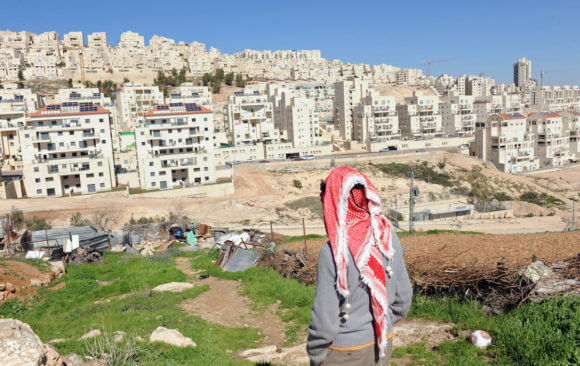
OCTOBER 29, 2021 A PALESTINIAN MAN STANDS ON HIS PROPERTY OVERLOOKING THE ISRAELI SETTLEMENT HAR HOMA, WEST BANK, FEBRUARY 18, 2011. (PHOTO: UPI/DEBBIE HILL)
The latest New York Times report on the new Israeli home constructions in the occupied West Bank follows the mainstream media convention by calling them “settlements.” There’s no better example of George Orwell’s insight that the language we use actually shapes our ability to think.
Patrick Kingsley’s report uses the word “settlements” or “settlers” a total of 15 times. Add another seven “settlements” in the headline and photo captions, and the grand total is 22. By the end, you feel mentally bludgeoned.
Only one out of the 22 times does Kingsley call them “Jewish settlements.” The 21 omissions are misleading. Imagine if he stated the truth even half the time — that these 3,000 new homes are on Palestinian land, but no Palestinian will ever be allowed to live in one of them. If the past four decades of mainstream U.S. reporting had been allowed to make this accurate point, would Americans have any doubt that the Israeli system is a form of apartheid?
But let’s not stop there. Take the word “settlement” itself. It has an innocuous, benign ring to it, with the implication that the “settlers” are building homes in empty, unoccupied areas. Instead, though, Israel is constructing in territory it militarily occupies, which is a violation of international law, and Palestinian people already live there. Kingsley — or his editors — try and downplay this fact with the customary New York Times prevarication; he does say that building “settlements” is “a process that most of the international community considers a breach of international law, which prohibits an occupying power from moving its people into occupied territory.”
“Most of the international community?” Then the Times should tell us who belongs to that minority that thinks the “settlements” are allowed. Which countries? Which international human rights agencies? The truth is that the “settlement” justifiers are a minuscule number — a portion of the U.S. Congress, and maybe a handful of tiny Pacific Island nations dependent on the U.S. for aid.
If not the word “settlements,” what then? What’s wrong with the perfectly good English words “colonies” and “colonizers?” Why doesn’t the headline on Kingsley’s article read:
Israel Advances Plan to Expand Jewish-Only Colonies in Occupied West Bank Palestine
It only sounds harsh because we are used to decades of reading and hearing about “settlements.” Whoever in Israel or in the Israel lobby back in the 1970s concocted the euphemism was a genius at propaganda.
What about a compromise? In the 1970s, during the Troubles in the north of Ireland, there was a linguistic battle along with the actual violence. Here’s one example: the territory’s second city is known as “Derry” to Catholics, and as “Londonderry” to Protestants. The BBC faced a dilemma: how could it report without showing bias? The network came up with a solution; it alternated the two names in its reports. If the reporter opened by saying “Londonderry,” they said “Derry” next, and so on.
Maybe the U.S. mainstream media could try the same solution? Discarding “settlements” could be too much of a shock. But then, in your next sentence, use “colonies.”
It won’t happen, at least any time soon. But if this one change alone were carried out, U.S. public opinion would shift even more rapidly than it already is.
Israel’s secret ‘evidence’ against rights groups is based on torture and lies, and Europeans rejected it — Palestinian leaders tell a DC audience
Leaders of the six Palestinian human rights organizations that Israel has declared to be “terrorist” spoke to a global audience last Friday on a webinar convened by mainstream Washington thinktanks and they repudiated the secret dossiers that Israel has circulated in seeking to ban the organizations. Here are some of the Palestinian leaders’ charges:
–The secret “so-called evidence” against the groups is based in part on prisoners’ confessions obtained under torture.
–Months ago, Israel presented its claims against the organizations to European governments and funders sponsoring the groups. Belgian officials investigated and rejected the allegations as “propaganda” and “lies,” but European officials have not been outspoken on this score.
–Israel acted against the groups because they have been giving information to the International Criminal Court– whose prosecutor began a criminal investigation of Israel this year under a complaint filed by Palestine five years ago.
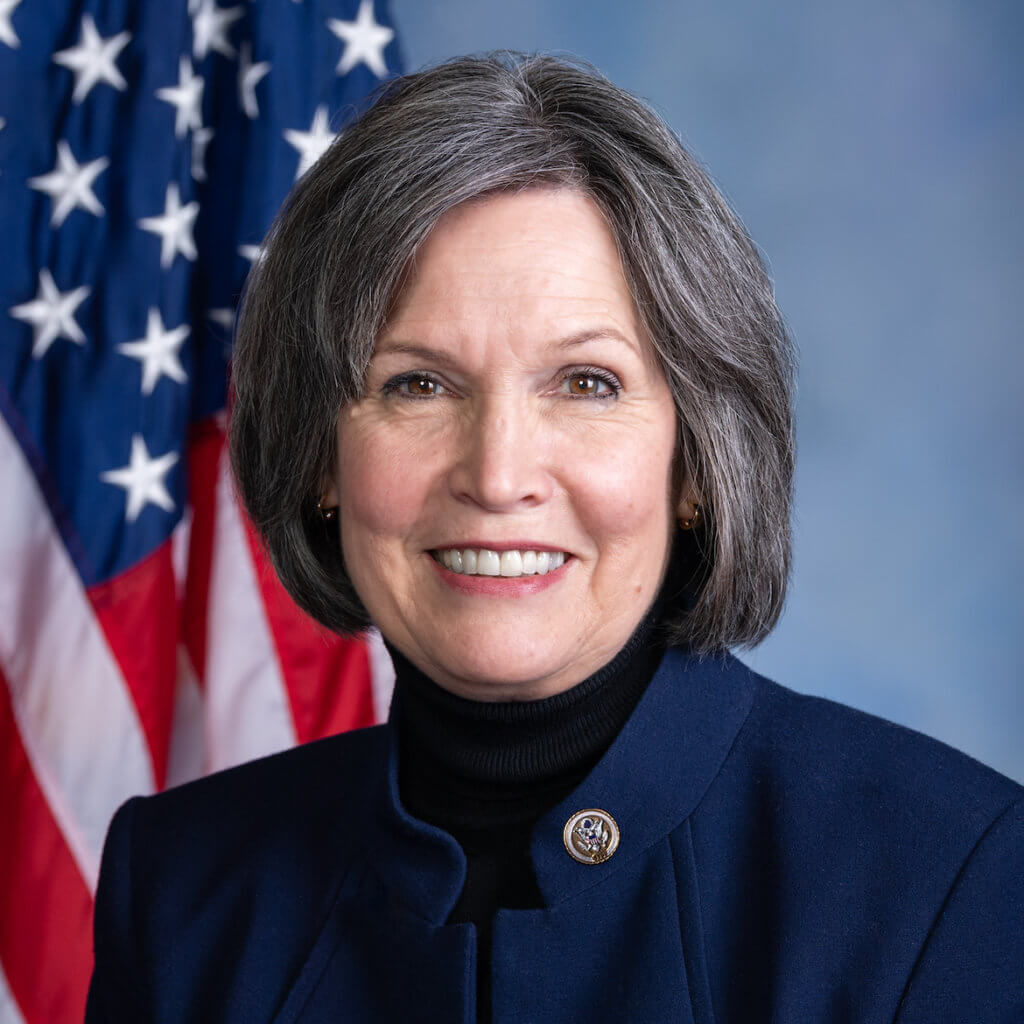
–Israel also acted because it fears the progressive effort in Congress, led by Rep. Betty McCollum of Minnesota, to cut off aid that Israel uses for arresting children.
–Some of the targeted human rights groups employ U.S. citizens. So the groups demand that the Biden administration and the Congress consult these Americans before accepting the Israeli claims.
The extraordinary webinar webinaron Friday was sponsored by a list of influential American organizations: the Middle East Institute, Foundation for Middle East Peace, Carnegie Endowment for International Peace, Democracy for the Arab World Now (DAWN), Century International, and the International Crisis Group.
“We have 100s of people from all over the world today which is a testimony to the interest in hearing from you, the Palestinian organizations,” Lara Friedman of Foundation for Middle East Peace said at the outset.
SIX PALESTINIAN HUMAN RIGHTS GROUPS TARGETED BY ISRAELI GOVERNMENT OFFER A WEBINAR ON WHAT THEY DO, SPONSORED BY LEADING WASHINGTON THINKTANKS, OCT. 29, 2021. SCREENSHOT.
Here are some of the statements made by the Palestinian leaders of the targeted organizations.
Khaled Quzmar of Defense for Children International- Palestine, said his group had crossed Israel’s “red lines” when it began giving information to the ICC and to Congress, including Rep. McCollum.
We became a resource for the ICC. This is one of the main reasons. The second is for [our] lobbying inside the Congress… in order to draft laws to deprive Israel of funds for torturing and illegitimate treatment of children… We started to lobby and to have more and more congressman who are supporting our work, and to discuss inside the Congress, Israeli violations. It is considered as crossing red lines.
CONGRESSWOMAN BETTY MCCOLLUM
The Israeli backlash has been two-pronged, Quzmar said– first, from its Ministry of Foreign Affairs and Ministry of Strategic Affairs. Then from Israeli rightwing NGOs that seek to smear Palestinian human rights groups as terrorist to an international audience.
We faced since 2014, a campaign of attacks against all DCI partners around our world, even the banks we were working with, every month sometimes if not weekly…
Quzmar said there is no legal basis for the claim that DCIP is linked to terrorist organizations. “We believe there is a political reason behind this decision. We know that because our work in the U.S. and in the ICC– they are trying to silent us or forbidding us from continuing our mission.”
Sahar Francis of the prisoners’ rights group Addameer said the groups are being targeted “because we are succeeding.”
We are succeeding in changing the paradigm in the analysis of the international law level, in highlighting that this regime is more an apartheid and colonialist regime, and not just occupation. This is because of the success of the NGOs in the accountability level, especially.. our work versus the International Criminal Court in bringing cases.
Shawan Jabarin of the human rights group Al-Haq also said his organization had “crossed the red line” when it assisted the ICC investigation of Israeli war crimes. Israel tried to dry up Al-Haq’s funding, and failed, and also targeted the group with “Mafia methods,” including death threats.
[When we] go after the commanders and key figures, those who are complicit in war crimes — this is the red line for them. Because all the time they claim that they are the only democracy in this region, but the facts show a completely different story…
They try to shut us down, they try to send fear when they put roses of funerals behind the doors of our colleagues, those who work in the Hague… This is Mafia methods they use…
They failed in their process. They have been contacting our funders and our partners for so long and they have failed to dry up our resources. This [terrorist designation] is the last bullet in their hand and this is a political bullet because it has no legal basis and no security basis… They will not silence us.
Ubai Al-Aboudi of the Bisan Center for Research and Development said that Israel first sought to close the organizations through its military law system. But it was never able to bring “real charges” so it turned to the rightwing NGOs to push spurious claims against the organizations in international fora. Those groups include UK Lawyers for Israel, UN Watch, NGO Monitor, and Regavim.
“The right wing organizations… make absolutely ridiculous claims…by the motto, ‘If you repeat the lie enough, people will start believing.’ People didn’t start to believe them. But they start to believe it themselves.
Israel presented its dossiers of secret evidence to EU ambassadors a couple of months ago, Al-Aboudi said.
“We began to hear statements from them, there is no evidence and substance to the claims.”
“This is state terrorism at its finest hour,” Al-Aboudi said, and described the European rejection of the evidence.
They presented their so-called evidence dossier back in May through the Belgiums. We have a joint program supported through a Belgian NGO by [the Belgian government]… The Belgians did their own investigation. The Belgian minister in charge of international cooperation went in front of parliament said this is propaganda… There is no proof in the file.”
Israeli Defense Minister Benny Gantz lately told the Jerusalem Post, We talked to the EU and it refused to stop funding for the organizations, so Israel took this step of designating the organizations as terrorist, Al-Aboudi said.
“Evidence wise they have nothing,” Al-Aboudi said. If Israel had real evidence it would have attacked the organizations. Any independent professional investigation would show that the dossier is based on “libel, propaganda and just lies.”
“When we tell them, OK present that [secret evidence], let us have a chance to review the evidence, they say no we won’t do it. This is state terrorism at its finest hour. Our only hope is to rely on the free people of the world to pressure their Congress, their parliament members and to pressure their governments to act and defend human rights.
“What’s being targeted today is civil society, what’s being targeted today is the truth, what’s being targeted today is not just our work as civil society but international civil society.”
Sahar Francis said that the so-called evidence was gathered by Israeli security services from the military courts. She said the report was submitted in May to European government.
Most of this information is based on confessions by Palestinian prisoners who are tortured and ill-treated systematically in these interrogation centers… The report– pieces were taken from interrogation sessions, and the confessions of these two prisoners out of five or six prisoners arrested…
Francis represents one of the prisoners, so she has seen the evidence but can’t disclose it due to the military court procedure. But she knows it to be very weak, she said.
Francis said the entire case is a manipulation of anti-terror laws to punish “human rights organizations that are struggling with their people to achieve self determination.” Israel has used these laws for decades to target critics and to advance its annexation of the West Bank and Jerusalem.
She noted that Israel’s “terrorist” designation relies on the claim that the six organizations are tied to the Popular Front for the Liberation of Palestine. But Francis said Israel could have used any Palestinian party for this pretext, including Hamas and Fatah.
Let me remind you that all the parties included in the PLO are still declared illegal in Israeli military orders and inside Israel which means that they can claim against Mr. Mahmoud Abbas himself as the Fatah leader as a criminal terrorist person. They can criminalize everyone and claim based on secret information that he is a terrorist.
Shawan Jabarin of Al-Haq said he has seen the dossier that was given to Europeans and it is laughable.
“This is nothing…. They try to throw the dust everywhere.”
He called on the international community to reject the allegations forcefully.
I ask the US, are you willing to accept false allegation. are you ready to accept secret file. Are you ready to target civil society?…
This is a test for the U.S., for the E.U., for everybody who believes in international law, human rights law and democratic standards. Palestine is a test, even a test for the international law itself… This is where we are. We will not step back. We will not give up. And the main approach is we are challenging them to prove what they say.
Jabarin echoed a report in Electronic Intifada saying the EU has shown “deference” to Israel over the allegations.
The E.U.–they didn’t take a strong position. You know why? Because the E.U. is divided. There are also friends of Israel. There are also parliamentarians who receive messages from Tel Aviv not from their capitals even.
“The hope is coming in the U.S. from the new generation, the progressives,” Jabarin said.
Fuad Abu Saif of the Union of Agricultural Workers Committees said that European donors have dismissed the Israeli report but they should speak out.
One encouraging thing… They give the donors all the so-called evidence. But even the donors we had a chat with them, they are not believing what they have in their files. But you have to raise your voice, you have to response to it.
Khaled Elgindy of the Middle East Institute, a sponsor of the discussion, expressed the fear that the international outrage over the Israeli designation would produce “lots of handwringing, a lot of disapproval,” but that in the end the EU and the US will not reject the allegations but acquiesce in them.
Ubai Al-Aboudi noted that he is a U.S. citizen and so are others working for the six organizations.
“So we would expect Congress and we would expect the Biden administration… to take all the measures necessary to communicate with us before takiing any step.”
Khaled Quzmar of DCIP said the secret dossier is a “test” of the Biden administration.
For the Biden administration, this is the test. Are they going to continue with words and no action? It will be no different from the Trump administration. [If there is] no political will to hold Israel responsible for crimes, I conclude that they are partner in the crimes.
Jabarin said that the U.S. should be aware that the case is undermining the Palestinian Authority by closing “all doors” to justice.
“The people they can ask, You can’t protect our land, you can’t protect our life, you can’t protect our institutions, why you are here?”
He said that Al-Haq’s funders and our partners “are doubling their funding to us. We have no lack of funding, to be honest with you.”
But the big question is whether the U.S. will prevent Palestinians organizations from getting money from banks under the terrorist claim.
Sahar Francis called on the U.S. to pressure Israel now to withdraw the designation.
[The designation] needs to be revoked under political pressure from around the world. It’s the U.S. responsibility. As they support Israel, they can revoke this decision.
The unexceptional roots of Zionist fragility
Zionist fragility is far from unique. It is the younger relative of every anti-oppressive reckoning forced upon the privileged members of supremacist projects throughout history.
A MURAL PAINTED ON EYEWITNESS PALESTINE DELEGATION 69 IN AUGUST 2019. THE MURAL WAS DESIGNED BY PALESTINIAN ARTISTS CHRIS GAZALEH AND JUMANA AL-QAWASMI AND PAINTED BY ALL DELEGATES. THIS IMAGE WAS INCLUDED IN THE EYEWITNESS PALESTINE “EXAMINE PUBLIC STREET ART” VIRTUAL DELEGATION.
On Tuesday, October 26th I participated as an audience member in Eyewitness Palestine’s October virtual delegation about Palestinian street art as resistance from Bethlehem to San Francisco. As expected, the content was moving, and the two guides were compelling speakers. Unfortunately (but not surprisingly,) a third party began loudly clamoring for the attention that should have remained focused on the two Palestinians. To be sure, the speakers and facilitator handled the disruption smoothly and effectively. The following comments are not intended to be a reflection of the overall quality of the event, but an analysis of what I believe to be some of the underlying factors that led the individual in question to feel so entitled to attempt to commandeer the proceedings in the first place.
I have a feeling many readers will know the situation I’m about to describe even before I put the words to paper. As a Palestinian, I myself have lost count of the number of times that I’ve felt my nerves begin to twitch in anticipatory unease at a certain familiarity of phrasing, a particular inflection of tone. It’s as though my chest and the pit of my stomach begin to silently mouth, Uh oh… Here we go… as the rest of my body gets the memo, steeling itself for the worst.
We had reached the Q&A portion of the session, and I don’t think it would be exaggeration to say that fascination with the topic combined with the audience’s clear recognition of the speakers’ expertise had allowed for a powerful sense of enjoyment to congeal. That’s what often makes these moments like the one I’m about to dissect so discomfiting: it’s not just a matter of a raised voice, of the very thought of your existence, freedom and resistance being so scandalous as a Palestinian that it reduces Zionists to all sorts of emotional gymnastics in accursed protestation. No: it’s that so much of the time, these things occur after a particular threshold of trust, of release, has been achieved. The very performance of these sentimental histrionics is its own enactment of racial discipline. Know your place, they tell us. Whatever you do, don’t make the shameful gaffe of thinking you can ever stretch out in your own humanity.
“I spent the whole weekend watching Palestinian films…” the questioner began.
So far, so good.
“…and nothing has disturbed me quite like what I’ve heard today.”
Uh oh…
“…to hear the word ‘Zionism’ be so cheapened, so twisted…”
Here we go…
And there it was: Zionist fragility. The questioner went on to dominate the session for the next few minutes. The threat of crocodile tears was ever palpable (even for an online event) as the individual insisted on rehearsing every single aspect of why they were a committed Zionist and how they were personally “so hurt” at Palestinians’ “experiences.” Forget the fact that the Zionist state continues to colonize Palestinian land with impunity, and has just labeled six Palestinian human rights organizations as “terrorist organizations”–the most important thing for all of us to consider was this individual’s hurt feelings.
This person even generously offered to paint a mural with one of the speakers, a celebrated Palestinian muralist, apparently due to some kind of fetishized obsession with ensuring that every piece of Palestinian creativity is appropriately stamped with a Zionist seal of approval. In the moment, it’s laughable, but the takeaway, ever more sobering, more stinging after the fact, is that any aspect of your existence, from the sounding of your voice to the twist and twirls of your paint brush is cause for paranoia when the colonizer realizes they had nothing to do with it. How could we have humanity, a lifeworld, a history without them? Some kind of sacred presumption has been deeply violated. We have broken a contract that no one ever even bothered to ask us to sign, but whose contents remain implicit in every plea to “just hear me out,” every insistence that “we just want peace,” every attempt to redirect the conversation towards a misplaced personal affront.
These exchanges represent the projection of a deep, colonial anxiety that stems from uncertainty. It’s not for nothing that scholars of colonization often insist on quantifying the colonial process in psychological terms.
These exchanges represent the projection of a deep, colonial anxiety that stems from uncertainty. It’s not for nothing that scholars of colonization often insist on quantifying the colonial process in psychological terms. For all of their ruthless bravado, unapologetic Zionists realize, on a level often subjected to disciplined repression, that the Zionist state was and remains a horrendous injustice that necessitates stupendous levels of violence to sustain itself in its current hierarchical form. They realize the price that needs to be paid for an ethno-supremacist, colonial apartheid regime to remain intact, and that Palestinian bodies, lives and histories are the only accepted currencies.
But this commitment, however much it may be defended during the day, is shudderingly undermined by all kinds of insecurities during the long night of moral reckoning. Its inherent injustice is registered and, in an attempt to prove to themselves they feel otherwise, unapologetic Zionists will proclaim, loudly, intrusively, and in a manner countenancing absolutely no objection, that theirs is a good project, even a noble one, that they themselves are decent people, that there are plenty more places for the Arabs to go and, well, can’t we just be friends?
Small wonder that such outbursts often retain the feel of a monologue: to a large extent, the Palestinians who happen to be in the room at the time are mere props for the recalibration of Zionist colonial confidence.
I am not the first person to use the term “Zionist fragility.” Senior Mondoweiss editor Philip Weiss used it in 2019 when describing the nonsensical lamentation from a member of the American Jewish Committee (AJC) that US media was biased against Israel. Weiss describes Zionist fragility as “when Zionists recoil with shock and injury over mild criticism.” Ali El-Sadany and Aidan Place used it when describing how a Zionist representing a normalization initiative began furiously shouting at and insulting them after they refused to be “token Muslims” in an anti-Palestinian propaganda trip. El-Sadany and Place describe Zionist fragility as rooted in fear: “Since Israel’s foundation during the 1948 Nakba, the Israeli government has fed its people a constant barrage of messaging about existential threats, impending genocide, and Arab aggression, while simultaneously pushing a narrative of an Israeli David bravely and miraculously standing up to these Goliath dangers. This narrative was a lie in 1948, where, in private correspondence, Israel’s first Prime Minister David Ben-Gurion acknowledged that the Zionist militias were stronger than the Arab armies and would have no issue taking control of the entirety of Palestine; and it is also a lie now, when neither Palestinians, nor Hezbollah, nor Iran pose much of a threat to Israel– and certainly not an existential one… This inundation with fear-mongering propaganda has produced an Israeli society (and Zionist community in the diaspora) that is, in many cases, paranoid, fearful, and focused on security to the exclusion of all else. Given this pervasive attitude, it is not surprising that many Zionists buy into simplistic narratives and Islamophobic hate or, in Adam’s case, grow vindictive and spiteful when faced with pushback. Their anger and hate is driven by fear.”
Finally, Rana Abdel-Fattah used it in a Tweet from June 23rd, 2021 describing a heated exchange between the Executive Council of Australian Jewry and the director of the Australian Broadcasting Corporation (ABC:) Abdel-Fattah Tweets, “Whenever Palestinians open their mouths the Zionist lobby launches a frenzied attack. The goal is to silence us, pressure media institutions into censoring our voices, bog media down with complaints. Zionist fragility exposes the fact Israel is indefensible and Zionists know it.”
All of these definitions capture an important aspect of Zionist fragility. As Weiss and Abdel-Fattah’s descriptions show, Zionist fragility is certainly tethered to a panicked sense of losing one’s monopoly on the narrative. To take the case of the United States (where I currently reside,) after the onset of the Zionist state’s modern military occupation of the West Bank, Gaza strip and Syrian Golan Heights in 1967, the US and Israel cemented a military-imperial partnership that saw both militarized setter-colonial states associate regional stability with Israel’s unchallenged ability to retain total colonial and military supremacy throughout the region. Activist organizations like the Association of Arab American University Graduates (AAUG) drew important links between Zionist dispossession of Palestinians in Palestine and US demonization of Arabs and Muslims in news and racist film and television representations. US corporate media and film studios were just as complicit in the manufacture of an anti-Palestinian public “common sense” as US and Israeli generals screaming about “terrorist threats” and “security concerns.”
For decades, the US gladly acquiesced to Zionist propaganda that dehumanized Palestinians, Arabs and/or Muslims in order to protect its geo-imperial interests. This was an arrangement from which US Zionist individuals and organizations also benefited, given that it provided them with the perfect rhetorical means by which to demonize intellectuals, academics, activists and organizers who fight for justice in Palestine. Federal and local law enforcement agencies, which have a long history of tying political radicalism to potentially seditious activity, were frequently all too willing to respond to demonization of pro-Palestine activism with surveillance, incarceration and attempted deportation over the years, while academic administrators, growing increasingly compliant with outside interests, gladly fired outspoken Palestinian faculty without a second thought.
All of this is to say that Zionism has certainly enjoyed a powerful narrative monopoly that has gone relatively unchecked within the mainstream for decades. When revelations of the latest instance of Zionist brutality previously came to dominate the media—such as the exposure of the Israeli Occupation Forces’ involvement in the genocidal Sabra and Shatila camp massacres in Lebanon of 1982, or the grotesquely asymmetrical death toll of assaults upon Palestinians in the Gaza strip such as in the summer of 2014—predictions that we had finally reached the point where the political mainstream must finally set firm limits upon Israeli military and colonial aggression usually proved unfounded.
It is not individual Zionists that must be appeased, but the very sanctity of Zionism’s colonial mandate to continue dehumanizing Palestinians.
Now, however, with the increased sophistication of social media allowing Palestinian activists like Mohammed and Muna El-Kurd to document the inherent violence of Zionist dispossession in Palestinian neighborhoods such as Sheikh Jarrah, there has been a slight chink in the armor of Zionist narrative impunity. To us Palestinians, such a development is not even the bare minimum of what needs to occur in order for Palestinian liberation to be realized, yet for Zionists, who have been so accustomed to controlling every aspect of the narrative for so long, it most likely represents a clear crisis of control, the response to which is, as with all privileged classes who face even the slightest inconvenience, to lash out. A fist needs to be slammed on a table, sending the half-hearted moralists scurrying away apologetically. It is not individual Zionists that must be appeased, but the very sanctity of Zionism’s colonial mandate to continue dehumanizing Palestinians.
But El-Sadany and Place are also correct that there is an element of fear to Zionist fragility, that such fragility is the manufactured result of a political movement that spent years indoctrinating its adherents to presume that danger lurks at every corner, but is most directly personified by an unapologetic expression of Palestinian self-determination and commitment to Palestinian liberation. We laughed heartily when the exercise of this fear took the form of patently ludicrous formulations like “social media pogroms” or “Free Parking,” but as pathetic as these are, as much as they betray the growing pains of a privileged and insulated political consciousness that has finally had to face the inconvenient truth of the need to recognize the existence of the other, their author is not wholly to blame. The perpetrators are also the creators of a political movement that appallingly sought to fight antisemitism with colonialism, and their successors who saw no issue with brainwashing scores of youth into believing that the freedom of the Palestinians their movement sought to colonize and ethnically cleanse represents some kind of existential threat.
Among James Baldwin’s many staggering accomplishments is certainly his ability to capture how American whites are emotionally, psychologically and politically stunted by white supremacy. One of the many indignities wrought by this state of affairs was, of course, the psychic tolls felt by countless Black people (including Baldwin himself) who had to entertain the existential growing pains of whites who were acquiring a kind of political adolescence (their actual age notwithstanding,) feeling, on the one hand, that there was something ultimately wrong about the institutional state of affairs from which they wrought so much material and individualistic benefit and, on the other, great resentment at being implicated in the system designed in their name–a resentment that only an underprivileged Black interlocutor could alleviate. As Baldwin wrote in his essay, “The White Man’s Guilt,”
“History, as nearly no one seems to know, is not merely something to be read. And it does not refer merely, or even principally, to the past. On the contrary, the great force of history comes from the fact that we carry it within us, are unconsciously controlled by it in many ways, and history is literally present in all that we do. It could scarcely be otherwise, since it is to history that we owe our frames of reference, our identities, and our aspirations. And it is with great pain and terror that one begins to realize this. In great pain and terror one begins to assess the history which has placed one where one is, and formed one’s point of view. In great pain and terror because, hereafter, one enters into battle with that historical creation, Oneself, and attempts to re-create oneself according to a principle more humane and more liberating: one begins the attempt to achieve a level of personal maturity and freedom which robs history of its tyrannical power, and also changes history.
But, obviously, I am speaking as an historical creation which has had bitterly to contest its history, to wrestle with it, and finally accept it, in order to bring myself out of it. My point of view certainly is formed by my history, and it is probable that only a creature despised by history finds history a questionable matter. On the other hand, people who imagine that history flatters them (as it does, indeed, since they wrote it) are impaled upon their history like a butterfly on a pin and become incapable of seeing or changing themselves, or the world.”
We, all of us creatures “despised by history” across timescapes and geographies, have always had to be more thoughtful, more reflexive in our understanding of organizational socio-political dynamics than members of the privileged, oppressor classes, who have always been able to take the simplistic, dominant narratives of hegemonic history and its assurances of their superiority, of the inherent rightfulness of their claim for granted. The dawning intrusion of an alternative consciousness upon these classes is precisely what inspires their recalcitrance, their reactionary regressions.
There is nothing quite like a mind poisoned by the lures of racial supremacy, of unmitigated colonial power. In this, Zionist fragility is far from unique. Indeed, it is but the younger relative of every anti-oppressive reckoning forced upon the privileged members of supremacist projects throughout–and within–history.
It’s well past time to stop pretending otherwise.
SFSU President sides with tech giants on silencing of Palestinian voices
President Mahoney’s decision upholds the University’s acceptance of Big Tech’s increasing control over academic discussion, and its complicity with Zionist organizations.
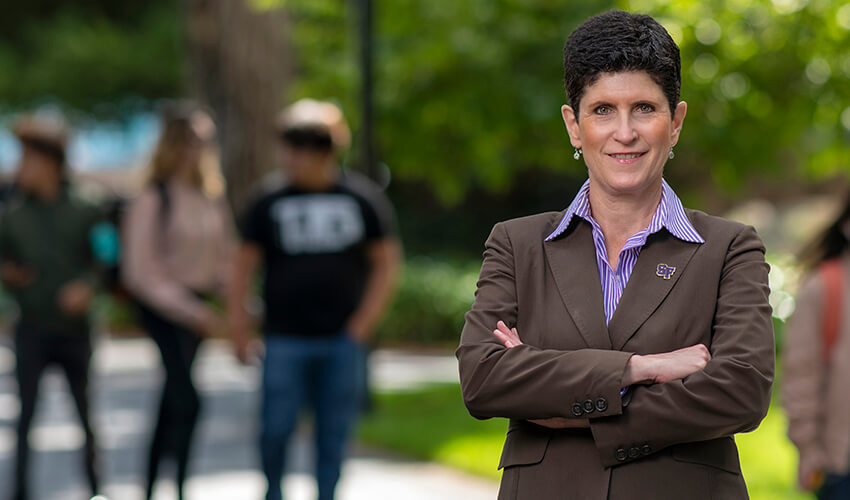
SAN FRANCISCO STATE UNIVERSITY PRESIDENT LYNN MAHONEY
(PHOTO: SAN FRANCISCO STATE UNIVERSITY)
Editor’s Note: The following press release was issued on November 4, 2021 by the International Campaign to Defend Professor Rabab Abdulhadi. The press release comes as San Francisco State President Lynn Mahoney overturned the decision of a campus panel that ruled the school failed to protect Professors Rabab Abdulhadi and Tomomi Kinukawa from censorship when Zoom, Facebook, and YouTube denied their services for an event featuring Leila Khaled.
SFSU President Lynn Mahoney overrules her own faculty panel & supports Big Tech intrusion on academic freedom and the silencing of Palestinian narratives
In an outrageous and insulting decision, President Lynn Mahoney of SFSU has disregarded the legitimate reprimand of a faculty panel that recommended redress to Dr. Rabab Abdulhadi, founding director of the Arab and Muslim Ethnicities and Diasporas Studies (AMED) program, for the University’s failure regarding violations of Professor Abdulhadi’s and her colleague Professor Tomomi Kinukawa’s academic freedom.
President Mahoney’s decision upholds the University’s corporatized acceptance of Big Tech’s increasing control over academic discussion and its complicity with Zionist organizations that stifles all discourse on issues of human rights and dignity for the Palestinian people.
The President’s decision follows a ruling by the faculty member panel based on a six hour hearing following the arbitrary cancellation by Zoom and other social media outlets of Drs. Abdulhadi and Kinukawa’s online open classroom, “Whose Narratives? Gender, Justice and Resistance: A Conversation with Leila Khaled.” The University is bound by contract, law and AAUP policy to protect academic freedom rather than subcontracting the responsibility to private companies. Further, universities must maintain structural independence from the whims and demands of partisan lobbying organizations, including Zionist groups like the Academic Engagement Network (AEN) and the Lawfare Project.
In its ruling, now vetoed by President Mahoney, the faculty panel affirmed that: “San Francisco State University has inflicted harm upon Dr. Abdulhadi (and co-instructor, Dr. Kinukawa) and that her academic freedom was, in fact, violated. We characterize this harm in two ways: 1) that the university did not provide adequate support to Dr. Abdulhadi against the actions of the corporate entity, Zoom, and, more importantly against the outside organization, Lawfare Project.” Furthermore, the panel ordered the university to provide remedy in the form of a public apology to Dr. Abdulhadi and to provide “a site for rescheduling the event with Leila Khaled on an alternate platform, without interference”.
Clearly, with this decision, SFSU is continuing its policy of harassment of Dr. Abdulhadi, intensifying its efforts to dismantle the AMED program, and confirming its complicity with Zionist organizations that seek to silence Palestinian voices on campuses across the country as Israel has pursued against Palestinian human rights organizations. SFSU’s lip service to academic freedom flies in the face of limiting Palestinian speech in favor of an overriding concern for its corporate bottom line.
As with this week’s criminalization of 6 legitimate Palestinian human rights organizations by the Israeli government, SFSU chose to follow the Zionist playbook of demonizing all actions in support of Palestinian liberation and teaching about Palestine as “terrorism” and “anti-Semitic”.
President Mahoney’s decision was written by Ingrid Williams, Vice President of Human Resources. According to University by-law, the President’s veto will trigger an automatic and independent arbitration hearing for a final decision on Dr. Abdulhadi’s grievance.
Stopping the environmental Nakba
We in Palestine and activists around the world are not satisfied with the progress to address this existential crisis. We are not merely in a "climate emergency" but in a global catastrophe -- an environmental Nakba.
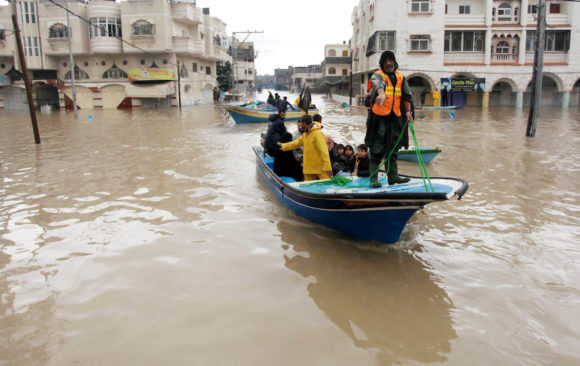
NOVEMBER 4, 2021 PALESTINIAN CIVIL DEFENSE VOLUNTEERS HELP PEOPLE TO TRAVEL ACROSS FLOOD WATERS IN GAZA CITY FOLLOWING RAIN STORMS, ON DECEMBER 14, 2013. A FIERCE WINTER STORM SHUT DOWN MUCH OF THE MIDDLE EAST AT THAT TIME, BURYING JERUSALEM IN SNOW, AND FLOODING PARTS OF GAZA. (PHOTO: ASHRAF AMRA/APA IMAGES)
Mondoweiss occasionally publishes press releases and statements from organizations in an effort to draw attention to overlooked issues.
Statement from the Palestine Institute for Biodiversity and Sustainability on COP26 and the “Climate Emergency”
Conference of Parties (COP) 26 (the 26th!) on climate change is underway in Scotland with over 50,000 people attending online or in person. The UN Secretary General talked about the climate “emergency” and how we are treating our planet “like a toilet.” He and other world politicians are starting to use language that we as activists have used for decades (except we were also acting). We in Palestine and activists around the world are thus not satisfied with the progress to address this existential crisis.
We are not satisfied with the blah blah blah of politicians as Greta Thunberg noted. Millions of us have been working hard to change local situations and lobbying our own and global politicians (i.e. thinking globally and acting locally and globally as the world is interconnected). We obviously need and must do more and accelerate this. We are not merely in a “climate emergency” but in a global catastrophe (an Environmental Nakba). We only have 7 years to act at much higher levels. Significant sums of money are being pledged for climate change adaptation and mitigation and for conservation. Yet, money is being misdirected and used mainly to alleviate the guilty conscience of rich countries who exploited and continue to exploit others (dumping money at the problem is not a solution). We have argued in a number of meetings in the past few weeks (about 3 meetings weekly) in the lead to COP26 that among others, these things are needed:
1) Liberate minds from mental colonization. This goes beyond the issue of “environmental awareness and education”. It goes to issues of learning and empowerment for liberation. Liberating minds from notions of powerlessness and subservience to political leaders. It is nothing short of revolutionary liberation from old ways that shackle brains and developing new paradigms for sustainability and coexistance (with each other and with nature). It involves developing RESPECT (for ourselves, for others, for nature)
2) We cannot go back to a pre-COVID19 systems of governance and world structures. The systems dominating world economies like consumerism and capitalism must be changed to develop systems based on caring, empathy, and collaboration both across borders (which eventually should be dismantled) and within borders. A better world is possible.
3) We must use our indigenous knowledge, practices, and value systems. Using technology that works together with these should create food sovereignty while protecting the environment.
4) We have to have environmental justice. People should be entitled to clean air, clean water, and a healthy environment all around. [see also the Universal Declaration of Human Rights for basic rights]
5) We need human capacity building especially in developing countries including restructuring of educational systems at all levels. For example universities now kill creativity & innovation and create conformist consumers instead of helping young people become better innovative citizen activists!
Just as one example of action towards these among hundreds of thousands around the world, we can cite the work of our Palestine Institute for Biodiversity and Sustainability at Bethlehem University (PIBS, see palestinenature.org and our 2020 annual report).
We (PIBS with the Environmental Quality Authority and other stakeholders) are now working very hard on the National Biodiversity Strategy and Action Plan for Palestine (despite the ongoing colonization). It is a lot of work in order to be successful to preserve our human and natural resources.


 A PALESTINIAN MAN STANDS ON HIS PROPERTY OVERLOOKING THE ISRAELI SETTLEMENT HAR HOMA, WEST BANK, FEBRUARY 18, 2011. (PHOTO: UPI/DEBBIE HILL)


 PALESTINIAN CIVIL DEFENSE VOLUNTEERS HELP PEOPLE TO TRAVEL ACROSS FLOOD WATERS IN GAZA CITY FOLLOWING RAIN STORMS, ON DECEMBER 14, 2013. A FIERCE WINTER STORM SHUT DOWN MUCH OF THE MIDDLE EAST AT THAT TIME, BURYING JERUSALEM IN SNOW, AND FLOODING PARTS OF GAZA. (PHOTO: ASHRAF AMRA/APA IMAGES)