Sunday, November 07, 2021


Sex and the Symbiont: Can Algae Hookups Help Corals Survive Climate Change?
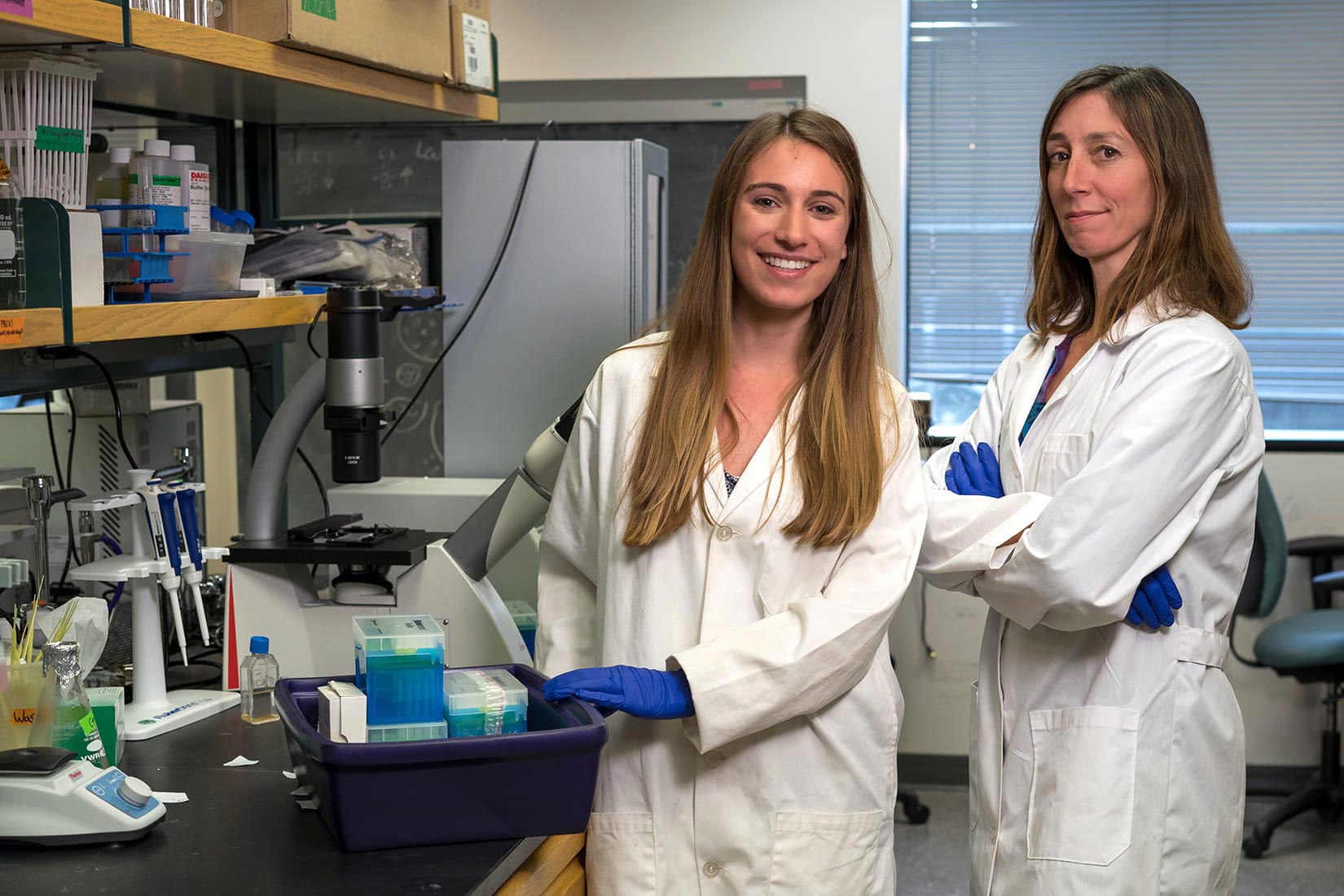
Lauren Howe-Kerr and Adrienne Correa

Rice University’s Lauren Howe-Kerr, left, and Adrienne Correa discovered that symbiont algae found on corals in French Polynesia are able to reproduce via mitosis and sex. That could make it easier to develop algae that better protect coral reefs from the effects of climate change. Credit: Brandon Martin/Rice University

Rice biologists’ discovery can be used to help climate-challenged reefs survive for now.

A little more sexy time for symbionts could help coral reefs survive the trials of climate change. And that, in turn, could help us all. 

Researchers at Rice University and the Spanish Institute of Oceanography already knew the importance of algae known as dinoflagellates to the health of coral as the oceans warm, and have now confirmed the tiny creatures not only multiply by splitting in half, but can also reproduce through sex. 

That, according to Rice marine biologist Adrienne Correa and graduate student Lauren Howe-Kerr, opens a path toward breeding strains of dinoflagellate symbionts that better serve their coral partners. 

Dinoflagellates not only contribute to the stunning color schemes of corals, but critically, they also help feed their hosts by converting sunlight into food. 

“Most stony corals cannot survive without their symbionts,” Howe-Kerr said, “and these symbionts have the potential to help corals respond to climate change. These dinoflagellates have generation times of a couple months, while corals might only reproduce once a year. 

“So if we can get the symbionts to adapt to new environmental conditions more quickly, they might be able to help the corals survive high temperatures as well, while we all tackle climate change.”

In an open-access study in Nature’s Scientific Reports, they wrote the discovery “sets the stage for investigating environmental triggers” of symbiont sexuality “and can accelerate the assisted evolution of a key coral symbiont in order to combat reef degradation.”
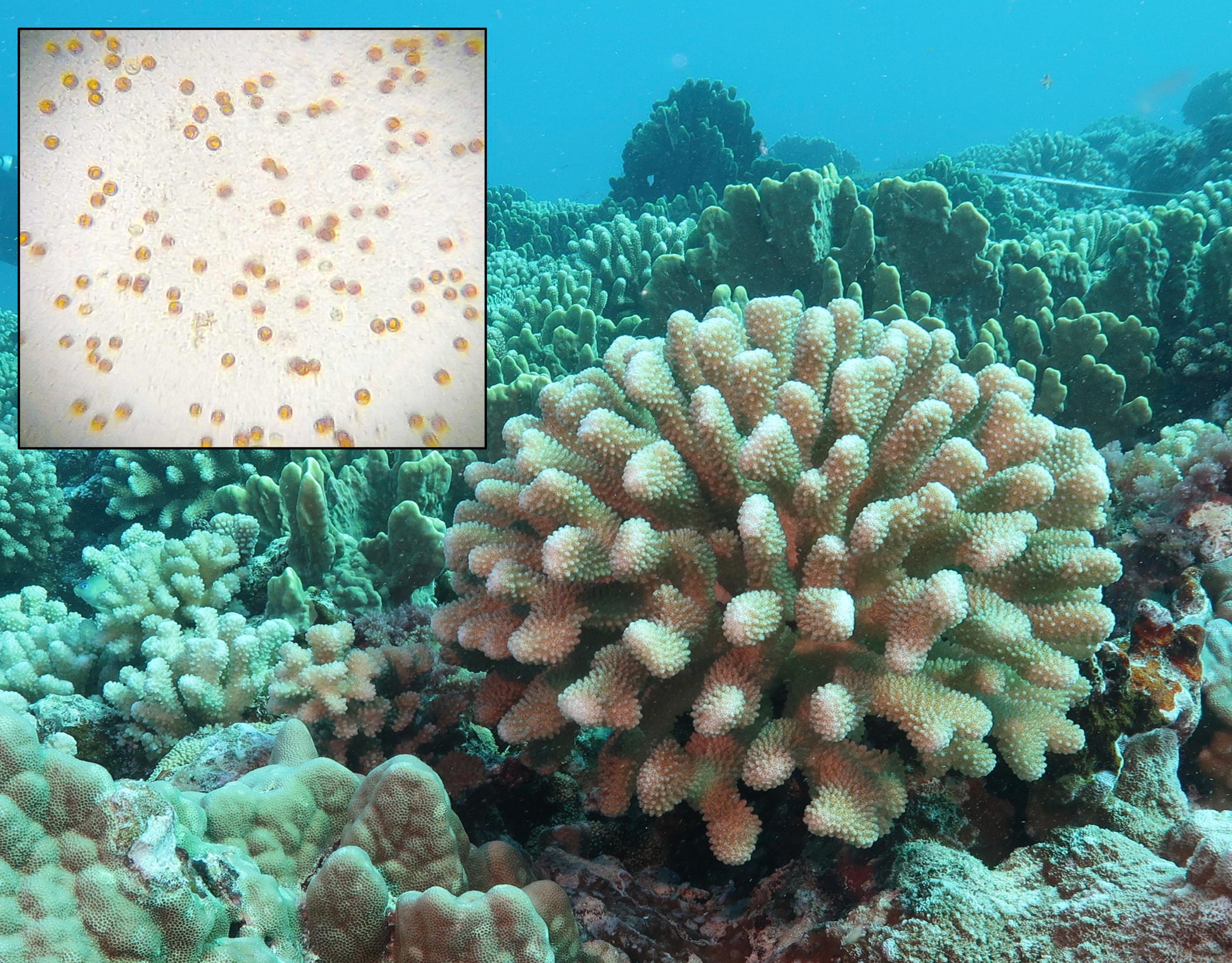
Coral Protected by Dinoflagellates

A coral of the type studied by scientists at Rice University is protected by dinoflagellates (inset), algae that turn sunlight into food to feed and protect reefs. The study showed the algae are able to reproduce via sex, opening a path toward accelerated evolution of strains that can better protect coral from the effects of climate change. Credit: Inset by Carsten Grupstra/Rice University; coral image by Andrew Thurber/Oregon State University

To better understand the algae, the Rice researchers reached out to Rosa Figueroa, a researcher at the Spanish Institute of Oceanography who studies the life cycles of dinoflagellates and is lead author on the study.

“We taught her about the coral-algae system and she taught us about sex in other dinoflagellates, and we formed a collaboration to see if we could detect symbiont sex on reefs,” Howe-Kerr said.

“In genomic datasets of coral dinoflagellates, researchers would see all the genes coral symbionts should need to reproduce sexually, but no one had been able to see the actual cells in the process,” said Correa, an assistant professor of biosciences. “That’s what we got this time.” 

The discovery follows sampling at coral reefs in Mo’orea, French Polynesia, in July 2019 and then observation of the algae through advanced confocal microscopes that allow for better viewing of three-dimensional structures. 

Dinoflagellate Tetrad Cell

A dinoflagellate tetrad cell that will soon split into four separate cells, captured by Rice University scientists through a confocal microscope. The cell’s four nuclei are depicted in red. Researchers at Rice and in Spain determined from experiments that these symbionts, taken from a coral colony in Mo’orea, French Polynesia, are able to reproduce both through mitosis and via sex. Credit: Correa Lab/Rice University

“This is the first proof that these symbionts, when they’re sequestered in coral cells, reproduce sexually, and we’re excited because this opens the door to finding out what conditions might promote sex and how we can induce it,” Howe-Kerr said. “We want to know how we can leverage that knowledge to create more genetic variation.”

“Because the offspring of dividing algae only inherit DNA from their one parent cell, they are, essentially, clones that don’t generally add to the diversity of a colony. But offspring from sex get DNA from two parents, which allows for more rapid genetic adaptation,” Correa said. 

Symbiont populations that become more tolerant of environmental stress through evolution would be of direct benefit to coral, which protect coastlines from both storms and their associated runoff. 

“These efforts are ongoing to try to breed corals, symbionts and any other partners to make the most stress-resistant colonies possible,” Correa said. “For coral symbionts, that means growing them under stressful conditions like high temperatures and then propagating the ones that manage to survive. 

“After successive generations we’ll select out anything that can’t tolerate these temperatures,” she said. “And now that we can see there’s sex, we can do lots of other experiments to learn what combination of conditions will make sex happen more often in cells. That will produce symbionts with new combinations of genes, and some of those combinations will hopefully correspond to thermotolerance or other traits we want. Then we can seed babies of the coral species that host that symbiont diversity and use those colonies to restore reefs.”

Reference: “Direct evidence of sex and a hypothesis about meiosis in Symbiodiniaceae” by R. I. Figueroa, L. I. Howe-Kerr and A. M. S. Correa, 22 September 2021, Scientific Reports.
DOI: 10.1038/s41598-021-98148-9

The research was supported by the Spanish Ministry of Science and Innovation and the European Community Project (DIANAS-CTM2017-86066-R), a Lewis and Clark Grant from the American Philosophical Society, a Wagoner Foreign Study Scholarship, the National Science Foundation (1635798) and an early-career research fellowship from the Gulf Research Program of the National Academy of Sciences (2000009651).

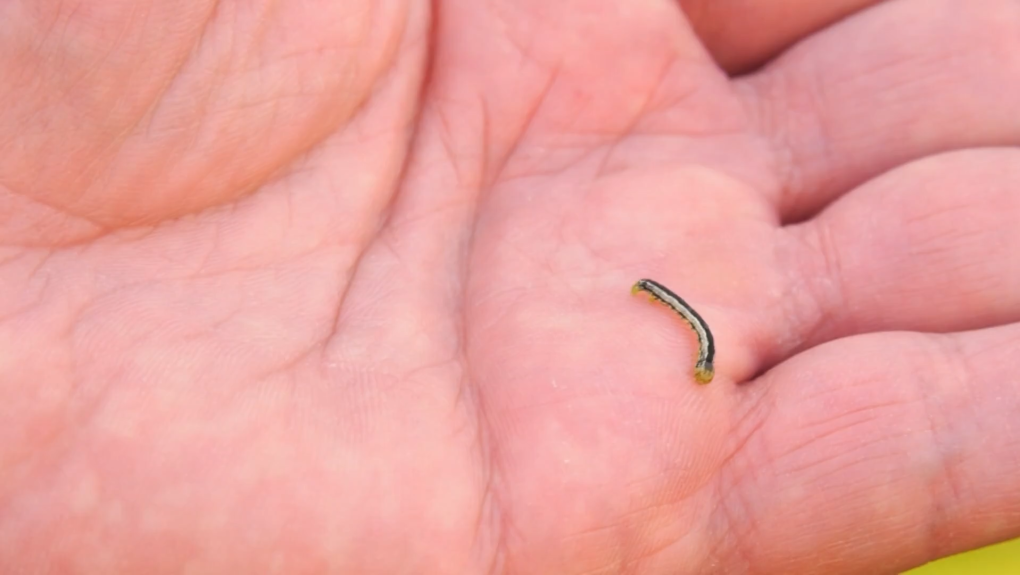
New research highlights environmental benefit to caterpillar droppings


Ian Campbell
CTVNews
NorthernOntario.ca 
Videojournalist
Published Nov. 6, 2021 

SUDBURY -

The summer 'scourge' of the tent caterpillar that Sudbury has endured these last few summers may actually have been working to help the environment.

That's the findings of a new paper from the University of Cambridge where PhD student Sam Woodman found they're actually helping to improve water quality of nearby lakes.


"What we found was sort of after an insect outbreak of typically caterpillars who are feeding on leaves, traditionally you'd think of the effects of it mostly being on the trees themselves, eating the leaves and that's harming the trees in someway but in reality they have effects beyond that," Woodman told CTV News.

Woodman, who’s originally from Lethbridge, collaborated with Laurentian University's Living with Lakes Centre to study the effects of caterpillars in the region.


"After they eat the leaves that has to be excreted out at some point, pooped out as it were, and that feces is released into the environment and it has its own effects," he explained.

They found it's been working to help improve water quality of nearby lakes on a huge scale. The researcher admits it came as a surprise to see the large increase in nitrogen and decrease in carbon.

According to their findings, the excrement washes into lake water and acts s fertilizer for microbes, which they releases carbon dioxide into the atmosphere as they metabolize.


The excrement, or frass as it's called, is said to be highly dissolvable so after a heavy rain, it's washed into nearby waterways.

"I was surprised by the magnitude of it, this was the idea I had when I applied for my PhD, and I had this thought that disturbance events can have a massive effect on the landscape but they're not limited to the landscape that they occur in and how can we look at those effects beyond the force they occur in," he said.

But Woodman says it's also a delicate balancing act when it comes to the caterpillars from an ecological point of view. Too much of a good thing could lead to impacts in other ways.

"Knowing about the effects will allow us to manage for it better, so if an entire forest was eaten by caterpillars that might clean up the water clarity that year but then you might get a ton of algae growing and that might promote some harmful algae at some point,” said Woodman.

“And the opposite case, if you got rid of all these caterpillars, well we might be losing some bumps in nitrogen that might be occurring and losing out in the lakes' health over all so it's not necessarily about it being good or bad, it's about keeping it in balance."

The study also warned of northwards range expansion any increased inspection population growth as a result of climate changes. It's putting northern forests at increased risk of defoliator’s outbreaks in the future and could cause greater quantities of CO2 to be released from nearby lakes.

The study was recently published in the journal Nature Communications and is believed to be one of the most extensive studies ever undertaken on the topic.


Forest defoliator outbreaks alter nutrient cycling in northern waters | Nature Communications

They looked at invasive Gypsy moths and Forest tent caterpillars.

Laurentian University's Living with Lakes Centre worked as a collaborator on the project. The Centre's director John Gunn believes many in Sudbury will end up finding the results fascinating.

"In Sudbury our soils are really poor and the caterpillars are doing us a favour, they're turning those trees into tea and that tea is flowing into the lakes feeding fish and at the same time rebuilding the soil so when we're dealing with conditions like Sudbury where the soil is so poor, yes the caterpillars are good," he said.

Gunn admits, he like many in the city doesn't like them, but they are doing a good job in fixing up the landscape.

In Sudbury, it's not unusual to see foil or soap at the bottom of a tree as some residents try to protect their property. Gunn says that's fine.

"When you step back and look at the bigger forest, there's really nothing we can do about it, it's very much like the farmers going and plowing down the alfalfa to enrich the soil in the fall. The insects are doing that for us, they're fixing the soil across the landscape," he said.

Video: Melting glaciers

melting glacier
Credit: CC0 Public Domain

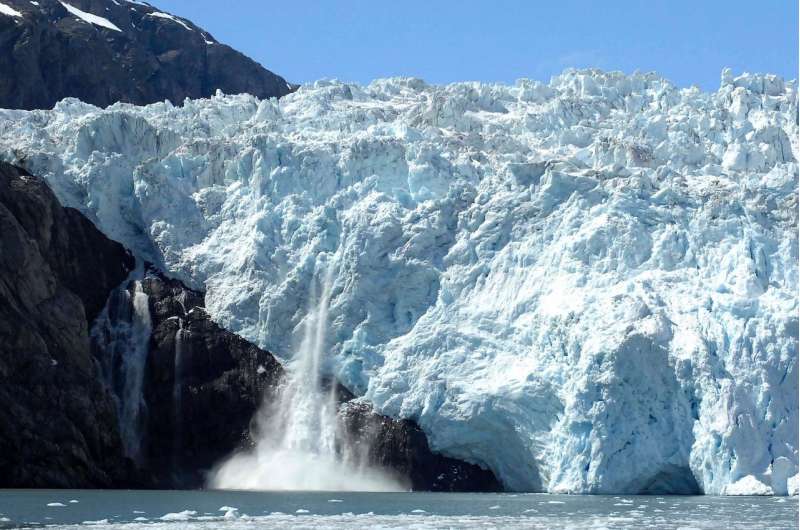
Glaciers across the globe have lost over nine trillion tons of ice in half a century. How will glaciers look over the coming decades? "It all depends on what humans are doing now in terms of greenhouse gas emissions:" this is the message one scientist delivered during an ESA-led expedition to the Gorner Glacier in Switzerland—one of the biggest ice masses in the Alps.

As world leaders gather for the 26th UN Climate Change Conference of Parties, watch the exclusive premiere of the documentary that follows ESA astronaut Luca Parmitano, along with a team of glaciologists and , on their journey across the Alps to learn how rising  are taking their toll on glaciers.

The documentary features breathtaking scenery of the Gorner Glacier as well as interviews with climate specialists as they explain how we can monitor glaciers using both satellite data and in situ measurements.

Credit: European Space Agency
ESA astronaut joins glacier expedition in Alps
Provided by European Space Agency 

Study: Increasingly frequent wildfires linked to human-caused climate change

Increasingly frequent wildfires linked to human-caused climate change, study finds
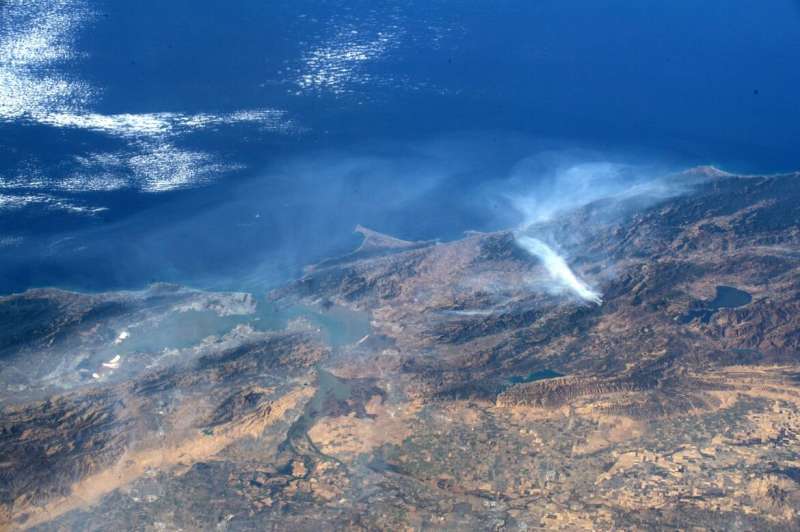
Smoke from a 2019 Northern California wildfire could be seen by astronauts aboard the 
International Space Station. Credit: NASA

Research by scientists from UCLA and Lawrence Livermore National Laboratory strengthens the case that climate change has been the main cause of the growing amount of land in the western U.S. that has been destroyed by large wildfires over the past two decades.

Rong Fu, a UCLA professor of atmospheric and oceanic sciences and the study's corresponding author, said the trend is likely to worsen in the years ahead. "I am afraid that the record fire seasons in recent years are only the beginning of what will come, due to climate change, and our society is not prepared for the rapid increase of weather contributing to wildfires in the American West."

The dramatic increase in destruction caused by wildfires is borne out by U.S. Geological Survey data. In the 17 years from 1984 to 2000, the average burned area in 11 western states was 1.69 million acres per year. For the next 17 years, through 2018, the average burned area was approximately 3.35 million acres per year. And in 2020, according to a National Interagency Coordination Center report, the amount of land burned by wildfires in the West reached 8.8 million acres—an area larger than the state of Maryland.

But the factors that have caused that massive increase have been the subject of debate: How much of the trend was caused by human-induced climate change and how much could be explained by changing weather patterns, natural climate variation, forest management, earlier springtime snowmelt and reduced summer rain?

For the study, published in the Nov. 9 edition of the journal Proceedings of the National Academy of Sciences, the researchers applied artificial intelligence to climate and fire data in order to estimate the roles that climate change and other factors play in determining the key  variable tied to  risk: vapor pressure .

Vapor pressure deficit measures the amount of moisture the air can hold when it is saturated minus the amount of moisture in the air. When vapor pressure deficit, or VPD, is higher, the air can draw more moisture from soil and plants. Large wildfire-burned areas, especially those not located near urban areas, tend to have high vapor pressure deficits, conditions that are associated with warm, dry air.

The study found that the 68 percent of the increase in vapor pressure deficit across the western U.S. between 1979 and 2020 was likely due to human-caused global warming. The remaining 32 percent change, the authors concluded, was likely caused by naturally occurring changes in weather patterns.

The findings suggest that human-induced  is the main cause for increasing fire weather in the western United States.

"And our estimates of the human-induced influence on the increase in fire weather risk are likely to be conservative," said Fu, director of UCLA's Joint Institute for Regional Earth System Science and Engineering, a collaboration with NASA's Jet Propulsion Laboratory.

The researchers analyzed the so-called August Complex wildfire of 2020, which burned more than a million acres in Northern California. They concluded that human-induced warming likely explains 50 percent of the unprecedentedly high VPD in the region during the month the fire began.

Fu said she expects wildfires to continue to become more intense and more frequent in the western states overall, even though wetter and cooler conditions could offer brief respites. And areas where vast swaths of plant life have already been lost to fires, drought, heatwaves and the building of roads likely would not see increases in wildfires despite the increase of the vapor pressure deficit.

"Our results suggest that the western United States appears to have passed a critical threshold—that human-induced warming is now more responsible for the increase of   deficit than natural variations in ," Fu said. "Our analysis shows this change has occurred since the beginning of the 21st century, much earlier than we anticipated.Dryer, warmer night air is making some Western wildfires more active at night

More information: Yizhou Zhuang et al, Quantifying contributions of natural variability and anthropogenic forcings on increased fire weather risk over the western United States, Proceedings of the National Academy of Sciences (2021). DOI: 10.1073/pnas.2111875118

Journal information: Proceedings of the National Academy of Sciences 

Provided by University of California, Los Angeles 

The blame game: How much are we responsible for recent wildfires?

Humans are at least 68 percent responsible for the wildfires in the Western US.

DOUG JOHNSON - 11/5/2021


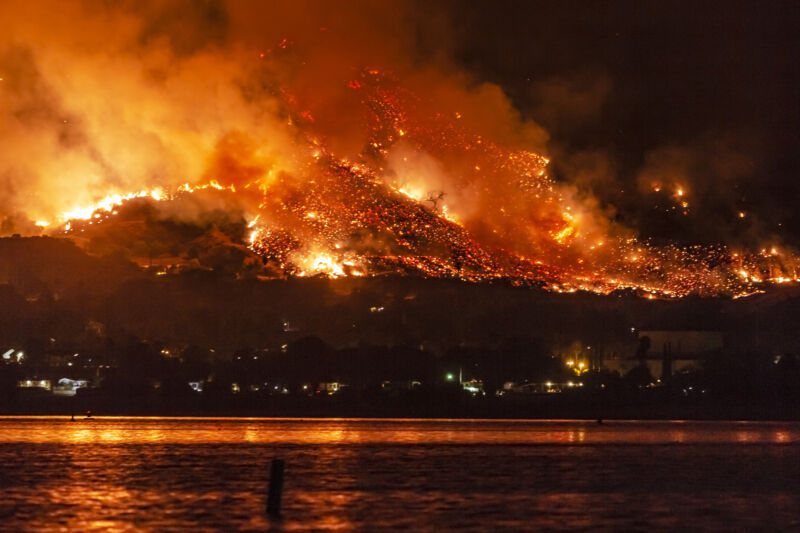
This summer, the Western United States saw a truly devastating wildfire season. Across the country, more than 48,000 wildfires raged, damaging more than six million hectares of land. It would be nice to think that humans weren’t the primary cause of these events and that natural changes in weather patterns contributed to how dry and fire-prone parts of the world have become.

But the reality isn't so nice. Climate change is likely the cause of the wildfires, according to new research that aimed to quantify just how much blame we can lay at the feet of natural causes when it comes to the increasing rates of wildfires in the US’s West. “We want to know how much this increase in fire weather is just changing weather patterns and how much cannot be explained by changing weather patterns,” Rong Fu, one of the paper’s authors and a professor at UCLA’s Department of Atmospheric and Oceanic Sciences, told Ars.

The research began around a year ago. Fu and some of her colleagues live in California and were all impacted by the wildfires, so they wanted to investigate what is causing them.

How bad is it?

Fu and her team deployed a technique called an "ensemble constructed flow analogue." In short, they looked back in time between 1979 and 2010 in the region and found cases in which the naturally occurring weather looked much as it does now. From there, they looked at a figure called the vapor pressure deficit (VPD)—basically, how dry and “thirsty” the area is—both in the historic and modern cases.Advertisement

VPD is the leading cause of forest fires on the US West Coast and many other places around the world. So if the modern VPD is higher than it was in historic cases with similar weather patterns, it would suggest that there is a non-natural component to how fire-prone things are currently. “Basically, the difference between [the present VPD] and the [VPD] we can get from the same weather patterns in the past is due to climate change,” she said.

Fu noted that these cases won’t have the same weather patterns, however. She also added that the work took into consideration various other factors that might have played a role, such as changes in vegetation.

In all, the research suggests that only around 32 percent of VPD trends can be attributed to natural causes. The remaining 68 percent or so cannot—and it’s likely that climate change is the culprit.

Ruh-roh

To make matters worse, 68 percent is a conservative estimate. The paper notes that the number could be as high as 88 percent. Fu noted that the past weather data her team used was likely also impacted by the fact that humans were emitting carbon and otherwise mucking around with the climate even back then. “The reference period is already being affected by greenhouse gases,” she said.

As a result, their estimates of climate change impacts is not as large as it would be in reality; it’s on the more conservative side of things. “We want to be as conservative as possible. That way, when we say, 'Climate change contributes two-thirds of [the increase to] fire weather,' we know that’s likely to be true and only an underestimate of climate change,” she said.

Trying to suss out exactly how much human activity impacts climate change is a tricky business because the climate changes to some degree on its own. But this research is another step toward understanding just how much humans are responsible. Further, according to Fu, the methods used in this paper could be deployed elsewhere around the world. “I think this approach can be generalized to other areas,” she said.

PNAS, 2021. DOI: 10.1073/pnas.2111875118 (About DOIs)
A 150-Year-Old Note From Darwin Is Changing How We Plant Forests

(Sebastian Unrau/Unsplash)
NATURE

ROB MACKENZIE AND CHRISTINE FOYER, THE CONVERSATION
5 NOVEMBER 2021

More than 150 years ago Victorian biologist Charles Darwin made a powerful observation: that a mixture of species planted together often grow more strongly than species planted individually.

It has taken a century and a half – ironically about as long as it can take to grow an oak to harvest – and a climate crisis to make policymakers and landowners take Darwin's idea seriously and apply it to trees.


There is no human technology that can compete with forests for take-up of atmospheric carbon dioxide and its storage. Darwin's idea of growing lots of different plants together to increase the overall yield is now being explored by leading academics, who research forests and climate change.

Scientists and policymakers from Australia, Canada, Germany, Italy, Nigeria, Pakistan, Sweden, Switzerland, the UK, and the US came together recently to discuss if Darwin's idea provides a way to plant new forests that absorb and store carbon securely.

Why plant more forests


Planting more forests is a potent tool for mitigating the climate crisis, but forests are like complex machines with millions of parts. Tree planting can cause ecological damage when carried out poorly, particularly if there is no commitment to diversity of planting. Following Darwin's thinking, there is growing awareness that the best, healthiest forests are ones with the greatest variety of trees - and trees of various ages.

Forests following this model promise to grow two to fourfold more strongly, maximizing carbon capture while also maximizing resilience to disease outbreaks, rapid climate change, and extreme weather.

In mixed forests, each species accesses different sources of nutrients from the others, leading to higher yields overall. And those thicker stems are made mostly of carbon.

Mixed forests are also often more resilient to disease by diluting populations of pests and pathogens, organisms that cause disease.

Darwin's prescient observation is tucked away in chapter four of his 1859 famous book On the Origin of the Species. Studies of this "Darwin effect" have spawned vast ecological literature. Yet it is still so outside of the mainstream thinking on forestry that, until now, little major funding has been available to prompt use of this technique.

Darwin also famously described evolution by natural selection, a process by which genes evolve to be fit for their environment. Unfortunately for the planet, human-induced environmental change outstrips the evolution of genes for larger, slower reproducing, organisms, like trees.

Modern gene-editing techniques – direct DNA surgery – can help speed things up once careful laboratory work identifies the key genes. But only evolution of human practice – that is, changing what we do – is fast and far-reaching enough to rebalance the carbon cycle and bring us back within safe planetary limits.

Healthier trees capture more carbon


At our meeting we discussed a study of Norbury Park estate in central England, which describes how – using the Darwin effect and other climate-sensitive measures – the estate now captures over 5,000 tons of carbon dioxide per year, making it quite possibly the most carbon-negative land in the UK. Such impressive statistics don't happen by accident or by sticking some trees in the ground and hoping; care and ecological nous is needed.

Trees of different ages also continuously provide harvestable timber and so steady jobs, in stark contrast to the other methods of forestry, where large areas are felled and cleared at the same time.

The UK government, like other administrations, has laid down requirements for responsible large-scale tree planting. These requirements continue to be revised and improved. There are still vital questions about which trees we should plant, where we should plant them, and what to do with them once they've grown.

It has been said that it is impossible to plant a forest, but it should certainly be possible to design a plantation that will blossom into a forest for future generations. We need forests to be a practical, dependable, and just response to our climate and biodiversity crises, and Darwin has shown us the way.

Rob MacKenzie, Professor of Atmospheric Science, University of Birmingham and Christine Foyer, Professor of Plant Sciences, University of Birmingham.

This article is republished from The Conversation under a Creative Commons license. Read the original article.

From space, astronaut sounds the alarm about climate crisis

From space, astronaut sounds the alarm about climate crisis
European Space Agency astronaut Thomas Pesquet of France, adjusts his glove as he
 talks to family and friends before a launch attempt at the Kennedy Space Center on
 April 23, 2021 in Cape Canaveral, Fla. Through the portholes of the International Space
 Station, Thomas Pesquet has an arresting view of global warming's destructive
 repercussions that negotiators are seeking to tackle at the U.N. climate summit in
 Glasgow. Credit: AP Photo/John Raoux, File

Entire regions of Earth in flames. Storms trailing destruction in their wake. And the haunting fragility of humanity's only home floating like a blue—but also tarnished—pearl in the vastness of space.

Through the portholes of the International Space Station, French astronaut Thomas Pesquet has an arresting view of global warming's repercussions. He used a  from space to sound the alarm Thursday, as negotiators,  and activists continued meeting at a U.N. climate conference in Glasgow, Scotland.

"We see the pollution of rivers, atmospheric pollution, things like that. What really shocked me on this mission were  or climate phenomena," Pesquet told French President Emmauel Macron during the call.

"We saw entire regions burning from the space station, in Canada, in California," he said. "We saw all of California covered by a cloud of smoke and flames with the  from 400 kilometers (250 miles) up."

From space, "the fragility of Earth is a shock," Pesquet continued. "It's a sensory experience to see just how isolated we are as an oasis, with limited resources."

This is Pesquet's  to the space station. He also spent 197 days in orbit in 2016-2017. The destructive effects of human activity have become increasingly visible, he said.

"Year after year, we also know we are beating records for fires, for storms, for floods. And that is very, very visible. I very clearly saw the difference compared to my mission four or five years ago," the astronaut said.

Macron said the goal for climate negotiators in Scotland must be to speed up humanity's response.

"There is still a huge job ahead of us, and I think we are all aware of that," the French leader said.'Never seen anything like it': astronaut on 2021 climate disasters

© 2021 The Associated Press. All rights reserved. This material may not be published, broadcast, rewritten or redistributed without permission.

The Sunday Magazine

Why David Suzuki skipped COP26 — and where he sees glimmers of hope in climate action

Canada’s COVID-19 measures proved we can respond

quickly to a global crisis, says The Nature of Things host

Environmentalist David Suzuki, seen in Ottawa in June 2019, says he was invited to the COP26 summit in Glasgow, but chose not to attend. (Sean Kilpatrick/The Canadian Press)

In recent years, David Suzuki's warnings about the dangers of climate change have become ever more dire, a feeling echoed at the COP26 summit in Glasgow, Scotland, right now.

"We don't have time to fool around any longer," the scientist, author and host of CBC's The Nature of Things recently told Piya Chattopadhyay, host of The Sunday Magazine.

Suzuki said he was invited to attend COP26, but declined.

"I simply didn't bother to answer because, first of all, I've given up flying [on] jet planes, and I didn't see that [the summit] is going to make any difference," he said.

So far at this year's summit, world leaders have pledged a variety of climate measures, including working to curb deforestation and methane emissions. Prime Minister Justin Trudeau called for a global carbon tax, which he says would dramatically reduce the use of fossil fuels.

  • Have questions about COP26 or climate science, policy or politics? Email us: ask@cbc.ca. Your input helps inform our coverage.

The announcements didn't carry much weight for Suzuki, who believes the pledges don't go far enough.

"We've already had 25 meetings. The urgency now is perceptible."

Despite his pessimism about the conference, he did see a glimmer of climate hope in other contexts, including the rapid global response to the COVID-19 pandemic.

"When COVID-19 hit, suddenly, tens of billions of dollars were being spent by the government. And my question was, where the hell did all this money come from? Money wasn't an issue," he said.

"Canadians stayed cooped up in their apartments, stayed at home. They changed their behaviour in a radical way."

Canada's dubious record

To be sure, Canada's efforts to curb the pandemic haven't been a consistently smooth ride, but the country has fared relatively well.

Suzuki is far more disappointed by the country's track record on climate change, particularly its role in meeting the Paris Agreement targets established six years ago.

Suzuki is a scientist, author, activist and host of CBC's The Nature of Things. (James Murray/CBC Still Photo Collection)

"When Trudeau was elected, he went to Paris immediately in 2015…. We all cheered at last. Great," Suzuki said. "Two and a half years later, he bought a pipeline."

In 2015, the government committed to lower its greenhouse gas emissions to 30 per cent below 2005 levels by 2030. It has since raised that target to 40 to 45 per cent, aiming for net-zero emissions by 2050.

However, since the Paris Agreement was signed, Canada's emissions have grown the most of any G7 nation.

'Dream candidate' for environment minister

Suzuki did praise Steven Guilbeault, the new minister for the Environment and Climate Change, calling him a "dream candidate" for environmentalists.

"He is a known activist and he understands what the issues are," Suzuki said.

Guilbeault's appointment has drawn some criticism precisely because of his past as a climate activist. Alberta Premier Jason Kenney said the announcement sent a "very problematic message" to his oil-producing province.

Guilbeault responded by saying he has no "secret agenda" in his new position.

"We're not trying to cap production. We will be capping the amount of pollution that comes from those sectors," he said.

But that's not good enough for Suzuki. "You're damn right we have to cap it, and we've got to ensure that Guilbeault and Trudeau understand that," he said.

Activism at COP26

Suzuki is now 85, and the bright-eyed enthusiasm of his early years as an environmentalist has started to fade. Despite key wins against projects like proposed dams, oil drills and deforestation, he still sees those kinds of battles being fought today.

"These were skirmishes, because the underlying challenge was the way we look at the world," he said.

He pointed to the 1993 protests and blockades against clear-cut logging in Clayoquot Sound, B.C. Over 850 people were arrested in what CBC dubbed the "War of the Woods."

"Thirty years later, kids in Fairy Creek are fighting for the same issue," Suzuki said, emphasizing that companies need to "stop logging our old-growth forests."

Suzuki has been encouraged by protesters and activists who have gathered in Glasgow this month, noting the "powerful impact" made in particular by Greta Thunberg to help galvanize a new generation of environmentalists


Trust in nature

Despite the challenges of a global response to climate change, Suzuki sees the most hope in nature itself.

For example, he pointed to the resurgence of wild sockeye salmon populations in the Fraser River a decade ago, after their numbers dropped from about 25 to 30 million to "barely a million" in 2008.

"I remember turning vividly to my wife and saying, 'That's it,'" he recalled. "A year later, we got the biggest run of sockeye salmon in 100 years. I mean, nobody knows what the heck happened, but nature surprised us."

Suzuki said that what really gives him hope "is that nature will be far more generous than we deserve."


Written by Jonathan Ore. Produced by Andrea Hoang.

Coastal erosion: The climate challenge wearing away at Europe’s shores

Issued on: 07/11/2021 


The port town of Marsaxlokk in Malta is at risk from coastal erosion 


© Andreas Solar, AFP

Text by: Joanna YORK

Coastal erosion is tipped to be on the agenda at the COP26 climate conference on Monday. In Europe sea levels could reach 37cm by 2080, causing land loss that threatens infrastructure, livelihoods and heritage sites.

As climate change causes sea levels to rise around the world, typically it is small island nations that sound the alarm at events like COP26.

Last week, Prime Minister of Barbados Mia Mottley told attendees at the conference in Glasgow that a 2-degree Celsius rise in global temperatures would cause an increase in sea levels equivalent to a “death sentence” for the Caribbean island. Tuvalu Foreign Minister Simon Kofe stood knee-deep in the sea around the South Pacific island to illustrate the scale of the problem as he filmed a video statement to send to the summit.


Tuvalu's Simon Kofe recording a video message for COP26


But in Europe too, climate change is having a dramatic impact on the shoreline as rising seas mean waves hit the coast at higher levels, and increasing storms and changes in wind direction join forces to wear land away.

Part of the problem is that coastal populations and human infrastructure is increasing around the world, even though the coastline naturally fluctuates, Larissa Naylor, professor of geomorphology and environmental geography at the University of Glasgow, told FRANCE 24. “The issue is that we’ve fixed the coast and we’ve fixed assets at the coast. Around Europe we’ve got hotels, roads, houses, railways along a boundary that is fluid.”

Naylor says rising sea levels add an “extra layer” to factors already at play. For example, if a spring tide happens to coincide with a storm, the added complication of rising seas amplifies the overall impact. “As climate change accelerates there’s going to be much more loss and damage in these coastal contexts. Society will increasingly be impacted,” she says.

Livelihoods and infrastructure at risk

This is happening faster in some areas than others.

On the Yorkshire coast in north-east England an annual average of four metres disappear each year, but last year figures from the local council showed that in a two-mile stretch, 10 metres disappeared in just nine months. Some 20 homes are thought to now be at risk of falling into the sea.

In Ireland, Irish Rail last month announced plans to invest millions to counter “alarming” rates of erosion near coastal railway lines, Irish daily The Journal reported.

Further south, livelihoods are at stake. A 2017 Greek study found that up to 88 percent of all the country’s beaches -- essential to the national tourism economy -- could be completely eroded by the end of the century, with large scale land losses also predicted in seaside resorts in France, Spain, Portugal, Italy.

Even so, data giving an overview of the situation on the continent is lacking. The last European Union study of coastal erosion dates back to 2004, when it found all countries with sea access in the EU were experiencing some form of coastal erosion and 20 thousand kilometres of coastline faced serious impacts.

Although rising seas and coastal erosion are a global problem, it poses a unique risk in Europe due to the continent's high ratio of shoreline to land. Yet there is no Europe-wide strategy for fighting coastal erosion and many nations do not have cohesive plans, instead leaving regional governments to work out -- and fund -- their own solutions.

This is partly because public awareness of the issue is lower than for issues like flooding, but also because tackling the problem means a change in approach, from fighting land loss to accepting it.

Naylor is a specialist in rocky coastlines that naturally erode more slowly than sandy beaches but are still disappearing. “And once the rocky coastline goes, you can’t glue it back on,” she says. It is an impact that cannot be reversed or reduced, but needs to be accepted and adapted to. “We’re not necessarily ready to do that as a society,” Naylor says.

Accepting the inevitable


Some places have already started to do this. In Quiberville-sur-Mer in Normandy, Mayor Jean-François Bloc told FRANCE 24 that in order to protect infrastructure close to the water’s edge, the city used to rely on concrete fortifications at the bottom of its cliffs and a long, concrete drainage ditch separating the beach from the town, but these needed to be rebuilt and strengthened after each big storm.

“As the water rises, and as the storms get stronger and stronger due to global warming, it's clear that this is not enough anymore,” he said. “We will not be able to keep going like we were indefinitely.”

Now the town plans to simply accept that the coast is moving, and to let erosion happen, by relocating houses close to the coastline.

Further south on the French Atlantic coast, the town of Saint-Jean-de-Luz is trialling a similar plan to manage coastal erosion of 25cm a year. Local officials have committed €6.4 million to moving at-risk campsites, restaurants, bars and a water purification station to safer inland locations.

>> See also: Normandy village takes a gamble on letting in the rising sea

This approach brings its own challenges, Naylor says. “How do we fund the moving of communities? How accepting are the communities inland of these people coming into their space?”

As the scale of the issue grows, the difficulties of moving communities will have a greater impact on European countries' existing infrastructure and spending. She says: “The committee on climate change report for England has said that in 2018 there were 8,000 properties at risk of erosion in England and by 2100 it’s going to be 100,000. That will be the same in other parts of Europe with soft coasts. How do we manage that as a society?”

Protecting against change


Another option is building to protect existing land using what Naylor describes as a “traditional conventional hard engineering approach” or “greener, nature-based solutions”.

In Malta, the capital city Valletta dates back to the 16th century and is one of 42 World Heritage Sites at risk of coastal erosion in the Mediterranean. Ten kilometres away the town of Marsaxlokk has opted for the first solution. Last month officials announced a €2 million effort to limit erosion by installing 70 metres of groynes – temporary structures made of limestone bricks.

The limestone barrier will extend out from the dock into the sea, forming a protective wall to catch sand and other sediment that would otherwise be washed away from the shore.

This is similar to a technique used in Holland, where 12 million cubic metres of sand are used to replace what gets washed away from the coastline. While groynes last up to 25 years, the sand must be replaced every year as the problem worsens. It is expected that greater volumes of sand will be needed, meaning greater costs.

Such systems can also be built in a more eco-friendly way to make them habitable for local species. Earlier this year Portsmouth, UK, announced plans to build a two kilometre sea defence wall that is habitable for rocky shore species, making it the largest structure of its kind in the UK. The issue here is the costs involved. “It isn’t just the cost of building it, there’s repair and maintenance costs as well. It’s phenomenal, eye-watering amounts of money,” says Naylor.

She adds, “We’re not necessarily costing all the economic benefits over a long enough time. Yes, you can rebuild a wall now and it might only be a metre or two higher than the wall before, but what happens in 80 years’ time? Who pays then? We need some requirements to start looking at long-term climate risk.”

Adaption, loss and damage

She is hopeful such issues may be raised at COP26 on Monday, November 8, when talks are dedicated to adaptation, loss and damage.

One example she points to as successful is a recent project in Edinburgh to build blocks of flats on the water’s edge. Instead, the contractors agreed to install a coastal park as a buffer between the sea and the new buildings. This meant making space for nature and for erosion and accepting that, “by accommodating erosion you lose some land”.

Putting this kind of change in attitude on the agenda and introducing government frameworks promoting such measures is crucial, Naylor says. "Adaptation really needs to come up the agenda and be on an equal pegging to mitigation. If that happened it would help things like the need to adapt to coastal erosion become more mainstream."

As a recent study from the World Meteorological Organisation found that the rate sea rises have doubled to 4.4 since 1993, one thing that is certain is that more thoughtful and long-term solutions will be needed.

Fundamentally, Naylor says, it comes down to “making decisions now that don’t commit future generations to huge amounts of loss and damage”.
Chasm opens between COP26 words and climate action
While negotiators are in Glasgow as part of a UN-led process to implement the Paris Agreement -- including the goal of limiting temperature rises to between 1.5 and 2 degrees Celsius -- British organisers have their own list of priorities 
DANIEL LEAL-OLIVAS AFP

Issued on: 07/11/2021 -

Glasgow (AFP) – COP26's first week saw keynote pledges to end deforestation, phase out coal, and mobilise trillions for green investment. But observers say there is a gulf between host Britain's proclamations and the emissions cuts that must be achieved.

Mohamed Adow, director of the Nairobi-based climate think tank Power Shift Africa, told AFP that there had been "two realities" at the global climate conference in Glasgow.

"One is the world of press releases by the UK Government announcing a host of initiatives such as 'an end to coal', which suggest all is well and we've as good as cracked the climate crisis," he said.

"The other reality is outside this PR bubble. The climate deals in cold hard facts."

The conference aims to implement the Paris Agreement -- including the goal of limiting temperature rises to between 1.5 and 2 degrees Celsius above pre-industrial levels.
British organisers are pushing to solidify 1.5C as the summit's unequivocal temperature target.

They have also pushed for their much-repeated priorities -- "coal, cars, cash and trees" -- shorthand for actions to phase out polluting fuels and internal combustion vehicles, provide money to help the world decarbonise, and protect forests.

There was movement toward that end at COP26 this week.

A COP26 spokesman said there had been "real momentum for climate action" including "commitments on ending our reliance on coal, increasing climate finance, tackling deforestation and plans to cut emissions."

But experts say there is actually a glaring disconnect between what some called "inflated, rehashed pledges" and genuine progress on reducing fossil fuel emissions.

End of coal?

On Wednesday, for instance, COP26 president Alok Sharma announced: "A 190-strong coalition has today agreed to phase out coal power".

Business Secretary Kwasi Kwarteng tweeted: "The end of coal is in sight."

The 190 figure was given to the media under embargo on Tuesday night, but a list of signatories was not released until the following day.

It contained only 77 new signatories, including 46 countries, on top of others that had already signed on to a previous alliance to end coal.

Out of these, COP26 organisers said 23 countries had issued new pledges to phase out coal during the summit, including major users South Korea and Vietnam.

But in the list of countries with new commitments obtained by AFP, 10 nations use no coal at all in their energy mix, according to data from the Ember climate think tank.

All told, national signatories to the COP26 coal pledge account for around 13 percent of global output.

- Unprecedented? -

On Monday, Downing Street said that countries representing 85 percent of global rainforests had signed an "unprecedented" pledge to end deforestation by 2030.

But it was similar to the 2014 New York Declaration on Forests, signed by 40 countries and more than 150 organisations and indigenous groups, to strive to end deforestation, also by 2030.

An assessment this year on the declaration's progress found that out of the 32 biggest forest nations, only India had translated the pledge into concrete action.

Damian Fleming, deputy lead at WWF's Global Forest Practice, said the COP26 deforestation pledge was "unprecedented in scale... but not in ambition."

"We have been here before. Yet since (the New York declaration) a forested area greater than the size of France has been deforested," he said.

"The pledges are coming fast and furious. But they all seem to be just business-as-usual wearing a green cloak of trees," Doreen Stabinsky, Professor of Global Environmental Politics at the College of the Atlantic, told AFP.

"There aren't enough trees on the planet to just keep blindly carrying on emitting."

- How much? -

Finance is a crunch issue at COP26, with developing nations demanding rich emitters make good on decade-old promises to provide $100 billion a year to help them cope.

That figure is a drop in the ocean compared to the estimated $4 trillion needed annually to decarbonise the economy by 2050.

On Wednesday, former Bank of England governor Mark Carney said that a net-zero alliance made up of hundreds of lenders with assets totalling $130 trillion on their collective portfolios was ready to help the global transition to carbon neutrality.

"The money is here if the world wants to use it," said Carney.

But observers noted that fund investors only needed to allocate a small percentage of capital to green projects to qualify as net-zero lenders, nor were they restricted from investing in fossil fuels.

That means only a fraction of the $130 trillion actually goes to green projects.

- 'Pinch of salt' -

Experts say an accord by more than 100 nations to slash methane emissions by 30 percent by 2030 could have a real impact on short-term heating.

And India, the fourth biggest emitter, announced its intention to ramp up renewables and reach net-zero by 2070.

International Energy Agency head Fatih Birol said this week that the pledges announced at COP26 -- if fully implemented -- could see warming limited to 1.8C.

He stressed however that this required "governments to turn their pledges into clear and credible policy actions and strategies today".

British sources are already trailing the 1.8C figure as a possible COP26 achievement.

But scientists say it is based on vague net-zero plans with few or no short-term emissions targets.

A senior diplomat told AFP that "most of the net-zero pledges are void of content".

Countries such as Australia and Saudi Arabia announced net-zero goals with "no plans to implement them and emissions going massively in the wrong direction," Simon Lewis, professor of global change science at University College London and the University of Leeds, told AFP.

"It's logical to take all pledges and convert them into a best estimate," he said.

"But you've got to take it with a huge pinch of salt and an enormous banner saying: Warning! This is unlikely to happen."

The UN says that the latest round of net-zero commitments will see emissions rise 13.7 percent by 2030. To be 1.5C compliant, they must fall 45 percent by then.

Daniel Willis, from Global Justice Now, said COP26 had "failed to adequately address the climate crisis".

He said the summit had instead produced "inflated reporting of financial sums, rehashed spending pledges spun as new, and bizarre claims that leaders have managed to limit warming to 1.8C based only on pledges without action."

© 2021 AFP