Monday, December 13, 2021

PAKISTAN
PM Imran assures Gwadar protesters of action against illegal fishing

Saleem Shahid | Syed Irfan Raza
DAWN.COM
Published December 13, 2021 
Scores of women take part in a rally in Gwadar for basic rights on Nov 29.
 — Photo provided by Ghalib Nihad

• Rights leader awaits practical steps
• CM’s aide says release of boats not in provincial domain
• Solidarity Day rallies staged in Balochistan districts


ISLAMABAD / QUETTA: Prime Minister Imran Khan on Sunday said that demands of the coastal community of Gwadar were ‘very legitimate’ and announced that he would take up the matter with Balochistan Chief Minister Mir Abdul Qudoos Bizenjo.

The intervention by Prime Min­ister Khan came nearly a month after the Gwadar fishermen took to the streets to press the government for their dem­ands including halt to illegal fishing.

Mr Khan vowed to take ‘strong’ action against illegal fishing by trawlers. “I have taken notice of the very legitimate demands of hardworking fishermen of Gwa­dar. Will be taking strong action against illegal fishing by trawlers and will speak to CM Balochistan,” the premier tweeted.

While both CM Bizenjo and leader of the Gwadar protest movement Maulana Hidayatur Rehman hailed the PM’s tweet, the latter pointed out that the real issue was fulfillment of promises.

A senator belonging to the ruling Pakistan Tehreek-i-Insaf (PTI), meanwhile, told the state-run TV channel that some demands of the local fishermen were unacceptable. “If some of these demands are met, the government will have to provide such facilities to all people of the country,” Senator Abdul Qadir, who hails from Balochistan, said.

Fishermen in large numbers along with women and children have been protesting on the shores of Gwadar for past 28 days to press the relevant authorities for elimination of illegal fishing by trawlers, removal of Gwadar Development Authority director general as well as Pasni’s deputy commissioners and assistant commissioner, cross-border trade with Iran, provision of clean drinking water, closure of wine shops, jobs, job quota for disabled and free 300 units of electricity.

Led by Maulana Hidayatur Rehman, Balochistan gen­­eral secretary of the Ja­­m­a­at-i-Islami, the protesters have vowed to continue their protest till the achievement of their ‘rights’. They blocked roads and other places by holding rallies and staging a sit-in.

Adviser to the CM on Home and Tribal Affairs Mir Ziaullah Langau told a PTV show that the Balochistan government had already fulfilled most of their 19 demands and vowed to take stern action against what he called “illegal trawlers mafia”.

Regarding one of the three remaining complaints, the CM’s aide said Maulana Rehman had recently admitted during a meeting that illegal fishing by trawlers had ‘declined’ though at the same time he feared a resurge in the activity if the protesters ended their sit-in.

About their boats and vehicles that had been confiscated under the Customs Act, the adviser said he had informed the protesters that it was an act of the federal government and was “out of the domain of Balochistan government”.

Speaking to Dawn, PTI Senator Abdul Qadir said some of their demands were ‘unacceptable’. “If some of these demands are met, the government will have to provide such facilities to all people of the country. For example, fishermen are demanding free 300 units of electricity, cross-border trade with Iran and use of non-custom duty paid cars,” he said before adding that people of Gwadar already enjoyed those facilities which were unavailable to those residing in other parts of Balochistan.

The senator said some ‘anti-state’ elements were provoking the fisherman against the government in order to create unrest in the port city.

The Gwadar rights movement leader also lauded the tweet of PM Khan saying: “We are not stubborn and believe in solution of the issues” though the prime minister took notice of the demands after their protest entered 28th day. He said the protest would continue as the people awaited practical steps to meet all the demands, which were very much legitimate.

He said the PM did not talk about some other important issues including opening of border, power and water issues and return of the confiscated boats and vehicles.

Despite official notifications issued by the provincial government, no step had been taken to fulfill those promises, he said. “We want implementation as our people are deprived of their livelihoods due to the restrictions,” he said.

Maulana Rehman had earlier said the protest would continue until the acceptance of two major demands — action against ‘trawler mafia’ and cross-border trade with Iran — out of the 19 demands.

While hailing the assurance given by the prime minister, CM Bizenjo said the assurance was encouraging. He claimed that the steps demanded by the Gwadar rights movement, which came under the purview of the provincial government, were already being implemented as per its policy.

“Relevant provincial departments are ensuring prevention of illegal fishing and trawling,” he said, adding that unnecessary checkpoints and token system for border trade had already been abolished. He said licences of wine shops had been canceled in Gwadar and funds had been released for urgent solution to the drinking water problems as well as for the Gwadar old city development plan.

“Some other demands, including electricity, are related to the federal government,” the CM said, expressing the hope that the demands related to the federation would also be resolved with better coordination between relevant departments and agencies to curb illegal trawling.

However, to end the standoff, National Party Secretary General Mir Jan Mohammad Buledi urged the government to immediately hold meaningful negotiations with representatives of the protesters.

Rallies were also staged in other parts of the province to mark ‘Balochistan Solidarity Day’ on the call of Jamaat-i-Islami chief Sirajul Haq.

Protest demonstrations were staged in Quetta, Dera Murad Jamali, Jaffarabad, Zhob, Sui, Dera Bugti, Bela, Khuzdar, Duki and several other districts to press the provincial and federal authorities for the demands of Gwadar rights movement.

Ali Jan Mangi in Dera Murad Jamali also contributed to this report

Published in Dawn, December 13th, 2021
PAKISTAN
State of human rights
DAWN.COM
Published December 13, 2021


IN the run-up to World Human Rights Day observed last week, Pakistani society exposed its worst instincts as a mob lynched a factory manager and an infuriated crowd allegedly stripped four women rag-pickers. What was also apparent was the state’s inability to act in time. Or did it deliberately keep itself in the dark?

It is, in fact, a selective blindness that prevents the state from ensuring the fundamental and constitutional rights of the people, in spite of the laws of the land and the international conventions it has ratified. Indeed, it is dichotomous approach: on the one hand it has professed its aim of truly becoming a welfare state, whereas on the other it has turned a blind eye to the people’s sufferings, and in fact, has become a party to them — as evident in the massive eviction drives in urban areas that has left thousands without a roof over their heads.

This year’s theme for World Human Rights Day, ‘reducing inequalities — advancing human rights’, is an apt reminder of the many deadly blows that have been dealt to the already fragile state of equality and justice in the country.

We have seen peaceful protesters such as teachers, students, health workers and residents, whose homes have been reduced to rubble, encounter the full might of the state, whereas tolerance is reserved for ultra-conservative elements who control the streets or even kill and maim in the name of religion. Similarly, there are those who go missing when they raise a voice for the rights of their people, never to be seen again, while there is no accountability of the elements whose actions led to their disappearance in the first place.

Unfortunately, when the state does not believe in an even-handed approach in the application of justice, a sense of impunity seeps into society itself — not surprising when we consider that the public takes its cue from those who govern them. Unfortunately, successive governments have viewed even basic human rights as acts of charity to be dispensed at will. This mindset is reflected in practically all spheres of life, including the justice system itself. And it is what prevents the state from investing in policies and institutions for human and social development that could have rescued the people from the forces of exploitation. Respect for human rights in the country can only be instituted when the state is ready to admit and rectify its own approach.

Published in Dawn, December 13th, 2021
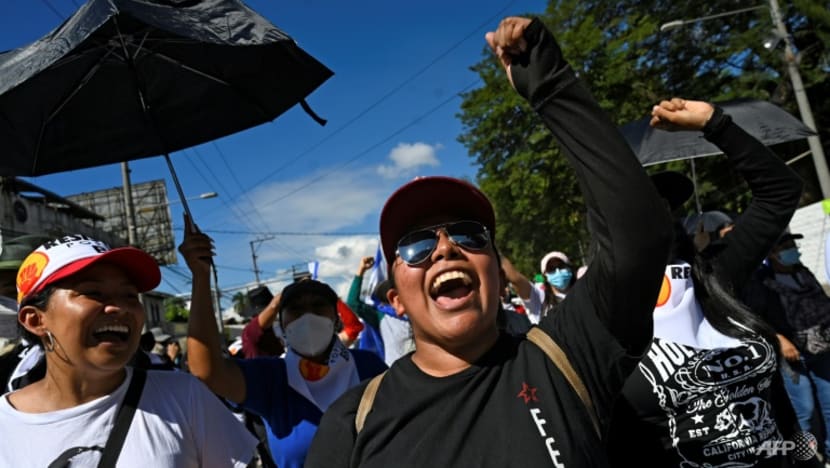
Thousands of Salvadorans protest against corruption

Women shout slogans during a protest against Salvadoran President Nayib Bukele in San Salvador (Photo: AFP/MARVIN RECINOS)

13 Dec 2021

SAN SALVADOR: Thousands of people protested Sunday (Dec 12) in El Salvador's capital against corruption and what they see as a drift towards authoritarianism, days after the United States announced sanctions against a close aide of President Nayib Bukele.

Bukele has drawn criticism for making bitcoin legal tender in the country, suggesting the volatile cryptocurrency will help revitalise its struggling economy, and for legal reforms which critics say are attacks on the independence of the country's judiciary.

"As a country, we have had enough of the way public officials abuse state resources, which belong to the people," lawyer Eduardo Alvarenga, 37, told AFP during the demonstration, as he carried a sign calling for an end to corruption..

Current and former judges took part in the protest, calling for respect for the separation of powers after Congress - which is dominated by the ruling party - dismissed all judges of the Supreme Court's constitutional chamber and judges over the age of 60.

The new Bukele-aligned court then gave the green light for him to run for reelection in 2024 - despite a constitutional one-term limit.

"We are marching today as judges to defend the constitution and the rule of law," said former judge Jorge Guzman, who resigned in solidarity with his sacked colleagues.

On Thursday, Washington imposed economic sanctions on Bukele's chief of staff Carolina Recinos for alleged corruption - charges the Salvadoran leader called "absurd".

After the rally, which unfolded without incident, Bukele lashed out at the US government.

"US taxpayers should know that their government is using their money to fund communist movements against a democratically elected (and with a 90 per cent approval rating) government in El Salvador," he tweeted.
After UAE law change, out-of-wedlock babies still in shadows

By ISABEL DEBRE


1 of 6
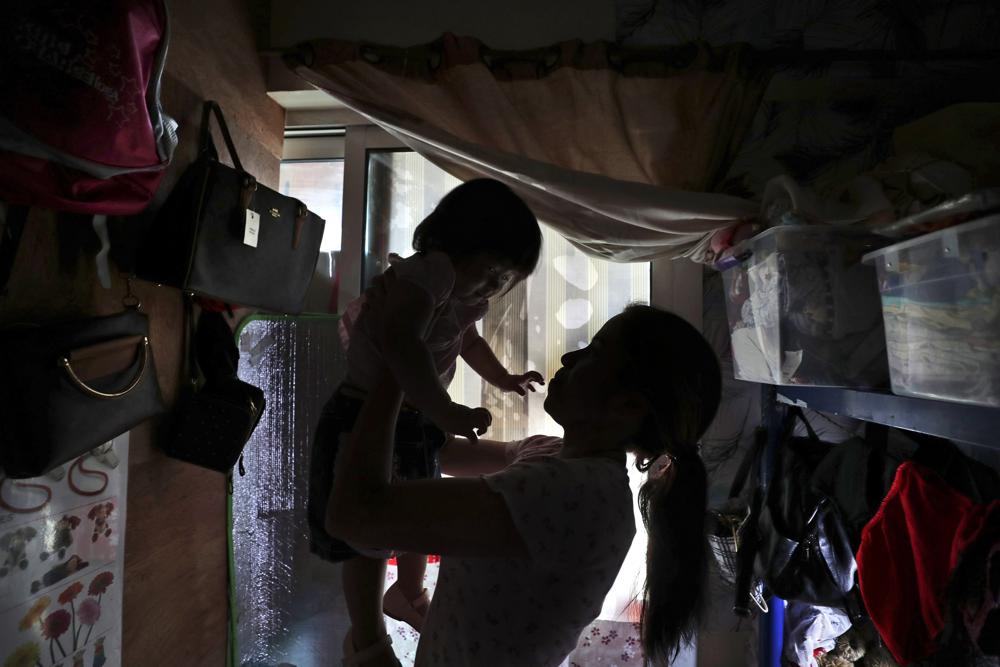
Maya, 36, plays with her one-year-old undocumented daughter in a dank, overstuffed section of an apartment, subdivided by hinged partitions, that she shares with eight other women, in Dubai, United Arab Emirates, Wednesday, Nov. 24, 2021. A year after the United Arab Emirates decriminalized premarital sex in a bold expansion of personal freedoms, the law has struggled to fulfill its promise. Unwed mothers may no longer land in jail, but they're caught in bureaucratic limbo, fighting to obtain birth certificates for their babies born in the shadows. (AP Photo/Kamran Jebreili)


SHARJAH, United Arab Emirates (AP) — Over a dozen unmarried women huddled in a jail cell south of Dubai last year, locked up for the crime of giving birth, when a guard entered and declared them free.

The incident, described by one of the women, was among the first concrete signs that the United Arab Emirates had decriminalized premarital sex in an overhaul of its Islamic penal code.

But a year later, these unwed mothers remain trapped in limbo, fighting to obtain birth certificates for babies born in the shadows.

A new law that comes into effect in two weeks still does not offer unmarried women a clear path to acquiring birth certificates for their babies. At the same time, the law criminalizes women lacking such documents.

Although unwed mothers no longer face jail after the UAE legalized premarital sex in November 2020, they now face a maze of red tape.

Obtaining birth certificates for their babies is a costly process that the country’s poorest residents — foreign workers who clean offices, serve food and care for the children of other mothers — cannot afford. Expats outnumber locals by nearly nine to one in the Emirates.

“We were so full of hope,” said Star, one of those released from Sharjah Central Jail in December 2020 with her 3-month-old daughter. “Then came trouble I didn’t think I’d have the strength to get through.”

Star gave only her first name for fear of reprisals. She and six other unmarried women, most of them Filipinas, described their legal battles to The Associated Press.

Before last year’s law change, several had given birth at hospitals, where health authorities denied them birth certificates and called the police. Others withdrew to their shared apartments, scared and alone, to have their babies.

In the UAE, hospitals issue birth certificates only to married parents. Without the certificates, children are unable to receive medical care, attend school or travel. Their mothers, who lost work and residency during prosecution under the old law, become stranded. The number of undocumented children in the UAE is not known.

Lawyers say the obstacles stem from an enduring conservative mindset and lack of government coordination.

Some women even yearn for the previous punishment, typically one-year detention and deportation. While terrifying, it at least guaranteed a flight home and identity documents for their children.

“It has only gotten harder since the law changed,” said 25-year-old mother Sitte Honey. “They won’t take you to jail and they don’t want you to give birth,” she added, noting abortion is also forbidden. “We’re stuck.”

Dirar Belhoul Al Falasi, a member of the UAE’s advisory Federal National Council, argued last year’s decriminalization had an impact.

“Prior to this, there was nothing in my hand to legalize what they have,” he told the AP. “But now, there is a law … that we can help them with.”

Under a new law that comes into force on Jan. 2, parents who fail to document their children face a minimum of two years in prison. It makes no reference to health authorities issuing birth certificates to single mothers. The law demands that parents marry or acquire travel documents and other paperwork to prove their children’s identities, without detailing how.

That has stoked panic among unmarried mothers who fear further punishment.

Last year, as lawyers scrambled to understand the opaque legal code, women like Star walked out of jail across the country. Conditions at the facilities varied and in some, mothers were separated from their children.

Star said her daughter was taken from her during detention. She said 15 women shared a single bathroom, subsisted on only rice and bread and were let out 30 minutes each day for fresh air. Other women described police interrogations about their sexual history as deeply humiliating.

But after these women were freed, they still couldn’t get the one thing they wanted most: identity documents.

Maya, a 36-year-old mother, turned herself into authorities in November 2020 when she heard it would help her get a birth certificate for her 1-year-old. After several torturous weeks in Dubai’s Al Qusais Police Station, authorities became alerted to the law change and freed her. But they never granted legal status to her daughter, forcing her to ricochet from one government office to another in her quest.

“These massive fundamental changes are highly welcome, but so much still needs to catch up,” said Ludmila Yamalova, managing partner of LYLAW, a firm taking on cases of unwed mothers.

“Emotionally and mentally, people are not prepared to accept the law as reality,” she added, referring to health and law enforcement agencies.

Women continue to raise undocumented children in secret. Noraida Gamama, desperate to document her 3-year-old daughter, has plastered the door of her Sharjah apartment with signs warning her half-dozen roommates to check the peephole before answering to ensure it’s not a government official.

Living on expired visas and struggling to feed infants on wisps of income, many can’t afford court fees and lawyers’ bills. It costs over $350 to open a birth certificate petition case independently at Dubai’s Family Court.

Ann, 36, works multiple part-time jobs, sleeping a few hours a night, to feed her undocumented 2-year-old girl. She recounted the agony of delivering her on the floor of a rented Dubai room. “All I want is to give her a name, to bring her back to the Philippines where she could live a better life,” Ann said.

Still, a growing number of women are taking their cases to court, with mixed success. A clerk at one Dubai court said the system handled over 50 “baby cases” daily.

When Honey discovered she was pregnant with her boyfriend’s child two years ago, she appealed to the Philippine Consulate to send her home. But while waiting for help that never came, baby Naya was born in her tiny apartment.

Lacking legal status after fleeing abusive employers who confiscated her passport, Honey has grown desperate to get out of Dubai. But authorities cannot repatriate her until Naya gets papers.

“This is a nightmare. No money, no visa, no rent, no plan,” Honey said.

To hasten her return, Honey’s 47-year-old mother moved to Qatar as a housemaid, pulling together the money needed to open a case in Dubai last month. She’s still waiting for her first hearing and trying to get a written acknowledgement of paternity from her ex-boyfriend.

The process requires an unwed mother to provide a ream of personal documents, take a DNA test and testify before a judge. If the judge approves, the mother may request her child’s birth certificate.

Some, like Star, have persevered and made it through.

“That kind of joy is overwhelming, to know your daughter is not illegal anymore,” Star said from her family’s home in Davao City, Philippines. “It’s like I’m breathing for the first time.”
‘A way we resist’: Quilts honor victims of racial violence

By LEAH WILLINGHAM

1 of 10
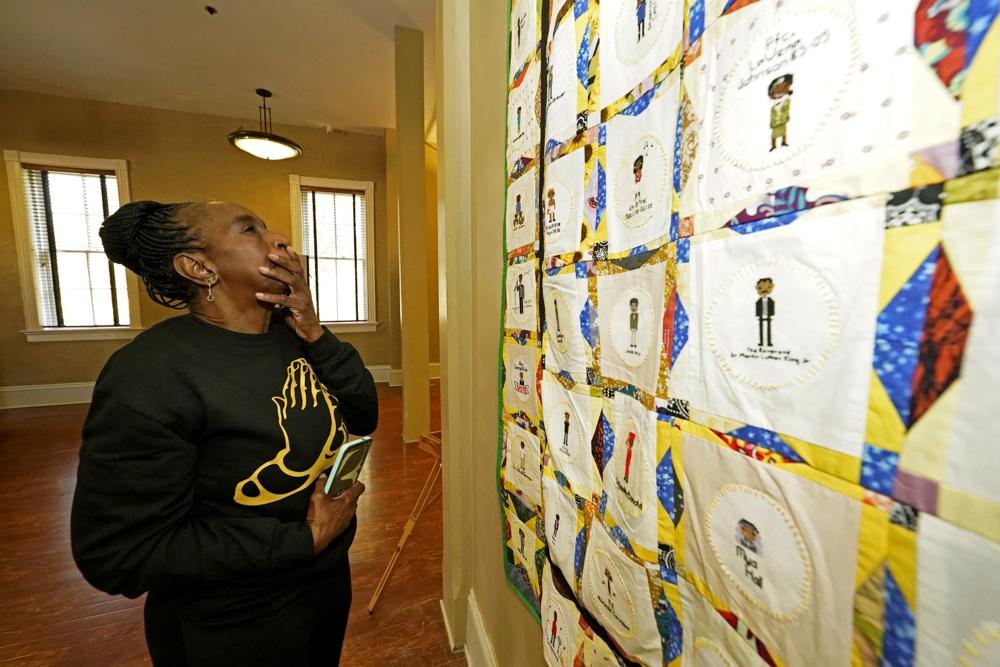
Gloria Green-McCray, the younger sister of James Earl Green, who along with Phillip Lafayette Gibbs were killed by Mississippi Highway Patrolmen in 1970 on the campus of Jackson State, reacts to viewing a section of one of two hand crafted quilts adorned with more than 115 cross-stitched portraits honoring African Americans who lost their lives to racial violence, Tuesday, Nov. 30, 2021, on the university's campus in Jackson, Miss. The quilts are part of the Stitch Their Name Memorial Project, on display at the Margaret Walker Center at Jackson State. (AP Photo/Rogelio V. Solis)

JACKSON, Miss. (AP) — Long after he was killed, Myrtle Green-Burton wouldn’t let anyone wear her 17-year-old son’s high school track team jacket.

James Earl Green, an aspiring Olympic runner, was supposed to receive the green and yellow coat at his graduation in Mississippi half a century ago. It became a symbol of his life — and her loss, said his sister Gloria Green-McCray.

“She just kept it until it dry-rotted because that was all she really had to remember his dream — his vision,” Green-McCray said of her mother.

A cross-stitch portrait of Green wearing his track jacket is now included with 115 others in a quilting project dedicated to memorializing lives lost to racial violence in the U.S. The two quilts are open for public viewing on weekdays through Dec. 17 at Jackson State University’s Margaret Walker Center.

James Earl Green and 21-year-old Jackson State student Phillip Lafayette Gibbs were fatally shot on the Jackson State campus during a violent police response to a protest against racial injustice in 1970. Green was not a student at the historically Black university, but was walking through the campus on his way home from his grocery store job.

Twelve more people were injured. No officer ever faced criminal charges.

On a visit to Jackson State’s campus last week to see the portrait, Green-McCray, now in her late 60s, recalled her older brother’s ambitions of running in college and then in the Olympics. In the weeks leading up to his death, graduating and getting that track jacket were all he could talk about, she said.

“He didn’t get the chance to wear it,” she said, reaching out and running her finger across the tiny portrait.

The Stitch Their Names Memorial Project was started by Eugene, Oregon, high school math teacher Holli Johannes in July 2020 as so many around the U.S. reckoned with the country’s legacy of systematic racism in the wake of George Floyd’s murder at the hands of Minneapolis police. A group of 75 stitchers from across the U.S. and beyond worked together to construct the two quilts and a website containing biographies of each victim.

Johannes said they wanted to create a piece of art that would humanize the lives lost.

Each stitcher took a different, personalized approach: Some portraits are headshots, some full-body. They include different backdrops and details to inform viewers about the victims’ lives.

Elijah McClain, 23, a massage therapist killed by police in Aurora, Colorado, in 2019, is pictured playing the violin next to a tabby cat. McClain loved animals and taught himself how to play the guitar and violin.

John Crawford III, 22, was killed by police inside a Beavercreek, Ohio, Walmart store in 2014. He is depicted with his two young sons.

Gibbs — killed in Jackson the same night as Green — is wearing a gray suit. He was studying to be a lawyer.

Ebony Lumumba, department chair and associate professor of English at Jackson State, said quilting has long been a powerful form of activism and of reclaiming history — especially for Black women in America, whose voices are often overlooked.

“It’s a history that sometimes supersedes what can be written down,” said Lumumba, who is also the city of Jackson’s first lady. “That’s significant for our community because we have been denied the privilege of being documented for so many centuries and so this is one of the ways that we resist that.”

At Jackson State, Green-McCray said she hadn’t seen a quilt made since she was a little girl — the ones stitched by the women who raised her. She remembered how quilting was a form of storytelling for them. Her mother would piece together quilts using pieces of aprons, hats and dresses from her grandmother.

“Each little piece represents something — each piece had a significant meaning,” she said. “It was not just a piece of cloth, but it was a piece of history, a piece of that person.”

Green-McCray said the quilts would evoke memories, even of a time before she was born — a reminder of “the struggle of survival.”

“It’s like you re-live it,” she said. “My mother came from a family of sharecroppers, old slaves, and I can remember the history.”

Green-McCray said if people don’t learn about history, it repeats itself. When her brother was killed, everyone asked her, “‘Do you think this will ever happen again?’”

“At that time, we was thinking it was going to soon end, and it will never happen again,” she said. “Now today, you see them saying ‘Black Lives Matter,’ and that really grieves my spirit. We’ve come a long way, but we still got such a long way to go.”

___

Leah Willingham is a corps member for the Associated Press/Report for America Statehouse News Initiative. Report for America is a nonprofit national service program that places journalists in local newsrooms to report on undercovered issues.
Investors push world's top chemicals companies over hazardous substances

Simon Jessop
Mon, December 13, 2021, 12:00 AM·3 min read

* 23 investors with $4.1 trln write to 50 companies

* Call for transparency on volumes, phase-out plan

* Comes ahead of tougher rules, threat of clean-up costs


LONDON, Dec 13 (Reuters) - Investors managing $4.1 trillion in assets are urging the world's biggest chemicals companies to phase out production of hazardous substances which linger in the environment and have been linked to serious health problems.

The move by 23 investors including Aviva Investors and Storebrand comes as regulators toughen rules around their use and as analysts warn some companies could face billions of dollars in associated clean-up and compensation costs.

In a letter to the world's 50-biggest chemical producers with combined revenues of $860 billion the investors call for increased transparency around how many "substances of very high concern" they produce every year.

Whilst U.S. and European regulators have disclosure requirements on hazardous chemicals, many other countries do not, and information on the volumes produced globally are not publically available.

To help investors, companies should also share the data with the non-profit International Chemical Secretariat (ICS), which advocates for a shift to safer chemicals and tracks the performance of leading producers, the letter seen by Reuters said.

"We believe sustainable management of chemicals is key to financial outperformance," Eugenie Mathieu, senior analyst at Aviva Investors, told Reuters, citing the example of litigation tied to PFAS or perfluoroalkyl and polyfluoroalkyl substances, used in applications such as lubrication and industrial coatings.

So-called "persistent chemicals" such as PFAS - which degrade slowly and are linked to a range of illnesses after getting into local water supplies - have already led to payouts from companies including 3M https://www.reuters.com/business/3m-agrees-pay-98-mln-resolve-suits-over-forever-chemicals-2021-10-19 , and more cases are pending.

POTENTIAL COSTS

"In recent years the financial implications for (a) company's liability for past and current production of pollution of persistent chemicals, especially PFAS, have been clear," she added, citing one analyst's estimate of potential costs in the United States of between $25 billion and $40 billion.

A spokesperson for 3M, one of the companies to receive the letter, said the company was committed to environmental stewardship, adding: "We welcome the opportunity to engage with investors and other stakeholders regarding this topic".

Belgian company Umicore said it had engaged with ICS over the group's ChemScore questionnaire in October and complies with relevant legislation where it makes, imports or sells its products, using a "risk-based" approach to chemicals management.

Given the growing regulatory and litigation concerns, the investors said they wanted to see all companies make a time-linked commitment to phase out production of the chemicals, focusing first on persistent chemicals.

The U.S. Environmental Protection Agency earlier this year laid out a plan to toughen rules https://www.reuters.com/world/us/biden-administration-moves-curtail-toxic-forever-chemicals-report-2021-10-18 for persistent chemicals, while the European Union is also looking to tighten legislation https://eur-lex.europa.eu/procedure/EN/2021_340 and incentivise a transition towards less hazardous materials.

Lastly, the investors said companies should set out plans to develop products that can be reused as part of a "circular economy", or which allow customers to design products that can be used in such a way - a key focus of EU lawmakers https://www.reuters.com/article/us-eu-economy-circular-idUSKBN20C2CU

"The chemical industry sits at the start of the supply chain so has a role to play in driving the circular economy forward," the letter said, citing examples such as using waste or bio-based material as feedstocks. (Additional reporting by Ross Kerber; Editing by David Holmes)
CRIMINAL CAPITALI$M
French court set to rule on record UBS fine


Brenna Hughes Neghaiwi
Mon, December 13, 2021

FILE PHOTO: The logo of Swiss bank UBS is seen in Zurich

ZURICH (Reuters) - French judges are set to rule on Monday on whether to overturn a record 4.5 billion euro ($5.1 billion) fine against Swiss bank UBS for allegedly helping wealthy clients stash undeclared assets offshore.

The case is being watched by banks to see if it signals a toughening European stance. Fines in Europe for tax-related and other offences have in the past been smaller than in the United States, but the size of the UBS penalty has proved an exception.


The Paris appeals court is set to rule on whether to confirm or adjust the penalty against Switzerland's largest lender, which was imposed after an initial trial in 2019.

UBS appealed against the verdict that found it guilty of illegally soliciting clients at sporting events and parties in France, and laundering the proceeds of tax evasion.

Lawyers for UBS argued in the appeals trial that, despite whistleblowers coming forward, investigators had never found clear evidence of systematic attempts to canvass French customers by UBS commercial specialists.

The bank wants the allegations thrown out. It has also said the fine imposed was disproportionate.

Prosecutors in the appeals trial said they would seek a fine of at least 2 billion euros, while the French state is looking for 1 billion euros in damages - bringing total penalties to closer to 3 billion euros.

The bank has set aside 450 million euros to cover for any penalty in the case.

The appeals court ruling was delayed from September due to the ill health of one of the magistrates. Any verdict in the case can be further appealed to France's Supreme Court.

The French case involved an unusually high fine for Europe. By comparison, UBS settled a Belgian tax evasion case in November involving a penalty of 49 million euros.

The 2019 UBS case in France also resulted in Swiss judges setting a precedent for foreign governments seeking information from Swiss banks, although they said such information was limited to pursuing tax evaders and not to be used against the bank itself.

($1 = 0.8866 euros)

(Editing by Edmund Blair)
CHINA'S CAPITALI$T CRISIS
Abandoned Projects Shatter Confidence in China’s Housing Market


Bloomberg News
Sun, December 12, 2021

(Bloomberg) -- Construction cranes stand idle in China’s Yunnan Province, on the easternmost edge of the Himalayas. Building has ground to a halt on Hainan, off the coast of Vietnam, and up in Heilongjiang, along the Russian border.

Across China, tens of millions of square feet of unfinished apartment buildings -- the legacy of a real estate boom gone awry in 2021 -- are derailing countless dreams of owning a home.

In a country where private homeownership was only legalized two decades ago, ordinary Chinese are discovering how quickly fortunes can turn in the housing market. Creeping price declines and plummeting sales in recent months have called into question the way freewheeling property developers have financed, built and marketed homes to the masses.

No developer encapsulates the running travails quite like China Evergrande Group, the giant conglomerate that’s now in default and groaning under more than $300 billion in liabilities. But many smaller developers also followed Evergrande’s familiar strategy: borrow heavily, build aggressively -- and make buyers pay in full upfront, sometimes before ground is even broken. Until the bottom fell out, nearly nine out of every 10 homes in China were “pre-sold,” according to Hongta Securities Co. Buyer protections commonly used abroad, such as escrow accounts and installment payments, have tended to be weak.

The result is a mirror image of the 2008 subprime fiasco. Back then, in the U.S., it was homebuyers who got in over their heads. This time, in China, it’s builders. President Xi Jinping wants to crack down on what he sees as debt-fueled excess in the real estate industry without hurting the many millions who’ve scrimped and saved to buy homes. City dwellers tend to have roughly 80% of their assets tied up in housing.

Gary Chen is one of the 1.6 million Evergrande customers who’s waiting for his home to be finished. In 2019, Chen plowed the equivalent of $55,000 -- 13 years of savings, he says -- into a three-bedroom apartment in the Jiu Long Bay area of Kunming, the provincial capital of Yunnan. Two years later, construction is stalled. Dozens of cranes loomed beside the unfinished tower block, Chen said last month. The shallow foundations were soaked with water. Some 4,000 units remained unfinished.

“It never occurred to me that things would go wrong for a developer of this scale,” says Chen, 33, who declined to reveal his job.

Like Chen, most buyers simply thought they’d get what they’d paid for. Evergrande Chairman Hui Ka Yan has pledged publicly to complete projects. But as of mid-November, building sites covering 49 million square meters (572 million square feet) remained idle, according to a report by local media Caixin. That’s the equivalent of roughly 40% of all Evergrande projects that were underway at the end of 2020, before trouble hit.

It’s not just Evergrande’s customers that are in limbo. At Kaisa Group Holdings Ltd., some buyers are still waiting to receive apartments bought five years ago, according to state broadcaster CCTV. And at Tahoe Group Co., some owners have just started to see construction resume four months past the planned delivery date.

Representatives for Evergrande, Kaisa and Tahoe didn’t immediately respond to requests for comment.

To be sure, Chinese authorities are likely to make completing homes a priority even as they watch developers like Evergrande and Kaisa default. Homebuyers will probably be high on the list when debts are reckoned with, given Xi’s focus on “common prosperity” and aversion to social unrest.

But the building delays are sapping confidence. In cities nationwide, prices of new homes have dropped for two consecutive months, albeit less than 1%. Sales tumbled 24% from a year earlier in October.

The national numbers may mask starker declines in some pockets. In some economically weaker cities, the slump has been so sharp that at least two dozen local authorities have restricted minimum prices. A property industry association in Zhangjiajie, a relatively small city in mountainous central China, warned developers in late November not to push prices “off the cliff.” Home sales in northern China are likely to trail the more affluent south, Nomura Holdings Inc. economists say.

One small developer is struggling to entice homebuyers in so-called tier-three cities, even after offering 20% discounts, an executive said, asking not to be identified. Even at a top-10 builder of upmarket homes, some prospective buyers concerned about its ability to deliver on time have delayed purchases and demanded proof of its financial status, according to a person familiar with the matter.

To entice buyers in cities where large price cuts are banned, some developers are offering free parking lots and home appliances instead, local media have reported.

Granted, construction has resumed in some places. But many who bought earlier are aghast.

One recent buyer, who asked to be identified only by his surname, Tan, said he purchased a unit in the Evergrande Mansion development in Wenzhou, in southeastern China, only to have the developer slash prices there by a third, to below going rates. In the eastern city of Taixing, another buyer, Yin, said he regretted purchasing from Evergrande before the company’s troubles came to light, even though his unit was delivered on time.

Yin figures selling now will be difficult given the damage to Evergrande’s reputation and various construction flaws in his building. “Prices will drop for sure,” he says.

For developers, things could get worse from here. Proceeds from home sales make up more than half of their cash inflows, according to calculations based on official data, and stress is growing across the industry. Local governments have begun tightening oversight after protests broke out over the delays.

“Locals are getting increasingly nervous,” says Larry Hu, head of China economics at Macquarie Group Ltd.

And so what once seemed unthinkable now appears quite possible: the heady days of selling homes in China before they’re built might be threatened. The People’s Bank of China was advising changes as far back as 2005. A city in the southern province of Guangdong tightened up in 2018. Last year, Hainan, designated by Xi as a special economic zone, required developers to sell residences only after construction was finished.

In July, a similar stipulation was put on urban land parcels offered in Hangzhou, where Alibaba Group Holding Ltd. is based. Last month, the Beijing local government required developers buying prime land near the eastern business district to do the same.

Many developers remain unprepared for the worst. A nationwide ban on pre-sales could wipe out as many as half of small builders, according to Zhang Dawei, an analyst at Centaline Group.

“Developers could be forced to gradually shift away from pre-sales to sale of completed projects in the future, though that’s going to take a while,” said Ziv Ang, a Kuala Lumpur-based analyst at UOB Kay Hian. “The current financing environment remains tough for most developers, meaning they would be under huge pressure if they were to make that shift.”
CRIMINAL CAPITALI$M
Black Axe: Leaked documents shine spotlight on secretive Nigerian gang


Sun, December 12, 2021

A member of the Black Axe gang, one of Nigeria's most feared "cults"

A violent mafia-style gang in Nigeria linked to murder and fraud has infiltrated the country's political system and launched a global scamming operation well beyond Nigeria's borders, according to thousands of hacked documents and testimonies seen by the BBC.

The 'Black Axe' gang has been operating for decades in Nigeria and is among the country's most-feared organised crime syndicates. Membership of these syndicates, known as "cults" or "fraternities", is outlawed in Nigeria.

For the past two years, BBC Africa Eye has been following the Black Axe, speaking to former members and combing through thousands of leaked documents that appear to have been hacked from a number of prominent members of the group. It was not possible to verify the entire cache of hacked files, but key documents were verified by the BBC.

Among our findings were emails that suggest a prominent Nigerian businessman and 2019 APC Party candidate for political office, Augustus Bemigho, was a senior member of Black Axe and was involved in orchestrating fraudulent internet scams netting millions of dollars.

The cache of documents contained more than 18,000 pages from an email account linked Mr Bemigho, including emails that suggest he sent guidance on scamming to a network of collaborators on 62 occasions and communicated with others about specific scamming targets.

"We have removed him close to 1M dollar," says one email sent to Mr Bemigho, referring to a victim. The email contains the victim's full name, email address and number, and instructions on how to progress the scam.


The BBC tracked down two apparent scamming victims from Mr Bemigho's emails, who say they were defrauded of approximately $3.3m (£2.4m). Operations by international law enforcement agencies indicate that Black Axe's scamming profits may run into the billions. The BBC contacted Mr Bemigho but he did not respond to the allegations.

Some of the material in the leaked documents - showing the graphic results of the gang's activities - is too horrifying to publish. But the data paints a unique portrait of the Black Axe operations between 2009 and 2019, and suggests the gang has penetrated Nigerian politics in its home region of Edo State to a shocking extent.

Two documents state that in Benin City, 35 million naira (more than £64,000) was funnelled to the Neo-Black Movement of Africa (NBM) - a registered company in Nigeria considered by some western law enforcement to be synonymous with Black Axe - to "protect votes" and secure victory in a governorship election in 2012.

In exchange for the support, the files suggest that "80 slots [were] allocated to NBM Benin Zone for immediate employment by the state government".

Kurtis Ogebebor, an activist in Benin City who works to try and stop young people being recruited into cults like Black Axe, told the BBC that Nigeria's politics had become a "mafia politics".

"Cultism seems to be at all levels of our government, from the lowest to the highest," he added. "You find them everywhere."

Augustus Bemigho ran for political office in 2019 for the APC party

The Neo Black Movement of Africa strongly denies links to the Black Axe, and the group's lawyers told the BBC that any Black Axe members found among its ranks were "expelled immediately". The NBM claims to have three million members around the world, and regularly publicises charitable activity - donations to orphanages, schools and the police, both in Nigeria and abroad.

"NBM is not Black Axe. NBM has nothing to do with criminality," Ese Kakor, the president of the organisation, told the BBC.

But international law enforcement agencies have taken a different view. The US justice department has labelled the NBM a "criminal organisation" and says it is "part of the Black Axe", and Canadian authorities have said that the Black Axe and NBM "are the same".

In recent months, joint operations targeting Black Axe by the US Secret Service, the FBI and Interpol resulted in the arrest of more than 35 NBM members in the US and South Africa on charges related to multi-million dollar internet fraud schemes. The NBM told the BBC all these members have since been suspended.

In 2017, Canadian authorities broke up a money-laundering scheme linked to Black Axe worth in excess of $5bn - hinting at the scale of the gang's global financial operations. Nobody knows how many similar schemes are out there, the leaked documents show members communicating between Lagos, London, Tokyo, Dubai, and a dozen other countries.

In Nigeria, the Black Axe is better known for its street level crime and brutality and alleged links to politics and business. But the nature of the connections has long been murky and unsubstantiated.

A former member of the Edo State government, speaking to the international media for the first time, told the BBC Black Axe membership is widespread within the halls of power.

"If you sat me down and say, can you identify Black Axe in government, I will identify," said Tony Kabaka, who told the BBC he had survived repeated assassination attempts since leaving governmnet and whose house and front gate are littered with bullet holes.

"Most politicians, almost everybody is involved," he said.

We sent the government of Edo State the allegations that they have ties to the Black Axe, but they did not respond.
Shed that traps cows' methane and burns it on site given go-ahead


Emma Gatten
Sat, December 11, 2021

Cows eating in a cow shed - Alamy

A cattle shed that collects methane from cows and uses their waste to grow fruit and vegetables has been given government backing in the fight to reduce greenhouse gas emissions.

The so-called GreenShed will look much like normal housing used to keep cattle inside over winter, but will be more airtight and include extraction technology to remove the methane and burn it onsite.

Methane is a greenhouse gas 28 times more potent than carbon dioxide and has a powerful short-term impact. Methane from livestock accounts for around six per cent of the UK’s overall greenhouse gas emissions.

The Government is relying on technological solutions to cut significant amounts of methane from livestock farming, rather than focusing on changing diets to encourage less meat eating.

Energy needed for the GreenShed will be provided in part by burning the waste produced by the cows in an anaerobic digestor attached to the shed.

The heat produced from that process will also be used in polytunnels that help crops to grow in a vertical farming system.

The project is being led by researchers at Scotland's Rural College, and is one of dozens to receive Government-backing from a fund to develop direct air capture of greenhouse gas emissions.

“Tackling methane really offers us a lot of opportunity,” said Carole-Anne Duthie, the head of SRUC's Beef and Sheep Research Centre. “Because it’s got such a short halflife, it can have a massive impact.”
Other inventions include 'burp-catching' mask

Other recent inventions to tackle livestock methane include a mask that catches their burps, and the addition of seaweed into their diet, which has been shown to reduce the gas by up to 80 per cent.

The GreenShed researchers hope the technology will be ready in the next three to four years, and could provide a simple retrofit solution on farms where cattle are already kept inside over winter.

It will target cows during the final “finishing” months before they are sent for slaughter, when their methane emissions are highest.

The system is expected to add 10-30p for the farmer on the cost of producing a kilo of beef, at a time when they are facing increasing pressure on price.

The researchers are relying on a growing desire in consumers for food produced in a greener way, and a willingness to pay for it.

Although the project estimates it can cut up to 250 tonnes of CO2 equivalent gas from every cattle shed per year, it will not solve the problem of emissions from agriculture.

Burning the methane will produce CO2, while the shed cannot tackle the emissions produced during the rest of the cattle’s life. There are also concerns that the feed given to cattles kept indoors is produced in areas that contribute to deforestation.

Instead, increasing numbers of environmentally minded farmers are focusing on a regenerative agriculture system, in which hardy breeds of cattle are kept outside all year long, in a boost to their welfare and to soil health and its ability to store carbon.

“We need to tackle the climate and biodiversity crisis to have livestock outside and deliver the true benefits of a regenerative farming system,” said Martin Lines, the chair of the Nature Friendly Farming Network. “My concern is this research will encourage the keeping of animals inside. We should be doing more to treat those animals as sentient beings.”

But its backers argue that the technology could provide a relatively simple way to reduce the emissions from cattle.

“It’s one of many in our potential toolkit to help solve the problem,” Ms Duthie said. “The key benefit is that you’re not asking for radical changes to how those farms are going to operate.

“The responses from farmers so far are really quite enthusiastic.”


Carbon Capture Innovations Will Play A Key Role In Net-Zero Ambitions


Editor OilPrice.com
Sat, December 11, 2021

Following several announcements over the past year from oil majors investing heavily in carbon capture and storage (CCS) technologies, it appears progress has been made. Several governments and oil firms are working together to come up with various carbon capture solutions, from burying CO2 underground to pumping it into rocks. With the big players working together, this could be the mid-term answer to net-zero emissions the world’s been looking for.

In the U.K. this week, the Climate Change Committee (CCC) advised the country that the use of the reservoirs under the North Sea for CCS would be most effective, as the technologies get up and running in the region. However, reusing existing onshore wells could also provide an inexpensive and simple means for storing carbon, without having to create new structures or look for alternative land. With operations already taking place in the North Sea, feasibility studies and the development of sites would be relatively simple.

Net Zero Rise (Research Infrastructure for Subsurface Energy), a group of researchers from universities and oil companies, has recommended 20 candidate oil wells across the Midlands and Yorkshire to bury the initial CO2 loads, around 1,000 tonnes at each site. The repurposing of one well and the construction of two wells with monitoring equipment is expected to cost around $6.6 million. This follows similar tests currently taking place in the U.S. Canada and Australia.

By exploring both onshore and offshore options the U.K. could avoid wasting these wells once they become abandoned as they get filled in. Richard Davies, at the University of Newcastle explained, “These assets are already there, while drilling [new] boreholes is very expensive and adds a certain amount of risk. The range of boreholes we have will also give opportunities to test different rock types.”

There are several different approaches to CCS and as supermajors invest more heavily over the next decade we will begin to see which is most effective. Currently in the Midwest of the U.S. studies are taking place to understand the potential for pumping carbon waste into rock formations. There are two proposals for multiple pipelines in Illinois and North Dakota, which, if approved, would transport carbon dioxide from ethanol plants to rocks located across the states.

The CO2 would be stored by injecting it in the rocks to be pumped down into wells and then stored in large caverns in the rock sites. Summit Carbon Solutions from Iowa and Navigator CO2 Ventures from Texas are the companies behind the proposals, following the study of the area as a potential carbon storage option for two decades. Summit’s ‘Midwest Carbon Express pipeline’ would be the biggest of its type in the world if achieved, and would also support methane capture in the region.

A controversial idea that keeps coming up is the burying of CO2 in the world’s sea-beds. Researchers are studying the potential for pipelines to carry carbon to aquifers under sea-beds to be stored for thousands of years, if not forever. However, testing has been particularly difficult due to the hard-to-reach location and understanding of the area’s properties.

Recent innovations have meant that scientists can finally study the interaction between carbon dioxide and salty aquifer water, recreating saline solutions under conditions of pressure and temperatures similar to that of the proposed ocean areas. They believe this could provide a carbon storage solution that doesn’t lead to secondary repercussions seen in other technologies.

In Australia, the government announced in November that the country’s first CCS hub will be operational by 2024. Santos and Beach Energy are developing a joint project in Moomba, South Australia with the hopes of reducing emissions from gas production in the area by 70 percent. At a cost of $157.3 million, this marks the first CCS project to fall under the Government’s Emissions Reduction Fund (ERF).

Santos plans to use the Bayu-Undan facilities in Timor-Leste to securely store up to 10 million tonnes of CO2per year. It is part of a government plan to continue producing liquefied natural gas (LNG) to meet global energy needs as plans go ahead to curb coal and oil output. LNG is seen by many governments and oil firms as a necessary fuel to bridge the gap between other more polluting fossil fuels and renewable alternatives, employing CCS technologies to reduce the emissions output from production.

The race is on to see who can come up with the technology needed to extract and store carbon dioxide in the most efficient and sustainable way. Whether pumping it into giant rocks, keeping it underground, or finding a safe way to inject it into aquifers under the sea bed, CCS appears to be here to stay, as part of an international strategy to reach net-zero.

By Felicity Bradstock for Oilprice.com