Tuesday, January 04, 2022


Sea Level Rise, Aquaculture are Making Bangladesh's Water Undrinkable

cc by 20 bangladesh water insecurity sea level rise
File image courtesy Sonia Hoque / Reach / CC BY 2.0

PUBLISHED JAN 2, 2022 3:56 PM BY THE THIRD POLE


[By Riyan Sobhan Talha]

Twice a week, 50-year-old Brajasundari loads a collection of jerrycans onto a pedal cart, climbs aboard and travels three kilometres from her village Kanchrahati to buy water. Millions of women in arid and semi-arid regions of South Asia would call her lucky; they must do this twice a day, on foot. But Brajasundari lives in coastal Bangladesh, where there is water wherever you look – in ponds, streams, rivers and wells. However, it is all undrinkable.

Climate change has raised sea levels. The consequent ingress of saline water has poisoned freshwater sources throughout coastal South Asia. In Bangladesh, the salt water is seeping ever further inland.

So now Brajasundari travels to a shop where water is pumped up from a deep aquifer, treated and sold. This resident of Shyamnagar sub-district of Satkhira district, south-western Bangladesh, buys 60 litres of water on each trip, paying BDT 30 (USD 0.35) for the water and another BDT 20 (USD 0.24) for the pedal cart. The monthly expense of BDT 400 (USD 4.72) is over 10 percent of the average earnings of a landless agricultural laborer in this sub-district, going by the latest official statistics.

“I never thought that I might need to buy water for drinking,” Brajasundari told The Third Pole. “Earlier there were big ponds near our house. Everything is ruined by saline water. The problem of water is skyrocketing day by day.”

Back in 2011, a study led by Imperial College London and the London School of Hygiene and Tropical Medicine estimated salt intake from drinking water in Bangladesh’s coastal population exceeded recommended limits. Things have worsened since then.

Widespread problem

Satkhira is one of 19 coastal districts in Bangladesh and one of seven facing the Bay of Bengal. The coastal belt covers 32 percent of the country; over 35 million people live here, according to Bangladeshi government’s latest census.

Many studies have shown that people in coastal Bangladesh are suffering more and more as saltwater intrudes into their water supply due to climate change.

A 2014 World Bank report, River salinity and climate change: Evidence from coastal Bangladesh, forecast that by 2050 climate change will cause major changes in river salinity in the south-west coastal region during the October-May dry season. This will result in a shortage of drinking and irrigation water, with changes in aquatic ecosystems.

The water business

The shortage is here already. And all over coastal Bangladesh, it has spawned a new business: selling potable water.

A crowd in front of a water shop is a common sight nowadays. The shops are usually set up at points where relatively uncontaminated deep aquifers have been found. The water is pumped up, treated at a reverse osmosis (RO) plant at the back of the shop to get rid of the salt, and sold.

In the Nakipur neighborhood of Shyamnagar town, Shahinur Rahman owns such a shop, called the Mausumi Drinking Water Plant. He started the business in 2018 with an initial outlay of BDT 600,000 (USD 7,080). The RO plant can treat 1,000 litres of water per hour. He sells to 100-150 families every day, at 50 paisa (USD 0.0059) per litre.

“I earn BDT 40,000 (USD 472) per month,” Rahman told The Third Pole. “Selling water is big business here. People need it and we are just meeting the demand.”
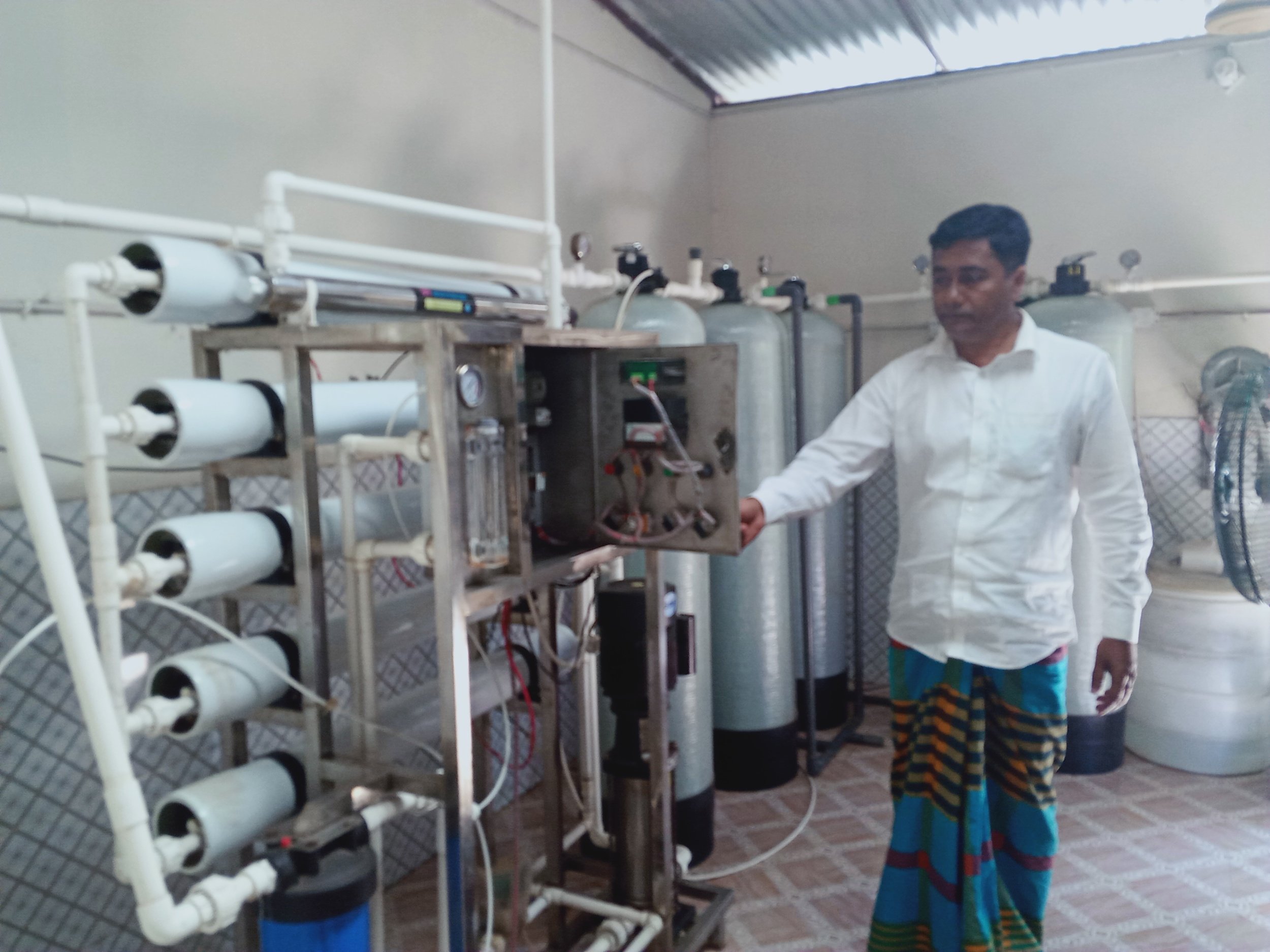
Shahinur Rahman at his reverse osmosis water plant in Shyamnagar [Image by: Riyan Talha / The Third Pole]

Shyamnagar sub-district now has 25 RO plants for around 400,000 residents. All the plants are making money – hardly a surprise, since the residents have to pay more for water than residents in Dhaka, the capital of Bangladesh. The Dhaka Water Supply and Sewerage Authority charges BDT 12 for 1,000 litres of water, while people in Shyamnagar pay BDT 12 for 24 litres.

Residents of the capital must install their own water-purification systems at home. Despite that, the cost of potable water for them is many times less than for people in Shyamnagar, where the average income per head is less than half of that in Dhaka.

A 2013 study by the NGO WaterAid Bangladesh said that the cost of potable running water in the coastal areas is far higher than in Dhaka. The study was conducted in two coastal districts, Satkhira and Khulna.

Aftab Opel, who led the study and now works at another NGO, Vision Spring, told The Third Pole, “The private water business on the coast is booming now. It’s increasing day by day. The price of water has come down per litre compared to 2013; but it is still several hundred times higher than in the capital.”
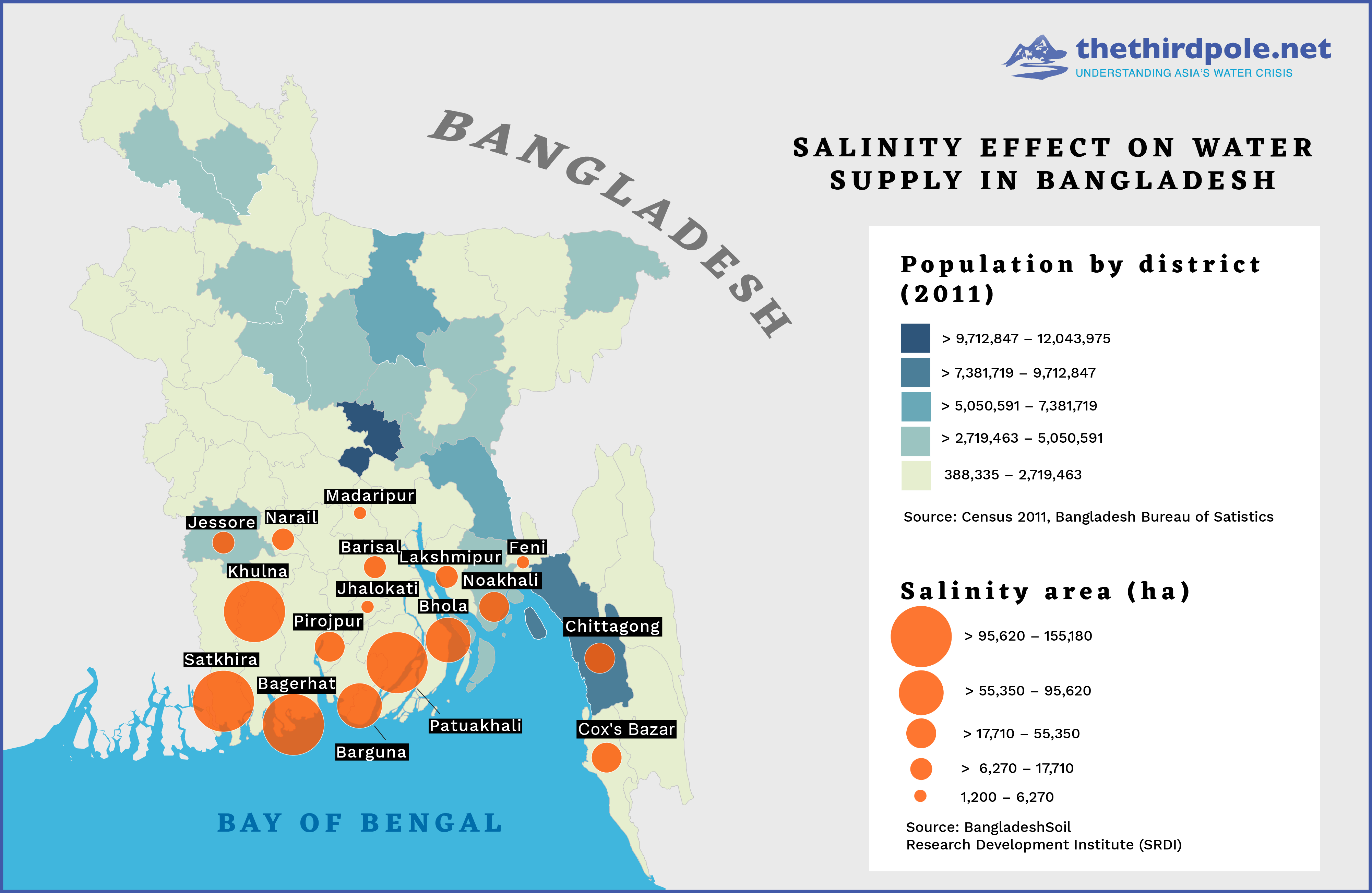
Illustration courtesy of The Third Pole

Local factors worsen climate change effect

The saltwater invasion of drinking water sources has been worsened manifold by commercial shrimp farming, which started in coastal Bangladesh in the 1980s. Shrimp farmers flooded plots of land with saltwater because shrimps grow best in brackish water. That saltwater has seeped into aquifers everywhere.

Dilip Dutta, a professor in the environmental science department at Khulna University, said, “Large ponds became undrinkable due to saline water intrusion. Shrimp traders have not taken any initiative to create new water reservoirs. They only care about profit.”

A 2017 study by Sebak Kumar Saha of Australian National University, called Socio economic and environmental impacts of shrimp farming in the south-western coastal region of Bangladesh, said, “Higher salinity levels in water sources due to shrimp farming have severe negative impacts on people’s health and wellbeing. Salinization of freshwater supplies due to shrimp farming causes scarcity of drinking water, as well as water needed for other daily activities such as bathing and cooking.”

Health impacts

While residents of coastal areas like Shyamnagar are forced to buy water for drinking and cooking, they cannot afford to buy more. As a result, the increasingly saline water is used for washing and bathing, with serious health impacts. Skin infections are common, as are urinary tract infections and pelvic inflammatory disease among women. Poor menstrual health is another huge issue.

People do not even drink as much water as they should. A 23-year-old resident of Jelekhali village in Shyamnagar sub-district said, “As water is scarce, I have to calculate before drinking it.” She works at a shrimp farm, spending the whole day waist-deep in brackish water. There is no drinking water at her place of work. In 2019 she went to a local doctor with a urinary tract infection. The doctor told her she was not drinking enough water.

Ratna Rani Pal, a worker at Shyamnagar health center, said, “Most of the female patients come to us with various reproductive problems. The reason is lack of care and management of menstrual health.”

Shampa Goswami, director of Prerona Nari Unnayan Sangathan – a women’s rights organisation in Kaliganj sub-district of Satkhira – said, “The lives of women here are under threat. The intrusion of salt water, climate change and one storm after another are making women’s lives miserable.”

Riyan Sobhan Talha is a Dhaka-based journalist and photographer. He reports on the environment, climate change and rights of indigenous communities.

This article appears courtesy of The Third Pole and appears here under a Creative Commons license. It may be found in its original form here.

Top image: Water insecurity in coastal Bangladesh (courtesy Sonia Hoque / REACH / CC BY 2.0)

The opinions expressed herein are the author's and not necessarily those of The Maritime Executive.


Helping to make nuclear fusion a reality

MIT PhD student Rachel Bielajew is taking on plasma turbulence, and helping make a better world — through science and community action.


Poornima Apte | Department of Nuclear Science and Engineering
Publication Date:January 3, 2022
PRESS INQUIRIES

Confronting challenges head-on has been part of Rachel 
Bielajew’s toolkit since she was a child growing up in Ann Arbor, Michigan.
Credits:Photo: Gretchen Ertl

Up until she served in the Peace Corps in Malawi, Rachel Bielajew was open to a career reboot. Having studied nuclear engineering as an undergraduate at the University of Michigan at Ann Arbor, graduate school had been on her mind. But seeing the drastic impacts of climate change play out in real-time in Malawi — the lives of the country’s subsistence farmers swing wildly, depending on the rains — convinced Bielajew of the importance of nuclear engineering. Bielajew was struck that her high school students in the small town of Chisenga had a shaky understanding of math, but universally understood global warming. “The concept of the changing world due to human impact was evident, and they could see it,” Bielajew says.

Bielajew was looking to work on solutions that could positively impact global problems and feed her love of physics. Nuclear engineering, especially the study of fusion as a carbon-free energy source, checked off both boxes. Bielajew is now a fourth-year doctoral candidate in the Department of Nuclear Science and Engineering (NSE). She researches magnetic confinement fusion in the Plasma Science and Fusion Center (PSFC) with Professor Anne White.

Researching fusion’s big challenge

You need to confine plasma effectively in order to generate the extremely high temperatures (100 million degrees Celsius) fusion needs, without melting the walls of the tokamak, the device that hosts these reactions. Magnets can do the job, but “plasmas are weird, they behave strangely and are challenging to understand,” Bielajew says. Small instabilities in plasma can coalesce into fluctuating turbulence that can drive heat and particles out of the machine.

In high-confinement mode, the edges of the plasma have less tolerance for such unruly behavior. “The turbulence gets damped out and sheared apart at the edge,” Bielajew says. This might seem like a good thing, but high-confinement plasmas have their own challenges. They are so tightly bound that they create edge-localized modes (ELMs), bursts of damaging particles and energy, that can be extremely damaging to the machine.

The questions Bielajew is looking to answer: How do we get high confinement without ELMs? How do turbulence and transport play a role in plasmas? “We do not fully understand turbulence, even though we have studied it for a long time,” Bielajew says, “It is a big and important problem to solve for fusion to be a reality. I like that challenge,” Bielajew adds.

A love of science


Confronting such challenges head-on has been part of Bielajew’s toolkit since she was a child growing up in Ann Arbor, Michigan. Her father, Alex Bielajew, is a professor of nuclear engineering at the University of Michigan, and Bielajew’s mother also pursued graduate studies.

Bielajew’s parents encouraged her to follow her own path and she found it led to her father’s chosen profession: nuclear engineering. Once she decided to pursue research in fusion, MIT stood out as a school she could set her sights on. “I knew that MIT had an extensive program in fusion and a lot of faculty in the field,” Bielajew says. The mechanics of the application were challenging: Chisenga had limited internet access, so Bielajew had to ride on the back of a pickup truck to meet a friend in a city a few hours away and use his phone as a hotspot to send the documents.

A similar tenacity has surfaced in Bielajew’s approach to research during the Covid-19 pandemic. Working off a blueprint, Bielajew built the Correlation Cyclotron Emission Diagnostic, which measures turbulent electron temperature fluctuations. Through a collaboration, Bielajew conducts her plasma research at the ASDEX Upgrade tokamak in Germany. Traditionally, Bielajew would ship the diagnostic to Germany, follow and install it, and conduct the research in person. The pandemic threw a wrench in the plans, so Bielajew shipped the diagnostic and relied on team members to install it. She Zooms into the control room and trusts others to run the plasma experiments.

DEI advocate

Bielajew is very hands-on with another endeavor: improving diversity, equity, and inclusion (DEI) in her own backyard. Having grown up with parental encouragement and in an environment that never doubted her place as a woman in engineering, Bielajew realizes not everyone has the same opportunities. “I wish that the world was in a place where all I had to do was care about my research, but it’s not,” Bielajew says. While science can solve many problems, more fundamental ones about equity need humans to act in specific ways, she points out. “I want to see more women represented, more people of color. Everyone needs a voice in building a better world,” Bielajew says.

To get there, Bielajew co-launched NSE’s Graduate Application Assistance Program, which connects underrepresented student applicants with NSE mentors. She has been the DEI officer with NSE’s student group, ANS, and is very involved in the department’s DEI committee.

As for future research, Bielajew hopes to concentrate on the experiments that make her question existing paradigms about plasmas under high confinement. Bielajew has registered more head-scratching “hmm” moments than “a-ha” ones. Measurements from her experiments drive the need for more intensive study.

Bielajew’s dogs, Dobby and Winky, keep her company through it all. They came home with her from Malawi.

Second and third layers of Webb telescope sunshield fully tightened

Second and third layers of Webb telescope sunshield fully tightened
Artist conception of the James Webb Space Telescope. 
Credit: NASA GSFC/CIL/Adriana Manrique Gutierrez

The Webb team has completed tensioning for the first three layers of the observatory's kite-shaped sunshield, 47 feet across and 70 feet long.

The first —pulled fully taut into its final configuration—was completed mid-afternoon.

The team began the second layer at 4:09 pm EST today, and the process took 74 minutes. The third layer began at 5:48 pm EST, and the process took 71 minutes. In all, the tensioning process from the first steps this morning until the third layer achieved tension took just over five and a half hours.

These three layers are the ones closest to the Sun. Tensioning of the final two layers is planned for tomorrow.

"The membrane tensioning phase of  deployment is especially challenging because there are  between the structures, the tensioning mechanisms, the cables and the membranes," said James Cooper, NASA's Webb sunshield manager, based at Goddard Space Flight Center. "This was the hardest part to test on the ground, so it feels awesome to have everything go so well today. The Northrop and NASA team is doing great work, and we look forward to tensioning the remaining layers."

Once fully deployed, the sunshield will protect the telescope from the Sun's radiation. It will reach a maximum of approximately 383K, approximately 230 degrees F, while keeping the instruments cold at a minimum of approximately 36K or around -394 degrees F.

The James Webb Space Telescope is the world's largest, most powerful, and most complex  science telescope ever built. Webb will solve mysteries in our solar system, look beyond to distant worlds around other stars, and probe the mysterious structures and origins of our universe and our place in it. Webb is an international program led by NASA with its partners, ESA (European Space Agency) and the Canadian Space Agency.Time saving tooling rods used on NASA's Webb Telescope sunshield

Provided by NASA's Goddard Space Flight Center 

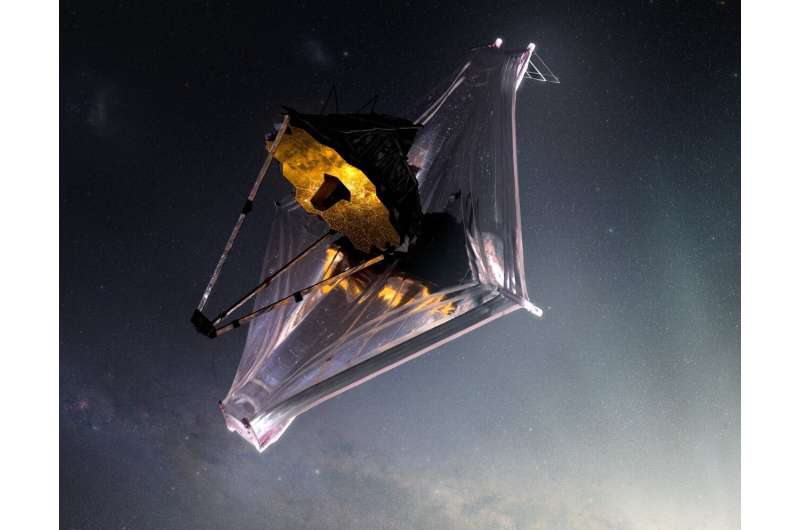
Fog Allows for ‘Impossible’ Photo of Milky Way Over Golden Gate Bridge

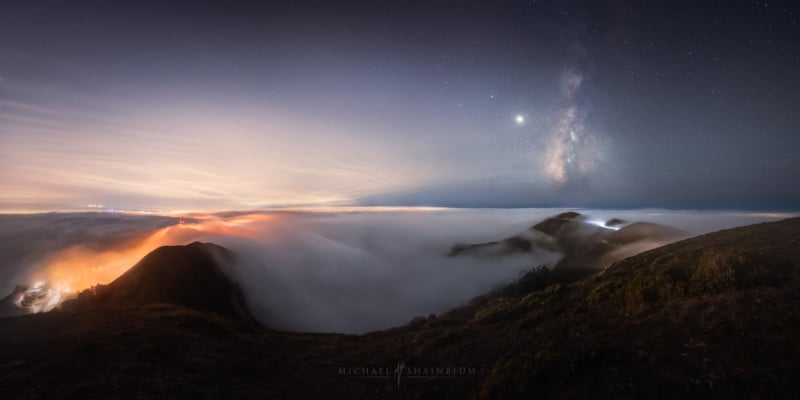
Photographer Michael Shainblum captured what was previously thought to be impossible due to heavy light pollution: a photo of both the Golden Gate Bridge and the Milky Way together

It takes great determination to head out in the night and patiently wait hours to photograph a landscape scene that may or may not work out in the end. Shainblum wanted to combine some iconic elements together into a photo, but getting everything to fall into place perfectly was a gamble and the idea of seeing stars and the bridge together was, to this point, a pipe dream.

But he got extremely lucky thanks to perfect conditions.

Fog over Golden Gate Bridge

Fog over Golden Gate Bridge

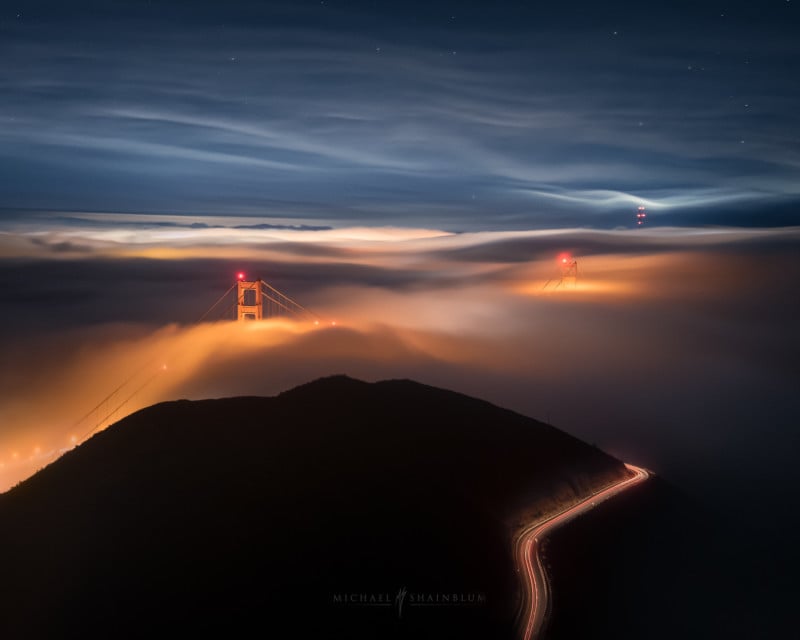
The one photo wasn’t the only image he captured that night. Shainblum also took a “classic view” of the iconic bridge that many enjoy photographing. In the composition, he included both bridge towers, poking out of the soft fog that completely covered the scene, and the light trails of cars driving on the road.

To get different patterns of fog and variations of car light trails, Shainblum took multiple exposures and created a photo with colorful contrasts between the warm and cool tones.

Fog over Golden Gate Bridge

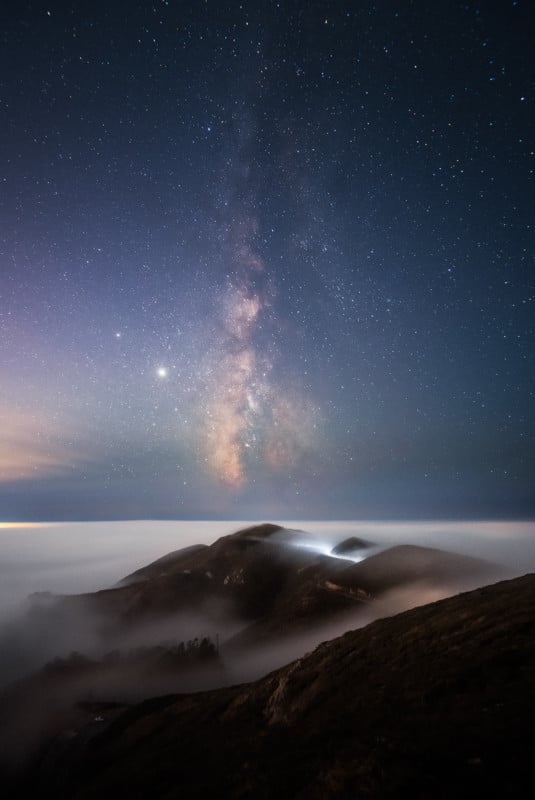
The Milky Way overlooking the hill deserved an image of its own, too. Unprepared to encounter a photo opportunity like this, Shainblum notes that photographers should take the chances when they present themselves, even if it means steering off the initial plan.

Fog over Golden Gate Bridge

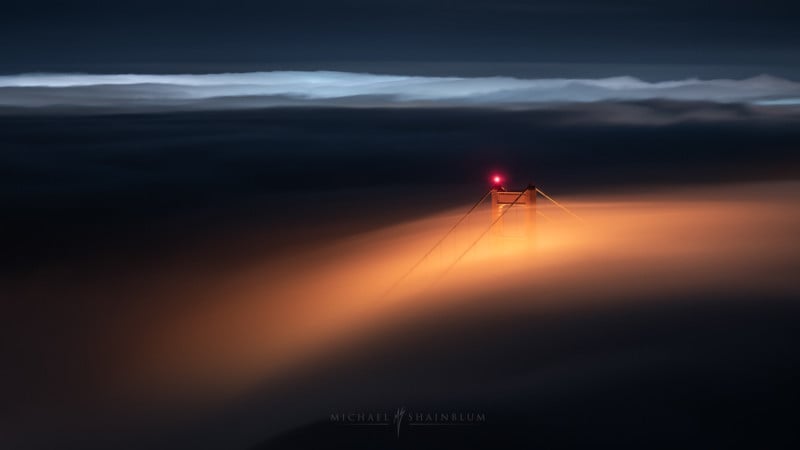
Just before calling it a day, Shainblum took the few last long exposures of the bridge tower and the fog flowing past and through the gate for a simple, minimalist scene.

For photographers who are considering capturing the Milky Way, Shainblum recommends checking the weather first, such as on the National Oceanic and Atmospheric Administration website, noting the phase of the moon, which can be tracked using the PhotoPills app, and checking the light pollution.

When it comes to equipment, Shainblum recommends bringing a tripod and a wide lens, such as a 14mm-24mm full-frame lens, with an aperture f/2.8 or lower. In addition, a headlamp comes in handy, especially if the phone runs out of battery.

More of Shainblum’s educational and inspirational videos can be viewed on his YouTube and his photographic and video work can be found on his website and Instagram.


Image credits: Photos by Michael Shainblum.

ESA Publishes Stunning Photo of a 2.5-Mile Wide Icy Martian Crater
JAN 03, 2022
DAVID CREWE


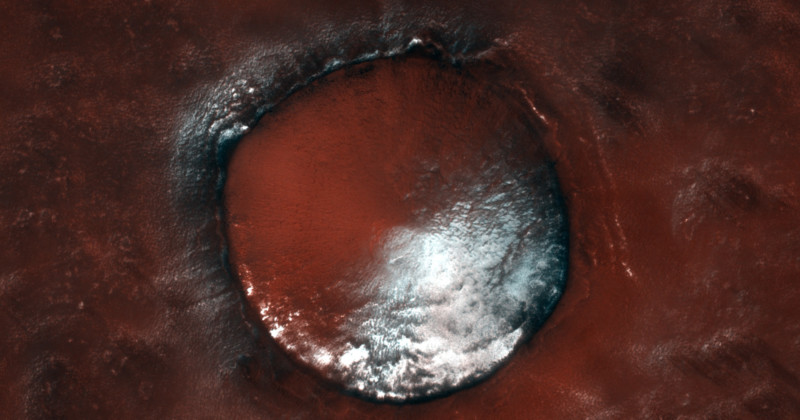
The European Space Agency (ESA) released a breathtaking new photo of a two-and-a-half-mile wide ice-covered crater on Mars affectionately nicknamed “Red Velvet.”


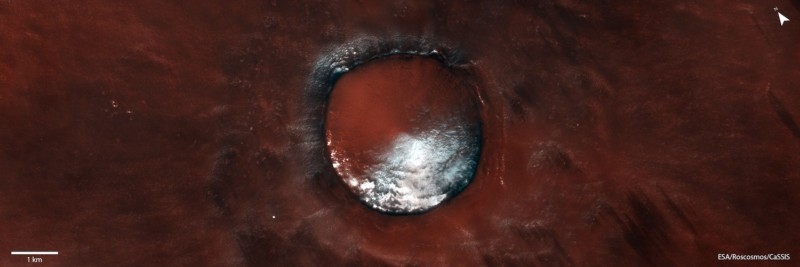
Spotted by Digitaltrends, the image was captured by the Trace Gas Orbiter that snaps images of the surface of the red planet, examines the gases in the atmosphere, and acts as a communications link between landers and other devices on the surface and planet Earth. The orbiter is officially a collaboration between the ESA and Russian space agency Roscosmos and the photo, originally captured on July 5, 2021, shows a nearly four-kilometer-wide perspective of the surface and the ice dusted crater near the north polar region of Vastitas Borealis on Mars.

ESA/Roscosmos/CaSSIS

“Like a sprinkle of powdered sugar on a rich red velvet cake, this scene from the ESA/Roscosmos ExoMars Trace Gas Orbiter captures the contrasting colors of bright white water-ice against the rusty red martian soil,” the ESA describes.

The ESA says the crater is partially filled with water ice more prevalent on the north-facing slopes since that region receives fewer hours of sunlight throughout the year with the dark sections on the crater edges likely containing volcanic materials like basalt, giving it a sort of scorched looking appearance.

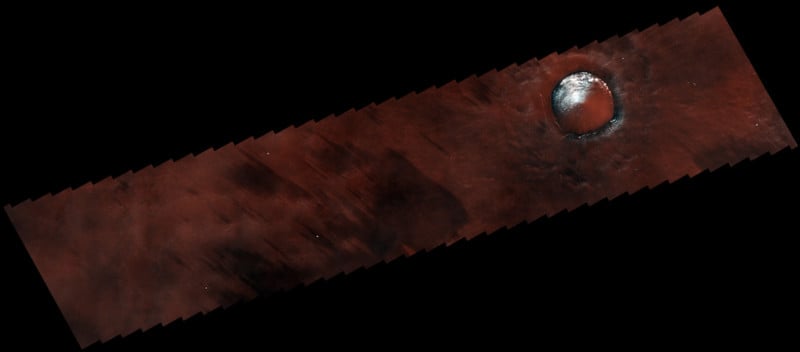
The full resolution photo file of the crater, seen below, can be downloaded from the ESA website.

Raw output image

The presence of water on the planet is a big deal for space exploration, since bringing the precious liquid would be too heavy to carry all the way to the planet on a potential future manned mission. The presence of the ice means the liquid could be melted down and used for drinking water or fuel. The problem, according to the ESA, is that most of these deposits that have been found exist near the polar regions of the planet, and most missions want to land near the equatorial regions. Naturally, the next step is to seek out ice below the surface of the planet with missions like the upcoming Mars Ice Mapper, or the last option is to take the hydrated minerals from the soil and bake them to release any water they might contain.


More stunning photos taken by Trace Gas Orbiter that it has captured since the beginning of its scientific mission in 2016, can be found by visiting the ESA’s website.

Image credits: ESA/Roscosmos/CaSSIS

Orion's fireplace: New image of the Flame Nebula

Orion's fireplace: ESO releases new image of the Flame Nebula
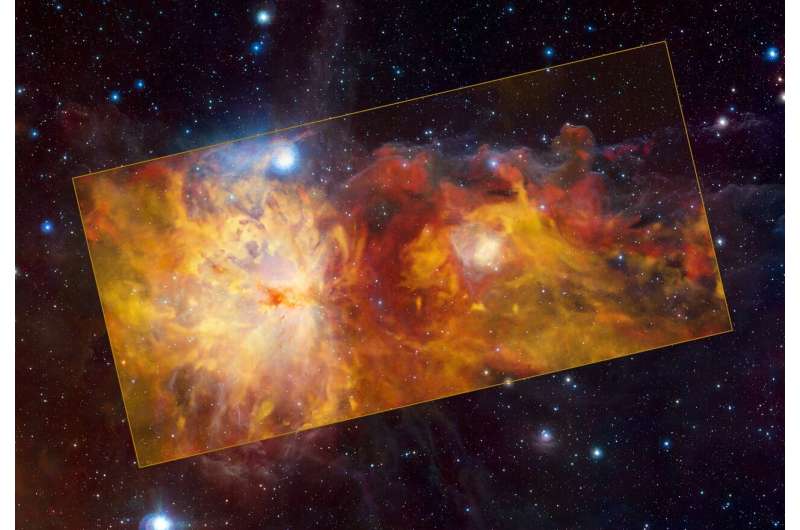
Do not let the image and the name of the depicted cosmic object fool you! What you see in
 this picture is not a wildfire, but the Flame Nebula and its surroundings captured in radio 
waves.The Flame Nebula is the large feature on the left half of the central, yellow rectangle
. The smaller feature on the right is the reflection nebula NGC 2023. To the top right of NGC
 2023, the iconic Horsehead Nebula seems to emerge heroically from the “flames." The 
three objects are part of the Orion cloud, a giant gas structure located between 1300 and 
1600 light-years away.The different colors indicate the velocity of the gas. The Flame 
Nebula and its surroundings are moving away from us, with the red clouds in the 
background receding faster than the yellow ones in the foreground. The image in the
 rectangle is based on observations conducted with the SuperCam instrument on the
 ESO-operated Atacama Pathfinder Experiment (APEX) on Chile's Chajnantor Plateau.
 The background image was taken in infrared light with ESO's Visible and Infrared Survey
 Telescope for Astronomy (VISTA) at the Paranal Observatory in Chile. Credit: ESO/Th. 
Stanke & ESO/J. Emerson/VISTA.

Orion offers you a spectacular firework display to celebrate the holiday season and the new year with this new image from the European Southern Observatory (ESO). But no need to worry, this iconic constellation is neither exploding nor burning. The "fire" you see in this holiday postcard is Orion's Flame Nebula and its surroundings captured in radio waves—an image that undoubtedly does justice to the nebula's name! It was taken with the ESO-operated Atacama Pathfinder Experiment (APEX), located on the cold Chajnantor Plateau in Chile's Atacama Desert.

The newly processed image of the Flame Nebula, in which smaller nebulae like the Horsehead Nebula also make an appearance, is based on observations conducted by former ESO astronomer Thomas Stanke and his team a few years ago. Excited to try out the then recently installed SuperCam instrument at APEX, they pointed it towards the constellation Orion. "As astronomers like to say, whenever there is a new telescope or instrument around, observe Orion: there will always be something new and interesting to discover!" says Stanke. A few years and many observations later, Stanke and his team have now had their results accepted for publication in the journal Astronomy & Astrophysics.

One of the most famous regions in the sky, Orion is home to the  closest to the Sun—vast cosmic objects made up mainly of hydrogen, where new stars and planets form. These clouds are located between 1300 and 1600 light-years away and feature the most active stellar nursery in the Solar System's neighborhood, as well as the Flame Nebula depicted in this image. This "emission" nebula harbors a cluster of young stars at its center that emit high-energy radiation, making the surrounding gasses shine.

With such an exciting target, the team were unlikely to be disappointed. In addition to the Flame Nebula and its surroundings, Stanke and his collaborators were able to admire a wide range of other spectacular objects. Some examples include the reflection nebulae Messier 78 and NGC 2071—clouds of interstellar gas and dust believed to reflect the light of nearby stars. The team even discovered one new nebula, a small object, remarkable in its almost perfectly circular appearance, which they named the Cow Nebula.

The observations were conducted as part of the APEX Large CO Heterodyne Orion Legacy Survey (ALCOHOLS), which looked at the radio waves emitted by carbon monoxide (CO) in the Orion clouds. Using this molecule to probe wide areas of the sky is the primary goal of SuperCam, as it allows astronomers to map large gas clouds that give birth to new stars. Unlike what the "fire" of this image might suggest, these clouds are actually cold, with temperatures typically just a few tens of degrees above absolute zero.

Given the many secrets it can tell, this region of the sky has been scanned many times in the past at different wavelengths, each wavelength range unveiling different, unique features of Orion's molecular clouds. One example are the infrared observations performed with ESO's Visible and Infrared Survey Telescope for Astronomy at the Paranal Observatory in Chile that make up the peaceful background of this image of the Flame Nebula and its surroundings. Unlike visible light, infrared waves pass through the thick clouds of interstellar dust, allowing astronomers to spot stars and other objects which would otherwise remain hidden.Hubble finds flame Nebula's searing stars may halt planet formation

More information: Thomas Stanke et al, The APEX Large CO Heterodyne Orion Legacy Survey (ALCOHOLS). I. Survey overview, arXiv:2201.00463 [astro-ph.GA], arxiv.org/abs/2201.00463

Journal information: Astronomy & Astrophysics 

Provided by ESO 

Stellar Cocoon With Organic Molecules Discovered at Extreme Edge of Our Galaxy

Protostar Discovered in Extreme Outer Galaxy

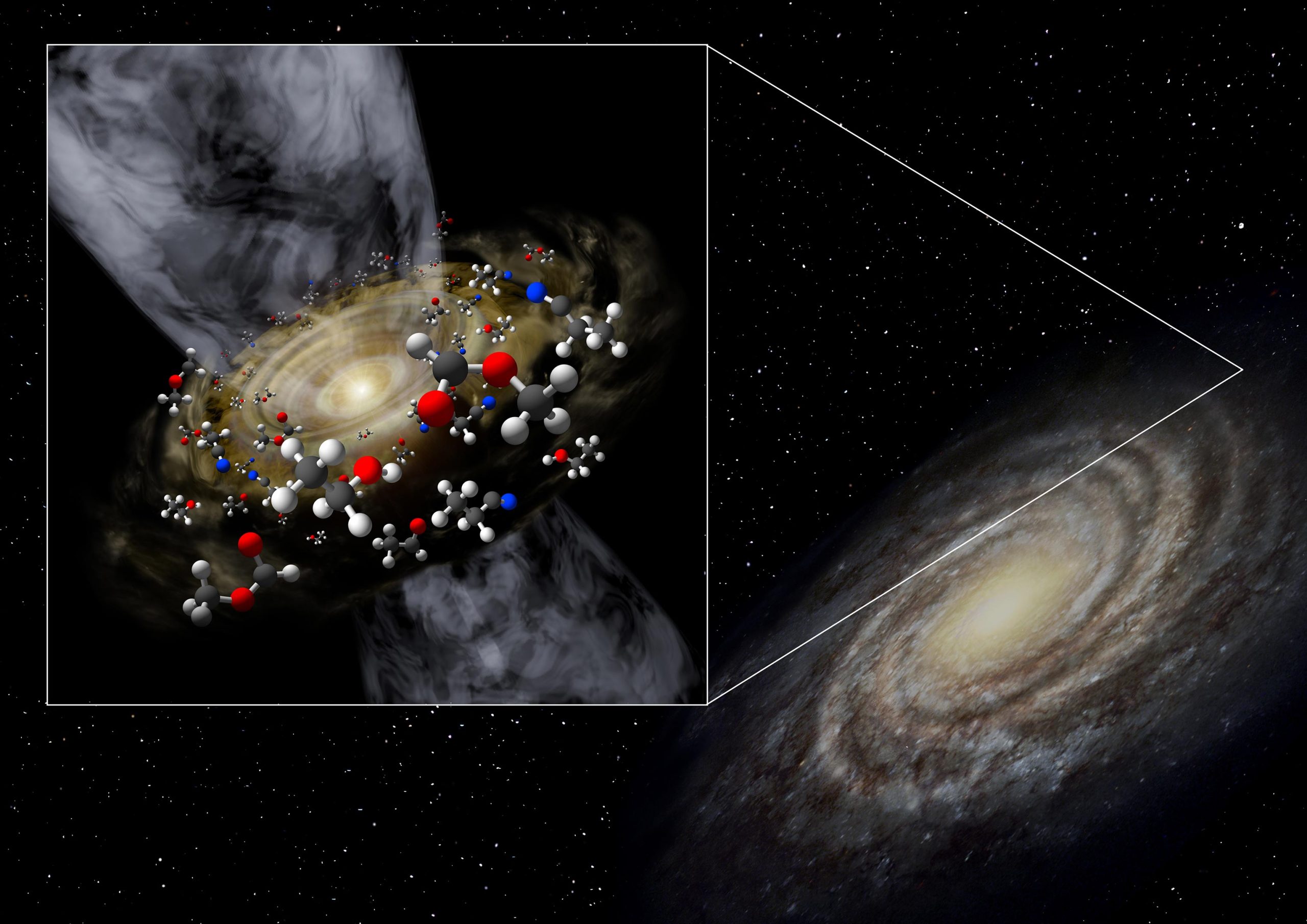
Artist’s conceptual image of the protostar discovered in the extreme outer Galaxy. Credit: Niigata University

For the first time, astronomers have detected a newborn star and the surrounding cocoon of complex organic molecules at the edge of our Galaxy, which is known as the extreme outer Galaxy. The discovery, which revealed the hidden chemical complexity of our Universe, appears in a paper in The Astrophysical Journal.

The scientists from Niigata University (Japan), Academia Sinica Institute of Astronomy and Astrophysics (Taiwan), and the National Astronomical Observatory of Japan, used the Atacama Large Millimeter/submillimeter Array (ALMA) in Chile to observe a newborn star (protostar) in the WB89-789 region, located in the extreme outer Galaxy. A variety of carbon-, oxygen-, nitrogen-, sulfur-, and silicon-bearing molecules, including complex organic molecules containing up to nine atoms, were detected. Such a protostar, as well as the associated cocoon of chemically-rich molecular gas, were for the first time detected at the edge of our Galaxy.

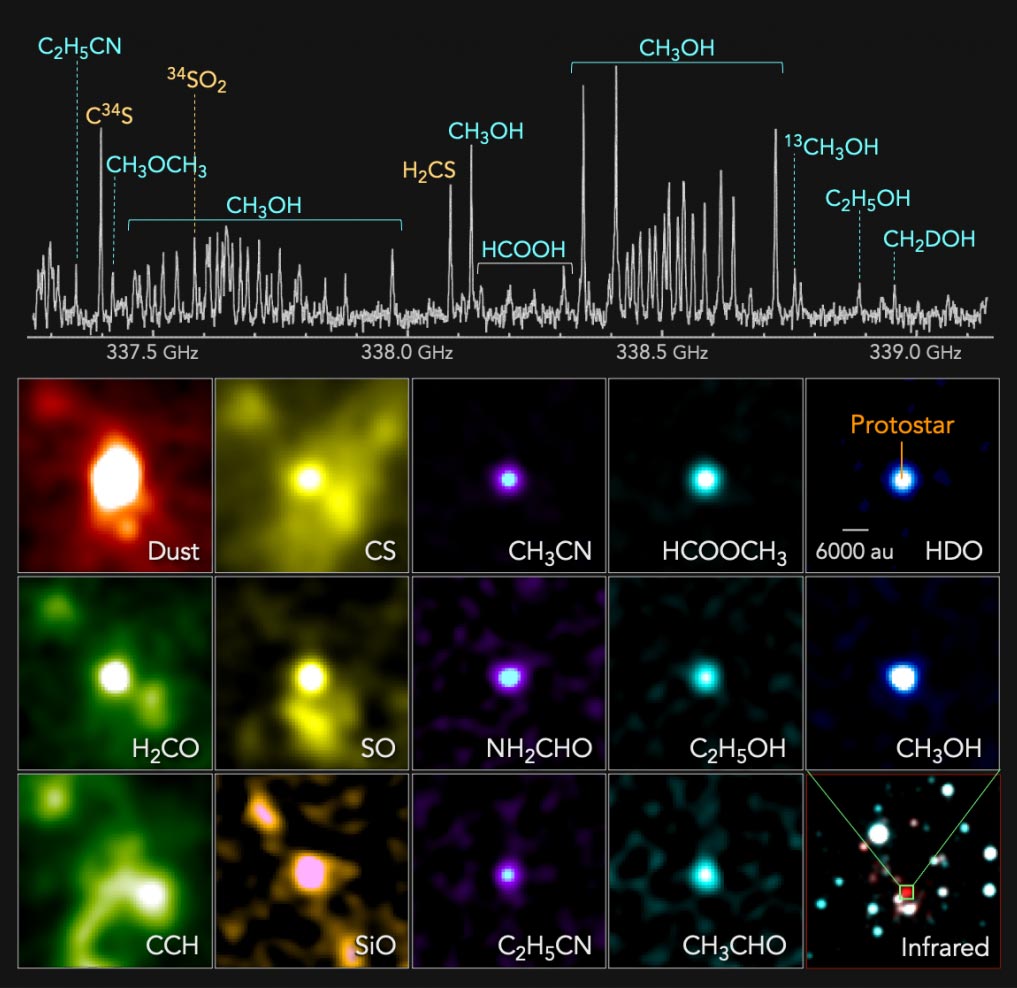
The ALMA observations reveal that various kinds of complex organic molecules, such as methanol (CH3OH), ethanol (C2H5OH), methyl formate (HCOOCH3), dimethyl ether (CH3OCH3), formamide (NH2CHO), propanenitrile (C2H5CN), etc., are present even in the primordial environment of the extreme outer Galaxy. Such complex organic molecules potentially act as the feedstock for larger prebiotic molecules.

Radio Spectrum Extreme Outer Galaxy Protostar

Top: Radio spectrum of a protostar in the extreme outer Galaxy discovered with ALMA. Bottom: Distributions of radio emissions from the protostar. Emissions from dust, formaldehyde (H2CO), ethynylradical (CCH), carbon monosulfide (CS), sulfur monoxide (SO), silicon monoxide (SiO), acetonitrile (CH3CN), formamide (NH2CHO), propanenitrile (C2H5CN), methyl formate (HCOOCH3), ethanol (C2H5OH), acetaldehyde (CH3CHO), deuterated water (HDO), and methanol (CH3OH) are shown as examples. In the bottom right panel, an infrared 2-color composite image of the surrounding region is shown (red: 2.16 μm and blue: 1.25 μm, based on 2MASS data). Credit: ALMA (ESO/NAOJ/NRAO), T. Shimonishi (Niigata University)

Interestingly, the relative abundances of complex organic molecules in this newly discovered object resemble remarkably well what is found in similar objects in the inner Galaxy. The observations suggest that complex organic molecules are formed with similar efficiency even at the edge of our Galaxy, where the environment is very different from the solar neighborhood.

It is believed that the outer part of our Galaxy still harbors a primordial environment that existed in the early epoch of galaxy formation. The environmental characteristics of the extreme outer Galaxy, e.g., low abundance of heavy elements, small or no perturbation from Galactic spiral arms, are very different from those seen in the present-day solar neighborhood. Because of its unique characteristics, the extreme outer Galaxy is an excellent laboratory to study star formation and the interstellar medium in the past Galactic environment.

“With ALMA we were able to see a forming star and the surrounding molecular cocoon at the edge of our Galaxy,” says Takashi Shimonishi, an astronomer at Niigata University, Japan, and the paper’s lead author. “To our surprise, a variety of abundant complex organic molecules exists in the primordial environment of the extreme outer Galaxy. The interstellar conditions to form the chemical complexity might have persisted since the early history of the Universe,” Shimonishi adds.

“These observations have revealed that complex organic molecules can be efficiently formed even in low-metallicity environments like the outermost regions of our Galaxy. This finding provides an important piece of the puzzle to understand how complex organic molecules are formed in the Universe,” says Kenji Furuya, an astronomer at the National Astronomical Observatory of Japan, and the paper’s co-author.

It is not yet clear, however, if such a chemical complexity is common in the outer part of the Galaxy. Complex organic molecules are of special interest, because some of them are connected to prebiotic molecules formed in space. The team is planning to observe a larger number of star-forming regions in the future, and hopes to clarify whether chemically-rich systems, as seen in our Solar System, are ubiquitous through the history of the Universe.

Reference: “The Detection of a Hot Molecular Core in the Extreme Outer Galaxy” by Takashi Shimonishi, Natsuko Izumi, Kenji Furuya and Chikako Yasui, 1 December 2021, The Astrophysical Journal.
DOI: 10.3847/1538-4357/ac289b

This work is supported by a Grant-in-Aid from the Japan Society for the Promotion of Science (19H05067, 21H00037, 21H01145).

Mysterious Dusty Object Discovered by Astronomers Using NASA’s TESS Planet Hunter

Dark Exoplanet

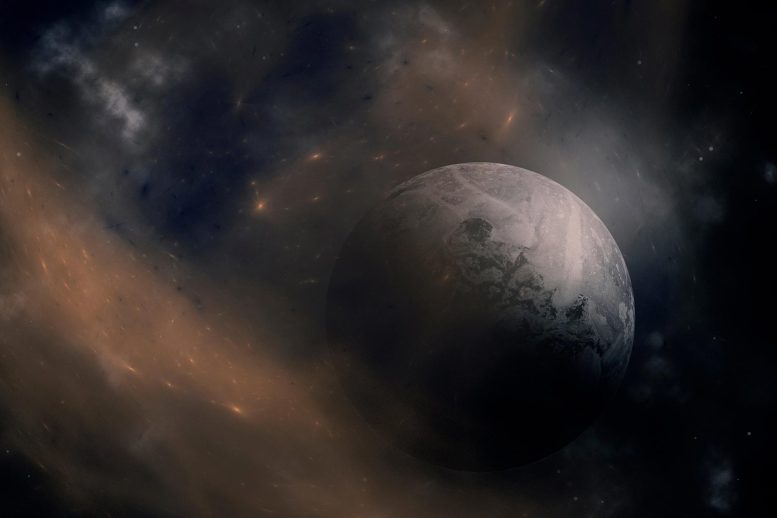
Artist’s concept of a dark and mysterious object.

The Transiting Exoplanet Survey Satellite, TESS, was launched in 2018 with the goal of discovering small planets around the Sun’s nearest neighbor stars. TESS has so far discovered 172 confirmed exoplanets and compiled a list of 4703 candidate exoplanets. Its sensitive camera takes images that span a huge field of view, more than twice the area of the constellation of Orion, and TESS has also assembled a TESS Input Catalog (TIC) with over 1 billion objects. Follow-up studies of TIC objects have found they result from stellar pulsations, shocks from supernovae, disintegrating planets, gravitational self-lensed binary stars, eclipsing triple star systems, disk occultations, and more.

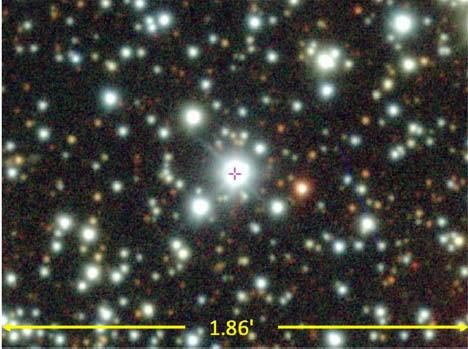
CfA astronomer Karen Collins was a member of a large team that discovered the mysterious variable object TIC 400799224. They searched the Catalog using machine-learning-based computational tools developed from the observed behaviors of hundreds of thousands of known variable objects; the method has previously found disintegrating planets and bodies that are emitting dust, for example. The unusual source TIC 400799224 was spotted serendipitously because of its rapid drop in brightness, by nearly 25% in just a few four hours, followed by several sharp brightness variations that could each be interpreted as an eclipse.

TIC 400799224

An optical/near-infrared image of the sky around the TESS Input Catalog (TIC) object TIC 400799224 (the crosshair marks the location of the object, and the width of the field of view is given in arcminutes). Astronomers have concluded that the mysterious periodic variations in the light from this object are caused by an orbiting body that periodically emits clouds of dust that occult the star. Credit: Powell et al., 2021

The astronomers studied TIC 400799224 with a variety of facilities including some that have been mapping the sky for longer than TESS has been operating. They found that the object is probably a binary star system, and that one of the stars pulsates with a 19.77 day period, probably from an orbiting body that periodically emits clouds of dust that occult the star. But while the periodicity is strict, the dust occultations of the star are erratic in their shapes, depths, and durations, and are detectable (at least from the ground) only about one-third of the time or less.

The nature of the orbiting body itself is puzzling because the quantity of dust emitted is large; if it were produced by the disintegration of an object like the asteroid Ceres in our solar system, it would survive only about eight thousand years before disappearing. Yet remarkably, over the six years that this object has been observed, the periodicity has remained strict and the object emitting the dust apparently has remained intact.

The team plans to continue monitoring the object and to incorporate historical observations of the sky to try to determine its variations over many decades.

Reference: “Mysterious Dust-emitting Object Orbiting TIC 400799224” by Brian P. Powell, Veselin B. Kostov, Saul A. Rappaport, Andrei Tokovinin, Avi Shporer, Karen A. Collins, Hank Corbett, Tamás Borkovits, Bruce L. Gary, Eugene Chiang, Joseph E. Rodriguez, Nicholas M. Law, Thomas Barclay, Robert Gagliano, Andrew Vanderburg, Greg Olmschenk, Ethan Kruse, Joshua E. Schlieder, Alan Vasquez Soto, Erin Goeke, Thomas L. Jacobs, Martti H. Kristiansen, Daryll M. LaCourse, Mark Omohundro, Hans M. Schwengeler, Ivan A. Terentev and Allan R. Schmitt, 8 December 2021, The Astronomical Journal.
DOI: 10.3847/1538-3881/ac2c81

Astronomers Explore Cosmic Ray Influences on Star Formation in Galaxies

Star Formation in Galaxies

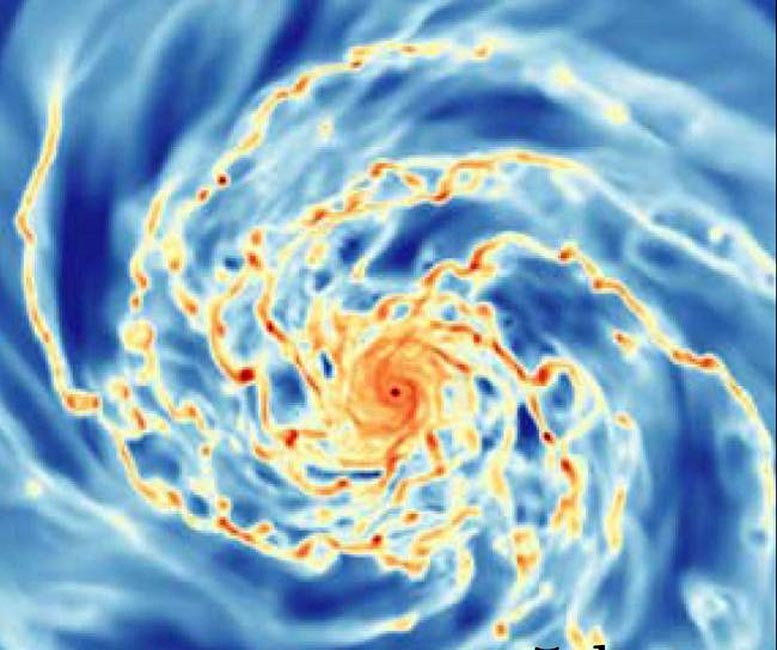
An image of a galaxy seen face-on in a simulation. It shows the distribution of gas over the galaxy (red is higher density and blue is lower density); the clumpiness of the gas is apparent. When cosmic ray transport is suppressed, the simulations show that this clumpiness is reduced, in turn reducing the star formation activity. Astronomers modeling cosmic-ray influences on star formation have motivated their simulations with gamma-ray observations to investigate cosmic ray transport. Credit: Semenov et al., 2021

The triggering of star formation, and also its quenching, is regulated by young massive stars in galaxies which inject energy and momentum into the interstellar medium. Feedback from the supermassive black holes at galaxies’ nuclei plays a similarly important role. These processes drive the massive gas outflows observed in galaxies, for example. However, the details including how they work and the relative roles of the different feedback processes are actively debated.

Cosmic rays in particular are accelerated in strong shocks formed by supernova explosions and stellar winds (both aspects of star formation), and generate considerable pressure in the interstellar medium. They play a central role in regulating thermal balance in dense molecular clouds where most stars form and may play an important role in regulating star formation, driving galactic winds, and even in determining the character of the intergalactic medium.

Astronomers believe that a key property limiting cosmic ray influence is the ability to propagate out of the sites where they are produced into the interstellar medium and beyond the disk, but the details are not very well understood.

CfA astronomer Vadim Semenov and two collaborators used computer simulations to explore how such a variation of cosmic ray propagation can affect star formation in galaxies, motivated by recent observations of gamma-ray emission from nearby sources of cosmic rays including star clusters and supernova remnants. The observations probe the propagation of cosmic rays because a significant fraction of gamma-ray emission is believed to be produced when cosmic rays interact with interstellar gas. The observed gamma-ray fluxes suggest that cosmic ray propagation near such sources can be locally suppressed by a significant factor, up to several orders of magnitude. Theoretical works suggest that such suppression can result from nonlinear interactions of cosmic rays with magnetic fields and turbulence.

The scientists used the simulations to probe the effects of suppressing the transport of cosmic rays near the sources. They find that suppression causes a local pressure buildup and produces strong pressure gradients that prevent the formation of the massive clumps of molecular gas that make new stars, qualitatively changing the global distribution of star formation, especially in massive, gas-rich galaxies which are prone to clump formation. They conclude that this cosmic-ray effect regulates the development of the structure of the galaxy’s disk and is an important complement to the other processes active in shaping the galaxy.

Reference: “Cosmic-Ray Diffusion Suppression in Star-forming Regions Inhibits Clump Formation in Gas-rich Galaxies” by Vadim A. Semenov, Andrey V. Kravtsov and Damiano Caprioli, 5 April 2021, The Astrophysical Journal.
DOI: 10.3847/1538-4357/abe2a6