Wednesday, January 05, 2022

Child mummies in Sicily's Capuchin Catacombs to be X-rayed

By Nicoletta Lanese 

Some of the children are so well preserved they look like "tiny little dolls."

The Capuchin Catacombs are located in Palermo, Sicily. (Image credit: Stanislavskyi via Shutterstock)

The mummified and skeletal remains of more than 160 children lie preserved in the Capuchin Catacombs of Palermo in northern Sicily, and soon, scientists hope to uncover some of the mysteries surrounding their lives and deaths using X-ray technology.

The catacombs contain at least 1,284 mummified and skeletonized corpses of varying ages, according to the new research project's website. The catacombs were in use from the late 1590s to 1880, although two additional bodies were buried there in the early 20th century, according to the Palermo Catacombs website.

The upcoming investigation, funded by the U.K.'s Arts and Humanities Research Council, will be the first to exclusively focus on children housed in the underground crypts and corridors. Specifically, the investigators will examine child mummies that were buried in the catacombs between 1787 and 1880, and they'll begin by X-raying the 41 mummies housed in the crypts' "children's room," or "child chapel," The Guardian reported.

"We will take a portable X-ray unit and take hundreds of images of the children from different angles," Kirsty Squires, the project's principal investigator and an associate professor of bioarchaeology at Staffordshire University in the U.K., told The Guardian. The team hopes to better understand the children's identities and health statuses, as well as examine cultural artifacts such as the garb they were buried in, she said.

Related: In photos: Ancient Egyptian tombs decorated with creatures

The researchers will use X-rays to determine each child's sex and age, as well as reveal any signs of developmental defects or disease. These findings will be compared with each child's clothing, associated funerary artifacts and their placement with

When first built in the late 1590s, the Capuchin Catacombs were used as a private burial site for friars. But in 1783, the Capuchin order began allowing laypeople in the region to be buried there as well, the catacombs website said. And by making a donation to the order, families could pay to have their deceased relatives mummified and put on display in the catacombs.

Corpses could be mummified in one of three ways: through natural mummification, where the bodies were allowed to completely dehydrate in a special room called the "colatoio;" through a process that involved bathing the bodies in arsenic; or by the chemical embalming of the bodies, when a trained person injects the corpse with preservatives.

These processes could create astonishingly well-preserved mummies. Regarding the soon-to-be-scanned child mummies, "Some of them are superbly preserved," Dario Piombino-Mascali, co-investigator for the project and scientific curator of the Capuchin Catacombs, told The Guardian. "Some really look like sleeping children. They are darkened by the time but some of them have got even fake eyes so they seem to be looking at you. They look like tiny little dolls."

Read more about the Palermo juvenile mummy project in The Guardian.

Originally published on Live Science.
'Truly remarkable' fossils are rare evidence of ancient shark-on-shark attacks


By Laura Geggel

These fossils are rare because shark cartilage seldom fossilizes.


This illustration, depicting an active predatory encounter between two requiem sharks off what is now the coast of Maryland, shows one possible way the shark vertebra could have been bitten. (Image credit: Original drawing by Tim Scheirer; Coloration added by Clarence Schumaker; CC BY 4.0)

During the age of megalodon, sharks hunted all kinds of creatures, including other sharks, according to a new study based on four rare fossils.

In four separate finds, researchers and amateur fossil hunters discovered the ancient vertebrae of now-extinct sharks; all four vertebrae are covered in shark bite marks, and two still have pointy shark teeth sticking out of them. These findings are extraordinary, as shark skeletons are made of cartilage, which doesn't fossilize well, the researchers said.

The discoveries show that millions of years ago, ancient sharks gobbled up fellow sharks off what is now the U.S. East Coast. "Sharks have been preying upon each other for millions of years, yet these interactions are rarely reported due to the poor preservation potential of cartilage," study co-researcher Victor Perez, an assistant curator of paleontology at the Calvert Marine Museum in Solomons, Maryland, told Live Science in an email.

Researchers have known for decades about shark-on-shark predation and even cannibalism. It's a behavior seen in living sharks, including many lamniformes — an iconic group that includes goblin, megamouth, basking, mako and great white sharks — which, as fetuses, sometimes devour their siblings in the womb, the researchers said.

Ancient sharks have left their bite marks on countless paleo beasts, including on the bones of marine mammals, ray-finned fishes and reptiles — even pterosaurs, flying reptiles that lived during the dinosaur age, two studies found. However, evidence of ancient shark-versus-shark attacks is somewhat rare. The oldest evidence of shark-on-shark predation dates to the Devonian period (419.2 million to 358.9 million years ago), when the shark Cladoselache gulped down another shark, whose remains were fossilized in its gut contents.

In the new study, researchers examined three shark fossils found at Calvert Cliffs on the Maryland coast between 2002 and 2016, and a fourth discovered in a phosphate mine in North Carolina in the 1980s. All of the fossils date to the Neogene period (23.03 million to 2.58 million years ago), a time when megalodon (Otodus megalodon), the world's largest shark on record, stalked the seas. (However, megalodon wasn't involved in these four attacks.)

Different views of a vertebra from an ancient requiem shark found in Maryland. Notice the two shark teeth embedded in the fossil. Scale bars equal 1 centimeter. (Image credit: Perez, V.J. et al. Acta Palaeontological (2021); CC BY 4.0)

Unlike sturdy bone, shark cartilage is a soft tissue made of tiny hexagonal prisms, which rapidly break apart after the animal dies, Perez said. "So, to find cartilaginous elements of a shark's skeleton is already rare, but to find these skeletal elements with bite traces is truly remarkable," he said. "There needs to be exceptional circumstances for this predatory interaction to preserve for millions of years and to be recovered by someone who recognizes its significance."

So, how did these four fossils survive? All are centra, or the vertebrae that make up the spinal column. "The centra are composed of a denser calcified cartilage that preserves better than other parts of the skeleton," Perez noted. In fact, these four fossils are the first documented ancient shark centra with shark bite marks on them, the research team said.

It's unclear whether these bites — known as trace fossils, which are fossilized remnants from animals that are not parts of their bodies, like footprints, bite marks or even poop — were made during an active attack or a scavenging event, Perez said. At least one, however, may have come from an attack; one fossil from Maryland that still had two, nearly 1.5-inch-long (4 centimeters) teeth sticking out of it shows signs of healing, indicating that the shark survived the encounter.

A bone analysis revealed the victims were chondrichthyans, a class with 282 species alive today, including bull sharks, tiger sharks and hammerhead sharks. "We cannot identify the exact species involved in these encounters, but we can narrow it down to some likely culprits," Perez said.

Based on its shape, the fossil with two embedded shark teeth belongs to the family Carcharhinidae, in one of two genera: Carcharhinus or Negaprion, the researchers said. The embedded teeth may also be from a Carcharhinus or Negaprion shark, the researchers found.

Another Maryland specimen, which also appears to be from the family Carcharhinidae, had bite marks from several attackers — possibly chondrichthyan sharks, lamnid sharks or bony fish. The third Maryland specimen might belong to the Galeocerdo genus, whose only surviving species is the tiger shark (G. cuvier).

The embedded teeth and a gouge mark on the specimens, "suggest that these centra were all bitten very forcefully," the researchers wrote in the study.
Advertisement

Two of the specimens are now on display at the Calvert Marine Museum in the new exhibit "Sharks! Sink your teeth in!" The study was published online Dec. 7, 2021, in the journal Acta Palaeontologica Polonica.

Originally published on Live Science.
Drug-resistant superbug lived on hedgehogs long before we used antibiotics

By Patrick Pester 

The researchers say we shouldn't fear hedgehogs.

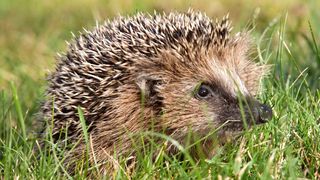
A hedgehog in grass. (Image credit: Pia B. Hansen)

An evolutionary battle between fungi and bacteria on hedgehogs' skin gave rise to a type of antibiotic-resistant bacteria long before humans started using the antibiotics that were thought to lead to such superbugs, a new study reveals.

Researchers traced some lineages of the superbug MRSA, or methicillin-resistant Staphylococcus aureus, to a parasitic fungus found on the skin of European hedgehogs (Erinaceus europaeus). The fungus secretes antibiotics to fight and kill Staphylococcus aureus bacteria (also found on hedgehogs); to stay alive, the bacteria, in turn, evolved antibiotic resistance that later crossed into livestock and humans, the research team reported in a new study.

While the use of antibiotics often drives the evolution of superbugs, this study shows the origins of some antibiotic-resistant bacteria in nature. "We know the resistance genes got into pathogen genomes before humans were using antibiotics, but this really describes a mechanism of how that might happen," study co-author Ewan Harrison, a researcher at the University of Cambridge and the Wellcome Sanger Institute in the U.K., told Live Science.

MRSA is a strain of staph bacteria that resists antibiotics and is therefore harder to treat if it gets into the body of humans or livestock and causes disease. The researchers investigated mecC-MRSA, a relatively rare form of the superbug that's responsible for about 1 in 200 human MRSA infections, according to a statement released by the University of Cambridge.

The mecC-MRSA was discovered in 2011 and was thought to have emerged in cows given large amounts of antibiotics. However, previous research has also found that up to 60% of European hedgehogs carry it. The hedgehogs' fungus, Trichophyton erinacei, creates its own penicillin antibiotics naturally to fight off bacteria.

Harrison was part of an international research team that sequenced genomes of the parasitic fungus on the hedgehogs and found the genes responsible for producing the penicillin antibiotics that kill staph bacteria. They then sequenced the bacteria and dated the penicillin-resistant genes by measuring the number of certain mutations in the genome that are known to occur at a fixed rate each year and counting backward, according to Harrison. They found that the bacteria had resistance to methicillin, a form of penicillin, in the 1800s, long before the clinical use of penicillin began in the 1940s.

The researchers think this type of MRSA probably first evolved in hedgehogs, though they aren't sure how mecC-MRSA crossed into humans. "We know that these resistance genes exist in the soil and soil bacteria, and animals like hedgehogs and other wildlife obviously have much more contact with soil on a day-to-day basis than most of us do," Harrison said.

The superbug could have jumped to humans through direct contact with hedgehogs, the authors said. Harrison stressed, however, that people shouldn't fear hedgehogs for this reason. "I don't think hedgehogs are a risk," Harrison said. "I think that's important to get across." The mecC-MRSA is also found in livestock, so these animals, or another unidentified animal, may have been intermediaries.

"It just shows evolutionary processes in nature can select for antibiotic resistance and that can end up in a human pathogen," Harrison said. Other MRSA lineages the researchers studied originated around the time penicillin was introduced, suggesting that our use of antibiotics was a selective pressure for the resistance in those cases.

William Keevil, a professor of environmental health care at the University of Southampton who was not involved in the study, welcomed the new research. "I believe it to be an important study and another example of the evolutionary war and adaptation of environmental bacteria to survive in the presence of antibiotic-producing fungi, which has been occurring for 100s of millions of years before the emergence of mammals and the antibiotic era," Keevil told Live Science in an email.

The findings were published Wednesday (Jan. 5) in the journal Nature.

Originally published on Live Science.
Unique tree-climbing lions roar again in Uganda (Op-Ed)


By Louisa Kiggwe 

Illegal wildlife trade is just one of the threats plaguing the lions and their cubs.

Just six months has passed since the killing and mutilation of six lions in the Ishasha sector of Uganda's Queen Elizabeth National Park (QENP).

If you were to visit the park, you would see these so-called Ishasha lions lazing around in the myriad branches of towering fig trees. This group is one of only two populations of lions known to climb trees, making the majestic beasts fascinating subjects for study and a popular tourist attraction. Sadly, however, these lions face numerous threats, including habitat loss, snaring, human-wildlife conflict, illegal wildlife trade and the trafficking of lion body parts.


Because of these threats, the Ishasha lion population includes just 69 individuals; with increasing threats to these endearing fauna, tourism revenues — which make up close to 8% of Uganda's gross domestic product (at least before the COVID-19 pandemic) — are also threatened. To provide the protections, the global Red List of threatened species maintained by the International Union for the Conservation of Nature (IUCN) has labeled this population as "vulnerable" to extinction; Uganda's national list places them in the "critically endangered" category.

The lshasha lions recently graced the country with several cubs that now require our collective effort to protect so they may grow into adults. Luckily for the cubs, six other males — including Sultan and Sula (the fathers of the cubs), Jacob (a snare survivor), and three adolescent brothers — are ready to protect and groom them, according to Bazil Alidria, the Wildlife Conservation Society (WCS) Carnivore Officer who monitors the lion pride regularly.


Six-month-old cubs in the northern sector of Ishasha, Uganda. (Image credit: ©Peter Lindsey/Wildlife Conservation Network)

Unfortunately, knowledge about lion population dynamics and threats in Uganda remains limited. In 2005 and 2008, the Wildlife Conservation Society (WCS) conducted monitoring efforts for lions in the Queen Elizabeth park and Uganda's Murchison Falls National Park (MFNP), respectively, using Global Positioning System (GPS)-enabled collars.

This work was built upon research previously conducted by Uganda Wildlife Authority (UWA) Veterinary Doctor Margaret Driciru (2001) and Ludwig Siefert of the Uganda Carnivore Program. While monitoring the lions, WCS also removed snares from the parks that threaten this iconic species and worked to reduce human-lion conflict by building carnivore-proof pens to prevent lions from attacking livestock and inviting retaliatory killings by angry herders.

In 2010, a survey of three national parks engaged in lion conservation — Queen Elizabeth NP, Murchison Falls NP and Kidepo Valley NP — conducted by WCS reported the estimated lion population there to be 408 individuals.

Although it has been 10 years since the last census, lion sightings during monitoring work by WCS, the Uganda Carnivore Program (UCP) and UWA in the Queen Elizabeth park, suggest that the lion population trend is relatively stable, according to Simon Nampindo, WCS Uganda country director. A 2021 study commissioned by WCS indicated that the greatest threat to lions today is human-induced mortality, including retaliation for the killing of livestock, exacerbated by Ugandan beliefs that parts of these lions have medicinal value and customary beliefs that lion body parts should be kept in homes and shops as a source of power and wealth.

Nampindo notes that the 2021 study on the triggers and motivations for lion killings in QENP revealed an increased demand for lion body parts by community members, traditional healers, business people, religious leaders, poachers and cattle keepers in Uganda, requiring a more comprehensive approach to stop this crime.

The lions also face a multifaceted challenge for survival driven by climate change. The loss of suitable habitat for both prey and predators attributed to climate change and variability favoring the growth and spread of invasive species in most of Uganda's national parks, have triggered lions and elephants to move outside the parks into the communities. This exodus has resulted in livestock predation and crop damage, hence escalating the human-wildlife conflict around these protected areas.

WCS has called upon private sector companies, local governments, conservation organizations, individuals and development partners to join hands to address these threats before our natural heritage is lost.

Despite the numerous challenges, we take heart in the resilience of the lshasha lions. WCS has long-term commitments to its strongholds and landscapes and uses science to inform conservation and build solid partnerships and collaborations while inspiring people to love nature.

Together with Uganda Wildlife Authority, the private sector and other devoted conservation organizations, we will continue to monitor lion populations and remove wire snares and traps to save the lion populations and ensure that the tourism sector thrives.

Originally published on Live Science.

IN TRIBUTE TO URI GELLER
Thousands of starlings form 'bent spoon' swarm over Israel


By Brandon Specktor
published about 6 hours ago

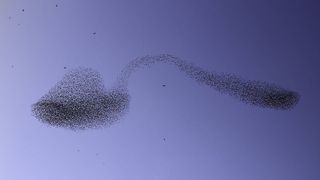
Starlings travel in large, chaotic flocks called murmurations. Sometimes, they paint the sky with all-too familiar shapes.

A swarm of starlings over Israel form a trippy 'bent spoon' in the sky.
 (Image credit: Albert Keshet)

For a brief moment in Israel last week, an enormous black shape resembling a twisted teaspoon darkened the sky.

This was not the work of a spoon-bending telepath, but arguably something much cooler: tens of thousands of migrating starlings, swooping and swarming through the sky together in a type of collectively steered flock called a murmuration.

Albert Keshet, a wildlife photographer based in Israel, saw the stunning scene after spending more than five hours recording starlings in the northern Jordan Valley during the last week of 2021. At one point, he saw an entire flock of several thousand starlings take flight, dance through the sky and form an unmistakable spoon shape.

"They held it for a few seconds, then the shape changed to a bent spoon," Keshet told the BBC. A few seconds later, the flock had morphed again — then again, and then again. (You can watch a video showing off the flock's most impressive patterns on Keshet's YouTube page.)

Starlings are migratory birds that appear over the arid cliffs of Israel every winter, when their typical European haunts become too frosty. A single flock, or murmuration, can contain more than a million individual starlings, Live Science previously reported.

How does a flock so big remain so cohesive amidst their swirling aerial acrobatic routines? According to a study published in 2013 in the journal PLOS Computational Biology, each bird gets its bearings by monitoring the behavior of just six or seven other birds flying nearby. This focus on close neighbors strikes a balance between group cohesion and individual uncertainty, making it possible for a flock of 100,000 birds to suddenly swarm into, say, a spoon shape, then break ranks and regroup in an entirely different pattern moments later.

Impressed? Uri Geller — the Israeli entertainer best known for trying to bend spoons telepathically — certainly was. Geller shared Keshet's spoony murmuration photo on Instagram and, according to the BBC, put framed prints of the flock in his recently opened museum in Jaffa, Israel.
Sex shops offer evangelicals in Brazil a taste of heaven

Issued on: 05/01/2022 
Brazil 2022 © France 24
Video by: Juliette MONTILLY


Sometimes, she disguises her merchandise as medication. Others, as a bakery delivery… Whatever the packaging, Andrea dos Anjos knows discretion is key when #Brazil's emerging #evangelical #sexshops send erotic products to their clients.
Dog praised for rescuing injured hiker in Croatia


After his owner slipped and fell 150 meters (nearly 500 feet) on Mount Velebit, an Alaskan malamute called North kept him warm for 13 hours until help arrived.


The Croatian Mountain Rescue Service (HGSS) praised an Alaskan malamute for rescuing his human, writing on Twitter that "friendship and love between man and dog knows no boundaries."

North, as the dog is called, and his owner were hiking on Mount Velebit on New Years' Day, at a height of about 1,700 meters (5,600 feet). Both man and dog slipped and fell some 150 meters (500 feet).

The incident left the hiker with a badly hurt leg, but the dog remained uninjured. North kept his master warm with his body heat for 13 hours until rescuers arrived.

"North was uninjured, but his friend, the young mountaineer was less fortunate," the rescuers said.

The emergency service said the overnight operation was particularly difficult because of snow, ice and broken tree boughs that blocked access to the spot. A team of 27 people took part in the rescue, reaching the pair around midnight and handing over the hiker to medics at 8:00 the next morning.

The dog "curled beside him and warmed him with his body," HGSS wrote on Twitter. "His loyalty didn't stop even when the rescuers came, he was one of us, guarding his man for 13 hours.''

They added that "this example could teach us all how to care about each other.''

AP material contributed to this report.

Editor: Darko Janjevic

‘Follow me’: Dog finds help, leads cops to owner’s car crash

LEBANON, N.H. (AP) — A German shepherd named Tinsley, first thought to be a lost dog, successfully led New Hampshire state police to the site of its owner’s rollover crash.

Both the vehicle’s occupants were seriously hurt, but thanks to Tinsley’s dogged efforts they quickly received medical assistance once officers discovered the truck, which went off the road near a Vermont interstate junction, WMUR-TV reported Tuesday.

“The dog was trying to show them something,” said Lt. Daniel Baldassarre of the New Hampshire State Police. “He kept trying to get away from them but didn’t run away totally.

“It was kind of, ‘Follow me. Follow me.’ And they did that and you know, to their surprise to see the guardrail damaged and to look down to where the dog is looking at, it’s just, they were almost in disbelief,” he said.

A New Hampshire state trooper and police from the nearby city of Lebanon responded to the crash site late Monday, just across the state line in Vermont.

There were no further details on the condition of those injured in the single-vehicle crash.

‘Mudi’? Try a toy: American Kennel Club adds 2 dog breeds

By JENNIFER PELTZ

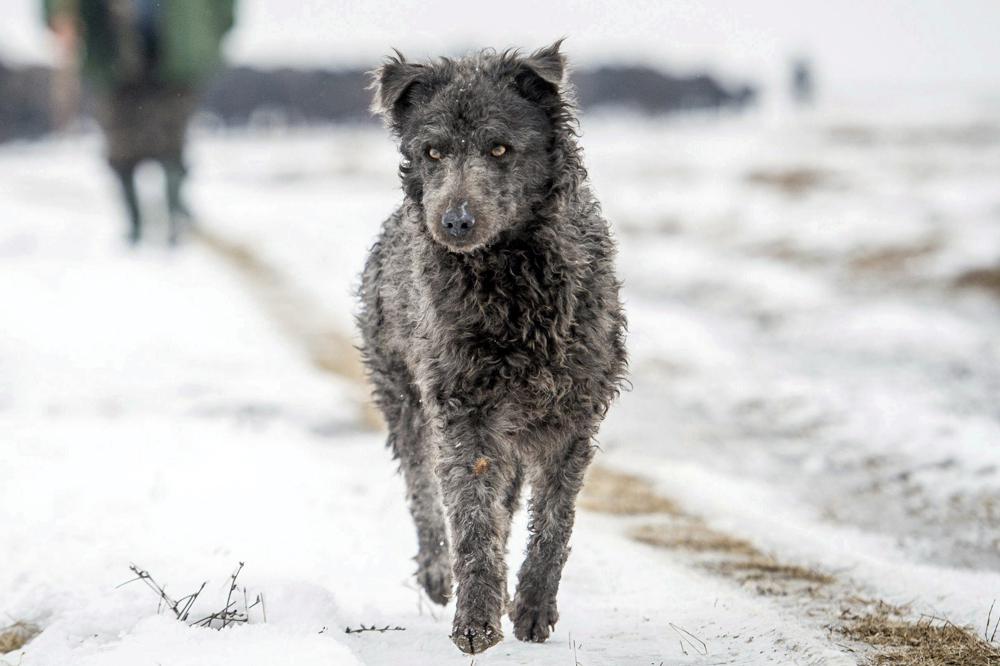
A black Mudi, a Hungarian species of shepherd dogs, helps to drive a herd of 120 buffaloes from its summer pasture to its winter habitat on the premises of the Kiskunsag National Park, Budapest, Hungary, Jan. 25, 2017. The American Kennel Club announced that the Mudi and Russian Toy have received full recognition, and are eligible to compete in the Herding Group and Toy Group, respectively. These additions bring the number of AKC-recognized breeds to 199.(Sandor Ujvari/MTI via AP, File)


NEW YORK (AP) — An athletic Hungarian farm dog and a tiny pet of bygone Russian aristocrats are the latest breeds in the American Kennel Club’s purebred lineup.

The club announced Tuesday that it’s recognizing the Russian toy and the mudi. That means they’re eligible to compete for best in show at many U.S. dog shows, including the AKC’s big annual championship and the prestigious Westminster Kennel Club show.

The mudi (whose American fans pronounce its name like “moody,” although the vowel sound in Hungarian is closer to the “u” in “pudding”) descended from long lines of Hungarian sheepdogs before a museum director took an interest in the breed and gave it a name around 1930. Fans say the medium-size, shaggy dogs are vigorous, versatile and hardworking, able to herd sheep, hunt boars, snag rats and compete in canine sports such as agility and dock diving.

“They’re very perceptive, and they have a subtle quality” and are very trainable, but they need things to do, said Kim Seiter, an Oak Ridge, New Jersey, dog agility trainer who has four of them. “They’re not for the inactive person.”

The dogs — the proper plural is “mudik” — were featured on postage stamps in their homeland in 2004, as were some other Hungarian breeds.


The Russian toy (American Kennel Club via AP)

The Russian toy developed from small English terriers that gained the fancy of Russian elites by the early 1700s. The diminutive dogs — supposed to weigh no more than 6.5 pounds (2.7 kg) — have a leggy silhouette, perky expression and lively demeanor, breeders say.

“They’re extremely affectionate” with their owners but can be reserved with strangers and need to meet plenty of new people as pups, says Nona Dietrich of Minnetonka, Minnesota, a breeder and member of the Russian Toy Club of America. “And they’re funny. They have quite an attitude.”

The AKC is the United States’ oldest purebred dog registry. It recognizes 199 breeds, including the two newcomers, and acts as a governing body for many dog shows.

Recognition requirements include having at least 300 dogs of the breed spread around at least 20 states and promulgating a breed standard that specifies ideal features, from temperament to toes. Many popular hybrid or “designer” breeds, such as Labradoodles and puggles, aren’t recognized, but it’s possible they could be someday if breeders decide to pursue it.

Some animal rights and welfare advocates deplore dog breeding and the market for purebreds, saying they spur puppy mills and strand adoptable pets in shelters.

The AKC says breeding can be done responsibly and preserves somewhat predictable characteristics that help people find and commit to the right dog for them.
Tiger bites off keeper's hand at Japan safari park: Kyodo

Wed, 5 January 2022

A Bengal tiger similar to the one which attacked three keepers at a safari park in Japan
 (AFP/RASHIDE FRIAS)

A tiger bit off a keeper's hand and attacked two other people at a safari park near Tokyo, Japanese media reported Wednesday.

The tiger, a 10-year-old male Bengal who was around two metres (6.5 feet) in length and weighed 150 kilograms (330 pounds), attacked as the three keepers were preparing for the day at the Nasu Safari Park in Tochigi prefecture around 8.30 am, Kyodo news agency reported.

The park's operator said the tiger was not in its fenced enclosure as expected.

Instead the keepers came across it in a corridor leading to an exhibition area, and it attacked, according to the report.

The keeper who lost her hand, a woman in her 20s, was transported by medical helicopter to hospital, Kyodo said.

Kyodo said a second woman was bitten in several places and a man was injured in the back of his head. They were also taken to hospital.

Kyodo reported that keepers did not check that the fence to the tiger's cage was closed on Tuesday, after it had been led back inside once the exhibition was over.

The park closed for the day and police are reportedly investigating.

The Nasu Safari Park offers tours on specialized buses and for customers in their own cars to see its collection of around 700 animals including giraffes and elephants.

The park has had safety incidents before, including keepers being attacked by lions in 1997 and in 2000, according to Kyodo.

bur-st/dw
HINDU NATIONALISM IS ANTIMUSLIM
Islamophobia in India: Humiliation of Muslims has become 'a part of the political landscape'

Jan 5, 2022
FRANCE 24 English

Indian police have made arrests and launched an investigation into an online app that shared pictures of scores of prominent Muslim women for a fake online auction in a case of apparent hatred toward the minority community. And this comes right on the heels of a police probe investigating influential Hindu religious leaders calling for violence and even ethnic cleansing: "the arming of Hindus against Muslims, the need to teach them lessons." Dr. Subir Sinha, Senior Lecturer at SOAS University of London, joins France 24 to discuss how deeply entrenched Islamophobia has become in the cultural and political fabric of Indian society. He asserts that Islamophobic acts are now occurring in India with "a sickening regularity." These latest incidents are simply a reflection of "targeted communally charged harassment and misogyny that has just been rampant for the past few years."

Sex abuse trial starts for Guatemalan ex-paramilitaries


Guatemalan Nobel Peace Prize laureate Rigoberta Menchu was present 
for the trial opening (AFP/Johan ORDONEZ)

Wed, January 5, 2022,

A trial started in Guatemala Wednesday for five former paramilitary soldiers accused of sexually abusing 36 indigenous Mayan women some 40 years ago during the country's civil war.

The five are former members of Guatemala's Civil Self-Defense Patrols (PAC) blamed for several atrocities during the 1960-1996 war in which an estimated 200,000 people were killed or disappeared.

They will take part via videoconference from the Mariscal Zavala jail where they are being detained for crimes committed between 1981 and 1985 around the town of Rabinal, north of the capital Guatemala City.

The population of Rabinal was particularly hard hit by the war. A mass grave with the bodies of more than 3,000 people was discovered in the area.

Thirty-six women have come forward in the last decade with accusations of sexual violence committed against them during that time.

The identities of most of the women are being withheld for their own security, said their lawyer Lucia Xiloj.

Some have already given recorded evidence to investigators, which will be played in court.

Only five of the victims have opted to be present for the trial before Judge Jazmin Barrios in the Supreme Court of Justice.

According to Xiloj, many Mayan women "were raped after the (forced) disappearance of their husbands" by paramilitaries and soldiers.

Nobel Peace Prize laureate Rigoberta Menchu told reporters at the court that Guatemala had failed to "fulfill its obligation to defend these sisters who were raped, tortured, humiliated and subjected to (sexual) slavery during so many years of armed conflict."

A United Nations truth commission documented 669 massacres committed during Guatemala's civil war, of which 93 percent were attributed to government forces.

ec/mlr/st