UPDATED
Kazakhstan elites flee the country
At least eight private business jets, according to Flight Radar, took off from Kazakhstan in the morning of Wednesday, January 5, amid mass protests, looting of the government buildings and reports of security forces joining the protesters.
According to Ateo Breaking, among others, a Bombardier Global 500 with registration number 9H-AVA, belonging to the husband of Dinara Nazarbayeva, the daughter of the country's first president Nursultan Nazarbayev, who after his resignation in 2019 retained the title of Elbasy (leader of the nation) and the post of chairman of the National Security Council, flew from Almaty in the direction of Kyrgyzstan.
On Wednesday, Kazakh President Kassym-Jomart Tokayev said he has become the head of the Security Council, which remained silent for four days as protests escalated from local unrest in the west of the country into a nationwide uprising.
Nazarbayev himself is ready to leave Kazakhstan for medical treatment, said the editor-in-chief of Echo of Moscow Alexei Venediktov, citing a source in the Russian Foreign Ministry.
Tokayev, who twice addressed the nation, issued a third statement on Wednesday in which he said he would remain in the capital Nur-Sultan and intended to act "as harshly as possible" to suppress the protests, which he said were planned by a group of conspirators.
RIA Novosti reported, citing its sources, that Russia has not yet seen any reason to think about the evacuation of Tokayev himself. "We do not believe that the situation is so bad that it would require such a radical step. Our data does not support this information," he said.
Nevertheless, at about 15.00 Moscow time, the plane of the Rossiya airline serving the Russian government took off from Moscow. The Tu-214 with registration number RA 64251 was heading towards Kazakhstan, but did not have time to land, because the Almaty airport was seized by protesters. The airport of the city of Aktau also does not work, the national carrier Air Astana told the Mir 24 TV channel.
Telegram channels and social networks were filled with rumors that a delegation of Russian security forces headed by the Secretary of the Security Council Nikolai Patrushev was sent to Kazakhstan. However, the special aircraft of the FSB - Tu-214PU with registration number RA-64523, which was sent to Belarus in August 2020 under similar circumstances, is still in Vnukovo airport in Moscow, according to FlightRadar.
The Kremlin has officially stated that there was no need to interfere in the events in Kazakhstan, which is part of both the Eurasian Economic Union (EAEU) and the Collective Security Treaty Organization (CSTO) military bloc.
"We are convinced that our Kazakh friends can independently solve their internal problems," Russian presidential spokesman Dmitry Peskov said on Wednesday. The Russian Foreign Ministry expressed support for President Kassym-Jomart Tokayev, but at the same time called the protesters' demands "legitimate".
The European Union called on all parties to "show responsibility and refrain from actions that could lead to an escalation of violence."
"Recognizing the right to peaceful demonstrations, the European Union expects them to take place without violence" and "calls on the authorities to be proportionate in the use of force in protecting security and to comply with international obligations," the EU statement reads.
Civil Unrest in Kazakhstan: Developing Situation
By Rebecca Lougheed
5 January, 2022
A recent wave of protests have been occurring in Kazakhstan, due in part to fuel price hikes. However, throughout the first week of January the situation has suddenly escalated into violent anti-government civil unrest.
A State of Emergency Declared
Early on January 5, the President declared a state of emergency. There were also curfews put in place across Almaty city, from 11pm to 7am.
Unrest and lawlessness have been reported throughout the country, particularly in its cities.
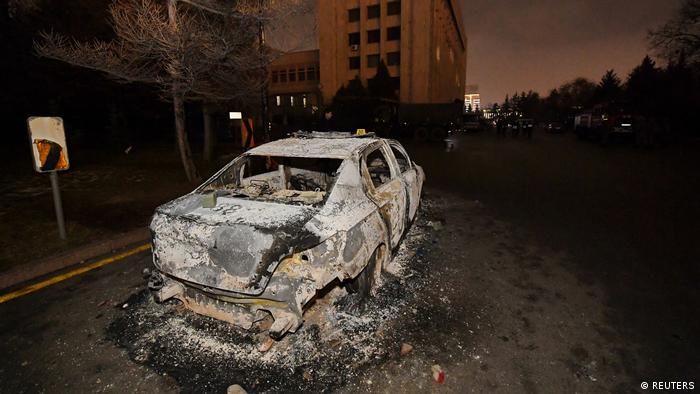
There are reports of riots in Almaty where protestors have seized control of the UAAA/Almaty airport. It is now closed (UAAA Notam K0094/22 refers). Cars have been set on fire in the carpark. All flights there have been cancelled, along with those at UATE/Mangystau.
There is likely to be significant security risks on the ground – police resources are currently very limited. Movement between cities is also being restricted. The US Embassy there is warning citizens to avoid large groups of people and to stay away from areas where protests are taking place.
A local agent has advised that the “airport authority is currently uncontactable” at Almaty airport to provide any updates on the situation (Jan 5 18:30z).
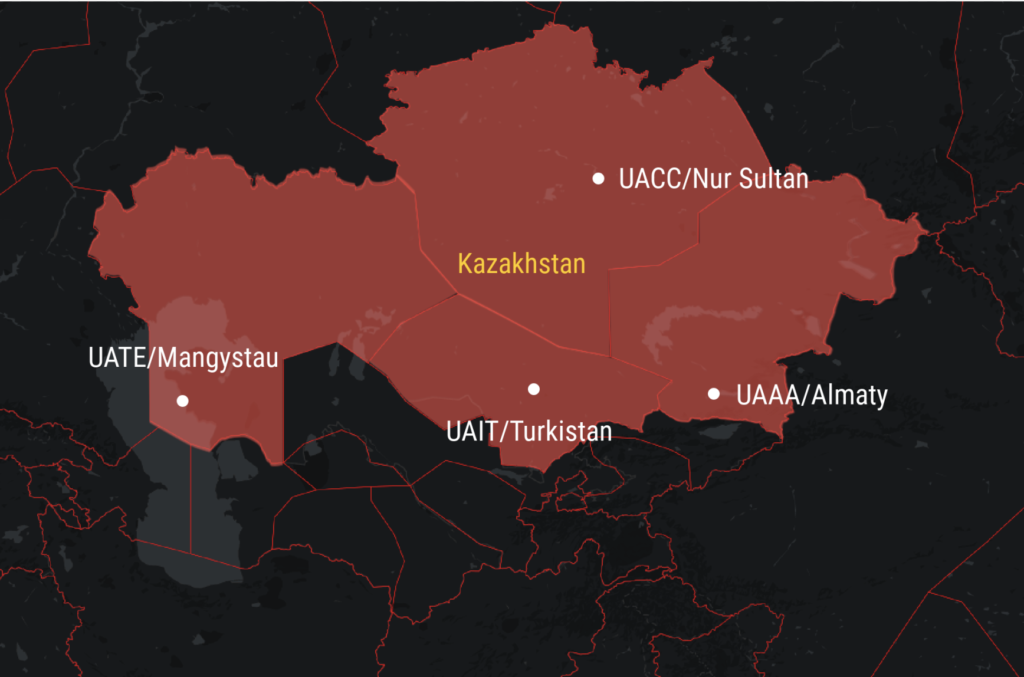
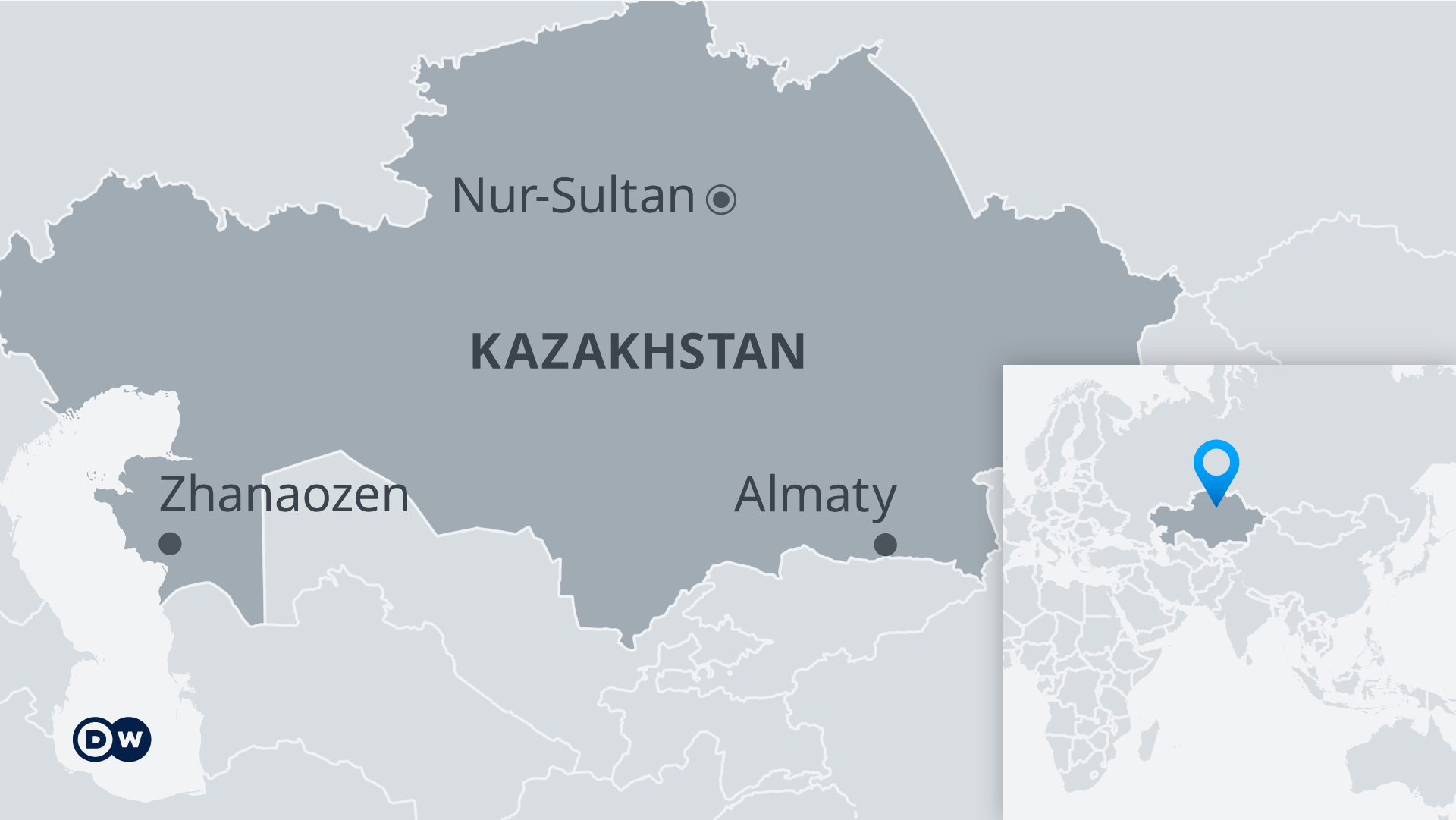
Kazakhstan is a Central Asian country extending from the Caspian Sea and bordering China and Russia.
Overflights
At the time of writing, no Notams have been issued indicating that overflights are affected. However the situation is volatile and could potentially lead to ATC disruptions. Keep a close eye on things if operating in the region. It may also be worth familiarising yourself with TIBA contingency procedures.
The situation is developing
We’ll continue to update this article with any important changes as they come to hand.
One other thing: fuel
We have previously reported on rumours of fuel issues across Kazakhstan – particularly for GA flights operating to UAAA/Almaty, UACC/Nur-Sultan and UAKK/Karagandy. Initially agents at airports advised this was not the case, but later informed us that fuel was only available to airline flights and locally registered charter operators. Foreign registered non-scheduled flights would be unable to uplift fuel. The official word is that you need prior permission from airport authorities to take any on.
Russia-led alliance sending peacekeepers to Kazakhstan
By JIM HEINTZ
1 of 17
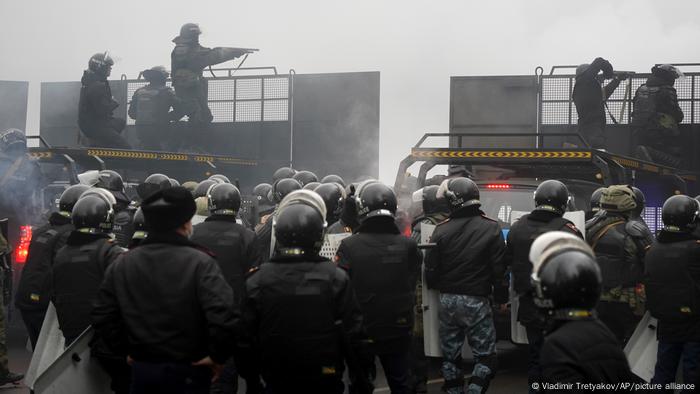
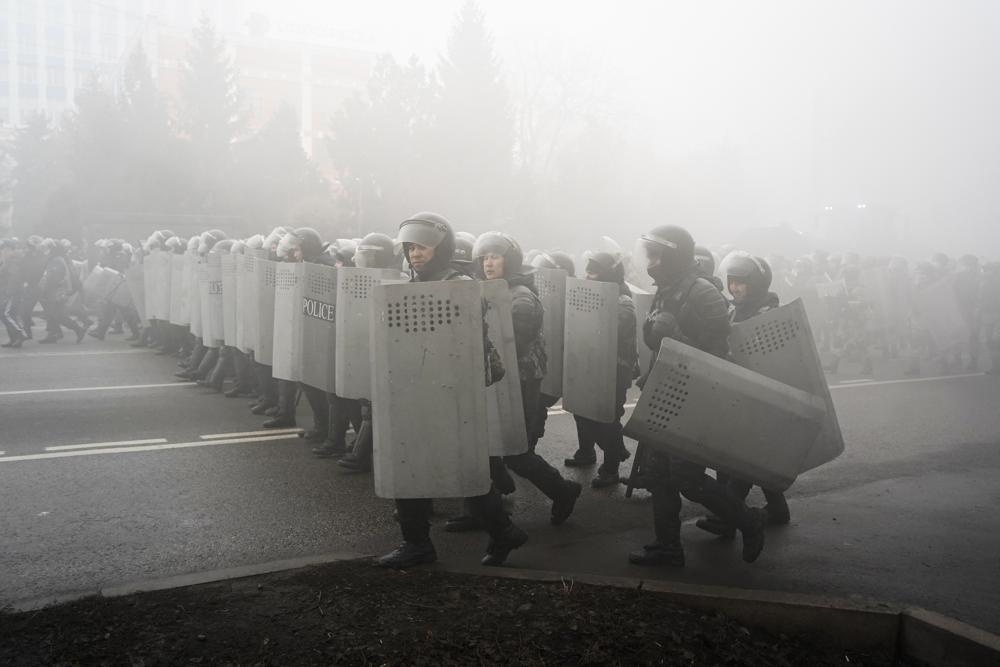
Riot police walk to block demonstrators during a protest in Almaty, Kazakhstan, Wednesday, Jan. 5, 2022. Demonstrators denouncing the doubling of prices for liquefied gas have clashed with police in Kazakhstan's largest city and held protests in about a dozen other cities in the country.
(AP Photo/Vladimir Tretyakov)
MOSCOW (AP) — A Russia-led military alliance said Thursday that it will dispatch peacekeeping forces to Kazakhstan after the country’s president asked for help in controlling protests that escalated into violence, including the seizure and setting afire of government buildings.
Protesters in Kazakhstan’s largest city stormed the presidential residence and the mayor’s office Wednesday and set both on fire, according to news reports, as demonstrations sparked by a rise in fuel prices escalated sharply in the Central Asian nation.
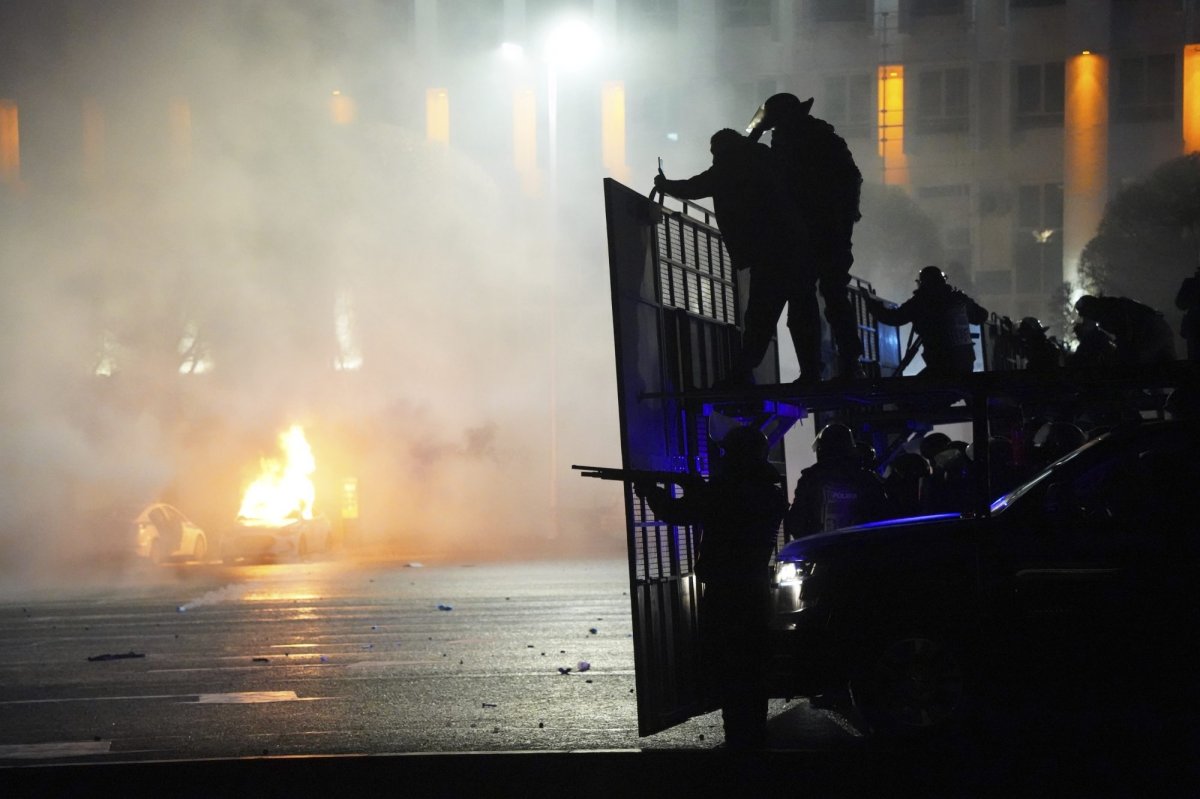
Police reportedly fired on some protesters at the residence in Almaty before fleeing. They have clashed repeatedly with demonstrators in recent days, deploying water cannons in the freezing weather, and firing tear gas and concussion grenades.
The Kazakh Interior Ministry said eight police officers and national guard members were killed in the unrest and more than 300 were injured. No figures on civilian casualties were released.
President Kassym-Jomart Tokayev appealed to the Collective Security Treaty Organization, a Moscow-based alliance of six former Soviet countries, for assistance. Hours later, the CSTO’s council approved sending an unspecified number of peacekeepers, said Armenian Prime Minister Nikol Pashinyan, the council’s chairman.
Tokayev earlier vowed to take harsh measures to quell the unrest and declared a two-week state of emergency for the whole country, expanding one that had been announced for both the capital of Nur-Sultan and the largest city of Almaty that imposed an overnight curfew and restricted movement into and around the urban areas.
The government resigned in response over the unrest. Kazakh news sites became inaccessible late in the day, and the global watchdog organization Netblocks said the country was experiencing a pervasive internet blackout. The Russian news agency Tass reported that internet access was restored in Almaty by early Thursday.
Although the protests began over a near-doubling of prices for a type of liquefied petroleum gas that is widely used as vehicle fuel, their size and rapid spread suggested they reflect wider discontent in the country that has been under the rule of the same party since gaining independence from the Soviet Union in 1991.
Tokayev claimed the unrest was led by “terrorist bands” that had received help from unspecified other countries. He also said rioters had seized five airliners in an assault on Almaty’s airport, but the deputy mayor later said the airport had been cleared of marauders and was working normally.
Kazakhstan, the ninth-largest country in the world, borders Russia to the north and China to the east and has extensive oil reserves that make it strategically and economically important. Despite those reserves and mineral wealth, discontent over poor living conditions is strong in some parts of the country. Many Kazakhs also chafe at the dominance of the ruling party, which holds more than 80% of the seats in parliament.
Hours after thousands of demonstrators gathered outside the presidential residence in Almaty, Tass reported that it was on fire and that protesters, some wielding firearms, were trying to break in. Police fled from the residence after shooting at demonstrators, according to the report, which was filed from Kazakhstan.
Many of the demonstrators who converged on the mayoral office carried clubs and shields, according to earlier reports in Kazakh media. Tass later said the building was engulfed in flames.
Protesters also broke into the Almaty office of the Russia-based Mir television and radio company and destroyed some equipment, the broadcaster said. It later reported that a crowd broke into the Almaty building of the Kazakh national broadcaster.
The protests began Sunday in Zhanaozen, a city in the west where government resentment was strong in the wake of a 2011 strike by oil workers in which police fatally shot at least 15 people. They spread across the country in the following days, and on Tuesday large demonstrations broke out in Nur-Sultan and in Almaty, the former capital.
The protests appear to have no identifiable leader or demands. Many of the demonstrators shouted “old man go,” an apparent reference to Nursultan Nazarbayev, the country’s first president who continued to wield enormous influence after his 2019 resignation.
In an earlier televised statement to the nation, Tokayev said that “we intend to act with maximum severity regarding law-breakers.”
He also promised to make political reforms and announced that he was assuming the leadership of the national security council. The latter is potentially significant because the council had been headed by Nazarbayev, who was president from 1991 until he resigned in 2019.
Nazarbayev dominated Kazakhstan’s politics and his rule was marked by a moderate cult of personality. Critics say he effectively instituted a clan system in government.
After the demonstrations spread to Nur-Sultan and Almaty, the government announced its resignation, but Tokayev said the ministers would stay in their roles until a new Cabinet is formed, making it uncertain whether the resignations will have significant impact.
At the start of the year, prices for the gas called LPG roughly doubled as the government moved away from price controls as part of efforts to move to a market economy.