Tuesday, May 24, 2022

More liver transplants were from donors who overdosed during pandemic

IF CHINA DID THIS THE EPOCH TIMES WOULD HAVE THEIR HAIR ON FIRE

By HealthDay News

The percentage of livers from donors who died of overdoses rose by 26% -- from about 15% to just over 18% -- from the pre-COVID-19 period to the COVID-19 period
. Photo by Sasint/Pixabay

Organs from donors who died of drug overdoses helped keep the number of U.S. liver transplants steady during the first year of the COVID-19 pandemic, a new study finds.

"When the pandemic began, we saw no decline in liver transplants, which seemed surprising since many surgeries were canceled or postponed," said lead author Peter Lymberopoulos, a fourth-year medical student at St. George's University in Grenada.

"Sadly, a key reason seems to be a surge of organ donors who died from drug overdose," he said in an American Gastroenterological Association news release.

Drug overdoses represent a public health crisis in the United States. Last year, more than 107,600 Americans died from drug overdoses, a record number, the U.S. Centers for Disease Control and Prevention said recently.

RELATED Organ transplants from donors who had COVID-19 are safe, study shows

The researchers used the U.S. organ donation registry of the United Network for Organ Sharing for the study. They analyzed data on donors of all solid organ transplants, including livers, during the 14 months before the start of the COVID-19 pandemic (Jan. 1, 2019 to Feb. 29, 2020) and the 14 months after it began (May 1, 2020 to June 30, 2021).

"Among liver transplants, we found that the number of overdose donors rose at a surprising rate in the pandemic's first 14 months, compared to the previous 14 months," Lymberopoulos said.


"Organ transplants are experiencing success, but it often comes at a cost. In many cases, that 

The percentage of livers from donors who died of overdoses rose by 26% -- from about 15% to just over 18% -- from the pre-COVID period to the COVID-19 period. The use of drug overdose donors for all solid organ transplants increased by almost a third, from about 14% to a little over 17%.

Transplants that occurred in March and April 2020 were excluded from the study due to COVID-related disruptions at hospitals in those months.

The study authors plan to investigate whether the trend continued into the second year of the pandemic.

Lymberopoulos presented the findings Sunday at the American Gastroenterological Association's Digestive Disease Week meeting, in San Diego. Research presented at meetings is usually considered preliminary until published in a peer-reviewed medical journal.

Many overdose victims are young and have few or no other health conditions, such as high blood pressure or diabetes, which would affect the chances of transplant success.

More information

There's more on liver transplants at the American Liver Foundation.

Copyright © 2022 HealthDay. All rights reserved.
Raccoon gets stuck head-first in California home's roof

The Santa Cruz Animal Shelter in California said a local resident called the Wildlife Emergency Services number to report a raccoon had chewed a hole in their roof and got stuck while trying to climb head-first through the opening. Photo courtesy of the Santa Cruz Animal Shelter/Facebook

May 24 (UPI) -- A California animal shelter helped a local homeowner with an unusual problem: a raccoon with its head stuck through a hole in the roof.

The Santa Cruz Animal Shelter said in a Facebook post that a local resident called the Wildlife Emergency Services number on Monday to report a raccoon had chewed a hole in their roof and became stuck while trying to climb through the opening.

"Knowing that time was critical, they instructed the citizen how to push the raccoon through the hole so it wouldn't suffocate," the post said.

The shelter said the raccoon turned out to be a mother and was reunited with her babies nearby.

The post said Wildlife Emergency Services personnel are now helping the homeowner "set up a repellent barrier to safely and humanely have mama and her kids move along to a more appropriate home."


Amazona Zoo announces birth of rare Brazilian tapir


May 24 (UPI) -- The Amazona Zoo in England has announced the birth of a rare Brazilian tapir to parents Ennis and Lutador.

Ennis gave birth following a 13-month gestation. The 10-year-old tapir previously had three failed pregnancies.


"We are so happy. Ennis the mother hasn't had the easiest time trying to be a mum. She has had three failed pregnancies due to differing factors. With a gestation of 13 months, it is a long time to wait to try again," head keeper Imogen White said in a statement.

Ennis gave birth to a healthy male and had no issues during the birth.

"The keepers and myself have been through the losses that Ennis has suffered over the years and have been heartbroken. So to say that we are over the moon with this successful birth feels like an understatement. We are all so proud of Ennis. We all knew she could be a good mum and she is now getting to prove how excellent she is at the job, so attentive and protective," White said.

The Amazona Zoo uploaded to Twitter a photo of the newborn with Ennis.

Tapirs are an endangered species that are native to the jungle and forest regions of South America, Central America and Southeast Asia.


World Tapir Day, which is celebrated annually on April 27, was created by conservationists in 2008 to raise awareness about the endangered species.
Increasing green space in cities may save thousands of lives

By HealthDay News

So-called urban forests help mitigate flooding, improve air and regulate temperatures, among other benefits. Photo by Mabel Amber/Pixabay

Creating more parks and other green spaces could have prevented tens of thousands of deaths in dozens of large U.S. cities over the past two decades, a new study says.

"We've known that living in greener areas can have a positive impact on our physical and mental health, but there is a lack of data on how changes in greenness distribution can affect death rates across the country," said lead study author Paige Brochu. She is a PhD student at Boston University School of Public Health.

"Our study quantifies the impact of greenness expansion in urban areas and shows how increasing green vegetation could potentially add to a person's life expectancy. Policymakers and urban planners can use this information to support local climate action plans and ensure that those plans include greening initiatives," Brochu said in a university news release.

For the study, the researchers used U.S. Census data, the U.S. Centers for Disease Control and Prevention death data and greenness data from NASA satellites. They assessed how the amount of green space in 35 large U.S. cities affected all-cause death among adults aged 65 and older.

Across all 35 cities, the investigators concluded that between roughly 34,000 and 38,000 deaths -- or about 15 to 20 deaths per 10,000 seniors -- could have been prevented between 2000 and 2019 with a 0.1 increase in the Normalized Difference Vegetation Index -- a measurement of green space.

On a positive note, the researchers also estimated that overall greenness in the cities increased by almost 3% between 2000 and 2010, and by around 11% from 2010 to 2019. The largest regional increase was in the South, from 0.40% in 2000 to 0.47% in 2019, according to the report published recently in the journal Frontiers in Public Health.

So-called urban forests help mitigate flooding, improve air and regulate temperatures, among other benefits.

RELATED Study: More trees in neighborhoods can improve health, lower medical costs

Greening may not be feasible in all cities due to differences in climate, water sources, urbanization and landscape, but these findings can be used by city planners to assess local changes in greenness over time and develop suitable climate action plans in their cities, according to Brochu.

"Increasing greenness in an arid climate in the Southwest is different from increasing greenness in an urban area in the Pacific Northwest," Brochu said. "If an area's climate makes it difficult to plant lush trees, urban planners can use this greenness data as a starting point and consider other types of vegetation that may be more realistic for their local climate."

More information

RELATED Some parks in U.S. better than others for health, researchers say

The National Recreation and Park Association outlines the health benefits of green spaces.

Copyright © 2022 HealthDay. All rights reserved.
Study finds no structural changes to brain from mindfulness practice

By HealthDay News

A recent study detected no significant differences in structural brain changes were after a mindfulness program. Photo by Pexels/Pixabay

Meditation and other mindfulness practices may improve your attention, but they won't lead to structural changes in your brain in the short-term, according to a new study.

Previous studies have shown that learning new skills, aerobic exercise and balance training could trigger changes in the brain, and some research has suggested that mindfulness regimens could do the same.

To find out if that's true, researchers at the University of Wisconsin-Madison's Center for Healthy Minds conducted trials with more than 200 healthy people who had no meditation experience.

The participants underwent MRI scans to assess their brains and were then randomly assigned to one of three groups: a Mindfulness-Based Stress Reduction (MBSR) course a well-being course called the Health Enhancement Program (HEP), or a control group that didn't receive any type of training.

The MBSR course was led by certified instructors. It included mindfulness practices such as yoga, meditation and body awareness. The health enhancement program engaged participants in exercise, music therapy and nutrition practices, but no mindfulness training. Both groups spent additional time following their programs at home.

After eight weeks, all study participants underwent another MRI brain scan. No significant differences in structural brain changes were detected among those in the MBSR, HEP or control group.

However, people in both the MBSR and HEP groups reported increased mindfulness compared with those in the control group. That suggests that any type of wellness program -- not just mindfulness meditation -- may lead to greater self-reported mindfulness, according to the study authors.

The results were published online recently in the journal Science Advances.

It "may be that only with much longer duration of training, or training explicitly focused on a single form of practice, that structural alterations will be identified," wrote the researchers led by Richard Davidson, professor of psychology and psychiatry at UW-Madison.

They noted that unlike physical and spatial training, which have been shown to trigger detectable structural brain changes, mindfulness training involves a range of psychological areas like attention, compassion and emotion.

RELATED Study: School-based mindfulness program improves young kids' sleep

This utilizes a complex network of brain regions, each of which may change to different degrees in different people, making it challenging to detect overall brain changes in a group of people, the study authors explained.

"We are still in the early stages of research on the effects of meditation training on the brain and there is much to be discovered," Davidson said in a university news release.

More information

There's more on mindfulness at the U.S. National Institutes of Health.

Women who give birth to twins are more lucky than fertile, scientists say

Researchers said that there's still plenty that's unknown about why some women birth twins, but available data indicates that luck plays a larger role than previously believed. File Photo by Bill Greenblatt/UPI | License Photo

May 24 (UPI) -- According to research published on Tuesday, mothers who give birth to twins are more lucky than they are biologically unique -- a conclusion that goes against previous research done on the issue.

The research was done by the Leibniz Institute for Zoo and Wildlife Research.

An international team of scientists said they studied 100,000 births from the preindustrial period in Europe and concluded that there was nothing biologically unique about them that contributed to their giving birth to twins.

That conclusion went against previous research that said mothers who birth twins tend to be more fertile.

"Previous studies are problematic because they cannot tell us whether mothers with twins give birth more often because they are especially fertile, or because giving birth more often increases the chance that one of these births is to twins," researcher Alexandre Courtiol said in a statement.

"If a mother gives birth more often, it is more likely that one of these births is to twins -- just like you are more likely to win if you buy more lottery tickets, or to be in a car accident if you drive a lot," author Ian Rickard of Durham University added.

Scientists noted that twin births occur in 1-3% of all births and are found in all populations, regardless of whether they're associated with a higher risk than single pregnancies of natal and postnatal health issues for both the mother and children.

Researchers said that there's still plenty that's unknown about why some women birth twins, but available data indicates that luck plays a larger role than previously believed.

With so many factors involved, they noted, it's difficult to determine with much certainty whether mothers who gave birth to twins are any more fertile than those who don't.

"Our study suggests that twinning has not been eliminated by natural selection for two reasons," Courtiol added.

First, twinning is a consequence of double ovulation, which compensates for reproductive ageing and benefits all but the youngest of mothers. Second, when the risk of early mortality of twins is not too high, twinning is associated with larger family sizes although women with twins give birth less often. This is because twin births bring two offspring rather than one."

Tuesday's study was published in the scientific journal Nature Communications.
U.S. submarine's grounding 'preventable,' says Navy probe

The grounding of USS Connecticut on Oct. 2, 2021, was the result of a slew of errors, a Navy investigation published Monday said. Photo by Lt. Mack Jamieson/U.S. Navy

May 24 (UPI) -- A U.S. Navy investigation into October's grounding of a U.S. submarine on a seamount in the South China Sea has determined the incident was "preventable."

The report published Monday states the USS Connecticut grounded Oct. 2 on an uncharted seamount in a poorly surveyed area of international waters in the Indo-Pacific region as a result of an accumulation of errors and omissions in navigation planning, watch-team execution and risk management that "fell far below U.S. Navy standards."

"Prudent decision-making and adherence to required procedures in any of these three areas could have prevented the grounding," Rear Adm. Christopher Cavanaugh, who led the investigation, wrote in the report.

"No single action or inaction caused this mishap."


The grounding saw 11 crew sustain minor injuries and the vessel removed from operations for an extended period of time for repairs. Its leading officers were also fired as a result of the incident in November.

"A grounding at this speed and depth had the potential for more serious injuries, fatalities and even loss of the ship," Cavanaugh said.

Cavanaugh added that actions taken by the crew and its leadership following the grounding were "effective" as the vessel was put in a stable condition on the ocean's surface and injuries and damaged equipment were attended.

The investigation found that the vessel's navigation plan for the day of the grounding did not meet safe navigation standards as its review team failed to identify and mark at least 10 charted hazards located in the vicinity of where the incident took place as well as incorrectly assessed the submarine would be operating in open waters.

The report also said the vessel collided with a pier last April, which the report framed as an incident that should have been a "significant opportunity for self-reflection and improvement" for Connecticut's leadership.

In response the grounding, the report recommended 28 corrective actions. The Navy said 14 of those actions have been completed, 13 are in progress and one action is "enduring."

"The Navy is urgently implementing these improvements across the Submarine Force," the U.S. military branch said in a statement. "In implementing these significant improvements, the Navy will become a more effective fighting force."


Chrysler parent Stellantis to build EV battery plant in Indiana


Dodge, Jeep and Chrysler automaker Stellantis announces joint venture with Samsung SDI to build $2.5 billion EV battery manufacturing facility in Kokomo, Ind.
 File Photo by/Roger L. Wollenberg/UPI | License Photo


May 24 (UPI) -- Automaker Stellantis is joining forces with Samsung SDI to build its first electric vehicle battery plant in the United States.

The $2.5 billion joint investment, announced Tuesday, will create 1,400 new jobs in Kokomo, Ind., where the EV battery facility is expected to open in 2025.

The new plant will supply battery modules for a range of Stellantis vehicles built in North America, including Jeep, Chrysler and Dodge, and is centrally located to a number of Stellantis assembly plants in the Midwest.

Stellantis is the fourth-largest automaker in the world, following the 2021 multinational merger of Fiat Chrysler Automobiles and French PSA Group. Stellantis also builds Alfa Romeo, Citroen, Fiat, Peugeot and Maserati.


"Just under one year ago, we committed to an aggressive electrification strategy anchored by five gigafactories between Europe and North America," said Carlos Tavares, CEO of Stellantis.

"Today's announcement further solidifies our global battery production footprint and demonstrates Stellantis' drive toward a decarbonized future outlined in 'Dare Forward 2030.'"

Stellantis is targeting battery-electric vehicle sales of 5 million a year worldwide by 2030, and has announced plans for five battery plants in Europe and North America, including a $4.1 billion joint venture with LG Energy Solutions for a plant in Canada.


Samsung SDI, which stands for Samsung Digital Interface, manufactures lithium-ion battery modules for a number of automakers, including Fiat and BMW.

"We have secured a solid foothold in a rapidly growing North American EV market through the joint venture with Stellantis," said Yoonho Choi, CEO of Samsung SDI.

"We will make sincere efforts to bring satisfaction to the market with top-class quality products in the future, and will contribute toward meeting the climate change target."

Kyrgyzstan: Protecting pasture to protect walnut forests

In the mountain village of Arslanbob, a smartphone app is helping communities get the most out of their grazing lands, and in turn protect the world's largest natural walnut forest.


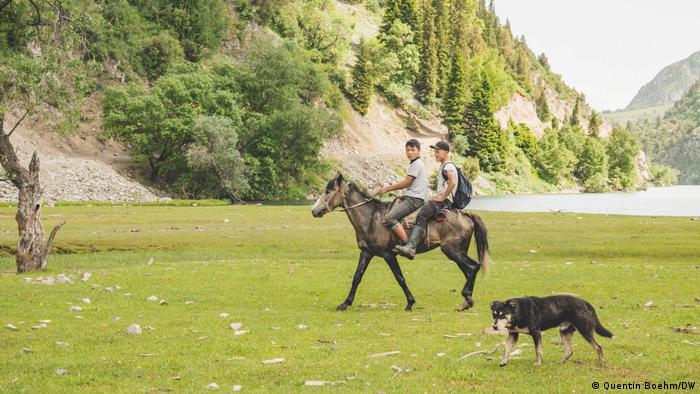
Teenagers ride a young horse during their family’s transhumance to the high pastures above their village in the Jalalabad region of Kyrgyzstan

Kyrgyzstan's ancient walnut forest spans tens of thousands of acres across the flanks of the Babash-Alta mountains. For generations, these natural woodlands have supported communities living on its fringes, in a sprawling network of villages collectively known as Arslanbob.

October is a traditional time of celebration when villagers move into the forest for a few weeks to gather nuts. This bounty is sent off along trade routes that trace the old Silk Road, passing through local markets across the Jalalabad region of Kyrgyzstan and on to Turkey, Russia, and Iran.

But the forests are coming under pressure from climate change and soil erosion — and from overgrazing. Local initiatives are trying to preserve this unique natural resource by engaging villagers in better management, not only of the forest itself but also of surrounding pastures.


Winter draws to an end in Arslanbob, beneath the snowy peaks of the Babash-Alta mountains

Stressed pastures mean stressed forests

Traditionally, livestock stays close to the village during the winter months, and in summer villagers drive their animals to summer pastures in the highlands above the forest. But this can be a journey of several days and increasingly, these pastures, like the forest, aren't as lush as they used to be.

Instead, villagers are grazing their animals on the nearer winter pastures, meaning when summer ends there isn't enough fodder to see them through the cold months, and livestock are let loose to graze in the forest.

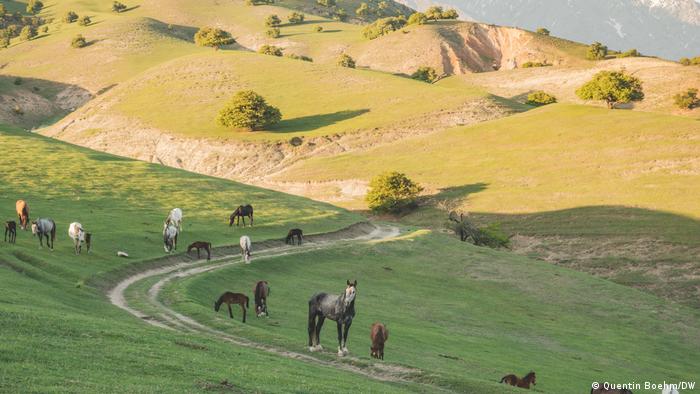
Horses graze in at Alaash Jailoo, a summer pasture about two days ride from Arslanbob. Horses are raised for meat and milk in Kyrgyzstan, as well as for farm work and sport

Hayat Tarikov, a retired forest ranger who spent his career maintaining the walnut forest, says the animals strip the forest floor of uncollected nuts and eat the buds off young trees and shrubs in the spring, making it more difficult for the forest to regenerate and thrive.

"If people kept their animals off the forest from September until May, then the flora on the forest floor could recover," Tarikov says.
Smartphone data to manage grazing

Grazing rights in Kyrgyzstan are granted through a decentralized system of regional pasture committees, composed of village leaders and shepherds.

Each year, Aziz Chirmashev receives a permit to use highland pastures. When the grazing season begins in early summer, he travels there with a 200-head herd of sheep, goats, horses, and cows belonging to villagers in Arslanbob. As the summer draws on, he drives his herd higher and higher to reach fresh grass.

"Our pastures are getting worse," Chimarshev says.


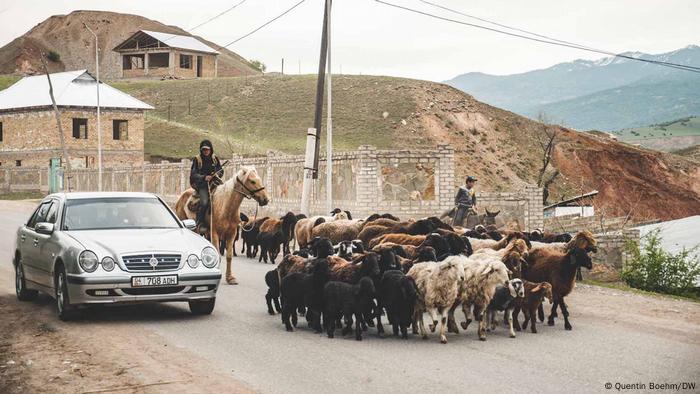
A shepherd drives his small herd to pasture


But to pin down just how much worse, and where — to establish how much grazing a given pasture can sustain — Central Asian environmental NGO Camp Alatoo is testing a smartphone app to map pasture health in the region.

The leaders of pasture committees collect and feed in data on stone cover, lichens, bare ground, and plant cover. This information helps determine how much grazing each area can support, and for how long.

"Year-to-year, it is difficult to tell the health of a pasture," explains Zhyrgal Kozhomberdiev, leader of pasture management at Camp Alatoo, "but five years of data would be a starting point to draw conclusions on the changes of a grazing area or region."

With this knowledge, Kozhomberdiev says, the committees might help shepherds like Chirmashev reach underutilized pastures further from the forest.


A herding family poses outside their yurt on the Alaash Jailoo. They will move the yurt up to three times over the summer as they move their livestock to higher pastures with more grass

Sowing the seeds of resilience

The Ministry of Agriculture says it also has plans to produce seeds of the plants typically found in healthy pastures and sow them in degraded land where overgrazing has left only unpalatable plants.

With these initiatives to restore pastures, and render remote pastures more accessible, the hope is that herders won't turn to the forests to graze their animals.


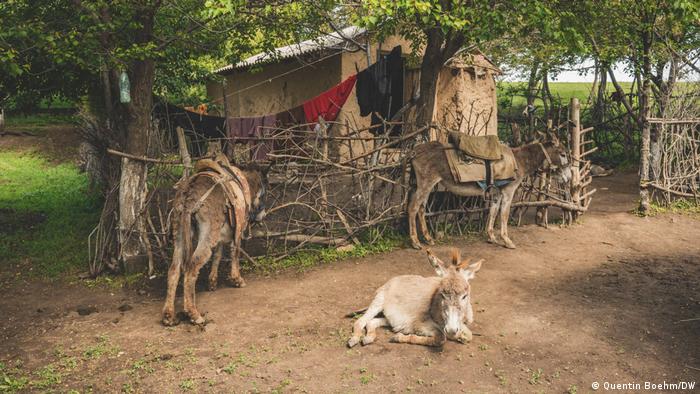
Donkeys doze outside a shepherd's summer residence


At the same time, more direct action is also being taken to improve the health of the forest. Kozhomberdiev says that since 2021, foresters have been monitoring walnut trees to identify those more resistant to soil erosion and irregular water cycles.

The plan is to collect nuts from these resilient mother trees and grow saplings that will then be planted in the forest. But this isn't a quick fix. On average, walnut seedlings need five years of good conditions before they fruit — years in which they are particularly vulnerable to hungry cattle and goats.

'The forest calls them home'


Kozhomberdiev hopes that poor walnut harvests in recent years will serve as a warning to "shepherds and villagers to remember the rhythm of the land and limit the animals' grazing."


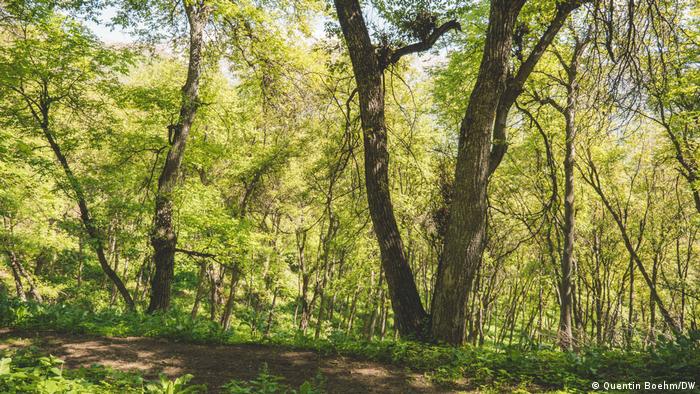
A corner of the Arslanbob walnut forest in spring


These days, the rhythm of life in Arslanbob isn't only dictated by the forest harvest, by times to winter down or scale the mountains in search of lush pasture, but also by the seasonal work that takes many villagers abroad, to neighboring Kazakhstan or to Russia.

But Tarikov says that far from abandoning traditional ways of life, they often come back with a deepened desire to see the ancient forest preserved. "One thing that is different about Arslanbob is that when young people leave here looking for work elsewhere, they come back," he says. "This forest calls them home."
Sri Lanka Tamils fleeing to India to escape economic crisis

Krithiga Narayanan (Tamil Nadu), Deutsche Welle - 


Sri Lanka's economic and political turmoil is affecting all sections of society, but the Tamil community is being hit particularly hard.Dozens of poor families from Sri Lanka have fled to southern India over the past few weeks amid an acute economic and political crisis gripping the Indian Ocean island nation.


© Krithiga Narayanan/DW
The Mandapam refugee camp in Rameswaram is being used by Indian authorities to house those arriving from Sri Lanka

The country of 22 million people has been battling severe shortages of essential items, including food, fuel and medicine, as foreign reserves run dangerously low.

The resulting public fury targeting the government triggered mass street protests and political upheaval.

The resignation of Prime Minister Mahinda Rajapaksa and his Cabinet, and the appointment of a new prime minister, has done little to soothe public anger.

Armed soldiers are currently patrolling the streets to maintain order.

Embarking on perilous journey

Rani (name changed), 41, who asked not to reveal her identity, told DW how eight of her family members, including small children, fled to India by boat, to escape the economic misery.

They sold the land they owned in Sri Lanka and rented a boat with that money. They traveled together with another family of four: a couple with their two children, aged 4 and one and a half.

"My husband and children could not find jobs. Every day the prices of food were increasing. My family needs at least 2 kilograms (4.4 pounds) of rice per day. The price we last paid for rice was around 250 Sri Lankan rupees (E0.65, $0.69) per kilo. We had to pay around 500 rupees per day for rice alone. We could not buy any other food items for our children," she said.

"My son has thalassemia. He has to eat nutritious food. I wanted to provide a better life for my children. That is why I decided to come to India," Rani said.

"We were scared that we would be caught by Sri Lankan authorities while we were crossing and be told to go back. If we had been caught, all the money we had spent to rent the boat, would have been for nothing. We were also scared of what awaited us in India."

Sri Lankan Tamils hit hard by economic crisis


Indian authorities have so far recorded 28 Sri Lankan families, or 85 people, arriving via boat in southern Tamil Nadu state.

All of them belong to the Tamil community, an ethnic minority in Sri Lanka, which share deep social, cultural and linguistic ties with people in Tamil Nadu.

Sri Lankan Tamils, the largest ethnic minority in the island nation accounting for about 12% of the population, have been struggling to recover from the bloody decades-long civil war that lasted until 2009, claiming around 100,000 lives.

Even some 13 years after the end of the war, reconciliation appears far off. And now the economic turmoil seems to be hitting them particularly hard.

"Even though the political and economic crisis in Sri Lanka is affecting all segments of society, there is an ethnic component to the harm Tamils are facing as a result of the crisis," said Suraj Girijashanker, a specialist in international refugee law and assistant professor at the Jindal Global Law School.

He pointed out that Sri Lankan Tamils -- particularly in areas which have been neglected by a series of Sinhalese-majority governments -- are experiencing the economic hardship even more severely.

"Often we tend to treat economic harm in isolation, but the history and context in Sri Lanka complicates this picture as there is disparate impact on Tamils because of their ethnicity," he told DW.

'India needs a better refugee policy'


This is not the first time there has been an influx of people from Sri Lanka to India; Sri Lankan Tamils have been coming to India since the start of the civil war.

According to India's Home Ministry, there were 58,843 Sri Lankan Tamils residing across 108 refugee camps in Tamil Nadu as of 2021. Besides, around 34,135 refugees were staying outside the camps, registered with the state authorities.

India, however, is not a signatory to the 1951 Refugee Convention or the 1967 Protocol Relating to the Status of Refugees.

New Delhi also does not have domestic legislation regulating the entry and stay of people seeking asylum. It treats all those coming into the country seeking refugee status as illegal migrants under The Foreigners Act of 1946.

The UN Refugee Agency (UNHCR) is responsible for processing such people's applications and determining their status in India. Until then, they're handed a document that allows them to stay in the country.

But the document, a piece of blue paper, is widely dismissed by Indian authorities.

Without assistance from the Indian government, asylum-seekers and migrants find it immensely challenging to either rent homes or find work.

"India needs a national asylum law which prevents disparate standards for different refugee populations during different periods. Such a law may draw from the 1951 Refugee Convention, but also needs to keep the domestic conditions in mind," said Girijashanker.

This view is shared by K.M.Parivelan, chairperson of the Center of Statelessness and Refugee Studies at the Tata Institute of Social Sciences, who also facilitated the voluntary repatriation of Sri Lankan civil war refugees in the past when he worked with the UNHCR.

"India needs a better refugee policy in line with international humanitarian and human rights frameworks," he told DW.

"On humanitarian grounds Sri Lankan Tamils need to be protected as a special case. We need to provide interim care and protection. Livelihood support can be given as a temporary measure and then they can be voluntarily repatriated to Sri Lanka," Parivelan said, stressing that, "it should be voluntary repatriation in all circumstances."

Stuck in the refugee camp


Indian authorities have been taking those arriving from Sri Lanka over the past couple of months to the Mandapam refugee camp in Rameswaram town.

"We have been staying here for more than a month now, with no end in sight. People who came two months before us are also facing the same situation," Rani said.

"My daughter-in-law is six-months pregnant and weak. We have to get permission from the authorities to go for health checkups. We don't know how we are going to manage once the baby is born," she added.

Mani (not his real name), a 26-year-old man who used to work as a painter in Sri Lanka, reached India in March, along with his wife.

"We could not do anything in Sri Lanka because of the economic crisis. That's why I decided to come to India with my wife on a boat," he told DW.

"If I had known that we would be held in a refugee camp like this, I would not have come at all," he said, noting that they have been staying at the camp for over a month.

"We do not know what is going to happen to us. If we are given some documentation by India, we can work and provide for our families. That is all we ask."

Edited by: Srinivas Mazumdaru

Copyright 2022 DW.COM, Deutsche Welle. Distributed by Tribune Content Agency, LLC.