Tuesday, May 24, 2022

Environmentalists meet in South Africa to stem plastic waste

By MOGOMOTSI MAGOME

1 of 8
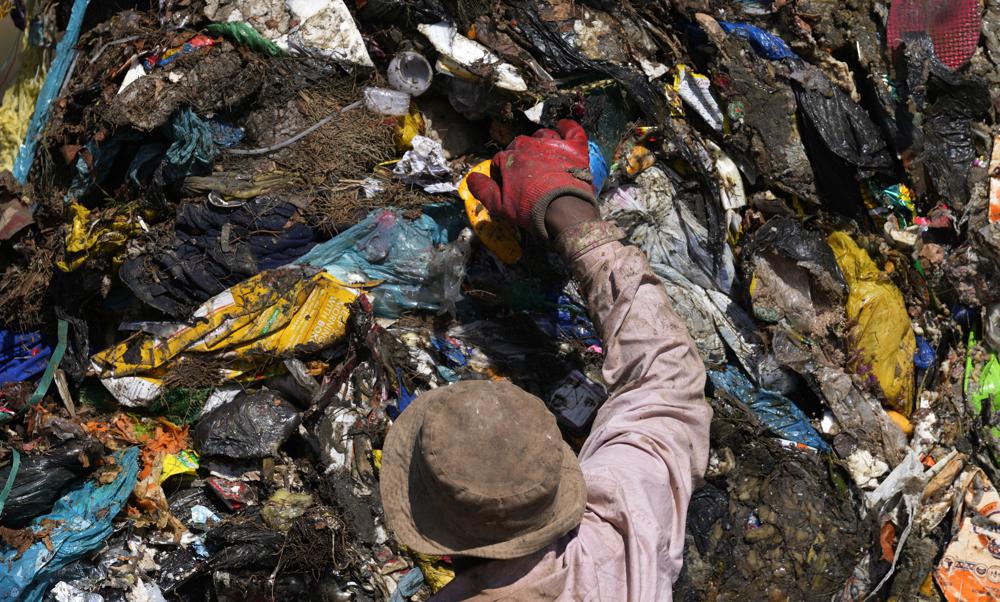
A waste picker rummages through garbage, at a dumping site in Johannesburg, South Africa, Friday, May 20, 2022. Environmental activists are gathering in South Africa this week to press governments and businesses to reduce the production of plastic because it is harming the continent's environment. (AP Photo/Themba Hadebe)

JOHANNESBURG (AP) — Environmental activists are meeting in South Africa this week to press governments and businesses to reduce the production of plastic because it is harming the continent’s environment.

The conference, “Towards Zero Plastics to the Seas of Africa,” being held in Gqeberha (formerly Port Elizabeth), South Africa, through Friday brings together academics and experts on the plastics industry and its effects on the continent, say organizers.

The participants are focusing on the actions needed to stop plastics from ruining Africa’s land and seas, say the organizers, the African Marine Waste Network. The conference follows the United Nations Environmental Assembly’s resolution for the development of a legally binding treaty on plastic waste by 2024.

Despite a growing recycling industry, plastic waste is piling up in Africa’s landfill sites, clogging stormwater drainage systems and polluting rivers and oceans.

Africa has an average waste collection rate of 55% but only 4% of it is recycled, according to a report by the U.N. and the Center for Scientific and Industrial Research in South Africa.

This is way below the African Union’s target for the continent’s cities to recycle at least 50% of their waste by next year.

In Johannesburg — South Africa’s most populous city with more than 6 million people — the landfill sites are fast reaching capacity. The municipality collects up to 40,000 tons of general waste including plastic every month, according to its waste management agency Pikitup.

The city’s four landfill sites will be full in three years, forcing them to find more landfill sites, officials say.

“Plastic is not biodegradable ... so it lives for a very long time. It eats up our landfill space and is very difficult to compact,” said Pikitup spokesman Muzi Mkhwanazi.

In 2018 the city made it mandatory for residents to separate plastic from other waste, but not many are practicing that.

Johannesburg’s biggest landfill site in Turffontein is a hive of activity as waste trucks drop off garbage and waste pickers spread themselves across the area to pluck out plastics, cardboard, bottles and wood that can be sold to recyclers. The rest is crushed and then covered by new deliveries of waste.

Thousands of freelance waste pickers work on the streets of the sprawling metropolis as well as at the landfill site. They sort various types of garbage into what they can sell to recyclers in order to eke out a living. Others have paid employment at recycling centers.

Agnes Hlungwani says she has been supporting her family by sorting plastic waste at the Whole Earth Recycling plant. When her husband died in 2006 sorting waste was one of the only types of work she could get, she said.

“I sent my children to school and I have supported myself. My husband is no longer around, but the children are grown up now, all because of this job,” said Hlungwani.

Waste campaigner Musa Chamane told The Associated Press that the conference is necessary to press decision-makers in businesses, governments and municipalities to reduce plastic waste.

Whole Earth Recycling manager Carmen Jordaan said campaigns are needed to press industries and ordinary residents to reduce plastic waste.

“Although there is sorting that takes place at the landfill, it is not ideal as it is mixed with food waste, medical waste and that’s not hygienic,” she said. “If we can stop using non-recyclable plastics in our packaging material and encourage more people to start recycling we will have a better rate of recycling.”
Shell safety consultant quits over 'double-talk on climate'


Shell safety consultant resigns over oil company's plans to expand fossil fuel extraction. 
File Photo by Terry Schmitt/UPI | License Photo

May 23 (UPI) -- A Shell safety consultant has resigned over what she calls the oil company's "extreme harms" to the environment and "disregard for climate change risks."

Caroline Dennett submitted her resignation to Shell executives and 1,400 employees Monday in an email and public video, accusing the U.S. company of "failing on a massive planetary scale" and blasting the oil giant's plans to expand fossil fuel extraction.


"Today I'm quitting because of Shell's double talk on climate," Dennett said in her video. "Shell's stated safety ambition is to 'do no harm', 'Goal Zero' they call it and it sounds honorable. But they are completely failing on it."


Dennett worked as a senior safety consultant with Shell for 11 years. She specializes in evaluating safety procedures in high-risk industries, and started working with Shell after BP's Deepwater Horizon oil spill in 2010.

"I can no longer work for a company that ignores all the alarms and dismisses the risks of climate change and ecological collapse," Dennett said.

The former Shell consultant called the fossil fuel industry "the past" and urged other workers to leave the industry.

"If you can find a way out, then please walk away while there's still time," she said.

The resignation comes one day before Shell's annual general meeting in London. Shell is expected to face scrutiny Tuesday from activists who want the company's policies to line up with the Paris climate accord.

Last year, Shell released a net-zero strategy, but still plans to explore new fossil fuel projects until 2025. Shell responded to Dennett's comments by saying it plans to hit all of its targets by 2050.

"We're already investing billions of dollars in low-carbon energy, although the world will still need oil and gas for decades to come in sectors that can't be easily decarbonized," the company said.


More liver transplants were from donors who overdosed during pandemic

IF CHINA DID THIS THE EPOCH TIMES WOULD HAVE THEIR HAIR ON FIRE

By HealthDay News

The percentage of livers from donors who died of overdoses rose by 26% -- from about 15% to just over 18% -- from the pre-COVID-19 period to the COVID-19 period
. Photo by Sasint/Pixabay

Organs from donors who died of drug overdoses helped keep the number of U.S. liver transplants steady during the first year of the COVID-19 pandemic, a new study finds.

"When the pandemic began, we saw no decline in liver transplants, which seemed surprising since many surgeries were canceled or postponed," said lead author Peter Lymberopoulos, a fourth-year medical student at St. George's University in Grenada.

"Sadly, a key reason seems to be a surge of organ donors who died from drug overdose," he said in an American Gastroenterological Association news release.

Drug overdoses represent a public health crisis in the United States. Last year, more than 107,600 Americans died from drug overdoses, a record number, the U.S. Centers for Disease Control and Prevention said recently.

RELATED Organ transplants from donors who had COVID-19 are safe, study shows

The researchers used the U.S. organ donation registry of the United Network for Organ Sharing for the study. They analyzed data on donors of all solid organ transplants, including livers, during the 14 months before the start of the COVID-19 pandemic (Jan. 1, 2019 to Feb. 29, 2020) and the 14 months after it began (May 1, 2020 to June 30, 2021).

"Among liver transplants, we found that the number of overdose donors rose at a surprising rate in the pandemic's first 14 months, compared to the previous 14 months," Lymberopoulos said.


"Organ transplants are experiencing success, but it often comes at a cost. In many cases, that 

The percentage of livers from donors who died of overdoses rose by 26% -- from about 15% to just over 18% -- from the pre-COVID period to the COVID-19 period. The use of drug overdose donors for all solid organ transplants increased by almost a third, from about 14% to a little over 17%.

Transplants that occurred in March and April 2020 were excluded from the study due to COVID-related disruptions at hospitals in those months.

The study authors plan to investigate whether the trend continued into the second year of the pandemic.

Lymberopoulos presented the findings Sunday at the American Gastroenterological Association's Digestive Disease Week meeting, in San Diego. Research presented at meetings is usually considered preliminary until published in a peer-reviewed medical journal.

Many overdose victims are young and have few or no other health conditions, such as high blood pressure or diabetes, which would affect the chances of transplant success.

More information

There's more on liver transplants at the American Liver Foundation.

Copyright © 2022 HealthDay. All rights reserved.
Raccoon gets stuck head-first in California home's roof

The Santa Cruz Animal Shelter in California said a local resident called the Wildlife Emergency Services number to report a raccoon had chewed a hole in their roof and got stuck while trying to climb head-first through the opening. Photo courtesy of the Santa Cruz Animal Shelter/Facebook

May 24 (UPI) -- A California animal shelter helped a local homeowner with an unusual problem: a raccoon with its head stuck through a hole in the roof.

The Santa Cruz Animal Shelter said in a Facebook post that a local resident called the Wildlife Emergency Services number on Monday to report a raccoon had chewed a hole in their roof and became stuck while trying to climb through the opening.

"Knowing that time was critical, they instructed the citizen how to push the raccoon through the hole so it wouldn't suffocate," the post said.

The shelter said the raccoon turned out to be a mother and was reunited with her babies nearby.

The post said Wildlife Emergency Services personnel are now helping the homeowner "set up a repellent barrier to safely and humanely have mama and her kids move along to a more appropriate home."


Amazona Zoo announces birth of rare Brazilian tapir


May 24 (UPI) -- The Amazona Zoo in England has announced the birth of a rare Brazilian tapir to parents Ennis and Lutador.

Ennis gave birth following a 13-month gestation. The 10-year-old tapir previously had three failed pregnancies.


"We are so happy. Ennis the mother hasn't had the easiest time trying to be a mum. She has had three failed pregnancies due to differing factors. With a gestation of 13 months, it is a long time to wait to try again," head keeper Imogen White said in a statement.

Ennis gave birth to a healthy male and had no issues during the birth.

"The keepers and myself have been through the losses that Ennis has suffered over the years and have been heartbroken. So to say that we are over the moon with this successful birth feels like an understatement. We are all so proud of Ennis. We all knew she could be a good mum and she is now getting to prove how excellent she is at the job, so attentive and protective," White said.

The Amazona Zoo uploaded to Twitter a photo of the newborn with Ennis.

Tapirs are an endangered species that are native to the jungle and forest regions of South America, Central America and Southeast Asia.


World Tapir Day, which is celebrated annually on April 27, was created by conservationists in 2008 to raise awareness about the endangered species.
Increasing green space in cities may save thousands of lives

By HealthDay News

So-called urban forests help mitigate flooding, improve air and regulate temperatures, among other benefits. Photo by Mabel Amber/Pixabay

Creating more parks and other green spaces could have prevented tens of thousands of deaths in dozens of large U.S. cities over the past two decades, a new study says.

"We've known that living in greener areas can have a positive impact on our physical and mental health, but there is a lack of data on how changes in greenness distribution can affect death rates across the country," said lead study author Paige Brochu. She is a PhD student at Boston University School of Public Health.

"Our study quantifies the impact of greenness expansion in urban areas and shows how increasing green vegetation could potentially add to a person's life expectancy. Policymakers and urban planners can use this information to support local climate action plans and ensure that those plans include greening initiatives," Brochu said in a university news release.

For the study, the researchers used U.S. Census data, the U.S. Centers for Disease Control and Prevention death data and greenness data from NASA satellites. They assessed how the amount of green space in 35 large U.S. cities affected all-cause death among adults aged 65 and older.

Across all 35 cities, the investigators concluded that between roughly 34,000 and 38,000 deaths -- or about 15 to 20 deaths per 10,000 seniors -- could have been prevented between 2000 and 2019 with a 0.1 increase in the Normalized Difference Vegetation Index -- a measurement of green space.

On a positive note, the researchers also estimated that overall greenness in the cities increased by almost 3% between 2000 and 2010, and by around 11% from 2010 to 2019. The largest regional increase was in the South, from 0.40% in 2000 to 0.47% in 2019, according to the report published recently in the journal Frontiers in Public Health.

So-called urban forests help mitigate flooding, improve air and regulate temperatures, among other benefits.

RELATED Study: More trees in neighborhoods can improve health, lower medical costs

Greening may not be feasible in all cities due to differences in climate, water sources, urbanization and landscape, but these findings can be used by city planners to assess local changes in greenness over time and develop suitable climate action plans in their cities, according to Brochu.

"Increasing greenness in an arid climate in the Southwest is different from increasing greenness in an urban area in the Pacific Northwest," Brochu said. "If an area's climate makes it difficult to plant lush trees, urban planners can use this greenness data as a starting point and consider other types of vegetation that may be more realistic for their local climate."

More information

RELATED Some parks in U.S. better than others for health, researchers say

The National Recreation and Park Association outlines the health benefits of green spaces.

Copyright © 2022 HealthDay. All rights reserved.
Study finds no structural changes to brain from mindfulness practice

By HealthDay News

A recent study detected no significant differences in structural brain changes were after a mindfulness program. Photo by Pexels/Pixabay

Meditation and other mindfulness practices may improve your attention, but they won't lead to structural changes in your brain in the short-term, according to a new study.

Previous studies have shown that learning new skills, aerobic exercise and balance training could trigger changes in the brain, and some research has suggested that mindfulness regimens could do the same.

To find out if that's true, researchers at the University of Wisconsin-Madison's Center for Healthy Minds conducted trials with more than 200 healthy people who had no meditation experience.

The participants underwent MRI scans to assess their brains and were then randomly assigned to one of three groups: a Mindfulness-Based Stress Reduction (MBSR) course a well-being course called the Health Enhancement Program (HEP), or a control group that didn't receive any type of training.

The MBSR course was led by certified instructors. It included mindfulness practices such as yoga, meditation and body awareness. The health enhancement program engaged participants in exercise, music therapy and nutrition practices, but no mindfulness training. Both groups spent additional time following their programs at home.

After eight weeks, all study participants underwent another MRI brain scan. No significant differences in structural brain changes were detected among those in the MBSR, HEP or control group.

However, people in both the MBSR and HEP groups reported increased mindfulness compared with those in the control group. That suggests that any type of wellness program -- not just mindfulness meditation -- may lead to greater self-reported mindfulness, according to the study authors.

The results were published online recently in the journal Science Advances.

It "may be that only with much longer duration of training, or training explicitly focused on a single form of practice, that structural alterations will be identified," wrote the researchers led by Richard Davidson, professor of psychology and psychiatry at UW-Madison.

They noted that unlike physical and spatial training, which have been shown to trigger detectable structural brain changes, mindfulness training involves a range of psychological areas like attention, compassion and emotion.

RELATED Study: School-based mindfulness program improves young kids' sleep

This utilizes a complex network of brain regions, each of which may change to different degrees in different people, making it challenging to detect overall brain changes in a group of people, the study authors explained.

"We are still in the early stages of research on the effects of meditation training on the brain and there is much to be discovered," Davidson said in a university news release.

More information

There's more on mindfulness at the U.S. National Institutes of Health.

Women who give birth to twins are more lucky than fertile, scientists say

Researchers said that there's still plenty that's unknown about why some women birth twins, but available data indicates that luck plays a larger role than previously believed. File Photo by Bill Greenblatt/UPI | License Photo

May 24 (UPI) -- According to research published on Tuesday, mothers who give birth to twins are more lucky than they are biologically unique -- a conclusion that goes against previous research done on the issue.

The research was done by the Leibniz Institute for Zoo and Wildlife Research.

An international team of scientists said they studied 100,000 births from the preindustrial period in Europe and concluded that there was nothing biologically unique about them that contributed to their giving birth to twins.

That conclusion went against previous research that said mothers who birth twins tend to be more fertile.

"Previous studies are problematic because they cannot tell us whether mothers with twins give birth more often because they are especially fertile, or because giving birth more often increases the chance that one of these births is to twins," researcher Alexandre Courtiol said in a statement.

"If a mother gives birth more often, it is more likely that one of these births is to twins -- just like you are more likely to win if you buy more lottery tickets, or to be in a car accident if you drive a lot," author Ian Rickard of Durham University added.

Scientists noted that twin births occur in 1-3% of all births and are found in all populations, regardless of whether they're associated with a higher risk than single pregnancies of natal and postnatal health issues for both the mother and children.

Researchers said that there's still plenty that's unknown about why some women birth twins, but available data indicates that luck plays a larger role than previously believed.

With so many factors involved, they noted, it's difficult to determine with much certainty whether mothers who gave birth to twins are any more fertile than those who don't.

"Our study suggests that twinning has not been eliminated by natural selection for two reasons," Courtiol added.

First, twinning is a consequence of double ovulation, which compensates for reproductive ageing and benefits all but the youngest of mothers. Second, when the risk of early mortality of twins is not too high, twinning is associated with larger family sizes although women with twins give birth less often. This is because twin births bring two offspring rather than one."

Tuesday's study was published in the scientific journal Nature Communications.
U.S. submarine's grounding 'preventable,' says Navy probe

The grounding of USS Connecticut on Oct. 2, 2021, was the result of a slew of errors, a Navy investigation published Monday said. Photo by Lt. Mack Jamieson/U.S. Navy

May 24 (UPI) -- A U.S. Navy investigation into October's grounding of a U.S. submarine on a seamount in the South China Sea has determined the incident was "preventable."

The report published Monday states the USS Connecticut grounded Oct. 2 on an uncharted seamount in a poorly surveyed area of international waters in the Indo-Pacific region as a result of an accumulation of errors and omissions in navigation planning, watch-team execution and risk management that "fell far below U.S. Navy standards."

"Prudent decision-making and adherence to required procedures in any of these three areas could have prevented the grounding," Rear Adm. Christopher Cavanaugh, who led the investigation, wrote in the report.

"No single action or inaction caused this mishap."


The grounding saw 11 crew sustain minor injuries and the vessel removed from operations for an extended period of time for repairs. Its leading officers were also fired as a result of the incident in November.

"A grounding at this speed and depth had the potential for more serious injuries, fatalities and even loss of the ship," Cavanaugh said.

Cavanaugh added that actions taken by the crew and its leadership following the grounding were "effective" as the vessel was put in a stable condition on the ocean's surface and injuries and damaged equipment were attended.

The investigation found that the vessel's navigation plan for the day of the grounding did not meet safe navigation standards as its review team failed to identify and mark at least 10 charted hazards located in the vicinity of where the incident took place as well as incorrectly assessed the submarine would be operating in open waters.

The report also said the vessel collided with a pier last April, which the report framed as an incident that should have been a "significant opportunity for self-reflection and improvement" for Connecticut's leadership.

In response the grounding, the report recommended 28 corrective actions. The Navy said 14 of those actions have been completed, 13 are in progress and one action is "enduring."

"The Navy is urgently implementing these improvements across the Submarine Force," the U.S. military branch said in a statement. "In implementing these significant improvements, the Navy will become a more effective fighting force."


Chrysler parent Stellantis to build EV battery plant in Indiana


Dodge, Jeep and Chrysler automaker Stellantis announces joint venture with Samsung SDI to build $2.5 billion EV battery manufacturing facility in Kokomo, Ind.
 File Photo by/Roger L. Wollenberg/UPI | License Photo


May 24 (UPI) -- Automaker Stellantis is joining forces with Samsung SDI to build its first electric vehicle battery plant in the United States.

The $2.5 billion joint investment, announced Tuesday, will create 1,400 new jobs in Kokomo, Ind., where the EV battery facility is expected to open in 2025.

The new plant will supply battery modules for a range of Stellantis vehicles built in North America, including Jeep, Chrysler and Dodge, and is centrally located to a number of Stellantis assembly plants in the Midwest.

Stellantis is the fourth-largest automaker in the world, following the 2021 multinational merger of Fiat Chrysler Automobiles and French PSA Group. Stellantis also builds Alfa Romeo, Citroen, Fiat, Peugeot and Maserati.


"Just under one year ago, we committed to an aggressive electrification strategy anchored by five gigafactories between Europe and North America," said Carlos Tavares, CEO of Stellantis.

"Today's announcement further solidifies our global battery production footprint and demonstrates Stellantis' drive toward a decarbonized future outlined in 'Dare Forward 2030.'"

Stellantis is targeting battery-electric vehicle sales of 5 million a year worldwide by 2030, and has announced plans for five battery plants in Europe and North America, including a $4.1 billion joint venture with LG Energy Solutions for a plant in Canada.


Samsung SDI, which stands for Samsung Digital Interface, manufactures lithium-ion battery modules for a number of automakers, including Fiat and BMW.

"We have secured a solid foothold in a rapidly growing North American EV market through the joint venture with Stellantis," said Yoonho Choi, CEO of Samsung SDI.

"We will make sincere efforts to bring satisfaction to the market with top-class quality products in the future, and will contribute toward meeting the climate change target."