Friday, May 27, 2022

New type of extremely reactive substance in the atmosphere

Peer-Reviewed Publication

UNIVERSITY OF COPENHAGEN - FACULTY OF SCIENCE

Illustration of chemical reaction 

IMAGE: REACTION: ROO + OH → ROOOH (OXYGEN ATOMS IN RED) view more 

CREDIT: UNIVERSITY OF COPENHAGEN

For the first time, an entirely new class of super-reactive chemical compounds has been discovered under atmospheric conditions. Researchers from the University of Copenhagen, in close collaboration with international colleagues, have documented the formation of so-called trioxides – an extremely oxidizing chemical compound that likely affects both human health and our global climate.

A commonly known chemical compound is hydrogen peroxide. All peroxides have two oxygen atoms attached to each other, making them highly reactive and often flammable and explosive. They are used for everything from whitening teeth and hair, to cleaning wounds and even as rocket fuel. But peroxides are also found in the air surrounding us.

In recent years, there has been speculation as to whether trioxides – chemical compounds with three oxygen atoms attached to each other, and thereby even more reactive than the peroxides – are found in the atmosphere as well. But until now, it has never been unequivocally proven.

"This is what we have now accomplished," says Professor Henrik Grum Kjærgaard, at the University of Copenhagen’s Department of Chemistry. Kjærgaard is the senior author of the study, just published in the prestigious journal, Science.

He continues:

"The type of compounds we discovered are unique in their structure. And, because they are extremely oxidizing, they most likely bring a host of effects that we have yet to uncover."

Hydrotrioxides (ROOOH), as they are known, are a completely new class of chemical compounds.  Researchers at the University of Copenhagen (UCPH), together with colleagues at the Leibniz Institute for Tropospheric Research (TROPOS) and the California Institute of Technology (Caltech), have demonstrated that these compounds are formed under atmospheric conditions.

The researchers have also shown that hydrotrioxides are formed during the atmospheric decomposition of several known and widely emitted substances, including isoprene and dimethyl sulfide.

"It’s quite significant that we can now show, through direct observation, that these compounds actually form in the atmosphere, that they are surprisingly stable and that they are formed from almost all chemical compounds. All speculation must now be put to rest," says Jing Chen, a PhD student at the Department of Chemistry and second author of the study.

Hydrotrioxides are formed in a reaction between two types of radicals (see fact box). The researchers expect that almost all chemical compounds will form hydrotrioxides in the atmosphere and estimate that their lifespans range from minutes to hours. This makes them stable enough to react with many other atmospheric compounds. 

Presumably absorbed into aerosols

The research team also has the trioxides under strong suspicion of being able to penetrate into tiny airborne particles, known as aerosols, which pose a health hazard and can lead to respiratory and cardiovascular diseases.

"They will most likely enter aerosols, where they will form new compounds with new effects. It is easy to imagine that new substances are formed in the aerosols that are harmful if inhaled. But further investigation is required to address these potential health effects," says Henrik Grum Kjærgaard.

While aerosols also have an impact on climate, they are one of the things that are most difficult to describe in climate models. And according to the researchers, there is a high probability that hydrotrioxides impact how many aerosols are produced.

"As sunlight is both reflected and absorbed by aerosols, this affects the Earth's heat balance – that is, the ratio of sunlight that Earth absorbs and sends back into space. When aerosols absorb substances, they grow and contribute to cloud formation, which affects Earth's climate as well," says co-author and PhD. student, Eva R. Kjærgaard.

Compound’s effect needs to be studied further

The researchers hope that the discovery of hydrotrioxides will help us learn more about the effect of the chemicals we emit. 

"Most human activity leads to emission of chemical substances into the atmosphere. So, knowledge of the reactions that determine atmospheric chemistry is important if we are to be able to predict how our actions will affect the atmosphere in the future," says co-author and postdoc, Kristan H. Møller.

However, neither he nor Henrik Grum Kjærgaard are worried about the new discovery:

"These compounds have always been around – we just didn't know about them. But the fact that we now have evidence that the compounds are formed and live for a certain amount of time means that it is possible to study their effect more targeted and respond if they turn out to be dangerous," says Henrik Grum Kjærgaard.

"The discovery suggests that there could be plenty of other things in the air that we don't yet know about. Indeed, the air surrounding us is a huge tangle of complex chemical reactions. As researchers, we need to keep an open mind if we want to get better at finding solutions," concludes Jing Chen.


[FACT BOX] HOW HYDROTRIOXIDES ARE FORMED

When chemical compounds are oxidized in the atmosphere, they often react with OH radicals, typically forming a new radical. When this radical reacts with oxygen, it forms a third radical called peroxide (ROO), which in turn can react with the OH radical, thereby forming hydrotrioxides (ROOOH).

Reaction: ROO + OH → ROOOH


[FACT BOX] JUST HOW MUCH

  • Isoprene is one of the most frequently emitted organic compounds into the atmosphere. The study shows that approximately 1% of all isoprene released turns into hydrotrioxides.
     
  • The researchers estimate that the concentrations of ROOOH in the atmosphere are approximately 10 million per cm3. In comparison, OH radicals one of the most important oxidants in the atmosphere, are found in about 1 million radicals per cm3.


[FACT BOX] ABOUT THE STUDY

  • The discovery of hydrotrioxides is described in a research article just published in the renowned journal, Science.
     
  • While the theories behind the new research results were developed in Copenhagen, the experiments were conducted using mass spectrometry, partly at the Leibniz Institute for Tropospheric Research (TROPOS) in Germany, and partly at the California Institute of Technology (Caltech) in the United States.
     
  • While higher concentrations must be used in many experiments, these experiments are performed in an environment that is nearly identical to the atmosphere, which makes the results very reliable and comparable to the atmosphere. Measuring the hydrotrioxides was made possible by using incredibly sensitive measuring instruments.
     
  • The study was conducted by: Torsten Berndt, Andreas Tilgner, Erik H. Hoffmann and Hartmut Hermann of the Leibniz Institute for Tropospheric Research (TROPOS); Jing Chen, Eva R. Kjærgaard, Kristian H. Møller and Henrik Grum Kjærgaard at the University of Copenhagen’s Department of Chemistry; and John D. Crounse and Paul O. Wennberg at Caltech.


A quarter of the world's Internet users rely on infrastructure that is susceptible to attacks

Reports and Proceedings

UNIVERSITY OF CALIFORNIA - SAN DIEGO

Map showing countries with the most at-risk infrastructure 

IMAGE: FRACTION OF EACH COUNTRY'S IP ADDRESSES THAT ARE EXPOSED TO OBSERVATION OR SELECTIVE TAMPERING BY COMPANIES THAT CONNECT INTERNET SERVICE PROVIDERS TO THE GLOBAL INTERNET. COUNTRIES ARE SHADED IN PROGRESSIVE SHADES OF BLUE, WITH WOST EXPOSED COUNTRIES IN THE DARKEST BLUE. COUNTRIES IN GRAY EXCLUDED FROM THE STUDY. view more 

CREDIT: UNIVERSITY OF CALIFORNIA SAN DIEGO

About a quarter of the world’s Internet users live in countries that are more susceptible than previously thought to targeted attacks on their Internet infrastructure. Many of the at-risk countries are located in the Global South. 

That’s the conclusion of a sweeping, large-scale study conducted by computer scientists at the University of California San Diego. The researchers surveyed 75 countries. 

“We wanted to study the topology of the Internet to find weak links that, if compromised, would expose an entire nation’s traffic,” said Alexander Gamero-Garrido, the paper’s first author, who earned his Ph.D. in computer science at UC San Diego. 

Researchers presented their findings at the Passive and Active Measurement Conference 2022 online this spring.

The structure of the Internet can differ dramatically in different parts of the world. In many developed countries, like the United States, a large number of Internet providers compete to provide services for a large number of users. These networks are directly connected to one another and exchange content, a process known as direct peering. All the providers can also plug directly into the world’s Internet infrastructure.

“But a large portion of the Internet doesn’t function with peering agreements for network connectivity,” Gamero-Garrido pointed out. 

In other nations, many of them still developing countries, most users rely on a handful of providers for Internet access, and one of these providers serves an overwhelming majority of users. Not only that, but those providers rely on a limited number of companies called transit autonomous systems to get access to the global Internet and traffic from other countries. Researchers found that often these transit autonomous system providers are state owned. 

This, of course, makes countries with this type of Internet infrastructure particularly vulnerable to attacks because all that is needed is to cripple a small number of transit autonomous systems. These countries, of course, are also vulnerable if a main Internet provider experiences outages. 

In the worst case scenario, one transit autonomous system serves all users. Cuba and Sierra Leone are close to this state of affairs. By contrast, Bangladesh went from only two to over 30 system providers, after the government opened that sector of the economy to private enterprise. 

This underlines the importance of government regulation when it comes to the number of Internet providers and transit autonomous systems available in a country. For example, researchers were surprised to find that many operators of submarine Internet cables are state-owned rather than privately operated.

Researchers also found traces of colonialism in the topology of the Internet in the Global South. For example, French company Orange has a strong presence in some African countries. 

Researchers relied on Border Gateway Protocol data, which tracks exchanges of routing and reachability information among autonomous systems on the Internet. They are aware that the data can be incomplete, introducing potential inaccuracies, though these are mitigated by the study’s methodology and validation with real, in-country Internet operators. 

Next steps include looking at how critical facilities, such as hospitals, are connected to the Internet and how vulnerable they are. 

Quantifying Nations’ Exposure to Traffic Observation and Selective Tampering (PDF)

 Alberto Dainotti (now at Georgia Institute of Technology),  Alexander Gamero-Garrido (now at Northeastern University), Bradley Huffaker and Alex C. Snoeren, University of California San Diego Esteban Carisimo, Northwestern University 
Shuai Hao, Old Dominion University 


Scientists Want To Open 830-Million-Year-Old Crystal With Potential Life Inside


IS ANYBODY THERE? FLUID INCLUSIONS IN A SAMPLE OF HALITE, POTENTIALLY CONTAINING ANCIENT MICROORGANISMS. IMAGE CREDIT: SARA SCHREDER-GOMES

Scientists recently announced the tantalizing discovery of ancient prokaryotic and algal cells – which may potentially still be alive – inside an 830-million-year-old rock salt crystal. Now, the researchers have spoken a little bit more about their recent study and suggested they have plans to crack open the crystal in the hope of revealing whether this ancient life is truly still alive.

Initially reported in the journal Geology earlier this month, the team used a selection of imaging techniques to discover well-preserved organic solids locked within fluid inclusions embedded in an 830-million-year-old piece of rock salt, also known as halite. They argue that these objects bear an uncanny resemblance to cells of prokaryotes and algae.

Crystalized rock salt is not capable of sustaining ancient life by itself, so the potential microorganisms are not simply locked within the crystals, like an ant trapped in amber. As rock salt crystals form through the evaporation of salty seawater, they can trap small amounts of water and microscopic organisms in primary fluid inclusions.

A video of this incredible crystal can be seen below. Notice how a bubble can be seen within the crystal as the researcher gently moves it around – it's within this small fluid-filled cavity they found the potential hints of life. 

Since previous work has indicated that microscopic life can perhaps survive in a dormant state within the fluid inclusions of salt crystals for hundreds of millions of year, the team are keen to find out whether these tiny cells might still be alive.

Speaking to NPR, study author Kathy Benison, a geologist from the West Virginia University, said they aim to open up the crystal to confirm whether these organic objects truly are still alive or whether they have perished. 

"There are little cubes of the original liquid from which that salt grew. And the surprise for us is that we also saw shapes that are consistent with what we would expect from microorganisms. And they could be still surviving within that 830-million-year-old preserved microhabitat," Benison told NPR. 

While bringing 830-million-year-old life forms back into the modern world might not sound like the most apocalypse-proof plan, she’s confident it will be carried out with the utmost caution.

"It does sound like a really bad B-movie, but there is a lot of detailed work that's been going on for years to try to figure out how to do that in the safest possible way," Benison added.

Other scientists agreed with Benison that, if carried out cautiously and correctly, the feat should not be a concern. After all, an organism that is hundreds of years of millions of years older than humans is unlikely to be well-adapted to infect us or bring harm. 

"An environmental organism that has never seen a human is not going to have the mechanism to get inside of us and cause disease. So I personally, from a science perspective, have no fear of that," commented Bonnie Baxter, a biologist at Westminster College in Salt Lake City, who was not involved in the study.

UH OH

New data reveals climate change might be more rapid than predicted

New data reveals climate change might be more rapid than predicted
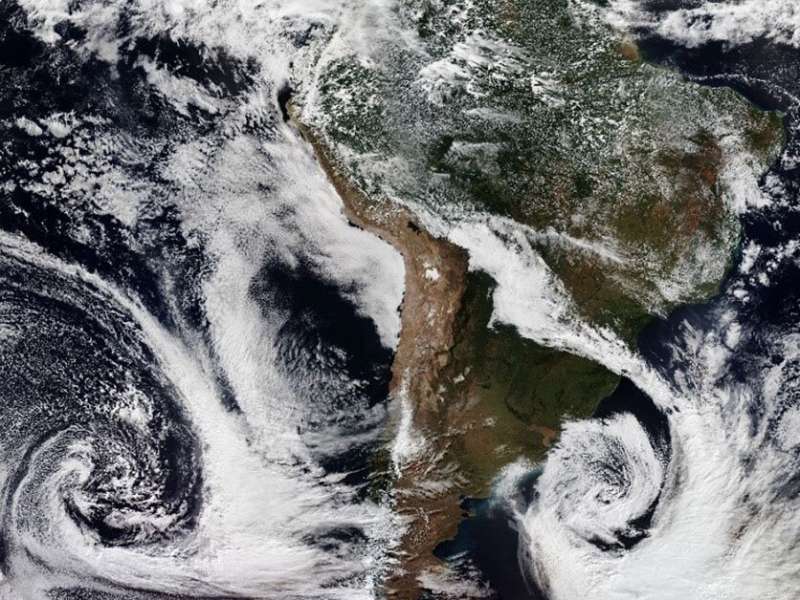
Winter storms in the Southern Hemisphere. Credit: NASA Worldview

About 30 massive, intricate computer networks serve the scientists who stand at the forefront of climate change research. Each network runs a software program comprised of millions of lines of code. These programs are computational models that combine the myriads of physical, chemical and biological phenomena that together form the climate of our planet. The models calculate the state of Earth's atmosphere, oceans, land and ice, capturing past and present climate variability and using the data to predict future climate change. These results are analyzed by leading research institutes across the globe, including the Weizmann Institute of Science, and then incorporated into the UN's Intergovernmental Panel on Climate Change (IPCC) assessment report. Policymakers rely on the IPCC report when they form adaptation and mitigation strategies for climate change, one of our generation's greatest crises.

A new study, published today in Nature Climate Change, will certainly make the IPCC—and other environmental bodies—take notice. A team of scientists led by Dr. Rei Chemke of Weizmann's Earth and Planetary Sciences Department revealed a considerable  of winter storms in the Southern Hemisphere. The study, conducted in collaboration with Dr. Yi Ming of Princeton University and Dr. Janni Yuval of MIT, is sure to make waves in the climate conversation. Until now,  have projected a human-caused intensification of winter storms only toward the end of this century. In the new study, Chemke and his team compared climate model simulations with current storm observations. Their discovery was bleak: It became clear that storm intensification over recent decades has already reached levels projected to occur in the year 2080.

"A winter storm is a weather phenomenon that lasts only a few days. Individually, each storm doesn't carry much climatic weight. However, the long-term effect of winter storms becomes evident when assessing cumulative data collected over long periods of time," Chemke explains. Cumulatively, these storms have a significant impact, affecting the transfer of heat, moisture and momentum within the atmosphere, which consequently affects the various climate zones on Earth. "One example of this is the role the storms play in regulating the temperature at the Earth's poles. Winter storms are responsible for the majority of the heat transport away from tropical regions toward the poles. Without their contribution, the average pole temperatures would be about 30°C lower." Similarly, the collective intensification of these storms yields a real and significant threat to societies in the Southern Hemisphere in the next decades.

"We chose to focus on the Southern Hemisphere because the intensification registered there has been stronger than in the Northern Hemisphere," Chemke says. "We didn't examine the Northern Hemisphere, but it seems that the intensification of storms in this hemisphere is slower compared to that in the Southern Hemisphere. If the trend persists," Chemke adds, "we will be observing more significant winter storm intensification here in the upcoming years and decades."

In his lab at the Weizmann Institute, Chemke researches the physical mechanisms underlying large-scale climate change. In this study, he and his research partners sought to understand whether these changes in climate patterns were caused by external factors (such as ), or whether they have resulted from the internal fluctuations of the global climate system. They analyzed climate models that simulated storm intensification patterns under the isolated influence of internal climatic causes, without external impact. They showed that over the past 20 years, storms have been intensifying faster than can be explained by internal climatic behavior alone.

In addition, the researchers discovered the physical process behind the storm intensification. An analysis of the growth rate of the storms showed that changes in atmospheric jet streams over the past few decades have caused these escalations, and current climate models are unable to reflect these changes accurately.

Chemke, Ming and Yuval's study has two immediate, considerable implications. First, it shows that not only climate projections for the coming decades are graver than previous assessments, but it also suggests that human activity might have a greater impact on the Southern Hemisphere than previously estimated. This means that rapid and decisive intervention is required in order to halt the climate damage in this region. Second, a correction of the bias in climate models is in order, so that these can provide a more accurate climate projection in the future.

Could the climate models be inaccurately predicting other important phenomena? "The models are doing a very good job at forecasting nearly all the parameters," Chemke says. "We've discovered one parameter for which the sensitivity of the models needs to be adjusted. Changes in temperature, precipitation, sea ice, and summer  patterns, for example, are all being simulated accurately."

The study's findings are expected to help climate researchers around the world correct the bias in the models and create a more accurate prediction of future climate patterns. In addition, the updated understanding of the intensification of winter storms over the past several decades will help us gain a better understanding of the state of the Earth's climate. Climate scientists will now be able to estimate more accurately the extent of the damage that  change is expected to wreak—damage that will only be mitigated if humanity intervenes and takes responsibility for the future of the planet.Jet stream that brought storm Eunice has been getting faster over last century

More information: Rei Chemke, The intensification of winter mid-latitude storm tracks in the Southern Hemisphere, Nature Climate Change (2022). DOI: 10.1038/s41558-022-01368-8. www.nature.com/articles/s41558-022-01368-8

Journal information: Nature Climate Change 

Provided by Weizmann Institute of Science 


Thursday, May 26, 2022

Scientists sequence genome from Pompeii victim's DNA for first time

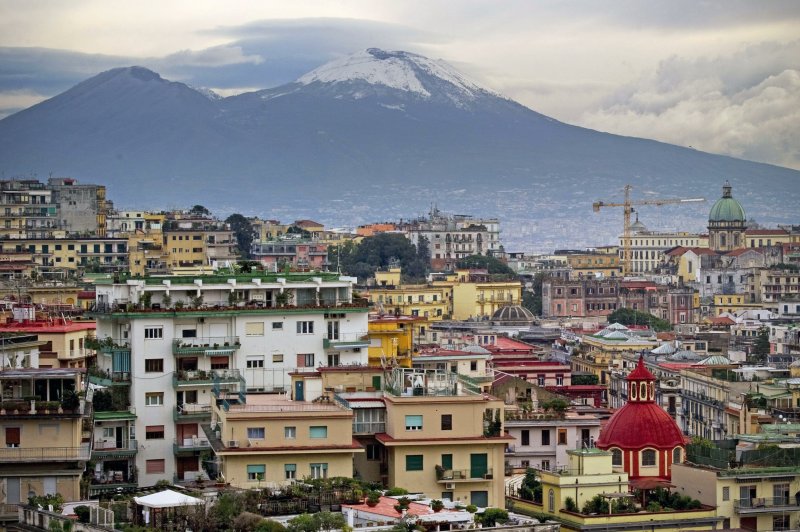
A view over Naples with a snow-capped Mount Vesuvius in the background. Scientists have successfully sequenced a genome from a man who died in the eruption of Mount Vesuvius over the ancient city of Pompeii for the first time. File Photo by Ciro Fusco/EPA-EFE

May 26 (UPI) -- Scientists were able to sequence the genome from a victim of the eruption of Mount Vesuvius, which leveled the ancient city of Pompeii, according to a study released Thursday.

A team led by Gabriele Scorrano, an assistant professor of geogenetics at the University of Copenhagen, extracted DNA from a man and a woman as part of its search for the first "Pompeian human genome," according to the study published in the journal Scientific Reports.

The scientists were only able to sequence the entire genome from the man due to gaps in the genome from the woman, resulting in a near-complete set of "genetic instructions" encoded in DNA extracted from their bodies.

"In the future many more genomes from Pompeii can be studied," Serena Viva, an archaeologist from the University of Salento and a member of the study team, told The Guardian. "The victims of Pompeii experienced a natural catastrophe, a thermal shock, and it was not known that you could preserve their genetic material. This study provides this confirmation, and that new technology on genetic analysis allows us to sequence genomes also on damaged material."

The bodies were first recovered in 1933 from what Pompeii archeologists have called Casa del Fabbro, or The Craftman's House.

They were found slumped in the corner of the dining room as if they were having lunch when the volcano erupted on Aug. 24, 79 A.D.

"From the positions [of their bodies] it seems they were not running away," Viva told the BBC. "The answer to why they weren't fleeing could lie in their health conditions."

Analysis found the man was between 35 and 40 years old and about 5 feet and 3 inches tall while the woman was 50 years old and about 5 feet tall.

The genetic study found that the man's skeleton contained DNA sequences that suggested he may have had tuberculosis before his death, while the woman is believed to have been affected by osteoarthritis.

"This could have been the reason for which they waited for it all to finish, maybe in the security of their home, compared to other victims who were fleeing and whose remains were found in open spaces," Viva said.
NASA Just Captured an Undersea Volcano Eruption, And They've Dubbed It 'Sharkcano'

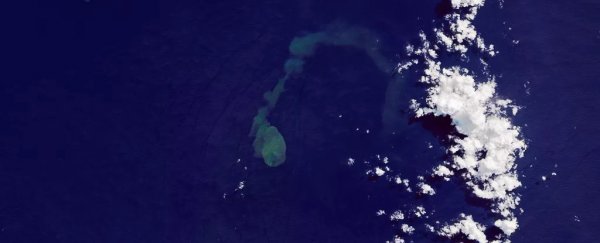
(NASA Earth Observatory images by Joshua Stevens, USGS Landsat data)
NATURE

JENNIFER NALEWICKI, LIVE SCIENCE
27 MAY 2022

Kavachi Volcano, an active submarine volcano in the Solomon Islands, has long been home to sharks. However their once-peaceful playground in the southwest Pacific Ocean recently became a bit less serene.

In recent months, NASA satellite images detected plumes of discolored water over the volcano – tell-tale signs of volcanic activity, hinting at multiple eruptions. The images were captured by the Operational Land Imager-2 (OLI-2) onboard the Landsat-9 satellite, according to the Smithsonian Global Volcanism Program.

NASA's Goddard Space Flight Center in Greenbelt, Maryland, shared the news over the weekend in a tweet that read, "You've heard of sharknado, now get ready for sharkcano."

The tweet also mentioned that Kavachi happens to be "one of the most active submarine volcanoes in the Pacific."

Related: Underwater volcano in Antarctica triggers 85,000 earthquakes

Researchers noticed changes in water color over the volcano in April and May, and the volcano likely began erupting as early as last October, according to a statement released by NASA's Earth Observatory. Prior to that, its most recent large eruptions took place in 2014 and 2007. (Records indicate that Kavachi's first recorded eruption occurred in 1939, with subsequent explosions creating ephemeral islands.)

Prior research conducted by the National Oceanic and Atmospheric Administration (NOAA) found that the volcano's plumes of warm, acidic water typically contain particulate matter, volcanic rock fragments and sulfur, the latter of which "attracts microbial communities that thrive on sulfur."

During a 2015 research expedition to Kavachi, scientists were surprised to discover that the volcano's crater also happens to be home to two types of sharks – hammerheads and silky sharks – despite the locale's turbulent history.

In a 2016 article in the journal Oceanography titled "Exploring the Sharkcano", researchers wrote that the presence of sharks in the crater raised "new questions about the ecology of active submarine volcanoes and the extreme environments in which large marine animals exist."

Kavachi's summit lies approximately 65 feet (20 meters) below sea level, with its base spreading across the seafloor at a depth of 0.75 miles (1.2 kilometers). The volcano is located approximately 15 miles (24 km) south of Vangunu Island, one of more than 900 islands that were formed in a tectonically active area and make up the Solomon Islands archipelago.

Residents of neighboring islands have reported that they regularly see steam and ash on the water's surface, further confirming that the so-called sharkcano is percolating beneath the surface.
RIP ROCK-ON IN POWER
Depeche Mode founding member Andy Fletcher dies aged 60
Cydney Yeates 
METRO.UK
© Provided by Metro Andy Fletcher has died aged 60 (Picture: Getty)

Depeche Mode’s Andy Fletcher has died aged 60, his bandmates have confirmed.

The keyboard player and DJ, who founded the electronic group in 1980, was described as having a ‘true heart of gold’.

‘We are shocked and filled with overwhelming sadness with the untimely passing of our dear friend, family member, and bandmate Andy “Fletch” Fletcher,’ a statement posted on Depeche Mode’s Instagram read.

‘Our hearts are with his family, and we ask that you keep them in your thoughts and respect their privacy in this difficult time,’ it added.

Depeche Mode was born in 1980 after Fletcher and his schoolmate Vince Clarke joined forces with Martin Gore and scouted Dave Gahan.

© Provided by Metro Fletcher founded Depeche Mode in 1980 (Picture: Getty)

Although Clarke left the band after the release of their debut album Speak And Spell in 1981, Fletcher continued as an active member and played the keyboard throughout their entire career.

The musician, along with Martin and Gore, released 17 albums with Depeche Mode. Their most recent album Spirit was released in 2017.

© Provided by Metro Depeche Mode’s Martin Gore (left), Dave Gahan (middle) and Andrew Fletcher (right) (Picture: AP)
© Provided by Metro The band described Fletcher as having a ‘heart of gold’ (Picture: Getty)

Fletcher was inducted into the Rock And Roll Hall Of Fame in 2020.

In a 2017 interview with The Skinny, the founder mused it was the ‘electricity’ between him and the rest of the band that made their work great.

He told the publication: ‘Martin and Dave live in the US and I live here, but it doesn’t really affect our relationships. Me and Martin are very close. Dave is more like a brother to me – if that makes sense.

© Provided by Metro Depeche Mode pictured in 1984 studio, with Dave (top left), Alan Wilder (top right), Andrew Fletcher (bottom right) and Martin Gore (bottom left) (Picture: Getty)

‘But what makes bands better than solo artists is the electricity that’s generated. Sometimes a band can’t stand each other but that electricity makes for great music.

‘It’s the same with Depeche Mode; we have moments where we don’t like each other, and moments when we love each other. It’s the electricity that’s generated between us all that produces the good music.’


Tributes have been flooding in for Fletcher, with The Cure drummer Lol Tolhurst writing: ‘Very sad news today. Andy Fletcher of Depeche Mode has passed.

‘I knew Andy and considered him a friend. We crossed many of the same pathways as younger men.

‘My heart goes out to his family, bandmates, and DM fans. RIP Fletch.’

Fletcher was born on July 8, 1961, in Nottingham. The eldest of four siblings, he became an active in the local Boys’ Brigade from an early age, primarily to play football.

It was in this Christian youth organisation that he met future Depeche Mode member Vince Clarke, and the two have both recollected in interviews the local missionary work they attempted on behalf of the group.

Fletcher is survived by his wife Grainne Mullan and their two children, Meghan and Joe.

GAIA LIVES
Tsunami advisory issued after 6.1-magnitude quake strikes off East Timor

A 6.1-magnitude earthquake struck off the coast of East Timor today. — Reuters pic
Follow us on
  Instagram, subscribe to our Telegram channel and browser alerts for the latest news you need to know.

Friday, 27 May 2022 12:04 PM MYT

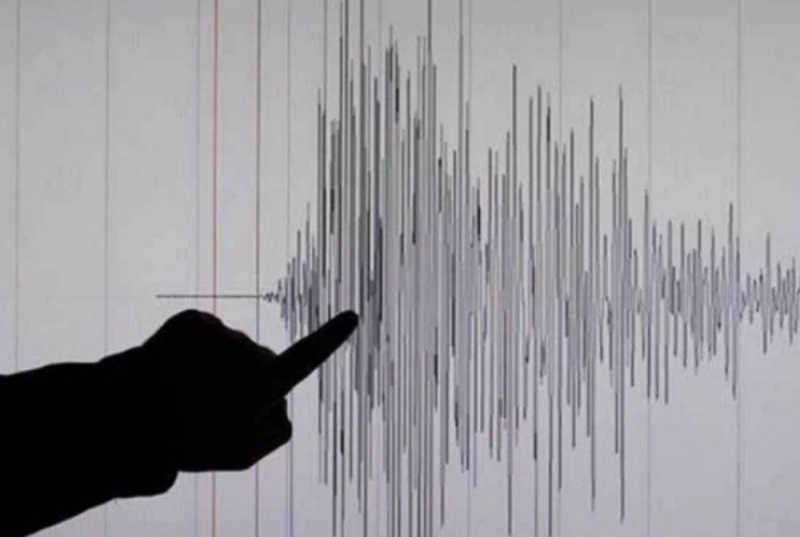
DILI, May 27 — A 6.1-magnitude earthquake struck off the coast of East Timor on Friday, the US Geological Survey said, although there were no immediate reports of damage.


A tsunami advisory group said the quake “may be capable of generating a tsunami affecting the Indian Ocean region”.

The USGS said the quake struck at a depth of 51.4 kilometres (32 miles) off the eastern tip of Timor Island, which is split between East Timor and Indonesia.

The Indian Ocean Tsunami Warning and Mitigation System (IOTWMS) issued the tsunami warning for the region.

An AFP journalist in the East Timor capital Dili felt the earthquake, but said it was “very quick”.

“People went about their activities as usual,” the journalist said.

East Timor and Indonesia sit on the Pacific “Ring of Fire”, an arc of intense seismic activity that stretches through South-east Asia and across the Pacific basin.

In February, a 6.2-magnitude quake killed a dozen people when it struck Indonesia’s North Sumatra.

In 2004, a 9.1-magnitude quake hit the coast of Sumatra and triggered a tsunami that killed 220,000 people throughout the region, including about 170,000 in Indonesia.

East Timor has a population of 1.3 million and is South-east Asia’s youngest country, recently celebrating the 20th anniversary of its independence from Indonesia.

The mostly rural country’s economy has been badly hit by the Covid-19 pandemic, with the World Bank saying 42 per cent of the population live below the poverty line. — AFP
CRIMINAL CAPITALI$M
Elon Musk sued by Twitter shareholder, alleging that he manipulated the company's stock price with his tweets following the buyout agreement


A Twitter investor is suing Elon Musk for market manipulation for his tweets about the buy being "on hold."


The complaint was filed in California on Wednesday.

"Just because your name is Business Insider Trading doesn't mean you should project that on others!" Musk told Insider in an email.


A Twitter shareholder is suing Elon Musk and Twitter over Musk's tweets following his agreement to buy the company last month.

The proposed class-action suit, filed in a federal district court in San Francisco on Wednesday, alleges that Musk manipulated the value of the social media company via his tweets, which hurt investors and employees.


The suit focuses mainly on Musk's tweet earlier this month that the deal was "on hold" until he could be sure that Twitter's reported figure that fewer than 5% of the the platform's accounts comprised spam bots is accurate.

"Musk's tweet (and public statement) was misleading and constituted an effort to manipulate the market for Twitter shares as he knew all about the fake accounts," the complaint says.


The complaint argues that Musk used tweets about spam bots to lower Twitter's stock price so he could renegotiate the price of the deal.

"Musk's market manipulation worked -- Twitter has lost $8 billion in valuation since the buyout was announced," the complaint says.

Twitter shares have fallen more than 19% to below $40 from where they traded the day before Musk announced a deal to take the company private in a buyout worth $54.20 a share.

Twitter didn't immediately respond for comment, but via email Musk replied:

"Just because your name is Business Insider Trading doesn't mean you should project that on others!"

The complaint further argues that Musk made his tweets and public comments to help ease the pressure from a planned loan backed by his Tesla equity that was originally meant to add to financing the Twitter deal, which he dropped this week, the WSJ reported.

Tyson Redenbarger, partner at Cotchett, Pitre & McCarthy, one of the plaintiff's lawyers on the case, described the complaint as "as simple as it sounds." The California statute the complaint cited prohibits market manipulation, and "what we allege in the complaint is it's clear this is exactly what has happened," he added.

Elon Musk sued by Twitter investors for delaying disclosure of stake


Investors say Musk saved himself $156m by failing to disclose that he had purchased more than 5% of Twitter by 14 March


‘By delaying his disclosure of his stake in Twitter, Musk engaged in market manipulation and bought Twitter stock at an artificially low price.’ 


Reuters
Thu 26 May 2022 

Elon Musk was sued by Twitter investors for delaying the disclosure of his stake in the company, as the Tesla owner mounts a $44bn takeover bid for the social media platform.

The investors said Musk saved himself $156m by failing to disclose that he had purchased more than 5% of Twitter by 14 March.

Musk continued to buy stock after that, and ultimately disclosed in early April that he owned 9.2% of the company, according to the lawsuit, filed on Wednesday in San Francisco federal court.

“By delaying his disclosure of his stake in Twitter, Musk engaged in market manipulation and bought Twitter stock at an artificially low price,” said the investors, led by Virginia resident William Heresniak.

Neither Musk nor his lawyer immediately responded to requests for comment. Twitter declined to comment.

The investors said the recent drop in Tesla’s stock has put Musk’s ability to finance his acquisition of Twitter in “major peril” since he has pledged his shares as collateral to secure the loans he needs to buy the company.

Tesla’s shares were trading around $700 on Thursday, down from above $1,000 in early April.

The timing of Musk’s disclosure of his stake has already triggered an investigation by the US Securities and Exchange Commission (SEC), the Wall Street Journal reported earlier this month.

Musk on Wednesday pledged an additional $6.25bn in equity financing to fund his bid for Twitter, a sign he is working to complete the deal even though he last week conditioned its progress on Twitter presenting proof that spam bots accounted for less than 5% of its users.

In Wednesday’s suit, the investors asked to be certified as a class and to be awarded an unspecified amount of punitive and compensatory damages.