Friday, May 27, 2022

Race, ethnicity, and poverty linked to worse outcomes in children treated for high-risk neuroblastoma


Cancer of immature nerve cells arising from the adrenal gland, nerve ganglia or the neck. This causes abdominal pain, diarrhea or constipation, lumps of tissue under the skin, wheezing and weight loss.
Condition Highlight
Urgent medical attention is usually recommended by healthcare providers
Condition Highlight
Can be dangerous or life threatening if untreated
How common is condition?
Very rare (Fewer than 1,000 cases per year in Canada)
Is condition treatable?
Treatable by a medical professional
Does diagnosis require lab test or imaging?
Requires lab test or imaging
Time taken for recovery
Can last several years or be lifelong
Condition Image

Reports and Proceedings

DANA-FARBER CANCER INSTITUTE

BOSTON - Children with high-risk neuroblastoma had worse outcomes if they were from certain racial/ethnic groups or were on public rather than private insurance, despite being treated in clinical trials with standardized protocols, according to a study led by investigators from Dana-Farber/Boston Children’s Cancer and Blood Disorders Center.

The study shows that young patients from historically marginalized populations or from lower-income backgrounds had poorer five-year survival rates even when they were assigned to receive uniform initial treatment after diagnosis with high-risk neuroblastoma.

“These findings recapitulate what we have known for decades at the population level—children from historically marginalized groups are less likely to survive their cancer,” said Puja J. Umaretiya, MD, a clinical fellow in pediatric hematology/oncology at Dana-Farber/Boston Children’s. “They add an essential next layer to our understanding of racial and ethnic disparities in childhood cancer, and that is that enrollment on clinical trials is not enough to achieve racial and ethnic equity in survival.” Umaretiya is presenting the study results at the American Society of Clinical Oncology (ASCO) Annual meeting, being held June 3-7, 2022, and the study is included in the ASCO press program.

“Clinical trials represent highly standardized care – yet even when receiving care on clinical trials, children with high-risk neuroblastoma do not experience the same outcomes based on their race, ethnicity, and whether they live in poverty,” said Umaretiya, lead author of the study. “This is key, because thus far attention has been paid to getting historically marginalized groups to trials with the assumption that this will reduce survival disparities, but our data suggest that in pediatrics, trial-enrollment is a first step, but clearly not a sufficient one.”

Senior author is Kira Bona, MD, MPH, a pediatric oncologist at Dana-Farber/Boston Children’s with research focused on identifying poverty-associated outcome disparities in childhood cancer and developing interventions to mitigate those disparities.

Bona notes, “That stark racial/ethnic disparities in survival persist despite clinical trial participation makes it crystal clear that pediatric oncology trials must incorporate health equity interventions. If a new gene mutation were found to increase risk for trial-enrolled patients, pediatric oncology would not hesitate to begin intervening. That same urgency must apply to these data. It is imperative that pediatric oncologists begin to test healthcare delivery and supportive care interventions in our trials just like we do new drugs.”

The study looked at outcomes in 696 children enrolled in three Children’s Oncology Group (COG) clinical trials of treatment for high-risk neuroblastoma. Neuroblastoma is a type of cancer that forms in nerve tissue. It frequently begins in one of the adrenal glands but can also originate in the neck, chest, abdomen, or spine. High-risk disease is defined by age, how widely the disease has spread, and biologic characteristics of the cancer cells. The prognosis for long-term survival remains challenging. Treatment is usually an intensive combination of chemotherapy, surgery, stem cell transplantation, radiation, and immunotherapy.

Of the 696 patients in the COG trials, 11% were Hispanic, 16% were Black non-Hispanic, 4% were other non-Hispanic, and 69% were white non-Hispanic. One-third of the children were household poverty-exposed (covered by public insurance); 26% were exposed to neighborhood level poverty (living in a high-poverty ZIP code defined by 20% or more of the population living below the federal poverty line).

The five-year overall survival rate varied by race/ethnicity (47% for Hispanic children; 50% for other non-Hispanic children; 61% for white non-Hispanic children; and 63% for Black non-Hispanic children.) After adjusting for disease-associated factors, Hispanic children were 1.8 times more likely to die and other non-Hispanic patients were 1.5 times more likely to die than white non-Hispanic children.

Patients who had only public insurance (a proxy for household poverty) had a 53% five-year survival rate compared to 63% for others.  The survival rate was also lower – 54% -- in children living in neighborhood level poverty compared with 62% for others.

 “A huge strength of the way that this dataset was created is that we have the ability to look at potential mechanisms that may explain these survival disparities,” said Umaretiya. “For the first time, we will be able to ask whether certain groups experienced delays in therapy or were more likely to stop participating in trials perhaps because of competing family needs secondary to poverty. Most importantly, we will be able to start to look at what happens after relapse – a time when we know treatment becomes less standardized, which may increase the chance that racial, ethnic, or socioeconomic privilege helps some families access life-extending therapy for their children while others are less able to. Understanding what happens after relapse will be essential to guiding interventions to improve survival disparities and we are excited to take this on next.”

About Dana-Farber/Boston Children's Cancer and Blood Disorders Center

Dana-Farber/Boston Children's Cancer and Blood Disorders Center – one of the nation's top pediatric cancer centers, according to U.S. News & World Report – brings together two internationally known research and teaching institutions that have provided comprehensive care for pediatric oncology and hematology patients since 1947. The Harvard Medical School affiliates share a clinical staff that delivers inpatient care at Boston Children's Hospital and most outpatient care at Dana-Farber Cancer Institute. Follow the center on Twitter at @DFBC_PedCare.

UK’s first and only research Centre dedicated to placing empathy at the heart of healthcare

The incoming director of a major new research and teaching Centre has described the urgent need to place empathy at the heart of healthcare.

Business Announcement

UNIVERSITY OF LEICESTER

Professor Jeremy Howick 

IMAGE: PROFESSOR JEREMY HOWICK, INCOMING DIRECTOR OF THE STONEYGATE CENTRE FOR EXCELLENCE IN EMPATHIC HEALTHCARE, BASED AT THE UNIVERSITY OF LEICESTER. view more 

CREDIT: UNIVERSITY OF LEICESTER

The incoming director of a major new research and teaching Centre has described the urgent need to place empathy at the heart of healthcare.

Professor Jeremy Howick will join the University of Leicester as the first director of the Stoneygate Centre for Excellence in Empathic Healthcare this June. His research shows that empathic care reduces patient pain while improving their satisfaction with care and quality of life.

Also, whereas the side effects of many medical interventions can be harmful, the side effects of empathy are that it reduces anxiety and improves a practitioner’s own sense of self-satisfaction with their careers. Professor Howick said:

“People go into the medical profession because they care about people, yet a lot of the time their motivation is forgotten amidst the need to memorise facts for exams and, after they qualify, filling out forms.”

With over 100 peer-reviewed publications, three books, and regular media appearances, Professor Howick has an established track record of research and teaching in evidence-based medicine, placebo effects, and empathy. He joins Leicester having directed the Oxford University Empathy Programme. He added:

“Medical Schools have long-recognised the importance of communication skills, but this Centre will be pivotal in breaking down the perceived separation between good communication and the ‘objective’ knowledge of human bodies and what to prescribe them.”

The unique £10m Stoneygate Centre for Excellence in Empathic Healthcare, co-funded by the University and The Stoneygate Trust, will provide the resources required to embed empathy into the core of the Medical School curriculum, and then expand it across the UK and beyond. The Centre will officially launch in autumn later this year.

It will build on the empathy curriculum delivered to Leicester Medical School’s Foundation Year students, also supported by the Stoneygate Trust. The training is planned to include inviting students to experience healthcare first-hand – for example, through spending the night as a patient – to extending and enhancing the use of expert patients and scenario-based learning with actors.

The Stoneygate Trust is a charity established in 2007 by Sir Will and Lady Nadine Adderley, with a particular focus on medical research and helping to support equal educational opportunities for economically disadvantaged children and students.

AI learns coral reef 'song'

Peer-Reviewed Publication

UNIVERSITY OF EXETER

A healthy coral reef 

IMAGE: A HEALTHY CORAL REEF IN SULAWESI, INDONESIA view more 

CREDIT: TIM LAMONT

Artificial Intelligence (AI) can track the health of coral reefs by learning the "song of the reef", new research shows.

Coral reefs have a complex soundscape – and even experts have to conduct painstaking analysis to measure reef health based on sound recordings.

In the new study, University of Exeter scientists trained a computer algorithm using multiple recordings of healthy and degraded reefs, allowing the machine to learn the difference.

The computer then analysed a host of new recordings, and successfully identified reef health 92% of the time.

The team used this to track the progress of reef restoration projects.

"Coral reefs are facing multiple threats including climate change, so monitoring their health and the success of conservation projects is vital," said lead author Ben Williams.

"One major difficulty is that visual and acoustic surveys of reefs usually rely on labour-intensive methods.

"Visual surveys are also limited by the fact that many reef creatures conceal themselves, or are active at night, while the complexity of reef sounds has made it difficult to identify reef health using individual recordings.

"Our approach to that problem was to use machine learning – to see whether a computer could learn the song of the reef.

"Our findings show that a computer can pick up patterns that are undetectable to the human ear. It can tell us faster, and more accurately, how the reef is doing."

The fish and other creatures living on coral reefs make a vast range of sounds.

The meaning of many of these calls remains unknown, but the new AI method can distinguish between the overall sounds of healthy and unhealthy reefs.

The recordings used in the study were taken at the Mars Coral Reef Restoration Project, which is restoring heavily damaged reefs in Indonesia.

Co-author Dr Tim Lamont, from Lancaster University, said the AI method creates major opportunities to improve coral reef monitoring.

"This is a really exciting development. Sound recorders and AI could be used around the world to monitor the health of reefs, and discover whether attempts to protect and restore them are working," Dr Lamont said.

"In many cases it's easier and cheaper to deploy an underwater hydrophone on a reef and leave it there than to have expert divers visiting the reef repeatedly to survey it – especially in remote locations."

The study was funded by the Natural Environment Research Council and the Swiss National Science Foundation.

The paper, published in the journal Ecological Indicators, is entitled: "Enhancing automated analysis of marine soundscapes using machine learning to combine ecoacoustic indices."

CAPTION

A damaged coral reef in Sulawesi, Indonesia

CREDIT

The Ocean Agency


CAPTION

Coral attached to a Reef Star on a newly restored reef

CREDIT

Tim Lamont

Putin masking invasion policies with 1990s humanitarian propaganda, finds extensive analysis

A Russia-NATO expert analyses foreign policy statements from the USSR collapse, until the current day, to provide new insight

Peer-Reviewed Publication

TAYLOR & FRANCIS GROUP

Russia is reinventing decades-old propaganda based on supposed humanitarian principles to justify its invasion of Ukraine, according to research published in the peer-reviewed journalThe International Spectator.

Carried out by an expert on Russia-NATO relations, this extensive analysis of Russia’s official foreign policy statements since the USSR’s collapse provides new insights into Vladimir Putin’s tactics regarding separatism.

The research identifies attempts by officials to mask a policy change from intervention to invasion towards former Soviet republics. This shift is apparent from 2008 – when Russian forces went into Georgia – according to the study which covers the years after the Soviet Union’s collapse until present day.

The study has been conducted by Dr Vasile Rotaru, from the Department of International Relations and European Integration, at the National University of Political Studies and Public Administration, Bucharest, in Romania.

His findings demonstrate that the Kremlin has used narratives from the 1990s to claim Russian minorities need protecting with military support. A former research fellow at the NATO Defence College, Dr Rotaru also states that his analysis highlights how Russia has embellished rhetoric used in the years after the USSR’s dissolution to legitimise a new more aggressive approach towards secessionist conflicts.

“The narratives post-2008 seek to present themselves as consistent with the past,” says Dr Rotaru, who specialises in Russian foreign policy, the former Soviet region, the Eastern Partnership, and the Eurasian Economic Union.

“The aim is inducing the perception that Russia’s strategy towards the secessionist conflicts…has remained the same. That is, supporting the separatist regions militarily with the proclaimed aim of protecting the Russian minority living in those regions.

“By using the arguments emerged already in the 1990s, the Kremlin suggests the continuity of its strategy towards separatist conflicts.

“However, empirical evidence has shown that since 2008 Moscow has not simply intervened in secessionist territories to put pressure on central governments of other post-Soviet states. It has also not abstained from direct invasion to control the foreign policy of the countries in its neighbourhood.”

Russia’s invasion of Ukraine has triggered international condemnation and fears of a Third World War.

This military action is the latest carried out by Russia in post-Soviet republics – known as ‘the near abroad’ – since the dissolution of the USSR in 1991.

The study findings are based on a review of written documents, and audio and video records by Russian foreign policy-makers.

The author analysed statements regarding the country’s position towards secessionist conflicts. These include in South Ossetia, Crimea, Donbas, and preliminary evidence on the Russia-Ukraine war.

The study author investigated both similarities and differences between official Russian narratives. These related to conflicts in the 1990s when the USSR was breaking up, and post 2008. 

They reveal that the humanitarian narratives from the 1990s and post 2008 share common patterns. Both relate to sovereignty and territorial integrity; the right to self-determination; and the illegitimacy of central authority.

Examples include references to Ukrainian authorities as ‘Neo-Nazis and Banderovtsy’ in the context of the recognition of the independence of the Lugansk and Donetsk regions and the invasion of Ukraine.

However, the study highlights that foreign policy statements post 2008 also cite historical injustices, and invoke the Kosovo precedent (the country’s independence from Serbia) which President Putin has used to justify Russia’s annexation of the Crimea.

In addition, the legality of Russia’s actions is presented as a humanitarian feature of foreign policy with the Ukraine invasion deemed in accordance with international law.

Overall, the authors conclude post-2008 narratives are more coherent. They attribute this to power being regained by former members of the Soviet leadership – those trained during the Cold War – without much opposition and with Putin’s backing.

Scientists shine new light on role of Earth's orbit in the fate of ancient ice sheets

ice sheet
Credit: Pixabay/CC0 Public Domain

In a new study published today in the journal Science, the team from Cardiff University has been able to pinpoint exactly how the tilting and wobbling of the Earth as it orbits around the Sun has influenced the melting of ice sheets in the Northern Hemisphere over the past 2 million years or so.

Scientists have long been aware that the waxing and waning of massive Northern Hemisphere ice sheets results from changes in the geometry of Earth's orbit around the Sun.

There are two aspects of the Earth's geometry that can influence the melting of ice sheets: obliquity and precession.

Obliquity is the angle of the Earth's tilt as it travels around the Sun and is the reason why we have different seasons.

Precession is how the Earth wobbles as it rotates, much like a slightly off-center spinning top. The angle of this wobble means that sometimes the Northern Hemisphere is closest to the Sun and other times the Southern Hemisphere is closest, meaning that roughly every 10,000 years one hemisphere will have warmer summers compared to the other, before it switches.

Scientists have determined that over the past million years or so, the combined effects of obliquity and precession on the waxing and waning of Northern Hemisphere ice sheets has resulted, through complicated interactions within the climate system, in ice age cycles lasting approximately 100 thousand years.

However, before 1 million years ago, in a period known as the early Pleistocene, the duration of ice age cycles was controlled only by obliquity and these ice age cycles were almost exactly 41,000 years long.

For decades, scientists have been puzzled as to why precession did not play a more important part in driving ice age cycles during this period.

In their new study, the Cardiff University team reveal new evidence suggesting that precession did actually play a role during the early Pleistocene.

Their results show that more intense summers, driven by precession, have always caused Northern Hemisphere ice sheets to melt, but before 1 million years ago, these events were less devastating and did not lead to the complete collapse of ice sheets.

Lead author of the study Professor Stephen Barker, from Cardiff University's School of Earth and Environmental Sciences, says that "early Pleistocene ice sheets in the northern  were smaller than their more recent counterparts, and limited to  where the effects of obliquity dominate over precession. This probably explains why it has taken so long for us to find evidence of  forcing during early Pleistocene."

"These findings are the culmination of a major effort, involving more than 12 years of painstaking work in the laboratory to process nearly 10,000 samples and the development of a range of new analytical approaches. Thanks to this we can finally put to rest a long-standing problem in paleoclimatology and ultimately contribute to a better understanding of Earth's climate system."

"Improving our understanding of Earth's climate dynamics, even in the remote past, is crucial if we hope to predict changes over the next century and beyond. Ongoing changes may be manmade, but there's only one climate system and we need to understand Earth's orbit affects millennial climate variability

More information: Stephen Barker et al, Persistent influence of precession on northern ice sheet variability since the early Pleistocene, Science (2022). DOI: 10.1126/science.abm4033. www.science.org/doi/10.1126/science.abm4033

Journal information: Science 

Provided by Cardiff University 

Arc volcanoes are wetter than previously thought, with scientific and economic implications

magma
Credit: Pixabay/CC0 Public Domain

The percentage of water in arc volcanoes, which form above subduction zones, may be far more than many previous studies have calculated.

This increased amount of water has broad implications for understanding how Earth's lower  forms, how magma erupts through the crust, and how economically important mineral ore deposits form, according to a new paper published in Nature Geoscience.

The estimated water concentrations in primitive arc magmas from this study are more variable and significantly higher than the average of about four weight percent of water found in other studies, according to the paper. The results show that primitive arc magmas may contain ~0.6–10wt% H2O and may reach H2O saturation of ~20wt% H2O after extensive crystal fractionation in the lower arc crust, the paper adds.

"The big picture here is that water is essentially the lubricant of plate tectonics. The  is going to affect all sorts of different parameters involved in how tectonic plates move," says lead author Benjamin Urann, who was a doctoral student in the Massachusetts Institute of Technology (MIT)—WHOI Joint Program in Oceanography/Applied Ocean Science and Engineering at the time of the study.

"Being able to get some idea of what the actual water content of the arc magmas is, which is what we did in this study, can help refine estimates of how much water is being subducted deep into the mantle globally; quantify different water reservoirs on Earth, including surface and deep water reservoirs; and better understand the transport between these different reservoirs," says Urann, who is currently a National Science Foundation Ocean Sciences Postdoctoral Research Fellow at the University of Wyoming. Urann added that the paper also discusses the implications of water content for forming economically important ore deposits, such as porphyry copper deposits. These deposits make up about 60% of the world's source of copper, according to the U.S. Geological Survey.

Many earlier studies have relied on techniques such as measuring melt inclusions—which are tiny droplets of magma that have been trapped by a crystals that grows around them—and measuring lava and other volcanic deposits that have erupted to the Earth's surface. "However, these methods have inherent limitations that obfuscate the full range of H2O in arc magmas," the paper states.

Urann and his Ph.D. supervisor, Véronique Le Roux, who is a co-author of the paper, developed methods with the Secondary Ion Mass Spectrometry instrument located at WHOI to measure water content in minerals, with their work building on other efforts that suggested that arc magmas should contain significantly more H2O than inferred from melt-inclusion measurements.

The researchers determined that instead of examining lava samples that have erupted to the Earth's surface, it would be fruitful to examine deep crustal magmas that have not lost too much of their water content.

"Although you can't retrieve the liquid magma at these depths, what you may be able to sample is a cumulate: it is magma that has solidified at depth in the crust. We're lucky enough that sometimes with plate tectonics, some of those really deep crusts are exhumed at the surface," says Le Roux, associate scientist in the Geology and Geophysics department at WHOI, and Faculty member of the MIT-WHOI Joint Program. The researchers used cumulates that the paper's co-authors had collected from the Kohistan paleo-arc terrane in the Himalaya Mountain range in northwestern Pakistan.

Instead of examining surface rocks that travel far up through the crust as magma, and lose much of their water content in the process, the researchers examined magma—lower crustal cumulates—that had crystallized deep down in the crust at a high enough pressure to retain their original water content signature.

Le Roux says that "analyzing water in cumulate minerals is a new promising approach to access the deep levels of the crust in ."

The researchers calculated that the magma they analyzed contained between 10-20 weight percent of water depending on the 's composition. "While this weight percent of water had been predicted experimentally as being possible, it had never been shown on natural samples," Le Roux said.

"The bottom line is that arc magmas can be wetter than we thought," said Urann.Advanced computer simulations reveal intriguing insights on magma deep below Earth's surface

More information: Benjamin Urann, High water content of arc magmas recorded in cumulates from subduction zone lower crust, Nature Geoscience (2022). DOI: 10.1038/s41561-022-00947-w. www.nature.com/articles/s41561-022-00947-w

Journal information: Nature Geoscience 

Provided by Woods Hole Oceanographic Institution 

Study of North Pacific 'garbage patch' shows abundance of neuston organisms

Study of North Pacific “garbage patch” shows abundance of neuston
Credit: Cosimosal.b, CC BY-SA 4.0

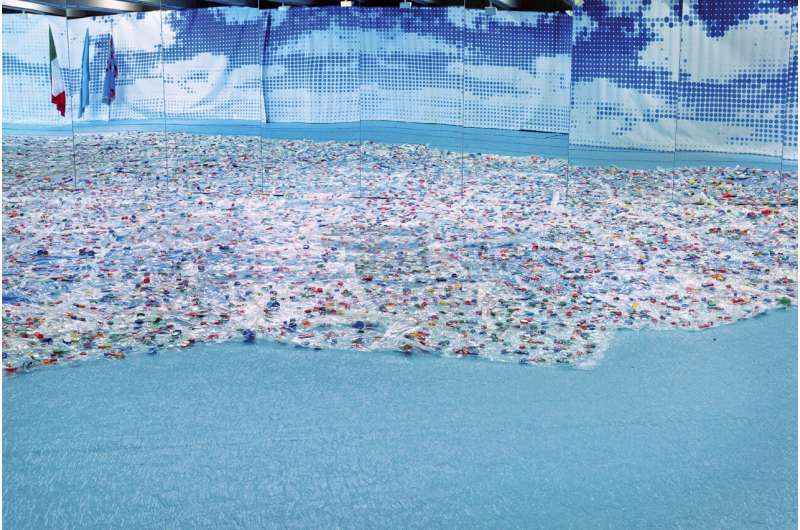
A team of researchers from the U.K. and the U.S. has found that in addition to human garbage, the North Pacific "garbage patch" also has an abundance of neuston organisms. In their paper posted on the bioRxiv site, the group describes their study of material in the patch of sea and what sorts of creatures they found living in it.

Prior research has shown that there is an abundance of neuston in the Subtropical North Atlantic Gyre, which forms the Sargasso Sea—parts of which have been labeled the North Atlantic garbage patch, due to the huge amounts of human garbage that has accumulated there. Neuston is a term that has been coined to refer to floating lifeforms on the sea surface, and a  is a spiral or vortex, where water turns like clouds in a hurricane only much more slowly. Because the spinning is in the form of a vortex, material at the outer edge is pulled toward the center, which is why neuston and garbage tend to coalesce in them. In this new effort, the researchers wondered if there were similar numbers of neuston in the North Pacific Subtropical Gyre, which has over time come to be called the North Pacific  (NPGP) due to the large amount of human garbage floating in its center.

The work by the team was called the Vortex Swim—a sailing expedition in the NPGP that lasted for 80 days. The route taken by the I Am Ocean sailing vessel, was plotted using a numerical drift model—the team wanted to see what sorts of creatures were living among the densest parts of the garbage in the patch. As the ship sailed, a trawling device was dragged along behind to capture living creatures. The team also attached a General Oceanics Mechanical Flowmeter to the trawl to measure the volume of water in which the specimens were found.

In all the team collected 22 samples, 12 from inside the central gyre and 10 from outside, for comparison purposes. Specimens in the samples were identified and counted as were garbage samples. In studying the samples, the researchers found that as with the Atlantic Gyre, large numbers of neuston in the NPGP were concentrated near its center. They also found that concentrations of neuston were in the same proportions as the garbageHow does plastic debris make its way into ocean garbage patches?

More information: Fiona Chong et al, High Concentrations of floating life in the North Pacific Garbage Patch, bioRxiv (2022). DOI: 10.1101/2022.04.26.489631

© 2022 Science X Network

More reptile species may be at risk of extinction than previously thought

Machine learning tool estimates extinction risk for species previously unprioritized for conservation

Peer-Reviewed Publication

PLOS

More reptile species may be at risk of extinction than previously thought 

IMAGE: POTAMITES MONTANICOLA, CLASSIFIED AS ‘CRITICALLY ENDANGERED’ BY AUTOMATED THE ASSESSMENT METHOD AND AS ‘DATA DEFICIENT’ BY THE IUCN RED LIST OF THREATENED SPECIES. view more 

CREDIT: GERMÁN CHÁVEZ, WIKIMEDIA COMMONS (CC-BY 3.0, HTTPS://CREATIVECOMMONS.ORG/LICENSES/BY/3.0)

The iconic Red List of Threatened Species, published by the International Union for Conservation of Nature (IUCN), identifies species at risk of extinction. A study in PLOS Biology publishing May 26th by Gabriel Henrique de Oliveira Caetano at Ben-Gurion University of the Negev, Israel, and colleagues present a novel machine learning tool for assessing extinction risk, and then use this tool to show that reptile species which are unlisted due to lack of assessment or data are more likely to be threatened than assessed species.

The IUCN’s Red List of Threatened Species is the most comprehensive assessment of the extinction risk of species and informs conservation policy and practices globally. However, the process for categorizing species is laborious and subject to bias, depending heavily on manual curation by human experts; many animal species have therefore not been evaluated, or lack sufficient data, creating gaps in protective measures.

To assess 4,369 reptile species that were previously unable to be prioritized for conservation and develop accurate methods for assessing the extinction risk of obscure species, these researchers created a machine learning computer model. The model assigned IUCN extinction risk categories to the 40% of the world’s reptiles that lacked published assessments or are classified as “DD” (“Data Deficient”) at the time of the study. The researchers validated the model’s accuracy, comparing it to the Red List risk categorizations.

The researchers found that the number of threatened species is much higher than reflected in the IUCN Red List and that both unassessed (“Not Evaluated” or “NE”) and Data Deficient reptiles were more likely to be threatened than assessed species. Future studies are needed to better understand the specific factors underlying extinction risk in threatened reptile taxa, to obtain better data on obscure reptile taxa, and to create conservation plans that include newly identified, threatened species.

According to the authors, “Altogether, our models predict that the state of reptile conservation is far worse than currently estimated, and that immediate action is necessary to avoid the disappearance of reptile biodiversity. Regions and taxa we identified as likely to be more threatened should be given increased attention in new assessments and conservation planning. Lastly, the method we present here can be easily implemented to help bridge the assessment gap on other less known taxa”.

Coauthor Shai Meiri adds, “Importantly, the additional reptile species identified as threatened by our models are not distributed randomly across the globe or the reptilian evolutionary tree. Our added information highlights that there are more reptile species in peril – especially in Australia, Madagascar, and the Amazon basin – all of which have a high diversity of reptiles and should be targeted for extra conservation effort. Moreover, species rich groups, such as geckos and elapids (cobras, mambas, coral snakes, and others), are probably more threatened than the Global Reptile Assessment currently highlights, these groups should also be the focus of more conservation attention”

Coauthor Uri Roll adds, “Our work could be very important in helping the global efforts to prioritize the conservation of species at risk – for example using the IUCN red-list mechanism. Our world is facing a biodiversity crisis, and severe man-made changes to ecosystems and species, yet funds allocated for conservation are very limited. Consequently, it is key that we use these limited funds where they could provide the most benefits. Advanced tools- such as those we have employed here, together with accumulating data, could greatly cut the time and cost needed to assess extinction risk, and thus pave the way for more informed conservation decision making.”

#####

In your coverage, please use this URL to provide access to the freely available paper in PLOS Biology:   http://journals.plos.org/plosbiology/article?id=10.1371/journal.pbio.3001544

Citation: Caetano GHdO, Chapple DG, Grenyer R, Raz T, Rosenblatt J, Tingley R, et al. (2022) Automated assessment reveals that the extinction risk of reptiles is widely underestimated across space and phylogeny. PLoS Biol 20(5): e3001544. https://doi.org/10.1371/journal.pbio.3001544

Author Countries: Israel, Australia, United Kingdom, United States of America

Funding: This work has been funded by the Israel Science Foundation grant Num. 406/19 to SM & UR (https://www.isf.org.il/). This work has been funded by the German-Israeli Foundation for Scientific Research and Development Num. I-2519-119.4/2019 to UR (https://www.gif.org.il/). It has also been partially funded by Australian Research Council grant num. FT200100108 to DGC (https://www.arc.gov.au/). We also thank the Australian Friends of Tel Aviv University–Monash University (‘AFTAM’) Academic Collaborative Awards Program for funding this research to SM & DGC. The funders had no role in study design, data collection and analysis, decision to publish, or preparation of the manuscript.

COLLECTIVISM IN ACTION

Professional ‘guilds’ of bacteria gave rise to the modern microbiome

Even the smallest marine invertebrates—some barely larger than single-celled protists—are home to distinct and diverse microbial communities, or microbiomes, according to new research from University of British Columbia (UBC) biologists.

Peer-Reviewed Publication

UNIVERSITY OF BRITISH COLUMBIA

Collecting marine invertebrate samples off Calvert Island, British Columbia, Canada 

IMAGE: UNIVERSITY OF BRITISH COLUMBIA EVOLUTIONARY MICROBIOLOGISTS COLLECTING MARINE INVERTEBRATE SAMPLES OFF CALVERT ISLAND, BRITISH COLUMBIA, CANADA. CREDIT: UNIVERSITY OF BRITISH COLUMBIA. view more 

CREDIT: UNIVERSITY OF BRITISH COLUMBIA.

Even the smallest marine invertebrates—some barely larger than single-celled protists—are home to distinct and diverse microbial communities, or microbiomes, according to new research from University of British Columbia (UBC) biologists.

The study underscores that a vast diversity of animals have microbiomes, just as humans do. But more surprisingly, theres little correlation between how closely related most animals are and how similar their microbiomes are—something widely assumed to be true based on the study of humans, larger mammals, and insects.

This says a lot about how microbiomes originated and how they evolve today,” says UBC evolutionary microbiologist Dr. Patrick Keeling, senior author of the paper published today in Nature Microbiology.

"People might intuitively think the purpose of a microbiome is to be of benefit to the host animal, and that they co-evolve together. But the bacteria could care less about helping the animal host—they have their own agenda.”

Most animals harbour a community of bacteria that are simply good at living in animals. From this ‘professional guild’ of animal specialists likely evolved the more elaborate, co-evolving microbiomes that are well studied in humans and insects. But as we looked at a broader set of smaller marine animals, it became clear that the microbiomes of bigger creatures are likely exceptions, not the rule.”

The team found the microbiomes of the tiny creatures differ from the microbes living in the surrounding environment, and often differed from the microbiome of even closely related invertebrates.

Digging into the microbiomes of marine invertebrates

In what might be the broadest study of its kind, Dr. Keeling and colleagues sequenced the microbiomes from 1,037 animals from 21 phyla – covering most animals. Some of the lineages of animals sampled more broadly included Annelida (ringed worms), Arthropoda (the largest phylum in the animal kingdom) and Nematoda (a phylum of unsegmented, cylindrical worms). The researchers also collected samples from the surrounding habitats in British Columbia, Canada and Curaçao, a Dutch Caribbean island.

“Studying such a broad range of animals was crucial–in a smaller study a number of prevalent bacteria may have been mistaken for host-specific symbionts,” says Dr. Corey Holt, a postdoctoral fellow at UBC and one of the study’s first authors.

“We found most bacteria were only present in some individuals of a species, and most of these were also present other host species in the same environment.”

Exploring evolutionary time scales

“This survey was designed to look at an incredibly broad diversity of animals,” says Dr. Keeling. “The next step is to take a few of the more interesting groups and dig deeper to see how microbiomes evolved within that group to clarify the time scales at which different evolutionary processes are operating.”

The international team included researchers from UBC, the Hakai Institute, the University of Copenhagen, Universidad Autónoma de Madrid, the Polish Academy of Sciences, the Swedish Museum of Natural History, and the University of Hamburg.

The work was funded by the Tula Foundations Hakai Institute, the Natural Sciences and Engineering Research Council, the Gordon and Betty Moore Foundation, and the Canadian Graduate Scholarship programme.

CAPTION

New research from UBC indicates that creatures big and small—some barely larger than single-celled protists—are home to distinct and diverse microbial communities. A juvenile nudibranch (Mollusca) from macroalgae in Quadra Island, British Columbia, Canada. Credit: Niels Van Steenkiste, University of British Columbia.

CREDIT

Credit: Niels Van Steenkiste, University of British Columbia.

CAPTION

New research from UBC indicates that creatures big and small—some barely larger than single-celled protists—are home to distinct and diverse microbial communities. A sediment-dwelling hesionid (Annelida) from Quadra Island, British Columbia, Canada. Credit: Maria Herranz, University of British Columbia.

CREDIT

Credit: Maria Herranz, University of British Columbia.