Thursday, July 14, 2022

Glencore expands coal mining in an Australian methane hotspot

Bloomberg News | July 13, 2022 |
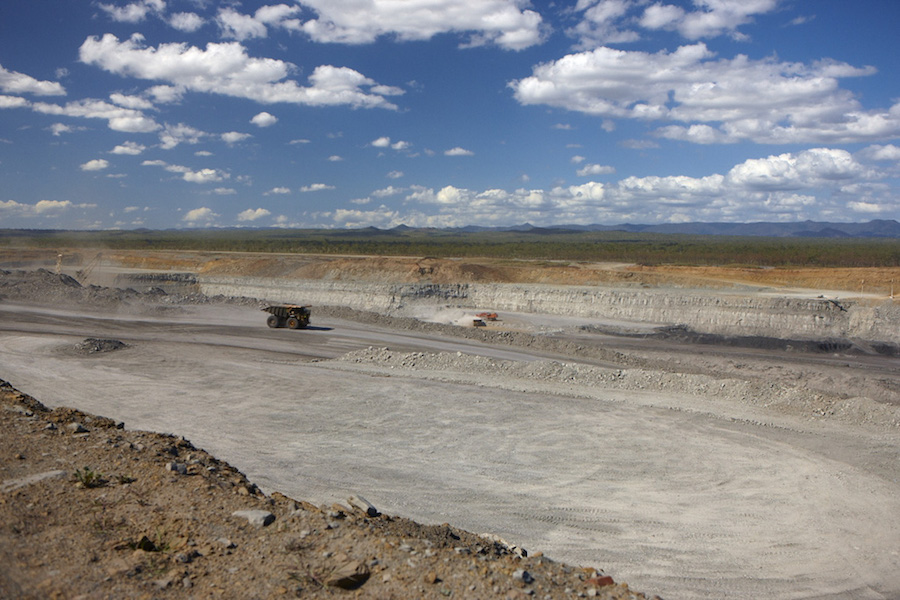
Hail Creek mine is located 120 km southwest of Mackay in central Queensland and supplies international markets with hard coking and thermal coal.
(Image courtesy of Rio Tinto.)

Glencore Plc is expanding a coal mine that scientists have estimated leaks so much planet-wrecking methane each year it has the same warming impact as the annual emissions from millions of cars.

New activity at the Hail Creek Mine involves digging up coal from gas-rich seams through surface mining — an approach for which the company has said there’s no reliable way to halt fugitive methane from escaping during operation. Steep declines in the dirtiest fossil fuel are needed to meet global climate goals, and activists argue curbs should prioritize the worst methane-spewing mines.

“If coal mining companies continue to argue that fugitive methane management is too hard for open-cut coal mines, then the obvious and material solution is to cease opening new mines,” said Naomi Hogan, strategic projects lead with Australasian Centre for Corporate Responsibility Inc. “And for the known very gassy mines to seriously consider early closure options.”

Methane is the primary component of natural gas but it’s often produced alongside oil and coal. The invisible, odorless greenhouse gas is extremely potent and traps more than 80 times the heat of carbon dioxide during its first 20 years. Halting leaks and intentional releases of the gas from fossil fuel operations are viewed as some of the lowest hanging fruit in the fight against climate change.

New surface mining activity is visible in satellite observations of the mine’s northeast corner, an area for which the mine got approval to expand when it was majority owned by Rio Tinto Group. Rio sold its stake in the mine in 2018 to Glencore, which declined to comment for this story.


An environmental authority amendment application, made in 2014 and approved the following year, for the northeast expansion area on file with Queensland authorities also suggest the site’s coal seams have a high methane content. The document, which sought approval for both new surface and underground mining activities, explains how extensive work would be needed to clear the flammable gas for a potential underground expansion to make it safe for workers.

“Given the gaseous nature of the target and deeper underlying coal seams, it is anticipated that drainage of gas prior to, during and after mining activities would be required,” according to the amendment application. The document was obtained by the ACCR through a freedom of information request and shared with Bloomberg News.

An environmental authority permit that went into effect March 15 for the Hail Creek mine makes no mention of the methane content of its coal seams.

Geologically older, deeper coal deposits typically contain more methane than shallower seams near the surface. Yet, satellite observations are shedding new light on the climate impact from open-cut mines. There are well-known approaches for capturing methane from underground mines through boreholes or ventilation systems, but Glencore told the Financial Times this month there are no practicable technologies or methods for capturing fugitive methane emissions from operating surface mines.

That’s particularly problematic for open-cast coal operations in Queensland’s Bowen Basin, in which Hail Creek mine is located, and where satellite data suggests the geology is particularly gaseous. For every ton of coal produced in the region an average of 7.5 kilograms of methane is released, according to an estimate using satellite observations from French geoanalytics Kayrros last year. That’s roughly 40% higher than global levels, based on data from the International Energy Agency.

The age of coal is the same across a seam, according to Christian Lelong, director climate solutions at Kayrros, who also has experience working in Australia’s mining sector. Deep coal seams with sufficient incline can get close enough to the surface to be accessible through surface mining.

“If the coal seam is gassy in an underground mine, the same coal seam will also be gassy if the mine is open-cast,’’ he said.

Glencore also filed an additional exploration permit linked to Hail Creek in June 2020 that is still being assessed by the Queensland government. That’s raised red flags for environmental groups concerned that more coal mining activity threatens Australia’s 2030 emissions reduction targets and its 2050 net zero pledge.

“We have significant public interest concerns with respect to this exploration application,’’ said Carmel Flint, a coordinator for Lock the Gate Alliance, a climate activist group. “Particularly due to the extremely high emissions recorded from the existing mining operations and the incompatibility of further exploration and expansion activities with Glencore’s climate change and emissions reductions commitments.’’

Glencore is targeting a 15% reduction in its emissions by 2026 and a 50% cut by 2035, from 2019 levels. It’s also promised to cap coal production and slowly curtail output until closing the mines by 2050, but the company has given little detail about those plans and how quickly the mines will be phased out. It’s also unclear how those plans could be disrupted if the company’s Australia reserves are emitting far more methane than what is reported.

Glencore has leaned into coal production even as many of its rivals have exited the sector amid concern over the fuel’s contribution to climate change. The price of the fossil fuel has surged due to supply disruptions caused by Russia’s invasion of Ukraine.

The company’s embrace of coal has the firm on course for bumper profits this year, but there’s also been a softening of investor support for Glencore’s climate plans. Influential advisory firms Glass Lewis & Co. and Institutional Shareholder Services urged shareholders to vote against the company’s climate change strategy at its April investor meeting.

The Hail Creek mine spewed between 123,000 and 263,000 metric tons of methane last year, according to an estimate from scientists at the SRON Netherlands Institute for Space Research who also used satellite data. That much methane would have the same short-term warming impact as the annual emissions from anywhere between about 2.2 million and 4.8 million US cars.

Hail Creek’s reported emissions don’t come anywhere close to that. Glencore said the mine had net emissions of 503,591 tons of carbon dioxide equivalent in the year ended June 2020. If that figure were translated to just methane emissions, it’d be somewhere between 6,000 and 18,000 tons — far short of the SRON estimate.

Glencore has said previously that its Bowen Basin coal business reports emissions in line with Australian requirements and that there are “concerns and questions” about using satellite technology to measure methane emissions from mines. But the basis for many of the emissions reports Australia’s miners file with regulators, which can rely on state-determined emissions factors, are themselves under scrutiny.

In February, Australia said it was revising the method used to calculate methane pollution from open-cut coal mines. The change means total national emissions were on average 0.3% higher than previously stated for each year since 1990. That revision was prompted by the emergence of satellite datasets, which “catalysed a departmental review of inventory methods for open-cut coal mines in Queensland,” the government said.

(By Aaron Clark)
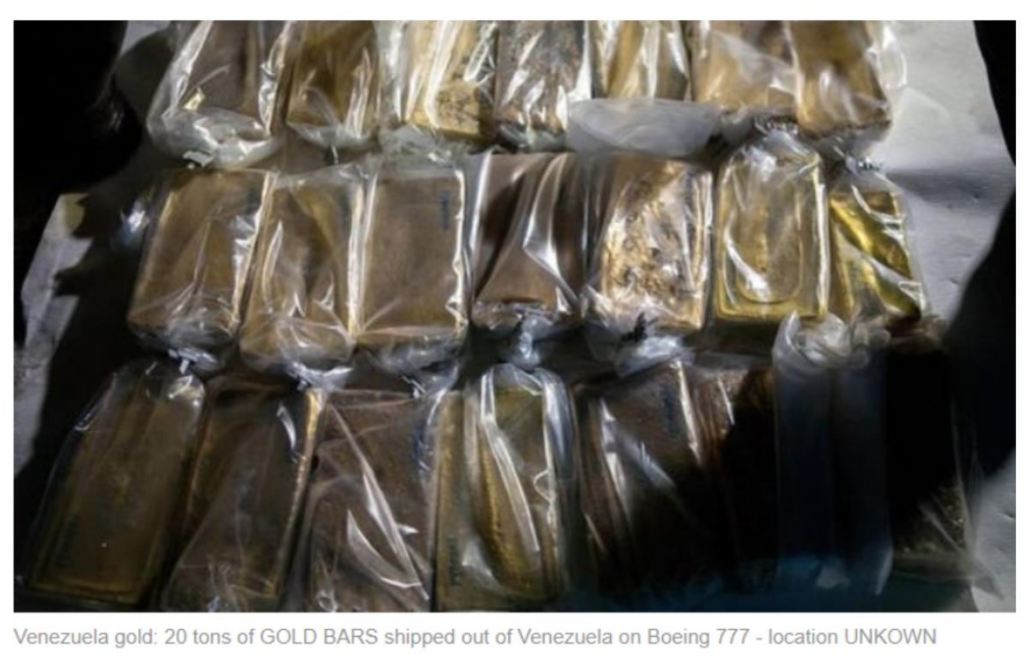
London court to decide who controls $1 billion of Venezuelan gold

Bloomberg News | July 13, 2022 | 

Venezuelan gold bars. File image.

A London court is finally set to decide who controls more than $1 billion of Venezuelan gold stored in the Bank of England’s vaults.


Opposition leader Juan Guaido, who’s won a series of legal clashes in the UK, is pushing for a judge to assert his right to control the bullion, saying London courts can disregard decisions taken by Venezuelan judges. The trial comes after the British government recognized Guaido as the Venezuelan president.

Maduro’s lawyers meanwhile say the judge needs to take into account the rulings from Venezuelan courts regarding Guaido’s appointments to the nation’s central bank, saying she “should not sit in judgment on what a foreign court has decided.”

The long-running London litigation has been one of the few bright spots for Guaido, who’s seen his support falter as President Maduro continues to hold on to power. His lawyers said Wednesday the Venezuelan courts demonstrated “systemic partiality and lack of independence.”

Maduro’s attorneys insisted that if the London court recognized Venezuelan decisions, the gold reserves can be used to assist with the nation’s Covid-19 relief efforts. Guaido’s camp claimed it will be used for future generations of Venezuelans.

The ruling is expected after a hearing that’s set to run four days.

(By Olivia Fletcher)
Perpetua Resources begins early cleanup activities at historic Stibnite mine in Idaho
Staff Writer | July 13, 2022 | 

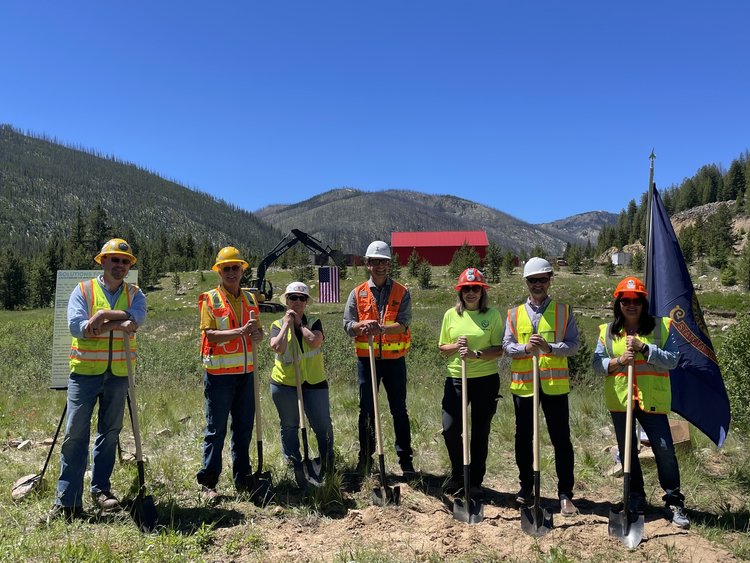
Groundbreaking ceremony to mark the beginning of early cleanup activities at the Stibnite mining district. Credit: Perpetua Resources Corp.

Focused on site restoration and redevelopment of gold-antimony-silver deposits in the Stibnite-Yellow Pine district of central Idaho, Perpetua Resources (NASDAQ: PPTA; TSX: PPTA) has initiated work to improve the water quality at the historic Stibnite mine site, which, after 100 years of mining activity, has seen millions of tonnes of unconstrained tailings and mine waste left behind by previous operators.


The company was joined by community members, government officials and local business leaders at a groundbreaking ceremony to mark the beginning of early cleanup activities and water quality improvements at the historic Stibnite mining district. The ceremony marked the start of a multi-year, multi-million-dollar investment designed to improve environmental conditions at the mine site.

Perpetua has worked with the Environmental Protection Agency (EPA) and the United States Department of Agriculture (USDA) for more than three years to receive permission to conduct time critical, early action cleanup activities. After consultation with other interested parties, including the Idaho Department of Environmental Quality, Perpetua, the EPA and USDA signed an administrative settlement agreement and order on consent in 2021, paving the way for the company to address legacy issues in key areas of the Stibnite district.

Related: How a gold-stibnite restoration in Idaho could add antimony to US supply chain

The first four-year phase of the project includes removing 325,000 tonnes of legacy waste and tailings away from the river and rerouting streams to keep clean water clean. High-ranking elected officials from across the state agree that the work being done by Perpetua is a model for private investment to help address legacy environmental issues at historic mine sites.

“We did not cause the contamination that has worsened water quality in the historic Stibnite mining district for decades, but we are part of the solution,” Laurel Sayer, CEO of Perpetua, said in a media release.

“Idaho’s natural resources can contribute a steady domestic supply of the materials we need to advance our economy,” said Idaho Governor Brad Little at the groundbreaking ceremony. “At the same time, cleanup projects like you see here at Stibnite are a critical part of the future of responsible mining in Idaho.

“These time critical actions are long overdue and will focus on addressing the most immediate needs to improve water quality. This work proves that Perpetua is committed to leaving the abandoned mine site better than they found it,” Idaho Congressman Mike Simpson added.

Mining activity in the Stibnite district first started in 1899. The historic Stibnite mine then gained national significance during World War II when the US government commissioned antimony and tungsten production from the site to help with the war effort. In fact, Stibnite produced the majority of both minerals used by the US during the war, and the US Munitions Board credited the mine for shortening World War II by a year and saving a million American lives.

However, most of the mining that occurred at Stibnite took place long before modern protections and regulations were established. As a result, the site was never fully reclaimed. Today, about 10.5 million tonnes of unlined tailings and waste leach arsenic and antimony into ground and surface water. Perpetua has proposed a redevelopment plan to mine the site for gold and the critical mineral antimony, while concurrently restoring the environment. Early cleanup actions have now begun.

As for the Stibnite mine project, it is currently under regulatory review. The Stibnite project is considered one of the highest-grade, open-pit gold deposits in the US, with 6 million oz. of gold grading 1.42 g/t contained in 132.3 million tonnes of measured and indicated resources. Over the 12 years projected mine life, Stibnite is expected to recover more than 4 million oz. of gold. It also has the largest known antimony resource in the country, containing 205.9 million lb. measured and indicated.

A 2020 feasibility study gave the project an after-tax net present value (5% discount) of $1.35 billion and an internal rate of return of 22.3%, with a capex payback period pegged at 2.9 years.
US says it will back miners to stop China’s weaponization of battery metals
Bloomberg News | July 13, 2022 

|
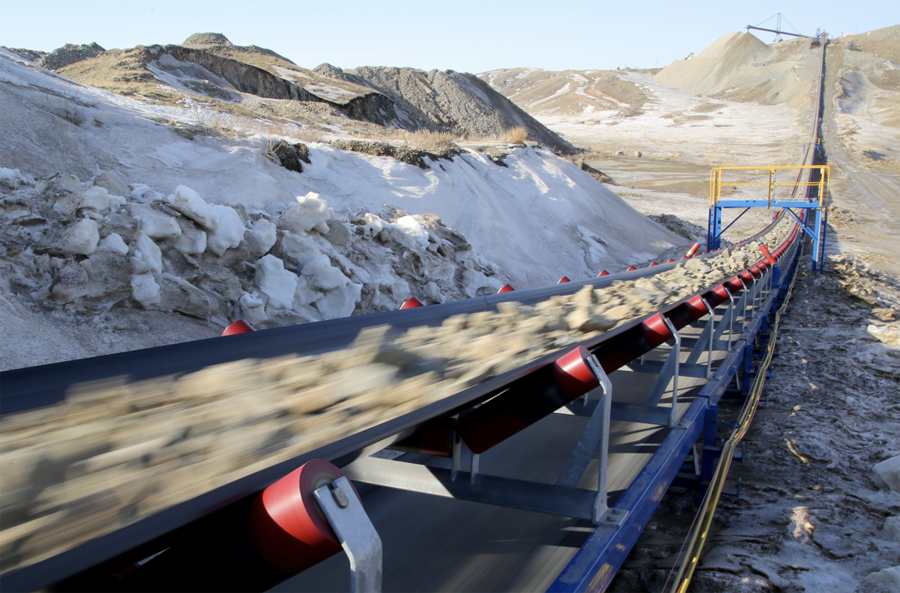
Baotou City: Epicentre of China’s rare earth industry. (Image by Matthew Stinson)

Developers of battery metals projects can win support from the US government as it seeks to counter the dominance of China in clean-technology supply chains, Energy Secretary Jennifer Granholm said.


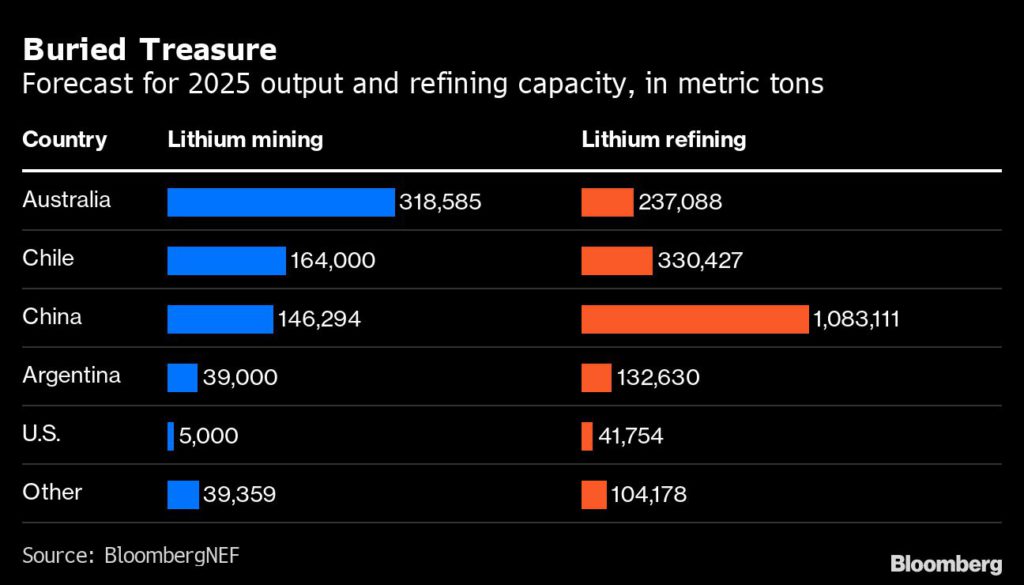
Nations including the US have raised concerns over the global concentration of refining and production capacity for key materials like lithium, rare earths and cobalt, prompting President Joe Biden to invoke the 1950 Defense Production Act to encourage domestic production.

“Our concern is that critical minerals could be vulnerable to manipulation, as we’ve seen in other areas, or weaponization,” Granholm said Wednesday in a meeting in Sydney with companies including BHP Group, Rio Tinto Group and Lynas Corp. “We are very serious about establishing strong relationships with Australia, and with you and with your potential customers for offtake.”

Producers in nations including Australia can also access support through agencies including the Department of Energy’s loan programs office, Granholm said at the Wednesday meeting.

China accounts for almost three-quarters of manufacturing capacity for lithium-ion batteries needed for electric vehicles and renewables energy storage, and dominates steps throughout the supply chain, including the processing of a suite of key metals. The nation is also the world’s dominant supplier of solar power equipment, and is seeking to build out its market share in the emerging clean hydrogen sector.

Syrah Resources Ltd., a Melbourne-based graphite producer with facilities in Mozambique and Louisiana, in April won a $107 million commitment from the loan programs office.

Rare earths producer Lynas Rare Earths Ltd. in June signed a contract with the U.S. Department of Defense to establish a plant in Texas.

(By David Stringer)

US says it is concerned critical minerals vulnerable to manipulation

Reuters | July 12, 2022 | 

Stock image.

US Energy Secretary Jennifer Granholm said the government is concerned that supplies of critical minerals, used widely in clean energy technology, could be subject to weaponization as oil and gas have been amid the Ukraine conflict.


“Our concern is that critical minerals could be as subject or vulnerable to manipulation as we’ve seen in other areas, or weaponisation,” Granholm said at the start of talks with Australia’s resources minister and executives from 14 mining companies at the Sydney Energy Forum.

“I think it’s healthy and from a national security perspective for both of our nations to diversify supply chains and make sure that these minerals are available to get to the ultimate goal of net zero,” she said.

Companies at the meeting included global giant Rio Tinto, rare earths producer Lynas Rare Earths, mineral sands miner Iluka Resources, graphite miner Syrah Resources and rare earths developer Arafura Resources.

“We are very serious about establishing strong relationships with Australia and with you and with your potential customers for offtake,” Granholm said.

Lynas recently won a $120 million contract from the US defense department to build a heavy rare earths separation plant in Texas.

(By Sonali Paul; Editing by Chris Reese)
Ecuador court endorses environmental permits for Dundee’s Loma Larga gold project
Cecilia Jamasmie | July 13, 2022 |

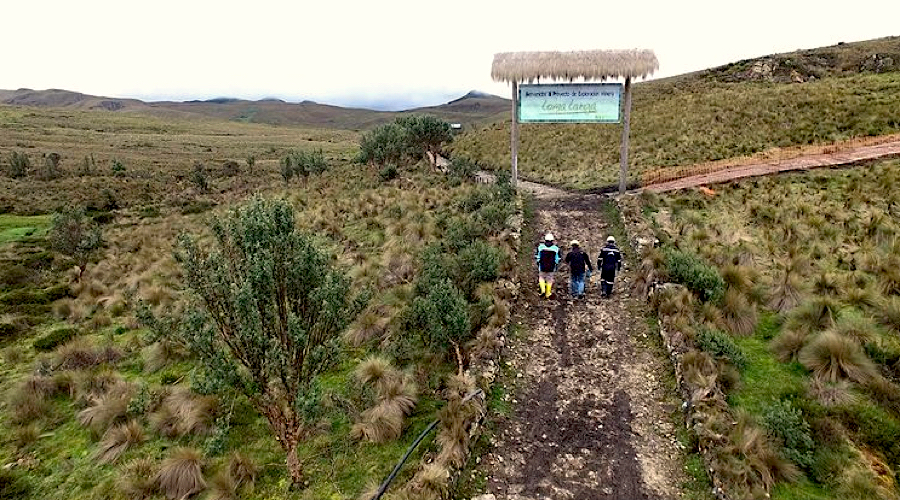
The Loma Larga gold-silver-copper project is located in southern Ecuador. (Image courtesy of former owner IVN Metals.)

Canadian miner Dundee Precious Metals (TSX: DPM) has scored a win in Ecuador as a local court upheld the validity of the company’s environmental permits for exploration at its Loma Larga gold underground project.


The Judicial Labour Unit of the southern city of Cuenca also reaffirmed Dundee’s mining concessions, by ruling that the mining ministry had not violated certain rights relating to the protection of water and nature in granting Dundee’s permits.

Non-government organizations and local agencies had filed a constitutional protective action against Ecuador’s Ministry of Environment, Water and Ecological Transition by non-government organizations and local agencies, claiming the authority had breached community rights.

“This is a positive step forward for the Loma Larga project,” president and CEO David Rae said in the statement.

Dundee added the court’s oral decision determined the company will have to include the local indigenous populations in its consultation process before proceeding to the exploitation phase.

The company noted it had already planned to do so as part of project development.

The court’s written verdict is expected to be delivered within a week’s time, Dundee said, after which the claimants will have three days to file an appeal. During this time, the company’s drilling activities will remain paused, pending its assessment of the written decision and the impact of any appeals that are filed.

Dundee’s added Loma Larga to its portfolio in 2021 after acquiring junior miner IVN Metals. The deal handed the company other four concessions in Ecuador — Carolina, La Rebuscada, Las PeƱas and Tierras Coloradas.

Other than its Ecuador assets, the company’s current asset portfolio includes two mines in Bulgaria, a copper smelter in Namibia and the Timok gold project in Serbia.

The UK Is Racing To Ramp Up Nuclear Power Capacity

  • Russia’s invasion of Ukraine has sparked chaos in Europe’s energy market.

  • The British government is now taking steps to solidify its domestic energy security.

  • The UK is looking to incentivize nuclear power production to help combat the energy crisis.

The U.K. appears to be going full throttle on its nuclear power plans. From big to small, the British government is encouraging the development of a variety of nuclear developments as it offers support for a wide range of clean energy projects to solidify the future of its domestic energy security.  Following the Russian invasion of Ukraine and the subsequent introduction of sanctions on Russian energy, several European powers are racing to boost their fossil fuel and renewable energy output to help them avoid shortages and ensure their energy security. While some are going all-in with renewable energy projects, others are backing more controversial nuclear energy developments. After a significant movement away from nuclear power in much of the world over the last few decades, several state governments are reembracing the much-critiqued energy source. 

In June, the U.K. government bought a 20 percent stake in the Sizewell C nuclear plant in Suffolk for $100 million, demonstrating its dedication to a future with nuclear power in the energy mix. The development is owned by EDF and China General Nuclear Power (CGN), although the government’s stake could see CGN pushed out of the project after criticism of China becoming too heavily involved in U.K. infrastructure plans. 

Earlier this year, Prime Minister Boris Johnson outlined national plans for the development of eight nuclear reactors by 2030. Sizewell C is expected to gain planning consent on 9th July, despite controversy over the construction costing taxpayers over double previous estimates and taking five years longer to build.

Delays have already been seen in EDF’s Hinkley Point C, which is expected to open a year later than planned, in 2027, and cost $3.6 billion more than anticipated, totaling between $30 and $31.5 billion. EDF is partnering with CGN on the construction of Hinkley and says the change in costs will not cause taxpayers any additional expense. The development was originally approved in 2016 but has seen delays due to pandemic disruption, according to EDF. 

In addition to largescale nuclear power projects, the U.K. is also embracing smaller-scale developments in a shift away from solely traditional nuclear plants. After announcing plans to construct several Small Modular Reactors (SMRs) across the U.K. last year, Rolls Royce is expected to be granted permission for development by 2024, having started the regulatory process this year. The company hopes to start generating nuclear power by 2029

Rolls Royce announced this week that it has established a site shortlist for its first SMR factory. The government is aiming to build 16 SMRs over 25 years as part of its decarbonization strategy. The SMRs can be built on a production line to be assembled on sites. The locations being suggested are Richmond in North Yorkshire, Deeside in Wales, Ferrybridge, Stallingborough in Lincolnshire, Sunderland, and Carlisle. The nuclear plant sites would receive an influx in investment as well as see a rise in the number of job opportunities in the region. 

The aerospace and defense company received $236 million in funding from private firms and $254 million from the government for its SMR business last year. SMRs are becoming more attractive as they take up considerably less space than a traditional nuclear power plant, at around a tenth of the size, while still providing enough energy to power around one million homes. Rolls Royce expects each SMR to be able to generate 470MW, equivalent to the power produced by 150 onshore wind turbines, costing $2.4 billion each.

And now a U.K. startup is looking for a piece of the action as it announces recent nuclear power innovations. In June, nuclear energy startup Newcleo raised $315 million in funds to develop its technology and launch pilot projects in France and the U.K.. Newcleo, based in London, aims to decrease the cost of nuclear power production using a lead-cooled fast reactor, a new technology that uses atmospheric pressure rather than high-pressure water reactors. The system can be fuelled by waste produced in traditional plants, without the need for mined uranium. It is thought to be safer than existing nuclear technology. 

Newcleo aims to construct its first 30MW prototype for $480 million, a fraction of the cost of a conventional nuclear plant. CEO of the firm Stefano Buono explained “We are going to use these reactors as a test for these technologies.” He added, “we believe our reactor is cheaper than current reactors.”

The prototype is expected to be scaled up for the construction of a 200MW plant if deemed viable. Newcleo is currently appealing to the U.K. government for building site approval and the granting of its operating permits. It also hopes to also produce mixed plutonium-uranium oxide fuel from processed nuclear waste.

Significant innovations are being seen in the U.K.’s nuclear power, with the potential for the construction of several new conventional power plants as well as the development of alternative nuclear reactors, thanks to recent innovations in technology. In addition to renewable energy developments, nuclear power is expected to contribute substantially to the U.K.’s decarbonization plans. 

By Felicity Bradstock for Oilprice.com

Suncor Reveals Detailed Plan To Increase Oil Production While Reducing Emissions

Canadian Suncor, once closely associated with the country's notoriously dirty oil sands, has big plans to go green.

The company is aiming to reduce its annual emissions by 10 megatonnes by 2030 and reach net-zero by 2050.

Using new technology and carbon credits, Suncor is looking to ramp up production while still meeting its net-zero goals.

Suncor, one of North America’s largest oil companies, vows to cut annual emissions by 10 megatonnes by 2030 and reach net zero by 2050.

The Canadian-based oil sands company recently revealed its 2022 Climate Report, detailing its climate strategy.

Despite their emission reduction plans, they increased their Scope 1 and 2 emissions in 2021 over 2020.

Suncor emissions by scope

As for its Scope 3 emissions, Suncor reported it to be 127 Mt CO2e.

Suncor’s Scope 3 emissions only include upstream production only. There is also downstream production, which includes everything down to the gas pump.

The whole process from exploration to the pump only equates to 20-30% of the overall carbon emissions, with up to 80% of the GHG emissions coming from the pump to the tailpipe.

Suncor has also forecasted to increase its oil production up to 800 thousand barrels/day through 2025. The graph below shows that the firm plans to grow oil production by 15% more than its 2020 levels.

suncor oil production
Source: Rystad Energy UCube (September 2021); Oil Change International calculations based on IEA NZE and IPCC P1 scenarios

Suncor’s Carbon Emissions

Suncor’s major emission comes from its core business operation – the oil sands (80%). This includes five key processes, each of which contributes certain amounts to its entire carbon emission.

suncor carbon emissions by process

Suncor also has a higher emissions intensity versus the overall oil & gas sector, as a bulk of Suncor’s business is involved in the energy-intensive Canadian oil sands.


With Suncor planning on increasing production at the same time as they reduce overall emissions, they need to find a solution to quickly lower their carbon emissions.

To reach its ambitious net zero 2050 target, Suncor plans to reduce emissions through two major strategies:

  • Optimize base business operations
  • Expand low emissions businesses

Reducing Emissions in Base Business

In a snapshot, here’s how Suncor aims to reduce emissions by 2030.

Suncor emissions reduction plan by 2030

Investing in CCUS

A big part of this strategy is to invest in Carbon Capture Use and Storage (CCUS) projects. It involves capturing and sequestering CO2 from point sources or directly sucking it from the air.Related: China Continues To Buy Record Levels Of Russian Crude

Most energy forecasts consider CCUS technology as key to achieving the Paris Agreement goals. In fact, it’s also a critical component of Suncor’s net zero efforts.

The oil firm is a major player in the energy sector’s Pathway Alliance (Canada’s oil sands producers group) proposed carbon sequestration hub. It will include a carbon transportation line that connects over 20 oil sands facilities in northern Alberta to a carbon sequestration hub.

The image below illustrates the route.

suncor CCUS project

Suncor is also investing in Svante which develops a post-combustion CO2 capture tech for industrial emissions. The CCUS technology captures CO2 from gas products and processes it for industrial use or permanent storage.

Fuel switching

The oil sands producer also explores fuel switching. It substitutes high-emitting fuels from coal-fired power plants with hydrogen or natural gas with lower emissions. A major example of this is Suncor’s Base Plant Cogeneration project that will start by late 2024.

suncor cogeneration process

Cogeneration refers to the process of producing both steam and electricity via a natural gas-fuelled process. In its project above, Suncor will replace petroleum coke with natural gas. It will also export low carbon electricity to the provincial grid to power Alberta homes and businesses.

Suncor claims that this initiative is vital to its net zero emissions target. It will reduce about 1 Mt CO2e of its Scope 1 and 2 emissions. Plus, it will also result in 4 Mt emissions reduction each year due to exporting low carbon power from natural gas.

Energy efficiency

This strategy involves a couple of initiatives to improve Suncor’s production efficiency. These include plenty of measures such as:

  • replacing aging assets with modern designs;
  • digital enhancements such as advanced process controls
  • new chemistry aids;
  • additive manufacturing for optimizing processes; and
  • steam, boiler feedwater, and heat integration to enhance steam generation efficiency

A crucial part of this effort is the steam assisted gravity drainage (SAGD) enhancement processes. This involves the use of solvents and lower pressure for bitumen recovery. Bitumen is a semi-solid form of petroleum.

  • SAGD technology has the potential to lower GHG emissions by 30%. If further enhanced, SAGD emissions reduction can be 70%.

If this initiative turns successful, it can produce electricity with zero carbon emissions while also improving Suncor’s bitumen recovery process.

Suncor aims to launch a pilot SAGD project to assess its low carbon potential by early 2023.

Expanding Low-emissions Businesses

Under this strategy is the low carbon power benefit of Suncor’s cogeneration project explained earlier. The lower carbon electricity that the project will produce can cut emissions by total of 5 Mt CO2e per year compared to coal-fired power.

Part of this effort is the use of renewable energy to generate power.

  • Since 2002, Suncor has developed 8 wind power projects in 3 provinces. Today, the energy firm is a partner in 4 wind power facilities in Alberta and Ontario with 111 MW total capacity.

Suncor is also developing its Forty Mile power project in southeastern Alberta. It represents 200 MW of wind capacity.

Another key part of Suncor’s net zero emissions pathway has been investing in renewable fuels since the early 2000s. It invests in biofuel technologies that make ethanol and methanol out of waste streams. These include industrial, forestry, and agricultural wastes.

Suncor invests in companies that produce renewable fuels like LanzaTech and LanzaJet. LanzaTech uses bacteria to recycle CO2 waste into fuels and chemicals. LanzaTech focuses on producing sustainable aviation fuel (SAF) using ethanol from recycled CO2 waste.

These renewable fuels give the oil major more ways to cut its carbon emissions.

Lastly, Suncor is producing grey hydrogen via its steam methane reforming process of natural gas. Using this hydrogen in its refineries helps in Suncor’s net zero emissions.

The firm also plans to use hydrogen to help decarbonize the transportation industry. It takes part in the Alberta Zero Emissions Truck Electrification Collaboration project, a multi-party effort to design, manufacture, and test hydrogen-powered trucks.

Working with others to reach net zero emissions

Apart from cutting emissions from its direct and indirect sources, Suncor seeks to work with others to cut its carbon footprint. The company will do this by:

  • working with governments to provide affordable, low-carbon energy options for consumers
  • growing its renewable fuels business to support increasing wholesale and retail demand
  • expanding its hydrogen capacity to offer transportation solutions as demand increases
  • expanding its coast-to-coast charging stations.

The oil giant has been pumping its money on innovations and technologies that can slash the sector’s emissions. It works or partners with XPRIZE, Avatar Innovations, Canada’s Oil Sands Innovation Alliance (COSIA), Evok Innovations, Energy Futures Lab, Clean Resource Innovation Network, and more.

Regulatory Emissions Credits

For the first time, Suncor disclosed the volume of its emission credits (also called carbon credits) to meet its compliance obligations.

  • In 2021, the company retired about 0.6 Mt of emission credits. This reduces its equity emissions from 28.5 Mt CO2e to 27.9 Mt CO2e.

The carbon credits were from Suncor’s operations that performed better than regulatory benchmarks. They’re from its wind and cogeneration efforts that yield low carbon power and fuel. Some credits were also bought from carbon exchanges.

By CarbonCredits.com