Thursday, July 14, 2022

 Worst of global energy crisis may still be ahead, IEA says


“The world has never witnessed such a major energy crisis in terms of its depth and its complexity,” 

Bloomberg News | July 12, 2022 |

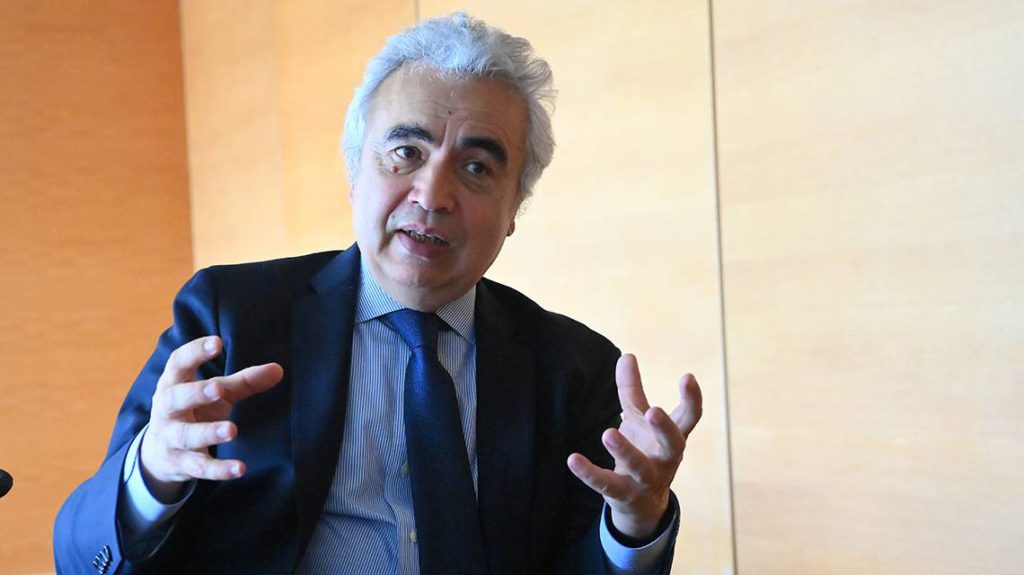
IEA Executive Director Fatih Birol. Credit: IEA

A global squeeze on energy supply that’s triggered crippling shortages and sent power and fuel prices surging may get worse, according to the head of the International Energy Agency.


“The world has never witnessed such a major energy crisis in terms of its depth and its complexity,” IEA Executive Director Fatih Birol said Tuesday at a global energy forum in Sydney. “We might not have seen the worst of it yet — this is affecting the entire world.”

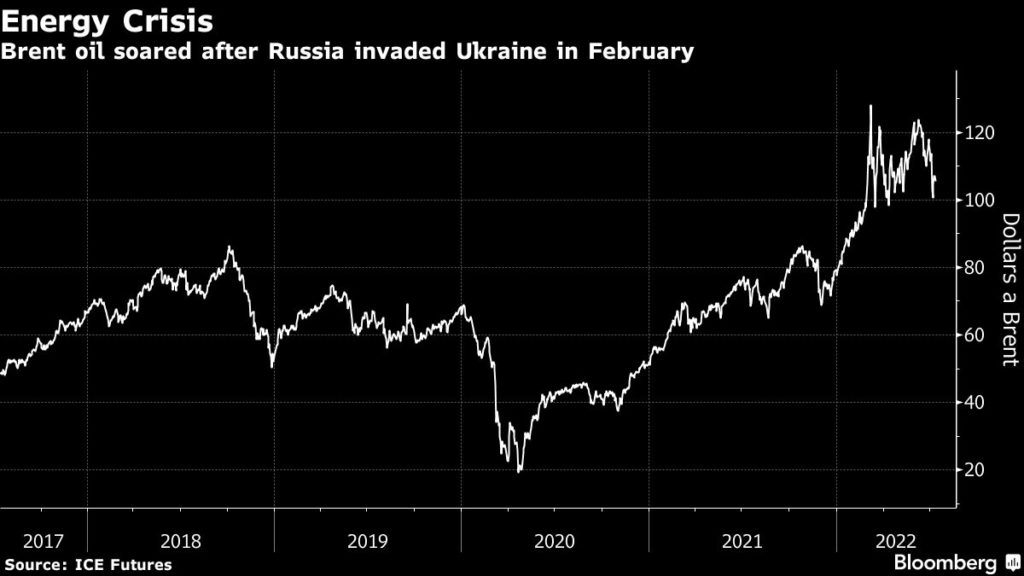
The whole energy system is in turmoil following the February invasion of Ukraine by Russia, at the time the biggest oil and natural gas exporter and a major player in commodities, Birol said. Soaring prices are lifting the cost of filling gas tanks, heating homes and powering industry across the globe, adding to inflationary pressures and leading to deadly protests from Africa to Sri Lanka.

Like the oil crises of the 1970s, which prompted huge gains in fuel efficiency and a boom in nuclear power, the world may see faster adoption of government policies that speed the transition to cleaner energy, Birol said. In the meantime, security of oil and gas supplies will continue to pose a challenge for Europe, and also for other regions, he said.

“This winter in Europe will be very, very difficult,” Birol said. “This is a major concern, and this may have serious implications for the global economy.”


The fallout for the global energy sector as the US and allies challenge President Vladimir Putin over the war in Ukraine and seek alternatives to Russian exports have highlighted the need to reduce dependence on fossil fuels, US Energy Secretary Jennifer Granholm told the same forum.

“Our move to clean energy globally could be the greatest peace plan of all,” she said. “We want and need to move to clean.”

Nations need to guard against switching reliance on one dominant energy supplier — Russia — for another in the shift to clean power, Granholm said.

“China has big-footed a lot of the technology and supply chains, and that could end up making us vulnerable if we don’t develop our own supply chains,” she said.

The nation controls about 80% of the global supply chains for solar power, which is set to rise to 95% by 2025, according to the IEA. China dominates much of the lithium-ion battery sector, is a key producer of wind turbines and seeking to quickly build capacity in clean hydrogen technology.

Developments including the US restricting imports of products from China’s Xinjiang region and a long-discussed tax in Europe on the import of goods made with high-carbon energy could help diversify the solar supply chain by creating openings for manufacturers such as India, Martin Green, a professor at the University of New South Wales, said at the conference.

“By building resilient clean energy supply chains, we can protect our economies from the shocks of the next crisis,” Australia’s Climate Change and Energy Minister Chris Bowen said in a speech at the forum. “There is no time to waste.”

(By David Stringer)


IEA Chief Warns The Energy Crisis Could Get Worse

  • The IEA’s Executive Director Fatih Birol is warning that the global energy crunch could worsen.

  • The top man of the IEA noted the whole global energy system was in turmoil following Russia’s invasion of Ukraine.

  • “The world has never witnessed such a major energy crisis in terms of its depth and its complexity,” Fatih Birol said.

The global energy crunch might worsen further, the head of the International Energy Agency has warned, noting that winter in Europe will be “difficult”.

“The world has never witnessed such a major energy crisis in terms of its depth and its complexity,” Fatih Birol said on Tuesday at an industry event in Australia, as quoted by Bloomberg. “We might not have seen the worst of it yet -- this is affecting the entire world.”

The top man of the IEA noted the whole global energy system was in turmoil following Russia’s invasion of Ukraine, with prices of energy commodities skyrocketing across the board because of Russia’s size as an oil and gas exporter.

The situation is particularly bad in Europe, where, Birol said, “This winter [...] will be very, very difficult. This is a major concern, and this may have serious implications for the global economy.” 

Indeed, Europe is already worrying about the winter after Russia reduced the flow of gas via the Nord Stream 1 pipeline in June, blaming a delay in receiving a turbine from Canada, which had just imposed fresh sanctions on Moscow.

Earlier this week, Canada agreed to return the turbine after Germany asked it to make an exception, but Gazprom stopped the gas flow via Nord Stream 1 completely for regularly scheduled maintenance, sparking fears that it might not restart the flow after maintenance is completed.

Europe has been snapping up LNG cargos from all over the world to fill its gas storage ahead of the next heating season—and to fuel its economies as it seeks to reduce imports of Russian gas—but it has still a way to go before it reaches the goal of 80 percent by end-October.

Birol compared the current situation to the oil crisis of the 1970s, noting how that crisis spurred major progress in fuel efficiency and saying this one could lend additional momentum to the transition to low-carbon energy.



Gold-uranium mine in South Africa sheds new light on life’s power generators below earth’s surface

Staff Writer | July 10, 2022

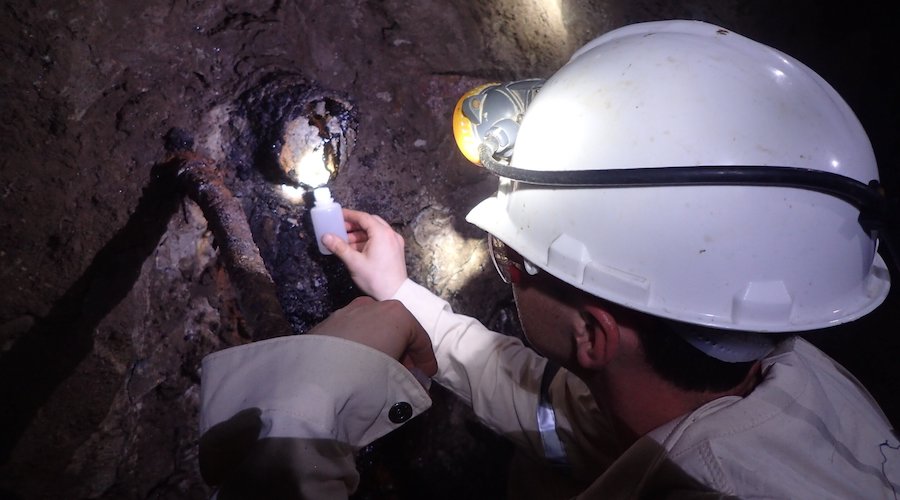
Researcher Oliver Warr collecting samples in Moab Khotsong, South Africa. (Image courtesy of Oliver Warr / University of Toronto).

An international team of researchers discovered that Harmony Gold Mining‘s gold and uranium Moab Khotsong mine in South Africa hosts 1.2-billion-year-old groundwater, a finding that sheds new light on how life is sustained below the earth’s surface and how it may thrive on other planets.


In a paper published in the journal Nature Communications, the researchers explain that, for the first time, there is an insight into how energy stored deep in the earth’s subsurface can be released and distributed more broadly through its crust over time.

“Think of it as a Pandora’s Box of helium-and-hydrogen-producing power, one that we can learn how to harness for the benefit of the deep biosphere on a global scale,” Oliver Warr, research associate at the University of Toronto and lead author of the study, said in a media statement.

A decade ago, Warr and his colleagues discovered billion-year-old groundwater from below the Canadian Shield.

“Now, 2.9 kilometres below the earth’s surface in Moab Khotsong, we have found that the extreme outposts of the world’s water cycle are more widespread than once thought,” Barbara Sherwood Lollar, corresponding author of the paper, said.

Sherwood Lollar explained that uranium and other radioactive elements naturally occur in the surrounding host rock that contains mineral and ore deposits. These elements hold new information about the groundwater’s role as a power generator for chemolithotrophic (or rock-eating) groups of cohabitating microorganisms previously discovered in the earth’s deep subsurface.

When elements like uranium, thorium and potassium decay in the subsurface, the resulting alpha, beta, and gamma radiation has ripple effects, triggering radiogenic reactions in the surrounding rocks and fluids.
Never-before-seen krypton

At Moab Khotsong, the researchers found large amounts of radiogenic helium, neon, argon and xenon, and an unprecedented discovery of an isotope of krypton—a never-before-seen tracer of this powerful reaction history.

The radiation also breaks apart water molecules in a process called radiolysis, producing large concentrations of hydrogen, an essential energy source for subsurface microbial communities deep in the earth that are unable to access energy from the sun for photosynthesis.

Due to their extremely small masses, helium and neon are uniquely valuable for identifying and quantifying transport potential. While the extremely low porosity of crystalline basement rocks in which these waters are found means the groundwaters themselves are largely isolated and rarely mix, accounting for their 1.2-billion-year age, diffusion can still take place.

Solid materials such as plastic, stainless steel and even solid rock are eventually penetrated by diffusing helium, much like the deflation of a helium-filled balloon,” says Warr. “Our results show that diffusion has provided a way for 75 to 82% of the helium and neon originally produced by the radiogenic reactions to be transported through the overlying crust.”

The researchers stress that the study’s new insights on how much helium diffuses up from the deep earth is a critical step forward, as global helium reserves run out, and the transition to more sustainable resources gains traction.

“Humans are not the only life-forms relying on the energy resources of the earth’s deep subsurface,” Warr said. “Since the radiogenic reactions produce both helium and hydrogen, we cannot only learn about helium reservoirs and transport but also calculate hydrogen energy flux from the deep earth that can sustain subsurface microbes on a global scale.”

Warr noted that these calculations are vital for understanding how subsurface life is sustained on our planet and what energy might be available from radiogenic-driven power on other planets and moons in the solar system and beyond, informing upcoming missions to Mars, Titan, Enceladus and Europa.
Guinea halts Simandou iron ore project again

Cecilia Jamasmie | July 4, 2022 | 

Simandou is one of the world’s biggest and richest reserves of iron ore. 
(Image courtesy of NWR Civil and Mining.)

Guinea’s mines minister has once again ordered a full suspension of activities related to the Simandou iron ore mine project after the two companies involved missed an extended deadline to agree on a joint venture.


Mines Minister Moussa Magassouba, a member of the ruling junta, said that both Rio Tinto’s (ASX, LON: RIO) subsidiary Simfer and Chinese-backed consortium Winning Consortium Simandou (WCS) have shown a “lack of willingness” to work on a partnership, local news outlet Vision Guinee reports.

“There is a major discrepancy between the companies’ vision to implement the terms of the framework agreement and our expectations. This situation is not only regrettable but above all unacceptable,” Magassouba said, according to Vision Guinee’s report.

The minister added that despite the “significant concessions the Guinean State has been kind enough to make, it is clear the obstruction is being maintained by both companies, to the detriment of the interests of the project.”

Guinea’s current government, which took power in a military coup in September, has grown impatient with the companies that control the giant Simandou deposit.

It halted construction of the mine and related infrastructure once before, in March, pushing Rio Tinto and WCS to sign a framework agreement to “co-develop” infrastructure surrounding the project, including a 670 kilometre railway and a port.

TIMELINE: The battle for Simandou

In June, the junta gave the companies 14 days to agree to the joint venture, which was an extension of a previous deadline.

Guinean authorities have previously warned the miners risked losing their licences if they failed to meet a tight construction timeline for the project.

The vast deposit, in the country’s southeast, has not been developed since Rio Tinto first obtained an exploration licence for it 25 years ago.

“Caviar of iron ore”

At two billion tonnes in iron ore reserves and some of the highest grades in the industry (66% – 68% Fe, which attracts premium pricing), Simandou is one of the most easily exploitable iron ore deposits outside of Australia’s Pilbara region and Brazil.

At full production, the mine is expected to export up to 100 million tonnes per year. Simandou would by itself be the world’s fifth-largest producer behind Fortescue Metals (ASX: FMG), Vale (NYSE: VALE) and BHP (ASX: BHP).

Guinea has said any developer of the mine must build a railway spanning the country, even though it adds significant costs and the route to port through neighbouring Liberia is much shorter.

Eric Humphery-Smith, Senior Africa Analyst at risk intelligence company Verisk Maplecroft, wrote in March that Guinea’s decision to suspend all activities at Simandou reflected mostly the “power struggle” between the companies and Guinean authorities regarding recommendations they made in December in relation to the rail and port infrastructure.

“These developers are used to getting their way as the Guinean government has historically not offered much resistance (…) We don’t expect this to drag on much longer than a couple of months,” he anticipated.

Simandou’s development is also crucial to China. The nation sees the project, described by Rio’s president of copper operations, Bold Baatar, as the “Rolls Royce of iron ore”, as an opportunity to wean itself off its reliance on Australia’s iron ore.
Chile sticks to plan for new mining profit tax up to 32% linked to copper price

Reuters | July 1, 2022 | 

Santiago, Chile (Shutterstock)

Chile’s finance minister, Mario Marcel, on Friday introduced a tax reform bill that increases copper mining royalties on companies that produce more than 50,000 tonnes a year and raises taxes on high-income earners to fund the government’s proposed social programs and reforms.


Chile is the world’s top copper producer and is home to global copper giants like Codelco, BHP, Anglo American Glencore and Antofagasta.


“This means an increase in revenue from royalties, an increase in state participation in mining income,” Marcel said. “But also ensuring the mining sector has enough income to encourage investment.”

A press release from the treasury department says the plan has two components. One is an ad valorem tax between 1% and 2% for companies that produce between 50,000 and 200,000 tonnes of fine copper a year and a rate between 1% and 4% for those that produce more than 200,000.

The other component is a rate between 2% and 32% on profits for copper prices between $2 and $5. Both components vary based on the price of copper.

Smaller copper producers will continue with the current system, Marcel added.

The bill aims to raise 4.1% of GDP over four years, with 0.7% going to a new guaranteed minimum pension fund.

The proposal also raises taxes on high-income earners, capital gains and introduces a new wealth tax for citizens with more than $5 million in assets.

Marcel noted Chile, with a tax collection rate of 20.7% of GDP, is below the OECD median of 34.7%.

“Historically, few countries have reached economic prosperity with a low tax load,” Marcel said, adding that 97 percent of taxpayers won’t be affected by the proposal.

The bill also tries to reduce tax exemption and evasion while giving tax breaks for rent and care for children under 2 and the severely dependent.

(By Natalia Ramos and Alexander Villegas; Editing by David Goodman)
ONTARIO
Post Noront takeover, Wyloo gets to work on Ring of Fire assets

Alisha Hiyate | June 29, 2022 |

The Eagle’s Nest nickel-copper-PGM project in northern Ontario’s Ring of Fire region. (Image courtesy of BHP.)

Wyloo Metals made a big splash last year with its battle against Australian behemoth BHP (NYSE: BHP; LSE: BHP; ASX: BHP) for control of Ring of Fire junior Noront Resources.


The private, Western Australia-based company, owned by Australian billionaire Andrew Forrest’s Tattarang investment group, outlined its vision for Noront’s high-grade nickel-copper-PGM Eagle’s Nest project early on. The miner plans to build a net-zero mine that would process the nickel in-province and create a ‘future metals hub’ while awarding C$100 million ($77.5m) worth of contracts to First Nations-owned businesses and establishing a training and employment centre for northern and Indigenous communities.

And most importantly, perhaps, it promised movement on a project that has been stalled by a lack of infrastructure and by disagreement among First Nations on development, invoking Forrest’s experience as founder of major iron ore producer Fortescue Metals Group (ASX: FMG).

“Seventeen years ago, people told me Fortescue’s deposits would never be mined because there was no infrastructure to access our projects. We proved those critics totally wrong and we want to do the same in the Ring of Fire,“ said Andrew Forrest in a press release last year during the takeover battle for Noront.

After emerging victorious from the “fierce battle” with BHP and closing the acquisition of Noront in April, Wyloo is wasting no time getting to work.
Exploration potential

In early June, the private Australian company reopened the Esker exploration camp in Ontario’s James Bay Lowlands for the first time in three years. The company then began a 3,000-metre drilling program at Blue Jay — the first of 76 targets it intends to drill in the Ring of Fire.

The acquisition includes five existing high-grade orebodies: Eagles nest (nickel-copper-PGMs), McFaulds (copper-zinc) and the Blackbird, Big Daddy and Black Thor chromite deposits.

However, Wyloo CEO Luca Giacovazzi says that although those deposits have potential to be mined, the main attraction of Noront’s Ring of Fire claims was the exploration potential.

“We love the existing mines, but we thought, wow, these guys have just scratched the surface of the exploration potential here,” said Giacovazzi in an exclusive interview at the Prospectors and Developers Association of Canada conference in mid-June.

“Exploration-wise, the Ring of Fire must be one of the most exciting packages of ultramafic rocks in a mining friendly jurisdiction.”
Space tech start up discovers path to emission-free future for steel industry on earth

Staff Writer | June 28, 2022 

File image.

On its mission to develop onsite resources for the Moon, Israel-based space tech startup Helios stumbled across a novel approach to iron production.


The company’s technology, it says, is capable of producing iron with zero co2 emissions and has the potential to dramatically change the way to approach sustainable iron making.

Helios’ endevour to create an emission-free future for the steel industry will be fueled by $6 million in capital, thanks to a seed round led by At One Ventures, the “net positive to nature” investment firm, and Doral Energy-Tech Ventures. Deep tech investor Metaplanet and a global Top 5 mining company are also participating in the round, Helios said.

The company, led by founder and CEO Jonathan Geifman, did not set out to make green steel at a lower cost. Its original goal is to produce oxygen to sustain recurring missions to the moon by producing it on site. Helios’ proprietary technology extracts oxygen from lunar regolith, the mixture of powdery dust and broken rock on the surface of the moon.

Current methods of steel production emit large quantities of CO2 through the reduction of iron ore with carbon. For every tonne of steel, approximately 2 tonnes of CO2 are emitted, making the industry responsible for 8% of humanity’s carbon footprint.

Yet efforts to decarbonize the industry through methods like H2 injection, carbon capture, and electrolysis will increase the cost of production, making adoption by major manufacturers difficult to justify, the company said.

“On the moon we don’t have the luxury of using carbon for energy, and you also have to be extremely efficient – you cannot waste or emit anything,” Geifman said in a media release.

“The extraterrestrial environment really pushes your R&D to the extreme,” Geifman said. “You cannot be iterative; you must reinvent processes entirely. That is how we came up with this completely novel method of extraction that we soon realized would be beneficial for life on earth as well.”

“It’s fascinating to me that while Helios was focused on creating technologies to further sustainable Moon missions and habitation – literally taking its ‘moonshot’ – they stumbled across this brand-new process to benefit life on earth,” said Uri Oron, Director of the Israel Space Agency at the Ministry of Innovation, Science and Technology. “This is a great example of the close connection between space technology and its impact on our lives here on Earth,” he added.

Helios scientists discovered that the technology created for the reactor built to extract oxygen and iron from regolith could also be used to extract 99% pure iron from iron ore, using an entirely novel chemical process. The method requires 50% less energy than what is currently used in the industry, while operating at temperatures so low that a household oven will suffice to initiate the process.

In addition to the energy cost reduction, the process also eliminates 100% of the direct CO2 emissions, Helios said, adding that using renewable energy to heat the system will make the whole process carbon free.

USGS deploys satellite imagery in the global fight against illegal mining

USGS deploys satellite imagery in the global fight against illegal miningArtisanal miners digging a mining pit using simple tools such as shovels, buckets and water pumps. This was taken in 2013 in Fourona in Côte d’Ivoire, Africa. Credit: Science for a Changing World.

The organization’s scientists are playing a leading role in a project involving a collaboration between the U.S. Department of State, U.S. Agency for International Development, United Nations and other governmental and non-governmental organizations working to address conflict mining.

“USGS science helps determine the extent and value of mineral production in conflict-prone regions,” said Peter Chirico, associate director of the USGS Florence Bascom Geoscience Center and special advisor to the U.S. Department of State’s Office of Threat Finance Countermeasures, in a statement to The Northern Miner.

“The USGS conducts field investigations, uses satellite imagery, creates geologic maps and publishes reports to pinpoint resource deposits, estimate mineral quantities and determine production capacity,” he says.

“The ability to use satellite imagery to acquire detailed information on artisanal mining activities is invaluable for researchers and policymakers, as it allows us to evaluate challenging and often difficult-to-access regions that also have associated conflict and safety concerns,” said Chirico.

Minerals are frequently mined by artisanal and small-scale miners, who commonly operate in the informal sector, meaning they are not licensed and don’t own the land on which they mine. They often transport and sell resources outside the legal flow chain in violation of local or national law.

Artisanal and small-scale mining involves individuals or groups of miners using simple tools such as picks and shovels and sometimes larger equipment to dig in river floodplains and sedimentary deposits across large stretches of terrain. Industrial-scale mining occurs at permitted and regulated sites and typically requires heavy infrastructure to extract resources.

The informality and sizeable geographic extent of artisanal and small-scale mining can lead to commodities being mined, sold and purchased through unofficial channels and potentially financing criminal or terrorist organizations. This can increase the risk of conflict, violence, and terrorism within a country and other nations, including the U.S.

Blood diamonds

USGS scientists also do on-the-ground fieldwork to study the deposits and small-scale mining pits to investigate artisanal and small-scale mining processes and determine the extent and quality of the resources.

The researchers also work to understand the miners’ viewpoint and their methods, tools, habits and organization. Scientists conduct interviews with artisanal miners to understand how much can be mined over a certain period, how they are organized and how frequently they move from site to site, according to the organization.

For example, USGS information assists the U.S. Department of State in implementing the Clean Diamond Trade Act, which prohibits the import or export of rough diamonds unless accompanied by a Kimberley Process certificate confirming that it is not a conflict diamond. The Kimberley Process is an international initiative to increase transparency and oversight in the diamond industry to eliminate trade in conflict diamonds.

“The USGS has been instrumental in supporting a fact-based approach to the Kimberley Process work on eliminating conflict stones from the rough diamond supply chain,” said George Cajati, a foreign affairs officer at the U.S. Department of State and the interim U.S. representative to the Kimberley Process.

“USGS has provided unsurpassed scientific analysis and expertise to inform U.S. policy in this high-profile international forum and earned the respect of international partners in the process,” he said.

The USGS has collaborated with several international organizations working to track and monitor illegal mining and armed groups funded by natural resources around the world.

In 2006, the U.S. Geological Survey was asked by the U.S. Department of State to help address illegal diamond mining in Africa.

The USGS regularly provides training to foreign governments, including collaborating with their ministry of mines, geological surveys and civil society organizations, ultimately enhancing their ability to assess and regulate resources. Training has been provided on remote sensing and mapping techniques, artisanal miner community surveys, artisanal mine site evaluation and geologic fieldwork methods to assess deposit potential.

Guyana artisanal mining

The USGS also assists programs that formalize and legalize the artisanal and small-scale mining sector, such as those implemented by USAID.

One example of the USGS has worked with the Guyana government to help improve their regulatory oversight and law enforcement for the artisanal mining sector.

Illegal mining and export of gold are concerns for the country of Guyana. At the government of Guyana’s request, the USGS and the U.S. Embassy began a project in 2021 to help document nationwide artisanal and small-scale gold mining. Work is being done in cooperation with Guyana’s Ministry of Natural Resources.

The effort includes using satellite imagery to identify mining sites and associated deforestation. Identifying unpermitted mining locations can also help the government address mercury contamination, as mercury is often used in the gold mining process but can pollute the environment and impact human health.

CRIMINAL CAPITALI$M
JPMorgan spoofing cheated gold market, ex-trader says

Bloomberg News | July 12, 2022 | 

Stock image.

JPMorgan Chase & Co.’s gold trading and sales team was so focused on making money that they scammed the market for years with so-called spoofing trades, according to a former colleague who testified at the trial of three former bank employees charged with fraud.


“Our job was to do whatever it takes to make money,” and using spoof trades to manipulate prices for all sorts of precious metals was an almost daily method for generating profit, said John Edmonds, who worked as a trader at the bank until 2017. “Everyone at the time did it on the desk and it worked.”

Edmonds is testifying against his former boss, Michael Nowak, the longtime head of the trading desk, gold trader Gregg Smith and hedge funds salesman Jeffrey Ruffo. Edmonds told a federal jury in Chicago on Tuesday that the team wasn’t just buying and selling precious metals, but systematically cheating to help themselves and their top clients over the course of the decade that Edmonds worked as a trader.

Edmonds described how he learned to spoof at JPMorgan. If he wanted to sell at a higher price, he’d put orders in above the current market price, and then place a huge orders to buy at higher prices that he’d cancel before they could be executed. “I wanted to drive the price where I wanted it to go” by creating a false indication of demand, he said.

While the technique didn’t always work, it was successful enough that everyone on the trading desk used it several times a week, Edmonds said.

“If we wanted to buy low, we could,” he said. “If we wanted to sell high, we could.”

Edmonds is the first of a handful of cooperators slated to testify that prosecutors say will bolster their claim that Nowak, Smith and Ruffo participated in a racketeering enterprise from 2008 to 2016. Edmonds was the first on the precious-metals desk to admit to crimes and secretly cooperated against former colleagues. He pleaded guilty to conspiracy and commodities fraud charges related to spoofing in 2018.

Traders on Nowak’s desk engaged in spoofing as a core business practice, doing it more than 50,000 times over nearly a decade, prosecutors allege, though the jury will only hear about a tiny portion of those. Lawyers for the three said the government’s case is based on a misreading of evidence and the reliance on witnesses, like Edmonds, who are testifying in order obtain light punishments. If convicted of all charges, the three face decades in prison.

Edmonds, a Brooklyn native with a degree from St. Johns University in Queens, New York, joined JPMorgan’s precious-metals desk in 2009 at a salary of about $80,000. Edmonds’s supervisors and more senior members on the desk showed him how to layer trades, he told the jury, adding that it was understood on the desk that this was the way to trade precious-metals futures.

“I saw people trading for 20 years doing this,” Edmonds said. “How could I not do it?” Among members of the team, the use of spoofing techniques “was expected,” he said, adding that he watched both Smith and Nowak execute spoof trades to fill client orders at favorable prices.

Edmonds said he never reported anyone for violating the bank’s compliance policy on trading. When asked why not, he told the jury: “I would have been fired. This was my dream job.”

Prosecutors on Friday described the trading desk as a small area with no walls or doors where Nowak, Edmonds and the others sat shoulder to shoulder, just a few feet from one another. Lucy Jennings, a Justice Department fraud prosecutor, told the jury that everyone on the team “could see and hear what everyone is doing.”
‘Didn’t cut it’

David Meister, a lawyer for Nowak, told the jury that Edmonds was “eager to please” but that his trading skills “didn’t cut it” and his job was eliminated.

Edmonds was notable even among the JPMorgan traders. At times he had placed orders with as many as 400 contracts on the opposite side of a genuine one. Edmonds pleaded guilty for transactions involving silver futures.

Earlier on Tuesday, jurors heard testimony from Christopher Jackman, a consultant at Monument Economics Group LLC who was hired by the DOJ for $1.4 million to analyze CME data and document what the government claims are spoof trades, along with chat logs from members of the JPMorgan precious-metals desk.

Jackman described on instance in 2010, when CME data show Smith placed buy orders for five gold futures contracts at 50 cents below the best bid price, and then quickly followed with another 170 sell orders. At the time, Smith’s sell orders represented more than half of the visible order book on the market, Jackman said. Prices fell, Smith executed his five buy orders, and then canceled all 170 sell orders before they could be executed, all in the span of about three seconds, Jackman said.

In data from January 2012, data show Nowak put in orders to sell five gold contracts valued at around $800,000, followed by orders to buy 80 contracts valued at $13 million, which at the time accounted for more than a third of the orders visible to the market, Jackman said. After prices rose, Nowak executed all five sell orders and canceled all the buy orders, Jackman said, adding that the entire episode lasted less than 15 seconds.

The case is US v. Smith et al, 19-cr-00669, US District Court, Northern District of Illinois (Chicago)

(By Tom Schoenberg and Eddie Spence, with assistance from Alex Nguyen)

MAMMON


NO DEEP SEA MINING
CSIRO contracted to plan environmental monitoring for deep-sea nodule collection

Staff Writer | July 12, 2022 | 

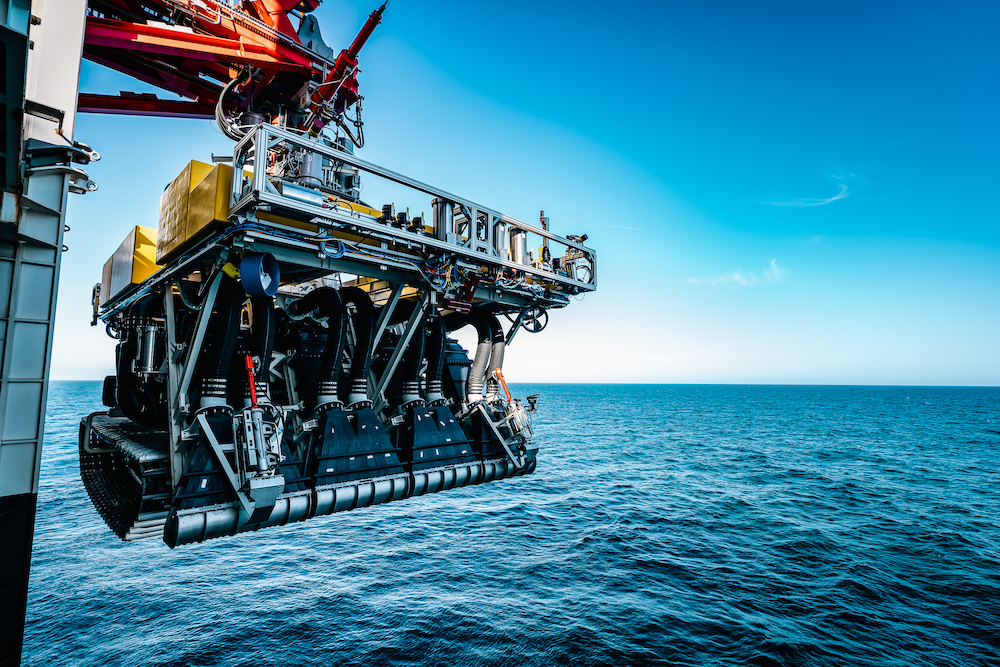
Pilot collector vehicle. (Image provided by The Metals Company)

The Metals Company (Nasdaq: TMC) announced Tuesday that its Australian subsidiary, The Metals Company Australia Pty Ltd., has entered into a research funding agreement with a consortium of institutions led by Australia’s Commonwealth Scientific Industrial Research Organisation (CSIRO) to create a framework for the development of an ecosystem-based management and monitoring plan (EMMP) for its proposed deep-sea polymetallic nodule collection operations in the Clarion Clipperton Zone (CCZ) of the Pacific Ocean.


Mining international waters is in the spotlight as companies and countries are looking at minerals concentrated on the ocean floor that can be used in batteries for smart phones and electric vehicles. Last year, TMC said the nodule resource is now estimated at four megatons (Mt) measured, 341Mt indicated and 11Mt inferred mineral resources.

The CSIRO-led consortium, which includes leaders in the development and application of effective EMMPs in a diversity of marine areas, will leverage TMC’s environmental baseline data — acquired in the NORI project area in the CCZ — to help develop appropriate indicators and tolerance limits to create safe parameters for collecting seafloor nodules, the company said in a news release.


The work will form the scientific foundation of TMC’s future Adaptive Management System (AMS), a predictive system that will use environmental and operational data to enable the company to mitigate operational impacts in the deep-sea environment as much as possible.

A core component of this system, the company said, will be the Digital Twin, which is expected to provide scenario testing of seafloor mine plans, monitoring of nodule collection operations and a dashboard for review by stakeholders.

“Last year our subsidiary, NORI, completed environmental baseline studies in partnership with leading marine research institutions,” Gerard Barron, CEO of The Metals Company, said in the statement.

“We’ve now got one of the world’s most extensive deep-sea datasets to hand over to the CSIRO-led consortium, experts with the practical experience we need to develop a scientifically robust framework for a marine ecosystem-based management program for NORI-D.”

Environmentalists have called for a ban on deep-seabed mining that would extract resources including copper, cobalt, nickel, zinc, lithium, and rare earth elements from nodules on the ocean floor.

Development of technologies to collect polymetallic nodules first began in the 1970s when oil, gas and mining majors including Shell, Rio Tinto (Kennecott) and Sumitomo successfully conducted pilot test work in the Clarion Clipperton Zone (CCZ) of the Pacific Ocean, recovering over ten thousand tonnes of nodules, TMC said.

The polymetallic nodule fields in the CCZ of the Pacific represent the largest known, undeveloped nickel resource on the planet.

The Metals Company said it has invested significant resources in its deep-sea environmental baseline program, and in November 2021 the company entered into an agreement with Kongsberg Digital to develop a Digital Twin.

As TMC prepares for pilot nodule collector system trials in the CCZ later this year, the CSIRO-led research project will propel the development of a management plan focussed on the cumulative impacts of collecting nodules at a regional scale within the CCZ to enable TMC to operate within safe ecological limits, it said.

The company expects to employ the science-based framework developed by the CSIRO-led consortium in the Adaptive Management System — which will also draw on expert opinion and machine learning to improve operational efficiencies and reduce the uncertainty of environmental impacts over time — ahead of planned commercial operations expected to commence in 2024.
Energy crisis is hastening end of fossil fuel era, says India
Bloomberg News | July 13, 2022 | 7

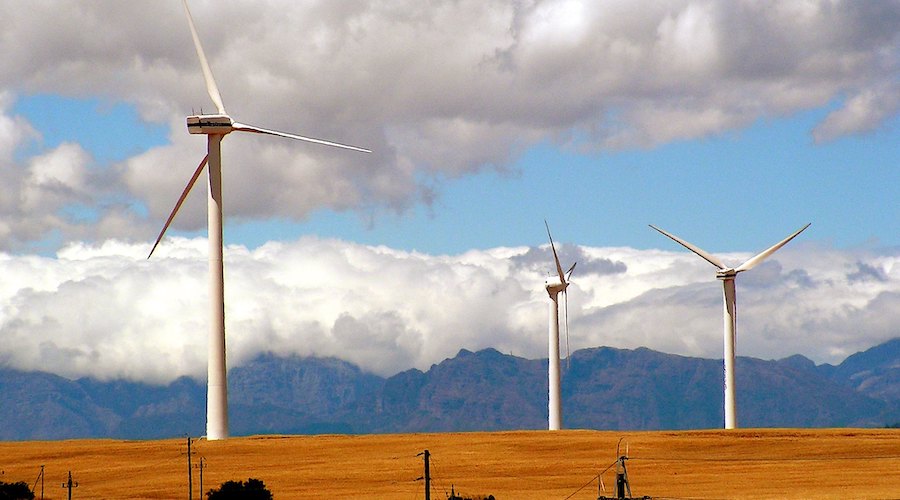
Wind turbines in South Africa. (Image by Lollie-Pop, Flickr).

The global energy crisis is accelerating a shift to renewable sources and hastening the end of the dominance of fossil fuels, according to India’s Power and Renewable Energy Minister Raj Kumar Singh.


Renewables paired with energy storage are now cheaper than coal after the fuel’s price surged in recent months, while fossil sources are also experiencing a lack of investment in new production, Singh said Wednesday in a speech at the Sydney Energy Forum.

“This will actually hasten the energy transition,” Singh said. “Once you have round-the-clock renewables, that’s renewables plus storage, that are viable, then that’s the end of the story for fossil fuels.”

Turmoil in the global energy sector that’s triggered shortages in some nations and sent power and fuel prices soaring has multiple causes, and is not only the result of Russia’s war in Ukraine, according to Singh.

“This is a crisis which has been in the making for some time” and exacerbated by issues including under-investment in supply and a push by producers to raise margins, he said.

The energy crisis began about half a year before Russia’s invasion of Ukraine with shortages of coal, natural gas and then oil as a result of “preemptive underinvestment,” Daniel Yergin, vice chairman at S&P Global Inc., said at the conference.

“The next few months could get far worse,” Yergin said. “Partly because markets are so tight” and also because Vladimir Putin seeks to use natural gas as a weapon to create economic hardship, strengthen populist parties and weaken the alliance against his invasion of Ukraine, he said.

(By David Stringer)