Thursday, July 14, 2022

Congress showers the Pentagon with cash while Americans pinch pennies

Lawmakers this week will rubber stamp a bill authorizing tens of billions more to the Defense Department that it didn’t even ask for.


JULY 11, 2022
Written by BenFreeman and FaezehFathiadeh


Gas prices are at an all-time high. Rent prices have set records for the last 13 months straight. Inflation is increasing so sharply that even the cost of basic utilities has risen by nearly 30 percent in the last 12 months. There are growing fears that the economy is poised to fall into recession.

What is Congress doing as a growing chorus of Americans think these and other economic issues are the most important problems facing the nation today? They’re planning to give military contractors the biggest payday they’ve ever seen.

This week, at a time when Americans are fighting to keep roofs over their heads and feed their families, Congress’s plan is to authorize a record-setting $838.8 billion in spending, not to the American people, but to the Pentagon. As happens nearly every year, more than half of this sum will likely go to Pentagon contractors, whose CEOs make tens-of-millions of dollars while telling their shareholders that war and rising global tensions are good for business.

Yet this week Congress is on track to give the Pentagon $37 billion more than the military even asked for. Instead of funding pork-barrel projects across the country -— such as the Littoral Combat Ship, known in U.S. Navy circles as the “little crappy ship” that reportedly can’t travel half its maximum speed without cracking its hull — Congress could use this money to pay for a variety of things Americans desperately need right now, like school lunches, affordable housing, and utility assistance programs.

Even just lowering taxes by $37 billion or giving this money directly to the American people could put more than $100 in the pocket of every single American at a time when they desperately need it.

Not only would spending in such ways benefit the individuals and communities that receive them, it would also help revitalize the U.S. economy — and make it more equitable to boot. As has been well documented, defense spending is one of the least economically productive ways the government can spend its money. Spending on education, health care, and lowering taxes, for example, have all been shown to create more — and higher paying — jobs.


In addition to the economic costs of funneling ever more money into the Pentagon, contractors that win the lion’s share of the Pentagon pie have left less and less money for the actual members of the U.S. military. Our troops and their families are now facing the same problems of affordable housing and inflation that plague the rest of the nation, all while doing their part to defend the country. As our colleague, Tevah Gevelber, documented in Responsible Statecraft last month, increases in rents and inflation have forced many military families to move further and further away from bases and, in some cases, to live paycheck to paycheck.

With military families and other hard-working Americans struggling to make ends meet, why is Congress poised to give government contractors the biggest taxpayer-funded payday they’ve ever received? In short, Pentagon contractors invest heavily in efforts to get more taxpayer money. They have spread their influence and money around to lobbyists, PR firms, and think tanks to ensure that a rising defense budget lifts all boats … inside the Beltway.

The defense sector is also one of the top spenders on campaign contributions to members of Congress, particularly to those lawmakers with the greatest sway over the defense budget. In fact, members of the House Armed Services Committee who last month approved the defense bill the House will vote on this week have already received more than $3.25 million in campaign contributions from defense contractors in just the current election cycle, according to campaign finance data compiled by OpenSecrets.

Pentagon contractors also spend more than $100 million on lobbying every year and currently have 652 lobbyists working for them, more than double the 307 lobbyists working for labor groups, for example. That comes to one lobbyist for every elected representative and senator with more than 100 lobbyists to spare. More than two-thirds of these lobbyists are actually former government employees, including high-ranking congressional staff, like Speaker Nancy Pelosi’s (D-Calif.) former chief of staff, who went on to become a lobbyist for BAE Systems.

Pentagon contractors also seek out former members of Congress themselves. For example, five weeks after Howard “Buck” McKeon (R-Calif.), who chaired the House Armed Services Committee until his retirement from Congress in early 2015, he began representing a defense contractor that employed his services as a principal in the newly formed “McKeon Group.”

Last, but certainly not least, defense contractors give tens-of-millions of dollars to the nation’s top think tanks every year. Scholars at these same think tanks with defense industry ties often write articles and appear in the media promoting ever higher levels of defense spending.

In short, this is the military industrial complex, and it is working overtime to raise the Pentagon budget at taxpayers’ expense. Worse yet, Congress is adding tens-of-billions of dollars that the military didn’t even ask for, on top of what was already a record setting budget request that is more than the defense budgets of the next nine highest spending countries combined.

While much of Washington is in on the racket, and will also profit from this wasteful government spending, it’s Americans struggling to keep the lights on who will pay the price.

 Watchdogs urge Congress to pump the brakes on new F-35 engine

The proposed spending threatens to waste more 

dollars on the Pentagon’s most expensive program, 

advocates say.

JULY 12, 2022

 Pentagon diverted small business fund to defense industry giants

A new report finds that in a single year, Raytheon, Lockheed Martin, L3Harris, and others got more than $300 million meant for smaller firms.

JULY 13, 2022

Written by  and 

 Turkey’s pyrrhic victory at NATO

Erdogan finally acquiesced to Finland and Sweden’s membership in the Atlantic Alliance after failing to get everything he wanted in return.

JULY 7, 2022

Abe pursued a shift in more militaristic policies for Japan

The influential prime minister, assassinated while campaigning Friday, wanted to take his country into a new, post-war direction.


JULY 10, 2022

Written by Sarang Shidore


The assassination of former Prime Minister Shinzo Abe comes as a tragic shock to a largely violence-free Japan. In the coming weeks, there will be much soul-searching in the nation as to whether this criminal act was an aberration or an early sign of a shift toward a more contentious domestic political culture.

But the horrific murder of a senior politician while participating in one of the most democratic of rituals that Americans can identify with — vigorous election campaigning — should not to obscure Abe’s decidedly problematic legacy when it comes to the Asian order.

Abe flirted with historical revisionism when it came to Japan’s crimes during World War II. In an infamous 2015 speech, he appeared to have walked back from Japan’s clear 1995 statement of apology for those crimes by the then-Prime Minister Tomiichi Murayama.

“We must not let our children, grandchildren, and even further generations to come, who have nothing to do with the war, be predestined to apologise. Even so, we Japanese, across generations, must squarely face history. We have a responsibility to inherit the past, in all humbleness, and pass it on to the future.” (Abe)

“During a certain period in the not too distant past, Japan, following a mistaken national policy, advanced along the road to war, only to ensnare the Japanese people in a fateful crisis, and, through its colonial rule and aggression, caused tremendous damage and suffering to the people of many countries, particularly to those of Asian nations.” (Murayama)

Abe’s statement was flayed by both China and South Korea, and did not help bridge divides on the issue in Asia.

With China in mind, Abe also pushed hard for a more militarist Japanese constitution. The push failed in formal terms. But Abe’s imprint on Japan’s defense policy remains strong, with current Prime Minister Kishida committing to a much greater level of defense spending and the pursuit of a “counterstrike capability.”

A shift in the Japanese defense stance was probably inevitable given Beijing’s meteoric rise and intrusive activities in its neighborhood. Enhanced Japanese security ties with China-wary Asian states such as Vietnam may also be rational responses to shifts in power in the region. But the question remains as to whether Japan, given its historical shadow and considering the danger of an escalatory regional spiral, should pursue an offensive strategy that implicitly includes direct involvement in a Taiwan contingency or retain a defensive approach to dealing with regional challenges.

Abe also is widely seen as the father of the concept of the “Indo-Pacific” and its associated Quadrilateral Security Dialogue, or the Quad — a China-countering group that also includes the United States, Australia, and India. In a seminal speech in New Delhi in 2007, Abe cited a 17th century Mughal prince and spoke of the “confluence of two seas,” namely the Indian and Pacific oceans.

Such a construction has a certain logic in terms of trade and connectivity as Asian economies from China to India to ASEAN states continue to rise. But the “Indo-Pacific” has taken on more ominous contours of a China-exclusion bloc, with the Quad (including de facto military activities) and the AUKUS groupings. The latter (of which Japan is not a part, but has shown keen interest in cooperating with) is an unabashedly military pact, even involving an extra-regional power — the United Kingdom. Incipient bloc formation only adds to the gathering cold war in Asia, in which there is much deterrence in play, but very little reassurance.

Mired in scandals and accused of mismanaging the early stages of the Covid pandemic, Abe ultimately resigned in late 2020 citing health reasons. His legacy will be that of a forceful, influential, and hawkish Asian leader.

Opinion: Welcome to the club of crisis nations, Germany!

Germany is now also in a state of permanant crisis, and it's in good company. As a result, it has become a bit more Brazilian, and a bit more normal. But that's no drama, says Astrid Prange de Oliveira.

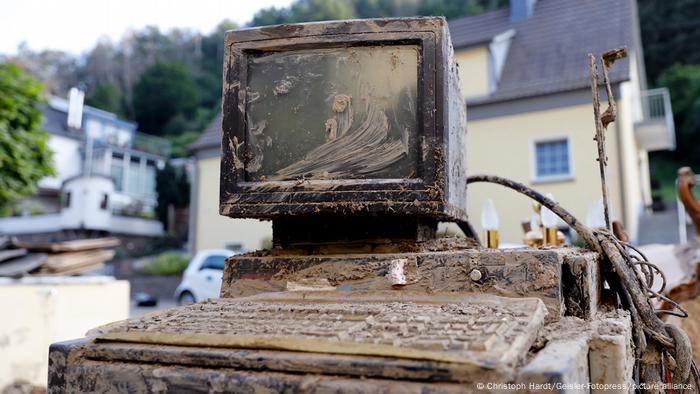
Computer says no: Germany now has its fair share of crises

Irritated, skeptical, astonished. Those were the types of reactions I got when I returned home to Germany during my time as DW's Brazil correspondent. "It must be terrible to live in Brazil," people would say, "High inflation, high crime rates, poverty, drugs, and the Amazon being destroyed at a record pace."

"How can you live in a country like that?" And worse still: "How can you love a country like that?"

Now I field those same questions from the other direction when I vacation in Brazil — an unmistakable indication of just how much Germany and its reputation abroad have changed.

'Alemanha' suddenly sounds different

When floodwaters devastated Germany's Ahr Valley last year, friends in Brazil wanted to send me donations. And now the threat of suffering cold showers this winter because Russia might turn off the gas! — a horrific thought for many Brazilians who like to shower a few times a day.   

"Alemanha" — as the Brazilians call Germany, always commanded a certain admiration — and not only in Brazil. Germany is still considered a societal and business role model in many ways, but critical tones are becoming louder and I am increasingly forced to offer justifications for Germany and its problems, or explain its current situation.

Many of the people I talk to don't find that off-putting. Instead they often nod knowingly, as if to say, "I know what you mean," and welcome you to the club of crisis-ridden nations.  

DW | Astrid Prange De Oliveira, Kommentarbild | PROVISORISCH

DW's Astrid Prange De Oliveira

More Brazil in Germany

Just to be clear: The two countries' problems remain vastly different. I don't want to insult either Brazil nor Germany, nor do I want to overemphasize or downplay long-term crises in either country. My message is simply: Germany has become a bit more Brazilian since the fall of the Berlin Wall.

The coronavirus, war and terrorism, inflation and Brexit, the European debt crisis and climate change — national and international politics have been in permanent crisis for more than 20 years. Before governments have the chance to ask themselves what they have learned from one emergency, another pops up — all with no end in sight.

Despite its reputation and its hopes, Germany was never and will never be an island of blissful content. It's time to finally drop our old ideal. Germany is now in a state of permanent crisis, and as such, finds itself in good company.

How else could it be? Climate change doesn't stop at Germany's borders. And even if bombs aren't falling here the effects of the wars in Ukraine and Syria are leaving their mark. Add to that homemade problems like dilapidated bridges, slow internet, late trains, and shortages of teachers, healthcare workers and skilled laborers.

Exhaustion and resistance

Despite those troubles I love Germany as it is — just like I love Brazil. And there it is again, the question: Can you love Brazil if Jair Bolsonaro is its president? And Germany, despite the far-right Alternative for Germany (AfD)?

Yes, I can, because I admire German society for its ability to resist antidemocratic outbreaks and defend the rule of law. And I admire the many Brazilians fighting to maintain democratic institutions, especially those in the justice system who have continued to successfully fend off attacks by the president.

And despite being constantly stressed and exhausted by permanent political, economic, and social crises — I have to live with them. I can ignore, curse, fight or flee them, or I can simply surrender.

My time spent with street kids in Brazil taught me that change is possible even in the most intractable situations. It taught me that children with no prospects in life can call my pessimism into question, caused me to reflect. Such encounters, in the midst of crisis, can be existential. Because with crisis seemingly here to stay, little rays of hope and human warmth become more important than ever.

This article was translated from German by Jon Shelton   


ZOONOSIS
Lust for giraffe meat, organs in Tanzania leading to extinction of tallest animal

Experts urge awareness campaigns to dispel superstitious beliefs that giraffe organs help treat chronic diseases

Kizito Makoye |10.07.2022
FILE PHOTO

MANYARA, Tanzania

The world’s tallest animal, the giraffe, may be on the brink of extinction in the East African country of Tanzania, as they are being poached to meet the demand for bushmeat and superstitious beliefs that their organs ward off misfortune and treat diseases like HIV/AIDS.

“This is a very serious problem here. Giraffes are innocently being killed by poachers. I urge relevant authorities to stop this madness,” said Kulwa Herman, a resident of the northern Manyara Region, known for the world-famous Tarangire National Park and Lake Manyara National Park.

He blamed the large-scale poaching on beliefs that the brain and bone marrow of giraffes can cure chronic diseases, including HIV/AIDS, and also boost men’s libido.

“People are being deceived by witch doctors to believe that giraffe body parts have magical powers. It’s absolute nonsense,” Herman told Anadolu Agency.

The giraffe's chief distinguishing characteristics are its extremely long neck and legs, the conical skin-covered bone structures on their heads, and its spotted coat patterns.

According to the international Giraffe Conservation Foundation (GCF), Masai or Tanzanian giraffe have been already declared an endangered species by the International Union for Conservation of Nature (IUCN).

The most populous giraffe three decades ago with an estimated 71,000 individuals, only 45,400 Masai giraffes remain in the wild today, according to the foundation.

But the Tanzania Wildlife Research Institute (TAWRI) claims that their aerial survey data recently found a mere 28,850 giraffes in the region.

Despite the giraffe being a national symbol protected under the country's conservation laws, independent researchers believe that almost 2,246 giraffes are illegally poached every year.

Alleged poacher, officer collusion

Herman said that gun-wielding poachers from the northern Arusha region often collude with local ward officers to trap and kill giraffes. They then extract their hair, tail, brains, and fats, which are highly valued on the black market, before escaping into the darkness.

“It’s very easy to kill a giraffe, that’s why many people are attracted to doing so. A single gunshot is more than enough to take down the big animal,” he said.

Benjamin Kuzaga, Manyara regional commander of the police force, said that in the past three months they have seized 560 kilograms (1,235 pounds) of poached giraffe meat.

“This is a serious problem here in Manyara,” said Jeremia Kizinga, a resident of Vilima Viwili village. “The police force should intervene, otherwise these animals will be finished.”

William Mwakilema, commissioner of conservation at Tanzania National Parks Authority, said growing human activity and settlements coming up near the wildlife corridors in the region have also increased the killing of giraffes.

Need to create awareness

“We’re working hard along with other security organs to identify and dismantle a vicious network of criminals involved in this illegal business,” he said. “We will leave no stone unturned until all the perpetrators are arrested and punished under the law.”

Selemani Juma, a local leader at Vilima Vitatu village in Manyara, said there was an urgent need to create awareness to stamp our superstitious beliefs.

He said the illegal trade is fueled by mistaken beliefs that giraffes’ fats and bone marrow and other organs help to treat chronic diseases and increase male sexual prowess.

“These claims are not true. We’re trying to educate the people to ignore these false claims and understand the importance of conserving wildlife, including giraffes, whose population is decreasing at an alarming rate,” he said.


Spillover: Animal Infections and the Next Human Pandemic is a book written in 2012 by American writer David Quammen. ... Upon its release, Spillover received ...
Author: David Quammen
Publisher: W.W. Norton & Company
Published: 2012
Pages: 592 p

Peru strives to keep dialogue going between Las Bambas, Indigenous as truce deadline looms

Valentina Ruiz Leotaud | July 10, 2022

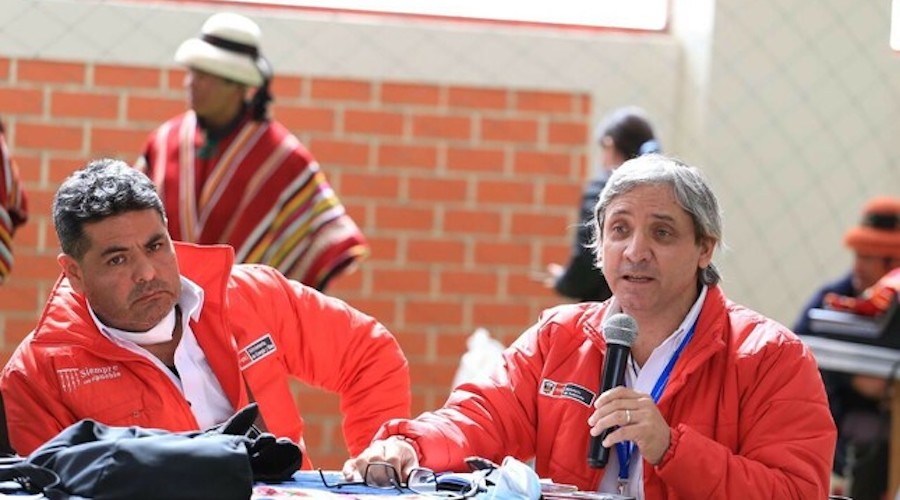
Carlos Eyzaguirre, director of the General Office of Socio-Environmental Affairs of the Ministry of Environment of Peru. (Image courtesy of the Ministry of Environment).

As the dialogue between Chinese miner MMG Ltd and six Peruvian Indigenous communities has come to a stall and the July 15th deadline to find a solution to a months-long conflict looms, government authorities are making an effort to keep the conversation going by assuring that Las Bambas copper mine goes through regular environmental inspections.


During a public hearing in Huancuire, in the southern-central Apurímac region, the director of the General Office of Socio-Environmental Affairs of the Ministry of Environment, Carlos Eyzaguirre, said that the Agency for Environmental Assessment and Enforcement has so far performed 33 environmental inspections at Las Bambas.

According to Eyzaguirre, such inspections have been done as part of the obligations contemplated in the mine’s environmental impact assessment. The EIA – he said – also stipulates a series of commitments related to the way the mine is supposed to operate in relation to the surrounding communities.

The government official also pointed out that the Ministry of Environment is in charge of coordinating a specific working group whose objective is to foster a dialogue between Las Bambas and the Huancauire community, under the supervision of the Ministry of Energy and Mines and the Presidency of the Ministers’ Council.

The working group also operates under a committee created by ministerial resolution nº 182-2022, which is meant to oversee and evaluate the commitments agreed upon by the executive power, MMG and the communities of Fuerabamba, Chila, Choaquere, Chuicuni, Pumamarca and Huancuire.

The conflict

After a number of protests were carried out for almost two months, forcing MMG to halt operations for more than 50 days, a 30-day truce was called on June 15th by the six communities in conflict with Las Bambas.

The actions were originally launched in mid-April by the communities of Fuerabamba and Huancuire, who say Las Bambas has not honoured all of its commitments to them. Both communities sold land to the company to make way for the mine, which opened in 2016.

The Chila, Choaquere, Chuicuni and Pumamarca communities joined later with similar complaints and all six of them are part of the committee aiming to find a middle ground between people’s demands and what the miner is willing to offer.

Following the truce, copper production at Las Bambas has reached normal levels. However, MMG has said that it is unlikely to meet its production guidance of 300,000-320,000 tonnes of copper concentrates this year if a permanent solution to the conflict is not found.

Peru is the world’s no. 2 copper producer and Las Bambas is one of the world’s largest producers of the red metal, accounting for 1% of the Andean country’s gross domestic product.
Court admits class action against Bolivian authorities accused of allowing illegal mining at national park

Valentina Ruiz Leotaud | July 10, 2022 

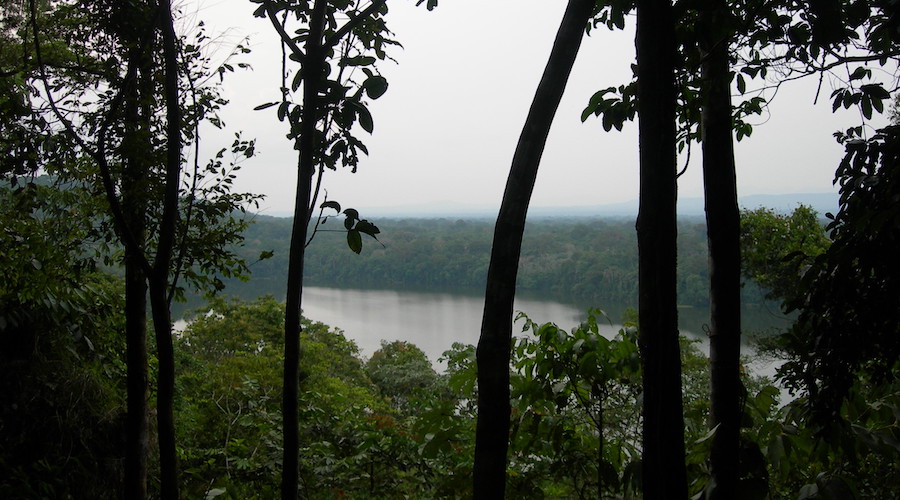
Madidi national park in Bolivia. (Image by Arthur Chapman, Flickr).

The fourth constitutional chamber of the La Paz departmental court of justice admitted a class action against five authorities blamed for allowing or encouraging destructive mining operations in the Madidi national park, located in western Bolivia.


The class action calls for an ecological pause and the cessation of extractive activities that affect the environment and Indigenous peoples.

Madidi occupies an area of 18,958 square kilometres in the upper Amazon river basin and is part of one of the largest protected areas in the world together with the nearby Manuripi-Heath wildlife national reserve, the Apolobamba integrated management natural area and, across the Peruvian border, the Manu biosphere reserve.

Madidi and its neighbours are recognized as one of earth’s most biologically diverse regions.

According to Bolivian senator Cecilia Requena, one of the people involved in the class action, the reserve has been invaded by illegal miners, people logging indiscriminately and even drug smugglers.

Talking to local media, Requena showed the document introduced before the court, which blames the Minister of Environment and Water, Juan Santos Cruz; the director of the National Service for Protected Areas (Sernap), Teodoro Mamani; the Minister of Mining and Metallurgy, Ramiro Villavicencio; the director of the Mining Administrative Jurisdictional Authority (Ajam), Carmen López, and the Governor of La Paz, Santos Quispe, for allowing the destruction of the park.

The first audience where the plaintiffs are to make their case has been set up for July 29, 2022.

In detail, the class action demands the removal from the protected area of illegal mining settlements, mining cooperatives, and irregular and armed groups that create or maintain conflict zones, where violations of fundamental and human rights occur.

It also demands a stop to the granting of mining rights that lead to mineral exploitation in special protection zones.

The legal request also calls for a halt to any actions or activities that alter the natural course of rivers in the region and/or cause mercury contamination. The plaintiffs say that such operations endanger the ecological balance of the integrated management natural area of the Madidi national park and the health of the Indigenous peoples who live there.

During her press conference, Senator Requena said that, given that the court admitted the class action without making any observations, she is optimistic that it will declare an ecological pause at Madidi as a precautionary measure to prevent further destruction of the national park.
Brazilian jeweler sets out on a mission to promote ethical mining

Bloomberg News | July 11, 2022 | 

Ara Vartanian. Image: Ara Vartanian’s website

Brazil is home to many beautiful things, not least its exquisite natural gems, including rubellites, emeralds, and the famed Paraíba tourmalines. Independent Brazilian jeweler Ara Vartanian loves to showcase his country’s stones in his pieces, and now he’s spreading the word that the process of extracting them can be a thing of beauty in its own way: Responsible mining has the potential to dramatically improve lives and even combat deforestation. In 2020 he launched the Conscious Mining initiative to highlight Brazilian mines that invest in their communities and produce stones that can be traced back to the source.


If gemstones aren’t traceable, designers and clients have no way of knowing whether their purchase provided safe employment for workers or if they were mined in an environmentally responsible way. Traditionally, the mining industry has been a rather closed circle that’s kept its practices private, regardless of whether companies were doing wonderful or terrible things.

Vartanian grew up in the jewelry industry—his father was a precious-stone dealer, his mother a designer—and he saw this firsthand. “There was always a secretive aspect to the business,” he recalls. “Old-school guys like my father and the guys that he knew, they would always buy from each other.” Now, in his own business, he says he wants to do as much good as he can through his work. Through Conscious Mining he’s discovered local mines in Brazil that practice responsible extraction and help the local community and environment.

Related Article: What are birthstones?

Gemstones are mined around the world in a variety of ways. Some are massive and produce millions of carats of rough gemstones, while artisanal mines are much smaller. Regardless of size, some mining companies invest in local communities through education, health, and environmental projects, while others simply operate a mine and employ workers. There are also unregulated mines, which could have dangerous working conditions and might harm the local environment.

Vartanian focuses on working with operations that have strong corporate-social-responsibility initiatives, beginning with the Cruzeiro and Belmont mines in Brazil. He was impressed with the quality of the stones and by what he saw when he visited the mines, in terms of both mining conditions and benefits to the community. He wanted to find other mines with different stones that were also doing good things in their communities, but he realized: “There was nobody that I could call who would say, ‘These guys are good.’” Brazil has no monitoring agency or even a shared database to consult. It was also disappointing for Vartanian to realize that “sometimes the good guys are also the bad guys,” he says. “A lot of brands were doing more marketing than actual doing.”

So he decided to do it himself, by visiting mines he thought were doing good work and persuading them to bring their practices to light. In addition to rubellite and indicolite from the Cruziero Mine, he uses emerald from Belmont as well as Paraíba tourmalines from the Brazil Paraíba Mine.

Vartanian posts about the mines he uses on Instagram, where he has more than 67,000 followers, to spread the word and educate clients about the source of his stones. His website also has a section explaining his sourcing standards and why responsible extraction matters. These mines improve the quality of life in local communities not just with employment and education, but also through reforestation and water treatment projects. Vartanian is proud of his heritage and uses many Brazilian stones, especially Paraíba tourmalines. This Conscious Mining project is a way of honoring his country and its natural resources.

“I don’t get any financial benefit from it. I understood that by clapping my hands for people doing good, maybe that would make other miners do good,” he says. Mines have begun asking him to visit their mines to see their initiatives. He’s even had other jewelry designers reach out when they’re looking for specific stones, and instead of being secretive about his sources, he’s happy to connect them with the mines. “Isn’t that funny? They could be competition, and I’m introducing them to the mines,” Vartanian says.

This open spirit and demand for change in the industry has spurred other Brazilian designers to participate in his Conscious Mining initiative, including Fernando Jorge, Verachi, and Prasi. While independent brands can make a difference in their own business practices, they’re more powerful together. Jorge, an award-winning jeweler, was one of the first to join. “I have always been attentive to the quality and provenance of the materials I use in my pieces,” he says. “In 2019, I decided to engage further in the traceability of Brazilian gemstones and went to visit a mining operation in person. Soon after that, I learned that Ara had started an initiative, and he called us to join forces. Together we aim to develop more partnerships with suppliers who have the same concerns as us regarding basic human rights, responsible extraction, transparency in the production chain—which, in my view, is an urgent issue in our industry.”

Vartanian is thrilled with the response and hopes more designers will speak about their own responsible mining practices, or join forces with the Conscious Mining initiative. To educate clients and show the beauty of these stones, he designed Biela, a collection that uses gemstones from these mines in addition to tanzanite and black and white diamonds. The pieces have the same distinctive aesthetic as Vartanian’s other collections, with sharp lines, sweeping curves, and bold, colorful gemstones. They prove that ethically sourced jewelry doesn’t have to sacrifice style or quality, and that they can actually make you feel good about wearing your shiny new bauble or starting a jewelry collection.

(By Kristen Shirley)