Thursday, July 14, 2022

Germany: Ministers revamp climate plan after missing targets

With Germany's transportation and housing sectors lagging behind their climate goals, ministers are hoping to introduce more bike lanes and energy-efficient buildings. But climate activists say the plan is too vague.


Plans for Germany's climate plan includes more energy efficient heating systems and expanded bicycle paths as well as electronic vehicle charging stations

German government ministries on Wednesday presented emergency programs to meet the country's 2030 climate goals after two critical sectors, transportation and housing, missed their targets in the last year.

A German court ordered a tightening of the climate protection law in 2021, which prompted the government of former Chancellor Angela Merkel to set more ambitious goals.

Germany's new coalition government, led by the Social Democrats instead of Merkel's Christian Democrats (CDU), also presented plans to increase climate protection last year. The current coalition's plan included reforming the utility, manufacturing, construction, transportation and agricultural sectors.
Missing targets

The German Environment Agency in March said the transportation sector's carbon-dioxide emissions were at 148.1 million tons last year, while the target had been 145 million tons.

Construction emissions were at 115 million tons with a goal of 112 million tons.

Transportation, which accounted for nearly one-fifth of all emissions in 2021, has been the slowest to act and deliver on its promised goals. Even with a reduction in travel due to the COVID-19 pandemic, greenhouse gas emissions were only 9.4% less than in 1990.

What are German ministries doing to meet climate goals?


A section in Germany's Climate Action Law gave ministries until July 13 to present programs designed to ensure compliance with the country's annual climate targets.

On Wednesday, the Economy, Transportation and Construction ministries presented their plans.

Transportation Minister Volker Wissing said he wants to expand infrastructure for electric vehicles, such as charging stations. Additionally, the ministry will increase funding to explore ways to increase efficiency through innovating heavy commercial vehicles.

Wissing said, "As transport minister I need to weigh up the goal of protecting the climate as quickly as possible on the one hand, and [on the] other hand keep in mind the mobility needs and acceptance of measures in society."

The ministry also said it planned to allocate €250 million euros ($251 million) to add more bicycle lanes by 2030. It would also promote working from home as part of a "digitization push."

But Wissing, a member of the pro-business Free Democratic Party, stopped short of introducing a highway speed limit, which activists have urged as a means to cut emissions.

In construction, new heating systems installed in buildings would have to include 65% renewable energy from 2024. The government also hopes to renovate existing buildings to make them more energy efficient.

How did climate activists react?

Greenpeace called the ministers' plans "nebulous" and said a general speed limit would achieve concrete emissions cuts.

"Volker Wissing wants to extinguish a burning house with water, but at the same time feeds the flames with petrol. It is not enough just to promote the right thing, he must also ensure that we stop doing the wrong thing," Greenpeace Germany said.

The group also criticized that gas furnaces can continue to be installed in buildings until 2024, arguing that the measure should be in effect immediately so that homeowners switch to less polluting heat pumps.
Germany's climate plan

Berlin wants to see a 65% reduction in greenhouse gas emissions by 2030.

In 2021, emissions rose 4.5% compared to 2020. Demand for electricity soared and more coal was used for electricity generation due to gas price hikes and a reduction in renewable output.

Compared with 1990, greenhouse gas emissions dropped 39%.

Germany's overall goal is to see the country fully carbon neutral by 2045.

ar/fb (AP, Reuters)
Race to find Brazil Amazon species before they disappear

Since Bolsonaro took power, average annual deforestation in the Brazilian Amazon increased by 75 percent compared to the previous decade


Jordi MIRO
Wed, July 13, 2022 


In a remote part of the Brazilian Amazon, a scientific expedition is cataloguing species. Time is of the essence.

"The rate of destruction is faster than the rate of discovery," says botanist Francisco Farronay, of the National Institute of Amazonian Research (INPA), as he cuts into the bark of an enormous tree and smells its insides.

"It is a race against time."

The largest rainforest on Earth, still largely unexplored by science, is assailed by deforestation for farming, mining and illegal timber extraction.

According to a MapBiomas study last year, the Amazon lost some 74.6 million hectares of native vegetation -- an area equivalent to the entire territory of Chile -- between 1985 and 2020.


The destruction accelerated under the government of far-right President Jair Bolsonaro, accused by environmentalists of actively encouraging deforestation for economic gain.

The rainforest is considered vital to curbing climate change for its absorption of Earth-warming CO2.

Since 2019, when Bolsonaro took power, average annual deforestation in the Brazilian Amazon increased by 75 percent compared to the previous decade, according to official figures.

- 'Science denialism' -

"Most plant species in the Amazon are to be found in encroached areas," said Alberto Vicentini, another member of the expedition launched by Greenpeace.


It is estimated that "we do not know 60 percent of the tree species, and every time an area is deforested, it destroys a part of the biodiversity that we will never know," said the INPA scientist.

For their research in this remote part of the northern Brazilian state of Amazonas, the team of took a plane from Manaus, flying over hundreds of kilometers of green forest cut by meandering rivers, to Manicore.

From there, a five-hour boat trip by river for a weeks-long expedition to collect plant samples and observe animal behavior, for which they installed cameras and microphones.

The group includes experts in mammals, birds, amphibians, reptiles and fish, trees and flowers. But it is a tough time to be a scientist in Brazil, they say.

"We are living in a moment of science denialism, as we saw with the pandemic in Brazil," with Bolsonaro railing against masks and vaccines, said Vicentini.

"Research institutions in Brazil are under attack by the policies of this government, universities are suffering many cuts," he added.

A sheet of newspaper used by one of the botanists in the group to press a flower has the headline: "Increase in wood extraction in Amazonas" with a photo of two trucks leaving the rainforest loaded with logs.


"There are places where no one has ever been, we have no idea what is there," said INPA biologist Lucia Rapp Py-Daniel.

"Without the resources to investigate, we do not have the necessary information to even explain why we have to conserve" the area, she said.

Resources have been dwindling for a decade -- another phenomenon that has sped up under Bolsonaro, according to critics.

In May, Brazil’s two main scientific societies, the Brazilian Academy of Sciences (ABC) and the Brazilian Society for the Advancement of Science (SBPC) warned that funding for scientific research in the country would be cut by almost 3.0 billion reais (about $560 million) this year.

"We should accelerate the pace of research in the face of the destruction, but instead we are slowing down," says Py-Daniel

Amazon: The tree climbers taking risks for scientific discovery

Jose Raimundo Ferreira, 42, known as Zelao, can scale trees reaching up to 50 metres high in a matter of seconds. He is one of the Amazon’s few expert tree climbers, who help scientists carry out vital research in the world’s richest area of biodiversity – a job with high risk and littles security.

Mass grave, remains of 8,000 Nazi war victims found in Poland

A mass grave containing human ashes equivalent to 8,000 people has been discovered near a former Nazi concentration camp in Poland, the country’s Institute of National Remembrance said.

The institute, which investigates crimes committed during the Nazi occupation of Poland and the communist era, said on Wednesday that the remains were unearthed near the Soldau concentration camp, now known as Dzialdowo, north of Warsaw.

“It’s the evidence of how thoroughly the Germans tried to obliterate the traces of genocide they committed in Eastern Europe,” the Institute said in a statement.

Nazi Germany built the camp when it occupied Poland during World War II, using it as a place of transit, internment and extermination for Jews, political opponents and members of the Polish political elite.

Estimates have put the number of prisoners killed at Soldau at 30,000, but the true toll has never been established.

The grim discovery of approximately 15.8 tonnes (15,800kg) of human ashes means it can be claimed that at least 8,000 people died there, according to investigator Tomasz Jankowski.

The estimate is based on the weight of the remains, with 2kg (4.4lb) roughly corresponding to one body.

The victims buried in the mass grave “were probably assassinated around 1939 and mostly belonged to the Polish elites”, Jankowski said.

In 1944, the Nazi authorities ordered Jewish prisoners to dig up the bodies and burn them to wipe out evidence of war crimes.

Andrzej Ossowski, a genetics researcher at the Pomeranian Medical University, told the AFP news agency that samples from the ashes had been taken and would be studied in a laboratory.

“We can carry out DNA analysis, which will allow us to find out more about the identity of the victims,” he added, following similar studies at former Nazi camps at Sobibor and Treblinka.
US: murder of Jayland Walker was indeed ‘routine’ police practice

Two years after the police murder of George Floyd, racialised police brutality is still tragically ordinary in America.


David A Love
Published On 10 Jul 2022
Demonstrators protest against the Akron police shooting death of Black man Jayland Walker in Akron, Ohio, U.S. July 3, 2022. [Gaelen Morse/Reuters]

The June 27 police murder of Jayland Walker in Akron, Ohio proved yet again what many of us already knew: In the United States, even the most mundane encounter with the police can be deadly for you if you are Black.

The lawyer representing his family said Walker was shot “approximately 90 times”. Body-cam footage released by the police confirmed the count. An initial autopsy showed that the Black man had 60 gunshot wounds on his body at the time of his death.

Walker fled a “routine” traffic stop, authorities said in response. He would be alive today, and his encounter with the police would be truly “routine” if only he did not run.

Of course, these claims do not hold water – for several reasons.

First, there is no guarantee that Walker would be alive if he did not run. Sure, as a Black man, I also tell my son that he should “comply” if he is ever stopped by the police -even when there is no legitimate justification for the stop (as it was allegedly the case with Walker). But I know that compliance does not always save Black people from police brutality.

Second, despite what the police tried to imply, Walker’s encounter with the police was already pretty “routine” for America – indeed, “routine” traffic stops and other “routine” interactions between Black people and security forces routinely end with murder in this country.

But why are Black people still being brutally killed under a hail of bullets for fleeing “routine” traffic stops some two years after the brutal police murder of George Floyd led to global protests demanding this deadly “routine” to come to an end?

The answer, sadly, is simple. Despite all the protests, this tragic routine is showing no signs of changing because by routinely intimidating, harassing and killing people of colour, the American police are doing what it was originally designed to do: Upholding white supremacy.

Indeed, the American police are a product of American enslavement – it was created to address the need to halt slave rebellions. Not too long ago, so-called “slave patrols” were criminalising, brutalising and killing Black people across this country in the name of maintaining order. Today, American police officers are keeping this legacy alive as they criminalise, brutalise and kill Black and other marginalised people.

Today, America is still being policed with a warrior mentality – law enforcement forces are still acting like occupiers and enslavers rather than guardians of communal wellbeing when they are dealing with communities of colour.

That white supremacy has always been and still very much is at the core of American policing is hardly a secret.


There is a fast-growing body of evidence that “a significant number of US police instructors have ties to a constellation of armed right-wing militias and white supremacist hate groups.”

It is therefore not really surprising that Black Americans are more likely to die at the hands of police than others. According to a study published by medical journal Lancet in 2021, between 1980-2019 the highest rate of deaths from police violence occurred for Black Americans, who were estimated to be 3.5 times more likely to experience fatal police violence than white Americans.

And white supremacy is such a core characteristic of law enforcement in America that police officers rarely face any punishment for hurting Black people or taking Black lives.

Timothy Loehmann, the former Cleveland police officer who killed a 14-year-old Black boy named Tamir Rice in 2014, for example, was recently rehired as an officer in the borough of Tioga, Pennsylvania. Loehmann was previously fired from the Cleveland police force, but not for killing Rice. He was dismissed merely for failing to disclose that he was told to resign or face termination for incompetence from a position he previously held with Independence, Ohio police department.

While police officers kill unarmed Black people with impunity – for reasons ranging from fleeing a traffic stop to holding a toy gun – they often manage to arrest white people without much incident or injury even after they commit mass murder.

Indeed, even after he killed seven people and wounded dozens of others during the Independence Day Parade in Highland Park, Illinois earlier this week police officers did not shoot Robert Crimo III, a white man. Instead, they politely asked the assailant, “Do me a favour, get on your knees, get on your knees lay down flat on your stomach.” Similarly, they arrested without incident Payton Gendron, a white supremacist teenager who shot 10 people to death in Buffalo, New York to “prevent Black people from replacing White people”.

The white supremacy of the American police is of course a reflection of white supremacy that is at the core of American society.

Due to America’s racist history, the perception that Black men are “threatening and dangerous” is ingrained in the collective American unconscious. This is undoubtedly contributing to the police’s tendency to be violent towards Black members of the public. In addition, studies have shown Black children – both girls and boys – are perceived as older and less innocent than their white peers, making them more prone to police violence and punishment.

The media also works to criminalise blackness and Black faces and helps create conditions that perpetuate police violence against Black people.

Black Americans, and Black men, in particular, are overrepresented as perpetrators of crime in US news media. Meanwhile, the same media outlets tend to use images and narratives that make white perpetrators of most violent crimes look innocent or at least incapable of taking responsibility for their actions. This feeds into existing stereotypes that people of African American descent are threatening and overall more dangerous than white people.

“The white press, inflames the white public against Black people. The police are able to use it to paint the Black community as a criminal element. The police are able to use the press to make the white public think that 90 percent or 99 percent of the people in the Black community are criminals,” Malcolm X said in 1962, but his words still sound eerily relevant today. “And once the white public is convinced that most of the Black community is a criminal element, then this automatically paves the way for the police to move into the negro community, exercising Gestapo tactics, stopping any Black man on the sidewalk… As long as he is Black and a member of the Black community, the white public thinks that the white policeman is justified in going in there and trampling on that man’s civil rights and on that man’s human rights,” he added.

The murder of Jayland Walker is further proof that the main function and aim of American policing today, as it has been throughout history, is upholding white supremacy. The unprecedented protests against racialised police brutality that followed the murder of George Floyd did not change this fact because they failed the bring about a complete overhauling of existing structures. Only a complete re-imagining of public safety in America and the building of a law enforcement network that is tasked with protecting all Americans equally can bring an end to the violence routinely faced by all communities of colour and especially Black people in this country.

The views expressed in this article are the author’s own and do not necessarily reflect Al Jazeera’s editorial stance

.
David A Love
Philadelphia-based freelance journalist, commentator and media studies professor.

Novak Djokovic inaugurates tennis courts at controversial Bosnian 'pyramids'

Recently-crowned Wimbledon champion Novak Djokovic on Wednesday inaugurated tennis courts at a 'pyramid park' in Bosnia that he regularly visits to recharge his batteries.

Agence France-PresseJuly 14, 2022 

Serbia's Novak Djokovic reacts while playing an exhibition match against Croatia's Ivan Dodig in Visoko, Bosnia. AP

    Recently-crowned Wimbledon champion Novak Djokovic on Wednesday inaugurated tennis courts at a 'pyramid park' in Bosnia that he regularly visits to recharge his batteries.

    The tennis star, known for his new-age spiritual interests, is fond of the hill town of Visoko, where thousands flock every year to what some believe are an ancient man-made pyramid complex with healing powers -- a claim rejected by scientists.

    The 35-year-old Serb, who claimed his 21st Grand Slam title on Sunday, visited the site for the first time in 2020 and called it a "paradise on earth".

    He has returned to the "Bosnian Pyramid of the Sun" complex at least four times, either alone or with his family, always to be warmly welcomed by the unusual site's founder Semir Osmanagic.

    According to Osmanagic, a Bosnian businessman and a self-styled archaeologist, the idea of building a "regional training centre" with two courts was born during Djokovic's last visit in March.

    "This is a special day for Visoko, for Bosnia, for the whole region, for tennis, for sport", Djokovic said after arriving at the new courts.

    "The message of this day is peace, sport, future and health", he added while several hundred fans seated near a dense forest welcomed him with a big applause.

    Unusual show 

    The Serbian star played exibition matches with Croatian Ivan Dodig, Aljaz Bedene of Slovenia and Bosnian tennis player Aldin Setkic.

    Looking very relaxed, Djokovic staged an unusual show, making the audience laugh by pretending to argue with the referees or trying to "bribe" them.

    Ancient civilisation afficionado Osmanagic has claimed for the past 20 years that he has discovered not one, but several pyramids built by a mysterious civilization near Visoko.

    For the past few years his teams have been also clearing underground tunnels near the "Pyramid of the Sun" and he boasts of its beneficial effects on the health of visitors.

    On arrival, Djokovic visited the new courts and went for a walk into a pine forest, which is a part of the park, with his host.

    Djokovic has meditated at the site and during each visit walked kilometres of "energy" tunnels, which are, according to archaeologists, an ancient gold mine.

    "Here, we simply feel the energy, each in its own way. For me, this is one of the most energetically powerful places on the planet, of which I have seen many," Djokovic told reporters after the exibition matches.

    "I simply feel that every moment spent here fills me with energy and gives me strength for future challenges in tennis and in life," he added.

    Ever since Djokovic became a regular, the number of visitors from all over former Yugoslavia has multiplied.

    Both Djokovic and his unusual host do not miss the opportunity to underline values of peace, sharply contrasting the constant combative and nationalist narrative pushed by political leaders of the region devastated in the 1990s wars.

    And Djokovic's faith in Visoko has given the locals a reciprocal faith in him.

    "This man who is so rich that he can spend a vacation on Mars comes here," a souvenir seller near the entrance to the tunnels told AFP.

    "He chose Visoko which nobody knew. That is proof enough that there is something there. He cannot be bought."


    What is MagicK? Aleister Crowley Explains

    ENCHANT

    Concerning the unexpected similarities between magicK and psychology in the work of Aleister Crowley

    NOTHING UNEXPECTED ABOUT IT

    During a time when the prevailing concept of magic was starting to be regarded as a mere spectacle; as a series of tricks and illusions meant for children, multifaceted British occultist Aleister Crowley got to be known as the Last Great Magus of the West.

    Crowley was a member of many secret societies, including the renowned Golden Dawn, a place that harbored members as brilliant as Irish poet W.B. Yeats, and where he got to learn the Hermetic corpus of Western magic, especially what is known as Salomonic magic (derived from King Solomon’s method, and supposedly used to summon the spirits that helped him build his temple).

    Salomonic magic, often referred to as black magic, posits a complex system for the invocation of angels and demons, and for achieving changes in nature by operating through them. This is the sort of magic that is often represented by the use of spells, incantations and rites.

    The enochian language, or “language of the angels”, the Kabbalah, the Goetia, the sigils and other oracular systems such as the runes, comprise the theoretical basis for articulating an intention and its operative resonance in nature. Curiously, however, all this arcane science did not figure into what Crowley himself considered true magick —if anything, he encouraged his pupils to learn all the theory they could only to get rid of it later. For him, magick was fundamentally a psychological system meant to conduct human will towards a complete command over his individuality.

    Crowley recognized that the invocation of entities through magick was an inherent part of our psyche. In his Introduction to Lemgeton Clavicula Salomonis he explicitly states, “the spirits of Goetia are part of the human brain.”

    He named his system “Thelema”, which means will. And will, as in Schopenhauer’s and Nietzsche’s philosophies, is at the center of his model of nature. Intention, just like concentration or directed flight, is one of the most recurring themes in Crowley’s vision of magick.

    Magic, as he explains, is the “Science and Art that provokes Change in conformity with the Will”, and that “all intentional acts are acts of magic.” So, like Schopenhauer, Crowley noted that will had the agency to merge with the primordial flow of the universe —So, in order to act upon nature all that was needed was to channel that will together with intention.

    The magus maintained that human beings, by nature, have the capacity to produce changes in their environment, and that the only requirement to prompt this was to follow one´s own path; that is, to do as we wish. In his book Magick in Theory and Practice, Crowley explains:

    “Anyone who is forced from his own course, either through not understanding himself, or through external opposition, comes into conflict with the order of the Universe.” He goes on to say that “Magick is the Science of understanding one’s self and one’s own situation. It is the art of applying this knowledge in action.” It seems almost as if his definition of magic could have come from a psychology manual on the importance of self-knowledge.

    The secret of Crowley’s system, based on individuality and self-knowledge; or better, on the practice of individuality and self-knowledge, lies in the belief that the individual is a microcosmic image of the universe (or of God). Therefore, if someone applies this understanding by using his intention, he will be using the intention of the universe.

    This is, perhaps, how magic operates.
    Chinese, Australian astronomers detect key process of binary evolution

    CGTN

    An illustration of the evolution of the common envelope of binary stars. /CAS

    A joint research team of Chinese and Australian astronomers has detected a binary star system ejecting a common envelope, a key process of the binary star evolution that could be of great importance to the studies on the universe's expansion and dark energy.

    This is the first time scientists have observed direct evidence of the key process of the evolution of the common envelope of binary stars. The study was published online in the Monthly Notices of the Royal Astronomical Society on Thursday.


    Li Jiangdan, the first author of the article from the Yunnan Observatories of the Chinese Academy of Sciences (CAS), said a sun-like star in a binary system would evolve into a red giant star and would eventually become a hot subdwarf star and then a white dwarf. The research team has found a binary system consisting of a hot subdwarf and a white dwarf, coded as J1920, about 23,000 lightyears from Earth.

    In the system, the hot dwarf transfers its mass to the white dwarf via an accretion disk. The two stars get closer and spin with each other faster and faster. About 10,000 years ago, they ejected their common envelope, made up of gas, which is expanding and leaving the binary system at a speed of 200 km per second, Li said.

    An illustration of the evolution of the common envelope of binary stars. /CAS

    Han Zhanwen, the leader of the Chinese research team and a CAS academic, said the binary system is like a double-yolk egg that is ejecting its egg whites.

    "More than 50 percent of the stars in our universe are binaries. Therefore, understanding binaries is an important content of astrophysics," Han said.

    Chen Xuefei, deputy director of the Yunnan Observatories, said binaries consisting of a hot subdwarf star and an accreting white dwarf are sources of gravitational wave radiation at low frequencies and possible progenitors of type Ia supernovae if the white dwarf mass is massive enough. Type Ia supernova is regarded by astronomers as the standard candle in measuring distances in the universe.


    An animated illustration of the evolution of the common envelope of binary stars. /CAS


    Brian Schmidt, the winner of the 2011 Nobel Prize in Physics, said, "nearly 25 years ago, we measured cosmic distances with type Ia supernovae and discovered the accelerating expansion of the universe, which implies the existence of dark energy. Across the world, we are now refining our supernova measurements to better understand the expansion so as to glean the nature of dark energy. But to reach such a goal, we need a better understanding of type Ia supernovae. These exploding stars are from binary evolution, where the common envelope phase is crucial for their understanding."

    "Common envelopes were first postulated in 1976 and have been widely used as the explanation for double black holes, double neutron stars, double white dwarfs and many other compact binaries. However, until this day, a common envelope has never been seen yet. This new detection provides a way to deepen our understanding of common envelope evolution," said Schmidt.

    It is great to see this collaboration between Australian and Chinese astronomers yield such an exciting result, he added.

    Zhao Gang, a researcher at the National Astronomical Observatories of the CAS, said this discovery not only fills the gap in the study of binary evolution but also opens up a new research direction, making it possible for astronomers to study the early physical properties and states of dense celestial binary formation and evolution in the near future.

    (With input from Xinhua)

    Three medieval Muslim travellers who explored the world

    Ibn Battuta, Ibn Fadlan and Evliya Celebi left eye-opening accounts of their journeys across Europe, Africa and Asia between the 9th and 17th centuries


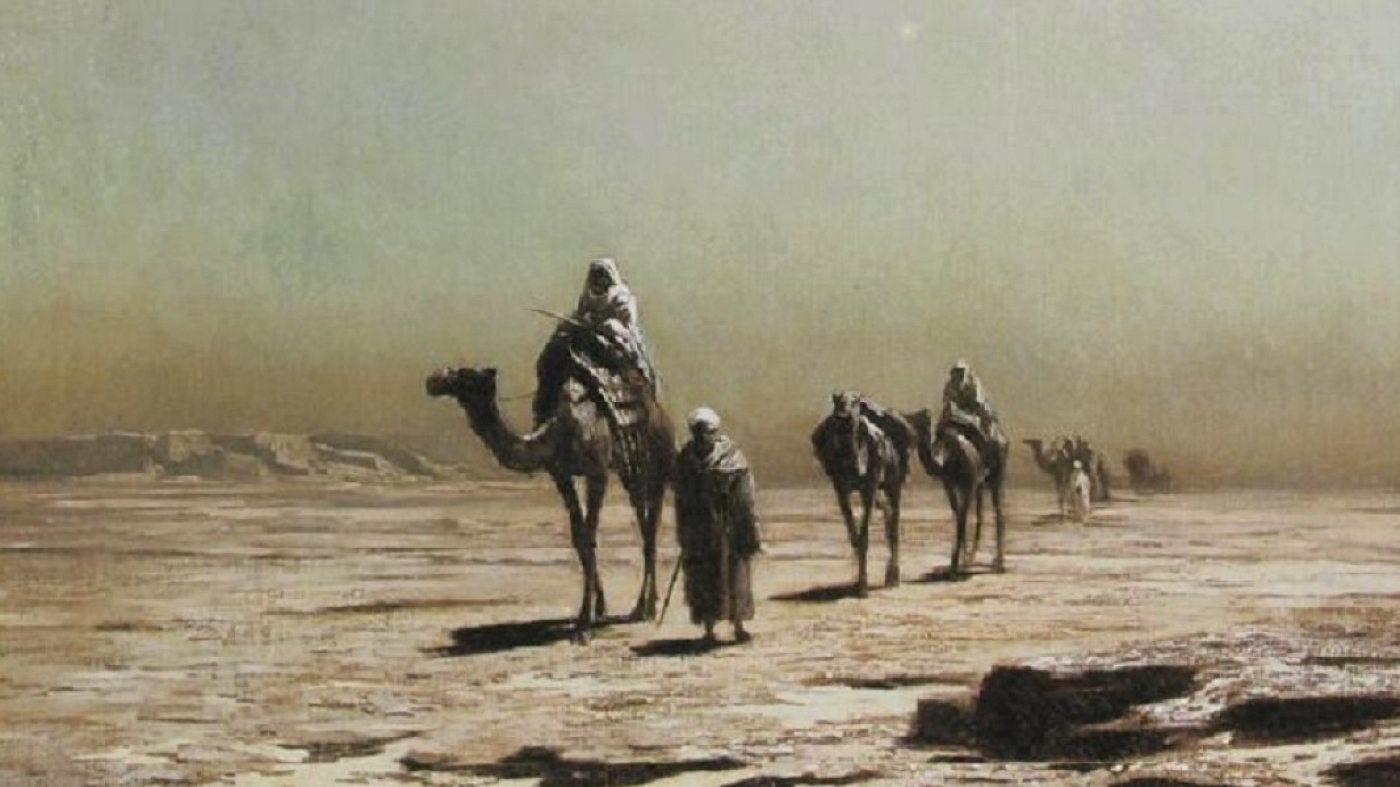
    Arab travellers as depicted by the 19th-century artist Ludwig Hans Fischer
    (Public domain)

    By Indlieb Farazi Saber
    15 June 2022

    Travel across vast swathes of land was a necessary part of life in the Middle East during the Middle Ages. Trade was a primary motivation; so too were religious pilgrimage and proselytisation, and in some cases pure wanderlust.

    Muslim trade developed across the Silk Road and its arteries, which connected the Middle East to lands further to the east, such as India and China. Trade and cultural interaction with Europeans also took place, through shipping routes in the Mediterranean.

    Fortunately, for those interested in the experiences of medieval Islamic travellers, there are a number of surviving travelogues detailing what it was like to journey across vast distances.

    Ilyas al-Mawsili, a Chaldean Catholic priest, is said to have been the first Arabic speaker to have visited South and Central America. He set off from Baghdad in 1668, documenting his missionary travels, first to the Vatican and then onwards in his work Book of the Journey of the Priest Ilyas, Son of the Cleric Hanna al-Mawsili.

    Abul Hasan Ali Ibn Al-Husain Al-Masudi, more popularly known as just Al-Masudi, was one of the earliest travel writers from the Middle East. He detailed his 10th-century visits to Persia, India and Indochina.

    In the 12th century, Andalusian Ibn Jubayr also kept a detailed travelogue of his travels in Syria and Italy, which were said to have inspired the later Moroccan traveller, Ibn Battuta.

    Here, Middle East Eye profiles three of the most influential Middle Eastern travellers, who left behind significant descriptions of their journeys.


    Ahmad ibn Fadlan


    Ahmed ibn Fadlan was born in 879 CE, and while little is known about this Arab traveller or his family, it's clear he was well versed in religious texts.

    It was this credential that proved particularly useful when, in 922 CE, the Abbasid Caliph Al Muqtadir chose Fadlan as an envoy to the Volga Bulgars, who lived in a region called Tatarstan, north-east of the Black Sea in modern-day Russia.

    King Almis of the Bulgars had converted to Islam the previous year, taking the name Jafar ibn Abdallah, and had requested that the caliph send someone to teach his people about Islam, as well as commissioning a mosque and fortress.

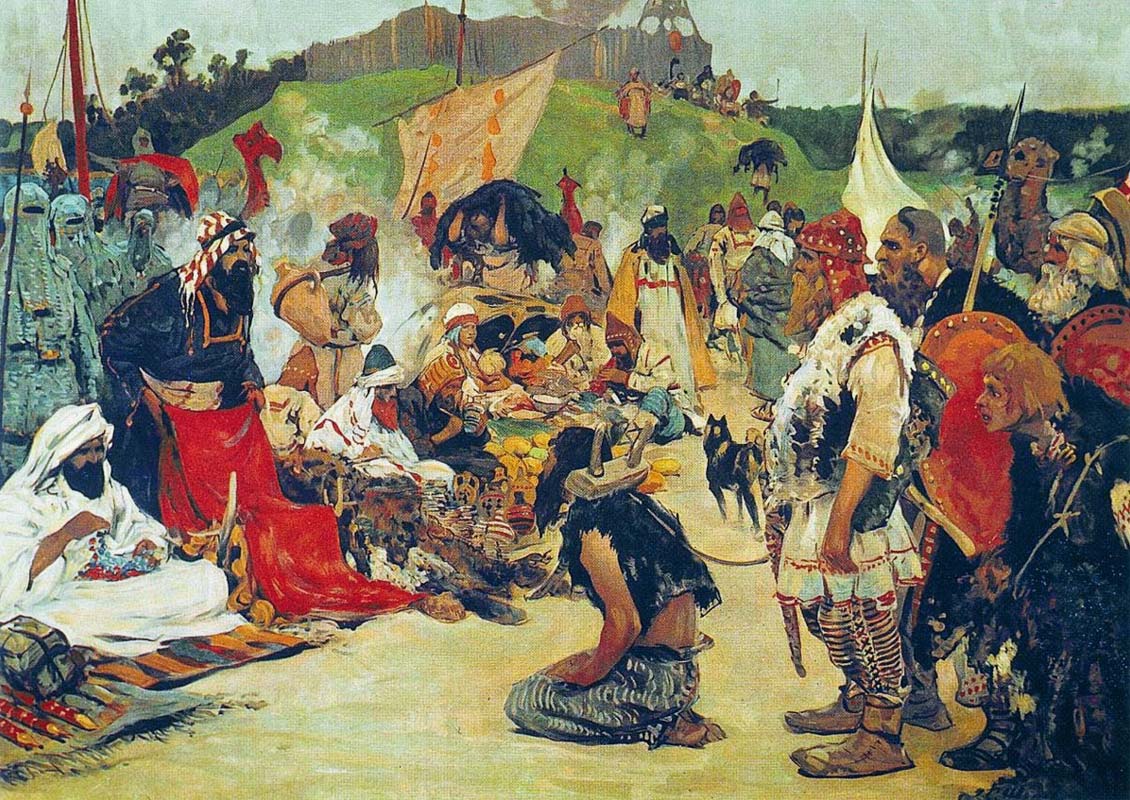
    With that duty in mind, Fadlan set off on an epic journey across Central Asia and into Eastern Europe, encountering various Turkic peoples, as well as the Rus people, who lived along the Volga river system and were widely identified as Vikings.

    An early 20th-century painting depicting Arab trade with the Rus, by Sergei Ivanov (Wikipedia)

    After presenting gifts to King Almis, Fadlan read aloud the letter sent from Muqtadir:

    “I got out the caliph’s letter and… when we had finished reading, they pronounced Allahu Akbar! so loudly the earth shook,” he recalls.

    His extensive writings are some of the only surviving witness accounts about the region during the period and provide crucial details about Viking ritual.


    Vikings, human sacrifice and bad hygiene: Early Islamic descriptions of Russia and Ukraine
    Read More »

    Though assisting the Volga Bulgars was the purpose of Fadlan's travels, it’s the Varangians (or Rus in Arabic), a group of Vikings that he came across along the Volga River, whose legendary tales were the most compelling.


    He describes the men as always being armed with swords and daggers, and “tattooed from finger nails to neck", while the women would wear metal boxes of either “iron, silver, copper or gold” on each breast, with the value of the metal depicting the wealth of her husband.

    Fadlan’s opinion of the people appears to be mixed: he was transfixed by their physical prowess - “I have never seen more perfect physical specimens, tall as date palms, blonde and ruddy" - yet possibly disgusted by their standards of hygiene: “the filthiest of God's creatures. They have no modesty in defecation and urination… they are like wild asses.”

    He also provides a detailed description of a Rus noble’s funeral ceremony, which involves the sacrifice of a young woman.


    Fadlan’s account has inspired contemporary depictions of Vikings, with his descriptions being used to inform TV shows such as the History Channel’s Vikings and the Antonio Banderas-fronted Hollywood movie The 13th Warrior.


    Ibn Fadlan's Journey to Russia: A Tenth-Century Traveler from Baghad to the Volga River
    par Ahmad Ibn Fadlan


    Ibn Fadlan and the Land of Darkness: Arab Travellers in the Far North (Penguin Classics)
    par Ibn Fdlan, Paul Lunde, et al.


    Mission to the Volga (Library of Arabic Literature Book 28)
    par Aḥmad ibn Faḍlān, Tim Severin, et al

    Ibn Battuta


    Abu Abdullah Muhammad Ibn Battuta was born in 1304, in the Moroccan city of Tangier, to a family of Islamic jurists, or qadis.

    Ibn Battuta (which means son of a duckling) covered an incredible 120,000 km in his travels from China to Spain, a remarkable achievement given much of that was done overland on foot and in animal-driven caravans.

    Starting in 1325, with his donkey as companion and the equivalent of a law degree in hand, Battuta was an early version of a gap-year student, setting off into the unknown, hoping to find odd jobs to fund his extensive adventure. His “gap year” ended up lasting 29 years, no doubt driven by an insatiable wanderlust and a personal rule to “never travel on any road a second time”.

    The Great Mosque of Kilwa in Tanzania, built in the 11th century, was visited by Ibn Battuta (Unesco)

    Other motivations throughout his journey were carnal delights, specifically women, at least 10 of whom he married and divorced en route, in addition to numerous concubines who were either gifted to him or purchased by him.

    During one stint as a qadi in the Maldives, he wrote:

    “It is easy to marry in these islands because of the smallness of the dowries and the pleasures of society which the women offer… When the ships put in, the crew marry; when they intend to leave they divorce their wives. This is a kind of temporary marriage. The women of these islands never leave their country.”

    There is no figure on how many children he fathered, but the number is believed to be considerable.

    Early in his adventures, in the port city of Alexandria, Battuta met a Sufi mystic called Sheikh Burhanuddin, who predicted his travels to India and China and asked Ibn Battuta to pass on salutations to some of his acquaintances in these foreign lands.

    “I was amazed at his prediction," he wrote in his memoirs. "And the idea of going to these countries having been cast into my mind, my wanderings never ceased until I had met these three that he named and conveyed his greeting to them."

    Ibn Battuta worked as a jurist and was married to four women during his stay in the Maldives (AFP/Sanka Vidanagama)

    After his second Hajj, Battuta took several wooden boats from Jeddah across to the Horn of Africa. From there, he visited the Somali city of Mogadishu, praising the generosity of its people.

    Heading south along the east African coastline into Kenya and Tanzania, Battuta discovered the Great Mosque of Kilwa, which was made of coral stone, remarking: "The city of Kilwa is among the most beautiful of cities and elegantly built."

    At the time, Kilwa was a busy port and a gateway to central east Africa.

    In 1334, after hearing of the Sultan of Delhi, Muhammad ibn Tughluq, and his generosity to Muslim scholars, Battuta found his way into the sultan’s employ, getting a job as a qadi, and gaining a wife and a concubine.

    But the Berber traveller’s stay was not as appealing as it initially seemed to him. The Sultan was known to be temperamental and would flit between showering Battuta with bonuses and threatening him with imprisonment for treason.

    Battuta’s escape from the Sultan came when he became Delhi’s ambassador to China. There, he visited the Great Wall and the eastern city of Quanzhou, known as Zeitoun by Arab traders.

    His last trip was to the Malian Empire, ruled by Mansa Sulayman. After this, in 1354, he settled back in Tangier to work as a judge and dictate his memoirs to Ibn Juzayy, an Andalusian scholar. The work would become A Gift to Those Who Contemplate the Wonders of Cities and the Marvels of Travelling, abbreviated to Rihla or Journey.

    Evliya Celebi

    Considered to be one of the earliest and most prominent Ottoman travel writers, Evliya Celebi was a 17th-century traveller from Istanbul, driven by his curiosity about language and culture. During his 50-year-long travelling career, he visited Europe and the Ottoman Empire.

    Born Dervis Mehmed Zilli in 1611, the young Turk spent his childhood learning the Quran by heart and in religious devotions, earning the honorific title Evliya Celebi - which roughly means “Godly gentleman”.

    The son of a jeweller to the Ottoman sultans, by the age of 12 his intelligence and linguistic skills had seen him apprenticed to Sultan Murad IV’s court imam.

    As a young man, Celebi was keen to go off and discover a world beyond the confines of a city he had already explored fully. In his first writings he described Constantinople’s worldly cosmopolitan buzz, filled with academics, street performers and young lovers.

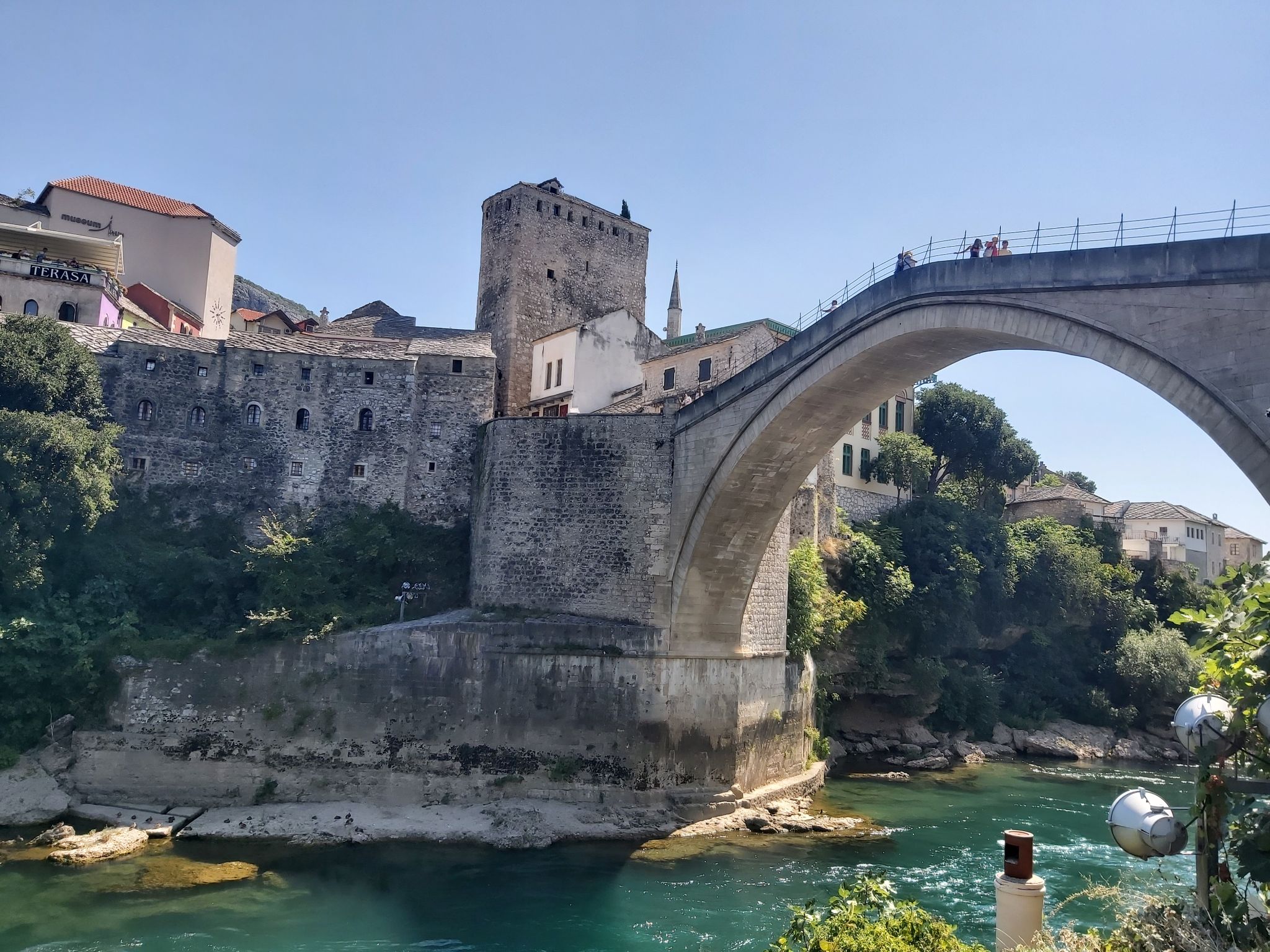
    Mostar Bridge was built by the 16th century Ottoman architect Mimar Hayruddin (Creative Commons/Miłosz Pienkowski)

    On the night of his 20th birthday, he had a dream in which the Prophet Muhammad instructed Celebi to pack his belongings and set forth on a journey to see the world.

    His early travels included a visit to the Crimean Khanate, where he described the slave markets: “A man who had not seen this market, had not seen anything in this world. A mother is severed from her son and daughter there, a son from his father and brother, and they are sold among lamentations, cries of help, weeping and sorrow.”

    Ultimately unmoved by the terrible scene, Celebi took slaves himself, but lost them in a shipwreck off the Black Sea coast, one he barely survived himself.

    On another trip to the River Neretva in Bosnia, he encounters the famed Stari Most bridge, built by the Ottoman architect Mimar Hayruddin. Better known as Mostar Bridge, the structure left him mesmerised, he writes: “I, a poor and miserable slave of Allah, have passed through 16 countries, but I have never seen such a high bridge. It is thrown from rock to rock as high as the sky."

    For casual readers and historians alike, many of Celebi’s descriptions are obvious fabrications. Stories such as the flying Kurdish acrobat who lashes his audiences with his own urine, or the Sufis of the Nile who entered into relationships with crocodiles, challenge the notion that his travelogues are works of non-fiction.

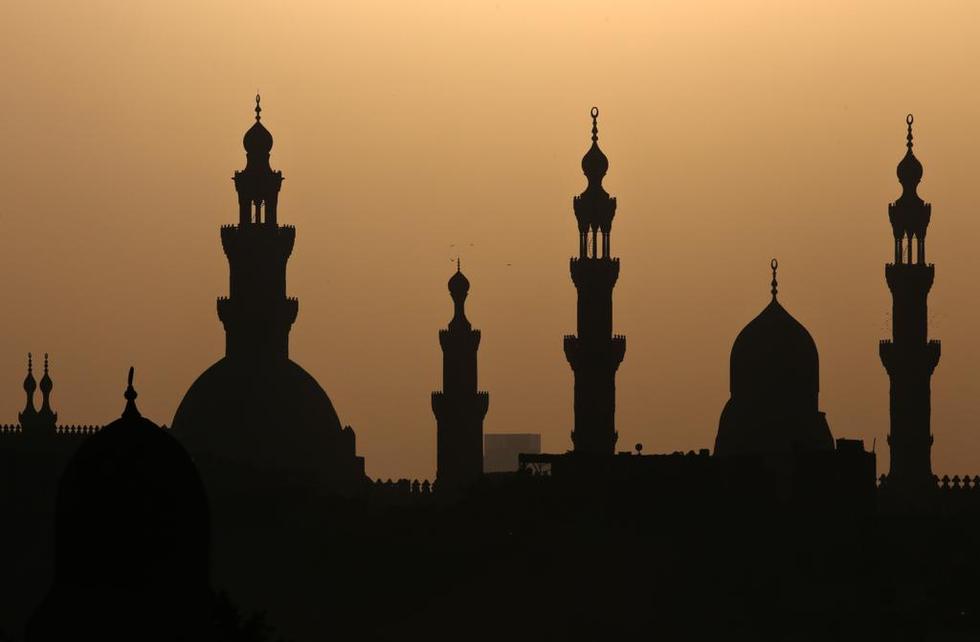
    After decades of travelling, Evliya Celebi eventually settled in Cairo (AFP)

    Other questionable experiences include the account of 40,000 Tatars raiding northern Europe, an incident for which there is no historical proof.

    Nevertheless, there is enough corroborated detail to make his writing an interesting window into post-medieval European and Middle Eastern life.

    Celebi is said to have met witches and sailors, snake charmers and warriors. Travelling through Germany and into Holland in 1663, he is said to have met Native Americans in a Rotterdam guesthouse who told him: "Our world used to be peaceful, but it has been filled by greedy people, who make war every year and shorten our lives.”

    Each of his travelogues ends with a handy phrasebook for the various languages he encountered, including everything from numbers to insults to hurl at a man’s wife.

    Celebi later settled in Cairo, where he died in 1684. His writings were discovered 50 years later and taken to Istanbul to be bound. Though still not fully translated into English, there is an abridged collection: An Ottoman Traveller: Selections from the Book of Travels of Evliya Celebi.
    From the Achaemenids to the Mughals: A look at India's lost Persian history

    Iranian and Indian peoples have interacted for thousands of years but a syncretic Turco-Persian and Indian culture held sway in the subcontinent from the medieval age until the arrival of the British
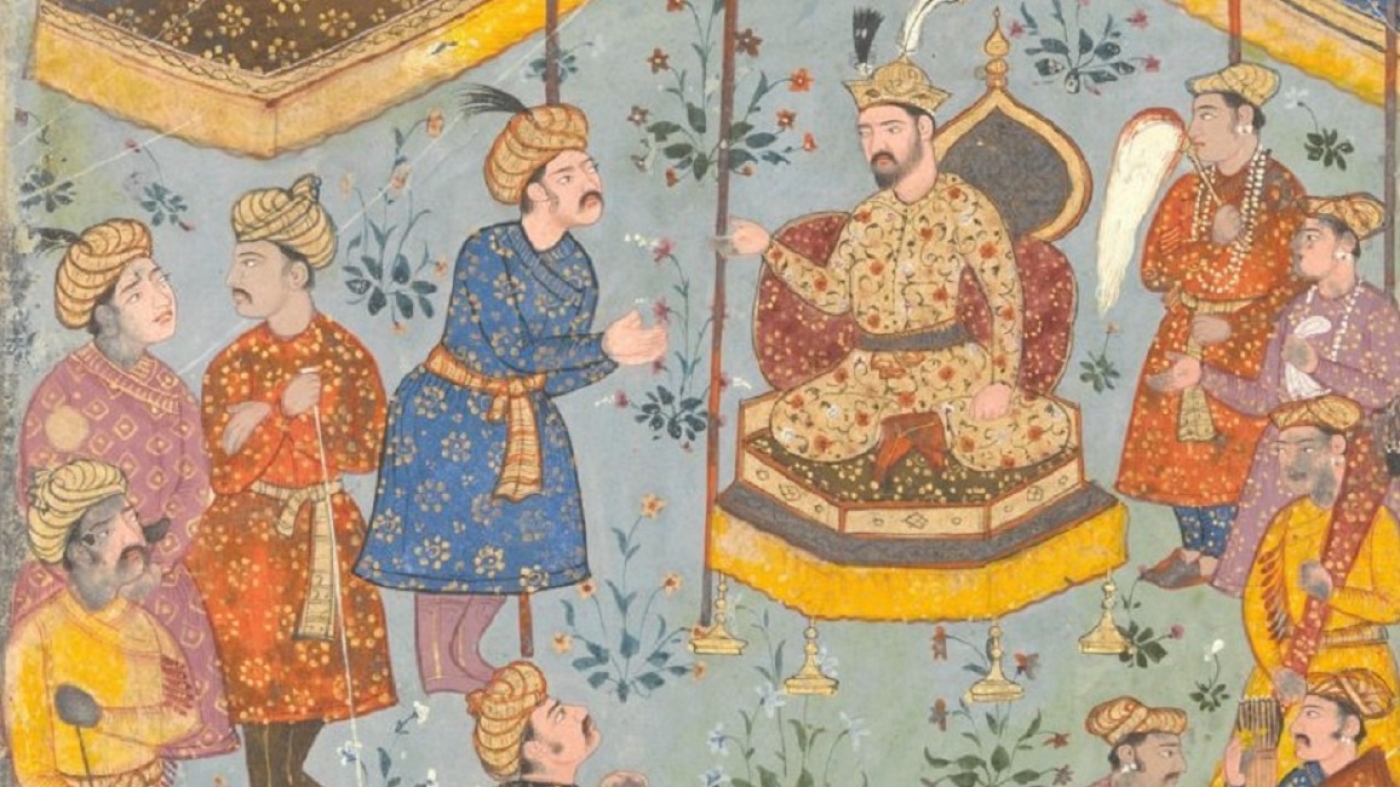

    A Mughal prince (seated) receives a Persian delegation in this 17th century Indian miniature (Public domain)

    By Shahinda Syed
    30 May 2022 

    For a native Sanskrit speaker meeting an Avestan speaker around 3,500 years ago, basic communication might have been challenging. Yet there was enough common ground between the languages to at least get basic ideas across.

    The Sanskrit word naman, meaning “name”, was an exact cognate of the Avestan naman, while the latter would also have recognised the Sanskrit pitr and matr, meaning father and mother, which were patar and matar in Avestan.

    Where they would have likely caused offence to one another was on the subject of religion; the Sanskrit word for heavenly being, or deva, had the meaning of “devil” in its Avestan form, perhaps hinting at religious rivalries among two peoples related by common linguistic and ethnic ancestry.
    Orientalism, exoticism, deception: The story of the Arabian NightsRead More »

    The two languages are part of the Indo-Iranian language family, which split into two branches around 4,000 to 5,000 years ago; the Iranian branch, to which Avestan belonged, and the Indo-Aryan, to which Sanskrit belongs.

    Today, Avestan survives only as a liturgical language used among Zoroastrians, but its influence is still felt among surviving modern-day Iranian languages, such as Persian.

    While Persian is not directly descended from Avestan, it took on the language’s role as the main linguistic medium of the Iranian peoples, first under the Persian empires of the Ancient World, such as the Achaemenid, and then as the lingua-franca of the multi-ethnic Muslim empires that ruled much of the Middle East, Central Asia and South Asia.

    For hundreds of years in the early modern age, an Iranian language, Persian, was the dominant medium of communication for Hindu bureaucrats in the Mughal court as it was in Safavid Iran itself, typifying a millennia-old relationship between the Iranian and Indic worlds.

    The language would remain dominant among India’s elites, alongside Sanskrit-descended languages, such as Urdu and Hindi, until British colonisation of the subcontinent.

    As late as the birth of Pakistan and India, however, many South Asian Muslim intellectuals remained fluent in Persian, and some, such as Pakistan’s national poet Muhammad Iqbal, produced influential literary works in the language.

    “Both (Persian and Sanskrit) were grounded in a prestige language and literature that conferred elite status on its users,” writes Richard Eaton, author of the book India in the Persianate Age: 1000- 1765.

    He continues: “Both articulated a model of worldly power - specifically, universal dominion. And while both elaborated, discussed and critiqued religious traditions, neither was grounded in a religion, but rather transcended the claims of any of them."

    Great empires

    The western portion of the Indian subcontinent, along the River Indus, was an integral part of the first Persian Empire.

    Under Cyrus the Great, the founder of the vast Achaemenid Empire, the Persians conquered parts of the northern Indian subcontinent, roughly corresponding to modern-day Pakistan.

    While it was the military might of the Achaemenids that kept subject peoples in their place, Persian rule was not based purely on the threat of force.

    Indian soldiers of the Persian Army are depicted on the 4th century BCE tomb of the Achaemenid emperor, Artaxerxes II, at Persopolis in Iran
     (Wikmedia/Bruce Allardice)

    Evidence of cordial relations between Indian aristocrats and Persian rulers is evident in the gifts the former sent to the latter, as well as mention of Indian peoples in inscriptions on sculptures found within other Persian-ruled territories.

    After Alexander the Great ended the Achaemenid Empire, the Macedonian Seleucids, Iranian Parthians and the neo-Persian Sasanians ruled territories that were centred in old Achaemenid heartlands and included much of its territory, including northwestern India.

    In the seventh century, Arab Muslims defeated the Sasanians in a manner no less dramatic than Alexander had done to their Persian predecessors a millennium earlier.

    The rise of Islam was to have a significant effect on Persian-Indian relations but in two drastically different ways.
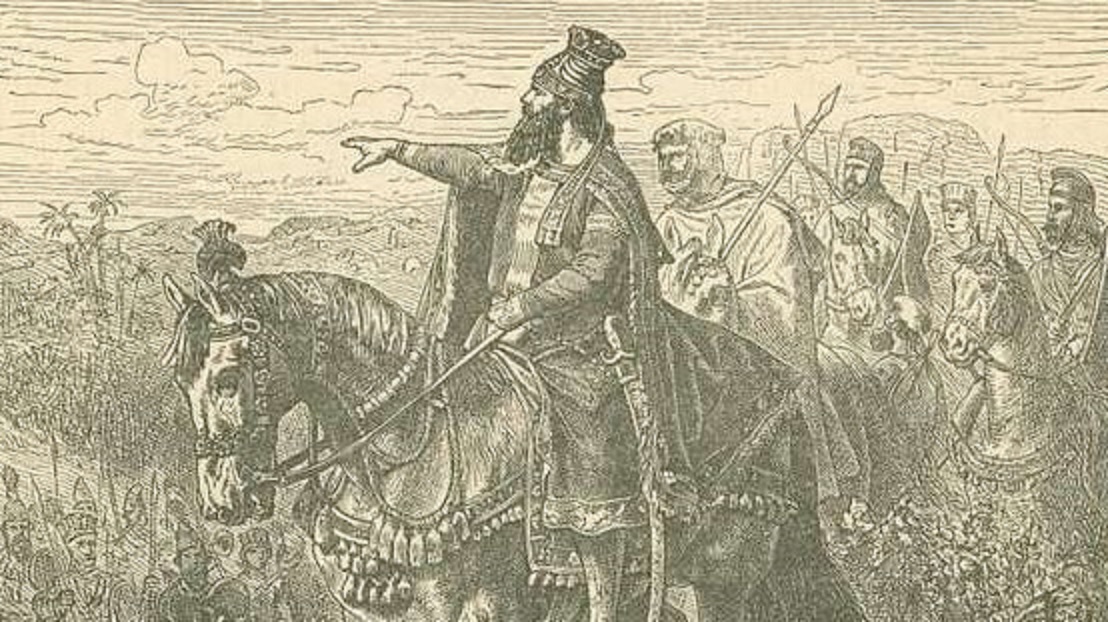
    A 19th century depiction of the Achaemenid king and founder, Cyrus the Great, by the German artist Wilhelm Camphausen (Public domain)

    After the Arab Muslim conquest, a large number of Zoroastrians fled Iran to India due to fear of persecution, settling in regions, such as Gujarat, and came to be known as Parsis.

    Given the small size of the community historically and their cultural importance, with the exception of their Zoroastrian faith, most Parsis no longer speak Iranian languages and are largely assimilated into wider Indian culture, linguistically and culturally.

    The second wave of Persian influence comes from Persian-speaking Muslims, mainly Turkic and Iranian dynasties, who established a synthesis of Persian, Islamic and South Asian cultures, which continues to be reflected in the modern-day culture of South Asia.

    The meeting of Indian, Persian and Turkic culture

    The Persian-inspired culture that developed in South Asia during the medieval period, was itself a descendant of the Turco-Persian culture that developed in Central Asia.

    As nomadic Turkic warriors converted to Islam and settled in mainly Persian-speaking areas, they gradually took on elements of their subjects’ culture, including their fashions, artistic styles and language.

    The syncretic culture formed from this meeting of the Turkic and Persian worlds would then find its way south with subsequent Muslim invasions.
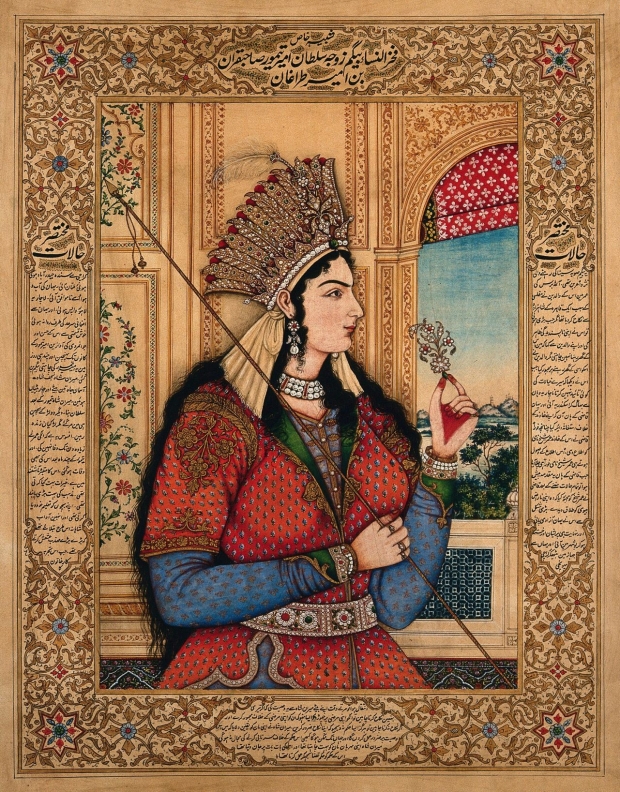
    A late Mughal miniature illustrates the influence of Persian artistic styles in India 
    (Public domain)

    A successful conquest of northern India by Mahmud of Ghazni, the 11th-century Turkic warrior and founder of the Ghaznavid dynasty, was an early catalyst for Persian cultural influence in South Asia.

    Persian culture was patronised under the Ghaznavids, as well as succeeding empires, such as the Ghurids and Mamluks.

    Under the Khilji, Tuglak, Sayyid and Lodhi dynasties, Persian was the official language and the main medium of Muslim India’s artistic culture.

    According to Encyclopaedia Iranica: “After the foundation of the Delhi Sultanate in 1206, the munificence of its rulers attracted many poets and scholars from Persia and Central Asia. Persian literary trends were thus assimilated and refashioned in the complex and intricately multi-layered cultural milieu of India.”

    When the Persian- and Turkic-speaking Timurid prince, Babur, invaded India in the 16th century, establishing the Mughal Empire, he encountered a culture already deeply Persianised that had already produced famed Persian language poets, such as Amir Khusrau.

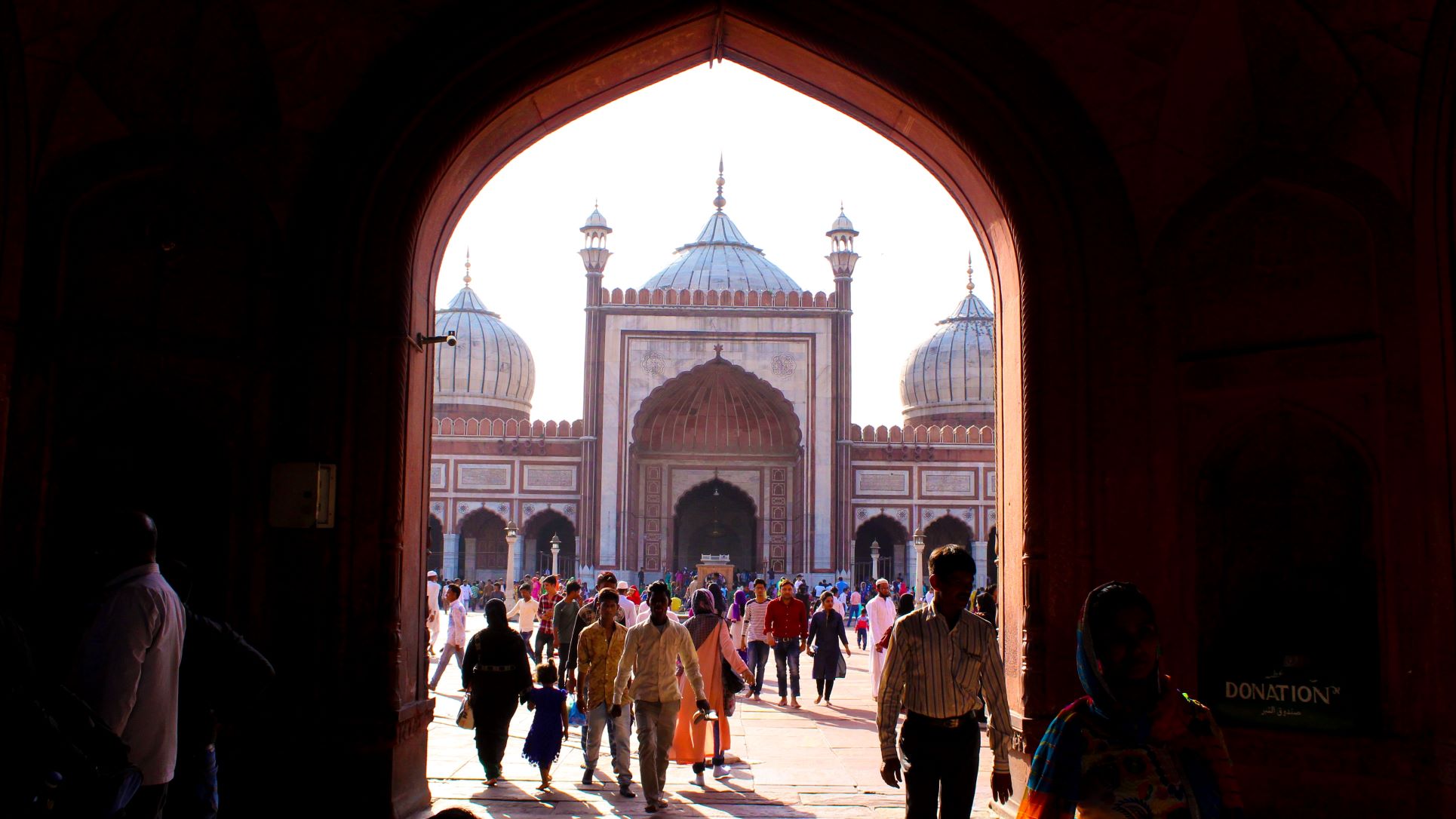
    Indo-Persian culture reached its zenith under Babur’s Mughal descendants, producing architectural masterpieces, such as the Taj Mahal in Agra and New Delhi’s Jama Masjid, among other great architectural achievements across the subcontinent.

    Equally important were culinary introductions to the subcontinent, including Mughal dishes, such as biryani, nihari and various styles of kebab.

    Linguistically too, the Urdu language developed out of the meeting of old Sanskrit-descended Hindi dialects and the Persian spoken in the Mughal court.
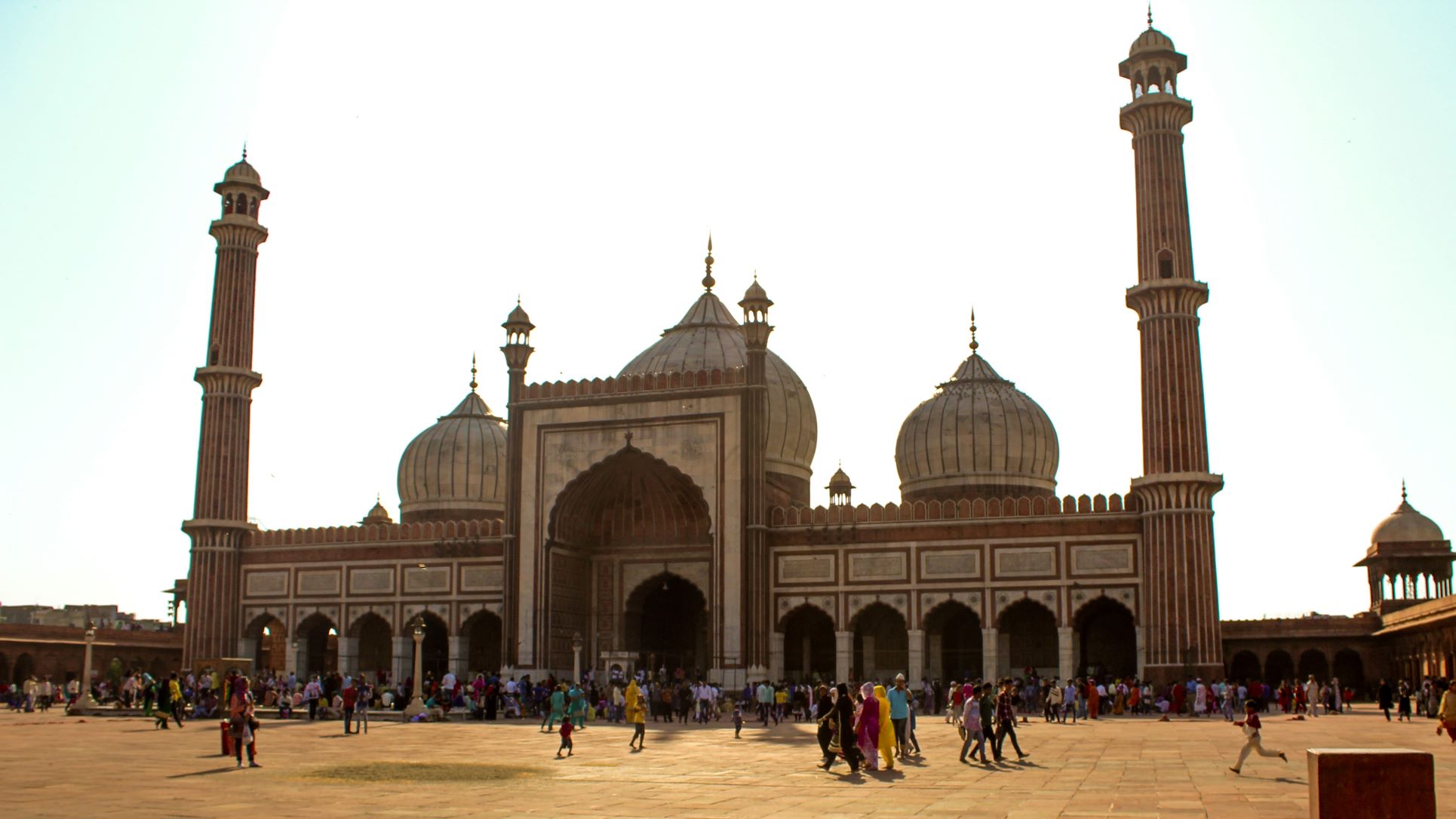
    Commissioned by the Mughal emperor Shah Jahan, Delhi's Jama Masjid combines Persian, Arab and local Indian architectural styles 
    (MEE/Shahinda Syed)

    The abundance of miniature paintings produced during the Mughal period is another testament to Persian influence within South Asia, as are the volumes of printed works written in Persian during Mughal rule.

    The 20th-century Iranian historian Ehsan Yarshater wrote: “Persian poetry, its ideas, images and conventions, set the model for the poets in the eastern lands of Islam irrespective of the language in which they wrote.

    “Thus when in the 16th century, the eastern non-Arab societies of the Islamic world were articulated in three great empires, the Ottoman, Safavid and the Mughal, their literary culture was founded on the Persian model.”

    The demise of Persian in India

    The fall of Persian is linked directly to the demise of the Mughal Empire and the correlated ascendancy of British rule in the subcontinent.

    Initially the British East India Company utilised Persian in its formal operations and the language continued to serve its traditional role as the language of bureaucracy.

    In the early 1800s, Persian language training was still a key part of education for British officers stationed in India.

    But such early accommodations of the Indo-Persian culture were a subject of debate among British officials.
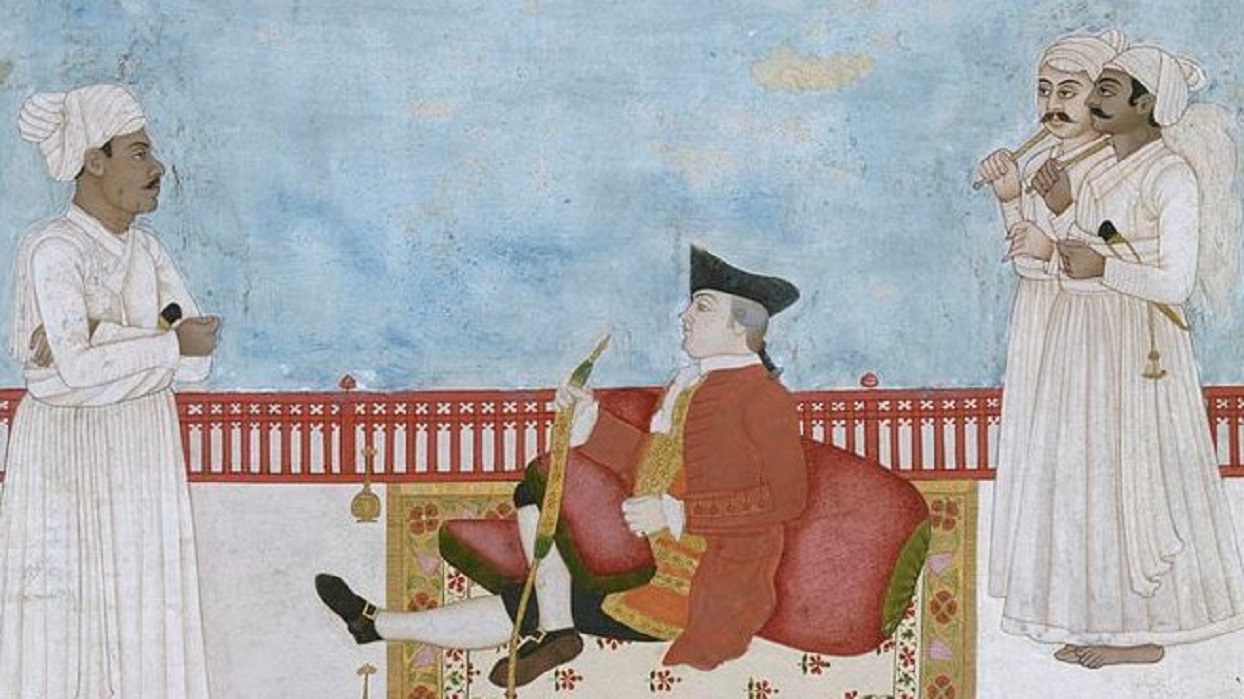
    An 18th century depiction of a British officer in India, until 1832 East India Company officials were trained in the Persian language (Public domain)

    According to Tabreez Ahmed, a scholar of Islamic history and culture based in New Delhi, there was a faction that wanted to preserve “oriental” customs, while another was motivated to preserve the use of Persian as long as it was useful to do so.

    In the end it was the utilitarians who won. When British dominance was firmly established in India, Persian fell out of use in favour of English and in 1832, its use for official purposes was banned.

    “Persian or any other oriental language meant nothing and there was no point teaching or educating people in Persian as this would not benefit the British East India Company at all,” Ahmed says.

    British influence also had another impact on the use of Persian in religious contexts.

    The encroachment of European powers into what were traditionally lands ruled by Muslims set off a wave of self-reflection within the Islamic world, which led to the birth of revivalist movements.

    In South Asia, this most prominently took the form of the Deobandi school of Sunni thought.

    In its attempts to rid Islam of outside influences, Deobandi scholars placed a greater emphasis on approaching the original sacred texts of Islam in their Arabic originals rather than on the Persian-language commentaries that had dominated Islamic scholarship in South Asia until the early 19th century.

    While Persian commentaries continue to be studied in Deobandi institutions, Arabic is today the primary focus of study.

    Residual influence

    British policies set the groundwork for Persian’s eventual demise in India but the language continued to inspire the region’s artists and poets.

    “Persian language, literature and culture had penetrated so deep (in South Asia) that it was impossible to wipe out,” said Dr Abdul Halim, head of the Persian department at New Delhi’s Jamia Millia Islamia university.

    “The presence of great thinkers, poets and philosophers after 1835, like (Mirza) Ghalib, (Muhammad) Iqbal and many others, itself testifies to the fact that Persian language and culture never lost its battle on the ground.”

    For Halim, no history of India can be compiled without a knowledge of Persian, and the academic argues that a revival of the language would help Indians and other South Asians better understand their past.

    The legacy of Persian's historic use in India is evidenced by the number of Persian loan words in Indian languages 
    (MEE/Shahinda Syed)

    “We need to revive Persian language and literature so as to get access to the treasure trove of Persian manuscripts, which are full of information, facts and figures related to the socio-political, historical and economic condition of our vast land,” he said.

    As things stood, Halim warned, most Indo-Persian manuscripts lay in libraries, museums and archives “unattended”.

    For most South Asians, the influence of Persian culture on their everyday life is unavoidable, whether that is in the buildings that surround them, the food they eat, or the words they speak.

    Despite contemporary efforts by Hindu nationalists to rid languages like Hindi of foreign influences, hundreds of years of rule by Persian speakers means almost every Indo-Aryan language has a significant contribution of Persian words to their lexicon.


    Commonly used words, such as asman (sky), darya (sea), zameen (earth/ground), bazaar (market) and darvaza (door), found their way into South Asian languages through Persian.

    Just as the hypothetical Sanskrit speaker 3,500 years ago would have been able to find some common ground with an Iranian speaking Avestan, a modern Iranian or Tajik traveller in Lahore or New Delhi will come across plenty of familiar sights and sounds.
    Torture is an American value. US leaders from Bush to Biden are in denial

    On the International Day in Support of Victims of Torture, US leaders point the finger at others while failing to take responsibility for their government's own torture crimes


    'The US government should begin a meaningful process of addressing the legacy of harm from its torture programmes' (AFP)

    1 July 2022 

    Commemorating the International Day in Support of Victims of Torture on 26 June, both US President Joe Biden and Secretary of State Antony Blinken released statements condemning torture and pledging to eliminate its use.

    Noticeably absent, however, was any commitment to hold US government officials accountable for sanctioning, authorising, funding, and committing acts of torture.

    Biden perpetuates the false narrative that the practice of torture is antithetical to US values, despite its long and well-documented history

    What this silence obscures is that, from Rikers Island and Communication Management Units to Chicago police torture to Guantanamo Bay to the School of the Americas and CIA black sites around the world, the critical fact is that US torture is a systemic and enduring practice. It is an intentional tactic to break down those detained and incarcerated within and outside of the country.

    Biden did, however, call for other states to be held accountable. “When a government commits torture, it surrenders its moral authority and undermines its own legitimacy. And, critically, when torture is committed in the name of national security, it only emboldens and multiplies enemies, fuels unrest, and leaves governments isolated internationally,” he stated.

    By ignoring the ongoing legacy of US torture while pointing the finger at other governments for the same practice, Biden, like other presidents before him, perpetuates the false narrative that the practice of torture is antithetical to US values, despite its long and well-documented history.

    Time for a reckoning

    Although Blinken veered slightly towards recognising the US practice of torture, he downplayed the true nature of the issue, saying that “We acknowledge that we must confront our own shortcomings and mistakes and uphold U.S. values."
    I witnessed US war crimes in Afghanistan - for all its victims justice is due
    Moazzam BeggRead More »

    Torture, however, is not a shortcoming or a mistake. Rather, it is a deliberate strategy employed by the state for the purpose of exerting power and control over its victims. As George Orwell wrote in 1984: “The object of torture is torture.”

    Like Biden, Blinken’s statement sought to warn perpetrators that they would be held accountable. And once again like Biden, Blinken utterly failed to hold up the same mirror to the US government, choosing instead to deflect the problem of torture onto other countries.

    Biden’s comments followed the template of his statement in 2021, which likewise missed the mark by de-centring the experience of survivors, emphasising the impact the revelation of its torture programme has on America's reputation, and rooting the problem with torture in arguments about effectiveness and “terrorist recruitment” rather than human rights.

    These elements represent a pattern in US discourse around torture that prevents a true reckoning with the extent to which the US government has perpetuated it, and the lasting harms it has caused.

    Torture is especially endemic to the War on Terror and has been systematically practised by the US in the name of national security in Bagram, Falluja, Abu Ghraib, countless CIA detention sites across the globe, and at Guantanamo Bay prison. If the US is truly interested in reckoning with the crime of torture, it must undertake the task of working towards real, meaningful accountability, and not be satisfied with rote annual lip service.

    Guantanamo's 'forever prisoner'

    To take just one case, if torture were truly a “stain on our moral conscience”, as Biden stated, his administration would not be fighting to keep the details of the case of torture victim Abu Zubaydah, formerly held by the CIA and now at Guantanamo, secret, but would be actively seeking to address the harm done to him.


    If the Biden administration were truly interested in accountability for torture, then ending Abu Zubaydah’s indefinite detention at Guantanamo would be a good start

    Zubaydah was captured in 2002, alleged to be an Al-Qaeda leader and subsequently subjected to a systematic programme of torture that included being waterboarded 80 times and being made to spend over 11 days in a coffin-size confinement box.

    Despite US officials acknowledging in 2006 that Abu Zubaydah was not in fact a member of Al-Qaeda, he remains detained at Guantanamo without any hope of release. If the Biden administration were truly interested in accountability for torture, then ending Abu Zubaydah’s indefinite detention at Guantanamo - a place synonymous with torture - would be a good start.

    Biden’s vague and evasive statements are not an anomaly when it comes to presidential comments post 9/11 on the UN International Day in Support of Victims of Torture.

    While Trump characteristically declined to commemorate the day at all, both Barack Obama and George W Bush released statements that sought to condemn torture while focusing on its supposed incompatibility with the founding values of the US, de-centring survivors and deflecting accountability.

    US torture legacy

    A few times during the past two decades of the "war on terror," presidential administrations have been forced to address the legacy of US torture head-on. For example, former President George W Bush was compelled to address the atrocities that occurred at Abu Ghraib prison - when it became a global scandal.

    In a statement released in 2004, Bush said: “The American people were horrified by the abuse of detainees at Abu Ghraib prison in Iraq. These acts were wrong. They were inconsistent with our policies and our values as a nation.”

    In other words, even while admitting wrongdoing, Bush’s language quickly reverted back to the narrative frame of “American values” rather than focusing on redressing harm.

    Notably, this statement shortly followed the release of the US Army’s official investigation detailing the torture that occurred at Abu Ghraib, commonly known as the Taguba report, which documented sexual abuse, forced nudity, and other forms of deliberate dehumanisation such as using a dog chain or strap on prisoner’s necks.

    Another government report - the AR 15-6 Investigation of the Abu Ghraib Prison and 205th Military Intelligence Brigade, commonly known as the Fay Jones report - was released on 25 August 2004, and corroborated findings of the earlier investigation and detailed additional instances of abuse.

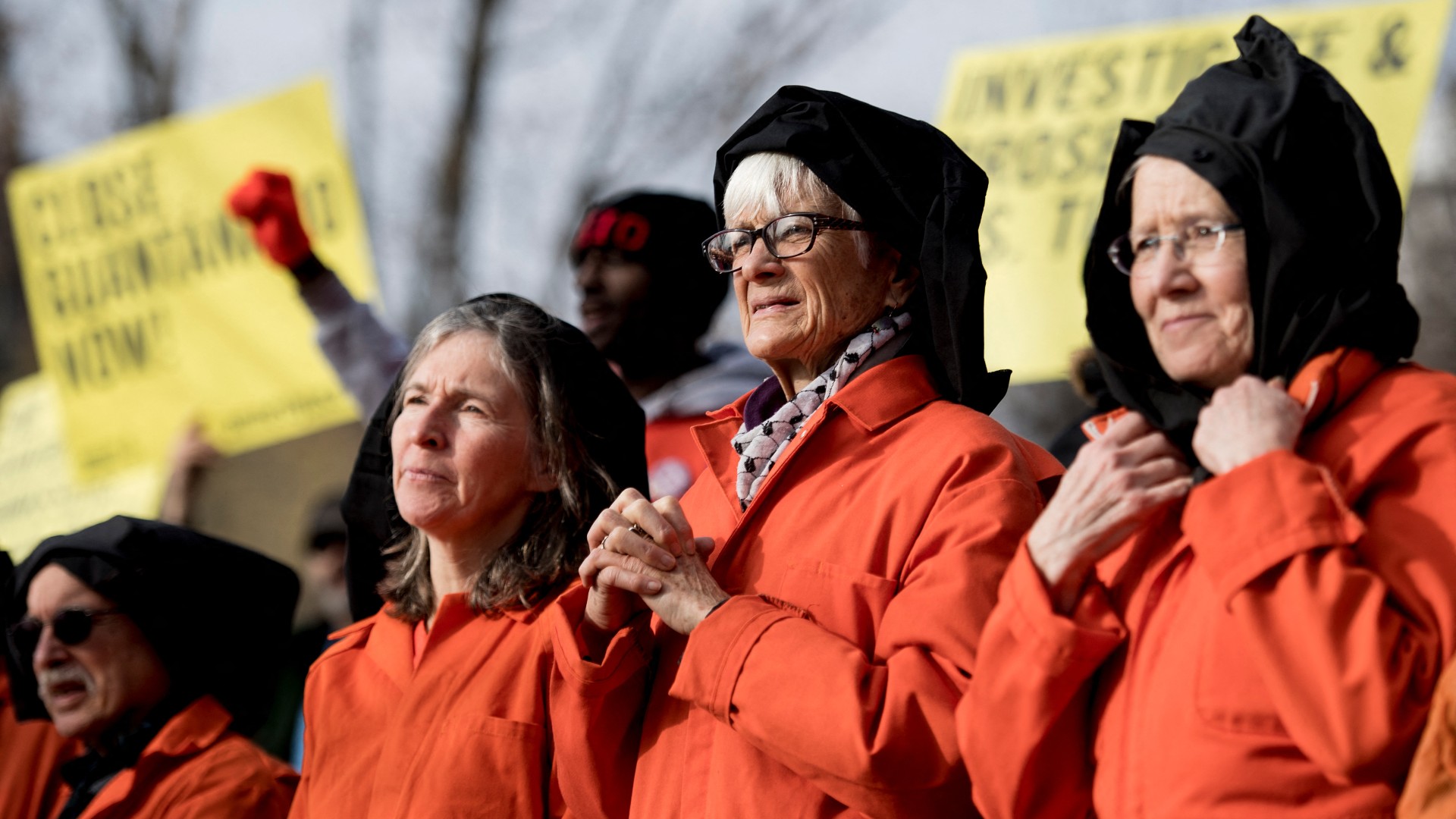
    Activists protest the Guantanamo Bay detention camp during a rally in Lafayette Square outside the White House in Washington, DC on on 11 January 2018 (AFP)

    Despite the evidence thoroughly documenting the systematic and egregious use of torture at Abu Ghraib, only 11 US soldiers, none of them high-ranking, were ultimately convicted of crimes.

    The intellectual authors and high-ranking officials giving the orders have yet to be held accountable and face consequences for their crimes, perpetuating a culture of impunity by giving a tacit green light to continue utilising torture practices.

    Tellingly, Bush only addressed the torture at Abu Ghraib in light of mounting public pressure after details, including photographs, of the shocking treatment of prisoners were exposed.

    No accountability


    Obama, even while trying to distance himself from Bush and his legacy, in fact followed similar discursive patterns. Obama began his presidency by asserting, in regards to torture, that “we need to look forward as opposed to looking backwards”.

    Obama's statement established his disinterest in holding accountable those who designed and implemented torture programmes in the name of national security. His position would be repeated in subsequent remarks throughout his two terms.

    When Obama said we should look forward, what he apparently meant was that the doors of accountability would be closed forever

    In a 2015 statement on the UN International Day in Support of Victims of Torture, for example, Obama said: “No nation is perfect, and the United States must openly confront our past, including our mistakes, if we are to live up to our ideals. That is why I ended the CIA's detention and interrogation programme as one of my first acts in office and supported the declassification of key details of that programme as documented by the Senate Select Committee on Intelligence.”

    But ending the CIA’s detention and interrogation programme hardly counts as taking responsibility for it and the enduring harm left in its wake, and neither does declassifying details of a programme for which no one will be prosecuted. When Obama said we should look forward, what he apparently meant was that the doors of accountability would be closed forever.

    Lack of accountability abounded during the Obama administration - from then-Attorney General Eric Holder’s decision not to bring criminal charges in over 100 alleged cases of torture, to the administration’s ultimate decision not to prosecute any Bush-era officials for their role in green-lighting and supporting torture programmes.

    To seal the deal, in the final days of Obama’s tenure, the decision was made to keep a 6,000-page report detailing CIA torture classified – an action that effectively silenced the truth and put a final nail in the coffin of accountability.

    Torture: An American value


    Guantanamo: An enduring symbol of the savagery unleashed upon innocent Muslims
    Read More »

    The failure of elected representatives to accept responsibility for these systemic and horrific acts of torture doesn’t mean that we should not continue to attempt to hold them accountable, or that calls for truth and justice should end; but it does mean that we have to proactively, consistently, and collectively disrupt the narrative that invisiblises reality and perpetuates injustice.

    In addition to pursuing prosecutions against those responsible, the US government should begin a meaningful process of addressing the legacy of harm from its torture programmes.

    This entails providing compensation for survivors who have been repatriated to their home countries or precariously resettled in third-party countries, often without legal status; the inability to pay rent, gain employment, or seek necessary medical care and mental health support despite enduring years of detention and torture.

    Talk is cheap, and the US feigning concern over torture is even cheaper. Absent true accountability and tangible corrective measures, torture will continue to be an American value.

    The views expressed in this article belong to the author and do not necessarily reflect the editorial policy of Middle East Eye.