Brent D. Griffiths
Fri, July 15, 2022

President Joe BidenKevin Dietsch/Getty Images

Biden said he felt "sorry" for Jamal Khashoggi's fiancée Hatice Cengiz.
Cengiz said Biden would have blood on his hands after he agreed to meet with Saudi Crown Prince Mohammed bin Salman.
US intelligence previously said that MBS was directly implicated in Khashoggi murder.
President Joe Biden on Friday dismissed comments from Hatice Cengiz, Jamal Khashoggi's fiancée, after she criticized the president for his decision to meet with Saudi Crown Prince Mohammed bin Salman and greet him with a fistbump.
"I'm sorry she feels that way, I was straightforward back then. I was straightforward today," Biden told reporters in Jeddah following his meeting with the crown prince and other top Saudi officials.
After a photo went viral of Biden fist-bumping the crown prince, Cengiz published a mock-up on Twitter of what Khashoggi would have written had he not been killed.

"Hey @POTUS, Is this the accountability you promised for my murder? The blood of the MBS's next victim is on your hands."
The US intelligence community previously determined that the crown prince was directly involved in Khashoggi's brutal murder. Biden also rejected criticism that his rapprochement of relations with the kingdom could make it more likely for future dissidents to be silenced or even killed like Khashoggi was.
"God love you, what a silly question. How could I possibly be sure of any of that?" Biden said when asked of possible future reprisals. "I just made it clear if anything occurs like that again that they'll get that response and much more."
Biden struck a defiant tone after his meeting, mentioning that he brought up Khashoggi's murder directly with the crown prince and that he didn't regret saying during the 2020 presidential campaign that the kingdom would become a "pariah."
"Can I predict anything is gonna happen, let alone here, let alone any other part of the world? No," Biden said. "I don't know why you're all so surprised the way I react."

Biden in Saudi Arabia: 'Washington needs a reset with the Kingdom'
ByAFP
RIYADH: Saudi officials indicated Saturday they were keen to move on from the killing of journalist Jamal Khashoggi, one day after US President Joe Biden raised it in his talks with Crown Prince Mohammed bin Salman.
Tensions between the two men had been high ahead of their first meeting, especially after Biden’s administration last year released an assessment by the intelligence community that Prince Mohammed “approved” the operation that led to Khashoggi’s killing and dismemberment in the kingdom’s Istanbul consulate.
In remarks Friday night, Biden called Khashoggi’s death “outrageous” and said he had warned Prince Mohammed against further attacks on dissidents, without specifying what actions he might take.
The Al-Arabiya channel quoted a Saudi official saying the pair “addressed the issue of Jamal Khashoggi quickly” and that Prince Mohammed “confirmed that what happened is regrettable and we have taken all legal measures to prevent” a recurrence.
Prince Mohammed also pointed out that “such an incident occurs anywhere in the world”, highlighting “a number of mistakes” made by Washington such as torturing detainees at Abu Ghraib prison in Iraq, Al-Arabiya reported.
In an interview with CNN, Adel al-Jubeir, minister of state for foreign affairs, cast doubt on the intelligence community’s determination that Prince Mohammed ordered the 2018 operation, something Prince Mohammed has denied.
“We know what the intelligence community’s assessment was with regard to Saddam Hussein having weapons of mass destruction,” Jubeir shot back in an exchange with Wolf Blitzer shared widely on Saudi social media.
Accusations that the Iraqi dictator had such weapons trigged the 2003 Iraq War. None were found.
‘Double standards’
Jubeir also made clear the kingdom believed the Khashoggi affair had been sufficiently dealt with, even though Khashoggi’s remains have never been found.
A Saudi court in 2020 jailed eight people for between seven and 20 years over the killing. Their names were never released, and Khashoggi’s fiancee branded the ruling a “farce”.
“The Kingdom of Saudi Arabia investigated this crime. The Kingdom of Saudi Arabia held those responsible for it accountable, and they are paying the price of the crime they committed as we speak,” Jubeir said.
“We investigated, we punished and we put in place procedures to ensure this doesn’t happen again. This is what countries do in situations like this.”
Despite lingering discord over the Khashoggi affair, the meeting between Prince Mohammed and Biden “went well with a frank exchange of opinions,” Ali Shihabi, a Saudi analyst, told AFP.
Prince Mohammed “responded to Biden, pointing out US double standards of making a huge noise about Khashoggi (a Saudi) while trying their best to downplay the assassination of Shireen Abu Akleh even though she is a US citizen,” Shihabi said, referring to the Palestinian-American journalist shot dead in May while covering an Israeli army raid in the West Bank.
“But beyond that frank exchange the meeting was very cordial and important to put the bad blood created by Biden’s statement behind them,” he said.
Opinion: Biden-MBS fist bump was a gut punch of reality
Joe Biden may have recalibrated relations with Middle Eastern power brokers, but it will do little for the midterm election prospects of his Democrats back home, DW Washington correspondent Michaela Küfner writes.

Will they shake hands or not? That was the big question as Air Force One approached Jeddah on its historic first direct flight from Israel to Saudi Arabia on Friday. Official media there were quick to spread the image of US President Joe Biden greeting Crown Prince Mohammed bin Salman with a fist bump — stopping just short of the handshakes he had extended to Israeli Prime Minister Yair Lapid and Palestinian President Mahmoud Abbas.
This three-second encounter meant "mission accomplished" for Saudis: the ultimate rehabilitation of their future king by the very US president who had vowed to make the country a "pariah" state during his campaign. Candidate Biden had made this a point of principle after a US intelligence report found that Crown Prince Mohammed personally signed off on the killing of the Washington Post columnist Jamal Khashogghi in 2018. Biden said he brought up the killing "at the top of the meeting" with Crown Prince Mohammed, who contests the details of his involvement.
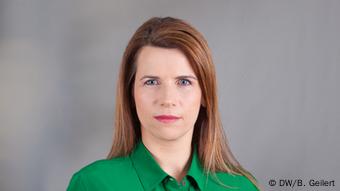
DW Washington correspondent Michaela Küfner
And now, Biden, and with him the United States, are moving on. Instead of isolating Crown Prince Mohammed, MBS, the US president posed for a photo with him.
'Recalibrate, not rupture'
Biden scored some diplomatic successes on his trip to the Middle East: the extension of the truce in Yemen, a direct air link between Israel and Saudi Arabia, and a host of commitments for regional stability by members of the Gulf Cooperation Council, plus Egypt, Jordan and Iraq. The president pledged $1 billion for food security in the region, as well as for the United States to guarantee free shipping routes through the region. These were all steps that prove to the Middle East that "America is back" — as Biden had announced to the world shortly after taking office in 2021. But concrete outputs, like an increase in oil production to ease fuel prices back home, are something that Biden himself only expects during the coming "weeks."
Much of what Biden aimed to achieve is strategic and may only pay off in the longer term — increasing the likelihood that those successes will be lost on US voters. During Biden's first stop in Israel, he had already made clear that the key aim of his Middle East trip was to avoid leaving a "vacuum to be filled by China, Russia or Iran." And the White House sought to "recalibrate, not rupture," relations with Saudi Arabia in order to prevent a further loss of American influence. This concern was fueled further by the fear that Iran could gain a nuclear weapon.
Containing Iran marks a rare alignment of interests for Israel, Saudi Arabia and the United States — but it also requires quite a bit of diplomatic juggling by Biden. While Biden vowed in Israel to be willing to use "all" US capabilities to stop Iran from acquiring a bomb, he said a purely diplomacy-driven revival of the internationally negotiated Iran nuclear deal — which is opposed by Israel — remained his preferred option. Palestinian President Mahmoud Abbas, for his part, was left disappointed by the visit. Biden pledged $300 million in fresh aid, but the much-talked-about potential reopening of the US consulate in East Jerusalem did not materialize.
US voters unimpressed
Most of this is too far from home for Americans struggling with soaring prices. And that's the real danger for a president engaging on the global stage. Many feel that he should rather be taking care of prices at the pump rather than the diplomatic cost of keeping the United States in the global power game. In an op-ed before his trip, Biden felt the need to explain publicly that he was striving for a more secure Middle East that "benefits Americans" and thereby deliver benefits back home.
Leading lawmakers from Biden's own Democratic Party were so concerned by the potential selling out of American values through the meeting with Crown Prince Mohammed that they wrote a letter cautioning the president to truly put US interests "first" when reengaging with Saudi Arabia and other Gulf states. The letter's lead author was none other than the chairman of the House Intelligence Committee, Adam Schiff, who pointed to evidence that Saudi Arabia is also cooperating with China on defense. Schiff tweeted that Biden's fist bump with Crown Prince Mohammed was a "visual reminder of the continuing grip oil-rich autocrats have on U.S. foreign policy in the Middle East."
The bread-and-butter benefits of Biden's Middle East trip will only become apparent in the medium term. That may prove too late for a US president struggling with the highest inflation rate in four decades, a 60% rise in petrol prices within 12 months and a nosedive in approval ratings. The deadline is November 8, when the midterm elections will decide whether Biden's Democrats retain enough seats in Congress to be able to pass meaningful legislation during the second half of his presidential term

The Presbyterian Church voted to declare Israel an apartheid state. Jewish organizations are calling the move antisemitic.
"we are convinced that there is a fundamental difference between antisemitism and the right to critique the policies of Israel deemed illegal under international law,"
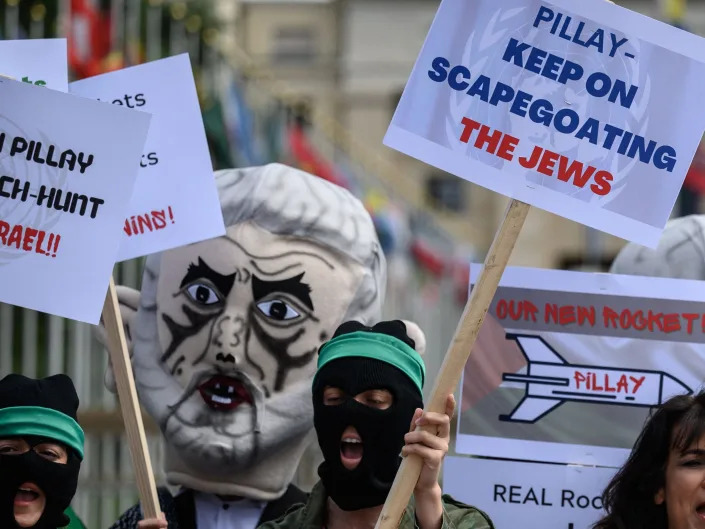
The US Presbyterian Church voted to declare Israel's actions against Palestinians apartheid.
Jewish organizations argued the move is antisemitic, calling the allegation "offensive and false."
"[T]here is a fundamental difference between antisemitism and the right to critique the policies of Israel," read a letter by the church.
In a move Jewish organizations are condemning as antisemitic, the Presbyterian Church USA voted to declare that the actions of the Israeli government against the people of Palestine meets the legal definition of apartheid.
Commissioners of 225th General Assembly of the Presbyterian Church (U.S.A.) voted 266 to 116 in their annual meeting to make public the church's stance that both affirms the right of Israel to provide security to its borders and criticizes human rights offenses perpetrated against Palestinians.
"In 2018, Israel passed a nation-state law, which declares the distinction between Jews and non-Jews fundamental and legitimate, and permits institutional discrimination in land management and development, housing, citizenship, language and culture. This decision among many other practices have confirmed that the policies and practices of Israel constitute apartheid," read a letter by Rev. Dr. J. Herbert Nelson, II, stated clerk of the general assembly of the Presbyterian Church.
The clerk's letter added the Presbyterian Church, which consists of over 1.7 million members, recognizes the legitimacy of the Israeli state but it opposes continuing occupation of Palestine, which it declared to be "illegitimate, illegal under international law, and an enduring threat to peace in the region."
Nelson has previously described Israeli policies toward Palestinians as "enslavement," angering some Jewish organizations. The latest letter has garnered similar reactions, with some accusing the clerk and the Presbyterian Church itself of being antisemitic.
"Jewish Federations are not surprised by the latest antisemitic action taken by Presbyterian Church USA PC (USA) in its vote to adopt a resolution calling Israel an apartheid state. There was a time when their words mattered. That time is long gone." The Jewish Federations of North America said in a statement. "This resolution does nothing to further peace or foster a better future for Christians, Jews, and Muslims; Palestinians or Israelis. Its only intention is to demonize the Jews and Israel with the offensive and false allegation of apartheid."
Rabbi Noam E. Marans, director for interreligious and intergroup relations for the American Jewish Committee told The Washington Post the Presbyterian Church's stance is a "tragedy."
"Presbyterians and Jews in the pews need and want each other in order to address the issues that are most challenging in America today," Marans told The Post. "This prevents that from happening."
The letter written on behalf of Presbyterian leadership stated that the church remains "committed" to combating antisemitism, as well as all forms of violence and discrimination.
"At the same time, we are convinced that there is a fundamental difference between antisemitism and the right to critique the policies of Israel deemed illegal under international law," Nelson's letter read.

Alex Gangitano
Fri, July 15, 2022
President Biden on Friday reiterated his support for a two-state solution in the Middle East, adding that while it’s not the time to restart negotiations, there should be momentum from Israeli progress into integrating into the region.
“Even if the ground is not ripe at this moment to restart negotiations, the United States and my administration will not give up on trying to bring the Palestinians and Israelis and both sides closer together,” Biden said in a meeting with President Mahmoud Abbas of the Palestinian Authority.
“I do believe in this moment, when Israel is improving relations with its neighbors throughout the region, we can harness that same momentum to reinvigorate the peace process between the Palestinian people and the Israelis,” he added.
Biden noted that he was among the earliest supporters of a two-state solution. Israel’s government will be in campaign mode for the next several months, which could constrain conversations about Israel’s policies toward the Palestinians.
Biden said that two-states “remain the best way to achieve equal measure of security, prosperity, freedom and democracy for the Palestinians as well as Israelis.”
“The Palestinian people deserve a state of their own that’s independent, sovereign, viable, and contiguous,” he added. “Two states for two people, both of whom have deep and ancient roots in this land. Living side by side in peace and security. Both states fully respect in equal rights of the others’ citizens, both peoples enjoying equal measure of freedom and dignity. That’s what this is fundamentally all about.”
Biden mentioned the killing of Palestinian-American journalist Shireen Abu Akleh in his comments and said he recognizes there has to be an end to violence in the region.
“I know the goal of a two state seems so far away,” he said. “[While] restrictions on movement and travel or the daily worry of your children’s safety are real and they are immediate. The Palestinian people are hurting now. You can just feel it. Your grief and frustration — in the United States we can feel it. But we never give up on the word peace.”
The family of Abu Akleh had sought a meeting with Biden on his trip and in a scathing letter to the president last week, accused the Biden administration of helping “whitewash” what they said was an “extrajudicial killing” by Israeli forces.
The State Department said earlier this month that a third-party investigation showed bullets from Israeli Defense Forces likely killed Abu Akleh, but that there was “no reason” to believe it was intentional.
Biden arrived at the West Bank earlier on Friday and will visit the Church of the Nativity in Bethlehem later in the day. He will then depart Tel Aviv to fly to Jeddah, Saudi Arabia.
Sanya Mansoor
Fri, July 15, 2022

PALESTINIAN-ISRAEL-US-CONFLICT-MEDIA
Lina Abu Akleh, the niece of slain Al Jazeera journalist Shireen Abu Akleh, sits surrounded by photographs of her late aunt, at the family home in occupied east Jerusalem, on July 13, 2022. Credit - Rosie Scammell—AFP via Getty Images
Al Jazeera correspondent Shireen Abu Akleh was a household name among Palestinians long before her killing on May 11. In the weeks since her aunt’s death, Lina Abu Akleh has found herself advocating for justice. U.S. President Joe Biden arrived in Israel Wednesday amid mounting pressure from congressional Democrats, human rights groups, and Shireen’s family for a full investigation and accountability over her death. (Shireen held American and Palestinian citizenship.) “We will continue to insist on a full and transparent accounting of her death and will continue to stand up for media freedom everywhere in the world,” Biden said Friday during his visit to the West Bank to meet with Palestinian Authority President Mahmoud Abbas.
A U.S. State Department press release on July 4 said that a government analysis concluded that “gunfire from IDF [Israel Defense Forces] positions was likely responsible for the death of Shireen Abu Akleh” and that there was “no reason to believe that this was intentional.” The analysis has been criticized by Palestinians and rights groups. Previous investigations by news outlets and a U.N. inquiry separately concluded that an Israeli soldier likely fired the bullet that killed Shireen and contradicted Israeli government accounts that there was active combat near her in the moments leading up to her death.
Read more: The Problems With Israel’s Version of the Killing of Reporter Shireen Abu Akleh
Shireen’s family had sent Biden a letter requesting that he meet them during his trip to the Palestinian territories, expressing disappointment in the U.S. response, and asking to direct the Department of Justice to “take action on Shireen’s extrajudicial killing.”
TIME spoke with Lina amid Biden’s July 13-16 Middle East trip about her memories of Shireen, what accountability means for her family, and her take on the U.S. response to her killing.
Can you tell me about your relationship with Shireen? What was she like as an aunt? Are there any particular memories that stand out?
Growing up, I was very close to Shireen. She was like an older sister and second mother to me. We’re a very small family. She was like our best friend. She’s someone who we grew up looking up to as a role model. But at the same time, she was the fun aunt. We would sit with her and she would teach us how to play cards.

Lina Abu Akleh and her brother pictured with their aunt, Shireen Abu Akleh, as children.Courtesy of Lina Abu Akleh
Did she have a favorite card game?
Tarneeb [an Arabic trick-taking game involving four players]. A few days before she was killed, I remember she was at home and I was sitting next to her and I was looking at her phone—she was playing tarneeb on her phone. So it’s funny how it went from like literal card games to like a digitized version. And she was still trying to teach me how to play all those years.
Did you ever figure it out?
At some point, I did. I remember I told her I had some friends who were so into it, especially during COVID; she would give me tips: what to do, what cards to use.
Traveling with her was always fun. I used to always help her find the best blazers because she needed to look professional when she was reporting. These are the things I’m going to miss. And spending hours watching Netflix.
Which Netflix shows?
She really liked crime shows and murder mysteries, even though she hated anything gory. The last show we watched together was Black Mirror. She really loved that show. She even had this thing where she would skip all the way towards the end so she would know it’s gonna be a happy ending. Everything I’m sharing now is ironic. Her ending wasn’t happy, unfortunately. But in terms of how I remember her, she was a very fun person—not as serious as she appeared on TV.
What does justice and accountability mean for you and your family in terms of Shireen but also more broadly?
For us, accountability is holding the soldier who killed Shireen, and the person who gave the order to kill her, accountable: seeing them get imprisoned. It’s also for the entire system to be held accountable. This is part and parcel of Israel’s occupation policy. The Israeli government needs to be held accountable. And that is justice for Shireen, justice for all other Palestinian journalists who are killed, and justice for all other Palestinians who experience violence in their daily lives.
Reporting in the Palestinian territories has long been dangerous. At least 30 reporters have been killed in the West Bank and Gaza since 2000. How does Shireen’s death fit into this wider context?
It’s important to note that this is not a separate incident. In 2018, the U.N. Independent Commission of Inquiry released a report stating that Israeli forces target civilians, paramedics, and journalists. Shireen wasn’t the first journalist to be killed. There was another journalist with a very similar case to Shireen in 2003. He was a U.K. citizen, James Miller, who was killed in Rafah, south of Gaza City. The same thing: he was wearing a press vest and a helmet and he was shot in his neck. It’s very unfortunate that in the past there wasn’t accountability. The Israeli government was never held accountable. The military was never held accountable.
Has Shireen being an American citizen made any difference to the situation and the way the U.S. has responded? Should it have made any difference?
It’s important to note that Shireen was a human being regardless of whether she was a U.S. citizen. She was a human being who was killed in a very grotesque, heinous way. But the way the U.S. has been handling the case has been very disappointing. We appreciate all the comfort and solace they’ve shown us from day one. But it’s time to see meaningful action. We were hoping that there would be more engagement and support but unfortunately, that hasn’t been the case. She was a U.S. citizen. She was a female journalist. These are important factors. And considering how much the U.S. talks about human rights, press freedom, protection of journalists, especially women, I feel like it hasn’t been applied to Shireen’s case. Shireen shouldn’t be an exception just because she was a Palestinian American. At the end of the day, she was a U.S. citizen. So they have an obligation; they have a duty to hold the Israeli government accountable. But because she’s Palestinian, and she was killed here, I feel that has made a difference in the way the U.S. has handled her murder.
The U.S. State Department analysis said it found no reason to believe that this was intentional. What’s your response?
I was honestly disappointed that they wrote something like that, especially considering the fact that the statement was not based on any evidence. It was merely an analysis or summary of the Israeli government’s narrative. And the fact that they said that it was unintentional makes me wonder: how did they reach that conclusion? We want to have more information about the credibility, about the qualifications of people who conducted this analysis, who wrote the statement.

Lina Abu Akleh with her aunt, Shireen, in her office on May 2Courtesy of Lina Abu Akleh
What can you tell us about U.S. Secretary of State Anthony Blinken’s outreach to your family?
Blinken called us earlier this week. We spoke to him and reiterated our demands and our request to meet the president upon his visit here. We also expressed disappointment regarding the statements. We felt that we were neglected, that we were abandoned. And that’s when he offered his sympathies. He invited us to Washington, D.C. to sit and talk. It’s important for us to engage face to face. It allows us to understand what their next steps are. But at the same time, we’re hoping that we would meet him here in the place where Shireen was born, the place where Shireen was living, and, most importantly, the place where Shireen was killed. This was her home—Jerusalem was her home. She was the daughter of Jerusalem and Palestine was her homeland. So it was very important that we meet here and unfortunately, until this moment, we still haven’t heard back. There was no definite answer as to yes or no with regards to meeting him here so I’m not sure that will happen [Biden and Blinken departed to Saudi Arabia on Friday].
With regards to meeting him at all or meeting him in the Palestinian territories specifically?
With regards to meeting him in Palestine. I’m not sure about D.C. I don’t have any information about that trip yet.
Can you tell me about yourself and your upbringing?
I grew up in Jerusalem in a Palestinian Armenian family. (My mother’s Armenian.) I was always exposed to politics, partly since Shireen was in journalism. I was always inspired by her work. That’s what led me to pursue education and political studies and eventually work in human rights and policy.
I love Jerusalem but growing up here was definitely not easy. I remember having to cross Israeli checkpoints to get to our school and that to me was a very traumatizing experience. It’s not easy. It’s not something you get used to, and you should never get used to it.
I got my Masters in International Studies from the University of San Francisco, and I chose a concentration in human rights, governance, and global justice. Little did I know that I will be using my degrees, my experience, and my expertise to advocate for justice and accountability for Shireen. I never thought I would be speaking to the press. But when you’re put in such situations, you have no option.
What do you hope Shireen’s legacy will be?
Shireen’s legacy is a big one. She stood for truth, peace, and justice. Her voice will continue to resonate in Palestine, in the Arab world, and abroad. She was a human being before she was a journalist. She humanized the Palestinians; she took her time to understand and listen to them because she was also part of that struggle of freedom. She carried all their voices, she entered every single village, city, refugee camp. She’s covered every story from every angle. That was her message: to show the realities of Palestinians on the ground, to show the realities of the occupation and the violence that Palestinians face on a daily basis. She was from the people and for the people. So that’s why we saw tens of thousands of people show up at her funeral and many continue to talk about her.
You grew up watching some of her work, right?
I used to always sit right next to her and watch her work. I would patiently wait for her to go live so I could tell everyone, “shushu is live.” I never called her Shireen. That was my nickname for her. I would patiently wait for her to show up on TV. Last year, in May, during the last war in Gaza, I remember I was stuck in San Francisco because they closed the airport in Tel Aviv, so I couldn’t fly there. That was the only time where Shireen was not replying to my texts. She usually replies to the minute. So that was the only time and I was very worried. So I was glued to the TV. In San Francisco, I would watch her and make sure that she’s okay. And so that was my source of comfort when I used to see her: she’s safe, she’s reporting. She’s being cautious. I grew up watching her and hearing stories from her so I felt like I was part of her entire experience. She would come home and share everything with me, even in her last days.

Shireen Abu Akleh at the baptism of her niece, Lina.
It seems like she’s been a really powerful influence in your life.
Yeah, very. She did a news report on the struggle to access water around the Jordan Valley. And she had picked this one specific town. She said, Lina, not a lot of people talk about this. And I was like, you know what—my thesis is going to be about the water issue. It’s not covered as much as it should be. You know, she inspired me a lot. Every direction and every decision I’ve made in my life was very much inspired by her.
Is there anything I didn’t ask you that you think is important to know?
It’s important to also talk about the funeral. I say this all the time that Shireen wasn’t killed once. She was killed twice. Once in Jenin and once in Jerusalem when her funeral was attacked by the Israeli riot police. The way they attacked us was barbaric. They were armed to the teeth; they attacked us, the mourners. But even during that time, I felt Shireen’s voice was still louder.
This interview has been edited and condensed for clarity.
Supporters of Palestinians in U.S. see little hope for peace progress with Biden's Middle East visit
Marc Ramirez, USA TODAY
Fri, July 15, 2022
As a Palestinian American herself born and raised in the U.S., Suher Adi has been long attuned to the history of her people and of U.S. foreign policy in the Middle East.
She grew up to understand her heritage in ways separate from the negative images she saw on TV. Adi went on to major in Middle Eastern history and became involved in activism, including dozens of pro-Palestinian rallies held across the U.S. in May 2021 following the ceasefire agreed to by Israel and Hamas after another period of violence.
Those solidarity marches reflected a rise in American support for the cause, most keenly among younger Americans like Adi. But as President Joe Biden visits the West Bank on Friday — on Jumu'ah, the holy day of rest for Muslims — she and other advocates are pessimistic about the visit given what they see as the administration's failure to take any real action to curtail continued Israeli settlement expansions or the expulsions of Palestinians in the West Bank.
What Adi and her peers have seen, she said, is that U.S. policies favoring Israel remain consistent no matter which political party is in charge.
“That’s just a reality that our generation is keenly aware of,” said Adi, 26, of Washington, D.C.
A Gallup poll released early last year showed that while most Americans still side with Israel, a growing number of Americans are sympathetic to the Palestinian cause. But last week's pronouncement by the U.S. State Department regarding the May 11 killing of Palestinian-American journalist Shireen Abu Akleh, shot in the head while covering an Israeli military raid in the region, has further deepened the rift.

Yellow tape marks bullet holes on a tree at a makeshift memorial where Palestinian American journalist Shireen Abu Akleh was fatally shot in the West Bank city of Jenin.
The U.S. State Department said in a statement issued on July 4 that while the gunfire that killed Abu Akleh had likely come from Israeli positions, there was “no reason to believe” that the shooting was intentional. Eyewitnesses, as well as members of Abu Akleh’s crew, say there were no Palestinian militants in the area and that Abu Akleh was wearing a blue vest marked “Press.”
United Nations human rights officials, on the other hand, alleged that Israeli forces were “behind” the fatal shooting, noting it was "deeply disturbing" that Israel had not conducted a criminal investigation.
“What does it say about the freedom of the press that we champion across the globe?" Adi said. "Unfortunately it makes it apparent that the Biden administration does not really care about those things. We’re in a place where a Palestinian-American journalist is being disregarded because of her status as a Palestinian.”
Gallup’s World Affairs poll, released in March 2021, showed that while most Americans still side with Israel, favorable views of Palestinians are on the rise. Gallup's annual World Affairs poll found that about 30% of overall respondents sympathized with the Palestinian Authority, up from 21% in 2018 and higher than the annual average of 19% since 2001.
The Palestinian independence movement in the U.S. gained support at the same time as the Black Lives Matter movement, a concurrence some said was not coincidental; both are rooted in similar anger, especially among the young, over a lack of accountability, police brutality and systemic racism.
The area encompassing Israel and the Palestinian territories is home to a combined 13 million people. Israel exercises control over the West Bank and East Jerusalem. While Israel formally pulled out of Gaza in 2005, it still controls the Strip's northern borders as well as territorial waters and airspace. Several human rights organizations characterize the discrimination and subjugation experienced by some Palestinians as tantamount to apartheid and persecution.

May 20, 2022: Palestinians take cover behind a makeshift barrier during clashes with Israeli forces following a demonstration against the expropriation of Palestinian land by Israel in the village of Kfar Qaddum near the Jewish settlement of Kedumim in the occupied West Bank.
The comparison is what spurred Ethan Nichols, a 20-year-old sophomore at Xavier University in Cincinnati, Ohio, to take an interest in the Palestinian cause and participate in last year's Palestinian rights protests.
"I learned about apartheid in South Africa while growing up," Nichols said via email, "and making that comparison really helped me to understand the oppression facing Palestinian people."
"This is a basic human rights issue, and the Biden administration must take it more seriously," Nichols said. "... We can't pick and choose which nations we condemn human rights abuses in."
Journalist's killing further complicates troubled relations
Others who have long advocated for or studied the issue say they're pessimistic about the president's visit as well, particularly with the fatal shooting of Abu Akleh, whose family, along with the Palestinian Authority, have accused Israeli forces of deliberately targeting the well-known veteran journalist.
“I don’t think there’s any commitment on the part of the U.S. to do anything to move the ball forward,” said Jim Zogby, president of the Arab American Institute, a community advocacy group based in Washington, D.C.
The State Department’s declaration regarding the killing, Zogby said, “was almost an ingenious exercise on obfuscation…. The goal remains how not to infuriate Israel, and not at all to provide Palestinian justice. Snipers don’t shoot from hundreds of yards away and hit somebody in the head and have it be an ‘Oops.’ It’s playing us for fools.”

Israeli authorities project an image of the Israeli and U.S. flags on the walls of Jerusalem's Old City in honor of July Fourth. President Joe Biden is set to visit Israel and the West Bank as part of a broader trip to the Middle East.
Louise Cainkar, a professor of social welfare and justice at Marquette University in Milwaukee, Wis., said Palestinians see Abu Akleh’s killing in the same way that many Americans have viewed the killings of innocent Black Americans by police in the U.S.
“Just like the policing of Arab and Muslim communities in the U.S., Palestinians are oppressed under the pretext of terrorism,” Cainkar said. “But what’s really going on is expansion, just as indigenous people were treated here in the U.S. Do I think Biden will do anything to change this scenario? No.”
Zogby said that for Biden to visit the West Bank without any real pushback against Israeli actions "speaks volumes, that we don't care anything about the lives of Palestinians.... The priority of this administration from the beginning has been not to do anything to disrupt Israeli politics,"
Biden's West Bank visit 'more of a courtesy call'
To alter that perception, Biden must signal to Israeli leaders that the U.S. “will not support policies that only seek to further entrench the occupation and violations against human rights,” said Rev. Mae Elise Cannon, executive director of Churches for Middle East Peace, a coalition of Orthodox, Catholic and Protestant churches working toward Middle East peace.
“Right now, over 1,000 Palestinians in Masafer Yatta are under imminent threat of expulsion,” Cannon said, referring to a smattering of villages south of Hebron, in the southern West Bank. And while Israel has postponed a decision over whether to allow 3,000 new settlements to be built in a contested area that critics say would further divide East Jerusalem from the rest of the West Bank, the issue, she said, “remains a core concern” for her group, based in Washington, D.C.
Biden is expected to announce more than $316 million in aid for various programs to benefit the Palestinian people.

United Kingdom Ambassador to the United Nations Matthew Rycroft and U.S. ambassador to the United Nations Nikki Haley attend a Security Council meeting concerning the situation in the Middle East involving Israel and Palestinian territories, at United Nations headquarters, Dec. 18 in New York City.
Khaled Elgindy, a senior fellow at the Middle East Institute, also in Washington, D.C., described Biden's visit as “more of a courtesy call than anything else.”
Israel's continuing encroachment in the West Bank is, he said, “a big issue that not only relates to the viability of a future Palestinian state, but from a human and humanitarian point of view these are places that Israel is attempting to demographically re-engineer,” Elgindy said. “If there were a real political process, I would expect to see more pushback by the administration on those kinds of measures.”
In addition, he said, guidelines put in place under former Secretary of State Mike Pompeo remain that allow products made in the Israeli-settled areas of the West Bank to be labeled as “Made in Israel.”
“That’s not in keeping with international law and what the Biden administration says, so I’m not sure why that’s still on the books,” Elgindy said. “It’s clear that they want to expend as little political capital as possible.”

Latin Patriarch of Jerusalem Archbishop Pierbattista Pizzaballa (C), accompanied by Latin and Greek clergymen, is given a tour in the Israeli-annexed east Jerusalem neighborhood of Sheikh Jarrah, the site of regular protests against the expulsion of Palestinians from their homes in favor of Jewish settlers on July 28, 2021.
Yonatan Gher, Israeli executive director for Combatants for Peace, a Palestinian-Israeli grassroots activist group, said his sense is that the U.S. had been taking a wait-and-see approach with fresh Israeli leadership after the departure of former prime minister Benjamin Netanyahu, giving the new government time to stabilize.
Instead, with that government mired in turmoil and policies toward the Palestinian territories little changed, “I think they’re now realizing that might not be the best approach,” Gher said. “Hopefully this visit will be one that looks to set boundaries and be more forceful in communicating American policy. This region very much needs it.”
Some see room for progress
On Friday, Rep. Rashida Tlaib, D-Mich., released a statement calling on Biden to obtain the names of the soldiers responsible for Abu Akleh’s death, as well as their commanding officer, for prosecution by the U.S. Department of Justice.
“When an American citizen is murdered abroad, it is typically standard procedure for the U.S. to open a criminal investigation,” Tlaib wrote. “But in this case, the State Department and the Biden Administration have yet to launch an independent U.S. investigation.”
Tlaib is among the cosponsors of a legislative effort led by Rep. Andre Carson, D-Indiana, seeking to compel Biden to direct the FBI and State Department to conduct an independent probe into the killing.

Rep. Andre Carson, D-Ind., is leading a legislative effort to compel the Biden administration to direct the FBI and State Department to conduct an independent probe into the killing of Palestinian-American journalist Shireen Abu Akleh.
The killing, Carson told USA Today, “was not only a tragedy; it was an affront to a free press, journalists around the world and to all Americans.”
Nonetheless, he said he remains hopeful about the president’s visit.
“I believe there’s room for progress,” Carson said – especially, he added, in terms of urging Israelis and Palestinians to the negotiation table.
“This continues to be inherited from president to president and it has gone on for far too long,” Carson said. “… We must make it clear that violence, illegal settlements, military occupation and blockades are not steps toward peace.”
Gher, of Combatants for Peace, said he hopes that Biden’s visit, the U.S. can begin to signal “that enough is enough. As former President Obama said, ‘Friends need to speak hard truths to each other.’ I look forward to hearing some of those hard truths.”
This article originally appeared on USA TODAY: Biden Middle East visit: Palestinian supporters not hopeful for change
Tovah Lazaroff and Lawahez Jabari and Abigail Williams
Sat, July 16, 2022
JERUSALEM — Thistles and brown grass blanket a patch of earth in a modern Jerusalem neighborhood likely slated to be part of a new U.S. Embassy.
But according to Houston pathologist Dr. Hasan Khalidi, Israel has no right to grant the American government permission to build there. That’s because he believes the 7.5-acre the plot belongs to other Palestinian families like his own.
“I consider this as stolen land, confiscated land,” said Khalidi, 61, who was born in Amman, Jordan, but says his family roots in Jerusalem date back a thousand years.
“We visited Jerusalem at least three or four times a year, we would always go and explore the city and he used to tell me, ‘This is Khalidi land,’” he said, referring to his father, Ragheb.
The issue here is more than a simple property dispute and instead touches on one of the most sensitive flashpoints of the Israeli-Palestinian conflict — the city of Jerusalem. The Khalidis and other Palestinian families’ claim also provides an insight to the convictions and the sense of loss that underpin many Palestinians’ relations with Israel overall.
Khalidi’s trip to the plot with his children — Muna, 20, Ragheb, 18, Lynn, 15 — came during President Joe Biden’s trip to the Middle East this week, where the president has so far been greeted warmly by Israeli leaders and less warmly by Palestinian leaders. On Friday, Palestinian Authority President Mahmoud Abbas sat down with Biden for one hour during a half-day visit to Bethlehem.
Muna, a student at New York University, said she finds Biden’s indifference to Palestinians’ land claims “infuriating.”
“I voted for Biden and I was having some high hopes there may be some changes,” she said. “It is disappointing to see that as Palestinians, we have lost so much over the past 70-plus years.”

Hasan Khalidi stands on the plot with his children Muna, Lynne and Ragheb. (Kobi Wolf for NBC News)
But the Khalidis’ claims to the land received a boost during their visit when Adalah, an Israeli-based Arab rights nongovernmental organization, published new information from Israeli state archives.
The photograph of a yellowed typed lease agreement Adalah posted on its website and dated, showed signatures of members of at least five Palestinian families —Habib, Qleibo, El Khalidi, Razzaq and El-Khalili — with the British government, which at the time controlled the area then known as Mandatory Palestine.
While NBC News was not able to confirm the authenticity of the agreement, the Khalidi family had already publicly spoken about its connection to the land for decades and no one has to date contested that part of the Adalah release.
In the aftermath of that find, Khalidi family members have renewed their calls on the U.S. government, including Biden, not to build the U.S. Embassy on the land confiscated in 1950, two years after the state of Israel was created.
“There are over a dozen families that own it,” said prominent U.S. academic Rashid Khalidi, a cousin of Khalidi, who is the Edward Said professor of modern Arab studies at Columbia University.
“It’s indecent for the United States to be building on illegally appropriated property of U.S. citizens,” he said.

Khalidi family members have renewed calls on the U.S. government not to build the U.S. Embassy on the land confiscated in 1950, two years after the state of Israel was created. (Kobi Wolf for NBC News)
The embassy lot is among many Palestinian properties seized by the Jewish state under its absentee property laws after the 1948 Israeli-Arab War. Some 750,000 Palestinians were displaced or fled as a result of the war.
Israel has held Jerusalem to be its capital since its creation in the aftermath of the war that gave it sovereignty over the western part of the city. It annexed the eastern part of the city after it captured that territory from Jordan during the Six-Day war in 1967.
Most of the international community, however, has preferred to withhold recognition of Jerusalem as Israel’s capital until such time as there is a two-state solution to the conflict, that would include a Palestinian capital in east Jerusalem and an Israeli one in the western part of the city. A portion of the international community has questioned Israel’s right to any part of Jerusalem, pending resolution of the conflict.
Then-President Donald Trump bucked international consensus in 2017 when he declared U.S. recognition of Jerusalem as Israel’s capital and relocated the embassy from Tel Aviv in 2018 to an already existing American facility in Jerusalem’s Arnona neighborhood.

Ivanka Trump,Steve Mnuchin (Sebastian Scheiner / AP)
The Trump administration then sought to expand that facility in what could be a $700 million project that would also include the 7.5-acre lot off of Hebron Road in Jerusalem that had belonged to the Palestinian families before 1948.
“It was previously the place where the British had their military headquarters called the Allenby Barracks,” Rashid said.
According to publicly available records in Israel, the U.S. plan is undergoing the permitting process through the Israeli Interior Ministry.
In Washington, D.C. the Department of State, however, did not confirm its intention to place an embassy-related compound on Hebron Road, explaining that it was now “engaged in a process that will culminate in [the] construction of a new embassy in Jerusalem.
“The site of that new embassy has not yet been confirmed. The process to confirm the site will involve coordination with Jerusalem and Israeli national authorities, as well as design and construction,” a State Department spokesperson said.
“Given that we are still involved in that process, at this point, we have no more details to share,” the spokesperson added.
While the State Department did not directly address the property claims by the Palestinian families, it said it conducts “thorough due diligence as part of our standard operating procure on all prospective sites for the U.S. facilities.”
But Khalidi and Rashid said that Palestinian claims to the land were well-known for decades, including by the U.S.
Hasan pointed to a study by Walid Khalidi, his uncle, published in the Journal of Palestine Studies in 2000 that spoke of a U.S. lease to the site dating back to 1989. It included efforts by the administration of then-President Bill Clinton to promote that plot, particularly after the passage of Jerusalem Embassy Act of 1995, which mandated that the United States move its embassy to Jerusalem, a step that was delayed through presidential waivers every six months until Trump’s time.
The Palestinian families even sent a letter decades ago to then-Secretary of State Madeleine Albright detailing their claim.
Jerusalem Deputy Mayor Fleur Hassan-Nahoum said that the Palestinian claim was an “old one” dismissed years ago by the U.S.
“In the last 150 years, Jerusalem has been under the Ottoman rule, a British mandate, a partial Jordanian rule and Israeli sovereignty,” she said.

Hasan Khalidi at the proposed site of a new U.S. embassy in Jerusalem on Thursday.
“These claims are based on denying the validity of Israeli law. The American government’s relationship with Israel is based on the acknowledgment of the validity of our legal system,” Hassan-Nahoum added. “We are not concerned that something planned as a publicity stunt around Biden’s visit will derail our special relationship.”
While Israeli and American officials view the issue as concluded, for Palestinian families the story is not over.
Adalah said it was weighing possible legal options.
While Khalidi would really like the family to get the land back, or at least for the U.S. government to lease it from them, he acknowledges that is unlikely.
“We cannot do much,” he said. But, at the very least, “we are here showing our opposition to this project and documenting our refusal.”
Khalidi added: “At least you are hearing our voice and hopefully, someone will listen. Most likely no one.”
In China's Wuhan, cholera-causing bacteria in turtles strikes nerve

Buildings are seen at sunset, almost a year after the global outbreak of the coronavirus disease (COVID-19) in Wuhan
Thu, July 14, 2022
BEIJING (Reuters) -Detection in the Chinese city of Wuhan of a bacteria that caused cholera in a student and was separately found in samples from softshell turtles at a food market has struck a sensitive nerve with ordinary Chinese people, with some relating it to COVID-19.
The food market where samples from softshell turtles tested positive of the pathogen capable of causing cholera has been disinfected, local authorities said late on Thursday.
While no human cholera case was found among people who came in contact with the softshell turtles, the specific store selling them was ordered to shut down for three days.
Authorities said that the vibrio cholerae O139 strain for the student's infection, announced on Monday, and the contaminated samples are unrelated.
Officials are also tracking unspecified products of the same batch as the softshell turtles that have been shipped elsewhere, said the disease control authority in Wuhan's Hongshan district.
Despite a lack of solid signs of a cholera outbreak, netizens worried about another disease outbreak still made this issue among the top trending topics on China's Twitter-like microblog Weibo on Friday, with 200 million reads.
The earliest COVID-19 infections in late 2019 were initially linked to a local market in Wuhan that also sold seafood and fish products. The origin of the SARS-CoV-2 virus that causes COVID-19 remains a mystery and a major source of tension between China and the United States.
"Take the lesson of COVID, and hurry up in source tracing to secure evidence!!!" wrote a weibo user.
Reports of cholera, an acute watery diarrhoea disease potentially fatal if left without prompt treatment and usually linked to contaminated food or water, are rare in mainland China, with five cases in 2021 and 11 in 2020 but no deaths.
"The detection of Vibrio cholerae O139 ... does again remind us that wet markets, while culturally and economically important in Asia, have associated with them various public health risks," said Andrew Greenhill, a microbiology professor at Federation University Australia.
At this point there is no major cause for concern while ongoing surveillance is important, Greenhill said, adding that O139 has been detected in various other countries and that large cholera outbreaks are unlikely in locations with safe drinking water and adequate sanitation.
"In fact to detect the strain demonstrates that surveillance is being conducted, which can only be seen as a positive."
Wuhan, with a population of more than 12 million, said on Monday the case of cholera in a local university student did not cause further infections.
Wuhan is yet to disclose sources of the bacteria for the student and the samples, or details on source tracing progress.
(Reporting by Roxanne Liu and Ryan Woo; Editing by Christopher Cushing)

Ukrainska Pravda
ALONA MAZURENKO — THURSDAY, 14 JULY 2022, 18:19
Serhii Haidai, Head of the Luhansk Oblast Military Administration, said that the Russian occupiers want to restart the Azot plant in Sievierodonetsk, but warned that this could lead to a man-made disaster, due to the destruction that the plant suffered.
Source: Haidai on Facebook
Quote: "The restart of Azot could lead to a man-made disaster. The occupiers are knowingly exposing the residents of Sievierodonetsk to danger, forcing them to go to work at the factory.
The other day, the Ruscists announced in their propaganda media their plans to resume the operation of the Azot plant in Sievierodonetsk.
Details: Group DF, which includes the plant, said that it is dangerous to resume the work of the plant due to significant damage to its territory and the lack of the requisite specialists to operate it.
In particular, as a result of shelling by the occupiers, both ammonia shops 1-A and 1-B, and nitric acid shops were damaged.
Almost the entire infrastructure of the enterprise was damaged - water supply and water treatment systems, the energy supply system, logistics and railway management (railway track, the warehouse, and intermediate nodes were damaged). Two methanol storage facilities were destroyed, and four urea ammonium nitrate (UAN) storage facilities were damaged.
The Azot plant’s power supply system has been completely destroyed.
The plant cannot receive electricity from the Luhansk Energy Association (supports and power transformers at the Lysychansk-110, Yuvileina, and Shchastia sites were damaged) or from the Kreminska 500 kilowatts substation (the station was broken).
According to Haidai, the destruction of the Azot sewage treatment system (water supply plant) caused significant damage to Sievierodonetsk, because before the war the company had treated 100% of the city's sewage.
The Russians are already looking for Azot workers in the occupied city and inviting them to work, telling tales that they will bring the chemical plant back to life.
However, according to the Head of the Oblast Military Administration, this is impossible.
Quote: "An attempt to start production in violation of basic safety rules can lead to casualties and a man-made disaster affecting the entire region. Large-scale destruction at the plant is not compatible with its safe operation."
Background:
Dmytro Firtash's Ostchem Holding company announced its loss of control over the "Azot" plant in Sievierodonetsk
Republicans Complain About Violent Crime, But They Don’t Want to Talk About The Cause
As violent crime rates in the U.S. have ticked upward in recent years, conservative politicians have blamed progressive policies and blue-state lawmakers for being “soft on crime.” What they have largely ignored, however, is that crimes involving guns account for a significant portion of this increase.
Between 2019 and 2020, murders rose 30%. In 2020, more than 19,000 people were killed by gun violence, a 35% increase from 2019. That year, guns were used in 8 in 10 homicides. In just the last three months, we’ve seen back-to-back high-profile shootings — at a grocery store in Buffalo, New York; an elementary school in Uvalde, Texas; and a family-friendly holiday parade in Highland Park, Illinois.
Republicans often downplay mass shootings as rare events that are simply the price we have to pay for the right to bear arms. But even while they shrug their shoulders at these tragedies, they’re prone to whipping up panic about gun violence in liberal cities.
After the shooting in Uvalde, Texas Gov. Greg Abbott (R) brushed off calls for tighter gun control laws in his state by claiming Chicago was worse on any given weekend. “I hate to say this, but there are more people shot every weekend in Chicago than there are in schools in Texas,” he falsely claimed.
It should be impossible to fearmonger about a crime wave without discussing the role guns play.
Instead, conservatives have continued to advocate for expanding gun rights, seemingly ignoring that murder rates tend to be higher in Republican-led states.
Murder rates are an average of 40% higher in the states Donald Trump won in 2020 than in the ones he lost, according to a study published this year by the centrist think tank Third Way. The researchers found that eight of the 10 states with the highest murder rates went to Trump in the last presidential election.
There’s evidence that high crime rates are linked to lax gun laws. For example, in 2007, Missouri repealed its permit-to-purchase law, a statute that required handgun purchasers to show a valid license that required a background check before a sale. After the repeal, Missourians didn’t need a background check to buy guns from sellers who weren’t registered with the federal government.
Where there are more guns, there are more homicides.Kelly Drane, research director at the Gabby Giffords Law Center to Prevent Gun Violence
Subsequent studies indicated that repealing the permit law was linked to an increase in gun violence statewide. In 2014, the Journal of Urban Health found that the end of the permit-to-purchase law was associated with a 25% increase in gun homicides in the state. Six years later, the American Journal of Public Health found that getting rid of the law had been associated with a 47% increase in such crimes.
Conversely, in 2015, the American Journal of Public Health found that a 1995 permit-to-purchase law in Connecticut had contributed to a 40% drop in gun homicides.
“Where there are more guns, there are more homicides,” said Kelly Drane, the research director at the Gabby Giffords Law Center to Prevent Gun Violence.
Despite this, GOP-led states are still pushing to expand gun rights.
Last year, Tennessee passed a law allowing most adults to carry a gun without a permit. Texas passed a similar law months later. Last month, Ohio became the 23rd state to allow its residents to carry a gun without a permit.
In June, the U.S. Supreme Court ruled against New York’s law requiring individuals to demonstrate a particular need in order to obtain a concealed carry permit — opening the door for states to further relax gun laws and for more people to seek concealed carry permits. After the ruling, Maryland Gov. Larry Hogan (R) lowered the standards to obtain a license to carry a gun.
“People are increasingly carrying guns wherever they go,” said Nick Wilson, the senior director for gun violence prevention at the Center for American Progress. “What would normally be a verbal confrontation or fist fight is now people pulling out their guns.”

Texas Governor Greg Abbott has continued to defend gun restrictions in the wake of a mass shooting at a Uvalde, Texas, elementary school. (Photo: Yasin Ozturk/Anadolu Agency via Getty Images)
Lax gun laws at the city or state level can affect the rest of the country, making it so that even people who live in areas with stricter laws have fewer hurdles to acquiring firearms. People can easily travel to an area that doesn’t require background checks, buy a gun and return home.
“When we don’t regulate the legal gun market, it allows the black market to flourish,” Drane said. An astonishing number of guns used in crimes are moved across state lines beforehand.
Between 2010 and 2020, the Bureau of Alcohol, Tobacco, Firearms and Explosives reported that more than 600,000 guns used in crimes came from a different state than the one in which they were found. According to Everytown for Gun Safety, between 2016 and 2020, 75% of the guns recovered across state lines came from states that didn’t require background checks.
ATF also found that 81 percent of the guns recovered in New York in 2020 came from another state. In the guns used in crimes in Baltimore and Chicago, cities conservatives routinely malign, the majority traveled across state lines.
“Guns will flow from state to state,” Wilson said. “Chicago can pass as many laws as it wants, but people can just cross over to Gary, Indiana.”
Less stringent gun laws have also coincided with record gun sales. In 2020, Americans purchased 23 million guns — and approximately 40% of those guns went to first-time gun buyers, who tend to be less experienced and have less training than people who already own firearms.
With the midterm elections just a few months away and the control of Congress in the balance, conservatives are sure to continue pushing the narrative that President Joe Biden or Democratic prosecutors are to blame for crime while conveniently omitting how much of that surge is due to their love affair with guns.
Brooke Leigh Howard
Thu, July 14, 2022

Facebook/James Whitfield
A member of a school board in Texas has said the quiet part out loud, admitting that a beloved Black high school principal who shared his stance on racism in the wake of George Floyd’s death was pushed out of the job for being a “total activist.”
Dr. James Whitfield, who became Colleyville High School’s first Black principal in 2020, wrote a letter to the school community about police brutality after Floyd’s murder, which led to him being placed on administrative leave in July 2020.
“He is encouraging the disruption and destruction of our district,” former school board candidate Stetson Clark said during a board meeting at the time, the Texas Tribune reported.
In September 2021, the school district voted unanimously to not renew Whitfield’s contract, causing uproar among many parents, students, and teachers. His critics claimed the letter he wrote to the community about “education [being] the key to stomping out ignorance, hate, and systemic racism,” was equivalent to implementing Critical Race Theory in the school.
Tammy Nakamura may be new to the Grapevine-Colleyville school board but that didn’t stop her from weighing in on Whitfield’s controversial departure during a gathering of school board members last month hosted by the Republican National Committee.
On the event’s page, the RNC stated that the group was organizing the June 26 meeting ahead of upcoming local, state, and federal elections to discuss “issues parents have raised, and the success they have had in getting elected and making a difference, and how parents/students can get involved.”
Nakamura was listed as a “distinguished, elected trustee” who would speak at the meeting.
RuPaul Book Pulled From Library Shelves Over One Parent’s Fury
In a video of the event posted to the Colleyville Citizens for Accountability Facebook group on July 8, Nakamura is seen commenting on Whitfield’s departure. After alleging Whitfield brought national attention to the school district because he was married to a white woman, Nakamura said it was the principal’s supposedly woke agenda that led to his ouster.
“I went in last week and read the whole file,” she said during the meeting.
“That’s the straw that broke the camel’s back… that got him fired,” Nakamura said, referring to the letter Whitfield sent to parents about targeting racism and hate, which she claimed showed an activist agenda. “There is absolute proof [of] what he was trying to do,” she said.
Though Nakamura didn’t elaborate on the contents of Whitfield’s letter, she was adamant that she had a list of other educators in the school system with similar motives.
“They have to be stopped now,” she added. “We cannot have teachers such as these in our schools because they’re just poison, and they’re taking our schools down.”
However, members of the Colleyville community pushed back, saying the novice school board member was attempting to fear-monger with “incoherent” and “misguided” claims for the sake of politics.
“First, Tammy Harris Nakamura, your story is incoherent so it’s hard to follow your misguided claims,” posted Amyn Gilani in the Colleyville Citizens for Accountability Facebook group.
“Second, Dr. James Whitfield was targeted because he addressed the murder of George Floyd and he made himself available to support all students who have questions and thoughts about inequality and injustice,” Gilani wrote. “James is an asset to our community, not poison.”
“Sounds like a 15th century attempt to prosecute an old world inquisition,” Karl Meek posted, questioning the board member’s motives in targeting educators with different political views. “What’s next, rounding up the ‘poisonous teachers’, shackling them and then sentencing them to an indeterminate incarceration in the ‘Towers of Colleyville’? What’s old must be new again?”
Another Colleyville resident called Nakamura’s suggestion of a list of “poisoned” teachers “an employment hit list.”
Oregon School’s Ridiculous Battle Over ‘Handmaid’s Tale’ Ends With Book Ban
Others questioned why Nakamura even had access to go through educators’ files and whether it was a breach of privacy.
“Well tami, that is not what was read in open meeting by the HR director,” wrote Grapevine-Colleyville school district substitute teacher David Benedetto. “[By the way] .. why are you revealing confidential personnel matters?”
According to the Star-Telegram, Whitfield is on paid administrative leave until his resignation officially goes into effect in August 2023.
Neither Nakamura nor the Grapevine-Colleyville Independent School District immediately returned requests for comment.