Wednesday, August 10, 2022

South Korea hit with deadly flooding as climate change makes extreme rainfall events more frequent


·Senior Editor

At least eight people were killed Monday after a record 15 inches of rain were unleashed in less than 24 hours on Seoul, in the latest evidence of how climate change has made extreme weather events more common.

The unprecedented rate of rain, which the Korea Meteorological Administration had warned would reach 2 to 4 inches per hour, turned roads into rivers and lakes, knocked out service to the subway system and submerged entire neighborhoods. The deluge triggered landslides and flooded basement apartments in the Gwanak district, where two adults and a child reportedly drowned.

People clean up debris at a traditional market damaged by flood after torrential rain in Seoul on Tuesday.
People clean up debris at a traditional market damaged by flood after torrential rain in Seoul on Tuesday. (Chung Sung-Jun/Getty Images)

"The intense, heavy rain that broke the record for hourly precipitation in Korea's meteorological history is believed to be due to abnormal weather conditions caused by climate change," South Korean President Yoon Suk Yeol said at a press conference, according to Reuters. "The government should review the current disaster management system from scratch, taking into account these abnormal weather conditions caused by climate change."

Yoon himself was trapped Monday night in his high-rise apartment, the Washington Post reported, the ground floor of which was flooded. As the flooding receded, the extent of the devastation was revealed, with cars strewn on sidewalks like discarded toys, a blanket of mud lining roadways and shops, and heaps of belongings piled up in intersections.

The video footage posted to social media sites of the flooding had an eerily familiar feeling to it, coming during a year in the Northern Hemisphere that has obliterated rainfall records in several locations around the world.

More than 9 inches of rain fell in just seven hours in Lahore, Pakistan, last month, resulting in the deaths of hundreds of people. At least 37 people were killed in eastern Kentucky in late July when a record 12 inches of rain fell over the area just 48 hours after St. Louis, Ky., set its own record with more than 9 inches of rain in 24 hours. Those totals, and many others like them this summer, have overwhelmed local infrastructure.

A worker clears water from her shop at the historic Namseong Market in the Gangnam district of Seoul on Tuesday.
A worker clears water from her shop at the historic Namseong Market in the Gangnam district of Seoul on Tuesday. (Anthony Wallace/AFP via Getty Images)

"We’re seeing more of these intense precipitation events, where there’s a lot of water dumped on an area in a short amount of time. And the infrastructure wasn’t designed to handle that amount of precipitation," Janey Camp, professor of civil and environmental engineering at Vanderbilt University, told Yahoo News.

As the Earth's temperatures have risen due to the greenhouse effect caused by the burning of fossil fuels, so too has the amount of moisture in the atmosphere. For every 1°C of warming, studies have found, 7% more moisture is added, in large part due to increased evaporation rates. Globally, precipitation rates have also edged up.

"On average, total annual precipitation has increased over land areas in the United States and worldwide," the Environmental Protection Agency says on its website. "Since 1901, global precipitation has increased at an average rate of 0.04 inches per decade, while precipitation in the contiguous 48 states has increased at a rate of 0.20 inches per decade."

A man with a bicycle walks along a street that was still draining after heavy rainfall in Seoul on Tuesday.
A man with a bicycle walks along a street that was still draining after heavy rainfall in Seoul on Tuesday. (Chung Sung-Jun/Getty Images)

But that increase in rainfall has not been evenly distributed. Climate change also worsens drought conditions in some areas, and has been shown to alter weather patterns. When conditions are right, however, that excess moisture in the atmosphere can unload at unprecedented rates.

"Extreme precipitation events have produced more rain and become more common since the 1950s in many regions of the world, including much of the United States. In the U.S., the Midwest and Northeast have seen the strongest increases in heavy precipitation events," the Center for Climate and Energy Solutions says on its website.

Touring the devastation in Kentucky on Monday that was left behind by last month's historic flooding, President Biden, like President Yoon, blamed climate change.

People clean up debris at a traditional market damaged by flood after torrential rain in Seoul on Tuesday.
People clean up debris at a traditional market damaged by flood after torrential rain in Seoul on Tuesday. (Chung Sung-Jun/Getty Images)

"As you all know, we've suffered the consequence of climate change, a significant number of weather catastrophes around the nation," Biden said.

White House press secretary Karine Jean-Pierre echoed that sentiment Monday.

"The floods in Kentucky and extreme weather all around the country are yet another reminder of the intensifying and accelerate impacts of climate change and the urgent need to invest in making our communities more resilient to it," Jean-Pierre told reporters aboard Air Force Once.

As for South Korea, more heavy rainfall is forecast for the coming days.


SIGN THE ACCORD ALREADY USA
A million barrels of oil could come to market if a nuclear deal is reached with Iran - but it wouldn't be a 'light switch' fix for the world's energy crisis, RBC commodities chief says

Jennifer Sor
Tue, August 9, 2022 

U.S. Secretary of State John Kerry (L), U.S. Secretary of Energy Ernest Moniz (2nd L), Head of the Iranian Atomic Energy Organisation Ali Akbar Salehi (2nd R) and Iranian Foreign Minister Javad Zarif (R) wait with others ahead of a meeting on March 26, 2015. REUTERS/Brendan Smialowski

A million barrels of oil could come to market if the US and Iran resuscitate the 2015 nuclear deal.

An agreement could lessen the pain as EU bans on Russian oil products set to kick-in by year-end.

But it's not a quick fix: "It's not a light switch. It's a potentially multi-month process," RBC's Helima Croft said.

A million barrels of oil could be added to the global energy market if the US and Iran resuscitate the dead nuclear deal from 2015 – but even if they do, it won't be the "light switch" fix to a global energy crunch, RBC commodities chief Helima Croft said.

The US withdrew from the deal in 2018, which involved Iran agreeing to have its nuclear activity limited and inspected in exchange for temporary exemptions from international sanctions.

The exemption previously allowed Iran to sell its oil on the global market – which is why US and Iranian officials have been seeking to revive it as the world deals with an energy crunch stemming from Russia's tightening of its energy exports to the global market.

US and Iranian officials discussed the matter over the past week, and the European Union announced on Monday that it put down the "final" text of the deal, Reuters reported, meaning Iran will have to agree to all of the terms or turn down the package entirely.

If a deal is hammered out, it would represent a major victory for Europe, which is facing a potential emergency this winter as it deals with shortages of natural gas. It would also lessen the pain when EU bans on Russian oil products fully kick in on December 5, which would slash another 2.2 million barrels of oil off the market, Croft said.

But even then, bringing Iranian supply to the market won't be the quick fix some are hoping for.

"The question with Iran is, do Iranians leaders want to take this deal?" Croft said in an interview on CNBC, noting that US and Iranian leaders came close to reaching an agreement in March of this year before Iran backed out.

She noted Iran has been negotiating to have a US investigation on prior nuclear weapons dropped, and for the country to receive permanent exemption from international sanctions, although Croft said there was "no way" President Biden would fulfill the second promise.

The deal will also need approval from Congress as well as Iran, meaning it's still far from having any sort of effect on Europe's energy crisis.

"It's not a light switch. It's a potentially multi-month process," Croft said. "But again, with those Russian barrels in the balance come December, additional supplies from Iran would be helpful.
CRIMINAL CAPITALI$M CHINESE STYLE
China Graft Probes Stem From Anger Over Failed Chip Plans


CHINA INC. CEO XI

Bloomberg News
Tue, August 9, 2022 

(Bloomberg) -- China’s top leadership has grown increasingly frustrated with a years-long failure to develop semiconductors that can replace US circuitry, an embarrassment capped by a flurry of anti-graft probes into top industry officials and the $9 billion rescue of Tsinghua Unigroup.

Senior officials are angry at how tens of billions of dollars funneled into the industry over the past decade haven’t produced the sorts of breakthroughs that emerged from previous national-level scientific endeavors, according to people familiar with top government officials’ thinking. Washington, which has steadily ratcheted up restraints on China, has been able to strong-arm Beijing and successfully contain its technological ambitions, they said, asking not to be identified revealing sensitive deliberations.

The investigations have sent shockwaves through a semiconductor industry long accustomed to top-level support. Xi Jinping’s government had allocated more than $100 billion to build up a domestic semiconductor sector so the country could break its dependence on the West. A key area of scrutiny is the National Integrated Circuit Industry Investment Fund -- known within the industry as Big Fund -- which had become Beijing’s primary vehicle for doling out capital to the country’s chipmakers.

The nation’s top anti-graft agency announced investigations into three more executives who helped manage the Big Fund’s assets on Tuesday, adding it was dispatching a team to the Ministry of Industry and Information Technology. The same regulator was already investigating the minister, Xiao Yaqing -- making him the most senior sitting cabinet member to face a disciplinary probe in almost four years.

“If you’re going to be putting tens of billions of dollars in an industry, regardless of whether it’s a high technology one or just like building trains and airports, you’re going to have illicit dealings going on,” said Jordan Schneider, a senior analyst at Rhodium Group and host of the China Talk podcast.

The government is investigating the head of the Big Fund, Ding Wenwu, who had once warned it was “unrealistic” to cut corners in developing chip technologies. Founded in 2014, the fund drew about $45 billion in capital and backed scores of companies, including Semiconductor Manufacturing International Corp. and Yangtze Memory Technologies Co. The fund operated mostly behind the scenes and kept investment standards away from public view, which some analysts said undercut accountability.

Beijing’s frustration comes as Washington is slapping ever-tighter restrictions on China, adding to potential vulnerability for the Communist Party. The US is increasingly limiting the kind of chip-making equipment that American companies can export to Chinese customers, while enlisting allied countries so that key suppliers like the Netherlands’ ASML Holding NV and Japan’s Nikon Corp. join its technology blockade.

This year, various government agencies began reviewing contingency plans for strategically important industries, in the event of stricter US sanctions, the people said. When senior officials examined the report on the chip sector last month, it became clear advances in the field may have been overstated and that many investments had failed to bear fruit, the people said.

That ran contrary to a long-held belief that Beijing need only throw enough money at the problem. Xi has repeatedly urged breakthroughs in key technologies as the world faces “great changes not seen in a century.” The effort took on urgency during the Trump administration, which launched sanctions that proved effective at crippling Chinese giants including Huawei Technologies Co. Mastering advanced chipmaking was regarded as the pinnacle of that initiative in China, which in 2020 accorded the same priority to that goal as developing the atomic bomb decades ago.

The State Council Information Office didn’t respond to faxed inquiries. Unigroup representatives didn’t respond to requests for comment.

Despite years of effort, China hasn’t made much progress in narrowing -- let alone closing -- the gap with the West. Chip-making machinery is still dominated by Dutch firm ASML, despite the efforts of state science institutions and firms like Naura Technology Group Co. to design rival lithography machines. Japanese firms still control the supply of photoresists, a key chemical. Though tech giants such as Huawei drove intense research of local alternatives to US hardware, the country still relies on imports to meet the majority of its $155 billion in annual chip needs.

Critics of Beijing’s top-down policies have pointed out the enormous inefficiency that can result from freely doling out subsidies. Local media have reported about companies with scant experience winning incentives or grants for pursuing research. Powerful local interests have chased government money by championing projects in hopes of securing subsidies and, at times, political prestige. About 15,700 new semiconductor companies registered from January to May 2021, three times the number from the same period the previous year, according to an analysis by the South China Morning Post.

China can point to some success. SMIC has made headway against foreign competitors -- though industry experts say its advances may be overstated. The country also vastly increased memory chip capacity through Yangtze Memory and Changxin Memory Technologies Inc.

Local chipmakers have also been able to go public. The most recent is Shenzhen Longsys Electronics Co., a Big Fund-backed memory chipmaker, that fetched $365 million from IPO in Shenzhen last week.

Still, Beijing’s frustration began to boil over in late 2021, when the Biden administration showed few signs of letting up on his predecessor’s campaign against China, and it became evident Unigroup -- the standard-bearer for state-backed semiconductor innovation -- was beginning to fail.

The roster of investigations into chip industry figures now reads like a who’s-who of China’s semiconductor pantheon. And the dragnet is expected to widen as investigations proceed, the people said.

In November, authorities announced probes into two executives linked to an investment firm that managed capital for the Big Fund. Last month, Ding, the fund’s chief, was also revealed to be under scrutiny. Several more people have been implicated, including former Unigroup Chairman Zhao Weiguo and his co-president Diao Shijing.

In addition, graftbusters last month announced an investigation into Xiao, the minister. It wasn’t clear that his probe was directly related to the investigation into the Big Fund.

Many of the chip-related investigations involve Tsinghua Unigroup, the Beijing-based giant Zhao led that was forced into a 60 billion yuan ($8.9 billion) takeover to get out from under a mountain of debt. It began unraveling in 2021 after Beijing tightened lending nationwide, forcing the company into court receivership. When bidders for the company emerged, Zhao called their proposed takeover a “crime.”

It’s not known whether Ding’s investigation is related to Unigroup. The Big Fund was involved in several projects Zhao spearheaded, including Yangtze Memory and Shanghai-based mobile communication chip giant Unisoc, according to company registration information. Unigroup also became a minority shareholder of the Big Fund under Ding’s watch.

Read more: Chinese Chip Mogul Says $9 Billion Rescue Turning Into ‘a Crime’

Probes of Zhao and Diao -- a former MIIT official -- were directly linked to alleged misconduct during their time at the chip giant, said another person, asking not to be named discussing a sensitive matter. Zhao and Ding didn’t pick up calls seeking comment. The Big Fund wasn’t immediately available for comment.

Zhao was among the more highly regarded executives in China’s vast semiconductor arena. He made his name via several high-profile investments using state-backed capital, which expanded Unigroup’s reach into areas from mobile processors and memory to servers. His $23 billion bid for Micron Technology Inc. in 2015 was blocked by the US government at the eleventh hour.

He went on to build the $30 billion Yangtze Memory in Wuhan, which now competes directly with Micron. But the 55-year-old was ousted after a consortium led by JAC Capital took over his company this year.

Schneider of Rhodium Group said this series of chip probes have been unusually aggressive, perhaps because the industry is so critical to Xi’s strategic ambitions. In the past, China would cut off funding if there were signs of serious troubles, but semiconductors are the foundation of a robust tech sector.

“Xi talks about the industry as needing to provide the Chinese people with full self-reliance,” he said.
MORE FREAKED OUT THAN FOX
Russia’s Trump Raid Tantrum Is a Spectacle You Don’t Want to Miss


Julia Davis
Tue, August 9, 2022 

Photo Illustration by Elizabeth Brockway/The Daily Beast/Getty

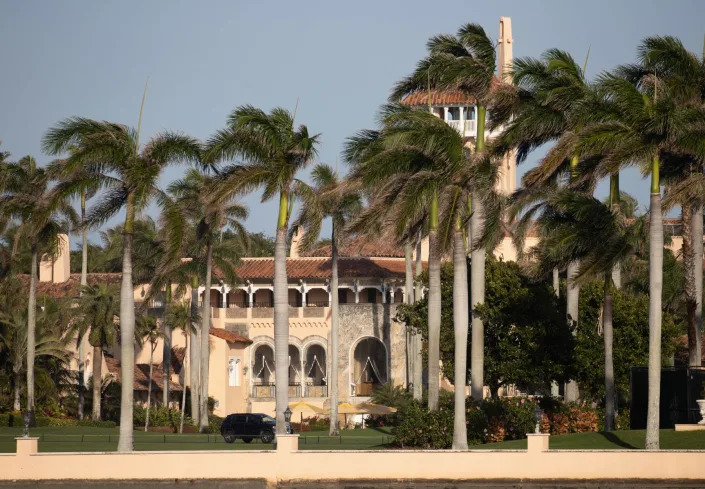
The FBI raid on former U.S. President Donald J. Trump’s Mar-a-Lago residence in Florida triggered shockwaves across Russia, with outraged Kremlin propagandists rushing to defend their favorite American president and going so far as to predict that the raid will eventually spark a civil war in the United States.

When Trump lost the last presidential election to Joe Biden, experts and pundits in Moscow worried out loud that his prosecution for a bevy of potential offenses is imminent. They even contemplated offering their beloved “Trumpushka” asylum in Russia. As time went by, Putin’s mouthpieces became convinced that Trump was in the clear, and their fears subsided.

On Monday’s broadcast of The Evening With Vladimir Solovyov, the host and his panelists praised the participants of the Conservative Political Action Conference (CPAC) and expressed their admiration for Trump and his allies. The same day, appearing on state TV program 60 Minutes, military expert Igor Korotchenko openly called for Russia to support Trump’s candidacy in the 2024 elections.


News of the raid landed in Moscow with a thud, as angry propagandists embellished the search with made-up details, claiming that “one hundred FBI agents” and hordes of police dogs rummaged through Mar-a-Lago. On Tuesday’s broadcast of 60 Minutes, Korotchenko angrily condemned the raid: “There is a straight-up witch hunt happening in America. Trump, as the most popular politician in the United States—who has every chance of prevailing in the upcoming presidential election—was chosen as such a witch,” he raged. “They won’t just be vilifying him, they will be strangling him. These raids, involving dozens of FBI officers and police dogs—this is worse than McCarthyism, my friends! This is a symbol of inordinate despotism.”

Russian Media Wants Moscow to Grant Asylum to Trump

In the days preceding the raid, the host of 60 Minutes, Evgeny Popov, who is also a deputy of Russia’s State Duma, repeatedly referred to Trump as Russia’s “friend,” “protégé”, and a favored candidate, but cautiously added that Moscow is yet to decide on who to support in the upcoming U.S. elections. On Tuesday, Popov said: “As soon as Donald Trump complained that Biden was the worst president in the history of the United States, which is fast becoming a third world country, there was a knock on Donald’s door: “Knock-knock, this is the FBI!” More than one hundred agents stormed in and searched Trump’s Florida residence, Mar-a-Lago.” Popov joked that the agents were said to have found a couple of matryoshka, Putin’s portrait, a pioneer scarf, two icons, a parachute, and a chained bear with balalaika.

Without a hint of irony, the state TV host described the search of the former president’s home as a symptom of political persecution of dissidents in the United States. “Dozens of agents ransacked every office, went through every box, and took every document that was of interest to them. It is thought that the FBI was interested in the Top Secret documents supposedly taken by the ex-president from the White House... Biden, with his dictatorial tendencies, repressions, and persecution of dissidents, is turning America into Ukraine. He already did that, since the opposition is being persecuted by authorities,” Popov said. He fantasized that as the result of the raid, Florida would split from the United States and its new constitution would feature Trump’s assertion that there are only two genders: male and female.

Decorated Kremlin propagandist Vladimir Solovyov started Tuesday’s broadcast of his radio program, Full Contact With Vladimir Solovyov, by bringing up the raid of Trump’s Florida digs. He brought on state TV correspondent Valentin Bogdanov, reporting from New York City. “You couldn’t say we didn’t anticipate this turn of events. Machinery, meant to squeeze Trump out of political life, has been activated... They want to deprive him of an opportunity to participate in the upcoming presidential election... All of this is designed to create a nasty aura, to make Trump more toxic.”

Summing up the potential penalties for the suspected removal of top secret government documents, Bogdanov said they weren’t all that bad and were limited to a three-year prison term or a fine. He added: “The scariest consequence is that a person convicted for such a crime can’t be a candidate in the presidential election. Bingo! That’s what his opponents want: to deprive him of the opportunity to take part in this race.”

Assuming that Trump would be knocked out of the upcoming presidential election, Bogdanov speculated that Florida governor Ron DeSantis—whom he described as “Number Two” in the GOP—could easily defeat Joe Biden.

Solovyov asked: “Could this be the beginning of a civil war?” He ominously opined: “This is totally unprecedented, I don’t remember anything like this in American history. If Trump calls on his supporters to come out—and half the states are led by Trump’s allies—there’ll be hell to pay.”

Bogdanov replied: “The civil war is already underway in the United States. For now, this is a cold civil war, but it keeps heating up.”

Fox News Is Having a Nuclear Meltdown 

Over the Feds Raiding Mar-a-Lago


Ryan Bort 

Mon, August 8, 2022

Mar-a-Lago - Credit: (Photo by Joe Raedle/Getty Images)

The FBI raided Donald Trump’s estate in Palm Beach on Monday, reportedly in search of any leftover classified documents he may have taken from the White House. The search began in the morning, but didn’t make the news until later, when the former president announced the “prosecutorial misconduct” just in time for Fox News’ primetime propaganda lineup to have a collective conniption over the Justice Department spending the day at Mar-a-Lago.

Jesse Watters set the tone early, ranting about how the Justice Department is giving Democrats a pass while going after poor, innocent Trump. Dana Loesch, the former National Rifle Association spokesperson, agreed. “There’s more evidence to implicate the Bidens than there is for the Trumps,” she claimed. “Everything they’ve accused the former first family of, it seems like it’s the Bidens that have done it.” (Loesch did not point to anything indicating Biden absconded from the White House with classified documents.)

More from Rolling Stone

The other common right-wing reaction to the raid suggested FBI needs a complete overhaul, starting at the top. “I don’t see how this guy has any credibility whatsoever,” Watters said of FBI Director Chris Wray. “He’s got to go.” (Watters did not seem to care that Wray was appointed not by the radical Democrats, but by Trump himself.)

Will Cain, who filled in for Tucker Carlson on Tucker Carlson Tonight, cast the raid in historical terms, wondering if it marked a “seminal moment” that “generations will look back on and ask, ‘Was this a moment we broke apart or we were able to come together?'”

Cain then asked whether there was an “evidentiary” or “legal” basis for the raid, or if it was simply a “partisan witch hunt.” (Cain mentioned that Trump allegedly took classified documents from the White House to Mar-a-Lago almost immediately before wondering if there was any basis for the search.)

Fox News was even able to wrangle a few members of Trump’s family to comment on the raid. Lara Trump said she didn’t see any issue with the former president potentially stealing classified documents from the White House. “My father-in-law, as anybody knows who’s been around him a lot, loves to save things like newspaper clippings, magazine clippings, photographs — documents that he had every authority to take from the White House,” she explained to Cain before transitioning into a rant about Hillary Clinton’s emails.

Her husband, Trump’s son Eric, made the same point to Sean Hannity an hour later. “My father always kept press clippings, newspaper articles, pictures, notes from us,” he said. “He had boxes. He moved out of the White House. He’s very collaborative. If you want to search for anything, come right ahead. It was an open-door policy, and all of a sudden 30 agents descend upon Mar-a-Lago?”

The Trumps likening classified documents to press clippings may have been amusing, but others suggested a more terrifying response. Russ Voght of the Center for Renewing America told Laura Ingraham that Republicans need to “dismantle the FBI into a thousand bits” and “prepare for a church style commission next year if given a Republican majority.”

“When we get power back, it’s time to hold everyone accountable,” Ingraham added. “The military leadership, the civilian leadership, the civil service, those in Congress who have abused their power — all of them have to be held accountable.”

The raid has stirred up such a frenzy on Fox News and throughout the right-wing media ecosystem because it gives conservatives an excuse to do the thing they love to do more than anything else in the world, outside of maybe making it harder for people to get insulin: Paint themselves as victims. Trump’s entire ethos revolves around the idea that he, a white man born into wealth and handed every advantage in life, has been wronged by society. Republicans have gladly taken after their leader — and as Fox News’ primetime programming on Monday made clear, they’re willing to use the Justice Department executing a search warrant on a man suspected of committing a crime as the latest piece of evidence that conservatives are under assault by an unjust system.

“Make no mistake,” Hannity warned, “if you are associated with Donald Trump in any way, you better cross all your I’s and dot all your T’s, because they’re coming for you with the full force of the federal government.”

How the WNBA Could Have Saved Brittney Griner

Jackie Powell
Mon, August 8, 2022
BAZAAR

Photo credit: KIRILL KUDRYAVTSEV - Getty Images

Before the WNBA’s Phoenix Mercury tipped off against Connecticut Sun Thursday evening, both teams huddled up at center court. The lights dimmed as the Sun’s PA announcer called for a moment of silence. It was meant to pay tribute to Phoenix Center Brittney Griner, who had earlier that day been sentenced to nine years in a Russian prison for drug possession and smuggling of vape cartridges that contained hashish oil. The United States government has designated Griner as wrongfully detained.

What started as a quiet moment, transformed into a rallying cry from fans, who began chanting Griner’s nickname, "BG." Eventually, the chants became a united cacophony of people shouting "Bring her home."

Prior to the game, Phoenix Mercury head coach Vanessa Nygaard acknowledged that she and her team knew Griner’s sentencing was a step toward the Russians being ready to discuss a prisoners’ swap with the United States. And following her sentencing on Thursday, Russia’s foreign minister, Sergey Lavrov, confirmed that to be true. But while all signs point to Griner coming home at some point, Nygaard couldn’t help but express the courage, strength and vulnerability Griner showed while pleading guilty on Thursday.

"I was really amazed by her courage and her strength," Nygaard said. "I couldn't imagine being in that situation."

Photo credit: Christian Petersen - Getty Images

A day later, in a press conference following the Atlanta Dream’s win over the LA Sparks, Atlanta Dream head coach Tanisha Wright addressed Griner’s situation. "Her plight is our plight," Wright said, referring to the entire WNBA. "We will not be whole until BG is home. Whether or not she’s playing is irrelevant. She is our sister, she is a part of this WNBA family."

Wright is correct. Griner’s situation is a direct result of one of the many challenges that professional women basketball players must endure. Most WNBA players, who are some of the most accomplished professional athletes in the world, must resort to playing year round without much rest in between their international and WNBA seasons in order to maximize their talents financially, and provide for themselves and their families.

Griner’s plight is a result of what the status quo has been since the WNBA was established in 1996. A common question that has been asked by media and even by Mercury head coach Nygaard is: If superstar male athletes like Tom Brady or Lebron James were detained in Russia, would they be home by now? Would this atrocity already be resolved?

The answer to that question isn’t a simple yes or no, but the first element to consider is: Would stars like Brady or James be in a foreign country like Russia for work to begin with? And the answer to that is no. Both Brady and James earned around $40 million for both of their most recent seasons. Griner? She earned a base salary of $221,450 during her 2021 season with the Mercury.

Long story short, Griner might not even have been playing in Russia if it weren’t for this pay discrepancy.


Photo credit: NATALIA KOLESNIKOVA - Getty Images

Even if a more well-known professional athlete was captured and detained in a nation like Russia, who’s to say Vladimir Putin would have been any more lenient? Las Vegas Aces head coach Becky Hammon, who played in the WNBA and Russia and won a bronze medal for the Russian national team in the 2008 Olympics, noted that the Russian government is "an opponent that doesn’t play by the rules" but rather "makes their own rules."

"He wrongfully invaded a whole country," she said, referring Vladimir Putin’s occupation of Ukraine.

Kurt Volker, a former U.S. special representative for Ukraine negotiations, spoke to BAZAAR.com about Griner’s situation. "This episode is not about Brittney Griner—it is about Vladimir Putin," he said. "It is a bit naive to think that athletes can go to a country like Putin’s Russia and expect that they will be treated honestly and fairly. Putin’s entire regime is based on dishonesty and exercising power."

So, taking Volker’s point seriously, why would professional women’s basketball players play over half their year in an authoritarian regime? The truth is that up to this point, some of the greatest players in the world, including Griner, Sue Bird, Diana Taurasi, Breanna Stewart, and Jonquel Jones, have played their WNBA off-seasons in Russia.

And the main reason is the way in which they are often compensated by the Russian oligarchs and others who own these basketball teams. Players like Stewart and Jones have earned over $1 million in one season with UMMC Ekaterinburg, the same team that Griner played for before she was arrested at a Moscow airport this past February.

But it’s not just about the pay. For a lot of WNBA players, it’s about some of the other lavish amenities that they receive in Russia that they don’t get in the United States. The WNBA still doesn’t provide its athletes with charter flights during the season to travel to games. Instead, players are now flying Economy Plus, a measure introduced in 2020’s collective bargaining agreement (CBA) and considered an upgrade from previous options.

In the 2000s, Bird and Taurasi played for Spartak Moscow, a team previously owned by Shabtai Kalmanovich, a former KGB spy-turned-Russian businessman, who was arrested for espionage and was suspected of diamond smuggling in Africa. Kalmonovich treated the athletes on his teams similarly to how men’s pro athletes are treated in the U.S. In addition to the seven-figure salaries, he put his athletes up in the best hotels when traveling and allowed the players to use his credit card. "We had to go to a communist country to get paid like capitalists," Taurasi told ESPN in 2019 (though Russia has not been a communist country for decades). Kalmonovich was assassinated on November 2, 2009.


Photo credit: NATALIA KOLESNIKOVA - Getty Images

Back to Griner. Once the U.S. and Russia successfully negotiate her return, what prevents this from happening again? How does the WNBA avoid losing one of its own to a dictatorship or autocratic country? Right now there isn’t a clear answer to that question.

A possible change to the status quo: In 2020, the WNBA instituted a new rule which fines and suspends players for missing training camp. In years prior, skipping out was expected, since overseas seasons often run through mid May. This prioritization rule creates an incentive for players to stay home during the off-season and earn more money by signing onto one of the WNBA’s league marketing deals.

But while that provision kicks in next season, coaches around the league believe that players will continue to play their off-seasons overseas. The pay in countries like Turkey and Hungry is still much better than what players make stateside, even with the new marketing agreements.

"We are still going to have a parade of tremendous women players, internationally in countless countries," Connecticut Sun head coach and general manager Curt Miller said. "International basketball for a lot of these great WNBA players is not going to slow down anytime soon."

Returning to world travel and current events has recently brought cannabis travel back into the spotlight.

People are traveling again despite ongoing COVID-19 worries and increasing Moneypox cases.

At the same time, the 9-year sentence of WNBA star Brittney Griner in a Russian court for two cannabis cartridges sparked outrage and worries about traveling with pot.

Griner's case closely resembles Marc Fogel's, who was sentenced to 14 years in a Russian prison in June.

Fogel was found in possession of less than one ounce of medical cannabis at a Russian airport. He claimed to be unaware that medical cannabis was illegal in the country.

No matter the person or country, it's wise to be aware of the local cannabis laws and the nation's approach to policing, even as cannabis acceptance grows.

The World Warming On Weed

A September 2021 global cannabis growth report released by New Frontier Data found that 70 countries have legalized or decriminalized cannabis in some form.

In North America, Canada has approved adult use, the United States has state-by-state legality and Mexico's Supreme Court legalized cannabis, but a marketplace hasn't been established. Meanwhile, the Caribbean is starting to see its first signs of access to medical reform.

South America has seen a wave of reform, with various nations allowing low- or high-potency medical access. Several countries in central and northern South America and Central America prohibit cannabis in all forms.

Africa remains largely prohibitive of cannabis. However, a handful of nations have legalized low-THC medical access. Like Mexico, South Africa's court legalized cannabis, but a marketplace has not been established.

Most of Oceania remains opposed to cannabis in all forms. However, a few nations and US island territories have taken action on medical or adult use. Australia and New Zealand have medical cannabis laws, with the latter losing a narrow adult use ballot initiative in 2020.

Asia and Eurasia collectively remain the strictest block of land on cannabis. So far, only a few southern counties and South Korea have legalized low-THC medical use.

Countries like India allow exceptions, such as allowing the consumption of cannabis leaves for the traditional edible bhang. Other parts of the world, including Jamaica and Pakistan, have legalized or tolerate cannabis among various religious and tribal groups.

The Worst Nations To Get Caught With Pot

The topic is a bit more nuanced than it may seem at first glance. Depending on the criteria, a person can pinpoint various nations as the best and worst for pot possession.

Global possession laws vary, as do opinions on the best and worst places to get nabbed.

In Iran, offenders can be lashed or face a death sentence depending on the kilograms. Contrasting reports in recent years have claimed the nation has removed the death penalty for cannabis, while others claim executions have continued.

Like Iran, several nations, including Singapore and Saudi Arabia, use lashings as punishment. Malaysia, North Korea, Vietnam, The Philippines, Thailand, China, Taiwan and other regional nations are also reported to execute offenders.

Death and long sentences aren't the only parameters worth considering. Even short stints in harsh prisons can result in severe punishment.

Depending on the nation and facility, a person may be exposed to high levels of violence, overcrowding, hunger and other adverse health risks. Some court systems are so backed up that people can be detained pretrial for years while awaiting their day in court.

The Best Countries To Get Caught With Pot?

Nowhere is the honest answer. But if push came to shove, there are nations with friendlier regulations and prisons for cannabis possession offenses.

The best place to get popped is in a legalized or decriminalized nation where people can avoid prosecution, save for a possible fine. Uruguay and Canada, the two countries to legalize adult use, top the list.

Countries or parts of countries have taken measures to decriminalize the plant. As of August 5, 2022, the following have decriminalized or allowed possession through similar legislation:

  1. Antigua and Barbuda

  2. Argentina

  3. Australia

  4. Austria

  5. Belgium

  6. Belize

  7. Bermuda

  8. Bolivia

  9. Chile

  10. Colombia

  11. Costa Rica

  12. Croatia

  13. Czech Republic

  14. Dominica

  15. Ecuador

  16. Estonia

  17. Georgia

  18. Israel

  19. Italy

  20. Jamaica

  21. Luxembourg

  22. Moldova

  23. Mexico

  24. Netherlands

  25. Paraguay

  26. Peru

  27. Portugal

  28. Saint Kitts and Nevis

  29. Saint Lucia

  30. Saint Vincent and the Grenadines

  31. Slovenia

  32. South Africa

  33. Spain

  34. Switzerland

  35. Thailand

  36. Trinidad and Tobago

Several additional nations are reported to ban the plant but don't enforce the law. In rarer cases, autonomous zones, like Freetown Christiania in Copenhagen, Denmark, are allowed to sell, possess and consume cannabis.

What About The United States?

The United States presents an interesting state-by-state approach to cannabis laws and sentencing.

As many noted in recent years, the growing legal status of the plant appears to conflict with America's ongoing imprisonment of individuals for cannabis offenses.

It is estimated that over 40,000 individuals are in state or federal prison for cannabis-related charges and that people continue to be arrested on new cases. Others have suggested the figure is closer to 31,000 as arrests decline in recent years.

Photo by Kindel Media: https://www.pexels.com/photo/city-road-man-people-7785075/

See more from Benzinga


USW chief vows to organize clean energy, electric car and retail workers

Mon, August 8, 202
By Erwin Seba

LAS VEGAS, Aug 8 (Reuters) - The head of the United Steelworkers union on Monday vowed to pursue employees in clean energy, electric cars and retail industries as it seeks to adapt to a changing economy and rebuild membership in old-line industries.

Thomas Conway, the leader of the USW, told an audience of about 3,500 union members and retirees at its constitutional convention it will train more organizers and appeal to traditional and new-industry workers.

"We're going to be there - in offshore wind, electric vehicles, mining nickel and copper," said Conway, whose speech to a packed conference room at the MGM Grand hotel was the USW's equivalent of a presidential state of the union address.

"We're going to bring our union to today's industries and tomorrow's," said Conway.

He did not provide details on the additions to its organizing staff.

Conway said the Biden administration is committed to raising more families out of poverty and into the middle class. He stressed that union members working together helped bring change to U.S. and Canadian societies.

He tied the election of U.S. President Joe Biden and a Democrat-majority Congress to achieving the administration's infrastructure bill that provided money for roads, bridges and transit systems.

"The president sees unions as a path back to rebuilding the middle class," he said. The administration "is not just pandering to us out of sentiment, but it's an economic policy."

Ron Holdcraft, a union member from LaSalle, Illinois, who works for a cement manufacturer, praised the effort to expand the USW's organizing ranks.

"Anytime you can expand the brotherhood and help people, it's a good thing," he said.

 (Reporting by Erwin Seba in Las Vegas Editing by Marguerita Choy and Deepa Babington)