Tuesday, August 30, 2022

Rohingya refugees mark fifth 'Genocide Remembrance Day'


Sam JAHAN
Thu, August 25, 2022 


Thousands of Rohingya refugees held "Genocide Remembrance Day" rallies on Thursday across a huge network of camps in Bangladesh, marking five years since fleeing a military offensive in Myanmar.

In August 2017 around 750,000 of the mostly Muslim minority streamed over the border with mainly Buddhist Myanmar to escape the onslaught, which is now the subject of a landmark genocide case at the UN's top court.

Today there are nearly a million Rohingya, half of them under 18, in rickety huts in camps where the mud lanes regularly become rivers of sewage during monsoon rains.

On Thursday thousands staged rallies in many of the camps, holding banners, shouting slogans and demanding a safe return to their home state of Rakhine in western Myanmar.


"Today is the day thousands of Rohingya were killed," young leader Maung Sawyedollah said with tears in his eyes as he led a rally in Kutupalong -- the world's largest refugee settlement.


"Only Rohingya can understand the pain of the 25th of August. Five years ago this day nearly one million Rohingya were displaced. On this day in 2017 more than 300 of our villages were burnt down to ashes," he said.

"All we want is a safe and dignified return to our homeland," said Sayed Ullah, another community leader.

"Unfortunately, our cries have fallen on deaf ears. The international community is not doing anything. Here in the camps we are languishing in tarp and bamboo shelters and barely surviving on handouts," he said.

Many shouted slogans also demanding the repeal of a 1982 law that stripped them of their citizenship in Myanmar, where they are widely seen as foreigners.

- 'A prison' -

Several attempts at repatriation have failed, with Rohingya refusing to return without security and rights guarantees.

Rohingya community leaders complain that the security situation in the Bangladeshi camps -- surrounded by barbed wire -- is also deteriorating, with at least 100 people killed in violence since 2017.

Many of the killings are blamed on a Rohingya insurgent group, as well as gangs involved in drug smuggling and human trafficking that find easy recruits among the many bored young men in the camps.

"It's a prison for the Rohingyas. The life of the Rohingyas has worsened in these five years," said one young activist, declining to give his name for fear of retaliation from Bangladeshi police.

"Rohingya shops were demolished. We need to take permission to go out of the camps to meet our relatives. We feel unsafe because of violence and the rising number of targeted killings," he said.

A survey of the refugees published by Doctors Without Borders (MSF) on Thursday showed that the camps were becoming increasingly unhygienic.

It said that 76 percent of respondents said toilets were overflowing, up from 38 percent in 2018.

Acute watery diarrhoea cases have increased by 50 percent compared to 2019 and cases of skin infections like scabies have also soared.

Fires are common. Last year, a massive blaze left around 15 people dead, 560 injured and up to 10,000 families -- more than 45,000 people -- displaced.

The UNHCR has called for more funding from the international community.

To ease overcrowding, Bangladesh authorities have relocated about 30,000 Rohingya to an island but there are worries it is prone to flooding.

"Voluntary and sustainable repatriation is the only solution to the crisis," said Bangladesh Foreign Minister A.K. Abdul Momen.

str-sam/sa/stu/dva

Rohingya refugees await resolution or return

Five years on from the biggest mass exodus of Rohingya to Bangladesh, people in the camps say there is no end in sight. Human rights groups want global actors to mark the anniversary with a coordinated strategy.
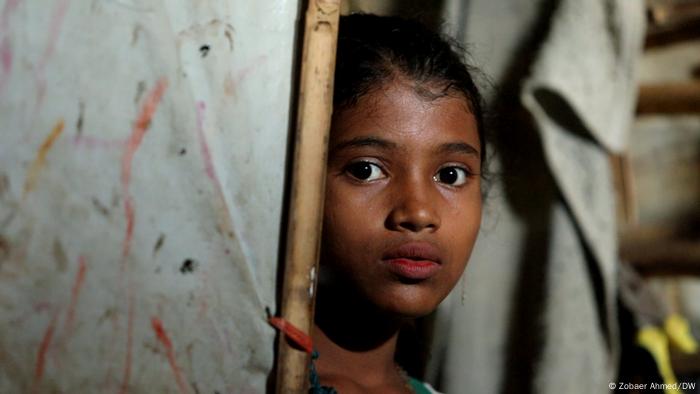


More than a million refugees currently reside in the camps in Bangladesh, but few feel at home

Five years after the latest and biggest mass exodus of Rohingya to Bangladesh, people in the camps say that the limbo they are living in is never ending. They don't see much hope to get their normal lives back.

More than 1 million Rohingya currently reside in Bangladesh, but few people would call it home.

On a recent day, Hasina Begum asked her father to bring water from the community well because her husband was currently away from the refugee camp. This 23-year-old woman can't do it herself because of her physical inability, that she is trying to conceal with her yellow dupatta — a shawl traditionally worn by women to cover the head and shoulders.

When asked the reason for her disability, Begum told DW with tears the story of a day five years back.

"They (Myanmar military) hit me with a rod," Begum said. "I was drenched with blood, and they thought I was dead. So they left me there."

Five years later, she still has pain in her head and feet.

Begum was a victim of a brutal clampdown by Myanmar's military in 2017. The Myanmar military began a sweeping campaign of massacres, rape, and arson in northern Rakhine State on August 25, 2017, following attacks on the border posts by some Rohingya militants.

The campaign killed thousands of Rohingya, according to many international organizations, including Doctors Without Borders. At the time of the exodus, the United Nations say more than 745,000 people fled to neighboring Bangladesh. That figure now stands at over a million. Begum and her family now live in a refugee camp.
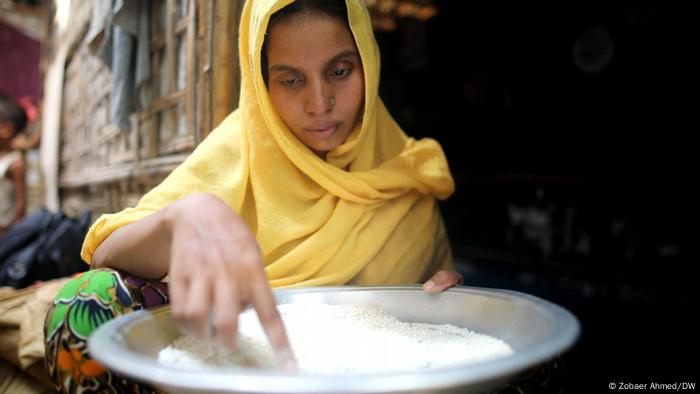

Hasina Begum, a 23-year-old woman, conceals some of her scars with a yellow dupatta


Life in the Bangladeshi camps


Begum lives with her husband and child in a tiny two-room house in the Balukhali camp in Cox's Bazar, the largest refugee camp in the world, hosting about 600,000 refugees, according to figures from a number of human rights bodies, such as the Refugee Council USA.

"My husband has no work," Begum said. He goes to Tabligh (a religious group)" for food and other aid.

Most of the people are unemployed, including Begum's 44-year-old father, Enayetullah. He returns with a pot of water.

"We had huge farmlands," Enayetullah said. I used to cultivate them. We had cattle, a house and a lot of possessions. We left them all behind."

Enayetullah said he did not think of his possessions when he fled Myanmar. But now after five years, he misses his home, and his lands.

Rohingya refugees living in limbo in Bangladeshi camps

Seeking work, without prospects

Many people in the camps want to work and rebuild their lives.

"We can't go out of the camps. Sometimes we get a call to work. But that is rare," says 33-year-old Mohammad Shafi.

The Rohingya are also struggling with limited education opportunities.

Mohammad Riaz is a 10th-grade student. This will be his last year of education inside the camps.

"After this year I will have no opportunity to study further, but I want higher education," Riaz told DW.

Searching for more opportunities, many Rohingya try to flee the camps to and leave Bangladesh.

Elaine Pearson, the acting Asia director at Human Rights Watch, released a statement on the eve of the anniversary of the 2017 exodus, saying: "Donors should support Rohingya refugees to study and work freely and safely so they can build independent and self-reliant futures."


Mohammad Shafi says it is not possible to "go out of the camps"

UN's Bachelet visits Bangladesh

UN Human Rights Commissioner Michelle Bachelet recently visited the Rohingya refugees in Bangladesh, with community representatives telling her that they want to build a better life.

"One day I want to go home, but I don't know when I can," Enayetullah said.

The life of the Rohingya remains in limbo within the camps, with no end in sight to their current plight.

"When I remember my homeland, my heart burns. I want to go back," Tasmida Begum told DW. "But only if they give us peace — and give our possessions back."

Tasmida Begum is afraid that the military might attack again if she goes back. She lost a brother and a brother-in-law in 2017.

Aung Kyaw Moe, an adviser to the National Unity Government of Myanmar, run by the Suu Kyi led NLD party, told DW that repatriation has not been possible because of a lack of interest from Myanmar's government.

"It is not happening because of the lack of political will from the Myanmar side," Moe said. He is the first Rohingya to hold a position in Myanmar's government. "They don't want them to go back."

Repatriation talks are underway among Myanmar, Bangladesh and different UN bodies. A joint task force is in place to finalize the list of Rohingya people to be repatriated.

"We have already given them a list of 830,000 Rohingya. They have accepted that," Shamsud Douza, an additional commissioner at the Refugee Relief and Repatriation Commissioner's Office, told DW. "We are providing them with humanitarian aid, but at some point they have to leave."

Bangladesh anticipates sending the Rohingya people back to Myanmar. On Sunday, Foreign Minister Masud Bin Momen told the press that repatriations could begin by the end of 2022.

"We are hopeful we can start the repatriation by the end of the year. We are trying to do it for our own interest because they are becoming a burden for us," he said.

After two prior repatriation attempts failed, Moe said the list might just be a method of delaying the process. "Myanmar has the list. They know very well who have fled," he told DW. "If they really want to initiate the repatriation process they would have given a list to Bangladesh, find them and send them back."
Will there be justice?

Five years on, nobody has been held accountable for the brutality that happened in Myanmar. Gambia has launched a genocide case about the issue before the International Court of Justice (ICJ). The case is being heard. The Myanmar government had filed an appeal, but this has since been rejected.

Rights organizations demand that the UN Security Council end its current inaction and urgently negotiate a resolution to institute a global arms embargo on Myanmar. Human Rights Watch said the Security Council should refer the situation to the International Criminal Court and impose targeted sanctions on the junta and military-owned conglomerates.

But a UN action on this scale might be vetoed by China and Russia.

"China has always been a problem for the Rohingya,"Moe said. We have to find an innovative way to deal with the blockages created by China and Russia particularly in the Security Council and other UN bodies."

Hasina Begum said she had no idea what justice would look like. To her, getting back to a normal life is a long way off, with the mental and physical wounds leaving more than just the visible scars on her body.

"I don't know what will happen next,"she said. I don't see a future here or anywhere."

Edited by: John Silk

Can the EU do more to help Rohingya refugees go home?

Bangladesh has taken in over a million Rohingya after they were forced out of Myanmar. Now, the Bangladeshi government is pressuring the EU to help repatriate them.
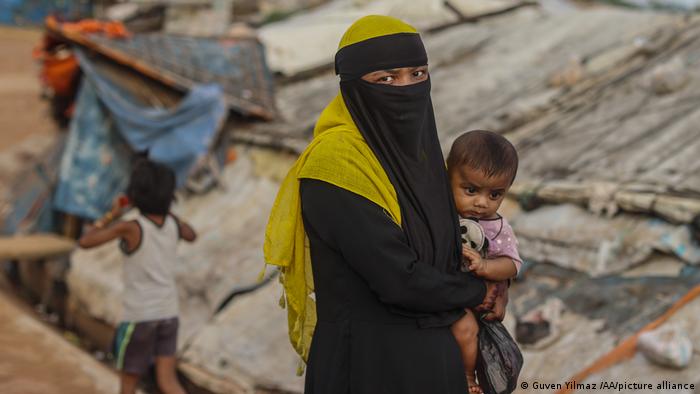
Activists have decried living conditions in overcrowded refugee camps in Bangladesh

An estimated 1.1 million Rohingya refugees were taken in by neighboring Bangladesh after Myanmar’s military unleashed a violent crackdown in 2017, in what many describe as a genocide against the Muslim-majority group.

Bangladesh has raised the alarm over the cost incurred by the refugee load, and warned of a potential regional crisis. The pressure is also rising internationally, with the UN Human Rights Council passing a resolution in June that called for the rapid repatriation of Rohingya. 

Bangladesh's foreign minister, Abdul Momen, also reportedly pressed the issue earlier this month during a meeting with Josep Borrell, the EU's foreign policy chief, on the sidelines of a summit in Cambodia.

Faint hope of returning

At the moment, however, the outlook is bleak for those who want to see Rohingyas return to Myanmar. International law states that refugees should not be sent back without a guarantee of safety and humanitarian treatment. According to Brussels, this cannot be guaranteed.

EU spokesperson Nabila Massarali told DW that the bloc "supports the voluntary, orderly, safe and dignified repatriation of the Rohingya refugees to Myanmar, as soon as feasible, if and when conditions allow."

But she added that the present situation in Myanmar was "not conducive to a return of refugees in the near future."

Myanmar has been in turmoil since the military orchestrated a coup in February 2021, overthrowing the democratically-elected National League for Democracy (NLD) government. That sparked an ongoing civil war, in which — according to conservative estimates — more than 2,000 civilians have been killed. Hundreds of thousands have been displaced, says the Thailand-based NGO Assistance Association for Political Prisoners.  

The military only controls limited areas of Myanmar. The rest lies under the authority of defense forces loyal to the National Unity Government (NUG), a shadow government set up by ousted civilian politicians and activists, and the numerous ethnic armed organizations that have been in conflict with the national authorities for decades.

Fighting escalates in Rakhine

Making matters worse, there is growing violence in the southwestern Rakhine State — from where many of the Rohingya refugees originally fled and would likely return — between the Arakan Army, an ethnic rebel group, and the Myanmar military. At least 10 clashes have been recorded since July 18, Radio Free Asia reported this week. This does not bode well for the cease-fire agreement that both sides agreed to in 2020.
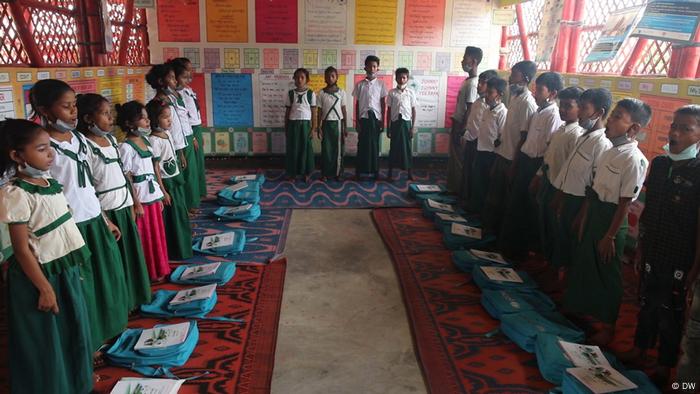
After 2017, over a million Rohingya refugees were taken in by Bangladesh

"The Arakan Army has worked assiduously in the past two years to build up their political autonomy, and that is completely unacceptable to the military regime," said Zachary Abuza, a professor at the National War College in Washington, DC.

"Whether it is sheer arrogance or a legitimate concern that the Arakan Army might try to secede, the military is starting a war that it can ill afford, and one that will have wider strategic consequences in Myanmar."

Arakan Army softening its stance on Rohingya

Rohingya repatriation would require cooperation from the Arakan Army. The political wing of the ethnic militia group, known as the United League of Arakan, administrates much of Rakhine State, analysts say.

It has recently toned down its previous hostilities towards the Rohingya minority, which has been persecuted in Myanmar for decades. Tun Myat Naing, the Arakan Army chief, has expressed his willingness to integrate the Rohingya back into Rakhine society.

The militia has its own reasons for changing course, said Kristina Kironska, a Bratislava-based academic who specializes in Myanmar. In May, senior leaders of the Arakan Army held talks with the civilian shadow government, the NUG, for the first time since the coup. This sparked speculation over a possible alliance against the military junta ruling Myanmar.

The NUG says it will devolve power considerably, or even possibly introduce a federal system, if it manages to oust the junta. This could play out well for the Arakan Army, which has been demanding self-determination for Rakhine State for well over a decade. Analysts believe that the militia group is seeking international legitimacy, and assistance on the Rohingya crisis would earn it support from abroad.  

A chance for peace due to armed rebellion

"For the Rohingya, paradoxically, the coup and the emergence of the Arakan Army [in conflict with the military] have opened a one-in-a-century opportunity — an opportunity for peacebuilding in Rakhine," said Myanmar expert Kironska.

The big question, she added, is whether the EU and other foreign stakeholders are willing to engage with the Arakan Army in the process of repatriation.

EU spokesperson Massrali said Brussels "has so far [had] no contact with the Arakan Army in Myanmar on the process of repatriation of Rohingya and has no plan to establish relations to that end."

But a senior source in the EU appeared to contradict this statement when contacted by DW.

The bloc has had some dialogue with the Arakan Army "including on the Rohingya issue," said the source, speaking on condition of anonymity.

The EU isn't alone in being cagey about dealing with Myanmar's numerous ethnic militias. The US government's position on that the topic is "broken," said DC-based Abuza. "They completely need to change course and actively engage the [ethnic armed organizations], as they will have a seat at the table in a future Myanmar."

In turn, the EU source said the dialogue between the shadow government and the Arakan Army on an anti-junta coalition and possible repatriation would probably be more important than what the EU did.   

"The noises coming out of the NUG regarding the Rohingya citizenship and repatriation have been encouraging," they added.

NUG and the Rohingya genocide

The NUG is composed primarily of deposed politicians from the former NLD government, which has a tainted history of relations with the Rohingya minority. The genocide took place while the NLD was in government. Deposed civilian leader Aung San Suu Kyi — whose prison sentence for trumped-up corruption charges was extended to 18 years earlier this month  — was widely criticized by the international community for failing to condemn the military-led genocide.

But the NUG has since expressed its willingness to accept the Rohingya and repeal the 1982 Citizenship Act, which has been used to deny Rohingya citizenship.

Rohingya repatriation from Bangladesh remains unlikely

The attitude towards Rohingya people in Myanmar seems to be changing. However, the return of refugees from neighboring Bangladesh five years after the army drove them out is not expected any time soon.
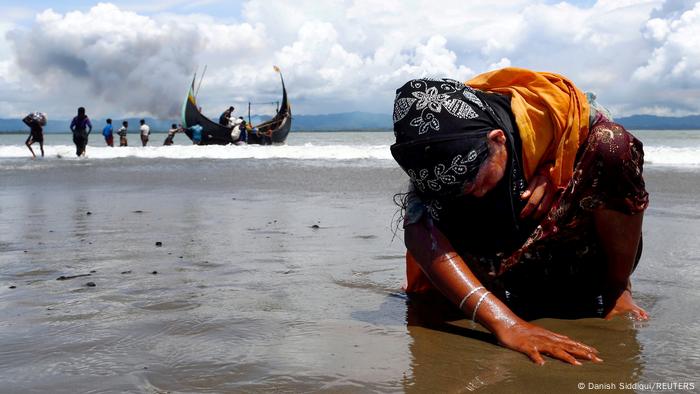
An exhausted Rohingya reaches Bangladesh after fleeing Myanmar

Five years ago, Myanmar's army launched what it called "clearance operations" against the Muslim-minority Rohingya people in Rakhine State, which borders Bangladesh.

Civilians were murdered, girls and women were raped and entire villages were razed to the ground. About 700,000 Rohingya fled to neighboring Bangladesh, where most remain to this day in refugee camps.
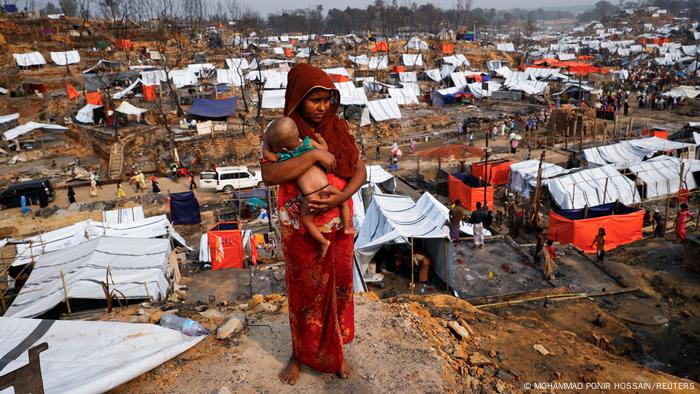
There are hundreds of thousands of people stranded in refugee camps

Myanmar's armed forces said the campaign was in response to attacks mounted several days earlier on police stations by the Arakan Rohingya Salvation Army (ARSA), a militant resistance group. The UN and human rights organizations judged the retaliation as disproportionate. The army is accused of committing crimes against humanity and genocide. Currently, a case against Myanmar for violating the Convention on the Prevention and Punishment of the Crime of Genocide is pending before the International Court of Justice in The Hague.

Decades of discrimination

The Rohingya are not recognized by Myanmar as a distinct ethnic group, and have been subject to discrimination and demonization for decades. Many lack citizenship rights and cannot move around freely, send their children to school or access medical care. Presently, over one million Rohingya live in Bangladesh, and some 300,000 to 400,000 live in other foreign countries. But about 400,000 Rohingya still live in Myanmar, mostly in camps near Sittwe, the capital of Rakhine State. This is where most of the Rohingya in the country lived before being driven out. But the dominant population in the state is made up of the Arakanese, a Buddhist ethnic group, who have been in conflict with the central government and military for decades. 

Though most Rohingya have lived in Myanmar for generations, many others in the country regard them as illegal migrants from neighboring Bangladesh. They also accuse them of having too many children, or marrying Buddhist women and thereby threatening the country's Buddhist traditions. This is unlikely to happen given that 87% of the population is Buddhist. It was influential nationalist monks who spread the myth of a Muslim takeover in incendiary sermons and on social media ahead of 2017. Studies have shown that the smear campaign caught on because anti-Rohingya prejudice and systematic discrimination had been widespread for decades.

Changing attitudes?

However, attitudes towards the Rohingya have changed since the coup in February 2021 and the army's  jailing of Aung San Suu Kyi and brutal crackdown on protests. Now that the army has targeted the majority ethnic Bamar population, there is also a certain form of solidarity, particularly among Generation Z. Young activists, some of whom have turned their back on the policies of Aung San Suu Kyi's National League for Democracy (NLD), are fighting the military and demanding "justice for the Rohingyas" — whatever that may actually mean.
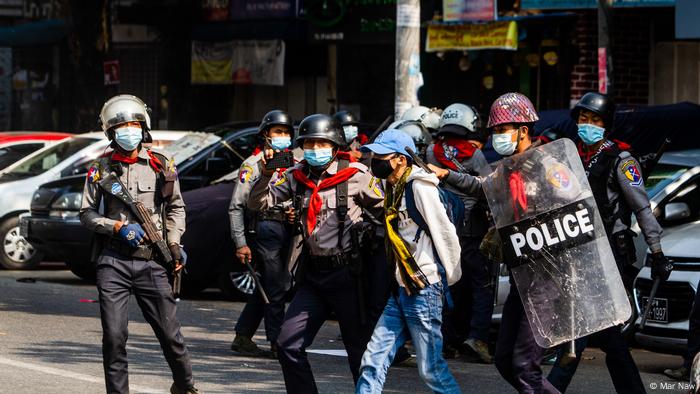
The 2021 coup sparked nation-wide protests

The National Unity Government (NUG), a shadow government that was formed in exile after the coup, issued a statement regarding its Rohingya policy in June 2021 and reiterated its position in March 2022: "The Policy commits to the safe, voluntary, dignified, and sustainable return of Rohingya refugees and internally displaced persons, and to comprehensive legislative and policy reform in support of citizenship, equality in rights and opportunity, and justice and reparations." The NUG also appointed Aung Kyaw Moe, a Rohingya, human rights adviser. He recently spoke to DW about the situation in Myanmar.

Currying favor with the West?

It is difficult to say with certainty how genuine or far-reaching this solidarity with the Rohingya actually is. And as the NUG has hardly any real political power in Myanmar, its statement currently amounts to little more than a declaration of intent.

What is clear is that the NUG's main priority is its fight against the military. Since it is still counting on the support of the West, which so far has been very restrained and has only provided humanitarian assistance, its new-found solidarity with the Rohingya might be motivated by its own interests. After all, the US and European governments are very concerned about the human rights of Myanmar's Rohingya. Thus, the NUG is being accommodating to the Western position even though some of its members rejected it before 2021.

Comprised largely of members of Aung San Suu Kyi's NLD party, the NUG finds itself in a dilemma over this matter. In 2019, Suu Kyi, who was State Counsellor of Myanmar at the time, went to the International Court of Justice to defend Myanmar against accusations of genocide. By doing so, she was effectively protecting the miliary, with the backing of many of her supporters.
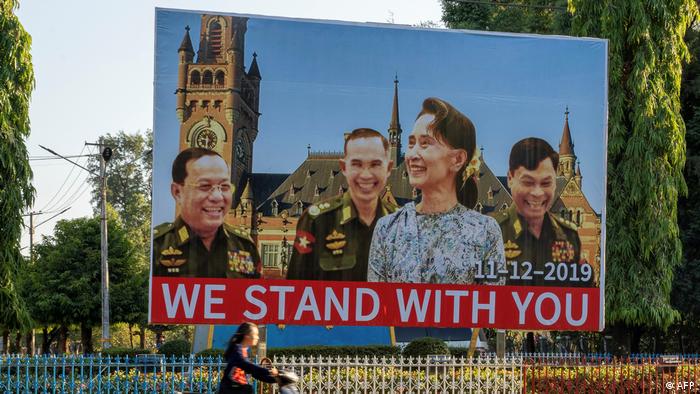
As State Counsellor, Aung San Su Kyi defended Myanmar in The Hague

If her stance on the Rohingya is now called into question, it means that she was either mistaken or instrumentalized by the military. Both ideas are hard to stomach for many people who revere Suu Kyi like a saint. In fact, such suggestions could even lead her supporters to oppose the NUG.

There are no surveys or empirical studies on how people in Myanmar view the Rohingya. It is, therefore, unclear whether broad swathes of the population have changed their mind about this ethnic minority since the 2021 coup, given the decades of discrimination preceding it.

Repatriation impossible

What is certain is that under the current circumstances, the Rohingya refugees stranded in Bangladesh cannot yet be repatriated

During a visit in early August, UN High Commissioner for Human Rights Michelle Bachelet only mentioned the repatriation of Rohingyas to Myanmar once. She said that this must "always be conducted in a voluntary and dignified manner, only when safe and sustainable conditions exist." 
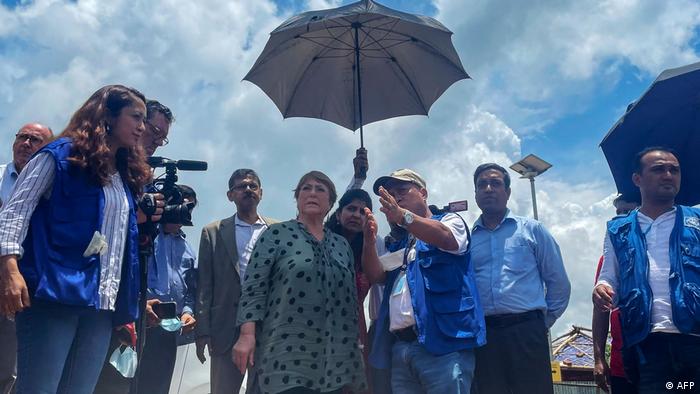
Michelle Bachelet, UN human rights chief, visited Bangladesh in early August

For his part, Aung Kyaw Moe told DW that not much had improved in Rakhine State and "the situation is almost the same as in 2017."

Speaking on the "Myanmar in a PodShell" podcast, Myanmar analyst Tony Waters seemed to agree and predicted that "repatriation to Rakhine is not going to happen, that is self-evident for everybody who follows Myanmar."  

Meanwhile, Myanmar's civil war rages on, and its economy lies in ruin. In Rakhine State, the cease-fire between the Arakan Army and Myanmar's armed forces is increasingly fragile. If hostilities resume, the Rohingya could well once again find themselves caught in the crossfire.

This article was translated from German.


With repatriation attempts unlikely in the near future, the EU is instead focusing on aid to help the refugees. In May, Brussels donated an additional €22 million ($22 million) in assistance, which will mainly go to Rohingya in Bangladesh.

"In the absence of the return of refugees to Myanmar, it is vital to ensure the delivery of essential support and services to the refugees," said Massrali.

Edited by: Darko Janjevican Rights Commissioner Michelle Bachelet travels to Cox's Bazar

THE NEW COLONIALI$M

Ransomware: Cyber criminals are coming for the Global South

Hackers are targeting governments and public institutions in middle-income and developing countries in Latin America, Asia and Africa. They extort millions — and often find easy targets.

Within just a few weeks, a group of cyber criminals managed to throw Costa Rica into disarray.

In April, hackers took over the computer system of the country's finance ministry, demanding millions in ransom to return access. But authorities refused to pay. In the weeks that followed, the criminals retaliated by crippling the systems of nearly 30 other government agencies.

People across the Central American country felt the consequences: Tax systems froze. Workers were paid late. Goods for export, including perishable items like fruit, were stuck in customs.

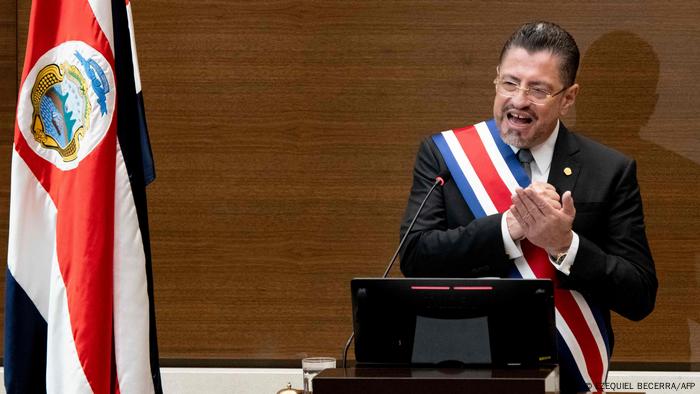
By early May, the situation had become so bad that Costa Rica's newly elected president declared a national emergency. It marked the first time a country had taken that step in response to a cyber incident.

Shortly after taking office, Costa Rica's President Rodrigo Chaves declared a national emergency on May 12, 2022

Since then, authorities have managed to restore many of their services. But four months after the first strike, not all the damage caused by the attack has been fixed.

"This is an eye-opening moment for how vulnerable we are to cyber attacks — not just our government or our companies, but our entire society," said Diego Gonzalez, head of the cybersecurity chapter at Costa Rica's Chamber of Information and Communication Technologies.

From Latin America to Africa and South Asia

The case is a stark illustration of what cybersecurity researchers and industry professionals describe as a worrying trend: Cyber criminals are increasingly targeting government agencies and public institutions in mid-income and developing countries in the Global South, they told DW in a series of seven interviews.

This month, hackers brought down the court system of the Argentinian city of Cordoba. Last month, attackers knocked out a flood monitoring system in the Indian state of Goa. Earlier this year, an attack caused outages at the central bank of Zambia.  

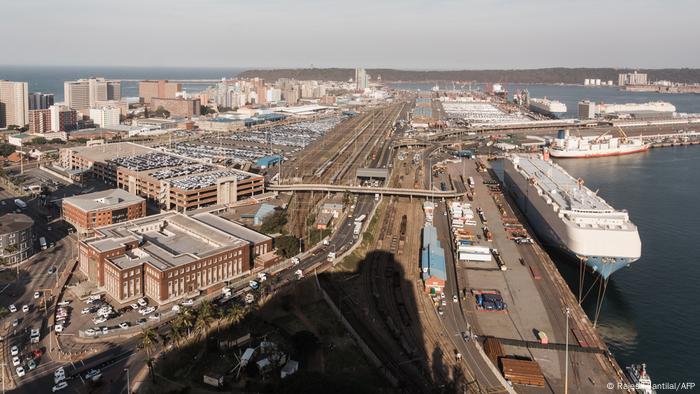
In the summer of 2021, a cyber attack on rail and port company Transnet caused chaos at the port of Durban, South Africa's key entry point for goods

"There is no doubt that the number of ransomware victims in the Global South is on the rise," said Anna Chung, a threat intelligence researcher at cybersecurity company Palo Alto Networks, pointing to a recent spike in ransomware attacks in Latin America.

Other researchers echoed her warning for regions in Asia and Africa.

Allan Liska, a cyberintelligence analyst at cybersecurity firm Recorded Future, said his company was observing an uptick of attacks across southern Asia, adding that "targets tend to be government agencies and larger organizations."

The same is true for many countries in Africa, said Joey Jansen van Vuuren, head of computer science at Tshwane University of Technology in Johannesburg, South Africa.

"Across Africa, ransomware has become the cybercrime with the biggest impact on governments and businesses," she said.

The tip of the iceberg

Ransomware attacks often follow a similar playbook: First, intruders gain access to a computer network. Inside, they spend weeks or even months snooping around. Once they find data that seems valuable enough that people would pay money to get it back, they encrypt the files and send a ransom note with their demands. 

Victims are left with two options: Refuse and try to restore their systems with backups — or pay and hope that the criminals will keep their word and return the data.


Cases in which victims publicly refuse to pay, like in Costa Rica, tend to make headlines.

But those are only the tip of the iceberg, experts caution. Most cases in which victims end up paying remain unreported, they say — and in some areas of the Global South, that has become common practice.

"Today, organizations often already accept this as a given — they are even making budgetary allocations because they expect that they will likely have to pay a ransom at some point," said Charlette Donalds, a lecturer at the University of the West Indies at Mona in Kingston, Jamaica, and the author of a book on cybercrime in the Global South.   

Many ransomware attacks remain unreported

Across the Caribbean, ransomware attacks are on the rise, Donalds said. Several tax authorities in the region, for instance, have had their systems compromised by attackers, according to the trade organization Caribbean Council.

Her co-author Corlane Barclay added that attackers often find easy targets. "For a long time, governments here thought that because we are small and the threat actors are international, they will focus on more lucrative victims," she said.

That is why many governments and institutions, as they digitized their services, invested little in cybersecurity measures, she added. 

Recorded Future's Allan Liska said that his company observed the same phenomenon across the Global South. He called it one of the reasons criminals zero in on the regions.

"The attackers know that they can find systems that are relatively easy to penetrate," he said.

The canary in the coal mine

So how can countries in the Global South better protect themselves against ransomware attacks?

Researchers agree that governments need to ramp up cybersecurity measures and invest in training a new generation of professionals. Countries with no existing cybersecurity legislation should pass laws to force companies and public institutions to protect their systems from cyberattacks.

Governments should also push for more international cooperation, they added, pointing to a new "counter ransomware initiative" launched by the US government last fall. Seven out of 30 countries included in the initiative are located in the Global South.

And they stressed that governments need to raise awareness of cybersecurity among their populations — because the threat of ransomware is here to stay.

Once again, that was illustrated by events in Costa Rica.

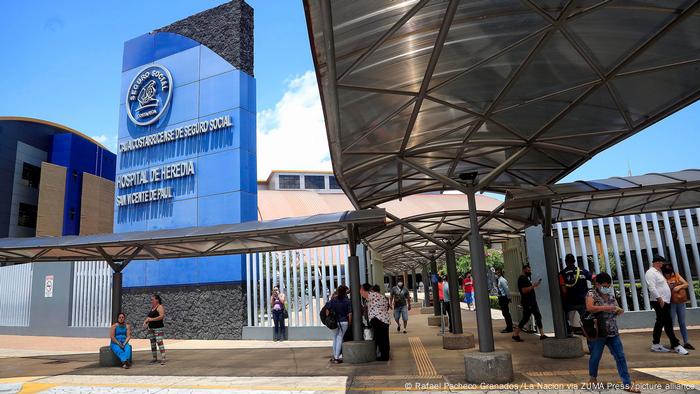
One month after the country declared a national emergency, another group of cybercriminals managed to take over the IT system of Costa Rica's main public health organization. It led to thousands of patients missing medical appointments.

A ransomware attack affected some 1,200 hospitals and clinics across Costa Rica

"That was when people realized that those attacks can affect our families, our children," cybersecurity entrepreneur Diego Gonzalez said. He hopes that this recent experience will prompt political decision-makers to boost long-term investment in cybersecurity.

But he is also convinced that what happened in his home country could soon happen again elsewhere.

"We live in the age of cyber attacks," Gonzalez said, "this is only the beginning."

Edited by: Rina Goldenberg


GOOD NEWS

How Africa increased its healthy life expectancy

Most people agree that it's vital to grow old healthily. In Africa, healthy life expectancy has increased by 10 years — more than anywhere else. DW explores the reasons for this and examines how the trend can continue.

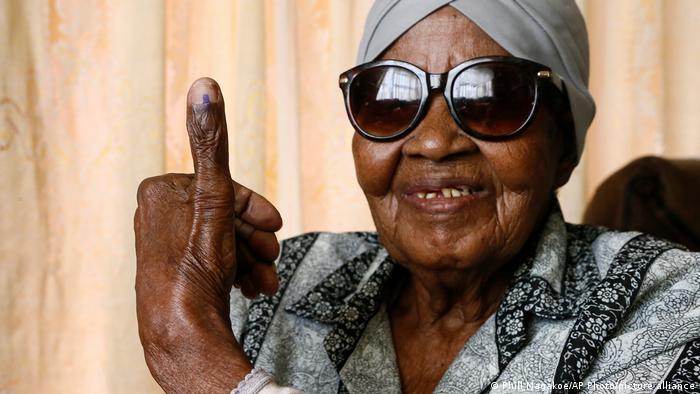
Healthy aging is one thing — the blue ink on this 108-year-old South African

 woman's thumb shows that she has voted

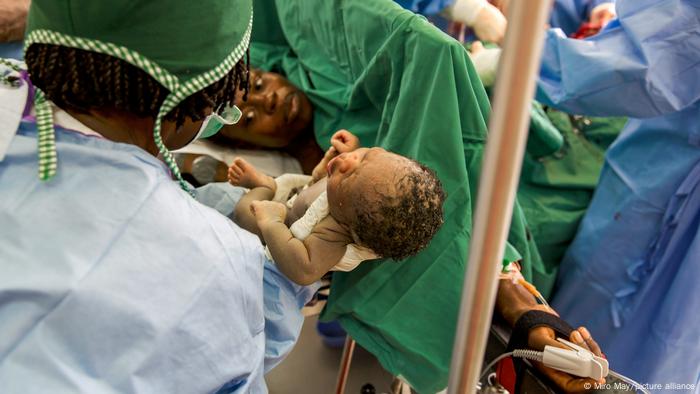
The Margaret Kenyatta mother-and-child hospital wing in Nakuru, is Kenya's second-largest maternity ward. It boasts about 250 beds and carries out 20 cesarean sections and 30 natural births every day.

The clinic — opened in 2018 by its namesake, the wife of outgoing President Uhuru Kenyatta — is one of many examples of measures by the government to lower high mortality rates and improve health care.

Previously, for every 100,000 live births, there had been more than 350 cases in which mother or child died, according to government figures.

Many expectant mothers have praised the new facility. 

"The treatment was great, and I thank the nurses who took care of me," Janet Ngetich said. The 34-year-old gave birth to her daughter at the clinic three years ago — and was one of the first people to benefit from a new program.

Ngetich said the Linda Mama program allowed expectant mothers without medical insurance to give birth anywhere in Kenya.

Healthy life expectancy increases

In East Africa, the World Health Organization has acknowledged particularly great progress in the area of health care — in addition to better care for mothers and children — which includes the prevention and treatment of infectious diseases.

According to a new WHO report, people on the African continent could expect to live an average of 56 years in good health in 2019, with a general life expectancy of just under 63 years — 10 years longer than at the turn of the millennium.

The WHO has praised a significant improvement in health services coverage since 2000

No other region of the world has experienced such a significant increase in healthy life expectancy — even if Africans can still expect fewer healthy years of life on average than people from other parts of the world.

The average person born in Rwanda in 2000 could expect only 41 healthy years of life. For those born in 2019, it is already 60. 

One of the biggest improvements is that HIV-positive people now often have easy access to antiretroviral drugs and can therefore often lead a symptom-free life. Vaccinations — against measles, for example — and better management of tropical diseases can also contribute to longer life spans.

On the other hand, there are other challenges to keeping people fit and healthy in old age. Globally, the WHO calculated healthy life expectancy in 2019 to be as high as 63.7 years — so Africa remains below average.

Noncommunicable diseases

The older people get, the more frequently noncommunicable diseases (NCDs) occur. These include cancer, diabetes and a variety of cardiovascular diseases.

Prebo Barango, who works on NCDs at the WHO's regional office in Harare, Zimbabwe, told DW that he sees such diseases as the biggest stumbling block to the continued improvement of healthy life expectancy.

"There are many reasons why noncontagious diseases are on the rise," Barango said. "For example, when an unhealthy diet or lack of exercise leads to obesity or other problems. Tobacco and alcohol contribute, as does environmental pollution. All of this is driving the new epidemic of noncommunicable diseases."

Much of Africa remains below the global average when it comes to life expectancy

Barango stressed the value of education and prevention. But health systems must adapt to a growing number of NCD patients and the increasing need for long-term therapies, he said.

"This requires resources," Josephat Nyagero, research director for the Kenya-based NGO Amref, told DW. "Human, financial and so on. Not to mention love."

The COVID-19 factor

The coronavirus pandemic has also played a role. Many experts believe that Africa got off fairly lightly compared to other regions, even taking into account statistical under-reporting of infections. 

But the pandemic is likely to rear its ugly head in upcoming healthy life expectancy surveys. WHO's Prebo Barango said that COVID had reversed some progress made by strengthening health systems in some countries — or at least led to stagnation.

Increased pressure on the health system because of COVID-19 and very strict social distancing measures in some countries often made access to treatment, surgery and medical consultations difficult.

Taking good care of mothers and newborns is key to a high healthy life expectancy

Care structures not affordable for many

In its report, the WHO praised the fact that coverage of health services has improved significantly since 2000. But at the same time, it cautioned that many households still have to spend more than 10% of their budgets on their health. The WHO defines this threshold as "catastrophic."

"Access has improved," Nyagero said. "But the second question is: Is access also affordable? Here, alternatives should be examined, for example, universal health insurance subsidized by the state. That further improves access."

Rwanda, for example, has been offering universal health insurance for years — but that is an exception rather than the rule in Africa.

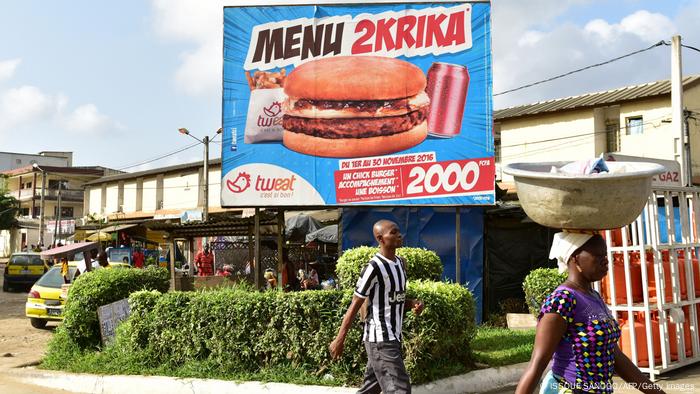
Roadside advertisements often entice people to eat unhealthy foods

WHO, as well as national health ministries, are also working to bring more treatment options to the countryside, Barango said.

"For rural and poor urban populations, access is limited," he said. "Now, we want to work to ensure that facilities at the district level can steer more treatments."

Barango acknowledged that this would require large investments, but, he said, they would ultimately have a big impact.

Nyagero expects healthy life expectancy to continue growing across Africa. "The gains and improvements can probably be sustained," Nyagero said. "There may be interruptions, but I expect a situation where Africa visibly continues to catch up with the global average."

Janet Ngetich's daughter is now 3 years old and has already received some free vaccinations thanks to Linda Mama.

Waiko Mbogho (Nakuru) contributed reporting to this article.

The French island that's a nudist resort and military zone

On Ile du Levant, a French island in the Mediterranean, two unlikely communities have been living side by side for decades — one without clothing and one in military uniform.

The resort's founders wanted 'a simple, rustic city, where lovers of fresh air and sun would come to the calm of nature'

It's approaching 10:40 a.m., and the ferry headed back to the mainland will soon depart. Passengers gather at the port, waiting to board. "Ah! You've gotten dressed. How strange," a man says to the person next to him. "Yes I know. I waited until the very last moment," the young woman laughs.

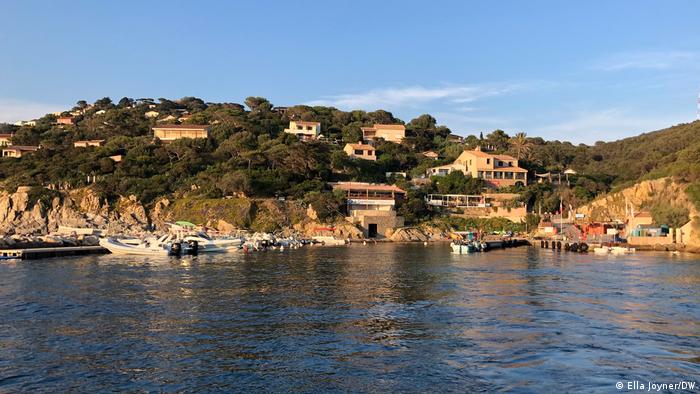
Welcome to the Ile du Levant, a small island about 15 kilometers (9 miles) off the French Mediterranean coast where two very different communities have co-existed for more than 70 years.

A tenth of the 10-square-kilometer surface area is home to Heliopolis, a small naturist resort founded in 1932, with around 250 property owners. The remaining 90% is a restricted military zone housing a missile testing center established in 1950.

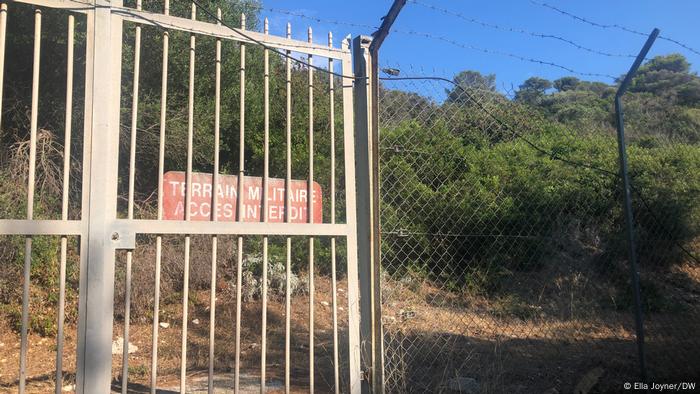
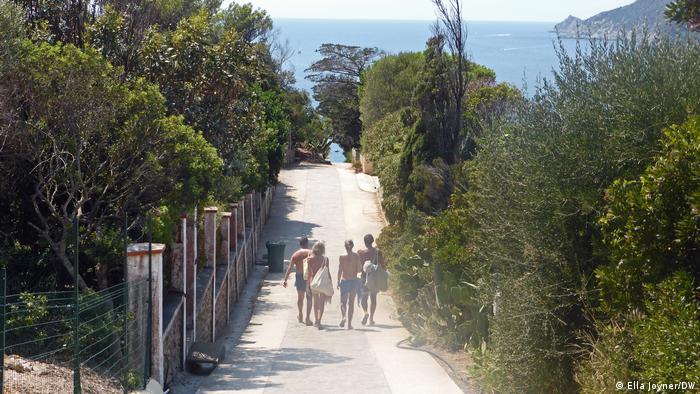
While walking among relaxed, naked holidaymakers, it's easy to forget the other part of the island. But the path to the beach is flanked on one side by a barbed-wire topped fence; signs reading "Military zone. Do not enter" also provide a clear reminder.

The French sign reads: 'Military Zone. Access forbidden'

According to Guido, 71, when you live on the island — as he does half the year — it's not really something you think about. "We have almost nothing to do with the military," the Swiss retiree says at his holiday home overlooking the sea. Sometimes, Guido concedes, he does hear military exercises, munition being fired. "Always on Tuesdays," he says. "A bit of noise."

Life without clothes

He's more keen to talk about how he and his wife Sylvia "live in freedom without clothes." The couple have been coming to the island since 1990, often with their three children. They bought their house in 2003.

This time they have two grandchildren, aged 11 and 9, in tow. Being naked as a family unit "simply isn't a big deal," Guido says, though some relatives have declined invitations to visit. "Mainly the men," he adds.

Like many naturists, Guido, who was responsible for reactor safety at a nuclear plant in his professional life, stresses that there is nothing sexual about the practice.

Hedonists might be disappointed: Public sex is strictly prohibited on the island. Nudity is the rule on beaches and the hiking trail, and is allowed in certain restaurants and shops, of which there are just a handful. In the port, minimal coverage is required. The island is quiet, with no cars. Electricity only arrived in 1989.

Heading down to the beach in minimal clothing

Delphine and Francois, a French couple sitting at the port, say they came for the peace and natural beauty. For them, naturism is not about exhibitionism. "Actually, it's funny, but when you don't have clothes on, you don't look at each other. You don't look at whether a person is large or small or whatever. Everyone is the same. It's relaxed," Delphine, a 57-year-old dental assistant, says.

Retreat from civilization

Nudism or naturism (advocates generally use the latter) is a movement that first  emerged in Germany partly as a reaction to the industrialization and urbanization of the late 19th century, soon spreading to France and beyond. Early proponents emphasized the health benefits of outdoor exercise, a good (often vegetarian) diet and a return to nature.

BARE FACTS: GERMANY'S NUDISM MOVEMENT 
A 'free body': Germany's nudist culture 
It's a part of German culture, just like techno music and "Spargelzeit," the asparagus season. Even though the practice of Freikörperkultur (FKK), which translates as "free body culture," is dwindling among the younger generations of Germans, you'll still find lots of FKK areas on beaches as well as nude culture enthusiasts in spas — and even parks.   1234567891011

As the movement gained traction in the early 20th century, two brothers — doctors Andre and Gaston Durville — bought a section of the Ile du Levant from a property company and founded, in 1932, Heliopolis as an "international naturist center." 

The rest of the island, long used by the French navy, has been owned by the French state since 1892. All of this is meticulously documented on the island's history blog.

The brothers wanted — according to legal documents belonging to the Heliopolis association — to build "a simple, rustic city, where lovers of fresh air and sun come to the calm of splendid nature, rest from the fatigues of the artificial civilization of cities by spending their holidays simply and healthily." Early photos show the athletic Gaston Durville hard at work at construction.

These days, people come to relax. The island is very popular with the queer community and this year's traditional beauty pageant, Miss Ile, was won by a trans woman for the first time, local newspaper Var-Matin reported.

Civilian life, military life

Life on the other side of the barbed-wire fence is likely quite different. While civilians sun themselves on the beach or take a naked hike in the nature reserve, military officials test marine, submarine and airborne material, or carry out training. 

About 70 testing or training sessions are expected this year alone, a spokesperson for the French Armament General Directorate told DW. However, testing is limited in the busy months of July and August, the source stressed. About 225 personnel reside on the island Monday to Thursday. Italian and German troops also come here to train.

As Guido stressed, interactions are rare, though the military staff does provide emergency medical care if needed.

From Golden Age to renewal

French naturism saw its heyday in the 1960s and 70s, according to the French Naturism Federation (FFN): "The relaxation of social mores, the emancipation of women, and the development of paid annual leave allowed naturism to establish itself as a new philosophy of life… and holidays." 

After the golden age came a period of decline but France remains a major international destination, with 350 naturist centers, according to the FFN. However, the movement struggles with an ageing fan base.

Only 14% of France's naturism enthusiasts (an estimated 2.6 million) are under 40, according to a 2016 survey carried about by campsite chain France 4 Naturisme and cited by the FFN on its website.

But the FFN says that promotional campaigns and increased societal interest in healthy living have helped win over a younger demographic in recent years.

On the day of DW's visit in August, the island was indeed bustling with visitors.

"In the last 10 years, there's been a renewal of clients, younger people," the president of Federation of Naturist Spaces (FEN), Jean-Guy Amat, told broadcaster RTL in July.

The pandemic years also stopped people from travelling abroad, bringing new visitors to naturist camp sites, Amat said.

Among the next generation of naturism fans are the passengers leaving on the 10:40 a.m. ferry, mainly a younger crowd. Those left on the bay cheer and wave the boat away. On the top deck, swimming trunks come off and are waved enthusiastically above heads in what looks like a good omen for the future of the movement.

Edited by: Elizabeth Grenier

DW RECOMMENDS

Scientists find new bird species in untouched outpost of South America

Scientists have identified a new species of bird, named "Subantarctic rayadito", on the isolated Diego Ramirez Islands.

The tiny brown bird weighs around 16 grams and has black and yellow bands along with a large beak

A new bird species has been identified in the southernmost islands of the Americas leaving biologists amazed.

Scientists have identified the Subantarctic rayadito in the Diego Ramirez Islands that lie 100 kilometers from southern Chile's Cape Horn.

The small brown bird weighs around 16 grams (roughly half an ounce) and has black and yellow bands along with a large beak.

The finding, which was reported on Friday in the science journal Nature, highlights the significance of observing some of the most remote places on earth.

The Diego Ramirez Archipelago is not only geographically isolated, it also lacks terrestrial mammalian predators and woody plants, the study said.

The small group of sub antarctic islands have a tundra climate, meaning that tree growth in the archipelago is hindered by bitter temperatures and short growing seasons. 

Surviving in a harsh environment

The discovery comes as a surprise because the bird — found nesting in a place with no woody plants — resembles a rayadito species that inhabits the forests of southern Patagonia and lives in trunk cavities.

"There are no bushes and no woodland species, literally in the middle of the ocean a forest bird has managed to survive," Ricardo Rozzi, an academic from Chile's University of Magallanes and the University of North Texas and director of the Cape Horn International Center for Global Change Studies and Biocultural Conservation (CHIC) told news agency Reuters.

During the course of the research, which spanned six years, scientists captured and measured 13 individuals on the island.

"The Birds from the Diego Ramirez population were significantly heavier and larger (with a longer and wider bill and longer tarsi), but they had a significantly shorter tail," the study said.

With the finding, researchers said the study emphasized "the need to monitor and conserve this still-pristine archipelago devoid of exotic species" brought in from elsewhere, usually by humans, which often then prey on local fauna.

In 2017, the government of Chile announced the creation of the Diego Ramírez Islands-Drake Passage Marine Park, protecting the Diego Ramirez Islands.

The park includes 140,000 square kilometers of Chile’s southern waters, starting in the Cape Horn and extending south to the 200 miles of Chile’s economic zone towards Antarctica.

ECOCIDE

What is the environmental cost of gas flaring?

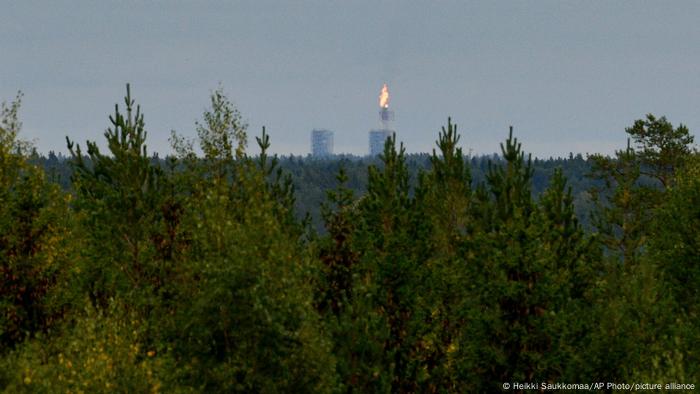
Russia is believed to have flared large amounts of gas near the Finnish border since July, releasing approximately 9,000 tonnes of CO2 per day. DW looks at the potential climate impact.

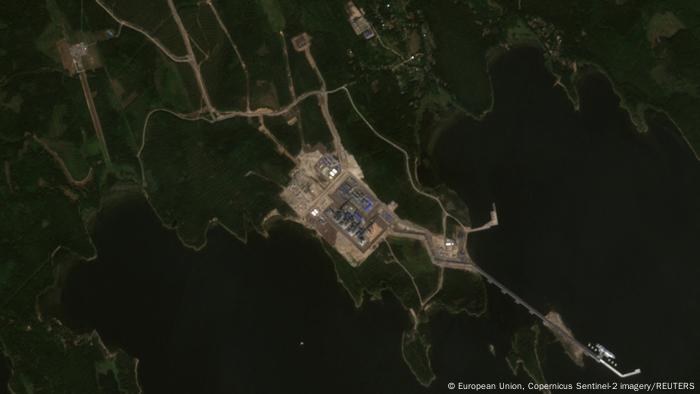
Satellite imagery captured a gas flare at the Portovaya plant, Russia

In its recent analysis of activity at the under-construction Portovaya liquid natural gas facility not far from where the Nord Stream 1 pipeline enters the Baltic Sea, Norwegian-based company Rystad Energy said Russia was flaring gas that would ordinarily have been supplied to Europe. Had relations with the West not soured as a result of Moscow's invasion of Ukraine.

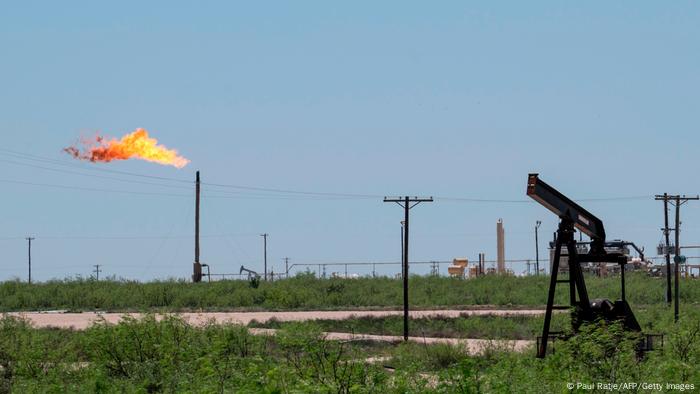
Flaring is generally a common practice near oil fields and processing plants across the world, with companies burning off gas that is generated as a byproduct during various processes involved in oil exploration and extraction.  

Firms usually resort to flaring when they lack adequate infrastructure or financial incentives to bring the gas to market, or when it needs to be released for safety reasons to manage changes in pressure during crude oil extraction.  

Huge volumes of gas are currently lost to flaring each year. According to the World Bank, in 2021 approximately 144 billion cubic meters of gas were burned in thousands of flares at oil production sites worldwide — enough to power the whole of sub-Saharan Africa, or almost two-thirds of the European Union's net domestic electricity generation. 

A picture taken from Finland shows natural gas being burned at Russian plant near the border

How does it affect the environment?  

Flaring is seen as environmentally preferable to venting gas directly into the atmosphere. 

"If you have in parts of your grid too much gas, you have to release it and of course for the climate it is better to burn it because you massively reduce the greenhouse gas effect than if you release the natural gas, as it is CH4 [methane]," said Stefan Lechtenböhmer, professor and director of future energy and industry systems at the Wuppertal Institute, a German think-tank.

Compared to the CO2 released from flaring, methane is around 80 times more potent for global warming over a 20-year period.

Despite this, gas flaring is still considered economically unproductive and a critical climate issue. "You have the CO2 emissions, but no use from it: you don't produce electricity, you don't produce heat, you don't drive industry processes etc," Lechtenböhmer said.

Gas wasted in flaring, venting and methane leaks from oil and gas operations led to around 2.7 billion tons of CO2 equivalent emissions in 2021. According to the International Energy Agency, preventing this loss would have the same impact on global temperature rise by 2050 as immediately eliminating greenhouse gas emissions from all the world's cars, trucks and buses.

The top ten countries flaring gas around the world includes US, Iraq and Russia

Potential impact of Russian gas flare 

Zongqiang Luo, senior gas and LNG analyst at Rystad Energy says the sheer volume of gas being burned at the LNG facility in Russia makes it a particularly concerning case.  "A normal, standard procedure will not flare that amount of gas."

Although the exact volume of gas being lost to flaring at Portovaya is difficult to calculate accurately, Rystad estimates it to be around 4.34 million cubic meters per day. That equates to 1.6 billion cubic meters annually, around 0.5% of the EU's annual gas demand needs.

Rystad Energy has described the situation as an "environmental disaster," with around 9,000 tons of CO2 being emitted daily. 

Lechtenböhmer said this daily gas burning was equivalent to roughly 10-12% of the amount of gas currently delivered every day throughNord Stream 1.

"It is an environmental crime of the largest proportion —  it is protracted, it goes on for months, and as we are now learning, it is highly visible," said R. Andreas Kraemer, founder of the Ecological Institute, a non-profit research organization based in Berlin. 

The Russian gas giant Gazprom has slashed flows through the Nord Stream 1 pipeline to just 20% of capacity since mid-July, blaming technical reasons like faulty equipment for the cut.  

Germany rejects this argument and says the reduction in gas supply was a political move in response to Western sanctions against Moscow over the Ukraine war.  

Some argue that after Russia cut supplies to its European customers, it couldn't divert the gas to anywhere else and therefore opted to burn it off.  

Gazprom, which according to Rystad Energy is building the plant where gas is being flared, did not respond to requests for comment. 

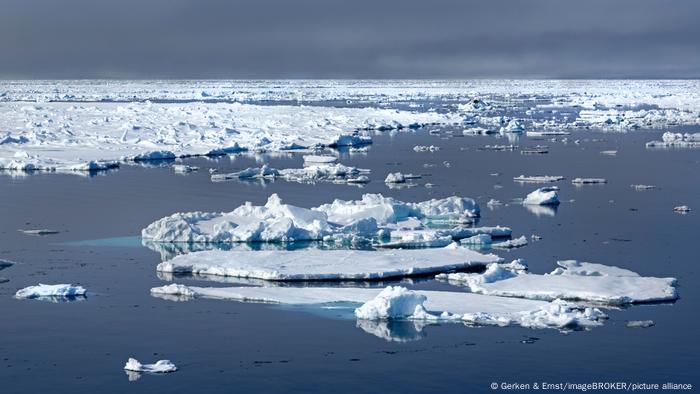
Experts are concerned the black carbon could land on Arctic ice, accelerating melting

Black carbon pollution and the Arctic 

Experts such as Kraemer have also expressed concern about the pollution from black carbon —  more commonly known as soot — produced during flaring from the incomplete burning of fuels like natural gas. Black carbon is a powerful contributor to global warming, converting solar radiation into heat and impacting rainfall patterns.

Kraemer regards the northern geographical position of the Portovaya flare as concerning. 

"I think from that location, it [black carbon] will go far," he said, explaining the heat could make it rise to high altitudes where it can be blown across significant distances. "They [black carbon particles] will eventually settle on the ground. And if they settle on snow, then they change the absorption of sunlight by the surface of the snow or ice and that can accelerate Arctic melting.”

Using calculations of the estimated flow rate through the flare, it is likely that this single flare is currently producing more black carbon than the entire country of Finland, said Matthew Johnson, professor and head of the energy and emissions lab at Carleton University in Canada. 

Based on Rystad's analysis, the World Bank said that on a daily basis the individual flare at the Portovaya LNG facility is equivalent to around 6% of the daily flaring estimated for Russia in 2021. Most Russian flaring is driven by oil production in a small number of fields in East Siberia.

By volume the country flaresmore gas than any other globally, topping a list that includes Iraq, Iran, US and Venezuela. 

Nico Bauer, senior scientist at the Potsdam Institute for Climate Impact Research in Germany, said Russia's performance to reduce gas flaring is insufficient.

"Russia's government planned to reduce gas flaring from about 12% of associated gas to below 5%, which is the share achieved in countries with advanced gas production industries. However, this has not been achieved."

Edited by: Tamsin Walker