Tuesday, August 30, 2022

Abbott restarts production of Similac baby formula at Michigan plant

By Adam Schrader

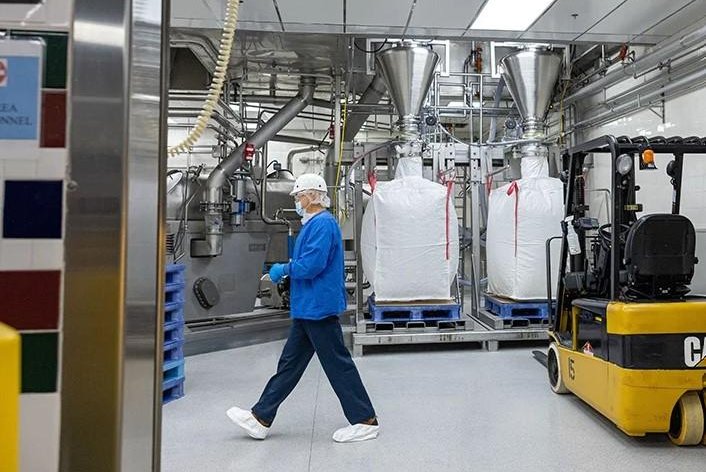
An Abbott employee working inside a production area of the Michigan infant formula manufacturing facility wears shoe covers to help prevent outside particles from entering production areas. Photo courtesy of Abbott

Aug. 27 (UPI) -- Abbott is restarting production of Similac, the company's most popular baby formula, at its plant in Michigan which was shut down in February over concerns of bacterial contamination.

The shutdown of the plant in Sturgis, as well as supply chain issues that limited ingredients necessary to make baby formula, caused a national shortage that sent parents frantically searching for ways to feed their infants.

Abbott said in a statement Friday that it expects Similac to begin shipping to retail locations in about six weeks while EleCare, a hypoallergenic formula made by the company, will begin to ship "in the coming weeks" after it began production in July.

"We know that the nationwide infant formula shortage has been difficult for the families we serve, and while restarting Similac production in Michigan is an important milestone, we won't rest until this product is back on shelves," Abbott CEO Robert Ford said in the statement.

"Making infant formula is a responsibility we take very seriously, and parents can feel confident in the quality and safety of Similac and other Abbott formulas. We are committed to re-earning the trust parents and healthcare providers have placed in us for decades."

The company said that it will supply the United States with more than 8 million pounds of infant formula in August after it upped formula production at its facility in Arizona and started making more liquid Similac Ready-to-Feed liquid formula at its plant in Ohio, among other production changes.

The Food and Drug Administration inspected the Sturgis plant in February after receiving complaints that two babies four babies became sick with bacterial infections, two of whom died, after consuming formula from the Michigan facility.

The FDA and the Centers for Disease Control and Prevention said that Cronobacter sakazakii was the source for the infections and that the bacteria was found in two finished Similac products and environmental samples during an inspection.

"We have a zero-tolerance policy for Cronobacter or any pathogen in our plants. Cronobacter is naturally and commonly found in the environment and our quality systems are designed to find it and destroy it when it's present, as it sometimes is with all manufacturers," Abbott said in its statement.

"That is why we test for it regularly and take steps to eliminate it if and when we find it, is why we took the steps we did in Sturgis in February, and is what guides our approach today."

Survey shows gay men cutting back on sex to avoid monkeypox

By Ernie Mundell HealthDay Reporter

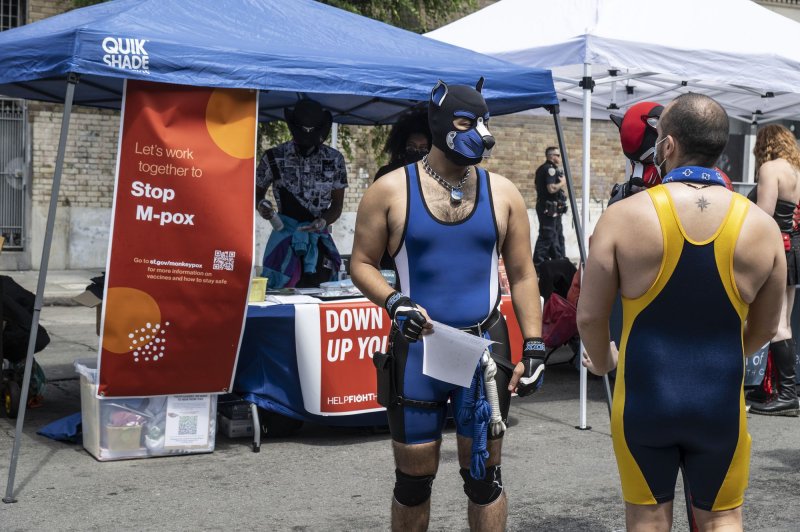
A booth offers information on monkeypox at a fetish and leather festival in
 San Francisco on July 31. Photo by Terry Schmitt/UPI | License Photo

A survey conducted among American gay and bisexual men in early August found about half saying they'd cut down on sexual activity -- including one-night stands and app-based hookups -- in response to the global monkeypox outbreak.

The survey, conducted online Aug. 5-15, was led by Kevin Delaney, of the Monkeypox Emergency Response Team at the U.S. Centers for Disease Control and Prevention.

"These findings suggest that men who have sex with men are already taking actions to protect their sexual health and making decisions to reduce risk to themselves and their partners," Delaney's team reported.

The timing of the survey -- and its finding that America's gay male community reacted swiftly to the monkeypox threat -- coincides with a recent global decline in monkeypox cases.

RELATEDFDA warns of risk of monkeypox infection from fecal transplant treatments

According to World Health Organization data released Thursday, the number of monkeypox cases around the world dropped by 21% over the prior week.

According to the CDC, nearly 17,000 cases of the viral illness have been reported in the United States. The vast majority of cases are occurring among gay and bisexual men.

Monkeypox typically requires skin-to-skin or skin-to-mouth contact with an infected patient's lesions to spread. People can also become infected through contact with the clothing or bedsheets of someone who has monkeypox lesions.

RELATEDWyoming confirms 1st monkeypox case; outbreak reaches all 50 states

A vaccine for monkeypox called Jynneos exists, but it is in short supply. Vaccines are being rationed and reserved for those most at risk, including gay and bisexual men with multiple sex partners, and for health workers, laboratory staff and outbreak responders.

In the meantime, gay and bisexual men appear to be modifying their behavior to lessen the risk for infection and spread, the new study finds.

The new survey involved 824 U.S. adult men, 90% of whom reported sexual activity with another man at least once over the past three months (in other words, during the monkeypox outbreak).

RELATEDBritain launches pilot monkeypox vaccine plan to stretch available doses

Just over 70% of respondents were White, and about half were under the age of 45. They came from all over the United States, with about half living in cities.

"Respondents reported changing sexual behaviors since they learned about the monkeypox outbreak," the CDC team reported.

Overall, "47.8% reported reducing their number of sex partners, 49.8% reported reducing one-time sexual encounters, and 49.6% reported reducing sex with partners met on dating apps or at sex venues," the researchers said.

Monkeypox can be transmitted whenever skin touches skin, and about 42% of men surveyed said they'd reduced their attendance at "social events with close contact," the study also found.

Of course, getting the vaccine is another way of protecting yourself from monkeypox.

According to the survey, by Aug. 15 nearly 19% of the men surveyed said they'd gotten at least their first dose of the two-dose vaccine.

"Receipt of vaccine was highest among Hispanic men [27.1%] and lowest among Black men [11.5%]," the survey found. Just under 18% of White men had received at least one dose of vaccine. More urban men got the shots compared to those living in rural areas, and vaccine uptake was highest in the Northeast (27.8%) and lowest in the South (13%).

Folks who had two or more partners were more likely to avail themselves of the Jynneos shot (about 30%) compared to people with one or no partners (about 14%).

Still, access to the vaccine remained a problem: According to the study, of the 662 people who said they had yet to get a vaccine, 28.5% said they'd tried to get one but had been unsuccessful.

By Aug. 15, actual cases of monkeypox were rare: Just 1.7% of the men responding said they'd become infected. And overall, America's gay community appeared to be taking the outbreak in stride: "82.3% reported feeling confident that they could protect themselves from monkeypox," Delaney's group said.

In tandem with the survey findings, another CDC study sought to predict the impact of changes in sexual behavior on the spread of monkeypox in the United States.

As context, the authors of the modeling study noted that "one-time partnerships, which account for 3% of daily sexual partnerships [among gay/bisexual men] and 16% of daily sex acts, account for approximately 50% of daily monkeypox virus transmission."

Within that framework, "a 40% reduction in one-time partnerships might delay the spread of monkeypox and reduce the percentage of persons infected by 20% to 31%," the researchers concluded. They were led by Thomas Gift, also from the CDC's Monkeypox Emergency Response Team.

Both studies were published Friday in the CDC journal Morbidity and Mortality Weekly Report.

More information:

Find out more about monkeypox at the World Health Organization.

SOURCE: Morbidity and Mortality Weekly Report, Aug. 26, 2022

Copyright © 2022 HealthDay. All rights reserved.

How has Hong Kong weaponized its judiciary to target dissent?

The trial of media tycoon Jimmy Lai and a separate case against pro-democracy activists in Hong Kong are set to proceed without juries, according to media reports.


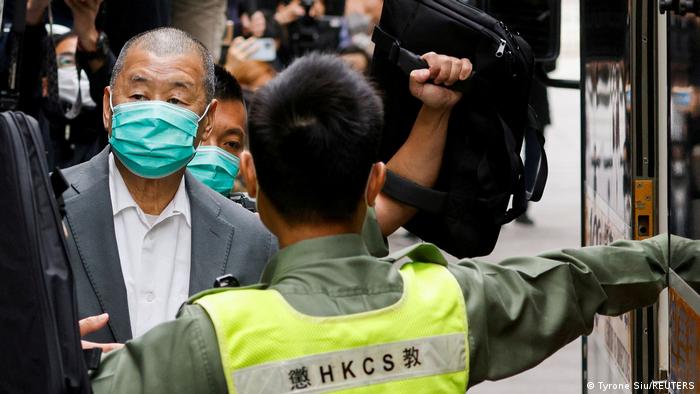
Media entrepreneur Jimmy Lai and many others face increasingly tough legal battles in Hong Kong

Two high-profile national security cases in Hong Kong will proceed without juries, according to the media in the former British colony, with some analysts interpreting this as another signal of failing judicial independence.

One of the cases concerns high-profile media tycoon Jimmy Lai, who faces charges of colluding with foreign forces and distributing seditious publications. The other one is aimed against 47 pro-democracy figures who were charged with "conspiracy to subversion" under Hong Kong's National Security Law (NSL).

Though trial by jury has been a long tradition in Hong Kong’s common law system, the NSL allows cases to be heard by government-appointed judges. The legislation was imposed by Beijing in 2020, following years of pro-democracy protests.
Fewer juries make government 'more confident'

Last month, a UN human rights committee expressed concerns about the practice of no-jury trials. Despite those concerns, however, Hong Kong's High Court set a precedent by hearing the national security case against activist Tong Ying-kit without a jury, and handing him a nine-year sentence.

"The move of not designating juries to these cases reflects the government's deep concern about the outcome of the trial," Eric Lai, the Hong Kong law fellow at Georgetown University's Center for Asian Law, told DW.

"If a criminal is tried by a jury, there would be many possibilities and greater uncertainties for the outcome," Lai said. "It's obvious that, when juries are absent, the government is more confident of the outcome of the trial. This implies that the judicial system in Hong Kong has become more like a tool for the government to achieve their political aim."

Other analysts are warning that an increasing number of cases may not be legitimate.

"The whole thing is another indicator showing that there is nothing left in regard to judicial independence in Hong Kong under the NSL," Chung-Ching Kwong, the Hong Kong campaign coordinator for the Inter-Parliamentary Alliance on China, told DW.

According to a letter seen by the Hong Kong Free Press, the city's justice secretary cited safety concerns as the reason for not appointing a jury in the case against the 47 pro-democracy figures. The secretary, Paul Lam, said there were foreign elements in the case, raising questions on the "personal safety of jurors and their family members" and the risks of "perverting the course of justice if the trial is conducted with a jury," among other factors.

Are defendants pressured to plead guilty?

Following the revelation that their cases would be heard without juries, 29 defendants in the 47 pro-democracy figures' case are reportedly planning to plead guilty. Media tycoon Jimmy Lai is apparently sticking with the not-guilty plea in his own national security case.

Kwong said some defendants might choose to plead guilty to receive shorter jail sentences, but they might also think that arguing in court would not make a difference for the outcome.

"Since they have been remanded for more than a year, it makes more sense to just get out of jail as soon as possible," she said.

"They know they most likely will be found guilty and, under the current regime, it doesn't make any difference if you try to argue in court or not," she added. "I think it's both knowing that there won't be a fair trial while wanting to get out of jail as soon as possible."

Legal scholar Eric Lai said the practice of pretrial detention in NSL cases was very similar to pretrial detention in mainland China and under other autocratic regimes. At the same time, he noted that differences still remain between the former UK colony and rest of China.

"There are similarities between the judicial system in Hong Kong and China, but I can't say they are completely mirroring," he said.
Bail increasingly out of reach

Many defendants in national security cases have been detained for over a year, and some observers say the vague conditions for granting bail reflect the general lack of transparency in Hong Kong's judicial system.

"In the common law system, granting bail should be a right, as you can't hinder someone's physical freedom without sufficient justification," Kwong said.

"The threshold for granting bail is so hard to achieve now,"she added. It's very problematic to see that we are relieved when someone received bail, because it should be a norm that most defendants should receive bail as long as they don't have a high risk of hindering case development."

On Monday, a former lawmaker and former leader of the disbanded Hong Kong Alliance, which organized the annual Tiananmen Vigil in Hong Kong, was granted bail after being remanded last May. Albert Ho is accused of inciting subversion even though he has completed sentences under protest-related charges. Under his bail conditions he had to pay close to €90,000 ($90,000), while also reporting to the police three times a week and hand over all his travel documents, and with two of his family members also providing surety.

"While we celebrate some kind of good news that Ho is now granted bail, we shouldn't take it as a sign that others will be given bail," said Patrick Poon, a visiting researcher at the Institute of Comparative Law at Japan's Meiji University. "It’s not setting precedence."

Edited by: Darko Janjevic
Bolivia's women activists get support from Germany

Year after year, Bolivia witnesses an extremely high level of violence against women. Many victims turn into activists. German Development Minister Svenja Schulze wants to support them with feminist development policy.


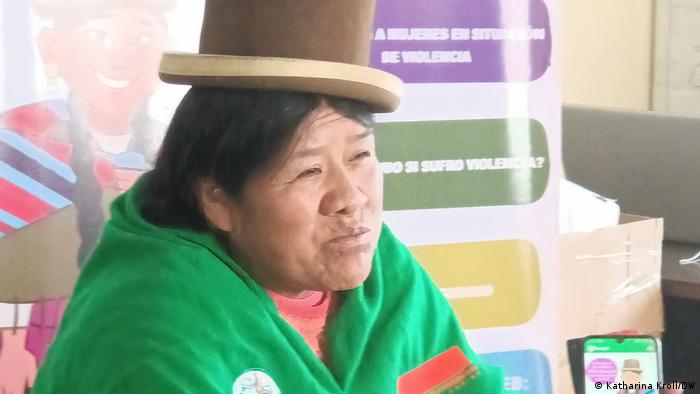
Lucrecia Huayhua sees herself as a fighter. She now fights for other women so that they do not have to suffer what she herself once went through.

Born in a village, she had 12 brothers and sisters and at the age of eight, she was brought to the Bolivian capital La Paz where she had to earn money as a housemaid. "I didn't understand what was happening to me at all at that time," she says. "I was always just told, 'You're not worth anything.' I was treated very, very badly. I had a hard life." It's still painful for her to talk about today.

Even as an adult woman, Huayhua underwent similar experiences and eventually she escaped her violent husband with her children. She says she was lucky to find the activists of the OMAK project, the "Organización de Mujeres Aymaras del Kollasuyo" (Organization of Aymara Women of Kollasuyo). It was a moment that fundamentally changed her life because she suddenly realized that she also had rights. "I understood for the first time that I was worth something. And that I was allowed to have dreams," she says.


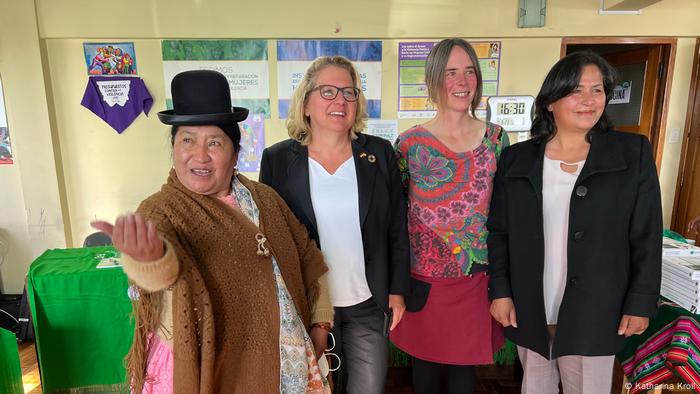
Lucrecia Huayhua fights for womens' rights

Three out of four women in Bolivia say they have experienced violence at the hands of their partners. Every year, 120 women are killed in the country. Relative to the population, that's one of the highest rates of femicide in Latin America.

"Women need more rights, and they must be enforced," said German Development Minister Svenja Schulze, speaking to the women of the OMAK project in El Alto, whom Germany is helping financially. "We want to focus more on feminist development policy. Because we are firmly convinced that societies become more humane when women have equal rights." That's why the minister is determined to make sure that women receive targeted support.

Violence is passed down through generations

"The goal of our work is for the women to break out of these violent relationships and become ambassadors against violence and for equality," says Eva Pevec, country coordinator at International Christian Service for Peace EIRENE, an OMAC partner. "They then draw on their own experience to help others." Lucrecia Huayhua is a living example of this: She received training and now fights for the rights of women affected by violence.

"There is a lot of machismo in Bolivia, which is seen as totally normal here," Pevec says. "Violence is part of life, seen as a normal human characteristic. And so, men are allowed to beat their wives. And parents beat their children." The violence is passed down from generation to generation and rarely questioned, she says.

Often, it is only when women join the project that they have the chance to talk about what happened to them. And about what they themselves have passed on to their children. This is often a very painful process, Pevec says.

Women cannot rely on the justice system


Bolivia is one of the poorest countries in South America. Around 80% of the population of working age does not have a regular job and thus no security. People live from hand to mouth, selling their small harvests at the markets, and working as street vendors or shoe shiners. Furthermore, during the COVID-19 pandemic, Bolivia's economy suffered a massive slump and violence increased during the harsh lockdowns. "In addition, there is a lot of uncertainty in the country. People feel that many reforms urgently need to be addressed," says Jan Souverein, head of the Bolivian branch of the Friedrich Ebert Foundation, which is affiliated with Svenja Schulze's center-left Social Democrat Party (SPD). "The judicial system, for example, is corrupt and in a pitiful state," he explains.

"Murderers and violent criminals can buy their way out. That's why many women don't report crimes against them," adds Pevec of EIRENE. In 2013, Bolivia introduced a law to protect women from all types of violence and the crime of femicide has even been included in the penal code and carries a maximum penalty. "But because of corruption, the law is not applied."

Climate protection, energy transition, women's rights


It had been a long time since a government minister from Germany had visited Bolivia. "I came here because Germany wants to show more presence in Latin America. Democracies need to strengthen each other," said Schulze.

The development minister also wants to strengthen cooperation on protecting the Amazon rainforest and on the energy transition to renewables. Germany is financing development cooperation projects in Bolivia to the tune of almost €300 million ($297 million). And its new feminist foreign and development policy concept will mean more support for projects such as that of the Aymara women.

"I want a world without violence," says Lucrecia Huayhua. "I will continue to fight for this with my heart, soul and mind all my life."

This article was originally written in German.

South Africa: Workers protest rising cost of living

Trade union-led protests have called on the government to reign in runaway inflation and rising costs. South Africa is still reeling from the impact of the coronavirus pandemic.

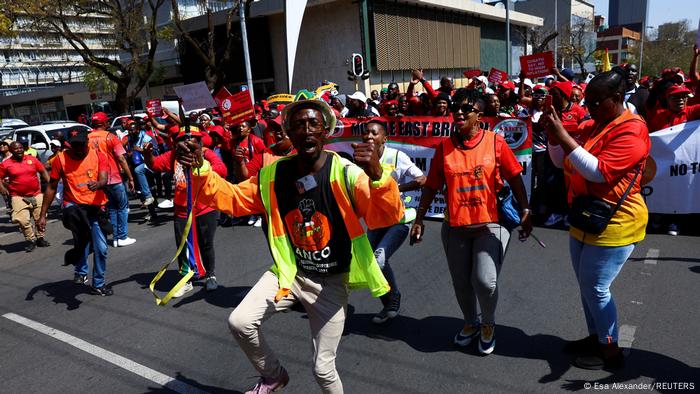
Wednesday's protests were focused on Pretoria although smaller protests took place in other cities too

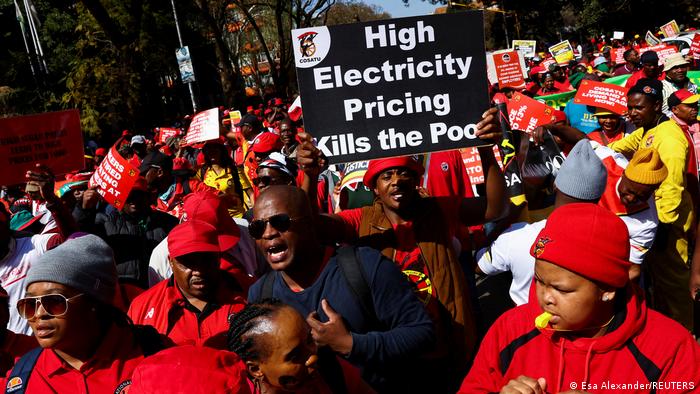
Workers took to the streets in the South African city of Pretoria on Wednesday, following calls from the country's biggest trade unions to protest rising inflation and power cuts.

Hundreds of people marched on the Union Buildings where the presidency is housed. The protesters called on President Cyril Ramaphosa and his government to bring rising prices and the rising cost of living under control.

"We cannot breathe," Zwelinzima Vavi, general secretary of the South African Federation of Trade Unions, told the crowd.

"We cannot compromise when we know that, yesterday and today, at least 14 million people are forced to skip a meal a day ... because they simply cannot afford to buy a plate of food," Vavi said.

South Africa's struggling economy

South Africa was hit hard by the coronavirus pandemic with an estimated 2 million jobs lost, bringing its unemployment rate up to 35%.

Inflation has hit 7.8% and the soaring cost of fuel has led to rolling blackouts as the state-owned power company Eskom struggles to meet electricity demands.

The price of food and nonalcoholic beverages had gone up 9.7% and electricity tariffs were up 7.5%, the national statistics agency reported on Wednesday.

Protesters called for wage increases and investments in public services

"The economy has gone down, especially for us poor teachers. ... I am struggling to pay my debts because of the interest rate. ... Petrol is going up, food prices are going up, even our medical aid premiums are increasing," schoolteacher Moalusi Tumame said.

"That is a problem because as a teacher I can no longer afford to live the life that I deserve to be living," Tumame said. 

Government responds to protesters

The trade unions blame the country's ruling party, the African National Congress (ANC), for the cracks in the economy, which were already visible before the pandemic began.

"It is a societal struggle," said Mike Shingange, deputy director of the Congress of South African Trade Unions (COSATU).

Without action, "our future is doomed, the future of our young people is doomed," Shingange said. "We have to fight now."

Minister in the Presidency Mondli Gungubele met with protesters and said pledged that the issues were a priority for the government.

"We agree with you that, unless the government deals with inequality, it will be irrelevant," Gungubele said.

ab/jcg (AP, AFP)

 How to make it rain: Cloud seeding to combat drought

Humans can influence the weather ― to a degree. Today, cloud seeding, or artifical rain, is mostly used to bring water to drought-ravaged regions. But it's also been misused in the past.

Today, humans can do more than pray for water from above. With cloud seeding, 

they can make clouds release their rain.

Countries in the northern hemisphere continue to struggle with heat waves, wildfires and extreme drought, prompting climate scientists and engineers to try and alter the weather themselves. 

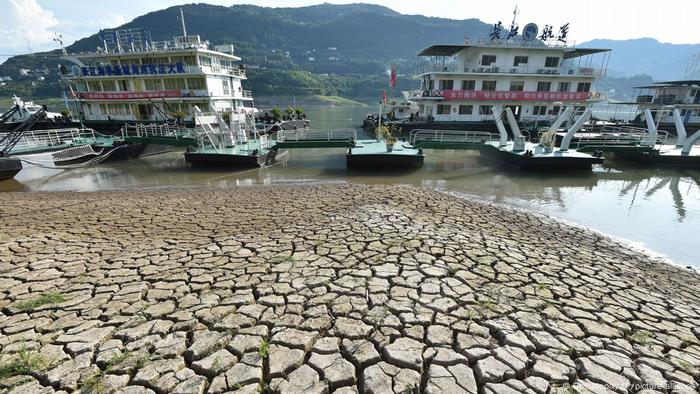
China is currently experiencing its longest heat wave ever recorded with temperatures regularly exceeding 40 degrees Celsius (104 degrees Fahrenheit) in the province of Sichuan in the past two months. The heat is pushing the Yangtze, Asia's longest river, to record low levels, causing a drought that China's Ministry of Water Resources said was "adversely affecting drinking water security of rural people and livestock and the growth of crops."

In response to the critical situation, the Chinese government has launched an effort to induce rainfall via something called "cloud seeding."

Because of a record drought, the Yangtze is drying up in places like Yunyang 

county in southwestern China.

How does cloud seeding work?

Clouds form when air containing water vapor rises into the atmosphere, cools and forms icy particles. Once enough of those particles clump together, a cloud forms. Inside the cloud, the icy particles combine.

When the combined droplets have grown large and heavy enough, they fall to the ground as some form of precipitation: Rain, snow or hail, depending on the temperature and other weather conditions.

With cloud seeding, small particles of silver iodide, a salt with a crystalline structure similar to that of ice, are added to clouds. This process can be performed either from a plane or drone, or particles can be shot up from the ground.

The method allows the water vapor inside clouds to be "tricked" into forming droplets around the silver iodide particles, Jose Miguel Vinas, a meteorologist with Meteored, a Spanish company that runs weather websites in several countries, told DW.

Once the droplets become heavy enough ― a process that is accelerated by the addition of the silver iodide ― they drop from the clouds as precipitation.

The way the process works explains why Beijing is currently struggling to cloud seed: There is a need for at least some clouds to already be in the parts of the sky where you want to induce rain, and some of the regions in China that need water most desperately don't have enough cloud cover for the method to work. Humans still cannot create rain clouds out of thin air.  

Who is making it rain ― and why?

The first attempts at cloud seeding were made by US scientists at the General Electric Research Laboratory in the 1940s. Today, the method is used in various countries across the world. China is the most recent example, and Beijing had employed the technique once before to make it rain ahead of the 2008 summer Olympics.

Russia is also known to employ cloud seeding ahead of big holidays so that public celebrations aren't ruined by rain. In 2016, Russia reportedly paid 86 million rubles (€1.44 million or $1.43 million) for cloud seeding measures to ensure a dry May Day holiday. The day of the celebration, the weather was sunny in Moscow.

Today, the method is mostly used to make it rain in regions experiencing drought. Aside from China, the US has also been using cloud seeding, most recently in western states hit especially hard by drought, such as Idaho and Wyoming.

Looking a little further back, the US employed cloud seeding as a weapon in the Vietnam War to extend the monsoon season, thereby disrupting the Viet Cong's supply chain and crippling its progress by turning the ground muddy with more rain.

And in April 1986, Soviet air force pilots seeded clouds that were moving from Chernobyl, where a nuclear power plant had just exploded, toward the Russian capital Moscow. The operation was considered a success by the regime ― the radioactive clouds didn't reach Russian cities. Instead they rained nuclear waste particles over rural Belarusian provinces and the several hundred thousand people who lived there.     

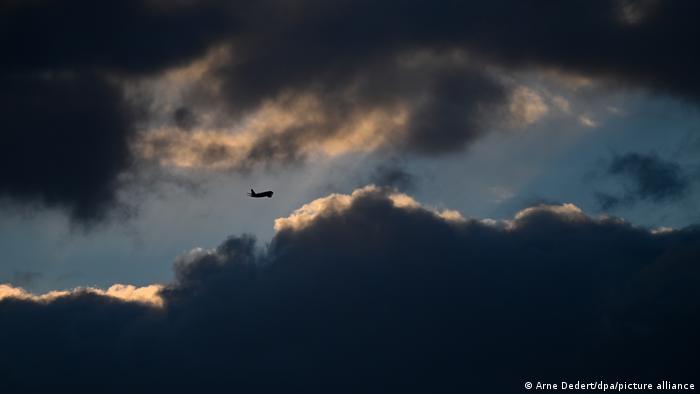
India has also been experimenting with cloud seeding. This plane carrying

 silver iodide containers took off from Bangalore in 2017.

Why is cloud seeding controversial?

Those last two examples show that a technology developed for the greater good can always be misused by people in power. But there are other factors that have some experts skeptical about whether cloud seeding is a good idea.

One argument: If you seed clouds over your region to combat drought, those clouds won't carry rain to the next region, where they might have otherwise provided a much-needed rainy reprieve.

"If you make it rain one place then you reduce rain downstream," said professor of applied physics at Harvard University David Keith,whose research focuses on the intersection of climate science, technology and policy. He likened the process to "robbing Peter to pay Paul."

"It inherently makes winners and losers," he told DW.

Experts also warn that controlling the weather could be too tall an order to go off without a hitch, and worry that it could remove the focus from more traditional measures intended to help deal with climate change.

"Geoengineering, including large-scale cloud seeding, is a dangerous experiment that can be out of our control and lead to unintended consequences," Vinas said.

"If we want to reduce the impacts of droughts or storms, particularly intense in the context of current global warming, we should invest in adaptation and mitigation measures."

Edited by: Clare Roth

 Publisher's withdrawal of Winnetou books stirs outrage in Germany

Germany wrestles with the legacy of author Karl May, whose fictional Native American hero, Winnetou, embodies the Germans' love affair with the Wild West.

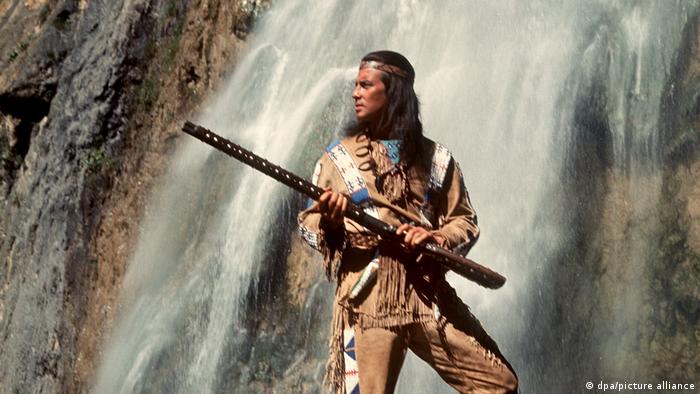
The Winnetou films from the 1960s revived the popularity of the tales

Another day, another online outrage over "cancel culture." German Twitter lit up with instant indignation this week after a German publisher announced it was pulling two children's books from its line-up amid accusations of racism and cultural appropriation.

Both books were inspired by Wild West stories from the wildly popular, and increasingly controversial, 19th-century German writer Karl May.

The books imagine the childhood of May's most famous creation: the fearless Apache brave Winnetou, a fictional Native America chief who made his first appearance in 1875 and whose adventures have been retold in numerous novels — May's books have sold around 200 million copies worldwide — as well as in several movies and even an animated series.

The new titles were to accompany the release of "The Young Chief Winnetou," which hit German theaters August 11. Now there are calls to pull the film as well.
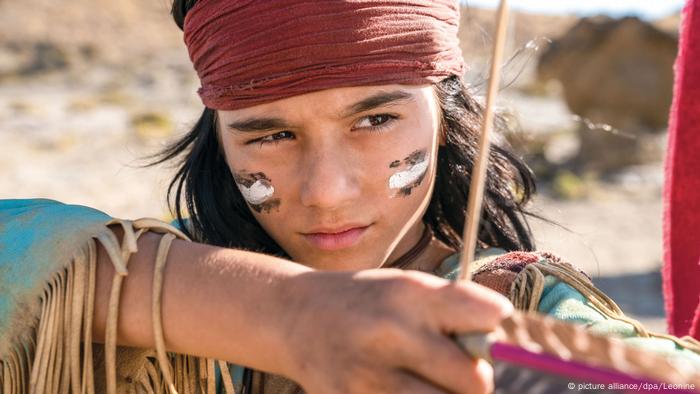
The recently released 'The Young Chief Winnetou' is also criticized for

 romanticizing North America's genocidal colonial era

The publisher, Ravensburger Verlag, citing "lots of negative feedback" around the "romanticized" and "clichéd" depiction of Native Americans in the books, dropped the titles from its program and apologized if it had hurt anyone's feelings.

The blowback was quick, and predictable. #Winnetou has been a trending topic online since with the majority of posters furious over what German tabloid Bild, with characteristic restraint, termed the "woke hysteria" that was "burning the hero of our childhood at the stake".

Germany's Wild West obsession

Behind the online fury lies a very real, and particularly German, love affair with the Wild West, an affection that can be traced directly back to Karl May and his idealized depiction of 19th-century America.

May's characters — the noble, heroic Winnetou and his white-skinned "blood brother" Old Shatterhand, a German immigrant land surveyor — are as present in the German popular imagination as the figures in Grimm's Fairy Tales.

You'll find Winnetou books and records in many German households. A series of Winnetou films made during the 1960s are still staples on German TV. There are Karl May-inspired Wild West festivals and theme parks across the county where families gather to dress up as cowboys and Indians on stage sets of saloons and hitching posts. The most popular, in Bad Segeberg, attracts about 250,000 people a year.

That, for many, is the problem. Critics say May's vision of Native American culture, as a sort of prelapsarian utopia, is little more than a convenient fiction that ignores the nastier truths about the genocide of Indigenous people by white settlers.

In the broader discussion around cultural appropriation and who has the right to tell which stories, it doesn't help May's case that he was a white man writing about a culture of which he had no first-hand knowledge.

May only visited America once, after he was already a successful novelist, and didn't get further west than New York.
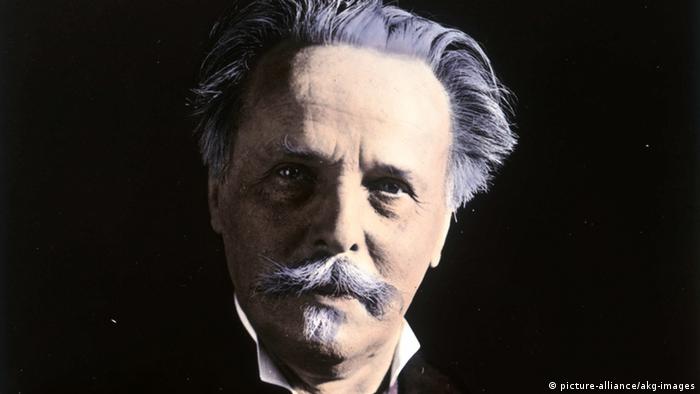


KARL MAY, CREATOR OF WINNETOU
Germany's first best-selling author
This pictures dates from 1910, at the height of Karl May's success. The author wrote 70 books, which sold more than 200 million copies worldwide. At the beginning of the 20th century, his characters were as famous as J.K. Rowling's Harry Potter or Luke Skywalker from "Star Wars." May's stories accompanied generations of young Germans on fantastic journeys to distant worlds.
12345678910


The Winnetou films, including the most recent, all feature white actors in the Indigenous roles. The most famous Winnetou is Pierre Brice, a white Frenchman who played the Apache chef in nearly a dozen films from 1962-68 as well as in a TV series in the 1980s.

The 'noble savage' stereotype

At its core, the criticism of May and Winnetou, and the reason Ravensburger pulled its books from the shelves, is that the books and their characters are retreads of the old "noble savage" stereotype.

May's Natives are not real people, the argument goes, but idealized, near-magical figures whose main role is to sacrifice themselves for the benefit of the white protagonist.

There's definitely some truth to that. Winnetou is more superhero than flesh-and-blood character, and, oddly sexless (though some readers detect a strong homoerotic vibe in the "brotherly love" between the Apache an Old Shatterhand).
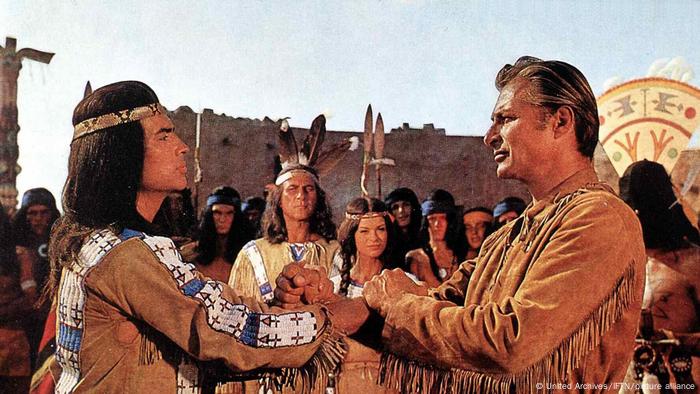
Blood brothers: Pierre Brice in the role of Winnetou and Lex Barker 

as Old Shatterhand in a film from 1963

But labeling May and his imaginary America as racist and imperialist ignores how radical, for its time, Winnetou was. A century before Kevin Costner's 1990 epic Western film "Dances with Wolves," Karl May flipped the traditional depiction of "wild Indians" and "civilized cowboys," portraying Indigenous Americans (at least Winnetou and his friends) as the heroes, and white settlers mainly as the villains.

German society does not lack for racism but, thanks in large part to Karl May, Native Americans are held in near-universal regard, even if the image the average German has of Indigenous people bears little relation to reality.

In his 2020 book "Indianthusiasm," historian and Indigenous studies scholar Hartmut Lutz, a sharp critic of Karl May, admits the author's escapist fantasies have also spurred interest in Indigenous culture and inspired generations of German academics to find out the truth behind the tales.

In the meantime, anyone who wants real insight into Indigenous life and imagination should check out "Reservation Dogs," the hilarious series on Hulu about teens growing up on a Native reservation in Oklahoma, that features all Indigenous writers and directors, as well as an almost entirely Indigenous cast. Or watch "Night Raiders" from Canadian filmmaker Danis Goulet (Cree/Metis), which uses the metaphor of dystopian sci-fi to address the traumatic legacy of Canada's residential school system.

Looking to Karl May and Winnetou expecting an authentic picture of Native experience is like reading Hansel and Gretel for tips on child rearing.

Edited by: Elizabeth Grenier

NOT UNLIKE

Pearl Zane Grey (January 31, 1872 – October 23, 1939) was an American author and dentist. He is known for his popular adventure novels and stories associated with the Western genre in literature and the arts; he idealized the American frontierRiders of the Purple Sage (1912) was his best-selling book.

In addition to the success of his printed works, his books have second lives and continuing influence adapted for films and television. His novels and short stories were adapted into 112 films, two television episodes, and a television series, Dick Powell's Zane Grey Theatre.

Zane Grey - Wikipedia