Wednesday, August 31, 2022

Europe plan for floating gas terminals raises climate fears


1 of 4
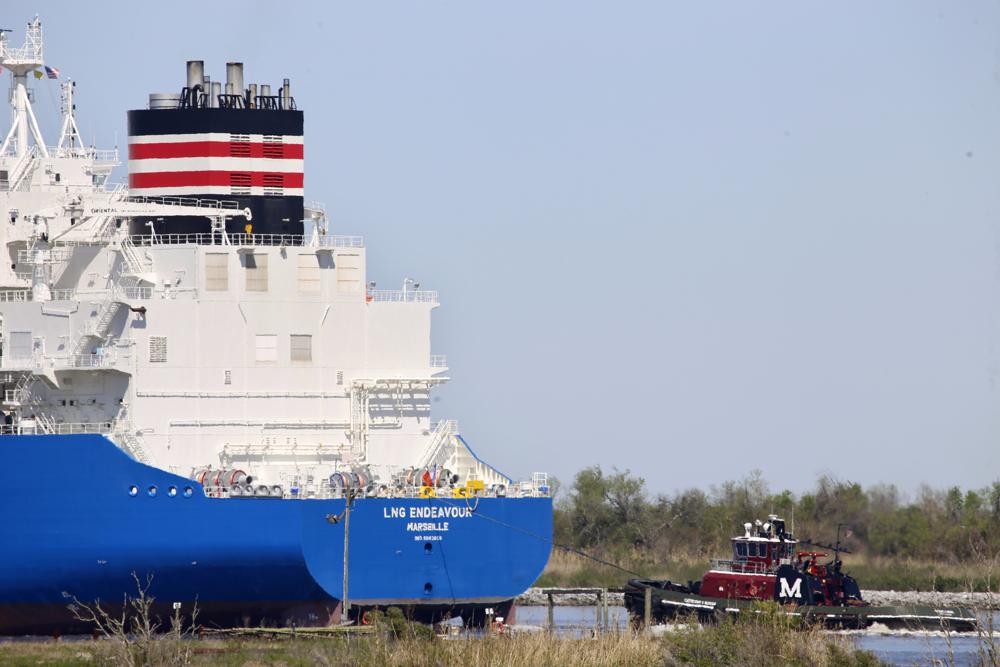
A tugboat helps guide a French ship, known as the LNG Endeavor, through Calcasieu Lake near Hackberry, La., on March 31, 2022. Russia’s war against Ukraine shattered its relations with Europe, which soon lost most of the natural gas that Moscow had long provided. Now, as winter nears, European nations have backed a short-term fix set to begin before the end of 2022 that has raised alarms among scientists who fear the long term consequences for the climate. (AP Photo/Martha Irvine, File)

NEW YORK (AP) — As winter nears, European nations, desperate to replace the natural gas they once bought from Russia, have embraced a short-term fix: A series of roughly 20 floating terminals that would receive liquefied natural gas from other countries and convert it into heating fuel.

Yet the plan, with the first floating terminals set to deliver natural gas by year’s end, has raised alarms among scientists who fear the long-term consequences for the environment. They warn that these terminals would perpetuate Europe’s reliance on natural gas, which releases climate-warming methane and carbon dioxide when it’s produced, transported and burned.

Some scientists say they worry that the floating terminals will end up becoming a long-term supplier of Europe’s vast energy needs that could last years, if not decades. Such a trend could set back emission-reduction efforts that experts say haven’t moved fast enough to slow the damage being done to the global environment.

Much of the liquefied natural gas, or LNG, that Europe hopes to receive is expected to come from the United States. The need arose after Russia’s invasion of Ukraine shattered its ties with Europe and led to a cutoff of most of the natural gas that Moscow had long provided. Along the U.S. Gulf Coast, export terminals are expanding, and many residents there are alarmed about the rise in drilling for gas and the resulting loss of land as well as extreme weather changes associated with burning fossil fuels.

“Building this immense LNG infrastructure will lock the world into continued reliance on fossil fuels and continued climate damage for decades to come,” said John Sterman, a climate scientist at the Massachusetts Institute of Technology.

Natural gas contributes significantly to climate change — both when it’s burned, becoming carbon dioxide, and through leakages of methane, an even more potent greenhouse gas. Yet European nations, which for years have been leaders in shifting to cleaner energy, have proposed bringing more than 20 floating LNG terminals into their ports to help compensate for the loss of Russia’s natural gas.

The terminals, which tower over homes and stretch nearly 1,000 feet (304 meters), can store roughly 6 billion cubic feet (170,000 cubic meters) of LNG and convert it into gas for homes and businesses. They can be built faster and more cheaply than onshore import terminals, though they’re costlier to operate, according to the International Gas Union.

“Every country needs to prepare for a scenario where there may be a cut in Russian supplies,” said Nikoline Bromander, an analyst with Rystad Energy. “If you are dependent, you need to have a backup plan.”

Many environmental scientists argue that the money being earmarked for the ships — which cost about $500 million each to build, according to Rystad — would be better spent on rapidly adopting clean-energy or efficiency upgrades that could reduce energy consumption.

Constructing more solar or wind farms, which takes years, wouldn’t immediately replace Russian gas. But with adequate funding, Sterman suggested, greater energy efficiencies — in homes, buildings and factories, along with the deployment of wind, solar and other technologies — could vastly reduce Europe’s need to replace all the gas it’s lost.

Germany, among Europe’s strongest advocates for the floating LNG terminals, is expecting five of the ships and has committed roughly 3 billion euros to the effort, according to Global Energy Monitor. Germany has also approved a law to fast-track the terminals’ development, suspending the requirement for environmental assessments.

It’s a move that troubles environmental groups.

“It’s totally obvious,” asserted Sascha Müller-Kraenner, CEO of Environmental Action Germany, that “the provisions of the law were developed in close dialogue with the gas industry.”

Germany’s government and energy industry have defended their embrace of the LNG terminals as an urgent response to the loss of most of the Russian gas they had long received, which they fear Moscow will shut off completely.

“In an exceptional situation such as this, where it’s a matter of Germany’s gas supply security, it is justified to accelerate the approval process,” Germany’s energy industry association, BDEW, said in a statement.

Susanne Ungrad, a spokeswoman for Germany’s Economy and Energy Ministry, noted that efforts are being made to lower methane emissions in exporting countries like the United States. And she said that in pursuing the construction of LNG terminals, Europe authorities will conduct comprehensive assessments.

Greig Aitken, an analyst at Global Energy Monitor, noted that a terminal that’s set to open near Gdansk, Poland, has signed contracts with American LNG suppliers that extend well past 2030. That could make it problematic for the European Union to meet its goal of reducing greenhouse gas emissions by at least 55% by 2030.

Italy, Greece, France, the Netherlands, Croatia, Estonia, Finland, Latvia, Slovenia and the U.K. all have one or more floating LNG terminals planned, according to Rystad Energy.

In some cases, proponents argue, the ships could aid the environmental cause. They note, for example, that as Russian gas supplies have dwindled, communities in Germany and elsewhere have been burning coal, which typically produces more emissions than natural gas. Increasing the supply of natural gas would make this less necessary.

Still, methane can frequently leak along the natural gas supply chain. So in some cases, the net climate effect of burning natural gas may be no better than coal.

The U.N. Intergovernmental Panel on Climate Change has warned that continuing to use the fossil fuel infrastructure already in place would cause global warming to exceed 1.5 degrees Celsius (2.7 Fahrenheit). At that level, heat would be expected to worsen the flash floods, extreme heat, intense hurricanes and longer-burning wildfires that have resulted from climate change and have cost lives.

“It is a little disheartening to see Europe, which has been the seat of so much energy and action and bold emissions targets, being home to this particular way with doubling down on fossil fuel infrastructure,” said Kim Cobb, a climate scientist at Brown University.

In the United States, the largest export market for Europe-bound LNG, three new export terminals are under construction. Eleven additional terminals and four expansions are in the planning stages. Some export terminals that had struggled to attract financing are now seeing more investment and interest, said Ira Joseph, a longtime energy analyst.

“What you’ve seen happen over the last two months — they’re signing up sales and purchase agreements, right and left,” Joseph said.

Rio Grande LNG, an export terminal proposed by Next Decade in Brownsville, Texas, for example, appeared to stall last year in the face of environmental protests. But this spring, a French company, Engie, and several clients in Asia signed long-term contracts to buy LNG from the terminal. Now, Next Decade says it’s likely to obtain all the financing it needs.

Europe’s gas scarcity has escalated global LNG prices, leading buyers in China and elsewhere to sign long-term contracts with suppliers in the United States. American LNG exports will likely grow by 10 million tons over the next year, said Bromander, the Rystad analyst.

The floating LNG ships have been billed as a short-term solution to keep gas flowing for a few years while cleaner energy sources like wind and solar are built up. But critics say it’s unlikely that a ship built to last decades would permanently halt operations after a few years.

Once the floating terminals are built, they can be used anywhere in the world. So if European nations no longer want floating LNG terminals as they transition to cleaner energy, the ships could sail off to another port, essentially locking in the use of natural gas for decades.

And in some cases, particularly in Germany, some of the proposed floating terminals appear to be paving the way for on-shore terminals that would be built to last 30 or 40 years — well past the point that nations should be burning fossil fuels, environmental groups say.

“After the war is resolved and, as we all hope, peace is restored, are they really going to say, ‘Oh, let’s take it to the scrap yard?,’” Sterman asked. “They’re not going to do that.”

____

AP Writer Frank Jordans in Berlin contributed to this report.
Survey finds young people follow news, but without much joy


 A woman checks her phone in Orem, Utah, on Nov. 14, 2019.
 A survey of people ages 16 to 40 finds that millennials and Generation Z follow the news, but they aren't that happy with what they're seeing. The study conducted by The Associated Press-NORC Center for Public Affairs Research and the American Press Institute says 79% of people follow news daily, contrary to perceptions that many are tuned out. 
(AP Photo/Rick Bowmer, File)


NEW YORK (AP) — Young people are following the news but aren’t too happy with what they’re seeing.

Broadly speaking, that’s the conclusion of a study released Wednesday showing 79% of young Americans say they get news daily. The survey of young people ages 16 to 40 — the older of which are known as millennials and the younger Generation Z — was conducted by Media Insight Project, a collaboration between The Associated Press-NORC Center for Public Affairs Research and the American Press Institute.

The report pokes holes in the idea that young people aren’t interested in news, a perception largely driven by statistics showing older audiences for television news and newspapers.

“They are more engaged in more ways than people give them credit for,” said Michael Bolden, CEO and executive director of the American Press Institute.

An estimated 71% of this age group gets news daily from social media. The social media diet is becoming more varied; Facebook doesn’t dominate the way it used to. About a third or more get news each day from YouTube and Instagram, and about a quarter or more from TikTok, Snapchat and Twitter. Now, 40% say they get news from Facebook daily, compared with 57% of millennials who said that in a 2015 Media Insight Project survey.

Yet 45% also said they get news each day from traditional sources, like television or radio stations, newspapers and news websites.

The poll found that about a quarter of young people say they regularly pay for at least one news product, like print or digital magazines or newspapers, and a similar percentage have donated to at least one nonprofit news organization.

Only 32% say they enjoy following the news. That’s a marked decrease from seven years ago, when 53% of millennials said that. Fewer young people now say they enjoy talking with family and friends about the news.

Other findings, such as people who say they feel worse the longer they spend online or who set time limits on their consumption, point to a weariness with the news, said Tom Rosenstiel, a University of Maryland journalism professor.

“I wasn’t surprised by that,” Bolden said. “It has been a challenging news cycle, especially the last three years.”

About 9 in 10 young people say misinformation about issues and events is a problem, including about 6 in 10 who say it’s a major problem. Most say they’ve been exposed to misinformation themselves.

Asked who they consider most responsible for its spread, young people pointed to social media companies and users, politicians and the media in equal measure.

That may surprise people in the media who believe they are fighting misinformation, and are not part of the problem, Bolden said. A significant number of people disagree.

“Whether that’s accurate or not, the people in this business have to deal with that perception,” he said.

He suggested that it’s important for news organizations to better explain what it is that they do and how coverage decisions are made, along with taking a step back to make clear how government functions, as well as holding leaders to account.

The percentage of people who say “news stories that seem to mostly create conflict rather than help address it” and “media outlets that pass on conspiracy theories and unsubstantiated rumors” are a major problem exceeded the number of people concerned about journalists putting too much opinion in their stories, the survey found.

That would seem to point a finger at cable news outlets that fill air time with debates on particular issues, often pitting people with extreme points of view. New CNN chief executive Chris Licht has recently called on his network to cool the overheated segments.

“There are people who have grown up in this world of political food-fight media, and this is the only world they know,” said Rosenstiel, who worked on the survey as Bolden’s predecessor at the press institute. “They might have heard their parents talk about Walter Cronkite, but they haven’t seen that.”

The topics people ages 16 to 40 say they most follow in the news? Celebrities, music and entertainment, at 49%, and food and cooking, at 48%, top the list. At least a third follow a wide range of other issues, including health and fitness, race and social justice, the environment, health care, education, politics and sports


Graphic shows results of AP-NORC Center poll on attitudes toward gun restrictions. Eighty-five percent of U.S. adults say they favor a federal law requiring background checks on all gun buyers; 83%back a federal law banning convicted domestic abusers from buying a gun; 75% favor making 21 the minimum legal age to buy a gun nationwide; 59% back a nationwide ban on the sale of AR-15 style semiautomatic weapons. Only 29% say they would support state laws allowing people to carry guns in public without a permit.

___

The AP-NORC poll of 5,975 Americans ages 16-40 was conducted May 18-June 8, using a combined sample of interviews from NORC’s probability-based AmeriSpeak Panel, which is designed to be representative of the U.S. population, and interviews from opt-in online panels. The margin of sampling error for all respondents is plus or minus 1.7 percentage points. The AmeriSpeak panel is recruited randomly using address-based sampling methods, and respondents later were interviewed online or by phone.
US life expectancy plunged again in 2021, down nearly a year


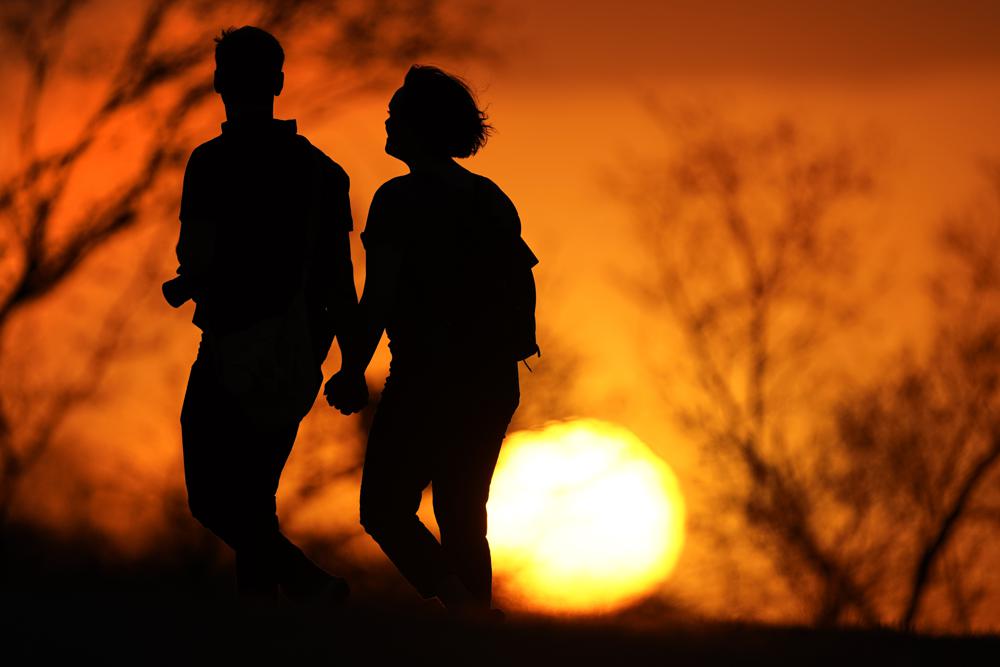
- In this March 10, 2021 file photo, a couple walks through a park at sunset in Kansas City, Mo. U.S. life expectancy dropped for two consecutive years in 2020 and 2021, marking the first such trend since the early 1920s, according to a new government report. (AP Photo/Charlie Riedel, File)

NEW YORK (AP) — U.S. life expectancy dropped for the second consecutive year in 2021, falling by nearly a year from 2020, according to a government report being released Wednesday.

In the first two years of the COVID-19 pandemic, the estimated American lifespan has shortened by nearly three years. The last comparable decrease happened in the early 1940s, during the height of World War II.

Centers for Disease Control and Prevention officials blamed COVID-19 for about half the decline in 2021, a year when vaccinations became widely available but new coronavirus variants caused waves of hospitalizations and deaths. Other contributors to the decline are longstanding problems: drug overdoses, heart disease, suicide and chronic liver disease.

“It’s a dismal situation. It was bad before and it’s gotten worse,” said Samuel Preston, a University of Pennsylvania demographer.

Life expectancy is an estimate of the average number of years a baby born in a given year might expect to live, given death rates at that time. It is “the most fundamental indicator of population health in this country,” said Robert Hummer, a University of North Carolina researcher focused on population health patterns.

U.S. life expectancy rose for decades, but progress stalled before the pandemic.

It was 78 years, 10 months in 2019. In 2020, it dropped to 77 years. Last year, it fell to about 76 years, 1 month.

The last time it was that low was in 1996.

Declines during the pandemic were worse for some racial groups, and some gaps widened. For example, life expectancy for American Indian and Alaskan Native people saw a decline of more than 6 1/2 years since the pandemic began, and is at 65 years. In the same span, life expectancy for Asian Americans dropped by about two years, and stands at 83 1/2.

Experts say there are many possible reasons for such differences, including lack of access to quality health care, lower vaccination rates, and a greater share of the population in lower-paying jobs that required them to keep working when the pandemic was at its worst.

The new report is based on provisional data. Life expectancy estimates can change with the addition of more data and further analysis. For example, the CDC initially said life expectancy in 2020 declined by about 1 year 6 months. But after more death reports and analysis came in, it ended up being about 1 year 10 months.

But it’s likely the declines in 2020 and 2021 will stand as the first two consecutive years of declining life expectancy in the U.S. since the early 1960s, CDC officials said.

Findings in the report:

—Life expectancy for women in the United States dropped about 10 months, from just under 80 years in 2020 to slightly more than 79 in 2021. Life expectancy for men dropped a full year, from about 74 years to 73.

—COVID-19 deaths were the main reason for the decline. The second largest contributor was deaths from accidental injuries — primarily from drug overdoses, which killed a record-breaking 107,000 Americans last year.

—White people saw the second biggest drop among racial and ethnic groups, with life expectancy falling one year, to about 76 years, 5 months. Black Americans had the third largest decline, falling more than eight months, to 70 years, 10 months

—Hispanic Americans had seen a huge drop in life expectancy in 2020 — four years. But in 2021, life expectancy for them dropped by about two months, to about 77 years, 7 months. Preston thinks good vaccination rates among Hispanics played a role.

The report also suggests gains against suicide are being undone.

U.S. suicides rose from the early 2000s until 2018. But they fell a little in 2019 and then more in 2020, the first year of the pandemic. Experts had wondered if that may have been related to a phenomenon seen in the early stages of wars and national disasters in which people band together and support each other.

The new report said suicide contributed to the decline in life expectancy in 2021, but it did not provide detail. According to provisional numbers from a public CDC database, the number of U.S. suicides increased last year by about 2,000, to 48,000. The U.S. suicide rate rose as well, from 13.5 per 100,000 to 14.1 — bringing it back up to about where it was in 2018.

___

The Associated Press Health & Science Department receives support from the Howard Hughes Medical Institute’s Department of Science Education. The AP is solely responsible for all content.
Gen Z, millennials speak out on reluctance to become parents

By LEANNE ITALIE
yesterday

1 of 4
This Aug. 15, 2022, photo shows El Johnson, right, with her girlfriend, Sara Goodie, in Austin, Texas. Johnson has decided not to bear children, though she hasn’t ruled out adoption. The birth rate in the U.S. has dropped dramatically as more young people decide not to have children. 
(El Johnson via AP)

NEW YORK (AP) — At 24, El Johnson has made up her mind that she won’t bear children, though she and her girlfriend haven’t ruled out adoption.

The graduate student who works in legal services in Austin, Texas, has a list of reasons for not wanting to give birth: the climate crisis and a genetic health condition among them.

“I don’t think it’s responsible to bring children into this world,” Johnson said. “There are already kids who need homes. I don’t know what kind of world it’s going to be in 20, 30, 40 years.”

She’s so sure, in fact, that she’ll soon have her tubes removed. It’s a precautionary decision sealed by the fall of Roe v. Wade and by tight restrictions on abortion services in her state and around the country.

Other women interviewed also cited climate change, along with overwhelming student debt coupled with inflation, as reasons they’ll never be parents. Some younger men, too, are opting out and more are seeking vasectomies.

Whatever the motivation, they play a role in dramatically low birth rates in the U.S.

The U.S. birth rate fell 4% in 2020, the largest single-year decrease in nearly 50 years, according to a government report. The government noted a 1% uptick in U.S. births last year, but the number of babies born was still lower than before the coronavirus pandemic: about 86,000 fewer than in 2019.

Walter and Kyah King live in suburban Las Vegas. Walter, 29, a sports data scientist, and Kyah, 28, a college career counselor, have been together nearly 10 years, the last four as a married couple. The realization that they didn’t want to have kids came on slowly for both of them.

“It was in our early 20s when the switch sort of flipped,” Kyah said. “We had moved to California and we were really just starting our adult lives. I think we talked about having three kids at one point. But just with the economy and the state of the world and just thinking about the logistics of bringing children into the world. That’s really when we started to have our doubts.”

Finances are top of mind. Before taxes, the two earn about $160,000 combined, with about $120,000 in student loan debt for Kyah and about $5,000 left for Walter. The couple said they wouldn’t be able to buy a house and shoulder the costs of even one child without major sacrifices they’re not willing to make.

But for Kyah, the decision goes well beyond money.

“I think we would be great parents, but the thought of going into our health system to give birth is really scary. Black women, black mothers, are not valued in the same way that white mothers are,” said Kyah, who is Black.

When Kyah’s IUD expires, Walter said he’ll consider a vasectomy, a procedure that went on the rise among men under 30 during the pandemic.

Jordan Davidson interviewed more than 300 people for a book out in December titled, “So When are You Having Kids?” The pandemic, she said, led many to delay childbirth among those contemplating children at all.

“These timelines that people created for themselves of, I want to accomplish X by three years from now, changed. People weren’t necessarily willing to move the goalposts and say, OK, I’m going to forgo these accomplishments and do this differently,” she said. “People still want to travel. They still want to go to graduate school. They still want to meet certain financial benchmarks.”

Fears about climate change have cemented the idea of living without children for many, Davidson said.

“Now with increased wildfires, droughts, heat waves, all of a sudden it is becoming real that, OK, this is happening during my time, and what is this going to look like during the time that my children are alive?” she said.

In New York City, 23-year-old Emily Shapiro, a copywriter for a pharmaceutical ad agency, earns $60,000 a year, lives at home as she saves money and has never wanted children.

“They’re sticky. I could never imagine picking up a kid that’s covered in ice cream. I’m a bit of a germaphobe. I don’t want to change a diaper. If I did have one, I wouldn’t want them until they’re in, like, sixth grade. I also think the physical Earth isn’t doing so great so it would be unfair,” she said.

Among those Jordan interviewed, concerns over the environment were far more prevalent among the younger group. Questions of affordability, she said, troubled both millennials and members of Gen Z.

“There is a lot of fear around having children who would be worse off than they viewed themselves during their childhoods,” Davidson said.

Dannie Lynn Murphy, who helps find software engineers for Google, said she was nearly 17 when she was removed from her home by child protective services due to a pattern of child abuse. Her wife, she said, was similarly raised in a “not great” environment.

“Both of us at one point would have said yes to kids,” she said. “In my late teenage, early adult years, I saw and understood the appeal and was attracted to the idea of getting to raise someone differently than I was raised. But the practical realities of a child kind of suck.”

Murphy earns about $103,000 a year, with bonuses and equity that can drive that amount up to $300,000. Her wife earns about $60,000 as an attorney. They don’t own their Seattle home.

“I can’t see myself committing to a mortgage, let alone a child,” the 28-year-old Murphy said. “I think the primary reason is financial. I would prefer to spend that money on traveling versus sinking a half a million dollars into raising a child. Secondarily, there’s now the fear of behaving with our children the way our parents behaved with us.”

Alyssa Persson, 31, was raised in small town South Dakota. Getting married and having children was ingrained in the culture, she said. It wasn’t until after her divorce from her high school sweetheart that she took a step back and asked herself what she actually wanted out of life.

“Most women where I’m from lose their identities in motherhood,” said Persson, who now lives in St. Louis and earns about $47,000 a year as a university librarian.

She’s carrying student loan debt of about $80,000. Persson is a former teacher who loves children, but she feels she is now thinking more clearly than ever about the costs, implications and sacrifices of parenting.

“Having children sounds like a trap to me, to be frank,” she said. “Financially, socially, emotionally, physically. And if there were ever any shadow of a doubt, the fact that I cannot comfortably support myself on my salary is enough to scare me away from the idea entirely.”

___

Follow Leanne Italie on Twitter at http://twitter.com/litalie

—-

For more AP Lifestyles stories, go to https://apnews.com/hub/lifestyle
Discovered in the deep: the incredible fish with a transparent head

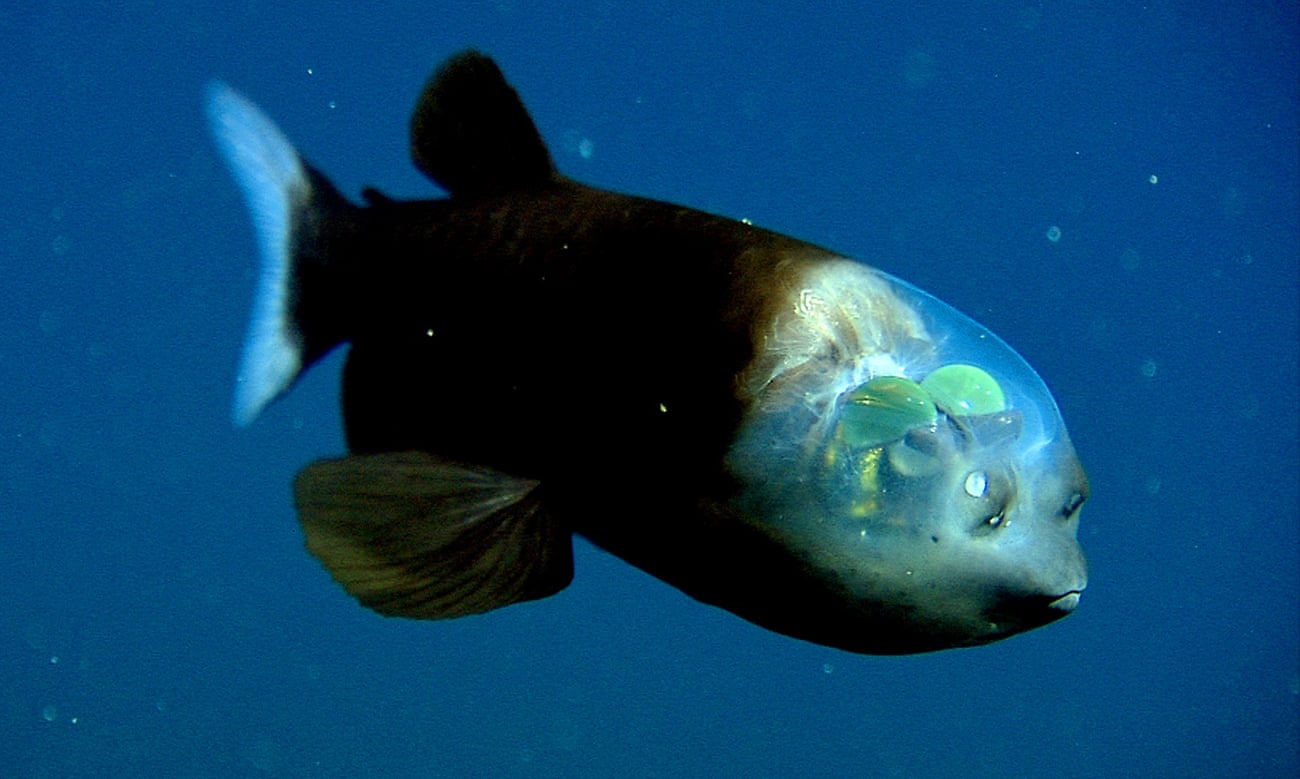
The barreleye fish has extremely light-sensitive eyes that can rotate within a transparent, fluid-filled shield on its head. The two spots above its mouth are similar to human nostrils. 
Photograph: Monterey Bay Aquarium Research Institute


The rare barreleye fish tracks its prey with extremely light-sensitive rotating eyes encased in a see-through canopy


Helen Scales
Wed 31 Aug 2022 0

In the ocean’s shadowy twilight zone, between 600 and 800 metres beneath the surface, there are fish that gaze upwards through their transparent heads with eyes like mesmerising emerald orbs. These domes are huge spherical lenses that sit on a pair of long, silvery eye tubes – hence its common name, the barreleye fish (Macropinna microstoma).

The green tint (which actually comes from a yellow pigment) acts as sunglasses, of a sort, to help them track down their prey. There’s nowhere to hide in the open waters of the deep ocean and many animals living here have glowing bellies that disguise their silhouette and protect them – bioluminescent prey is hard to spot against the dim blue sunlight trickling down. But barreleyes are one step ahead.

Their eye pigment allows the fish to distinguish between sunlight and bioluminescence, says Bruce Robison, deep-sea biologist at the Monterey Bay Aquarium Research Institute in California. It helps barreleyes to get a clear view of the animals trying to erase their shadows.

The barreleye’s tubular eyes are extremely sensitive and take in a lot of light, which is useful in the inky depths of the twilight zone. But Robison was initially mystified that their eyes seemed fixed upwards on the small spot of water, right above their heads.

“It always puzzled me that their eyes aimed upward, but the field of view did not include their mouths,” says Robison. Imagine trying to eat scraps of food floating in front of you, while fixing your eyes on the ceiling.

But, after years of only seeing dead, net-caught specimens, Robison and colleagues finally got a good look at a living barreleye through the high-definition cameras of a remotely operated vehicle. “Suddenly the lightbulb lit and I thought ‘A-ha, that’s what’s going on!’,” he says. “They can rotate their eyes.” This means the fish can track prey drifting down through the water until it is right in front of their mouth.

Seeing a barreleye alive in the deep, Robison saw something else that scientists had previously missed. “It had this canopy over its eyes like on a jet fighter,” he says, referring to the transparent front part of the barreleye’s body, which had been torn off all the specimens he had previously brought to the surface.

He thinks this canopy probably helps protect their eyes as they steal food from among the stinging tentacles of siphonophores – animals that float through the deep sea in long, deadly strings, like drift nets.

Barreleyes have been found with a mix of food in their stomachs, including siphonophores’ tentacles, as well as animals that siphonophores feed on, including small crustaceans called copepods. Their tactic may be to swim up to siphonophores and nibble on the small prey snagged in their tentacles, using the transparent shield to protect their green eyes from stings.

But encountering barreleyes in the wild is not easy. In his 30-year career, Robison says he has only seen these 15cm-long fish alive maybe eight times. “We do spend a lot of time exploring down there, so I can say with some confidence that they’re quite rare,” he says.

UK asylum seeker deal leaves Rwanda hostel residents homeless

Survivors of Rwandan genocide were told to vacate hostel two days after Priti Patel signed £120m deal

The Hope Hostel in Kigali remains unused because the UK government has so far failed to send a single asylum seeker to Rwanda.
 Photograph: Simon Maina/AFP/Getty Images


Rajeev Syal 
Home affairs editor
Tue 30 Aug 2022 

Former residents of a hostel in Rwanda who were forced to leave under a controversial deal to house asylum seekers flown from the UK say they have been left homeless and destitute while the property remains unused.

The men, all of whom are survivors of the Rwandan genocide, had lived in Hope Hostel in Kigali for up to eight years. But they were told to vacate two days after Priti Patel, the British home secretary, signed a £120m agreement to send refugees arriving in the UK by small boats to the east African country.

Some former residents of the hotel were still students who say they lost their families in the genocide and have nowhere to go. The UK government has so far failed to send a single asylum seeker to Rwanda.

One former resident of eight years said: “We don’t know what to do. In public, government officials say they are going to help us but no extra help has come. We are very worried but we are suffering.

“It pains me to see that [the hostel] is still empty when we are homeless, on the street.”


Home Office planning new deportation flight to Rwanda

He told the Guardian the government gave him money, which lasted a month after he was asked to leave the hotel, but has not received any additional funds for the last three months. He says he has limited work and has since slept at friends’ homes.

“I was one year old when the genocide happened and all our relatives died. I came to this hostel as a gesture of kindness to give me some hope. Now, I have nowhere to go,” he said.

A second former resident said he had since dropped out of education because he had no money for rent or food.

“We face a lot of challenges that include hunger and lack of accommodation. Many families became fragile after the Covid-19 pandemic, so it’s hard to ask friends to accommodate any of us. The government says we are already grown-up people and we should find solutions but how can you find solutions when you don’t have a job?” he asked.

“If this issue is solved, we can thank God. We need help but we are also risking our survival by telling the truth.”

The residents asked not to be named for fear of reprisals. The Rwandan government has been criticised by Amnesty International for suppressing freedom of expression.

Hope Hostel, in Kigali’s Kagugu neighbourhood, was built by Rwandan donors to accommodate up to 190 survivors of the 1994 genocide when hundreds of thousands of people, mostly from the Tutsi minority, were murdered during three months of mass killings.

Formerly known as the Association of Student Survivors of Genocide (AERG) hostel, residents said there were about 40 people, mostly men, living there when Patel signed the deal.

Boris Johnson promised that tens of thousands of asylum seekers who have crossed the Channel and arrived in the UK by irregular means would be sent to Rwanda, but so far, none have been sent following legal challenges. The first judicial review of the policy, brought by asylum seekers, two charities and a union representing Border Force staff, will begin in September.

Patel toured the hostel in April but survivors of genocide who lived there were dispatched on a day trip to prevent them disrupting her visit.

Priti Patel visiting a hostel allocated for refugees in Kigali, Rwanda, on 14 April. Photograph: Anadolu Agency/Getty Images

Her visit was carefully managed by both the Rwandan authorities and the Home Office to present the plan in the best possible light.

The deal between Rwanda and UK, which was signed in April, has been widely condemned as inhuman, illegal, unworkable and prohibitively expensive.

The UK government said it had paid an initial £120m to the Rwandan government for implementing the plan, but will have to pay additional costs for housing, food and travel.

Yolande Makolo, a Rwandan government spokesperson, said the level of occupancy at the hostel had been dropping before the deal with the UK government was signed and that government funds continued to be offered to genocide survivors including those who lived at Hope Hostel.

“Former residents of Hope Hostel who are not yet self-sufficient continue to be supported with rent and living allowances, as well as capital to start small businesses, both by the association, as well as through the Fund for Genocide Survivors.”

Audace Mudahemuka, the president of AERG, said the hostel’s use by genocide victims was already in the process of being wound down before the government leased it for the UK deal.

“Only a small fraction of the beds in the hostel were being used, and the facility was expensive to maintain. We were delighted when the government offered to rent the property as the funds we receive from this contract allows us to provide support to thousands of genocide survivors,” he said.

The Home Office was approached for a comment.
What is Cop15 and why does it matter for all life on Earth?

Once-in-a-decade plans to protect the natural world and halt its destruction will be decided in Canada in December


A wild canary perches on a wildflower stem on Pico Island in the Azores. Huge declines in wildlife have left one in eight bird species threatened. Photograph: Charlotte Wilkins/Alamy


Patrick Greenfield and Phoebe Weston
Tue 30 Aug 2022


With only a few short months until Cop15 in Montreal, governments are gearing up to create targets on biodiversity for the next decade. The world has so far failed to meet any UN targets on halting the loss of nature, yet awareness of the challenge is greater than ever. Here we examine why this UN meeting matters and how it could herald meaningful action on nature loss.


What is Cop15?


Nature is in crisis and for the past three decades governments have been meeting to ensure the survival of the species and ecosystems that underpin human civilisation. The Earth Summit in Rio in 1992 saw the creation of three conventions: on climate change, desertification and biodiversity. The aim of the convention on biological diversity (CBD) is for countries to conserve the natural world, its sustainable use, and to share the benefits of its genetic resources.

Every 10 years, governments agree new targets on protecting biodiversity, which they aim to meet by the end of the decade. The last round of targets was agreed at Cop10 in Nagoya, Japan, in 2010, when governments pledged to halve the loss of natural habitats and expand nature reserves to 17% of the world’s land area by 2020, among other targets. They failed on every count (more on that below).

Every two years or so there are “ordinary” meetings for governments to check on their progress. The Montreal meeting, Cop15 (which stands for conference of the parties meeting for the 15th time ), is “extraordinary” because a new set of targets is being agreed.

When, where and who is in charge?

The two-week conference starts on 7 December in Montreal, Canada, although China will hold the Cop15 presidency, the first time it has done so for a leading UN
 environmental agreement. This is because the summit had been scheduled to take place in Kunming, China, but was moved after successive pandemic-related delays and concerns over hosting an international summit under Beijing’s zero-Covid policy.
Photograph: UN Biodiversity

Delegates will arrive in Montreal just a few weeks after the climate Cop27 in Egypt. The official text is expected to be signed off on Saturday 17 December, the eve of the World Cup final in Qatar, although negotiations often go beyond the deadline.
How is it different from the climate Cops?

Biodiversity Cops are separate from climate Cops, the most recent of which was Cop26 in Glasgow. Climate Cops have a clear focus to limit global temperature rises to “well below” 2C above pre-industrial levels, while aiming to limit heating to 1.5C, as settled under the Paris agreement in 2015.

At the moment, the UN’s biodiversity process does not have an equivalent north star. Governments will sign off targets under the three aims of the convention – conservation, sustainable use and sharing the benefits of genetic resources – which can sometimes clash with each other and are often very technical, even for those negotiating the agreement.

The summit’s final text – known as the post-2020 global biodiversity framework – is likely to include more than 20 targets that range from pledges to crack down on invasive species to complicated rules on the use of synthetic biology.
What is biodiversity?

Biodiversity is the variety of life on Earth – the air we breathe, the water we drink and the food we eat, all rely on it. Scientists are still trying to understand how the web of life fits together and despite advances in technology, we can still only guess at the true number of species that live on our planet.

But we do know that life is not distributed equally: countries such as Brazil, Colombia, Indonesia and China have incredible concentrations of plants, mammals, fungi and amphibians in their vast and unique ecosystems. A few hectares of the Borneo rainforest or a coral reef can be home to more species than live in the whole of the UK, and humanity relies on the healthy functioning of large ecosystems to survive.

Biodiversity is also the foundation of the global economy. More than half of global GDP – equal to $41.7tn (£34.6tn) – is dependent on the healthy functioning of the natural world, according to the insurance group Swiss Re.

Why should we worry?


Earth is experiencing the largest loss of life since the dinosaurs, and humans are to blame. The way we mine, pollute, hunt, farm, build and travel is putting at least one million species at risk of extinction, according to scientists. The sixth mass extinction in geological history has already begun, some scientists assert, with billions of individual populations being lost.

Unlike changes to the climate, which could be reversible even if it takes thousands of years, extinctions and the eradication of ecosystems are permanent.

As well as underpinning the health of ecosystems, biodiversity provides our basic needs. Human existence relies on having clean air, food and a habitable climate, all of which are regulated by the natural world. For example, 95% of the food we eat is produced in the soil, an ecosystem we know almost nothing about. Yet up to 40% of the world’s land is severely degraded by unsustainable agricultural practices, according to the UN.

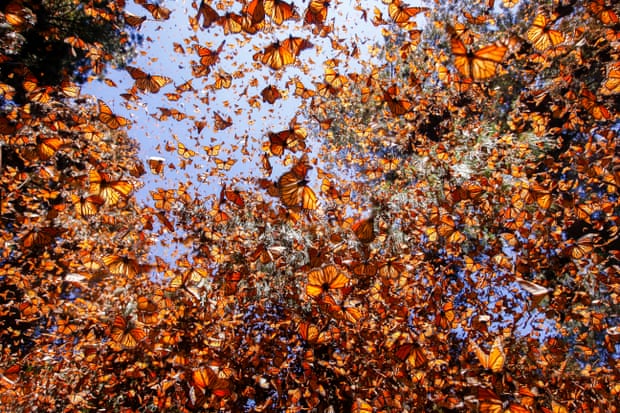
Monarch butterflies are considered an ‘indicator species’ for the health of the surrounding ecosystem. 
Photograph: Sylvain Cordier/Getty

Likewise, the extinction of animals, insects, plants, and all living things has huge knock-on effects. Species need to be working together in harmony in order to thrive and provide the essential services humans need to survive. This is why biodiversity is so important. Life on Earth is like a giant web, and our actions are causing its threads to unravel. We cannot afford for it to fall apart.

Human activity has impacted both the abundance and diversity of animals and plants


Decline in global biomass of wild mammals 82%*

Decline of natural ecosystems 47%

Plant and animal species threatened with extinction 25%

Decline in abundance of naturally present land species 23%*


What species are in trouble?


We are seeing huge declines in wildlife across the board. According to scientists, insect numbers are plummeting, with some saying we’re living through an “insect apocalypse”; more than 500 species of land animals are on the brink of extinction and likely to be lost within 20 years; one in five reptiles are facing extinction; one in eight bird species are threatened; and 40% of the world’s plant species are at risk.

The five biggest threats to biodiversity are changes in land and sea use; direct exploitation of natural resources; the climate crisis; pollution and invasive species.

All wildlife is affected by human-induced destruction. A report from 2018 written by 59 scientists found humans had wiped out 60% of mammals, birds, fish and reptiles since 1970, with the authors warning we are “sleepwalking towards the edge of a cliff”. Even if the destruction were to end now, it would take between five and seven million years for the natural world to recover, researchers warn.

What happened at the last nature Cop?


Governments have never met any of the targets they have set in the history of the UN convention on biological diversity. From tackling pollution to protecting coral reefs, the international community did not fully achieve any of the 20 Aichi biodiversity targets agreed at Cop10 in Japan in 2010. It was a similar story in the decade before that.

However, much has changed since 2010 and the Paris agreement, despite its flaws, restored some faith in UN processes for protecting the environment. There is still hope that Cop15 could be nature’s “Paris moment”.

How could Cop15 help stop biodiversity loss?


The 21 draft targets to be negotiated in Montreal include proposals to eliminate plastic pollution, reduce pesticide use by two-thirds, halve the rate of invasive species introduction and do away with billions of pounds worth of harmful environmental government subsidies. The goals also include reducing the current rate of extinctions by 90%, enhancing the integrity of all ecosystems, valuing nature’s contribution to humanity and providing the financial resources to achieve this vision.
What are the big issues?

As with climate talks, there are significant divisions between the global north and south leading up to Cop15, and the fault lines focus on four big issues: money, 30x30 (a target to protect 30% of land and sea by 2030), the monitoring of targets, and a row over digital sequence information relating to biopiracy.

Momentum has built around a target to protect 30% of land and sea by the end of decade but concerns remain that the rights of Indigenous peoples will not be protected.
A Munduruku Indian woman carries a monkey on her head while on a search for illegal goldmines in western Para state, Brazil. 
Photograph: Lunae Parracho/Reuters

World leaders such as Emmanuel Macron, Justin Trudeau and Ursula von der Leyen have made much of the importance of Cop15 in stopping biodiversity loss, but many developing countries say they need more money if they are to expand protected areas and grow their economies in a less destructive way than their rich counterparts. As such, the global south does not want to agree to targets such as 30x30, with strict monitoring requirements, without anything in return.


Put the planet before football, UN head of Cop15 nature summit tells leaders

A row over how countries are compensated for drug discoveries and other commercial projects using digital versions is also a sticking point, with the Africa group warning it will not sign off on anything unless there is an agreement on digital sequence information (DSI) in the final framework.
What are we hoping for?

A positive final agreement that will be ambitious enough to halt the decline of nature, but modest enough to make targets achievable. There are plenty of quick wins available – invasive species eradication on islands, crackdowns on pollution, money for restoration efforts – but it will ultimately depend on the will of heads of state. Cop15 will be the moment to turn rhetoric into action and become a key part of the UN’s wider ambition for humans to live in harmony with nature by 2050.

Find more age of extinction coverage here, and follow biodiversity reporters Phoebe Weston and Patrick Greenfield on Twitter for all the latest news and features
Maybe US mainstream media should begin using the term ‘fascism’

My tweet about Ron DeSantis provoked outrage in rightwing media – perhaps it hit the nerve of the fascism now taking root in the Republican party?

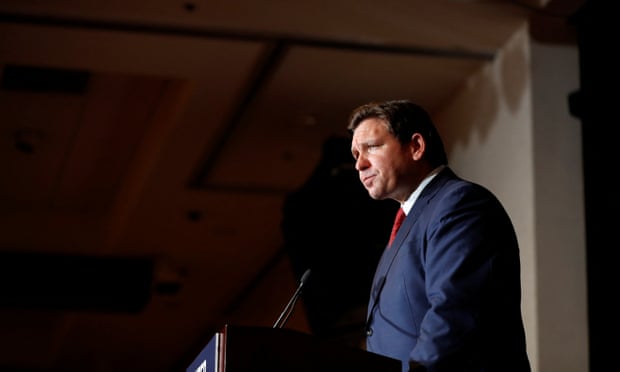
‘If you’re seeking a presidential nomination in today’s GOP, there’s nothing like an accusation of fascism to rally Trump supporters.’ 
Photograph: Octavio Jones/Reuters


Robert Reich
Wed 31 Aug 2022 

I’ve been watching the Florida governor, Ron DeSantis, for some time. Last Tuesday I tweeted: “Just wondering if ‘DeSantis’ is now officially a synonym for ‘fascist’.”

I was surprised at the outrage my little tweet provoked in rightwing media.

The Washington Examiner, for example, called me an “ultra-leftwing elitist” who wrote an “insulting slur”, which is “what leftwing ideologues do when they discuss Republican politicians who pose any threat to the existence of their political ideology … Anyone the Democrats don’t like or disagree with is a fascist.”

This was among the kindest responses.

After a half-century in and around politics, I’ve got a thick skin. But the size of the blowback on my little tweet makes me think I struck a nerve.

DeSantis is the most likely rival to Trump for the Republican nomination in 2024. The Harvard and Yale educated DeSantis (what do they teach at Harvard and Yale?) has been called “Trump with a brain”.

DeSantis is the nation’s consummate culture warrior. Lately he has been campaigning on behalf of Republican election-deniers around the country, including gubernatorial candidate Doug Mastriano in Pennsylvania and US Senate candidate JD Vance in Ohio.

In Florida, discussions of sexual orientation and gender identity are now barred in schools. Math textbooks have been rejected for what officials call “indoctrination”. Claiming tenured professors in Florida’s public universities were “indoctrinating” students, DeSantis spearheaded a law requiring them to be reviewed every five years.

Teachers are limited in what they can teach about racism and other tragic aspects of American history. DeSantis has got personally involved in local school board races, endorsing and campaigning for 30 board candidates who agree with him (so far, 20 have won outright, five are going to runoffs).

Abortions are banned after 15 weeks. (DeSantis recently suspended an elected prosecutor who said he would refuse to enforce the anti-abortion law.)

A new state office has been created to investigate “election crimes”.

Florida’s Medicaid regulator is considering denying state-subsidized treatments to transgender people. Its medical board may ban gender-affirming medical treatment for youths.

Disney (Florida’s largest employer) has been stripped of the ability to govern itself in retaliation for the company’s opposition to the crackdown on LGBTQ+ conversations with schoolchildren.

Florida’s congressional map has been redrawn to give Republicans an even bigger advantage.

DeSantis also spews culture-war rhetoric. “We are not going to surrender to woke,” he said last Tuesday. “Florida is the state where woke goes to die.”

He describes an America under assault by leftwing elites, who “want to delegitimize our founding institutions”.

He calls the state of Florida a “citadel of freedom” and says his job as governor is to fight critical race theory, “Faucian dystopia”, uncontrolled immigration, big tech, “leftwing oligarchs”, “Soros-funded prosecutors”, transgender athletes and the “corporate media”.

He charges – using a standard racist dog whistle – that “we’re not letting Florida cities burn down … In Florida, you’re not going to get a slap on the wrist. You are getting the inside of a jail cell.”

So, is it useful to characterize DeSantis’s combination of homophobia, transphobia, racism and misogyny, along with his efforts to control the public schools and universities and to intimidate the private sector (eg, Disney), as redolent of fascism?

America’s mainstream media is by now comfortable talking and writing about “authoritarianism”. Maybe it should also begin using the term “fascism”, where appropriate.

Even Joe Biden, never known as a rhetorical bomb-thrower, last Thursday accused the Republican party of “semi-fascism”.

Authoritarianism implies the absence of democracy, a dictatorship. Fascism – from the Latin fasces, denoting a tightly bound bundle of wooden rods typically including a protruding axe blade, adopted by Benito Mussolini in the 1930s to symbolize his total power – is different.

Fascism also includes hatred of “them” (people considered different by race or religion, or outside the mainstream, or who were born abroad), control over what people learn and what books they are allowed to read, control over what had been independent government units (school boards, medical boards, universities and so on), control over women and the most intimate and difficult decisions they’ll ever make, and demands that the private sector support the regime.

Perhaps my “just wondering” tweet about DeSantis hit the nerve of the fascism now taking root in the Republican party?

Or is DeSantis’s own nascent presidential campaign behind the outsized reaction to my tweet?

After all, if you’re seeking a presidential nomination in today’s GOP, there’s nothing like an accusation of fascism to rally Trump supporters. It might be a particularly useful strategy if your primary opponent in 2024 will be Trump.


Robert Reich, a former US secretary of labor, is professor of public policy at the University of California, Berkeley and the author of Saving Capitalism: For the Many, Not the Few and The Common Good. His new book, The System: Who Rigged It, How We Fix It, is out now. He is a Guardian US columnist. His newsletter is at robertreich.substack.com