Tuesday, September 20, 2022

Noting High Stakes of Midterms, Jayapal Says, 'Trump Is a Fascist. Period.'

"We have to reject this dangerous movement across the country in November—our democracy depends on it," warns the Washington Democrat.
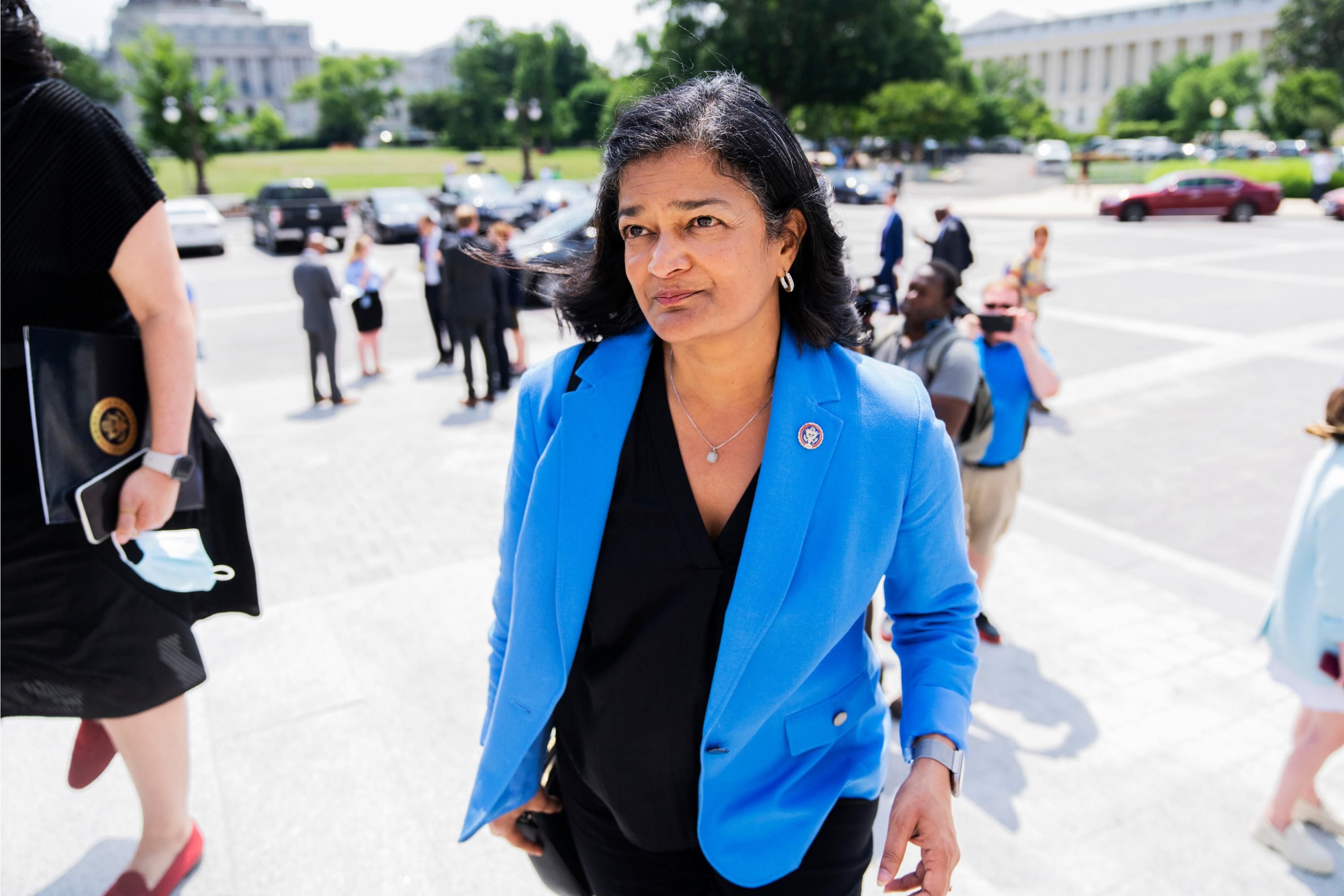

Rep. Pramila Jayapal (D-Wash.) walks up the steps at the U.S. Capitol on Thursday, June 16, 2022.
(Photo: Tom Williams/CQ-Roll Call, Inc via Getty Images)

JESSICA CORBETT
September 20, 2022

Congresswoman Pramila Jayapal pulled no punches Monday night while highlighting the threat that former President Donald Trump and his right-wing movement pose to U.S. democracy and the American people.

"Donald Trump is a fascist. Period," the Washington Democrat tweeted just seven weeks before this year's midterm elections. "We have to reject this dangerous movement across the country in November—our democracy depends on it."

Jayapal's comments came in response to New York Times reporting that "Trump appeared to more fully embrace QAnon on Saturday, playing a song at a political rally in Ohio that prompted attendees to respond with a salute in reference to the cultlike conspiracy theory's theme song."

As MSNBC opinion columnist Zeeshan Aleem wrote Tuesday:

Trump is pivoting from keeping a calculated distance from QAnon conspiracy theory adherents to openly embracing them—and encouraging them to see him as a messiah-like figure. There's a clear political motive behind it. Trump is trying to mobilize supporters who are most likely to do illicit, violent things to help return him to office.

On his Truth Social platform last week, Trump reposted an image of himself wearing a "Q" lapel pin, overlaid with "The Storm is Coming" and the "WWG1WGA." The acronym is a QAnon catchphrase that stands for "Where we go one, we go all," and the storm is, as The Associated Press puts it, a reference to "Trump's final victory, when supposedly he will regain power and his opponents will be tried, and potentially executed, on live television." The QAnon conspiracy theory holds that Trump's secret mission is to uncover a secret cabal of satan-worshipping Democratic pedophiles—a cause that requires him to return to the White House.

While Trump—who faces multiple ongoing legal investigations—is widely expected to run for president again in 2024, for the next several weeks, his movement is focused on key congressional and state races.

The ex-president was in Ohio last weekend to support Republican U.S. Senate candidate J.D. Vance—one of 195 candidates on the ballot in November who have fully embraced Trump's "Big Lie" that Democrats stole the 2020 presidential election, according to a recent FiveThirtyEight analysis.

FiveThirtyEight found that along with the election-denying GOP nominees for the U.S. House and Senate as well as governor, secretary of state, and attorney general, there are 61 so-called "doubters" and 115 candidates who have declined to clarify their position. Notably, those numbers don't include the state legislative candidates who also back the Big Lie—and as Common Dreams reported Monday, government watchdogs are warning that the Republican takeover of state legislatures in recent years could lead to a right-wing rewrite of the U.S Constitution.

In recent weeks, numerous top Democrats—including Jayapal, Sen. Jeff Merkley (D-Ore.), and President Joe Biden—have issued fresh warnings about the threat that Trump-aligned Republicans and their Make America Great Again (MAGA) movement pose.

"We are at a precipice and we're counting on the American people to come through—and I have hope that people will realize that we have to turn this clock back," Jayapal said on MSNBC earlier this month.

After Biden delivered a prime-time address on the danger of Trump and his allies at the beginning of September, polling suggested the majority of Americans agree. One survey found that 58% percent of respondents—including a quarter of Republicans—think the MAGA movement "is threatening America's democratic foundations."

Echoing his earlier speech, Biden declared during a Democratic National Committee reception last week that "those who love this country—Democrats, Independents, mainstream Republicans—we got to be stronger, more determined, more committed to saving American democracy than the extreme MAGA Republicans are to destroying American democracy. We have to organize, we have to mobilize, and we have to vote. Get out and vote."

Lawmakers including Jayapal on Tuesday marked National Voter Registration Day by encouraging Americans to make sure they are all set to participate in the upcoming elections.

"From the damage done to our voting rights in Shelby County v. Holder to the flagrant lies that led to January 6, our democracy is in crisis," tweeted Rep. Barbara Lee (D-Calif.). "Do your part to preserve our democracy by registering to vote."

While the country's current democratic crisis has generated fear, it has also inspired hope, as illustrated by an interview with David Becker and Major Garrett, co-authors of the new book The Big Truth—about Trump's 2020 election lies—published Tuesday by Vanity Fair.

"We are in a perilous moment in American democracy. And it is easy to focus on those who failed to stand up for democracy when given the opportunity, and we do in the book," said Becker, an elections expert. "But what's also sometimes somewhat harder is to note the large numbers of people who have stood up, and often at great personal peril to themselves, often at great political peril to themselves, often at physical peril to themselves and their families."

Garrett, a journalist, told Vanity Fair that "what gives me optimism is the longevity of our country. We have stared into abysses before and pulled back from them."

"100,000 people in 2020 signed up to be poll workers for the first time, jumping into a breach of a situation that was not familiar to them. Not because they were going to get paid, not because they were going to be lionized in their community. Not because they were going to get a promotion. But because it mattered at a very basic civic level of accountability and participation," he noted. "And I'm gonna bank our country's future on their optimism."

Our work is licensed under Creative Commons (CC BY-NC-ND 3.0). Feel free to republish and share widely.
Ad spending shows Dems hinging midterm hopes on abortion

By STEVE PEOPLES and AARON M. KESSLER
yesterday


People protest following the Supreme Court's decision to overturn Roe v. Wade in Washington, June 24, 2022. Democrats are pumping an unprecedented amount of money into advertising related to abortion rights, underscoring how central the message is to the party in the final weeks before the November midterm elections. (AP Photo/Jacquelyn Martin, File)


WASHINGTON (AP) — Democrats are pumping an unprecedented amount of money into advertising related to abortion rights, underscoring how central the message is to the party in the final weeks before the November midterm elections.

With the most intense period of campaigning only just beginning, Democrats have already invested more than an estimated $124 million this year in television advertising referencing abortion. That’s more than twice as much money as the Democrats’ next top issue this year, “character,” and almost 20 times more than Democrats spent on abortion-related ads in the 2018 midterms.

The estimated spending figures, based on an Associated Press analysis of data provided by the nonpartisan research firm AdImpact, reveal the extent to which Democrats are betting their majorities in Congress and key governorships on one issue. That’s even as large majorities of Americans think the country is heading in the wrong direction and the economy is in poor condition.

The advertising numbers also reveal just how sharply Republicans have shied away from abortion in their paid advertising in the weeks since the Supreme Court overturned Roe v. Wade, a decades-long goal of the GOP. (The AdImpact data captures every single time a campaign ad is aired on TV, and estimates a cost associated with those airings.)

Since the high court’s decision in June to eliminate the constitutional right to abortion, roughly 1 in 3 television advertising dollars spent by Democrats and their allies have focused on abortion. Much of the spending is designed to attack Republicans on the ballot this fall who have long opposed abortion rights and are currently engaged in a state-by-state push to restrict abortion rights or outlaw the practice altogether.

The Democrats’ unprecedented investment in abortion messaging on TV this year through Sept. 18 is larger than the Republican Party’s combined national investment in ads relating to the economy, crime and immigration.

“With less than 60 days until the election, we refuse to stand by while out-of-step, anti-choice Republicans try to control our bodies and our futures and simultaneously lie about it to voters,” said Melissa Williams, executive director of Women Vote!, an outside group that has invested more than $4 million in abortion-related ads this year. “We are ensuring that each voter knows the candidates that stand with them and against them in protecting this right.”

The Democrats’ overwhelming focus on abortion may not be surprising given the reversal of Roe v. Wade and the wave of Republican-backed abortion bans in more than a dozen states that followed. But the strategy still marks a sharp departure from the party’s focus in recent years on former President Donald Trump and other issues like the economy, education and health care.

In the 2018 midterm elections, for example, Democrats spent less than $6 million on abortion-related television advertising. That’s compared to the $51 million that Democrats invested in Trump-related ads, $49 million on health care and $46 million on education, according to AdImpact.

Jessica Floyd, president of American Bridge, a Democrat-allied super PAC running abortion-related advertising in Arizona, Georgia, Nevada and Pennsylvania, described abortion as “the ultimate health care issue” for women and families. The Supreme Court decision and the subsequent Republican push to ban abortion in some states, she said, represent “an actual rolling back of rights, which is unprecedented.”

“It’s a very powerful motivator,” Floyd said. “It flies in the face of everything we know voters care about — especially the voters who will decide this election.”

Television advertising data reveals that Republicans, too, have invested millions of dollars in abortion messaging. But most of those ads ran during the primary phase of the campaign this spring and summer as Republican candidates touted their anti-abortion credentials. The number of Republican ads aired referencing abortion has gone down each month since May.

As the calendar has shifted to the fall general election, the gulf between Democratic and Republican spending on abortion ads has grown even wider. So far this month, for example, Democrats and their allies have aired more than 68,000 ads on TV referencing abortion — more than 15 times as many as their Republican counterparts. They’ve spent an estimated $31 million on such ads compared with the GOP’s outlay of only $2.8 million. That’s even as Republican leaders such as GOP Chair Ronna McDaniel acknowledged in a recent interview that her party cannot allow Democrats to control the narrative on abortion.

“It’s very clear that that’s the only thing that Democrats have to run on, right? They don’t run on a good economy. They can’t run on community being safer. They can’t run on education,” McDaniel said. “So what are they going to do? They’re going to make everything about abortion, which means we’re going to have to talk about it as Republicans do.”

Sen. Lindsey Graham, R-S.C., irked Republican leaders last week by proposing a national ban on abortions at 15 weeks of pregnancy. It was the kind of legislation Republicans on Capitol Hill have supported for several years. But this year, it was viewed as an unwelcome reminder to voters just eight weeks before Election Day that some Republicans in Congress hope to adopt national abortion restrictions if given the chance.

McDaniel encouraged Republicans instead to go on offense on abortion by highlighting Democrats’ resistance to any limitations, a position she argued is out of step with most voters. And while Republican leaders and candidates are increasingly making that argument when asked, the party has yet to devote many resources to the issue in the one place most voters hear from GOP candidates: their screens.

Democrats, meanwhile, have released a new wave of abortion-related ads targeting statewide Republican candidates across North Carolina, New Mexico, Minnesota, Arizona, Colorado and Florida. Abortion is also a regular topic for state legislative candidates in competitive districts in California and Florida. Republican House candidates are under attack for opposing abortion rights in congressional districts in upstate New York, Connecticut, Michigan and Indiana.

In some cases, Republican candidates are being hit with multiple abortion-related ads running simultaneously on their local television stations.

One of them is Wisconsin’s Republican candidate for governor, Tim Michels, who has been the focus of abortion-related attack ads from three groups so far this month, including his opponent, Democratic Gov. Tony Evers. Each of the three ad campaigns features Michels confirming that he opposes abortion rights even in cases of rape or incest.

“Is that the divisive radical you want as your governor?” the narrator asks in one ad produced by the Evers campaign.


Michels’ campaign did not respond to a request for comment.

It’s much the same in Nevada, where Sen. Catherine Cortez Masto is considered one of the most vulnerable Democratic incumbents in the nation. This month, at least two anti-Republican groups and the Cortez Masto campaign itself were running abortion-related ads against GOP challenger Adam Laxalt.

Cortez Masto’s campaign featured a doctor saying that Republicans are trying to interfere with women’s health care decisions.

“For doctors like me, it is our job to make sure women have the support they need to make decisions that are right for them. But Adam Laxalt disagrees,” the doctor says on one ad.

In an op-ed last month, Laxalt tried to push back against the flood of abortion-related advertising against him.

“Cortez Masto and her allies are spending millions of dollars in campaign ads trying to ... make you believe in a falsehood that I would support a federal ban on abortion as a U.S. senator, or that I am somehow ‘anti-woman’ because I value, support and defend life at all stages,” he wrote. “For my entire adult life, I have held the view that the Supreme Court should return the issue of abortion to the people and let them decide the issue on a state-by-state basis.”

Abortion has been a big focus in Nevada’s Senate contest so far, but other elections have seen far more abortion-related advertising.

The AdImpact data shows that the most TV ads aired this year referencing abortion took place in the Pennsylvania and Arizona Senate races, followed by gubernatorial contests for Illinois, Georgia and Wisconsin. (The now-defeated Kansas constitutional amendment ballot measure, while a unique election, also saw some of the most ads.)

Georgia’s Democratic nominee for governor, Stacey Abrams, ran an ad campaign for much of August into September attacking Republican Gov. Brian Kemp, using the words of several women speaking directly to the camera.

“He supports a total ban, even if I’m raped, a victim of incest,” the women say. Another woman is almost crying when she says, “Under Kemp, I could be investigated and imprisoned for a miscarriage.”

Kemp spokesperson Tate Mitchell pushed back against the accuracy of the ads, charging that “Stacey Abrams and her campaign are lying in an effort to scare people and distract voters from her dangerous agenda for Georgia.”

Democrats in several swing states are aggressively leaning in to some leading Republicans’ opposition to abortion exceptions in cases of rape, incest or the life of the mother at risk.

Cliff Schecter, a veteran Democratic ad maker and founder of Blue Amp Strategies, said Democrats are “messaging much better around abortion” this year.

“It’s not just liberal women anymore, or even moderate women. It’s conservative women who are horrified by this,” Schecter said of the new abortion restrictions being implemented across the country. “It’d be malpractice not to focus on it.”

___

Peoples reported from New York.

GOP’s election-year standing with independents at risk

By THOMAS BEAUMONT
yesterday

1 of 5
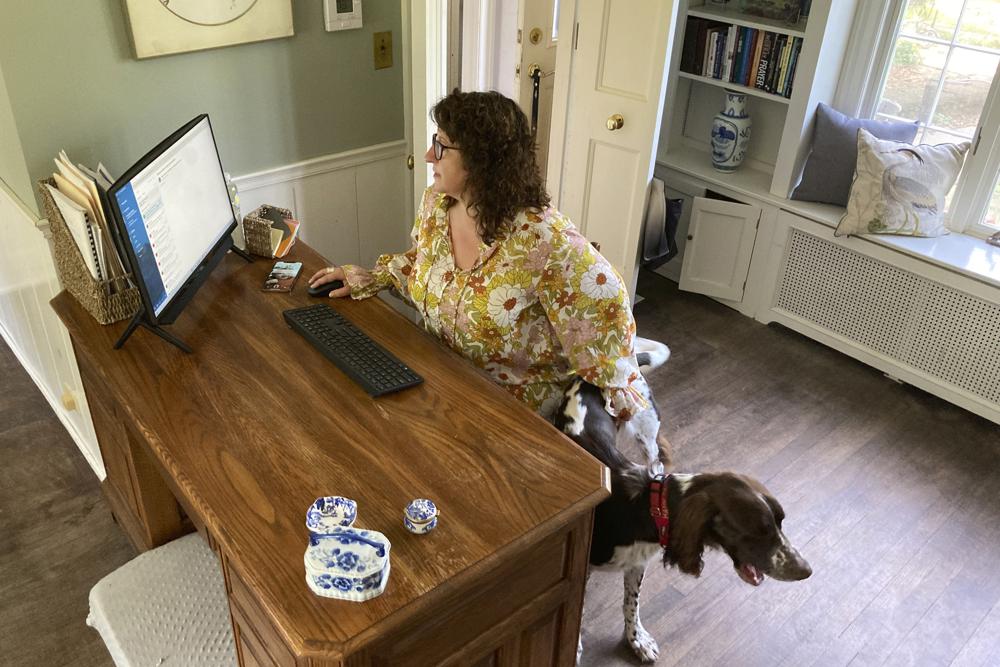
Sarah Motiff, from politically competitive Columbia, County, Wisconsin, works from home in Columbus, Wis., on Sept. 13, 2022. The 52-year-old city council woman and political independent says testimony that Republican Wisconsin Sen. Ron Johnson's office offered a fake slate of Wisconsin electors for the 2020 election "put a bad taste in my mouth." She is among independent voters nationally who have drifted toward supporting Democrats this fall. (AP Photo/Thomas Beaumont)


COLUMBUS, Wis. (AP) — Sarah Motiff has voted for Sen. Ron Johnson every time his name appeared on the ballot, starting in 2010 when the Wisconsin Republican was first elected as part of the tea party wave. Fond of his tough views on spending, she began the year planning to support his reelection again.

She became skeptical this summer as the House committee investigating the Jan. 6, 2021, Capitol insurrection reported his office discussed giving then-Vice President Mike Pence certificates with fake presidential electors for Donald Trump from Wisconsin and Michigan, part of a broader push to overturn Joe Biden’s victory. Johnson has downplayed the effort and the certificates were never given to Pence, but Motiff, a political independent, wasn’t convinced.

“I’m not going to lie when I say I’ve had some concerns about some of the reports that have come out,” the 52-year-old nonpartisan city councilwoman from Columbus, Wisconsin, said. “It just put a bad taste in my mouth.”

Nudged further by the June U.S. Supreme Court decision invalidating a woman’s constitutional right to an abortion, Motiff is opposing Johnson and supports his Democratic challenger, Lt. Gov. Mandela Barnes, in one of the most fiercely-contested Senate races this year.

“Which was really a hard decision for me because I do think he’s done good things in the past,” Motiff said of Johnson. “But this is pretty damaging.”

Motiff’s evolution represents the challenge for Republicans emerging from a tumultuous summer, defined by the court decision, high-profile hearings on former President Donald Trump’s actions during the insurrection and intensifying legal scrutiny of his handling of classified information and efforts to overturn the election. Now, a midterm campaign that the GOP hoped would be a referendum on President Joe Biden and the economy is at risk of becoming a comparison of the two parties, putting Republicans in an unexpectedly defensive position.

In politically-divided Wisconsin where recent elections have been decided by a few thousand votes, the outcome could hinge on self-described independent voters like Motiff.

“Having former President Trump so prominently in the news in so many ways makes it easier for Democrats to frame the midterm as a choice between two competing futures as opposed to a referendum on the Democrat governance,” said Republican pollster Whit Ayres. “That’s hurting Republicans. It’s distracting from the referendum message and allowing more of a focus on a choice of two different parties.”

That tension is playing out in Columbia County, Wisconsin, a constellation of tidy small towns surrounded by rolling dairy farm country, all within commuting distance of Madison.

Statewide, top-of-the-ticket candidates have won by barely a percentage point in the past three elections. Trump won Columbia County by a little more than 500 votes out of 33,000 cast in 2020.

In interviews with more than a dozen independent voters here over two days last week, many were rethinking their support of the GOP this fall.

Steve Gray, a self-described Republican-leaning independent “but never a Trump fan,” opposed the June court decision, because he backs abortion rights. But the 61-year-old school maintenance manager also resented what he saw as an unwelcome political power play by out-of-power Republicans.

“Trump stacked the Supreme Court. We all knew he wanted to overturn Roe,” said Gray, of small-town Rio, where Trump won by two votes in 2020. “That decision was a partisan hand grenade Trump threw into this election.”

The court decision “upended the physics of midterm elections,” said Jesse Stinebring, a pollster advising several Democratic campaigns.

It gave voters the rare opportunity to judge a policy advance backed by the minority party, distracting them from a pure up-or-down vote on majority Democrats, he said.

“The backlash from a political perspective isn’t directed at the traditional party in power, but is actually reframed in terms of this Republican control of the Supreme Court,” Stinebring said.

The decision made Dilaine Noel’s vote automatic.

The 29-year-old data analytics director for a Madison-area business said she had never affiliated with either party.

Despite her grievances about Democrats’ warring moderate and liberal wings, her support for abortion rights gave her no choice than to vote for the party’s candidates this fall.

“By default, I have to move in that direction,” said Noel, from small-town Poynette in the Wisconsin River valley. “I’m being forced to.”

Mary Percifield is a lifelong independent voter who says the abortion decision motivated her to vote Democratic because she worries the court might overturn other rights.

“A right has been taken away from us,” the 68-year-old customer service representative from Pardeeville, said. “I question if a woman’s right to vote will be taken away. A woman’s right for birth control.”

Independent voters who lean neither Democrat nor Republican nationally preferred Biden over Trump, 52% to 37% in 2020, and preferred Democrats over Republicans in U.S. House races by a similar margin in the 2018 midterms, according to AP VoteCast. Independents who lean neither Democrat nor Republican made up 5% of the 2020 electorate and 12% in 2018.

Independents had moved toward Republicans by early this year, seeking answers on the economy, said Republican pollster David Winston, a senior adviser to House Republican Leader Kevin McCarthy. But they have drifted back toward Democrats as efforts by GOP leaders to focus on the economy have clashed with Republican attacks on the Justice Department and Trump’s continuing complaints about the 2020 election.

“Everything is suddenly back in the context of Trump,” Winston said in light of Trump’s prominent endorsement of Senate candidates and protests of the federal investigation into classified documents recovered from his Florida home. “It’s not that Democrats are gaining. It’s that Republicans over the summer were off talking about a variety of things. And independents are thinking, ‘If you’re not talking specifically about the problems that I’m concerned about, why am I listening?’”

Republicans remain optimistic about their chances in November, particularly about netting the handful of seats they need to regain the U.S. House majority. Inflation remains high and, despite a recent uptick, approval of Biden is still low for a party hoping to maintain its hold on power.

The economy remains the most effective message and one that breaks through others, GOP campaign officials say.

“Prices and things are so front-of-mind to people,” said Calvin Moore, the communications director for Congressional Leadership Fund, a superPAC supporting Republican U.S. House candidates. “It’s not just something that’s on the news. It’s something they are experiencing every day in their daily life. It’s something they face themselves every day when they go to the grocery store.”

A shift by independents is particularly meaningful in Wisconsin, as Republicans work to overtake Democrats’ one-seat majority in the Senate.

Johnson, among the most vulnerable Republicans running for reelection this fall, is locked in a tight race with Barnes, Wisconsin’s lieutenant governor. Of the most competitive Senate seats this year, his is the only one held by a Republican.

Though Johnson dismissed testimony about fake electors as staff work which never reached him, it reminded Christian Wood, an independent voter from Lodi, of Johnson’s opposition to certifying the election before Jan. 6. Johnson reversed course after the riot.

“It’s absolutely scary,” said Wood, who has often voted Republican. “To me that’s the most existential threat to our democracy. And to think he was even considering it makes him a non-starter.”

There’s time for an economic message to win out, but it will require news about Trump fading, GOP pollster Ayres said.

Meanwhile, Trump has a full schedule of fall campaign travel for candidates he has endorsed.

“Any distraction from that focus undermines the best Republican message,” he said.

___

Associated Press writer Hannah Fingerhut in Washington contributed to this report.

___

Follow AP for full coverage of the midterms at https://apnews.com/hub/2022-midterm-elections and on Twitter, https://twitter.com/ap_politics
With Griner in jail, WNBA players skip Russia in offseason

MIGHT RUSSIAN SANCTIONS HAVE ANYTHING TO DO WITH IT 

By DOUG FEINBERG

1 of 5
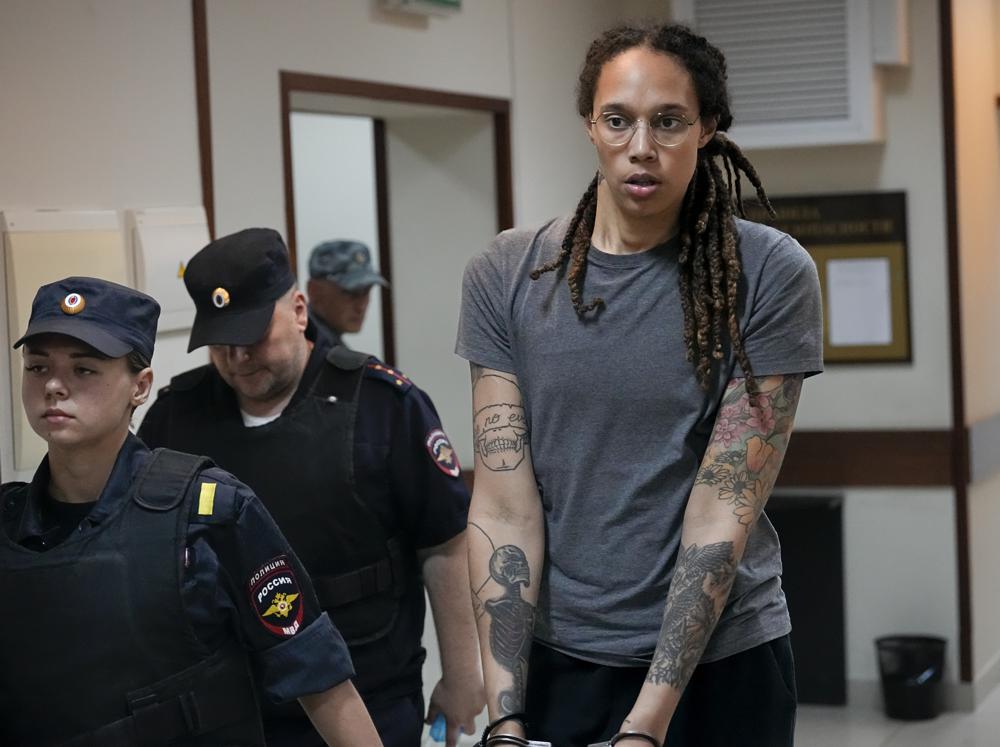
WNBA star and two-time Olympic gold medalist Brittney Griner is escorted from a court room ater a hearing, in Khimki just outside Moscow, Russia, Aug. 4, 2022. President Joe Biden plans to meet at the White House on Friday, Sept. 16, with family members of Griner and Michigan corporate security executive Paul Whelan, both of whom remain jailed in Russia, senior administration officials told The Associated Press. (AP Photo/Alexander Zemlianichenko, File)


SYDNEY (AP) — Brittney Griner’s highly publicized legal woes in Russia and the country’s invasion of Ukraine has the top WNBA players opting to take their talents elsewhere this offseason.

For the past few decades, Russia has been the preferred offseason destination for WNBA players to compete because of the high salaries that can exceed $1 million – nearly quadruple the base salary of top WNBA players -- and the resources and amenities teams offered them.

That all has come to an abrupt end.

“Honestly my time in Russia has been wonderful, but especially with BG still wrongfully detained there, nobody’s going to go there until she’s home,” said Breanna Stewart, a Griner teammate on the Russian team that paid the duo millions. “I think that, you know, now, people want to go overseas and if the money is not much different, they want to be in a better place.”

Griner was arrested in February, then detained and later convicted on drug possession charges amid Russia’s invasion of Ukraine. Griner was sentenced last month to nine years in prison.

Now, Stewart and other WNBA All-Stars, including Jonquel Jones and Courtney Vandersloot — who also have made millions of dollars playing in Russia — are going elsewhere this winter. All three played for Ekaterinburg, the same Russian team as Griner. That club won five EuroLeague titles in the past eight seasons and has been dominant for nearly two decades with former greats DeLisha Milton Jones and Diana Taurasi playing there.

Nearly a dozen WNBA players competed in Russia last winter and none of them are heading back this year.

After the World Cup tournament, Stewart is going to Turkey to play for Fenerbahçe. Top players can make a few hundred thousand dollars playing in Turkey, much less than their Russian salaries. Playing in Turkey also allows Stewart to be closer to her wife’s family in Spain.

“You want to have a better lifestyle, a better off-the-court experience, and just continue to appreciate other countries,” Stewart said.

Like Stewart, Vandersloot also isn’t headed back to Russia, choosing to play in Hungary where she obtained citizenship in 2016.

“I am Hungarian. I thought it would be special since I haven’t played there since I got the citizenship,” Vandersloot said.

The 33-year-old guard said a lot would have to change before she’d ever consider going back to Russia to play even though she has many fond memories of the Russian people.

“The thing about it is, we were treated so well by our club and made such strong relationships with those people, I would never close the door on that,” she said. “The whole situation with BG makes it really hard to think that it’s safe for anyone to go back there right now.”

Jones will be joining Stewart in Turkey, playing for Mersin. The 6-foot-6 Jones said she would consider going back to Russia if things change politically and Griner was back in the U.S.

The Griner situation also is weighing heavily on the minds of young WNBA players.

Rhyne Howard, the 2022 WNBA Rookie of the Year, is playing in Italy this winter — her first overseas experience. She said was careful when deciding where she wanted to play.

“Everyone’s going to be a bit cautious seeing as this situation is happening,” she said.

It’s not just the American players who are no longer going to Russia. Chicago Sky forward Emma Meesseman, who stars for the Belgium national team, had played in Russia with Stewart, Jones and Vandersloot. She also is headed to Turkey this offseason.

The WNBA has also been trying to make staying home in the offseason a better option for players. Commissioner Cathy Engelbert said at the WNBA Finals that top players could make up to $700,000 this year between base salary, marketing agreements and award bonuses. While only a select few players could reach that amount, roughly a dozen have decided to take league marketing agreements this offseason.

___

AP Sports Writer Jay Cohen contributed to this story.
EMOTIONAL PLAGUE
US adults should get routine anxiety screening, panel says

By LINDSEY TANNER
yesterday


An influential health guidelines group says U.S. doctors should regularly screen adults for anxiety. It’s the first time the U.S. Preventive Services Task Force has recommended anxiety screening in primary care for adults without symptoms. The report released Tuesday, Sept. 20, 2022 is open for public comment until Oct. 17.
 (AP Photo/Charlie Riedel, File)


U.S. doctors should regularly screen all adults under 65 for anxiety, an influential health guidelines group proposed Tuesday.

It’s the first time the U.S. Preventive Services Task Force has recommended anxiety screening in primary care for adults without symptoms. The proposal is open for public comment until Oct. 17, but the group usually affirms its draft guidance.

The recommendations are based on a review that began before the COVID-19 pandemic, evaluating studies showing potential benefits and risks from screening. Given reports of a surge in mental health problems linked with pandemic isolation and stress, the guidance is “very timely,” said Lori Pbert, a task force member and co-author. Pbert is a psychologist-researcher at the University of Massachusetts’ Chan Medical School.

The task force said evidence for benefits, including effective treatments, outweighs any risks, which include inaccurate screening results that could lead to unnecessary follow-up care.

Anxiety disorders are among the most common mental health complaints, affecting about 40% of U.S. women at some point in their lives and more than 1 in 4 men, Pbert noted.


Black people, those living in poverty, people who have lost partners and those who have other mental health issues are among adults who face higher risks for developing anxiety, which can manifest as panic attacks, phobias or feeling always on edge. Also, about 1 in 10 pregnant and postpartum women experience anxiety.

Common screening tools include brief questionnaires about symptoms such as fears and worries that interfere with usual activities. These can easily be given in a primary care setting, the task force said, although it didn’t specify how often patients should be screened.

“The most important thing to recognize is that a screening test alone is not sufficient to diagnose anxiety,” Pbert said. The next step is a more thorough evaluation by a mental health professional, though Pbert acknowledged that finding mental health care can be difficult given shortages of specialists.

Megan Whalen, a 31-year-old marketing specialist who was diagnosed with anxiety in 2013, says regular doctors should screen for mental health issues as commonly as they do for physical problems.

“Health is health, whether the problem is visible or not,” said Whalen, of Hoboken, New Jersey.

She has gotten help from medicine and talk therapy, but her symptoms worsened during the pandemic and she temporarily moved back home.

“The pandemic made me afraid to leave home, my anxiety telling me anywhere outside of my childhood house was unsafe,” Whelan said. “I absolutely still struggle with feelings of dread and fear sometimes. It’s just a part of my life at this point, and I try to manage it as best as I can.”

The task force said there isn’t enough solid research in older adults to recommend for or against anxiety screening in those aged 65 and up.

The group continues to recommend depression screening for adults and children, but said there isn’t enough evidence to evaluate potential benefits and harms of suicide screening in adults who show no worrisome symptoms.

In April, the group issued similar draft guidance for children and teens, recommending anxiety screening but stating that more research is needed on potential benefits and harms of suicide screening kids with no obvious signs.

Guidelines from the task force often determine insurance coverage, but anxiety is already on the radar of many primary care doctors. In 2020, a group affiliated with the American College of Obstetricians and Gynecologists recommended routine primary care anxiety screening for women and girls starting at age 13.

Melissa Lewis-Duarte, a wellness coach in Scottsdale, Arizona, says rhythmic breathing, meditation and making a daily list of three things for which she is grateful have all helped with her anxiety.

“Doctors say, ‘Make sure you’re sleeping, control your stress.’ Yeah, I get that,” but not everyone knows how, said the 42-year-old mother of three. “It’s difficult to prioritize self-care, but that’s what’s necessary.”

___

Follow AP Medical Writer Lindsey Tanner at @LindseyTanner.

___

The Associated Press Health and Science Department receives support from the Howard Hughes Medical Institute’s Department of Science Education. The AP is solely responsible for all content.
Prominent Native Hawaiians named to Mauna Kea authority


HONOLULU (AP) — Gov. David Ige on Monday appointed several people, including some prominent Native Hawaiian activists, to a new board charged with managing Mauna Kea summit lands underneath some of the world's most advanced astronomical observatories.

Two of the eight appointees — Lanakila Mangauil and Noe Noe Wong-Wilson — were leaders of 2019 protests that brought a halt to the construction of the Thirty Meter Telescope, the latest observatory proposed for the mountain on Hawaii's Big Island.

Many Native Hawaiians consider the summit sacred, and protesters objected to building yet another telescope there. The summit currently hosts about a dozen telescopes built since the late 1960s.

Responding to the protests, the state created the Mauna Kea Stewardship and Oversight Authority this year with a new law that says Mauna Kea must be protected for future generations and that science must be balanced with culture and the environment. Native Hawaiian cultural experts will have voting seats on the governing body, instead of merely advising the summit’s managers as they do now.


The eight nominations must be confirmed by the state Senate.

The authority will have 11 voting members. The other three are representatives of the Board of Land and Natural Resources, the University of Hawaii Board of Regents and Hawaii County's mayor.

Ige thanked the nominees for being willing to serve on the authority.

"Through this new stewardship model, I believe we can find a way for science and culture to coexist on Mauna Kea in a mutually beneficial way,” Ige said in a statement.


Also appointed is Kamanamaikalani Beamer, a University of Hawaii professor and former commissioner of the Hawaii State Water Resource Management Commission. He was named for his expertise in Hawaii Island land resource management.

Former Kamehameha Schools general counsel and former Hawaiian Telcom president John Komeiji was appointed for his business and finance experience.

The governor selected Rich Matsuda, an engineer who leads community relations for W.M. Keck Observatory, from three names submitted by Maunakea Observatories.

Matsuda, Wong-Wilson and Mangauil all served on a working group formed by the House of Representatives to develop recommendations for managing the mountain. The working group's report created the foundation for the new law.

——
Audrey Mcavoy, The Associated Press


SPACE RACE 2.0
United Arab Emirates to launch first lunar rover in November
September 19, 2022
In this photo made available from the twitter account of UAE Vice President and Prime Minister and ruler of Dubai, Emirati officials brief Sheikh Mohammed bin Rashid Al Maktoum about a possible moon mission, Sept. 29, 2020, in Dubai, United Arab Emirates. The UAE will launch its first lunar rover in November 2022, the mission manager Hamad Al Marzooqi said Monday. Al Marzooqi told The National, a state-linked newspaper, that the “Rashid” rover, named for Dubai's ruling family, would be launched from the Kennedy Space Center in Florida sometime between Nov. 9 and Nov. 15. 
(Sheikh Mohammed bin Rashid Al Maktoum Twitter account via AP, File)


DUBAI, United Arab Emirates (AP) — The United Arab Emirates will launch its first lunar rover in November, the mission manager said Monday.

Hamad Al Marzooqi told The National, a state-linked newspaper, that the “Rashid” rover, named for Dubai’s ruling family, would be launched from the Kennedy Space Center in Florida sometime between Nov. 9 and Nov. 15. The exact date will be announced next month, he said.

The rover is to be launched aboard a Falcon 9 SpaceX rocket and deposited on the moon by a Japanese ispace lander sometime in March.

“We’ve finished with the testing of the rover and we are happy with the results,” Al Marzooqi was quoted as saying. “The rover has been integrated with the lander and it is ready for launch.”

The lunar mission is part of the UAE’s broader strategy to become a major player in the field of space exploration. If the moon mission succeeds, the UAE and Japan would join the ranks of only the U.S., Russia and China as nations that have put a spacecraft on the lunar surface.

Already, an Emirati satellite is orbiting Mars to study the red planet’s atmosphere. The UAE partnered with Japan’s Mitsubishi Heavy Industries to launch that probe, which swung into Mars’ orbit in February 2021.

The Rashid rover is expected to study the lunar surface, mobility on the moon’s surface and how different surfaces interact with lunar particles. The 10-kilogram (22-pound) rover will carry two high-resolution cameras, a microscopic camera, a thermal imagery camera, a probe and other devices.

The UAE has plans to develop the Middle East’s most advanced commercial satellite to produce high-resolution satellite imagery. It has also set the ambitious goal of building a human colony on Mars by 2117.


SPACE RACE 1.0
NASA Mars lander captures strikes by 4 incoming space rocks


This undated photo released by NASA shows craters that were formed by a Sept. 5, 2021, meteoroid impact on Mars, the first to be detected by NASA’s InSight. Taken by NASA’s Mars Reconnaissance Orbiter, this enhanced-color image highlights the dust and soil disturbed by the impact in blue in order to make details more visible to the human eye. NASA lander on Mars has captured the vibrations and sounds of four meteorites striking the planet's surface. Scientists reported Monday, Sept. 19, 2022, that Mars InSight detected seismic and acoustic waves from a series of impacts in 2020 and 2021. 
(NASA/JPL-Caltech/University of Arizona via AP)

CAPE CANAVERAL, Fla. (AP) — A NASA lander on Mars has captured the vibrations and sounds of four meteoroids striking the planet’s surface.

Scientists reported Monday that Mars InSigh t detected seismic and acoustic waves from a series of impacts in 2020 and 2021. A satellite orbiting the red planet confirmed the impact locations, as far as 180 miles (290 kilometers) from the lander.

Scientists are delighted by the detections — a first for another planet.

The first confirmed meteoroid exploded into at least three pieces, each leaving its own crater. An 11-second audio snippet of this strike includes three “bloops,” as NASA calls them, one of sounding like metal flapping loudly in the wind here on Earth.

“After three years of InSight waiting to detect an impact, those craters looked beautiful,” Brown University’s Ingrid Daubar, a co-author of the research paper in the journal Nature Geoscience, said in a statement.

The InSight team expected to pick up numerous meteoroid strikes, given Mars’ proximity to the asteroid belt and the planet’s thin atmosphere, which tends to keep entering space rocks from burning up. But the lander’s French-built seismometer may have missed impacts because of interfering noise from the Martian wind or seasonal changes in the atmosphere. Now scientists know what to look for, according to NASA, likely resulting in a surge of detections.

“Impacts are the clocks of the solar system,” French lead author Raphael Garcia said in a statement from the Higher Institute of Aeronautics and Space in Toulouse. “We need to know the impact rate today to estimate the age of different surfaces.”

Launched in 2018, InSight has already detected more than 1,300 marsquakes. The largest measured a magnitude 5 earlier this year. By comparison, the marsquakes generated by the meteoroid impacts registered no more than a magnitude 2.

___

The Associated Press Health and Science Department receives support from the Howard Hughes Medical Institute’s Department of Science Education. The AP is solely responsible for all content.
China quarantine bus crash prompts outcry over ‘zero COVID’

By HUIZHONG WU

1 of 5
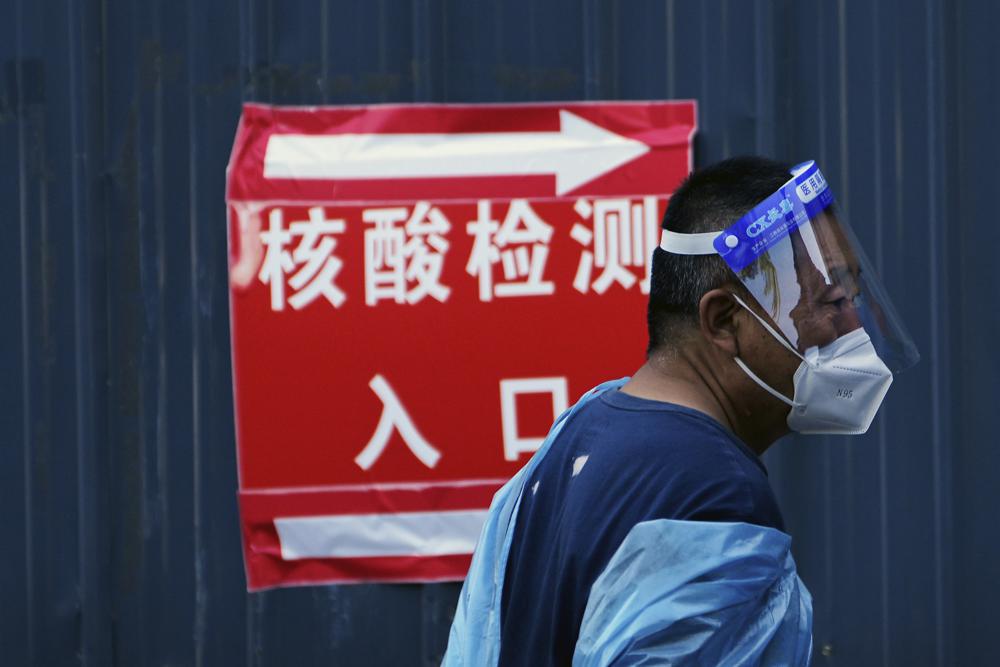
A volunteer wearing protective gears stands watch near a COVID-19 testing site in Beijing, Tuesday, Sept. 20, 2022. (AP Photo/Andy Wong)


TAIPEI, Taiwan (AP) — A nighttime bus crash that killed 27 people in southwest China this week has set off a storm of anger online over the harshness of the country’s strict COVID-19 policies.

The initial police report did not say who the passengers were and where they were going, but it later emerged they were headed to a quarantine location outside their city of Guiyang, the capital of Guizhou province.

The bus with 47 people on board crashed about 2:40 a.m. Sunday. City officials announced many hours later that the passengers were under “medical observation,” confirming reports they were being taken to quarantine.

Following public anger, Guiyang fired three officials in charge of Yunyan district, where the residents had been picked up, the provincial government said Monday. Guiyang’s deputy mayor apologized at a news conference, bowing and observing a moment of silence.

Online, many wondered at the logic behind transporting people outside of Guiyang, accusing the government of moving them so that the city would no longer report any new cases.

“Will this ever end? On the top searches (on social media), there’s all sorts of pandemic prevention situations every day, creating unnecessary panic and making people jittery,” one person wrote. “Is there scientific validity to hauling people to quarantine, one car after another?”

Guiyang officials had announced the city would achieve “societal zero-COVID” by Monday, one day after the crash.

The phrase means new infections are found only among people already under surveillance — such as those in a centralized quarantine facility or who are close contacts of existing patients — so the virus is no longer spreading in the community.

China has managed the pandemic through a series of measures known as “clearing to zero,” or “zero COVID,” maintained through strict lockdowns and mass testing.

The approach saved lives before vaccines were widely available, as people refrained from public gatherings and wore masks regularly. However, as other countries have opened up and loosened some of the most onerous restrictions, China has held steadfast to its zero-COVID strategy.

While China has cut down its quarantine time for overseas arrivals and said it would start issuing student visas, the policy remains strict at home. Officials are concerned about the potential death toll and the impact any loosening would have on the country’s stretched medical system.

Zero COVID also has become a political issue, and at one point was celebrated by many Chinese as signifying the superiority of their country over the U.S., which has had more than a million COVID deaths.

Chinese President Xi Jinping has cited China’s approach as a “major strategic success” and evidence of the “significant advantages” of its political system over Western liberal democracies.

Yet, even as other countries open up, the humanitarian costs to China’s pandemic approach has grown.

Earlier this year in Shanghai, desperate residents complained of being unable to get medicines or even groceries during the city’s two-month lockdown, while some died in hospitals from lack of medical care as the city restricted movement. Last week, residents in the western region of Xinjiang said they went hungry under a more than 40-day lockdown.

According to FreeWeibo, a website that tracks censored posts on the popular social media platform, three of top 10 searches on Weibo related to the bus accident.

Many fixated on images of the bus shared by social media users. One photo showed the bus after it had been retrieved from the accident site. Its roof was crushed and portions missing. Another photo allegedly showed the driver decked out in a full white protective suit.

Users online questioned how a driver could see properly when his face was covered up, and why he was driving so late at night. Many comments were censored but some that expressed discontent with the current approach to the pandemic did remain up.

“I hope that the price of this pain can push for change faster, but if it’s possible, I don’t want to pay such a high price for such change,” said the comment with the most likes on an online report about the accident by state broadcaster CCTV. “Condolences.”

One of the passengers on the bus said her whole building had been taken for central quarantine, according to a report by Caixin, a business news outlet. Yet her apartment building had not reported a single case, according to a friend who shared their text conversation with Caixin.

Another popular comment quoted a proverb, “These human lives are like straw.”

On Tuesday, Guizhou reported 41 new COVID-19 cases in the entire province. The province has been on high alert in the past few weeks after discovering one case at the end of August. It has locked down its capital city, using the euphemistic “quiet period” to describe the move, which means people are not allowed to leave their homes.

___

Associated Press news assistant Caroline Chen in Beijing contributed to this report.
REMAINS OF TYPHON MERBOK
Damage assessments begin in flooded remote Alaska villages

By MARK THIESSEN

1 of 12
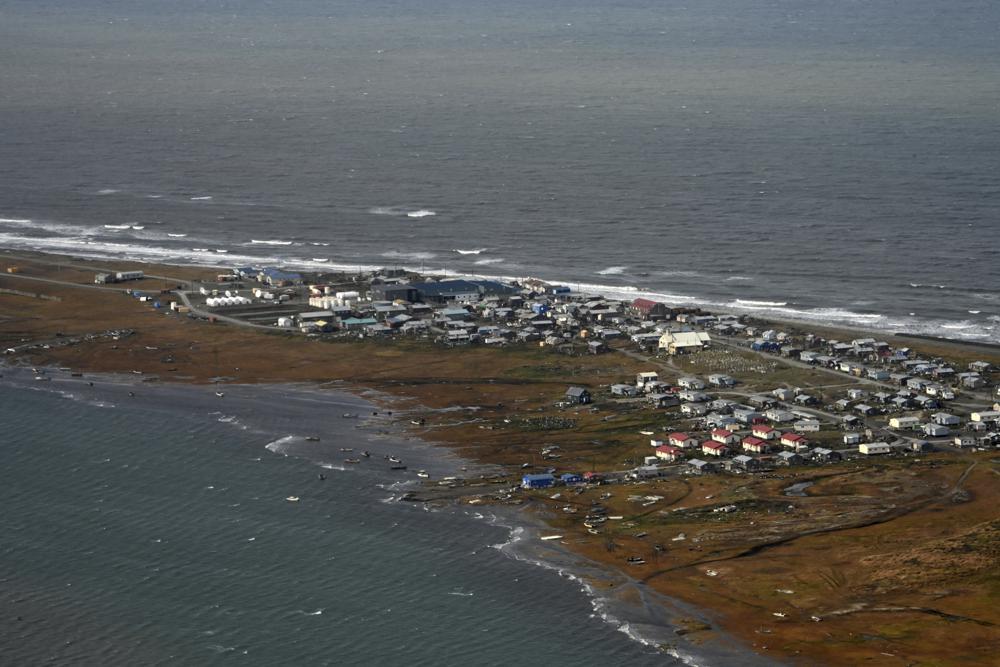
In this image provided by the U.S. Coast Guard, an aerial view taken during a search and rescue and damage assessment in Deering, Alaska, shows the damage caused by Typhoon Merbok, on Sept. 18, 2022. Authorities are making contact with some of the most remote villages in the United States to determine the need for food and water and assess damage from a massive weekend storm that flooded communities dotting Alaska's vast western coast. 
(Petty Officer 3rd Class Ian Gray/U.S. Coast Guard via AP)

ANCHORAGE, Alaska (AP) — Authorities in Alaska were making contact Monday with some of the most remote villages in the United States to determine their food and water needs, as well as assess the damage after a massive storm flooded communities on the state’s vast western coast this weekend.

No one was reported injured or killed during the massive storm — the remnants of Typhoon Merbok — as it traveled north through the Bering Strait over the weekend. However, damage to homes, roads and other infrastructure is only starting to be revealed as floodwaters recede.

About 21,000 residents living in the small communities dotting a 1,000-mile (1,609-kilometer) stretch of Alaska’s western coastline — a distance longer than the entire length of California’s coast — were impacted by the storm.

Many homes throughout the region were flooded, and some were knocked off their foundations by the rushing waters propelled by strong winds. Officials were starting the process of determining damage to roads, ports, seawalls and water and sewage systems

The state transportation department said most airports in the area were open, and officials were making either temporary or permanent repairs to the runways that still have issues, said Jeremy Zidek, a spokesperson for the Alaska Department of Homeland Security and Emergency Management.

The storm remained stalled Monday in the Chukchi Sea near northwest Alaska, but it was rapidly weakening after at its most powerful stage influencing weather patterns as far away as California.

Coastal flood warnings were extended for an area north of the Bering Strait since water will be slow to recede in towns like Kotzebue, Kivalina and Shishmaref, National Weather Service meteorologist Kaitlyn Lardeo said.

Shishmaref had seen water surges 5.5 feet (1.68 meters) above the normal tide level, while Kotzebue and Kivalina had smaller surges, but were both still without power Monday, she said.

Alaska Gov. Mike Dunleavy on Sunday identified five communities — Hooper Bay, Scammon Bay, Golovin, Newtok and Nome — as being greatly impacted by a combination of high water, flooding, erosion and electrical issues. Nome, where one home floated down a river until it was caught by a bridge, was among the many reporting road damage after recording tidal surges 11.1 feet (3.38 meters) above normal.


Zidek said state officials were looking closely at those five, but also reaching out to every community in the region because of the numerous reports of damage.

“While the needs may be greater in some, we don’t want to neglect those other communities that have minor issues that still need to be resolved,” he said. However, efforts to reach some communities has been difficult due to downed communication lines.

The state’s emergency operations center is fully staffed with military, state agencies and volunteer organizations to address the aftermath of the storm.

Alaska National Guard members in the western half of the nation’s largest state have been activated to help, either in the communities where they live or elsewhere along the coast, he said.

The American Red Cross has 50 volunteers ready to help and will be sent to communities that are in most need.

Most support personnel will have to be flown to these communities since there are few roads in western Alaska. Providing air support will be the Alaska National Guard, small commuter airlines that routinely fly between these small villages and possibly bush pilots.

Weather always adversely impacts flights in rural Alaska, but Zidek said the forecast seems favorable to conduct the response operations.

“Three may be another smaller weather front coming in, but it’s nothing unusual for this time of the year,” he said.

Dunleavy said he would request a federal disaster declaration as soon as agencies gather necessary information about the damage. If approved, the governor said the Federal Emergency Management Agency would cover at least 75% of eligible disaster costs, while the state would pick up the tab for the rest.

On Sunday, Dunleavy said time was of the essence because freeze-up, meaning the start of winter, can happen as early as October.

“We just have to impress upon our federal friends that it’s not a Florida situation where we’ve got months to work on this,” he said. “We’ve got several weeks.”
THIS WAS AN ANTI-LATINO HATE CRIME
Uvalde children grapple with trauma after school massacre

By ACACIA CORONADO and ADRIANA GOMEZ LICON
yesterday

1 of 11
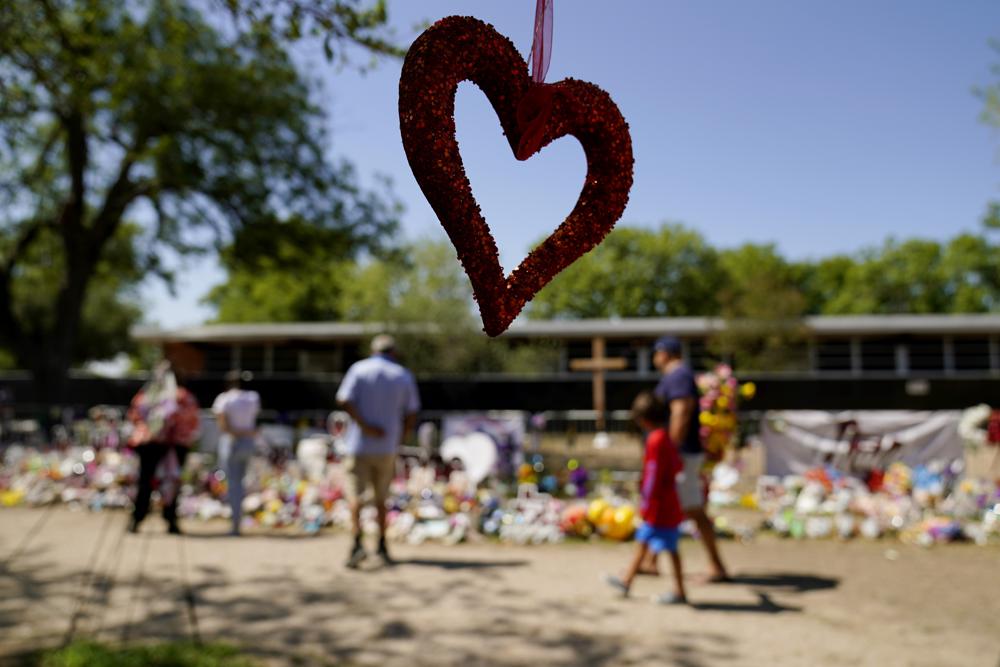
Mourners visit a make-shift memorial honoring the school shooting victims at Robb Elementary, Monday, July 11, 2022, in Uvalde, Texas. Students who survived the May 24 shooting at an elementary school in Uvalde, Texas are spending the summer grappling with post-traumatic stress disorder. Meanwhile, parents find themselves unable to help them, worried the tragedy at Robb Elementary struck a largely Hispanic town as Latinos continue to face disparities to access mental health care. 
(AP Photo/Eric Gay)


UVALDE, Texas (AP) — One girl runs and hides when she sees thin people with long hair similar to the gunman who stormed into her Uvalde school and killed 21 people. One boy stopped making friends and playing with animals. A third child feels her heart race when she’s reminded of the May 24 massacre that killed a close friend — once at such a dangerous pace that she had to be rushed to a hospital, where she stayed for weeks.

The 11-year-old girl has been diagnosed with anxiety, depression and post-traumatic stress disorder. She and her family spoke to The Associated Press on condition her name not be used to protect her identity.

“I never lost someone before,” she said, adding that her friend who was among the 19 students and two teachers killed in the United States’ deadliest school massacre in a decade would encourage her through hard times. “She was a very strong person.”

As students get ready to return to school in Uvalde on Tuesday for the first time since the massacre at Robb Elementary, PTSD symptoms are starting to show. Parents are finding themselves unable to help, and experts worry because communities of color such as the largely Hispanic city of Uvalde face disparities in access mental health care. For low-income families, it can be even harder, as access to limited resources requires long waits for referrals through medical assistance programs such as Medicaid.

“It’s hard hearing what these kids are going through at such a young age,” said Yuri Castro, a mother of two boys in Uvalde, whose cousin was killed in the shooting and whose sons were once taught by the two slain teachers. Castro knows of children so traumatized they have stopped speaking.

School shootings dramatically upend survivors’ lives. For some, symptoms linger for years and high-quality treatment can be difficult to find.

In recent years, Texas lawmakers have focused on spending money on mental health services, devoting more than $2.5 billion during the current fiscal year.

But according to the 11-year-old girl’s family — lifelong residents of Uvalde — the only mental health center in the area — just blocks from Robb Elementary — was seldom used or discussed, raising worries about the lack of awareness regarding signs and symptoms of mental illness and the stigma surrounding seeking help.

The mother of the 11-year-old girl whose racing heart led to her hospitalization says open conversations about mental health were previously taboo in the heavily Latino community, where culturally, mental health is brushed off as feeling lazy, bored or throwing a tantrum.

“I remember growing up it was like, ‘Go over there, you are just being chiflada,’” the mother said, using a Spanish word that means “acting spoiled.”

Now, she said, the town is waking up to the reality of mental health even as some people still ask why survivors like her daughter need help.

Members of the community have been supporting one another by checking in with extended family and friends and taking advantage of community resources that have been set up, including counseling by the Red Cross and emotional support from the churches. The parents of one of the children who was killed started an organization that will be putting together wilderness retreats for victims’ families and survivors. Residents also have social media groups where they can share mental health resources and express their grief.

The Texas Health and Human Services Commission contracted with organizations to create a mental health hotline that in six weeks responded to nearly 400 calls.

Martha Rodriguez, who coordinated efforts to help students recover after the mass shooting at Marjory Stoneman Douglas High School in Parkland, Florida, said officials need to visit the community to make sure the right resources are available. She said addressing stigmas and sending providers who understand the families’ language and values are key.

“Some families may not feel comfortable sharing distress and needs,” she said.

Many families impacted by the shooting are Roman Catholic. The mother of a girl who survived the attack said her daughter has only been able to open up to a priest in Houston — 280 miles (450 kilometers) away — whom the family goes to see when they visit relatives.

“This is going to be a long journey. This is not going to be something that we can just do some work and fix it,” said San Antonio Archbishop Gustavo García-Siller.

Julie Kaplow, executive director of the Trauma and Grief Centers at The Hackett Center for Mental Health in Houston, said many students who survived the May 2018 Santa Fe High School shooting that killed 10 in suburban Houston did not exhibit symptoms for six months.

“I am anticipating that we will see some similarities,” said Kaplow, who has been training clinicians and others who are treating families in Uvalde. “Part of the reason is those symptoms haven’t manifested yet and will start to manifest when they are reminded of the event itself. Or the caregiver starts to recognize, ‘Wait a minute my child is still not eating, is still not sleeping.’”

The length of treatment varies depending on the severity of symptoms. For some, it can last up to two to three years.

Melissa Brymer, director of terrorism and disaster programs at the UCLA-Duke National Center for Child Traumatic Stress, was the lead adviser to public schools in Newtown, Connecticut, after the massacre at Sandy Hook Elementary in 2012. She said officials need to make sure that families can get services at school. They also need to create spaces that feel friendlier, such as community meals, rather than clinics.

Parents of the incoming fifth-grader who is struggling with symptoms chose to home-school her this year so she can continue going to appointments more easily. She is also getting a service dog who will alert her if her heart rate rises.

But she worries about her brothers returning to the classroom and gets anxious thinking others will judge her because of how she has been affected by the massacre when she wasn’t shot, her mother said. She is awakened daily by night terrors.

“We don’t sleep. ... We don’t even know what that is anymore since this has happened,” the mother said. “I am going to have to deal with that for however long it takes for her to heal.”

___

This story was first published on September 3, 2022. It was updated on September 19, 2022, to correct the title of Julie Kaplow. She is the executive director of the Trauma and Grief Centers at The Hackett Center for Mental Health in Houston.

___

More on the school shooting in Uvalde, Texas: https://apnews.com/hub/uvalde-school-shooting