Tuesday, September 20, 2022

Near Miss at Second Ukraine Plant Intensifies Fears of Nuclear Disaster

The IAEA director general said the "explosion near the South Ukraine Nuclear Power Plant all too clearly demonstrates the potential dangers also at other nuclear facilities in the country."
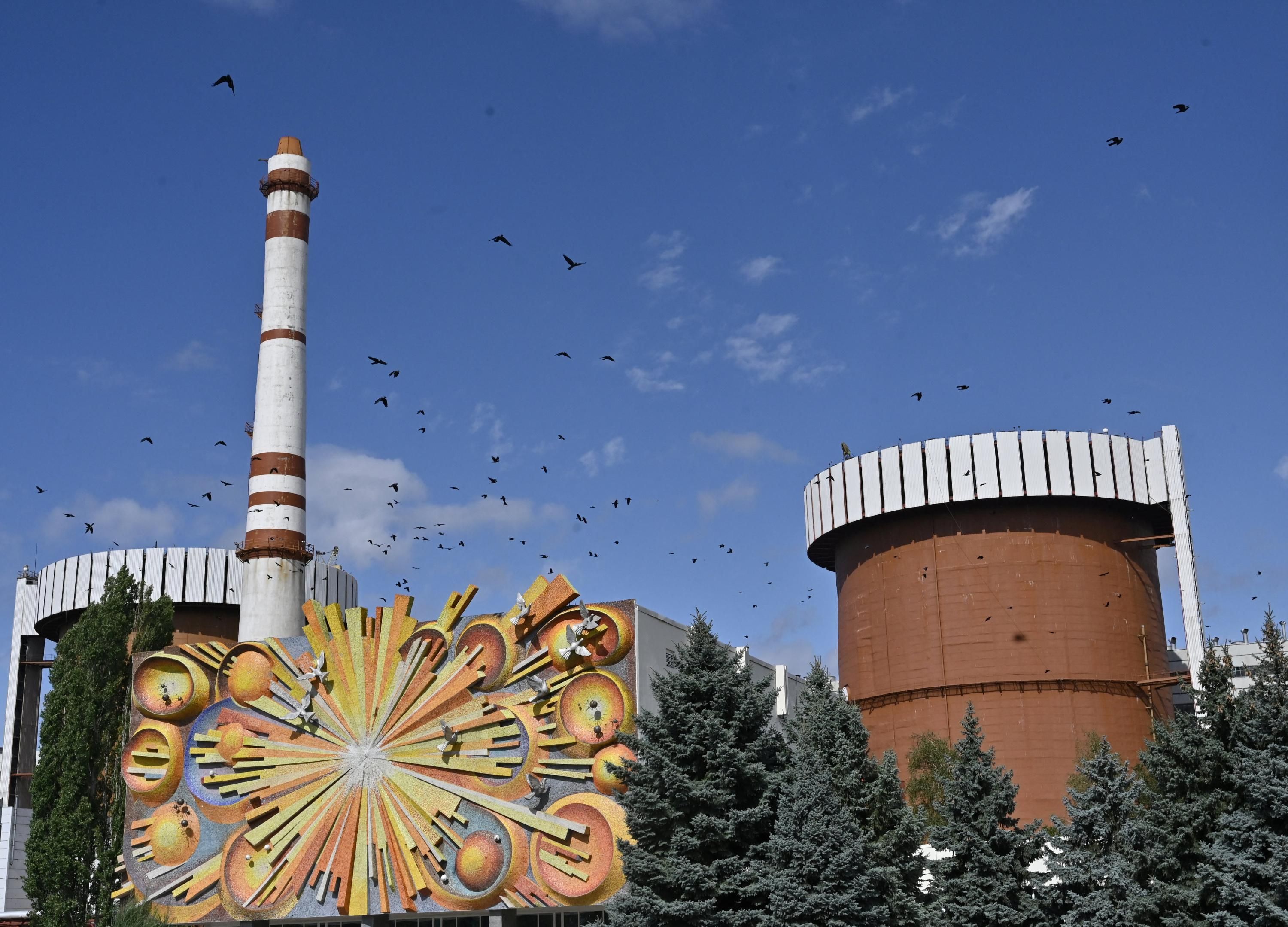

A picture taken in Yuzhnoukrainsk on September 20, 2022 shows the South Ukraine Nuclear Power Plant the day after the nation's nuclear energy operator, Energoatom, accused Russia of attacking the facility. (
Photo: Genya Savilov/AFP via Getty Images)

JESSICA CORBETT
September 20, 2022

Concerns about Russia's war on Ukraine sparking a nuclear disaster are growing after a missile on Monday hit within 1,000 feet of a Ukrainian power plant amid alarm over the security of another Russian-held energy facility.

"There is no other way to characterize this except for nuclear terrorism."

The missile struck near the South Ukraine Nuclear Power Plant (SUNPP), which is about 160 miles west of the six-reactor Zaporizhzhia Nuclear Power Plant (ZNPP), Europe's largest such station. Shelling of that Russian-controlled facility—which Russia and Ukraine have blamed on each other—has fueled fears of a disaster in the nation home to Chernobyl.

Rafael Mariano Grossi, director general of the International Atomic Energy Agency (IAEA), addressed both the missile strike close to the SUNPP and a disconnected power line that had provided the ZNPP with electricity from the Ukrainian grid in a statement Monday.

"The situation at the Zaporizhzhya Nuclear Power Plant remains fragile and precarious. Last week, we saw some improvements regarding its power supplies, but today we were informed about a new setback in this regard," he said. "The plant is located in the middle of a war zone, and its power status is far from safe and secure. Therefore, a nuclear safety and security protection zone must urgently be established there."

"While we have recently focused on the urgent need for action to prevent a nuclear accident at Ukraine's Zaporizhzhya Nuclear Power Plant—establishing an IAEA presence there earlier this month—today's explosion near the South Ukraine Nuclear Power Plant all too clearly demonstrates the potential dangers also at other nuclear facilities in the country," Grossi added. "Any military action that threatens nuclear safety and security is unacceptable and must stop immediately."

Energoatom, the state-run operator of Ukraine's four nuclear stations, said that Russian forces "carried out a missile attack on the industrial site" of the SUNPP. No staff was harmed and all three reactors "are operating in a normal mode," but the "powerful explosion" damaged buildings, broke over 100 windows, and shut down a hydropower unit as well as three high-voltage power lines.

"Acts of nuclear terrorism committed by the Russian military threaten the whole world," Energoatom added. "They should be stopped immediately to prevent a new disaster!"

The head of the nuclear operator and a Ukrainian official issued similar warnings, according to The New York Times:

"There is no other way to characterize this except for nuclear terrorism," Petro Kotin, the head of Energoatom, told Ukrainian national television on Monday. He said that although the heavily fortified concrete buildings that house nuclear reactors are built to withstand a plane crash, the blast from the overnight strike would have been powerful enough to have damaged the containment structures, had the missile struck closer.

"A few hundred meters and we would have woken up in a completely different reality," Kyrylo Tymoshenko, the deputy head of the Ukrainian president's office, said in a statement.

The Associated Press reported that while the Russian Defense Ministry did not immediately comment on the missile strike, Patricia Lewis, the international security research director at the Chatham House think tank in London, said that attacks on the plants suggest Russia is trying to shut down both power stations before winter.

"It's a very, very dangerous and illegal act to be targeting a nuclear station," she told the AP. "Only the generals will know the intent, but there's clearly a pattern."

"What they seem to be doing each time is to try to cut off the power to the reactor," Lewis continued. "It's a very clumsy way to do it, because how accurate are these missiles?"

Responding to the strike near SUNPP, Beyond Nuclear said Monday that "until now, all eyes have been focused on the six-reactor Zaporizhzhia nuclear plant, far closer to the most intense of the military action. But there are four operational nuclear sites in Ukraine with 15 reactors total, all of which present a grave danger should the fighting embroil them."

The U.S.-based advocacy group also noted that "at Beyond Nuclear, we have been warning about these risks since before Russia invaded Ukraine on February 24."

Our work is licensed under Creative Commons (CC BY-NC-ND 3.0). Feel free to republish and share widely.

Ukraine warns of ‘nuclear terrorism’ after strike near plant

By KARL RITTER and JON GAMBRELL
yesterday
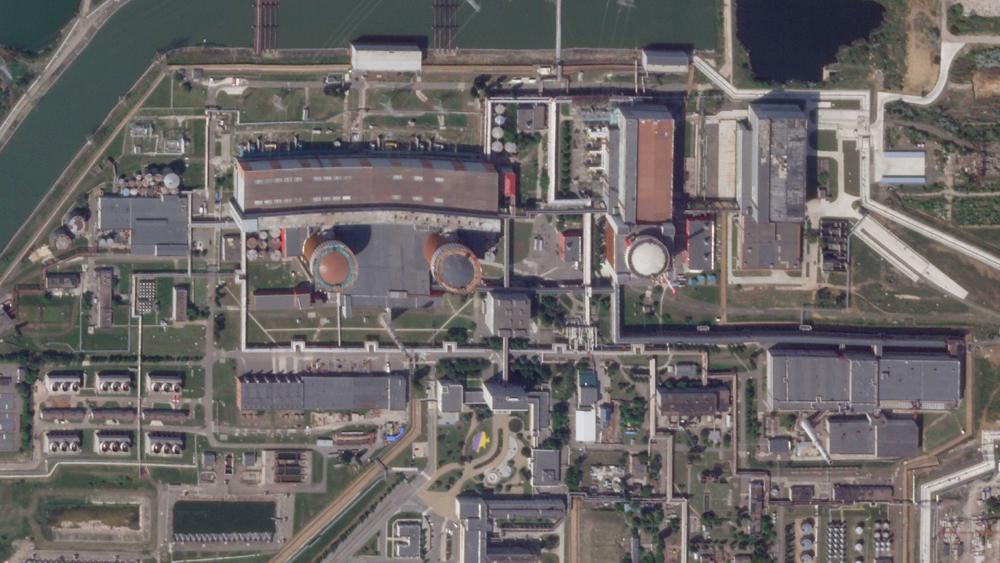
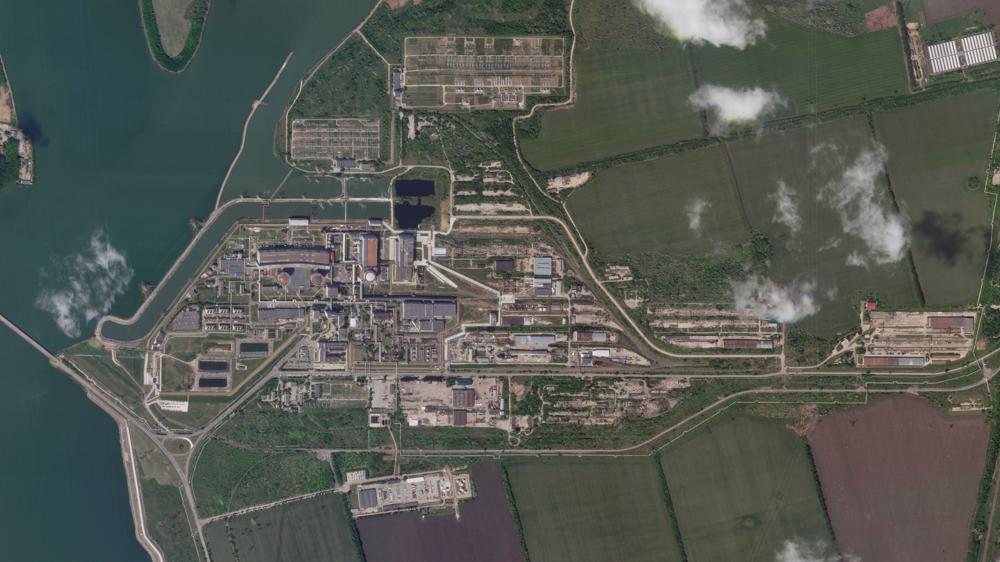
This satellite image from Planet Labs PBC shows the Pivdennoukrainsk Nuclear Power Plant, also known as the South Ukraine Nuclear Power Plant, in the southern Mykolaiv region of Ukraine, May 31, 2022. A Russian missile strike hit a facility close to the nuclear power plant in southern Ukraine Monday, Sept. 19, 2022, causing no damage to its reactors but damaging other industrial equipment in what the country's atomic energy operator denounced as an act of "nuclear terrorism." 
(Planet Labs PBC via AP)
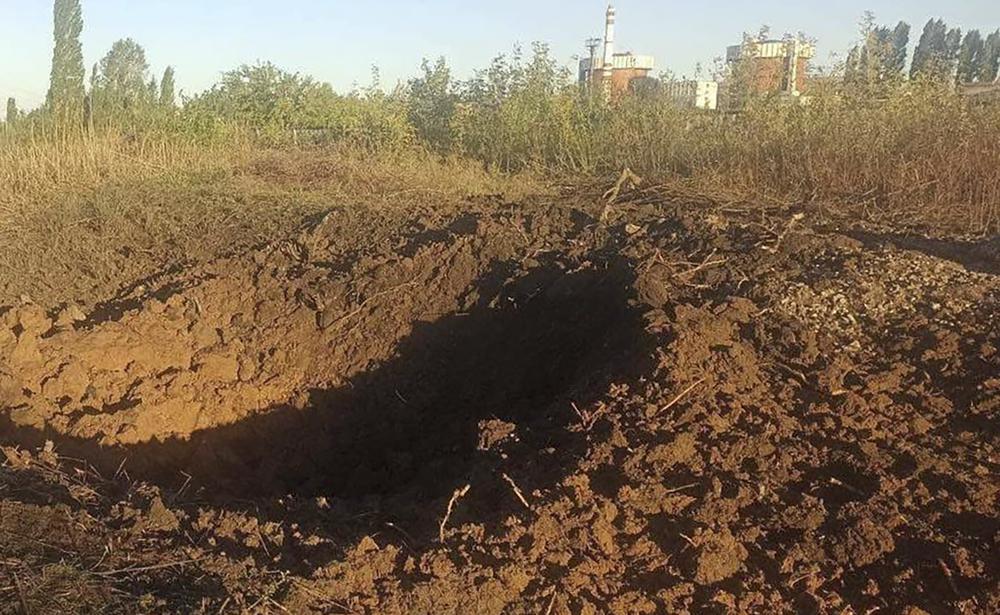
In this photo provided by the South Ukraine nuclear power plant, a crater left by a Russian rocket is seen 300 meter from the South Ukraine nuclear power plant, in the background, close to Yuzhnoukrainsk, Mykolayiv region, Ukraine, Monday, Sept. 19, 2022. 
(South Ukraine Nuclear Power Plant Press Office via AP)


KYIV, Ukraine (AP) — A Russian missile blasted a crater close to a nuclear power plant in southern Ukraine on Monday, damaging nearby industrial equipment but not hitting its three reactors. Ukrainian authorities denounced the move as an act of “nuclear terrorism.”

The missile struck within 300 meters (328 yards) of the reactors at the South Ukraine Nuclear Power Plant near the city of Yuzhnoukrainsk in Mykolaiv province, leaving a hole 2 meters (6 1/2 feet) deep and 4 meters (13 feet) wide, according to Ukrainian nuclear operator Energoatom.

The reactors were operating normally and no employees were injured, it said. But the proximity of the strike renewed fears that Russia’s nearly 7-month-long war in Ukraine might produce a radiation disaster.

This nuclear power station is Ukraine’s second-largest after the Zaporizhzhia Nuclear Power Plant, which has repeatedly come under fire.

Following recent battlefield setbacks, Russian President Vladimir Putin threatened last week to step up Russian attacks on Ukrainian infrastructure. Throughout the war, Russia has targeted Ukraine’s electricity generation and transmission equipment, causing blackouts and endangering the safety systems of the country’s nuclear power plants.

The industrial complex that includes the South Ukraine plant sits along the Southern Bug River about 300 kilometers (190 miles) south of the capital, Kyiv. The attack caused the temporary shutdown of a nearby hydroelectric power plant and shattered more than 100 windows at the complex, Ukrainian authorities said. The U.N.’s International Atomic Energy Agency said three power lines were knocked offline but later reconnected.

Ukraine’s Defense Ministry released a black-and-white video showing two large fireballs erupting one after the other in the dark, followed by incandescent showers of sparks, at 19 minutes after midnight. The ministry and Energoatom called the strike “nuclear terrorism.”

The Russian Defense Ministry did not immediately comment on the attack.

Russian forces have occupied the Zaporizhzhia nuclear plant, Europe’s largest, since early after the invasion. Shelling has cut off the plant’s transmission lines, forcing operators to shut down its six reactors to avoid a radiation disaster. Russia and Ukraine have traded blame for the strikes.

The IAEA, which has stationed monitors at the Zaporizhzhia plant, said a main transmission line was reconnected Friday, providing the electricity it needs to cool its reactors.

But the mayor of Enerhodar, where the Zaporizhzhia plant is located, reported more Russian shelling Monday in the city’s industrial zone.

While warning Friday of a possible ramp-up of strikes, Putin claimed his forces had so far acted with restraint but warned “if the situation develops this way, our response will be more serious.”

“Just recently, the Russian armed forces have delivered a couple of impactful strikes,” he said. ”Let’s consider those as warning strikes.”

The latest Russian shelling killed at least eight civilians and wounded 22, Ukraine’s presidential office said Monday. The governor of the northeastern Kharkiv region, now largely back in Ukrainian hands, said Russian shelling killed four medical workers trying to evacuate patients from a psychiatric hospital and wounded two patients.

The mayor of the Russian-occupied eastern city of Donetsk, meanwhile, said Ukrainian shelling had killed 13 civilians and wounded eight there.

Patricia Lewis, the international security research director at the Chatham House think-tank in London, said attacks at the Zaporizhzhia plant and Monday’s strike on the South Ukraine plant indicated that the Russian military was attempting to knock Ukrainian nuclear plants offline before winter.

“It’s a very, very dangerous and illegal act to be targeting a nuclear station,” Lewis told The Associated Press. “Only the generals will know the intent, but there’s clearly a pattern.”

“What they seem to be doing each time is to try to cut off the power to the reactor,” she said. “It’s a very clumsy way to do it, because how accurate are these missiles?”

Power is needed to run pumps that circulate cooling water to the reactors, preventing overheating and — in a worst-case scenario — a radiation-spewing nuclear fuel meltdown.

Other recent Russian strikes on Ukrainian infrastructure have targeted power plants in the north and a dam in the south. They came in response to a sweeping Ukrainian counterattack in the country’s east that reclaimed Russia-occupied territory in the Kharkiv region.

Analysts have noted that beyond recapturing territory, challenges remain in holding it. In a video address Monday, Ukrainian President Volodymr Zelenskyy said cryptically of that effort, “I cannot reveal all the details, but thanks to the Security Service of Ukraine, we are now confident that the occupiers will not have any foothold on Ukrainian soil.”

The Ukrainian successes in Kharkiv — Russia’s biggest defeat since its forces were repelled from around Kyiv in the invasion’s opening stage — have fueled rare public criticism in Russia and added to the military and diplomatic pressure on Putin. The Kremlin’s nationalist critics have questioned why Moscow has failed to plunge Ukraine into darkness yet by hitting all of its major nuclear power plants.


In other developments:

— A governor said Ukraine had recaptured the village of Bilogorivka in the Russian-occupied eastern region of Luhansk. Russia didn’t acknowledge the claim.

— The Russian-installed leaders of Ukraine’s Luhansk, Donetsk and Kherson regions reiterated calls Monday for referendums to be held to tie their areas formally to Russia. These officials have discussed such plans before but the referendums have been repeatedly delayed, possibly because of insufficient popular support.

— The Supreme Court in the Russian-occupied region of Luhansk convicted a former interpreter for the Organization for Security and Cooperation in Europe and another person whose duties were not specified of high treason Monday. Both were sentenced to 13 years in prison.

—The Baltic nations of Estonia, Latvia and Lithuania closed their borders Monday to most Russian citizens in response to domestic support in Russia for the war in Ukraine. Poland will join the ban on Sept. 26.

— Mega-pop star Alla Pugacheva became the most prominent Russian celebrity to criticize the war, describing Russia in an Instagram post Sunday as “a pariah” and saying its soldiers were dying for “illusory goals.” Valery Fadeyev, the head of the Russian president’s Human Rights Council, accused Pugacheva of insincerely citing humanitarian concerns to justify her criticism and predicted that popular artists like her would enjoy less public influence after the war.

___

AP journalist John Leicester in Le Pecq, France, contributed.

___

Follow AP war coverage at https://apnews.com/hub/russia-ukraine
Lula Up 16 Points Over Bolsonaro as Lead Grows Ahead of Brazilian Election

With less than two weeks to go, former leftist president ahead of far-right incumbent by double digits.


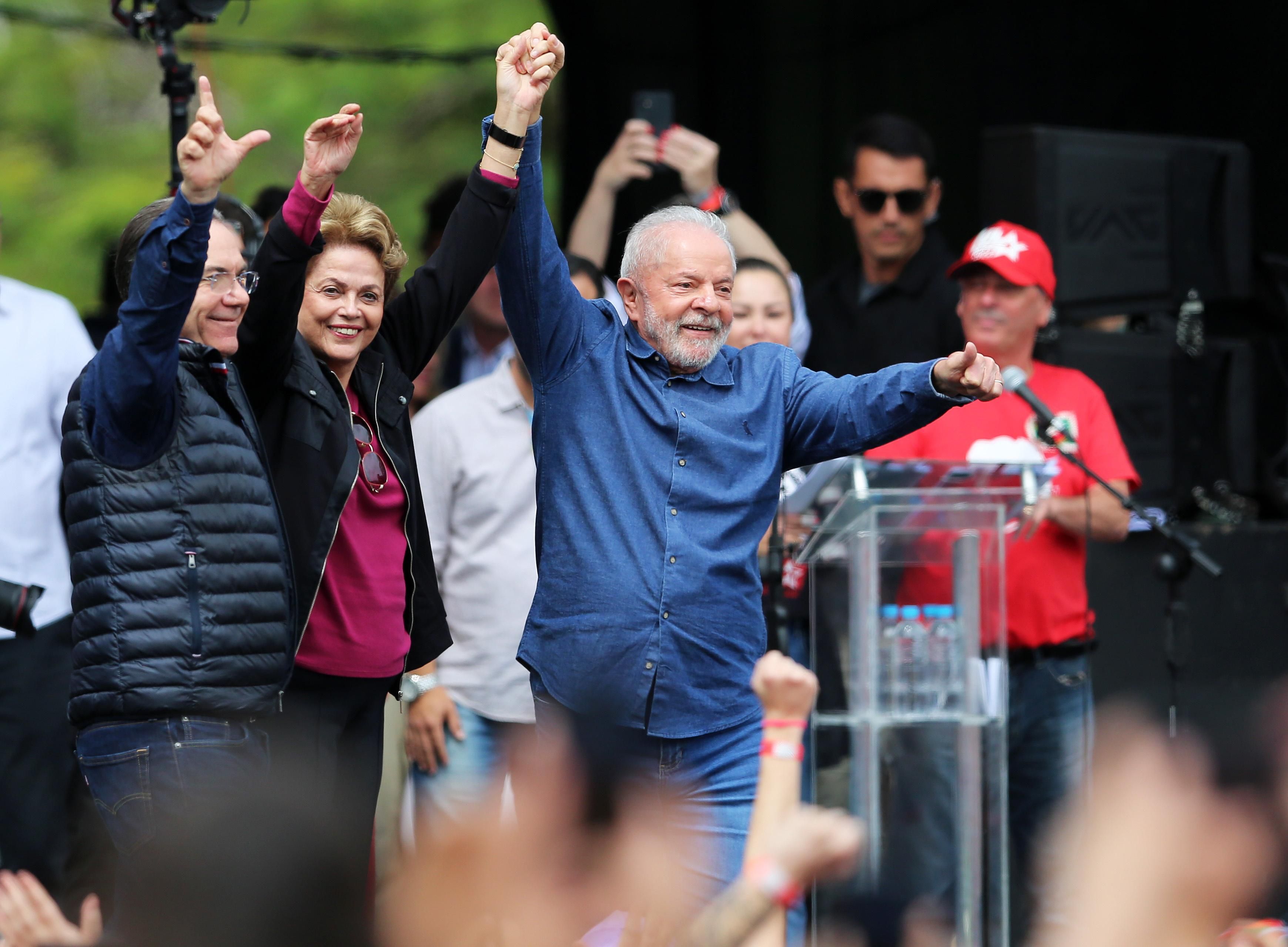
Brazilian presidential hopeful Luiz Inácio Lula da Silva holds up the hand of Dilma Rousseff, who is also a former president representing the leftist Workers' Party, at a campaign rally in Florianópolis, Santa Catarina on September 18, 2022. (Photo: Heuler Andrey/Getty Images)

BRETT WILKINS
September 20, 2022

With less than two weeks remaining until the first round of Brazil's presidential election, new polling figures show democratic socialist frontrunner Luiz Inácio Lula da Silva has slightly widened his double-digit lead over far-right incumbent President Jair Bolsonaro.

Brazilian pollster IPEC's latest survey shows da Silva leading Bolsonaro 47% to 31% in the first-round contest, which will take place on October 2. That's a one-point boost from the previous week's polling.

The IPEC poll also gives da Silva—the Workers' Party candidate who previously served as Brazil's 35th president from 2003 to 2010—a 19-point lead in a potential second-round runoff, which is scheduled for October 30 if no candidate wins over 50% of the vote in the first round.

Other pollsters also show da Silva enjoying a double-digit lead. Datafolha's most recent figures give da Silva a 45% to 33% edge over Bolsonaro in the first round, with 90% of surveyed voters having decided for whom they will vote.

Bolsonaro—an open admirer of the former U.S.-backed 1964-85 military dictatorship in whose army he served as an officer—has said he might not accept the results of the election if he loses. There are widespread fears in Brazil and beyond that a beaten Bolsonaro may attempt to foment a coup or an insurrection along the lines of the January 6, 2021 attack on the U.S. Capitol by supporters of defeated former President Donald Trump.

Da Silva has been drawing massive crowds of supporters at recent campaign events, including a Sunday rally in the southern city of Florianópolis where he said that when "every woman and every child is eating three times a day, I will have completed my life's mission."

Hunger and food insecurity—which was dramatically reduced through social programs like Fome Zero (Zero Hunger) and Bolsa Família (Family Allowance) during da Silva's first presidential term—have returned under Bolsonaro's right-wing economic and social policies.

Seven former Brazilian presidential candidates from various political parties on Monday called on voters to return da Silva to the Palácio da Alvorada.

"All Brazilian democrats must unite and avoid the tragedy that would be the re-election of the current president," said Cristovam Buarque, a former federal senator and member of the socialist party Cidadania who served as da Silva's education minister.

Also on Monday, Brazilian election authorities denounced a fake narrated video making the rounds on pro-Bolsonaro social media accounts showing the president leading da Silva 46% to 31%.
Our work is licensed under Creative Commons (CC BY-NC-ND 3.0). Feel free to republish and share widely.
World-Renowned Economists Call for 'Emergency' Corporate Profit Taxes to Avert Global Recession

Governments have a choice, argues a new report: Impose austerity programs that harm the poor, or tax "the multinationals and the super-rich, many of whom have also benefited from the crisis."


People wait in a queue for hours hours to buy food and fuel on May 18, 2022
 in Colombo, Sri Lanka. 
(Photo: Buddhika Weerasinghe/Getty Images)

JAKE JOHNSON
September 20, 2022

With warnings of a global economic meltdown on the rise as central banks jack up interest rates in their efforts to combat runaway inflation, a new report authored by world-renowned economists and advocates calls on governments to enact windfall profit taxes and other "emergency" measures to prevent an entirely avoidable disaster.

Published Tuesday, the report notes that "the battle against the global pandemic has left many governments vulnerable, saddling them with massive debts they took on as tax revenues fell, health needs soared, and as they strived to soften the economic blow." According to data from the Institute of International Finance, 32 emerging-market governments have a combined $83 billion in U.S.-dollar debt due in 2023.

"This is a case where the profits cannot be justified, and the uses of the funds are really imperative."

"Now developing countries confront spiraling energy and food prices, higher interest rates, and more volatile capital flows: the world is standing on the threshold of an economic slowdown, and the effects are once again disproportionately falling on most vulnerable households, exacerbating poverty and inequality," warns the new report launched by the Independent Commission for the Reform of International Corporate Taxation (ICRICT), an organization whose commissioners include Nobel laureate Joseph Stiglitz, University of Massachusetts at Amherst professor Jayati Ghosh, and Paris School of Economics professor Thomas Piketty.

The 27-page paper argues that governments have a fundamental choice in how to respond to the intertwined emergencies of an ongoing pandemic, war in Eastern Europe, supply chain disruptions, energy market chaos, high inflation, and worsening costs-of-living crises, which are fueling mass uprisings around the world as they threaten to push tens of millions more into poverty.

The new report says governments, in response, "can opt for austerity programs, cutting funding to public services and increasing the contribution of the poorest through inflation-enhanced consumption taxes, at the expense, once again, of the most vulnerable."

"Or they can decide to increase taxation on those who have so far failed to pay their fair share: the multinationals and the super-rich, many of whom have also benefited from the crisis," the report adds.


ICRICT lands strongly on the side of the latter solution, contending it would bring in crucial revenue from energy companies and other corporate giants exploiting the war and the pandemic and enable governments to "lessen the severity of this economic storm and counter the unacceptable levels of hunger, extreme poverty, and inequality."

"Bold taxation actions by governments in the short term could avoid the worst to come," the paper states. "It would also pave the way for more transformative tax systems in the medium term, while the international community overcomes the political impasse on how to better tax large multinational corporations in a digitalized world."

The paper was published in the wake of urgent warnings from major global institutions, including the World Bank and the International Monetary Fund, that central bank rate hikes have pushed the world to the brink of a massive recession.

During an ICRICT press conference last week, Stiglitz—who has been highly critical of central banks' approach to fighting inflation—argued that the case for a windfall profits tax is "very, very clear," pointing specifically to Europe's mounting economic woes.

"The revenues from that are necessary both to protect those who are being hurt very badly by the shock and by Europe's mistakes in structuring the electricity market—but also to make the investments to make the European economy more resilient," said Stiglitz. "So this is a case where the profits cannot be justified, and the uses of the funds are really imperative."

Windfall profits taxes have been pushed by some governments in recent months. India first imposed a surplus profits tax on oil companies in July, while the European Union has proposed a tax targeting the excess profits of fossil fuel giants and other energy firms that have been making a killing amid Russia's war on Ukraine.

The United Kingdom, meanwhile, approved a 25% windfall tax on oil and gas firms in May—but new right-wing Prime Minister Liz Truss has made clear she opposes windfall taxes and won't support any new ones.

Critics have lamented the limited nature of the windfall taxes pursued thus far. Chiara Putaturo, a tax expert at Oxfam E.U., said earlier this month that the European bloc's proposal is "a step forward but only addresses a part of the problem."

"We need a windfall tax that applies to all companies profiteering from the crisis," said Putaturo. "In the last two and a half years, big multinationals from a variety of sectors such as pharma, Big Tech, energy, and food have raked in enormous profits. Meanwhile, inflation is up and pushing more and more people into poverty. Revenues from a broad windfall tax will make sure that it is not the poorest who are paying the highest price."

Ghosh, ICRICT's co-chair, echoed that sentiment during last week's press conference, noting that pharmaceutical companies profited hugely from the pandemic and that "food multinationals have never had it so good."

"We are not regulating them. We are not taxing them. We are not preventing them from doing really terrible things, not just to people in developing countries but to the world and to the planet," said Ghosh. "It's extraordinary how government support of a few large companies is enabling a wide-scale increase in inequality, a massive destruction of our ecological foundations, and driving a very significant proportion of humanity into absolute starvation."

Our work is licensed under Creative Commons (CC BY-NC-ND 3.0). Feel free to republish and share widely.


Number of Ultrarich Hits All-Time High as Someone Dies From Hunger Every 4 Seconds
"Those with the power and money to change this must come together to better respond to current crises and prevent and prepare for future ones," a coalition of charities asserted.

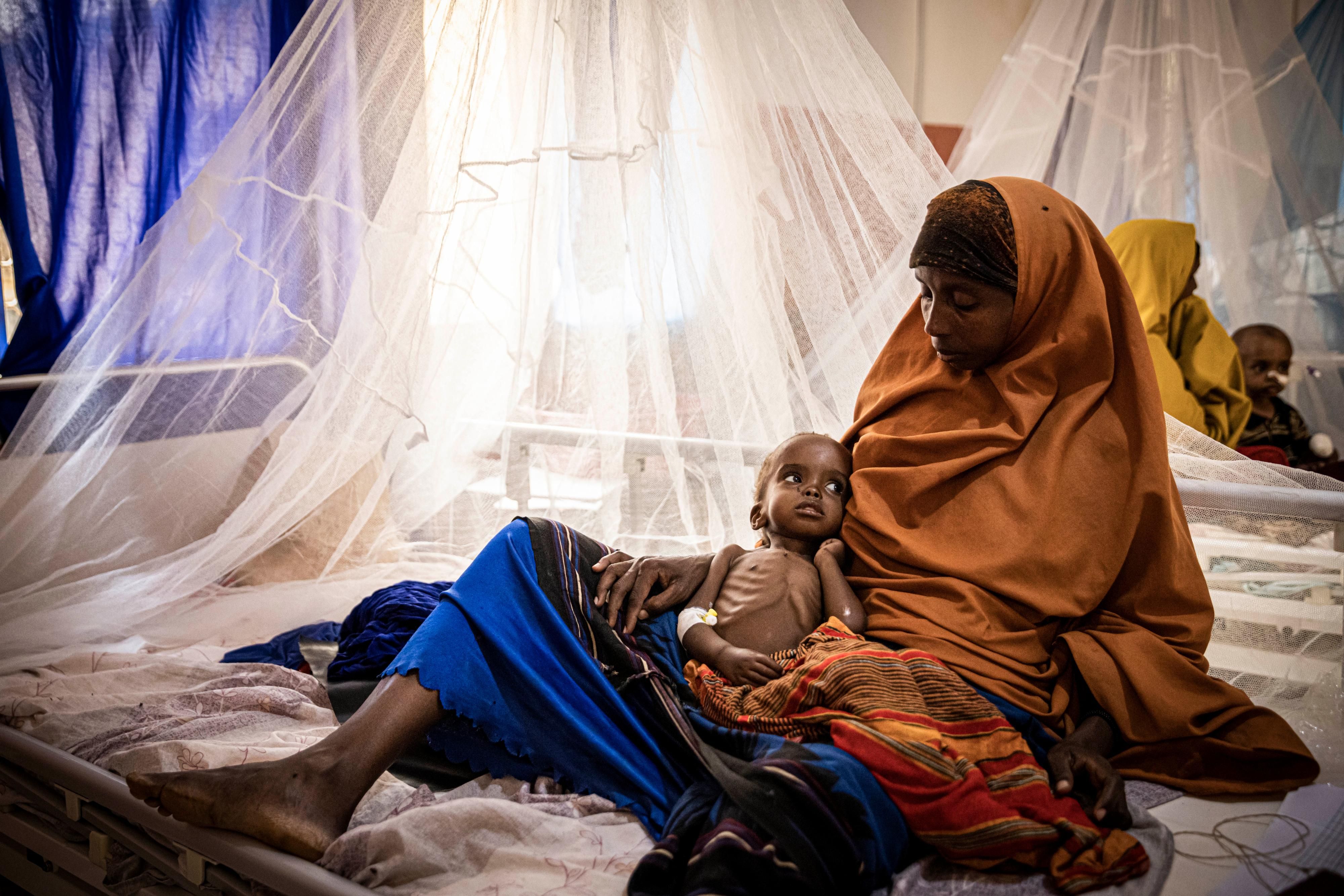
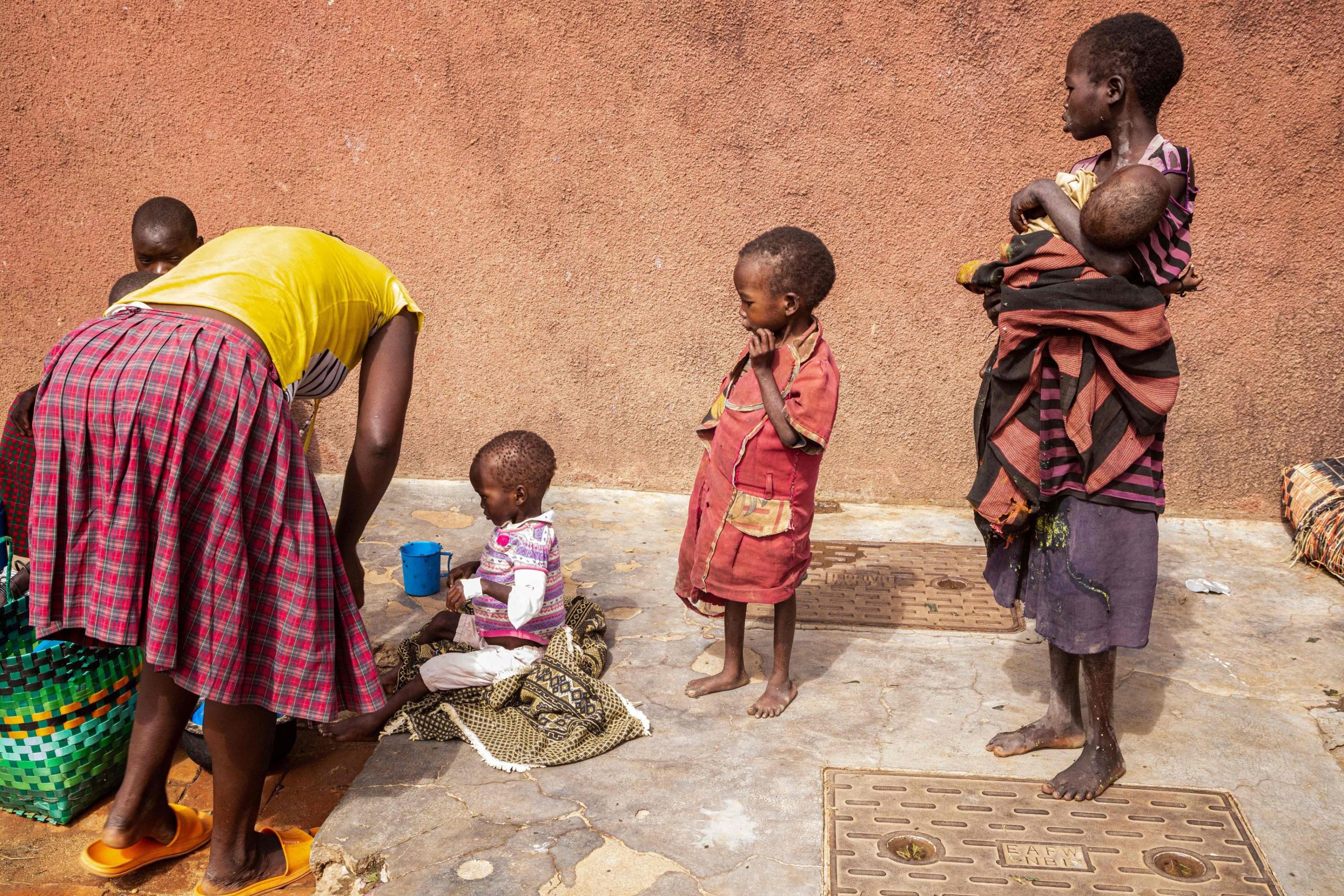
A mother holds her malnourished baby at a hospital in Baidoa,
 Somalia on September 3, 2022. (Photo: Ed Ram/Getty Images)

BRETT WILKINS
September 20, 2022

As a new analysis revealed that the global ranks of the superrich soared to a record number, a coalition of charity groups said Tuesday that hundreds of millions of people around the world are hungry—and that someone starves to death every four seconds.

"This is about the injustice of the whole of humanity."

At least 238 international and local charities from 75 countries signed an open letter noting that "a staggering 345 million people are now experiencing acute hunger, a number that has more than doubled since 2019."

"Despite promises from world leaders to never allow famine again in the 21st century, famine is once more imminent in Somalia," the signers stated. "Around the world, 50 million people are on the brink of starvation in 45 countries."

The letter—which was timed to coincide with the annual meeting of the United Nations General Assembly in New York—asserts that "the global hunger crisis has been fueled by a deadly mix of poverty, social injustice, gender inequality, conflict, climate change, and economic shocks, with the lingering impacts of the Covid-19 pandemic and the crisis in Ukraine further driving up food prices and the cost of living."

"Those with the power and money to change this must come together to better respond to current crises and prevent and prepare for future ones," the signatories argued.


The number of those with the most money grew to a record number last year.

According to an analysis published Tuesday by Credit Suisse, there were 218,200 ultra-high net worth (UHNW) people in the world in 2021, an increase of 46,000 from the previous year. The share of the world's wealth held by the richest 1% of people also increased from 44% to 46% last year.

Credit Suisse said there were 62.5 million U.S. dollar millionaires on Earth, and that all the wealth in the world added up to $463.6 trillion, while attributing what one of the report's authors called the "explosion of wealth" to soaring home and stock values.

A separate report published in July by letter signatory Oxfam revealed that profits from soaring food prices have enriched billionaires around the world by a collective $382 billion.


Meanwhile, Sumaya, a 32-year-old mother of four living in a camp for internally displaced people in Ethiopia's Somali region, lamented her family's dire situation in the charity groups' letter: "No water, no food, a hopeless life."

"Above all, my children are starving," she said. "They are on the verge of death. Unless they get some food, I'm afraid they will die."

Last week, Oxfam published a report underscoring how the climate emergency is exacerbating extreme hunger. The report examined 10 of the world's worst climate hot spots, where 18 million people are on the brink of starvation.

Mohanna Ahmed Ali Eljabaly of the Yemen Family Care Association, which also signed the charities' letter, said that "it is abysmal that with all the technology in agriculture and harvesting techniques today we are still talking about famine in the 21st century."

Related Content

Just Two Weeks of Food Billionaire Wealth Gains Could Fund Anti-Hunger Effort in East Africa

"This is not about one country or one continent and hunger never only has one cause. This is about the injustice of the whole of humanity," she continued. "It is extremely difficult to see people suffering while others sharing the same planet have plenty of food."

"We must not wait a moment longer to focus both on providing immediate lifesaving food and longer-term support," Elhjabaly added, "so people can take charge of their futures and provide for themselves and their families."


Our work is licensed under Creative Commons (CC BY-NC-ND 3.0). Feel free to republish and share widely.
Polluters must pay, says UN chief, urges taxes to help climate victims


World leaders address the 77th Session of the United Nations General Assembly at U.N. Headquarters in New York City

Tue, September 20, 2022
By Michelle Nichols

UNITED NATIONS (Reuters) -U.N. chief Antonio Guterres on Tuesday urged rich countries to tax windfall profits of fossil fuel companies and use that money to help countries harmed by the climate crisis and people who are struggling with rising food and energy prices.

Addressing world leaders at the 193-member U.N. General Assembly, the climate activist secretary-general stepped up his attacks on oil and gas companies, which have seen their profits explode by tens of billions of dollars this year.

"The fossil fuel industry is feasting on hundreds of billions of dollars in subsidies and windfall profits while household budgets shrink and our planet burns," he said.

"Polluters must pay," he added.

While Guterres again pushed developed countries to tax the fossil fuel windfall profits, this time he also used his platform to spell out where the money should be spent.

"Those funds should be redirected in two ways: to countries suffering loss and damage caused by the climate crisis; and to people struggling with rising food and energy prices," he told the annual gathering of world leaders in New York.

Britain has passed a 25% windfall tax on oil and gas producers in the North Sea, while the European Union plans to raise more than 140 billion euros to shield consumers from soaring energy prices by taxing windfall profits from oil companies and electric generators. U.S. Democratic lawmakers have discussed a similar idea, though it faces long odds in a divided Congress.

While these plans focus on redirecting windfall profits to domestic consumers, the secretary general advocated for a tax that would be directed to the world's most climate vulnerable countries, which have been embracing the idea.

He also said multilateral development banks "must step up and deliver" and that helping poor countries adapt to worsening climate shocks "must make up half of all climate finance."

Guterres added: "Major economies are their shareholders and must make it happen."

The secretary general also broadened his criticism of oil and gas companies to enabling industries that he said helps keep carbon pollution growing, such as banks and other financial institutions that invest in those companies and the public relations and advertising industries.

"Just as they did for the tobacco industry decades before, lobbyists and spin doctors have spewed harmful misinformation," Guterres said. "Fossil fuel interests need to spend less time averting a PR disaster – and more time averting a planetary one."

(Reporting by Michelle Nichols; Additional reporting by Valerie Volcovici in Washington; Editing by Jonathan Oatis and Aurora Ellis)
UN Chief Blasts PR Industry for Spearheading Big Oil's Propaganda Machine

"Just as they did for the tobacco industry decades before, lobbyists and spin doctors have spewed harmful misinformation," said U.N. Secretary-General António Guterres.


United Nations Secretary-General António Guterres speaks during the 77th session of the United Nations General Assembly in New York City on September 20, 2022. (Photo: Anna Moneymaker/Getty Images)

KENNY STANCIL
September 20, 2022

During his wide-ranging plea for fundamental change delivered Tuesday at the 77th session of the United Nations General Assembly, U.N. Secretary-General António Guterres denounced public relations and advertising firms for enabling the fossil fuel pollution currently destroying the planet.

"Fossil fuel interests need to spend less time averting a PR disaster—and more time averting a planetary one."

"Our world is addicted to fossil fuels," said Guterres. "We need to hold fossil fuel companies and their enablers to account."

"That includes the banks, private equity, asset managers, and other financial institutions that continue to invest and underwrite carbon pollution," he continued. "And it includes the massive public relations machine raking in billions to shield the fossil fuel industry from scrutiny."

"Just as they did for the tobacco industry decades before, lobbyists and spin doctors have spewed harmful misinformation," Guterres added, echoing the findings of a yearslong U.S. congressional probe and recent warnings from the Intergovernmental Panel on Climate Change. "Fossil fuel interests need to spend less time averting a PR disaster—and more time averting a planetary one."

Related Content


'That's Fraud': Explosive Docs Reveal Depth of Climate Lies by Big Oil Ahead of House Hearing

Jamie Henn, director of Fossil Free Media, welcomed Guterres' speech, saying in a statement that "the secretary general's address to the U.N. General Assembly is his most important speech of the year."

"The fact that he used it to directly call out PR and advertising agencies," said Henn, "is a big freaking deal."

Guterres' speech follows the publication of the latest "F-List" report by Fossil Free Media's Clean Creatives campaign. The report details the relationships between nearly 240 public relations and advertising companies and their fossil fuel industry clients.

"For decades, Big Oil has known of the devastating health and climate impacts of fossil fuels and partnered with advertising agencies and PR firms to create a multi-billion dollar campaign to mislead and confuse the public, downplay the urgency of the climate crisis, and overstate the work they have done to find a solution," states the report.

Although global greenhouse gas emissions must be halved by 2030 to have a chance of limiting temperature rise to 1.5ºC above preindustrial levels, "every major oil and gas company is currently planning to continue their expansion of fossil fuel production," the report points out. "Their business plans will ensure that the climate emergency continues, with worsening impacts particularly affecting poor and vulnerable people worldwide."

The report continues:

Fossil fuel advertising and PR does not match business reality. Shell has admitted that their "operating plans and budgets do not reflect Shell's Net-Zero Emissions target" that is widely featured in their advertising. In 2020 and 2021, 80% of Chevron advertisements mentioned sustainability, while only 1.8% of their capital spending went to non-oil and gas projects.

These ads are creating legal and reputational risk for agencies. Over 1,800 cases are pending worldwide related to climate action, many of them focused on misleading advertising. Both Shell and BP have been rebuked by regulators in the Netherlands and U.K., respectively, demanding that they end campaigns that mislead the public.

Now, fossil fuel advertisements have been banned in France, and bans are being considered many places elsewhere. There has never been a better time to drop fossil fuel clients.

Praising Guterres' remarks, Henn noted that "just a couple of years ago, hardly anybody was talking about the role of PR and ad agencies in driving the climate crisis—now it's being highlighted on one of the most important stages in the world."

"With this sort of spotlight, there's no way the public relations industry can keep shirking responsibility for their climate footprint," he added. "If agencies want to maintain any sort of ethical or moral reputation, it's time to come clean and drop their fossil fuel clients."

Our work is licensed under Creative Commons (CC BY-NC-ND 3.0). Feel free to republish and share widely.

UN chief: World is ‘paralyzed’ and equity is slipping away

By EDITH M. LEDERER

1 of 8
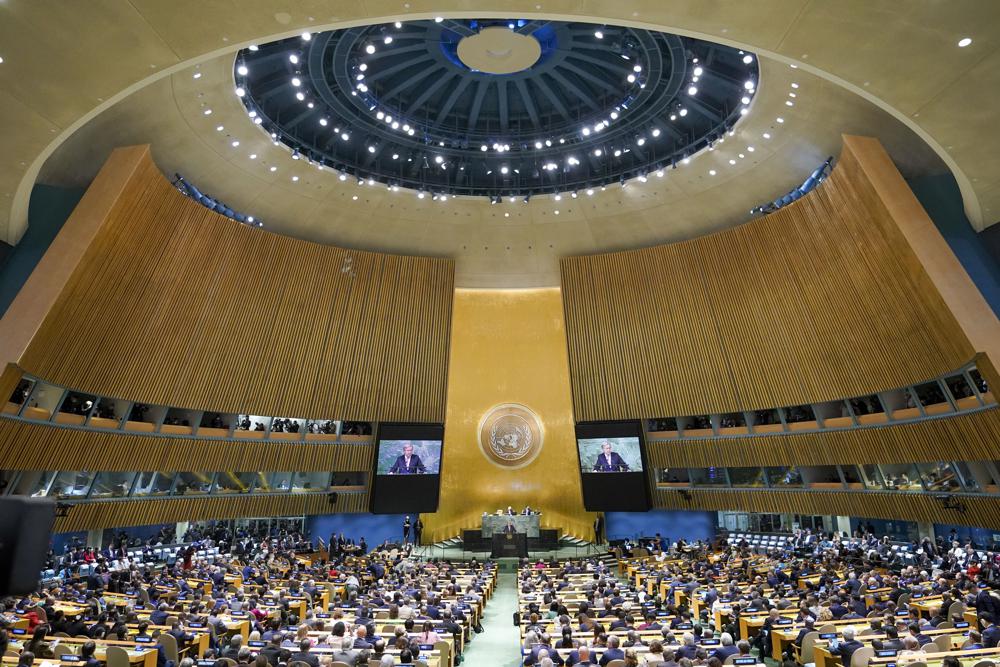
United Nations Secretary-General Antonio Guterres addresses the 77th session of the General Assembly at U.N. headquarters Tuesday, Sept. 20, 2022. (AP Photo/Mary Altaffer)

UNITED NATIONS (AP) — In an alarming assessment, the head of the United Nations warned world leaders Tuesday that nations are “gridlocked in colossal global dysfunction” and aren’t ready or willing to tackle the challenges that threaten humanity’s future — and the planet’s. “Our world is in peril — and paralyzed,” he said.

Speaking at the opening of the General Assembly’s annual high-level meeting, Secretary-General Antonio Guterres made sure to emphasize that hope remained. But his remarks reflected a tense and worried world. He cited the war in Ukraine and multiplying conflicts around the world, the climate emergency, the dire financial situation of developing countries and setbacks in U.N. goals for 2030 including an end to extreme poverty and quality education for all children.

LATEST NEWS– Live updates: UN General Assembly

He also warned of what he called “a forest of red flags” around new technologies despite promising advances to heal diseases and connect people. Guterres said social media platforms are based on a model “that monetizes outrage, anger and negativity.” Artificial intelligence he said, “is compromising the integrity of information systems, the media, and indeed democracy itself.”


The world lacks even the beginning of “a global architecture” to deal with the ripples caused by these new technologies because of “geopolitical tensions,” Guterres said.

His opening remarks came as leaders from around the planet reconvened at U.N. headquarters in New York after three years of pandemic interruptions, including an entirely virtual meeting in 2020 and a hybrid one last year. This week, the halls of the United Nations are filled once more with delegates reflecting the world’s cultures. Many faces were visible, though all delegates are required to wear masks except when speaking to ward off the coronavirus.

Guterres made sure to start out by sounding a note of hope. He showed a video of the first U.N.-chartered ship carrying grain from Ukraine — part of the deal between Ukraine and Russia that the United Nations and Turkey helped broker — to the Horn of Africa, where millions of people are on the edge of famine It is, he said, an example of promise and hope “in a world teeming with turmoil.”

He stressed that cooperation and dialogue are the only path forward — two fundamental U.N. principles since its founding after World War II. And he warned that “no power or group alone can call the shots.”

“Let’s work as one, as a coalition of the world, as united nations,” he urged leaders gathered in the vast General Assembly hall.

It’s rarely that easy. Geopolitical divisions are undermining the work of the U.N. Security Council, international law, people’s trust in democratic institutions and most forms of international cooperation, Guterres said.

“The divergence between developed and developing countries, between North and South, between the privileged and the rest, is becoming more dangerous by the day,” the secretary-general said. “It is at the root of the geopolitical tensions and lack of trust that poison every area of global cooperation, from vaccines to sanctions to trade.

Before the global meeting was gaveled open, leaders and ministers wearing masks to avoid a COVID-19 super-spreader event wandered the assembly hall, chatting individually and in groups. It was a sign that that despite the fragmented state of the planet, the United Nations remains the key gathering place for presidents, prime ministers, monarchs and ministers.

Nearly 150 heads of state and government are on the latest speakers’ list, a high number reflecting that the United Nations remains the only place not just to deliver their views but to meet privately to discuss the challenges on the global agenda -- and hopefully make some progress.

The 77th General Assembly meeting of world leaders convenes under the shadow of Europe’s first major war since World War II — the conflict between Russia and Ukraine, which has unleashed a global food crisis and opened fissures among major powers in a way not seen since the Cold War.

At the top of that agenda for many: Russia’s Feb. 24 invasion of Ukraine, which not only threatens the sovereignty of its smaller neighbor but has raised fears of a nuclear catastrophe at Europe’s largest nuclear plant in the country’s now Russia-occupied southeast.

Leaders in many countries are trying to prevent a wider war and restore peace in Europe. Diplomats, though, aren’t expecting any breakthroughs this week.

The loss of important grain and fertilizer exports from Ukraine and Russia has triggered a food crisis, especially in developing countries, and inflation and a rising cost of living in many others. Those issues are high on the agenda.

At a meeting Monday to promote U.N. goals for 2030 — including ending extreme poverty, ensuring quality education for all children and achieving gender equality — Guterres said the world’s many pressing perils make it “tempting to put our long-term development priorities to one side.”

But the U.N. chief said some things can’t wait — among them education, dignified jobs, full equality for women and girls, comprehensive health care and action to tackle the climate crisis. He called for public and private finance and investment, and above all for peace.

The death of Britain’s Queen Elizabeth II and her funeral in London on Monday, which many world leaders attended, have created last-minute headaches for the high-level meeting. Diplomats and U.N. staff have scrambled to deal with changes in travel plans, the timing of events and the logistically intricate speaking schedule for world leaders.

The global gathering, known as the General Debate, was entirely virtual in 2020 because of the pandemic, and hybrid in 2021. This year, the 193-member General Assembly returns to only in-person speeches, with a single exception — Ukrainian President Volodymyr Zelenskyy.

Over objections from Russia and a few allies, the assembly voted last Friday to allow the Ukrainian leader to prerecord his speech because of reasons beyond his control — the “ongoing foreign invasion” and military hostilities that require him to carry out his “national defense and security duties.”

The U.S. president, representing the host country for the United Nations, is traditionally the second speaker. But Joe Biden is attending the queen’s funeral, and his speech has been pushed to Wednesday morning.

___
Edith M. Lederer is chief U.N. correspondent for The Associated Press and has been covering international affairs for more than half a century. For more AP coverage of the U.N. General Assembly, visit https://apnews.com/hub/united-nations-general-assembly.


War, climate, famine... In world beset by turbulence, nations' leaders gather at UN

Facing a complex set of challenges that try humanity as never before, world leaders gather at the United Nations this week under the shadow of Europe’s first major war since World War II — a conflict that has unleashed a global food crisis and divided major powers in a way not seen since the Cold War. FRANCE 24's International Affairs Commentator Douglas Herbert gives his perspective.

At UN, leaders confront COVID’s impact on global education
By BIANCA VÁZQUEZ TONESS and JOCELYN GECKER
yesterday

1 of 5
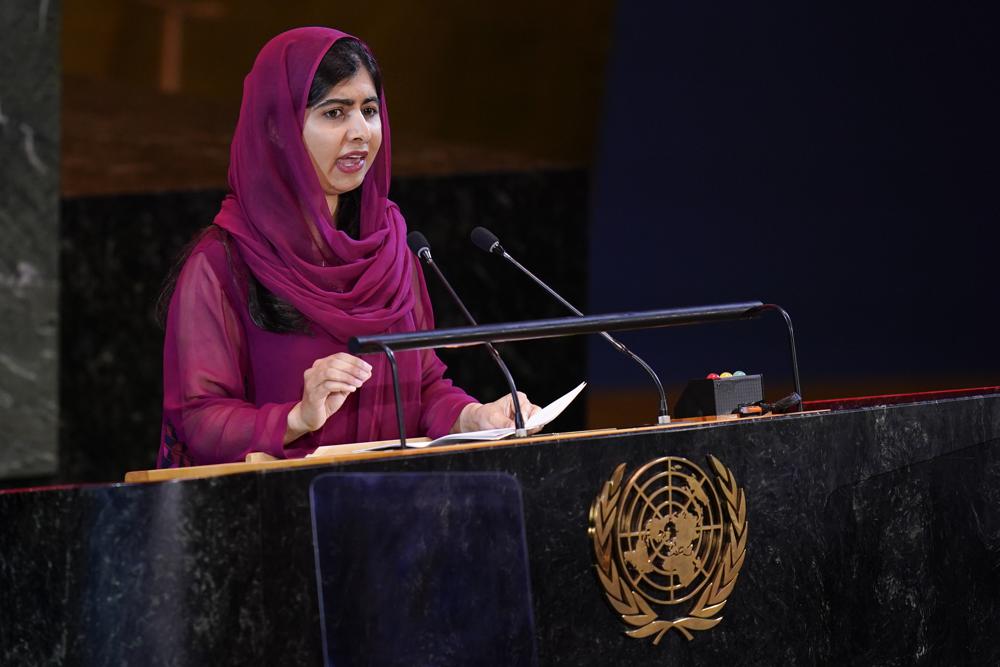
Nobel Peace Prize laureate Malala Yousafzai speaks during the Transforming Education Summit at United Nations headquarters, Monday, Sept. 19, 2022. (AP Photo/Seth Wenig)

With COVID-related school disruptions setting back children around the world, activists implored world leaders Monday to prioritize school systems and restore educational budgets slashed when the pandemic hit.

The summit on transforming education, held at the U.N. General Assembly ahead of the annual leaders’ meeting, called on the world’s nations to ensure that children everywhere from sub-Saharan Africa to the United States don’t fall too far behind.

“Seven years ago, I stood on this platform hoping that the voice of a teenage girl who took a bullet in standing up for her education would be heard,” said Nobel Peace Prize Laureate Malala Yousafzai, a U.N. messenger of peace. “On that day, countries, corporates, civil society, all of us committed to work together to see every child in schools by 2030. It is heartbreaking that halfway through that target date, we are facing an education emergency.”

Nigerian youth activist Karimot Odebode was more pointed. “We demand you take responsibility,” Odebode told the General Assembly. “We will not stop until every person in every village and every highland has access to an education.”

The percentage of 10-year-old children in poor and middle-income countries who cannot read a simple story increased to an estimated 70% — up 13 percentage points since before the pandemic shuttered classrooms, according to a report from the World Bank, UNESCO, UNICEF and other aid organizations.

Will the world’s leaders do enough to help their youngest citizens learn to read and gain the other skills they need to thrive? It will require addressing systemic problems that existed before the pandemic, dignitaries and students say. Countries will need to increase spending, change policies to increase access for girls and disabled students, and modernize instruction to stress critical thinking rather than rote memorization.

“This is a once-in-a-generation opportunity for us to radically transform education,” U.N. Deputy Secretary-General Amina Mohammed told reporters ahead of the education summit at U.N. headquarters in New York. “We owe it to the coming generation if we don’t want to witness the emergence of a generation of misfits.”

A closing statement from the United Nations after the full-day meeting said 130 countries had committed to “rebooting their education systems” and taking action to end the learning crisis. It was unclear what that meant specifically. Countries were asked to commit to devoting at least 20% of their national budgets to education.

The education minister for the Central African Republic, Aboubakar Moukadas-Noure, said his country slashed education spending to 0.25 percent of the national budget during the pandemic to shift resources to the health crisis. He said the country has since increased education spending to 17% and will invest in teacher training with assistance from the World Bank and the French government.

When COVID-19 closed schools around the world in spring 2020, many children simply stopped learning — some for months, others for longer. For many, there was no such thing as remote learning. More than 800 million young people around the world lacked internet access at home, according to a study by UNICEF and the International Telecommunication Union in December 2020.

More recent studies underscore the pandemic’s lasting effects. “The learning losses from COVID were enormous,” Mohammed said.

The amount of time school buildings were closed because of COVID-19 varied widely around the world. At the extreme, schools in parts of Latin America and South Asia were closed for 75 weeks or longer, according to UNESCO. In parts of the United States, including cities such as Chicago and Los Angeles, schools operated remotely from March 2020 through most of the 2020-2021 school year.

There also were huge variations in the availability and quality of remote learning. In some countries, students stuck at home had access to paper packets, or radio and television programs, or almost nothing at all. Others had access to the internet and video conferences with teachers.

The estimated learning delays on average ranged from over 12 months of school for students in South Asia to less than four for students in Europe and Central Asia, according to an analysis by consulting firm McKinsey & Company.

Most of the world’s classrooms are now back open, but 244 million school-age children are still out of school, UNESCO Director-General Audrey Azoulay said during the summit, citing data from the U.N. education agency. Most of those children — 98 million — live in sub-Saharan Africa, followed by Central and Southern Asia, in a reminder of the deep inequalities that persist in access to education, she said.

In many places, money is the key ingredient for stemming the crisis, if not fully reaching the leaders’ lofty goal of “transforming education.”

“Instead of being the great enabler, education is fast becoming the great divider,” U.N. Secretary-General Antonio Guterres told the General Assembly, calling on governments to make education financing a priority. “It is the single most important investment any country can make in its people and its future.”

On average wealthy countries invest $8,000 a year per school-aged child, compared to upper middle income countries, like some in Latin America, that invest $1,000 per year, according to a report from UNESCO and Global Education Monitoring. Lower income countries allot roughly $300 a year and some poor countries, just $50 a year per student.

Rich countries should also step up spending, said Guterres. In recent years, Germany, France and the United States have given the most international aid towards education in low-income countries, according to a 2021 Center for Global Development report. The United States invested more than $1.5 billion annually from 2017-2019, according to the report based on the most recent available data.

European Union countries will increase their international aid for education, said Jutta Urpilainen, European Commissioner for International Partnerships for the European Commission. Plans include devoting 13% of the European Union’s partnership budget and 10% of its humanitarian budget to help low-income countries improve education quality, “empower” teachers and help develop relevant skills. Urpilainen didn’t specify exactly how much spending would increase.

As top dignitaries urged individual countries to prioritize their youngest citizens, it was some of the youngest attendees at the summit who aired the most skepticism towards any prospect of change. After all, the U.N. lacks any authority to force countries to spend more on schooling.

Yousafzai urged countries to devote 20% of their budgets toward education. “Most of you know what exactly needs to be done,” she said. “You must not make small, stingy and short-term pledges.”

___

The Associated Press education team receives support from the Carnegie Corporation of New York. The AP is solely responsible for all content. Follow Bianca Vázquez Toness on Twitter at http://twitter.com/biancavtoness and Jocelyn Gecker at http://twitter.com/jgecker
‘Serial’ host: Evidence that freed Syed was long available


1 of 5
Adnan Syed, center, the man whose legal saga spawned the hit podcast "Serial," exits the Cummings Courthouse a free man after a Baltimore judge overturned his conviction for the 1999 murder of high school student Hae Min Lee, Monday, Sept, 19, 2022, in Baltimore. (Jerry Jackson/The Baltimore Sun via AP)


BALTIMORE (AP) — The creator of a true-crime podcast that helped free a Maryland man imprisoned for two decades in a murder case said that she feels a mix of emotions over how long it took authorities to act on evidence that’s long been available.

In a new episode of the “Serial” podcast released Tuesday, a day after Adnan Syed walked out of court following the vacating of his murder conviction, host Sarah Koenig noted that most or all of the evidence cited in prosecutors’ motion to overturn the conviction was available since 1999.

“Yesterday, there was a lot of talk about fairness, but most of what the state put in that motion to vacate, all the actual evidence, was either known or knowable to cops and prosecutors back in 1999,” Koenig said in concluding the new episode. “So even on a day when the government publicly recognizes its own mistakes, it’s hard to feel cheered about a triumph of fairness. Because we’ve built a system that takes more than 20 years to self-correct. And that’s just this one case.”

She argued that the case against Syed, which was featured on the first season of “Serial” in 2014, involved “just about every chronic problem” in the system, including unreliable witness testimony and evidence that was never shared with Syed’s defense team.

ADNAN SYED


‘Serial’ case: Adnan Syed released, conviction tossed


Court hearing set for Monday in Baltimore's Adnan Syed case


'Serial' case: Prosecutors move to vacate Syed's conviction


Baltimore judge orders new look at 'Serial' evidence


On Monday, Circuit Court Judge Melissa Phinn in Baltimore ordered Syed’s release after overturning his conviction for the 1999 murder of high school student Hae Min Lee, Syed’s ex-girlfriend. Syed was 17 at the time of Lee’s slaying and has always maintained his innocence.

At the behest of prosecutors who had uncovered new evidence, Phinn ordered that Syed’s conviction be vacated as she approved the release of the now-41-year-old.

Phinn ruled that the state violated its legal obligation to share evidence that could have bolstered Syed’s defense. She ordered Syed to be placed on home detention with GPS location monitoring. The judge also said the state must decide whether to seek a new trial date or dismiss the case within 30 days.

The Baltimore prosecutor’s office filed a motion last week to vacate Syed’s conviction, a filing that Koenig described as a “firework” coming from the same office that asked a jury to convict Syed more than two decades ago.


“The prosecutors today are not saying Adnan is innocent. They stopped short of exonerating,” she said. “Instead they’re saying that ‘back in 1999, we didn’t investigate this case thoroughly enough. We relied on evidence we shouldn’t have and we broke the rules when we prosecuted. This wasn’t an honest conviction.’”