Tuesday, October 18, 2022

SPACE RACE 2.0
SCOTLAND
Rocket firm Orbex secures £40m funding for Highland launch plan


BBC
Tue, October 18, 2022 

Orbex has been developing a 19m-long rocket for carrying satellites into low Earth orbit

Moray-based space rocket manufacturer Orbex has secured a £40.4m funding package to help towards planned launches from a Highland spaceport.

The Scottish National Investment Bank (SNIB) and Jacobs, a company providing services to Nasa, are among the project's new investors.

Orbex has proposed launching small satellites into low Earth orbit from Space Hub Sutherland near Tongue.

The first launch could take place next year.

Orbex, which is headquartered in Forres and has manufacturing sites in the UK and Denmark, said new investment would allow it to scale up its resources - such as employing more staff - and also help it to attract further funding.

The company has been developing a 19m (62ft) long rocket, called Prime, which would be reuseable and powered by the renewable bio-fuel, bio-propane.

Chief executive Chris Larmour said it already had potential customers from the UK, Europe and America.

He said he was delighted to secure the new funding package, with SNIB as the lead investor.

Map

SNIB was launched in November 2020 and will be backed by £2bn of Scottish government funding over 10 years.

Executive director Nicola Douglas said: "This is a very exciting time for the Scottish space sector.

"With Orbex, we will have a rocket assembled in Scotland, launching from Scotland and likely transporting satellites built in Scotland into orbit.

"This investment is a great example of the bank working with other investors to support scale-ups in Scotland and aligns with our mission to invest in innovation and the industries of the future."

The other new investors include the Danish Green Future Fund, Switzerland-based venture capital firm Verve Ventures and British entrepreneurs Phillip and James Chambers.

How green is Scotland's space industry?

Why is Scotland a prime rocket launch site?

Development agency Highlands and Islands Enterprise is leading the £17m Space Hub Sutherland project. The facility is to be constructed on the Moine peninsula.

Plans for up to 12 launches a year from a single launch pad were approved by Highland Council in 2020.

Scottish Land Court approval, which was also required as the proposed development is on crofting land, was granted the following year.

There are separate plans for spaceports in Shetland, Western Isles and at Prestwick in Ayrshire.
Beneath the surface of the Thames lies a graveyard of plastic waste


BBC
Tom Edwards - Transport and environment correspondent, London
Tue, October 18, 2022 

Plastic bottles, sunglasses, cotton buds, wet wipes, food wrappers, cartons - and a Superman - are all visible

We are on the foreshore of the Thames at low tide in Fulham, right next to Fulham FC's home, Craven Cottage.

The water has gone out very quickly and left behind a very dirty secret. Plastic.

There is plastic everywhere.

Plastic bottles, sunglasses, cotton buds, wet wipes, food wrappers and cartons. Everything you could imagine that is made of plastic is here.

That all of this is ending up in the Thames, regarded as London's jewel, is, frankly, disgusting and depressing.

Researchers from local charity Thames21 believe the Thames has the most microplastics of any river in the world

The river dumps its plastic at certain corners and certain bends.

There's 'wet wipe island' at Hammersmith, where the actual bend in the river is being changed by the build up of waste.


In Fulham, it is plastics.

Alarmingly, scientists also think these bits of plastic break down and enter the food chain. Researchers from local charity Thames21 believe the Thames has the most microplastics of any river in the world.

The organisation pulls 200 tonnes of plastic from the Thames every year.

Zara Visanji from Thames21 said macroplastics, or pieces larger than 5mm, are also a serious problem, "although we're not the worst in the world".

Samples are being collected along the Thames

She is also part of a project called InNoPlastic, funded by the EU, which comes up with ways to remove macro, micro and nano plastics.

"We have been collecting samples at Sunbury-on-Thames, the freshwater side of the River Thames," Zara says.

"And we have found, of all the partners, we have the highest concentration of microplastics," she says, compared with Croatia, Holland and the Venice Lagoon in Italy.

Scientists can examine the digestive tract of snails for plastics

Zara said the entry of plastics into the food chain happened "when fish are swimming along and they are absorbing these microplastics".

"Other animals are eating products that have microplastics in them and then the public population are eating the fish and meat that has microplastics, and it's getting into our blood stream as well."

The next day, I go to Royal Holloway, University of London, in Egham. Prof Dave Morritt has been studying crabs from the Thames for 10 years.

We watch him dissect a mitten crab. Inside, he finds traces of plastic that the crab has eaten. He says the fibres will have almost certainly come from the breakdown of wet wipes.

Prof Morritt says we need behavioural change: "Cutting off plastic at source before it gets into the river is far more effective than trying to clean it up once it's in the environment.

"You can clean up the bigger stuff, but with microplastics it's virtually impossible to get them out once they're there.

"A big part of that is trying to encourage people to change their behaviour."

Prof Dave Morritt has been studying Thames crabs - and their innards - for a decade

Thames21 also wants legislation to enforce strict standards on labelling for all single-use wet wipe products containing plastic. At the moment, some wet wipes are labelled as "flushable" when they contain plastic.

It also wants the government to set legally-binding targets to phase out non-essential waste items.

A spokesperson for the Department for Environment, Food and Rural Affairs said: "Through our 25 year environment plan we are committed to leaving the environment in a better state than we inherited it. As part of this work we are bringing in new rules to ensure that we recycle and reuse more of our waste to help tackle plastic pollution.

"Last year we launched a call for evidence on tackling commonly littered single-use plastics such as wet wipes, as well as sachets, cigarette filters and single-use cups.

"We are considering various options for wet wipes - including a ban on those containing plastic, a mandatory 'flushability' standard, mandatory labelling on packaging, and an extended producer responsibility scheme for wipes containing plastic."

It will be a huge challenge to reduce London's reliance on plastic and improve its disposal. Everyone can help by not flushing wet wipes and cotton buds.

At the moment, below the surface of the Thames lies a plastic dumping ground.

A GLOBAL CRISIS
UK
RSPCA struggles to care for hundreds of rescued pets


Mon, October 17, 2022

The RSPCA wants people to consider adopting or fostering a rescued animal

About 700 rescued pets are waiting for spaces at animal centres which are "full to bursting", the RSPCA says.

The charity currently pays £26,000 each week to private boarders to temporarily look after rescued animals including dogs, cats, rabbits, exotic pets, birds and farm animals.

To help ease the pressure, it has started an appeal for more fosterers in Herefordshire and Worcestershire.

"We are struggling," head of volunteering Brian Reeves said.

He added: "We are in the middle of an animal crisis and we can only see it getting worse over the winter months as the cost of living crisis bites.

"It's absolutely vital that we free up as much space in RSPCA centres now, so we've got room for animal victims of neglect and cruelty we rescued in the coming weeks and months - and more fosterers is going to be crucial in achieving that."

The charity says there are eight private boarding establishments in the West Mercia region - which covers Shropshire, Herefordshire and Worcestershire.


Maisie is overcoming surgery after having an ear tumour removed and is looking for a home

Across the UK, 691 animals are currently being boarded in temporary care with private boards due to a lack of space at centres - including 120 dogs, 144 cats, 112 rabbits, eight small furry animals, 38 exotic birds, 35 birds, 132 equines and 102 farm animals.

The number of pets being rehomed this year has dropped by 8% compared to 2020, and by 31% compared to 2019.

Maisie, a four-year-old Staffordshire bull terrier-cross, is among the pets in need of a new home in Worcester.

After having surgery to remove an ear tumour, the charity hopes her foster home will become permanent once she has recovered and been given a clean bill of health by vets.

Follow BBC West Midlands on Facebook, Twitter and Instagram. Send your story ideas to: newsonline.westmidlands@bbc.co.uk
Doncaster: Public consultation over UK's biggest battery farm


BBC
Mon, October 17, 2022 

A huge battery storage centre is planned for the site of a former power station in South Yorkshire.

The company behind the Thorpe Marsh scheme near Doncaster said it would store 2.8GW of electricity to be used at times of peak power demand.

Developers the Banks Group said it would be one of the largest energy storage facilities in the world and the UK's biggest.

A public consultation is about to be launched in the local area.

The proposal would see up to 2.25 million tonnes of ash from the demolished former coal-fired power station excavated and used to make concrete blocks for the building trade.

After the ash is cleared the site would be levelled and more than 50 batteries in shipping containers installed with a new electricity substation.

A number of proposals for the Thorpe Marsh site have been put forward over the years since the power station shut in 1994, including building gas turbines.

Lewis Stokes, senior community relations manager at The Banks Group said the site's existing connection to the National Grid and its closeness to wind farms of the Yorkshire coast made it "an excellent location for this project."

"This is a nationally important project that will put South Yorkshire at the forefront of developments in the increasingly important energy storage industry," he said.

"Our vision is to deliver a range of long-term environmental, energy security, employment, economic and community benefits through the reclamation and restoration of this landmark site while also supporting the UK's drive towards its crucial net zero targets."

The company said that it would restore the site's rail link to avoid using lorries to remove the ash waste and bring in equipment and would plant a woodland on part of the site.

A planning application could be submitted to Doncaster Council in the coming months. If approved, Banks said they hoped to start work by 2024.

Follow BBC Yorkshire on Facebook, Twitter and Instagram. Send your story ideas to yorkslincs.news@bbc.co.uk or send video here.

UK

Homes in London remain at risk 

of sewage flooding, report finds

BBC
Mon, October 17, 2022 


Homes across London remain at risk of being flooded by effluvia as a result of the capital's Victorian sewage system and heavy rainfall.

The London Flood Review concluded current infrastructure is unfit for purpose, especially in extreme weather.

Downpours last July, equivalent to two months' of rain within two hours, led to about 1,500 properties being covered in excrement and dirty water.

Flash floods lifted manhole covers and caused waste to rise through toilets.

The city needs a better way to cope, the review said, according to the Local Democracy Reporting Service.

"Such events are likely to occur more frequently in the future and the various organisations which manage flood risk will need to work collaboratively to ensure that the impacts of flooding are managed appropriately," it added.

Torrential rain hit London in August

Among the ideas to help stop London's sewers from flooding were "regreening" areas so there is less surface run-off, and introducing bigger pipes.

Although at the time of construction the Victorian sewer system for London had ample capacity, "the evolution of the cityscape has had an effect on the ability of the sewerage system to cope with the current flows which drain to it, which has resulted in some areas now not being able to cope with a 1-in-5 year event".

The report also analysed whether the Thames barrier could be used to help control water levels. But it ruled that the barrier would not be able to be raised quickly enough to cope with fast rainfall.

Its release came a fortnight after Londoners and people in north Kent and south Essex were invited to give their comments on managing the risk of flooding amid climate change and rising sea levels.

The Thames Estuary 2100 Plan is a joint project by the Environment Agency and a number of other bodies to ensure homes, businesses and critical services from Teddington to Sheerness and Southend remain protected by the end of the century.

Follow BBC London on Facebook, Twitter and Instagram. Send your story ideas to hellobbclondon@bbc.co.uk

UK 
Rampion 2: Offshore windfarm extension area 'nearly halved'


Sun, October 16, 2022 

A planned extension to an offshore windfarm will now cover an area almost half the size of what was originally proposed, its owners have said.

Owners of the Rampion wind farm, based off the West Sussex coast, said they now plan to build 90 new turbines instead of the original 116 turbines.

RWE Renewables is launching public consultation focussing on changes to cable routes.

RWE said Rampion 2 could could create energy for more than one million homes.

The company said the sea bed area covered by proposed new offshore wind turbines had been reduced by "nearly half" since initial plans were published.

Drop-in events are being held along the proposed cable route to see the plans and meet the Rampion 2 team, RWE said:

Public events:

1 November: 13:00-22:00 GMT at Arundel Town Hall, Atherley Chamber, Maltravers Sreett, Arundel BN18 9AP

2 November: 13:00-22:00 at Arun Yacht Club, Rope Walk Riverside West, Rope Walk, Littlehampton BN17 5DL

11 November: 13:00-22:00 at Ashurst Village Hall, The Street, Ashurst, Steyning BN44 3AP

12 November: 13:00-22:00 at Washington Village Memorial Hall, School Lane, Washington RH20 4AP

Chris Tomlinson, development and stakeholder manager for Rampion 2, said: "The electricity cable installation from the wind farm to the new electricity substation would be a temporary impact during construction, as all cables would be buried underground.

"We can also announce today that in response to feedback on visual effects and shipping from key stakeholders, including Natural England, we have reduced the extent of our offshore wind turbine array proposals by nearly half.

"In addition, we have decreased the maximum number of turbines down from 116 to 90.

Mr Tomlinson said the company was aiming to submit final proposals to the Planning Inspectorate in 2023, and should the project be given consent construction would start in 2026.

Four public consultation events will be held at Arundel, Ashurst, Climping and Washington.

A public consultation on the wind farm expansion was extended in February after some residents did not receive leaflets requesting their views.
Missouri pulls $500 million from BlackRock over asset manager's ESG push

Tue, October 18, 2022

People are seen in front of a showroom that hosts BlackRock in Davos


(Reuters) -Missouri has pulled $500 million out of pension funds managed by BlackRock Inc, state Treasurer Scott Fitzpatrick said on Tuesday, accusing the asset manager of "prioritizing" environmental, social and governance (ESG) over shareholder returns.

Several Republican-led states have sought to cut business ties with BlackRock over its ESG push, with Louisiana earlier this month saying it would pull $794 million out of the company's funds.

While environmentalists have protested that the world's largest asset manager does too little to press for change at fossil fuel portfolio companies, Republican politicians have accused it of boycotting energy stocks.

Chief Executive Officer Larry Fink last week defended the company's investments, saying "(I am) now being attacked equally by the left and the right so I'm doing something right".


"While the actions of some elected officials have attracted media headlines, they do not reflect the totality of our clients’ investment decisions," a BlackRock spokesperson said on Tuesday, adding that the company had attracted $248 billion in net new long-term assets from clients this year.

Missouri State Employees' Retirement System had asked BlackRock to abstain from proxy voting at companies on its behalf, but the asset manager refused its demand, Fitzpatrick said. Proxy voting is done by asset management firms on behalf of shareholders.

(Reporting by Niket Nishant in Bengaluru;Editing by Vinay Dwivedi)
Two Major Indian Refiners Just Stopped Buying Russian Crude

Editor OilPrice.com
Tue, October 18, 2022 

Two of the biggest refiners in India have stopped looking for spot Russian crude oil supply set to arrive after December 5, the day on which the EU embargo on Russian oil shipments enters into force, sources familiar with the Indian firms’ procurement plans told Bloomberg on Tuesday.

The two refiners are Indian Oil Corporation and Bharat Petroleum Corporation Limited (BPCL), according to the sources.

India, the world’s third-largest crude oil importer, has been importing large volumes of Russian oil after the Russian invasion of Ukraine due to the cheap supply with hefty discounts on the Russian grades compared to benchmarks.

Now IndianOil and BPCL, two of the biggest state-owned importers of Russian crude oil in India, are awaiting more clarity on the EU sanctions regime ahead of the December 5 deadline, including on the possibility of secondary sanctions on buyers of Russian crude.

The EU is set to impose as of early December an embargo on imports of Russian crude by sea and ban all maritime transportation services to all buyers unless the Russian oil is priced at or below a certain price cap, yet to be determined. Russia has repeatedly said that it would not export its oil to any country that will have joined the G7 and U.S.-led proposal for a price cap.

As early as September, Indian purchases of Russian oil were already expected to slow as the Asian importer was looking to more African and Middle Eastern supply as shipping rates on longer voyages jumped. With a recent surge in freight rates, Russian oil doesn’t look so cheap, and the discount of Russia’s oil to benchmarks has narrowed.

India will also further diversify its oil imports to better prepare for future OPEC+ production cuts that raise oil prices and tighten supply, its Petroleum Minister Hardeep Singh Puri said last week.
U$A MONOPOLY CAPITALI$M
Column: Think food inflation is bad now? Wait till Kroger and Albertsons merge


Michael Hiltzik
Tue, October 18, 2022 

A produce clerk at the Ralphs supermarket in La Jolla restocks produce in the store. (Howard Lipin / San Diego Union-Tribune)

The gargantuan proposed $24.6-billion merger of supermarket behemoths Kroger and Albertsons is being touted by the merger partners as a boon to consumers.

“We will take the learnings from each company to bring greater value and a better experience to more customers, more associates and more communities,” Kroger Chief Executive Rodney McMullen told analysts and investors in a conference call Friday after the deal was announced.

McMullen didn't explicitly say that would mean lower prices, but it would be a rare shopper who didn't think that "greater value and a better experience" meant anything other than paying less at the checkout counter.

There is no reason to allow two of the biggest supermarket chains 
in the country to merge — especially with food prices already soaring.
Sarah Miller, American Economic Liberties Project

Some analysts said the merger of the largest and second-largest supermarket chains would allow them to compete better with the biggest grocery retailer of all, Walmart, and the rapidly upward-scuttling Amazon, the owner of Whole Foods.

But haven't we heard all this before?


Cable, media and telecommunications companies always promised that their mergers would bring lower prices and more choices for the audience.

When AT&T completed its acquisition of Time Warner in 2018, AT&T CEO Randall Stephenson pledged that the deal would allow the companies to "offer customers a differentiated, high-quality, mobile-first entertainment experience.... We’re going to bring a fresh approach to how the media and entertainment industry works for consumers, content creators, distributors and advertisers.”

Comcast promised that its 2011 merger with NBCUniversal would open the doors to a paradise of free choice at popular prices. The company also promised that it would do nothing like favoring its own content on its own internet networks.

Did any of that happen? Do you feel you're spending less for video and internet and getting more? Me neither.

The same goes for healthcare mergers, which also are always pitched as routes to better technology and lower fees. As I've observed in the past, hospital and health insurance mergers almost always lead to higher costs, lower efficiencies and less innovation. The reason is simple: Mergers reduce competition — and it’s competition that drives down prices and encourages more efficiency and innovation.

Back in 2004, the merger of Woodland Hills-based WellPoint into Indianapolis-based Anthem was to produce immense savings from combining the health insurance companies' computer systems and allowing customers’ medical data to be exploited for their benefit across the new company’s vast reach.

Never mind that WellPoint Chairman and Chief Executive Leonard Schaeffer was in line to pocket $37 million from the deal plus a lump-sum payout of $45 million in accrued pension rights. We’re still waiting for the technological benefits of the WellPoint-Anthem deal to appear after 18 years. But that didn't stop CVS and Aetna from making the same claim when they announced their merger in 2017.

A 2016 study by USC found that the domination of California's hospital market by two big systems that grew by acquisition, Sutter Health and Dignity Health, not only drove up prices everywhere their institutions were located but also allowed even nonaffiliated hospitals to charge more.

All these deals have been more or less waved through by the Federal Trade Commission. It's encouraging that the current FTC and its chair, Lina Khan, are talking and acting much tougher than previous iterations of the agency. But the Albertsons-Kroger deal will be a major challenge.

Kroger is the owner of Food4Less and Ralphs in California, as well as 26 other store brands. Albertsons owns Safeway, Vons, Pavilions and 12 other brands. That's a big marketing landscape to come under a single owner.

"There is no reason to allow two of the biggest supermarket chains in the country to merge — especially with food prices already soaring,” says Sarah Miller, executive director of the American Economic Liberties Project.

“With 60% of grocery sales concentrated among just five national chains, a Kroger-Albertsons deal would squeeze consumers already struggling to afford food, crush workers fighting for fair wages, and destroy independent, community stores," Miller says. "This merger is a cut-and-dry case of monopoly power, and enforcers should block it.”

The possibility exists that the supermarket merger will create yet another oligopoly to go with the monopolistic inputs that have helped push food prices higher, says former Labor Secretary Robert Reich, who now teaches at UC Berkeley.

"At a time when grocery prices are soaring, in part because of monopolies in the food chain, this merger makes no sense," Reich told me by email. "The current food inflation has two sources: (1) Grain prices have been increasing around the world because of grain shortages brought on by the war in Ukraine and climate change. (2) Domestic monopolies in seeds, fertilizer, and food processing have used the cover of inflation to raise their prices higher than their increasing costs — including the costs of agricultural commodities, labor and transportation."

As Reich points out, corporate profit-seeking is a seldom-cited contributor to consumer inflation. Wages have crept higher over the last year, but the increases have trailed inflation, which is why so many workers and their families are feeling the sting of higher prices. Corporate profit margins, however, have rocketed into the stratosphere, outpacing the inflation rate and pulling it higher.

“Firms in the U.S. increased their markups and profits in 2021 at the fastest annual pace since 1955,” economists Mike Konczal and Niko Lusiani of the Roosevelt Institute reported in June.

It's only fair to observe that supermarket companies traditionally earn a much lower profit margin than those in most other industries — Kroger's operating margin last year was 3.5% on sales of $137.9 billion; at Albertsons the figure was 3.4% on sales of $71.9 billion.

McMullen told analysts he would use the estimated $500 million to $1 billion in annual savings created by the proposed merger to lower shelf prices, remodel stores and improve worker wages and benefits.

But the companies said they would also pay a $4-billion special dividend to Albertsons shareholders, so it would seem that shareholders will be getting most of the gains.

It's widely assumed that the companies will have to sell some stores in regions where their merger would otherwise shrink competition. For anyone curious about how that may work out, notwithstanding the promises of the executives who are flogging it via press releases, there's a precedent. It's about as sickening as finding a nest of spiders in your banana bunch. It involves (wait for it...) Albertsons, which in 2014 cut a deal to acquire Safeway for $9.4 billion.

The FTC ordered the companies to divest 168 of the 2,400 stores the merged company would own, mostly in the West. More than 140 were acquired by Haggen Holdings, an 18-store chain in the Pacific Northwest that was owned by a Florida private equity firm.

As it turned out, Haggen was utterly ill-equipped to grow nearly 10-fold overnight. Within months it was laying off workers, and before the year was out it had filed for bankruptcy. Haggen put 100 of the stores back on the block, and 33 of them were bought back by Albertsons — for about one-fifth, on average, of what it had sold them for. The company's winning bid for some stores was $1 each.

When the smoke cleared, a divestiture that the FTC had ordered to preserve competition ended up eliminating all competition in some communities. One place that got a lot of media attention was Baker City, in western Oregon. Baker City had started out with a Safeway and a Haggen, which competed with each other. After the various ownership flips, it still had two stores, but both owned by the same company.

Baker City looks like the future for communities with Kroger and Albertsons stores. They should be prepared for fewer and smaller competitive price cuts, less choice on the shelves, fewer clerks on the floor, a worse experience for shoppers any way you cut it. That's not to say that McMullen's promises might not come to pass, only that experience teaches us that it's not the way to bet.

This story originally appeared in Los Angeles Times.


The proposed $24.6 billion combination of Kroger and Albertsons grocery chains nationally is already drawing union opposition and scrutiny from Colorado’s attorney general 


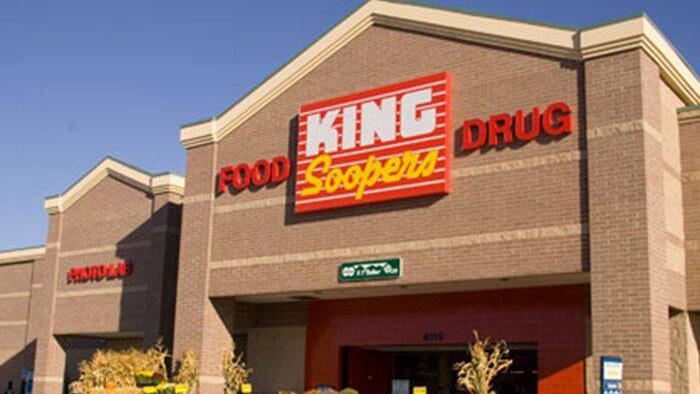
The King Soopers at 1950 Chestnut place in downtown Denver.

By Greg Avery – Senior Reporter, Denver Business Journal
Oct 17, 2022 

The proposed $24.6 billion combination of Kroger and Albertsons grocery chains nationally is already drawing union opposition and scrutiny from Colorado’s attorney general over concern it could harm consumers in the state.

The deal, unveiled Thursday, would combine the companies behind the King Soopers and City Market groceries in Colorado with the company that owns Safeway grocery stores in the state, combining Colorado’s top and third-largest grocery sellers.

Colorado Attorney General Phil Weiser has opened a review of the deal and could seek concessions from the businesses with the aim of protecting grocery shoppers and workers.

“As Colorado’s attorney general, I take very seriously our department’s responsibility to review mergers that threaten Colorado consumers,” Weiser said in a statement Friday. “At a time of rising food prices, the possibility of undue consolidation in the grocery business raises serious concerns particularly since King Soopers and Safeway have a large footprint in Colorado.”

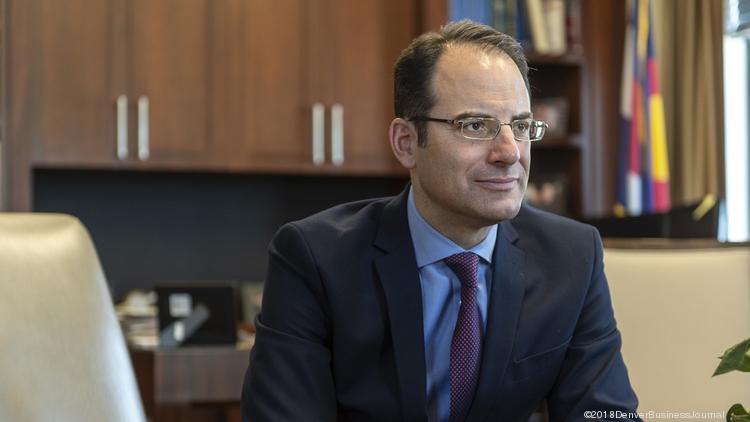
Colorado Attorney General Phil Weiser.

Cincinnati-based Kroger (NYSE: KR) agreed to pay $34.10 per share to Albertson’s (NYSE: ACI) stockholders. Merging would expand Kroger Co. to 4,996 stores nationwide that reach 85 million U.S households and would employ more than 710,000 people.

The deal is expected to close in 2024 but will face tight regulatory scrutiny.

The companies combined have $210 billion in 2021 sales and generated nearly $3.3 billion in profits.

King Soopers and Safeway capture about 46% of the Denver metro-area grocery sales and would, if merged, dwarf the sales of the next-closest competitor, Walmart Supercenters.

In some areas, like the towns of Erie and Windsor, Kroger owning both Safeway and King Soopers could mean a single company owning the communities' only existing grocery stores.

The United Food & Commercial Workers Union Local 7, which represents thousands of Colorado workers employed at Kroger and Safeway stores, has already come out in opposition to the deal.

“The proposed merger of these two grocery giants is devastating for workers and consumers alike and must be stopped,” wrote Kim Cordova, president of UFCW Local 7 and vice president of UFCW international, which is opposing the deal nationally. “This proposed merger of two of the largest grocery companies in the nation will no doubt create a monopoly in the grocery industry for many communities.”

Cordova issued a written statement opposing the deal, as has the union nationally.

Kroger’s King Soopers stores lead grocery sales statewide and corner about 36% of Denver metro-area grocery spending, topping $3.7 billion in annual sales, according to 2021 numbers from the analytics firm Chain Store Guide.

That’s double the market share of second-place Walmart Supercenters and more than double the value of sales.

Coming in third are Albertson’s-owned Safeway stores, which capture 11.5% of the metro-area market and annual sales of just over $1.2 billion, said Chain Store Guide.

>>See the 2022 market shares for the Denver area in the slideshow below


Grocery store market share 2022


A look at Denver grocery stores, ranked by their 2022 market shares based on data from national grocery analytics firm Chain Store Guide.

The combined groceries operate more than 250 stores across Colorado, according to 9News.

Kroger and Albertsons’ merger deal anticipates having to divest stores in some markets to win the deal’s approval.

A spin-off company with between 100 and 350 grocery stores nationally is expected to be carved off the Kroger-Albertsons business and owned as an independent grocer by the shareholders of Albertsons after the merger, Kroger’s deal announcement said. The locations of stores that would be spun off have not been determined.

Colorado’s attorney general has won concessions in multibillion-dollar national mergers several times in recent years.

Notably, last year, Weiser was among several state attorneys general and others who opposed the proposed merger of Great American Outdoors Group, which operates five Bass Pro Shops and Cabela’s shops in the state, and Sportsman’s Warehouse, which operates seven stores in Colorado. The outdoor retailers scuttled their merger in December over regulatory opposition.

Prior merger reviews by Weiser’s office resulted in concessions in the merger of United Healthcare and DaVita Medical Group, a physicians’ group subsidiary of the Denver-based kidney-care company, that were designed to protect consumers in the Colorado Springs area.

His office joined other AGs in suing to halt 2019’s T-Mobile-Sprint merger and dropped the opposition after winning a commitment that Douglas County-based Dish Network would establish a 2,000-employee wireless telecommunications company headquarters in the state and T-Mobile build out its 5G network statewide or pay a $100 million penalty.

AHS board member resigns in response to premier's plan to replace directors

Janet French - 11h ago - CBC

With the looming threat of firing hanging over their heads, at least one Alberta Health Services board member has resigned.

In a Oct. 7 letter obtained by CBC News, Deborah Apps says she can't stand by waiting for Premier Danielle Smith to act on a promise to replace the 12-member board of directors with a commissioner who will report directly to the health minister and premier.

"I fear that the premier-elect's proposals will further destabilize the workplace environment for all health-care workers, adding more uncertainty when frontline staff and those who work tirelessly to lead and assist them require support and thoughtful oversight," Apps wrote in the letter, dated the day after United Conservative Party members voted Smith their new leader.

Smith, who was sworn in as premier on Oct. 11, has pledged to remove the AHS board for the organization's response to the pandemic.

At a press conference last week, Smith said AHS failed to ensure there were enough health-care workers on the job when it required all employees to be vaccinated against COVID-19.

In December 2021, AHS put 1,650 unvaccinated employees without valid exemptions on paid leave. The organization employs 121,000 people.

AHS expected 750 employees to return in March when it lifted the vaccine mandate.

Changing management

Last week, Smith also said AHS failed to respond to government direction in spring 2020 to vastly increase the number of intensive care unit beds available.

"In a business, when they fail to meet targets and they fail to meet direction, you change the management," Smith said.

Smith told reporters there would be a new governance structure in place within 90 days.

In response to emailed questions, Smith's press secretary, Rebecca Polak, didn't clarify whether the premier is looking at replacing just the board or senior administrators too.

Appointing an administrator to replace the board will allow for rapid decision making, Polak said.

The plan has left health-system experts baffled by the purpose of replacing a board whose members were appointed by the UCP government and have little involvement in daily decision making.

AHS a 'whipping boy for government,' past board member says

Former Alberta Party leader and once Progressive Conservative health minister Stephen Mandel sat on the board from September 2019 to September 2021.

He can't recall the board having any say in how hospital beds were used or how AHS public health inspectors enforced provincial health orders.


"AHS is really a delivery service for what the government wants to implement," said Mandel, who was also Edmonton's mayor for a decade. "And they become really the whipping boy for everybody because they are the ones who are in front."


Former AHS board member Stephen Mandel says the board was told, not asked, to implement a COVID-19 vaccine mandate for employees.© Nathan Gross/CBC

Mandel said the board was informed AHS would mandate COVID-19 vaccination for employees. He said it was unclear whether AHS administrators or the government had made the decision but he supported it.

AHS board chair Gregory Turnbull declined an interview request.

Apps, the board member who resigned, also declined to do an interview.

Her letter says the board has also attracted "outstanding candidates" to fill the vacant CEO role, and the successful candidate should be able to lead without political interference. Mauro Chies is currently serving as interim CEO.

Dr. Verna Yiu resigned in April after six years as CEO — the longest serving in AHS's 13-year history.

Yiu's new office at the University of Alberta did not respond to an interview request.

A history of instability

AHS has had turbulent leadership since the former Progressive Conservative government amalgamated health region boards in 2009.

In 2013, the then-health minister fired the board over a disagreement about executive compensation. The government appointed a series of four administrators to act in lieu of a board until the NDP government chose a new board in 2015.

The organization had six CEOs (including two co-CEOs) in its first six years.

None of this flux is good for health care, said independent health policy consultant Steven Lewis. He calls AHS "the most complex organization in Alberta by an infinite factor."

Lewis said the uncertainty has a huge impact on employee morale, and recruitment and retention of both health-care workers and health-system leaders.

He says frequent leadership changes halts meaningful improvement because AHS doesn't have enough time to work toward its rapidly shifting goals.

Laying blame

University of Alberta political science professor John Church, who co-authored a book this year on Alberta's health-care system, said successive governments have increasingly centralized control of health care under one entity to prevent pushback from local boards.

He said the AHS board now is a government mouthpiece.

"I don't see how you could look at getting a more compliant group of people in place."

Church said the government is looking for a "villain" to blame for its handling of the pandemic and AHS fits the bill.

Pushing out other members of the AHS executive team could also stifle innovation, prevent the system from launching new programs and halt spending on anything non-routine, he said.

Church maintains AHS has been a political football and shield since its inception and remains that way.

Sacking leaders is the last thing AHS needs as it faces pressure from rising COVID-19 and flu cases and a burned out workforce, he said.

"It's destructive," Church said. "And it's actually dangerous to be running a health care system the way that they're trying to run it."