Thursday, November 03, 2022

Clear window coating could cool buildings without using energy

Peer-Reviewed Publication

AMERICAN CHEMICAL SOCIETY

Clear window coating could cool buildings without using energy 

IMAGE: THIS WINDOW FILM (HELD IN FINGERS AT TOP LEFT) KEEPS ROOMS BRIGHT AND COOL BY ALLOWING VISIBLE LIGHT TO PASS IN WHILE REFLECTING INVISIBLE INFRARED AND ULTRAVIOLET SUNLIGHT AND RADIATING HEAT INTO OUTER SPACE. view more 

CREDIT: ADAPTED FROM ACS ENERGY LETTERS 2022, DOI: 10.1021/ACSENERGYLETT.2C01969

As climate change intensifies summer heat, demand is growing for technologies to cool buildings. Now, researchers report in ACS Energy Letters that they have used advanced computing technology and artificial intelligence to design a transparent window coating that could lower the temperature inside buildings, without expending a single watt of energy.

Studies have estimated that cooling accounts for about 15% of global energy consumption. That demand could be lowered with a window coating that could block the sun’s ultraviolet and near-infrared light — the parts of the solar spectrum that typically pass through glass to heat an enclosed room. Energy use could be reduced even further if the coating radiates heat from the window’s surface at a wavelength that passes through the atmosphere into outer space. However, it’s difficult to design materials that can meet these criteria simultaneously and can also transmit visible light, meaning they don’t interfere with the view. Eungkyu Lee, Tengfei Luo and colleagues set out to design a “transparent radiative cooler” (TRC) that could do just that.

The team constructed computer models of TRCs consisting of alternating thin layers of common materials like silicon dioxide, silicon nitride, aluminum oxide or titanium dioxide on a glass base, topped with a film of polydimethylsiloxane. They optimized the type, order and combination of layers using an iterative approach guided by machine learning and quantum computing, which stores data using subatomic particles. This computing method carries out optimization faster and better than conventional computers because it can efficiently test all possible combinations in a fraction of a second. This produced a coating design that, when fabricated, beat the performance of conventionally designed TRCs in addition to one of the best commercial heat-reduction glasses on the market.

In hot, dry cities, the researchers say, the optimized TRC could potentially reduce cooling energy consumption by 31% compared with conventional windows. They note their findings could be applied to other applications, since TRCs could also be used on car and truck windows. In addition, the group’s quantum computing-enabled optimization technique could be used to design other types of composite materials.

The authors acknowledge support from the National Research Foundation of Korea and the Notre Dame Center for Research Computing.

The paper’s abstract will be available on Nov. 2 at 8 a.m. Eastern time here: http://pubs.acs.org/doi/abs/10.1021/acsenergylett.2c01969

The American Chemical Society (ACS) is a nonprofit organization chartered by the U.S. Congress. ACS’ mission is to advance the broader chemistry enterprise and its practitioners for the benefit of Earth and all its people. The Society is a global leader in promoting excellence in science education and providing access to chemistry-related information and research through its multiple research solutions, peer-reviewed journals, scientific conferences, eBooks and weekly news periodical Chemical & Engineering News. ACS journals are among the most cited, most trusted and most read within the scientific literature; however, ACS itself does not conduct chemical research. As a leader in scientific information solutions, its CAS division partners with global innovators to accelerate breakthroughs by curating, connecting and analyzing the world’s scientific knowledge. ACS’ main offices are in Washington, D.C., and Columbus, Ohio.

To automatically receive news releases from the American Chemical Society, contact newsroom@acs.org.

Follow us: Twitter | Facebook | LinkedIn | Instagram

This simple material could scrub carbon dioxide from power plant smokestacks

An easily synthesized chemical filter could stop the greenhouse gas from reaching the atmosphere.

Peer-Reviewed Publication

NATIONAL INSTITUTE OF STANDARDS AND TECHNOLOGY (NIST)

MOF Aluminum Formate 

IMAGE: EXHAUST FROM COAL-FIRED POWER PLANTS, AT LEFT, CONTAIN LARGE QUANTITIES OF THE GREENHOUSE GAS CARBON DIOXIDE (PURPLE TRIPARTITE MOLECULES). ALUMINUM FORMATE, A METAL-ORGANIC FRAMEWORK WHOSE STRUCTURE IS HIGHLIGHTED AT RIGHT, CAN SELECTIVELY CAPTURE CARBON DIOXIDE FROM DRIED FLUE GAS CONDITIONS, POTENTIALLY AT A FRACTION OF THE COST OF USING OTHER CARBON FILTRATION MATERIALS. view more 

CREDIT: B. HAYES / NIST

How can we remove carbon dioxide, a greenhouse gas, from fossil-fuel power plant exhaust before it ever reaches the atmosphere? New findings suggest a promising answer lies in a simple, economical and potentially reusable material analyzed at the National Institute of Standards and Technology (NIST), where scientists from several institutions have determined why this material works as well as it does.  

The team’s object of study is aluminum formate, one of a class of substances called metal-organic frameworks (MOFs). As a group, MOFs have exhibited great potential for filtering and separating organic materials — often the various hydrocarbons in fossil fuels — from one another. Some MOFs have shown promise at refining natural gas or separating the octane components of gasoline; others might contribute to reducing the cost of plastics manufacturing or cheaply converting one substance to another. Their capacity to perform such separations comes from their inherently porous nature. 

Aluminum formate, which the scientists refer to as ALF, has a talent for separating carbon dioxide (CO2) from the other gases that commonly fly out of the smokestacks of coal-fired power plants. It also lacks the shortcomings that other proposed carbon filtration materials have, said NIST’s Hayden Evans, one of the lead authors of the team’s research paper, published today in the peer-reviewed journal Science Advances.  

“What makes this work exciting is that ALF performs really well relative to other high-performing CO2 adsorbents, but it rivals designer compounds in its simplicity, overall stability and ease of preparation,” said Evans, a chemist at the NIST Center for Neutron Research (NCNR). “It is made of two substances found easily and abundantly, so creating enough ALF to use widely should be possible at very low cost.” 

The research team includes scientists from the National University of Singapore; Singapore’s Agency for Science, Technology and Research; the University of Delaware; and the University of California, Santa Barbara.  

Coal-fired power plants account for roughly 30% of global CO2 emissions. Even as the world embraces other energy sources such as solar and wind power that do not generate greenhouse gases, finding a way to reduce the carbon output of existing plants could help mitigate their effects while they remain in operation.  

Scrubbing the CO2 from flue gas before it reaches the atmosphere in the first place is a logical approach, but it has proved challenging to create an effective scrubber. The mixture of gases that flows up the smokestacks of coal-fired power plants is typically fairly hot, humid and corrosive — characteristics that have made it difficult to find an economical material that can do the job efficiently. Some other MOFs work well but are made of expensive materials; others are less costly in and of themselves but perform adequately only in dry conditions, requiring a “drying step” that reduces the gas humidity but raises the overall cost of the scrubbing process.  

“Put it all together, you need some kind of wonder material,” Evans said. “Here, we’ve managed to tick every box except stability in very humid conditions. However, using ALF would be inexpensive enough that a drying step becomes a viable option.”  

ALF is made from aluminum hydroxide and formic acid, two chemicals that are abundant and readily available on the market. It would cost less than a dollar per kilogram, Evans said, which is up to 100 times less expensive than other materials with similar performance. Low cost is important because carbon capture at a single plant could require up to tens of thousands of tons of filtration material. The amount needed for the entire world would be enormous.   

On a microscopic scale, ALF resembles a three-dimensional wire cage with innumerable small holes. These holes are just large enough to allow CO2 molecules to enter and get trapped, but just small enough to exclude the slightly larger nitrogen molecules that make up the majority of flue gas. Neutron diffraction work at the NCNR showed the team how the individual cages in the material collect and fill with CO2, revealing that the gas molecules fit inside certain cages within ALF like a hand in a glove, Evans said. 

Despite its potential, ALF is not ready for immediate use. Engineers would need to design a procedure to create ALF at large scales. A coal-fired plant would also need a compatible process to reduce the humidity of the flue gas before scrubbing it. Evans said that a great deal is already understood about how to address these issues, and that they would not make the cost of using ALF prohibitive.  

What to do with the CO2 afterward is also a major question, he said, though this is a problem for all carbon-capture materials. There are research efforts underway to convert it to formic acid — which is not only a naturally occurring organic material but also one of the two constituents of ALF. The idea here is that ALF could become part of a cyclic process where ALF removes CO2 from the exhaust streams, and that captured CO2 is used to create more formic acid. This formic acid would then be used to make more ALF, further reducing the overall impact and cost of the material cycle. 

“There is a great deal of research going on nowadays into the problem of what to do with all the captured CO2,” Evans said. “It seems possible that we could eventually use solar energy to split hydrogen from water, and then combine that hydrogen with the CO2 to make more formic acid. Combined with ALF, that’s a solution that would help the planet.”  

Temperatures in Europe have risen by twice the global average over past 30 years

The World Meteorological Organisation says Europe presents a "live picture of a warming world".


 by Jack Peat
2022-11-02 


Temperatures have risen by more than twice the global average in Europe over the past 30 years, UN experts on weather and climate have said.

A report from the World Meteorological Organisation (WMO) said temperatures had warmed significantly since 1991, rising at an average of about 0.5C a decade, making it the fastest warming continent.

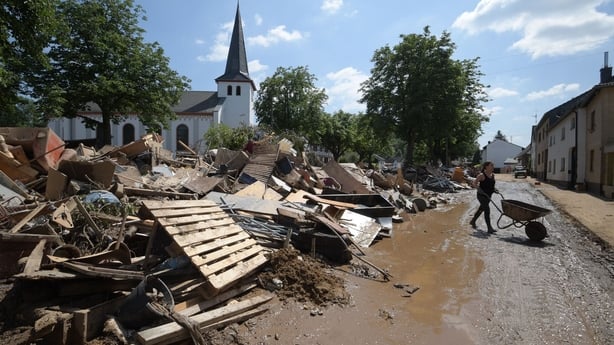
The report focuses on 2021 when Europe was hit by devastating floods, storms and other weather and climate events, which claimed lives, directly affected more than half a million people and caused 50 billion dollars of damage.


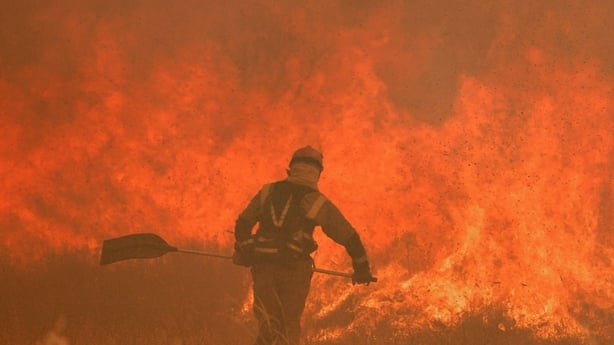
With 2022 seeing more climate damage from heatwaves, drought and wildfire, the WMO warned Europe was a “live picture of a warming world” that shows that even well-prepared societies are not safe from extreme weather events.

The State of the Climate in Europe report for 2021, produced jointly with the European Union’s Copernicus Climate Change Service, also reveals that Alpine glaciers lost 30m (nearly 100 ft) in ice thickness from 1997-2021.

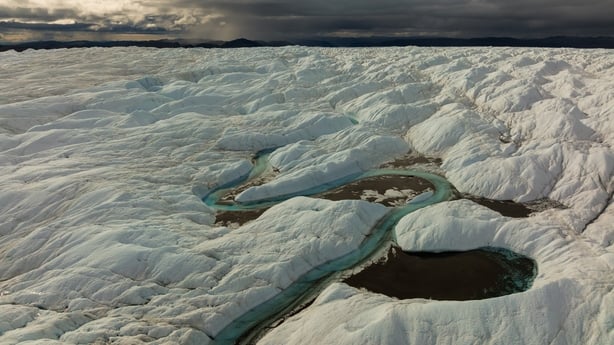
Greenland’s ice sheet is melting, contributing to accelerating sea level rise – and in summer 2021 saw a melt event and rainfall for the first time ever at its highest point – Summit station.


There were also droughts and high temperatures which fuelled significant wildfires, particularly in Turkey, Italy and Greece, and summer heatwaves saw temperatures reach 48.8C near Syracuse in Sicily, in August – a provisional record.

The report shows that some European countries are having success in cutting the greenhouse gas emissions driving global warming, with EU climate pollution falling 31 per cent between 1990 and 2020, and a target for 2030 of 55 per cent cuts.

But recent reports from other UN bodies have shown how far off track the world is to limiting temperature rises to well below 2C or 1.5C to avoid the worst impacts of climate change, as countries agreed under the Paris Agreement in 2015.

RelatedPosts


Householder suffers carbon monoxide poisoning after starting a fire in a bucket to save money

Susanna Reid has to apologise after GMB guest calls Matt Hancock a ‘d***head’

Matt Hancock set to join I’m A Celebrity line-up in Australia

BP profits more than double to £7.1bn in three months


WMO secretary-general Petteri Taalas said: “Europe presents a live picture of a warming world and reminds us that even well-prepared societies are not safe from impacts of extreme weather events.

“This year, like 2021, large parts of Europe have been affected by extensive heatwaves and drought, fuelling wildfires. In 2021, exceptional floods caused death and devastation.”

He added: “On the mitigation side, the good pace in reducing greenhouse gases emissions in the region should continue and ambition should be further increased.

“Europe can play a key role towards achieving a carbon neutral society by the middle of the century to meet the Paris Agreement.”

Europe temperatures rise more than twice global average - UN

Wednesday, 2 Nov 2022 
The report cautioned that temperatures would likely continue to rise across Europe at a rate exceeding global mean temperature changes

Temperatures in Europe have increased at more than twice the global average over the past three decades, showing the fastest rise of any continent on earth, the United Nations has said.

The European region has on average seen temperatures rise 0.5C each decade since 1991, the UN's World Meteorological Organization and the European Union's Copernicus Climate Change Service found in a joint report.

As a result, Alpine glaciers lost 100ft in ice thickness between 1997 and 2021, while the Greenland ice sheet is swiftly melting and contributing to accelerating sea level rise.

Last year, Greenland experienced melting and the first-ever recorded rainfall at its highest point.

The report also cautioned that regardless of future levels of global warming, temperatures would likely continue to rise across Europe at a rate exceeding global mean temperature changes.

"Europe presents a live picture of a warming world and reminds us that even well-prepared societies are not safe from impacts of extreme weather events," WMO chief Petteri Taalas said in a statement.


Greenland experienced melting and the first-ever recorded rainfall at its highest point

WMO splits the world into six regions, with the European region covering 50 countries and including half of the swiftly warming Arctic, which is not a continent in its own right.

Within Antarctica - which is a continent but falls outside the six WMO-defined regions - only the West Antarctic Peninsula part is seeing rapid warming.

In Ireland, mean temperatures were above their long-term average all across the country throughout last month.

Deviations ranged from a rise of 1.2C above the average at Malin Head in Co Donegal, to 2.2C at Dunsany in Co Meath and Casement Aerodrome in Dublin.

The highest temperature in Ireland last month was recorded at Shannon Airport on 3 October, reaching 19.5C.

Four of Met Éireann's weather stations had their warmest October since 1995, another four had their warmest October since 2001, while five stations had their warmest October on record.

'Vulnerable'

The new report, released ahead of the UN's 27th conference on climate set to open in Egypt on Sunday, examined the situation in Europe up to and including 2021.

It found that last year, high-impact weather and climate events - mainly floods and storms - led to hundreds of deaths, directly affected more than half a million people and caused economic damage across Europe exceeding $50 billion.
Last year, high-impact weather and climate events led to hundreds of deaths

At the same time, the report highlighted some positives, including the success of many European countries in slashing greenhouse gas emissions.

Across the EU, such emissions decreased by nearly a third between 1990 and 2020, and the bloc has set a net 55% reduction target for 2030.

Europe is also one of the most advanced regions when it comes to cross-border cooperation towards climate change adaptation, the report said.

It also hailed Europe's world-leading deployment of early warning systems, providing protection for about 75% of the population, and said its heat-health action plans had saved many lives.

"European society is vulnerable to climate variability and change," said Carlo Buontempo, head of Copernicus's European Centre of Medium-range Weather Forecasts (ECMWF).

"But Europe is also at the forefront of the international effort to mitigate climate change and to develop innovative solutions to adapt to the new climate Europeans will have to live with."

Health concerns

Yet, the continent is facing formidable challenges.

"This year, like 2021, large parts of Europe have been affected by extensive heatwaves and drought, fuelling wildfires," Mr Taalas said, also decrying "death and devastation" from last year's "exceptional floods".
'Large parts of Europe have been affected by extensive heatwaves and drought, fuelling wildfire'

And going forward, the report cautioned that regardless of the greenhouse gas emissions scenario, "the frequency and intensity of hot extremes... are projected to keep increasing."

This is concerning, the report warned, given that the deadliest extreme climate events in Europe are heatwaves, especially in the west and south of the continent.

"The combination of climate change, urbanisation and population ageing in the region creates, and will further exacerbate, vulnerability to heat," the report said.

The shifting climate is also spurring other health concerns.

It has already begun altering the production and distribution of pollens and spores, which appear to be leading to increases in various allergies.

While more than 24% of adults living in the European region suffer from such allergies, including severe asthma, the proportion among children is 30-40% and rising, it said.

The warming climate is also causing more vector-borne diseases, with ticks moving into new areas bringing Lyme disease and tick-borne encephalitis.

Asian tiger mosquitos are also moving further north, carrying the risk of Zika, dengue and chikungunya, the report said.


Accreditation: AFP

Wednesday, November 02, 2022

Alarm grows for jailed Iran reporters who exposed Amini case

Concern is growing for two jailed Iranian reporters who helped focus attention on the death of Mahsa Amini but who activists allege are now the targets of a smear campaign portraying them as spies.


Iranian intelligence authorities have accused the pair of being foreign agents
© ATTA KENARE

Niloufar Hamedi and Elahe Mohammadi were detained in the initial phase of protests that erupted after Amini died following her arrest by Iran's morality police. The movement now poses the biggest challenge to the authorities since the 1979 revolution.


Niloufar Hamedi and Elahe Mohammadi were detained in the initial phase of protests that erupted after Mahsa Amini died following her arrest by Iran's morality police© Christina ASSI

Hamedi reported for Iran's Shargh newspaper from the hospital where the young woman languished in a coma for three days before she died. The journalist was arrested on September 20, her family has said.

Mohammadi, a reporter for the Ham Mihan newspaper, went to Amini's hometown of Saqez in northwest Iran's Kurdistan region to report on her funeral, which turned into one of the first protest actions. She was detained on September 29.

Both women remain in custody in Tehran's Evin prison, according to social media posts by their families.

They are among 51 journalists who have been detained in a mass crackdown since the protests erupted, according to the New York-based Committee to Protect Journalists (CPJ). Just 14 are confirmed to have been released on bail.

- 'Witch hunt' -


The New York-based Center for Human Rights in Iran (CHRI) said in a statement that it was "deeply concerned" over the situation of the two women.

They are "being detained without access to internationally recognised standards of due process" and "could face years of imprisonment if convicted", it said.

Iranian intelligence authorities last week accused the pair of being foreign agents whose status as journalists was "cover".

A statement claimed the women had undergone foreign training programmes and through their reporting had sought to incite Amini's family and the protests that erupted after her funeral.

"The two were the first sources for fabricating this news for foreign media," the statement said.

The CHRI said the statement was "filled with unsubstantiated claims" including a false allegation that Hamedi had published a photo of Amini on Twitter that went viral.

"This witch hunt is a cowardly attempt by the Islamic republic to pin its many failures on two women journalists, to deflect attention from the repressive policies that gave birth to the country's organic and growing protest movement," said CHRI executive director Hadi Ghaemi.

- 'Critical moment' -

"The Islamic republic expects the world to turn its attention away from the deadly repression of the protests so that it can kill, maim, detain, and smear innocent people like these women with impunity," Ghaemi added.

The CPJ said the intelligence agencies' statement meant the two women could "face the death penalty if formally charged and convicted of espionage".

The arrest of reporters has also caused controversy inside Iran.

On Sunday, more than 300 Iranian journalists and photojournalists signed a statement criticising authorities for "arresting colleagues and stripping them of their civil rights after their detentions".

In a statement published in the Etemad newspaper, the Tehran journalists' association dismissed the "security approach" as "illegal" and "in conflict with press freedom".

But Iman Shamsai, the culture ministry's director general of local media, said "no one has been arrested in Tehran for media activity", the ISNA news agency reported.

CPJ President Jodie Ginsberg said Iranian authorities were "trying to silence a critical moment in the country's history".

Iran has become "among the world's top jailers of journalists in an astonishingly short time", she added.

"Iranian authorities should free all detained journalists immediately and unconditionally."

AFP
'Persepolis' author sings praise of Iranian protesters

Francois BECKER
Wed, November 2, 2022 

Marjane Satrapi
Iranian-French graphic novelist, cartoonist, illustrator, film director, and children's book author


For Marjane Satrapi, whose classic "Persepolis" tells the story of a girl growing up in post-revolutionary Iran, finding a way to voice support for the anti-theocracy protests in her native land wasn't easy.

The best-selling author has lived and worked in France for over two decades, and no longer claims to represent the country's youths who are defying a vicious crackdown by security forces.

"How am I going to speak for them?" Satrapi told AFP in rare public comments since the start of the uprising.

"But there is nothing worse than doing nothing," she said, denouncing "all this criticism of the actresses who were cutting their hair" in solidarity with the demonstrators.

Her response was to gather fellow French artists to sing "Baraye" -- the song that has become emblematic of the rebellion -- in a poignant video released on social media Wednesday.

The song -- whose title means "For" -- was written after the death of Mahsa Amini who had been arrested by Tehran morality police, in the incident which sparked the protests.

Arranged by the crooner Benjamin Biolay, the video features around 40 fellow artists such as pop star Yael Naim and the actors Hugo Becker, Chiara Mastroianni and Camille Cottin singing the verses in Persian.

"I thought it was necessary for the French to sing in Persian, because it sends a message to Iranians -- there's nothing as touching as trying to speak to you in your own language," Satrapi said.

Including men was important, she added, because "there are plenty of boys who are getting themselves killed over there... The beauty of this Iranian movement is that it was started by women and the men have joined in."

The video also includes images of the "Persepolis" film from 2007 based on her graphic novels, and ends with an ensemble chorus set against the red, white and green of the Iranian flag.

- Return to Iran? -

Satrapi, born in 1969, recounts in "Persepolis" her years as an outspoken teenager chafing at the Islamic revolution and its restrictions imposed on women, especially for one from a progressive family like hers.

At 14, her parents sent her to school in Vienna to avoid arrest over her defiance of the regime. She later returned to Tehran but then left for France in 1994, embarking on her career as an author, film director and painter.

As is the case for many living in exile, Satrapi said she had "buried half of herself" to avoid becoming "one of the old fogies of the diaspora who think nothing has changed since they left."

But the need to express her support for the current protests was galvanised by multiple video calls with protesters -- when Iran's internet and social media networks were working.

And even if she recognises that her video might not change things, "the dam is starting to break" in the face of a new "revolution".

Her optimism has even prompted her to dream of a different future, one that could again see her in her homeland.

"I am a bit morbid, and I had made a will -- I had told myself that even if I cannot return to my country, I had to be buried there, so the cycle would be complete."

"Now, I can see myself again walking the streets of Tehran, which is both the ugliest and most beautiful city on earth."

fbe/js/sjw/kjm
Rehab for Egypt's 'Britney' stirs talk on women's rights
Author: AFP|Update: 03.11.2022 


Sherine Abdel Wahab has long been a darling of Arab pop, but recent events have earned her the title of Egypt's Britney Spears / © AFP/File

In past weeks, the story of an Egyptian pop star admitted into a rehabilitation facility has spilled beyond celebrity gossip, and sparked new debate on women's rights in the conservative country.

Sherine Abdel Wahab has long been a darling of Arab pop, but recent events have earned her the title of Egypt's Britney Spears -- not for her musical talent but because of her family's efforts to portray her as unfit to manage her own affairs.

Her fanbase was shocked when she appeared sporting a dramatic new buzzcut, but when she was admitted into a rehabilitation facility last month for an unspecified addiction it sparked a groundswell of debate.

"I never would have expected that I would call Sherine Abdel Wahab Egypt's Britney Spears, but this is what is happening," former influential blogger Mahmoud Salem wrote on Facebook.

"A rich and successful star and based on her choices and her haircut, people decided that she is not OK -- her parents placed her in a facility against her will and say she is incompetent and in need of guardianship."


Weeks into her rehab stint, one voice has been missing from the raging debate -- that of Abdel Wahab herself
/ © AFP/File

Questions of consent and coercion were raised in a country where, in 2021, the government proposed -– without success -– a draft bill aimed at restricting the rights of nearly 50 million Egyptian women by, for example, allowing their fathers or their brothers to annul their marriages.

Nearly eight million women out of Egypt's 104 million people were victims of violence committed by their partners or relatives, or by strangers in public spaces, according to a United Nations survey conducted in 2015.

In the midst of the heated online discussion, conflicting versions of events have emerged from her family and her ex-husband, singer Hossam Habib.

The Abdel Wahab family has accused her ex-husband of being violent and wanting to take advantage of the singer's fame and money, which Habib denies.


With seven albums, a film and TV roles, the 42-year-old singer fascinates her public
 / © AFP/File

Abdel Wahab's brother and Habib both spoke by phone on different days to tell their side of the story on the programme "al-Hekaya" anchored by Amr Adib, one of Egypt's most watched talk show hosts.

"My mother was begging me to save her from her addiction," Mohammed Abdel Wahab said, accusing Habib of beating her and saying he had been forced to admit her into rehab.

"I have never been violent towards a woman, and I never took a pound from Sherine," her ex-husband replied.

- 'Forcibly disappeared' -

But weeks into her rehab stint, one voice has been missing from the raging debate -- that of Abdel Wahab herself.

In her last TV appearance in early October, Abdel Wahab -- usually known for her candour, which has often landed her in trouble -- spoke cryptically of her supposed addiction.

The Abdel Wahab family has accused her ex-husband of wanting to take advantage of the singer's fame and money
/ © AFP/File

"You can be addicted to medicine, to food, to bad habits, it is not just drugs," she said.

In the online din, misinformation has thrived, including claims that the singer had died, slipped into a coma and travelled to Europe. A recording circulated on social media claimed to be a leaked phone call in which Abdel Wahab said she was a victim of "a conspiracy".

Viewed by 1.6 million people on Facebook alone, the video was proven to be an old voice clip from 2019 by AFP fact-checkers.

But the absence of clarity hasn't prevented people from weighing in.

"Sherine Abdel Wahab was kidnapped, she is forcibly disappeared by her family because of her personal choices, as an adult, successful woman," Mahmoud Salem alleged in his Facebook post, reviving the #FreeBritney hashtag used to campaign for the US songstress's release from her father's conservatorship.


In her last TV appearance in early October, Abdel Wahab spoke cryptically of her supposed addiction / © AFP/File

Her lawyer Yasser Qantoush, who in mid-October accused the family of entering her home and having her committed against her will, has since withdrawn his complaint from the public prosecutor's office.

"I saw the medical reports deeming hospitalisation necessary," Qantoush told Adib on television.

"Sherine is a rare talent, she took up the torch of the great voices of the Arab world," said Tarek Mortada, spokesman of the Egyptian musicians' union, comparing her to Arab divas like Oum Kalthoum and Fairouz.

Her first album 'Free Mix 3' recorded with another star singer Tamer Hosni, sold more than 20 million copies.

With seven albums, a film, a TV series role and a seat as a judge on the Arabic version of "The Voice" talent show, the 42-year-old singer fascinates her public.

"Whether we love her or hate her, her name is engraved on our hearts," Mortada said. "Sherine Abdel Wahab is a victim of her own success, too many people want something from her."

Jair Bolsonaro has not officially conceded the race

In Brazil, Jair Bolsonaro has signaled a willingness to hand over power, two days after his loss in the presidential election to Lula da Silva. But the far-right president, who has been stoking fears about election integrity, has not officially conceeded the race. 

FRANCE 24's Nick Rushworth reports.


The recognition of Brazilian presidential election results: Between protests and congratulations


Brazil's President Jair Bolsonaro on Tuesday "authorised" the transition to a new government, without acknowledging his defeat to leftist rival Luiz Inacio Lula da Silva. Bolsonaro, 67, broke two days of silence after his razor-thin loss to Lula on Sunday, which sparked protests from his supporters across the country and fanned fears he would not accept the outcome. 

FRANCE 24's Emerald Maxwell explains.
"PRISON, DEATH OR VICTORY"

Will Brazil's Bolsonaro, now defeated, go to jail?

Author: AFP|02.11.2022 

Brazilian President Jair Bolsonaro once took a stab at predicting the outcome of his 2022 re-election bid: "Prison, death or victory."

Victory it was not. Death came in the form of an end to his presidency, which he grudgingly accepted Tuesday -- two days after the election was declared for his opponent. And prison?

"You can be sure that option... does not exist," the far-right leader told members of his crucial evangelical support base in August 2021.

Analysts, however, believe a future behind bars may be a very real prospect for the bellicose Bolsonaro, even if it may take years.

Almost from the start of his controversial mandate in 2019, Bolsonaro racked up accusations and investigations for everything from spreading disinformation to crimes against humanity.

He survived more than 150 impeachment bids -- a record.

Most of these were over his flawed management of the coronavirus pandemic, which claimed the lives of more than 685,000 people in Brazil -- the world's second-highest toll after the United States.

While in office, Bolsonaro was shielded from legal consequences by two political allies: Attorney General Augusto Aras and Arthur Lira, the speaker of Brazil's lower house of Congress.

But that will change on January 1, 2023 when his arch-rival, leftist ex-president Luiz Inacio Lula da Silva, takes over the reins once more, and Bolsonaro loses his presidential immunity.

- 'Crimes against humanity' -

Legal problems can come from several fronts.

A Brazilian Senate committee has recommended charges over Bolsonaro's management of the Covid-19 pandemic, including "crimes against humanity."


Bolsonaro -- seen here in December 2021 -- was elected on an anti-corruption platform at a time when the country was reeling from a massive graft scanda
l / © AFP

The Covid-denying Bolsonaro, who punted unproven cures and said vaccines could turn people into "alligators," is also being investigated for allegedly failing to act on an embezzlement tip-off regarding coronavirus vaccine purchases.

Another probe is pending into claims that Bolsonaro leaked a classified police investigation into corruption accusations against his sons, and interfered in another.

The outgoing president was further implicated in a probe into his senator son Flavio for an alleged scheme to collect part of political staffers' salaries in a practice known as "rachadinha."

That case was scrapped on the grounds that Bolsonaro junior enjoyed parliamentary immunity.

Bolsonaro has consistently denied any wrongdoing, claiming he is the victim of political persecution.

"They are looking for a way to get at me," he said after the online news site Uol published claims 30 days before the election, that his family members had bought 51 properties.

The properties were paid partly or fully in cash for a total of some $4.7 million between 1990 and 2022, with questions raised over the provenance of the money.

There were also claims of public money being abused on his watch to curry favor with evangelical leaders.

"When his presidential term ends, Jair Bolsonaro will be answerable to justice and the public prosecutor's office will be able to open new investigations," legal expert Rogerio Dultra dos Santos of Fluminense Federal University told AFP.

Bolsonaro was elected on an anti-corruption platform at a time when the country was reeling from a massive graft scandal involving state oil company Petrobras, Lula's government and his Workers' Party (PT).

Lula's own convictions in relation to that scandal were later annulled.

- 'Several years' -

Lula has vowed to grant access to possibly compromising documents, both official and personal, that Bolsonaro had sealed for 100 years before leaving office.

This "could have legal consequences," said Dos Santos.

However, any attempt to bring Bolsonaro to justice could "take several years" considering the likelihood of multiple appeals along the way, the analyst added.

Ironically, Bolsonaro could benefit from a Supreme Court ruling that allowed Lula's release from prison in November 2019 pending an appeal against his corruption conviction.

Temporarily changing gear from his previous insistence that Lula would never win the election, Bolsonaro recently said he would "stay out of politics" if he loses.

But Mayra Goulart, a political scientist at the Federal University of Rio de Janeiro, said she would be "very surprised" if this were true.

Lawmakers and various other public servants in Brazil enjoy immunity from prosecution while in office.

Whatever his legal fate, Goulart said Bolsonaro would likely follow a similar path as his political idol, Donald Trump, "who maintains a considerable influence on American politics despite his 2020 defeat."


FASCISTS
Bolsonaro supporters urge Brazil military to keep him in power


Florence GOISNARD with Marcelo SILVA DE SOUSA in Brasilia
Wed, November 2, 2022 


Thousands of Jair Bolsonaro's supporters called Wednesday for the Brazilian military to intervene and keep the right-wing president in power after he lost re-election over the weekend to leftist Luiz Inacio Lula da Silva.

After days of silence, Bolsonaro on Tuesday gave a short speech in which he neither accepted defeat nor congratulated Lula on his win, though his chief of staff took the podium afterward to say the president had "authorized" the transition to a new government.

Since then, his supporters have rallied in front of military installations in Brazil's major cities to call for action.

"Federal intervention now!" chanted some of the thousands who gathered in front of the Southeastern Military Command in the Latin American country's biggest city, Sao Paulo, on Wednesday.

"We want a federal intervention because we demand our freedom. We do not admit that a thief governs us," Angela Cosac, 70, told AFP, next to a sign reading "SOS Armed Forces".

Another demonstration along Sao Paulo's Paulista Avenue was also planned for later in the day.

Thousands also gathered in the capital, Brasilia, chanting "civil resistance." In rainy downtown Rio de Janeiro, demonstrators were filmed by Brazilian media chanting: "Lula, thief, your place is in prison."

- Blockades -


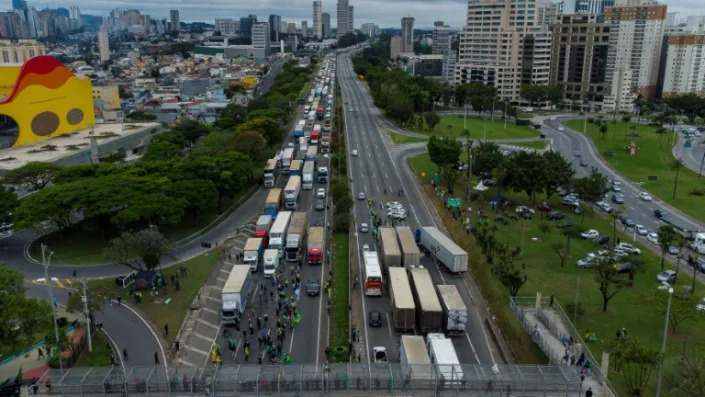
Protesters also maintained road blockades across the country for the third consecutive day, though the number decreased from 271 on Tuesday to 167 Wednesday, according to police.

In Sao Paulo, military police used tear gas to disperse a blockade on the main highway connecting the state with the central-west region of the country, after the Supreme Federal Court ordered the use of "all necessary measures" to open the roads.

Trucks sounded their horns while demonstrators, wearing yellow football jerseys, waved flags in front of passing vehicles, according to scenes broadcast on local television.

The blockades have caused disruptions across the country. The main airport in Sao Paulo, Guarulhos, cancelled 48 flights due to the protests, according to its press office.

The National Confederation of Industry warned on Tuesday of an "imminent risk of fuel shortages" if the roads were not quickly unblocked.

Infrastructure minister Marcelo Sampaio had asked late Tuesday for protesters to unblock the highways to allow medicine, supplies and fuel to circulate.

Bolsonaro on Tuesday said the roadblocks were "the fruit of indignation and a feeling of injustice at how the electoral process took place."

"Peaceful protests will always be welcome," he said.

That was interpreted by some supporters as a call to maintain the demonstrations.

"The dream is still alive," said a message by one supporter on Tuesday on Telegram. "Fill the streets tomorrow."

Bolsonaro's comments Tuesday broke his two days of silence on the election results, which had fanned fears he would not accept the outcome.

In a speech that lasted just over two minutes, the far-right incumbent did not mention Lula's name, but promised to "comply" with the constitution.

His chief of staff then told the gathered press that the president had "authorized" the start of the transition.

Lula's Workers' Party announced Tuesday that his vice-president-elect Geraldo Alckmin would lead the transition process, which would begin on Thursday.

Lula, who served as president from 2003 to 2010, will be inaugurated for his third term on January 1.

bur-msi/app/ll/st/des
FASCISMO'S SLANDER
Bolsonaro’s vice president says there is no electoral fraud, but Lula should not have participated

Daniel Stewart -

The still vice president of Jair Bolsonaro, Hamilton Mourao, said Wednesday that while he does not agree with those who claim that there was fraud in the last elections in Brazil, he also believes that "one of the players", in clear allusion to the elected president, Luiz Inácio Lula da Silva, should not have participated.


File - Jair Bolsonaro and Hamilton Mourao. - -/GDA via ZUMA Wire/dpa© Provided by News 360

"We agreed to participate in a game with another player who should not have played. If we agreed, there is nothing to complain about. From that point on, there is no point in crying anymore, we lost the game," Mourao said in an interview with the newspaper 'O Globo'.


In another moment of that conversation, Mourao, who was elected senator in the first round, insisted that although in his point of view there was no fraud, as has been denounced by those who since Sunday have been blocking some of the main highways of the country, there was "a player who should not have played".

In this sense, he stressed that the protests should have taken place when "the player who should not have played" was authorized. "There they should have taken to the streets, but they did not. There are 58 million non-conformists, but they agreed to participate in the game, so they have to calm down," he has said.

Related video: 'Quite possible' Bolsonaro won't accept results of Brazil's presidential election
Duration 8:41


Bolsonaro's allies and voters who have come out to protest the election results and even call for military intervention argue that Lula da Silva should not have participated in the elections due to corruption convictions that were later proven fraudulent.

Brazil's Supreme Court decided to release him and annul his convictions in March 2021, thus recovering his political rights, after it considered that the court that tried him lacked competence and later evidenced that there was bias during a process in which Judge Sergio Moro - Bolsonaro's former Minister of Justice - acted as a sort of prosecutor.

Mourao has taken stock of these three years as vice-president of Brazil, a position, he said, that has caused him some "frustration" due to the few powers at his disposal, unlike other presidential regimes.

"What I have learned is that you have to know what the role of vice president is. The Constitution says that the Executive is exercised by the president and his ministers, the vice president is just an appendix," lamented Mourao, who during these years has starred in several dialectical disputes with Bolsonaro.

However, he has denied that he has publicly argued with him and blamed it on their different visions of how to do things, since the ideology and thinking is the same. "I never stressed with him, nor did he take my sleep away. I drink whiskey every day before going to sleep, so I don't lose sleep," he has confessed.

"He's a more incisive guy, with more verbosity, I'm not. My way of doing things is different. He was always a deputy, in the House if you don't stand out in the fight, they swallow you and Bolsonaro's role was to stick his finger in others and he continues to play that role and I'm past that phase of life," he has argued.

Regarding the time it took Bolsonaro to come out and show his face after his defeat, Mourao defended that "everyone acts in his own way" and that if he took almost two days it is because he was looking for "the best way" to act "without incurring in offenses or illegalities".