Wednesday, January 25, 2023

Nadhim Zahawi tax row: What did the Tory MP do?


Nuray Bulbul
Wed, 25 January 2023 

Labour called Nadhim Zahawi’s position ‘untenable’
(Victoria Jones / PA Wire)

Despite calls for his resignation by the Labour Party and an investigation by the Prime Minister, following the revelation of data surrounding a multi-million pound tax battle, Nadhim Zahawi is adamant he will continue as chairman of the Conservative Party.

While Zahawi was chancellor, he paid a penalty to HMRC over unpaid tax, and described the error as “careless and not deliberate”.

Penalties are applied if someone does not pay the correct tax at the right time.

Labour is pleading with Rishi Sunak to “come clean” about his knowledge of the deal and called Zahawi’s position “untenable”.

Who is Nadhim Zahawi?


Nadhim Zahawi, a former child refugee who left Iraq with his parents in the 1970s, is the co-founder of the prosperous online polling company YouGov.

After winning the 2010 election for the Conservative Party's Stratford-on-Avon seat, he is currently regarded as one of the wealthiest members of the House of Commons.

He became well-known for his work as the pandemic's vaccines minister, and he eventually held the position of education secretary.

Following Sunak's resignation, he became chancellor under Boris Johnson from July to September 2022.

He was appointed chancellor of the duchy of Lancaster, minister for equalities, and minister for intergovernmental relations before Liz Truss took over as prime minister.


Rishi Sunak will come under fresh pressure over Nadhim Zahawi as he resists firing the Tory Party chairman

What’s the Zahawi tax row about?


After it was revealed that the former chancellor, who still attends the cabinet, agreed to pay millions to HMRC in December following a settlement with the tax agency, he has been extensively questioned in Parliament and the media in recent days.

The Guardian reported Zahawi agreed to pay a penalty of £5m to HMRC as part of a seven-figure settlement over his tax affairs.

A source familiar with the payment told the paper a penalty was triggered as a result of a non-payment of capital gains tax due after the sale of shares in YouGov, the polling company Zahawi co-founded in 2018. He could have been subject to larger penalties had he not reached a settlement towards the end of last year, the source claimed.

Based on the capital gains tax incurred by the selling of successive tranches of shares in YouGov, valued at more than £20 million, which resulted in transfers of money to Zahawi, experts estimate the tax owed was around £3.7 million.

According to reports, HMRC added a 30 per cent penalty to the £3.7 million, making the total amount owed £4.8 million. This is thought to have increased the final payment to more than £5m when combined with interest fees that HMRC also assesses on taxes owing.

However, Zahawi’s spokeperson has denied these claims.

In reference to the total amount paid to HMRC, the spokesperson said: “Nadhim Zahawi does not recognise this amount… As he has previously stated, his taxes are properly declared and paid in the UK.”

The BBC reported the dispute was resolved between July and September last year.

Zahawi was in charge of the UK’s tax system in his previous role as chancellor, during which time he said he made great efforts to ensure that taxes are paid in full and on schedule.
How does HMRC deal with wealthy taxpayers?

HMRC defines wealthy people as having incomes of £200,000 or more.

The interactions that very affluent persons and their agents have with HMRC differ noticeably from those of regular taxpayers or accountants, who frequently encounter lengthy waiting times via understaffed helplines. Mail backlogs have also made it difficult for people to understand if they need to file a self-assessment return or resolve tax disputes.

Zahawi's representative received a fast-track path with a direct case manager within HMRC, as is typical for other rich individuals. It is believed that this manager is a member of the Wealthy Team at HMRC.

How have the Tories reacted?


The Conservative Party demanded an investigation earlier this week to determine whether Zahawi violated the ministerial code or deceived the public about his tax troubles.

On BBC Radio 4 last week, Michael Gove defended Zahawi, saying: “My firm understanding is HMRC have no quibble with Nadhim. He’s paid everything that he should, and people paying their taxes, that’s not a story – people not paying their taxes, yeah that is a problem.”

Last week, Labour Party Chair Anneliese Dodds wrote to Sunak stating that, if Conservative Party Chair Zahawi does not adequately explain why he paid millions of pounds in tax to HMRC, then there should be an enquiry.

This week, the Prime Minister has opened an investigation into whether Zahawi breached the ministerial code - which Zahawi has welcomed and says he looks forward to “explaining the facts”.
CRIMINAL CAPITALI$M
BNP Paribas Frankfurt office searched in cum-ex probe

Wed, 25 January 2023 


BERLIN (Reuters) -BNP Paribas said on Wednesday that prosecutors were searching its Frankfurt premises as part of an long-running investigation into a multibillion-euro tax fraud scheme known as "cum-ex" and that it was cooperating fully.

German prosecutors said they have been conducting a search at a banking institution in Frankfurt since Tuesday in relation to cum-ex, without naming the bank.

"Like we already have done since the beginning of the investigation in 2017, we continue to fully cooperate with the public prosecutor according to legal requirements," a spokesperson for the bank said.


The prosecutors said their investigation also involved searches of private residences in three German states and is focused on 58 suspects who were or are professionally active for the bank.

The measure is aimed at finding relevant emails and written correspondence, they said.

Around 130 police officers, public prosecutors and tax investigators are involved, they said.

The cum-ex trading scheme, which flourished after the 2008 credit crisis, involved the rapid dealing of company shares around dividend payout days, blurring stock ownership and allowing multiple parties to claim rebates.

The scandal has blighted German political and financial circles, with lawmakers claiming it has cost taxpayers billions of euros.


A large number of banks have been searched by prosecutors investigating possible wrongdoing, with German branches of Barclays, Bank of America and Morgan Stanley among those raided in recent months.

Government officials say the investigation involves some 100 banks on four continents and at least 1,000 suspects.

(Reporting by Marta Orosz; writing by Miranda Murray; editing by Madeline Chambers, Alexandra Hudson and Jason Neely)
U$ FREAKS OUT OVER LOSING GAS STOVES
Builder Redrow to replace gas boilers with heat pumps in new detached homes

Anna Wise, PA Business Reporter
Wed, 25 January 2023 

Housebuilder Redrow has said homes in all its new developments will be fitted with a heat pump rather than a gas boiler from this month, in the industry’s first pledge of its kind.

The company said it was overtaking its competitors in meeting Government proposals to ban gas boilers in newbuild properties from 2025.

Air source heat pumps will be installed as standard in homes across its upcoming developments, with ground floor underfloor heating in detached properties, amid plans to fit new properties with alternative heating systems.

Heat pumps use air and a small amount of electricity to produce heat, and are more environmentally friendly than a gas-powered boiler when installed in an energy-efficient and well-insulated home (Octopus Energy/ PA)

It will have the biggest impact to date on improving the efficiency of the homes it builds, Redrow said.

Gas boilers are being phased out as part of the Government’s commitment to become net zero by 2050.

But Redrow said its pledge is an industry first, as other builders have been slow to commit to the move away from traditional gas boilers.

The move is expected to significantly improve the energy efficiency of newbuild properties, and save people money on heating their homes.

Matthew Pratt, Redrow’s chief executive, told the PA news agency its customers are asking for reassurance their homes will help them to future-proof their heating.

“Our customers want premium homes that are good for their pocket and good for the planet too”, he said.

Making the transition ahead of changes in regulation in 2025 will help the builder get ahead of industry transformation and make it easier for customers to understand, he argued.

The boss said there is a “small increase” in the cost to install a heat pump compared to a gas boiler.

“However, we know that customers are very happy to invest in energy efficiency and when it comes to future proofing their home”, he said.

“As these technologies become more widespread we expect costs to come down further.”

Mr Pratt went on: “We know how important energy efficiency is to our customers and we’re proud to be investing in newer, greener technology and leading the way by offering these energy efficient features.

“This will provide the opportunity for our customers to reduce their costs and carbon footprint simultaneously.”

Heat pumps use air and a small amount of electricity to produce heat and are more environmentally friendly than a gas-powered boiler when installed in an energy-efficient and well-insulated home.

Redrow trialled the energy consumption for heating and hot water with a heat pump, compared with a traditional gas boiler, and found that the heat pump used significantly less energy, operating at an efficiency of around two to three times that of an A-rated boiler.

The builder has partnered with manufacturers Mitsubishi, Vaillant and Daikin to install the new heating systems.
ChatGPT bot passes US law school exam

Wed, 25 January 2023 


A chatbot powered by reams of data from the internet has passed exams at a US law school after writing essays on topics ranging from constitutional law to taxation and torts.

ChatGPT from OpenAI, a US company that this week got a massive injection of cash from Microsoft, uses artificial intelligence (AI) to generate streams of text from simple prompts.

The results have been so good that educators have warned it could lead to widespread cheating and even signal the end of traditional classroom teaching methods.

Jonathan Choi, a professor at Minnesota University Law School, gave ChatGPT the same test faced by students, consisting of 95 multiple-choice questions and 12 essay questions.

In a white paper titled "ChatGPT goes to law school" published on Monday, he and his coauthors reported that the bot scored a C+ overall.

While this was enough for a pass, the bot was near the bottom of the class in most subjects and "bombed" at multiple-choice questions involving mathematics.

- 'Not a great student' -

"In writing essays, ChatGPT displayed a strong grasp of basic legal rules and had consistently solid organization and composition," the authors wrote.

But the bot "often struggled to spot issues when given an open-ended prompt, a core skill on law school exams".

Officials in New York and other jurisdictions have banned the use of ChatGPT in schools, but Choi suggested it could be a valuable teaching aide.

"Overall, ChatGPT wasn't a great law student acting alone," he wrote on Twitter.

"But we expect that collaborating with humans, language models like ChatGPT would be very useful to law students taking exams and to practicing lawyers."

And playing down the possibility of cheating, he wrote in reply to another Twitter user that two out of three markers had spotted the bot-written paper.

"(They) had a hunch and their hunch was right, because ChatGPT had perfect grammar and was somewhat repetitive," Choi wrote.

jxb/lth
Mauritanian ex-president in landmark corruption trial

Wed, 25 January 2023


Mauritania's ex-president Mohamed Ould Abdel Aziz went on trial on Wednesday, accused of amassing an illicit personal fortune from his 11-year stay in power.

Aziz, a 66-year-old former general, appeared in a court in Nouakchott among 10 defendants, including former prime ministers, ministers and businessmen, an AFP reporter saw.

They face charges that include abuse of office, influence peddling, money laundering and illicit enrichment.

Proceedings began with a rollcall of the defendants to which Aziz, dressed in a blue grown, rose and raised his hand.

The defendants were placed in a metallic cage-like stand in the courtroom as hundreds of police stood guard outside.

Aziz, a trader's son who came to power in a coup, stepped down in 2019 after two presidential terms in which he defused a jihadist insurgency threatening the conservative West African state.

He was succeeded by his former right-hand man, Mohamed Ould Ghazouani, in the first transfer of power between elected leaders in the history of a country marked by military coups and upheaval.

But within month of the handover, allegations emerged of financial misdealings.

Aziz is suspected of siphoning money from state contracts or the sale of real estate, amassing a fortune equivalent to more than $72 million.

He denies the allegations against him and says he is the victim of a settling of scores.

Mauritanians interviewed by AFP hope the trial will set a new benchmark in the fight against graft in their country.

Mauritania is ranked a lowly 140th out of 180 in the 2021 Corruption Perceptions Index by the organisation Transparency International.

lal-hos-mrb/prc/ri

Microsoft, Alphabet Cry Poor Right Before Making $32.8 Billion

MATT KRANTZ
01/24/2023

Layoff announcements from Microsoft (MSFT) and Alphabet (GOOGL), along with their tumbling stock prices, make it seem like giant tech S&P 500 companies are in dire straits. But they're on the verge of making billions — in just one quarter.

Microsoft Tuesday kicks off fourth-quarter earnings reports for the big-cap techs. The announcement comes just days after Microsoft announced plans to cut 10,000 jobs and news that Alphabet (technically in the S&P 500 communication services sector) is taking out 12,000 positions.

"We're ... seeing organizations in every industry and geography exercise caution as some parts of the world are in a recession and other parts are anticipating one," Microsoft CEO Satya Nadella wrote in a letter to employees announcing the layoff.

Amazingly, though, the job cutting is happening just as Microsoft and Alphabet get set to report making a combined $32.8 billion in the fourth quarter of 2022, according to analyst expectations. Microsoft and Alphabet will likely be two of the three most profitable companies in the S&P 500 during the quarter. Business is still strong, but just stretched out a bit.

"Software companies are calling out the more difficult macro environment. What is occurring is deal cycle elongation for the biggest or most expensive projects," said Daniel Morgan, senior portfolio manager at Synovus Trust. "This is a step-one response to a more uncertain economic environment."

Don't Pity Microsoft And Alphabet


You might think Microsoft and Alphabet are struggling. That's simply not the case.

Yes, shares of Microsoft and Alphabet are down 18% and 24% respectively in the past 12 months. But massive profit is still on the way.

Microsoft is expected to make $17.2 billion, or $2.31 a share, in the fourth calendar quarter alone. That puts it ahead of every single S&P 500 company, other than Apple (AAPL), in terms of quarterly net income. But Alphabet is no slouch, either. The parent of Google is seen earning $15.6 billion, or $1.21 a share, in the fourth calendar quarter. That ranks it third in the S&P 500.

So what's the problem, then? Growth is taking a breather. If Microsoft earns $2.31 a share in the quarter, that would be down nearly 7% from the same year-ago period. And Alphabet's profit per share is seen skidding roughly 20%. That's why the Technology Select Sector SPDR Fund (XLK) is down 13% in the past year.

But it's likely a temporary pause.

Looking At Microsoft And Alphabet Long Term

It won't take investors long to see the fourth quarter as an aberration. And that's why the Technology Select Sector SPDR is up nearly 8% this year, while the S&P 500 is up just 6.5%.

Take Microsoft. Profit for all of 2022 is still seen hitting $68.2 billion for the calendar year. If that's right, it marks nearly 3% growth in terms of adjusted earnings per share. And this year? Analysts think Microsoft's net income will top $75 billion in 2023. That's more than 12% profit growth on the same basis.

Over at Alphabet, analysts do think 2022 profit will fall more than 15%. But it's likely to be a short-lived dip. Wall Street analysts think Alphabet will make more than $68 billion in 2023, up more than 10% on a per-share basis.

It's possible these companies are just undoing some overzealous hiring. Microsoft alone added 40,000 employees in fiscal 2022, bumping up its head count by a whopping 22% to 221,000.

But you sure don't have to worry about their bottom lines.

S&P 500 Profit Booms

Largest expected profits in the fourth quarter of 2022.

CompanyTickerQ4 2022 income (in billions)12-month stock change
Apple(AAPL)$31.2-13.1%
Microsoft(MSFT)17.2-18.0%
Alphabet(GOOGL)15.6-23.4%
Exxon Mobil(XOM)13.856.4%
JPMorgan Chase(JPM)9.5-5.4%
Berkshire Hathaway(BRKA)9.42.3%
Chevron(CVX)8.342.3%
AbbVie(ABBV)6.412.2%
Bank of America(BAC)6.4-23.6%
Pfizer(PFE)6.3-14.8%
Sources: S&P Global Market Intelligence, IBD


Microsoft announces $52.7 billion in Q2 revenue amid plans to layoff 10,000 workers

But the company missed expectations and profits fell significantly.


Devindra Hardawar
·Senior Editor
Tue, January 24, 2023 

Rami Amichay / reuters


Like many big tech companies, Microsoft is preparing for the worst after announcing plans to lay off 10,000 employees in the upcoming third quarter. It turns out that the company's second quarter was a mixed bag: It earned $52.7 billion in revenue, which was up 2 percent from last year, but a slight miss from the $52.9 billion analysts expected. Profits also fell by 12 percent to $16.4 billion, a trend that may continue throughout the year.

Despite the faltering PC market, Microsoft has been riding high on cloud revenues for years, and that seems to be continuing. its intelligent cloud business was up 18 percent from last year, reaching $21.5 billion. Microsoft's belt tightening didn't stop the company from potentially investing $10 billion more in ChatGPT creator OpenAI, yet another sign that AI is going to play a major role in its future projects. The company plans to add ChatGPT to its Azure OpenAI service soon, and it's reportedly planning to integrated that technology in Bing.

Microsoft's More Personal Computing division, which includes Windows, Xbox and PC hardware, fell by 19 percent year-over-year, hitting $14.2 billion. That's the direct result of the PC market downturn. The company says Windows revenue to manufacturers fell by 39 percent, while Xbox content and services was also down by 12 percent. Devices revenue also dropped by 39 percent — it turns out Surface devices weren't in huge demand over the holidays.

"The surprisingly strong performance in Microsoft’s key Azure cloud business was enough to ease worries surrounding a steeper deceleration path on cloud optimizations, sending the stock higher," said Jesse Cohen, senior analyst at Investing.com. "Tech investors are relieved to see that the slowdown across Microsoft’s key cloud business was not as bad as feared."


Microsoft earnings beat expectations, cloud growth continues to slow

Microsoft (MSFTannounced its Q2 earnings after the bell on Tuesday, barely missing analysts' expectations on revenue and beating on earnings per share.

Here are the most important numbers from the report compared to what analysts were expecting from the quarter, as compiled by Bloomberg.

  • Revenue: $52.7 billion vs. $52.9 billion expected

  • Adjusted EPS: $2.32 vs. $2.30 expected

  • Productivity and Business processes: $17 billion vs. $16.8 billion expected

  • Intelligent Cloud: $21.5 billion vs. $21.4 billion expected

  • More Personal Computing: $14.2 billion vs. $14.7 billion expected

Shares of Microsoft were up more than 4% immediately following the news.

Microsoft Corporation (MSFT)
NasdaqGS - Nasdaq Real Time Price (USD)
240.61
-1.43(-0.59%)
At close:4:00PM EST
240.96+0.35 (0.15%)
After hours: 7:46PM EST
Full screen

Despite the beat on earnings per share, Microsoft's cloud business continued to slow in the quarter. The company reported its Intelligent Cloud segment grew 18% in the quarter, while its Azure services grew 31%. That's down from Q2 last year, during which Intelligent Cloud and Azure saw growth of 26% and 46%, respectively.

“The next major wave of computing is being born, as the Microsoft Cloud turns the world’s most advanced AI models into a new computing platform,” Microsoft CEO Satya Nadella said in a statement. “We are committed to helping our customers use our platforms and tools to do more with less today and innovate for the future in the new era of AI.”

Microsoft's announcement follows news that the company is engaging in a multi-year, multi-billion dollar investment in OpenAI in an attempt to better tackle competitors including from Amazon (AMZN) to Google (GOOGGOOGL).

The investment is expected to help Microsoft further differentiate its cloud offerings from competitors like Amazon and Google. The company is also said to be bringing the technology to its Bing search engine, a move that could threaten Google’s search dominance.

Just last week, however, Microsoft cut some 10,000 workers. The move comes as the company is dealing with flagging PC sales. Windows OEM revenue, which is the amount Microsoft makes on sales of its operating system to PC makers fell 39% year-over-year.

The company is also continuing in its effort to purchase video game giant Activision Blizzard for $69 billion. So far, the Federal Trade Commission, the U.K’.s Competition and Markets Authority, and the E.U.’s European Commission have either lodged complaints about ,or are outright working to scuttle, the deal.

CRIMINAL CRYPTO CAPITALI$M
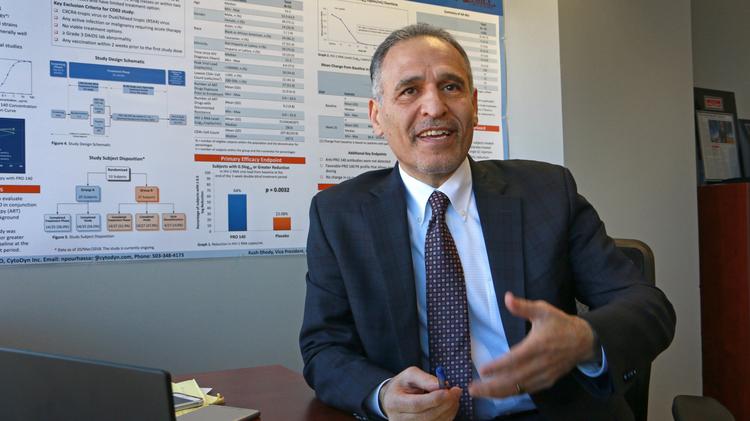
Ousted CEO Pourhassan sues CytoDyn to cover his attorney's fees

Nader Pourhassan, the former CEO of CytoDyn, is suing the company to compel it to pay the expenses he's incurred in defending himself in government investigations.


By Elizabeth Hayes – Staff Reporter, Portland Business Journal
Jan 24, 2023


Nader Pourhassan, who was fired as CEO of CytoDyn a year ago, wants his former employer to cover attorney’s fees and other expenses he’s incurred in defending himself against fraud and insider trading charges.

In a lawsuit he filed earlier this month in Delaware Chancery Court, Pourhassan argues CytoDyn’s bylaws and a 2015 Indemnification Agreement “both provide for broad, mandatory advancement rights for investigations and other forms of proceedings connected with Dr. Pourhassan’s status as the company director and officer.”

CytoDyn initially covered Pourhassan’s expenses but then “defaulted on the payments,” according to the lawsuit, which redacts the exact amounts.

A federal grand jury in December indicted Pourhassan and a former business associate for their roles in “schemes to defraud investors” of the Vancouver-based company. Shares of CytoDyn, which trades on the over-the-counter market (OTC: CYDY), rose to 30 cents on Tuesday.

Pourhassan, who lives in Lake Oswego, and Kazem Kazempour, of Potomac, Maryland, allegedly defrauded investors through false and misleading representations and omissions related to CytoDyn’s development of a drug candidate to treat HIV and, later, Covid-19.

The board ousted Pourhassan in January 2022, after two years of turmoil that included a dissident shareholder takeover attempt and lawsuits related to Pourhassan’s management.

Pourhassan faces a maximum penalty of 20 years in prison on each count of securities fraud and wire fraud and five years on a conspiracy count, if convicted. The Securities and Exchange Commission also charged Pourhassan with fraud and insider trading for allegedly providing misleading information to shareholders about the progress of the drug candidate, leronlimab.

The SEC further alleges Pourhassan netted $4.7 million in stock sales after he failed to notify shareholders that the Food and Drug Administration informed him that CytoDyn's application was inadequate.

Pourhassan says in his lawsuit that CytoDyn has “refused to reimburse fees and expenses” in 2022 for the investigations. He is asking a judge to order CytoDyn to pay “this full amount of all expenses (including attorneys’ fees) reasonably incurred” by him in connection with the investigations and proceedings.

CytoDyn did not respond to a request for comment.
Crypto Chaos Snags Wall Street Lender of Next-to-Last Resort


Max Reyes, Austin Weinstein, Allyson Versprille and Katanga Johnson
Tue, January 24, 2023 


(Bloomberg) -- A Depression-era backstop that Wall Street banks use for short-term funding is the latest corner of traditional finance to be ensnared by upheaval in the crypto industry.


For decades, the Federal Home Loan Bank System has been a preferred option for lenders in need of cash. But recent revelations that some of the money went to crypto-friendly banks after the collapse of digital-asset exchange FTX is stoking concerns of mission creep, with funds going far afield from the home loans that the program was originally designed to boost.

Each year, US lenders tap the FHLBank System to borrow hundreds of billions of dollars at rock-bottom rates and without the stigma of seeking help from the Federal Reserve. It’s widely seen as a safety net during crises and economic downturns and has been dubbed the “lender of next-to-last resort” — a play on the nickname for the Fed’s famed discount window.

The wonky public-policy debate over the role of FHLBanks is now morphing into a political one after crypto-friendly financial firms Silvergate Capital Corp., Signature Bank and Metropolitan Bank Holding Corp. said recently that they received loans. The disclosures dovetail with warnings from top regulators that crypto could eventually threaten the financial system.

“This is the most attention they have gotten in years,” Michael Bright, chief executive officer of the trade group Structured Finance Association, said about the lenders. “It’s a strange irony. You have a lot of banks that access the FHLBs, but aren’t using advances for mortgage liquidity,” said Bright, a former interim head of Ginnie Mae.

Ongoing Review

Backers of FHLBanks note that in nine decades the system has never experienced a loss on its loans, which are known as advances and must be fully collateralized with certain assets, including mortgage or government-backed securities. Still, critics are upset that financial giants routinely tap the funding source — originally set up under President Herbert Hoover to bolster mortgage lending — for their short-term funding needs.

Although FHLBanks aren’t government lenders, their debt is seen as implicitly backed by the US because they have a line of support from the Treasury Department.

Even before FTX’s collapse in November, the FHFA was conducting a sweeping reassessment of the banks, called the “FHLBank System at 100.”

That review is ongoing, the regulator said in a statement. It added that it expects the 11 FHLBanks scattered across the country “to thoroughly underwrite advances, to include an assessment of the financial condition of FHLBank members to which advances are made” and to be in communication with watchdogs over any issues.

As of Sept. 30, FHLBanks had more than $650 billion in loans outstanding. That’s up from about $350 billion at the end of 2021, and a sharp reversal of an overall downward trend in their lending activity.

A representative for FHLBank San Francisco, which lent to Silvergate, and one for FHLBank New York, which provided loans to Signature Bank and Metropolitan Bank, both said they conduct continuous assessments of each member’s creditworthiness and financial condition. The officials added that loans are made in line with appropriate risk-management practices.

FTX’s implosion, which continues to mushroom across crypto markets, isn’t the first time that the program has come under fire.

FHLBank officials began to coordinate more with bank supervisors after the system drew criticism for advancing tens of billions of dollars to Countrywide Financial during the financial crisis as the firm churned out bad loans, according to Timothy Yeager, a professor at the University of Arkansas and former Fed economist.

At the time, Charles Schumer, a Democrat from New York who is the Senate majority leader, said that Countrywide was using an FHLBank as its “personal ATM.”

Crypto Crisis

Shoring up banks hit by a crypto crisis represents a further deviation from the program’s original intent, according to Todd Baker, a senior fellow at Columbia Business School. “The question is: Should the Federal Home Loan Bank be participating in a transaction with a highly risky bank that has no mortgage business?” he said.

Silvergate, Signature Bank and Metropolitan Bank all satisfy capital requirements set by regulators. Separately they have also said that the fallout from the FTX implosion hasn’t put that at risk.

Silvergate has said that FHLBank loans were part of the “wholesale funding” it tapped to deal with outflows. The bank declined to comment on whether it would continue to use the program to manage liquidity.

Signature Bank said it was reducing deposits from digital-asset customers as part of a previously announced plan, and the FHLBank advances it got replaced those deposits short-term.

The bank also said its activities align with the mission of the FHLBank program, pointing out that in 2022 Signature originated more than $5 billion in multi family assets, or properties that house a number of residential units. About $18 billion out of $19 billion of the bank’s multi family portfolio is tied to loans in low and moderate income areas, it said, adding that it also supplies tax credit financing for affordable housing in New York City.

Metropolitan Bank recently announced that it would stop working with crypto firms. Although it said it tapped FHLBank loans for the first time in more than a decade late last year, the bank hasn’t said it was to deal with the fallout from FTX.

“The $100 million of FHLB advances from the fourth quarter of 2022 partially funded over $200 million in loan growth and were repaid in early January 2023,” Mark DeFazio, the bank’s president and CEO, said in a statement.

Loans to Banks


Regardless of the purpose, loans to banks that have been involved in crypto raised the stakes for the review of the program by the FHFA.

“While loan advances have to be collateralized by certain assets, there’s a lack of any real statutory constraint on their use,” said Mark Calabria, who led the Federal Housing Finance Agency, the FHLBanks’ regulator, during the Trump administration. “Money is fungible. Certainly it makes sense for Congress to examine this long-standing arrangement,” added Calabria, who’s now an adviser at the Cato Institute, a libertarian think tank in Washington.

The revelations have also thrust FHLBanks into the crosshairs of lawmakers, who have long expressed concerns that the digital-asset industry may grow ever more intertwined with the US financial system. Senator Elizabeth Warren, a Massachusetts Democrat, said she was worried about “the dangers of crypto seeping into the banking system.”

Sherrod Brown, the Ohio Democrat who leads the Senate Banking Committee, also said he was concerned. “This issue is bigger than one case or company,” he said in a statement. “I’ve been concerned that when banks get involved with crypto, it spreads risk across the financial system.”

--With assistance from Sally Bakewell.

Most Read from Bloomberg Businessweek
Editorial: Shown the door: Layoffs will force immigrant workers to leave unless Congress steps in


New York Daily News Editorial Board,
Wed, January 25, 2023 

Despite the often cold language about “market corrections” or “rightsizing” that accompanies them, mass layoffs are a collection of individual little catastrophes for the people affected by them. Such is the case for workers caught in rounds of tens of thousands of layoffs announced in the last several weeks by tech sector giants like Amazon, Google and Facebook parent Meta.

For many, it will represent a period of stress and uncertainty from which they’ll likely recover. For workers on immigrant visas, however, it might represent a point of no return.

The term “temporary worker” is a bit misleading, creating a public conception of foreign workers flitting into the country for a few months and then leaving. In reality, many workers on visas like the H-1B are longtime residents who’ve built lives in the U.S., stuck in interminable residency backlog that our own broken immigration system has created, or onetime students who’ve gone through years of U.S. higher education in pursuit of well-paid jobs and the American dream.

They might have done everything right for years and years, but that doesn’t matter once a layoff comes and they have a mere 60 days to find alternative employment or lose status and be forced out of the country. With swaths of the tech industry now engaged in shedding of workers, a significant portion will inevitably run out the clock.

This workforce will contract without the ability to expand again, given that the workers will be forced to leave the labor pool permanently with an exit from the United States. If these corporate giants reverse course down the line or other industries — say, the homegrown semiconductor industry that the Congress and president seem eager to set up — ramp up their demand for tech workers, they simply won’t be around anymore.

Meanwhile, countries like Canada are rolling out the red carpet while we make life complicated and unpredictable for workers with specialized skills. Congress must adapt, or risk having the era of U.S. technical supremacy slowly come to a close.