Sunday, March 26, 2023


Spain's drought devastates olive oil output, drives world prices up
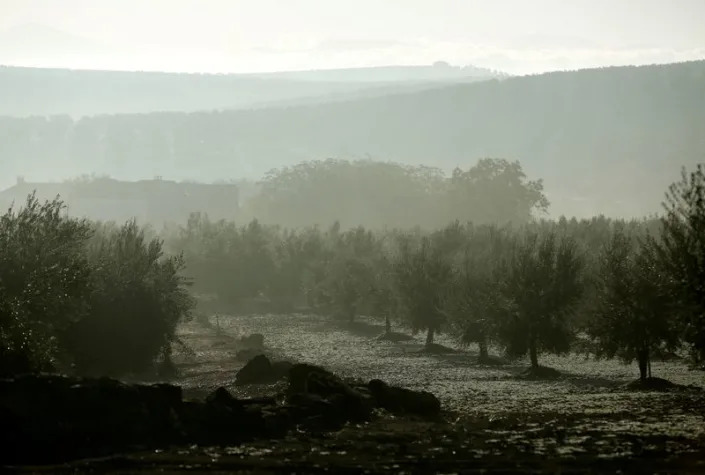

Olive trees stand in a grove in Porcuna, southern Spain
2
Reuters
Fri, March 24, 2023 at 8:45 AM MDT·2 min read

MADRID (Reuters) - Drought in Spain, the world's largest olive oil producer, is likely to halve the country's output this year compared with the previous year, official estimates from the European Commission show, pushing prices up.

Spain usually supplies about 40% of the world's output. However, heatwaves when the olive trees were flowering last spring and a severe drought since last summer in Spain and in number two and four producers Italy and Portugal have shrunk stocks.

Only the EU's third biggest largest producer, Greece, which was not hit by the weather conditions, was expecting production to improve, though not enough to offset the decline in Spain.

"It's a catastrophe," said Primitivo Fernandez, head of Spain's National Association of Edible Oil Bottlers, as he highlighted the conjunction of drought, economic crisis and the war in Ukraine.

Spanish exporters' association Asoliva estimates there will be at least 10% less olive oil available worldwide this year from the 3.1 million tonnes produced in the season ending in 2021.

"Every day that goes by without rain, the forecasts get worse," Dcoop, Spain's largest olive oil producers' cooperative, told Reuters.

In Spain, the price of bottles of olive oil rose by around 60% in 2022, according to industry groups and companies consulted.

The price hike was initially triggered by a scarcity of sunflower oil last year after Russia invaded Ukraine. But soaring inflation, costlier fertilisers and the drought continue to push prices upwards.


A litre of virgin olive oil is sold in Spain for over 7 euros ($7.51), when in February 2022 the price was below 5 euros.

The price hikes have reduced sales volumes of olive oil in Spain by 8% in the year to February, according to a study by consulting firm Nielsen.

($1 = 0.9318 euros)

(Reporting by Corina Pons and Emma Pinedo; Editing by David Latona, Inti Landauro and Alison Williams)


AND WILDFIRES DON'T HELP

Early wildfire in Spain rages out of control


AFP - news@thelocal.es • 25 Mar, 2023
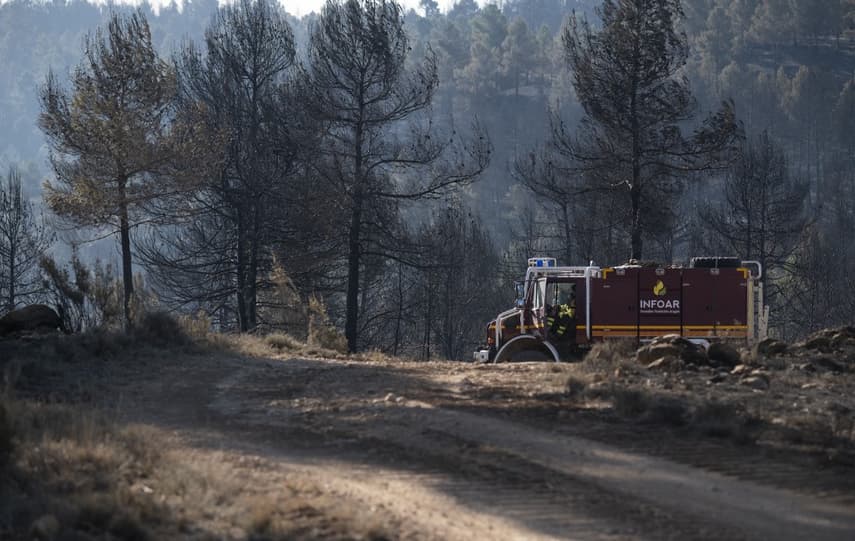
A fire truck is pictured in a forest area near the village of Los Peiros, on March 25, 2023, affected by a wildfire that began on March 23, 2023 near Villanueva de Viver. Photo: JOSE JORDAN/AFP

Some 700 firefighters were battling Spain's first major forest fire of the year Saturday, which was raging out of control 48 hours after it began, forcing 1,500 people to flee.

In an update on Twitter, the regional emergency services said the fire in Villanueva de Viver, some 90 kilometres (55 miles) north of Valencia, was a "highly-complex blaze taking place in weather conditions similar to those of the summer".

"700 people have been mobilised for the operation (to fight the fire). It has affected 3,900 hectares and has a 35-kilometre perimeter," they said, indicating the number of people forced out of their homes on Friday, some 1,500, had not changed.

They said the huge blaze remained "very voracious" with the work to put it out "very complicated".

Firefighters tweeted that they had deployed some 20 aerial units to help tackle the fire.

"Clearly the fire has not stabilised because it is still burning with great ferocity given that the weather conditions are almost like summer," Ximo Puig, leader of the Valencia region told Spain's RTVE public television.

The fire began just after midday (1200 GMT) on Thursday.

Firefighters said the blaze was more typical of summer than of late March. With the vegetation dried out by a lack of moisture in the atmosphere in recent months and large amounts of combustible biomass in the forests, conditions were "perfect" for such a blaze, Manolo Nicolas of the Castellón firefighters had told public radio on Friday.

In 2022, which was a particularly bad year for wildfires in Europe, Spain was the worst-hit country with nearly 500 blazes that destroyed more than 300,000 hectares, according to figures from the European Forest Fire Information System (EFFIS).
Palestinians and Israelis clash at UN over Netanyahu actions


Palestinians sit together next to Damascus Gate decorated with lights at the beginning of the Muslim holy month of Ramadan, just outside Jerusalem's Old City, Wednesday, March 22, 2023. Ramadan began at sundown Wednesday, kicking off a month of dawn-to-dusk fasting intended to bring people closer to God and to remind them of the suffering of those less fortunate.
 (AP Photo/Ohad Zwigenberg)

Wed, March 22, 2023

UNITED NATIONS (AP) — The Palestinians and Israel clashed over the future intentions of Prime Minister Benjamin Netanyahu’s far right-wing government at a U.N. Security Council meeting Wednesday, with the Palestinian U.N. ambassador pointing to an Israeli minister’s statement “denying our existence to justify what is to come.”

Israel’s U.N. ambassador countered that the minister had apologized, and accused the Palestinian leadership of regularly inciting terrorism and erasing Jewish history.

The council’s always contentious monthly meeting on the Mideast was even more acrimonious in the face of comments and actions by Israel’s new coalition government, which has faced relentless protests over its plan to overhaul the judiciary and strong criticism of Tuesday's repeal by lawmakers of a 2005 act that saw four Jewish settlements in the occupied West Bank dismantled at the same time that Israeli forces withdrew from the Gaza Strip.

Palestinian ambassador Riyad Mansour told the Security Council the statement by firebrand Israeli Finance Minister Bezalel Smotrich claiming there’s “no such thing” as a Palestinian people wasn’t part of “a theoretical exercise” but was made as Israel’s unlawful annexation of territory the Palestinians insist must be part of their independent state “is more than underway.”

While not all Israeli officials go as far as denying the existence of Palestinians, some deny Palestinian rights, humanity and connection to the land, Mansour said.

Last year was the deadliest for Palestinians in the West Bank, with the past three months “even worse,” he said. So far this year, 85 Palestinians have been killed by Israeli fire, and Palestinian attackers have killed 15 Israelis, according to a tally by The Associated Press.

Nonetheless, with the start of the Muslim holy month of Ramadan and the approach of the Jewish holiday Passover and Christianity’s Easter observance, Mansour said the Palestinians decided to be “unreasonably reasonable” and leave no stone unturned to prevent bloodshed.

The Palestinian envoy urged the Security Council and the international community to mobilize every effort “to stop annexation, violence against our people, and provocations.” Everyone has a duty to act now “with every means at our disposal, to prevent a fire that will devour everything it encounters,” he said.

Israel’s U.N. Ambassador Gilad Erdan called his country “unquestionably the most vibrant liberal democracy in the Middle East” and accused the Palestinians of repeating lies, glorifying terrorists who spilled innocent Israeli blood and “regurgitating fabrications” that are not going to solve the decades-old conflict.

“To the Palestinian representative, I say: 'Shame on you. Shame on you.’ It is so audacious that you dare condemn the words of Israeli minister who apologized and clarified what he meant, while your president and the rest of (the) Palestinian leadership regularly, regularly incite terrorism, never condemn the murders of Israeli civilians, praise Palestinian terrorists, and actively attempt to rewrite facts and the truth by erasing Jewish history,” he said.

Erdan accused the Palestinians of being “dead set on encouraging more violence” while Israel has taken significant steps to de-escalate the current tensions by sitting down with Palestinian officials in Jordan in February and on Sunday in the Egyptian Red Sea resort of Sharm el-Sheikh.

In a joint communique afterward, the two sides had pledged to take steps to lower tensions ahead of the sensitive holiday season — including a partial freeze on Israeli settlement activity and an agreement to work together to “curb and counter violence.”

The Palestinians seek the West Bank and Gaza Strip as an independent state, with east Jerusalem as its capital. Israel captured those territories in the 1967 Mideast war. Since then, more than 700,000 Israelis have moved into dozens of Jewish settlements in the West Bank and east Jerusalem — which most of the world considers illegal and an obstacle to peace.

But Netanyahu’s government has put settlement expansion at the top of its agenda and has already advanced thousands of new settlement housing units and retroactively authorized nine wildcat outposts in the West Bank.

The repeal of the 2005 act on the four West Bank settlements came after Sunday’s agreement, and a Palestinian shooting attack that wounded two Israelis in the West Bank underscored the difficulties in implementing the joint communique. The United States, Israel’s closest ally, criticized the repeal, summoning Israel’s U.S. ambassador, and other countries were also critical.

Netanyahu appeared to back down Wednesday, saying his government has no intention of returning to the four abandoned settlements.

Ambassador Erdan echoed him, saying “the state of Israel has no intention of building any new communities there,” but he said the new law “rights a historic wrong” and will allow Israelis to enter areas that are “the birthplace of our heritage.”
Palestinians accuse settlers of West Bank arson, Israel sees electrical fire


Aftermath of an attack on a Palestinian house, near Ramallah


Sun, March 26, 2023 
By Ali Sawafta

SINJEL, West Bank (Reuters) - The Palestinian Foreign Ministry accused "Jewish terrorist elements" of an arson attack against a family home in the occupied West Bank on Sunday, but Israeli police said the fire appeared to have been an accident.

West Bank tensions have been running high as Palestinians mark the Muslim holy month of Ramadan amid a surge of violence, including a gun attack on Saturday in which two Israeli soldiers were wounded and almost nightly arrest raids by the Israeli army.

No one was hurt in the predawn fire in Sinjel. Ahmed Awashreh, the owner of the home that was badly damaged, said he was woken by the sound of a window smashing and managed to get his four children and wife out before the flames spread.

"It was so close. I'm happy I saved my family," he said.

A Sinjel resident who requested anonymity told Reuters he saw cars whose occupants he recognised as Jewish settlers nearby minutes before the incident.

The Palestinian Foreign Ministry blamed the incident on "Jewish terrorist elements" but Israeli police, who sent investigators to the scene, said in a statement that the fire "was mostly likely caused due to a short circuit and not a deliberate ignition".

Most countries deem the settlements, which take up land Palestinians seek for a state, illegal. Israeli disputes this.

The Popular Front for the Liberation of Palestine militant group claimed Saturday night's drive-by shooting in Huwara, 13 km (8 miles) from Sinjel, that wounded two soldiers. It was the third time in a month that Israelis had been fired upon there.

In a Feb. 26 attack, a gunman from the Hamas militant group killed two brothers from a nearby Jewish settlement as they sat in a car. That sparked a revenge rampage by settlers in which a Palestinian was killed and properties torched.

Over the past year, Israeli forces have made thousands of arrests in the West Bank and killed more than 250 Palestinians, including fighters and civilians, while more than 40 Israelis and three Ukrainians have died in Palestinian attacks.

In overnight West Bank raids, Israeli forces arrested three suspected militants, the army said on Sunday.

(Additional reporting by Nidal al-Mughrabi in Gaza; Editing by Hugh Lawson)

Palestinian killed in Israeli military raid in West Bank


This is a locator map of Israel and the Palestinian Territories. 

Thu, March 23, 2023 

JERUSALEM (AP) — Israeli security forces killed a Palestinian militant during a raid in the northern West Bank on Thursday, Palestinian health officials said, the latest escalation of violence in what has been the deadliest start of a year for Palestinians in the occupied territory in more than two decades.

Israeli forces stormed into the northern city of Tulkarem, home to an emerging militant group with ties to the armed offshoot of the nationalist Fatah party. The Palestinian Health Ministry said that 25-year-old Amir Abu Khadija was shot multiple times in the head and legs. The Tulkarem branch of Fatah’s Al Aqsa Martyrs’ Brigades claimed Abu Khadija as its leader.

The Israeli military said Abu Khadija was wanted for recent shooting attacks on Israeli settlements and security forces. Troops raided his hideout apartment in Tulkarem and shot and killed Abu Khadija when he drew his gun, the military said, adding that the army confiscated an M-16 assault rifle and the car he allegedly used to carry out drive-by shooting attacks. Security forces said they also arrested another member of the militant group.

The militant group said Abu Khadija died in an “armed clash” with Israeli forces. Images of his blood-soaked body and his trashed apartment circulated online, as angry Palestinians mourned what they described as the first “martyr” of the Islamic holy month of Ramadan, which began Thursday in the Mideast.

This year, as in years past, the Muslim fasting month has spurred concerns of a surge in violence in the contested city of Jerusalem. Ramadan overlaps with the Jewish holiday of Passover in early April, raising the possibility of friction as sacred sites in Jerusalem’s Old City host an unusually large influx of worshippers and visitors. The scared compound housing the Al-Aqsa Mosque is the third-holiest site in Islam. Known to Jews as the Temple Mount, it's also the holiest in Judaism.

Adding to tensions as Ramadan begins are the conditions of thousands of Palestinian prisoners in Israeli jails.

A group representing Palestinian prisoners called this week for a mass hunger strike of at least 2,000 inmates in protest of far-right National Security Minister Itamar Ben-Gvir's toughening of prison measures. The rules at issue include showers limited to four minutes, bakeries shut down for prisoners and restricted exercise time and family visits, according to prisoner rights groups.

But late Wednesday just before Ramadan, the prisoners backed down from the protest, claiming a victory in negotiations after they said Ben-Gvir accepted their demands. Ben-Gvir denied striking any deal with prisoners, insisting there had been no change in prison conditions and threatening those who go on hunger strike with further punishment.

While Israel considers Palestinian prisoners to be terrorists, they are widely seen as heroes in Palestinian society for resisting an Israeli military occupation that is now in its 56th year.

The escalating violence in the West Bank under Israel's most right-wing government in history has angered regional Arab states, including the United Arab Emirates and Bahrain, which diplomatically recognized Israel in 2020. So far this year, over 85 Palestinians have been killed by Israeli fire in the West Bank, according to a tally by The Associated Press, about half of them affiliated with militant groups. Palestinian attacks against Israelis have killed 15 people, all but one of them civilians.

Late Wednesday, the Gulf Cooperation Council denounced what it called “repeated Israeli violations against the Palestinian people” in a statement issued on behalf of the six-nation bloc’s foreign ministers. The ministers also condemned the new Israeli government's expansion of settlements in the West Bank and called again for negotiations leading to the establishment of an independent Palestinian state in Gaza, the West Bank and east Jerusalem, territory captured by Israel in the 1967 Mideast war.

The GCC is a regional bloc including Bahrain, Kuwait, Oman, Qatar, Saudi Arabia and the UAE.

Saudi Arabia and the head of the GCC also both condemned an Israeli decision earlier this week to repeal a 2005 act that saw four Jewish settlements in the occupied West Bank dismantled. The Saudi Foreign Ministry called the decision “a flagrant violation of all international laws” that “contributes to undermining regional and international peace efforts.”

___

Associated Press writer Jon Gambrell in Dubai, United Arab Emirates, contributed to this report.


‘It’s all about trolling’: how far-right influencers are shaping Republican narrative

“The base no longer knows who the fuck George Will is ”

David Smith in Washington
THE GUARDIAN 
Sun, March 26, 2023 

Related: DeSantis hits Republican poll low as Trump tightens grip on primary

He has a platform that most politicians would envy. But Jack Posobiec is not to be found on America’s major TV networks or in its newspapers. He is among a cadre of online influencers who now shape the far right – and could help decide the Republican presidential primary race in 2024.

“Two operatives made the very same prediction, that Posobiec will matter as much to future GOP voters as Washington Post columnist George Will did to Republicans a generation ago,” political journalist David Weigel wrote in a Semafor newsletter last week.

That observation prompted Alyssa Farah Griffin, a CNN political commentator and former White House official, to tweet in response: “We’re doomed.”

Such expectations speak volumes about the breakdown of the old media order, flawed as it was, and the rise of new and often extreme voices in the digital age. It also reflects a parallel shift in the Republican party from country club to “Make America great again” populism.

Will, 81, edited the conservative National Review magazine, won a Pulitzer prize for commentary in 1977, was described by the Wall Street Journal as “perhaps the most powerful journalist in America” and quit the Republican party over Donald Trump in 2016.


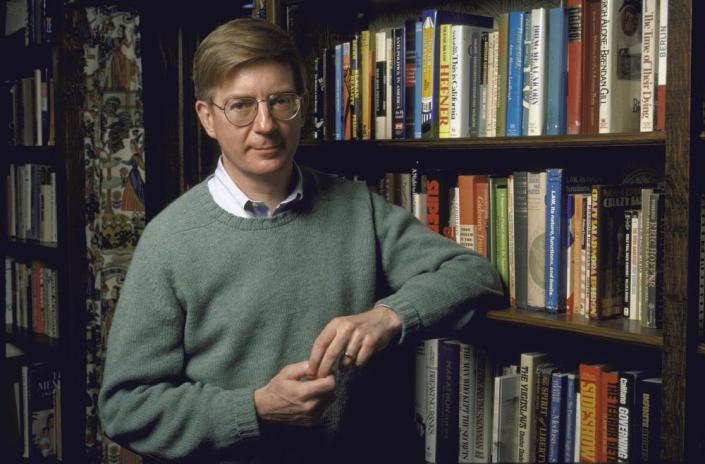
An undated photo of the Washington Post columnist George Will at his home. 
Photograph: Diana Walker/Getty Images

Posobiec, 38, gained prominence as a pro-Trump activist during the 2016 election. He promoted bogus conspiracy theories such as “Pizzagate”, which held that Democrats were running a child sex and torture ring beneath a pizzeria in Washington. He is a senior editor at the far-right news and commentary website Human Events.

Posobiec has used Twitter – where his 2 million followers include representatives, senators and journalists – to promote Russian military intelligence operations, pushed false claims of election fraud and collaborated with white nationalists, Proud Boys and neo-Nazis, according to the Southern Poverty Law Center, a non-profit legal advocacy organisation.

Yet it is Posobiec and others like him who are already helping to set the narrative for the Republican presidential primary. Posobiec’s recent online activity includes crude attacks on Antifa, the New York Times’s 1619 Project and transgender rights (“Genital Gestapo”) – ready-made talking points for candidates.

Joe Walsh, a former Republican congressman who belonged to the conservative Tea Party, recognises the changes of a fragmented media landscape. “Ten years ago, going on CNN and MSNBC, you had great influence,” he said. “Now not a lot of people watch any more. More people will listen to me if I go on somebody’s podcast or something. It’s a completely different world now where influencers have great say.”

Ten years ago, going on CNN and MSNBC, you had great influence … It’s a completely different world now where influencers have great say
Joe Walsh

But at what cost? Walsh added: “It has nothing to do with ideas. It has nothing to do with intellect. It’s all about trolling people, getting clicks and being outrageous. There’s a whole cast of characters that has sprung up over the last five to six years and they have great influence now. The Jack Posobiecs and all the rest of these guys are not fringe; they speak for a big chunk of the base.”

The growth of partisan echo chambers was evident in last year’s midterm elections as Republicans, in particular, snubbed the mainstream media in favour of rightwing outlets and often refused to debate their Democratic opponents.

And earlier this month, at the Conservative Political Action Conference (CPAC) at the National Harbor in Maryland, the former White House chief strategist Steve Bannon loomed large, drawing crowds as he opined loudly on Real America’s Voice, a channel that is popular with the base but little known outside it.

Bannon’s War Room podcast was named the number one spreader of misinformation among political talkshows in a recent study by the Brookings Institution thinktank in Washington. Yet its guests have included prominent Republicans in Congress such as Elise Stefanik and Marjorie Taylor Greene.


Steve Bannon speaks at CPAC in National Harbor, Maryland, on 3 March 2023. 
Photograph: Anna Moneymaker/Getty Images

Leading online influencers appear united in their support for Trumpism, and rejection of the Republican establishment, but divided over the fate of the party nomination for 2024. Early shots have been fired in what could be a ferocious battle between them.

Trump sympathisers include Alex Bruesewitz, Mike Cernovich and Laura Loomer as well as a Twitter user known as “Catturd” and the former president’s own son, Don Jr. Among supporters of Ron DeSantis, the governor of Florida who is expected to run, are John Cardillo and Bill Mitchell.

Another influencer, Chaya Raichik, has dined with Trump at his Mar-a-Lago estate in Florida (“He seems nice!”) but also disclosed that, when she was revealed to be behind a provocative Twitter account called Libs of Tik Tok, she received a call from DeSantis’s team offering her a guest house if she needed to go into hiding.

Other rightwing personalities such as Charlie Kirk and Candace Owens augment their social media presence with countless in-person appearances at conferences, on television and at university campuses. The “owning the libs” talking points that circulate in this ecosystem frequently work their way into the discourse of the conservative network Fox News.

David Litt, an author and former speechwriter for Barack Obama, said: “This is like research and development for Fox. If something gets enough traction with the online audience, then I wouldn’t be surprised if you start to see Fox hosts piggybacking on that once they think that’s where their audience is headed.”

The threat of violence is out there and the flames are being fanned by a lot of these ‘influencers’
David Litt

Posobiec’s “Pizzagate” conspiracy theory had real world consequences when a man travelled to Washington and fired an assault rifle inside the relevant pizza restaurant, later receiving a four-year prison sentence. Litt said it was alarming that, despite such incidents, Republicans have welcomed far-right influencers into their “big tent” rather than condemning them.

“The threat of violence is out there and the flames are being fanned by a lot of these ‘influencers’. We wouldn’t have called David Duke an influencer back in the day. We would have been very clear about who he was and the danger that he posed to our democracy and to the society that the rest of us would like to continue to enjoy living in, regardless of which party is in charge.”

As for Will, who is approaching a half-century at the Washington Post, his column this week discussed freedom of speech and unauthorised immigration. It may not matter much to the Republican primary. Walsh, the ex-congressman, observed: “The base no longer knows who the fuck George Will is and that’s an absolute shame.”
SETTLER RACISM WHY WE NEED CRT
State-Funded Charter School Says Native 1st-Grader's Traditional Hair Violates Dress Code
DUTY TO ACCOMODATE

Levi Rickert and Neely Bardwell
Fri, March 24, 2023 

Calling his braid “faddish,” six-year-old Logan Lomboy’s parents were told he has to have his hair cut. (Photo/Ashley Lomboy)

A North Carolina Native American family is fighting against a state-funded charter school’s demand that their first-grade boy gets his hair cut. The school system recently changed its dress and grooming code to define a boy wearing his hair in a bun or braids as “faddish.”

The Lomboy family are members of the Waccamaw Siouan Tribe, one of North Carolina’s eight state-recognized tribes. The young boy’s mother, Ashley Lomboy, told Native News Online on Friday that her son, Logan, is embracing the Native American culture through being a powwow dancer and growing his hair — which extends beyond his shoulders —in a traditional way that dates back to how tribal ancestors. Logan has been a student at Classical Charter School - Leland in Leland, NC, for about 18 months.

He attended kindergarten there and is now enrolled in the first grade. The school’s policy was that boys’ hair had to be neat and above the collar. His mother said she puts his hair in a bun to comply with the dress and grooming standards of the school.- 

The school is owned by its parent company Classical Charters of America, which owns three other schools in North Carolina.Classical Charters of America operates schools in Southport, Whiteville and Wilmington, NC, serving more than 2,500 students. The schools are managed by The Roger Bacon Academy, based in Leland.

According to Logan’s mother, who works for her tribe developing a STEM program, there has been a change in the school’s dress and grooming standard that the Lomboys became aware of on February 20, 2023. That day, as Logan’s father dropped off his two sons at school when a school official verbally told him Logan’s hair needed to be cut due to a change in policy. The official said the school system redefined the word “fad” to include boys’ hair being put in buns or being braided.

The next day, Ashley contacted the school official to seek a waiver to allow Logan to keep his hair length; she was told she had to fill out a grievance form. She complied with the request but has received two denials from the school stating Logan must get his hair cut.

Ashley also told Native News Online that Logan has an 8-year-old brother who chooses to keep his hair short. She said as a family they allow each child to choose how much of their Native culture they want to embrace.

However, in Logan’s case, Ashley said she compares what is happening now by the school system to what has happened to Native Americans historically when the culture was taken, tribal people were moved and ostracized.

“Logan’s hair is an extension of who he is,” Ashley said. “Without his hair, he will lose part of himself and a critical aspect of his heritage. Native Americans have been wearing their hair long since time immemorial. The Waccamaw Siouan Tribe has and continues to steward the land Classical Charter Schools of Leland currently occupies and all the surrounding land of the Cape Fear region for more than 1,000 years. The school’s dismissal of Logan’s identity and our tribal customs is needless, unfair, and deeply offensive to who we are and who our tribe has always been.”

The Waccamaw Siouan Indians Tribe, based in Bolton, NC, sent a letter on behalf of the Lomboy family stating the Waccamaw Siouan Tribe is a sovereign nation with its own unique cultural traditions, including the significance of long hair. The act of cutting one’s hair without proper reason and ceremony is a violation of our beliefs and customs.

“We urge you to make an exception for Logan and any other Native American children who wish to keep their long hair as an expression of their cultural identity,” Waccamaw Siouan Indians Triba; Chair Terry Mitchell wrote in a letter to the school system. “It is important to respect and honor the cultural practices and beliefs of Native American communities, especially when they involve sacred aspects such as keeping our hair long.”

In addition to getting tribal support, Ashley solicited the assistance of the American Civil Liberties Union (ACLU). The national ACLU and the ACLU of North Carolina issued a statement on March 20, 2023, that stated demanding that Logan cut his hair is in violation of his religious and cultural beliefs, and that Classical Charter Schools of Leland, as a public charter school and recipient of federal education funds, appears to be in violation of the North Carolina Constitution, the U.S. Constitution, Title IX of the Education Amendments of 1972, and Title VI of the Civil Rights Act of 1964.

Two days later, the school system issued a statement on March 20, 2023, pushing back on the actions of the ACLU by calling the organization’s charges “trumped up charges of discrimination.”

“The ACLU seems more interested in creating controversy than resolving it,” said Baker A. Mitchell, President and CEO of The Roger Bacon Academy, which manages the four CCS-A charter schools. “Our schools have procedures for dealing with matters such as these. A review is underway and will be considered by the Board on April 27.

Instead of respecting the process, the ACLU has jumped in with threats and accusations that drive people apart rather than bring them together.”

A call to The Roger Bacon Academy from Native News Online was not returned by press time. The school system has another case involving a Lumbee boy student in the same situation with similar circumstances that will be dealt with on April 27, 2023, as well.

In the meantime, Logan Lomboy can return to school without having to cut his hair, pending a decision on April 27, 2023.

About the Author: "Levi Rickert (Prairie Band Potawatomi Nation) is the founder, publisher and editor of Native News Online. Rickert was awarded Best Column 2021 Native Media Award for the print\/online category by the Native American Journalists Association. He serves on the advisory board of the Multicultural Media Correspondents Association. He can be reached at levi@nativenewsonline.net."

Contact: levi@nativenewsonline.net

This 1st Grader's Hairstyle Represents His Native American Roots. His School Isn’t Having It.

Ian Kumamoto
HUFFPOST
Fri, March 24, 2023 


The rejection of hairstyles linked to a nonwhite culture is not unique to Native American students.

Hairpolicing— the act of trying to dictate the style or length of another person’s hair — is a peculiarly persistent form of discrimination. That’s especially true of predominantly white institutions policing the hairstyles of people of color, who often have nuanced and culturally specific relationships to their hair.

Nonetheless, Classical Charter Schools of America, a system that includes four schools in North Carolina, is requiring two Native American boys to cut off their long hair if they want to return to class after the spring break, local outlet WRAL News reported Tuesday.

One of the students is a first grader whose mother, Ashley Lomboy, defended her son’s long braid by informing the administration that the hairstyle symbolizes a part of the Waccamaw Siouan Tribe’s heritage, in which hair is linked with spirituality, per the American Civil Liberties Union. Under that reasoning, Lomboy said that the school system’s “grooming standards” would force her son to abandon an important cultural custom.

In response to her and another parent’s complaints, Classical Charter Schools released a statement doubling down on its stance. Among other rules, its grooming standards state that boys’ hair “must be neatly trimmed and off the collar, above the eyebrows, not below the top of the ears or eyebrows, and not an excessive height.” It also states that “Distracting, extreme, radical, or faddish haircuts, hair styles, and colors are not allowed.” The question here is, distracting and radical to whom, exactly?

This rejection of hairstyles linked to a nonwhite culture is not unique to Native American students. Black students across the country are repeatedly chastised (or worse) for possessing hairstyles that deviate from a white supremacist system of beauty and grooming. In both academic and professional settings, many people’s natural hair is seen as “unprofessional” or “unkempt.”

In some instances, Black students, as well as grown Black professionals, are expected to style their hair in ways that can be damaging or unsustainable. (And meanwhile, some products for relaxing and straightening hair have recently been found to contain harmful chemicals.) Hair policing is such a prevalent problem that California passed the CROWN Act in 2019, a law that prohibits discrimination based on hair texture. Though that local legislation will hopefully catch on, no federal laws currently protect employees from hairstyle-based discrimination.

In many Indigenous communities across the country, long hair signifies strength and is a symbol of cultural pride. It makes sense that groups whose cultures are constantly undermined and often erased altogether would want to keep such signifiers intact.

Although Classical Charter Schools’ grooming rules might make sense for some, they completely disregard the nuance that exists in nonwhite communities. This country is composed of various cultures, and not everyone needs to live by the same rules, as long as they’re not causing harm. Embracing that nuance would show a higher level of open-mindedness that all schools should strive to teach their students.


After asking Native American boy to cut his hair, Leland school accused of discrimination

Jamey Cross, Wilmington StarNews
Wed, March 22, 2023

Logan Lomboy, a first-grader at Classical Charter Schools of Leland, was asked to cut his long hair to comply with the school's grooming policies. His mother says the alleged demand infringes on his religious and cultural rights.

A Leland charter school is being accused of discrimination after administration allegedly asked a first-grade Native American student to cut his long hair to comply with the school's grooming policies.

Ashley Lomboy said her 6-year-old son, Logan, has been a student at Classical Charter Schools of Leland since he started kindergarten around 18 months ago. Since then, Lomboy said they have always sent Logan to school with his long hair neatly styled in a bun, as the school's boys grooming policy dictates boys' hair should be off the collar, above the ears and above the eyebrows.

On Monday, the American Civil Liberties Union sent a letter to the school's board of trustees, claiming the policy and its enforcement discriminates against Logan and other Native American students. The ACLU claims enforcing hair rules for boys that prohibit them from wearing hairstyles that are allowed for girls also constitutes sex discrimination.

The ACLU called on the school to allow an exemption for Logan.

"We urge you to immediately grant Logan an accommodation allowing him to wear his hair in a long braid down his back, in accordance with his cultural and religious traditions. In the alternative, we ask the School to permit Logan to continue wearing his hair in a bun," the letter said.

In a Wednesday news release, Classical Charter Schools of America defended its "longstanding grooming standards," claiming they are applied regardless of a student's race, religion, income, cultural background or national origins.

“The ACLU seems more interested in creating controversy than resolving it,” said Baker A. Mitchell, President and CEO of The Roger Bacon Academy, which manages the four southeastern North Carolina CCS-A charter schools.

In February, Lomboy said, school administration approached Logan's father in the drop-off line and told him Logan would need to cut his hair to comply with the school's grooming policies. Lomboy said she and her family are part of the Waccamaw Siouan tribe, one of eight state-recognized Native American tribes.

"Hair is a part of our culture," Lomboy said. "Logan's a dancer, he needs his hair, it's a part of him... He's grown up knowing it is an extension of him. It's like asking him to cut off his pinky."

The next day, Lomboy said she had a conversation with school administrators, who told her she would need to file a grievance and administration would consider approving an exemption to the policy. During that conversation, Lomboy said, she also learned Logan was one of around 30 kids at four schools who had been told they would need to cut their hair.

Confident the exemption would be approved, Lomboy filed a grievance.

On March 10, Lomboy said she was informed the grievance was denied and the school was asking that Logan return from spring break on March 29 with short hair in compliance with the school's policy.

"They're asking him to sacrifice culture for a better education," Lomboy said. "That shouldn't be a choice any parent has to make in this state."

According to Classical Charter Schools of Leland's parent student handbook for the current school year, boys and girls face different grooming standards. For boys, the handbook outlines that "hair must be neatly trimmed and off the collar, above the eyebrows, not below the top of the ears or eyebrows, and not an excessive height." The standards go on to specify that "distracting, extreme, radical, or faddish haircuts, hair styles, and colors are not allowed."

More:U.S. Supreme Court takes interest in Leland charter school dress code case

Lomboy said she was told by school administrators that "man buns" and ponytail hairstyles on boys were considered "faddish haircuts" and not allowed, per the policy.

According to Mitchell, the case will be considered by the board of trustees in April, and Logan will be permitted to attend school wearing his hair in a bun as he has in the past until the board's decision.

Last year, the same school was the subject of a federal appeals court case in which judges ruled that the school's dress code, which required female students to wear skirts, violated the constitutional rights of its female pupils.

Jamey Cross covers Brunswick County for the StarNews. Reach her at jbcross@gannett.com or message her on Twitter @jameybcross.

This article originally appeared on Wilmington StarNews: Leland charter school accused of discrimination over boys' hair policy
Lula's China trip to promote BYD takeover plan for Brazil Ford factory


2022 Paris Auto Show

Fri, March 24, 2023 

SAO PAULO (Reuters) - Brazilian President Luiz Inacio Lula da Silva heads to China next week with plans to promote Chinese manufacturer BYD's takeover of a former Ford factory in northeast Brazil, according to sources with knowledge of the matter.

The deal hinges on a final agreement with Ford Motor Co, which still owns the plant in Bahia state despite halting production in Brazil in 2021, sources told Reuters.

In October, BYD signed a letter of intent with the Bahia government signaling plans to invest 3 billion reais ($570 million) to set up electric vehicle production in the Camaçari industrial park, outside the state capital Salvador.

Executives at BYD, which sells more electric cars than Tesla in Asia but lags behind in other regions, told Reuters in November that they hoped to reach a firm agreement on the Bahia plant by the end of 2022.

BYD and the Bahia government said talks are still underway. Ford declined to comment.

A Brazilian diplomat, who requested anonymity to discuss the matter, said Lula is eager to make a significant announcement about the factory during his trip. He broke into politics as a union organizer for autoworkers over four decades ago in Brazil, where Ford's plant closures stirred deindustrialization fears.

"For the Chinese it is important to set up in Bahia because even if they don't take advantage of the structure as much, they are Chinese replacing Americans," the diplomat said.

A source close to BYD said executives were determined to make the investment after visiting the Camaçari plant, which has capacity to make some 300,000 vehicles per year. However, their "hands are tied" until they reach a final deal with Ford, the source added.

Another source close to BYD said the negotiations are "in the final stages," working through "red tape" but with no major hurdles left.

($1 = 5.2870 reais)

(Reporting by Leticia Fucuchima and Lisandra Paraguassu; Additional reporting by Alberto Alerigi Jr.; Writing by Steven Grattan; Editing by Brad Haynes and Alistair Bell)
OOP'S
Minnesota nuclear plant shuts down for leak; residents worry


Xcel Energy Nuclear LeakThe Minnesota Department of Heath answers questions after recent reports of leaks at the local nuclear power plant about safety to residents at a community meeting in Monticello, Minn., on Friday, March 24, 2023. A leak of what was believed to be hundreds of gallons of water containing tritium was discovered this week from a temporary fix at the Monticello Nuclear Generating Plant, where 400,000 gallons (1.5 million liters) of water with tritium leaked in November, Xcel Energy said in a statement Thursday. (Renee Jones Schneider /Star Tribune via AP)

TRISHA AHMED and MATTHEW DALY
Fri, March 24, 2023 

MONTICELLO, Minn. (AP) — A Minnesota utility began shutting down a nuclear power plant near Minneapolis on Friday after discovering water containing a low level of radioactive material was leaking from a pipe for the second time. While the utility and health officials say it is not dangerous, the issue has prompted concerns among nearby residents and raised questions about aging pipelines.

Xcel Energy discovered in November that about 400,000 gallons (1.5 million liters) of water containing tritium had leaked. The utility made a temporary fix but learned this week that hundreds more gallons of tritium-laced water leaked, leading to the shutdown decision.

After the plant cools over the next few days, workers will cut out the leaking pipe, which is over 50 years old, said Chris Clark, Xcel Energy's president. The utility will then have the pipe analyzed in hopes of preventing future leaks, he said.

“We could have continued to safely operate the plant and simply repair the catchment, but then, of course, there is always a risk that it would spill over again and have more tritium enter the groundwater," Clark told reporters near the Monticello Nuclear Generating Plant, about 35 miles (56 kilometers) northwest of Minneapolis. “We didn't want to take that chance, so we're bringing the plant down.”

Edwin Lyman, director of nuclear power safety with the Union of Concerned Scientists, said the fact there was a second tritium leak “shines a light on the problem of maintaining aging pipelines” underground at older nuclear plants.

The temporary closure could be out of an abundance of caution, “or it could be a sign they don’t know how bad the problem is, and they need to do a deep dive to find out what’s going on,’’ he said.

Clark said the tritium isn't a risk to drinking water in Monticello or the nearby city of Becker, saying the cities take their water from different areas of the Mississippi River. Even if the tritium reached the river, which Clark assured wouldn't happen, it would dissipate within a few yards, he said.

Clark said the spill had not left the utility’s property.

The utility reported the initial leak to state and federal authorities in late November but didn't make it widely public until last week, raising questions about transparency and public health issues. State officials said they wanted to wait for more details before sharing information widely. Criticism about the delay played a role in Xcel's decision to hold a public information session Friday.

Tritium is a radioactive isotope of hydrogen that occurs naturally and is a common byproduct of nuclear plant operations. It emits a weak form of beta radiation that does not travel far and cannot penetrate human skin, according to the Nuclear Regulatory Commission.

Cindy Remick, of Becker, attended Friday's information session and said she still has concerns that nearby residents, especially those who rely on well water, will be safe. Remick also worries about whether the radioactive material could hurt wildlife.

“We have a very large population here of eagles, and I would like to make sure they're not impacted,” Remick said. “Minnesota is known for our wildlife, and if that (tritium) escapes their plant into the Mississippi, that could be very damaging.”

Tyler Abayare, who was fishing at the Mississippi River near the plant, said he’s been coming to the river every day for five years and usually sees about 15 to 20 others fishing as well.

“Typically this time of year, there’s a lot of families that come out and fish with their children," he said. "Now, after the media released what happened, there’s not a soul in sight, and it just takes away from the recreation and passion of fishing.”

Abayare said he doesn’t believe that the Mississippi River is safe. He doesn’t eat fish he catches and no longer ties his line with his teeth to avoid getting sick.

Nuclear Regulatory Commission inspectors are monitoring the shutdown and repairs, said Victoria Mitlyng, a spokesperson for the agency. She said in a statement the leak “does not present a safety challenge to the public, to drinking water supplies, the plant or the environment.” The leak also did not exceed any agency limits.

Clark said Xcel Energy already had planned to shut down the plant April 15 for nearly a month for refueling, and it wasn't clear if it would immediately reopen after the leak is fixed.

Clark said the leaking pipe is part of the original plant, which opened in 1971. Xcel has applied to extend its operating license at Monticello through 2050.

“We want to inventory the age of everything in the plant and be sure we're dealing with whatever we need to update,” he said.

Tim Judson, executive director of the Nuclear Information and Resource Service, a group that opposes nuclear power, said the second leak “is obviously concerning" and that public worries about possible health risks are exacerbated by the recent toxic train derailment in Ohio, where residents remain concerned about possible health effects despite government pledges that air and water are safe.

“People are seeing what happened in Ohio, and they are distrustful of the government response,’’ Judson said.

___

Daly reported from Washington. Associated Press writer Scott McFetridge in Des Moines, Iowa, contributed to this story.

Nuclear plant near Minneapolis leaks radioactive water for second time in months


Christine Fernando, USA TODAY
Fri, March 24, 2023 

A nuclear plant near Minneapolis is shutting down after its owners announced water containing a radioactive material was leaked for a second time. The plant's owner said there is no danger to the public.

The leak of hundreds of gallons of water containing tritium was found this week at the Monticello Nuclear Generating Plant, the utility company Xcel Energy said in a Thursday statement. The same plant leaked 400,000 gallons of water containing tritium in November, but the company didn't disclose the spill to the public until this month.

The new leak appeared to be coming from a temporary fix to the original leak, which came from a pipe between two buildings and was detected by routine groundwater monitoring systems, Xcel Energy said.

PREVIOUS LEAK: 400,000 gallons of radioactive water leaked in November, Minnesota utility company says

How did new leak happen at Monticello Nuclear Generating Plant?

After the first leak, the company began capturing water from the leaking pipe and rerouting it back into the plant for re-use as a short-term solution. This plan was intended to prevent new tritium from reaching groundwater until Xcel Energy could install a replacement pipe during a regularly scheduled refueling outage in April, the company said.

But after equipment found a new leak and discovered the temporary solution was no longer capturing all of the leaking water, the company decided to shut down the plant "to allow it to more quickly perform the repairs needed to permanently resolve" the leak.

WHAT'S GOING ON? Trains keep derailing all over the country, including Thursday in Washington


Leak poses no risk to public, Xcel Energy says

The company does not expect the shutdown to affect customers' electric service, Chris Clark, president of Xcel Energy–Minnesota, North Dakota and South Dakota, said. Clark also said in a statement that the leak poses no risk to the public or environment.

Readings from over two dozen on-site monitoring wells have found that the leaked water remained fully contained on-site and has not been detected outside of the facility or in any local drinking water, according to the company.

Xcel Energy also said the leak of hundreds of gallons is much smaller than the original leak and "will not materially increase the amount of tritium the company is working to recover."

So far, the company has recovered about 32% of the tritium released. This process is expected to continue through next year, Xcel Energy said. It is unclear when the plant will resume operations.

New leak announced day after it was found


The new leak was announced Thursday, a day after it was discovered.

Meanwhile, the first leak was discovered last year and reported to the federal Nuclear Regulatory Commission and the state on Nov. 22. It was only made public this month.

"We understand the importance of quickly informing the communities we serve if a situation poses an immediate threat to health and safety," Xcel Energy said in a statement earlier this month. "In this case, there was no such threat."

State officials also said they waited to get more information about the leak before making it public.


What is tritium?

A radioactive isotope of hydrogen, tritium occurs naturally in the environment and is a common byproduct of nuclear plant operations, according to the NRC. It emits a weak form of radiation that does not travel very far in the air and cannot penetrate human skin.

"Everyone is exposed to small amounts of tritium every day because it occurs naturally in the environment and the foods we eat," the agency said.

While nuclear plants spill tritium from time to time, the NRC said the leaks usually remain limited to the plant property or involve low offsite levels that do not affect public health or safety.

This article originally appeared on USA TODAY: Minneapolis nuclear plant leak: Water with tritium leaks at Monticello


CRIMINAL CAPITALI$M
Guo Wengui: How a Chinese tycoon built a pro-Trump money machine

Mike Wendling & Grace Tsoi - BBC News
Fri, March 24, 2023 

Mr Guo and Mr Bannon pictured together in 2018

When Chinese tycoon and notable dissident Guo Wengui was charged with masterminding a $1bn fraud, it was only the latest chapter in the saga of a man with connections to powerful people in China, the US and the UK.

In early June 2020, at the tail end of the city's first Covid lockdown, a fleet of small planes baffled New Yorkers.

They circled overhead towing banners that read: "Congratulations to the New Federal State of China" and flew an unfamiliar-looking blue flag.

Was it a prank? A stunt? Weird propaganda?

The mystery was solved a few days later when Chinese billionaire Guo Wengui and former White House chief strategist Stephen Bannon appeared live online.


Together on a boat near the Statue of Liberty, with the same blue flag in the background, they awkwardly took turns speaking to the camera.

"We must eliminate Marxism-Leninism, the pariah and totalitarian regime of the Chinese Communist Party," Mr Guo declared.

It was the latest collaboration between the two men, who built large networks of online followers based on their shared obsessions: opposition to China's rulers, fealty to the Trump wing of the Republican Party, and conspiracy theories about Covid and vaccines.

A screenshot from the video featuring Mr Bannon and Mr Guo


The money trail

According to prosecutors, however, Mr Guo used his connections and online influence to defraud his supporters.

Thousands of Chinese dissidents - most living abroad - sent money, thinking they were buying shares in his businesses and cryptocurrency.

But instead of being invested, authorities say, the money was used by Mr Guo and a London-based business partner, Kin Ming Je, to fund extravagant purchases - including expensive properties, a yacht, sports cars, risky hedge fund investments, $1 million worth of rugs and a $140,000 piano.

The BBC spoke to several followers who say they gave thousands of dollars to Mr Guo's organisations.

"I watched his livestreams every day," said Coco, a Chinese immigrant who has been living in the US for a decade. We are not using her full name because she fears retribution from Mr Guo's followers.

"The videos are very sensational… and we trust[ed] him completely," she said.

Like many of his followers, Coco was drawn in by Mr Guo's opposition to the Chinese Communist Party, and his claims to have access to dirt on senior Chinese officials.

She became suspicious after investing in GTV, a media company founded by Mr Guo and Mr Bannon. She got invited to a WhatsApp group promising exclusive access to the tycoon, and joined protests outside the home of one of Mr Guo's opponents. She says the protesters were meant to get paid, but never did.

"We slowly discovered that he never fulfilled his promises," she said.


Prosecutors say that among other things, funds were used to buy this custom-built Bugatti sports car, worth approximately $4.4 million

Coco says she invested $6,000. One of her friends apparently gave more than $100,000 in order to become a "chair" - a member of Mr Guo's inner circle.

Prosecutors said victims were promised huge returns on their investments.

Despite the vast sums of money pumped into Mr Guo's companies and foundations, he declared bankruptcy last year, claiming less than $100,000 to his name.
Rags to riches

By all accounts, Mr Guo knows what it's like to be broke. Born in 1970, he grew up in poverty as one of eight children in China's north-eastern Shandong Province, according to a profile published in The New Yorker last year.

He spent time in prison, then embarked on a career in property development which made him one of China's richest people. By his own admission, he cultivated contacts in the country's intelligence services.

Mr Guo would later say that his wealth and connections gave him inside knowledge. But those same connections have led detractors to accuse him - including in a US court - of being a double agent working for the Chinese government.

Pangu Plaza, a torch-shaped building in Beijing developed by Guo Wengui, pictured in 2017

In 2014, after a business dispute and the arrest of one of his intelligence contacts, Mr Guo fled China for London, then New York.

In both cities he fell in with important people. In 2015, he donated £2.1m ($2.5m) to a foundation run by Tony Blair. The former prime minister later wrote him a letter of recommendation as part of Mr Guo's application to buy the penthouse of an exclusive Manhattan apartment building - the same apartment that FBI agents raided this month.

Unlike other dissidents living abroad, Mr Guo was not content to keep a low profile. He became an outspoken critic of China's rulers, accusing several top officials of corruption.

The ill feeling was mutual. Chinese officials accused him of bribery, kidnapping, fraud, money laundering and rape, and sent a "red notice" seeking his arrest though Interpol.

In 2017, Mr Guo started a Twitter account and steadily built up a following on a number of social media platforms. He claimed political asylum in the United States, alleging persecution by Chinese authorities.

Later that year he met Mr Bannon, who had just been shunted out of his White House post. The pair found common ground, and started frequently appearing on each other's podcasts and online videos.

According to leaked documents, one Mr Guo's businesses paid Mr Bannon $1m in consulting fees. They later co-founded GTV.


Mr Guo owns the penthouse of this luxury apartment building in Manhattan


Kyle Weiss, a senior analyst at Graphika, a social media analytics company, authored a 2021 report on how Mr Guo's online presence blossomed into a movement, supported by a blitz of content on social media.

"When he began speaking out in 2017 and granted interviews to media outlets, he was quickly able to build a following by spilling the tea on the Chinese Communist Party," Weiss says. "That's certainly compelling and something you don't see a lot of."

That analysis was backed up by BBC interviews with Mr Guo's former supporters.

"He has won the hearts of many because he was calling on the end of the Chinese Communist Party," said Sarah, a Chinese immigrant, who did not want to use her full name. She lives in the US and says she gave around $50,000.
'Punishing the traitors'

The Bannon-inspired content production formula worked, and thousands of Mr Guo's fans took action, online and off.

At the extreme end, some of his followers rallied outside the homes of Mr Guo's enemies. Most of those enemies were themselves dissidents, who had somehow crossed the tycoon, prompting him to accuse them of being Chinese spies.

Although he has denied encouraging violence, Mr Guo launched what he called a "punishing the traitors" campaign.

Several of those targeted allegedly received death threats. At least one was beaten by Mr Guo's followers.

Teng Biao, a dissident who fled China and is a visiting professor at the University of Chicago, was one of the people targeted in the "traitors" campaign. He said that he began writing about Mr Guo in 2017, believing that the businessman was discrediting the work of Chinese dissidents.

Mr Guo sued Mr Teng for defamation, but the case was dismissed.

That did not stop the attack
s.

For two months starting in late 2021, up to 30 activists rallied every day outside of his house in New Jersey, Mr Teng told the BBC.

"They were standing in front of my house and holding banners and signs calling me a [Chinese Communist Party] spy and they kept filming my house, livestreaming, and cursing me and my children and my family," Mr Teng said. "His followers sent me death threats."

Coco, the investor who has since turned against Mr Guo, said she participated in a rally outside the house of another Chinese dissident, Bob Fu.

Fu is a pastor and religious freedom activist who left China in the 1990s. Mr Guo accused him of being a Chinese spy.

"I regret joining these actions very much," Coco said. "Those people are not Chinese Communist Party spies as Guo said."

Another former follower who worked for Mr Guo as a volunteer translator, but did not want to be named for fear of retribution, told the BBC that his companies collected personal information on followers who gave money, claiming they were "know your customer" checks like those regularly used by banks.

"He has all their personal information, passport, identity cards, address, email, phone numbers, you name it," she said.

The result, she alleged, is that many followers - especially those still living in China - are afraid of speaking out because they worry this information will be leaked.
Fraud allegations

But Mr Guo's network came crashing down last week when US authorities charged him with orchestrating a billion-dollar fraud.

According to the indictment, 5,500 investors sunk a total of $452m into GTV, which Mr Guo claimed was worth $2bn. In reality, it is alleged, it was a new business and had no revenue.

Authorities say that money was spent on luxury goods and services, including $2.3 million on maintenance of this luxury yacht

Possible signs that things were unravelling date back all the way to August 2020, when Mr Bannon was arrested aboard a yacht owned by Mr Guo, accused of defrauding donors to a not-for-profit company which aimed to build a wall on the US-Mexico border. He pleaded not guilty.

As Mr Guo and Mr Bannon were cementing their partnership in the New Federal State project, US authorities had begun investigating their business activities.

It led to Mr Guo's companies facing allegations of misleading investors, forcing him to pay $539m to settle a lawsuit by the Securities and Exchange Commission (SEC), the US financial regulator.

The SEC alleged that Mr Guo illegally sold cryptocurrency and stock in GTV to investors.

It was not the end of his legal and financial troubles, however, and culminated in the arrest last week for wire fraud, securities fraud, bank fraud and money laundering.

In a statement issued through Mr Guo's foundations, his representatives called the allegations against him "fabricated and unwarranted" and accused the US justice system of being controlled by the Chinese Communist Party, without providing evidence. They did not respond to further questions and declined an interview request.

A lawyer for Mr Je - Mr Guo's business partner - says he vehemently denies the allegations.

Mr Bannon was not named in the indictment, and did not respond to messages seeking comment.

In the days after the FBI raid, he covered a range of topics on his podcasts - including Covid, the 2020 election, and China.

But Mr Guo's arrest was not one of them.
Going to war? Good news! The United States is 13 years behind in ammunition production, NYT reports

Katherine Tangalakis-Lippert
Sat, March 25, 2023

Ukrainian troops fire a Javelin anti-tank missile during drills in Ukraine, February 2022.
Ukrainian military/Handout via REUTERS

The Biden administration this month proposed a record-breaking $842 billion budget for the DOD.


Missile and munition stockpiles are dwindling as the US continues to send aid packages to Ukraine.


Since production capacity changed after the Cold War, the US can no longer keep up with wartime demands.

The United States' commitment to support Ukraine against the Russian invasion appears to have rattled the stability of the domestic stockpile of missiles and munitions.

The Biden administration has promised — as part of $33 billion sent in military aid for the besieged country so far — a US Patriot air-defense system will be sent to Ukraine, along with over 200,000 rounds of artillery, rockets, and tank rounds.

In fulfilling those promises, The New York Times reported the US has sent Ukraine so many stockpiled Stinger missiles that it would take 13 years of production at recent capacity levels to replace them. The Times added that Raytheon, the company that helps make Javeline missile systems, said it would take five years at last year's production rates to replace the number of missiles sent to Ukraine in the last ten months.

Currently, the US produces just over 14,000 rounds of 155mm ammunition every month — and Ukrainian forces have previously fired that many rounds in the span of 48 hours, The Washington Post reported last month. US officials in January proposed a production increase up to 90,000 rounds of 155mm ammunition each month to keep up with demand.

"Ammunition availability might be the single most important factor that determines the course of the war in 2023," US defense experts Michael Kofman and Rob Lee wrote in December for the Foreign Policy Research Institute, adding that Ukraine will depend on international stockpiles and production for access to the ammunition it needs.

The United States has rarely seen production shortages in ammunition and missiles to the degree the country currently faces. While there was a brief precision missile shortage in 2016 following fights in Libya and Iraq, The Times reported, the US has largely been engaged in short-term, high-intensity fights such as the Persian Gulf War, or prolonged, lower-intensity missions like the war in Afghanistan, which allowed for the stockpile to be rebuilt as needed.

Now, as tensions rise among global superpowers, production and munition limitations in the US — caused by supply chain shortages, as well as Cold War-era reductions in capacity, The Times reported — have become of grave concern among defense professionals.

"This could become a crisis. With the front line now mostly stationary, artillery has become the most important combat arm," according to a report by The Center for Strategic and International Studies. "Ukraine will never run out of 155 mm ammunition―there will always be some flowing in―but artillery units might have to ration shells and fire at only the highest priority targets. This would have an adverse battlefield effect. The more constrained the ammunition supply, the more severe the effect."

Earlier this month, the Biden administration proposed a record-breaking $842 billion budget for the Department of Defense. In an effort to address the munitions shortage, the proposed budget includes $19.2 billion for modernizing facilities "that support readiness improvements," as well as increasing production of naval and anti-strike missiles, in an aim to support the country and its allies through this "decisive decade."


While improvements to production facilities have been budgeted for going forward, the US is currently pushing suppliers to capacity to meet current wartime demands in Ukraine and keep pace with China's production.

"When it comes to munitions, make no mistake," Kathleen Hicks, the deputy defense secretary, said during a briefing earlier this month on the 2024 budget proposal: "We are buying to the limits of the industrial base even as we are expanding those limits, and we're continuing to cut through red tape and accelerate timelines."

Representatives for the Department of Defense did not immediately respond to Insider's request for comment.


FOR REPRESENTATIONAL PURPOSE